
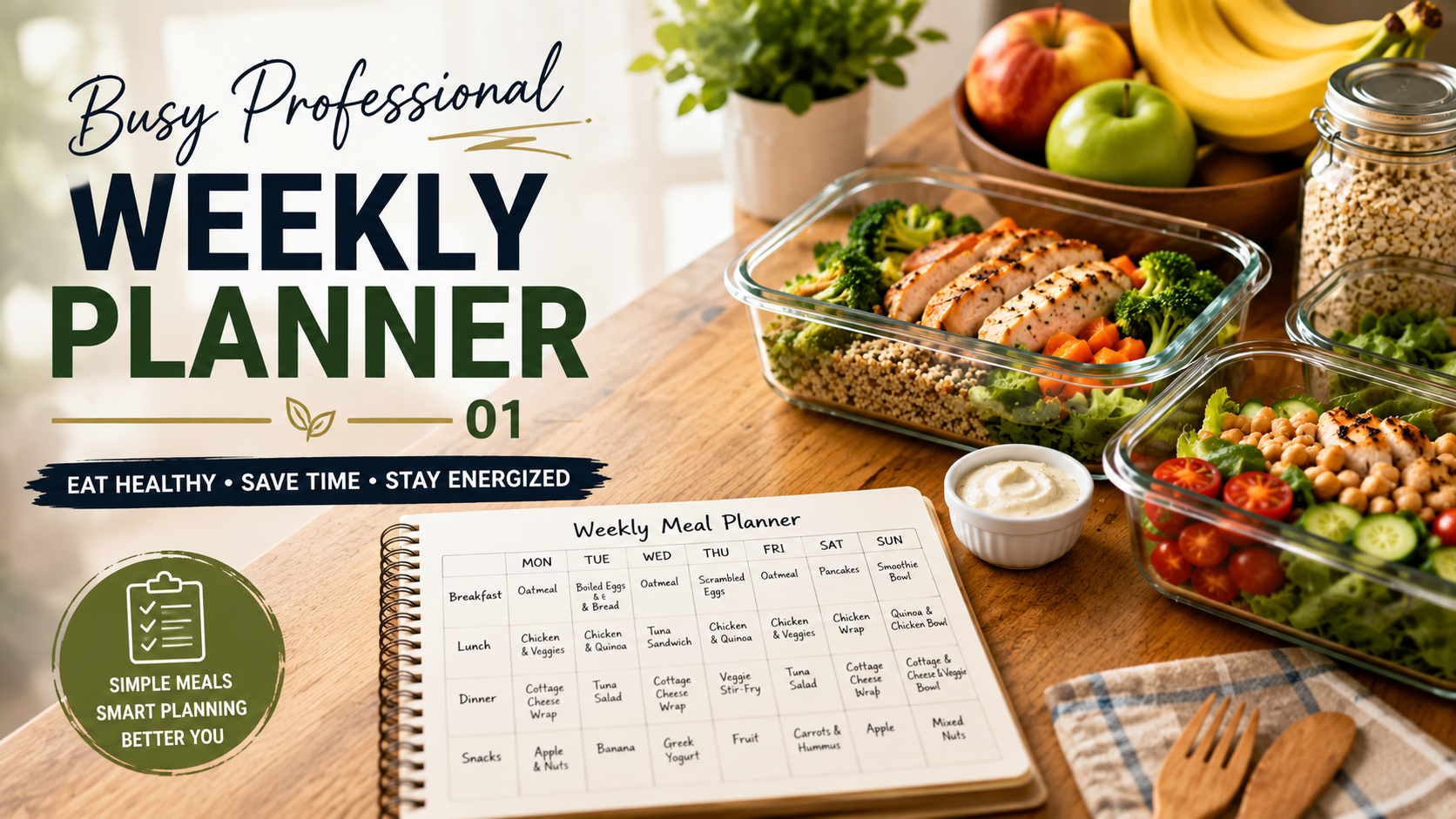
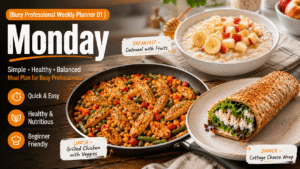
Busy Professional Weekly Meal Planner 01
Eating healthy during a busy work week can feel difficult when you are managing deadlines, meetings, commuting, and daily responsibilities. This beginner-friendly weekly meal planner is designed to help busy professionals save time, stay organized, and maintain healthy eating habits throughout the week. With easy meal prep ideas, affordable grocery ingredients, balanced meals, and simple cooking strategies, this weekly planner makes healthy eating easier and more sustainable.
Why This Weekly Planner Is Perfect for Busy Professionals
Busy Professional Weekly Meal Planner is designed to make healthy eating simple, practical, and sustainable for people with demanding schedules. Instead of preparing complicated meals every day, the Busy Professional Weekly Meal Planner helps you organize your week with easy recipes, affordable ingredients, and efficient meal preparation techniques that save both time and effort.
One of the greatest benefits of the Busy Professional Weekly Meal Planner is its focus on consistency and convenience. Preparing ingredients in advance allows you to enjoy fresh, homemade meals throughout the week while avoiding the stress of daily cooking. This approach also helps reduce reliance on unhealthy takeout, supports portion control, and encourages healthier eating habits without adding extra work to your routine.
Every meal included in the Busy Professional Weekly Meal Planner is beginner-friendly and built around simple grocery ingredients that are easy to find and budget-friendly. Smart meal planning also helps minimize food waste by making better use of ingredients across multiple meals, while providing balanced nutrition to support steady energy levels during busy workdays.
- Saves valuable time during busy weekdays with simple meal preparation.
- Reduces unhealthy takeout by making homemade meals easier to prepare.
- Supports healthy eating habits with balanced, nutritious meals.
- Helps with portion control and smarter weekly meal organization.
- Uses affordable grocery ingredients while minimizing food waste.
- Provides balanced nutrition to help maintain energy throughout the day.
1. The Essential Grocery List
Proteins
- Chicken Breast – 1 kg
- Eggs – 12 units
- Tuna – 3 cans
- Cottage Cheese – 500g
- Quick Oats – 500g
- Quinoa or Brown Rice – 500g
- Whole Grain Bread – 1 loaf
- Mixed Frozen Vegetables – 1 kg
- Salad Greens – 2 large packs
- Fresh Fruits – 7 to 10 units
- Onions, Garlic, and Ginger
- Salt and Black Pepper
- Chili Flakes and Turmeric Powder
- Olive Oil
- Milk or Yogurt
- Hummus or Light Cheese Spread
- Baking Powder and Vanilla Essence
Grocery Shopping Tips
- Create a weekly shopping list before going to the store
- Shop once per week to save time and money
- Choose versatile ingredients for multiple meals
- Buy frozen vegetables to reduce food waste
- Avoid impulse buying during grocery shopping
Budget-Friendly Tips
- Buy proteins in bulk during discounts
- Use canned tuna as an affordable protein source
- Choose store-brand grocery products
- Buy seasonal fruits for lower prices
- Cook meals at home instead of ordering takeout
Healthy Grocery Tips
- Focus on whole foods and fresh ingredients
- Choose lean proteins and whole grains
- Limit processed snacks and sugary drinks
- Include vegetables in every meal plan
- Select foods with simple ingredient lists
Meal Prep Ingredient Tips
- Use chicken for wraps, bowls, and salads
- Prepare oats for breakfast and smoothies
- Cook quinoa in large batches for easy lunches
- Keep eggs ready for quick high-protein meals
- Use frozen vegetables for faster meal prep
Bulk Buying Tips
- Purchase rice and oats in larger quantities
- Freeze extra chicken portions for future meals
- Buy frozen vegetables in family-size packs
- Store dry foods in airtight containers
- Only bulk buy foods you regularly use
Smart Storage Tips
- Store cooked meals in airtight containers
- Label meal prep containers with dates
- Keep salad greens dry using paper towels
- Separate raw and cooked foods properly
- Use stackable containers to save space
Weekly Planning Tips
- Plan meals before grocery shopping
- Schedule one meal prep day each week
- Repeat simple meals to save preparation time
- Keep quick meals available for busy days
- Prepare snacks ahead of the work week
2. The Health Benefits
This weekly meal planner supports overall wellness by providing balanced meals with protein, healthy carbohydrates, vegetables, and healthy fats. Meal prepping in advance helps improve eating habits, reduce stress, and maintain consistent nutrition during busy work weeks.
- Supports healthy eating habits
- Provides steady daily energy
- Helps improve productivity and focus
- Supports healthy weight management
- Reduces processed food consumption
- Encourages portion control and consistency
Healthy Eating Tips
- Include protein in every meal
- Eat vegetables daily for nutrients and fiber
- Choose whole grains instead of refined carbs
- Drink enough water throughout the day
- Avoid skipping meals during busy schedules
Weight Loss Tips
- Use portion-controlled meal prep containers
- Reduce high-calorie takeout meals
- Eat protein-rich meals to stay full longer
- Limit sugary drinks and snacks
- Prepare healthy snacks ahead of time
Energy Boosting Tips
- Start the day with a balanced breakfast
- Choose slow-digesting carbohydrates like oats
- Eat fruits for natural energy and vitamins
- Maintain regular meal times
- Include protein and healthy fats in meals
Portion Control Tips
- Use meal prep containers for balanced servings
- Fill half the plate with vegetables
- Measure carbohydrates properly
- Avoid overeating late at night
- Prepare meals ahead to reduce impulse eating
3. Sunday Prep Tips
Sunday meal prep helps make busy weekdays easier and less stressful. Spending a few hours preparing meals and ingredients in advance can save time during the week and support healthier eating habits.
- Cook proteins in large batches
- Wash and chop vegetables ahead of time
- Prepare breakfast ingredients in advance
- Divide meals into containers immediately
- Keep healthy snacks ready for busy days
Beginner Meal Prep Tips
- Start with simple recipes and ingredients
- Prep only a few meals at first
- Choose easy cooking methods like baking or grilling
- Use reusable meal prep containers
- Focus on consistency instead of perfection
Time-Saving Tips
- Cook multiple meals at the same time
- Use frozen vegetables for faster preparation
- Prepare ingredients before cooking begins
- Use one protein source for several meals
- Clean while cooking to save time later
Weekly Planning Tips
- Create a simple weekly meal schedule
- Plan meals based on your work routine
- Prepare backup meals for busy days
- Review grocery supplies before shopping
- Prepare snacks in advance
Kitchen Organization Tips
- Keep commonly used ingredients accessible
- Organize spices in one location
- Store meal prep containers together
- Label prepared meals clearly
- Maintain a clean cooking space
4. Batch Cooking Workflow
Batch cooking helps busy professionals prepare multiple meals efficiently in less time. By cooking proteins, grains, and vegetables together, meals can be assembled quickly throughout the week.
- Cook chicken or protein first
- Prepare quinoa or brown rice in large batches
- Steam or stir-fry vegetables
- Prepare sauces and spreads
- Divide meals into containers for the week
Cooking Efficiency Tips
- Use the oven and stovetop simultaneously
- Cook ingredients in larger portions
- Prepare ingredients before cooking starts
- Use simple seasoning blends
- Reuse ingredients for multiple meals
Time-Saving Cooking Tips
- Use frozen vegetables for faster cooking
- Cook grains once per week in bulk
- Prepare overnight oats for breakfast
- Use pre-washed salad greens
- Store prepared ingredients for quick assembly
Batch Cooking Tips
- Prepare proteins for multiple meal types
- Separate meals into daily portions
- Rotate flavors to avoid meal boredom
- Use airtight containers for freshness
- Freeze extra meals for future use
Multi-Meal Prep Tips
- Use chicken for wraps, salads, and bowls
- Use oats for breakfast and smoothies
- Use eggs for breakfast and snacks
- Create different meals using similar ingredients
- Prepare flexible ingredients for multiple recipes
5. Proper Storage Guide
Proper food storage helps meals stay fresh, safe, and organized throughout the week. Using airtight containers and storing ingredients correctly helps reduce food waste and improve meal prep efficiency.
- Store cooked meals in airtight containers
- Keep vegetables dry and refrigerated
- Freeze extra meal portions when needed
- Label containers with preparation dates
- Separate raw and cooked foods properly
Food Storage Tips
- Cool cooked meals before refrigeration
- Use BPA-free meal prep containers
- Store proteins separately from salads
- Keep foods sealed tightly for freshness
- Check expiration dates regularly
Refrigerator Organization Tips
- Store ready-to-eat meals on upper shelves
- Keep raw ingredients separated properly
- Use transparent containers for visibility
- Organize meals by day of the week
- Clean the refrigerator weekly
Freezer Storage Tips
- Freeze extra chicken and cooked grains
- Use freezer-safe containers or bags
- Label frozen meals with dates
- Freeze meals in single-serving portions
- Use frozen meals within recommended timeframes
Food Safety Tips
- Refrigerate cooked meals within two hours
- Reheat meals thoroughly before eating
- Avoid storing cooked food too long
- Wash hands before meal preparation
- Keep raw meat away from ready-to-eat foods
Frequently Asked Questions
Is this meal planner beginner-friendly?
Yes. This meal planner is designed for beginners with simple ingredients and easy preparation methods.
Can I replace chicken with another protein?
Yes. You can replace chicken with turkey, tofu, fish, or lean beef depending on your preferences.
How long does meal prep usually take?
Most weekly meal prep sessions take around one to two hours depending on the number of meals prepared.
Can this meal planner support weight management?
Yes. Balanced meals and portion control can support healthy weight management goals.
Can prepared meals be frozen?
Yes. Many meals such as grilled chicken, quinoa, and vegetables can be frozen safely for future use.
Final Thoughts
Busy Professional Weekly Meal Planner proves that healthy eating does not have to be complicated or time-consuming. By following the Busy Professional Weekly Meal Planner, you can save time, reduce daily stress, improve your nutrition, and build healthier eating habits that fit naturally into your weekly routine.
With advance meal preparation, organized grocery shopping, and beginner-friendly recipes, the Busy Professional Weekly Meal Planner makes it easier to stay consistent even during the busiest weeks. Whether your goal is to simplify meal planning or enjoy more homemade meals, the Busy Professional Weekly Meal Planner offers a practical and sustainable solution for long-term healthy living.
Make the Busy Professional Weekly Meal Planner part of your weekly routine and enjoy balanced meals, better organization, and more time for the things that matter most. Small planning habits can lead to healthier choices every day while making your busy lifestyle easier to manage.
For detailed nutrition information about ingredients, visit USDA FoodData Central .
🍽️ You Might Also Like
📧 Save This Recipe For Later
Enter your email and we will send this recipe directly to your inbox.