
15-Minute Chicken Stir Fry (Better Than Takeout!) – Easy & Healthy Dinner
15-Minute Chicken Stir Fry (Better Than Takeout!) – Easy & Healthy Dinner
Ingredients
Method
Quick Navigation
Introduction Why You’ll Love This Recipe Ingredient Notes Nutrition Information Kitchen Tools You’ll Need Tips for Best Results Common Mistakes to Avoid Variations Storage Tips Reheating Instructions Frequently Asked Questions People Also Search For Related Recipes Don’t Have This Ingredient ConclusionIntroduction
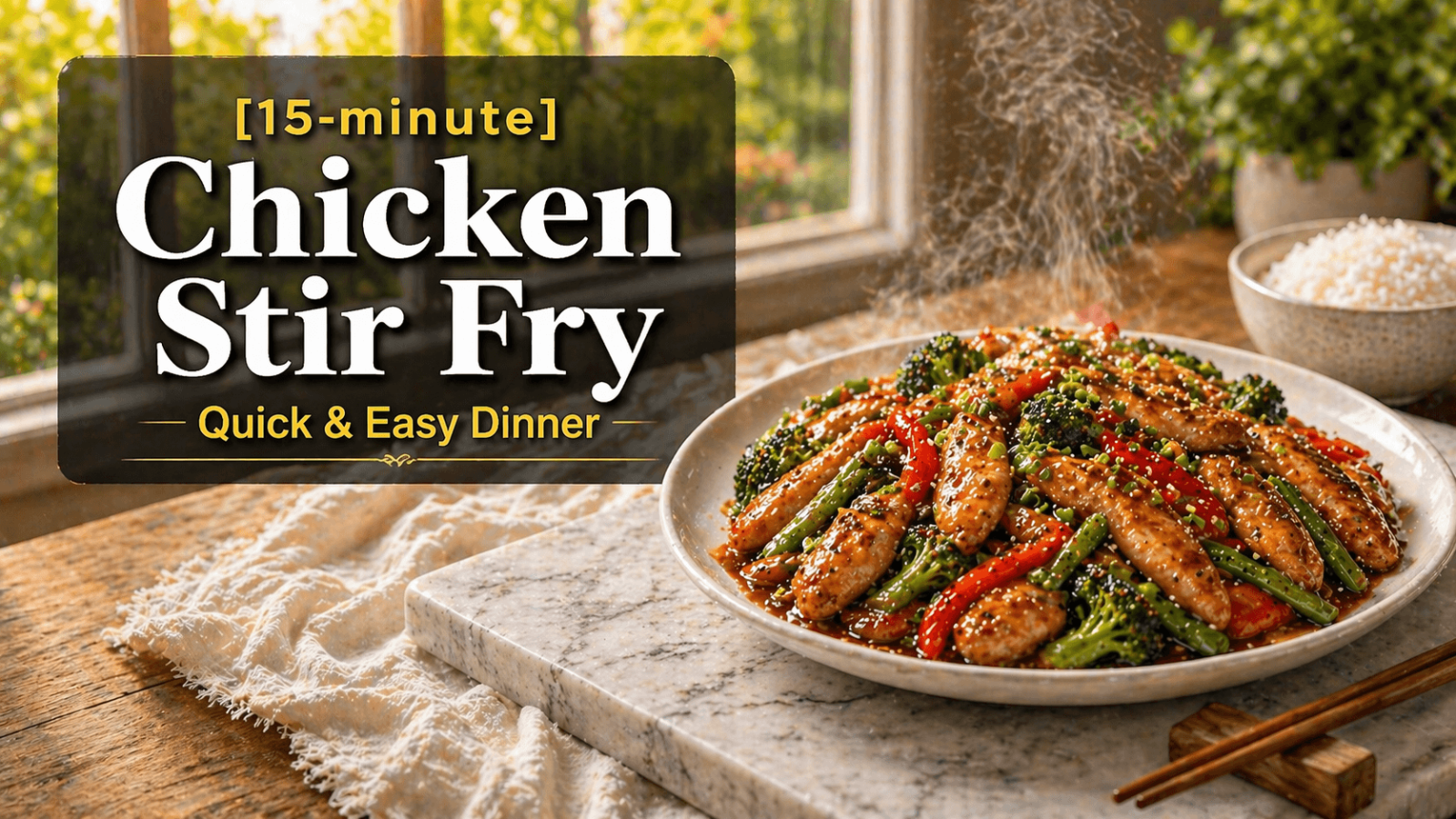
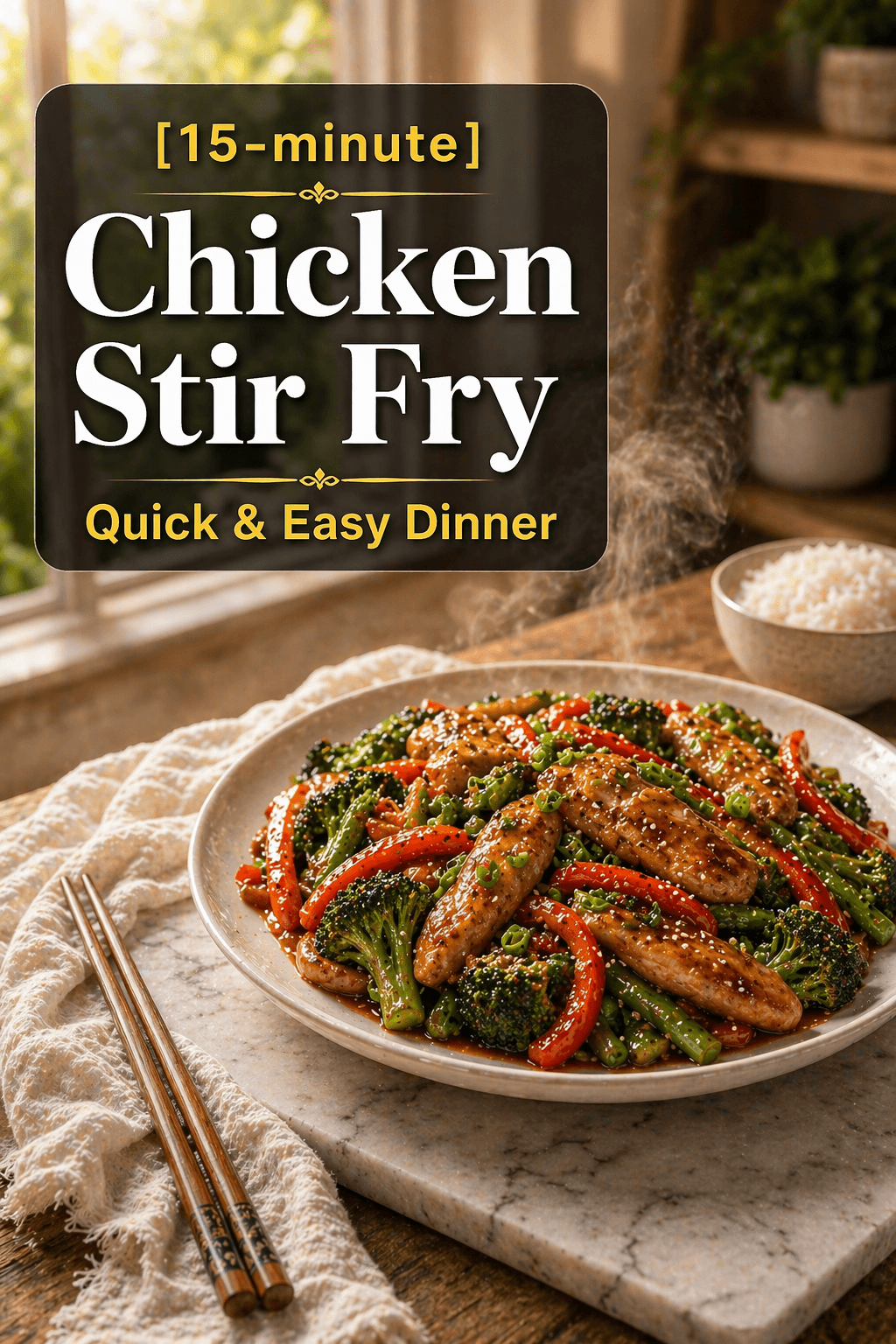
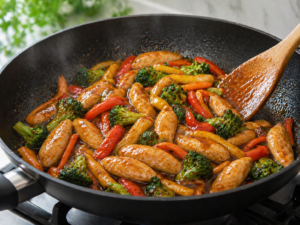
This chicken stir fry combines thinly sliced chicken breast with broccoli, bell pepper, and carrot, giving each serving a mix of tender protein and crisp, colorful vegetables. Cutting the chicken and vegetables into similar-sized pieces helps them cook more evenly in the short cooking time.
The sauce brings together soy sauce for a savory base, oyster sauce for extra depth, sesame oil for a toasted aroma, and a little cornstarch mixed with water to help the sauce cling to the ingredients. Garlic and ginger add a fresh, aromatic note that balances the richness of the sauces.
For the best texture, avoid overcrowding the pan and add the sauce near the end. Serve with rice or noodles if you would like a more filling meal.
Why You’ll Love This Recipe
- Quick and easy meal that comes together in a very short time
- Juicy chicken combined with crisp and colorful vegetables
- Uses simple pantry ingredients available in most kitchens
- Perfect for busy weeknight dinners or last minute meals
- Easily customizable with your favorite vegetables and sauces
Ingredient Notes
Chicken breast is a lean protein that cooks quickly and stays tender when sliced thin. Boneless and skinless pieces work best. You can substitute with chicken thighs for a juicier and richer flavor.
Soy sauce adds a deep savory taste and enhances the overall flavor of the stir fry. Low sodium soy sauce is recommended. You can replace it with tamari or coconut aminos
Broccoli, bell peppers, and carrots add color, crunch, and nutrients. Fresh vegetables are best for texture, but frozen vegetables can be used as a convenient alternative
These ingredients provide a strong aromatic base and boost the overall flavor. Fresh minced garlic and ginger are recommended, but powders can be used if needed
Cornstarch helps thicken the sauce and gives it a smooth, glossy texture. You can substitute with arrowroot powder if preferred.
Nutrition Information
The recipe card lists approximately 320 calories per serving for 4 servings. Nutrition can vary with the size of the chicken breasts and the exact brands and amounts of sauces and oil used. Keep the recipe card and this section consistent if you update the ingredient quantities.
Tips for Best Results
Slice chicken into thin, even pieces to ensure quick and uniform cooking throughout
Cook on high heat to achieve the a lightly browned surface and good texture. Keep the pan hot, but lower the heat if the garlic or ginger starts to burn.
Do not overcrowd the pan, as it prevents proper cooking and makes ingredients soggy
Add sauce at the right time to avoid overcooking vegetables and losing texture
Keep ingredients prepared in advance since stir frying happens very quickly
Common Mistakes to Avoid
Overcooking the chicken can make it dry and tough instead of juicy and tender
Using low heat will cause steaming instead of proper stir frying
Adding too much sauce can make the dish overly salty and watery
Not preparing ingredients beforehand can lead to uneven cooking and delays
Overcrowding the pan reduces heat and results in soggy vegetables
Variations
Storage Tips
Refrigerator Storage – Divide leftovers into shallow airtight containers and refrigerate promptly. Do not leave the food at room temperature for more than two hours (or one hour when the temperature is above 90°F / 32°C). Use within three to four days.
Freezer Storage – Freeze in suitable airtight containers if you want to keep it longer. For best quality, use within two to three months and thaw safely in the refrigerator.
Best Storage Method – Use airtight containers to keep freshness and prevent absorption of other food odors
Reheating Instructions
Pan Method – Reheat in a pan over medium heat while stirring gently to maintain texture and flavor
Microwave Method – Heat in short intervals while covering lightly to retain moisture
Oven Method – Warm in a preheated oven at moderate heat until evenly heated through
Frequently Asked Questions
Yes, chicken stir fry cooks very fast when all ingredients are prepared in advance and cooked over high heat.
High heat is essential for stir frying as it cooks ingredients quickly and keeps vegetables crisp.
Yes, chicken thighs can be used for a juicier and more flavorful result compared to chicken breast.
Store leftovers in an airtight container in the refrigerator and consume within a few days for best quality.
Reheating in a pan is the best method as it helps retain texture and prevents sogginess.
Yes, you can cook it in a regular pan or even adapt it for oven cooking, but stir frying gives the best results.
Use a food thermometer to check the thickest pieces of chicken. They should reach an internal temperature of 165°F (74°C); color alone is not a reliable way to confirm doneness.
People Also Search For
People also search for recipes like garlic chicken stir fry, vegetable chicken stir fry, quick chicken dinners, healthy chicken recipes, and simple homemade stir fry meals for busy weeknights.
Don’t Have This Ingredient
- Chicken Breast Substitute: Replace chicken breast with boneless, skinless chicken thighs for a juicier texture and richer flavor in your chicken stir fry.
- Soy Sauce Alternative: Use tamari for a gluten-free option or coconut aminos for a slightly sweeter, milder flavor while maintaining the savory taste.
- Cornstarch Substitute: Swap cornstarch with arrowroot powder, potato starch, or all-purpose flour to thicken the sauce.
- Fresh Garlic Alternative: Use garlic powder or granulated garlic when fresh garlic is unavailable, adjusting the amount to suit your taste.
Conclusion
This homemade stir fry pairs tender chicken with broccoli, bell pepper, and carrot in a savory sauce made with soy sauce, oyster sauce, sesame oil, garlic, and ginger. Slicing the ingredients evenly and cooking in batches when needed helps preserve the vegetables’ texture and keeps the chicken from steaming.
Serve it with rice or noodles, and adjust the vegetables to suit what you have on hand. For food safety, cook the chicken to 165°F (74°C) and refrigerate leftovers promptly.
For detailed nutrition information about ingredients, visit USDA FoodData Central .
🍽️ You Might Also Like

📧 Save This Recipe For Later
Enter your email and we will send this recipe directly to your inbox.