

Low Calorie Chicken Stir Fry – Light Meal

Low Calorie Chicken Stir Fry – Light Meal
Ingredients
Method
- Slice the boneless skinless chicken breast into thin pieces if it is not already sliced. Wash and cut the bell peppers, broccoli florets, carrots, and chop the green onions. Mince the garlic and grate the fresh ginger.
- In a small bowl, mix soy sauce and oyster sauce together. Set it aside.
- In another small bowl, mix cornstarch with a little water until smooth. Set aside for later.
- Heat olive oil in a large pan or wok over medium-high heat.
- Add the sliced chicken to the pan. Season with salt and black pepper. Cook for 4–5 minutes until the chicken turns white and is fully cooked.

- Add the minced garlic and grated ginger. Stir for about 30 seconds until fragrant.
- Add the sliced bell peppers, broccoli florets, and carrots. Stir fry for 3–4 minutes until the vegetables become slightly tender but still crisp.

- Pour the prepared soy sauce and oyster sauce mixture into the pan. Stir well so everything is coated evenly.
- Add the cornstarch mixture and stir quickly for 1–2 minutes until the sauce thickens slightly.

- Add the chopped green onions and stir for a few seconds.
- Turn off the heat and serve your 15-Minute Low Calorie Chicken Stir Fry warm.
Low Calorie Chicken Stir Fry: A Light Weeknight Meal
This chicken stir fry combines thinly sliced chicken breast with broccoli, bell pepper, carrot, and green onions in a savory garlic-ginger sauce. Low-sodium soy sauce and oyster sauce add depth, while a small cornstarch slurry helps the sauce coat the ingredients.
For the best texture, prepare the ingredients before heating the pan. Cook the chicken without overcrowding, add the vegetables in stages, and stir in the sauce near the end. Use the WP Recipe Maker card for the exact ingredient quantities and cooking instructions.
Why You’ll Love This Recipe
- Vegetable-forward: Broccoli, bell pepper, carrot, and green onions bring different textures and colors.
- Savory flavor: Garlic, ginger, soy sauce, and oyster sauce create a flavorful sauce.
- Flexible serving: Serve on its own or with rice, remembering that sides add to the meal’s total calories.
- Quick cooking method: Evenly cut ingredients and a prepared sauce make the cooking process easier.
Ingredient Notes
Chicken breast: Use boneless, skinless chicken and slice thinly across the grain. Similar-sized pieces cook more evenly.
Olive oil: Measure the oil rather than pouring freely, since oil contributes a concentrated amount of calories.
Garlic and ginger: Mince the garlic and grate or mince the ginger. Cook them briefly so they become fragrant without burning.
Low-sodium soy sauce: Adds savory flavor. It still contains sodium, so taste before adding extra salt.
Oyster sauce: Adds rich umami flavor. Check its label for sodium and allergens; brands vary.
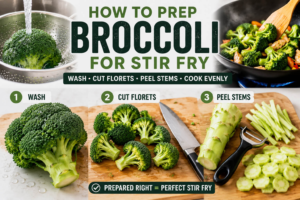
Broccoli: Cut florets into bite-sized pieces. Peel and thinly slice thick stems if you want to use them too.
Bell pepper and carrot: Slice the pepper into strips and the carrot into thin, even pieces. Add carrot early enough to soften.
Green onions: Slice and add near the end for a fresh onion flavor; reserve a little for garnish if desired.
Cornstarch slurry: Mix the cornstarch with the specified cold water until smooth immediately before using. Add gradually to the hot sauce and allow it to thicken.
Salt and black pepper: Season carefully because both sauces can already be salty.
Nutrition Information
The recipe card lists approximately 200 calories per serving. Treat this as an estimate until recalculated from the exact quantities, packaged sauce labels, and four servings.
Protein, carbohydrate, and fat values are not filled in with guesses. Add them to WP Recipe Maker only after calculating them from the actual recipe ingredients. Full-recipe and per-serving values should come from the same calculation.
For ingredient reference data, consult USDA FoodData Central.
Kitchen Tools You’ll Need
- Large skillet or wok: Gives the chicken and vegetables room to cook without overcrowding.
- Sharp knife: Helps cut the ingredients into even pieces.
- Cutting board: Keep raw chicken separate from ready-to-eat ingredients and clean it thoroughly after use.
- Small bowl: Mix the cornstarch and water into a smooth slurry.
- Spatula or tongs: Toss the ingredients as they cook.
- Food thermometer: Confirms the chicken reaches 165°F (74°C) internally.
Tips for Best Results
- Prepare everything first. Slice the chicken and vegetables and mix the sauce before heating the pan.
- Avoid overcrowding. Cook the chicken in batches if needed so it browns rather than steams.
- Add vegetables by cooking time. Start with carrot and broccoli, then add bell pepper.
- Keep aromatics moving. Garlic and ginger burn quickly, so stir briefly before adding the sauces.
- Mix the slurry again. Cornstarch settles in water; stir just before adding it.
- Thicken gradually. Add the slurry a little at a time. If the sauce gets too thick, loosen with a splash of water.
- Check doneness. The thickest chicken pieces should reach 165°F (74°C) on a food thermometer.
Common Mistakes to Avoid
- Overcrowding the pan: Ingredients release moisture and may steam instead of stir-fry.
- Uneven slicing: Thick pieces may remain undercooked while thin pieces dry out.
- Burning garlic or ginger: Add them briefly and keep them moving.
- Adding dry cornstarch: Make a cold-water slurry first to prevent lumps.
- Over-thickening the sauce: Add the slurry gradually and allow it to heat before adding more.
- Adding salt too early: Taste first because both sauces contribute sodium.
Variations
- Extra vegetables: Add mushrooms, snap peas, or cabbage and adjust their cooking order.
- Chicken thighs: Use boneless, skinless thighs if preferred; cooking time and nutrition will differ.
- Gluten-free: Use gluten-free tamari and check the oyster sauce and other packaged ingredients.
- Lower sodium: Choose lower-sodium sauces and avoid extra salt until tasting.
Storage Tips
Refrigerate leftovers in a shallow, airtight container within two hours of cooking and use within three to four days. Freeze in a suitable airtight container for longer storage; vegetables may soften after thawing.
Do not leave cooked chicken at room temperature for an extended period. Discard food if you are unsure it was stored safely.
Reheating Instructions
Stovetop: Reheat in a skillet over medium heat, stirring regularly. Add a splash of water if the sauce has thickened.
Microwave: Place a portion in a microwave-safe dish, cover loosely, and heat in short intervals, stirring between intervals.
Reheat leftovers to 165°F (74°C). Avoid repeatedly cooling and reheating the same portion.
Frequently Asked Questions
Can I use frozen broccoli?
Yes. Thaw and drain it first when possible; frozen broccoli may release more water and become softer.
Why is the sauce too thin?
Stir the cornstarch slurry immediately before use, add it gradually to the hot sauce, and give it time to thicken.
Can I use chicken thighs?
Yes. Boneless, skinless thighs work, but cooking time and nutrition values may change.
How do I keep vegetables crisp?
Cut them evenly, use a hot pan, avoid overcrowding, and stop cooking when they reach your preferred texture.
How do I know the chicken is safely cooked?
Check the thickest pieces with a food thermometer. Chicken should reach 165°F (74°C).
Can I make this gluten-free?
Use gluten-free tamari and check every packaged sauce label, including oyster sauce.
Ingredient Substitutions
- Chicken breast: Boneless, skinless thighs can be used, but calories and fat may differ.
- Olive oil: A neutral cooking oil can replace it; measure the amount because oils have similar calorie density.
- Soy sauce: Tamari or coconut aminos may work, but flavor and sodium differ.
- Vegetables: Frozen stir-fry vegetables are convenient; drain excess moisture and adjust cooking time.
- Oyster sauce: A vegetarian mushroom-based sauce can be used, though flavor and nutrition will change.
Final Notes
For a balanced stir-fry, slice ingredients evenly, cook the chicken safely, and add the cornstarch slurry gradually so the sauce coats the vegetables rather than pooling in the pan. Taste before adding extra salt.
Before publishing, confirm timing, servings, and nutrition against the ingredients you actually use. Add specific cooking observations only if you have tested them in your own kitchen.
🍽️ You Might Also Like
📧 Save This Recipe For Later
Enter your email and we will send this recipe directly to your inbox.