
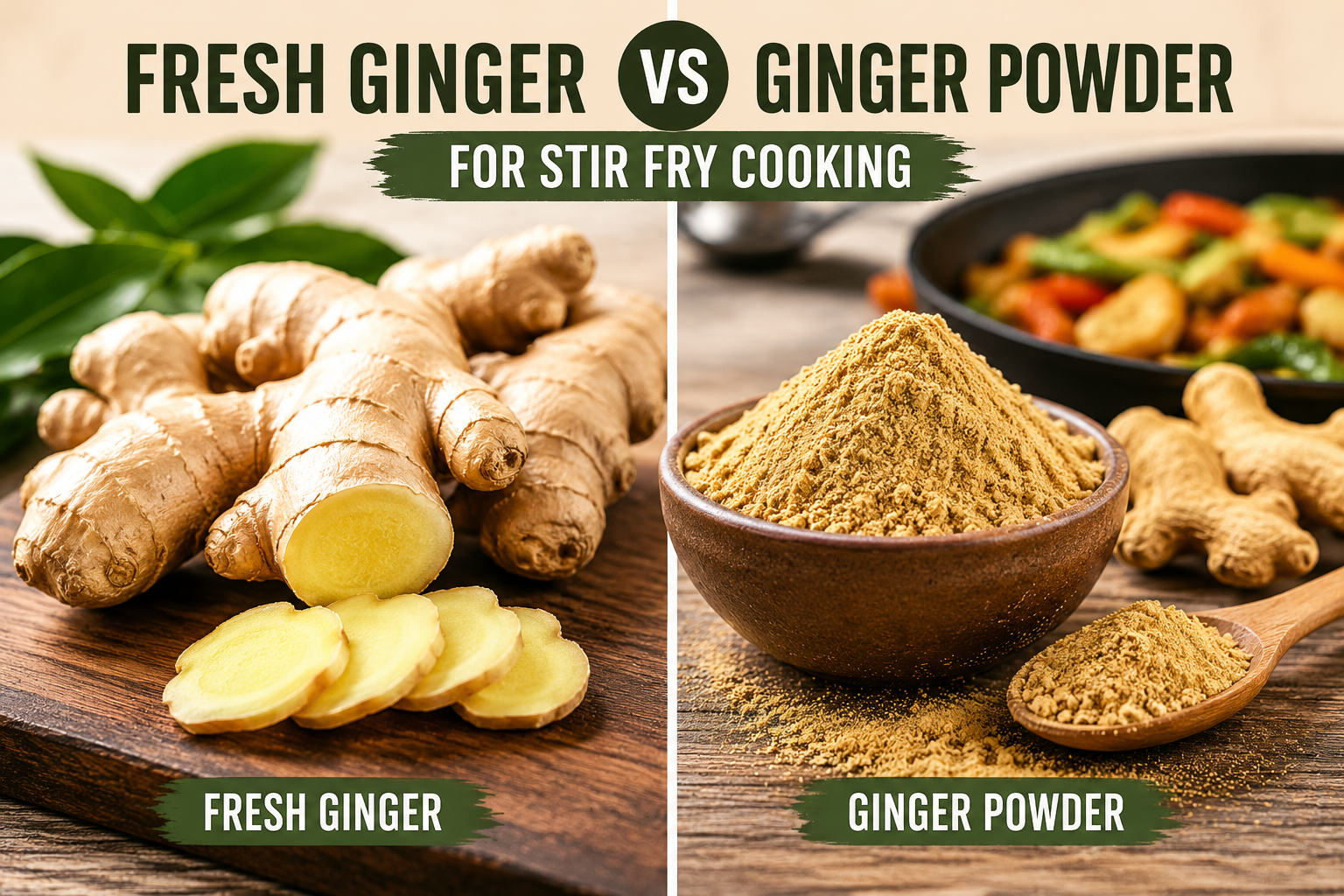
Fresh Ginger vs. Ginger Powder: Which is Better for Stir Fry?
Fresh Ginger vs. Ginger Powder: Which Is Better for Stir Fry?
Ginger is one of the most important ingredients in stir fry cooking. Whether you’re making a simple chicken stir fry, a colorful vegetable stir fry, or a bold Thai-inspired dish, ginger adds warmth, freshness, and complexity that can completely transform the finished meal. However, many home cooks find themselves asking the same question while standing in the grocery store or looking through their pantry: fresh ginger vs ginger powder—which is better for stir fry?
The answer isn’t as simple as choosing one over the other. Both fresh ginger and ginger powder come from the same plant, yet they behave very differently in recipes. Fresh ginger offers a vibrant aroma, juicy texture, and bright, slightly citrusy flavor that many professional chefs consider essential for authentic stir fry. Ginger powder, meanwhile, provides convenience, a long shelf life, and a warm, concentrated spice that works well in certain situations.
If you’ve ever substituted ginger powder for fresh ginger and wondered why your stir fry tasted different, you’re not alone. Drying changes the chemistry of ginger, affecting everything from its aroma to its heat level. Understanding these differences helps you choose the right ingredient instead of simply reaching for whatever happens to be available.
In this complete guide, we’ll compare fresh ginger vs ginger powder in terms of flavor, aroma, cooking performance, nutrition, convenience, storage, cost, and the best uses for each. By the end, you’ll know exactly which one belongs in your next stir fry and how to use both for the best possible results.
Quick Answer
Fresh ginger is generally the best choice for stir fry because it delivers brighter flavor, stronger aroma, natural moisture, and authentic texture. Its essential oils are released when briefly cooked in hot oil, creating the signature fragrance found in restaurant-quality stir fries.
Ginger powder is still a useful alternative when fresh ginger isn’t available. It offers a warmer, more concentrated flavor and blends easily into sauces, but it lacks the fresh, zesty bite and aromatic qualities of freshly grated ginger.
- Choose fresh ginger for authentic stir fry flavor.
- Use ginger powder for convenience or emergency substitutions.
- Add fresh ginger near the beginning of cooking.
- Mix ginger powder into sauces before adding it to the wok.
- Fresh ginger pairs exceptionally well with garlic, soy sauce, sesame oil, and vegetables.
Table of Contents
Fresh Ginger vs Ginger Powder: What’s the Difference?
Although both products come from the same ginger plant (Zingiber officinale), they’re processed very differently. That processing changes their taste, aroma, appearance, and cooking behavior.
Fresh ginger is the raw underground stem, or rhizome, harvested from the plant. It contains a high amount of water, natural juices, and aromatic oils that give it its signature spicy yet refreshing flavor. These natural compounds are what make freshly grated ginger such an important ingredient in many Asian cuisines.
Ginger powder begins as fresh ginger but undergoes several additional steps. After harvesting, the ginger is peeled, sliced, dehydrated, and ground into a fine powder. During drying, much of the moisture disappears, and some of the volatile oils responsible for ginger’s fresh aroma are reduced. What’s left is a more concentrated spice with a warmer, earthier flavor.
Because of these processing differences, fresh ginger and ginger powder shouldn’t always be treated as direct substitutes. Each one contributes something unique to a recipe, especially when cooking over high heat in a wok.
| Feature | Fresh Ginger | Ginger Powder |
|---|---|---|
| Source | Raw ginger root | Dried and ground ginger |
| Moisture | High | Very low |
| Flavor | Bright and fresh | Warm and earthy |
| Aroma | Strong | Milder |
| Texture | Juicy and fibrous | Fine powder |
| Best For | Fresh stir fry cooking | Sauces and spice blends |
| Shelf Life | 2–4 weeks refrigerated | 1–3 years |
Understanding these differences makes it much easier to decide which ingredient will deliver the flavor you’re looking for.
Flavor Comparison: Which One Tastes Better?
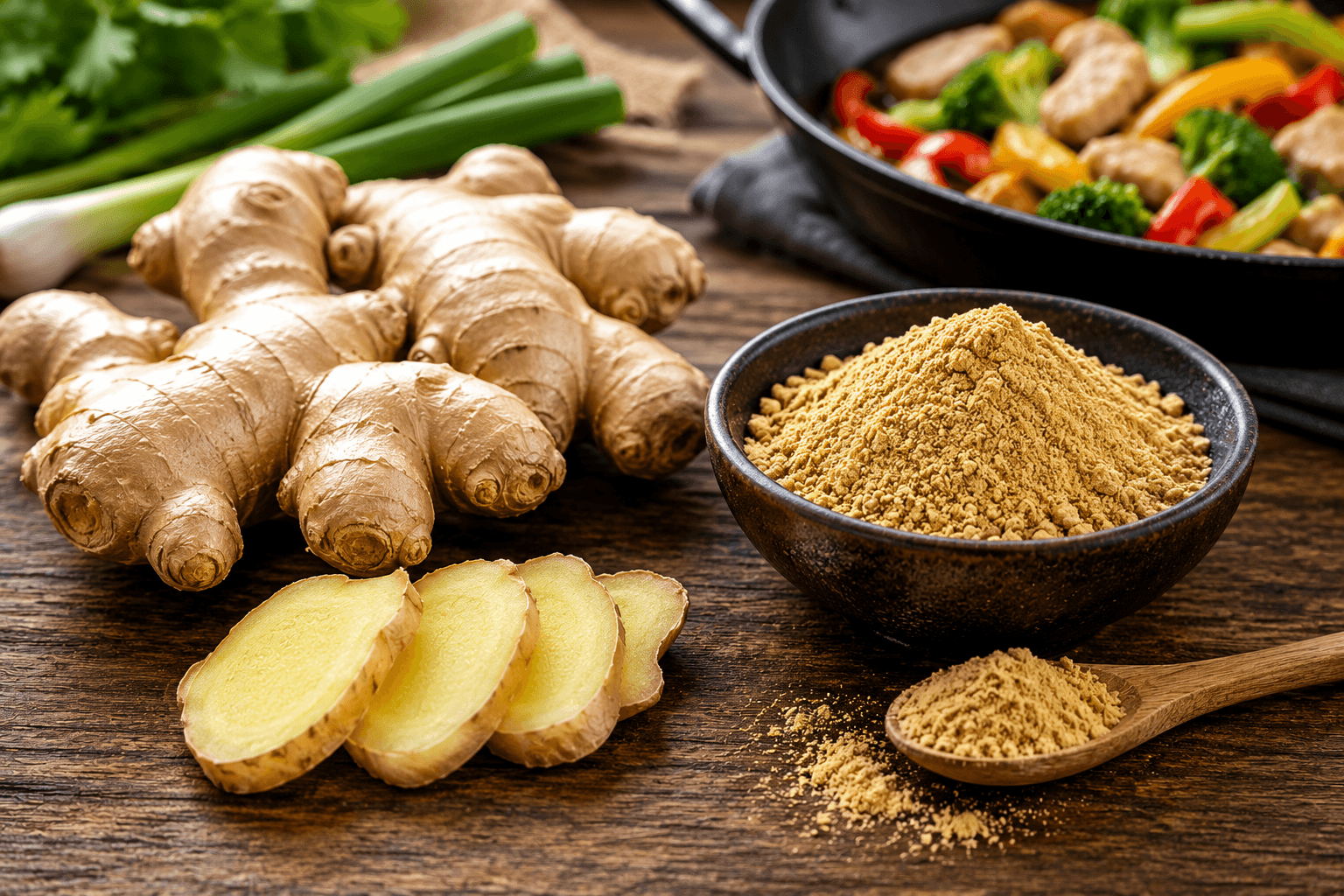
When comparing fresh ginger vs ginger powder, flavor is the biggest difference you’ll notice. Fresh ginger produces layers of flavor that evolve as the food cooks, while ginger powder delivers a more straightforward spice.
Fresh Ginger Flavor Profile
Fresh ginger has a lively, almost citrus-like aroma with gentle sweetness followed by a peppery heat. When grated or finely minced, its juices spread throughout the stir fry, coating vegetables, meat, and noodles with fresh flavor instead of simply seasoning the surface.
As fresh ginger cooks in hot oil, its essential oils become even more fragrant. This is why many restaurant stir fries begin by cooking garlic and ginger together before adding any other ingredients.
- Bright and vibrant
- Slight citrus notes
- Natural sweetness
- Clean spicy finish
- Complex aroma
Ginger Powder Flavor Profile
Ginger powder has a completely different personality. Instead of tasting fresh and lively, it offers a deeper, warmer spice that’s often associated with baking. In stir fry sauces, it contributes gentle warmth rather than sharp freshness.
Because it lacks moisture, ginger powder blends well into liquid ingredients such as soy sauce, oyster sauce, hoisin sauce, or homemade stir fry sauces. However, it cannot recreate the juicy bursts of flavor produced by freshly grated ginger.
- Earthier flavor
- Warmer spice
- Less citrus
- Milder aroma
- More concentrated
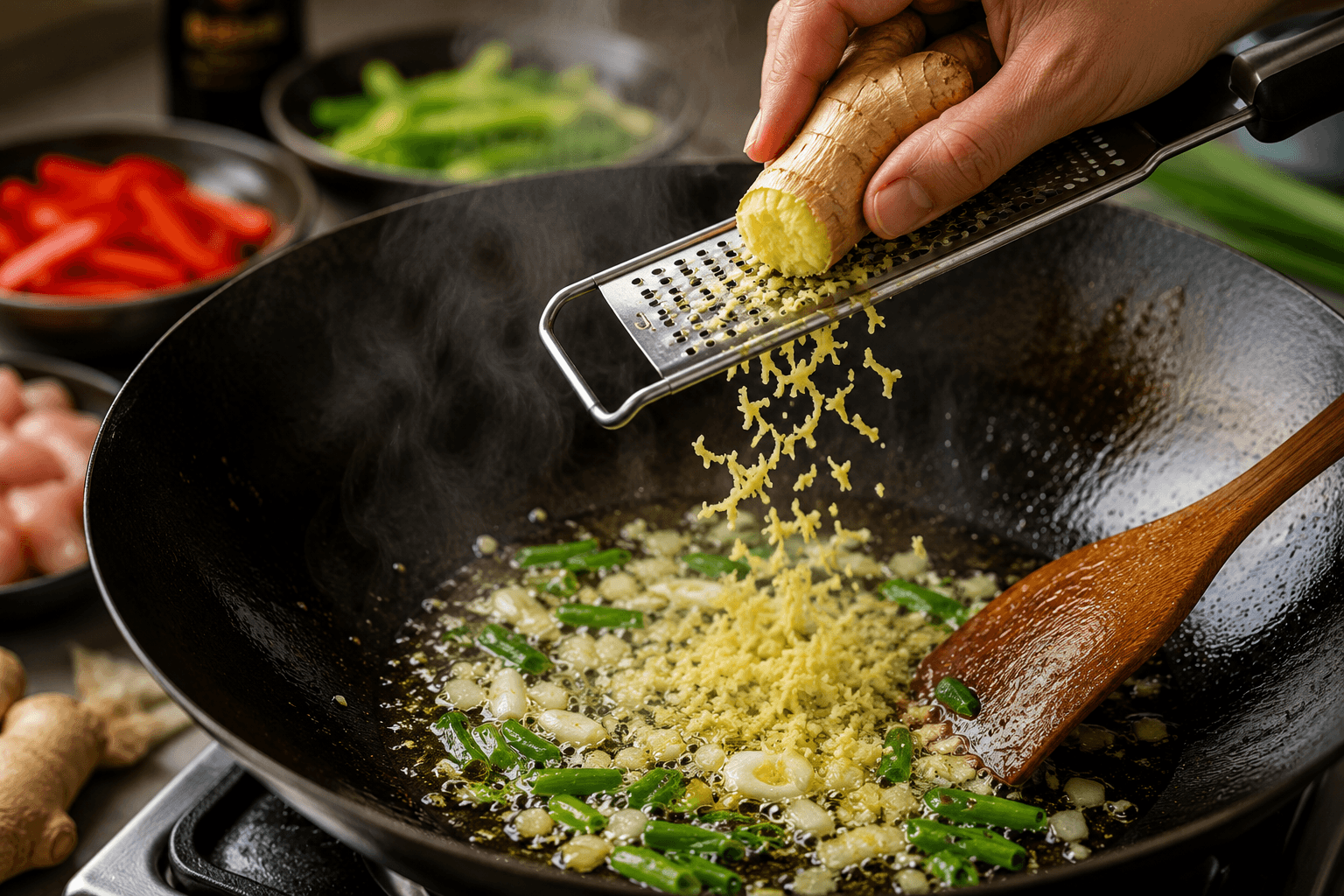
Kitchen Secret: Professional chefs often grate fresh ginger directly into the hot wok because the essential oils release immediately upon contact with the heat. Those oils create the unmistakable aroma associated with restaurant-quality stir fry.
If you’re making our 15-Minute Ginger Garlic Chicken Stir Fry, fresh ginger should always be your first choice because it’s one of the recipe’s signature ingredients. The fresh aroma complements garlic and creates a brighter, more balanced sauce.
Likewise, even recipes with a simpler flavor profile, such as our 15-Minute Garlic Chicken Stir Fry, become noticeably more aromatic when a small amount of freshly grated ginger is added alongside the garlic.
If you enjoy preparing Asian-inspired meals regularly, it’s also worth stocking your pantry with the essentials covered in our Thai Stir Fry Pantry Staples guide. Combining fresh ginger with quality sauces and seasonings creates restaurant-style flavor at home.
Aroma and Texture: Why Fresh Ginger Feels Different
Flavor is only part of the story. Aroma plays an equally important role in how we experience food, and this is where fresh ginger has a significant advantage.
Fresh ginger contains volatile aromatic compounds that are released almost instantly when it’s cut, grated, or crushed. These compounds fill the kitchen with a clean, spicy fragrance that stimulates the senses even before you take your first bite.
Ginger powder still contains aromatic compounds, but many of the most delicate ones are lost during dehydration. That’s why opening a jar of ground ginger produces a much softer aroma than slicing into a fresh ginger root.
Texture is another key difference. Tiny pieces of freshly grated ginger remain in the finished stir fry, adding subtle bursts of flavor and a pleasant bite. Ginger powder dissolves almost completely into the sauce, creating a smoother texture but less overall freshness.
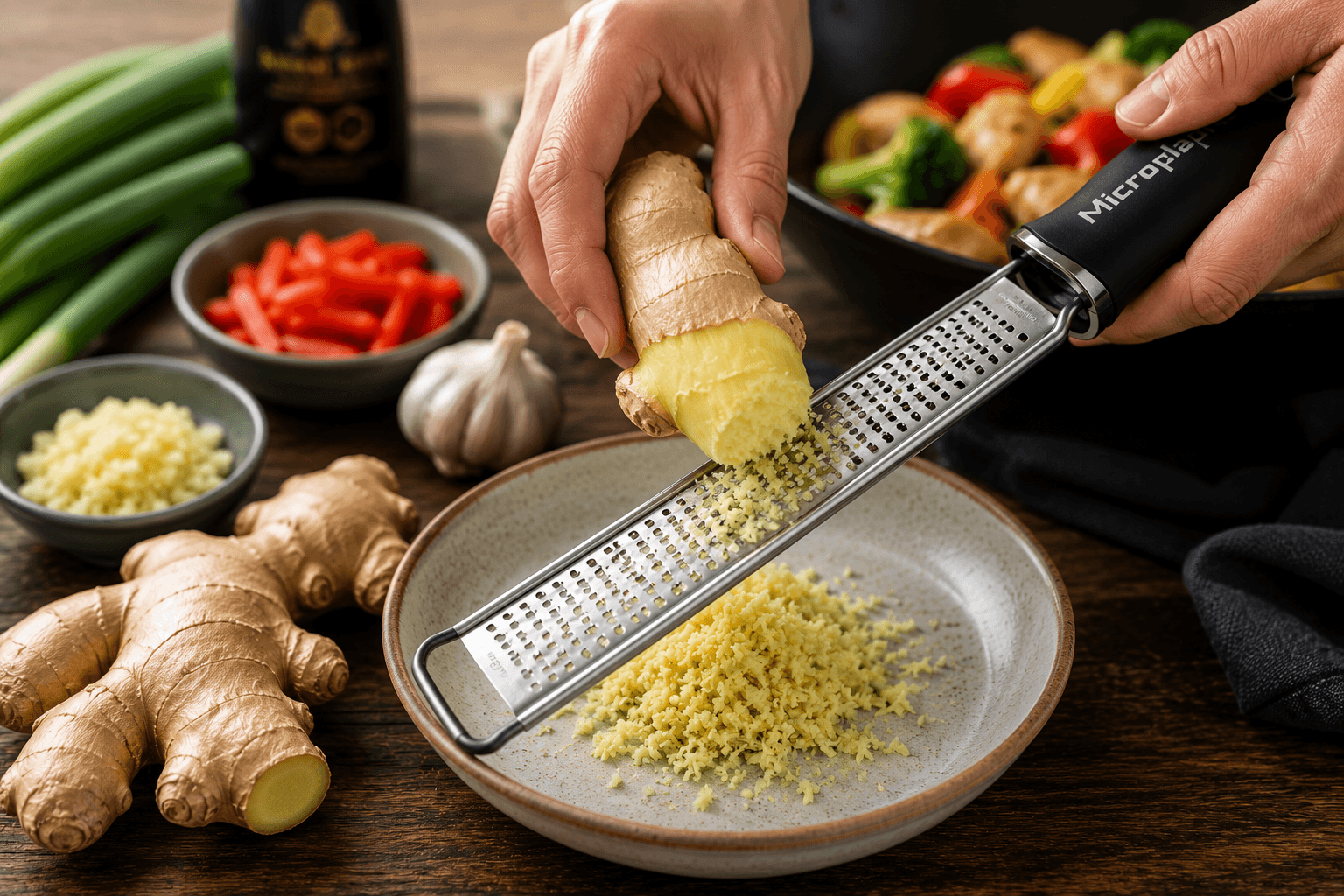
For the most balanced flavor, grate fresh ginger using a microplane or fine grater. This creates a smooth paste that blends easily into stir fry without leaving large fibrous pieces.
Which Performs Better in Stir Fry?
To understand the fresh ginger vs ginger powder debate, it helps to look at how stir fry cooking works. Unlike slow-cooked dishes, stir fry is cooked quickly over high heat. Every ingredient must release its flavor in just a few minutes, which is why aromatics such as garlic, onions, and ginger play such an important role.
Fresh ginger performs exceptionally well in this environment because its natural moisture evaporates almost immediately when it hits the hot wok. As that moisture evaporates, essential oils are released into the cooking oil, creating the fragrant base that defines many Chinese, Thai, Japanese, and other Asian-inspired stir fries.
Ginger powder behaves differently. Since it’s already dehydrated, it doesn’t release fresh aromatic oils. Instead, it dissolves into liquids and distributes its flavour throughout the sauce. While this creates even seasoning, it doesn’t produce the same bold aroma or fresh bite that freshly grated ginger provides.
If your goal is to recreate restaurant-quality stir fry at home, fresh ginger is almost always the better choice. However, ginger powder still works well in recipes where ginger is a supporting flavour rather than the star ingredient.
| Cooking Situation | Best Choice | Reason |
|---|---|---|
| Classic chicken stir fry | Fresh ginger | Maximum aroma and authentic flavour |
| Vegetable stir fry | Fresh ginger | Balances fresh vegetables perfectly |
| Quick homemade sauce | Either | Powder blends easily into liquids |
| Emergency substitute | Ginger powder | Convenient pantry ingredient |
| Restaurant-style cooking | Fresh ginger | Produces the best fragrance |
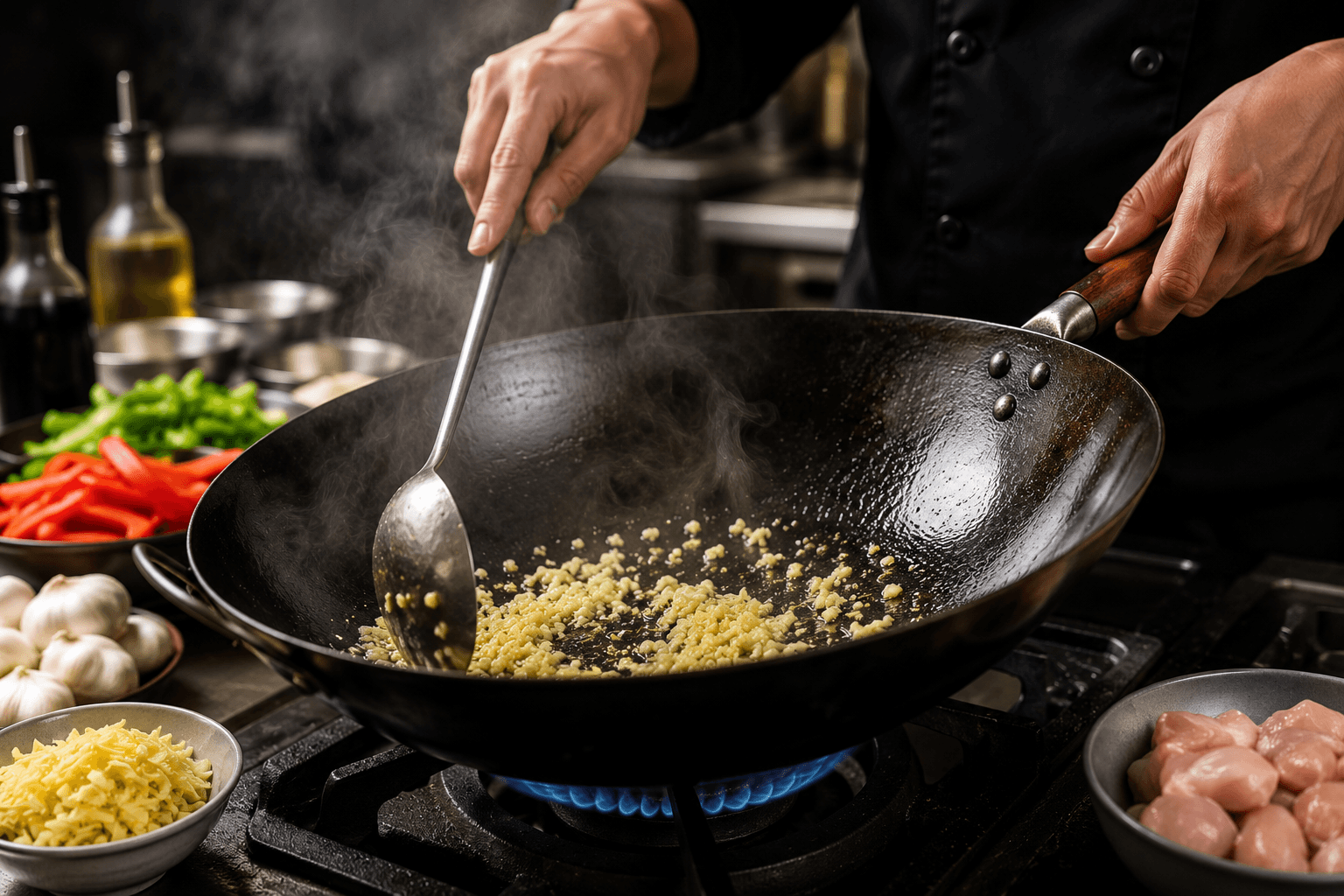
Kitchen Secret: Always heat your wok first, then add oil, followed by fresh ginger and garlic. Cooking the aromatics for about 20 to 30 seconds allows the oil to absorb their flavour without burning them.
When Fresh Ginger Is the Best Choice
Fresh ginger shines whenever it’s intended to be one of the main flavour components of a stir fry. Its bright taste complements vegetables, chicken, beef, shrimp, tofu, and noodles without overpowering the dish.
Many of the most popular stir fry recipes rely on fresh ginger to build flavour from the very beginning. The combination of freshly grated ginger and garlic creates an aromatic foundation that simply can’t be replicated with powdered spices.
Choose fresh ginger when you’re making:
- Chicken stir fry
- Beef stir fry
- Shrimp stir fry
- Vegetable stir fry
- Fried rice
- Lo mein and noodle dishes
- Homemade stir fry sauces
- Asian-inspired marinades
Fresh ginger is especially important in recipes where its flavour is featured rather than hidden behind stronger sauces.
For example, our 15-Minute Ginger Garlic Chicken Stir Fry depends on freshly grated ginger to deliver its signature flavour. Replacing it with ginger powder would noticeably change the taste and aroma.
Likewise, if you’re preparing our 15-Minute Chicken Stir Fry, adding fresh ginger gives the sauce a brighter, fresher finish without requiring additional seasonings.
Keep a small piece of ginger in your freezer. Frozen ginger grates beautifully without thawing, making it easy to use whenever you cook stir fry.
When Ginger Powder Makes Sense
Although fresh ginger is usually preferred, ginger powder deserves a place in every pantry. Its biggest advantages are convenience, consistency, and shelf life.
If you cook stir fry only occasionally, buying fresh ginger every week may lead to unnecessary waste. Ginger powder eliminates this problem because it stays usable for months when stored properly.
It’s also useful when preparing:
- Quick weeknight dinners
- Homemade seasoning blends
- Dry spice rubs
- Simple stir fry sauces
- Meal prep sauces
- Emergency substitutions
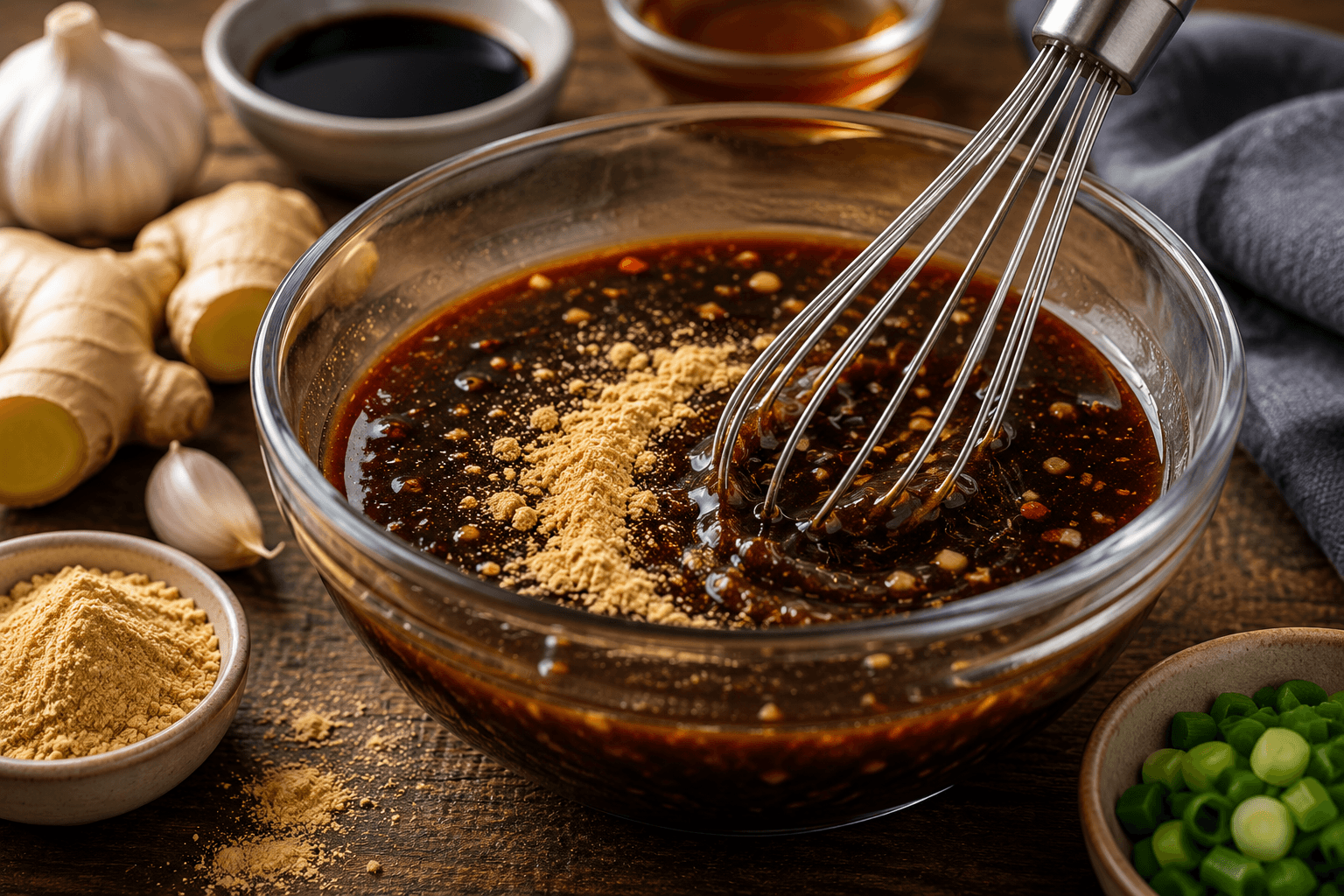
Because ginger powder dissolves easily, it’s ideal for whisking into soy sauce, oyster sauce, hoisin sauce, honey, sesame oil, rice vinegar, and cornstarch before adding the mixture to the wok.
Can You Substitute Fresh Ginger for Ginger Powder?
Yes—but because fresh ginger contains a significant amount of water while ginger powder is concentrated, the amounts are not interchangeable.
| If the Recipe Calls For | Use This Much Ginger Powder |
|---|---|
| 1 tablespoon grated fresh ginger | ¼ teaspoon |
| 2 tablespoons grated fresh ginger | ½ teaspoon |
| 4 tablespoons grated fresh ginger | 1 teaspoon |
If you’re replacing ginger powder with fresh ginger, use roughly four to six times more fresh ginger by volume, then adjust to taste. Since fresh ginger varies in strength depending on its age and variety, tasting as you cook is always the safest approach.
Avoid adding dry ginger powder directly into a hot wok. It can form small clumps and cook unevenly. Instead, whisk it into your sauce before pouring the sauce into the pan.
Nutrition Comparison
From a nutritional perspective, both fresh ginger and ginger powder provide beneficial plant compounds. Because ginger is usually used in small amounts, neither contributes many calories, fat, or protein to a meal.
Fresh ginger contains more water and naturally occurring vitamin C, while ginger powder contains concentrated amounts of certain antioxidants because the moisture has been removed.
Research suggests that ginger contains bioactive compounds such as gingerols and shogaols, which have been studied for their antioxidant and anti-inflammatory properties. Drying converts some gingerols into shogaols, slightly changing the flavour and chemical profile.
| Nutrition Characteristic | Fresh Ginger | Ginger Powder |
|---|---|---|
| Water content | High | Very low |
| Calories (per typical serving) | Very low | Very low |
| Natural antioxidants | Excellent | Excellent |
| Vitamin C | Higher | Lower |
| Concentration | Fresh | More concentrated |
Whether you choose fresh ginger or ginger powder, the biggest nutritional advantage comes from cooking more meals at home using lean protein, colourful vegetables, and balanced sauces instead of relying on takeaway food.
Cost and Convenience Comparison
Cost is another factor when comparing fresh ginger vs ginger powder. Fresh ginger is relatively inexpensive, but it has a limited shelf life. If you only cook stir fry occasionally, some of it may spoil before you can use it all.
Ginger powder generally costs more per gram but lasts much longer, making it economical for occasional use. It also requires no peeling, chopping, or grating, saving valuable preparation time on busy evenings.
For most home cooks, the ideal solution is to keep both ingredients in the kitchen. Use fresh ginger whenever possible for stir fry, and rely on ginger powder as a convenient backup.
How to Store Fresh Ginger and Ginger Powder
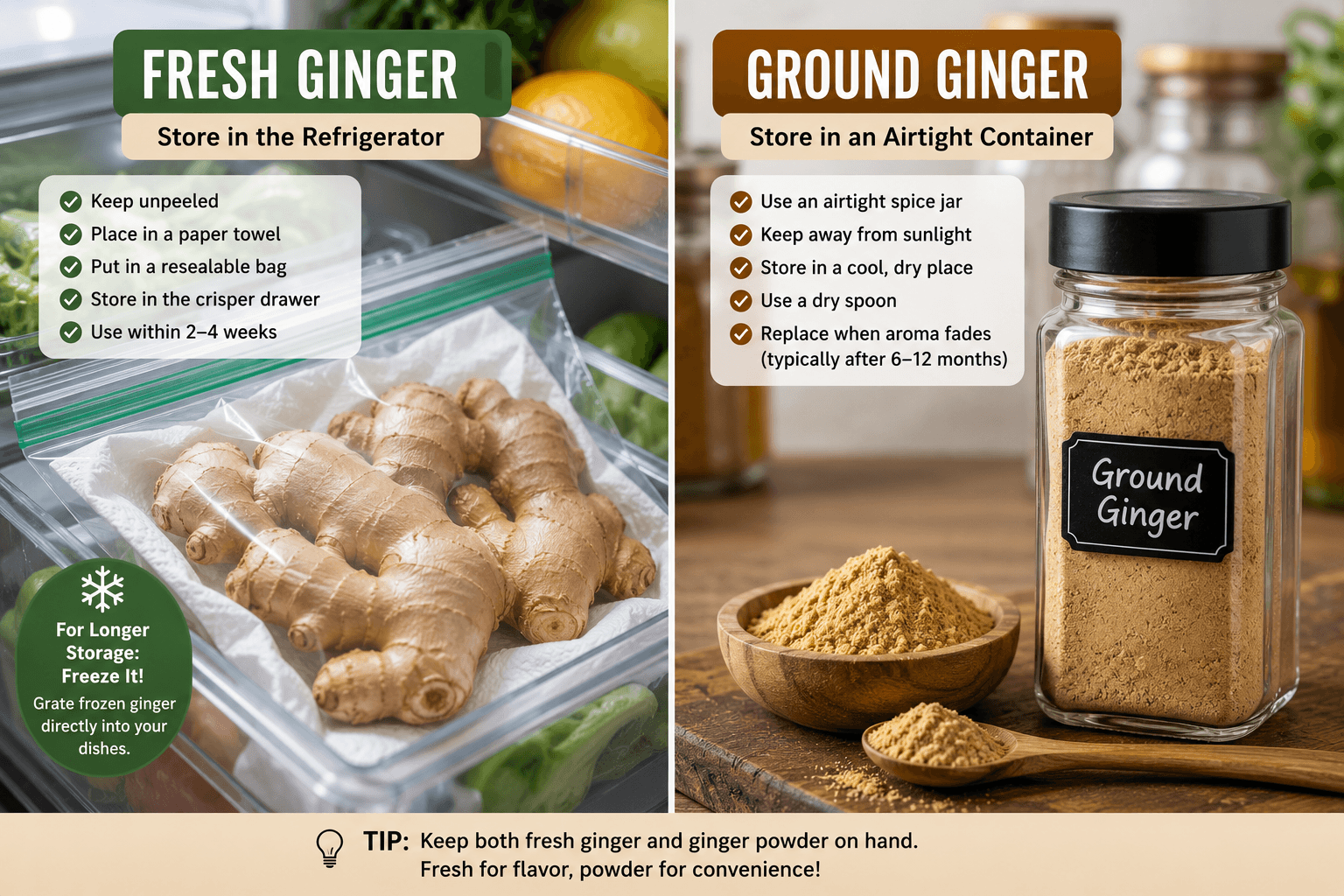
Proper storage plays a major role in preserving both flavor and quality. One reason many home cooks believe fresh ginger isn’t worth buying is because it often dries out or becomes moldy before they use it. Fortunately, with the right storage methods, fresh ginger can stay usable for several weeks—and even longer if frozen.
Ginger powder is much easier to store because it contains very little moisture. However, improper storage can still cause it to lose its aroma and flavor over time.
How to Store Fresh Ginger
- Keep unpeeled ginger in the refrigerator.
- Store it in a paper towel inside a resealable bag to reduce excess moisture.
- Remove as much air as possible from the bag.
- Keep it in the vegetable crisper drawer whenever possible.
- Avoid washing ginger until you’re ready to use it.
If you cook stir fry frequently, freezing fresh ginger is one of the easiest ways to prevent waste. Frozen ginger can be grated directly into the wok without thawing, making it even more convenient than refrigerated ginger.
How to Store Ginger Powder
- Keep it in an airtight spice container.
- Store away from direct sunlight.
- Avoid placing it near the stove where steam can enter the container.
- Use a dry measuring spoon every time.
- Replace it once the aroma becomes weak.
Storage Tip: Frozen fresh ginger retains excellent flavor for several months and is often easier to grate than refrigerated ginger. Many professional chefs keep whole ginger roots in the freezer for everyday cooking.
| Storage Method | Fresh Ginger | Ginger Powder |
|---|---|---|
| Pantry | Not recommended | Yes |
| Refrigerator | 2–4 weeks | Not necessary |
| Freezer | 3–6 months | Not recommended |
| Best Container | Resealable bag or airtight container | Sealed spice jar |
Common Mistakes When Using Ginger in Stir Fry
Even experienced home cooks occasionally make mistakes when cooking with ginger. Avoiding these common errors will help you create more flavorful stir fries every time.
1. Burning the Ginger
Fresh ginger cooks quickly. If it’s left in extremely hot oil for too long before other ingredients are added, it can burn and develop a bitter flavor.
2. Adding Fresh Ginger Too Late
Fresh ginger should be one of the first aromatics added to the wok. Waiting until the end prevents its oils from fully flavoring the dish.
3. Using Too Much Ginger Powder
Ground ginger is much more concentrated than fresh ginger. Adding excessive amounts can overwhelm the other ingredients and create an earthy, slightly medicinal flavor.
4. Using Old Ginger Powder
Ground spices gradually lose their essential oils. If your ginger powder has very little aroma when you open the container, it’s unlikely to add much flavor to your stir fry.
5. Cutting Fresh Ginger into Large Chunks
Large pieces don’t distribute evenly throughout the dish. Finely grating or mincing the ginger provides better flavor and texture.
6. Forgetting to Balance the Flavors
Ginger works best when combined with complementary ingredients such as garlic, soy sauce, sesame oil, scallions, rice vinegar, and a touch of sweetness. Using ginger alone may result in a one-dimensional flavor.
Warning: Never judge ginger powder by color alone. Aroma is the best indicator of freshness. If it smells dull or stale, replace it for better cooking results.
Expert Tips for Better Stir Fry Flavor
Professional chefs rely on a few simple techniques to maximize ginger’s flavor. These small details can make a noticeable difference in your finished dish.
- Grate ginger instead of chopping it for smoother sauces.
- Cook ginger and garlic together to build an aromatic flavor base.
- Use high heat, but keep the ginger moving to prevent burning.
- Add delicate vegetables only after the aromatics become fragrant.
- Taste the sauce before serving and adjust with soy sauce, sesame oil, or a splash of rice vinegar if needed.
- Freeze extra fresh ginger to reduce food waste.
- Choose young ginger when available because it’s less fibrous and has a milder flavor.
If you’re planning more homemade stir fry meals, recipes such as our 15-Minute Ginger Garlic Chicken Stir Fry, 15-Minute Garlic Chicken Stir Fry, and 15-Minute Chicken Stir Fry are excellent ways to put these techniques into practice.
Frequently Asked Questions
Is fresh ginger always better than ginger powder for stir fry?
For most stir fry recipes, yes. Fresh ginger provides brighter flavor, stronger aroma, and a more authentic restaurant-style taste. Ginger powder is best used as a convenient substitute when fresh ginger isn’t available.
How much ginger powder equals one tablespoon of fresh ginger?
A good starting point is approximately ¼ teaspoon of ginger powder for every tablespoon of freshly grated ginger. Adjust slightly depending on your taste preferences.
Can I use both fresh ginger and ginger powder together?
Yes. Some cooks use fresh ginger for aroma and a very small amount of ginger powder to add extra warmth to the sauce. Use the powder sparingly to avoid overpowering the dish.
Should fresh ginger be peeled before grating?
Young ginger has thin skin that can often be left on after washing. Older ginger usually benefits from peeling because the skin becomes thicker and more fibrous.
Can frozen ginger be used for stir fry?
Absolutely. Frozen ginger can be grated directly into the wok without thawing and retains much of its fresh flavor, making it an excellent option for regular stir fry cooking.
Does ginger powder work in homemade stir fry sauce?
Yes. Ginger powder mixes smoothly into sauces and works well when combined with soy sauce, oyster sauce, sesame oil, rice vinegar, and cornstarch.
Which type of ginger do restaurants usually use?
Most restaurants preparing traditional stir fry dishes use fresh ginger because it produces the bold aroma and vibrant flavor associated with authentic wok cooking.
References
Final Thoughts
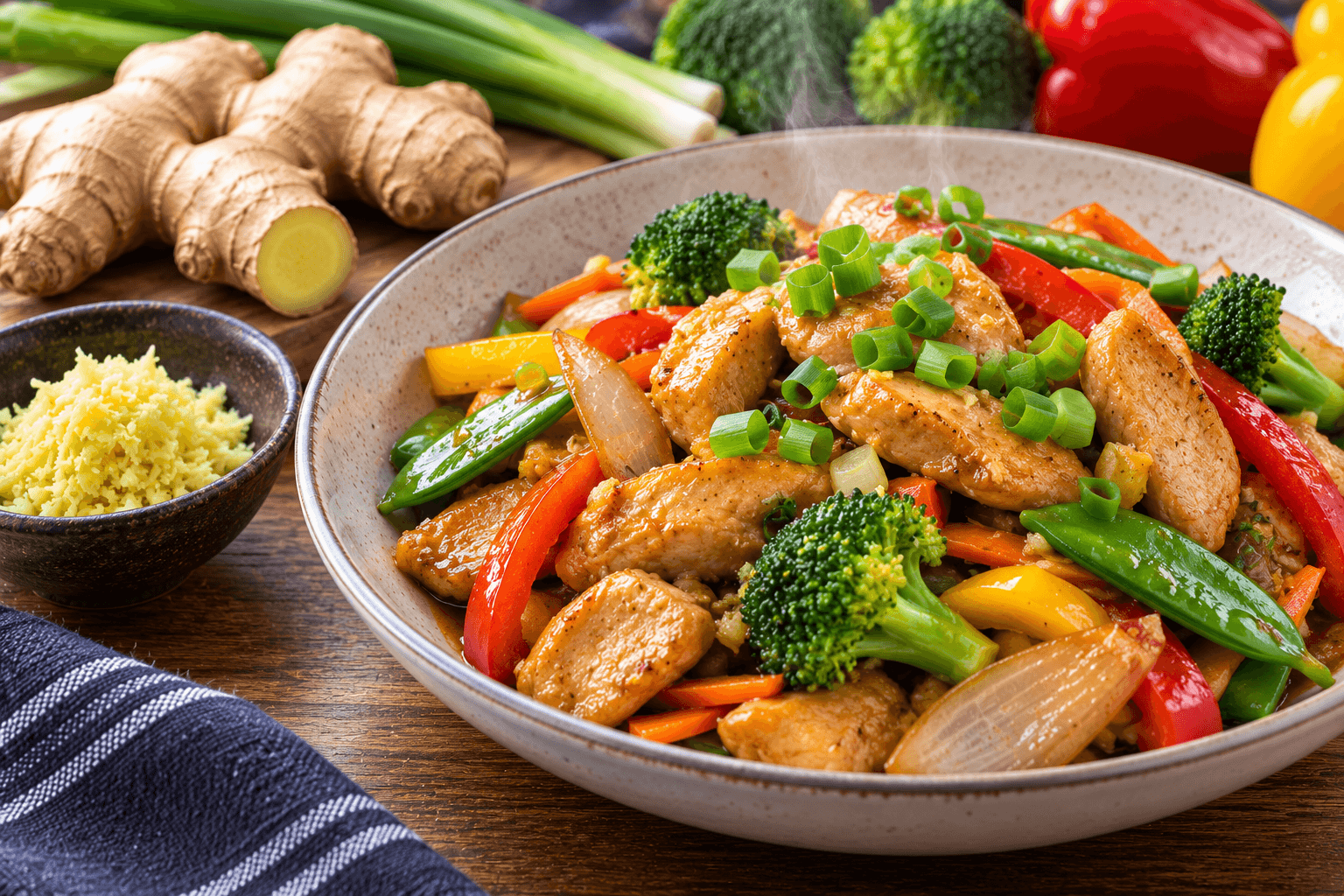
After comparing fresh ginger vs ginger powder across flavor, aroma, texture, cooking performance, convenience, nutrition, and storage, one conclusion is clear. Fresh ginger is the superior choice for most stir fry recipes because it creates the bright, fragrant foundation that defines authentic wok cooking. Its natural juices, essential oils, and vibrant flavor simply can’t be duplicated by dried ginger powder.
That said, ginger powder is far from useless. It’s affordable, convenient, shelf-stable, and surprisingly effective when blended into sauces or used as a backup ingredient. Keeping both fresh ginger and ginger powder in your kitchen gives you the flexibility to prepare delicious homemade stir fries regardless of your schedule.
Whether you’re cooking a quick weeknight dinner or trying to recreate your favorite takeout dish, choosing the right form of ginger is a small detail that makes a big difference. Start with fresh ginger whenever possible, pair it with garlic and quality stir fry sauces, and you’ll enjoy meals with deeper flavor, better aroma, and more satisfying results.
🍽️ You Might Also Like



📧 Save This Recipe For Later
Enter your email and we will send this recipe directly to your inbox.