

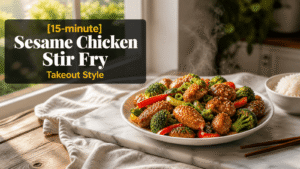
15-Minute Ginger Garlic Chicken Stir Fry – Fresh Flavor

15-Minute Ginger Garlic Chicken Stir Fry – Fresh Flavor
Ingredients
Method
- Slice the boneless chicken breasts into thin strips. Season with a little salt and black pepper.

- Heat the vegetable oil in a large skillet or wok over medium-high heat.

- Add the sliced chicken and cook for 5–7 minutes, stirring often, until the chicken is fully cooked and lightly browned.

- Add the grated fresh ginger and minced garlic. Stir and cook for about 1 minute until fragrant.

- Add the sliced onion and sliced bell pepper. Stir everything together and cook for 3–4 minutes until the vegetables are slightly tender but still crisp.

- Pour in the soy sauce and oyster sauce. If using, add the chili flakes. Stir well to coat the chicken and vegetables evenly.

- Add the cornstarch mixed with water. Stir continuously until the sauce thickens slightly and coats everything evenly.

- Taste and season with more salt and black pepper if needed. Mix well.

- Sprinkle the chopped spring onions over the stir fry and give everything a final stir.

Introduction
This quick chicken stir-fry pairs tender chicken with fresh ginger, garlic, colorful vegetables, and a savory soy-oyster sauce. It is designed for busy evenings: prepare the ingredients before heating the pan, then cook them quickly so the chicken stays juicy and the vegetables retain some crunch.
The recipe card below contains the ingredients and step-by-step method. For food safety, cook chicken to an internal temperature of 165°F (74°C), checked with a food thermometer in the thickest pieces.
Why You’ll Love This Recipe
- Fresh ginger and garlic give the sauce a fragrant, savory base.
- Onion and bell pepper add sweetness, color, and a little crunch.
- The soy sauce and oyster sauce make a quick, balanced coating for the chicken.
- With the ingredients sliced and measured first, the cooking process is fast and straightforward.
Ingredient Notes
Chicken breast
Slice two boneless, skinless breasts into thin, even strips so they cook at a similar rate. If the pieces vary greatly in thickness, the thinner ones may dry out before the thicker ones are safe to eat.
Fresh ginger and garlic
Grate the ginger and mince the garlic before cooking. Add them after the chicken has started browning, and stir for about 20–30 seconds until fragrant. Garlic burns quickly, so lower the heat briefly or add a small splash of sauce if the pan is very hot.
Soy sauce and oyster sauce
Soy sauce supplies saltiness and umami; oyster sauce adds a deeper savory flavor with mild sweetness and helps the sauce cling to the ingredients. Since both sauces contain salt, taste before adding extra salt. Use reduced-sodium soy sauce if preferred.
Chili flakes
The teaspoon of chili flakes is optional. Start with less for a mild stir-fry, or add more to taste. Stir them in with the aromatics briefly so their flavor disperses without scorching.
Vegetable oil
Use a neutral oil suitable for high-heat cooking. Measure the tablespoon rather than pouring freely; too much oil can make the finished sauce greasy.
Onion, bell pepper, and spring onions
Slice the onion and bell pepper into similar-sized strips. Cook the onion first until it just begins to soften, then add the bell pepper and cook briefly so it stays slightly crisp. Add chopped spring onions near the end to keep their fresh color and flavor.
Cornstarch slurry
Mix 1 teaspoon cornstarch with a little cold water until smooth before adding it to the pan. Stir the soy sauce and oyster sauce into the cooked ingredients, then pour in the slurry while stirring. Let the sauce bubble briefly until glossy and lightly thickened. If it becomes too thick, add a tablespoon of water.
Salt and black pepper
Season lightly at first. The sauces already add salt, so adjust only after everything is cooked and the sauce has coated the chicken.
Nutrition Information
Estimated per serving (1 of 4 servings):
- Calories: approximately 290 kcal
- Protein: approximately 32 g
- Carbohydrates: approximately 13 g
- Fat: approximately 12 g
These are estimates based on the listed ingredient quantities and typical nutrition values, assuming two medium chicken breasts and no extra serving oil. Actual values vary with chicken size, sauce brands, and how much sauce remains in the pan. Use the exact weights and product labels in a nutrition calculator for a more precise result.
Kitchen Tools You’ll Need
- Large frying pan or wok: gives the chicken and vegetables room to cook quickly.
- Mixing bowl: useful for holding the sliced chicken and preparing the sauce ingredients.
- Chef’s knife and cutting board: for slicing the chicken and vegetables evenly. Keep raw-chicken equipment separate from ready-to-eat ingredients.
- Spatula or tongs: helps turn the chicken and stir the vegetables without crushing them.
- Meat thermometer: checks that the chicken reaches 165°F (74°C).
Tips for Best Results
Prepare everything first
Stir-frying moves quickly. Slice the vegetables, grate the ginger, mince the garlic, and mix the cornstarch slurry before the chicken goes into the pan.
Brown the chicken in batches if needed
Keep the chicken in a single layer where possible. If the pan is crowded, cook it in two batches so it browns instead of steaming.
Cook vegetables in stages
Start with onion, then add bell pepper. Keep the cooking time short and stir frequently; the vegetables should soften slightly while retaining a little bite.
Thicken the sauce at the end
Stir the slurry again immediately before using it because cornstarch settles. Add it gradually while stirring, and simmer briefly to remove the starchy taste.
Common Mistakes to Avoid
Burning the garlic
Do not add minced garlic to an extremely hot, dry pan for a long time. Add it after the chicken has begun to brown and stir only until fragrant.
Overcooking the chicken
Thin slices cook quickly, but don’t judge safety by color alone. Check the thickest piece with a thermometer and stop cooking once it reaches 165°F (74°C).
Adding dry cornstarch directly
Dry cornstarch can form lumps. Mix it with cold water first and stir it into the sauce while the pan contents are moving.
Making the vegetables soft
Do not add the bell pepper too early or simmer the vegetables for a long time after thickening the sauce. Brief cooking helps preserve their texture.
Variations
- More heat: increase the chili flakes gradually or add a little fresh chili.
- Extra vegetables: add thinly sliced mushrooms or snap peas, allowing a little extra cooking time if needed.
- Chicken thighs: boneless, skinless thighs can be used; cut them into even strips and still check for 165°F (74°C).
- Gluten-free option: choose certified gluten-free soy sauce or tamari and check that the oyster sauce alternative is also gluten-free.
Storage Tips
Refrigerate leftovers in a shallow, airtight container within 2 hours of cooking (within 1 hour if the room or outdoor temperature is above 90°F / 32°C). Store at 40°F (4°C) or colder and use within 3–4 days.
For longer storage, freeze in a sealed, freezer-safe container. For best quality, use within about 2 months and thaw in the refrigerator. Discard leftovers that have been left at room temperature too long.
Reheating Instructions
- Stovetop: heat in a skillet over medium heat, stirring regularly. Add a small splash of water if the sauce has thickened too much.
- Microwave: place in a microwave-safe dish, cover loosely, and heat in short intervals, stirring between intervals so it heats evenly.
- Reheat leftovers to an internal temperature of 165°F (74°C). Reheat only the portion you plan to eat.
Frequently Asked Questions
Does this recipe really take 15 minutes?
The recipe card lists 5 minutes of preparation and 10 minutes of cooking. That timing is most realistic when the chicken and vegetables are sliced and all sauces and slurry are ready before cooking; thicker chicken pieces or a crowded pan may take longer.
When should I add the ginger and garlic?
Add them after the chicken has begun to brown. Stir for about 20–30 seconds until fragrant, watching closely so the garlic does not burn.
How do I know the chicken is safely cooked?
Use a food thermometer to check the thickest pieces. Chicken should reach 165°F (74°C); color alone is not a reliable safety test.
Why use cornstarch mixed with water?
The slurry thickens the sauce smoothly. Mix the cornstarch with cold water first, then stir it into the sauce near the end and simmer briefly until glossy.
Can I use chicken thighs instead of breasts?
Yes. Boneless, skinless thighs work well and may be juicier. Cut them into even strips and cook until they reach 165°F (74°C).
How long can I keep leftovers?
Refrigerate promptly in a shallow, airtight container and use within 3–4 days. Reheat to 165°F (74°C).
Ingredient Substitutions
- Chicken breast: boneless, skinless chicken thighs are a suitable alternative.
- Soy sauce: tamari can be used; check the label if gluten-free preparation is important.
- Oyster sauce: use a suitable vegetarian mushroom-based sauce if avoiding oyster products. Hoisin sauce is another option but is sweeter, so the final flavor will change.
- Fresh ginger: ground ginger can be used in a smaller amount, though the fresh flavor will be different.
Conclusion
Fresh ginger, garlic, and a simple savory sauce make this chicken stir-fry a practical weeknight meal. Prepare the ingredients before heating the pan, cook the vegetables briefly for a little crunch, and use a thermometer to ensure the chicken reaches 165°F (74°C).
For ingredient-specific nutrition details, consult USDA FoodData Central.
🍽️ You Might Also Like



📧 Save This Recipe For Later
Enter your email and we will send this recipe directly to your inbox.