
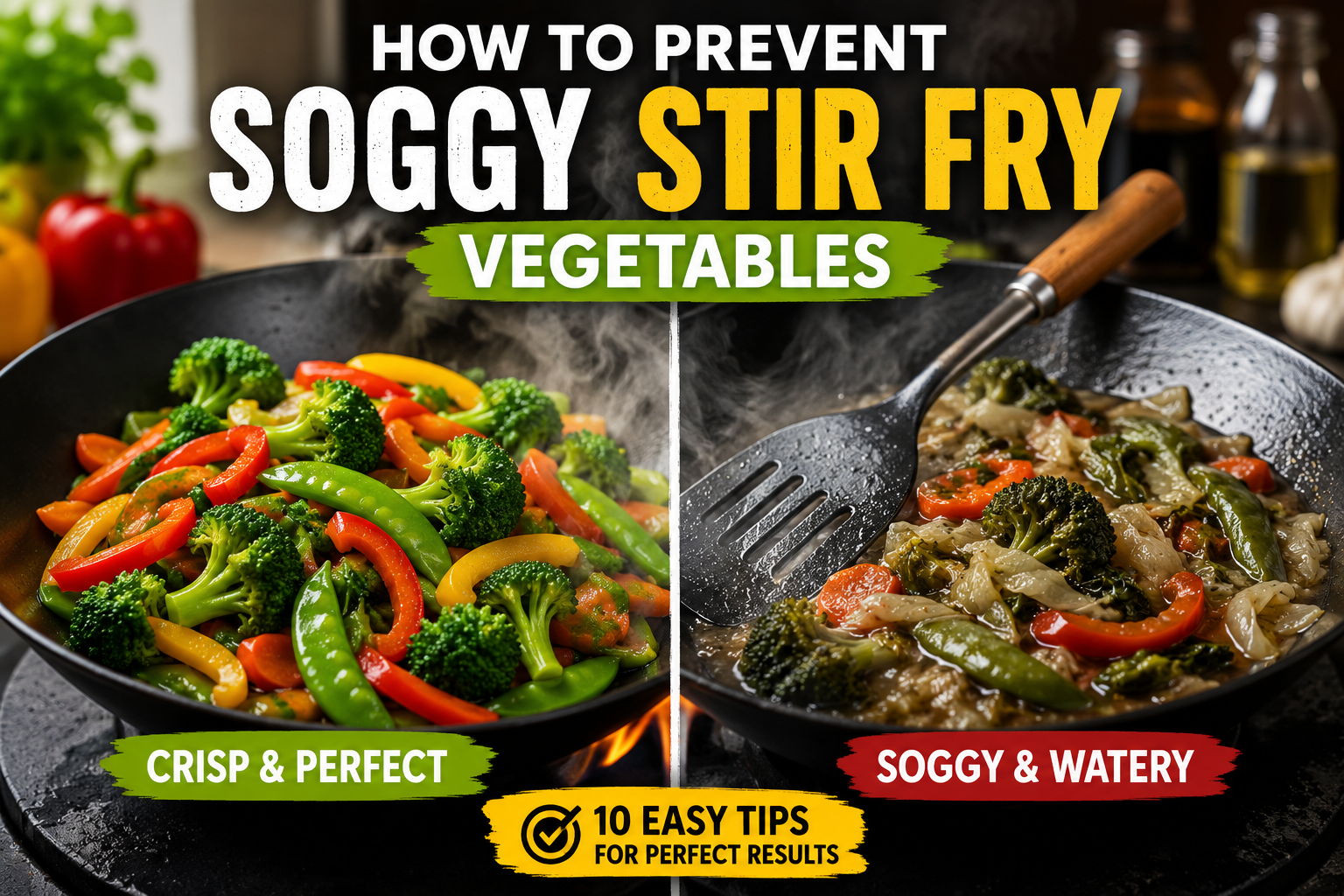
How to Prevent Your Vegetables from Getting Soggy in a Stir Fry
How to Prevent Your Vegetables from Getting Soggy in a Stir Fry
Crisp-tender vegetables are one of the defining features of a great stir fry. Whether you’re making a quick weeknight dinner or recreating your favorite takeout meal, nothing is more disappointing than soggy stir fry vegetables. Instead of vibrant broccoli, crunchy bell peppers, and tender-crisp carrots, you end up with watery, limp vegetables that dilute the sauce and ruin the texture of the entire dish.
The good news is that soggy stir fry vegetables are almost always preventable. Most problems come from a few common mistakes, such as overcrowding the pan, cooking at low heat, adding vegetables in the wrong order, or using produce that contains too much moisture. By making a few simple adjustments, you can consistently achieve vegetables that stay colorful, crisp, and full of flavor.
In this guide, you’ll learn exactly why vegetables become soggy, the science behind high-heat stir frying, and the professional techniques home cooks can use to create restaurant-quality results every time.
Quick Answer
The best way to prevent soggy stir fry vegetables is to cook them over high heat in small batches, avoid overcrowding the pan, dry vegetables thoroughly after washing, and add each vegetable according to its cooking time. Hard vegetables like carrots and broccoli should cook first, while delicate vegetables such as spinach or bean sprouts should be added near the end. Waiting until the final minute to add sauce also helps vegetables stay crisp instead of steaming.
- Use very high heat.
- Preheat the wok or skillet completely.
- Dry vegetables thoroughly before cooking.
- Cook in small batches.
- Add vegetables based on firmness.
- Add sauce only during the last minute.
Table of Contents
- Why Do Stir Fry Vegetables Become Soggy?
- Why High Heat Is Essential for Crisp Stir Fry Vegetables
- How to Prepare Vegetables Before Cooking
- The Correct Order for Cooking Stir Fry Vegetables
- Common Mistakes That Cause Soggy Stir Fry Vegetables
- Expert Tips for Restaurant-Style Results
- Frequently Asked Questions
- References
Why Do Stir Fry Vegetables Become Soggy?
Understanding why soggy stir fry vegetables happen is the first step toward preventing them. During stir frying, vegetables naturally release moisture as their cell walls begin to soften. If that moisture evaporates quickly, the vegetables remain crisp and lightly caramelized. If it stays trapped inside the pan, however, the vegetables steam instead of fry.
Steaming isn’t always a bad cooking method, but it produces a completely different texture. Rather than developing slightly browned edges and a satisfying bite, vegetables become soft, watery, and dull in color. Excess liquid also thins your stir fry sauce, reducing its ability to cling to the ingredients.
Several factors often combine to create this problem:
- Cooking with insufficient heat.
- Adding too many vegetables at once.
- Using vegetables that are still wet after washing.
- Covering the pan and trapping steam.
- Adding sauce too early.
- Using frozen vegetables without properly removing excess moisture.
One of the biggest misconceptions is that cooking longer will improve texture. In reality, extended cooking usually makes soggy stir fry vegetables even softer because the vegetables continue releasing water while losing their natural structure.
Tip: Before adding vegetables, your wok or skillet should be hot enough that a drop of water evaporates almost instantly. This intense heat allows moisture to evaporate immediately instead of collecting in the pan.
The type of vegetable also matters. Broccoli, carrots, snap peas, cabbage, mushrooms, zucchini, onions, and bell peppers all contain different amounts of water and require different cooking times. Understanding these differences helps you build a stir fry where every vegetable finishes cooking at the perfect moment.
If you’re planning a complete meal, try our 15-Minute Chicken and Veggie Stir Fry, which uses vegetables in the proper cooking order for the best texture. For broccoli-specific preparation techniques, see our guide on how to prep broccoli for stir fry before you start cooking.
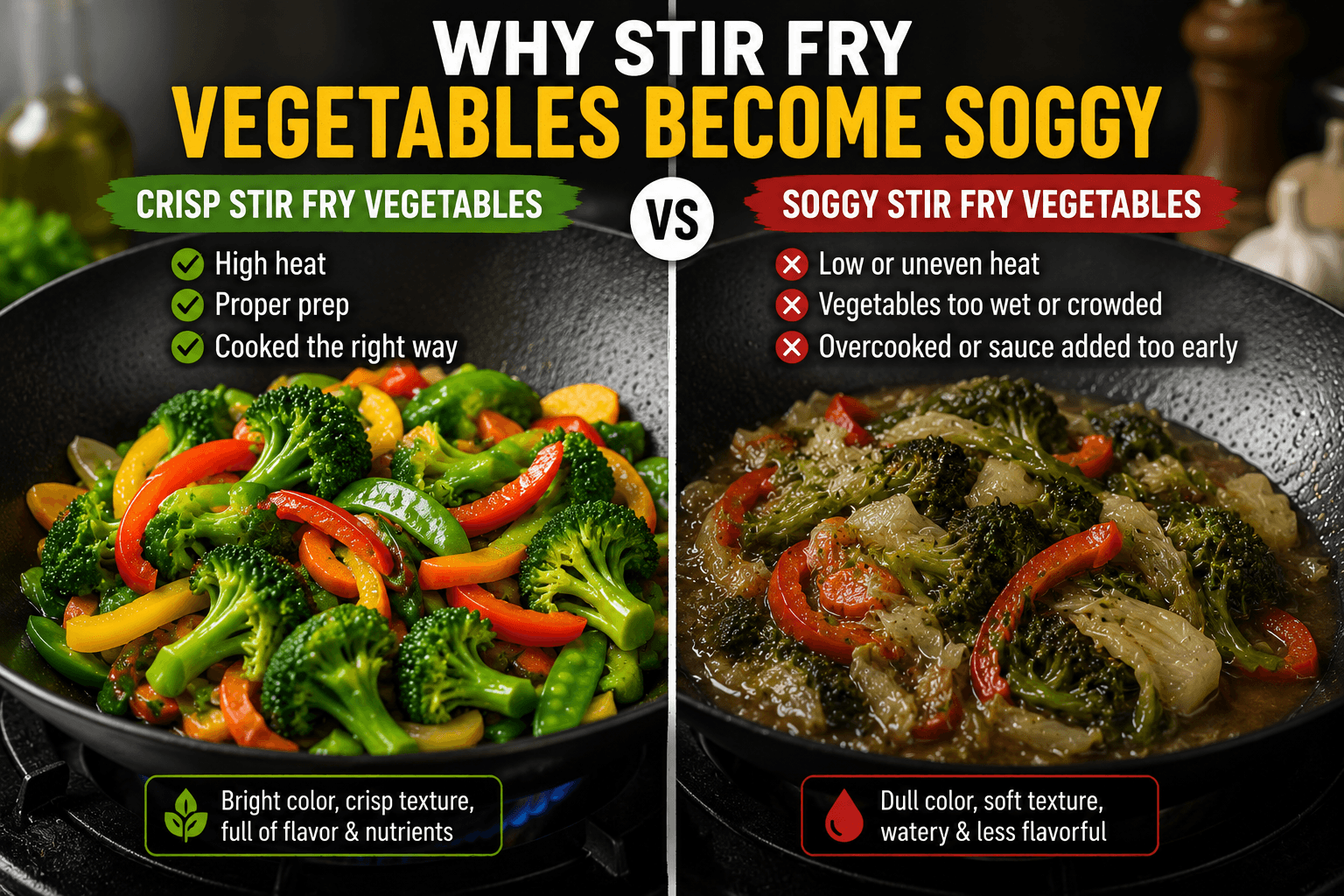
Why High Heat Is Essential for Crisp Stir Fry Vegetables
The biggest difference between restaurant-quality stir fries and disappointing homemade versions is heat. Professional kitchens use burners that generate extremely high temperatures, allowing vegetables to cook in just a few minutes while retaining their natural color, texture, and flavor. Although most home stoves are less powerful, you can still prevent soggy stir fry vegetables by making the most of the heat available.
When vegetables hit a properly heated wok or skillet, moisture on the surface evaporates almost instantly. This quick evaporation keeps vegetables from steaming and encourages light browning, creating the slightly smoky flavor often associated with authentic stir fry.
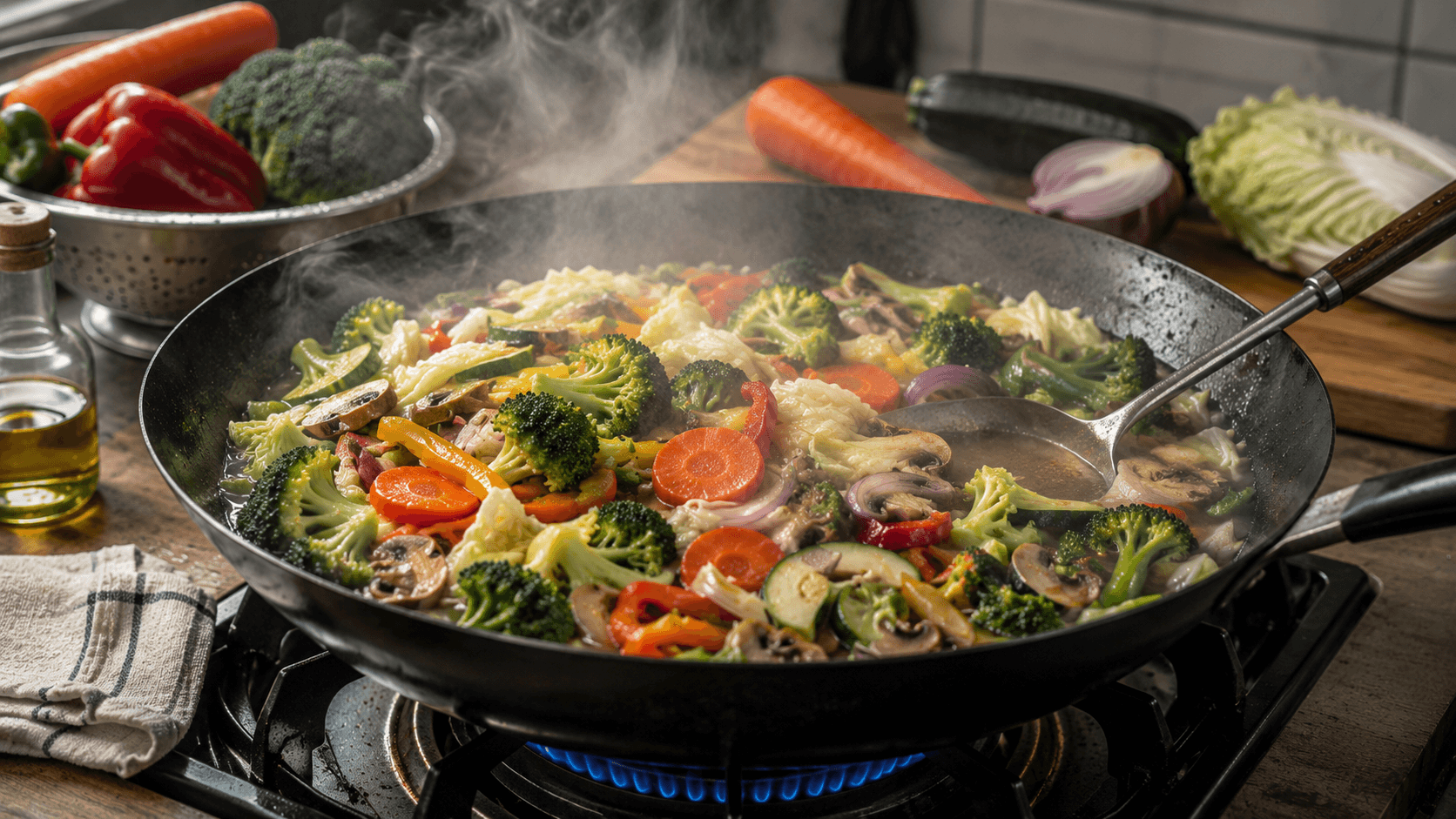
If the pan isn’t hot enough, the opposite happens. Water released from the vegetables pools in the pan, lowering the cooking temperature even further. Instead of frying, the vegetables simmer in their own juices, resulting in soggy stir fry vegetables with faded color and bland flavor.
| Cooking Method | Result | Texture |
|---|---|---|
| High Heat + Small Batch | Moisture evaporates quickly | Crisp-tender with light browning |
| Medium Heat | Partial steaming | Softer vegetables |
| Low Heat | Moisture builds up | Soggy and watery vegetables |
Always preheat your wok or skillet for two to three minutes before adding oil. Once the oil begins to shimmer, it’s ready for cooking. Adding vegetables too early is one of the fastest ways to lose heat and create excess steam.
Kitchen Secret: Restaurant chefs often cook ingredients in separate batches rather than adding everything at once. This keeps the pan hot and allows every ingredient to develop better texture before everything is combined at the end.
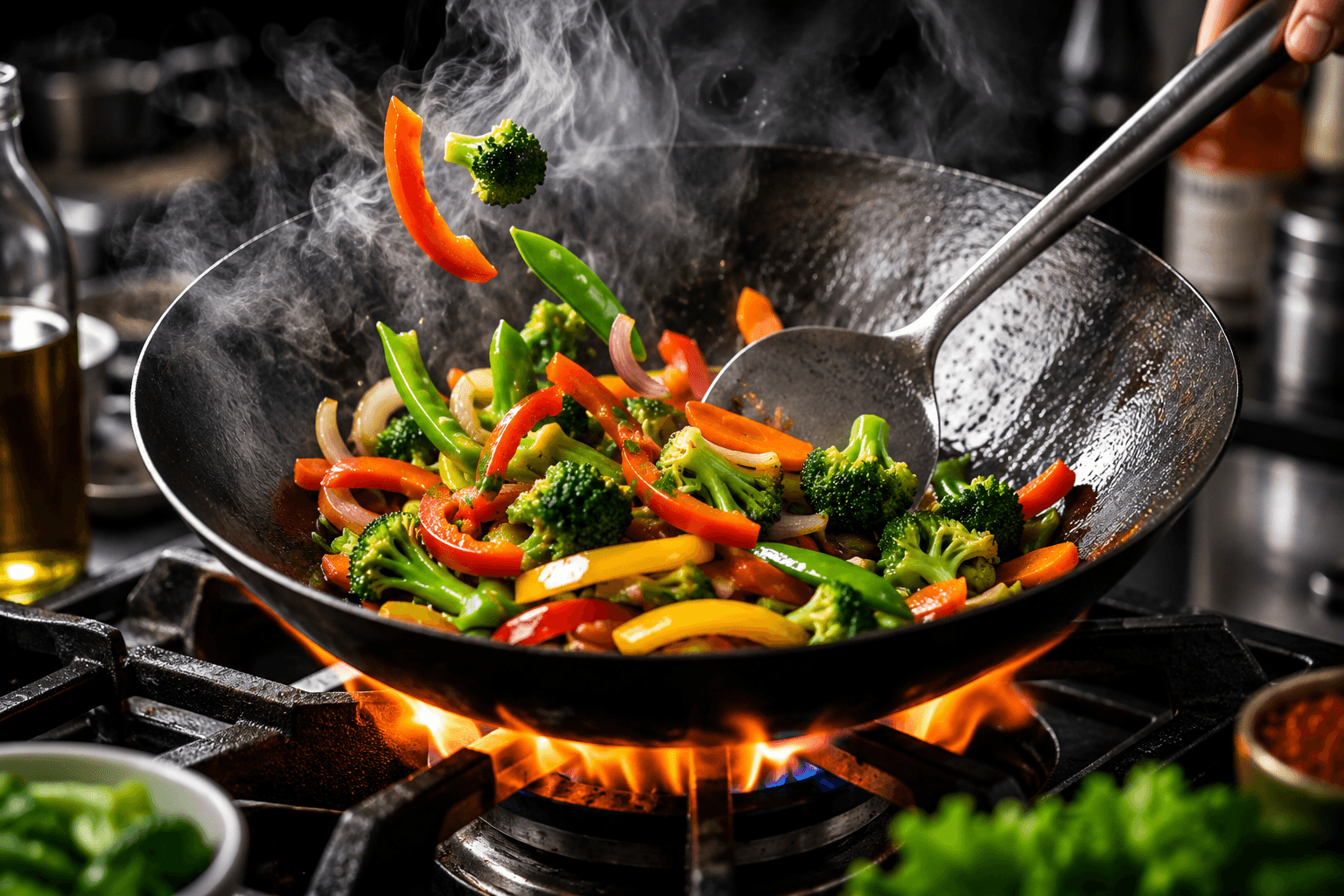
How to Prepare Vegetables Before Cooking
Great stir fries start long before the vegetables touch the pan. Proper preparation removes excess moisture, ensures even cooking, and helps every ingredient finish at the same time. Spending a few extra minutes on prep can completely eliminate the problem of soggy stir fry vegetables.
1. Wash Vegetables Early
Wash vegetables well before you begin cooking so they have time to dry naturally. If you’re short on time, use a salad spinner or pat them completely dry with paper towels. Any water left on the surface quickly turns into steam once it reaches the hot pan.
2. Cut Vegetables into Uniform Sizes
Evenly sized pieces cook at the same rate. Large chunks remain undercooked while smaller pieces become soft and overcooked. Aim for bite-sized pieces that are similar in thickness.
3. Group Vegetables by Cooking Time
Instead of placing every vegetable in one bowl, separate them according to how long they take to cook.
| Cook First | Cook Second | Add Last |
|---|---|---|
| Carrots | Bell peppers | Spinach |
| Broccoli | Mushrooms | Bean sprouts |
| Cauliflower | Onions | Green onions |
| Green beans | Zucchini | Fresh herbs |
This simple organization prevents delicate vegetables from sitting in the pan while harder vegetables finish cooking.
4. Avoid Overcrowding
Even with a large wok, too many vegetables create excess moisture. If you’re cooking for several people, divide the vegetables into two batches. Although this takes a few extra minutes, it dramatically improves texture and prevents soggy stir fry vegetables.
Pro Tip: Fill your wok no more than halfway. Giving vegetables room to move allows moisture to escape quickly and keeps the cooking temperature high.
If broccoli is one of your favorite stir fry vegetables, check out our guide on how to prep broccoli for stir fry for trimming, blanching, and cutting techniques that improve both texture and cooking speed.
Cabbage is another vegetable that can easily become watery if it’s overcooked. Our article on how to cook cabbage in stir fry explains the best techniques for keeping it slightly crisp while bringing out its natural sweetness.
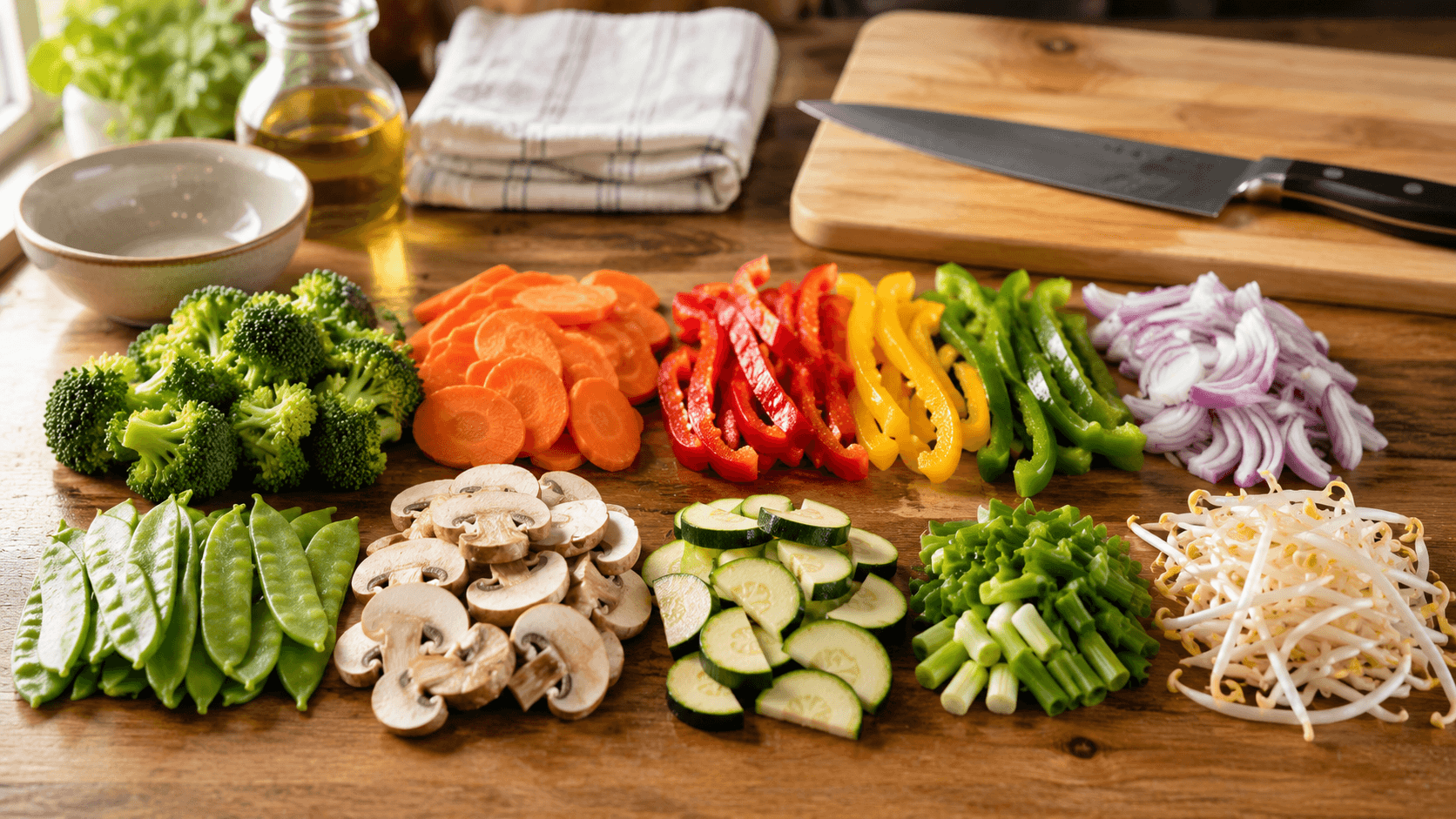
The Correct Order for Cooking Stir Fry Vegetables
Even if you use high heat, you can still end up with soggy stir fry vegetables if everything goes into the pan at the same time. Different vegetables cook at different speeds because they contain varying amounts of water and have different cell structures. Adding them in the correct order allows every ingredient to finish cooking together while maintaining its ideal texture.
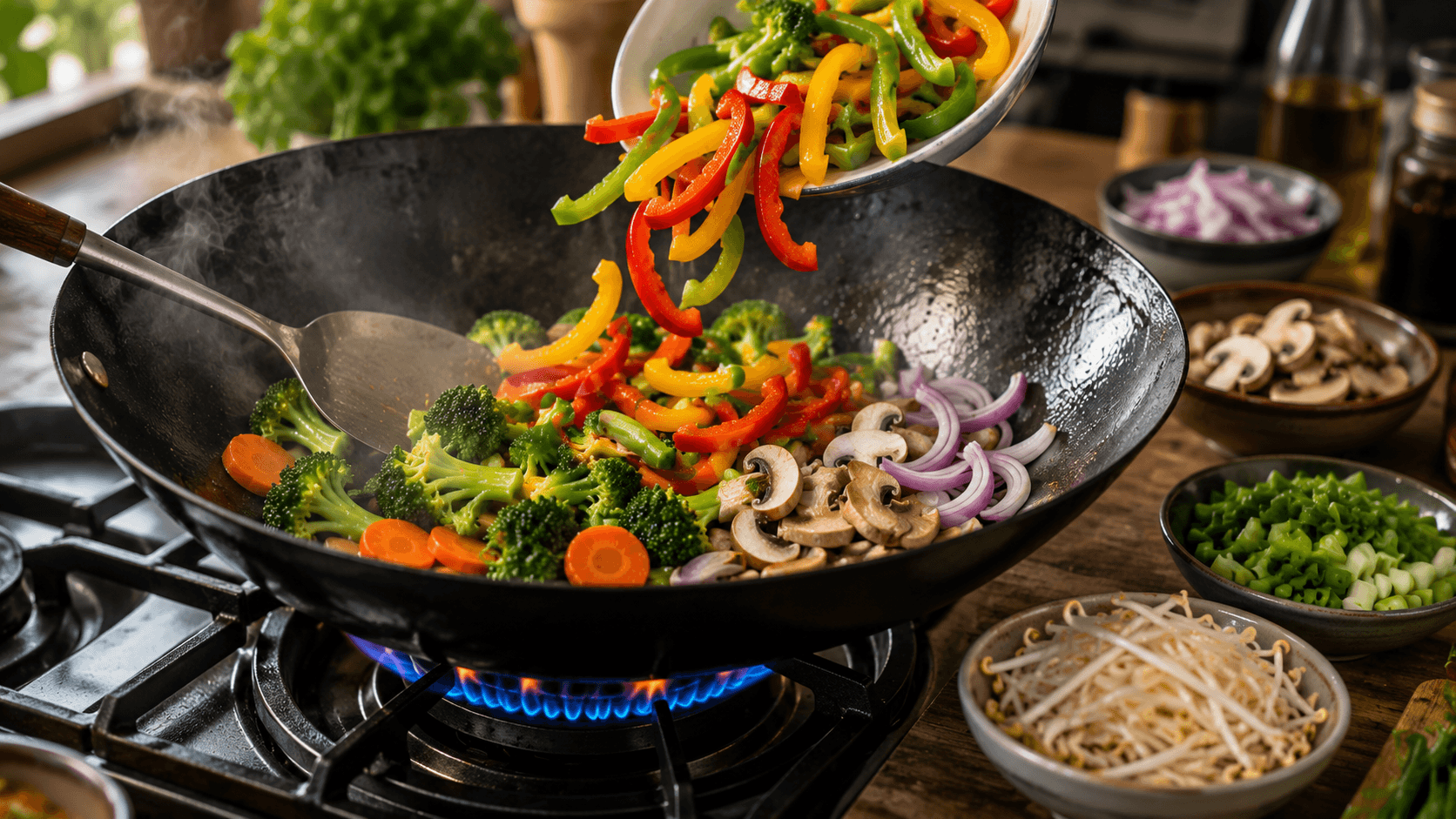
Professional chefs think of stir frying as a series of quick cooking stages rather than one continuous process. Hard vegetables begin cooking first because they need more time to soften. Medium-texture vegetables follow, while leafy greens and delicate ingredients are added only during the final minute.
| Cooking Stage | Vegetables | Approximate Time |
|---|---|---|
| Stage 1 | Carrots, broccoli, cauliflower, green beans | 2–3 minutes |
| Stage 2 | Bell peppers, onions, mushrooms, cabbage | 2 minutes |
| Stage 3 | Zucchini, snap peas, baby corn | 1–2 minutes |
| Final Stage | Spinach, bean sprouts, green onions, fresh herbs | 30–60 seconds |
This cooking sequence keeps every vegetable crisp instead of allowing delicate ingredients to overcook while waiting for harder vegetables to become tender.
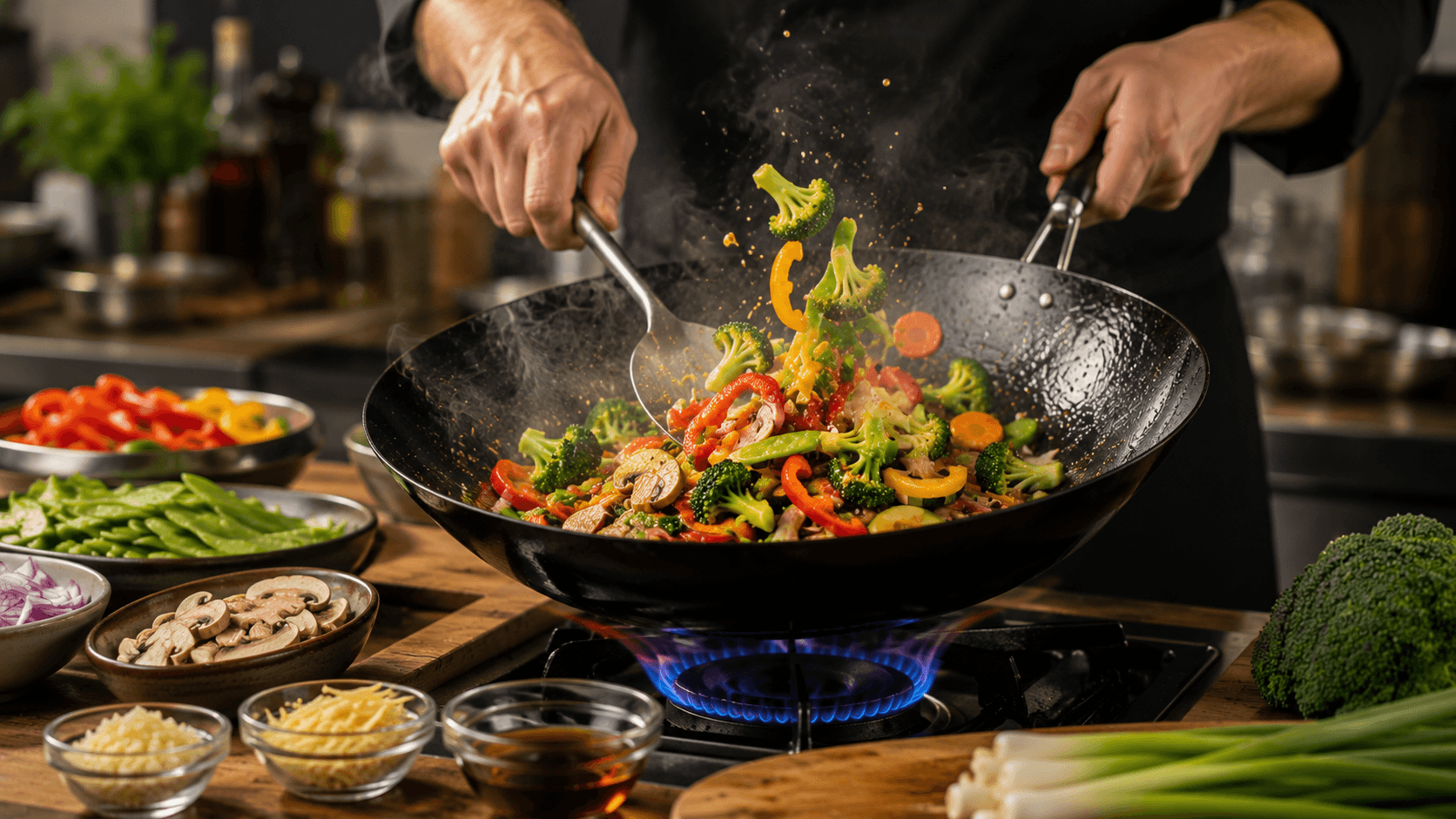
Chef’s Secret: Toss vegetables continuously instead of constantly stirring. Gentle flipping exposes fresh surfaces to the hot pan while preventing vegetables from sitting in pooled moisture.
If you’re making a complete meal, this method works perfectly in recipes like our 15-Minute Chicken Broccoli Stir Fry and 15-Minute Chicken Bell Pepper Stir Fry, where vegetables retain their bright color and satisfying crunch.
Common Mistakes That Cause Soggy Stir Fry Vegetables
Most cases of soggy stir fry vegetables can be traced back to a handful of simple mistakes. Recognizing these problems will help you consistently produce better stir fries at home.
1. Overcrowding the Pan
Adding too many vegetables at once causes the pan temperature to drop immediately. Instead of frying, vegetables begin releasing water faster than it can evaporate, creating steam that softens everything in the pan.
Avoid This: If your vegetables are piled on top of each other instead of touching the cooking surface, you’re cooking too much at once. Divide large batches into two rounds for much better results.
2. Using Vegetables That Are Still Wet
Water left behind after washing quickly turns into steam. Even a few tablespoons of excess moisture can prevent proper browning and lead to watery sauce.
3. Cooking at Medium or Low Heat
Many home cooks worry that high heat will burn their vegetables, so they reduce the temperature. Unfortunately, lower heat extends cooking time and allows vegetables to soften before moisture has a chance to evaporate.
4. Adding Sauce Too Early
Stir fry sauces usually contain soy sauce, broth, vinegar, or other liquids. Pouring them into the pan too soon effectively braises the vegetables instead of stir frying them.
Wait until the vegetables are nearly finished cooking before adding the sauce. This allows it to coat the ingredients without making them soggy.
5. Constantly Covering the Pan
Placing a lid on the wok traps steam inside, dramatically increasing moisture. Unless a recipe specifically calls for it, keep the pan uncovered throughout the cooking process.
6. Overcooking Delicate Vegetables
Spinach, bok choy leaves, bean sprouts, and herbs require very little cooking time. They should be stirred in just before serving so they wilt slightly while maintaining freshness.
Best Practices
- Cook in small batches.
- Use high heat throughout.
- Dry vegetables thoroughly.
- Add sauce near the end.
- Keep vegetables moving.
- Cook by vegetable type.
Avoid These Habits
- Overcrowding the wok.
- Cooking on low heat.
- Adding vegetables while wet.
- Using too much sauce.
- Covering the pan.
- Cooking everything together.
Following these simple corrections will dramatically reduce the chances of ending up with soggy stir fry vegetables. Small changes in technique often produce the biggest improvements in texture.
Expert Tips for Restaurant-Style Crisp Stir Fry Vegetables
Once you’ve mastered the basics, a few professional techniques can take your stir fry to the next level. These methods are commonly used in restaurant kitchens to ensure vegetables stay crisp, colorful, and full of flavor. They’re simple enough for home cooks and can make a noticeable difference in preventing soggy stir fry vegetables.
Choose the Right Pan
A carbon steel wok is the traditional choice because it heats quickly and distributes heat evenly. If you don’t own a wok, a large stainless steel or cast-iron skillet is an excellent alternative. Avoid small non-stick pans, as they often can’t maintain enough heat when filled with vegetables.
Preheat Before Adding Oil
Heating the pan first helps prevent ingredients from sticking and allows vegetables to begin cooking immediately. After preheating, add a high smoke point oil such as avocado, peanut, or refined sunflower oil.
Best Oils for Stir Fry: Avocado oil, peanut oil, refined sunflower oil, canola oil, and refined sesame oil all tolerate high temperatures better than extra virgin olive oil.
Cook Protein Separately
Chicken, beef, shrimp, or tofu release moisture while cooking. For the crispiest vegetables, cook the protein first, transfer it to a plate, then stir fry the vegetables before combining everything near the end.
This technique keeps vegetables from sitting in juices released by the meat and is commonly used in recipes such as our 15-Minute Chicken and Veggie Stir Fry.
Don’t Stop Stirring
Frequent tossing keeps vegetables exposed to the hottest part of the pan while preventing burning. However, avoid aggressive stirring that crushes delicate vegetables. A gentle flipping motion works best.
Finish with Sauce, Not Steam
Once the vegetables reach a crisp-tender texture, pour the prepared sauce around the edge of the wok rather than directly over the vegetables. The sauce heats instantly before coating the ingredients, helping preserve their texture.
Restaurant Technique: Many chefs slightly reduce the sauce for 15 to 30 seconds before tossing it with the vegetables. This creates a glossy coating without adding excess moisture.
Can You Save Soggy Stir Fry Vegetables?
If you’ve already ended up with soggy stir fry vegetables, don’t worry—your meal isn’t necessarily ruined. While it’s difficult to restore their original crispness completely, there are several ways to improve both texture and flavor.
Increase the Heat
Turn the burner to high and continue cooking for one to two minutes while stirring frequently. The extra heat helps evaporate excess liquid from the pan.
Remove Excess Liquid
If a large amount of liquid has collected, carefully pour off some of it before continuing to cook. Too much liquid prevents vegetables from browning.
Add Fresh Vegetables
If possible, stir in a handful of freshly sliced bell peppers, green onions, bean sprouts, or snap peas during the final minute. These fresh vegetables add back some crunch and improve the overall texture.
Thicken the Sauce
If the sauce has become watery, mix a small amount of cornstarch with cold water and stir it into the pan. Allow it to simmer briefly until the sauce thickens and coats the vegetables.
Important: Avoid cooking soggy vegetables much longer than necessary. Extended cooking softens them even more and can make the sauce overly salty as moisture evaporates.
How to Store and Reheat Stir Fry Vegetables
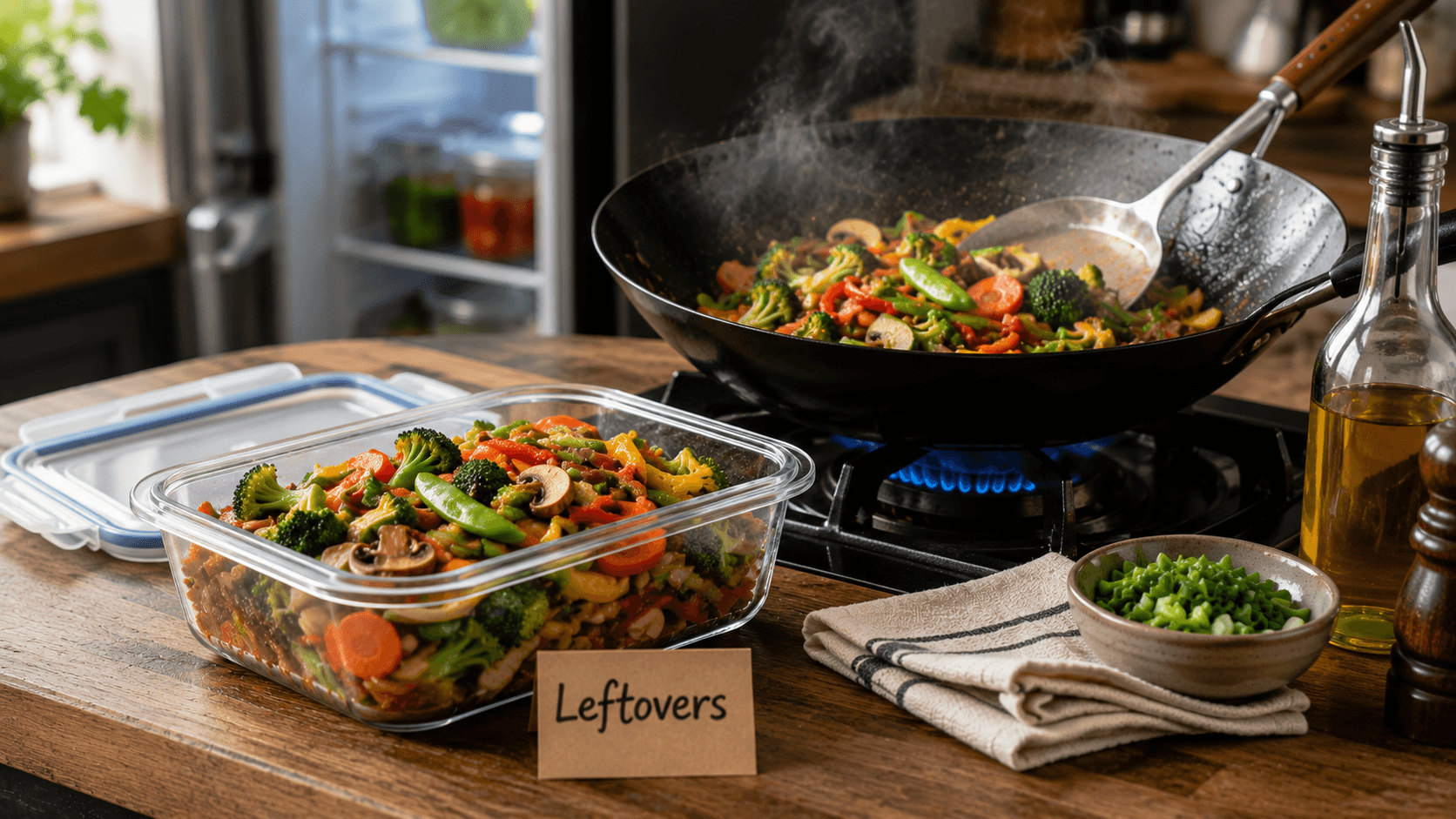
Proper storage helps maintain the quality of leftover stir fry. Although reheated vegetables won’t be quite as crisp as when freshly cooked, the right techniques prevent them from becoming mushy.
Refrigerator
- Cool leftovers within 2 hours.
- Store in an airtight container.
- Use within 3–4 days for the best quality.
Freezer
- Freeze in portion-sized containers.
- Best used within 2 months.
- Expect slightly softer vegetables after thawing.
Best Reheating Method
- Reheat in a hot skillet for 2–3 minutes.
- Avoid microwaving whenever possible, as it creates steam and softens vegetables further.
- Add a splash of water only if the sauce has become excessively thick.
Frequently Asked Questions
Why are my stir fry vegetables always soggy?
The most common causes of soggy stir fry vegetables are overcrowding the pan, cooking over low heat, adding vegetables while they’re still wet, or pouring in the sauce too early. Using high heat, cooking in small batches, and drying vegetables thoroughly before cooking will produce much better results.
Should I cook vegetables before adding chicken?
It’s usually best to cook the chicken first, transfer it to a plate, then stir fry the vegetables separately. Combine everything during the final minute after adding the sauce. This prevents moisture released from the chicken from softening the vegetables.
Can frozen vegetables be used in a stir fry?
Yes, but frozen vegetables release more moisture than fresh ones. Cook them directly from frozen over high heat without thawing first, and avoid overcrowding the pan. Cooking in smaller batches helps prevent soggy stir fry vegetables.
What vegetables stay the crispiest in a stir fry?
Broccoli, carrots, snap peas, bell peppers, green beans, baby corn, and water chestnuts hold their texture well when cooked over high heat. Leafy greens such as spinach should be added during the last minute because they cook very quickly.
When should I add stir fry sauce?
Add the sauce only after the vegetables are nearly cooked. This allows the sauce to coat the ingredients without creating excess steam that can make vegetables soft.
What is the best oil for preventing soggy stir fry vegetables?
Choose an oil with a high smoke point, such as avocado oil, peanut oil, refined sunflower oil, or canola oil. These oils perform well at the high temperatures needed for proper stir frying.
References
- USDA Food Safety and Inspection Service (FSIS) – Safe food handling, cooking, and storage guidance.
- FoodSafety.gov – Government recommendations for food preparation and leftovers.
- University of Minnesota Extension – Vegetable preparation, cooking methods, and food quality information.
- Ask USDA – Official USDA food storage and reheating recommendations.
Final Thoughts
Learning how to prevent soggy stir fry vegetables is more about technique than complicated recipes. By preheating your pan, cooking over high heat, drying vegetables thoroughly, and adding ingredients according to their cooking times, you can consistently achieve crisp, colorful vegetables that rival your favorite restaurant.
Remember that stir frying is designed to be fast. Every extra minute vegetables spend in the pan increases the amount of moisture they release. Working with prepared ingredients, cooking in small batches, and adding the sauce only at the end are simple habits that make a dramatic difference.
As you become more comfortable with these techniques, you’ll find they work with nearly every combination of vegetables and proteins. Whether you’re preparing broccoli, cabbage, bell peppers, mushrooms, or snap peas, these methods will help you create healthier, fresher, and more flavorful stir fries every time.
🍽️ You Might Also Like




📧 Save This Recipe For Later
Enter your email and we will send this recipe directly to your inbox.