
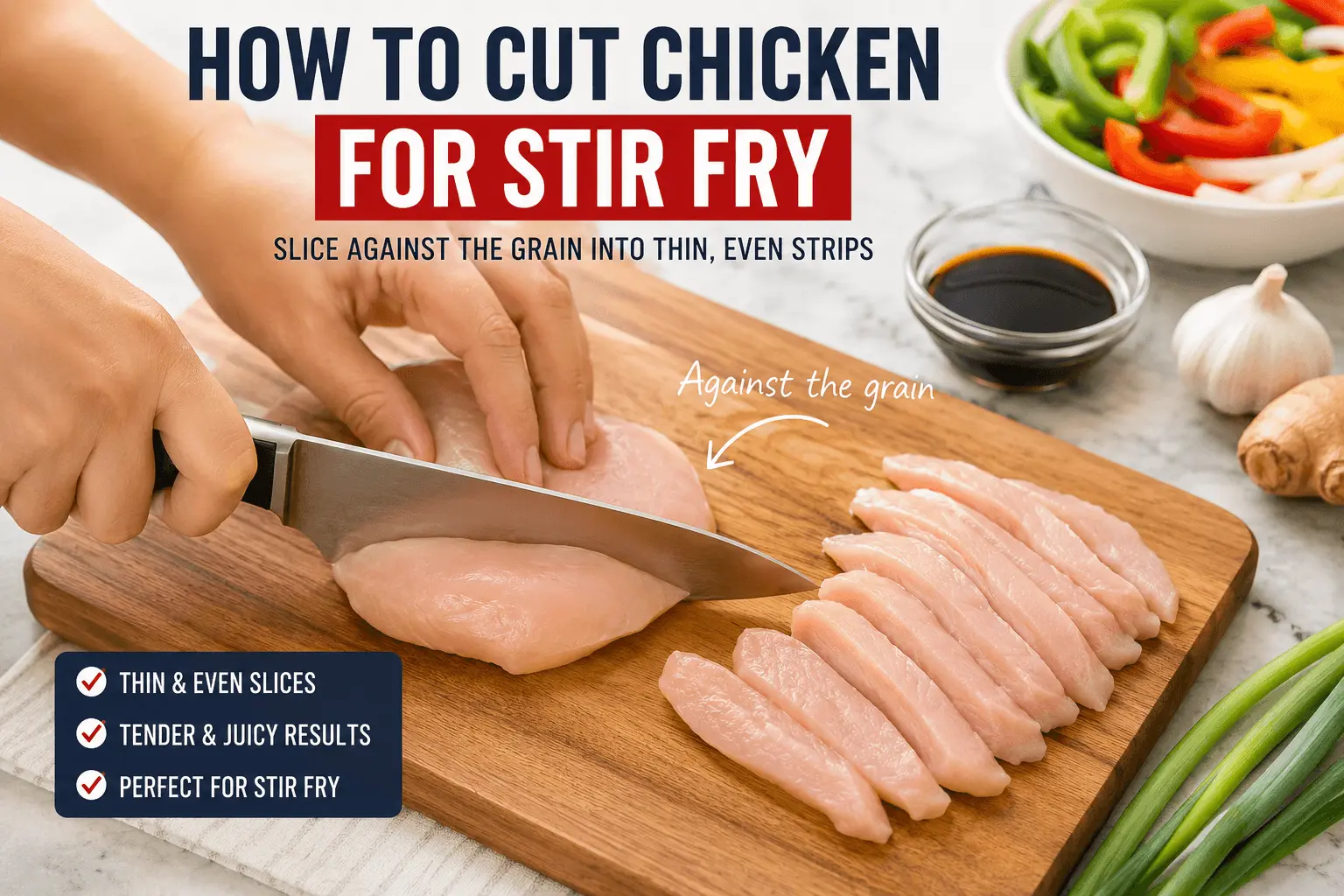
How to Cut Chicken for a 15-Minute Stir Fry (The Best Size & Angle)
How to Cut Chicken for a 15-Minute Stir Fry (The Best Size & Angle)
If you’ve ever wondered why restaurant stir fry chicken is incredibly tender while yours sometimes turns out dry or chewy, the answer often starts before the pan even heats up. Learning how to cut chicken for stir fry is one of the most important skills for creating juicy, evenly cooked chicken in just 15 minutes.
The size, thickness, and cutting angle directly affect how quickly the chicken cooks, how well it absorbs marinades, and how tender every bite becomes. Even the most flavorful sauce can’t rescue chicken that’s been sliced too thick or with the grain.
Professional chefs know that preparing chicken correctly is just as important as using high heat or the right vegetables. Thin, uniform slices cook quickly, brown beautifully, and stay moist because they spend less time in the pan.
In this guide, you’ll learn exactly how to cut chicken for stir fry, including the ideal strip size, the best knife angle, whether to cut with or against the grain, and expert techniques that produce restaurant-quality results every time.
Quick Answer
To cut chicken for stir fry, chill boneless chicken for 15–20 minutes until slightly firm, locate the grain, then slice against the grain at a 30–45° angle into strips about ¼ inch (6 mm) thick and 2–3 inches long. Thin, evenly sized slices cook faster, stay juicy, and absorb marinades much better than thick chunks.
Table of Contents
Why Learning How to Cut Chicken for Stir Fry Matters
Many home cooks believe that marinades or expensive ingredients are responsible for tender stir fry chicken. While those factors certainly help, the way the chicken is sliced has an even bigger impact on the final texture.
When you understand how to cut chicken for stir fry, every piece cooks at the same speed. Uniform strips prevent some pieces from becoming overcooked while others remain undercooked. This creates consistent texture throughout the dish and allows the sauce to coat every piece evenly.
Proper slicing also increases the surface area exposed to the hot pan. More surface contact means better browning, quicker cooking, and improved caramelization without drying out the meat.
Thin strips also absorb marinades much faster than thick cubes. Ingredients like soy sauce, garlic, ginger, sesame oil, and cornstarch coat every piece more evenly, creating the signature restaurant-style flavour many people try to recreate at home.
Restaurant stir fries usually cook in less than five minutes. Uniform chicken strips are one of the biggest reasons professional kitchens achieve fast cooking without sacrificing tenderness.
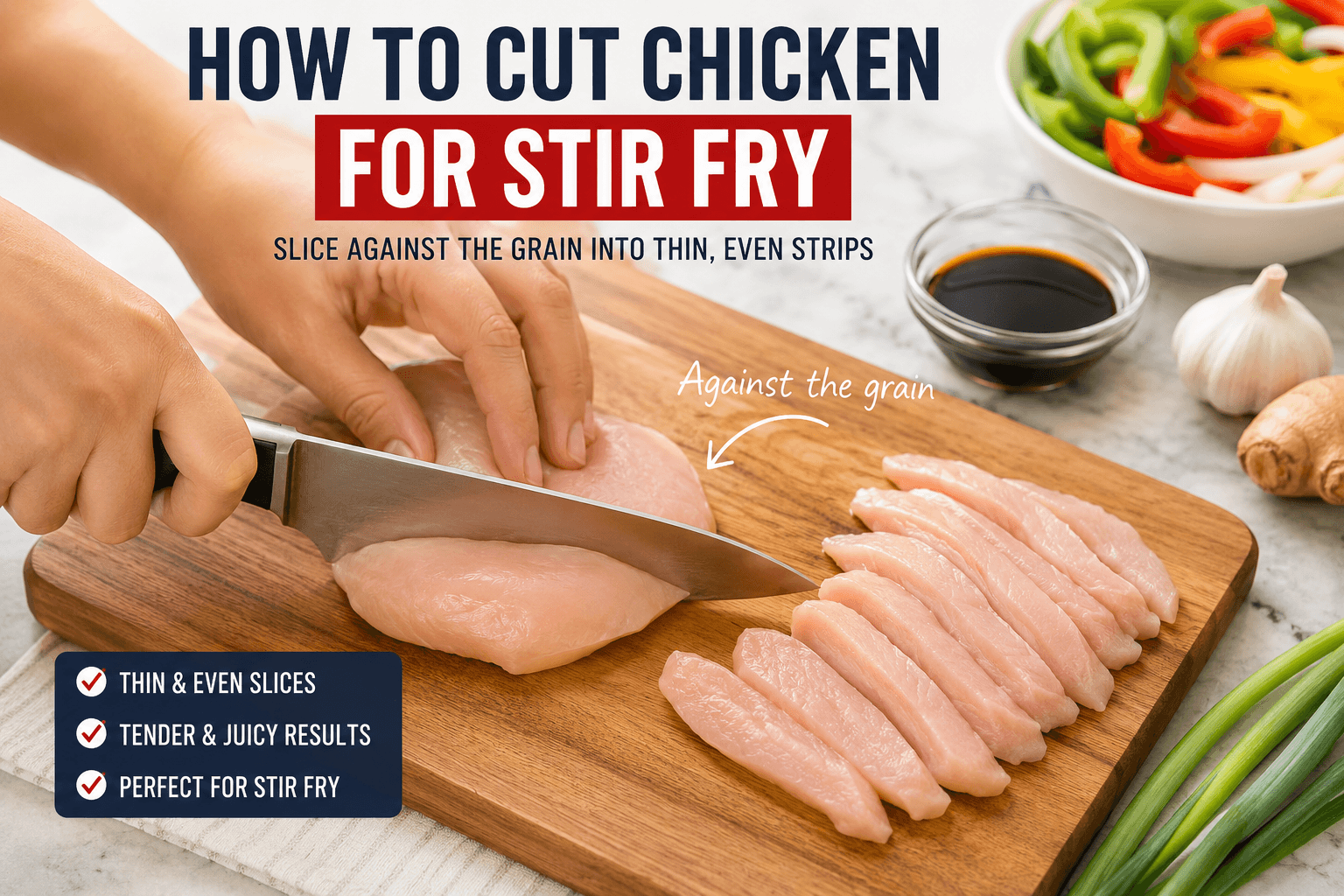
Choose the Best Chicken Cut Before You Slice
Before learning how to cut chicken for stir fry, it’s important to choose the right type of chicken. While almost any boneless cut can work, some perform much better in high-heat stir frying.
Boneless Skinless Chicken Breast
Chicken breast is the most popular option because it’s lean, high in protein, and easy to slice into neat strips. Since it contains very little fat, cutting it correctly is essential to keep it juicy.
Breast meat works especially well in healthier meals like Low-Calorie Chicken Stir Fry, where lean protein is the focus.
Boneless Skinless Chicken Thighs
Chicken thighs contain more natural fat, making them more forgiving during cooking. Even if cooked slightly longer than necessary, thighs usually remain tender and flavorful.
If you prefer richer flavour, thighs are an excellent option for weeknight stir fries.
| Chicken Cut | Texture | Cooking Speed | Best For |
|---|---|---|---|
| Chicken Breast | Lean and tender | Very fast | Healthy stir fries |
| Chicken Thigh | Juicy and flavorful | Fast | Extra tenderness |
| Chicken Tenderloin | Very tender | Very fast | Quick family meals |
Many restaurants combine slightly angled slices with a short cornstarch marinade. This combination creates the silky texture often associated with Chinese restaurant stir fries.
Understanding the Grain
One of the most overlooked parts of how to cut chicken for stir fry is understanding the grain of the meat.
The grain refers to the direction of the muscle fibers. On chicken breast, these fibers appear as long lines running from one end of the breast to the other.
If you slice along those lines, each bite contains long muscle fibers that require more chewing. When you slice across those fibers, every strip becomes significantly more tender because the muscle fibers are shortened.
This simple technique makes a noticeable difference even before marinating or seasoning.
- Locate the grain before trimming.
- Turn the chicken if necessary.
- Slice across the fibers, not with them.
- Keep every strip the same thickness.
Cutting with the grain is one of the most common reasons homemade stir fry chicken becomes chewy, even when it’s cooked correctly.
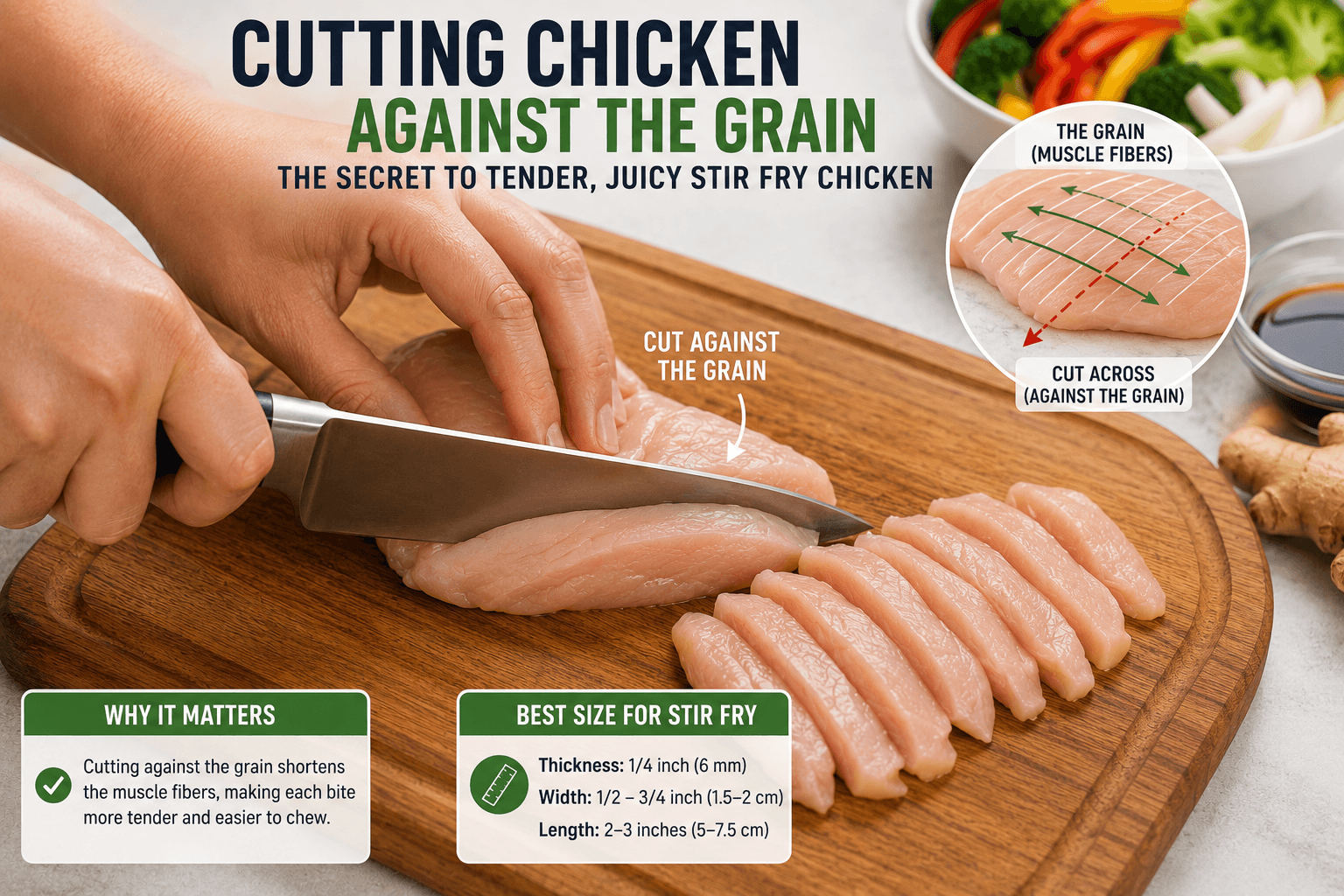
The Best Size and Angle for Stir Fry Chicken
Professional chefs rarely estimate the size of their chicken strips. Consistency is the goal because evenly sized pieces cook at exactly the same rate.
For most stir fry recipes, slices should be approximately ¼ inch thick, between 2 and 3 inches long, and around ½ inch wide. Holding your knife at a slight 30–45° angle produces wider slices with more surface area for browning and sauce coverage.
| Factor | Recommended Measurement | Why It Matters |
|---|---|---|
| Thickness | ¼ inch (6 mm) | Cooks quickly and evenly |
| Length | 2–3 inches | Easy to eat with chopsticks or a fork |
| Width | ½–¾ inch | Balanced cooking and presentation |
| Knife Angle | 30–45 degrees | Creates larger surface area |
| Direction | Against the grain | Produces tender chicken |
These measurements work equally well whether you’re preparing classic vegetable stir fry, a healthy meal prep recipe, or our Lean Chicken Stir Fry.
For an even more detailed cutting guide, including trimming techniques and preparation tips, visit our complete tutorial on How to Cut Chicken for Stir Fry.
Step-by-Step: How to Cut Chicken for Stir Fry
Once you’ve selected the right cut of chicken and identified the grain, it’s time to slice it correctly. Following these simple steps will help you produce tender, evenly cooked chicken every time.
- Trim excess fat. Remove any visible fat, connective tissue, or tough white tendons.
- Pat the chicken dry. Use paper towels to remove surface moisture. Dry chicken is easier to grip and browns better during cooking.
- Chill the chicken. Place it in the freezer for 15–20 minutes. Slightly firm chicken is much easier to slice thinly without tearing.
- Locate the grain. Identify the direction of the muscle fibers before making your first cut.
- Use a sharp chef’s knife. A sharp blade creates clean slices and is much safer than a dull knife.
- Hold the knife at a slight angle. Aim for approximately 30–45 degrees to create wider slices.
- Slice against the grain. Cut across the muscle fibers into strips about ¼ inch thick.
- Keep every piece the same size. Uniform strips cook evenly and finish at the same time.
- Marinate immediately. Thin slices absorb marinades much faster than large chunks.
- Cook over high heat. Spread the chicken into a single layer and avoid overcrowding the pan.
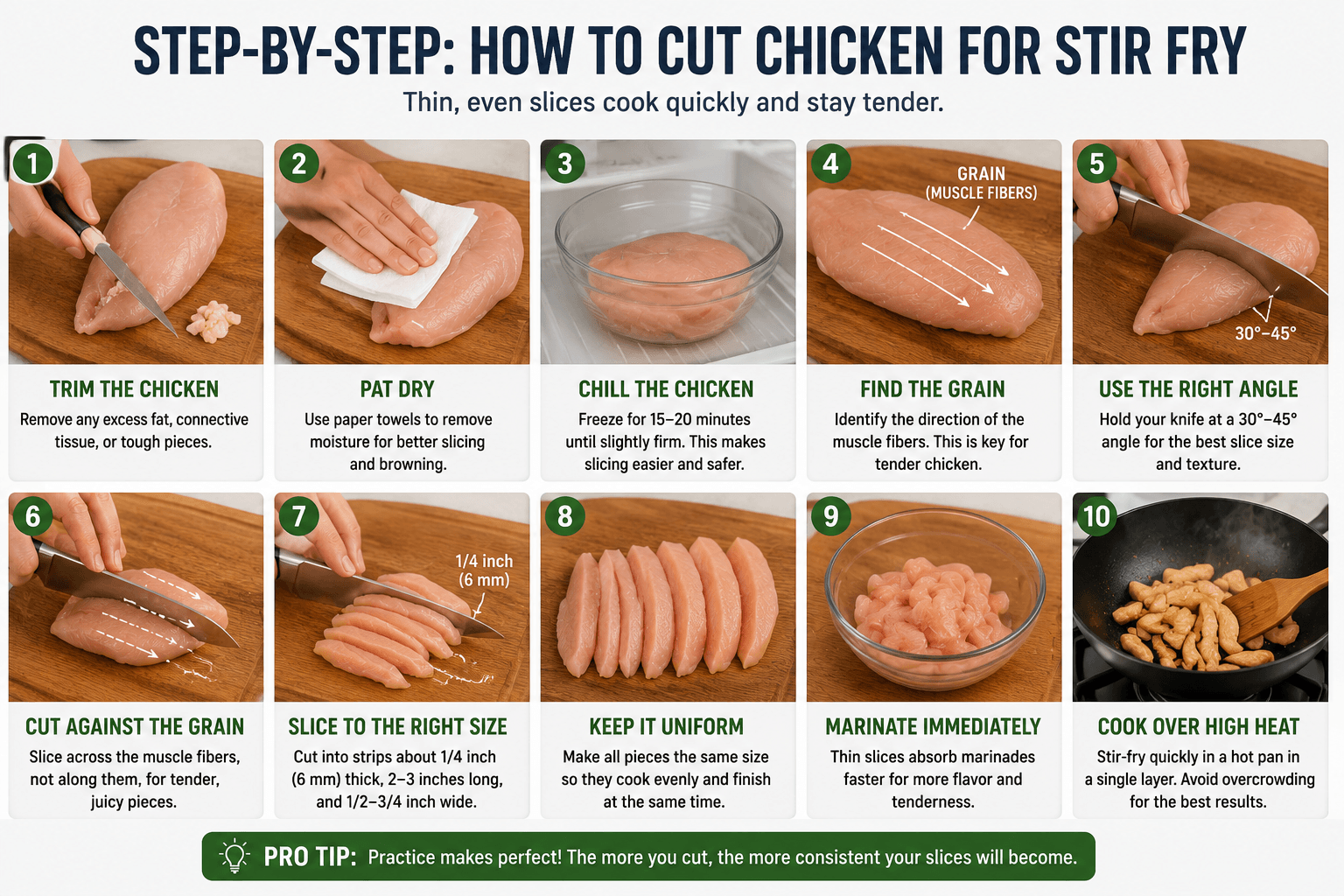
Rotate the chicken instead of your knife if you lose track of the grain. This makes it much easier to continue slicing against the muscle fibers.
Chicken Breast vs. Chicken Thigh for Stir Fry
Both chicken breast and boneless chicken thighs work well for stir fry, but they offer different advantages.
| Feature | Chicken Breast | Chicken Thigh |
|---|---|---|
| Protein | Higher | Slightly lower |
| Fat Content | Low | Higher |
| Tenderness | Excellent when sliced correctly | Naturally tender |
| Cooking Speed | Very Fast | Fast |
| Best For | Healthy meals | Maximum flavor |
If you’re looking for a lighter meal, chicken breast is usually the better choice. If flavor and juiciness are your priorities, boneless thighs are hard to beat.
Best Knife and Equipment
The right equipment makes learning how to cut chicken for stir fry much easier and safer.
- Sharp 8-inch chef’s knife
- Large non-slip cutting board
- Paper towels
- Kitchen towel beneath the board for stability
- Separate cutting board for raw poultry
A freshly sharpened knife glides through chilled chicken with very little pressure, creating smooth slices that cook more evenly than jagged cuts made with a dull blade.
Cooking Notes
- Always preheat your wok or skillet before adding oil.
- Cook chicken in a single layer.
- Avoid overcrowding the pan.
- Cook in batches when necessary.
- Add vegetables after the chicken develops light browning.
- Add sauces during the final minute of cooking.
- Remove chicken as soon as it reaches a safe internal temperature.
Leaving sliced chicken in a crowded pan causes steaming instead of searing, resulting in pale, rubbery chicken rather than flavorful browned strips.
Expert Tips
- Freeze chicken for 15–20 minutes before slicing.
- Slice against the grain every time.
- Maintain a consistent knife angle.
- Don’t rush the prep work.
- Marinate for at least 20 minutes when possible.
- Use high heat throughout cooking.
- Let the pan recover its heat between batches.
- Serve immediately for the best texture.
Pros & Cons of Thin Chicken Strips
Pros
- Cooks in minutes
- Stays juicy
- Absorbs marinades quickly
- Even cooking
- Professional appearance
- Excellent texture
Cons
- Requires careful knife work
- Can overcook if sliced too thin
- Needs a sharp knife
- Takes a little practice
Common Mistakes When Cutting Chicken for Stir Fry
- Cutting with the grain instead of against it.
- Making pieces different sizes.
- Using a dull knife.
- Slicing warm, soft chicken.
- Cutting pieces that are too thick.
- Ignoring visible connective tissue.
- Overcrowding the pan after slicing.
Even perfectly seasoned chicken can become dry if thick pieces stay in the pan too long. Uniform slices are the easiest way to avoid overcooking.
Storage
Store raw sliced chicken in an airtight container in the refrigerator for up to 2 days. For longer storage, freeze the sliced chicken in freezer-safe bags for up to 3 months. Thaw overnight in the refrigerator before cooking. Never leave raw chicken at room temperature for more than 2 hours.
Related Articles
References
Frequently Asked Questions
Should I cut chicken before marinating?
Yes. Thin slices absorb marinades much faster than whole chicken breasts, resulting in better flavor and more even seasoning.
Can I use frozen chicken?
Fully thaw frozen chicken in the refrigerator before slicing. Partially frozen chicken is acceptable only if it has softened enough to cut safely.
What thickness is best for stir fry chicken?
About ¼ inch thick provides the ideal balance between quick cooking and juicy texture.
Why should I cut against the grain?
Cutting against the grain shortens the muscle fibers, making the cooked chicken significantly more tender.
Can I use chicken thighs instead of breasts?
Absolutely. Boneless skinless thighs remain juicy and are an excellent choice for stir fry.
Do I need a special knife?
No. A sharp chef’s knife is all you need for clean, consistent slices.
How long should stir fry chicken cook?
Thin slices usually cook in 3–5 minutes over high heat, depending on thickness and pan temperature.
Final Thoughts
Mastering how to cut chicken for stir fry is one of the simplest ways to improve your cooking. By slicing against the grain, keeping every piece uniform, and using the proper knife angle, you’ll consistently produce juicy, tender chicken that cooks quickly and absorbs every bit of flavor from your favorite sauces. Whether you’re making a healthy weeknight dinner or recreating your favorite takeout dish, proper knife technique is the foundation of an excellent stir fry.
🍽️ You Might Also Like



📧 Save This Recipe For Later
Enter your email and we will send this recipe directly to your inbox.