
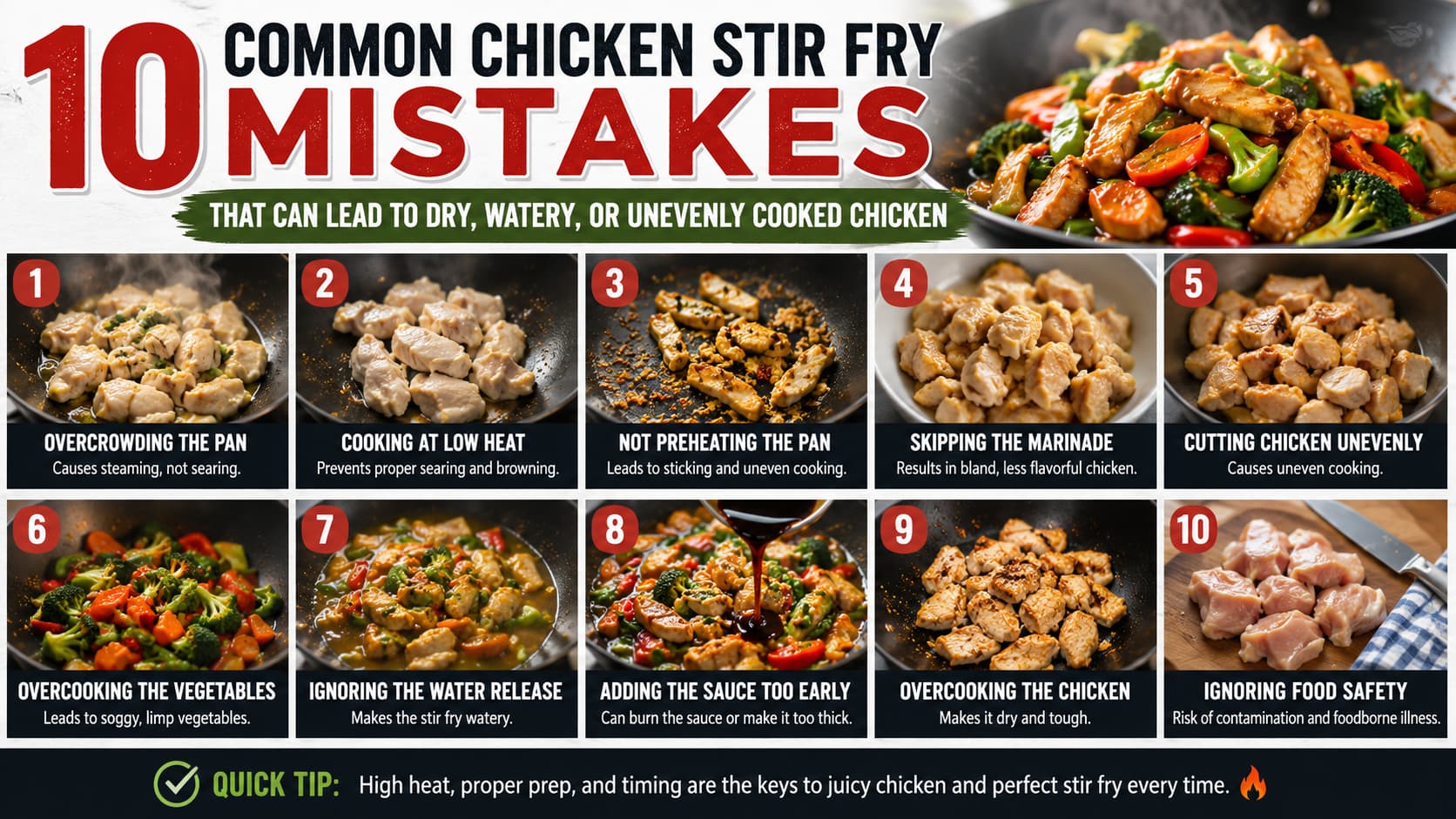
10 Common Chicken Stir Fry Mistakes (And How to Fix Them)
10 Common Chicken Stir Fry Mistakes (And How to Fix Them)
Making a delicious chicken stir fry looks simple, but small mistakes can quickly turn a fast, flavorful meal into something dry, watery, bland, or overcooked. Many home cooks assume stir frying is just about tossing chicken and vegetables into a hot pan, yet professional chefs rely on a series of techniques that keep the chicken juicy while creating the signature caramelized flavor found in restaurant-quality dishes.
The good news is that most chicken stir fry mistakes are easy to fix once you know what causes them. From choosing the wrong cut of chicken to overcrowding the pan or adding sauce too early, understanding these common problems can dramatically improve your results. Even small adjustments—like preheating your wok properly or cooking in batches—can make a noticeable difference.
In this guide, you’ll learn the ten most common chicken stir fry mistakes, why they happen, and the practical solutions that help you create perfectly cooked stir fry every time.
Quick Answer
The most common chicken stir fry mistakes include using the wrong chicken cut, slicing uneven pieces, skipping the marinade, overcrowding the pan, cooking over low heat, stirring too often, adding vegetables at the wrong time, using too much sauce, overcooking the chicken, and ignoring food safety practices. Fixing these issues helps produce juicy chicken, crisp vegetables, and better flavor with every stir fry.
Table of Contents
Why Chicken Stir Fry Mistakes Happen
Stir frying is one of the fastest cooking methods, which means there is very little room for error. Unlike roasting or slow cooking, where food has time to recover from minor mistakes, stir frying happens in just a few minutes. Every decision—from slicing the chicken to controlling the heat—directly affects the final result.
One of the biggest reasons home cooks experience chicken stir fry mistakes is misunderstanding how quickly heat works in a wok or skillet. High heat is essential for creating the slightly browned exterior that locks in moisture, but many people either cook over medium heat or overload the pan, causing the chicken to steam instead of sear.
Preparation also plays a major role. Professional kitchens complete nearly all chopping, mixing, and measuring before turning on the stove. Because stir frying moves so quickly, stopping to slice vegetables or measure sauce usually leads to overcooked chicken or burned ingredients.
Tip: Prepare every ingredient before heating the pan. Having everything within reach allows you to cook continuously and prevents overcooking.
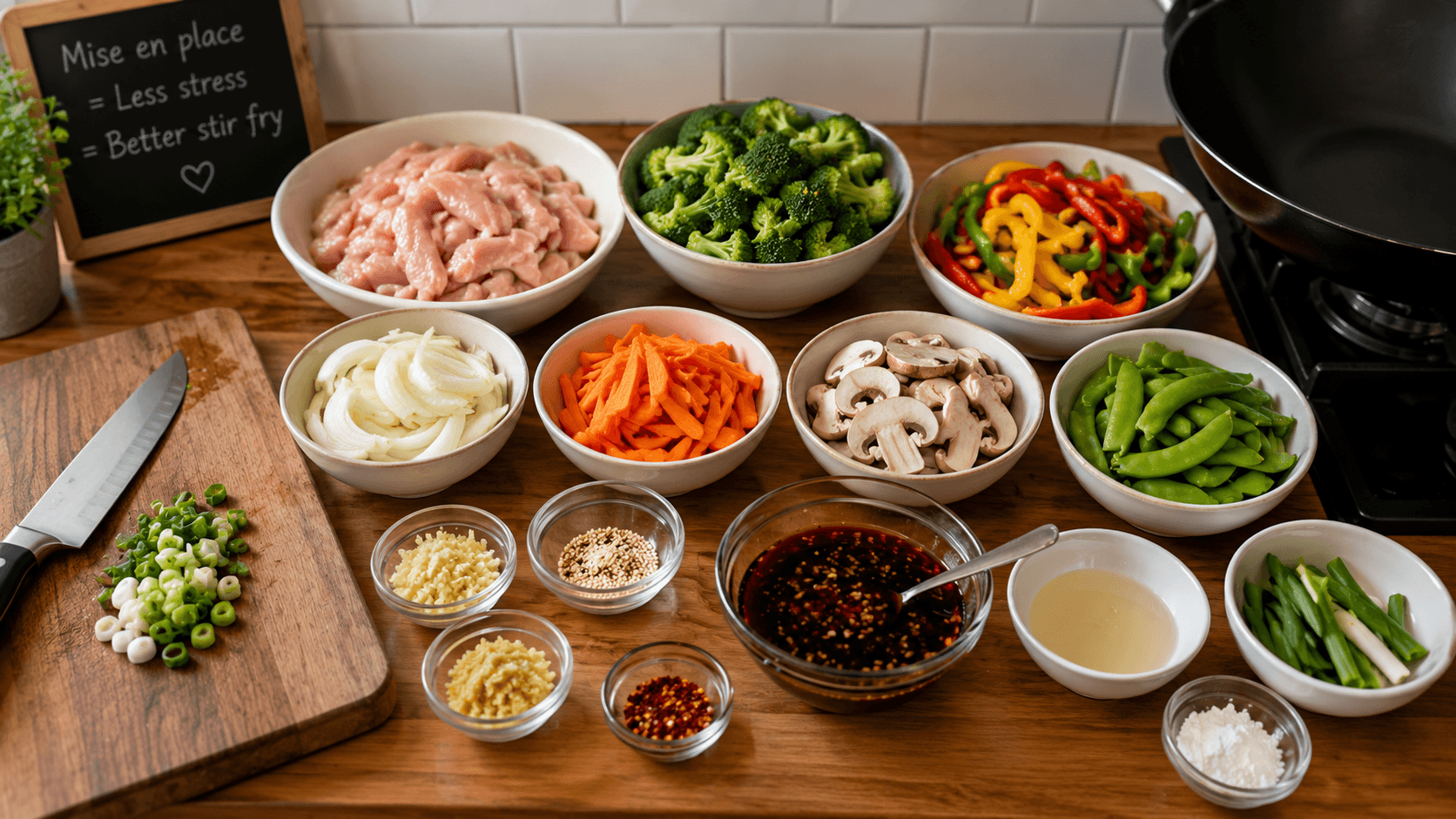
If you’re just getting started, reading our complete Chicken Stir Fry guide will help you understand the basic workflow before tackling more advanced techniques discussed in this article.
Mistake #1: Choosing the Wrong Cut of Chicken
The first and most overlooked of all chicken stir fry mistakes happens before cooking even begins. Not every cut of chicken performs the same in a stir fry. Lean chicken breast cooks quickly but dries out easily if overcooked, while boneless, skinless chicken thighs contain more fat and remain tender even during longer cooking.
If your chicken consistently turns out dry or chewy, the cut you’re using may be the real problem rather than your cooking technique.
| Chicken Cut | Best For | Things to Watch |
|---|---|---|
| Chicken Breast | Lean, high-protein stir fries | Can dry out if overcooked |
| Chicken Thighs | Juicy, flavorful stir fries | Requires slightly longer cooking |
| Chicken Tenderloins | Quick weeknight meals | Cook very quickly |
For many beginners, boneless chicken thighs offer the most forgiving option because their natural fat helps retain moisture even if they’re cooked slightly longer than intended.
If you prefer chicken breast, consider learning how to velvet chicken for stir fry. This simple restaurant technique coats the meat before cooking, helping it stay noticeably juicier.
Chef’s Secret: Slice chicken across the grain rather than with it. This shortens the muscle fibers and produces noticeably more tender bites.
Mistake #2: Cutting Uneven Chicken Pieces
One of the easiest chicken stir fry mistakes to avoid is cutting the chicken into pieces that vary in size. Thick chunks and thin slices cook at different speeds, leaving you with a mix of undercooked and overcooked chicken in the same pan.
Restaurant-quality stir fry starts with consistent knife work. Uniform pieces absorb marinade evenly, cook at the same rate, and brown more consistently. While perfection isn’t necessary, aiming for similar thickness makes a significant difference in the final texture.
For most chicken stir fries, slices about 1/4 inch thick work best. Thin slices cook quickly while remaining juicy when exposed to high heat for a short period.
Tip: Place the chicken in the freezer for 15–20 minutes before slicing. Slightly firm chicken is easier to cut into thin, even strips.
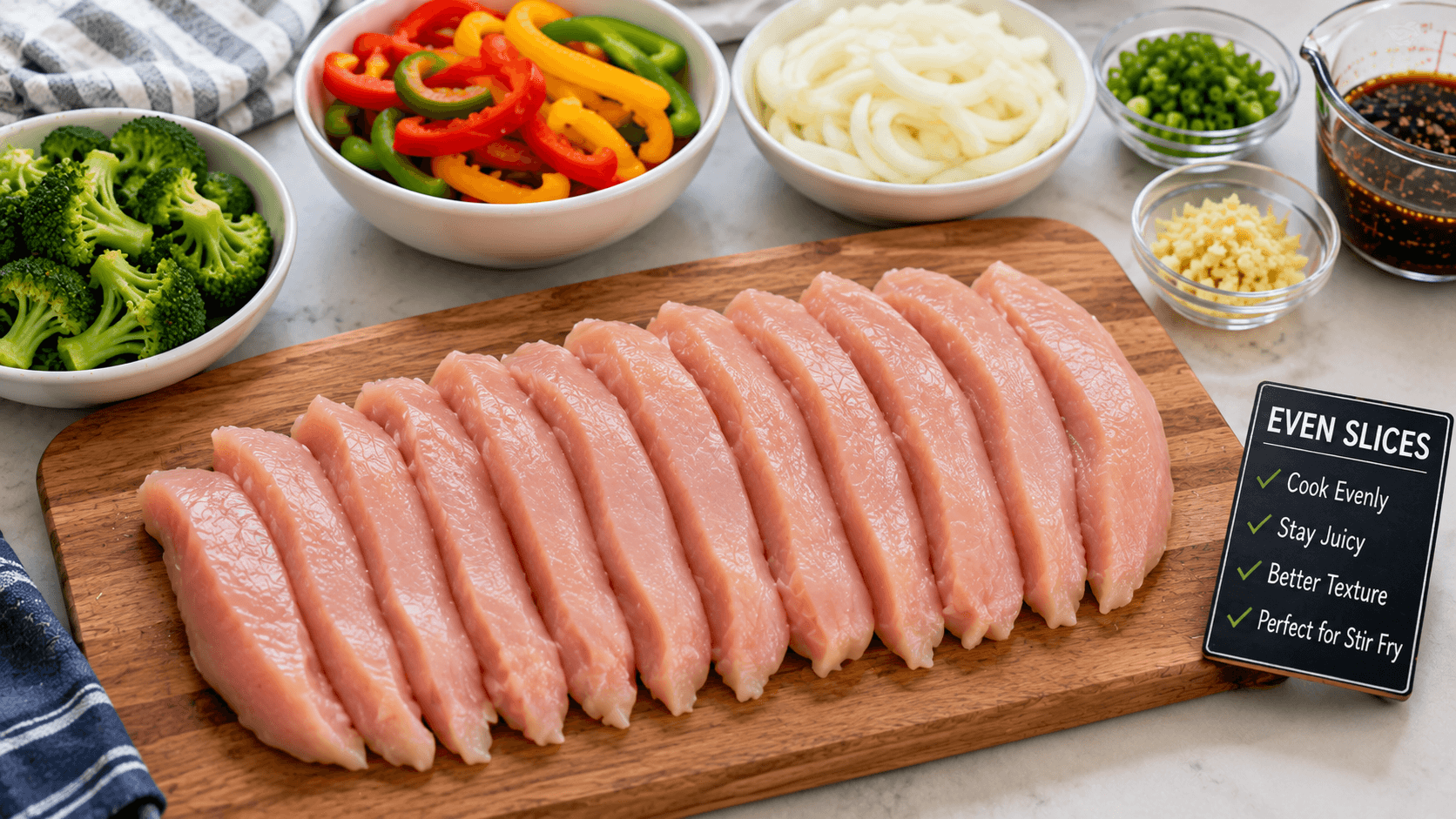
If slicing chicken is difficult, our guide on Juicy Chicken Stir Fry Secrets explains the easiest cutting methods used by professional cooks.
Mistake #3: Skipping the Marinade
Many home cooks believe marinades are only for adding flavor, but that’s only part of the story. One of the biggest chicken stir fry mistakes is cooking plain chicken without any preparation. A simple marinade helps season the meat while improving moisture retention during high-heat cooking.
Even a short 15 to 30-minute marinade can noticeably improve the texture of chicken breast. Ingredients like soy sauce, cornstarch, oil, and a small amount of baking soda or egg white are commonly used in restaurant kitchens to create exceptionally tender stir fry chicken.
Marinating also creates a thin protective coating around the chicken. This barrier slows moisture loss, allowing the meat to stay juicy even after reaching a safe internal temperature.
Chef’s Secret: Cornstarch isn’t only for thickening sauces. In a marinade, it forms a delicate coating that protects the chicken during high-heat cooking.
If you’re unsure how to prepare an effective marinade, read our complete guide on How to Marinate Chicken for Stir Fry.
Mistake #4: Overcrowding the Pan
Perhaps the most common of all chicken stir fry mistakes is adding too much chicken to the pan at once. Instead of sizzling, the chicken releases moisture faster than it can evaporate. The result is steaming instead of browning.
Proper stir frying depends on intense heat. When the pan becomes overcrowded, its temperature drops rapidly, preventing the Maillard reaction that creates rich golden-brown flavor.
| Cooking Method | Result | Best Practice |
|---|---|---|
| Small Batch | Golden brown exterior | Recommended |
| Overcrowded Pan | Steamed, pale chicken | Avoid |
| Cook in Two Batches | Even browning | Ideal for larger meals |
If you’re preparing dinner for several people, cook the chicken in batches. While this adds a few extra minutes, the improvement in flavor and texture is well worth the effort.

Warning: If liquid starts pooling in the pan, it’s usually a sign that the pan is overcrowded or not hot enough. Remove some chicken and continue cooking in smaller batches.
Another issue related to overcrowding is excess moisture. If your chicken often becomes watery instead of browned, our guide on Why Chicken Releases Water During Stir Fry explains the causes and simple fixes.
Mastering these first four chicken stir fry mistakes will dramatically improve your results. In the next section, we’ll cover cooking temperature, stirring techniques, and several additional mistakes that prevent home cooks from achieving restaurant-quality stir fry.
Mistake #5: Cooking Over Low Heat
High heat is one of the defining characteristics of a great stir fry. Unfortunately, many home cooks are afraid of using it, making this one of the most common chicken stir fry mistakes. Cooking over medium or low heat causes the chicken to slowly release moisture instead of quickly searing, resulting in pale, rubbery meat instead of flavorful browned pieces.
A properly preheated wok or skillet should be hot enough that the chicken begins sizzling the moment it touches the surface. This quick sear locks in juices while creating the delicious caramelized flavors associated with restaurant-quality stir fry.
Before adding oil, heat the pan for several minutes. Once the oil begins to shimmer, it’s ready for the chicken. Adding chicken too early lowers the pan temperature and prevents proper browning.
Tip: Use an oil with a high smoke point, such as avocado, peanut, or canola oil. These oils handle stir-fry temperatures better than butter or extra virgin olive oil.
If you’re unsure how long chicken should cook over high heat, our guide on How Long to Cook Chicken Stir Fry provides recommended cooking times for different cuts.
Mistake #6: Stirring the Chicken Constantly
The name “stir fry” often causes beginners to think they should stir the food continuously. Surprisingly, this is one of the biggest chicken stir fry mistakes. Constant stirring prevents the chicken from staying in contact with the hot pan long enough to develop a flavorful golden crust.
Instead of moving the chicken every few seconds, spread it into a single layer and let it cook undisturbed for about one minute before tossing. This allows browning to occur while still preventing burning.
After the first side develops color, continue stir frying with occasional tossing until the chicken is nearly cooked through. This method creates better texture and more appealing color.
Chef’s Secret: Professional chefs often leave chicken untouched for the first minute of cooking. That short pause creates the rich browning many home cooks struggle to achieve.
Mistake #7: Adding Vegetables at the Wrong Time
Another frequent chicken stir fry mistakes is cooking every ingredient together from the beginning. Different vegetables require different cooking times. Delicate vegetables quickly become mushy, while dense vegetables remain undercooked if everything enters the pan at once.
A better approach is to cook ingredients according to their texture and cooking requirements.
| Vegetable Type | Examples | When to Add |
|---|---|---|
| Firm | Broccoli, carrots | First |
| Medium | Bell peppers, mushrooms | Middle |
| Tender | Snow peas, spinach, green onions | Last |
This simple sequence keeps vegetables colorful, crisp, and full of flavor while preventing overcooking.
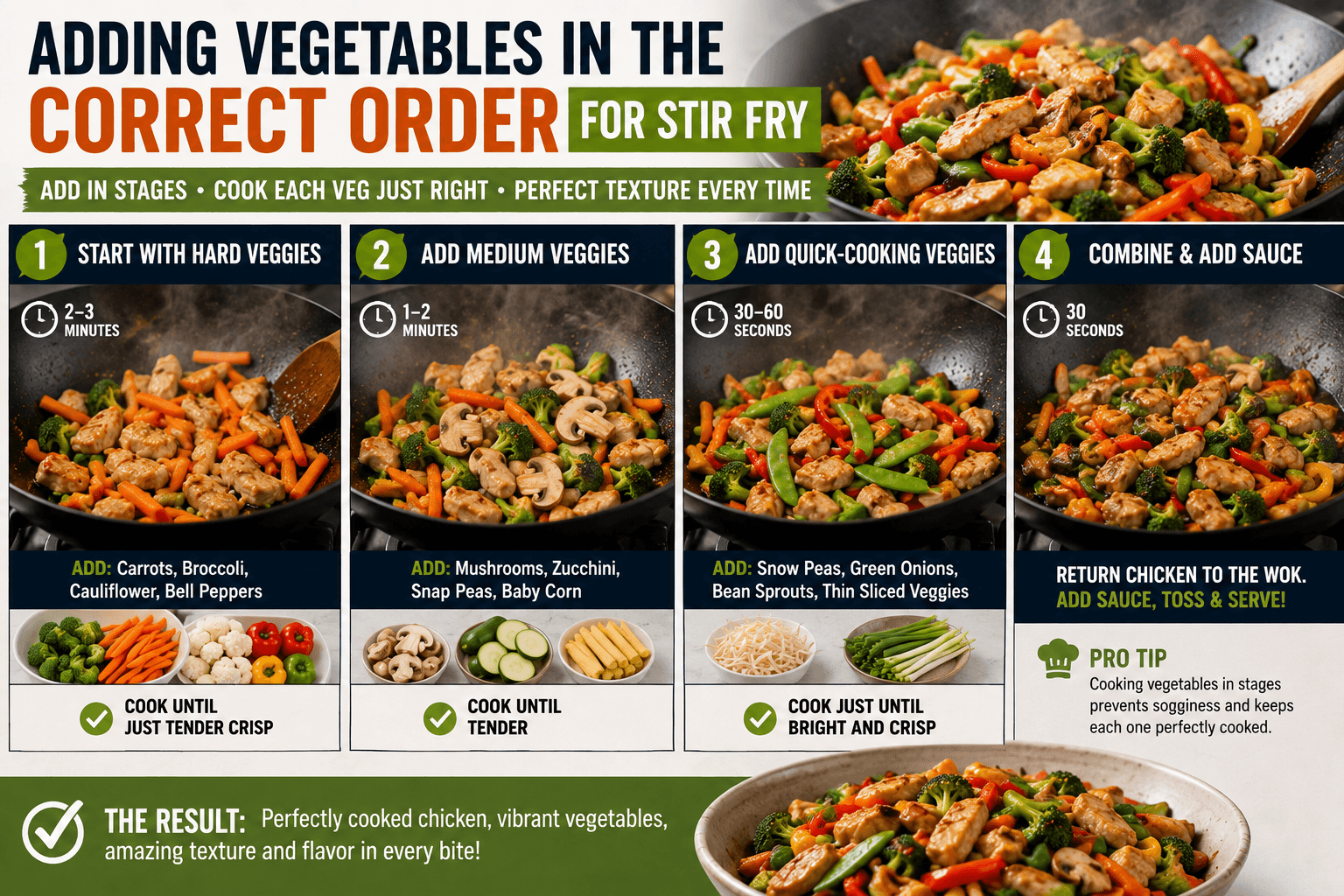
If you’re looking for recipe inspiration that follows this technique, explore our Chicken Broccoli Stir Fry, Chicken Bell Pepper Stir Fry, and Chicken Mushroom Stir Fry recipes.
Warning: Soft vegetables like spinach, bean sprouts, and green onions only need a minute or two of cooking. Adding them too early causes them to lose both texture and color.
By correcting these three chicken stir fry mistakes, you’ll notice more flavorful chicken, brighter vegetables, and a much better overall stir fry. Next, we’ll cover sauce timing, overcooking, food safety, expert tips, and the final troubleshooting advice to help you consistently achieve restaurant-quality results.
Mistake #8: Adding the Sauce Too Early
One of the most overlooked chicken stir fry mistakes is pouring the sauce into the pan before the chicken and vegetables have finished cooking. While it may seem like a time-saver, adding sauce too early lowers the pan temperature and causes the ingredients to simmer instead of stir fry.
Most stir fry sauces contain soy sauce, sugar, honey, cornstarch, or other ingredients that caramelize quickly over high heat. If the sauce cooks for too long, the sugars can burn while the cornstarch thickens prematurely, creating a sticky coating before the chicken has developed enough color.
The best approach is to cook the chicken until it’s almost done, add the vegetables according to their cooking times, and pour in the sauce during the final minute or two. This allows the sauce to coat every ingredient evenly without becoming overly thick or burnt.
Tip: Stir your prepared sauce just before adding it to the pan. Cornstarch settles quickly, and mixing it again helps create a smooth, glossy finish.
If you’re looking for delicious sauce ideas, try our Garlic Chicken Stir Fry, Honey Garlic Chicken Stir Fry, or Teriyaki Chicken Stir Fry recipes.
Mistake #9: Overcooking the Chicken
Even if you’ve avoided every other chicken stir fry mistakes, overcooking the chicken can still ruin the meal. Because stir frying uses high heat, chicken cooks much faster than many people expect.
Boneless chicken breast sliced into thin strips often reaches a safe internal temperature in just a few minutes. Continuing to cook it after it’s done forces moisture out of the meat, leaving it dry and chewy.
The safest way to judge doneness is by using an instant-read thermometer. According to the USDA, chicken is safe to eat when it reaches an internal temperature of 165°F (74°C).
| Chicken Cut | Approximate Cooking Time* | Target Internal Temperature |
|---|---|---|
| Thin Chicken Breast Strips | 3–5 minutes | 165°F (74°C) |
| Chicken Tenderloins | 4–5 minutes | 165°F (74°C) |
| Boneless Chicken Thighs | 5–7 minutes | 165°F (74°C) |
*Cooking times vary depending on slice thickness, pan temperature, and batch size.
Chef’s Secret: Remove the chicken from the heat as soon as it reaches 165°F. Residual heat will continue cooking it for another minute, helping preserve its juices.
If dry chicken has been a recurring problem, our article on How to Prevent Dry Chicken Stir Fry offers additional techniques for keeping every bite tender.
Mistake #10: Ignoring Food Safety
The final item on this list of chicken stir fry mistakes is one that affects both quality and safety. Raw chicken naturally contains bacteria that can spread to cutting boards, utensils, countertops, and other foods if proper hygiene isn’t followed.
Always use a separate cutting board for raw poultry, wash your hands thoroughly after handling raw chicken, and avoid placing cooked chicken back onto the same plate that previously held it.
Safe storage is equally important. Refrigerate raw chicken promptly and avoid leaving prepared ingredients at room temperature for extended periods before cooking.
Warning: Never rely solely on the color of cooked chicken to determine doneness. Always verify that it has reached an internal temperature of 165°F (74°C).
By avoiding these final chicken stir fry mistakes, you’ll not only improve flavor and texture but also ensure your meals are prepared safely for family and guests.
Quick Troubleshooting Guide for Chicken Stir Fry Mistakes
Even experienced home cooks occasionally run into problems when making stir fry. The good news is that most chicken stir fry mistakes have simple solutions. If something doesn’t look or taste right, use the guide below to identify the likely cause and correct it the next time you cook.
| Problem | Likely Cause | How to Fix It |
|---|---|---|
| Chicken is dry | Overcooked or not marinated | Cook only to 165°F and use a simple marinade. |
| Chicken releases lots of liquid | Pan overcrowded or heat too low | Cook in smaller batches over high heat. |
| Chicken sticks to the pan | Pan wasn’t hot enough | Preheat the pan completely before adding oil. |
| Vegetables are soggy | Added too early or overcooked | Add vegetables based on their cooking time. |
| Sauce is too thick | Added too early | Pour the sauce in during the final minute. |
| Chicken lacks flavor | Skipped seasoning or marinade | Marinate for at least 15–30 minutes. |
Best Practices for Restaurant-Quality Chicken Stir Fry
Professional chefs don’t rely on complicated recipes. Instead, they consistently follow a few simple techniques that prevent the most common chicken stir fry mistakes. Adopting these habits can dramatically improve your results, even if you’re using basic ingredients.
- Prepare every ingredient before turning on the stove.
- Slice chicken into evenly sized pieces.
- Marinate the chicken before cooking.
- Preheat the wok or skillet thoroughly.
- Cook over high heat.
- Avoid overcrowding the pan.
- Allow the chicken to brown before stirring.
- Add vegetables in stages based on cooking time.
- Stir the sauce before pouring it into the pan.
- Cook the chicken only until it reaches 165°F (74°C).
Following These Best Practices
- Juicier chicken
- Better browning and flavor
- Crisp, colorful vegetables
- Faster cooking
- Consistent results every time
Ignoring These Best Practices
- Dry or chewy chicken
- Watery stir fry
- Soggy vegetables
- Burnt sauce
- Uneven cooking
Chef’s Secret: Great stir fry is more about preparation than cooking. Once everything is sliced, measured, and ready, the actual cooking process usually takes less than 10 minutes.
Frequently Asked Questions
1. What is the most common chicken stir fry mistake?
The most common chicken stir fry mistakes are overcrowding the pan and cooking over low heat. These mistakes cause the chicken to steam instead of sear, resulting in pale, watery, and less flavorful stir fry.
2. Why does my chicken become dry in a stir fry?
Dry chicken is usually caused by overcooking, skipping the marinade, or using very lean chicken breast without proper preparation. Marinating the chicken and cooking it only until it reaches 165°F (74°C) helps keep it juicy.
3. How can I prevent chicken from releasing water while stir frying?
To avoid one of the most frustrating chicken stir fry mistakes, thoroughly pat the chicken dry, preheat the pan, cook over high heat, and avoid overcrowding. Cooking in smaller batches allows moisture to evaporate quickly instead of collecting in the pan.
4. Should I cook the chicken or vegetables first?
Cook the chicken first until it’s almost done, remove it if necessary, then cook the vegetables according to their required cooking times. Combine everything near the end before adding the sauce.
5. When should I add the stir fry sauce?
Add the sauce during the final one to two minutes of cooking. This allows it to coat the chicken and vegetables evenly without burning or becoming too thick.
6. Is chicken breast or chicken thigh better for stir fry?
Both work well. Chicken breast is leaner and cooks quickly, while boneless chicken thighs contain more fat, making them naturally juicier and more forgiving if slightly overcooked.
References
Final Thoughts
Learning to recognize and avoid common chicken stir fry mistakes can completely transform your cooking. Small changes—such as using the right cut of chicken, slicing evenly, cooking over high heat, and adding the sauce at the proper time—produce noticeable improvements in texture, flavor, and appearance.
Remember that stir frying is designed to be fast. Careful preparation before cooking is what allows everything to come together smoothly once the heat is on. With a little practice, these techniques become second nature, making it easy to prepare juicy chicken and crisp vegetables whenever you want a quick homemade meal.
If you’re ready to put these tips into practice, try our Healthy Chicken Stir Fry or our classic Chicken Stir Fry recipe to experience the difference for yourself.
🍽️ You Might Also Like
📧 Save This Recipe For Later
Enter your email and we will send this recipe directly to your inbox.