
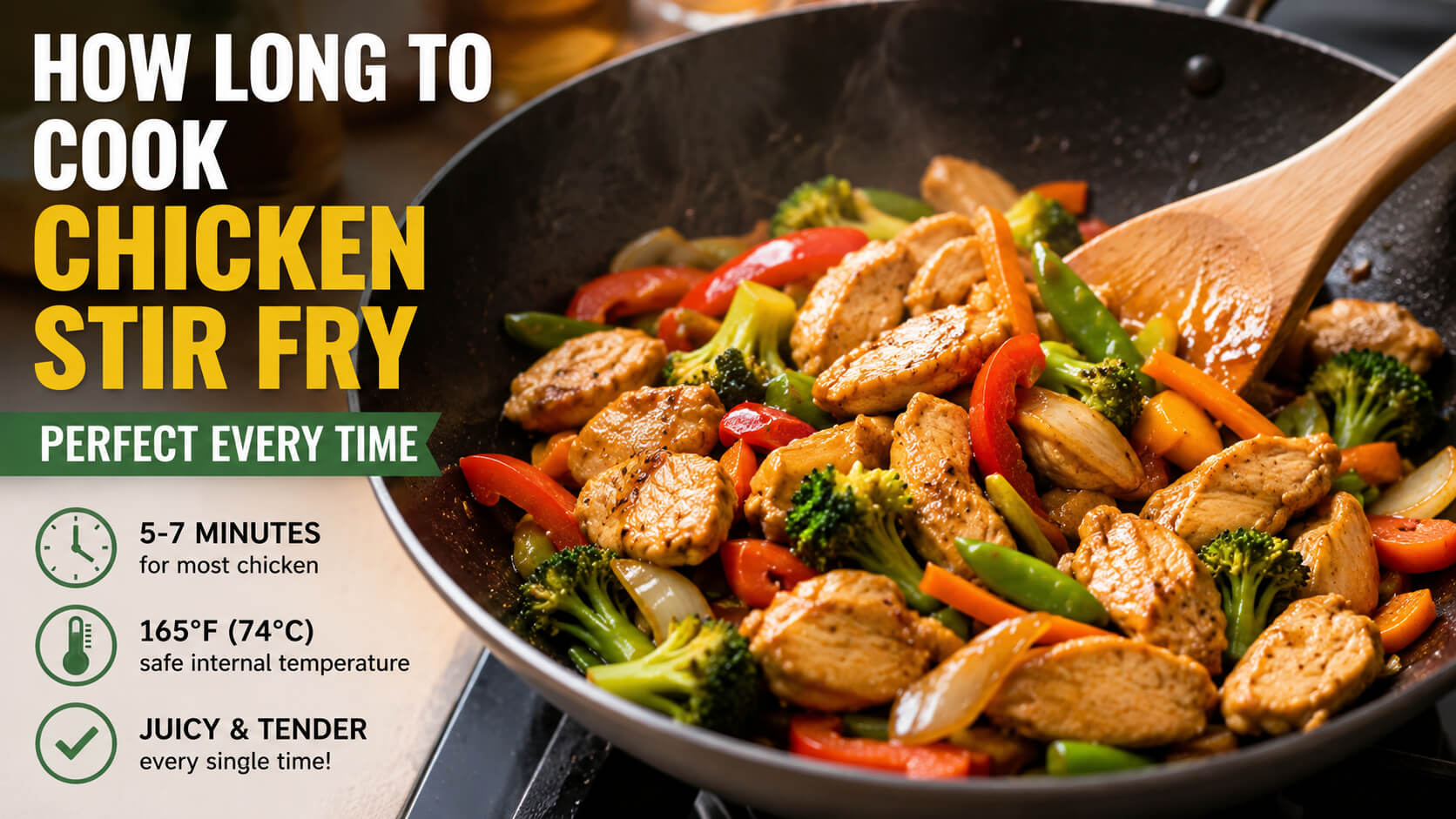
How Long to Cook Chicken in a Stir Fry (Perfect Every Time)
How Long to Cook Chicken in a Stir Fry (Perfect Every Time)
If you’ve ever wondered how long to cook chicken stir fry, you’re not alone. Cooking chicken for the right amount of time is one of the biggest factors that determines whether your stir fry turns out juicy, flavorful, and safe to eat—or dry, rubbery, and disappointing.
Unlike roasting or baking, stir frying uses very high heat and cooks food quickly. That speed is what makes stir fry such a popular weeknight meal, but it also means timing matters. Just one or two extra minutes can make the difference between tender chicken and overcooked meat.
The good news is that learning how long to cook chicken stir fry isn’t difficult. Once you understand how chicken size, pan temperature, and cooking technique work together, you’ll be able to make restaurant-quality chicken stir fry consistently.
In this guide, you’ll learn the ideal cooking times for different cuts of chicken, how to tell when chicken is perfectly cooked, common timing mistakes to avoid, and expert tips that help keep every bite juicy.
Quick Answer
How long to cook chicken stir fry? Thinly sliced chicken breast or chicken thighs usually need 5–7 minutes over medium-high to high heat. Small bite-sized cubes may cook in about 6–8 minutes, while larger pieces can require up to 8–10 minutes. The safest way to confirm doneness is to use an instant-read thermometer and ensure the thickest piece reaches 165°F (74°C).
- Thin strips: 5–7 minutes
- Small cubes: 6–8 minutes
- Larger chunks: 8–10 minutes
- Internal temperature: 165°F (74°C)
Table of Contents
Why Cooking Time Matters in a Chicken Stir Fry
Cooking chicken for the correct amount of time isn’t just about taste—it also affects food safety, texture, moisture, and the overall quality of your meal.
When chicken cooks too quickly on extremely high heat without enough time to finish inside, the outside may brown while the center remains undercooked. On the other hand, leaving chicken in the pan for too long causes the muscle fibers to tighten and squeeze out moisture.
That’s why understanding how long to cook chicken stir fry helps you strike the perfect balance between juicy texture and safe cooking.
Restaurant stir fries taste tender because professional cooks combine proper slicing, very hot pans, and precise cooking times instead of simply cooking longer.
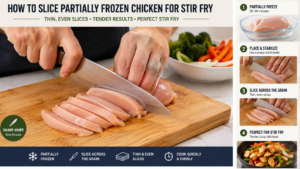
Tip: Always slice chicken into evenly sized pieces. Uniform pieces cook at the same speed, reducing the risk of dry or undercooked pieces.
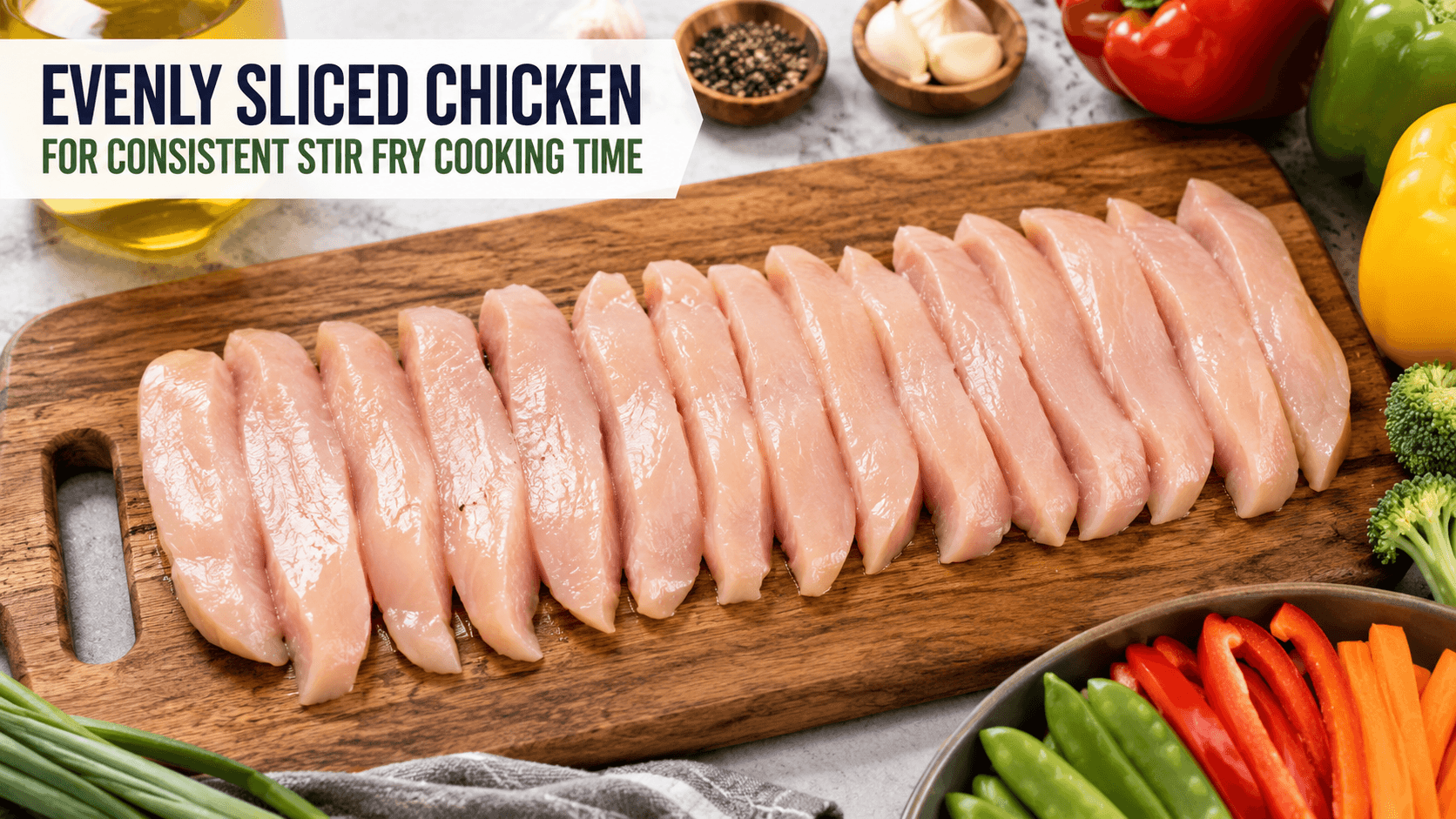
How Long to Cook Chicken Stir Fry by Chicken Cut
Different cuts and sizes require slightly different cooking times. Thickness matters even more than the type of chicken.
| Chicken Cut | Average Size | Cooking Time | Best Result |
|---|---|---|---|
| Thin breast strips | ¼ inch thick | 5–7 minutes | Very tender |
| Chicken thighs | Thin strips | 6–7 minutes | Juicy and flavorful |
| Small cubes | 1 inch | 6–8 minutes | Balanced texture |
| Large chunks | 1½ inches | 8–10 minutes | Fully cooked center |
Chicken breast cooks slightly faster because it’s leaner. Chicken thighs contain more fat, which helps them stay juicy even if cooked a little longer.
If you’re preparing recipes like Chicken Broccoli Stir Fry or Chicken Veggie Stir Fry, slicing the chicken thinly allows it to finish cooking at nearly the same time as the vegetables.
Kitchen Secret: Instead of constantly stirring, let the chicken sit untouched for 30–45 seconds between flips. This creates better browning while still keeping the meat juicy.
What Affects How Long to Cook Chicken Stir Fry?
Even when using the same recipe, cooking time can vary depending on several important factors.
1. Thickness of the Chicken
The thicker the pieces, the longer they need to cook. Thin slices cook much faster and are ideal for stir frying because they stay tender.
2. Pan Temperature
A properly preheated wok or skillet cooks food quickly while sealing in moisture. If the pan isn’t hot enough, chicken releases liquid instead of browning, increasing the cooking time.
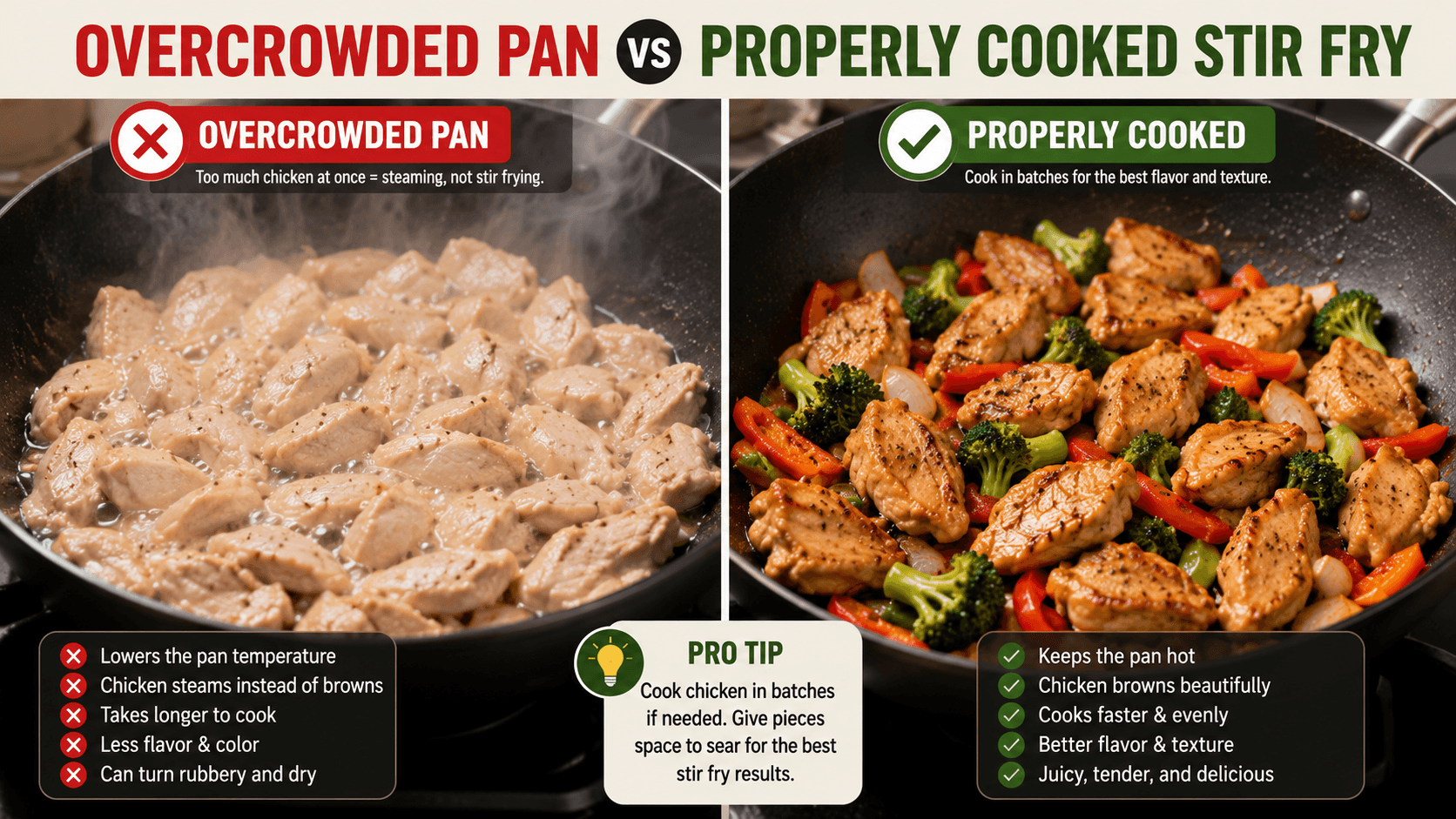
3. Overcrowding the Pan
Adding too much chicken at once lowers the pan temperature dramatically. Instead of stir frying, the chicken begins to steam.
This not only increases cooking time but also prevents the golden color associated with great stir fry.
Warning: Cook chicken in batches if necessary. Crowding the pan is one of the biggest reasons homemade stir fry turns soggy instead of beautifully browned.
4. Frozen vs Fresh Chicken
Fresh chicken cooks more evenly than partially frozen meat. Always thaw chicken completely before stir frying for predictable cooking times and better texture.
5. Marinating the Chicken
A good marinade doesn’t significantly change cooking time, but it can help the chicken retain moisture while it cooks.
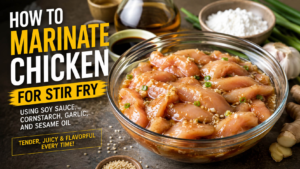
If you’d like to improve tenderness even further, learn how to marinate chicken for stir fry or try the restaurant technique explained in our guide on how to velvet chicken for stir fry.
Should You Cook Chicken Before Adding Vegetables?
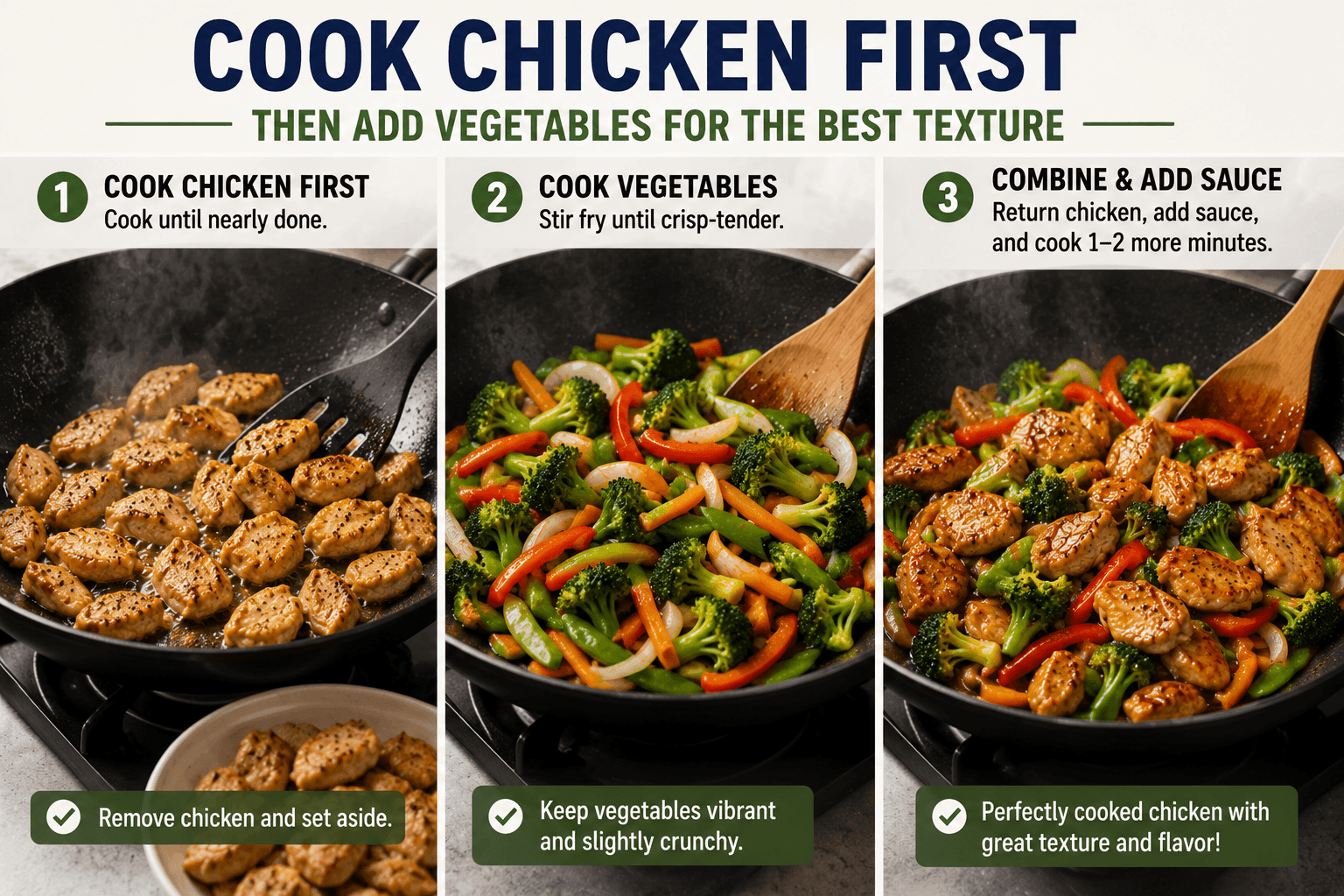
Yes. In most chicken stir fry recipes, the chicken should cook first until it’s nearly done before adding vegetables.
Cooking the chicken separately provides several advantages:
- Better browning
- More even cooking
- Safer internal temperature
- Crisper vegetables
- Improved flavor development
After removing the chicken from the pan, cook the vegetables until crisp-tender. Finally, return the chicken along with the sauce and cook everything together for another one to two minutes so the flavors combine without overcooking the meat.
This method is commonly used in recipes like Garlic Chicken Stir Fry, Spicy Chicken Stir Fry, and Chicken Mushroom Stir Fry.
How to Tell When Chicken Is Perfectly Cooked
Knowing how long to cook chicken stir fry is helpful, but time alone shouldn’t be your only guide. Different stovetops, pans, and chicken sizes can slightly change cooking times. The best cooks combine timing with visual signs and temperature checks.
If you’re making stir fry regularly, you’ll quickly learn to recognize when the chicken is perfectly cooked without guessing.
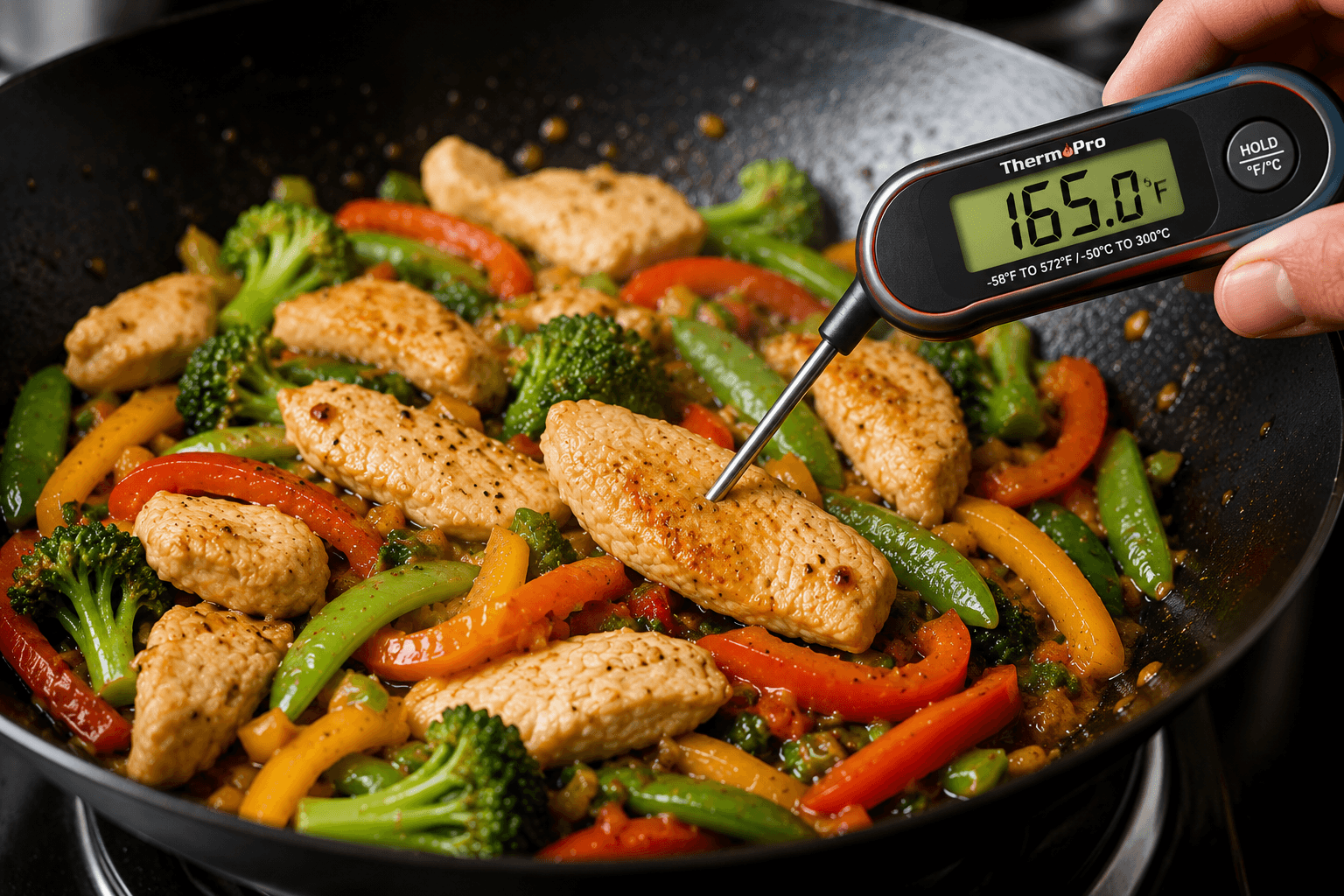
1. The Internal Temperature Reaches 165°F (74°C)
The safest and most accurate way to know chicken is fully cooked is by using an instant-read meat thermometer.
Insert the thermometer into the thickest piece of chicken. Once it reaches 165°F (74°C), the chicken is safe to eat according to USDA food safety guidelines.
If you frequently cook stir fry, keeping a digital thermometer in your kitchen is one of the easiest ways to improve consistency.
For a more detailed guide, read our article on the correct chicken stir fry temperature.
Pro Tip: Remove the chicken from the pan as soon as it reaches 165°F. Residual heat continues cooking the meat for another minute or two.
2. The Color Changes Completely
Raw chicken has a pink, glossy appearance. As it cooks, the meat becomes firm and changes to an opaque white color.
When sliced open, the center should no longer appear pink or translucent.
Keep in mind that some marinades or sauces may slightly darken the outside, so don’t judge doneness by color alone.
3. The Juices Run Clear
When you cut into a fully cooked piece of chicken, the juices should appear clear rather than pink.
This method isn’t as accurate as a thermometer, but it’s another useful sign that your stir fry is ready.
4. The Chicken Feels Firm but Still Tender
Perfectly cooked chicken has a slight spring when pressed with tongs.
If it feels very soft, it probably needs another minute.
If it feels extremely firm or rubbery, it has likely been overcooked.
Common Mistakes That Affect Cooking Time
Even experienced home cooks sometimes struggle with dry or unevenly cooked stir fry. Most problems come from a few common mistakes that are easy to fix.
Cooking Cold Chicken Straight From the Refrigerator
Ice-cold chicken lowers the temperature of your pan immediately.
Instead of browning, the chicken begins releasing moisture, causing it to steam.
Let the chicken sit at room temperature for about 15–20 minutes before cooking.
Warning: Never leave raw chicken at room temperature for longer than two hours, or one hour if the room is very warm.
Using Pieces That Are Different Sizes
If some pieces are thin while others are thick, they won’t finish cooking at the same time.
Small pieces become dry while larger pieces may still be undercooked.
Take a few extra minutes to slice the chicken evenly before cooking.
Constantly Stirring the Chicken
Many people think stir fry means moving food constantly.
Professional cooks actually allow the chicken to stay in contact with the hot pan for short periods before tossing it.
This develops flavorful browning while keeping the meat juicy.
Adding Sauce Too Early
Sauces contain moisture that cools the pan.
If added before the chicken is cooked, they slow the browning process and increase cooking time.
Instead, cook the chicken first, vegetables second, then add the sauce during the final minute or two.
Using Low Heat
One of the biggest misconceptions is that lower heat prevents overcooking.
In reality, medium-low heat often keeps the chicken in the pan longer, causing it to dry out.
Stir fry is designed for high heat and quick cooking.
If you’re struggling with texture, our guide on how to prevent dry chicken stir fry explains additional techniques that keep chicken moist.
Best Practices
- Preheat the pan before adding oil.
- Slice chicken evenly.
- Cook in batches if necessary.
- Use high heat.
- Check the internal temperature.
- Add sauce at the end.
Avoid These Mistakes
- Overcrowding the pan.
- Cooking frozen chicken.
- Using low heat.
- Adding vegetables too early.
- Cooking far beyond 165°F.
- Ignoring chicken thickness.
Expert Tips for Perfect Chicken Stir Fry Every Time
Professional chefs rely on several small techniques that dramatically improve texture without adding extra work.
Slice Against the Grain
Cutting across the muscle fibers shortens them, making every bite more tender.
Use High-Smoke-Point Oils
Choose oils such as avocado oil, peanut oil, or refined canola oil.
These oils tolerate high stir-fry temperatures without burning.
Dry the Chicken Before Cooking
Patting chicken dry with paper towels removes excess moisture.
This helps the surface brown faster instead of steaming.
Chef’s Secret: Restaurants often cook chicken until it’s about 90% done, remove it while vegetables cook, then return it to the wok for the final minute with the sauce. This prevents overcooking while allowing the chicken to absorb more flavor.
Don’t Skip Resting Time
After cooking, let the chicken rest for two or three minutes before serving.
This allows the juices to redistribute throughout the meat, resulting in a juicier stir fry.
If your chicken often turns chewy despite following cooking times, our guide on why chicken becomes tough in stir fry covers the most common causes and solutions.
Storage, Reheating, and Food Safety
Even when you know how long to cook chicken stir fry, proper storage is just as important. Correct cooling, refrigeration, freezing, and reheating help preserve flavor while reducing the risk of foodborne illness.
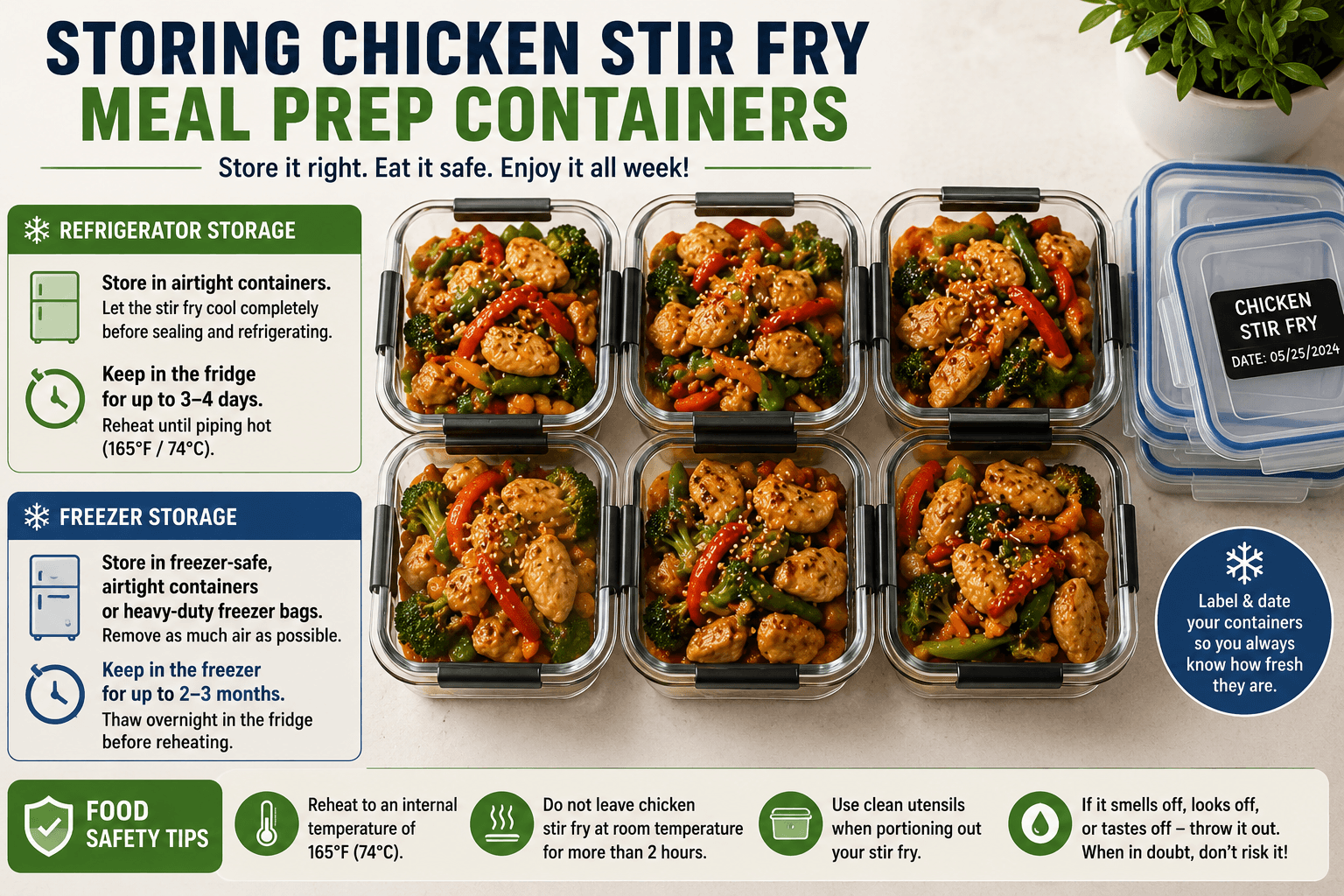
Chicken stir fry should never be left at room temperature for more than two hours. If the room temperature is above 90°F (32°C), refrigerate leftovers within one hour.
Storage Guidelines
- Cool leftovers within 2 hours of cooking.
- Store in airtight containers.
- Refrigerate for up to 4 days.
- Freeze for up to 3 months.
- Reheat to an internal temperature of 165°F (74°C).
| Storage Method | Safe Time | Best Practice |
|---|---|---|
| Room Temperature | Up to 2 Hours | Refrigerate promptly |
| Refrigerator | 3–4 Days | Store in airtight container |
| Freezer | Up to 3 Months | Freeze in meal-size portions |
| Reheating | Until 165°F | Heat evenly before serving |
For the best texture, reheat leftovers in a skillet over medium heat with a splash of water or chicken broth. This helps loosen the sauce and keeps the chicken from drying out. While the microwave is convenient, it can overcook lean chicken if heated too long.
Quick Checklist: Perfect Chicken Stir Fry Every Time
Use this checklist whenever you’re making stir fry to consistently achieve juicy, flavorful chicken.
- ✓ Slice chicken into even, thin pieces.
- ✓ Pat the chicken dry before cooking.
- ✓ Preheat the wok or skillet thoroughly.
- ✓ Use a high-smoke-point cooking oil.
- ✓ Avoid overcrowding the pan.
- ✓ Cook chicken for approximately 5–7 minutes if thinly sliced.
- ✓ Verify the internal temperature reaches 165°F (74°C).
- ✓ Remove chicken before overcooking.
- ✓ Cook vegetables separately, then combine.
- ✓ Add sauce during the final 1–2 minutes.
Frequently Asked Questions
How long does chicken breast take in a stir fry?
Thinly sliced chicken breast usually cooks in about 5–7 minutes over high heat. Always confirm the internal temperature reaches 165°F (74°C).
Can chicken be slightly pink in stir fry?
No. The safest way to determine doneness is with a meat thermometer. Chicken should reach an internal temperature of 165°F (74°C), regardless of its color.
Should I cook vegetables before the chicken?
It’s generally better to cook the chicken first, remove it from the pan, cook the vegetables, and then combine everything with the sauce during the final minute or two.
Why is my stir fry chicken dry?
Dry chicken is usually caused by overcooking, low cooking temperatures, overcrowding the pan, or slicing the chicken too thick. Following the correct cooking time and using high heat helps keep the meat juicy.
Can I cook frozen chicken directly in a stir fry?
It’s not recommended. Frozen chicken cooks unevenly and releases excess moisture, preventing proper browning. Thaw the chicken completely before stir frying.
Is chicken thigh better than chicken breast for stir fry?
Chicken thighs stay juicier because they contain more fat, while chicken breast is leaner and cooks slightly faster. Both work well when cooked properly.
References
Final Thoughts
Learning how long to cook chicken stir fry is one of the easiest ways to improve your homemade meals. While thin chicken strips usually cook in just 5–7 minutes, timing alone isn’t enough. The best results come from combining proper slicing, high heat, an uncrowded pan, and verifying that the chicken reaches an internal temperature of 165°F (74°C).
As you become more comfortable with stir frying, you’ll rely less on the clock and more on visual cues, texture, and temperature. These simple habits help you create chicken that’s consistently juicy, flavorful, and perfectly cooked.
Whether you’re preparing a quick weeknight dinner or meal prepping for the week ahead, mastering these techniques will make every chicken stir fry better than the last.
🍽️ You Might Also Like
📧 Save This Recipe For Later
Enter your email and we will send this recipe directly to your inbox.