
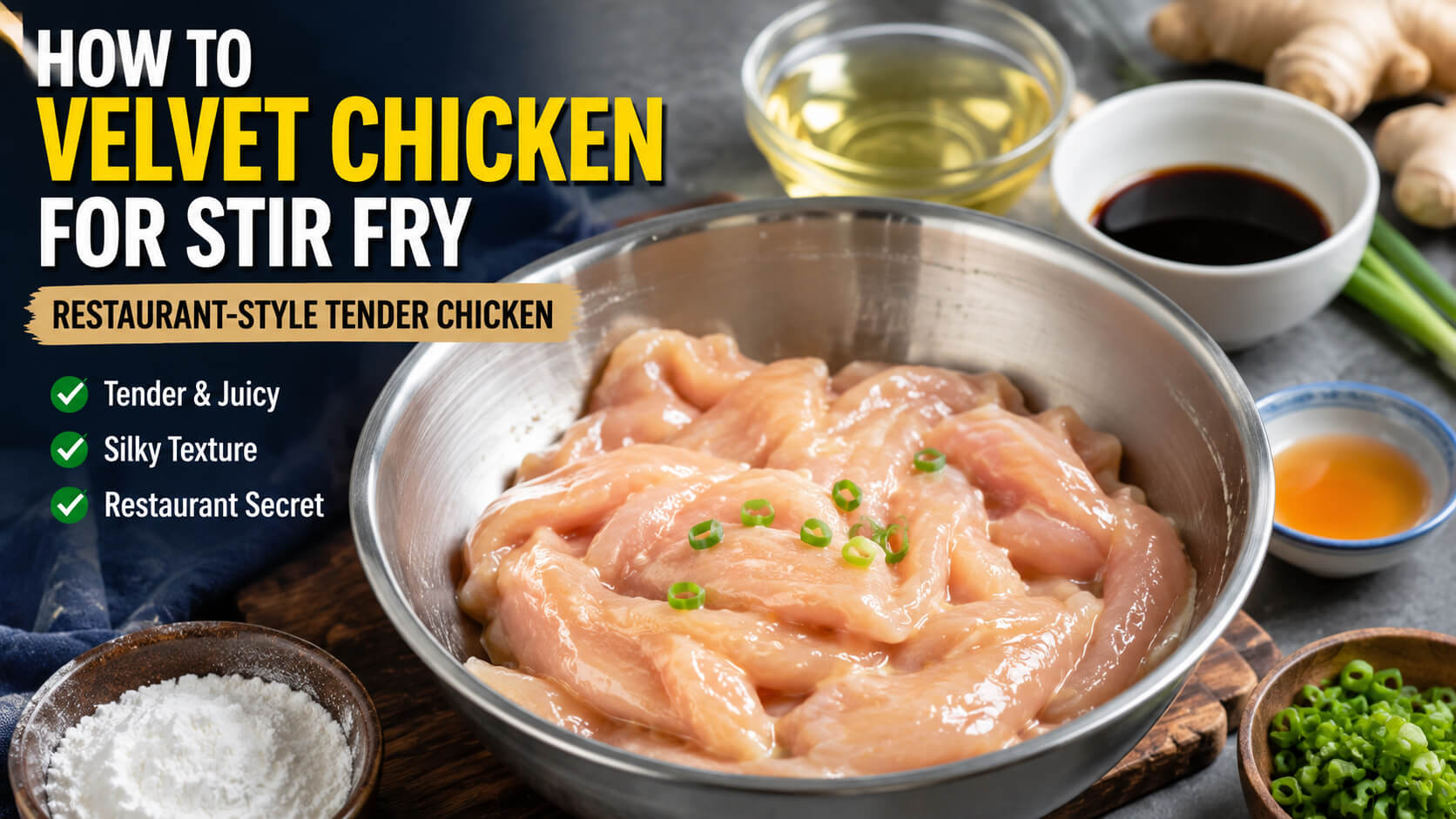
How to Velvet Chicken for Stir Fry (Restaurant-Style Tender Chicken)
How to Velvet Chicken for Stir Fry (Restaurant-Style Tender Chicken)
Have you ever wondered why the chicken in your favorite Chinese restaurant stir fry is always incredibly tender, juicy, and silky, while homemade stir fry chicken often turns out dry or chewy? The secret isn’t an expensive wok or a professional kitchen—it’s a simple technique called velveting.
Learning how to velvet chicken for stir fry is one of the biggest upgrades you can make to your home cooking. This traditional Chinese preparation method creates a thin protective coating around the chicken, helping it retain moisture while cooking quickly over high heat.
Although the process sounds complicated, it’s surprisingly easy. Most home cooks can master it with common pantry ingredients in less than 30 minutes. Once you understand the science behind velveting, you’ll notice an immediate improvement in every chicken stir fry you make.
In this guide, you’ll learn exactly how to velvet chicken for stir fry, which ingredients work best, common mistakes to avoid, and when to use baking soda versus the classic cornstarch marinade. By the end, you’ll be able to create restaurant-quality chicken every time.
Quick Answer
To velvet chicken for stir fry, slice the chicken thinly against the grain, then marinate it with cornstarch, soy sauce, oil, and optionally egg white for 20–30 minutes. Lightly blanch the coated chicken in hot oil or simmering water for 30–60 seconds before finishing it in the stir fry. This technique locks in moisture, creates a silky texture, and prevents the meat from drying out during high-heat cooking.
Table of Contents
What Is Velveting?
Velveting is a traditional Chinese cooking technique used to prepare meat before stir frying. Instead of placing raw chicken directly into a hot wok, the chicken is first coated in a light marinade and partially cooked in either hot oil or hot water.
This extra preparation step creates a delicate protective layer around the chicken. During the final stir fry, that coating helps seal in moisture while preventing the meat from overcooking.
Professional Chinese restaurants have relied on this method for decades because it consistently produces tender meat even when cooking over extremely high heat.
While the name “velveting” sounds fancy, the technique is actually very simple and beginner friendly.
Kitchen Secret: Many people assume restaurants use special cuts of chicken. In reality, the velveting process is often the biggest reason restaurant chicken tastes softer than homemade chicken.
Why Velveting Works
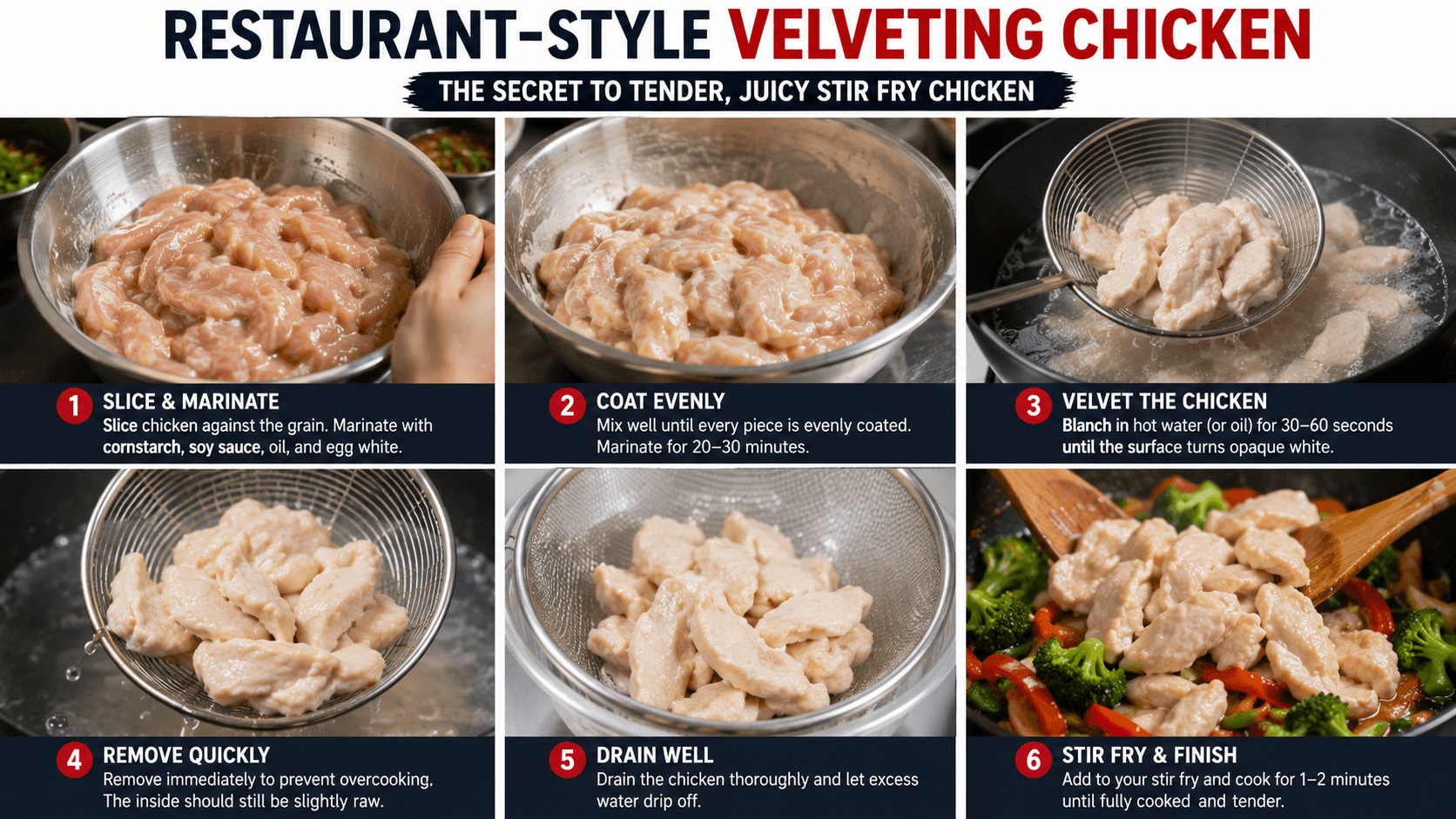
Understanding why this method works makes it easier to use correctly.
Chicken breast contains relatively little fat. During high-heat stir frying, moisture quickly escapes from the muscle fibers, causing the meat to become dry.
Velveting solves this problem in several ways.
- Creates a protective coating that reduces moisture loss.
- Allows the chicken to cook more evenly.
- Prevents proteins from tightening too quickly.
- Keeps the surface smooth instead of rough.
- Helps sauces cling better to the finished chicken.
| Without Velveting | With Velveting |
|---|---|
| Dry texture | Juicy texture |
| Chewy chicken | Tender chicken |
| Sauce slides off | Sauce coats evenly |
| Higher risk of overcooking | More forgiving during cooking |
| Uneven browning | Uniform cooking |
For anyone learning how to velvet chicken for stir fry, understanding these benefits explains why this small extra step makes such a dramatic difference.
Ingredients You’ll Need
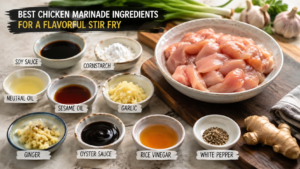
You don’t need specialty ingredients to velvet chicken for stir fry. Most recipes use pantry staples that work together to improve texture and moisture retention.
Chicken
Boneless, skinless chicken breast is the most common choice because it benefits the most from velveting. Chicken thighs also work well if you prefer darker meat with a richer flavor.
Cornstarch
Cornstarch forms the protective coating that helps trap moisture inside the meat during cooking.
Soy Sauce
Soy sauce seasons the chicken while adding savory umami flavor without requiring a long marinating time.
Neutral Oil
A small amount of vegetable, canola, or avocado oil keeps the chicken pieces separated and contributes to a smoother finish.
Egg White (Optional)
Many restaurant recipes include egg white because its proteins create an even silkier coating. While optional, it’s a worthwhile addition if you’re aiming for authentic restaurant-style results.
Tip: If you’re making a quick weeknight meal, you can skip the egg white and still achieve excellent results using only cornstarch, soy sauce, and oil.
How to Velvet Chicken for Stir Fry Step by Step
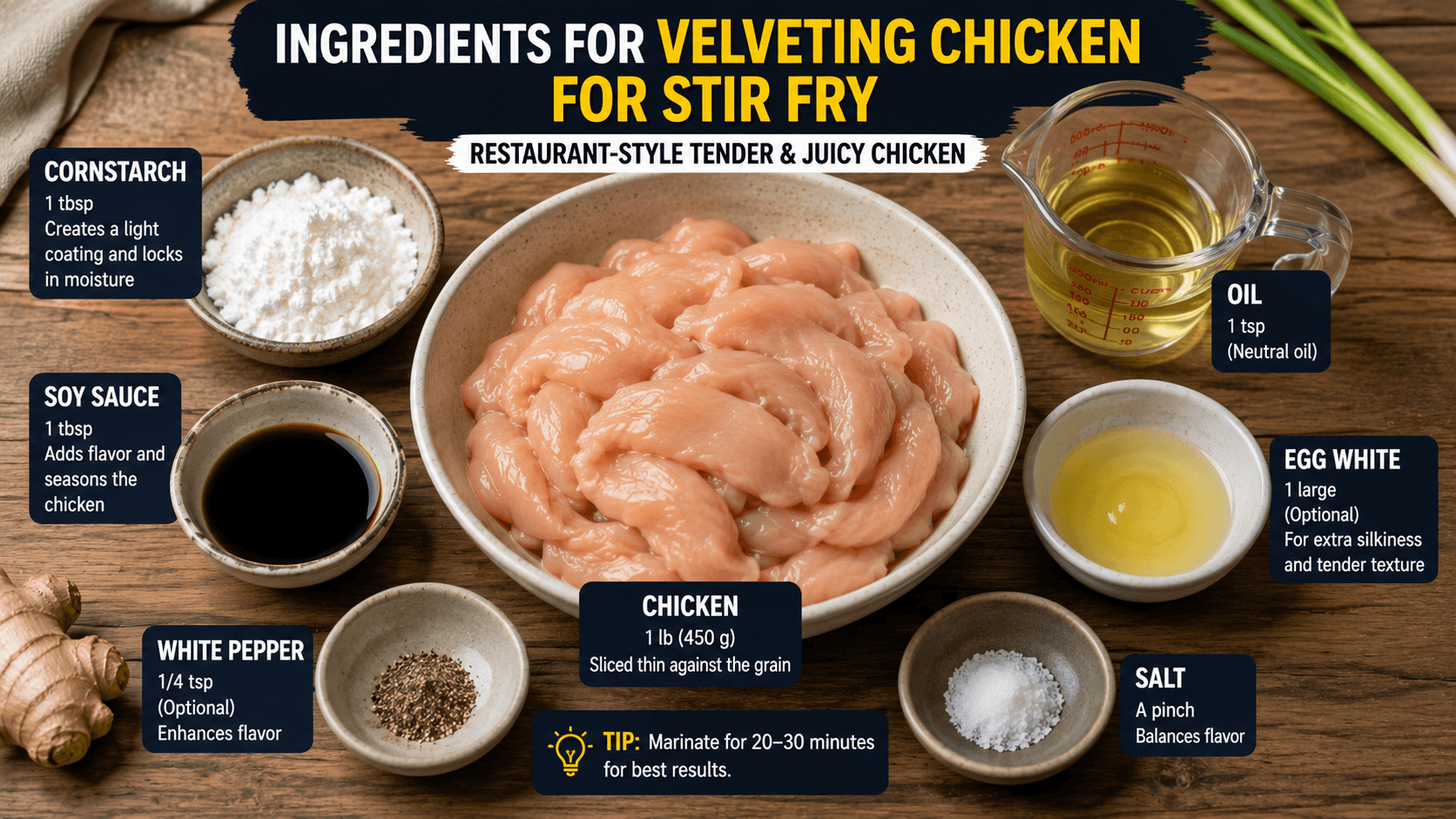
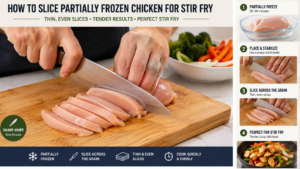
Step 1: Slice the Chicken Properly
The first step is cutting the chicken correctly. Thin, evenly sized slices cook much more evenly than large chunks.
Always slice against the grain. This shortens the muscle fibers, making each bite naturally more tender.
Try to keep slices approximately ¼ inch thick for the best balance between tenderness and quick cooking.
If you’re unsure about proper slicing techniques, see our guide on How to Cut Chicken for Stir Fry.
Step 2: Prepare the Velveting Marinade
In a bowl, combine:
- 1 pound sliced chicken
- 1 tablespoon cornstarch
- 1 tablespoon soy sauce
- 1 teaspoon neutral oil
- 1 egg white (optional)
Mix thoroughly until every piece is evenly coated.
The mixture should lightly cling to the chicken without becoming thick or pasty.
Step 3: Marinate
Allow the chicken to rest for approximately 20 to 30 minutes.
This gives the cornstarch time to hydrate while allowing the seasonings to penetrate the surface of the meat.
Longer marinating isn’t necessary. In fact, leaving the chicken for several hours offers very little additional benefit for most stir fry recipes.
Avoid: Adding too much cornstarch. Excess coating can become gummy during cooking instead of producing the silky texture you’re trying to achieve.
Step 4: Pre-Cook the Chicken
This is the defining step when you velvet chicken for stir fry.
Bring a pot of water to a gentle simmer or heat oil to approximately 275–300°F.
Add the chicken in small batches.
Cook only until the exterior turns white, usually between 30 and 60 seconds.
The chicken should not be fully cooked at this stage. It will finish cooking during the final stir fry with the vegetables and sauce.
Drain well before adding it to your wok.
Restaurant Technique: Professional kitchens rarely cook the chicken completely during velveting. Slight undercooking keeps it incredibly juicy after the final stir fry.
Oil Velveting vs Water Velveting
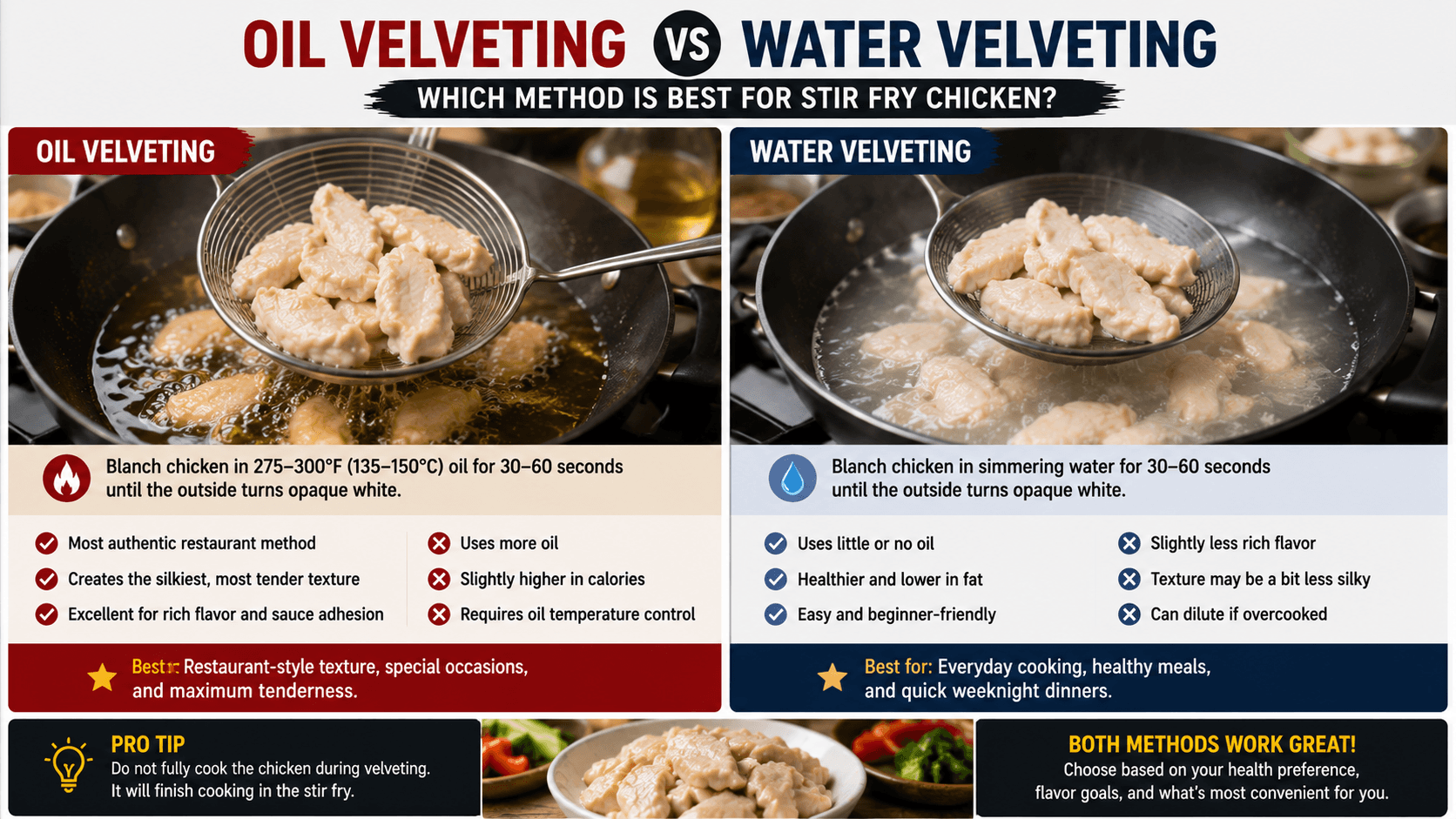
There are two common methods used to velvet chicken for stir fry. Both produce excellent results, but each has advantages depending on your cooking style.
| Oil Velveting | Water Velveting |
|---|---|
| Most authentic restaurant method | Popular home cooking method |
| Produces richest texture | Lower in fat |
| Slightly silkier finish | Cleaner preparation |
| Requires more oil | Uses simmering water |
| Best for restaurant-quality dishes | Best for healthy everyday meals |
If you’re cooking at home several times a week, water velveting is often the easiest and healthiest option. If you’re preparing a special dinner and want the closest possible restaurant texture, oil velveting is worth the extra effort.
Once the chicken has been velveted, it’s ready to be combined with vegetables and your favorite sauce. Whether you’re making a classic Chicken Stir Fry, a flavorful Garlic Chicken Stir Fry, or a sweet and savory Honey Garlic Chicken Stir Fry, this preparation method provides the perfect foundation for tender, restaurant-style results.
Best Chicken Cuts to Velvet for Stir Fry
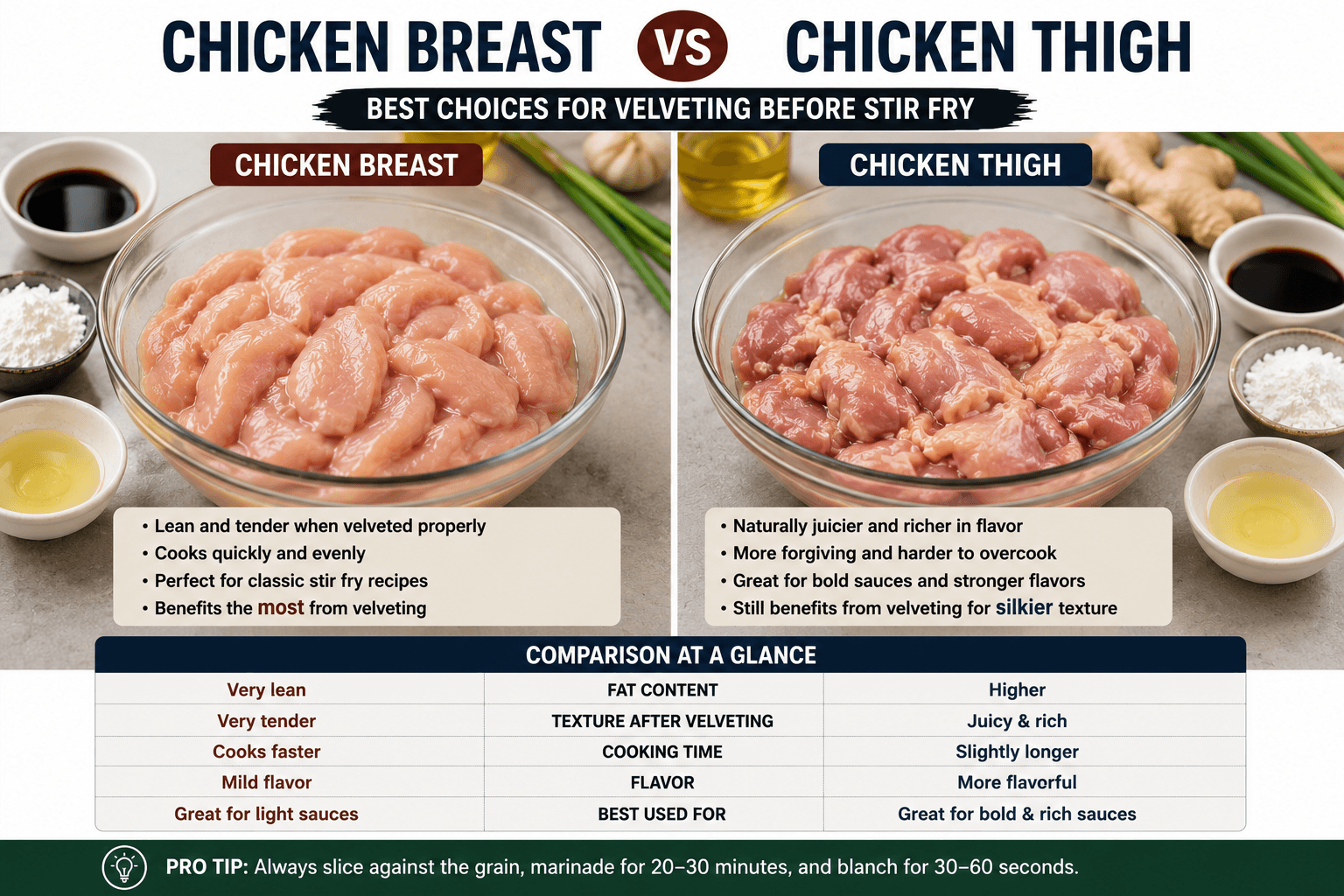
One of the most common questions home cooks ask is whether chicken breast or chicken thighs work better for velveting. The good news is that you can velvet chicken for stir fry using either cut, but each offers different advantages depending on the recipe.
Chicken breast is lean, cooks quickly, and benefits the most from velveting because it can dry out easily. Chicken thighs contain more fat, making them naturally juicy even without much preparation, but velveting still gives them an exceptionally smooth texture.
| Chicken Cut | Texture After Velveting | Best For |
|---|---|---|
| Chicken Breast | Very tender and silky | Classic Chinese stir fries |
| Chicken Thigh | Juicy and rich | Bold sauces and spicy recipes |
| Chicken Tenderloins | Soft but delicate | Quick weeknight meals |
If you’re deciding between cuts, read our guide on Chicken Breast vs Chicken Thigh for Stir Fry.
Should You Use Baking Soda to Velvet Chicken?
If you’ve searched online for ways to velvet chicken for stir fry, you’ve probably seen recipes that call for baking soda. This method is different from the traditional cornstarch velveting technique but is also widely used.
Baking soda changes the surface pH of the chicken, making the proteins less likely to tighten during cooking. As a result, the meat stays noticeably more tender.
Traditional Cornstarch Velveting
- Authentic Chinese cooking technique
- Produces a silky coating
- Improves sauce adhesion
- Ideal for restaurant-style stir fry
Baking Soda Method
- Works very quickly
- Excellent for lean chicken breast
- No coating on the meat
- Must be rinsed thoroughly before cooking
Important: Too much baking soda or leaving it on the chicken for too long can create an unpleasant texture and slightly metallic flavor. Follow recipe measurements carefully.
For most home cooks, the classic cornstarch method is the easiest way to velvet chicken for stir fry while also improving the final sauce consistency.
Common Mistakes When Velveting Chicken for Stir Fry
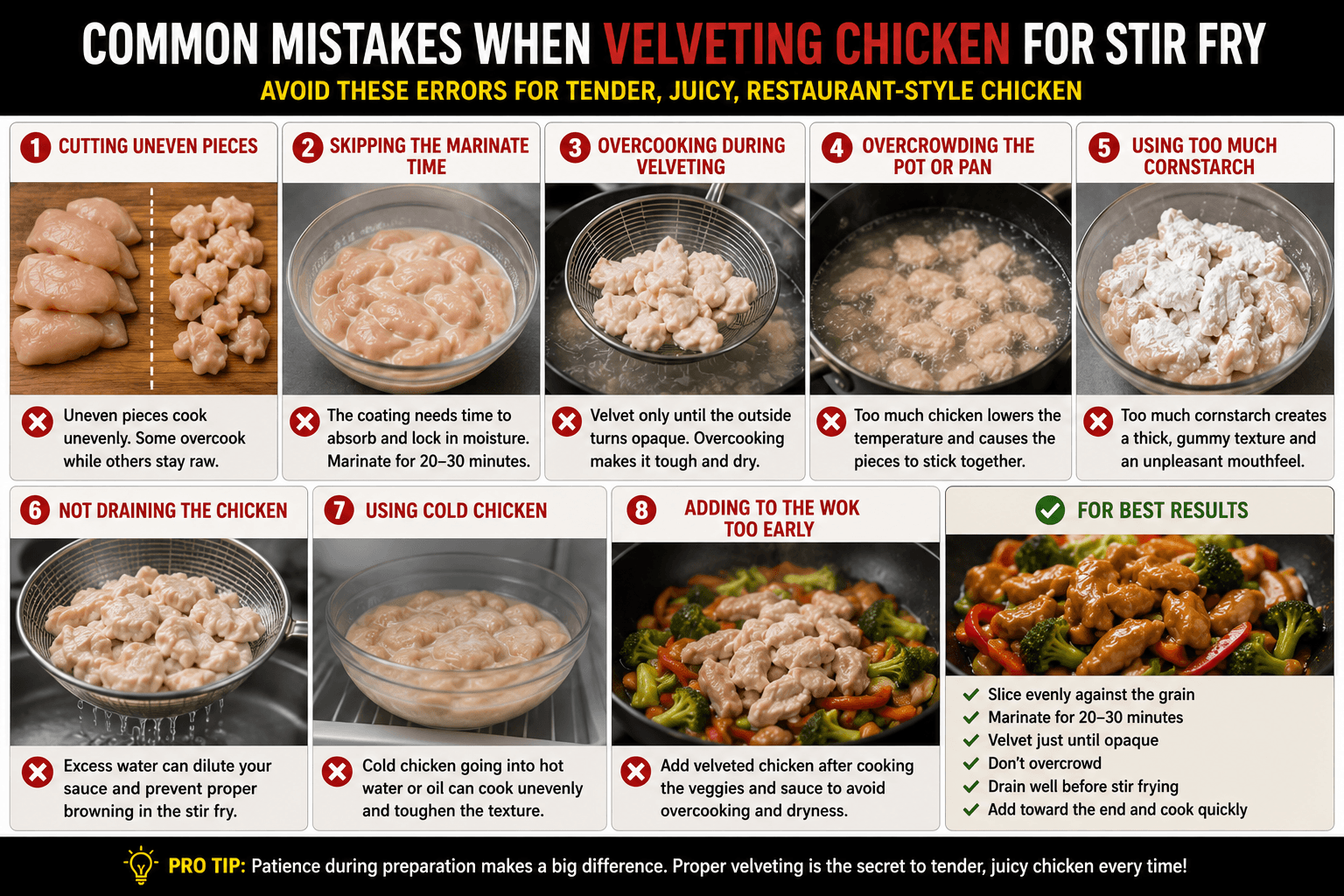
Even though velveting is simple, a few common mistakes can prevent you from getting restaurant-quality results.
1. Cutting Uneven Pieces
If the chicken pieces vary greatly in size, some will finish cooking before others. Uniform slices help everything cook evenly.
The cornstarch needs time to hydrate and adhere to the meat. Even 20 minutes makes a noticeable difference.
3. Cooking Too Long During Velveting
The purpose of velveting is only to partially cook the chicken.
If you cook it completely before adding it to the wok, it will continue cooking during the stir fry and become dry.
4. Overcrowding the Pot
Adding too much chicken at once lowers the temperature of the oil or water. Instead of setting the coating quickly, the chicken may stick together.
5. Forgetting to Drain the Chicken
After velveting, let the chicken drain well.
Too much water or oil can dilute the stir fry sauce and reduce browning.
Pro Tip: Spread the chicken on a wire rack or paper towel for a minute after velveting. This removes excess moisture while keeping the coating intact.
When Should You Add Velveted Chicken to the Stir Fry?
After you velvet chicken for stir fry, resist the temptation to add it to the wok immediately with the vegetables.
Instead, follow this order:
- Cook the vegetables first.
- Remove them if necessary.
- Prepare the stir fry sauce.
- Add the velveted chicken.
- Return the vegetables.
- Toss everything together for 1–2 minutes.
This method keeps the vegetables crisp while ensuring the chicken finishes cooking without becoming tough.
For more timing tips, see How Long to Cook Chicken Stir Fry.
Which Stir Fry Recipes Benefit Most from Velveting?
Nearly every chicken stir fry becomes better after you velvet chicken for stir fry, but some recipes show the improvement more clearly than others.
- Chicken Broccoli Stir Fry
- Teriyaki Chicken Stir Fry
- Chicken Mushroom Stir Fry
- Chicken Bell Pepper Stir Fry
- Spicy Chicken Stir Fry
Because velveted chicken stays moist, it also reheats better for meal prep and leftovers.
Pros
- Exceptionally tender chicken
- Restaurant-quality texture
- Reduces moisture loss
- Improves sauce coating
- Works with breast and thighs
- Easy to learn
Cons
- Adds one extra preparation step
- Requires a short marinating time
- Can become gummy if too much cornstarch is used
- Oil velveting uses more cooking oil
Expert Tips for Restaurant-Style Results
Professional chefs rely on consistency more than complicated ingredients. Keep these tips in mind every time you velvet chicken for stir fry.
- Slice every piece the same thickness.
- Always cut against the grain.
- Marinate for at least 20 minutes.
- Don’t overcook during velveting.
- Cook over high heat during the final stir fry.
- Prepare all vegetables before you begin cooking.
- Add sauce near the end to maintain fresh flavor.
- Serve immediately for the best texture.
Chef’s Secret: Restaurants prepare velveted chicken hours before dinner service. This allows them to finish stir fries in just a few minutes without sacrificing tenderness.
How to Store Velveted Chicken Before Cooking
One of the advantages of learning how to velvet chicken for stir fry is that you can prepare the chicken ahead of time. This makes weeknight cooking much faster and helps you get dinner on the table in just a few minutes.
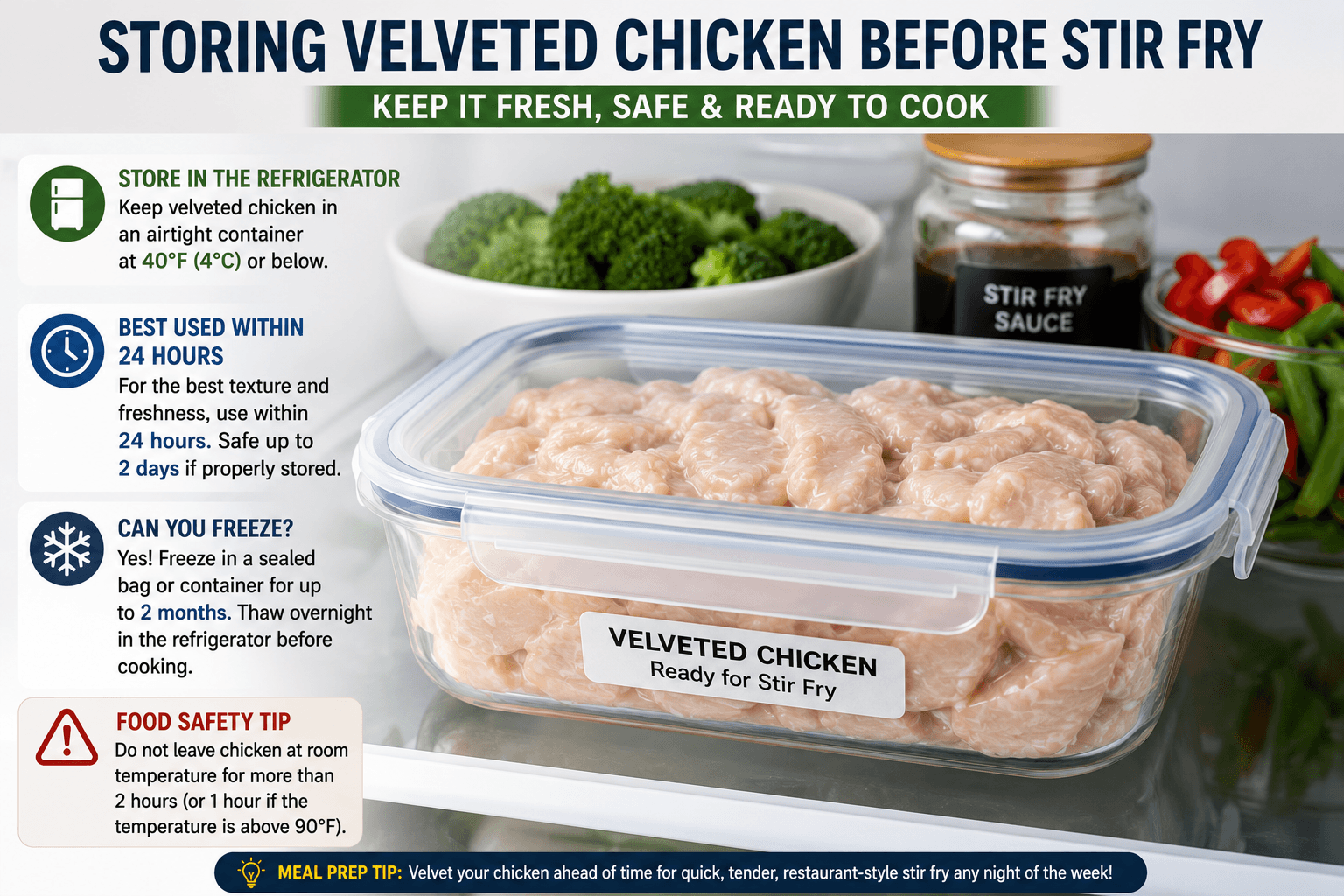
After mixing the chicken with the velveting marinade, cover the bowl tightly or transfer it to an airtight container. Store it in the refrigerator until you’re ready to cook.
For the best texture, use the chicken within 24 hours. While it can safely stay refrigerated for up to two days if properly stored, the cornstarch coating begins to break down over time, and the texture won’t be quite as silky.
Storage Tip: Keep raw velveted chicken refrigerated at 40°F (4°C) or below. Never leave it at room temperature for more than two hours, or one hour if the temperature is above 90°F.
Can You Freeze Velveted Chicken?
Yes. If you enjoy meal prepping, you can freeze chicken after the velveting marinade has been mixed in.
Arrange the coated chicken in a freezer-safe bag, remove as much air as possible, and freeze it flat. This makes it easier to thaw quickly and evenly.
For the best quality, use frozen velveted chicken within two months.
When you’re ready to cook, thaw the chicken overnight in the refrigerator. Avoid thawing it on the kitchen counter, as this increases the risk of bacterial growth.
Food Safety: Never refreeze raw chicken that has already been thawed unless it has been cooked first.
Frequently Asked Questions
Do I have to velvet chicken for every stir fry?
No. You can cook chicken without velveting, but learning how to velvet chicken for stir fry will give you noticeably juicier and more tender results, especially when using chicken breast.
Can I velvet frozen chicken?
The chicken should be completely thawed before slicing and marinating. This ensures the coating sticks evenly and the chicken cooks uniformly.
Is velveting only used in Chinese cooking?
Velveting originated in Chinese cuisine, but the technique works well for many Asian-inspired stir fries and other quick-cooking dishes.
Can I velvet chicken without egg white?
Absolutely. Many home cooks use only cornstarch, soy sauce, and a little oil. Egg white provides an even silkier finish, but it isn’t required to successfully velvet chicken for stir fry.
Which is healthier: oil velveting or water velveting?
Water velveting is generally the healthier option because it uses little to no added fat. It still produces tender chicken and is an excellent choice for everyday meals.
How long should I cook velveted chicken in the wok?
Since the chicken is partially cooked during velveting, it usually needs only 2–3 more minutes in the wok, depending on the thickness of the slices.
Can I use this technique for beef or pork?
Yes. The same velveting technique works very well with thinly sliced beef and pork, helping both meats stay tender during high-heat stir frying.
References
Final Thoughts
Mastering how to velvet chicken for stir fry is one of the simplest ways to elevate your home cooking. While the technique adds a few extra minutes of preparation, the payoff is well worth the effort. Properly velveted chicken stays juicy, cooks evenly, and develops the silky texture that’s commonly associated with restaurant-quality stir fries.
Whether you’re preparing a quick weeknight dinner or trying to recreate your favorite takeout meal, velveting helps ensure consistently tender chicken every time. Pair this technique with proper slicing, high-heat cooking, and a flavorful sauce, and you’ll be able to make stir fry dishes that taste just as good—if not better—than those from your favorite restaurant.
🍽️ You Might Also Like
📧 Save This Recipe For Later
Enter your email and we will send this recipe directly to your inbox.