
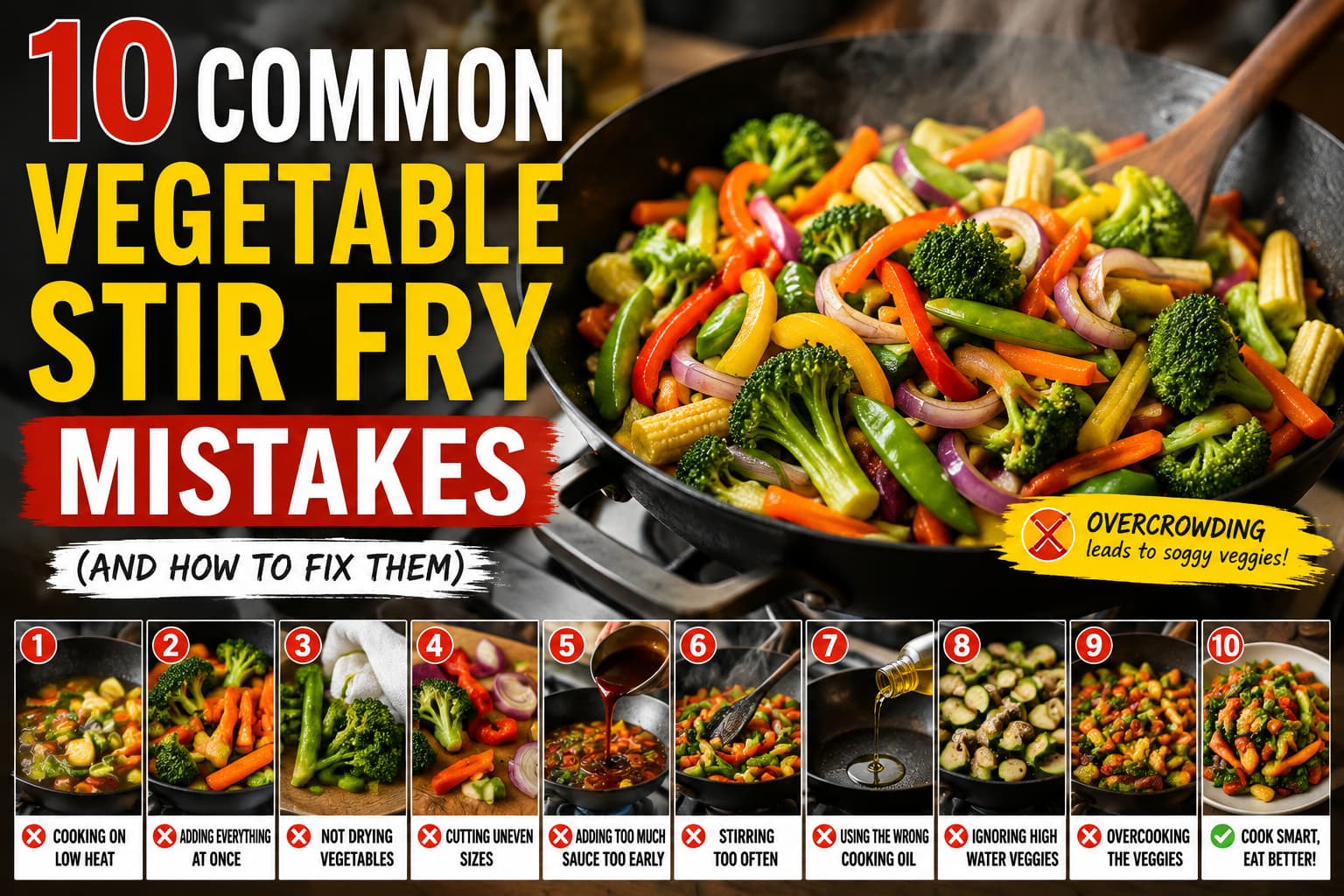
10 Common Vegetable Stir Fry Mistakes (And How to Fix Them)
10 Common Vegetable Stir Fry Mistakes (And How to Fix Them)
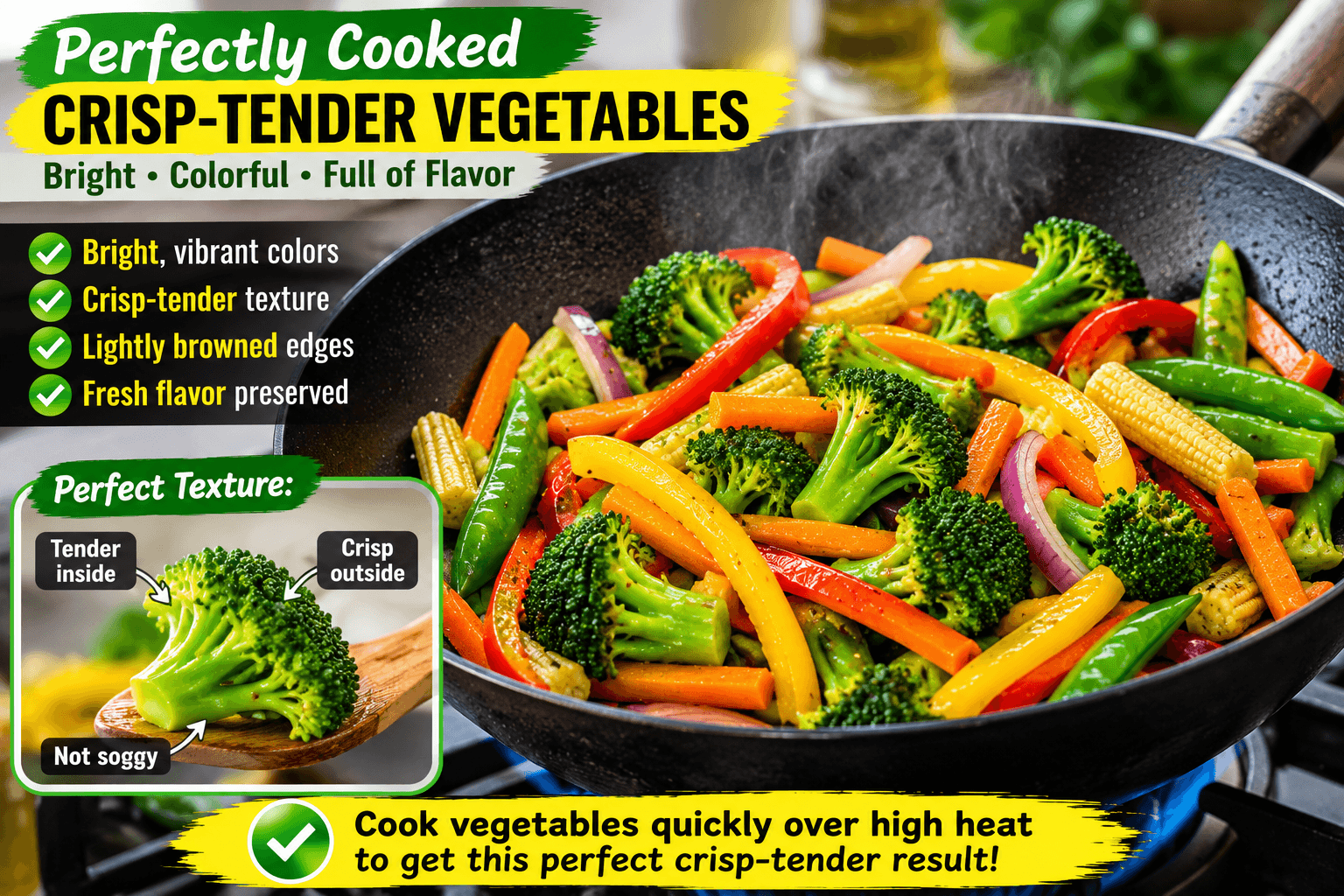
A great vegetable stir fry should have crisp-tender vegetables, vibrant colors, and fresh flavor in every bite. However, many home cooks end up with soggy broccoli, watery zucchini, burned garlic, or vegetables that cook unevenly. These common problems usually aren’t caused by the vegetables themselves—they’re the result of a few simple cooking mistakes.
Understanding the most common vegetable stir fry mistakes can dramatically improve your results. Small adjustments like using higher heat, cutting vegetables into similar sizes, or cooking ingredients in the correct order can transform an average stir fry into a restaurant-quality meal.
In this guide, you’ll learn the 10 most common vegetable stir fry mistakes, why they happen, and exactly how to fix them. Whether you’re making a simple vegetable stir fry or pairing vegetables with chicken, these practical tips will help you achieve crisp, flavorful results every time.
Quick Answer
The most common vegetable stir fry mistakes include overcrowding the pan, cooking with low heat, adding vegetables in the wrong order, using too much sauce, and overcooking delicate vegetables. The easiest way to fix these problems is to cook over high heat, work in small batches, prepare ingredients before cooking, and add each vegetable according to its cooking time.
Table of Contents
Why Vegetable Stir Fry Mistakes Happen
Many people believe stir frying is simply tossing vegetables into a hot pan. In reality, stir frying is a fast cooking technique that depends on high heat, proper preparation, and timing. Even one small mistake can affect the texture and flavor of the entire dish.
Vegetables naturally contain different amounts of water. Broccoli, carrots, mushrooms, zucchini, bell peppers, onions, and cabbage all cook at different speeds. If they are treated the same way, some vegetables become overcooked while others remain undercooked.
Another common issue is preparation. Restaurant kitchens prepare every ingredient before turning on the stove. This allows vegetables to be added quickly without stopping to chop ingredients while food is already cooking.
Tip: Before heating your wok or skillet, wash, dry, cut, measure sauces, and prepare every ingredient. Stir frying moves too quickly to stop halfway through cooking.
Mistake #1: Overcrowding the Pan
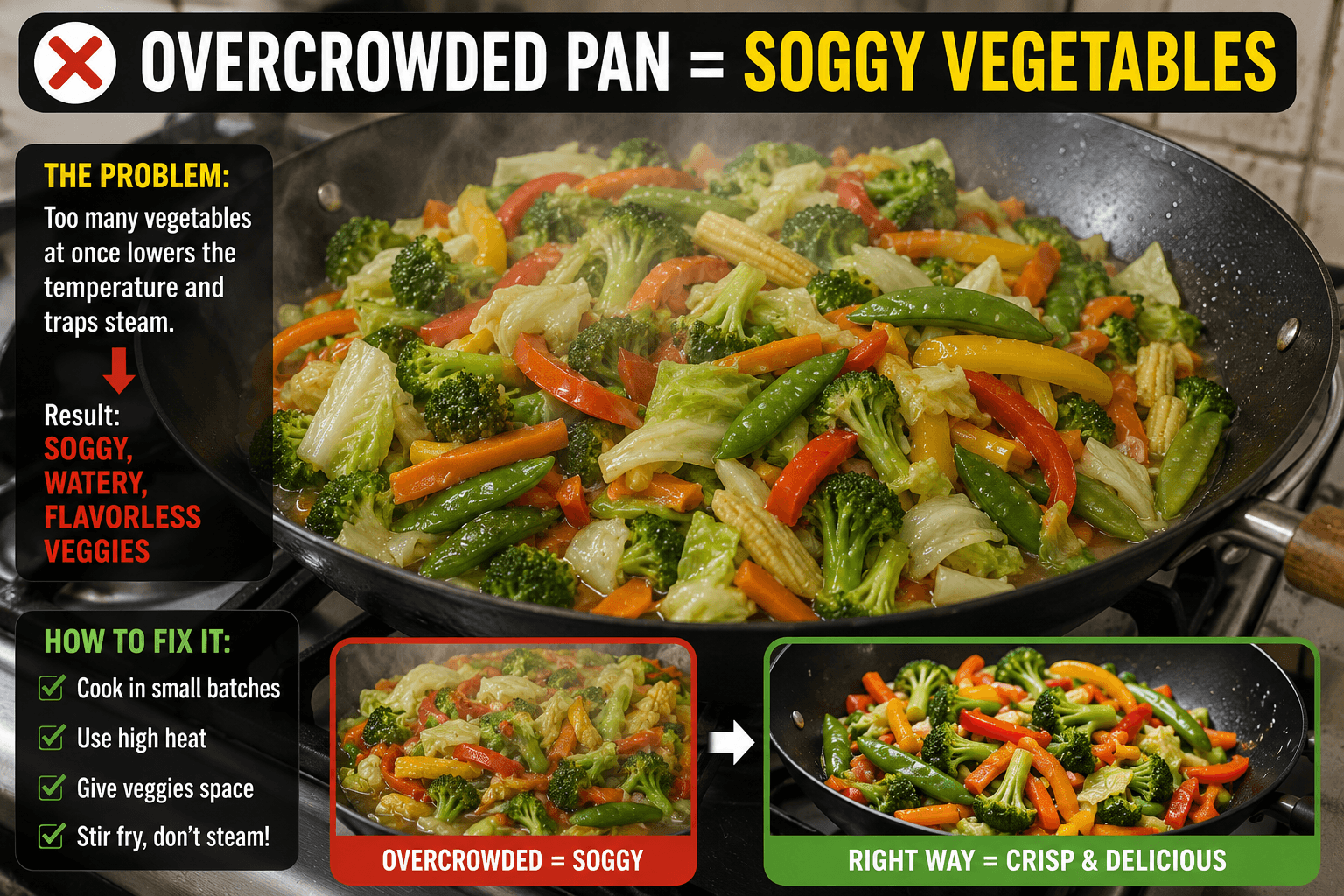
One of the biggest vegetable stir fry mistakes is adding too many vegetables at once. When the pan becomes overcrowded, the temperature drops immediately. Instead of frying, the vegetables begin steaming in their own moisture.
Steamed vegetables lose their crisp texture and often become soft before they develop any browning. Excess moisture also prevents sauces from coating vegetables properly.
If you’re cooking a large batch, divide the vegetables into two or three smaller batches. While this takes a few extra minutes, the improvement in texture is well worth the effort.
If you’re making a complete meal, recipes like Chicken Veggie Stir Fry or Healthy Chicken Stir Fry work best when the vegetables and protein are cooked separately before being combined at the end.
Warning: Filling more than two-thirds of your wok or skillet almost always causes vegetables to steam instead of stir fry.
Mistake #2: Using Heat That Is Too Low
Another one of the most common vegetable stir fry mistakes is cooking over medium or low heat. Stir frying is designed to be a fast, high-heat cooking method. If the pan isn’t hot enough, vegetables release moisture faster than it can evaporate, leaving them soft, watery, and lacking flavor.
High heat quickly sears the outside of vegetables while keeping the inside crisp and tender. This is what gives restaurant-style stir fries their slightly charred edges, vibrant color, and satisfying texture.
A properly heated wok or large skillet should be hot before any oil is added. Once the oil begins to shimmer, the vegetables can be added immediately. If you wait too long after adding oil, it may begin to smoke excessively or burn.
Keep the vegetables moving with a spatula or wok spoon, but don’t stir constantly every second. Allow them to make contact with the hot surface for a few moments before tossing them again. This helps develop light browning without overcooking.
Kitchen Secret: Professional chefs heat the wok first, then add oil, and immediately begin cooking. This technique helps prevent sticking while creating the signature stir-fried flavor known as wok hei.
| Heat Level | Result |
|---|---|
| Low Heat | Vegetables become watery and soft. |
| Medium Heat | Slow cooking with limited browning. |
| High Heat | Crisp-tender vegetables with better flavor and color. |
If your vegetables always seem soggy, learning how to control heat is one of the fastest improvements you can make. You may also find our guide on How to Fix Soggy Stir Fry Vegetables helpful for solving this problem.

Mistake #3: Adding Every Vegetable at the Same Time
Not all vegetables cook at the same speed. One of the easiest vegetable stir fry mistakes to make is tossing everything into the pan together and hoping it finishes at the same time.
Dense vegetables like carrots, broccoli, and cauliflower need several minutes to soften. Softer vegetables such as mushrooms, bell peppers, zucchini, spinach, and snow peas cook much more quickly. If they’re added together, the tender vegetables often become mushy before the harder vegetables are fully cooked.
The solution is simple: cook vegetables according to their cooking time.
| Add First | Add Next | Add Last |
|---|---|---|
| Carrots | Broccoli | Bell Peppers |
| Cauliflower | Cabbage | Mushrooms |
| Onions | Zucchini, Spinach, Snow Peas |
This layered approach allows every vegetable to finish cooking at nearly the same time while maintaining its ideal texture.
If you’d like a complete breakdown, read our detailed guide on The Correct Order to Add Vegetables to Stir Fry. It explains exactly when each popular stir fry vegetable should be added for the best results.
Tip: Group your vegetables into “hard,” “medium,” and “soft” categories before cooking. This simple preparation step makes stir frying much easier and prevents uneven cooking.
Mistake #4: Not Drying Vegetables Before Cooking
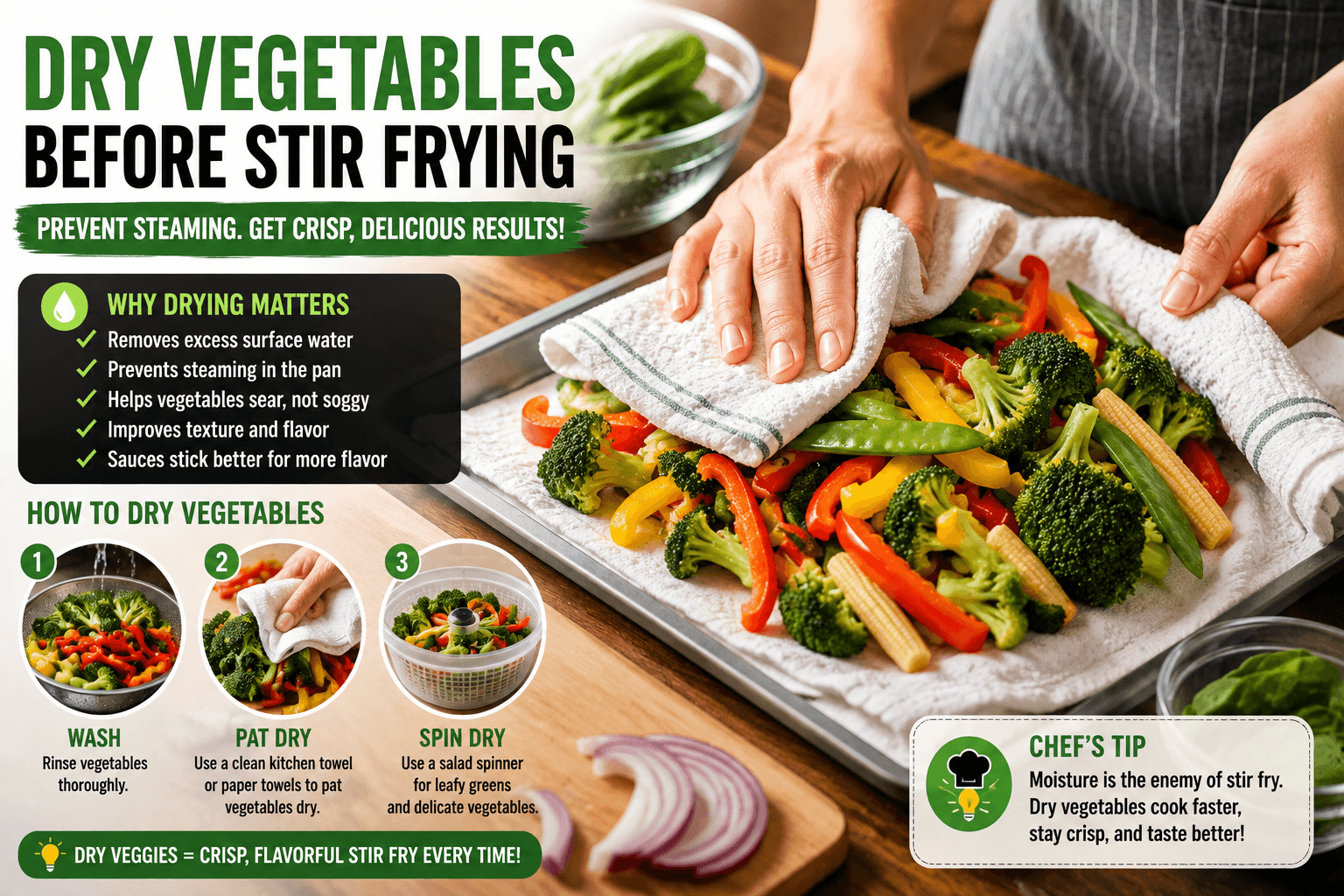
Many people wash vegetables thoroughly before cooking, but forget one important step—drying them. Excess water is one of the hidden causes of vegetable stir fry mistakes because moisture lowers the pan’s temperature and causes vegetables to steam instead of sear.
Even a small amount of surface water can make a noticeable difference. Instead of getting slightly browned edges and crisp texture, vegetables release extra steam that softens everything in the pan.
After washing vegetables, use a clean kitchen towel or paper towels to remove as much moisture as possible. A salad spinner is also an excellent tool for leafy vegetables like spinach and bok choy.
Dry vegetables not only cook faster but also absorb sauces more effectively, giving every bite better flavor.
Kitchen Secret: Restaurants often prep vegetables hours in advance and refrigerate them uncovered for a short time. This allows excess surface moisture to evaporate, helping vegetables stir fry instead of steam.
Mistake #5: Cutting Vegetables into Uneven Sizes
One of the easiest vegetable stir fry mistakes to overlook happens before cooking even begins. If vegetables are cut into different sizes, they simply won’t cook evenly.
Large carrot slices may still be crunchy while thin zucchini slices become mushy. Oversized broccoli florets may remain firm in the center, while smaller pieces become overcooked.
Uniform cutting allows vegetables to cook at nearly the same speed, making it much easier to achieve consistent results.
| Vegetable | Recommended Cut | Reason |
|---|---|---|
| Carrots | Thin diagonal slices | Cook faster and evenly |
| Broccoli | Small florets | Even tenderness |
| Bell Peppers | Thin strips | Quick cooking |
| Zucchini | Half-moons | Prevents overcooking |
| Mushrooms | Even slices | Uniform browning |
If you’re unsure how each vegetable should be prepared, our guide to The Ultimate Stir Fry Vegetable Preparation Guide explains the best cutting methods for every popular stir fry vegetable.
Tip: Aim for bite-sized pieces that are similar in thickness. Consistent sizing is one of the simplest ways to improve the quality of your stir fry.
Mistake #6: Adding Too Much Sauce Too Early
Sauce adds flavor, but adding it at the wrong time is another common vegetable stir fry mistakes. Many home cooks pour the entire sauce into the pan as soon as the vegetables begin cooking.
This lowers the temperature of the pan and creates excess liquid, causing vegetables to simmer instead of stir fry. Delicate vegetables quickly lose their crisp texture and become soft.
Instead, cook the vegetables until they are almost done. Only then should the sauce be added. Toss everything together for the final minute or two so the sauce lightly coats every piece without making the vegetables soggy.
If your sauce contains cornstarch, remember that it thickens very quickly once heated. Stir constantly after adding it to avoid clumps.
Warning: Too much sauce can overpower the natural flavor of fresh vegetables. A light coating is usually all that’s needed for a balanced stir fry.
If you’re combining vegetables with chicken, recipes such as Chicken Broccoli Stir Fry and Chicken Bell Pepper Stir Fry demonstrate how adding the sauce at the end helps maintain crisp vegetables while evenly coating every ingredient.
Mistake #7: Constantly Stirring the Vegetables
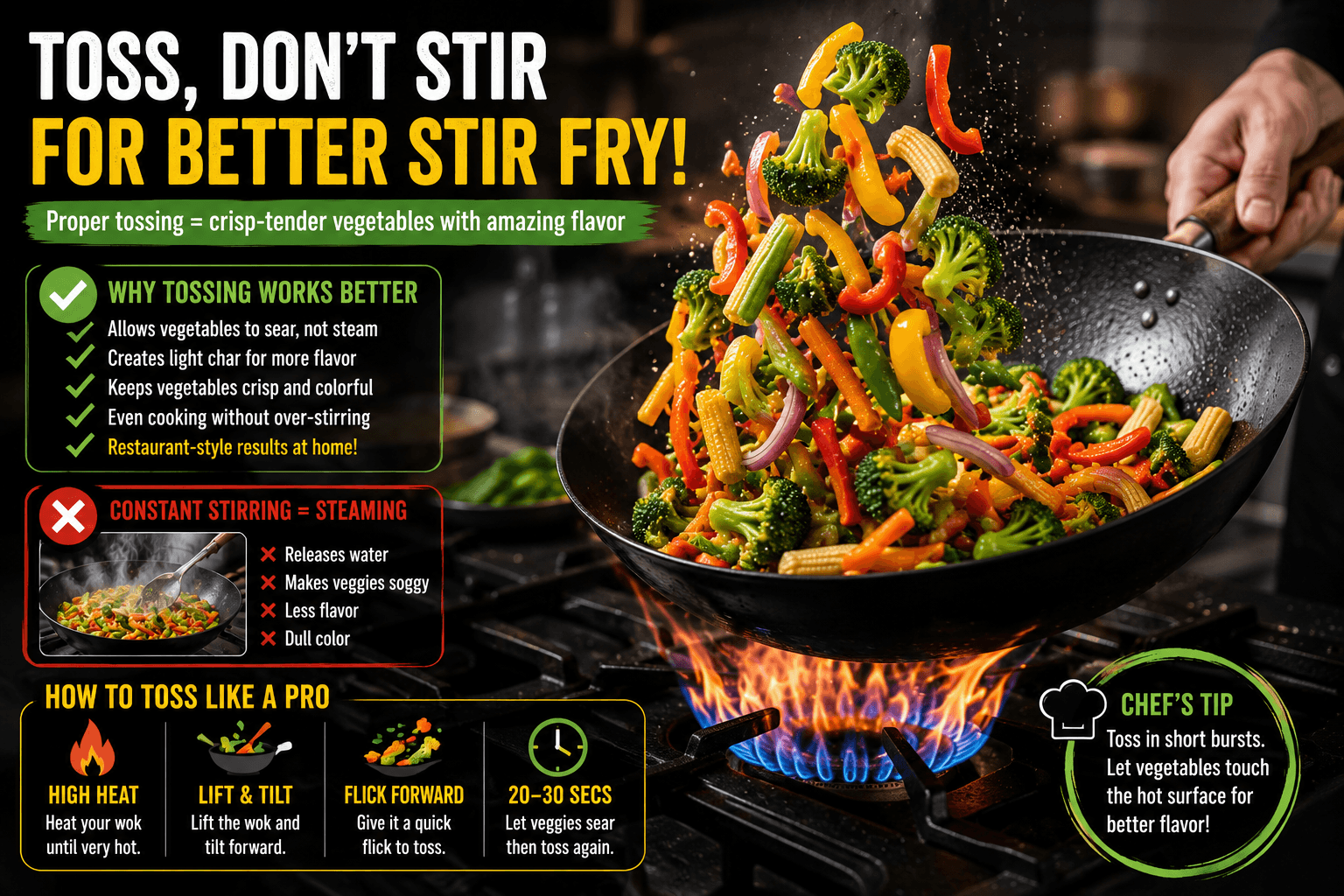
It sounds surprising, but stirring too much is one of the most overlooked vegetable stir fry mistakes. Many people believe vegetables should be moving every second they are in the pan. While frequent tossing is part of stir frying, constantly moving the vegetables prevents them from developing the light browning that adds flavor.
When vegetables remain in contact with the hot surface for 20 to 30 seconds, natural sugars begin to caramelize. This creates richer flavor, a slightly smoky aroma, and the appealing golden edges often found in restaurant stir fries.
The goal isn’t to let vegetables sit for minutes at a time. Instead, allow short periods of contact with the pan before tossing them again. This balance between movement and searing produces the best texture.
Kitchen Secret: Professional chefs use quick tosses instead of constant stirring. They let vegetables briefly touch the hot wok before flipping them, creating better browning without burning.
Mistake #8: Choosing the Wrong Cooking Oil
The type of oil you use has a bigger impact than many people realize. Another common vegetable stir fry mistakes is selecting oils that cannot handle the high temperatures required for stir frying.
Butter and extra virgin olive oil have relatively low smoke points. They can burn quickly, producing bitter flavors and unwanted smoke. Instead, choose oils that remain stable at high heat.
| Cooking Oil | High-Heat Friendly? | Best For |
|---|---|---|
| Avocado Oil | Yes | Excellent choice |
| Peanut Oil | Yes | Traditional stir fry cooking |
| Canola Oil | Yes | Everyday stir fries |
| Vegetable Oil | Yes | Budget-friendly option |
| Extra Virgin Olive Oil | No | Better for low-heat cooking |
| Butter | No | Burns quickly |
Neutral-flavored oils allow the natural taste of vegetables, garlic, ginger, and sauces to stand out without adding bitterness.
Tip: Use only enough oil to lightly coat the pan. Too much oil can make vegetables greasy and mask their fresh flavor.
Mistake #9: Ignoring the Water Content of Different Vegetables
Not all vegetables contain the same amount of moisture. Failing to account for this is one of the most frustrating vegetable stir fry mistakes, especially when cooking vegetables like zucchini, mushrooms, spinach, or cabbage.
High-moisture vegetables naturally release water as they cook. If too many are added together, they create steam that softens everything in the pan.
One solution is to cook high-water vegetables separately before combining them with the rest of the stir fry. This helps preserve the texture of firmer vegetables like carrots and broccoli.
If zucchini frequently turns mushy in your stir fries, read our detailed guide on How to Keep Zucchini from Getting Soggy in Stir Fry. You’ll also find practical advice in How to Cook Bell Peppers Without Getting Mushy if peppers often become too soft.
Warning: Mushrooms and zucchini release a surprising amount of moisture. Avoid overcrowding the pan when cooking these vegetables.
Good Practice
- Cook high-water vegetables in smaller batches.
- Add delicate vegetables near the end.
- Use high heat throughout cooking.
- Allow excess moisture to evaporate quickly.
Avoid
- Adding every vegetable together.
- Using a crowded skillet.
- Covering the pan with a lid.
- Cooking on low heat.
Mistake #10: Overcooking the Vegetables
The final and perhaps most noticeable of all vegetable stir fry mistakes is simply cooking vegetables for too long. Stir frying is meant to be a quick cooking technique that preserves texture, color, and nutrients. Leaving vegetables in the pan for several extra minutes can turn a vibrant stir fry into a soft, dull-looking dish.
Every vegetable has an ideal cooking time. Broccoli should stay bright green with a slight bite, carrots should become tender without turning mushy, and bell peppers should remain slightly crisp. Once vegetables lose their natural firmness, they also lose much of their fresh flavor.
Pay close attention to visual cues instead of relying only on the clock. Bright colors, light browning, and a crisp-tender texture are signs that vegetables are ready to serve.
Tip: Remove the pan from the heat just before the vegetables reach your preferred tenderness. Residual heat will continue cooking them for another minute.
Quick Checklist to Avoid Vegetable Stir Fry Mistakes
If you remember only a few tips from this guide, use this checklist before every stir fry. These simple habits will help you avoid the most common vegetable stir fry mistakes and consistently produce better results.
| Checklist | Done? |
|---|---|
| Wash and thoroughly dry all vegetables. | ✔ |
| Cut vegetables into similar sizes. | ✔ |
| Preheat the wok before adding oil. | ✔ |
| Cook over high heat. | ✔ |
| Do not overcrowd the pan. | ✔ |
| Add vegetables according to cooking time. | ✔ |
| Add sauce near the end. | ✔ |
| Serve immediately for the best texture. | ✔ |
If you’re looking for inspiration after mastering these techniques, try recipes like Chicken Mushroom Stir Fry, Chicken Cabbage Stir Fry, or Chicken Zucchini Stir Fry. Applying these tips will noticeably improve every one of them.
Storage Tips
Allow leftover stir fry to cool for no more than two hours before refrigerating. Store it in an airtight container and use it within three to four days. Reheat quickly in a hot skillet instead of the microwave whenever possible to help preserve texture. Freezing is possible, but vegetables with high water content may become softer after thawing.
Expert Tips for Better Vegetable Stir Fry Every Time
- Prepare every ingredient before turning on the stove.
- Use the largest wok or skillet available.
- Cook vegetables in batches if necessary.
- Season lightly at first—you can always add more sauce later.
- Finish with fresh herbs, sesame seeds, or green onions for extra flavor and texture.
- Serve immediately while the vegetables are still crisp and hot.
Mastering these small techniques will help you avoid nearly all vegetable stir fry mistakes and produce consistently delicious meals at home.
Frequently Asked Questions
Why are my stir fry vegetables always soggy?
The most common cause of soggy vegetables is overcrowding the pan or cooking over heat that is too low. These vegetable stir fry mistakes create steam instead of allowing the vegetables to quickly sear. Cooking in smaller batches over high heat helps vegetables stay crisp.
Should vegetables be cooked before stir frying?
Most vegetables do not need to be pre-cooked. Simply wash, dry, and cut them into even-sized pieces. Very firm vegetables like carrots or broccoli can be sliced thinner or briefly blanched if you prefer a softer texture.
Which vegetables should be added first?
Dense vegetables such as carrots, broccoli, and cauliflower should be added first because they take longer to cook. Softer vegetables like mushrooms, zucchini, spinach, and bell peppers should be added later to avoid overcooking.
How do restaurants keep stir fry vegetables crispy?
Restaurants use extremely hot woks, cook small batches, prepare every ingredient before cooking, and avoid adding sauce until the final minute. These techniques prevent the most common vegetable stir fry mistakes while producing crisp-tender vegetables.
Can I use frozen vegetables for stir fry?
Yes. Frozen vegetables work well when cooked over high heat. Avoid thawing them completely before cooking, as excess moisture may make them softer. For more details, see our guide on Fresh vs Frozen Vegetables for Stir Fry.
How much sauce should I use?
Only enough to lightly coat the vegetables. Using too much sauce is one of the most common vegetable stir fry mistakes because it creates excess moisture and softens the vegetables.
References
Final Thoughts
Most vegetable stir fry mistakes are easy to fix once you understand what causes them. High heat, proper preparation, evenly cut vegetables, and the correct cooking order make a dramatic difference in both texture and flavor.
Rather than focusing on complicated techniques, master the basics first. Dry your vegetables thoroughly, avoid overcrowding the pan, cook in batches when necessary, and add sauce only at the end. These simple habits will help you create colorful, crisp-tender vegetable stir fries that taste fresher and more flavorful every time.
Whether you’re preparing a quick vegetable side dish or a complete chicken stir fry, avoiding these common mistakes will help you achieve restaurant-quality results right from your own kitchen.
📧 Save This Recipe For Later
Enter your email and we will send this recipe directly to your inbox.