
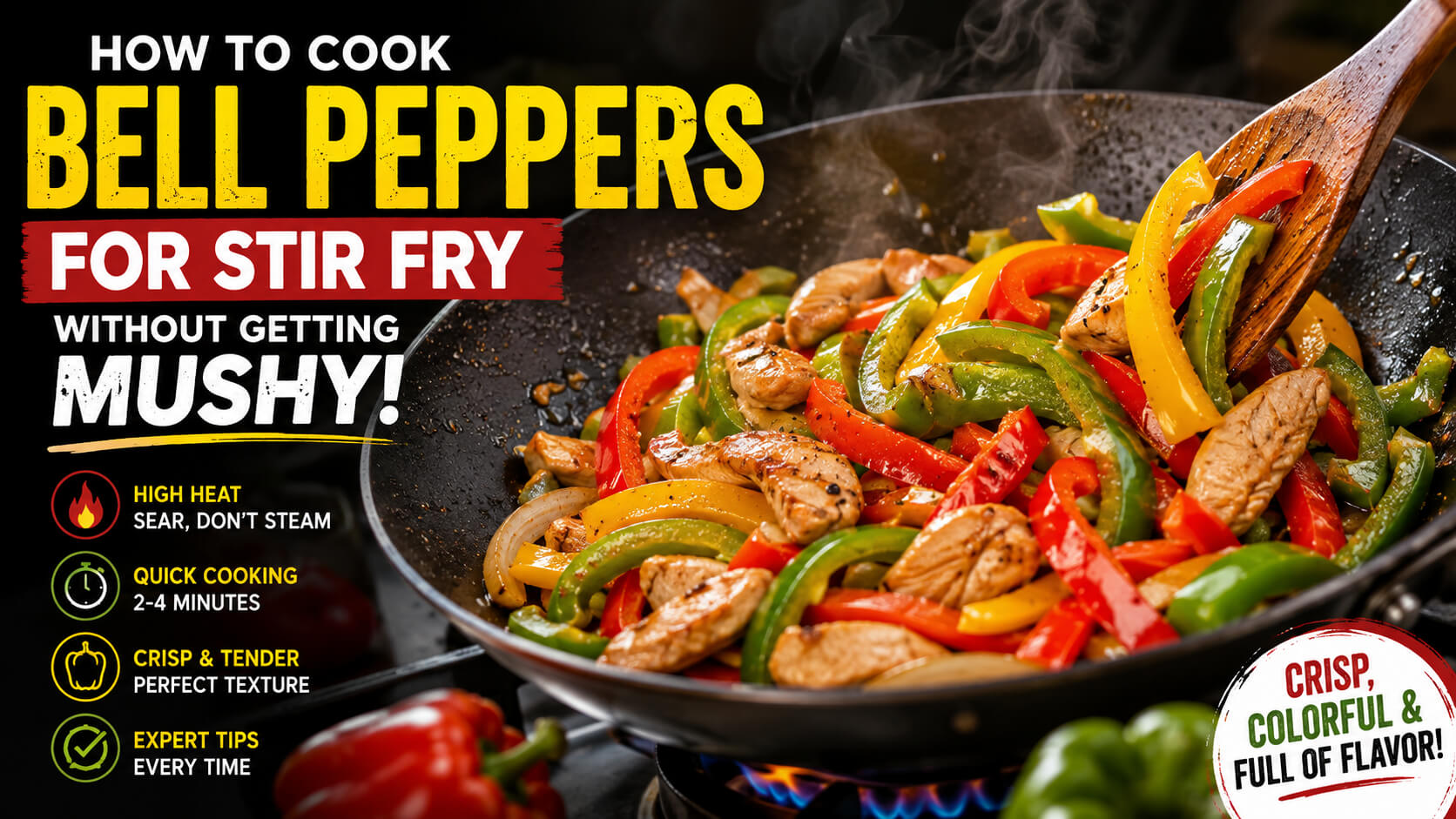
How to Cook Bell Peppers Without Getting Mushy
How to Cook Bell Peppers Without Getting Mushy
Bell peppers are one of the most colorful and flavorful vegetables you can add to a stir fry, but they can quickly turn soft and watery if they’re not cooked correctly. Many home cooks struggle to cook bell peppers stir fry style while keeping them crisp-tender instead of mushy. The good news is that a few simple techniques can make a dramatic difference.
Fresh bell peppers naturally contain a high amount of water. When they’re cooked too long, crowded into the pan, or added at the wrong time, that moisture escapes, causing the peppers to steam rather than sear. The result is a limp texture that can make an otherwise delicious stir fry feel overcooked.
Learning how to cook bell peppers stir fry style isn’t just about appearance. Properly cooked peppers retain more of their natural sweetness, bright color, and satisfying crunch. They also pair perfectly with dishes like Chicken Bell Pepper Stir Fry, Chicken Stir Fry, and Chicken Veggie Stir Fry.
Quick Answer
The best way to cook bell peppers stir fry style without getting mushy is to slice them into evenly sized strips, cook them over high heat, avoid overcrowding the pan, and stir fry them for only 2 to 4 minutes. Add them after slower-cooking vegetables but before delicate ingredients so they stay crisp-tender while developing a lightly caramelized flavor.
Table of Contents
Why Bell Peppers Become Mushy During Stir Fry
The biggest reason bell peppers lose their texture is excess moisture. As they heat up, the water inside their cells begins to escape. If the pan isn’t hot enough, that moisture collects around the vegetables instead of evaporating quickly. Rather than browning, the peppers steam, becoming soft within minutes.
Another common problem is cooking everything at once. Different vegetables require different cooking times. Bell peppers cook much faster than carrots, broccoli, or onions. Adding every vegetable together almost guarantees that the peppers will be overcooked before the rest of the stir fry is ready.
Warning: Stir frying on medium or low heat often traps moisture inside the pan. High heat allows water to evaporate quickly, helping bell peppers stay firm and slightly crisp.
The type of pan also matters. A properly heated wok or large skillet provides enough surface area for vegetables to sear instead of steaming. Giving each piece room to contact the hot surface is one of the easiest ways to improve texture.
If you’re also learning vegetable preparation techniques, see our guide on How to Cut Bell Peppers for Stir Fry, which explains why uniform slices cook more evenly.
Choose the Best Bell Peppers for Stir Fry
The quality of your vegetables plays a major role in how successfully you cook bell peppers stir fry style. Even perfect cooking techniques can’t completely fix peppers that are old, overly ripe, or already beginning to soften. Starting with fresh, firm bell peppers gives you the best chance of achieving that crisp-tender texture every great stir fry should have.
When shopping, look for peppers with smooth, shiny skin and bright, vibrant color. They should feel heavy for their size and remain firm when gently squeezed. Wrinkled skin, soft spots, or dull coloring are signs that the peppers have begun losing moisture and freshness.
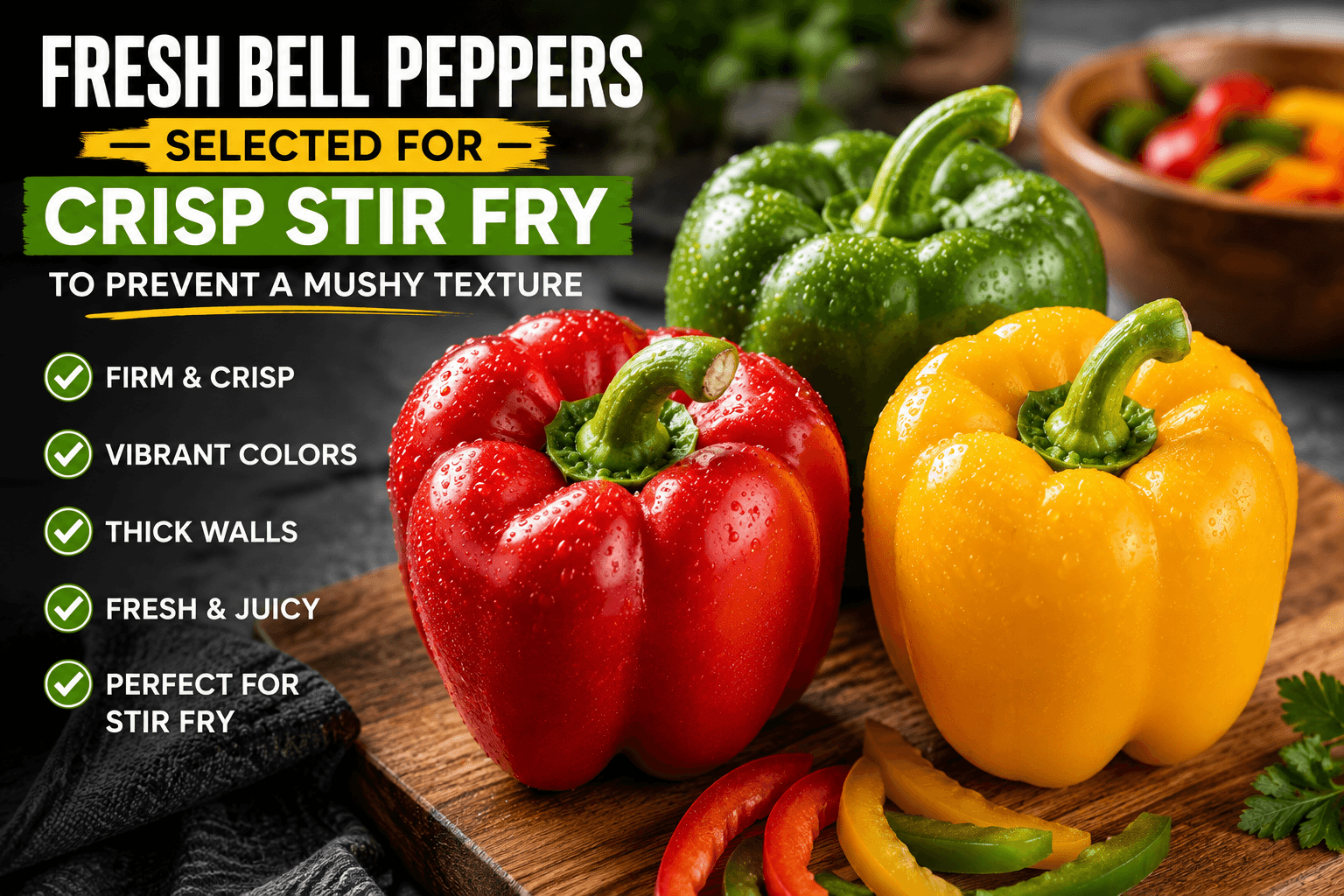
Color also affects flavor. While every variety works well in stir fry, each offers a slightly different taste that can complement different recipes.
| Bell Pepper Color | Flavor | Best For |
|---|---|---|
| Green | Mild, slightly bitter | Classic chicken and vegetable stir fries |
| Red | Sweet and juicy | Garlic and teriyaki stir fries |
| Yellow | Sweet with mild fruitiness | Colorful mixed vegetable dishes |
| Orange | Sweet and balanced | Healthy stir fry recipes |
Combining multiple colors not only creates a more attractive dish but also provides a balance of flavors. A mix of red, yellow, and green peppers adds visual appeal while preventing the stir fry from looking flat or overcooked.
Tip: Buy whole bell peppers instead of pre-cut packages whenever possible. Whole peppers stay fresher longer and retain more moisture until you’re ready to slice them.
Prepare Bell Peppers the Right Way Before Cooking
Preparation is just as important as cooking. To cook bell peppers stir fry style successfully, every piece should be cut into similar sizes. Uniform slices cook at the same rate, reducing the risk of some pieces becoming soft while others remain undercooked.
Begin by washing the peppers thoroughly under cool running water. Slice off the top, remove the stem, seeds, and white membranes, then cut the pepper into strips about ¼ inch wide. This thickness allows the peppers to soften slightly while still keeping a pleasant bite.
Avoid cutting extremely thin slices unless you’re making a very quick stir fry. Thin pieces lose moisture rapidly and can become limp in less than two minutes.
- Wash and dry the peppers completely.
- Remove the stem, seeds, and white ribs.
- Slice into even strips approximately ¼ inch thick.
- Pat dry with paper towels if excess moisture is present.
- Keep refrigerated until ready to cook.
If you’re preparing vegetables ahead of time, proper storage is equally important. Leaving sliced peppers uncovered allows them to dry out, while sealing them with excess moisture can make them soggy before they ever reach the pan.
Kitchen Secret: After slicing, gently pat bell peppers dry with paper towels. Removing surface moisture helps them sear immediately when they hit the hot pan, producing better color and texture.
For more detailed cutting techniques, visit our complete guide on How to Cut Bell Peppers for Stir Fry. It explains the best slice sizes for different stir fry recipes and how proper knife work improves even cooking.
How to Cook Bell Peppers Without Getting Mushy
Now that your peppers are properly prepared, it’s time to learn the most important part of the process. The secret to cook bell peppers stir fry style without losing their texture is using high heat, quick cooking, and proper timing. Professional chefs rarely cook bell peppers for long periods because doing so quickly breaks down their cell structure and releases excess moisture.
A successful stir fry should move quickly. Have all your ingredients prepared before you turn on the stove because once cooking begins, there won’t be time to stop and chop vegetables.
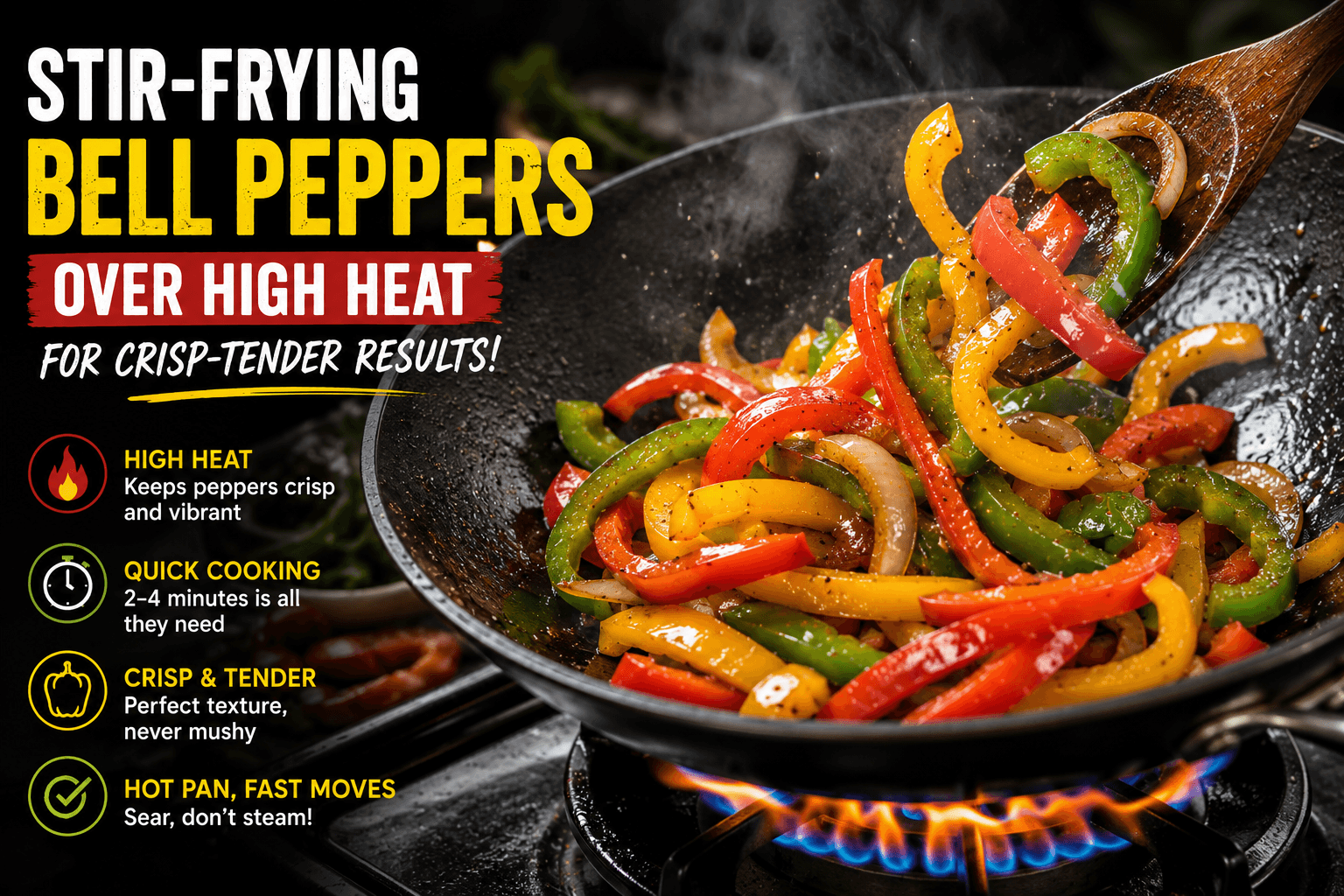
1. Preheat the Pan Properly
Always heat your wok or large skillet before adding oil. A properly heated pan allows the peppers to sear immediately instead of slowly warming up and releasing water.
Add a small amount of high smoke-point oil such as avocado oil, peanut oil, or canola oil. Swirl the oil around the pan until it forms a thin coating.
Tip: If the oil shimmers almost immediately after adding it, your pan is ready for stir frying.
2. Cook Over High Heat
The biggest mistake people make when they cook bell peppers stir fry style is lowering the heat because they’re worried about burning the vegetables. Stir frying is designed to be cooked quickly over high heat.
High heat evaporates moisture almost instantly, allowing the peppers to brown slightly while maintaining their crisp texture.
3. Stir Constantly—but Not Too Much
Bell peppers should move frequently around the pan, but they shouldn’t be stirred nonstop. Let them sit for 20 to 30 seconds between tosses so they develop light caramelization.
This slight browning adds flavor without making the peppers soft.
4. Keep Cooking Time Short
For most recipes, bell peppers only need about 2 to 4 minutes of cooking time. They should still have a slight bite when removed from the heat.
| Texture Preference | Cooking Time | Result |
|---|---|---|
| Very Crisp | 2 minutes | Bright color with maximum crunch |
| Crisp-Tender | 3 minutes | Ideal for most chicken stir fries |
| Softer | 4 minutes | Still firm but slightly sweeter |
| Overcooked | 5+ minutes | Mushy and watery |
Kitchen Secret: Remove the peppers from the heat while they still seem slightly underdone. The residual heat continues cooking them for another minute after they leave the pan.
When Should You Add Bell Peppers to a Stir Fry?
Timing is one of the most overlooked factors when trying to cook bell peppers stir fry style. Different vegetables require different cooking times, and adding them all at once almost always leads to uneven results.
Bell peppers belong in the middle of the cooking process. Vegetables such as carrots and broccoli need extra time to soften, while leafy greens and bean sprouts cook much faster.
- Cook the chicken until nearly done.
- Add firm vegetables like carrots or broccoli.
- Add onions if using.
- Add sliced bell peppers.
- Add quick-cooking vegetables like snow peas or mushrooms.
- Pour in the sauce during the final minute.
This order allows every ingredient to finish cooking at approximately the same time, giving your stir fry better texture and more balanced flavor.
For a complete breakdown of vegetable timing, read our guide on The Correct Order to Add Vegetables to Stir Fry. It explains exactly when each vegetable should be added for the best results.
Common Mistakes That Make Bell Peppers Mushy
Even experienced home cooks sometimes struggle to cook bell peppers stir fry style because a few small mistakes can quickly ruin their texture. Fortunately, these problems are easy to avoid once you understand what’s happening inside the pan.
If your bell peppers consistently turn soft, watery, or limp, chances are one of the following issues is to blame.
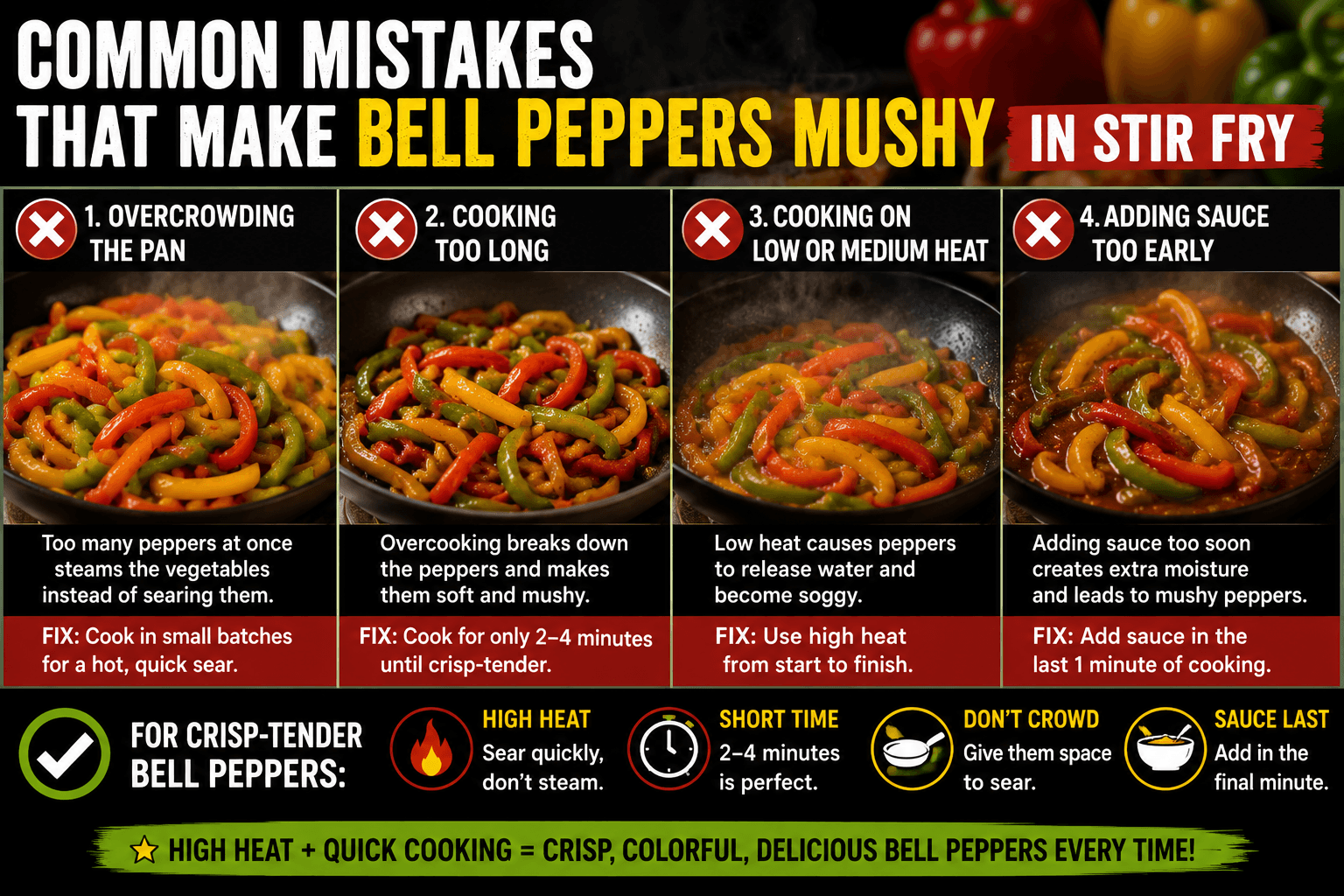
1. Overcrowding the Pan
Adding too many vegetables at once lowers the temperature of the pan almost immediately. Instead of searing, the vegetables begin releasing steam, causing the bell peppers to soften long before they can develop any browning.
If you’re making a large batch, cook the ingredients in two smaller batches rather than filling the pan completely.
Warning: If you hear very little sizzling after adding the peppers, your pan is probably overcrowded. Proper stir frying should always produce a steady sizzling sound.
2. Cooking on Medium or Low Heat
Stir frying depends on high heat to evaporate moisture quickly. Lower temperatures allow water to collect in the pan, making it almost impossible to cook bell peppers stir fry style without ending up with soggy vegetables.
3. Adding the Sauce Too Early
Many stir fry sauces contain soy sauce, broth, water, or other liquids. Pouring the sauce over the vegetables too soon traps moisture around the peppers and prevents proper browning.
Instead, cook the vegetables first and add the sauce during the final minute of cooking. This allows the sauce to lightly coat the ingredients without overcooking them.
4. Cutting Uneven Pieces
Large chunks require more cooking time than thin slices. By the time the thicker pieces are tender, the smaller pieces are already becoming mushy.
Keeping every slice approximately the same width ensures even cooking from start to finish.
5. Covering the Pan
Placing a lid on the pan traps steam inside, creating the exact conditions that make bell peppers soft. Stir frying should always be done uncovered so excess moisture can escape.
| Mistake | What Happens | Better Solution |
|---|---|---|
| Overcrowding | Vegetables steam instead of sear | Cook in smaller batches |
| Low heat | Water collects in the pan | Use high heat throughout cooking |
| Adding sauce too early | Peppers become watery | Add sauce during the final minute |
| Uneven slices | Some pieces overcook | Cut uniform strips |
| Covering the pan | Steam softens vegetables | Cook uncovered |
If your vegetables have already become soft, don’t worry. Our guide on How to Fix Soggy Stir Fry Vegetables shares practical ways to improve texture and rescue your meal.
Best Cooking Equipment for Crisp Bell Peppers
The cookware you use can have a surprising impact on your results. While it’s possible to cook bell peppers stir fry style in almost any pan, some options perform much better than others.
Best Options
- Carbon steel wok heats quickly and evenly.
- Large stainless steel skillet develops excellent browning.
- Cast iron retains heat well for small batches.
- Wide cooking surface reduces overcrowding.
Less Ideal Options
- Small pans crowd vegetables together.
- Thin pans lose heat quickly.
- Deep pots trap steam.
- Nonstick pans often limit browning at very high temperatures.
If you regularly prepare dishes like Garlic Chicken Stir Fry, Spicy Chicken Stir Fry, or Healthy Chicken Stir Fry, investing in a quality wok can significantly improve both flavor and texture.
How to Keep Bell Peppers Crisp After Cooking
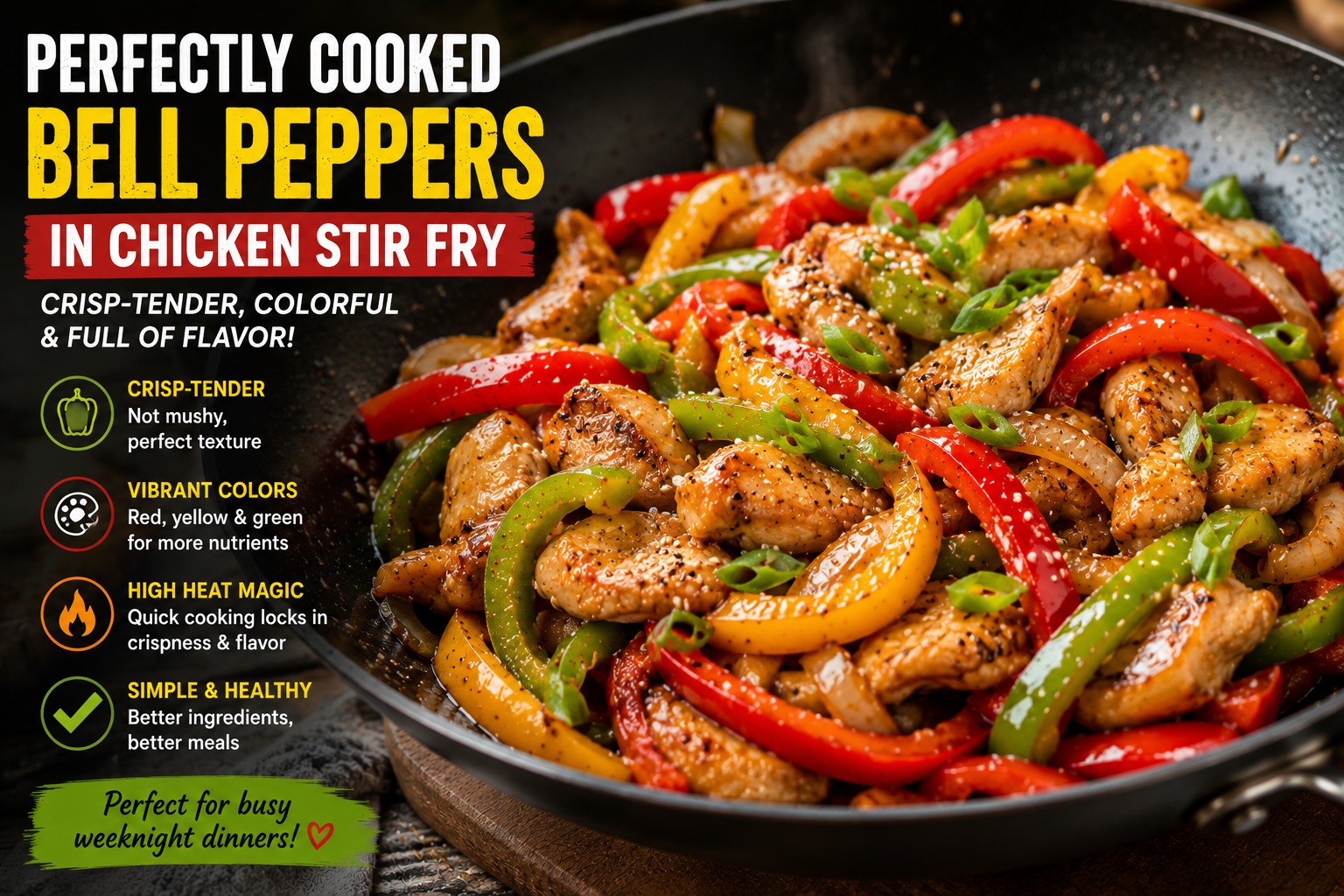
Successfully cook bell peppers stir fry style is only part of the process. If the cooked vegetables sit in a hot pan for too long, they’ll continue softening from the residual heat. A few simple habits can help preserve their crisp-tender texture until it’s time to serve.
Serve Immediately
Stir fry is designed to be enjoyed fresh from the pan. Leaving vegetables on the stove or in a covered skillet allows trapped heat to continue cooking the peppers, making them noticeably softer within a few minutes.
As soon as the sauce has lightly coated the ingredients, remove the pan from the heat and transfer everything to a serving dish.
Don’t Overuse Sauce
Too much sauce doesn’t just overpower the flavors—it also creates extra moisture that can soften vegetables while the meal sits on the table.
A light coating is all that’s needed. The goal is to enhance the vegetables, not drown them.
Tip: If your stir fry seems watery after adding the sauce, cook it for another 30 to 60 seconds over high heat so the excess liquid can reduce before serving.
Avoid Covering the Finished Dish
Covering freshly cooked stir fry traps steam inside the serving bowl, allowing moisture to condense back onto the vegetables. Leaving the dish uncovered keeps the peppers firmer and preserves their vibrant appearance.
How to Store and Reheat Bell Pepper Stir Fry
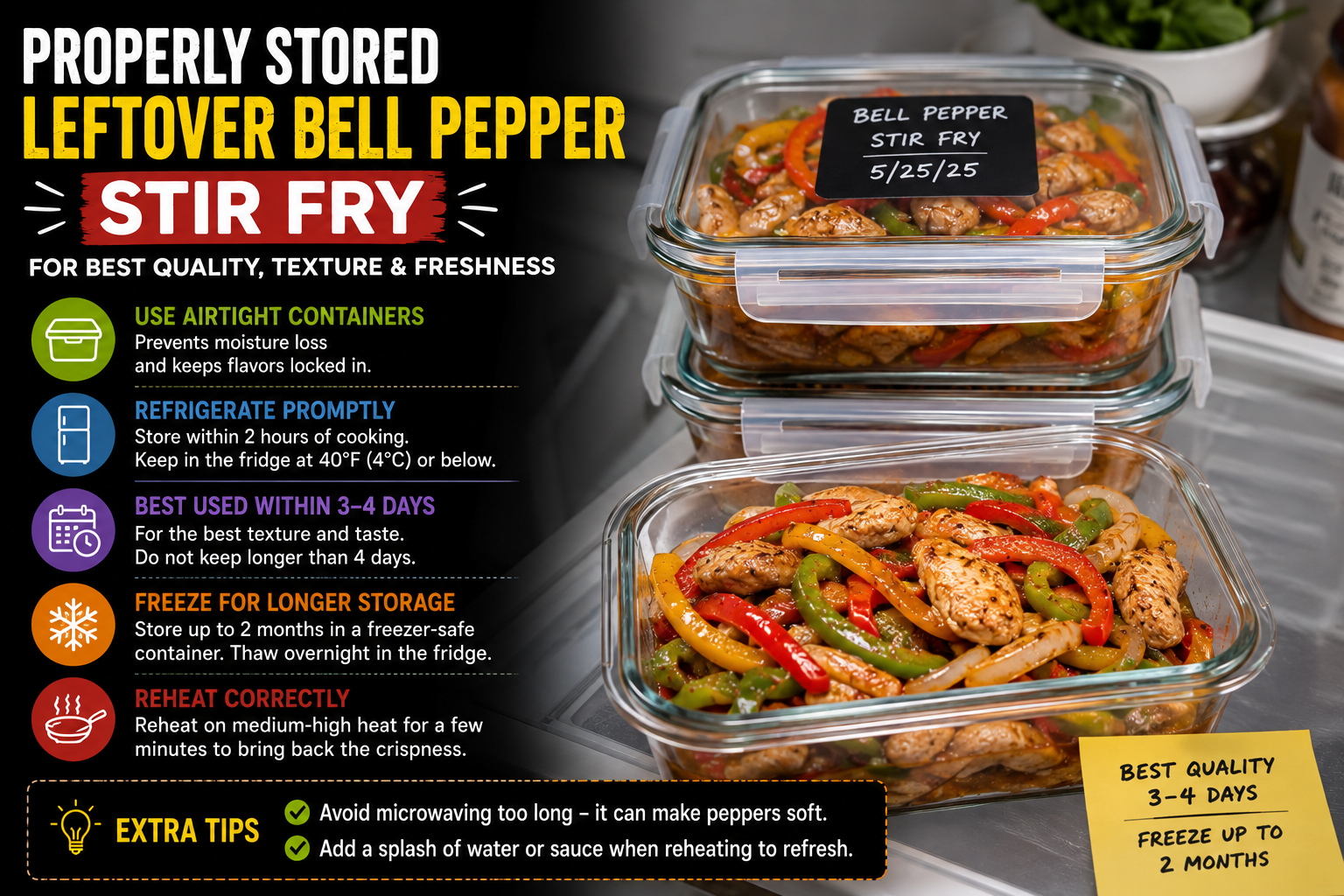
Although freshly cooked vegetables always provide the best texture, leftovers can still taste excellent when stored properly. The key is preventing excess moisture from building up during refrigeration.
Storage: Allow the stir fry to cool for no longer than two hours before transferring it to an airtight container. Refrigerate for up to 4 days. For the best texture, avoid freezing bell peppers that have already been stir fried, as they often become soft after thawing.
| Storage Method | Recommended Time | Texture Quality |
|---|---|---|
| Refrigerator | 3–4 days | Very Good |
| Freezer | Up to 2 months | Softer after thawing |
Best Way to Reheat
For the best results, reheat stir fry in a hot skillet over medium-high heat for 2 to 3 minutes. This warms the food quickly while allowing any excess moisture to evaporate.
Microwaving is convenient but often softens vegetables because it heats them with steam. If using a microwave, heat only until warmed through to minimize texture loss.
Kitchen Secret: Reheat leftovers in a dry skillet for the first minute before adding a teaspoon of water or extra sauce if needed. This helps restore a lightly seared texture instead of steaming the vegetables.
Expert Tips for Perfect Stir-Fried Bell Peppers Every Time
- Choose firm, glossy bell peppers without soft spots.
- Slice every piece to a similar thickness.
- Preheat the wok before adding oil.
- Cook over high heat from start to finish.
- Avoid overcrowding the pan.
- Add bell peppers after firm vegetables but before delicate ones.
- Cook for only 2 to 4 minutes.
- Add stir fry sauce during the final minute.
- Serve immediately for the crispiest texture.
- Practice consistent timing—the more often you stir fry, the easier it becomes to judge perfect doneness.
These simple habits make it much easier to cook bell peppers stir fry style with consistently crisp, colorful, and flavorful results.
If you’re building your stir fry skills, our guides on Common Vegetable Stir Fry Mistakes and The Ultimate Stir Fry Vegetable Preparation Guide provide even more practical techniques for cooking vegetables like a pro.
Final Thoughts
Learning how to cook bell peppers stir fry style without getting mushy comes down to controlling heat, timing, and moisture. Fresh peppers naturally contain plenty of water, but using a properly heated wok or skillet, cooking in small batches, and limiting the cooking time to just a few minutes helps preserve their crisp-tender texture.
Preparation is equally important. Uniform slices cook evenly, while adding bell peppers at the correct stage of the stir fry prevents them from becoming overcooked before the rest of the ingredients are ready. Finishing with the sauce during the final minute also helps the peppers stay vibrant and slightly crisp.
Whether you’re making a simple vegetable stir fry or preparing recipes like Chicken Bell Pepper Stir Fry, Teriyaki Chicken Stir Fry, or Chicken Broccoli Stir Fry, these techniques will consistently deliver colorful vegetables with excellent flavor and texture.
With a little practice, you’ll be able to cook bell peppers stir fry style like a restaurant chef—keeping every bite crisp, juicy, and full of fresh flavor instead of soft and soggy.
Frequently Asked Questions
How long should I cook bell peppers in a stir fry?
For the best texture, cook bell peppers stir fry style for about 2 to 4 minutes over high heat. This keeps them crisp-tender while allowing light caramelization.
Why do my bell peppers always become mushy?
Bell peppers usually become mushy because they’re cooked too long, the pan is overcrowded, the heat is too low, or the sauce is added too early.
Should I cook bell peppers before chicken?
No. Cook the chicken first, followed by firm vegetables. Add the bell peppers later since they require much less cooking time.
Do red, yellow, and green bell peppers cook differently?
They cook at nearly the same rate, although red, yellow, and orange peppers are naturally sweeter, while green peppers have a slightly firmer texture and a more savory flavor.
Can I meal prep stir-fried bell peppers?
Yes. Store cooked stir fry in an airtight container in the refrigerator for up to 4 days. Reheat quickly in a hot skillet to help maintain the best texture.
Can frozen bell peppers be used for stir fry?
Yes, but frozen peppers release more moisture than fresh peppers. Cook them over high heat and avoid overcrowding the pan to reduce sogginess.
References
🍽️ You Might Also Like

📧 Save This Recipe For Later
Enter your email and we will send this recipe directly to your inbox.