
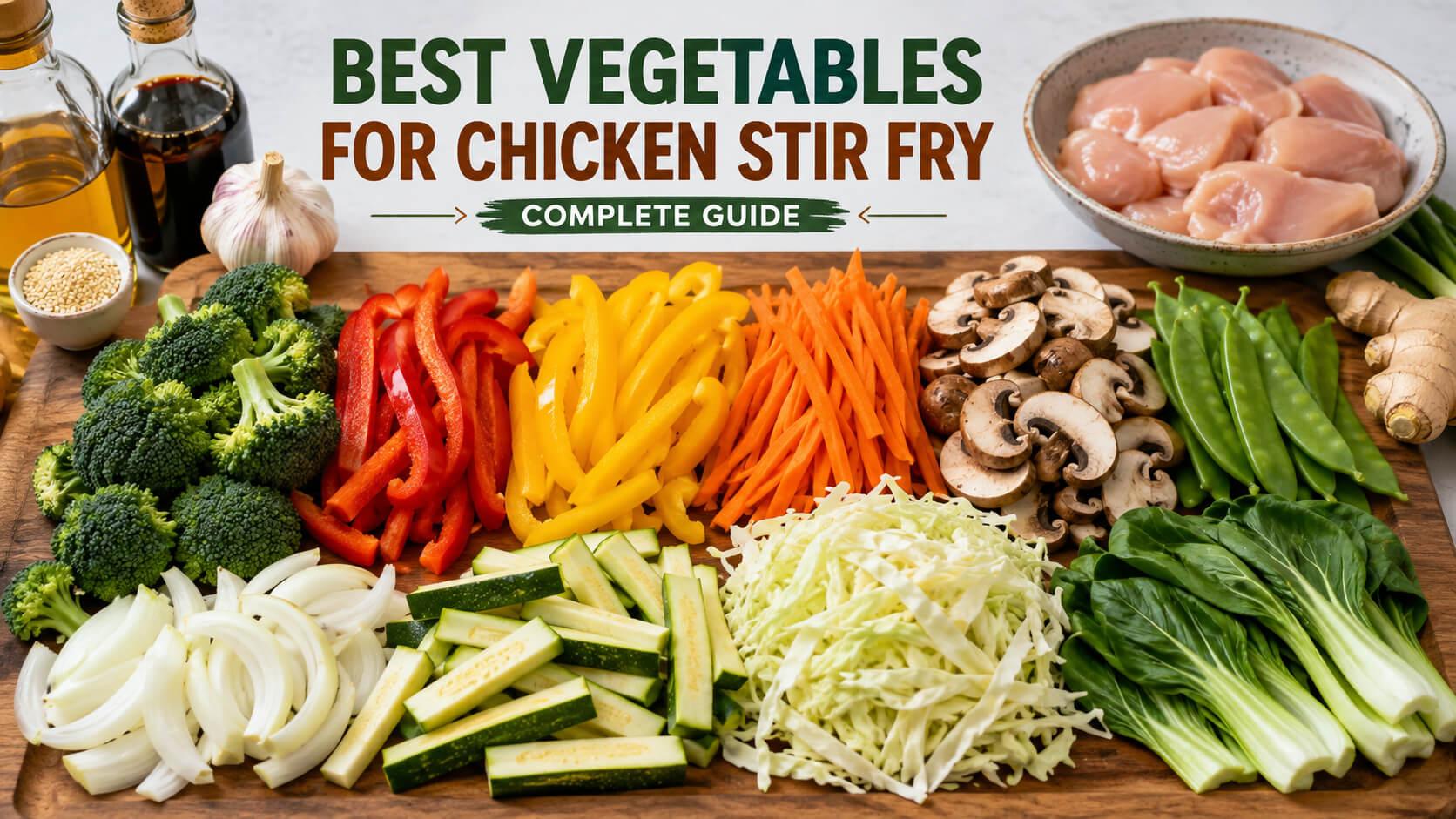
Best Vegetables for Chicken Stir Fry (Complete Guide)
Best Vegetables for Chicken Stir Fry (Complete Guide)
If you’ve ever wondered which vegetables create the most flavorful, colorful, and perfectly textured chicken stir fry, you’re in the right place. Choosing the best vegetables for chicken stir fry isn’t just about adding color to your skillet. The right combination affects flavor, texture, cooking time, nutrition, and even how well your stir fry sauce coats every bite.
Some vegetables stay crisp and sweet under high heat, while others release too much moisture and leave your stir fry watery. Understanding which vegetables work best—and how to prepare them—can make the difference between an average weeknight dinner and a restaurant-quality meal.
In this complete guide, you’ll discover the best vegetables for chicken stir fry, learn why certain vegetables perform better than others, understand how to combine them for balanced flavor and texture, and pick up practical tips that help every stir fry turn out better.
Quick Answer
The best vegetables for chicken stir fry include broccoli, bell peppers, carrots, snap peas, mushrooms, zucchini, cabbage, onions, baby corn, and bok choy. These vegetables cook quickly, retain their texture over high heat, complement chicken beautifully, and absorb stir fry sauces without becoming mushy. Combining vegetables with different textures and cooking times creates a more flavorful, balanced, and visually appealing stir fry.
Table of Contents
Why Choosing the Right Vegetables Matters
A great stir fry depends on balance. While chicken provides lean protein, vegetables contribute freshness, crunch, sweetness, and vibrant color. The best vegetables for chicken stir fry don’t simply fill the pan—they each bring something unique that improves the finished dish.
High-heat stir frying cooks food very quickly, often in just a few minutes. Vegetables that naturally hold their shape under intense heat stay crisp while absorbing delicious flavors from garlic, ginger, soy sauce, sesame oil, and other seasonings.
Choosing vegetables with different textures also creates a more enjoyable eating experience. Crisp broccoli pairs well with tender mushrooms, sweet bell peppers, crunchy carrots, and juicy snap peas, giving every bite a satisfying variety.
Tip: Try combining at least three different vegetables in every chicken stir fry. A mix of crunchy, tender, and slightly sweet vegetables creates better texture, flavor, and visual appeal than using only one type.
Nutrition is another important reason to choose vegetables carefully. Different vegetables provide different vitamins, minerals, antioxidants, and fiber. Mixing colorful vegetables naturally increases the nutritional value of your meal without making preparation much more difficult.
If you’re preparing meals ahead of time, selecting the best vegetables for chicken stir fry also improves storage quality. Vegetables that maintain their structure after cooking reheat better and keep leftovers tasting fresher.
Throughout this guide, we’ll explore the strengths of each vegetable, explain when to use it, and help you build delicious vegetable combinations that work every time.
The 10 Best Vegetables for Chicken Stir Fry
The best vegetables for chicken stir fry cook quickly, stay slightly crisp after stir frying, and absorb sauce without becoming soggy. While almost any vegetable can be added to a stir fry, some consistently deliver better texture, flavor, and appearance than others.
Professional chefs often combine vegetables with different cooking times to create a balanced dish. Firmer vegetables are cooked first, while delicate vegetables are added near the end. This simple technique helps every ingredient reach the perfect level of tenderness.
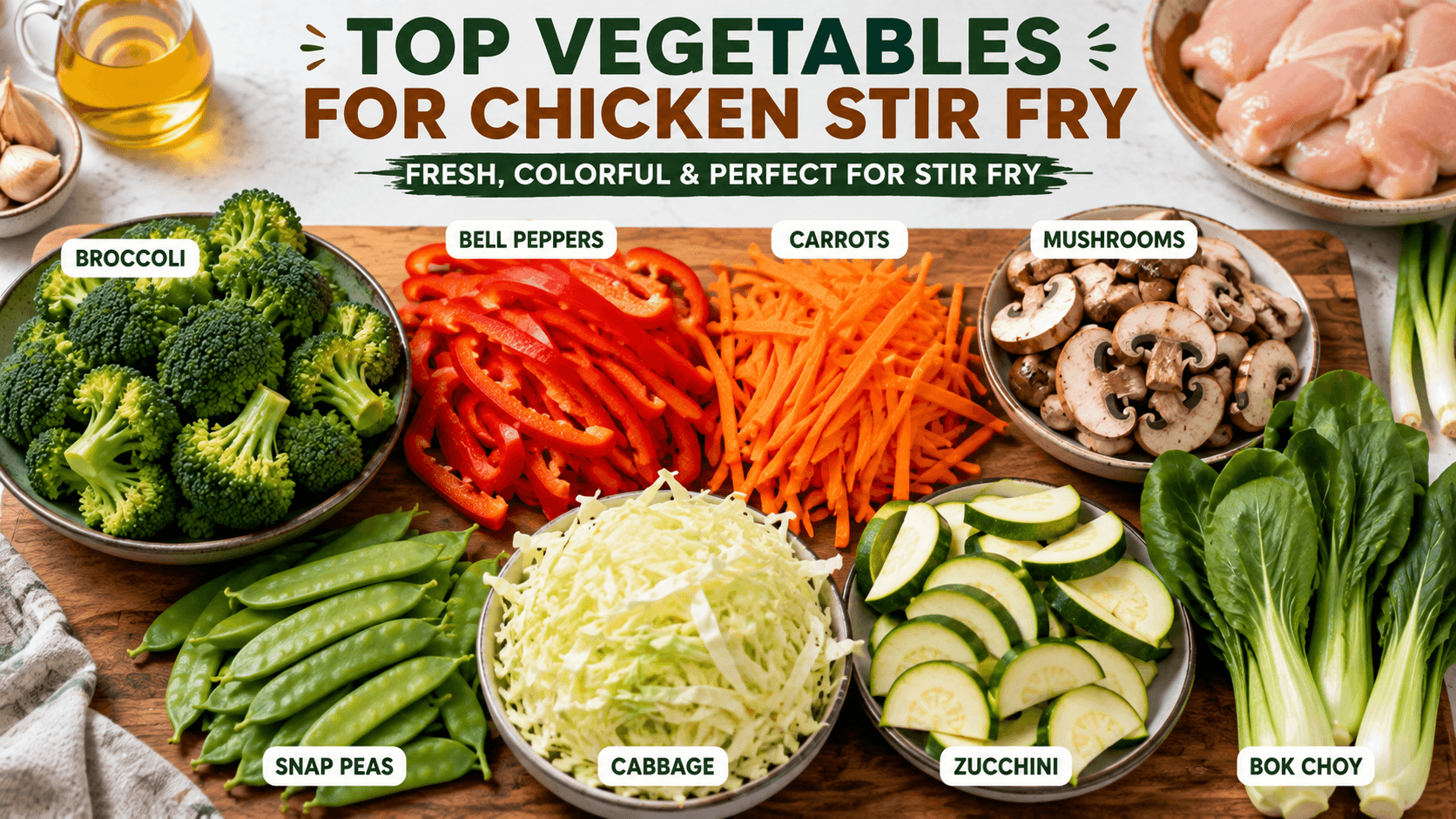
| Vegetable | Texture | Cooking Time | Why It Works Well |
|---|---|---|---|
| Broccoli | Crisp | 3–4 minutes | Absorbs sauce while staying crunchy. |
| Bell Peppers | Tender-crisp | 2–3 minutes | Add natural sweetness and vibrant color. |
| Carrots | Crisp | 3–5 minutes | Provide sweetness and excellent texture. |
| Snap Peas | Crisp | 2 minutes | Stay bright green and crunchy. |
| Mushrooms | Tender | 4 minutes | Add rich umami flavor. |
| Zucchini | Tender | 2–3 minutes | Cooks quickly and pairs well with chicken. |
| Cabbage | Slightly crisp | 3 minutes | Adds volume and mild sweetness. |
| Baby Corn | Crisp | 2 minutes | Provides classic takeout texture. |
| Onions | Tender | 2–3 minutes | Create a flavorful base for sauces. |
| Bok Choy | Tender-crisp | 2 minutes | Adds freshness and delicate crunch. |
1. Broccoli
Broccoli is often considered the gold standard when discussing the best vegetables for chicken stir fry. Its firm florets soak up savory sauces while keeping a pleasant bite. The stalks are equally delicious when peeled and sliced into thin pieces, reducing food waste and adding extra crunch.
If you’re new to preparing broccoli correctly, check out our complete guide on how to prep broccoli for stir fry.
2. Bell Peppers
Bell peppers add sweetness, color, and freshness. Red peppers are the sweetest, yellow and orange peppers offer mild fruity notes, while green peppers provide a slightly bitter flavor that balances richer sauces.
Uniform slices help peppers cook evenly, preventing some pieces from becoming soft while others remain undercooked.
Need help slicing them properly? Read our guide on how to cut bell peppers for stir fry.
Kitchen Secret: Combining red, yellow, and green bell peppers creates better visual appeal and a more balanced flavor than using only one color.
3. Carrots
Carrots contribute natural sweetness and remain pleasantly crisp after stir frying. Thin matchsticks or diagonal slices cook much faster than thick rounds, making them ideal for quick weeknight meals.
Because carrots are firmer than most vegetables, they should be added earlier in the cooking process to ensure they become tender without overcooking softer vegetables.
These three vegetables alone create an excellent foundation, but combining them with mushrooms, snap peas, cabbage, zucchini, or bok choy results in an even more flavorful and balanced chicken stir fry.
How to Choose the Freshest Vegetables for Chicken Stir Fry
Selecting fresh produce is just as important as choosing the best vegetables for chicken stir fry. Even the highest-quality recipe can’t compensate for vegetables that are wilted, bruised, or past their prime. Fresh vegetables cook more evenly, maintain a crisp texture, and deliver brighter flavors in every bite.
When shopping, look for vegetables that feel firm, have vibrant natural colors, and show no signs of excessive moisture or soft spots. Fresh vegetables also retain more nutrients and are less likely to become mushy during stir frying.
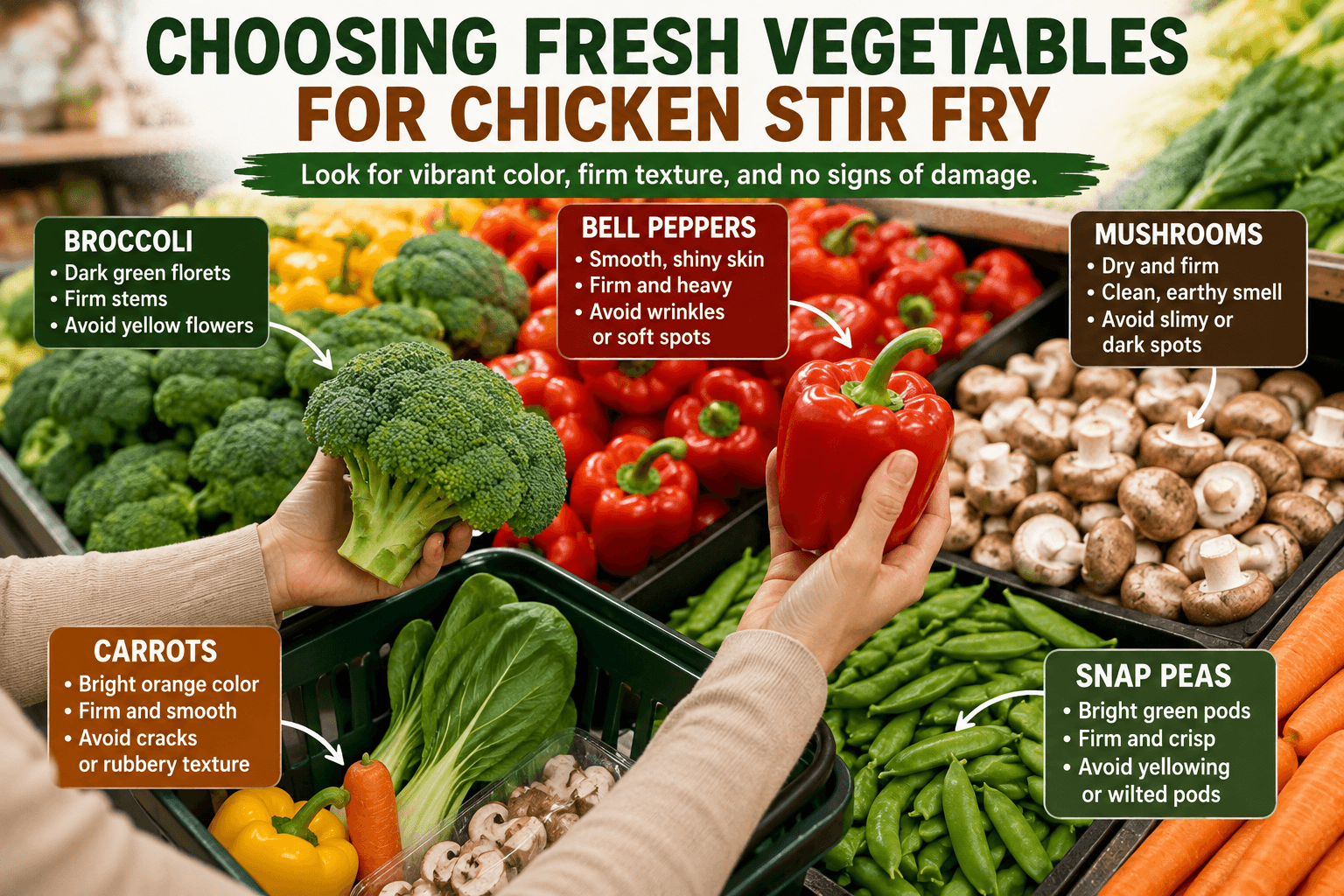
What to Look for in Popular Stir Fry Vegetables
| Vegetable | Signs of Freshness | Avoid |
|---|---|---|
| Broccoli | Dark green florets, firm stems | Yellow flowers or soft stalks |
| Bell Peppers | Smooth, shiny skin with firm flesh | Wrinkles, soft spots, or mold |
| Carrots | Firm texture and bright orange color | Rubbery or cracked carrots |
| Mushrooms | Dry, firm caps with an earthy smell | Sticky, slimy, or dark patches |
| Snap Peas | Bright green pods that snap easily | Wilted or yellowing pods |
| Bok Choy | Crisp white stalks and green leaves | Brown edges or limp leaves |
Buying vegetables that are in season often results in better flavor and value. Seasonal produce is usually harvested closer to peak ripeness, meaning it tastes fresher and cooks better in high-heat dishes like stir fry.
Tip: Store fresh vegetables in the refrigerator’s crisper drawer and avoid washing them until you’re ready to cook. Excess moisture can shorten their shelf life.
Fresh vs. Frozen Vegetables for Chicken Stir Fry
Many home cooks wonder whether frozen vegetables are a good substitute for fresh ones. The answer depends on your priorities. Fresh vegetables generally provide the best texture, while frozen vegetables offer convenience and reduce food waste.
Frozen vegetables are typically harvested and frozen shortly after picking, which helps preserve many nutrients. However, ice crystals formed during freezing can soften their structure, causing them to release more water during cooking.
Fresh Vegetables
- Superior crisp texture
- Brighter appearance
- Less excess moisture
- Better caramelization during stir frying
- Excellent for restaurant-style results
Frozen Vegetables
- Can become softer after cooking
- May release extra water
- Slightly less vibrant texture
- Convenient and available year-round
- Often more budget-friendly
If you choose frozen vegetables, cook them directly from frozen instead of thawing them first. This helps reduce moisture loss and improves browning.
For a more detailed comparison, read our guide on fresh vs. frozen vegetables for stir fry.
Warning: Overcrowding the pan with frozen vegetables can lower the cooking temperature, causing the vegetables to steam instead of stir fry. Cook in batches if necessary to maintain high heat.
Whether you choose fresh or frozen, understanding how each type behaves during cooking helps you consistently prepare delicious meals using the best vegetables for chicken stir fry.
Best Vegetable Combinations for Chicken Stir Fry
While individual vegetables each bring unique flavors and textures, combining them thoughtfully creates a much more balanced stir fry. The best vegetables for chicken stir fry work together by adding crunch, sweetness, freshness, and color, making every bite more satisfying.
A good combination usually includes one firm vegetable, one sweet vegetable, one tender vegetable, and one leafy or light vegetable. This variety keeps the dish interesting while ensuring everything cooks evenly.
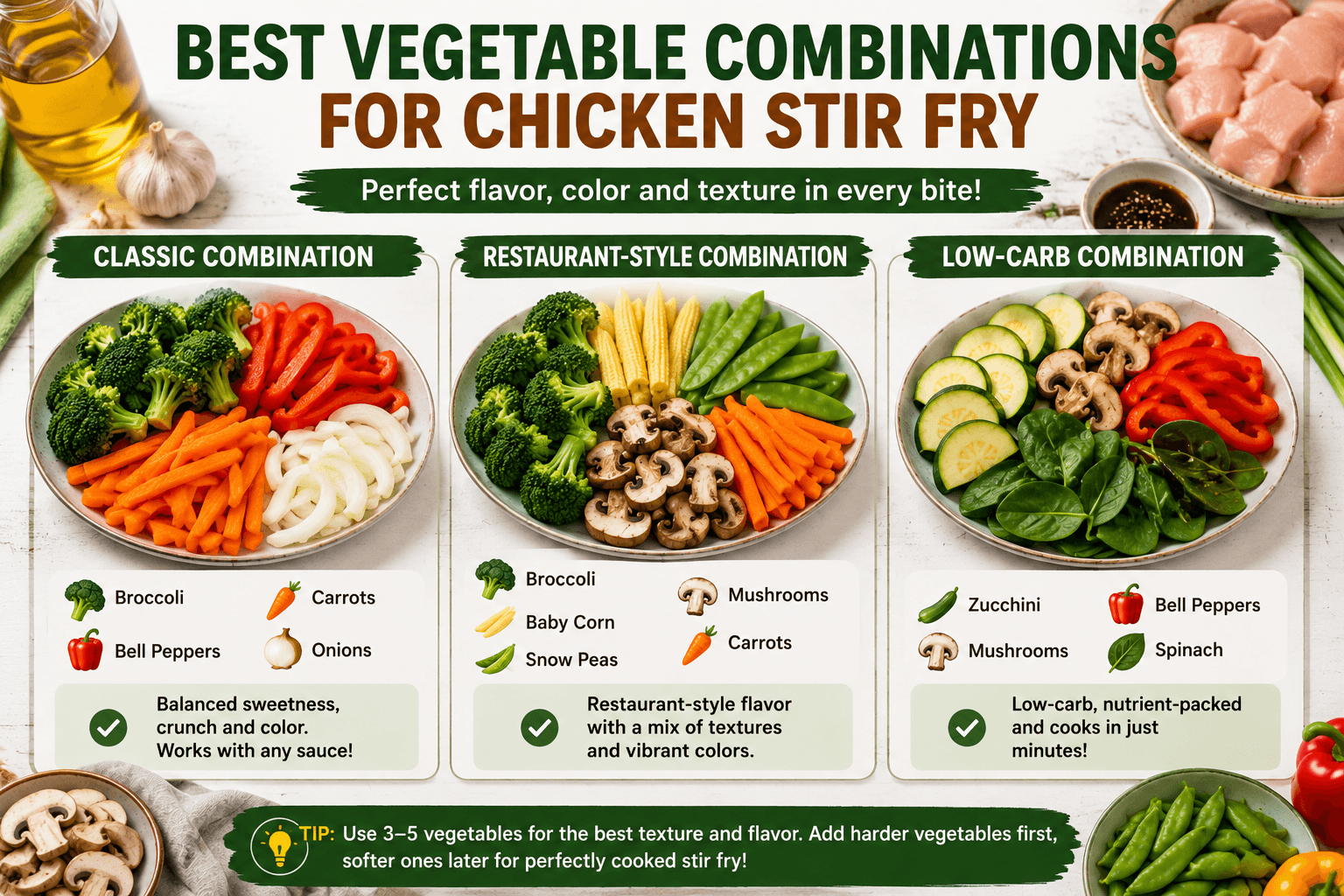
Classic Combination
- Broccoli
- Bell peppers
- Carrots
- Onions
This is one of the most popular combinations because it offers excellent color, balanced sweetness, and a variety of textures. It also pairs well with almost any stir fry sauce.
Restaurant-Style Combination
- Broccoli
- Baby corn
- Snow peas
- Mushrooms
- Carrots
This combination closely resembles what you’ll find in many Asian restaurants. Each vegetable retains its texture while absorbing savory sauces beautifully.
Low-Carb Combination
- Zucchini
- Mushrooms
- Bell peppers
- Spinach
If you’re reducing carbohydrates, this mix provides plenty of volume without relying on starchy vegetables. It also cooks very quickly, making it perfect for busy weeknights.
Looking for even more pairing ideas? Visit our guide on the best vegetable combinations for chicken stir fry.
Kitchen Secret: Aim for three to five vegetables in one stir fry. Too few vegetables can make the dish feel plain, while too many may overcrowd the pan and cause uneven cooking.
How to Cook Vegetables in the Correct Order
One of the biggest reasons homemade stir fries don’t match restaurant quality is adding every vegetable at the same time. Different vegetables require different cooking times, so adding them in stages helps maintain the perfect texture.
| Cooking Stage | Vegetables | Approximate Time |
|---|---|---|
| First | Carrots, broccoli stems, baby corn | 2–3 minutes |
| Second | Broccoli florets, mushrooms, onions | 2 minutes |
| Third | Bell peppers, zucchini, cabbage | 1–2 minutes |
| Last | Spinach, bok choy leaves, green onions | 30–60 seconds |
Cooking vegetables in this order ensures each ingredient reaches the ideal level of tenderness without becoming overcooked. Firmer vegetables receive enough time to soften slightly, while delicate vegetables remain fresh and vibrant.
Tip: Keep all vegetables cut into similar bite-sized pieces before you begin cooking. Stir frying happens quickly, and having everything prepared ahead of time helps prevent overcooking.
If you’re preparing several meals in advance, cutting all your vegetables before cooking can save valuable time. Our Ultimate Stir Fry Vegetable Preparation Guide explains the best cutting techniques for every popular stir fry vegetable.
Using the correct cooking order allows the best vegetables for chicken stir fry to keep their natural color, flavor, and texture while creating a perfectly balanced dish that’s both nutritious and visually appealing.
Common Mistakes When Choosing and Cooking Stir Fry Vegetables
Even when you use the best vegetables for chicken stir fry, a few common mistakes can leave your meal watery, unevenly cooked, or lacking flavor. Fortunately, these problems are easy to avoid once you understand what causes them.
Paying attention to vegetable size, cooking order, and pan temperature can dramatically improve the quality of your homemade stir fry.
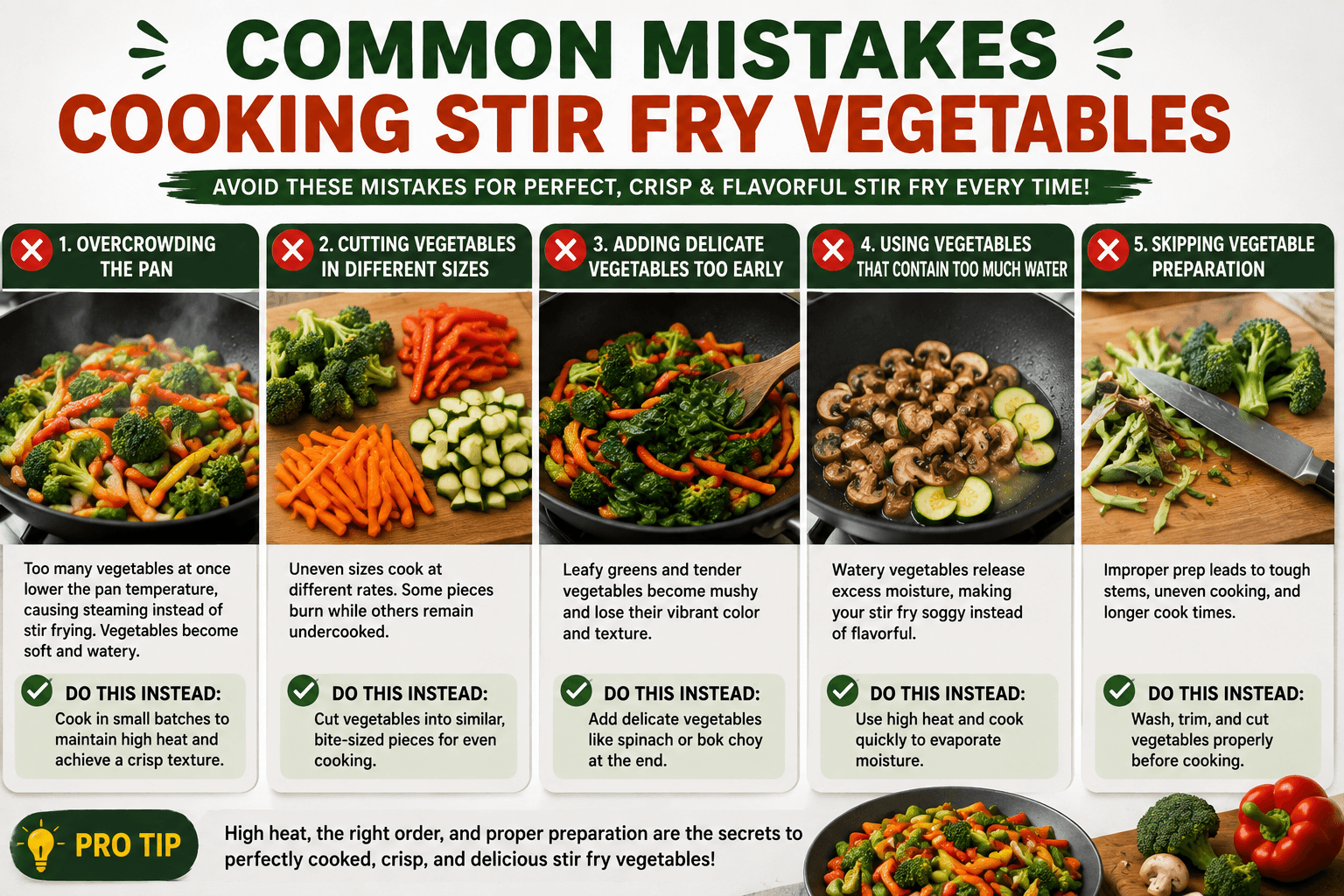
1. Overcrowding the Pan
Adding too many vegetables at once lowers the temperature of the pan. Instead of quickly searing, the vegetables begin to steam, releasing excess moisture and becoming soft.
Warning: If your skillet or wok is crowded, cook the vegetables in two batches. High heat is one of the biggest secrets to achieving a crisp, restaurant-style stir fry.
2. Cutting Vegetables into Different Sizes
Large broccoli florets and tiny carrot slices won’t finish cooking at the same time. Uniform pieces help every vegetable cook evenly, improving both texture and appearance.
3. Adding Delicate Vegetables Too Early
Leafy vegetables such as spinach and bok choy need very little cooking time. If they’re added with carrots or broccoli, they’ll become wilted and lose much of their fresh texture.
4. Using Vegetables That Contain Too Much Water
Some vegetables naturally release more moisture during cooking. Zucchini and mushrooms can produce excess liquid if cooked over medium heat or if the pan is overcrowded.
Cooking them over high heat allows moisture to evaporate quickly while developing better flavor through light browning.
5. Skipping Vegetable Preparation
Taking a few extra minutes to trim broccoli, remove tough cabbage cores, or slice peppers evenly can significantly improve the finished dish. Proper preparation also shortens cooking time.
Kitchen Secret: Dry vegetables thoroughly after washing. Excess surface moisture prevents browning and makes vegetables steam instead of stir fry.
How to Store Vegetables for Chicken Stir Fry
Proper storage helps vegetables stay fresh, crisp, and ready for quick weeknight meals. The best vegetables for chicken stir fry maintain their quality longer when stored correctly in the refrigerator.
| Vegetable | Best Storage Method | Typical Freshness |
|---|---|---|
| Broccoli | Unwashed in crisper drawer | 5–7 days |
| Bell Peppers | Whole in refrigerator | 1–2 weeks |
| Carrots | Sealed bag or container | 2–4 weeks |
| Mushrooms | Paper bag in refrigerator | 5–7 days |
| Snap Peas | Ventilated produce bag | 5 days |
| Bok Choy | Loosely wrapped in refrigerator | 3–5 days |
Storage Tip: Chop vegetables only one or two days before cooking whenever possible. Whole vegetables generally stay fresher longer than pre-cut pieces.
If you enjoy meal prepping, storing vegetables in airtight containers lined with a dry paper towel helps absorb excess moisture and keeps them crisp.
Many stir fry vegetables can also be prepared in advance. For example, broccoli florets, sliced bell peppers, shredded cabbage, and carrot sticks can all be refrigerated separately until you’re ready to cook.
Using fresh, properly stored produce ensures the best vegetables for chicken stir fry retain their natural flavor, texture, and nutritional value every time you cook.
Final Thoughts
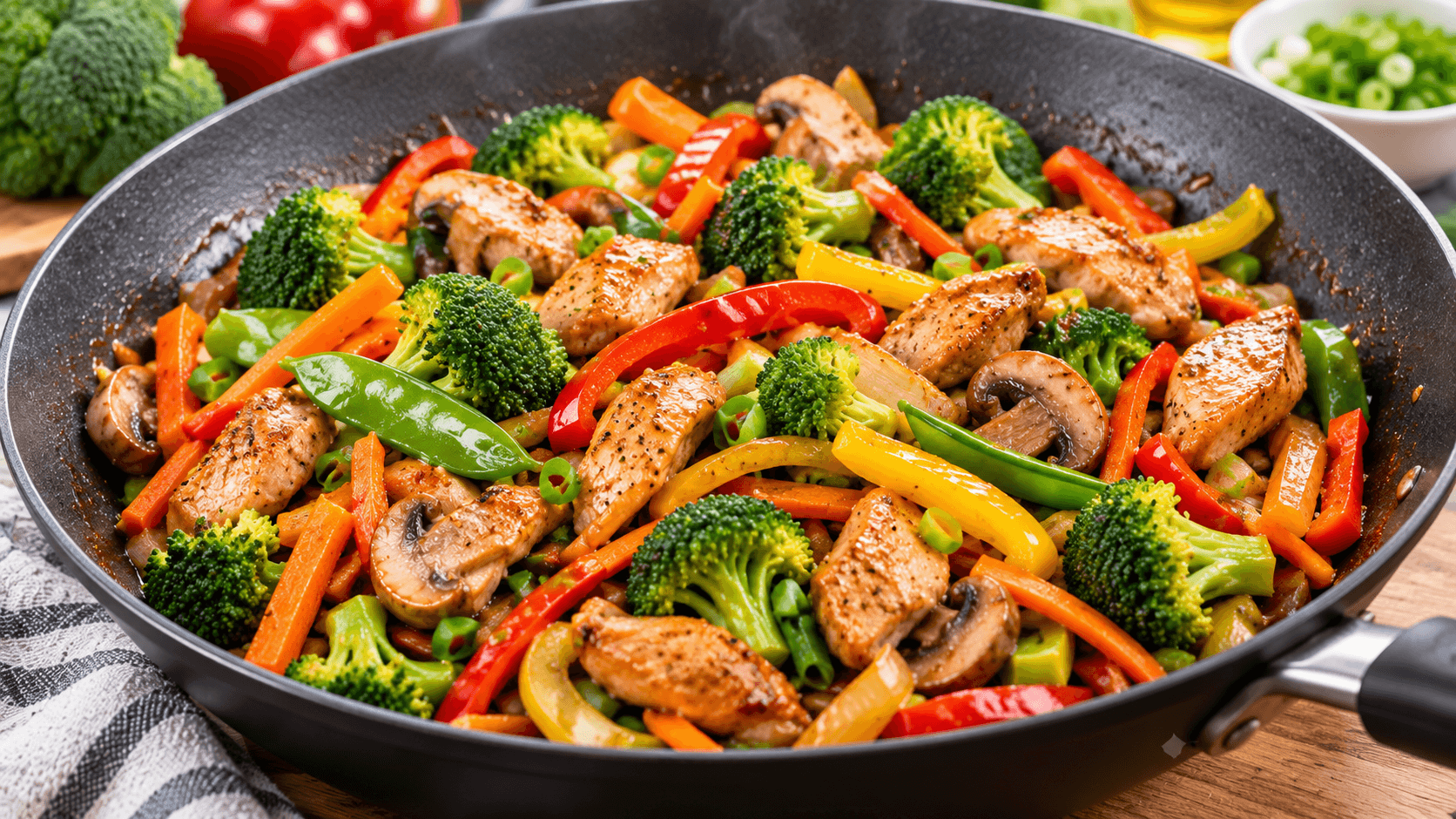
Choosing the best vegetables for chicken stir fry is one of the easiest ways to improve both the flavor and nutrition of your meals. Fresh vegetables that cook well over high heat provide the perfect balance of crispness, sweetness, and color while complementing tender chicken and flavorful stir fry sauces.
Broccoli, bell peppers, carrots, mushrooms, snap peas, cabbage, zucchini, bok choy, onions, and baby corn remain some of the most reliable choices because they retain their texture without becoming overly soft. Mixing several vegetables with different textures creates a stir fry that’s both visually appealing and satisfying to eat.
Remember that preparation matters just as much as selection. Cutting vegetables into uniform pieces, adding them to the pan according to their cooking time, and avoiding overcrowding all help produce restaurant-quality results at home.
Whether you’re preparing a quick weeknight dinner or planning meals for the week ahead, understanding how to choose, prepare, and cook the best vegetables for chicken stir fry will help you create consistently delicious meals with confidence.
Frequently Asked Questions
What are the best vegetables for chicken stir fry?
The best vegetables for chicken stir fry include broccoli, bell peppers, carrots, mushrooms, snap peas, cabbage, zucchini, bok choy, onions, and baby corn. These vegetables cook quickly while maintaining excellent texture and flavor.
Can I use frozen vegetables in chicken stir fry?
Yes. Frozen vegetables are convenient and nutritious, but they may release more moisture than fresh vegetables. Cook them over high heat without thawing first for the best results.
Which vegetables should be cooked first?
Dense vegetables such as carrots, broccoli stems, and baby corn should be cooked first. Softer vegetables like bell peppers, zucchini, spinach, and bok choy should be added near the end.
How many vegetables should I use in one stir fry?
Using three to five different vegetables creates the best balance of flavor, texture, and color without overcrowding the pan.
How do I keep vegetables crisp in a stir fry?
Cook over high heat, avoid overcrowding the pan, dry vegetables thoroughly before cooking, and add each vegetable according to its required cooking time.
References
🍽️ You Might Also Like


📧 Save This Recipe For Later
Enter your email and we will send this recipe directly to your inbox.