
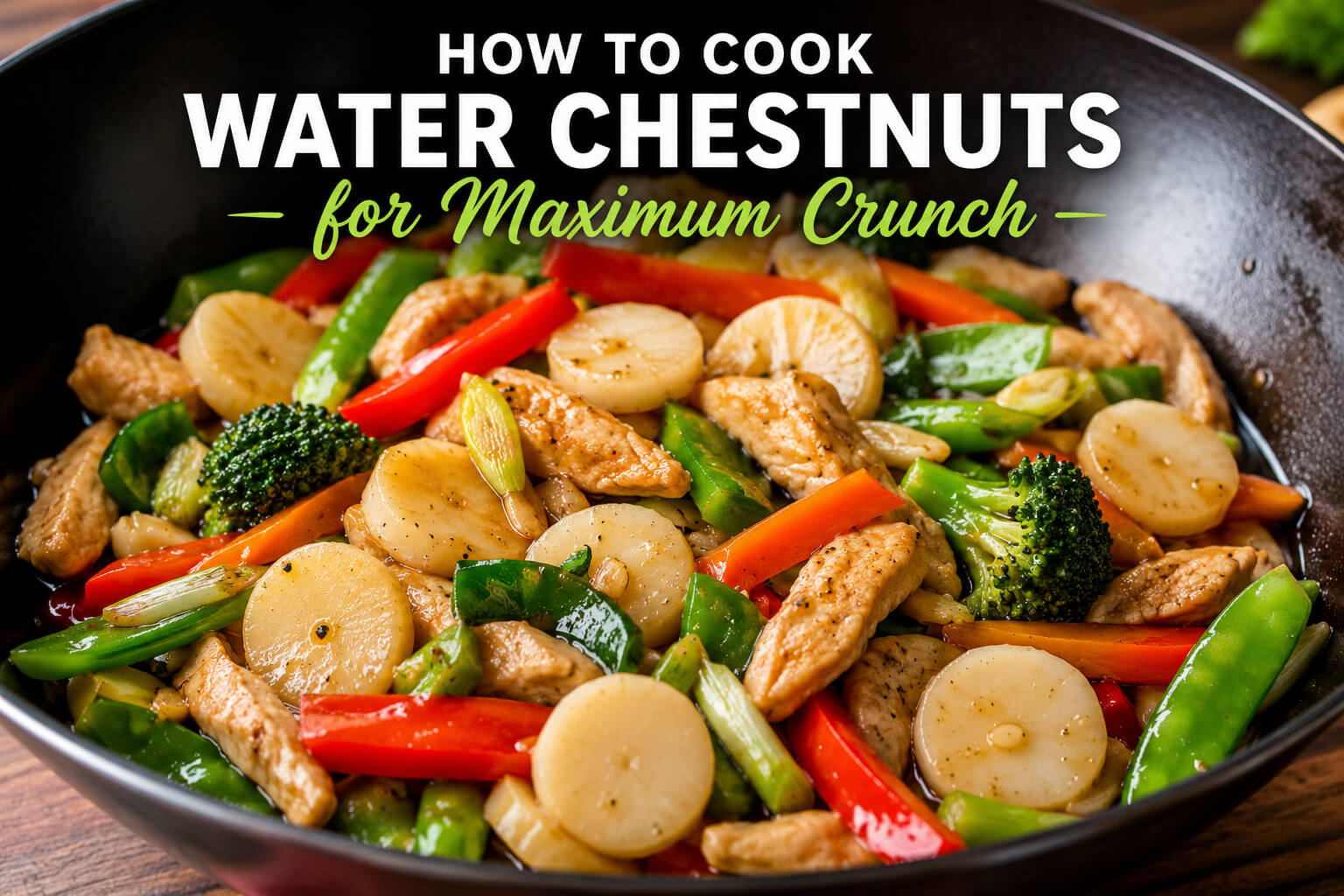
How to Cook Water Chestnuts for Maximum Crunch
How to Cook Water Chestnuts for Maximum Crunch
Adding water chestnuts to a stir fry is one of the easiest ways to create a satisfying contrast of textures. Their signature crisp bite remains even after cooking, making them a favorite ingredient in Chinese-inspired dishes, chicken stir fries, vegetable stir fries, and quick weeknight meals. However, many home cooks either overcook them or add them at the wrong stage, causing them to lose some of their natural appeal.
If you’ve ever wondered why restaurant stir fries always seem to have perfectly crunchy water chestnuts, the secret isn’t complicated. It comes down to choosing quality water chestnuts, preparing them correctly, and knowing exactly when to add them to the wok. A few simple techniques can make a noticeable difference in both texture and flavor.
This guide explains everything you need to know about cooking water chestnuts stir fry recipes for maximum crunch. You’ll learn how to prepare fresh and canned water chestnuts, the best cooking methods, common mistakes to avoid, and expert tips that help keep every slice crisp and delicious.
Quick Answer
To keep water chestnuts stir fry recipes as crunchy as possible, drain and rinse canned water chestnuts thoroughly, or peel and slice fresh ones just before cooking. Add them during the final 2–3 minutes of stir frying over high heat. Because water chestnuts are already crisp and require very little cooking, adding them at the end preserves their signature crunchy texture while allowing them to absorb the surrounding flavors.
Table of Contents
Why Water Chestnuts Stay Crunchy Even After Cooking
Unlike many vegetables that soften when exposed to heat, water chestnuts maintain their crisp texture because of their unique cell structure. They contain a high amount of water along with firm plant fibers that resist breaking down during quick cooking. This is why they’re commonly used in water chestnuts stir fry dishes, where texture is just as important as flavor.
Another reason water chestnuts remain crisp is that stir frying uses very high heat for a short period. Instead of slowly cooking the vegetable until it softens, the intense heat quickly warms the slices while preserving their natural crunch. This cooking style perfectly complements ingredients like broccoli, carrots, mushrooms, snow peas, and bell peppers.
Tip: Always use high heat and cook water chestnuts for only a few minutes. Longer cooking times won’t improve the flavor, but they can reduce the satisfying crisp bite that makes them unique.
Water chestnuts also have a mild, slightly sweet flavor that absorbs sauces beautifully without becoming overpowering. Whether you’re making a classic chicken stir fry or a colorful vegetable stir fry, they add both texture and visual appeal to the finished dish.
If you’re building a balanced stir fry, water chestnuts pair exceptionally well with lean proteins and crisp vegetables. For more ideas, explore our Best Vegetables for Chicken Stir Fry guide and learn how different vegetables contribute unique textures and flavors.
Kitchen Secret: Professional chefs rarely cook water chestnuts for more than two or three minutes. Their goal is simply to heat them through while allowing them to absorb the stir fry sauce without sacrificing their signature crunch.
Fresh vs. Canned Water Chestnuts: Which Is Better for Stir Fry?
One of the most common questions home cooks ask is whether fresh or canned water chestnuts make a better water chestnuts stir fry. The answer depends on availability, convenience, and the type of texture you’re looking for. Both options can produce delicious results when prepared correctly, but they each have unique advantages.
Fresh water chestnuts are harvested from aquatic plants and have a naturally sweet flavor with an incredibly crisp texture. They’re widely used in many Asian cuisines but can be difficult to find outside specialty grocery stores. Because they’re highly perishable, fresh water chestnuts should be used soon after purchase.
Canned water chestnuts, on the other hand, are much easier to find in supermarkets across the United States. They’re peeled, sliced or whole, and packed in water to preserve their crunch. While canned varieties lose a small amount of sweetness during processing, they still maintain the satisfying crisp texture that makes them ideal for stir frying.
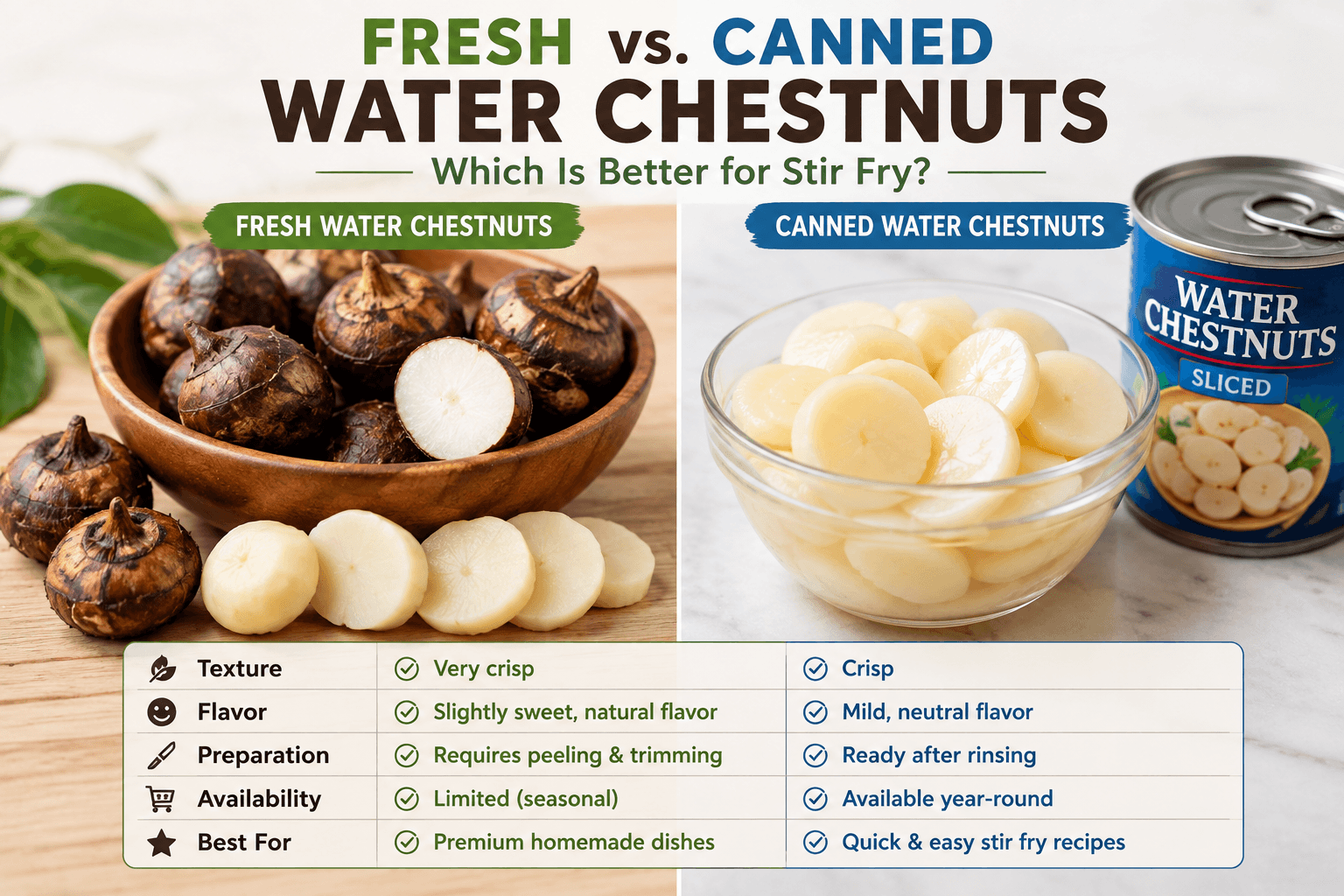
| Feature | Fresh Water Chestnuts | Canned Water Chestnuts |
|---|---|---|
| Texture | Very crisp | Crisp |
| Flavor | Slightly sweet | Mild and neutral |
| Preparation | Requires peeling | Ready after rinsing |
| Availability | Limited | Available year-round |
| Best For | Premium homemade dishes | Quick weeknight stir fries |
For most families, canned water chestnuts are the practical choice. They require very little preparation, stay crunchy after cooking, and work perfectly in nearly every water chestnuts stir fry. Simply drain them well, rinse away the canning liquid, and pat them dry before adding them to the wok.
Tip: Rinsing canned water chestnuts removes excess sodium and any metallic taste from the can while helping the stir fry sauce cling better to each slice.
How to Prepare Water Chestnuts Before Cooking
Preparation is just as important as cooking time. Whether you’re using fresh or canned water chestnuts, proper preparation ensures they stay crisp and absorb the flavors of your stir fry sauce.
Preparing Fresh Water Chestnuts
- Wash thoroughly under cold running water.
- Trim off the top and bottom.
- Peel away the dark brown skin using a vegetable peeler or paring knife.
- Rinse again to remove any dirt.
- Slice evenly into thin rounds or matchsticks.
Uniform slices cook evenly and distribute throughout the stir fry, ensuring every bite includes the signature crunch.
Preparing Canned Water Chestnuts
- Open the can and drain all liquid.
- Rinse thoroughly under cold water.
- Pat dry using paper towels.
- Slice if using whole water chestnuts.
Common Mistake: Never add canned water chestnuts directly from the can into your wok. Excess liquid cools the pan, weakens the stir fry sauce, and reduces the high heat needed for proper stir frying.
Once prepared, water chestnuts should remain dry until they’re ready to cook. Excess moisture can create steam inside the wok, preventing vegetables from developing the crisp texture that makes stir fry so appealing.
To create a balanced dish, pair water chestnuts with vegetables that cook at similar speeds. If you’re unsure about timing, our guide on The Correct Order to Add Vegetables to Stir Fry explains exactly when each vegetable should be added for the best results.
The Best Way to Cook Water Chestnuts in Stir Fry
Cooking water chestnuts correctly is all about timing. Unlike dense vegetables such as carrots or broccoli, water chestnuts don’t need long cooking times. They’re already naturally crisp, so your goal is simply to heat them through while allowing them to absorb the flavors of the stir fry sauce. This simple approach helps every water chestnuts stir fry maintain the signature crunch that makes this ingredient so popular.
Professional chefs always cook stir fry ingredients in stages. Hard vegetables are added first, followed by quicker-cooking vegetables, proteins, sauces, and finally water chestnuts during the last few minutes. This method prevents overcooking while keeping every ingredient at its ideal texture.
Step 1: Heat the Wok Properly
Start with a clean wok or large skillet over high heat. Allow it to become fully hot before adding cooking oil. A properly heated wok helps vegetables sear quickly instead of steaming, preserving their natural texture.
Step 2: Cook Protein First
Chicken, beef, shrimp, or tofu should be cooked first until nearly done. Remove the protein from the wok if necessary to prevent overcooking while preparing the vegetables.
If you’re making one of our popular chicken recipes, you’ll find these cooking techniques especially useful:
Step 3: Add Vegetables in Order
Firm vegetables such as broccoli, carrots, and bell peppers need more cooking time than water chestnuts. Add these first, followed by medium-soft vegetables like mushrooms and snap peas.
Kitchen Secret: The best restaurant-quality water chestnuts stir fry recipes never cook all vegetables at the same time. Layering ingredients according to their cooking times keeps every vegetable crisp and flavorful.
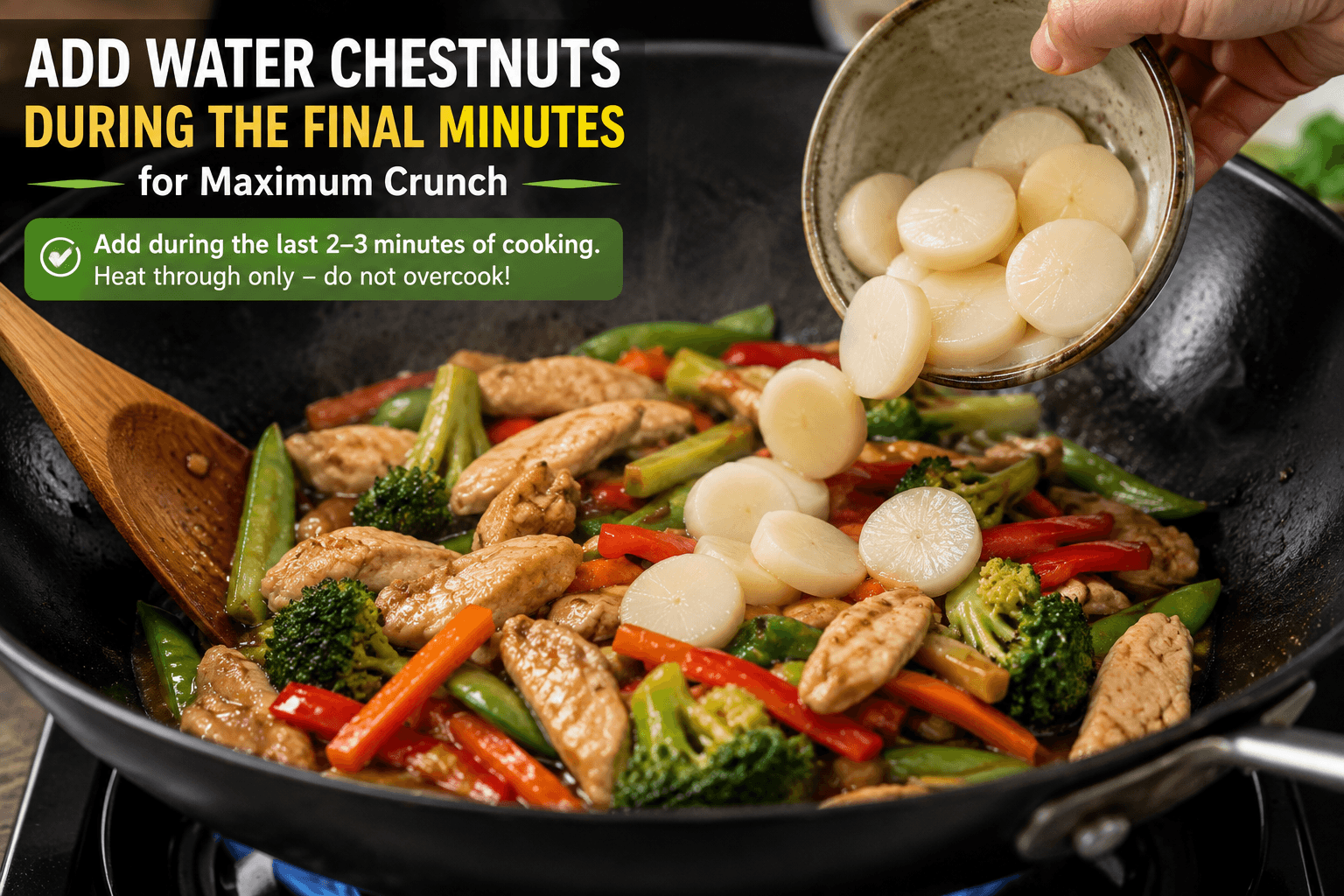
Step 4: Add Water Chestnuts Last
Once the vegetables are nearly tender and the protein has been returned to the wok, stir in the prepared water chestnuts. Toss everything together for about two to three minutes over high heat. This short cooking time allows the water chestnuts to warm through without losing their signature crunch.
Step 5: Finish with Sauce
Pour in your stir fry sauce during the final minute of cooking. Toss everything together until the sauce lightly coats each ingredient. Because water chestnuts have a mild flavor, they absorb sauces exceptionally well while still providing a refreshing crisp bite.
| Ingredient | Approximate Cooking Time |
|---|---|
| Chicken | 4–6 minutes |
| Broccoli | 3–4 minutes |
| Bell Peppers | 2–3 minutes |
| Mushrooms | 2–3 minutes |
| Water Chestnuts | 2–3 minutes |
| Sauce | 30–60 seconds |
Tip: Stir constantly once the sauce is added. High heat and continuous movement help coat the water chestnuts evenly while preventing the sauce from becoming too thick.
If you’re experimenting with different vegetable combinations, you may also enjoy our guide to the best vegetable combinations for chicken stir fry, which includes vegetables that pair perfectly with crunchy water chestnuts.
Common Mistakes That Make Water Chestnuts Lose Their Crunch
Even though water chestnuts are naturally crisp, a few simple mistakes can prevent them from reaching their full potential. Fortunately, these problems are easy to avoid once you understand how this unique ingredient behaves during cooking. Following a few best practices will help every water chestnuts stir fry turn out fresh, crunchy, and full of flavor.
The most common issue is overcooking. Because water chestnuts don’t need to become tender like carrots or broccoli, leaving them in the wok for too long gradually reduces their signature crisp texture. Instead, they should be one of the last ingredients added before the sauce finishes cooking.
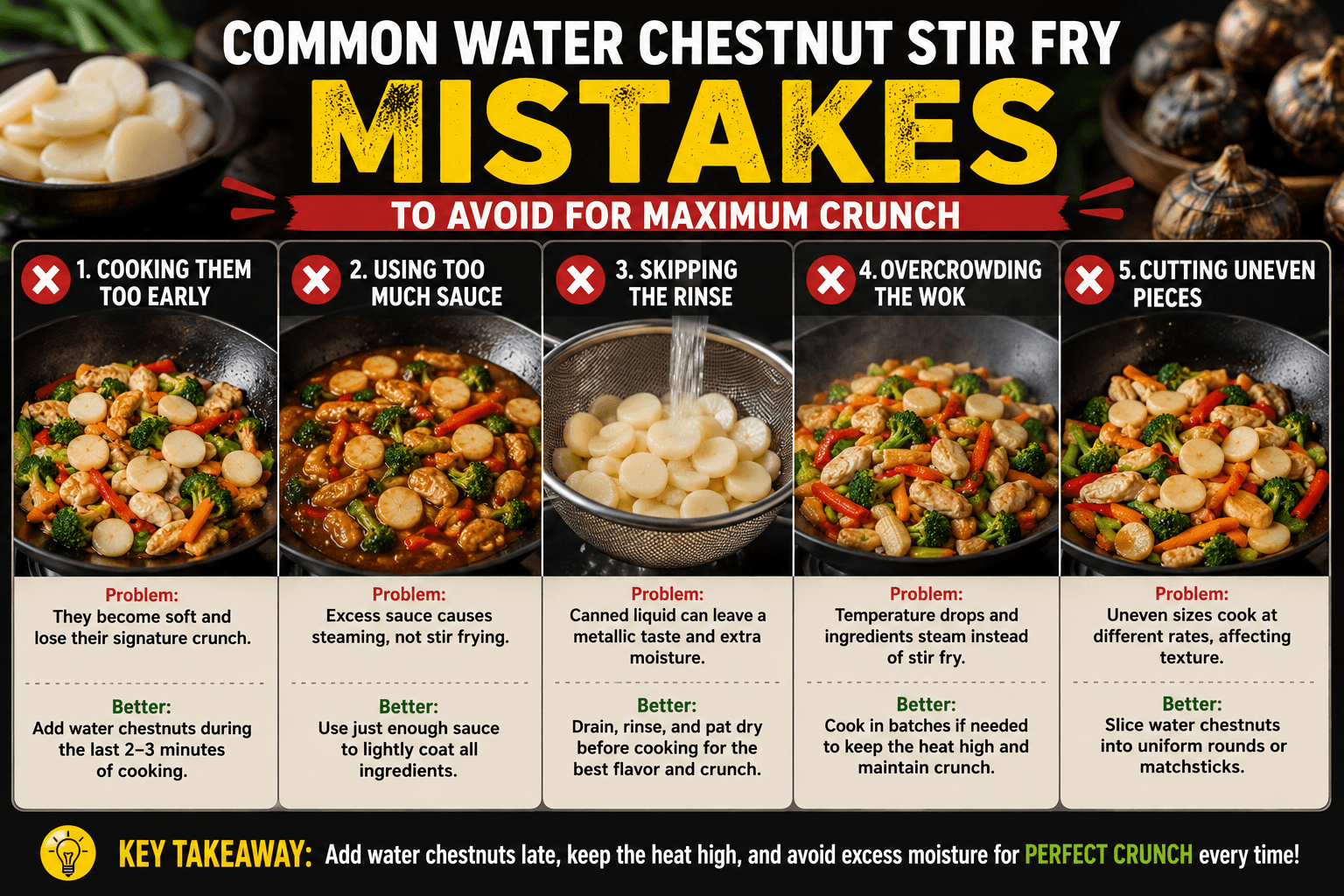
1. Cooking Them Too Early
Adding water chestnuts at the same time as hard vegetables exposes them to unnecessary heat. By the time carrots or broccoli become tender, the water chestnuts have already lost much of their crisp bite.
Avoid This: Add water chestnuts only during the last 2–3 minutes of cooking. They simply need to be heated through while absorbing the sauce.
2. Using Too Much Sauce
A heavy layer of sauce can overwhelm the clean, refreshing flavor of water chestnuts. Excess liquid also lowers the wok’s temperature, causing ingredients to steam rather than stir fry.
Instead, use just enough sauce to lightly coat every ingredient. This allows the vegetables to remain crisp while still delivering plenty of flavor.
3. Skipping the Rinse
Canned water chestnuts are packed in liquid that helps preserve freshness, but it can leave behind a slightly metallic or canned taste. Failing to rinse them before cooking may affect the final flavor of your water chestnuts stir fry.
Tip: Drain, rinse, and thoroughly pat canned water chestnuts dry before adding them to the wok. Removing excess moisture also helps them sear instead of steam.
4. Overcrowding the Wok
Adding too many ingredients at once lowers the cooking temperature dramatically. Instead of quickly searing, the vegetables release moisture and begin steaming, which softens everything—including the water chestnuts.
If you’re preparing a large meal, cook in two smaller batches. Maintaining high heat is one of the biggest secrets behind restaurant-quality stir fries.
5. Cutting Uneven Pieces
Large chunks and very thin slices cook differently. Uneven pieces can lead to inconsistent texture throughout the dish. Slice water chestnuts into uniform rounds or matchsticks so they heat evenly and blend well with the other vegetables.
| Common Mistake | Result | Better Solution |
|---|---|---|
| Adding too early | Reduced crunch | Add during the final 2–3 minutes |
| Too much sauce | Steamed vegetables | Lightly coat ingredients |
| Skipping the rinse | Dull flavor | Drain, rinse, and dry well |
| Overcrowding the wok | Soft vegetables | Cook in batches if necessary |
| Uneven slicing | Uneven cooking | Slice into equal-sized pieces |
If you’re still improving your stir fry technique, our guides on Common Vegetable Stir Fry Mistakes and The Ultimate Stir Fry Vegetable Preparation Guide provide additional tips for achieving perfectly crisp vegetables every time.
Expert Tips for Maximum Crunch Every Time
Once you’ve mastered the basics, a few professional techniques can take your water chestnuts stir fry to the next level. Restaurant chefs rely on high heat, proper ingredient preparation, and precise timing to create stir fries with incredible texture. These simple tips will help you achieve the same crisp, fresh results in your own kitchen.
Although water chestnuts are naturally crunchy, the surrounding ingredients play an equally important role. Choosing vegetables with similar cooking times, preparing everything before heating the wok, and avoiding unnecessary moisture all contribute to a better finished dish.
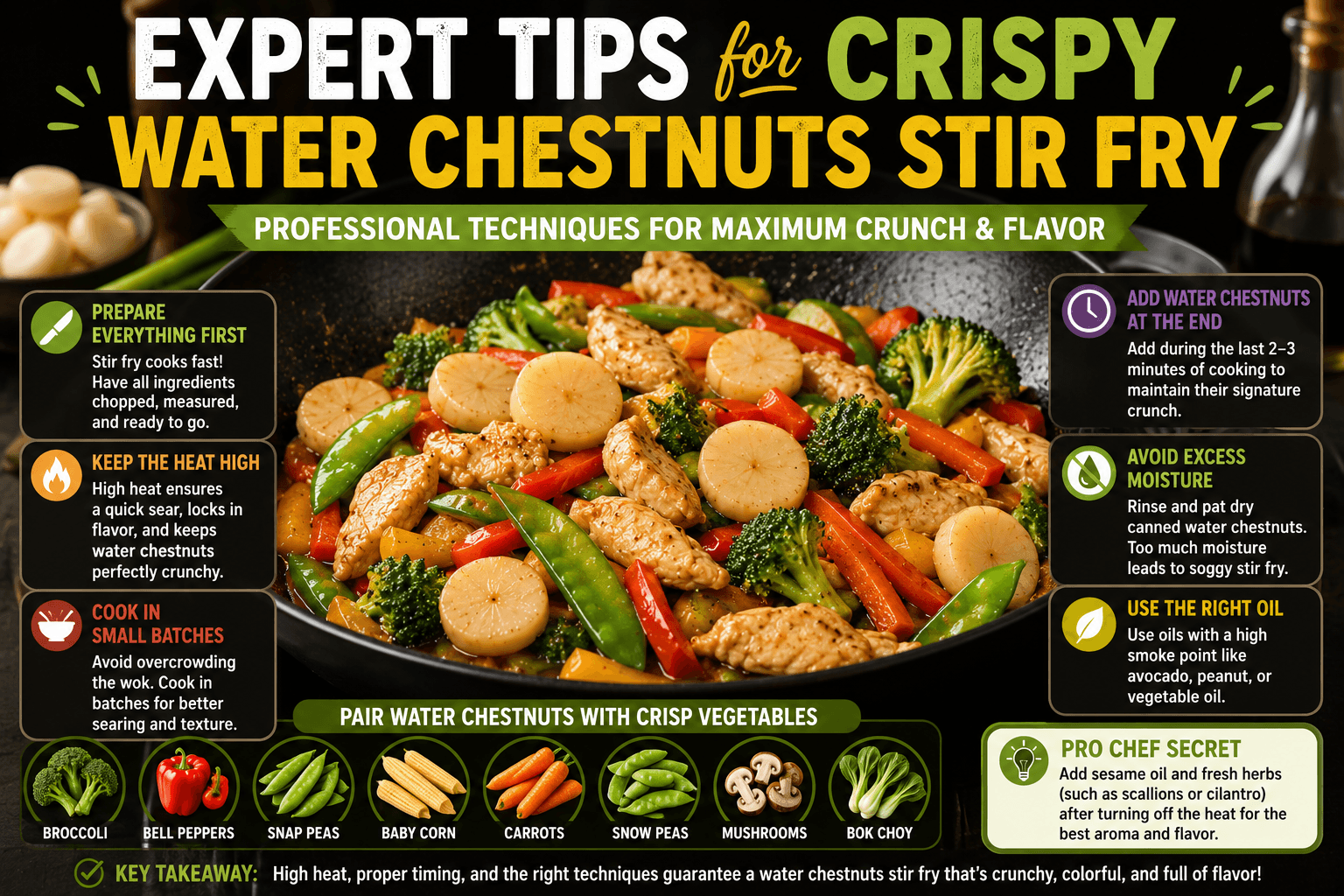
Prepare Every Ingredient Before Cooking
Stir frying happens quickly, often in less than ten minutes. Once the wok is hot, there isn’t time to stop and slice vegetables or measure sauces. Prepare all ingredients before turning on the heat so everything can be added at exactly the right moment.
Kitchen Secret: Professional chefs call this preparation method mise en place. Having every ingredient ready before cooking allows you to focus on timing instead of rushing through the recipe.
Keep the Wok Hot
High heat is essential for every successful water chestnuts stir fry. If the pan isn’t hot enough, vegetables release moisture instead of browning quickly. This creates steam, which softens ingredients and reduces their crisp texture.
Always allow the wok to heat fully before adding oil, and avoid lowering the temperature during cooking.
Cook in Small Batches
When preparing meals for several people, resist the temptation to fill the wok completely. Overcrowding lowers the cooking temperature and prevents ingredients from searing properly.
Cooking two smaller batches takes only a few extra minutes but produces significantly better texture and flavor.
Pair Water Chestnuts with Crisp Vegetables
Water chestnuts complement vegetables that remain slightly crisp after cooking. Excellent choices include:
- Broccoli florets
- Bell peppers
- Snap peas
- Snow peas
- Baby corn
- Carrots
- Bok choy
- Mushrooms
These vegetables create an appealing variety of textures while balancing the mild sweetness of water chestnuts.
| Ingredient | Pairs Well With Water Chestnuts | Texture |
|---|---|---|
| Chicken Breast | Excellent | Tender |
| Broccoli | Excellent | Crisp-tender |
| Bell Peppers | Excellent | Crunchy |
| Baby Corn | Excellent | Crisp |
| Snow Peas | Excellent | Crunchy |
| Mushrooms | Very Good | Juicy |
| Bok Choy | Excellent | Tender-crisp |
Pro Tip: Add sesame oil only after turning off the heat. High temperatures quickly reduce its delicate aroma, while adding it at the end preserves its rich nutty flavor.
If you’re looking for more vegetable ideas, explore our How to Use Baby Corn in Stir Fry guide or discover even more combinations in our Fresh vs. Frozen Vegetables for Stir Fry comparison.
By combining these professional techniques with proper timing, you’ll consistently prepare water chestnuts stir fry dishes that are colorful, flavorful, and packed with the satisfying crunch found in restaurant-quality stir fries.
How to Store and Reheat Water Chestnut Stir Fry
Proper storage helps preserve both the flavor and texture of your water chestnuts stir fry. While freshly cooked stir fry always delivers the best crunch, leftovers can still taste delicious when stored and reheated correctly. The key is to minimize moisture and avoid prolonged reheating, which can soften both the vegetables and the water chestnuts.
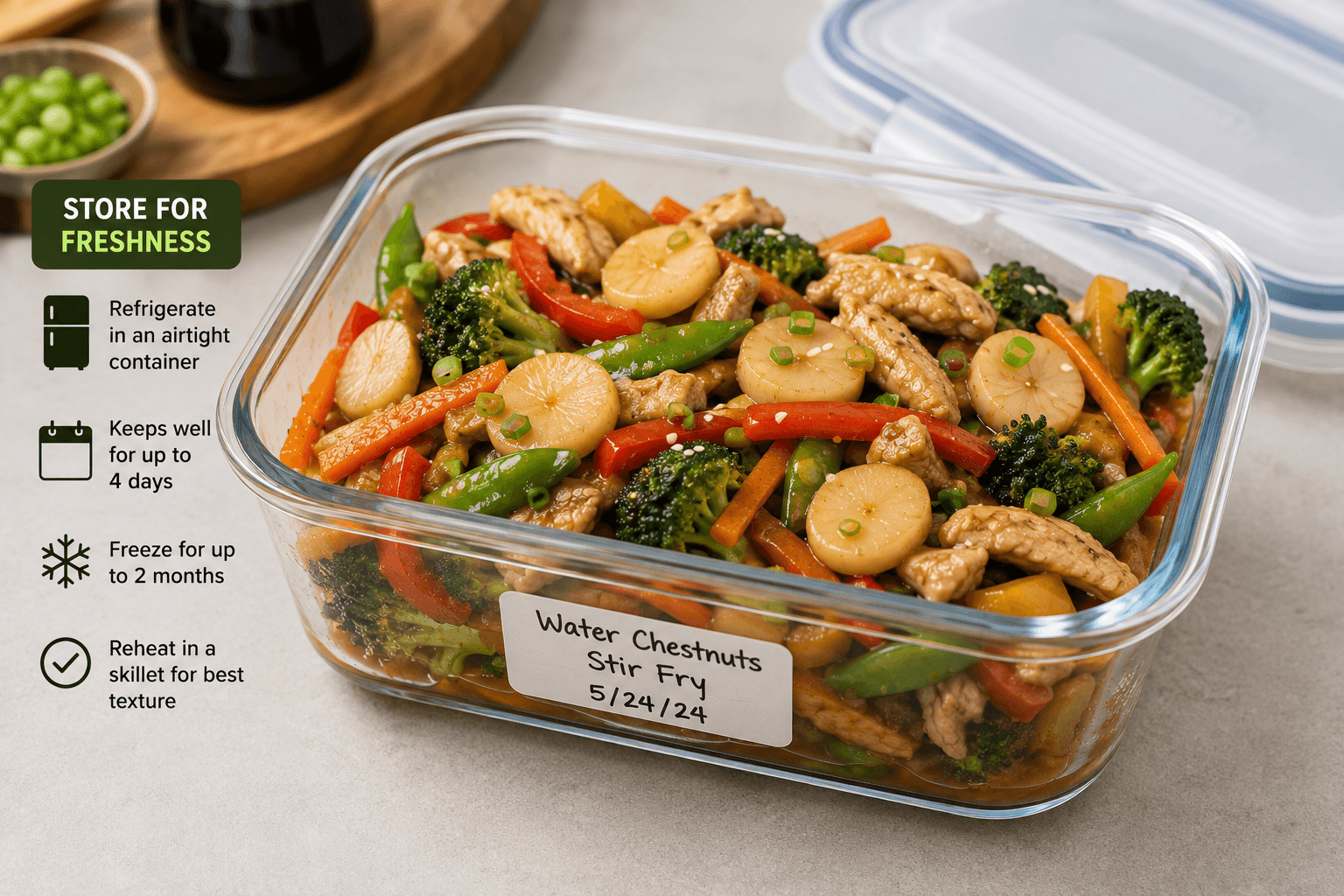
How to Store Leftovers
Allow your stir fry to cool to room temperature for no longer than two hours before transferring it to an airtight container. Refrigerate promptly to help maintain food quality and safety.
Storage Guide:
- Refrigerator: Store in an airtight container for up to 4 days.
- Freezer: Freeze for up to 2 months in a freezer-safe container.
- Best Quality: Enjoy within the first 2 days for the crispiest vegetables and water chestnuts.
Best Way to Reheat
The best way to reheat water chestnuts stir fry is in a hot skillet or wok over medium-high heat for 2–3 minutes. Stir frequently until everything is heated through. This method helps evaporate excess moisture and keeps the vegetables firmer than microwaving.
If using a microwave, heat in short 30-second intervals, stirring between each interval. Avoid overheating, as prolonged cooking can soften the vegetables and reduce the satisfying crunch of the water chestnuts.
Tip: If the stir fry looks dry after reheating, add a small splash of low-sodium chicken broth or water instead of extra sauce. This refreshes the dish without making it overly salty.
Frequently Asked Questions
Can you eat water chestnuts without cooking them?
Yes. Fresh water chestnuts can be eaten raw after peeling and washing, while canned water chestnuts are fully cooked and safe to eat directly from the can after rinsing.
How long should water chestnuts cook in a stir fry?
For the best water chestnuts stir fry, cook them for only 2–3 minutes at the end of the cooking process. This keeps their signature crunchy texture intact.
Do canned water chestnuts stay crunchy?
Yes. Canned water chestnuts remain surprisingly crisp, making them an excellent choice for quick stir fry recipes. Rinsing and drying them before cooking helps achieve the best results.
What vegetables pair best with water chestnuts?
Broccoli, carrots, bell peppers, baby corn, mushrooms, snap peas, snow peas, and bok choy all pair exceptionally well with water chestnuts because they provide complementary textures and flavors.
Can I freeze water chestnut stir fry?
Yes. Freeze leftovers in airtight containers for up to two months. Although the vegetables may soften slightly after thawing, the dish will still have excellent flavor.
Final Thoughts
Learning how to prepare water chestnuts stir fry correctly is one of the easiest ways to improve the texture of your homemade stir fries. By rinsing canned water chestnuts, slicing them evenly, cooking over high heat, and adding them during the final few minutes, you’ll preserve their signature crunch while allowing them to absorb the rich flavors of your sauce.
Whether you’re preparing a quick weeknight dinner or experimenting with new vegetable combinations, water chestnuts add freshness, crispness, and visual appeal to every meal. Combine these techniques with quality ingredients and proper stir fry timing, and you’ll consistently create restaurant-quality dishes at home.
🍽️ You Might Also Like


📧 Save This Recipe For Later
Enter your email and we will send this recipe directly to your inbox.