
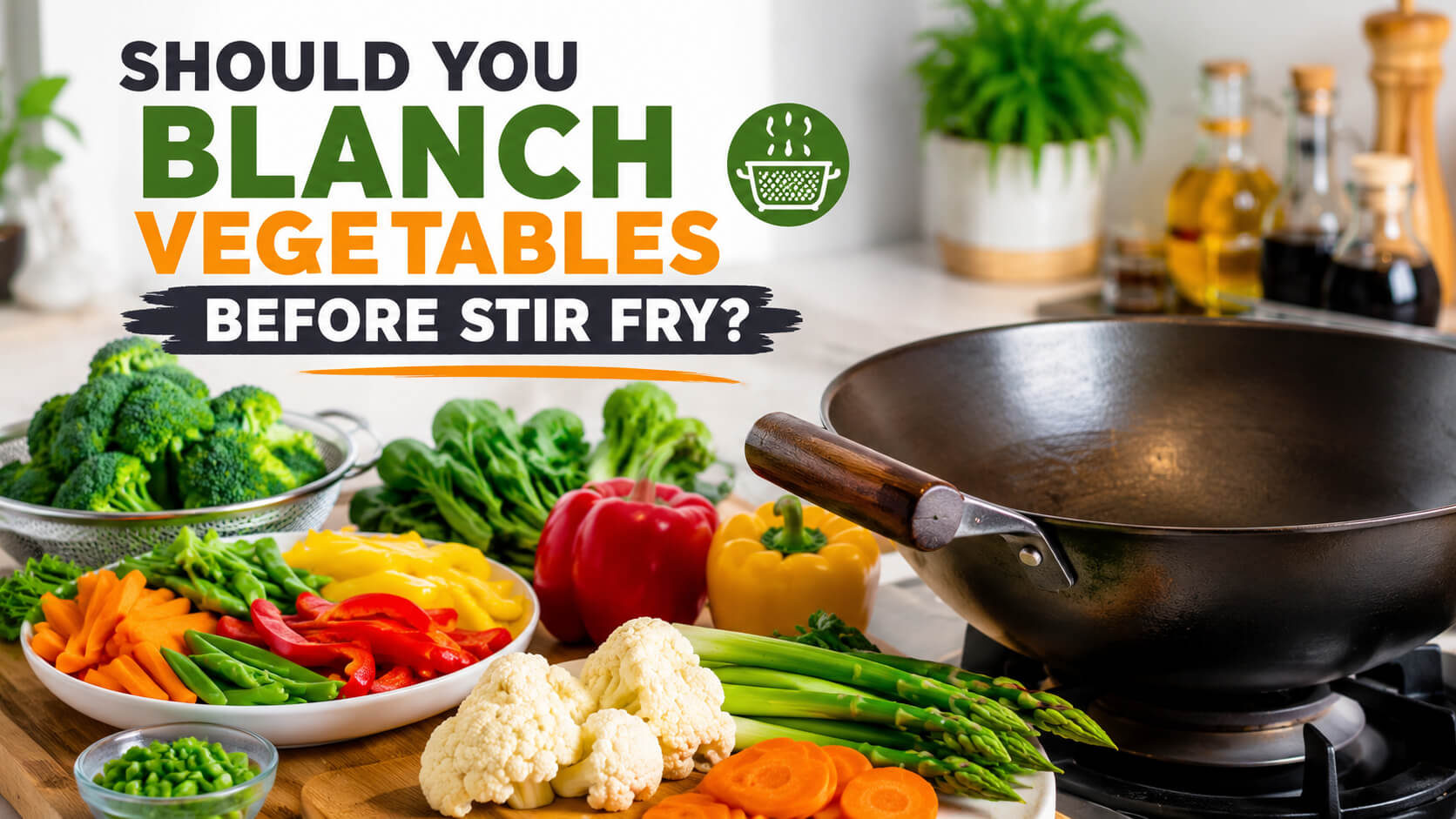
Should You Blanch Vegetables Before Stir Fry?
Should You Blanch Vegetables Before Stir Fry?
If you’ve ever wondered whether you should blanch vegetables before stir fry, you’re not alone. Many home cooks assume that tossing raw vegetables directly into a hot wok is always the best approach. While that works for some vegetables, others benefit greatly from a quick blanch before they ever touch the pan.
Blanching is a simple cooking technique that involves briefly boiling vegetables and then stopping the cooking process with cold water. This extra step may seem unnecessary, but it can improve texture, preserve bright colors, shorten stir-fry cooking time, and help vegetables cook more evenly.
However, not every vegetable should be blanched. Some vegetables lose their natural crunch or become overcooked if they are blanched first. Knowing which vegetables benefit from blanching—and which ones don’t—is the key to making restaurant-quality stir fry at home.
In this guide, you’ll learn when to blanch vegetables before stir fry, which vegetables need it, when you can skip it, and how professional chefs use blanching to create crisp-tender vegetables with vibrant color and excellent flavor.
Quick Answer
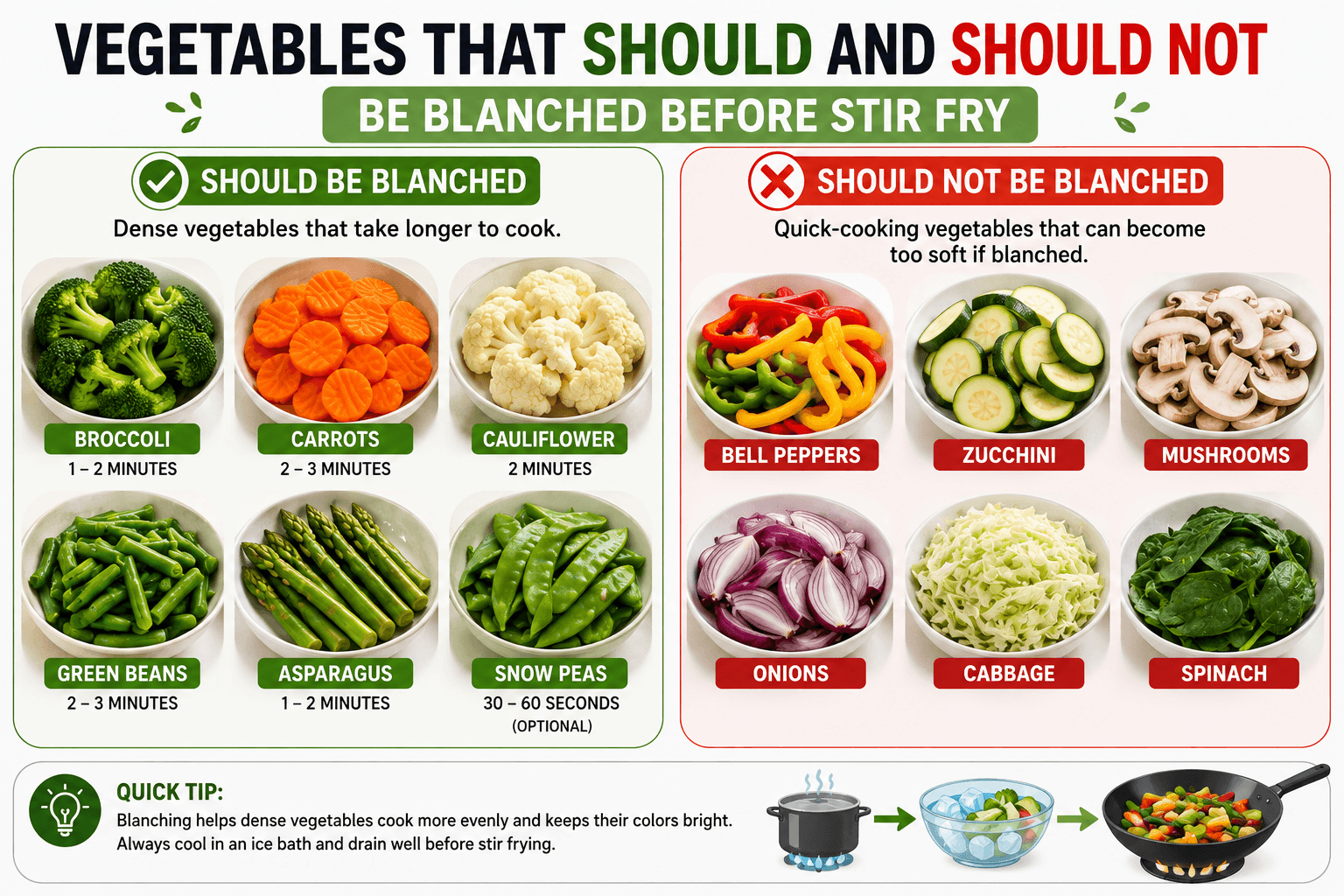
Should you blanch vegetables before stir fry? Yes—but only certain vegetables. Dense vegetables such as broccoli, carrots, cauliflower, green beans, and asparagus often benefit from blanching because it softens them slightly while preserving their color and texture. Quick-cooking vegetables like bell peppers, mushrooms, zucchini, cabbage, onions, and spinach usually do not need blanching and can be cooked directly in the wok.
- Blanch dense vegetables to reduce stir-fry cooking time.
- Skip blanching for tender vegetables.
- Cool vegetables immediately after blanching to stop the cooking process.
- Cook blanched vegetables over high heat to maintain crisp-tender texture.
Table of Contents
What Is Blanching?
Blanching is a cooking method that briefly cooks vegetables in boiling water before rapidly cooling them in ice water. The goal isn’t to cook the vegetables completely. Instead, blanching partially softens firm vegetables while preserving their fresh appearance and natural flavor.
This technique is commonly used in professional kitchens because it allows chefs to prepare vegetables ahead of time. During service, the vegetables only need a quick stir fry over high heat, making it easier to produce evenly cooked dishes without overcooking delicate ingredients.
Blanching also helps vegetables retain their vibrant green, orange, or yellow color. High heat activates natural pigments, while the ice bath immediately stops further cooking, preventing vegetables from becoming dull or mushy.
Kitchen Tip: Always salt the blanching water lightly. Salt enhances flavor and helps vegetables maintain their bright color during cooking.
Why Blanch Vegetables Before Stir Fry?
The biggest reason many cooks blanch vegetables before stir fry is to solve one common problem: vegetables don’t all cook at the same speed.
For example, carrots need much longer to become tender than spinach. Broccoli takes longer than bell peppers. If everything goes into the wok at once, some vegetables remain undercooked while others become overly soft.
Blanching reduces this problem by giving dense vegetables a short head start. Once they are partially cooked, they finish quickly during stir frying alongside faster-cooking vegetables.
Another benefit is moisture control. Because blanching slightly softens vegetables, they require less time in the wok. This allows the high heat to create light browning and smoky wok flavor without burning garlic, ginger, or sauces.
If you’re trying to achieve the crisp-tender vegetables found in your favorite restaurant stir fry, blanching can be an excellent technique—especially for larger batches or meal prep.
Chef’s Secret: Many Chinese restaurant kitchens blanch broccoli, carrots, cauliflower, and green beans before service. During cooking, these vegetables spend only a minute or two in the wok, helping preserve their bright color and satisfying crunch.
Which Vegetables Benefit Most from Blanching Before Stir Fry?
Not every vegetable needs the same preparation. One of the biggest mistakes home cooks make is treating all vegetables alike. In reality, some vegetables are naturally dense and require more cooking time, while others become tender in just a few minutes.
If you blanch vegetables before stir fry, focus on vegetables that are firm, thick, or naturally slow to cook. These vegetables can stay crunchy inside if added raw to the wok, especially during a quick stir fry.
On the other hand, delicate vegetables are already quick cooking. Blanching them first can cause them to become overly soft and lose their fresh texture during stir frying.
| Vegetable | Blanch First? | Recommended Time | Reason |
|---|---|---|---|
| Broccoli | Yes | 1–2 minutes | Creates crisp-tender florets and bright green color. |
| Carrots | Yes | 2–3 minutes | Softens firm texture while maintaining slight crunch. |
| Cauliflower | Yes | 2 minutes | Cooks more evenly during stir frying. |
| Green Beans | Yes | 2–3 minutes | Reduces cooking time without becoming mushy. |
| Asparagus | Yes | 1–2 minutes | Keeps stalks tender while preserving color. |
| Snow Peas | Optional | 30 seconds | Only if extra tenderness is desired. |
| Bell Peppers | No | — | Cook quickly in the wok. |
| Zucchini | No | — | Can become watery if blanched. |
| Mushrooms | No | — | Need direct high heat for browning. |
| Spinach | No | — | Wilts within seconds. |
| Cabbage | No | — | Retains better texture without blanching. |
Understanding these differences helps you avoid overcooked vegetables while ensuring firmer vegetables cook completely by the time your stir fry is finished.
Benefits of Blanching Vegetables Before Stir Fry
Many professional chefs choose to blanch vegetables before stir fry because it improves consistency. Whether cooking a single meal or preparing food for a busy restaurant, blanching offers several practical advantages.
1. Faster Cooking
Partially cooked vegetables finish much faster in the wok. Since stir frying relies on very high heat for a short period, blanching ensures dense vegetables don’t remain undercooked.
2. Better Color
Green vegetables such as broccoli, asparagus, and green beans become noticeably brighter after blanching. Rapid cooling in ice water helps lock in these vibrant colors.
3. More Even Texture
Without blanching, thick vegetables may still be hard while softer vegetables are already overcooked. Blanching creates a more balanced final dish where every vegetable reaches the ideal crisp-tender stage.
4. Improved Meal Prep
If you prepare vegetables ahead of time, blanching makes weeknight cooking much easier. Once refrigerated, the vegetables only need a quick stir fry before serving.
Meal Prep Tip: Blanched broccoli, carrots, cauliflower, and green beans can be refrigerated for up to two days before stir frying, making dinner preparation much faster.
5. Better Sauce Absorption
Slightly softened vegetables absorb stir-fry sauces more evenly than completely raw vegetables. This results in better flavor throughout the dish without requiring excessive cooking time.
If you’re making recipes like Chicken Veggie Stir Fry or Chicken Broccoli Stir Fry, blanching broccoli or carrots beforehand can help produce a more balanced texture.
Chef’s Secret: Restaurant stir fries cook so quickly because most dense vegetables have already been partially cooked. The wok is used mainly for browning, combining flavors, and coating everything in sauce—not for cooking vegetables from raw.
When You Should Skip Blanching
Although many cooks choose to blanch vegetables before stir fry, it’s not always the best approach. In fact, blanching certain vegetables can reduce their quality instead of improving it. Understanding when to skip this step is just as important as knowing when to use it.
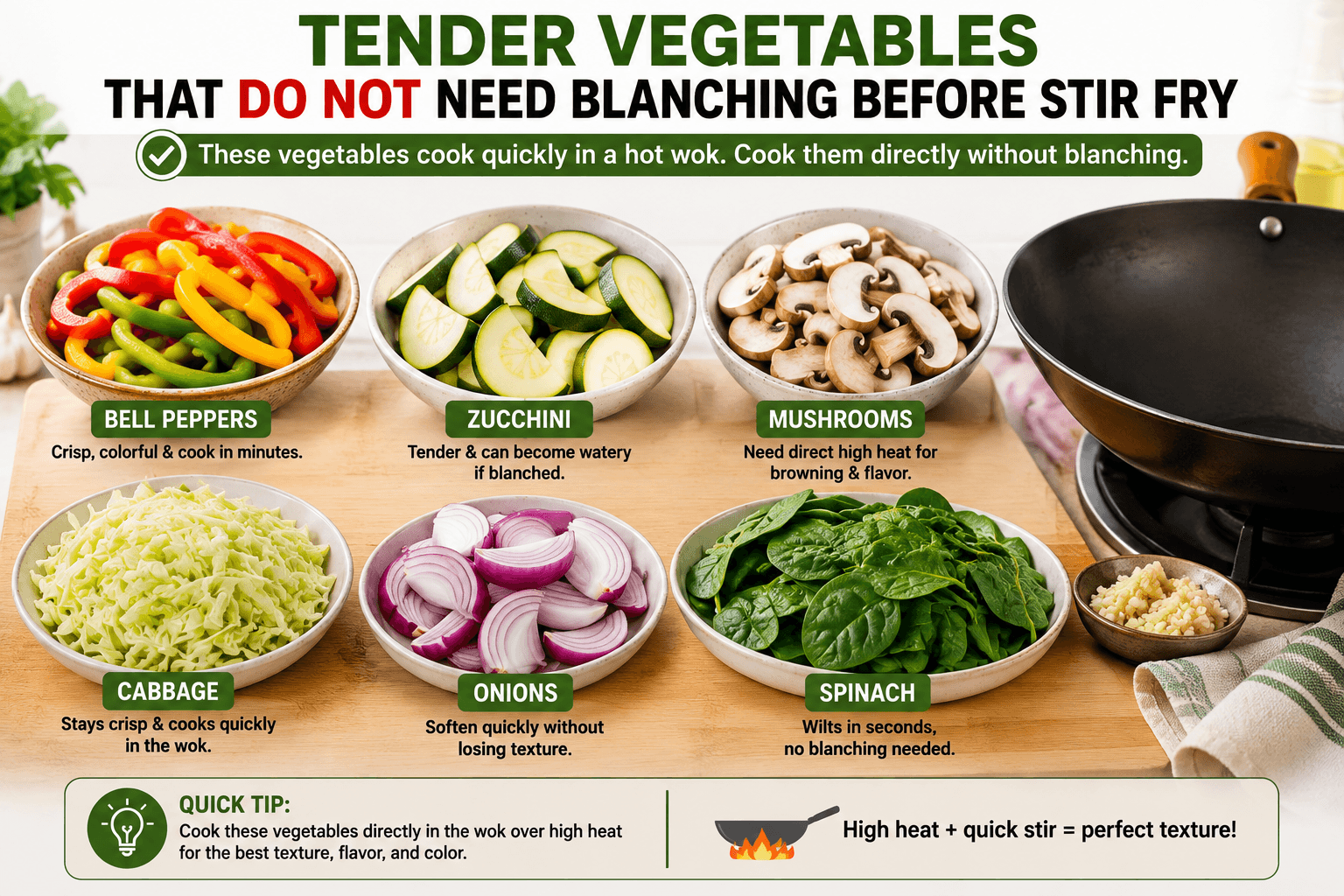
Tender vegetables cook very quickly over the high heat of a wok. If they are blanched first, they may lose their natural crispness, release too much moisture, or become mushy by the time the stir fry is finished.
For these vegetables, cooking them directly in the wok gives better flavor, texture, and appearance.
Vegetables That Usually Don’t Need Blanching
- Bell peppers
- Zucchini
- Mushrooms
- Onions
- Cabbage
- Spinach
- Bok choy leaves
- Bean sprouts
- Snap peas (optional depending on preference)
These vegetables naturally soften within a few minutes. Their shorter cooking time allows them to stay colorful and slightly crisp without any extra preparation.
Common Mistake: Avoid blanching mushrooms before stir frying. Mushrooms absorb water like a sponge, making it difficult to achieve the rich golden-brown color and savory flavor that develops over direct high heat.
How Blanching Affects Flavor and Texture
One reason professional chefs sometimes blanch vegetables before stir fry is to improve texture without sacrificing freshness. However, blanching isn’t intended to add flavor. Instead, it prepares vegetables so they cook more evenly during the final stir fry.
Dense vegetables become slightly tender while still maintaining enough firmness to hold their shape. This creates the crisp-tender texture that many people associate with restaurant-quality stir fry.
Blanching also helps vegetables retain moisture inside while allowing the outside to cook quickly in the wok. Because they spend less time exposed to high heat, vegetables are less likely to dry out or burn.
Texture Changes
- Firm vegetables become easier to bite.
- Bright colors are preserved.
- Cooking becomes more even.
- Vegetables remain crisp instead of hard.
- Less risk of burning while waiting for dense vegetables to soften.
Flavor Changes
Blanching itself adds very little flavor. Instead, it allows vegetables to absorb stir-fry sauces more evenly during the final cooking stage. Since vegetables finish cooking quickly in the wok, sauces coat them without becoming watery or over-reduced.
For recipes featuring multiple vegetables, such as Chicken Veggie Stir Fry or Healthy Chicken Stir Fry, this balance helps every ingredient cook to the ideal texture.
| Without Blanching | With Blanching |
|---|---|
| Longer wok cooking time | Shorter cooking time |
| Risk of uneven cooking | More consistent texture |
| Dense vegetables may stay firm | Vegetables cook through evenly |
| Greater chance of burning garlic or sauce | Sauce cooks quickly without overcooking |
| Less consistent results | Restaurant-style consistency |
Should You Blanch Frozen Vegetables?
Frozen vegetables are different from fresh vegetables because many are already blanched before freezing. Manufacturers briefly blanch vegetables to preserve color, texture, and nutritional quality before they are frozen.
Because of this, you generally do not need to blanch vegetables before stir fry if they are frozen. Simply cook them according to the package instructions or add them directly to a hot wok.
However, it’s still important to avoid overcrowding the pan. Frozen vegetables release extra moisture as they thaw, which can lower the temperature of the wok and cause steaming instead of stir frying.
Cooking Tip: Cook frozen vegetables in smaller batches over high heat. This helps moisture evaporate quickly and allows vegetables to brown instead of steaming.
If you’d like to learn more about choosing between fresh and frozen vegetables, see our guide on Fresh vs Frozen Vegetables for Stir Fry.
How to Blanch Vegetables Before Stir Fry
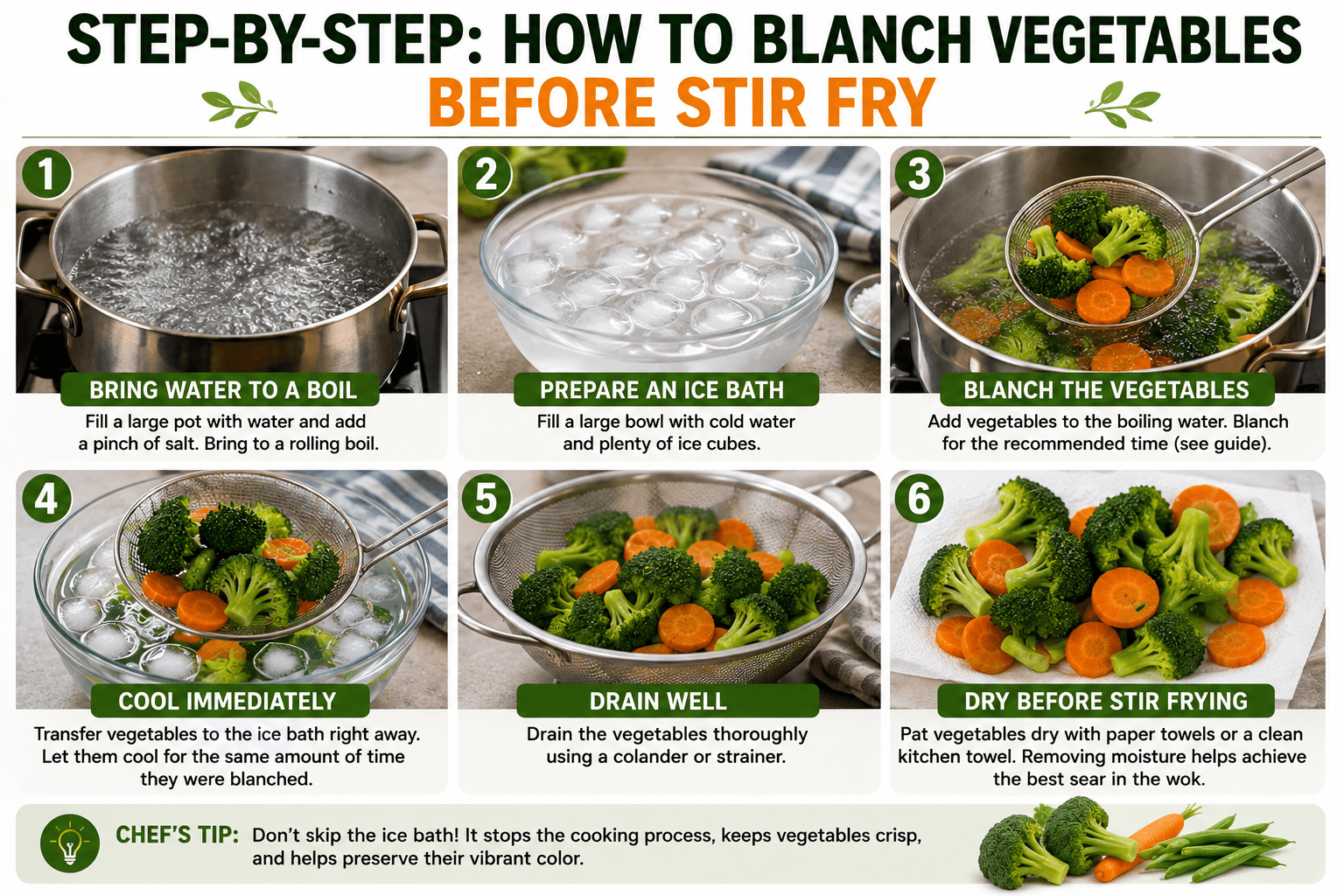
If you decide to blanch vegetables before stir fry, following the correct technique is important. Blanching should only partially cook the vegetables—not make them fully tender. The goal is to give firm vegetables a head start so they finish cooking quickly in the wok while keeping their bright color and crisp texture.
The process is simple and only takes a few minutes, but each step plays an important role in achieving the best results.
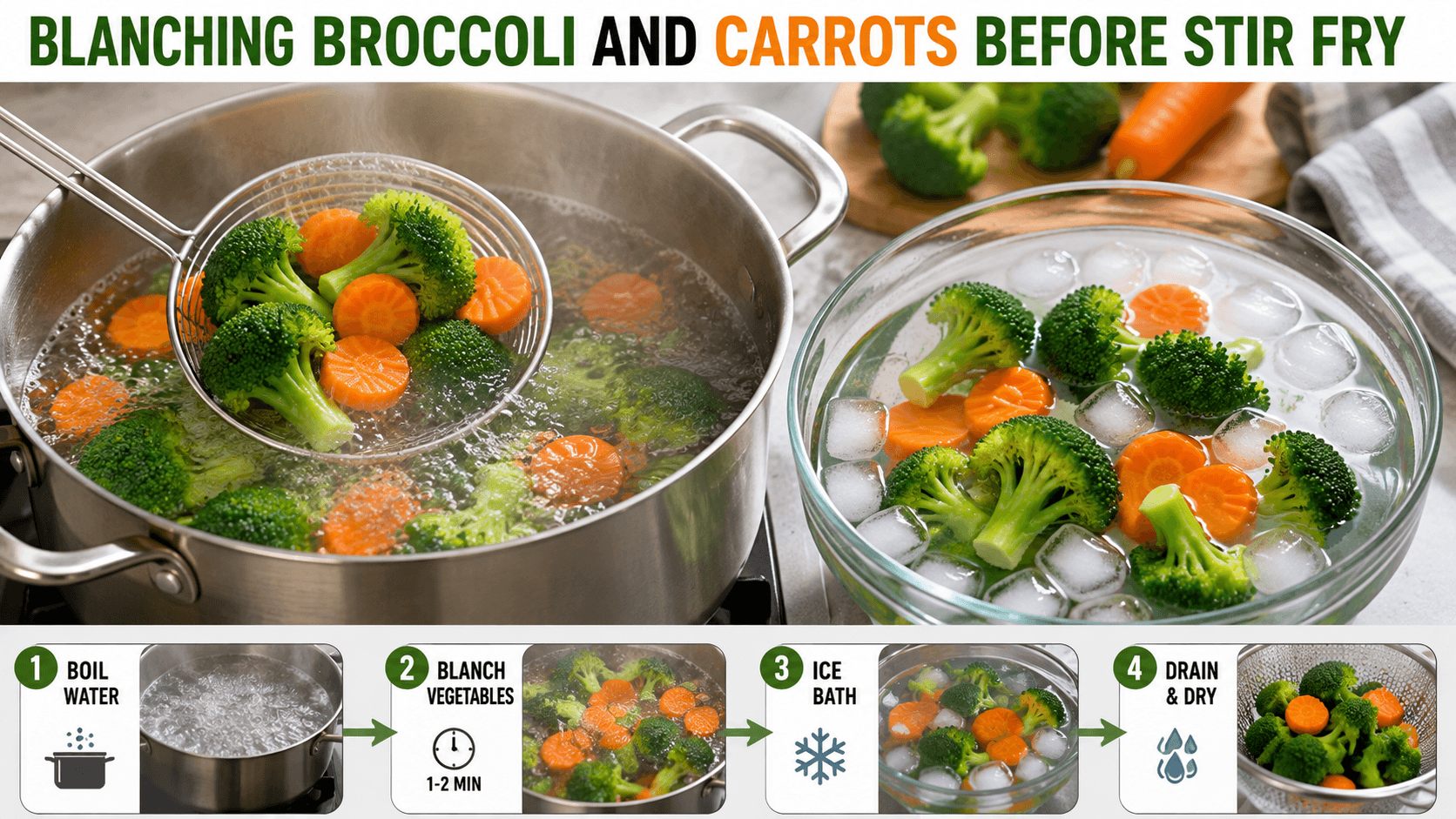
Step 1: Bring a Large Pot of Water to a Boil
Fill a large pot with enough water to completely cover the vegetables. Bring it to a rolling boil and add a small amount of salt. Salt helps season the vegetables lightly and can help preserve their vibrant color.
Step 2: Prepare an Ice Bath
While waiting for the water to boil, fill a large bowl with cold water and plenty of ice cubes. This ice bath will immediately stop the cooking process once the vegetables are removed from the boiling water.
Step 3: Blanch the Vegetables
Add only one type of vegetable at a time so you can control the cooking time accurately. Different vegetables require different blanching times based on their density and size.
| Vegetable | Blanch Time | Ice Bath Needed? |
|---|---|---|
| Broccoli Florets | 1–2 minutes | Yes |
| Carrot Slices | 2–3 minutes | Yes |
| Cauliflower | 2 minutes | Yes |
| Green Beans | 2–3 minutes | Yes |
| Asparagus | 1–2 minutes | Yes |
| Snow Peas | 30–60 seconds | Yes |
Step 4: Cool Immediately
Transfer the vegetables directly into the ice bath using a slotted spoon or strainer. Let them cool for about the same amount of time they were blanched.
This step prevents residual heat from continuing to cook the vegetables. Skipping the ice bath often leads to vegetables becoming too soft before they even reach the wok.
Step 5: Drain and Dry
Drain the vegetables thoroughly and pat them dry with paper towels or a clean kitchen towel. Excess moisture can create steam in the wok, reducing the high heat needed for proper stir frying.
Chef’s Secret: The drier the vegetables are before they go into the wok, the better they’ll sear. Moisture is one of the biggest reasons homemade stir fry lacks the smoky flavor and slight caramelization found in restaurant dishes.
Common Mistakes When Blanching Vegetables Before Stir Fry
Even though blanching is a straightforward technique, a few common mistakes can affect the final quality of your stir fry. Avoiding these errors will help you achieve vegetables that are crisp, colorful, and perfectly cooked.
Blanching for Too Long
The most common mistake is leaving vegetables in boiling water for too long. Overcooked vegetables become soft before they even reach the wok, making it impossible to achieve the crisp-tender texture that defines a great stir fry.
Skipping the Ice Bath
Some home cooks remove vegetables from boiling water and let them cool naturally. Unfortunately, the vegetables continue cooking from their own retained heat. An ice bath immediately stops this process and helps preserve both texture and color.
Not Drying the Vegetables
Wet vegetables release water into the wok, lowering its temperature and causing steaming instead of stir frying. Always drain and dry vegetables thoroughly before cooking.
Blanching Every Vegetable
It’s unnecessary to blanch quick-cooking vegetables like mushrooms, zucchini, onions, bell peppers, or spinach. These vegetables perform best when cooked directly over high heat.
Avoid This: Don’t assume blanching improves every stir fry. Use it only for vegetables that genuinely benefit from a short pre-cook, such as broccoli, carrots, cauliflower, green beans, and asparagus.
If you’re unsure how to prepare different vegetables, our guides on How to Prep Broccoli for Stir Fry and The Ultimate Stir Fry Vegetable Preparation Guide provide more detailed preparation tips.
Expert Tips for the Best Stir Fry Vegetables
Whether you choose to blanch vegetables before stir fry or cook them directly in the wok, a few professional techniques can make a noticeable difference. Restaurant-quality stir fry isn’t just about high heat—it’s about preparing the vegetables correctly before cooking begins.
These expert tips will help you achieve vegetables that are colorful, crisp-tender, and full of flavor every time.
Cut Vegetables into Similar Sizes
Uniform pieces cook at roughly the same speed. Large broccoli florets next to thin carrot slices can lead to uneven cooking. Aim for bite-sized pieces that allow heat to circulate evenly.
Cook in the Correct Order
Even after blanching, vegetables should be added according to their cooking time. Firmer vegetables go in first, followed by medium-textured vegetables, and finally leafy greens.
For a complete guide, read The Correct Order to Add Vegetables to Stir Fry.
Don’t Overcrowd the Wok
Too many vegetables in the pan lower the cooking temperature, causing them to steam instead of fry. If you’re making a large batch, cook in two smaller batches for better browning and texture.
Keep the Heat High
Stir frying depends on intense heat. Once the vegetables are ready, cook them quickly while stirring constantly. This locks in moisture while creating the lightly charred flavor associated with traditional stir fry.
Pro Tip: Have all vegetables, sauce, and protein prepared before turning on the stove. Stir frying moves quickly, and stopping to chop ingredients can lead to overcooked vegetables.

Storing Blanched Vegetables
One of the biggest advantages of blanching is that it makes meal preparation faster. If you’re planning several meals during the week, you can blanch vegetables in advance and store them safely until you’re ready to cook.
Storage Guidelines:
- Allow vegetables to cool completely after the ice bath.
- Drain and dry them thoroughly before storing.
- Place them in an airtight container lined with a paper towel to absorb excess moisture.
- Refrigerate for up to 2–3 days.
- Do not season with sauce until cooking time.
If you need longer storage, blanching also prepares vegetables for freezing. After drying, spread them on a baking sheet until frozen, then transfer them to freezer-safe bags. This prevents the vegetables from sticking together.
When using frozen blanched vegetables, there’s no need to thaw completely. Simply add them directly to a hot wok and cook over high heat until heated through.
Pros of Blanching Before Stir Fry
- Shortens stir-fry cooking time.
- Promotes even cooking.
- Preserves bright vegetable colors.
- Creates crisp-tender texture.
- Excellent for meal prep.
- Works well with dense vegetables.
Cons of Blanching Before Stir Fry
- Adds an extra preparation step.
- Not necessary for every vegetable.
- Can overcook tender vegetables.
- Requires an ice bath for best results.
- Vegetables must be dried before stir frying.
Is Blanching Worth It?
For many stir fry recipes, the answer is yes—but only when it’s appropriate. Choosing to blanch vegetables before stir fry helps dense vegetables cook more evenly, keeps colors vibrant, and reduces the amount of time ingredients spend in the wok.
However, blanching isn’t a universal rule. Quick-cooking vegetables such as bell peppers, mushrooms, zucchini, onions, cabbage, and spinach are usually better cooked directly over high heat. The best stir fry comes from matching the preparation method to each vegetable.
If you’re making recipes like Chicken Broccoli Stir Fry, Chicken Bell Pepper Stir Fry, or Chicken Cabbage Stir Fry, understanding which vegetables benefit from blanching will help you achieve more consistent results every time.
Frequently Asked Questions
Should you blanch vegetables before stir fry every time?
No. You only need to blanch vegetables before stir fry when using dense vegetables like broccoli, carrots, cauliflower, green beans, or asparagus. Tender vegetables such as bell peppers, mushrooms, zucchini, cabbage, onions, and spinach cook quickly enough without blanching.
Can I skip the ice bath after blanching?
It’s not recommended. The ice bath immediately stops the cooking process and helps vegetables keep their crisp texture and bright color. Without it, vegetables continue cooking from their residual heat and may become too soft.
Does blanching remove nutrients from vegetables?
Some water-soluble vitamins can be lost during blanching, but the loss is generally small because the vegetables remain in boiling water for only a short time. The benefits of improved texture, color, and even cooking usually outweigh the minimal nutrient loss.
Can I blanch vegetables a day before making stir fry?
Yes. Blanching is an excellent meal-prep technique. Cool the vegetables in an ice bath, dry them thoroughly, and store them in an airtight container in the refrigerator for up to 2–3 days.
Should frozen vegetables be blanched before stir frying?
No. Most frozen vegetables are already blanched before freezing. Simply cook them over high heat in small batches to prevent excess moisture from steaming the vegetables.
What is the biggest mistake when blanching vegetables?
The most common mistake is blanching vegetables for too long. Overcooking during blanching leaves them soft before they reach the wok, making it difficult to achieve the crisp-tender texture that’s ideal for stir fry.

Final Thoughts
So, should you blanch vegetables before stir fry? The answer depends on the vegetables you’re using. Dense vegetables like broccoli, carrots, cauliflower, green beans, and asparagus benefit from a quick blanch because it shortens cooking time, preserves bright color, and helps create an evenly cooked, crisp-tender texture.
Meanwhile, quick-cooking vegetables such as mushrooms, bell peppers, zucchini, cabbage, onions, and spinach are usually best cooked directly in the wok. Skipping blanching for these vegetables preserves their natural texture and prevents them from becoming overly soft.
The key is choosing the right preparation method for each vegetable rather than following a one-size-fits-all approach. By understanding when to blanch and when to skip it, you’ll consistently produce stir fries with better texture, vibrant color, and restaurant-quality results.
🍽️ You Might Also Like


📧 Save This Recipe For Later
Enter your email and we will send this recipe directly to your inbox.