
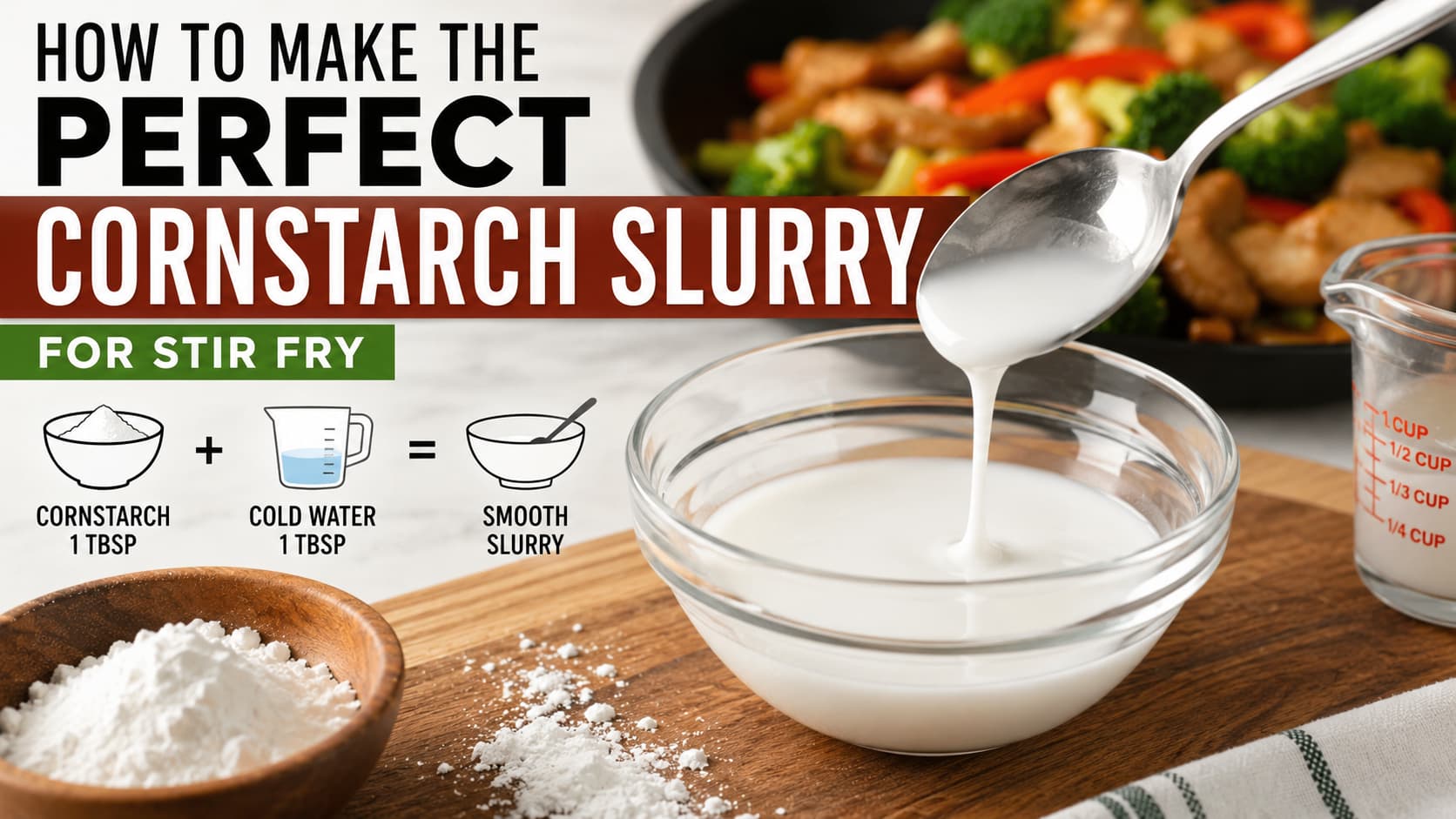
How to Make the Perfect Cornstarch Slurry
How to Make the Perfect Cornstarch Slurry
A glossy, restaurant-style stir fry sauce doesn’t happen by accident. One of the biggest secrets behind that silky texture is using a properly mixed cornstarch slurry for stir fry. Whether you’re making chicken, beef, shrimp, or vegetable stir fry, a cornstarch slurry helps transform a thin sauce into one that perfectly coats every bite.
Many home cooks either add dry cornstarch directly to the pan or mix it incorrectly, leaving behind lumps or a chalky texture. Fortunately, learning how to make a cornstarch slurry is simple once you understand the correct ratio, timing, and cooking method.
In this guide, you’ll learn exactly how to prepare the perfect cornstarch slurry for stir fry, when to add it, common mistakes to avoid, and professional tips for achieving smooth, glossy sauces every time.
Quick Answer
Cornstarch slurry for stir fry is made by mixing equal parts cornstarch and cold water until completely smooth. Stir the slurry just before using because cornstarch settles quickly. Add it to a simmering stir fry sauce near the end of cooking while stirring constantly. Within 30 to 60 seconds, the sauce will thicken into a smooth, glossy coating that clings beautifully to the chicken and vegetables.
Table of Contents
What Is Cornstarch Slurry?
A cornstarch slurry is a simple mixture of cornstarch and cold water that’s used to thicken sauces without creating lumps. It’s one of the most common thickening methods in Chinese cooking and is widely used in homemade stir fry recipes.
Instead of adding dry cornstarch directly into hot liquid, the starch is first dissolved in cold water. This allows the starch granules to spread evenly throughout the sauce, creating a smooth consistency once heated.
When the slurry reaches a simmer, the cornstarch gelatinizes. The starch molecules absorb liquid, swell, and create the rich, glossy texture that makes stir fry sauce cling to meat and vegetables.
Why Use Cornstarch Slurry for Stir Fry?
Using a properly mixed cornstarch slurry for stir fry improves both the appearance and texture of your dish. Instead of watery sauce collecting at the bottom of the pan, the thickened sauce evenly coats every ingredient.
- Creates a smooth, glossy sauce.
- Helps sauce cling to chicken and vegetables.
- Prevents watery stir fry.
- Improves presentation.
- Requires only two inexpensive ingredients.
- Works in nearly every homemade stir fry recipe.
Tip: Always mix your cornstarch slurry for stir fry immediately before adding it to the pan. Cornstarch settles quickly, so giving it one last stir ensures even thickening.
Once you’ve mastered this simple technique, you’ll notice a significant improvement in homemade stir fries, from classic chicken stir fry to sweet and savory teriyaki variations.
For practical examples, try using this technique with our Chicken Stir Fry, Chicken Broccoli Stir Fry, or Garlic Chicken Stir Fry recipes, where a properly thickened sauce makes all the difference.
Ingredients You’ll Need
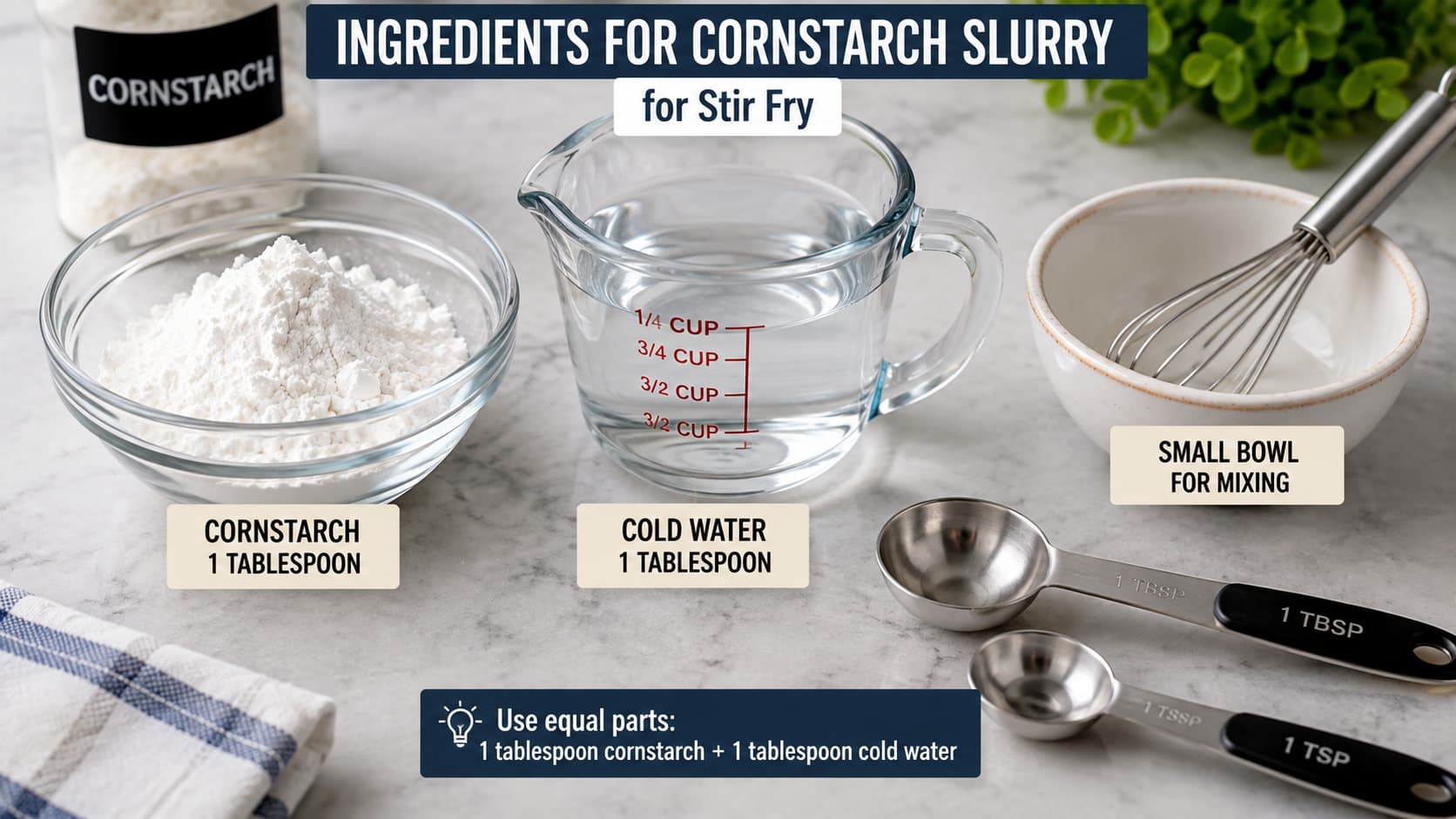
The beauty of a cornstarch slurry for stir fry is its simplicity. You only need two ingredients, but using them correctly makes a noticeable difference in the final sauce.
- Cornstarch: The primary thickening agent that creates a glossy, silky sauce.
- Cold water: Prevents the cornstarch from clumping before it’s added to the hot stir fry sauce.
Although some recipes use chicken broth, vegetable broth, or soy sauce as the liquid, plain cold water is the most reliable option because it allows the cornstarch to dissolve evenly without affecting the flavor of your sauce.
Kitchen Secret: Professional restaurant kitchens almost always mix cornstarch with cold water first. This simple step ensures the slurry blends smoothly into the sauce and thickens evenly within seconds.
The Best Cornstarch-to-Water Ratio
One of the most common questions home cooks ask is how much cornstarch they should use. Fortunately, the answer is straightforward. For most homemade stir fry recipes, an equal ratio of cornstarch and cold water produces the best results.
| Amount of Sauce | Cornstarch | Cold Water |
|---|---|---|
| 1 cup | 1 tablespoon | 1 tablespoon |
| 2 cups | 2 tablespoons | 2 tablespoons |
| 3 cups | 3 tablespoons | 3 tablespoons |
This 1:1 ratio works well for most chicken, beef, pork, shrimp, and vegetable stir fry sauces. If you prefer a slightly thinner sauce, simply reduce the amount of slurry added to the pan. If you want a thicker, restaurant-style coating, prepare a little extra slurry and add it gradually until you reach your desired consistency.
Tip: It’s easier to thicken a sauce gradually than to fix one that’s become too thick. Add the cornstarch slurry for stir fry a little at a time while stirring continuously.
How to Make the Perfect Cornstarch Slurry
Making a smooth slurry takes less than a minute, but following the correct process is important. Skipping a step can leave lumps in your sauce or prevent it from thickening properly.
- Measure equal amounts of cornstarch and cold water into a small bowl.
- Whisk or stir until the mixture is completely smooth and milky.
- Make sure there are no dry pockets of cornstarch at the bottom of the bowl.
- Cook your stir fry sauce until it reaches a gentle simmer.
- Stir the slurry again immediately before pouring because the cornstarch settles quickly.
- Slowly pour the slurry into the simmering sauce while stirring constantly.
- Continue cooking for 30 to 60 seconds until the sauce becomes glossy and coats the ingredients evenly.
The sauce should become noticeably thicker almost immediately. If it still looks thin after a minute, you can prepare a small additional batch of slurry and repeat the process instead of adding dry cornstarch directly to the pan.
Warning: Never pour dry cornstarch directly into hot stir fry sauce. It forms stubborn lumps that are difficult to dissolve and can leave your finished dish with an unpleasant texture.
If your sauce still isn’t the consistency you want, check out our guides on Why Is My Stir Fry Sauce Too Thin? and How to Thicken Stir Fry Sauce Without Cornstarch for additional troubleshooting tips and alternative thickening methods.
When Should You Add Cornstarch Slurry to Stir Fry?
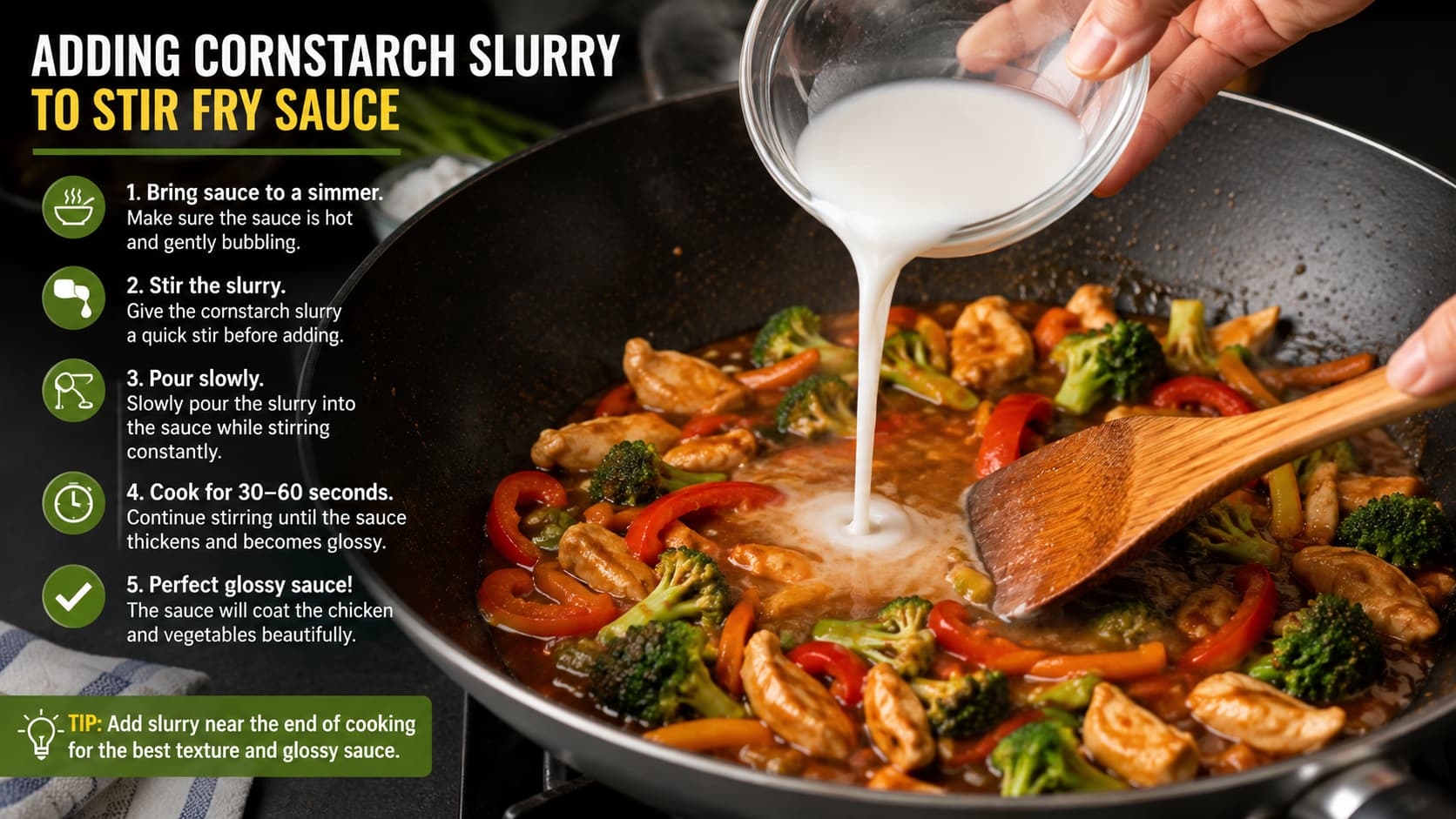
Knowing when to add a cornstarch slurry for stir fry is just as important as mixing it correctly. Even a perfectly prepared slurry won’t produce the right texture if it’s added at the wrong stage of cooking.
The ideal time to add your slurry is after the meat and vegetables are fully cooked and your stir fry sauce has reached a gentle simmer. At this point, the heat activates the cornstarch almost immediately, allowing the sauce to thicken evenly without overcooking the ingredients.
If you add the slurry too early, the sauce may become overly thick before the vegetables finish cooking. This can lead to unevenly cooked ingredients and a sticky sauce that begins to break down as it continues cooking.
On the other hand, adding the slurry after turning off the heat usually won’t work because cornstarch needs sufficient heat to gelatinize and create the glossy consistency that makes stir fry sauce so appealing.
Kitchen Secret: Restaurant chefs usually lower the heat slightly before adding the slurry, then stir continuously while bringing the sauce back to a gentle simmer. This creates a silky, lump-free finish every time.
How Do You Know the Sauce Is Thick Enough?
Many home cooks continue adding slurry because they expect the sauce to become thick instantly. In reality, it usually takes about 30 to 60 seconds of gentle simmering before the full thickening effect appears.
Instead of judging the sauce immediately after adding the slurry, give it a few moments while stirring continuously. As the cornstarch activates, you’ll notice several visual changes.
| What You See | What It Means |
|---|---|
| Sauce becomes glossy | The cornstarch has activated correctly. |
| Sauce lightly coats the spoon | The consistency is ideal for most stir fries. |
| Sauce still looks watery | Add a little more slurry if needed. |
| Sauce becomes very thick and sticky | Too much slurry was added. |
A properly thickened cornstarch slurry for stir fry should coat the chicken and vegetables evenly without becoming gummy or pasty. The sauce should remain smooth enough to flow gently around the ingredients while leaving a light coating behind.
Tip: Remove the pan from the heat once the sauce reaches your desired consistency. Cornstarch continues thickening slightly for a short time after cooking.
Can You Make Cornstarch Slurry Ahead of Time?
Although it’s possible to prepare a cornstarch slurry for stir fry a few minutes before cooking, it’s generally not recommended to make it far in advance.
Cornstarch naturally settles at the bottom of the container within minutes, leaving clear water on top. While this doesn’t ruin the slurry, you’ll need to stir or whisk it thoroughly before using it.
If you’re preparing several stir fry dishes at once, you can measure the cornstarch and water separately ahead of time, then combine them just before adding the mixture to your sauce. This ensures the smoothest possible consistency.
Warning: Never store mixed cornstarch slurry in the refrigerator for several days. It separates significantly over time and may not thicken your sauce consistently. Freshly mixed slurry always produces the best results.
Once you’ve mastered this simple technique, you’ll be able to create glossy sauces for recipes like Teriyaki Chicken Stir Fry, Honey Garlic Chicken Stir Fry, and Spicy Chicken Stir Fry with confidence.
Common Mistakes When Making Cornstarch Slurry
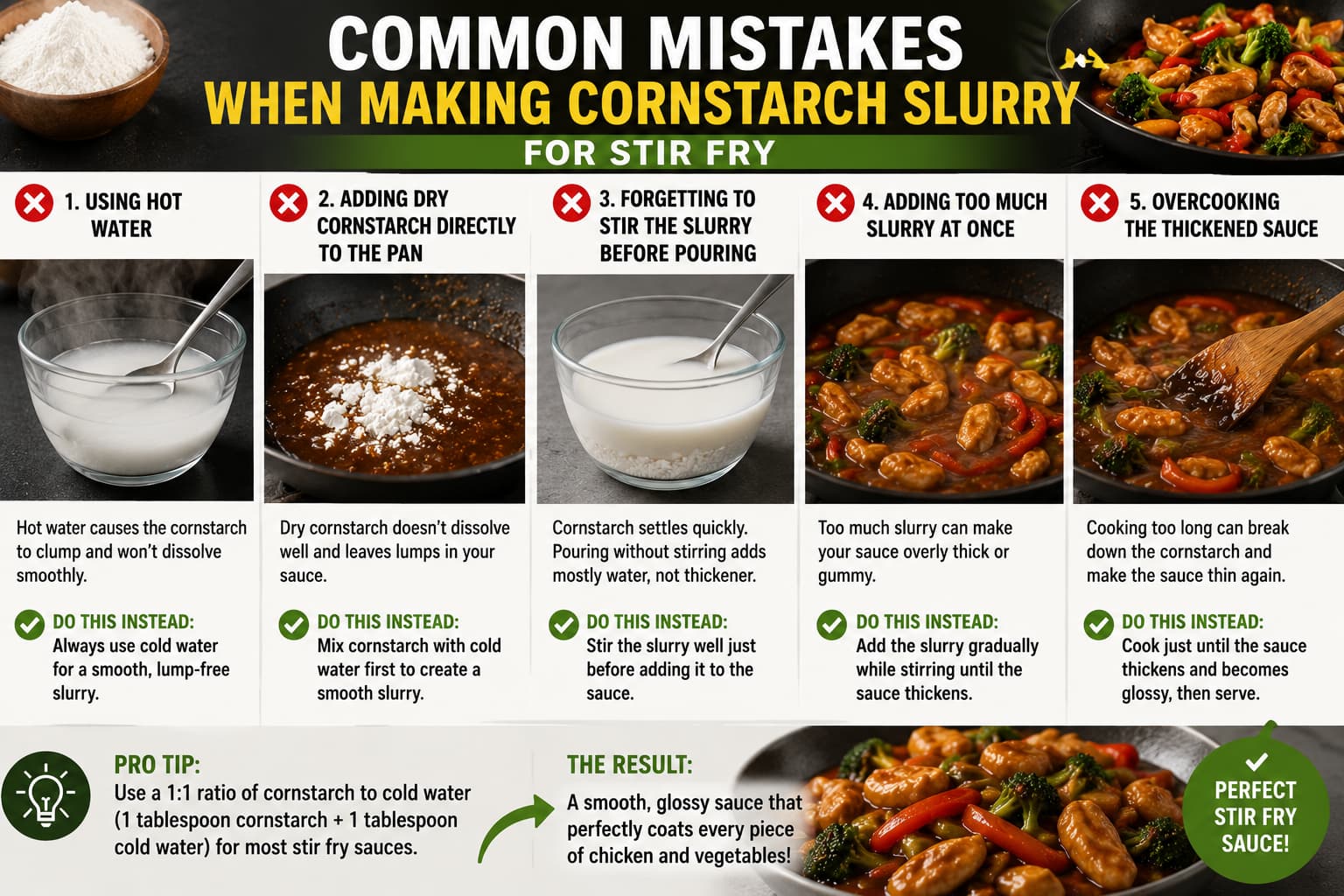
Even though a cornstarch slurry for stir fry only requires two ingredients, a few common mistakes can prevent your sauce from turning out smooth and glossy. Fortunately, they’re easy to avoid once you know what to watch for.
1. Mixing Cornstarch with Hot Water
Hot water causes the cornstarch to cook almost instantly, creating stubborn lumps before it ever reaches the pan. These lumps are difficult to dissolve and often remain in the finished sauce.
Always use cold water when preparing your slurry. The cold liquid keeps the starch suspended evenly until it’s added to the hot stir fry sauce.
2. Adding Dry Cornstarch Directly to the Pan
Sprinkling dry cornstarch into simmering sauce is one of the fastest ways to ruin the texture. Instead of dissolving smoothly, the powder forms clumps that leave a chalky taste and uneven consistency.
Warning: If your sauce already contains lumps from dry cornstarch, they’re very difficult to remove. It’s much easier to start with a properly mixed slurry than to fix the problem later.
3. Forgetting to Stir the Slurry Before Pouring
Cornstarch begins settling almost immediately after it’s mixed with water. If you pour the slurry without stirring it again, most of the starch stays at the bottom of the bowl while only water enters the sauce.
Give the mixture a quick whisk immediately before adding it to the pan. This simple habit ensures consistent thickening every time.
4. Adding Too Much Slurry at Once
It’s tempting to pour the entire bowl into the pan, but doing so can quickly make your sauce overly thick or gummy. Instead, add the slurry gradually while stirring and stop once the sauce reaches your preferred consistency.
Tip: Wait about 30 seconds after each addition before deciding whether your sauce needs more slurry. Cornstarch takes a little time to reach its full thickening power.
5. Overcooking the Thickened Sauce
After the sauce has thickened, prolonged boiling can eventually weaken the starch structure, causing the sauce to become thinner again. This is especially noticeable if the stir fry simmers for several minutes after thickening.
Once the sauce coats the ingredients evenly, remove the pan from the heat and serve while it’s still glossy and fresh.
Expert Tips for Restaurant-Quality Stir Fry Sauce
If you’ve ever wondered why restaurant stir fry sauces look smoother and shinier than homemade versions, the answer often comes down to technique rather than ingredients. Professional chefs rely on a few simple habits that anyone can use at home.
- Measure your cornstarch accurately instead of estimating.
- Mix the slurry in a small bowl until completely smooth.
- Always bring the sauce to a gentle simmer before adding the slurry.
- Pour the slurry in slowly while stirring continuously.
- Cook only until the sauce becomes glossy.
- Serve immediately for the best texture.
Kitchen Secret: Many restaurant chefs combine a properly mixed cornstarch slurry for stir fry with high heat and constant stirring during the final minute of cooking. This creates the signature silky coating that clings perfectly to every piece of chicken and every vegetable.
If you’re building your stir fry skills, you may also enjoy our guides on Common Stir Fry Sauce Mistakes, The Ultimate Chicken Stir Fry Sauce Guide, and How Much Stir Fry Sauce Should You Use?.
How to Fix Cornstarch Slurry Problems
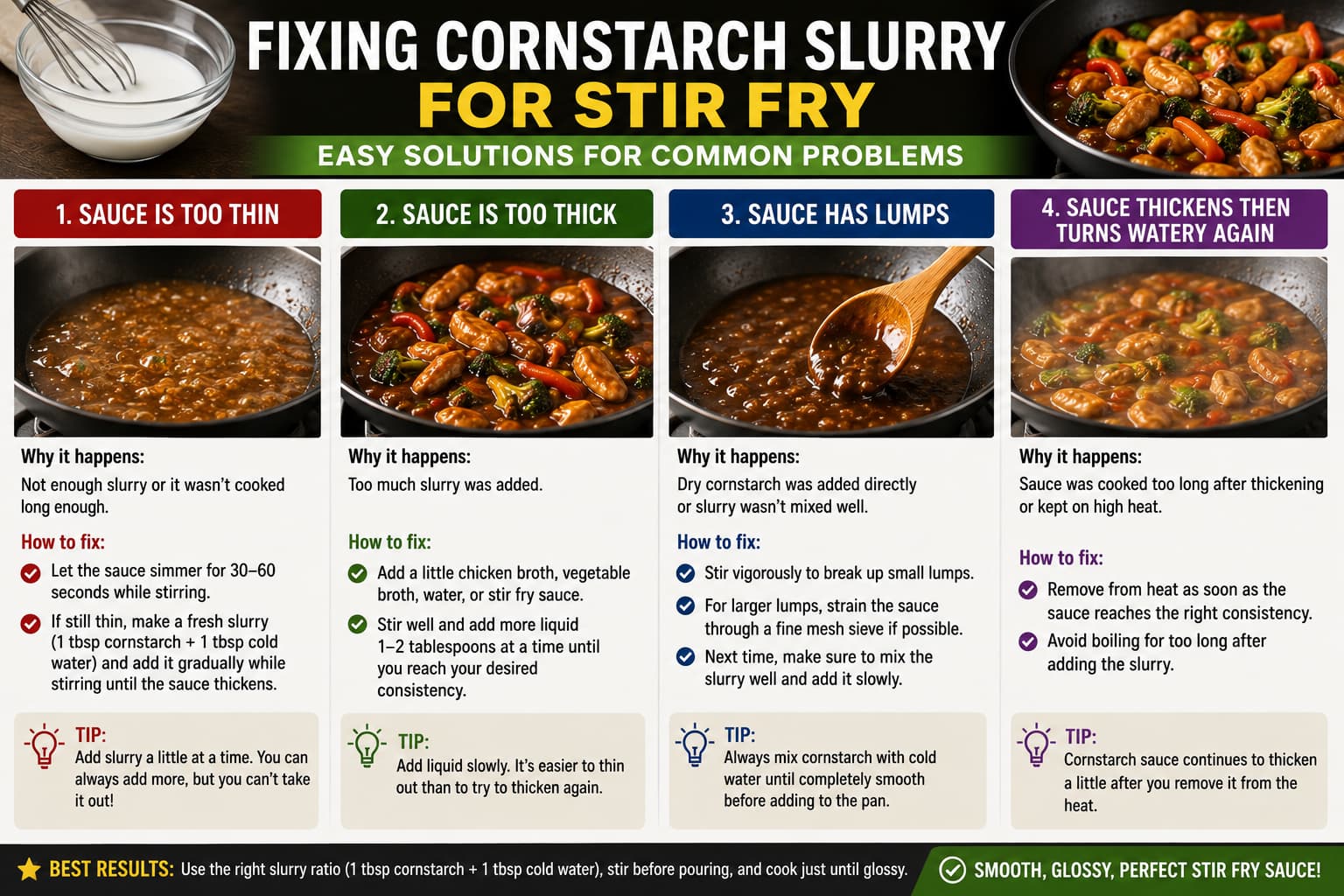
Even experienced home cooks occasionally run into problems when using a cornstarch slurry for stir fry. The good news is that most issues can be corrected with a few simple adjustments without starting the entire recipe over.
The Sauce Is Too Thin
If your sauce still looks watery after adding the slurry, don’t immediately pour in more cornstarch. First, allow the sauce to simmer for another 30 to 60 seconds while stirring continuously. Cornstarch needs a little time to fully activate.
If the sauce still isn’t thick enough, prepare a fresh batch of slurry using the same 1:1 ratio of cornstarch and cold water. Add it gradually until the sauce reaches the consistency you want.
Tip: Always make a new slurry instead of adding dry cornstarch directly to the pan. Fresh slurry blends much more smoothly and prevents lumps.
The Sauce Is Too Thick
Adding too much cornstarch slurry for stir fry can create a heavy, sticky sauce that overwhelms the dish. Fortunately, this problem is easy to fix.
Simply stir in a small amount of chicken broth, vegetable broth, water, or prepared stir fry sauce while the pan is still over low heat. Add the liquid gradually until the sauce becomes smooth and lightly coats the ingredients.
The Sauce Has Lumps
Lumps usually form when dry cornstarch is added directly to hot liquid or when the slurry wasn’t mixed thoroughly before being poured into the pan.
If only a few small lumps are present, vigorous stirring may help dissolve them. For larger clumps, it’s often best to strain the sauce through a fine-mesh sieve before serving if practical.
Warning: Large cornstarch lumps rarely disappear once fully cooked. Preventing them by using a smooth slurry is much easier than trying to remove them later.
The Sauce Turns Watery Again
If your sauce thickens properly but becomes thin again after several minutes, it may have been cooked for too long over high heat. Extended boiling can gradually weaken the starch structure, causing the sauce to lose its body.
To avoid this, remove the pan from the heat soon after the sauce reaches the desired consistency and serve immediately.
Can You Substitute Something for Cornstarch?
Although cornstarch slurry for stir fry remains the most popular thickening method, several alternatives work well if you’re out of cornstarch or need a substitute for dietary reasons.
| Substitute | Works Well? | Best For |
|---|---|---|
| Arrowroot starch | Excellent | Glossy sauces and gluten-free cooking |
| Tapioca starch | Very Good | Silky stir fry sauces |
| Potato starch | Very Good | Asian-style stir fries |
| Flour | Fair | Heavier sauces with a less glossy finish |
Each starch behaves a little differently, but arrowroot and potato starch produce results that are closest to traditional cornstarch. Flour can thicken sauces, but it creates a cloudier appearance and a slightly different texture.
Kitchen Secret: Arrowroot and potato starch should usually be added near the end of cooking, just like cornstarch. They also lose some thickening power if boiled for too long.
Is Cornstarch Slurry Better Than Adding Cornstarch Directly?
Absolutely. A properly prepared cornstarch slurry for stir fry distributes the starch evenly throughout the sauce, preventing clumps and creating a silky texture. Adding dry cornstarch directly to hot liquid almost always produces uneven results.
Taking one extra minute to mix cornstarch with cold water is one of the easiest ways to improve homemade stir fry dishes and achieve restaurant-quality sauce every time.
References
Frequently Asked Questions
Can I make cornstarch slurry ahead of time?
You can mix a cornstarch slurry for stir fry a few minutes before cooking, but it’s best prepared just before using. Cornstarch settles quickly, so stir it thoroughly before adding it to the sauce.
Can I use warm or hot water instead of cold water?
No. Cold water is essential because it keeps the cornstarch suspended evenly. Hot water causes the starch to gelatinize immediately, creating lumps that are difficult to remove.
How long does cornstarch slurry take to thicken?
Most sauces begin thickening within 30 to 60 seconds after the cornstarch slurry for stir fry is added to a gently simmering sauce.
Why did my stir fry sauce become gummy?
This usually happens when too much slurry is added or the sauce is reduced too far. Add a small amount of broth or water to thin the sauce until it reaches the desired consistency.
Can I freeze cornstarch slurry?
Freezing isn’t recommended. Once thawed, the starch and water often separate, reducing the slurry’s ability to thicken evenly. Freshly mixed slurry always produces the best results.
Does cornstarch change the flavor of stir fry sauce?
No. Cornstarch has a neutral flavor. Its purpose is to improve the texture by creating a smooth, glossy sauce without significantly affecting the taste.
Final Thoughts
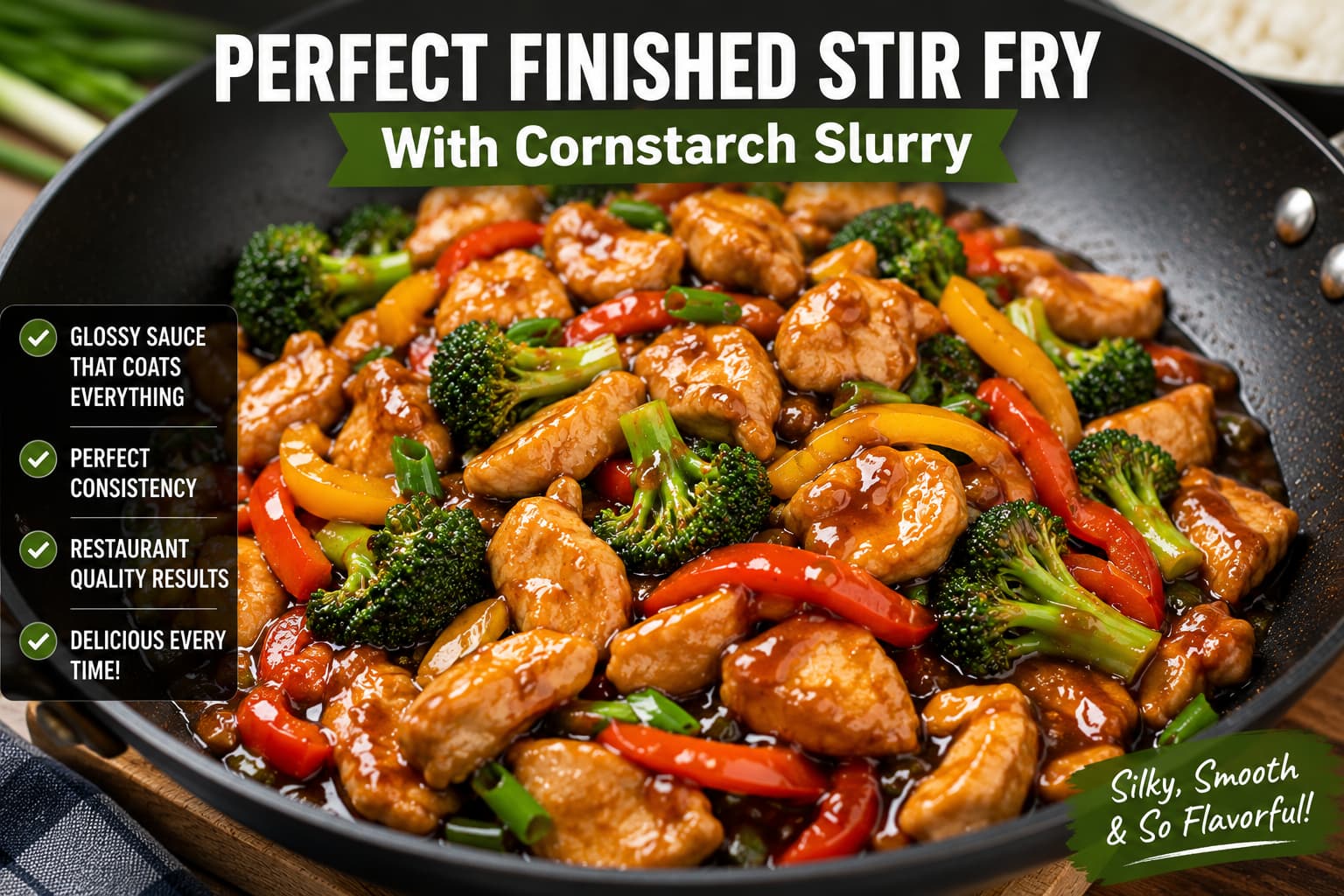
Learning how to make the perfect cornstarch slurry for stir fry is one of the easiest ways to elevate your homemade stir fry recipes. With nothing more than cornstarch, cold water, and the right technique, you can create smooth, glossy sauces that coat every piece of chicken and every vegetable beautifully.
Remember to use a simple 1:1 ratio of cornstarch to cold water, stir the mixture immediately before using it, and add it only after your sauce reaches a gentle simmer. These small steps make a big difference in the final texture and help you achieve restaurant-quality results at home.
Whether you’re preparing a classic chicken stir fry, a savory garlic chicken dish, or a sweet teriyaki recipe, mastering a cornstarch slurry for stir fry will give your sauces the rich consistency that makes every bite more flavorful and satisfying.
🍽️ You Might Also Like




📧 Save This Recipe For Later
Enter your email and we will send this recipe directly to your inbox.