
Why Is My Stir Fry Sauce Too Thick? (How to Fix It)
Why Is My Stir Fry Sauce Too Thick? (How to Fix It)
If you’ve ever finished cooking a delicious stir fry only to discover the sauce has become thick, sticky, or almost glue-like, you’re not alone. Many home cooks ask, “Why is my stir fry sauce too thick?” The good news is that this is one of the easiest stir fry problems to fix. In most cases, you don’t need to throw the dish away or start over.
A stir fry sauce should lightly coat the chicken and vegetables while remaining smooth, glossy, and easy to pour. When it becomes too thick, it can make the dish feel heavy, mask the fresh flavors, and even cause ingredients to clump together. Understanding why this happens will help you avoid the problem in future meals.
In this guide, you’ll learn the most common reasons a stir fry sauce too thick problem occurs, how to quickly rescue your sauce without losing flavor, and the best techniques professional cooks use to achieve the perfect consistency every time.
Quick Answer
Stir fry sauce too thick usually happens because too much cornstarch or thickener was added, the sauce cooked for too long, excessive liquid evaporated, or the sauce-to-ingredient ratio was too high. The quickest fix is to gradually stir in small amounts of water, chicken broth, or unsalted stock while the stir fry cooks over medium heat until the sauce becomes smooth and lightly coats the food instead of forming a paste.
Table of Contents
Why Does Stir Fry Sauce Become Too Thick?
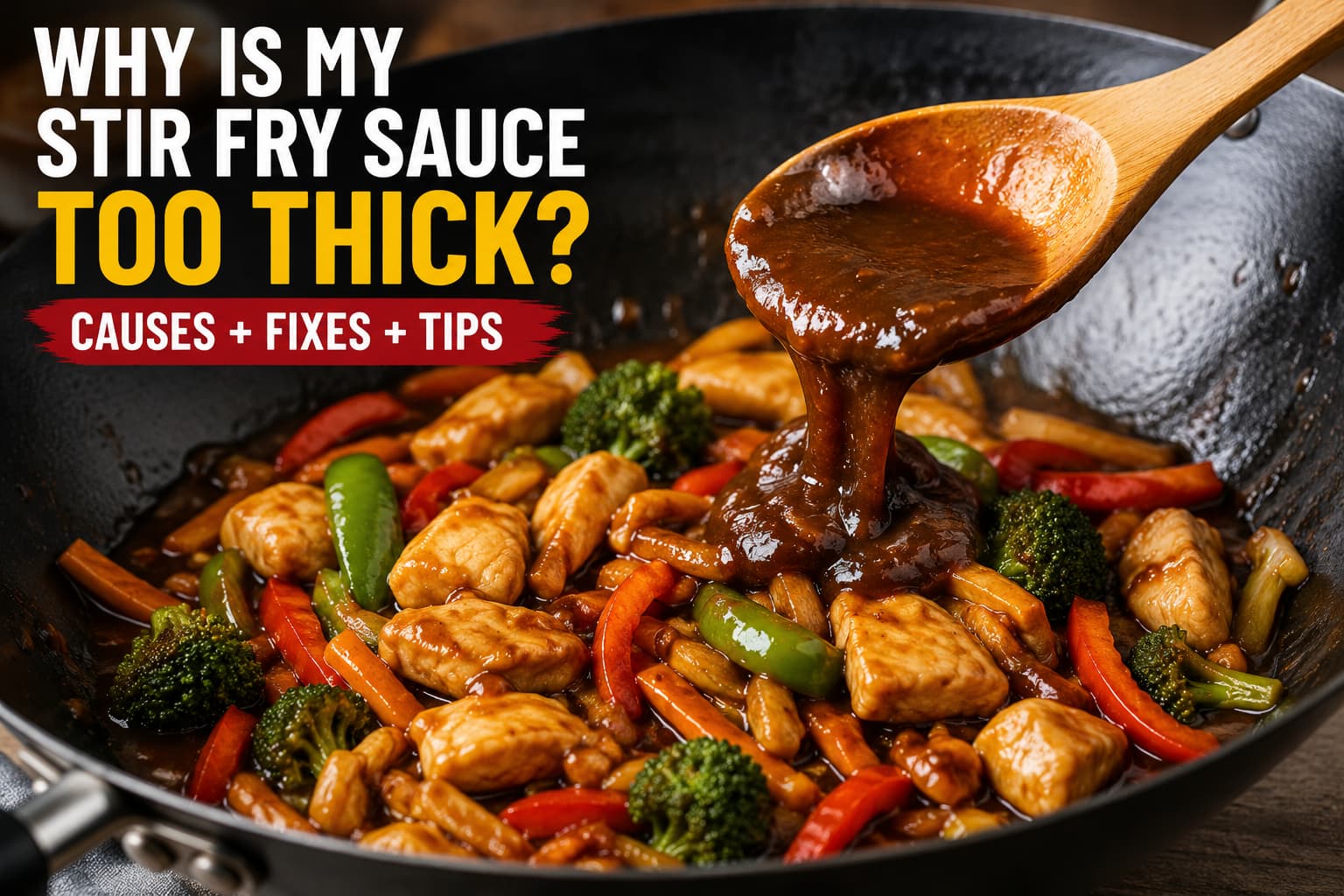
A properly made stir fry sauce should have a silky texture that lightly coats every piece of chicken and every vegetable without feeling heavy. If your sauce becomes overly thick, it usually means the balance between liquid and thickener has changed during cooking.
Most homemade stir fry sauces contain a combination of soy sauce, broth, water, aromatics, seasonings, and a thickener such as cornstarch. As the mixture heats, the starch absorbs moisture and forms a glossy coating. When too much starch is present—or when too much liquid cooks away—the sauce can quickly become thicker than intended.
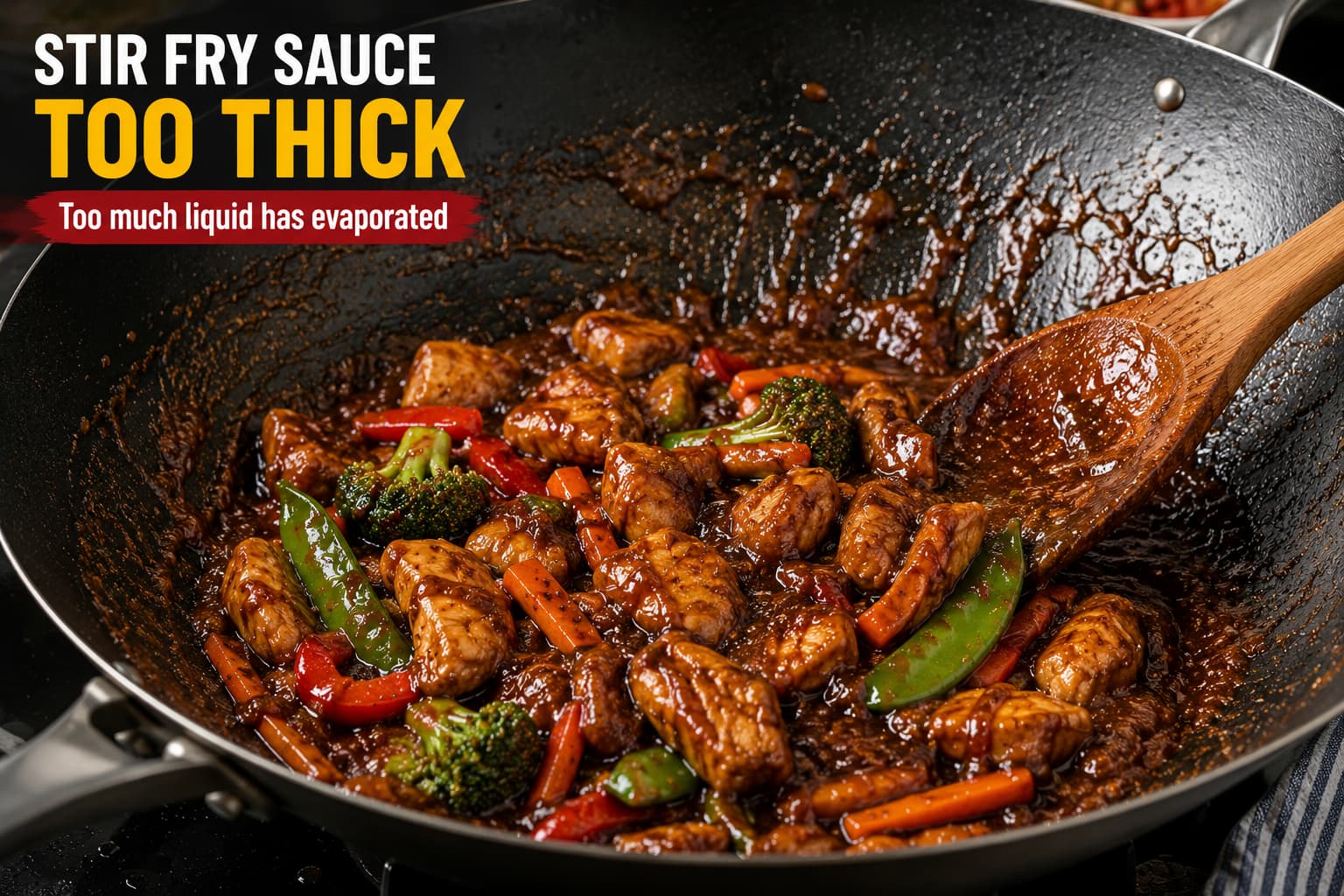
Another important factor is cooking temperature. Stir frying uses high heat, which rapidly evaporates moisture. While this helps vegetables stay crisp and meat cook quickly, it also means sauces can reduce faster than expected if left on the heat for too long.
Tip: A perfect stir fry sauce should slowly run off a spoon while leaving behind a thin, shiny coating. If it sits on the spoon like pudding or forms thick clumps, it’s time to thin it before serving.
Fortunately, a stir fry sauce too thick problem is almost always reversible. By understanding the science behind thickening, you’ll be able to make quick adjustments without affecting the overall flavor of your meal.
Before making any corrections, it’s helpful to identify what caused the sauce to become overly thick in the first place. In the next section, we’ll explore the most common reasons this happens and explain how to recognize each one while you’re cooking.
The Most Common Causes of Stir Fry Sauce That Is Too Thick
Finding the exact reason your stir fry sauce too thick problem happened makes it much easier to fix and prevent in the future. While every recipe is a little different, most thick sauces can be traced back to a handful of common cooking mistakes.
Let’s look at the most likely causes and how each one affects the final texture of your stir fry.
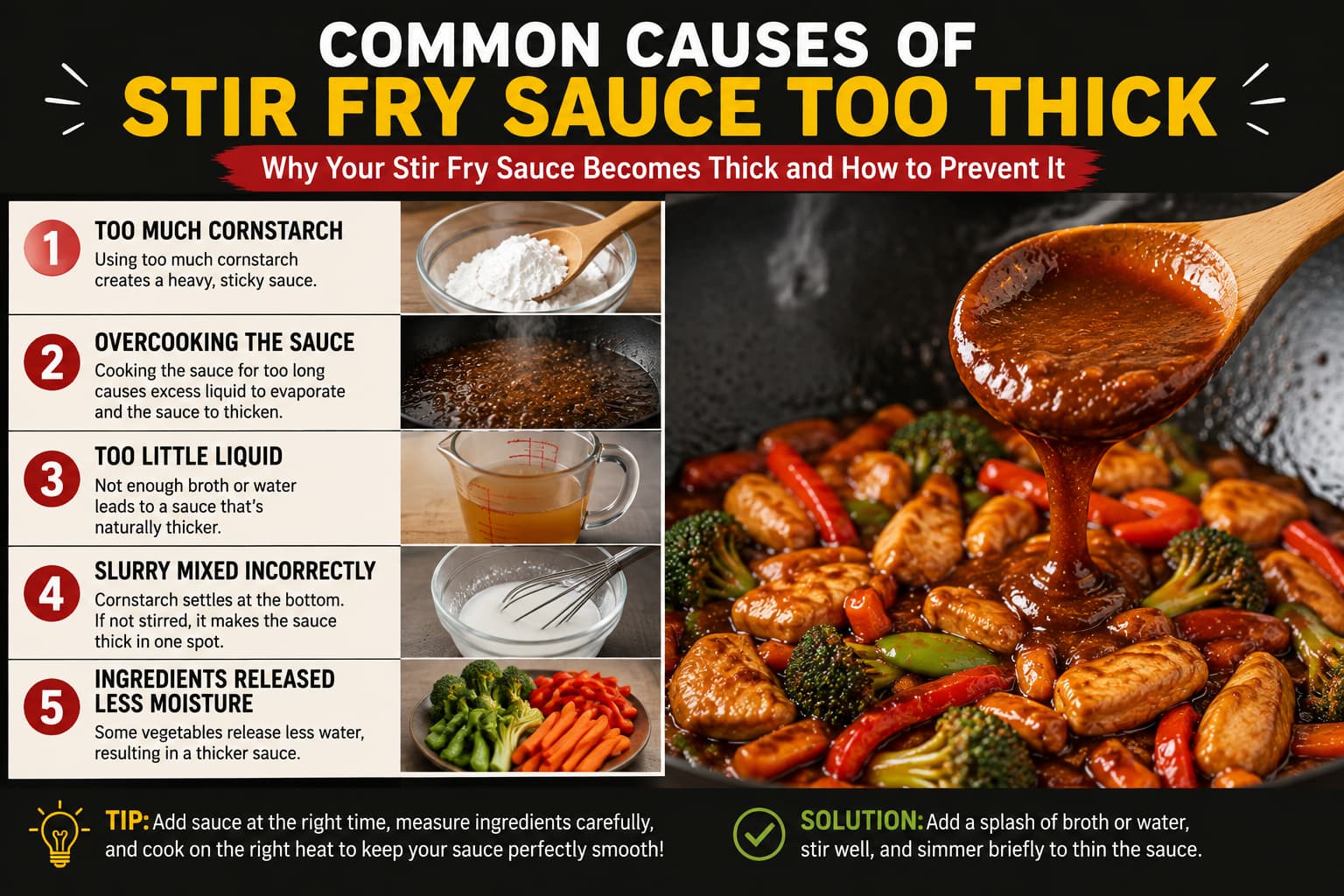
1. You Added Too Much Cornstarch
Cornstarch is the most popular thickener for homemade stir fry sauce because it creates a smooth, glossy finish. However, even an extra teaspoon can dramatically change the consistency.
As cornstarch heats, it absorbs liquid and expands. If the sauce contains more starch than the available liquid can support, it quickly changes from silky to sticky. Instead of lightly coating the chicken and vegetables, it forms a heavy layer that clings to everything.
This is especially common when measuring ingredients by eye instead of using measuring spoons.
Warning: Never pour dry cornstarch directly into hot stir fry sauce. It forms stubborn lumps that are difficult to dissolve and often makes the sauce even thicker.
2. The Sauce Reduced for Too Long
Stir fry cooks quickly, usually within just a few minutes. If the finished sauce continues simmering over high heat, water rapidly evaporates while the starch remains behind. The result is a much thicker sauce than the recipe originally intended.
Even a minute or two of extra cooking can noticeably reduce the amount of liquid in the pan.
If you’re preparing side dishes or waiting for family members before serving dinner, it’s better to remove the wok from the heat rather than letting the sauce continue bubbling.
3. Too Little Liquid Was Added
Another common reason for a stir fry sauce too thick texture is simply not having enough liquid in the recipe. Chicken broth, vegetable broth, water, soy sauce, oyster sauce, and other liquid ingredients work together to create the proper consistency.
If one of these ingredients is accidentally reduced or forgotten, the starch concentration becomes much higher, causing the sauce to thicken much more than expected.
Always double-check your measurements before cooking, especially when scaling recipes up or down.
4. The Sauce Was Mixed Incorrectly
A cornstarch slurry should always be mixed thoroughly immediately before adding it to the wok. Cornstarch naturally settles to the bottom within minutes.
If you pour the slurry without stirring it first, the thick starch sitting at the bottom enters the pan all at once. This concentrated burst of starch often creates an unexpectedly thick sauce.
Kitchen Secret: Professional chefs whisk the slurry one final time just before pouring it into the hot wok. This simple habit keeps the starch evenly distributed and produces a smoother sauce every time.
5. The Ingredients Released Less Moisture Than Expected
Vegetables naturally release water while cooking. Ingredients like mushrooms, zucchini, onions, and cabbage contribute extra moisture that helps balance the sauce.
If your stir fry contains mostly broccoli, carrots, snap peas, or bell peppers, much less water is released during cooking. As a result, the sauce remains more concentrated and can become thicker than expected.
This is one reason the same sauce recipe may behave differently depending on which vegetables you use.
Understanding these common causes makes troubleshooting much easier. The next step is learning how to rescue a thick sauce without watering down its flavor or ruining your finished stir fry.
How to Fix Stir Fry Sauce That Is Too Thick
If your stir fry sauce too thick problem happens while cooking, don’t panic. In most cases, you can restore the perfect consistency in less than two minutes. The key is to make small adjustments instead of adding a large amount of liquid all at once.
The goal isn’t to make the sauce runny. Instead, you want it to become smooth enough to lightly coat the chicken and vegetables while still delivering plenty of flavor.
| Problem | Best Solution | Why It Works |
|---|---|---|
| Sauce is slightly too thick | Add 1–2 tablespoons of water | Restores the liquid balance without noticeably changing flavor. |
| Sauce is very thick | Add warm chicken broth | Thins the sauce while maintaining a rich, savory taste. |
| Sauce became sticky | Reduce heat and stir continuously | Prevents the starch from tightening further. |
| Sauce tastes too concentrated | Add broth and adjust seasoning | Balances both flavor and consistency. |
Start with Small Amounts of Liquid
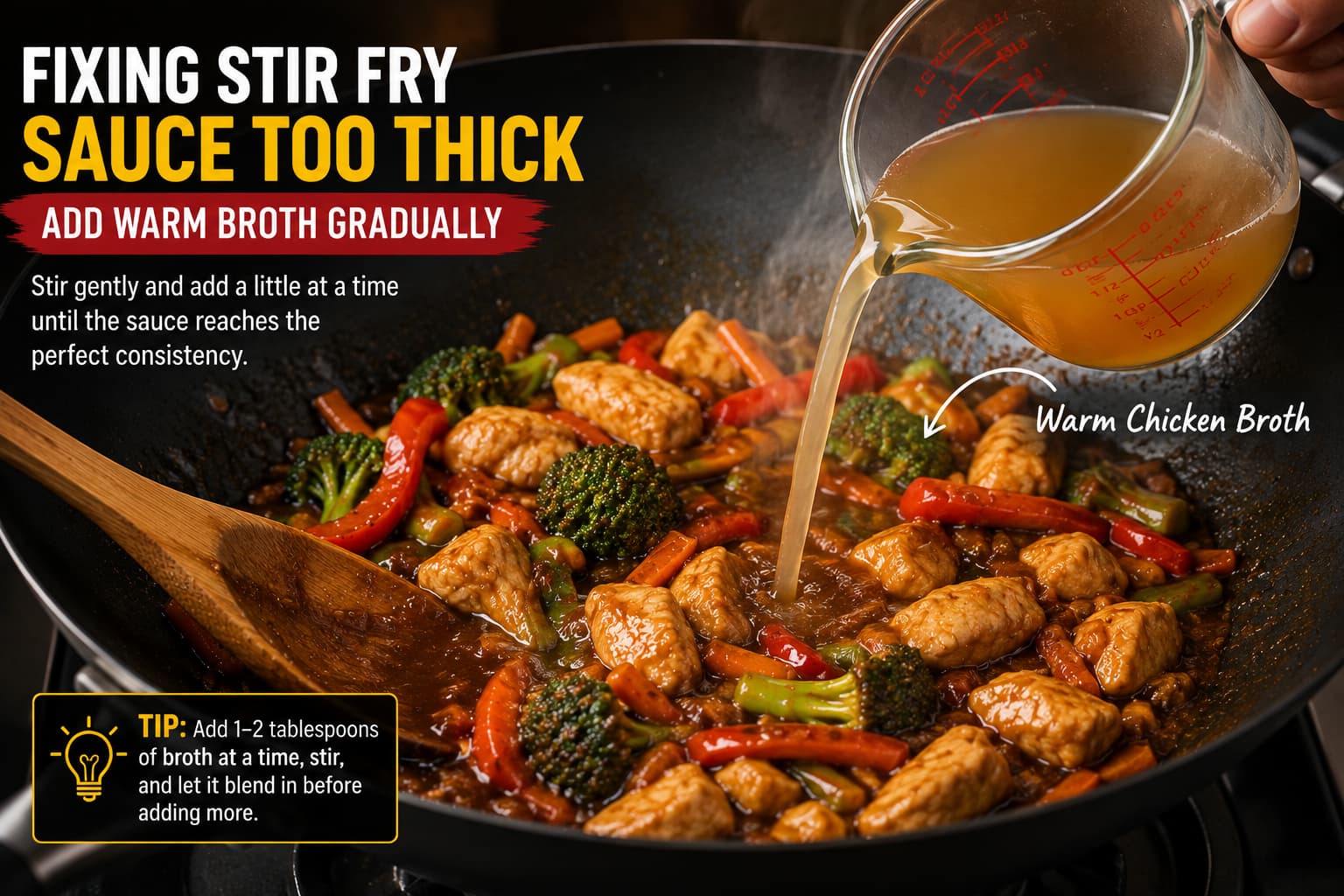
The safest way to fix a thick stir fry sauce is by adding liquid gradually. Pour in about one tablespoon of warm water or chicken broth, stir well, and allow the sauce to cook for about 20 to 30 seconds before deciding whether it needs more.
This gives the starch time to redistribute throughout the sauce. If it’s still too thick, repeat the process one tablespoon at a time until you reach the desired consistency.
Tip: Warm liquid blends into the sauce much faster than cold liquid and helps maintain the cooking temperature inside the wok.
Choose the Right Liquid
While plain water works well in an emergency, it isn’t always the best choice. The liquid you add should complement the flavor of your stir fry whenever possible.
- Chicken broth: Best for chicken stir fry recipes because it maintains a rich, savory flavor.
- Vegetable broth: A great choice for vegetable-based stir fries.
- Water: Perfect for making small adjustments without adding extra ingredients.
- Unsalted stock: Helps thin the sauce while preventing the dish from becoming overly salty.
Avoid adding more soy sauce to thin the mixture. Although it increases the liquid volume, it also raises the sodium level and can make the finished dish taste overly salty.
Reduce the Heat Before Adjusting
High heat causes moisture to evaporate quickly. If you continue cooking over maximum heat while adding liquid, some of the new liquid will disappear almost immediately.
Instead, lower the heat to medium before stirring in additional broth or water. Once the sauce reaches the right consistency, you can briefly increase the heat again to finish cooking the vegetables and chicken.
Kitchen Secret: Professional stir fry cooks rarely add all of the sauce at once. They watch the consistency as it cooks and make small adjustments throughout the final minute, giving them complete control over the texture.
If you’ve already corrected your sauce, you’re ready to serve. However, understanding how to prevent the stir fry sauce too thick problem from happening again will save time and help every future stir fry turn out perfectly.
How to Prevent Stir Fry Sauce from Becoming Too Thick
Once you’ve fixed a stir fry sauce too thick problem, the next goal is preventing it from happening again. A few simple habits can make a big difference in achieving a silky, glossy sauce every time you cook.
Professional cooks don’t rely on luck. They measure ingredients carefully, control the cooking temperature, and watch the sauce closely during the final minutes of cooking. These same techniques work just as well in a home kitchen.
Measure Your Thickener Accurately
Cornstarch is powerful. Even a small increase can noticeably change the texture of your sauce. Instead of estimating, always measure it with a measuring spoon.
For most homemade stir fry recipes, a small amount of cornstarch is enough to create a light coating. Adding extra starch rarely improves the sauce and often results in a sticky, overly thick finish.
If you’re experimenting with a new recipe, it’s usually safer to begin with slightly less thickener. You can always add a little more later if needed.
Tip: It’s much easier to thicken a sauce that is slightly thin than to rescue one that has become overly thick.
Mix the Cornstarch Slurry Immediately Before Using It
Cornstarch settles quickly when mixed with water. If the slurry sits on the counter for several minutes, the starch collects at the bottom of the bowl or measuring cup.
Always stir or whisk the slurry immediately before pouring it into the wok. This keeps the starch evenly suspended in the liquid, helping it thicken the sauce gradually instead of all at once.
If you’d like a complete guide, read our How to Make the Perfect Cornstarch Slurry article for detailed instructions and troubleshooting tips.
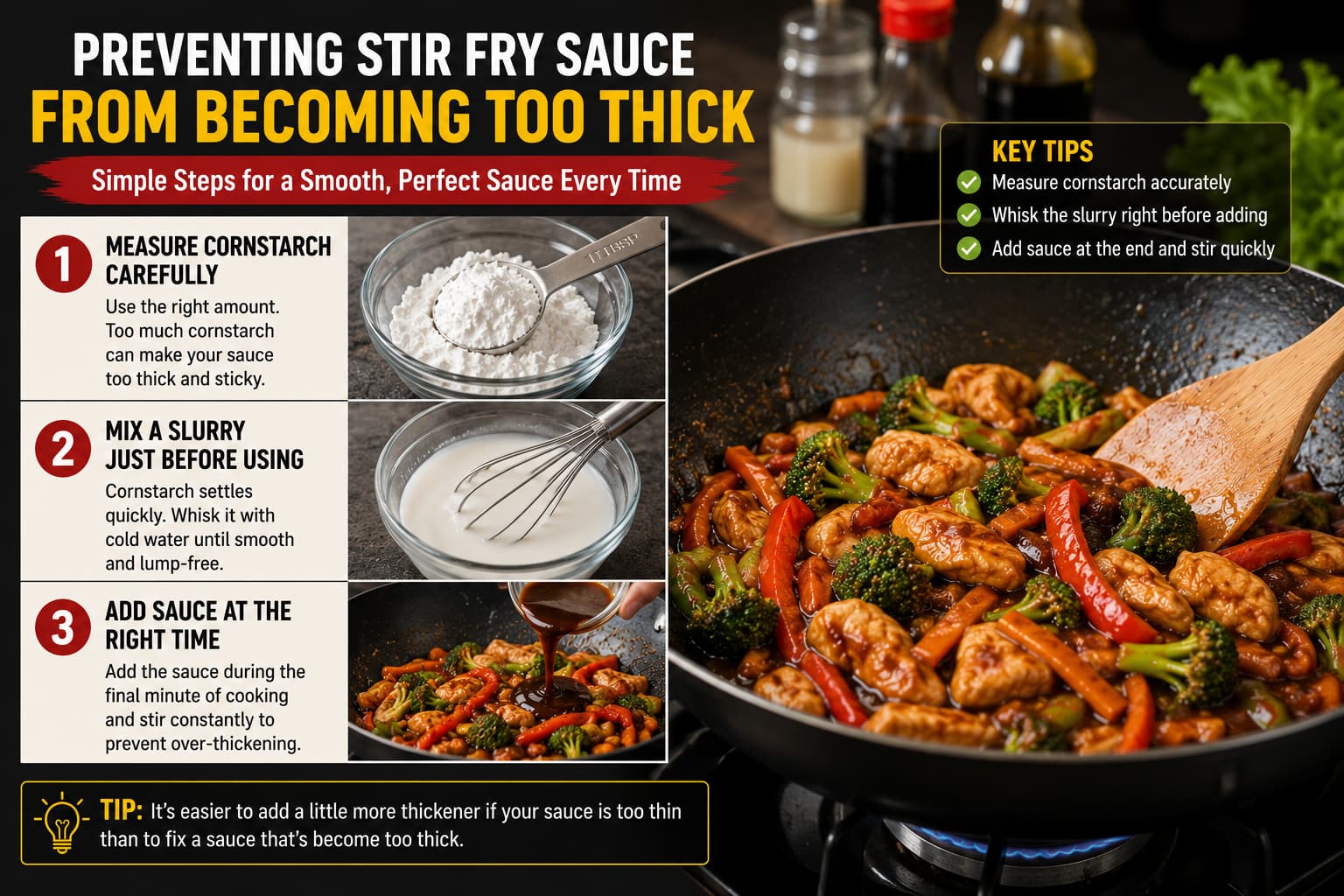
Add the Sauce at the Right Time
One common mistake is pouring the sauce into the wok too early. When the sauce cooks for several extra minutes, unnecessary evaporation occurs, causing it to reduce and thicken far more than intended.
Instead, cook the chicken and vegetables first. Once they’re nearly done, add the prepared sauce and stir continuously for one to two minutes until it lightly coats the ingredients.
This method produces a glossy sauce while preserving fresh vegetable texture.
Kitchen Secret: Restaurant stir fries are often finished with the sauce during the last minute of cooking. This creates a fresh, shiny coating instead of a heavy, sticky glaze.
Watch the Sauce Instead of the Clock
Every stove, wok, and ingredient combination cooks a little differently. Instead of relying strictly on cooking times, pay attention to how the sauce looks.
- The sauce should gently coat the back of a spoon.
- It should flow smoothly when stirred.
- It shouldn’t form large clumps or stick to the bottom of the wok.
- Chicken and vegetables should appear lightly glazed rather than buried under thick sauce.
These visual cues are more reliable than any timer.
Use the Right Amount of Sauce
Using too much sauce can sometimes encourage over-reduction because cooks leave the wok on the heat longer while waiting for the sauce to cook down.
If you’re unsure how much sauce your recipe needs, our guide on How Much Stir Fry Sauce Should You Use? explains the ideal sauce-to-ingredient ratio for balanced flavor and texture.
By following these simple habits, you’ll greatly reduce the chances of dealing with a stir fry sauce too thick problem and consistently produce stir fries with a smooth, glossy finish.
Common Mistakes That Make Stir Fry Sauce Too Thick
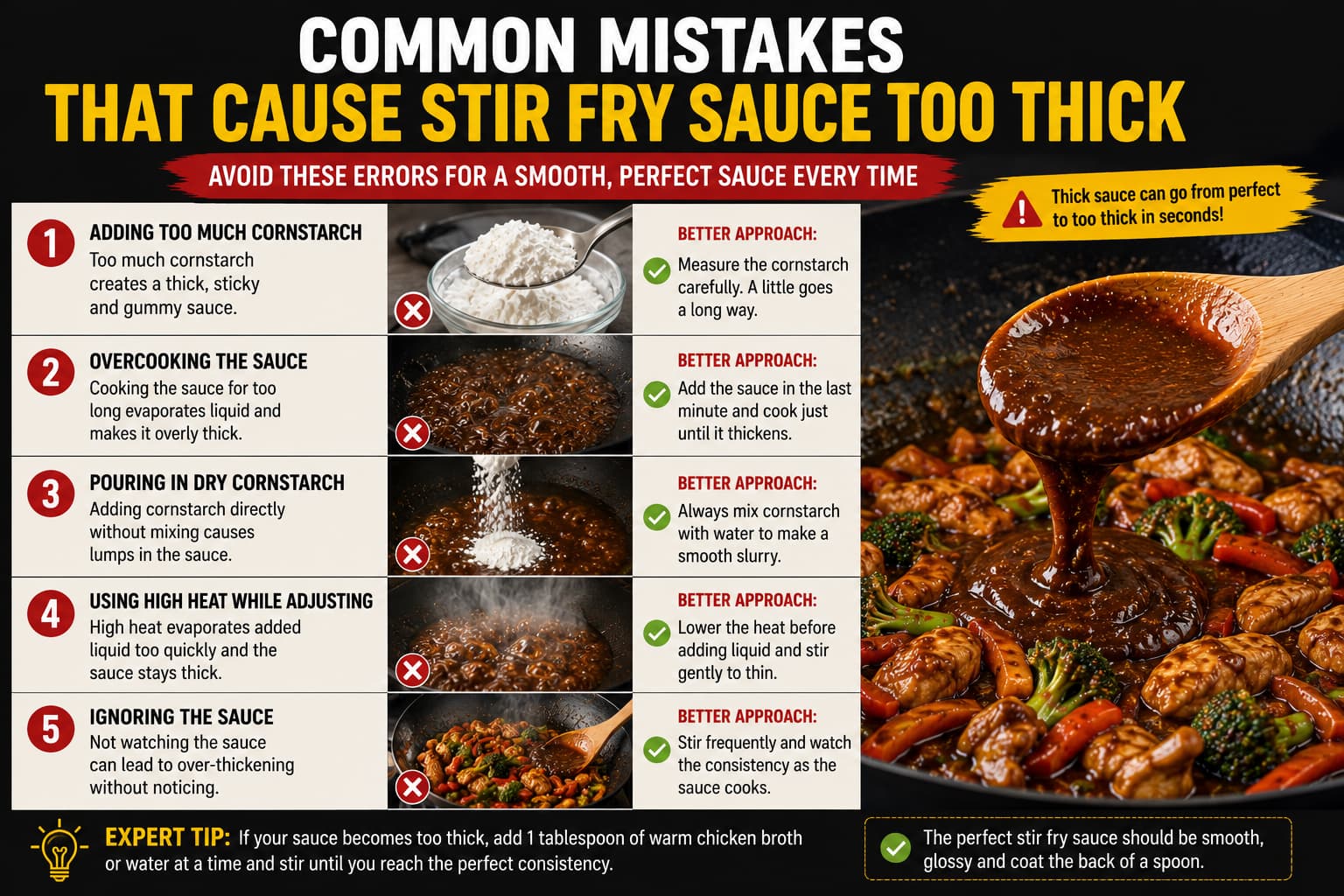
Even experienced home cooks occasionally end up with a stir fry sauce too thick because of small mistakes that are easy to overlook. Understanding these errors can help you consistently produce a smooth, glossy sauce that perfectly coats every ingredient.
Many of these problems happen during the final minute of cooking, so paying close attention at the end makes a big difference.
| Mistake | What Happens | Better Approach |
|---|---|---|
| Adding too much cornstarch | Sauce becomes sticky and overly thick | Measure the thickener carefully. |
| Cooking the sauce too long | Too much liquid evaporates | Add the sauce during the final minute. |
| Pouring in dry cornstarch | Lumps form immediately | Always use a well-mixed slurry. |
| Using high heat while adjusting | Added liquid evaporates too quickly | Reduce heat before thinning the sauce. |
| Ignoring the sauce while cooking | Sauce continues thickening unnoticed | Stir frequently and watch the consistency. |
Adding More Thickener Too Quickly
One of the biggest mistakes is assuming the sauce isn’t thick enough before it has fully heated. Cornstarch needs a short amount of time to activate.
If you immediately add another slurry, the sauce may suddenly become much thicker than expected once both additions begin working.
Warning: After adding a cornstarch slurry, wait about 30 seconds while stirring before deciding whether the sauce needs additional thickening.
Using High Heat for Too Long
High heat is essential for stir frying, but it should be used wisely. Once the sauce has reached the desired consistency, continuing to cook over maximum heat simply removes more moisture.
This doesn’t improve the flavor. Instead, it makes the sauce increasingly concentrated and heavy.
As soon as the chicken is fully cooked and the vegetables are crisp-tender, remove the wok from the burner or reduce the heat.
Skipping Taste Tests
Texture isn’t the only thing affected when the sauce becomes too thick. As moisture evaporates, the flavors become more concentrated as well.
A sauce that tastes perfectly balanced at the beginning can become overly salty or too sweet if it reduces excessively.
Always taste the sauce before serving. If the flavors seem too strong, adding a splash of warm broth usually corrects both the seasoning and the consistency.
Tip: A properly balanced stir fry sauce should taste savory, slightly sweet, and well-rounded without any single ingredient overpowering the others.
Storage and Reheating Tips
Even after you’ve fixed a stir fry sauce too thick issue, the sauce may continue to thicken slightly as it cools. This is completely normal because starches naturally firm up when refrigerated.
Fortunately, the texture can usually be restored during reheating with just a small amount of added liquid.
Storage: Cool leftover stir fry within two hours, transfer it to an airtight container, and refrigerate for up to 4 days. For longer storage, freeze for up to 3 months. Reheat gently over medium heat with a splash of water or chicken broth to restore the sauce’s original consistency.
If you’re making homemade sauces regularly, you may also find these helpful guides:
- Easy Homemade Stir Fry Sauce
- Common Stir Fry Sauce Mistakes
- The Ultimate Chicken Stir Fry Sauce Guide
- Why Is My Stir Fry Sauce Too Thin?
By avoiding these common mistakes and following a few simple best practices, you’ll enjoy consistently smooth, flavorful stir fry sauces that perfectly complement your chicken and vegetables every time.
References
Frequently Asked Questions
Can I fix a stir fry sauce that is too thick after cooking?
Yes. If your stir fry sauce too thick after cooking, simply reheat it gently and stir in one tablespoon of warm water or chicken broth at a time until it reaches a smooth, pourable consistency. Avoid adding too much liquid at once, as this can make the sauce watery.
Why did my stir fry sauce become thick so quickly?
The most common reasons are using too much cornstarch, cooking the sauce over high heat for too long, or allowing too much liquid to evaporate. Stir fry sauces thicken rapidly because cornstarch activates almost immediately once it reaches a boil.
Can I use water to thin a thick stir fry sauce?
Yes. Water works well for small adjustments. However, if your sauce is very thick, chicken broth or vegetable broth usually provides better flavor while restoring the proper consistency.
Does stir fry sauce become thicker as it cools?
Yes. Cornstarch-based sauces naturally continue to thicken as they cool. This is completely normal and doesn’t mean the recipe failed. A small splash of broth or water during reheating usually restores the original texture.
Can too much soy sauce make stir fry sauce thick?
No. Soy sauce itself doesn’t significantly thicken the sauce. Thickness is primarily caused by starch, reduced liquid, or overcooking. However, adding extra soy sauce instead of water can make the finished dish taste excessively salty.
What’s the easiest way to prevent stir fry sauce from becoming too thick?
Measure the cornstarch accurately, whisk the slurry immediately before adding it to the wok, avoid overcooking the sauce, and monitor the consistency during the final minute of cooking. These simple habits help produce a silky, glossy sauce every time.
Final Thoughts
Dealing with a stir fry sauce too thick doesn’t mean your meal is ruined. In fact, it’s one of the easiest stir fry problems to correct. By identifying the cause—whether it’s too much cornstarch, excessive reduction, or not enough liquid—you can quickly restore the sauce to the perfect consistency with just a small amount of water or broth.
Even better, applying the preventive techniques in this guide will help you avoid the problem altogether. Measuring ingredients carefully, adding the sauce at the right time, and watching the consistency instead of the clock are simple habits that consistently produce restaurant-quality results.
If you’re looking to improve your stir fry skills even further, explore the additional recipes and sauce guides below to build confidence and create flavorful homemade meals every time.
🍽️ You Might Also Like



📧 Save This Recipe For Later
Enter your email and we will send this recipe directly to your inbox.