
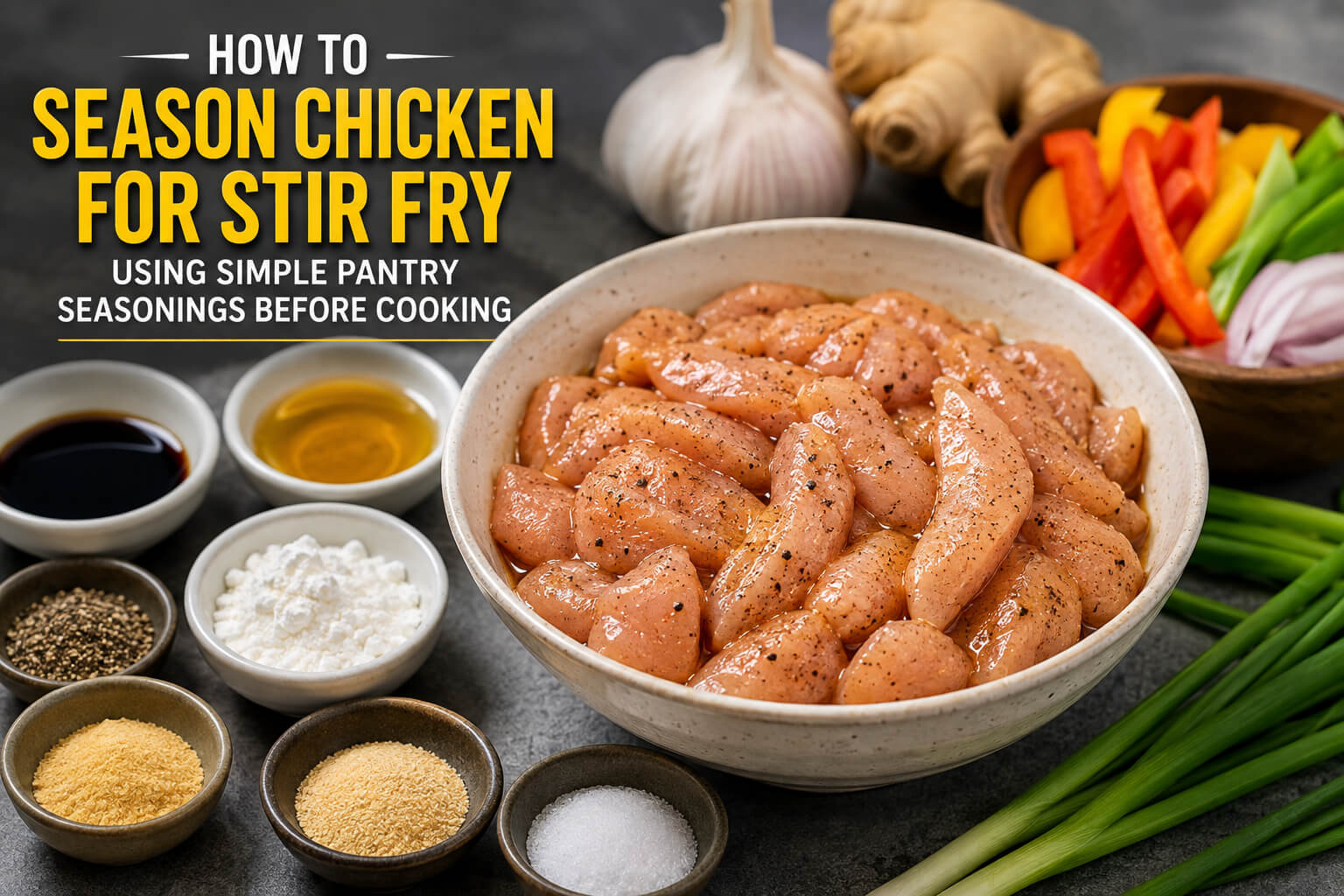
How to Season Chicken for Stir Fry (Simple Flavor Guide)
How to Season Chicken for Stir Fry (Simple Flavor Guide)
If you’ve ever made a chicken stir fry that tasted bland even though the vegetables were fresh and the sauce seemed perfect, there’s a good chance the chicken wasn’t seasoned properly. Learning how to season chicken for stir fry is one of the simplest ways to improve both flavor and texture without making your cooking routine more complicated.
Many home cooks rely entirely on bottled stir fry sauces, assuming they’ll provide all the flavor the dish needs. While a good sauce certainly helps, seasoning the chicken before it hits the pan creates a richer, deeper taste that carries through every bite. This small step also helps the chicken stay flavorful even if you use less sauce or choose healthier ingredients.
The best part is that you don’t need an overflowing spice cabinet. A handful of everyday pantry ingredients can transform plain chicken into the perfect base for almost any stir fry recipe, whether you’re making garlic chicken, teriyaki chicken, honey garlic chicken, spicy chicken, or a vegetable-packed weeknight dinner.
In this guide, you’ll learn exactly how to season chicken for stir fry, when to add seasonings, which ingredients work best together, common mistakes to avoid, and how to customize the flavor for different styles of stir fry.
Quick Answer
The best way to season chicken for stir fry is to combine salt, black pepper, garlic powder, onion powder, soy sauce, and a small amount of sesame oil before cooking. Let the chicken rest for 15–30 minutes so the flavors absorb into the meat. If you want even juicier chicken, add a little cornstarch to the seasoning mixture before stir frying.
- Season chicken before cooking—not after.
- Use both dry seasonings and liquid flavorings.
- Avoid adding too much salt if using soy sauce.
- Let the chicken rest before cooking.
- Cook over high heat for the best flavor and browning.
Table of Contents
Why Seasoning Chicken Matters
Many people think stir fry sauce does all the work, but that’s only part of the story. The chicken itself should already be flavorful before it reaches the wok or skillet. Proper seasoning creates layers of flavor instead of relying on one sauce added at the end.
When you season chicken for stir fry correctly, every piece develops a balanced savory taste that complements vegetables, noodles, or rice. This is especially important because stir frying is a fast cooking method. There isn’t much time for flavors to develop once the ingredients hit the hot pan.
Seasoning also helps improve the overall eating experience. Even if someone eats a bite of chicken without much sauce, it still tastes delicious. That’s the difference between restaurant-quality stir fry and an average homemade version.
Kitchen Tip: Seasoning the chicken separately before cooking gives you much more control over the final flavor than simply pouring extra sauce into the pan later.
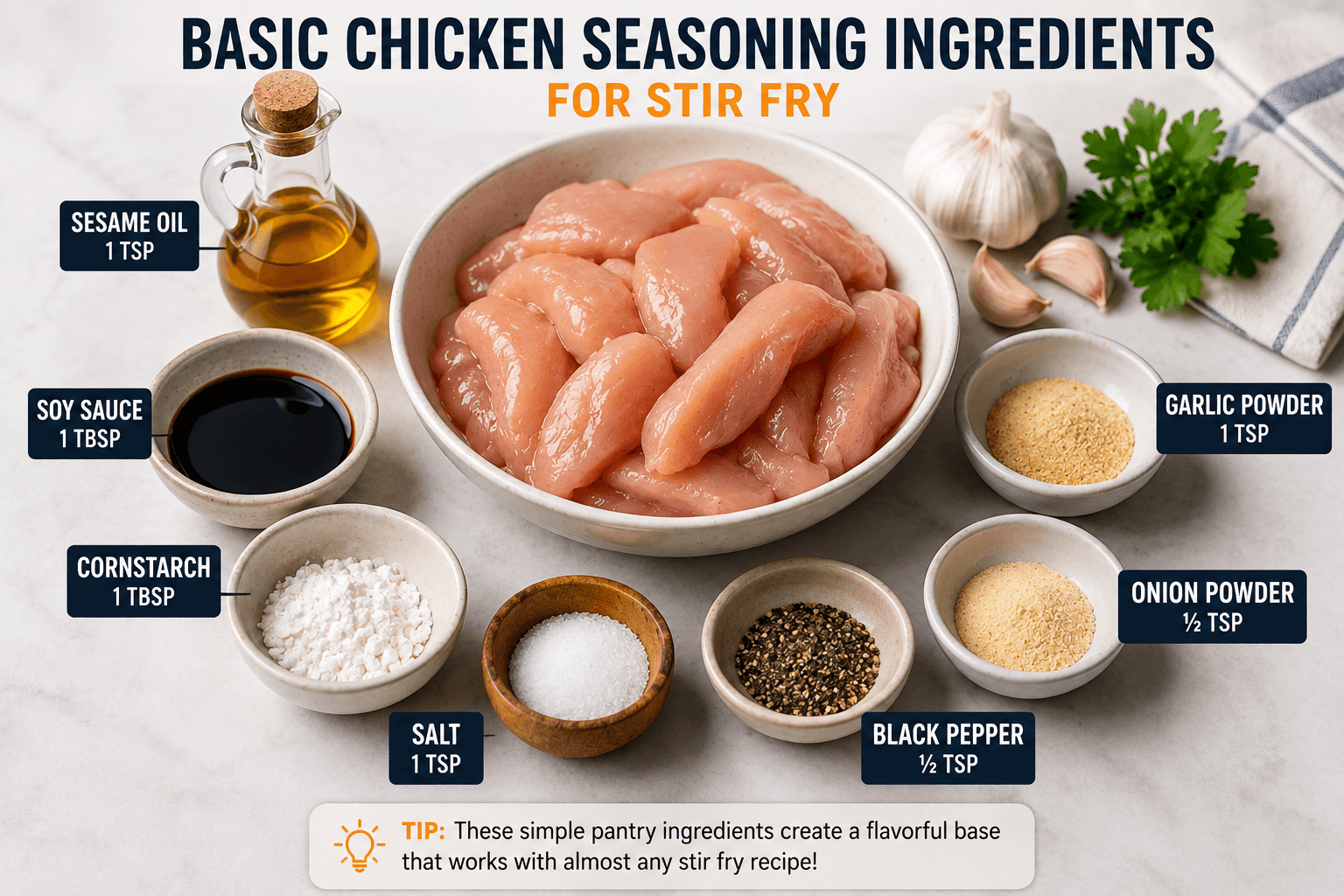
The Best Basic Chicken Seasoning for Stir Fry
You don’t need a complicated spice blend to make delicious stir fry chicken. In fact, many restaurant kitchens start with a simple combination of salt, pepper, soy sauce, and aromatics before adding specialty sauces later.
If you’re wondering how to season chicken for stir fry using ingredients you probably already have at home, this basic combination works well for almost every recipe.
| Ingredient | Purpose | Recommended Amount (Per Pound) |
|---|---|---|
| Salt | Enhances natural flavor | 1 teaspoon |
| Black Pepper | Adds mild heat | ½ teaspoon |
| Garlic Powder | Savory depth | 1 teaspoon |
| Onion Powder | Sweet aromatic flavor | ½ teaspoon |
| Soy Sauce | Umami richness | 1 tablespoon |
| Sesame Oil | Nutty aroma | 1 teaspoon |
| Cornstarch | Locks in moisture | 1 tablespoon |
This balanced seasoning works well because every ingredient has a specific purpose. Salt enhances flavor, garlic and onion powders create a savory base, soy sauce contributes umami, sesame oil provides aroma, and cornstarch helps produce tender, juicy chicken with a light coating that browns beautifully during stir frying.
Chef’s Secret: Many Chinese restaurant kitchens lightly coat seasoned chicken with cornstarch before cooking. This creates a delicate protective layer that helps keep the meat juicy even over intense heat.
Another advantage of this seasoning blend is its versatility. Once you’ve learned the basic method to season chicken for stir fry, you can easily adjust it for different cuisines by adding ingredients such as ginger, chili flakes, five-spice powder, paprika, or white pepper without changing the overall technique.
Think of this mixture as your foundation. From here, you can build countless stir fry flavors while keeping the chicken moist, tender, and packed with savory taste.
When Should You Season Chicken for Stir Fry?
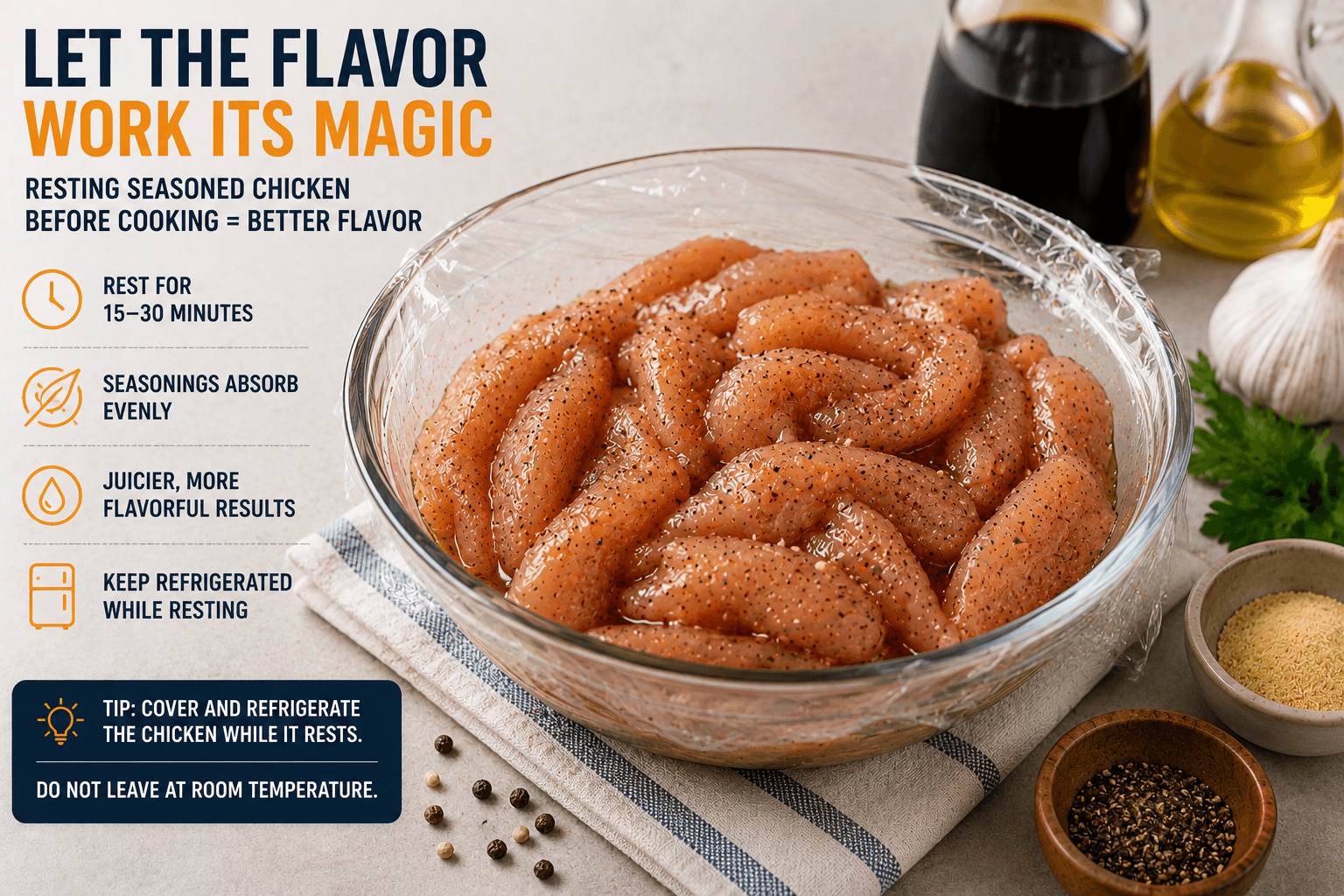
Timing is just as important as the ingredients themselves. One of the biggest mistakes home cooks make is seasoning the chicken immediately before adding it to the pan. While this is better than not seasoning it at all, allowing the chicken to rest for a short time gives the flavors a chance to penetrate the surface of the meat.
The ideal approach is to season chicken for stir fry about 15 to 30 minutes before cooking. This resting period helps the salt dissolve, distributes the seasonings more evenly, and improves the overall flavor of every bite.
If you’re preparing dinner ahead of time, you can even season the chicken a few hours in advance and keep it covered in the refrigerator. This gives the ingredients more time to work without making the chicken overly salty.
Quick Seasoning Timeline
| Time Before Cooking | Result |
|---|---|
| Immediately before cooking | Acceptable, but flavor stays mostly on the surface. |
| 15–30 minutes | Best balance of flavor and convenience. |
| 2–8 hours | Excellent flavor development for meal prep. |
| Overnight | Usually unnecessary unless following a full marinade. |
Pro Tip: Always keep seasoned chicken refrigerated while it rests. Never leave raw chicken at room temperature for extended periods.
How to Season Chicken for Stir Fry Step by Step
If you’ve never seasoned chicken before making stir fry, don’t worry. The process only takes a few minutes and quickly becomes second nature.
- Slice the chicken evenly. Thin, uniform slices cook faster and absorb seasoning more consistently.
- Pat the chicken dry. Removing excess moisture helps the seasoning stick better and encourages browning instead of steaming.
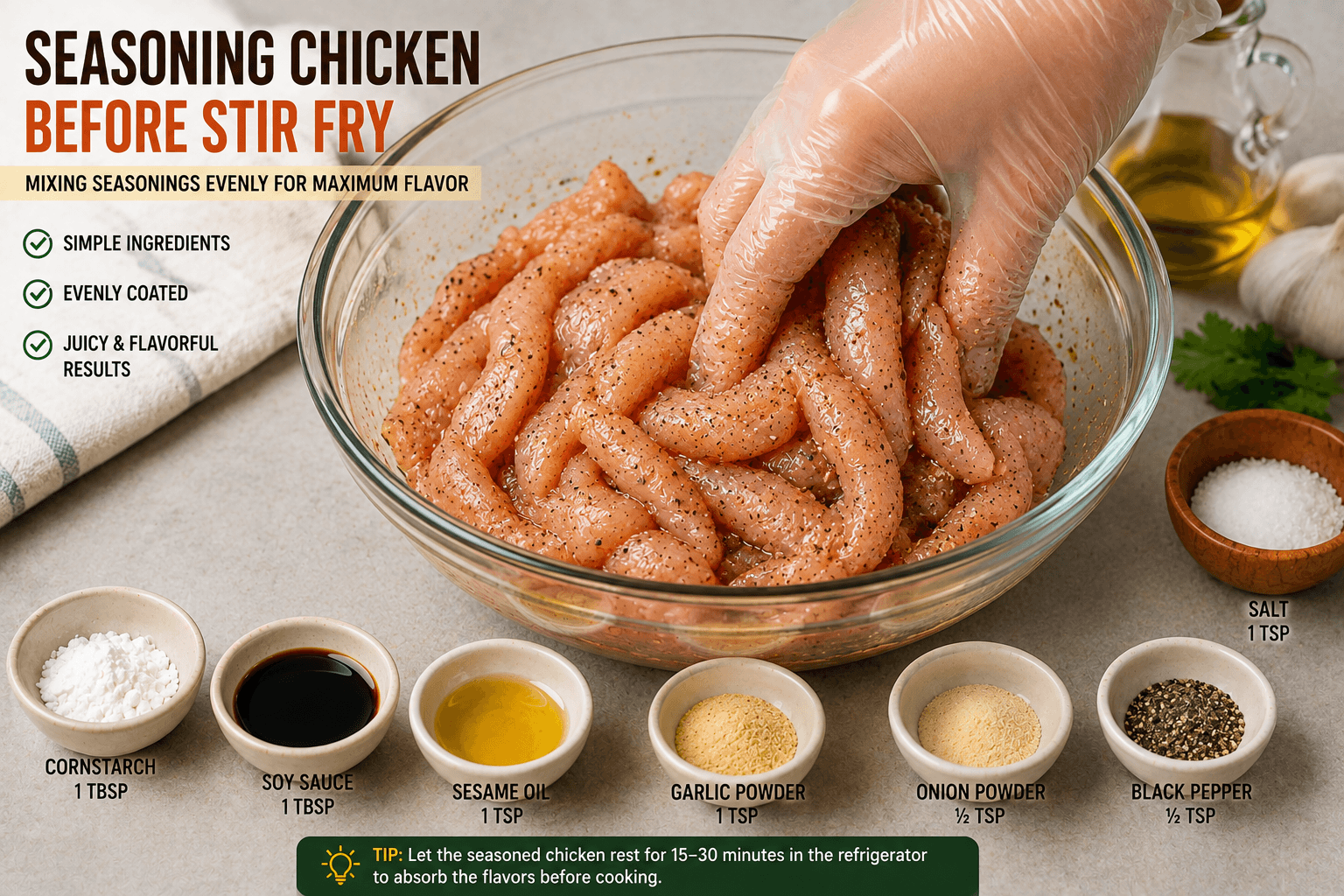
- Add dry seasonings first. Sprinkle salt, black pepper, garlic powder, and onion powder over the chicken and toss until evenly coated.
- Mix in liquid seasonings. Add soy sauce and sesame oil, then stir until every piece is lightly coated.
- Add cornstarch. Toss gently until the chicken develops a thin, even coating.
- Let the chicken rest. Refrigerate for 15–30 minutes before cooking.
- Cook over high heat. Stir fry quickly to seal in moisture while creating light browning.
Following these simple steps every time you season chicken for stir fry creates consistently flavorful chicken that works with almost any sauce or vegetable combination.
Kitchen Secret: Toss the chicken with your hands or silicone gloves instead of using a spoon. This helps distribute every seasoning evenly without leaving concentrated pockets of salt or spices.
Should You Use Dry Seasonings, Marinades, or Both?
This is one of the most common questions people ask when learning how to season chicken for stir fry. The answer depends on the style of stir fry you’re making.
Dry seasonings build the chicken’s natural flavor, while marinades add moisture and deeper layers of taste. Many experienced cooks actually combine both methods by seasoning the chicken first and then adding a simple marinade containing soy sauce and other flavoring ingredients.
| Method | Best For | Flavor Level |
|---|---|---|
| Dry Seasoning Only | Quick weeknight meals | Medium |
| Simple Marinade | Extra tender chicken | High |
| Seasoning + Marinade | Restaurant-style stir fry | Excellent |
If you have extra time, combining both techniques usually produces the best results. The seasoning develops the chicken itself, while the marinade enhances moisture and creates a richer flavor profile once cooked.
Related Reading: Learn more about choosing the right ingredients in Best Chicken Marinade Ingredients and discover how to prepare extra tender chicken in How to Velvet Chicken for Stir Fry.
Flavor Variations to Match Different Stir Fry Recipes
Once you’ve mastered the basic technique to season chicken for stir fry, you can customize the flavor depending on the recipe you’re making. Small ingredient changes can completely transform the finished dish without requiring a different cooking method.
Garlic Stir Fry
- Extra garlic powder
- Fresh minced garlic
- Black pepper
- Soy sauce
Honey Garlic Stir Fry
- Basic seasoning blend
- Honey
- Garlic
- Light soy sauce
Teriyaki Stir Fry
- Soy sauce
- Ginger
- Garlic powder
- Small amount of brown sugar
Spicy Stir Fry
- Chili flakes
- Cayenne pepper
- Black pepper
- Garlic powder
Choosing the seasoning based on your finished recipe creates a more balanced flavor than adding extra sauce at the end.
For example, if you’re planning to make Garlic Chicken Stir Fry or Spicy Chicken Stir Fry, adjusting the seasoning before cooking helps those flavors develop naturally throughout the chicken rather than remaining only in the sauce.
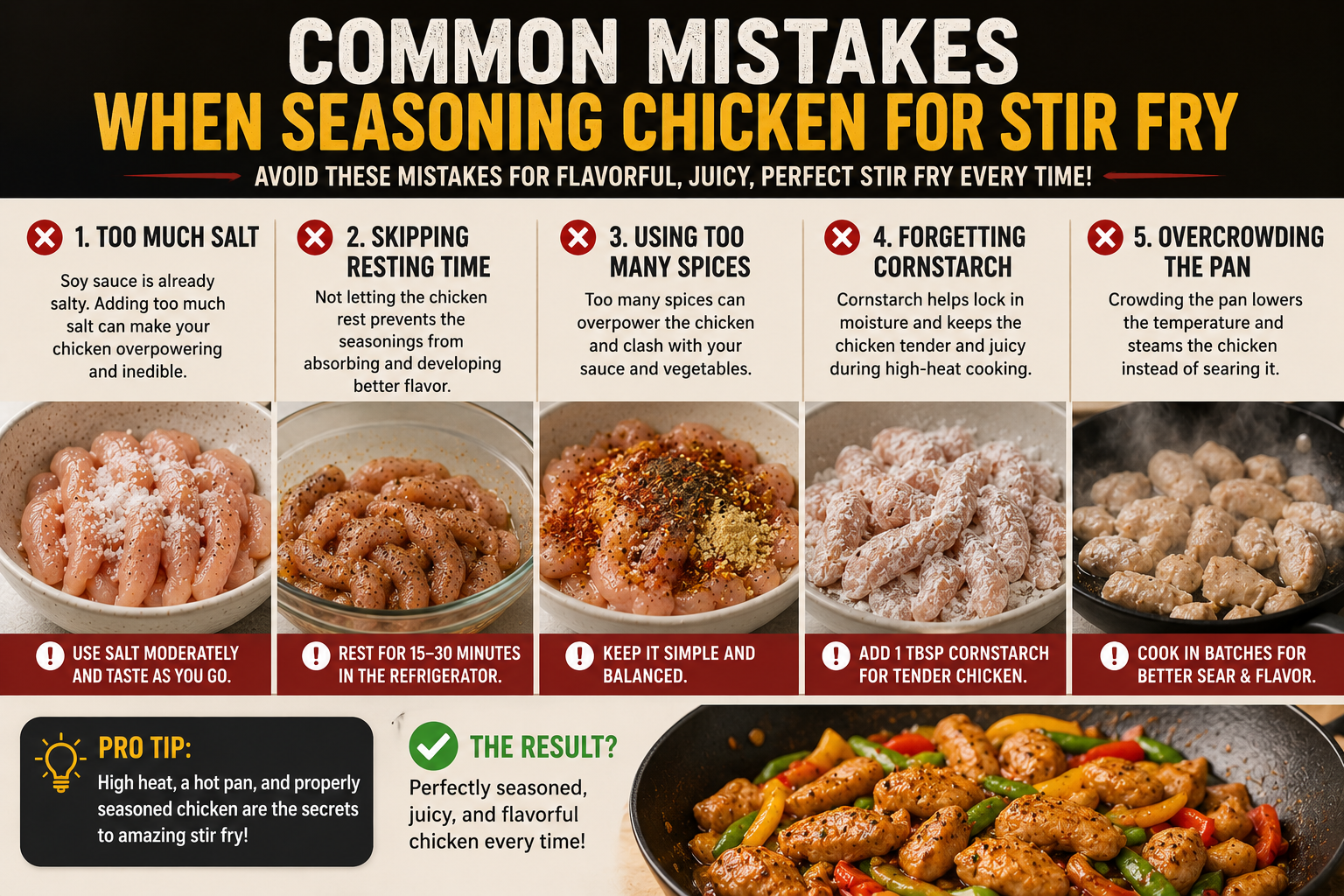
Common Mistakes When You Season Chicken for Stir Fry
Even with the right ingredients, a few common mistakes can prevent your stir fry from tasting its best. Understanding these issues helps you avoid bland, dry, or overly salty chicken and makes every stir fry more consistent.
1. Adding Too Much Salt
Soy sauce already contains a significant amount of sodium. If you add a full amount of salt without considering the soy sauce, the chicken can become overly salty. Start with a moderate amount of salt and adjust the finished dish only after tasting.
Warning: If you’re using dark soy sauce, teriyaki sauce, oyster sauce, or bottled stir fry sauces later in the recipe, reduce the salt in your seasoning mix to avoid overpowering the dish.
2. Skipping the Resting Time
Many people season the chicken and immediately throw it into the hot pan. While this saves a few minutes, it doesn’t give the seasonings enough time to adhere to the meat. Even a short 15-minute rest noticeably improves flavor.
3. Using Too Many Spices
More seasoning doesn’t always mean better seasoning. Stir fry is known for balanced flavors. Adding paprika, cumin, Italian herbs, curry powder, and multiple spice blends together often masks the fresh taste of the chicken and vegetables.
4. Forgetting Cornstarch
Although cornstarch isn’t technically a seasoning, it’s one of the biggest reasons restaurant chicken tastes so tender. It creates a light coating that protects the chicken from drying out during high-heat cooking.
5. Overcrowding the Pan
Perfectly seasoned chicken can still taste disappointing if it’s steamed instead of stir fried. Overcrowding lowers the pan temperature, preventing browning and reducing flavor development.
Tip: Cook chicken in batches if necessary. Giving each piece enough space helps develop the light caramelization that makes stir fry taste like it came from a restaurant.
Best Seasonings for Different Types of Chicken
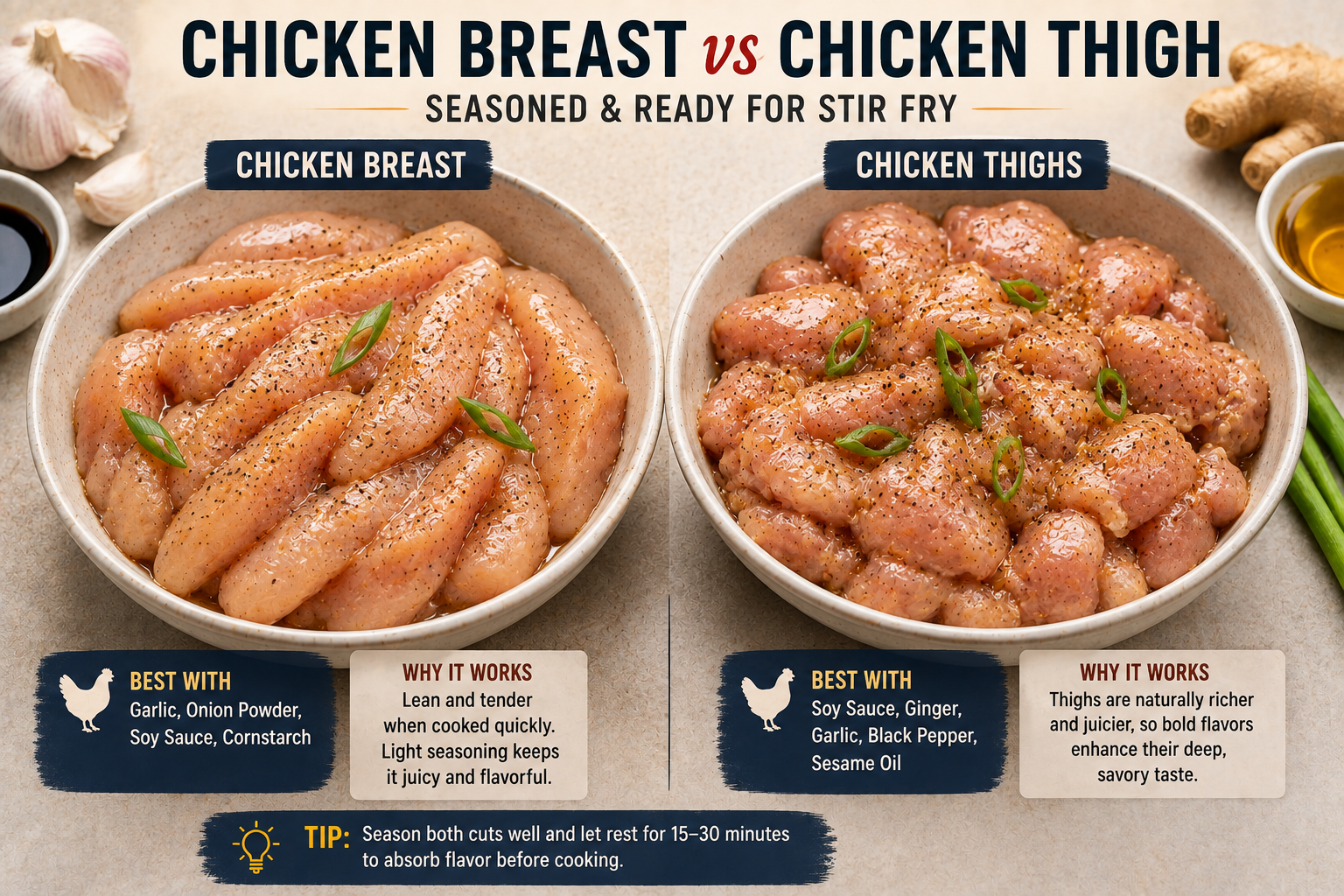
The cut of chicken you choose also affects how you should season chicken for stir fry. Chicken breast and chicken thighs have different textures and fat content, so slightly adjusting the seasoning can improve the final result.
| Chicken Cut | Recommended Seasoning Style | Why It Works |
|---|---|---|
| Chicken Breast | Garlic powder, onion powder, soy sauce, cornstarch | Keeps lean meat flavorful and juicy. |
| Chicken Thighs | Soy sauce, ginger, garlic, black pepper | Enhances the naturally rich flavor. |
| Chicken Tenderloins | Light seasoning with garlic and sesame oil | Cooks quickly without overpowering the delicate meat. |
If you’re still deciding which cut to buy, check out our guide on Chicken Breast vs. Chicken Thigh for Stir Fry. It explains how each option affects texture, cooking time, and flavor.
Should You Add Fresh Garlic and Ginger?
Fresh garlic and ginger are classic stir fry ingredients, but knowing when to use them makes a big difference.
Fresh garlic provides bold flavor but burns quickly in a hot wok. For this reason, many cooks use garlic powder to season the chicken and then add fresh garlic during cooking for another layer of flavor.
Fresh ginger behaves similarly. It adds brightness and aroma, especially in teriyaki, garlic, and honey-based stir fries.
A combination of dried seasonings before cooking and fresh aromatics while stir frying gives the best balance of convenience and flavor.
Chef’s Secret: Grate fresh ginger instead of chopping it into large pieces. Finely grated ginger distributes more evenly and blends smoothly into the sauce.
Can You Season Frozen Chicken?
It’s always best to thaw chicken before seasoning. Frozen chicken doesn’t absorb seasonings well because the surface is covered with ice crystals and excess moisture.
After thawing, pat the chicken completely dry with paper towels before adding your seasoning mixture. Removing surface moisture helps the spices stick evenly and promotes better browning during cooking.
Food Safety Reminder: Thaw chicken safely in the refrigerator, under cold running water, or using the microwave’s defrost setting. Never thaw chicken on the kitchen counter.
How Seasoning Changes Different Stir Fry Styles
One of the reasons it’s worth learning how to season chicken for stir fry is that the same basic method works across dozens of recipes. Small adjustments create completely different flavor profiles.
- Classic Chicken Stir Fry: Balanced garlic, soy sauce, onion powder, and black pepper.
- Honey Garlic Chicken: Slightly sweeter seasoning with honey and garlic.
- Teriyaki Chicken: Soy sauce, ginger, sesame oil, and a touch of sweetness.
- Chicken and Broccoli: Mild seasoning that complements fresh vegetables.
- Chicken and Mushrooms: Extra garlic and black pepper enhance earthy mushroom flavors.
- Spicy Chicken Stir Fry: Chili flakes, cayenne, and cracked black pepper add heat without overwhelming the dish.
Each variation starts with properly seasoned chicken, proving that the seasoning process itself is the foundation of every successful stir fry.
For recipe inspiration, explore these favorites on SmartKitchenHome:
- Classic Chicken Stir Fry
- Honey Garlic Chicken Stir Fry
- Teriyaki Chicken Stir Fry
- Chicken Broccoli Stir Fry
- Chicken Veggie Stir Fry
Can You Season Chicken Ahead of Time?
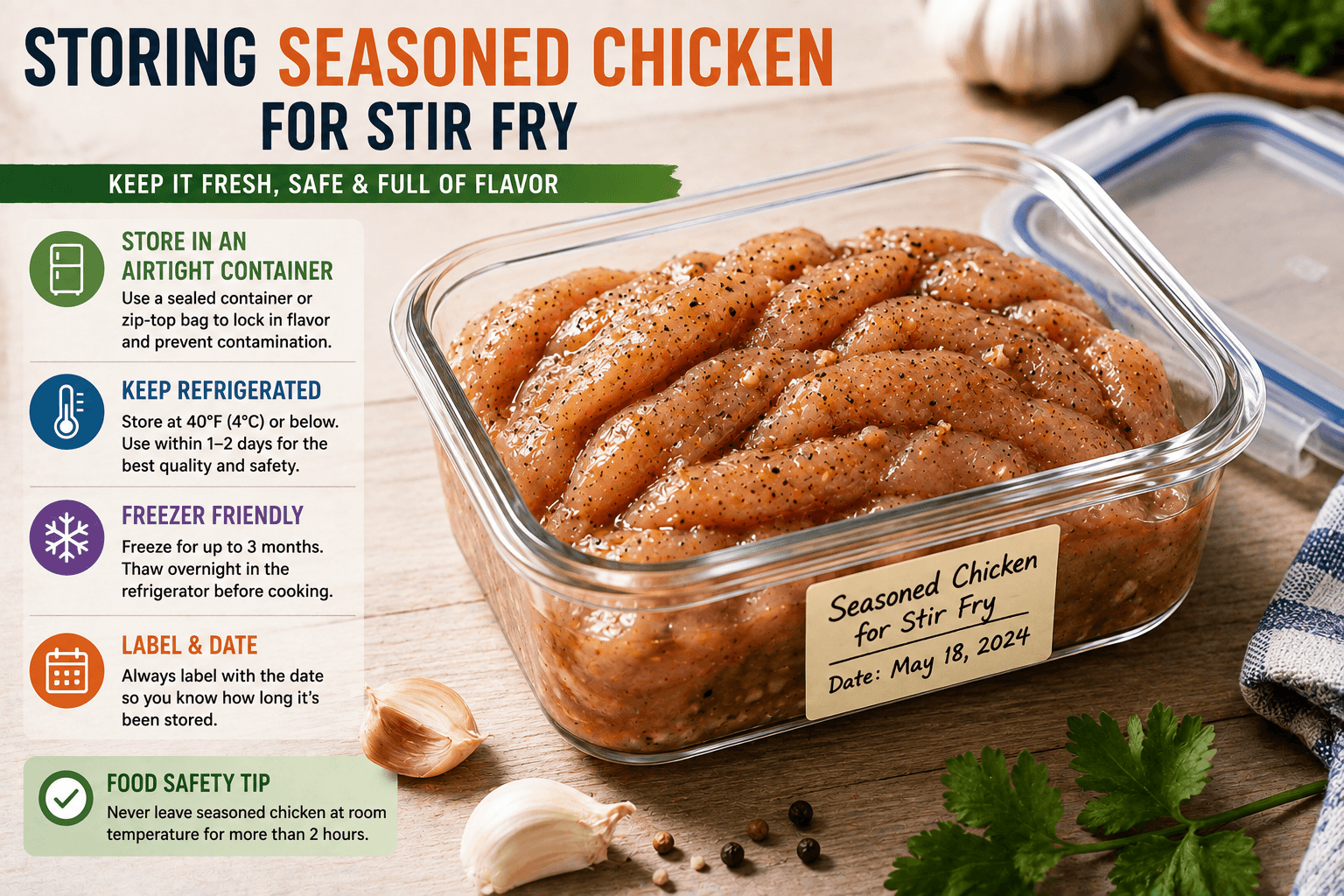
Yes. In fact, seasoning chicken ahead of time is one of the easiest ways to improve flavor while making weeknight dinners faster. Preparing the chicken earlier in the day means it’s ready to cook as soon as you heat the wok or skillet.
For the best results, season chicken for stir fry up to 24 hours in advance. Store the chicken in an airtight container or a sealed food-safe bag in the refrigerator. During this time, the salt and seasonings gradually enhance the chicken’s natural flavor without requiring a lengthy marinade.
If you’re meal prepping several dinners, divide the chicken into individual portions before seasoning. This makes it easy to grab exactly what you need while preventing repeated temperature changes that can affect food quality.
Storage Tip: Keep seasoned raw chicken refrigerated at or below 40°F (4°C) and use it within 1–2 days for the best quality and food safety.
Can You Freeze Seasoned Chicken?
Absolutely. Freezing seasoned chicken is an excellent meal-prep strategy. Once the chicken is thawed, the seasoning is already evenly distributed, saving valuable preparation time.
Place the seasoned chicken in freezer-safe bags, press out as much air as possible, and label each bag with the date. Freezing in flat portions helps the chicken thaw more quickly and evenly.
Freezer Tip: For the best texture, use frozen seasoned chicken within three months. Thaw overnight in the refrigerator before cooking.
Pros and Cons of Seasoning Chicken Before Stir Fry
Pros
- Improves flavor throughout the chicken.
- Creates more consistent seasoning in every bite.
- Works with almost any stir fry sauce.
- Helps achieve restaurant-style results at home.
- Pairs well with meal prep.
- Supports better browning during cooking.
Cons
- Requires a short resting period before cooking.
- Too much salt can overpower the dish.
- Strong spice blends may hide the natural chicken flavor.
- Incorrect seasoning balance can clash with certain sauces.
Checklist: How to Season Chicken for Stir Fry Successfully
- ✔ Slice the chicken into even pieces.
- ✔ Pat the chicken dry before seasoning.
- ✔ Use a balanced combination of dry seasonings and soy sauce.
- ✔ Add a small amount of sesame oil for aroma.
- ✔ Toss with cornstarch for a tender texture.
- ✔ Refrigerate for 15–30 minutes before cooking.
- ✔ Cook over high heat without overcrowding the pan.
- ✔ Taste the finished dish before adding extra salt.
References
Frequently Asked Questions
What is the best seasoning for chicken stir fry?
A simple blend of salt, black pepper, garlic powder, onion powder, soy sauce, sesame oil, and cornstarch creates flavorful, juicy chicken that works with nearly any stir fry recipe.
Do I season chicken before or after cooking?
You should always season chicken for stir fry before cooking. This allows the flavors to penetrate the meat and creates a more balanced final dish.
Is soy sauce enough to season chicken?
Soy sauce adds excellent umami flavor, but combining it with garlic, pepper, onion powder, and a little salt produces a more complete seasoning profile.
Why is cornstarch used when seasoning chicken?
Cornstarch helps protect the chicken during high-heat cooking, keeping it tender while producing the lightly browned texture commonly found in restaurant stir fries.
Can I use the same seasoning for chicken thighs and chicken breast?
Yes. The same base seasoning works well for both cuts, although chicken thighs can handle slightly stronger flavors because of their higher fat content.
How long should seasoned chicken rest before cooking?
Allow the chicken to rest for 15–30 minutes in the refrigerator. This improves flavor without significantly increasing preparation time.
Final Thoughts
Learning how to season chicken for stir fry is one of the most valuable cooking skills for making flavorful homemade meals. While sauces often receive the most attention, properly seasoned chicken creates the foundation for every successful stir fry.
By using a simple combination of pantry spices, soy sauce, sesame oil, and cornstarch, you can consistently prepare juicy, well-seasoned chicken that pairs beautifully with vegetables, noodles, and rice. Whether you’re making a quick weeknight dinner or recreating your favorite takeout recipe, this method delivers dependable results every time.
As you become more comfortable with the basics, experiment with ingredients such as ginger, chili flakes, five-spice powder, or fresh garlic to create your own signature flavor combinations. Small adjustments can produce entirely different stir fry styles while following the same reliable seasoning technique.
🍽️ You Might Also Like




📧 Save This Recipe For Later
Enter your email and we will send this recipe directly to your inbox.