
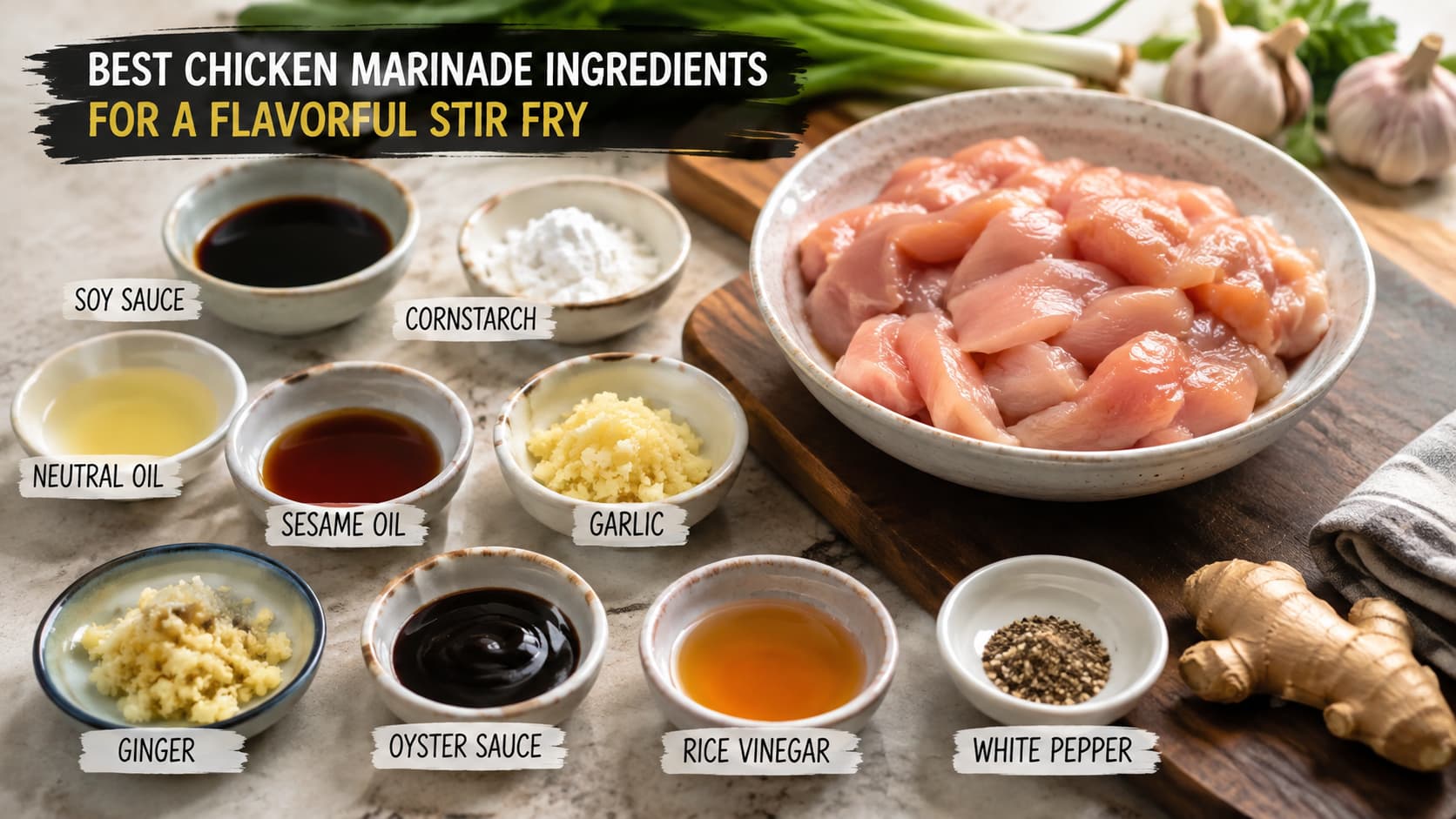
Best Chicken Marinade Ingredients for Stir Fry
Best Chicken Marinade Ingredients for Stir Fry
A great stir fry starts long before the chicken touches a hot wok. One of the biggest differences between restaurant-quality and homemade stir fry is how the chicken is prepared beforehand. Choosing the best chicken marinade ingredients helps create meat that is juicy, flavorful, tender, and perfectly browned instead of dry or bland.
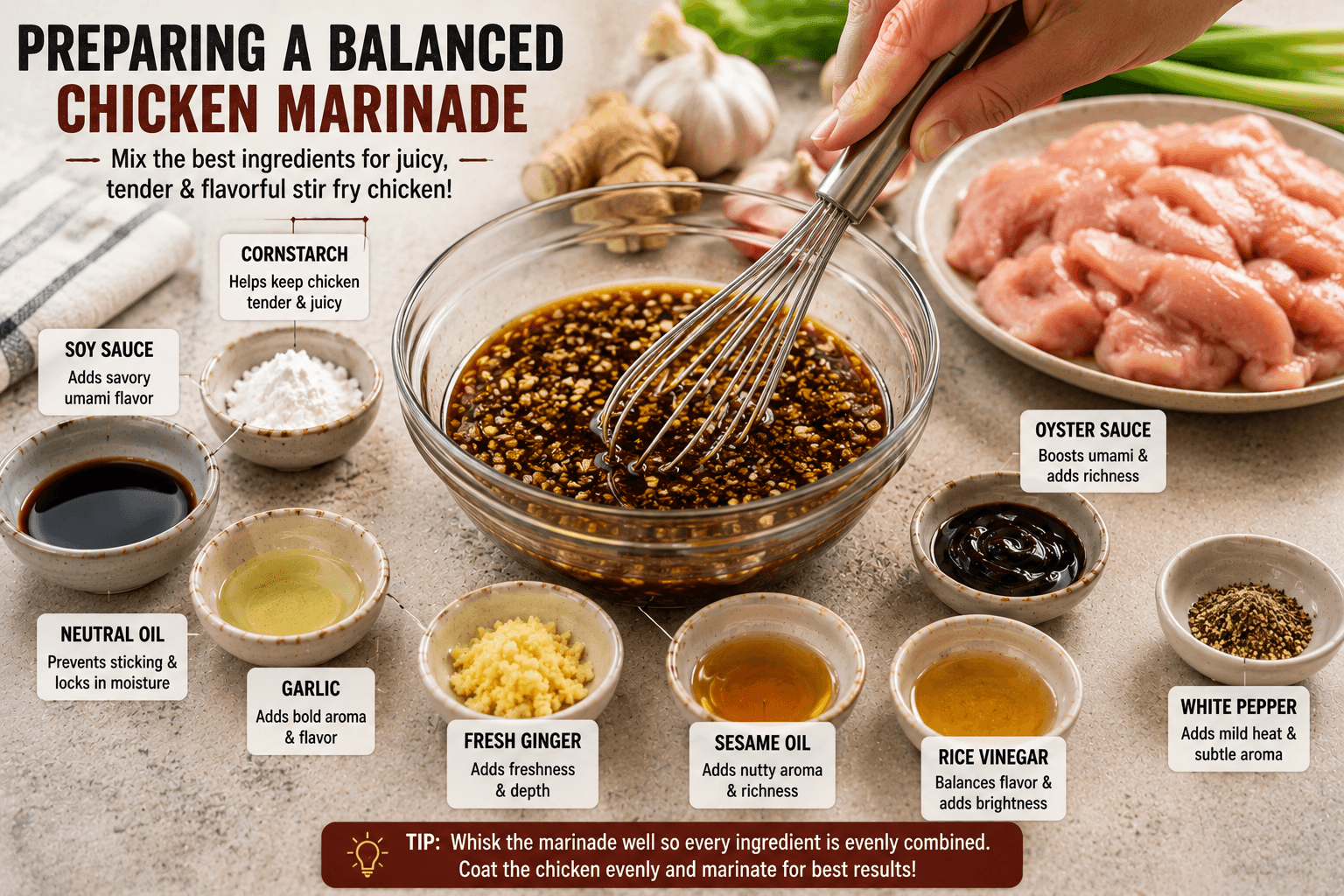
Many home cooks think marinating is simply about adding flavor, but the right ingredients do much more. Salt seasons the meat throughout, soy sauce adds umami, cornstarch protects moisture, oil prevents sticking, and aromatics like garlic and ginger create layers of flavor that develop while cooking.
Whether you’re making a classic chicken stir fry, garlic chicken, teriyaki chicken, or a spicy variation, understanding which ingredients belong in a marinade helps you achieve consistently delicious results. In this guide, you’ll learn why each ingredient matters, how they work together, common mistakes to avoid, and how to customize marinades for different stir fry recipes.
Quick Answer
The best chicken marinade ingredients for stir fry are soy sauce, cornstarch, a neutral cooking oil, garlic, fresh ginger, a small amount of sesame oil, and optional ingredients like oyster sauce, rice vinegar, white pepper, or a pinch of sugar. Together these ingredients season the chicken, lock in moisture, improve browning, and create tender, juicy pieces that cook quickly over high heat.
- Soy sauce builds savory flavor.
- Cornstarch creates a protective coating that keeps chicken juicy.
- Neutral oil helps prevent sticking.
- Garlic and ginger add fresh aromatic flavor.
- Sesame oil contributes rich nutty notes.
- Optional sauces customize the marinade for different stir fry styles.
Table of Contents
Why Marinade Ingredients Matter
Every ingredient in a chicken marinade has a specific purpose. While many recipes simply tell you what to mix together, understanding why those ingredients are included makes it easier to create consistently delicious stir fry at home.
The best chicken marinade ingredients don’t just add taste. They improve texture, retain moisture, help the chicken brown evenly, and create the glossy finish often associated with restaurant stir fry.
Chicken breast, in particular, can become dry when cooked over high heat. Stir frying uses intense heat and short cooking times, so preparing the chicken correctly beforehand is essential. A balanced marinade acts like insurance, protecting the meat while it cooks quickly.
| Ingredient Type | Main Purpose | Benefit |
|---|---|---|
| Salt or Soy Sauce | Seasoning | Enhances flavor throughout the chicken |
| Cornstarch | Protective coating | Locks in moisture |
| Oil | Surface protection | Promotes even cooking |
| Aromatics | Flavor | Adds freshness and depth |
| Optional Sauces | Customization | Creates unique stir fry styles |
Restaurant chefs carefully balance these ingredients instead of relying on just one strong flavor. That’s why homemade stir fry often improves dramatically after making only a few simple adjustments to the marinade.
Tip: A simple marinade with fewer high-quality ingredients usually performs better than one overloaded with many competing sauces and seasonings.
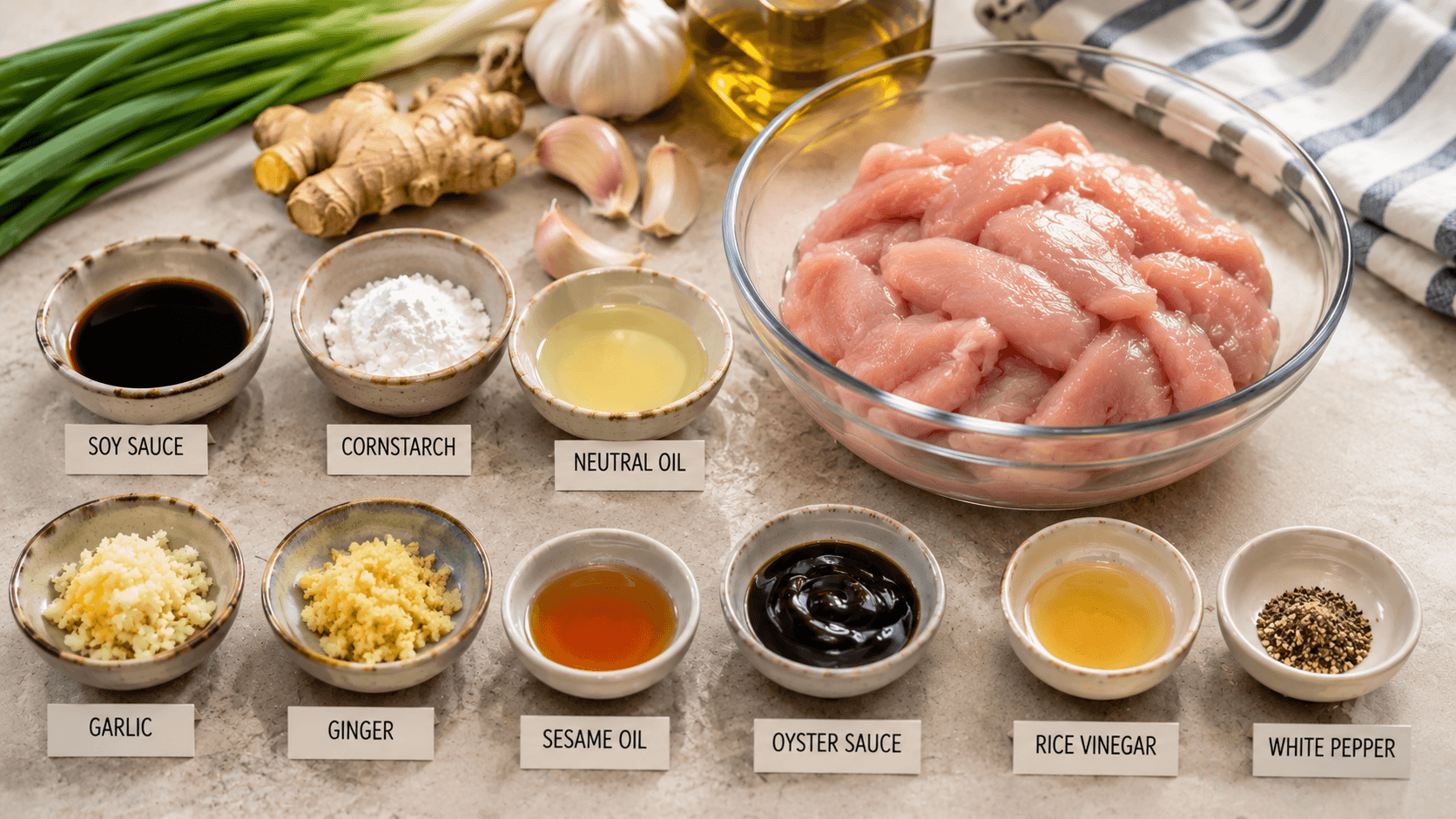
The Essential Chicken Marinade Ingredients Every Stir Fry Needs
If you’re wondering which ingredients deserve a permanent place in your kitchen, these are the foundation of nearly every successful stir fry marinade. The best chicken marinade ingredients work together instead of competing with one another.
1. Soy Sauce
Soy sauce forms the backbone of most Asian-inspired chicken marinades. It contributes salt, umami, color, and complexity without overpowering the chicken itself.
Because soy sauce contains salt, it begins seasoning the meat almost immediately. During marination, the surface absorbs flavor while retaining moisture, producing chicken that tastes better throughout rather than only on the outside.
Light soy sauce is generally preferred for stir fry because it seasons the chicken without making it excessively dark or salty.
2. Cornstarch
Cornstarch is one of the biggest secrets behind restaurant-style chicken.
As the chicken cooks, the cornstarch forms a delicate coating that helps trap moisture inside each piece. It also creates the silky texture commonly associated with Chinese restaurant stir fry.
Many people think cornstarch is only used to thicken sauces, but in marinades it plays an entirely different role by protecting the meat during high-heat cooking.
Kitchen Secret: Cornstarch helps produce the smooth, tender texture that many people mistakenly believe comes from special restaurant equipment.
3. Neutral Cooking Oil
Adding a small amount of neutral oil coats the chicken and reduces sticking when the meat first contacts the hot pan or wok.
Vegetable oil, avocado oil, canola oil, or peanut oil all work well because they tolerate high temperatures without burning quickly.
Oil also helps distribute garlic, ginger, and seasonings evenly across every piece of chicken.
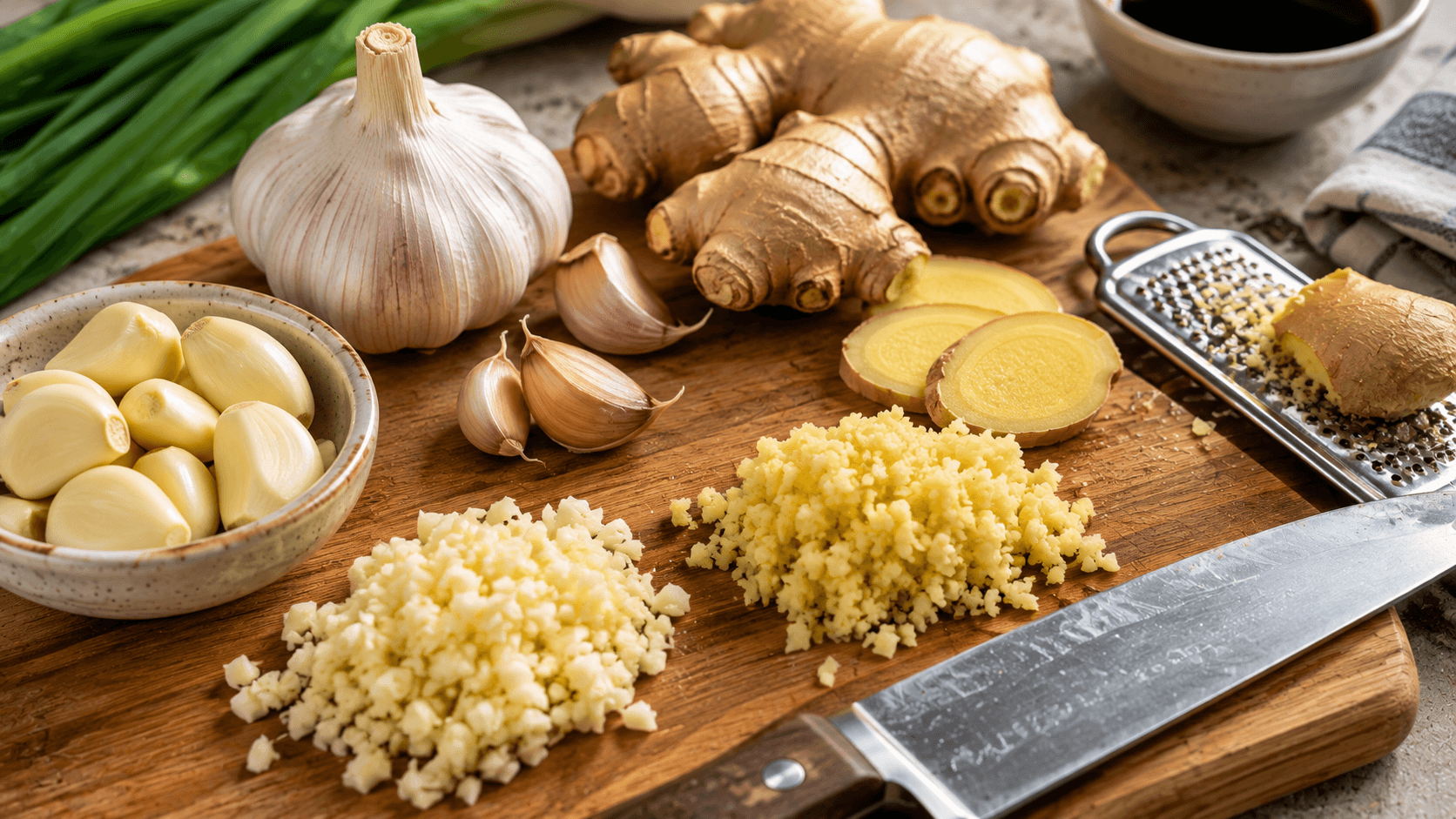
4. Garlic
Fresh garlic delivers bold aroma and savory flavor that pairs beautifully with soy sauce and ginger.
Finely minced garlic spreads evenly through the marinade, allowing every bite to develop more depth while cooking.
Although garlic powder can work in a pinch, fresh garlic provides noticeably brighter flavor.
5. Fresh Ginger
Fresh ginger adds brightness and balances the richness of soy sauce and oil.
Its natural aroma becomes especially noticeable during stir frying, giving homemade dishes the familiar fragrance found in many Asian restaurants.
6. Sesame Oil
Sesame oil should be used sparingly because of its concentrated flavor.
Just a small amount provides nutty richness that complements the other best chicken marinade ingredients without overpowering them.
Since toasted sesame oil has a low smoke point, it works best as part of the marinade rather than as the primary cooking oil.
How Each Marinade Ingredient Improves Your Chicken
Understanding how each ingredient functions makes it much easier to customize marinades for different recipes.
| Ingredient | Primary Job | Effect on Chicken |
|---|---|---|
| Soy Sauce | Seasoning | Rich savory flavor |
| Cornstarch | Moisture protection | Tender juicy texture |
| Oil | Surface coating | Even cooking |
| Garlic | Aroma | Deep savory flavor |
| Fresh Ginger | Freshness | Balanced flavor |
| Sesame Oil | Finishing richness | Nutty aroma |
Notice that none of these ingredients performs the same job. Together, they create a balanced marinade where every component contributes something unique.
This balance is what separates average homemade stir fry from restaurant-quality results. Skipping one ingredient may not ruin the dish, but it often changes the final texture or flavor more than people expect.
Helpful Tip: Measure marinades instead of estimating. Even small changes in soy sauce or sesame oil can noticeably alter the final flavor.
If you’re planning to cook different stir fry variations, these ingredients provide an excellent base that can easily be adapted with sweet, spicy, or savory additions.
You can also explore our guides on How to Marinate Chicken for Stir Fry, How to Velvet Chicken for Stir Fry, and How to Season Chicken for Stir Fry to build even more flavor and tenderness before cooking.
Optional Ingredients That Make Chicken Marinades Even Better
Once you’ve mastered the best chicken marinade ingredients, you can begin customizing your marinades for different stir fry recipes. Optional ingredients allow you to create sweeter, spicier, richer, or lighter flavor profiles without changing the basic marinating technique.
The key is moderation. Every additional ingredient should have a purpose rather than simply making the ingredient list longer. Professional chefs often build marinades around the essential ingredients first and then add one or two complementary flavors depending on the final dish.
Oyster Sauce
Oyster sauce is one of the most common additions to stir fry marinades because it provides concentrated umami and a subtle sweetness. It also helps the chicken develop a glossy finish during cooking.
Unlike soy sauce, oyster sauce has a thicker consistency, so only a small amount is needed. Too much can overpower delicate vegetables and make the finished stir fry taste overly rich.
Rice Vinegar
A splash of rice vinegar brightens the marinade without making it noticeably sour. The mild acidity balances savory flavors and helps prevent the chicken from tasting heavy.
Rice vinegar works especially well in vegetable-heavy stir fries where freshness is important.
Tip: Use seasoned rice vinegar carefully because it already contains sugar and salt. Plain rice vinegar offers more control over the final flavor.
White Pepper
White pepper provides gentle heat with a distinctive earthy flavor often found in Chinese restaurant dishes. It blends smoothly into marinades and doesn’t leave visible black specks on the chicken.
If white pepper isn’t available, freshly ground black pepper is an acceptable substitute, although the flavor will be slightly different.
Brown Sugar or Honey
A small amount of sweetness balances salty ingredients like soy sauce and oyster sauce. Brown sugar and honey also encourage better caramelization during stir frying.
Too much sugar, however, can burn quickly over high heat. For most marinades, a small amount is enough to round out the flavors without making the chicken taste sweet.
Shaoxing Cooking Wine
Shaoxing wine is a traditional Chinese cooking ingredient that enhances aroma and reduces any strong poultry flavor. Many restaurant marinades include a small amount because it complements soy sauce exceptionally well.
If unavailable, dry sherry is often recommended as a practical substitute.
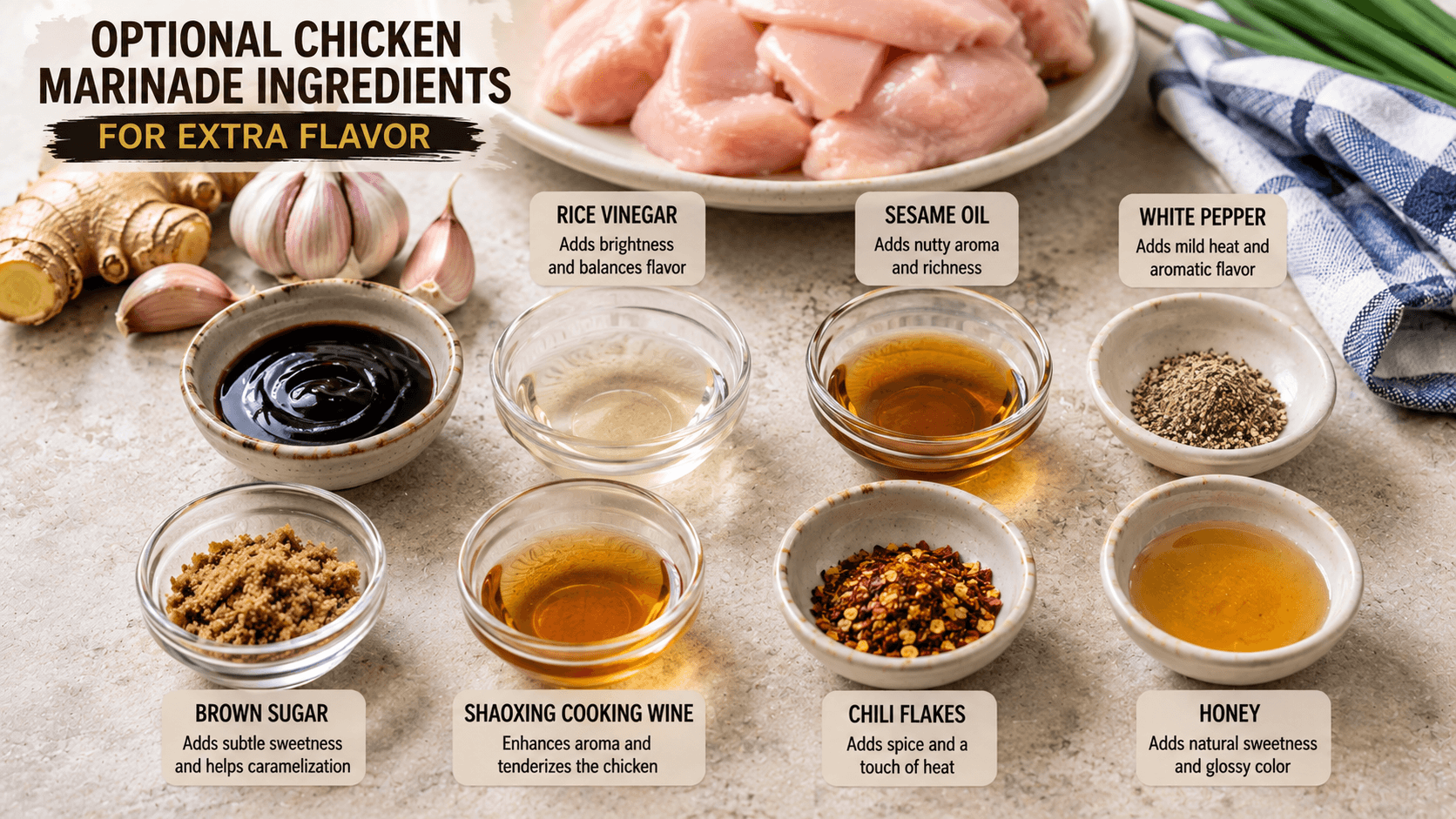
Best Ingredient Combinations for Popular Chicken Stir Fry Recipes
The best chicken marinade ingredients can be mixed in different ways depending on the style of stir fry you’re preparing. Instead of using one universal marinade for every recipe, slight adjustments help highlight different flavors.
| Stir Fry Style | Recommended Marinade Ingredients | Flavor Profile |
|---|---|---|
| Classic Chicken Stir Fry | Soy sauce, cornstarch, oil, garlic, ginger | Balanced and savory |
| Garlic Chicken | Extra garlic, soy sauce, sesame oil | Bold garlic flavor |
| Honey Garlic Chicken | Soy sauce, garlic, honey, ginger | Sweet and savory |
| Teriyaki Chicken | Soy sauce, ginger, garlic, brown sugar | Rich and slightly sweet |
| Spicy Chicken | Soy sauce, garlic, chili flakes, white pepper | Hot and aromatic |
| Ginger Garlic Chicken | Extra fresh ginger and garlic | Fresh and fragrant |
If you’re looking for recipe inspiration after choosing your marinade, these recipes pair perfectly with the techniques explained in this guide:
- Classic Chicken Stir Fry
- Garlic Chicken Stir Fry
- Honey Garlic Chicken Stir Fry
- Teriyaki Chicken Stir Fry
- Ginger Garlic Chicken Stir Fry
- Chicken Broccoli Stir Fry
- Chicken Mushroom Stir Fry
- Spicy Chicken Stir Fry
Kitchen Secret: Professional chefs rarely change the core marinade. Instead, they modify only one or two ingredients to create entirely different stir fry dishes while maintaining consistently tender chicken.
How Different Marinade Ingredients Affect Texture
Flavor is only half the story. The best chicken marinade ingredients also determine whether your chicken becomes tender, juicy, chewy, or dry.
Protein fibers tighten rapidly when exposed to high heat. Without a protective marinade, moisture escapes quickly, especially from lean chicken breast. Ingredients like cornstarch and oil help reduce moisture loss, while soy sauce seasons the meat before cooking begins.
Garlic and ginger mainly influence aroma rather than tenderness, while sugar contributes to browning. Understanding these roles allows you to troubleshoot texture problems much more effectively.
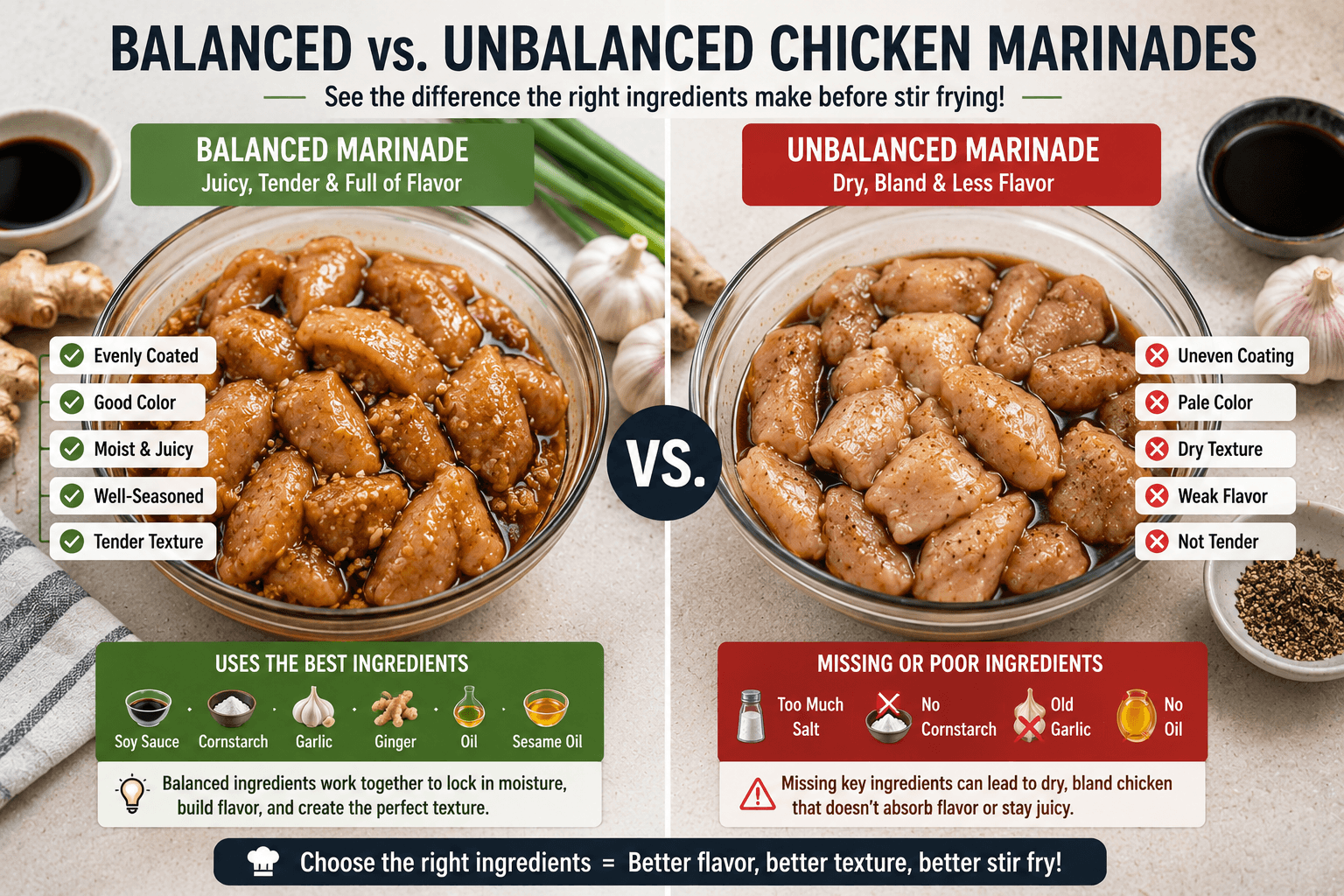
Benefits of a Balanced Marinade
- Juicier chicken
- Better browning
- More even seasoning
- Restaurant-style texture
- Improved aroma
- Works with many stir fry recipes
Problems With an Unbalanced Marinade
- Too salty
- Burns easily
- Dry chicken
- Overly sweet flavor
- Uneven cooking
- Weak overall taste
Choosing the Right Ingredients for Chicken Breast vs. Chicken Thighs
Both chicken breast and chicken thighs benefit from marinating, but they don’t always require the exact same balance of ingredients.
Chicken breast is naturally leaner, making moisture retention the highest priority. Cornstarch and oil become especially important because they help protect the meat during high-heat cooking.
Chicken thighs already contain more fat, making them naturally forgiving. Marinades for thighs can focus more on enhancing flavor because the meat is less likely to dry out.
| Chicken Cut | Marinade Priority | Recommended Focus |
|---|---|---|
| Chicken Breast | Moisture retention | Extra cornstarch and careful cooking |
| Chicken Thighs | Flavor enhancement | Aromatics and balanced seasoning |
Not sure which cut to use? Read our comparison guide on Chicken Breast vs. Chicken Thigh for Stir Fry to determine which option best fits your cooking style.
Tip: Regardless of the cut, slice the chicken into evenly sized pieces so every piece absorbs the marinade and cooks at the same rate.
Do You Need Every Ingredient?
One of the most common questions home cooks ask is whether every marinade ingredient is absolutely necessary.
The answer depends on your goal. If you simply want seasoned chicken, soy sauce alone can work. But if you’re trying to recreate restaurant-quality stir fry, each ingredient contributes something important.
The best chicken marinade ingredients function as a team. Removing one ingredient won’t necessarily ruin the recipe, but it usually affects the final texture, appearance, or flavor.
For example, skipping cornstarch may result in drier chicken. Leaving out sesame oil reduces aroma. Omitting garlic and ginger produces a flatter flavor profile. While substitutions are possible, understanding what each ingredient contributes helps you make better decisions when adapting recipes.
In the next section, we’ll cover the most common marinade mistakes that prevent home cooks from getting tender, flavorful chicken—and how to avoid them every time.
Common Mistakes When Choosing Chicken Marinade Ingredients
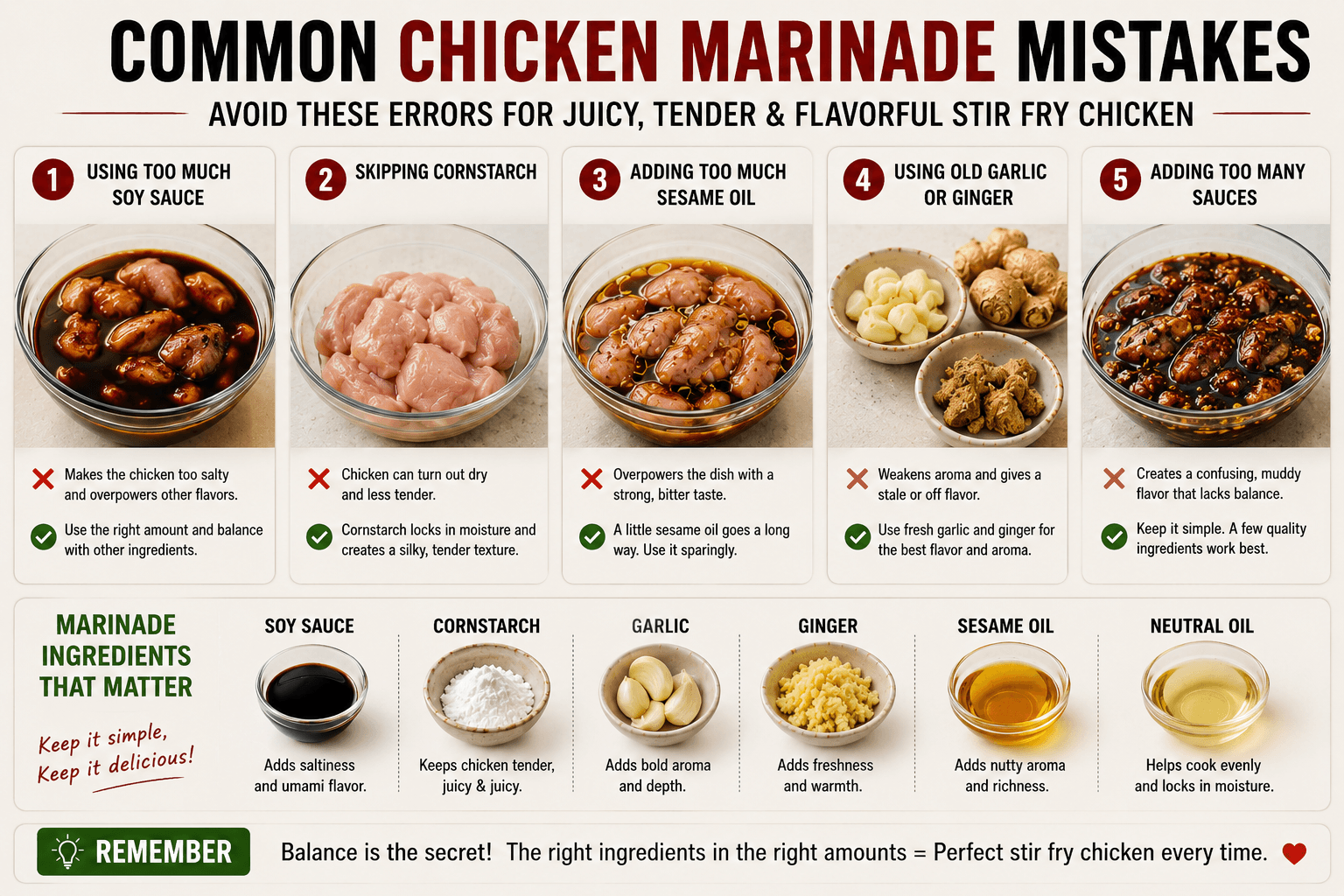
Even when using the best chicken marinade ingredients, a few simple mistakes can prevent your stir fry from reaching its full potential. Many home cooks assume that adding more ingredients automatically creates more flavor, but the opposite is often true. A balanced marinade consistently outperforms one overloaded with sauces and seasonings.
Understanding these common mistakes helps you build marinades that enhance the chicken rather than overwhelm it.
Using Too Much Soy Sauce
Soy sauce is one of the foundation ingredients in almost every stir fry marinade, but using too much can make the chicken overly salty and mask the natural flavor of the meat. Excess soy sauce also leaves less room for the fresh flavors of garlic, ginger, and vegetables to shine.
Instead of increasing the amount of soy sauce, build depth by combining it with aromatics and optional ingredients like oyster sauce or sesame oil.
Skipping Cornstarch
Many home cooks leave out cornstarch because they think it’s only used to thicken sauces. In reality, cornstarch is one of the most important best chicken marinade ingredients because it creates a light protective coating that helps the chicken stay juicy during high-heat cooking.
Without it, chicken breast in particular can dry out quickly.
Warning: Avoid replacing cornstarch with flour in a stir fry marinade. Flour doesn’t create the same silky coating and may leave the chicken with a heavier texture.
Adding Too Much Sesame Oil
Sesame oil has an intense roasted flavor. While it’s an excellent finishing ingredient, using too much in the marinade can overpower the chicken and dominate every other ingredient.
A small amount is usually enough to provide the signature nutty aroma associated with restaurant-style stir fry.
Using Old Garlic or Ginger
Fresh aromatics make a significant difference. Old garlic loses its sharpness, while dried-out ginger lacks the bright flavor that fresh ginger provides.
Whenever possible, grate or mince these ingredients just before preparing the marinade.
Adding Too Many Sauces
It’s tempting to combine soy sauce, hoisin sauce, oyster sauce, teriyaki sauce, fish sauce, chili sauce, barbecue sauce, and several seasonings in one bowl. However, too many competing flavors often create a muddy-tasting marinade.
Professional chefs usually rely on a small number of carefully balanced ingredients rather than long ingredient lists.
Expert Tips for Choosing the Best Chicken Marinade Ingredients
Experienced cooks don’t simply follow recipes—they understand how ingredients interact. These practical tips will help you consistently create flavorful, tender chicken for every stir fry.
Kitchen Secret: Build your marinade in layers. Start with seasoning (soy sauce), add moisture protection (cornstarch), include a cooking oil, then finish with aromatics like garlic and ginger. Optional ingredients should enhance—not replace—the foundation.
- Choose fresh garlic and fresh ginger whenever possible.
- Use low-sodium soy sauce if you plan to add oyster sauce later.
- Slice chicken into evenly sized pieces before marinating.
- Mix the marinade thoroughly before adding the chicken.
- Coat every piece evenly instead of letting ingredients settle at the bottom of the bowl.
- Marinate in the refrigerator, never on the kitchen counter.
- Prepare vegetables while the chicken marinates to save time.
- Cook over high heat so the marinade creates light browning without overcooking the meat.
If you’re interested in creating even more tender chicken, our guide on Juicy Chicken Stir Fry Secrets explains several additional techniques used by experienced home cooks and professional chefs.
Storage and Food Safety
Using the best chicken marinade ingredients also means following proper food safety practices. Raw chicken should always be handled carefully to prevent cross-contamination and bacterial growth.
Storage Tip: Marinate chicken in a covered glass or food-safe plastic container in the refrigerator. Never reuse a marinade that has touched raw chicken unless it has been thoroughly boiled first.
| Storage Situation | Recommendation |
|---|---|
| Marinating chicken | Always refrigerate below 40°F (4°C) |
| Room temperature | Do not leave out longer than 2 hours (1 hour if above 90°F) |
| Freezing marinated chicken | Freeze in airtight freezer-safe bags |
| Leftover cooked chicken | Refrigerate within 2 hours and use within 3–4 days |
| Internal cooking temperature | Cook chicken to 165°F (74°C) |
Safe food handling is just as important as selecting quality ingredients. Even the perfect marinade cannot compensate for improper storage or undercooked chicken.
Building Your Own Stir Fry Marinade
Once you understand the role of each ingredient, creating your own marinade becomes much easier. Rather than memorizing recipes, think of the marinade as a simple formula.
- Choose a salty base such as soy sauce.
- Add cornstarch for tenderness.
- Include a neutral oil for even cooking.
- Add fresh garlic and ginger for aroma.
- Finish with one or two optional ingredients depending on the flavor profile you want.
This flexible approach allows you to create marinades for classic chicken stir fry, teriyaki chicken, spicy chicken, honey garlic chicken, and many other variations without starting from scratch every time.
If you’re looking for sauce ideas after marinating your chicken, be sure to read our guide to Easy Homemade Stir Fry Sauce.
Frequently Asked Questions
What are the best chicken marinade ingredients for stir fry?
The best chicken marinade ingredients include soy sauce, cornstarch, neutral cooking oil, fresh garlic, fresh ginger, sesame oil, and optional ingredients such as oyster sauce, rice vinegar, white pepper, or a small amount of sugar.
Can I marinate chicken without soy sauce?
Yes. While soy sauce is traditional, coconut aminos or tamari are common alternatives. Keep in mind that the flavor profile will be slightly different.
Why is cornstarch added to chicken marinades?
Cornstarch forms a light coating around the chicken that helps retain moisture, improves tenderness, and creates the silky texture commonly found in restaurant-style stir fry.
Is sesame oil necessary?
No, but it adds a distinctive nutty aroma that enhances many stir fry recipes. Use it sparingly because a little goes a long way.
Can I freeze chicken in its marinade?
Yes. Marinated chicken freezes well when stored in airtight freezer bags. As it thaws in the refrigerator, it continues absorbing flavor before cooking.
Should I use chicken breast or chicken thighs?
Both work well. Chicken breast benefits more from moisture-retaining ingredients like cornstarch, while chicken thighs naturally stay juicier because of their higher fat content.
How can I make restaurant-style chicken at home?
Start with the best chicken marinade ingredients, slice the chicken evenly, marinate properly, cook over high heat, and avoid overcrowding the pan. These simple techniques make a noticeable difference in texture and flavor.
References
Final Thoughts
Choosing the best chicken marinade ingredients is one of the easiest ways to improve homemade stir fry. Instead of relying on complicated recipes, focus on understanding what each ingredient contributes. Soy sauce builds savory flavor, cornstarch protects moisture, oil encourages even cooking, and fresh garlic and ginger provide the signature aroma that makes stir fry so appealing.
Once you’ve mastered these core ingredients, you can confidently adapt your marinade for countless stir fry recipes while consistently producing tender, flavorful chicken. Whether you’re preparing a quick weeknight dinner or trying to recreate your favorite restaurant meal, a well-balanced marinade lays the foundation for excellent results every time.
🍽️ You Might Also Like
📧 Save This Recipe For Later
Enter your email and we will send this recipe directly to your inbox.