
How to Velvet Chicken for Stir Fry (Restaurant-Style Tender Chicken)
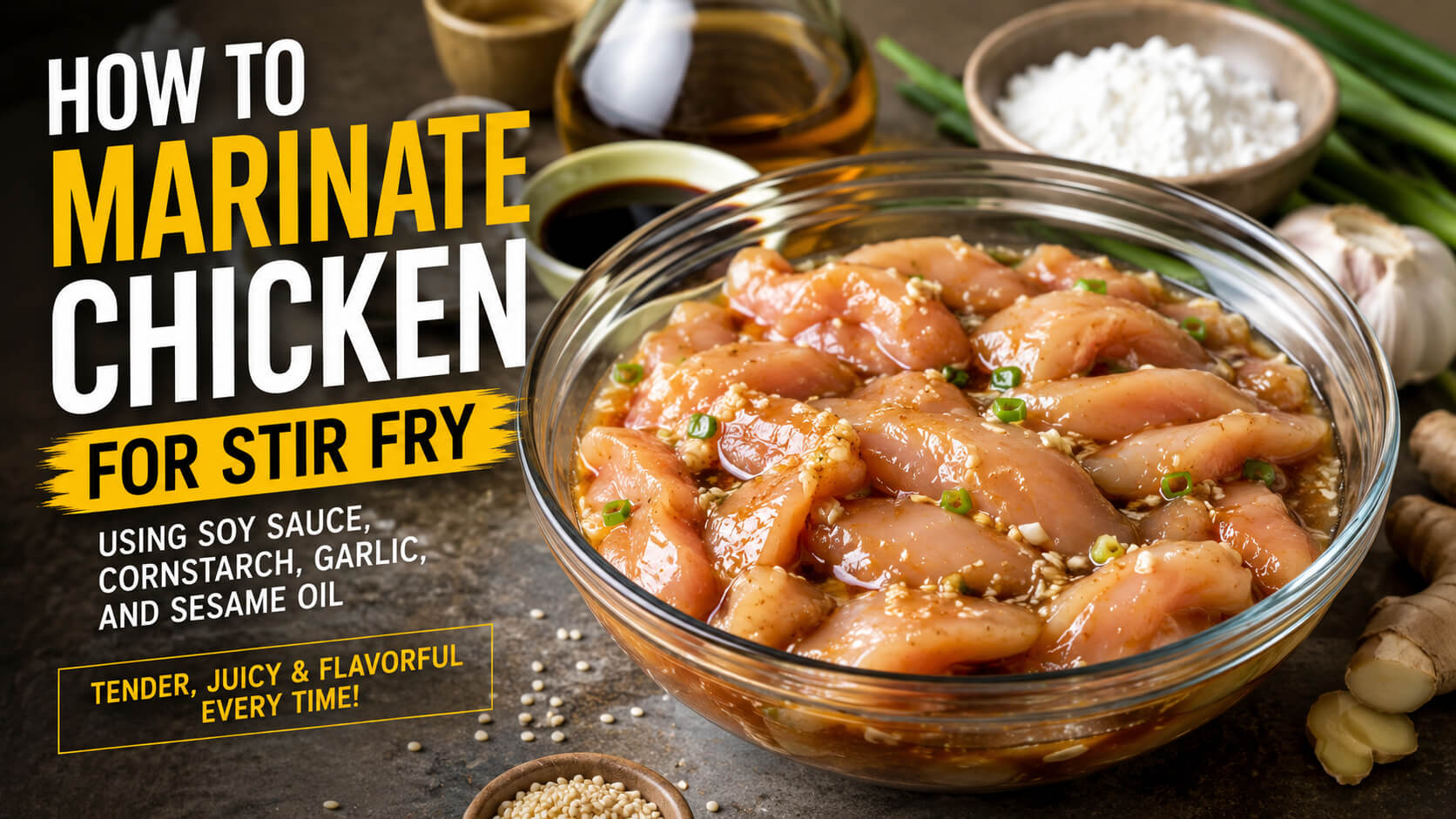
How to Marinate Chicken for Stir Fry (Best Marinade for Tender Flavorful Chicken)
If you’ve ever wondered why restaurant stir fry chicken stays juicy, tender, and packed with flavor while homemade versions sometimes turn out dry or bland, the answer often comes down to the marinade. Learning how to marinate chicken for stir fry is one of the easiest ways to improve your cooking, whether you’re making a quick weeknight dinner or preparing meals for the week.
A good marinade doesn’t simply add flavor. It also helps the chicken retain moisture, creates a silky texture, and prepares the meat to cook quickly over high heat without drying out. Even a simple combination of soy sauce, cornstarch, garlic, and a little oil can dramatically improve the final dish.
In this guide, you’ll learn exactly how to marinate chicken for stir fry, how long to marinate it, which ingredients work best, common mistakes to avoid, and expert techniques that produce restaurant-quality results every time.
Quick Answer
To marinate chicken for stir fry, combine sliced chicken with soy sauce, cornstarch, sesame oil (or neutral oil), garlic, ginger, and a small amount of sugar or honey if desired. Let the chicken marinate for at least 20–30 minutes, or up to 12 hours in the refrigerator for deeper flavor. The cornstarch locks in moisture while the soy sauce seasons the meat, creating tender, juicy chicken that cooks quickly without becoming dry.
Table of Contents
Why You Should Marinate Chicken for Stir Fry
Many people think marinating is only about adding flavor. While flavor is important, a properly prepared marinade also changes the way chicken cooks. This is especially important for stir fry because the meat cooks over very high heat in just a few minutes.
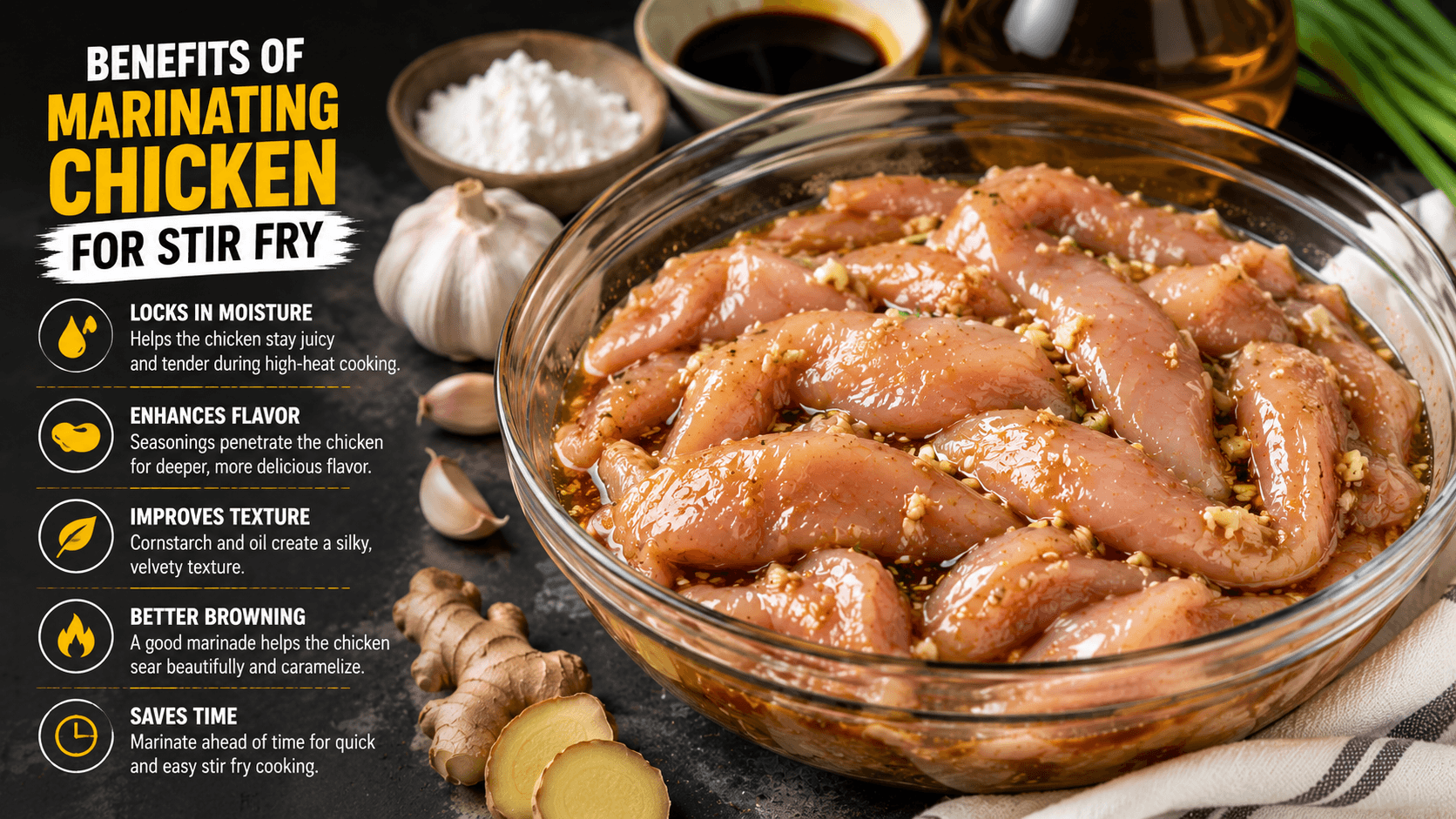
When you marinate chicken for stir fry, the ingredients work together to season the meat, improve moisture retention, and create a light protective coating that prevents the chicken from drying out.
Restaurant chefs rarely skip this step because it consistently produces softer, juicier chicken with a better mouthfeel.
Marinating Adds Flavor Throughout the Chicken
Instead of relying only on the stir fry sauce at the end of cooking, marinating seasons every piece of chicken before it reaches the pan. This creates a more balanced flavor in every bite.
Ingredients like soy sauce, garlic, ginger, sesame oil, rice vinegar, and spices gradually coat the surface of the chicken while allowing flavors to penetrate slightly beneath the surface.
It Helps Keep Chicken Juicy
One of the biggest benefits of learning how to marinate chicken for stir fry is improved moisture retention.
Cornstarch forms a thin coating around the chicken that slows moisture loss during cooking. Oil adds another protective layer, while salt in soy sauce helps the meat absorb and retain water.
The result is noticeably juicier chicken even after cooking over very high heat.
Kitchen Tip: Even a simple 20-minute marinade is better than skipping the process entirely. Short marinades still improve tenderness and flavor without adding much preparation time.
It Creates Better Texture
Many restaurant stir fry dishes have chicken with a silky, almost velvety texture.
That texture starts with the marinade. Cornstarch lightly coats the surface while oil prevents sticking and drying. When combined with proper cooking techniques, the chicken develops a smooth finish instead of becoming tough.
If you want to take texture one step further, consider learning the traditional Chinese technique explained in our guide on how to velvet chicken for stir fry.
Marinating Improves Browning
Balanced marinades often contain small amounts of sugar or honey. During cooking, these ingredients encourage gentle caramelization that enhances both color and flavor.
Too much sugar can burn quickly, so only a small amount is needed.
Avoid This Mistake: Adding excessive sugar to a stir fry marinade can cause the chicken to burn before it finishes cooking. Keep sweeteners to a minimum when cooking over high heat.
Best Ingredients to Marinate Chicken for Stir Fry
The best marinade isn’t necessarily the most complicated. In fact, many excellent stir fry marinades use only a handful of pantry ingredients.
| Ingredient | Purpose | Why It Works |
|---|---|---|
| Soy Sauce | Seasoning | Adds savory umami flavor |
| Cornstarch | Tenderizing | Locks in moisture during cooking |
| Garlic | Aroma | Provides rich savory flavor |
| Fresh Ginger | Freshness | Adds brightness and warmth |
| Sesame Oil | Flavor | Enhances aroma with nutty notes |
| Neutral Cooking Oil | Protection | Helps prevent sticking |
| Rice Vinegar | Balance | Adds mild acidity without overpowering |
| Honey or Sugar | Browning | Supports caramelization |
Using these ingredients in the right proportions creates a balanced marinade that improves flavor without overpowering the vegetables or stir fry sauce.
Why Cornstarch Is So Important
If there’s one ingredient many home cooks overlook, it’s cornstarch.
Cornstarch lightly coats each piece of chicken, helping it stay moist while creating the signature silky texture found in many restaurant stir fry dishes.
Without cornstarch, chicken often loses moisture quickly and can become chewy before the vegetables finish cooking.
Chef’s Secret: Combine soy sauce with cornstarch first before adding oil. This helps distribute the starch evenly over every piece of chicken, resulting in a smoother coating and more consistent texture.
Choosing fresh garlic and ginger instead of powdered versions also makes a noticeable difference. Fresh aromatics release natural oils during cooking, giving your stir fry a brighter and more authentic flavor.
For even more seasoning ideas, read our complete guide on how to season chicken for stir fry and discover the best chicken marinade ingredients for different flavor profiles.
How to Marinate Chicken for Stir Fry Step by Step
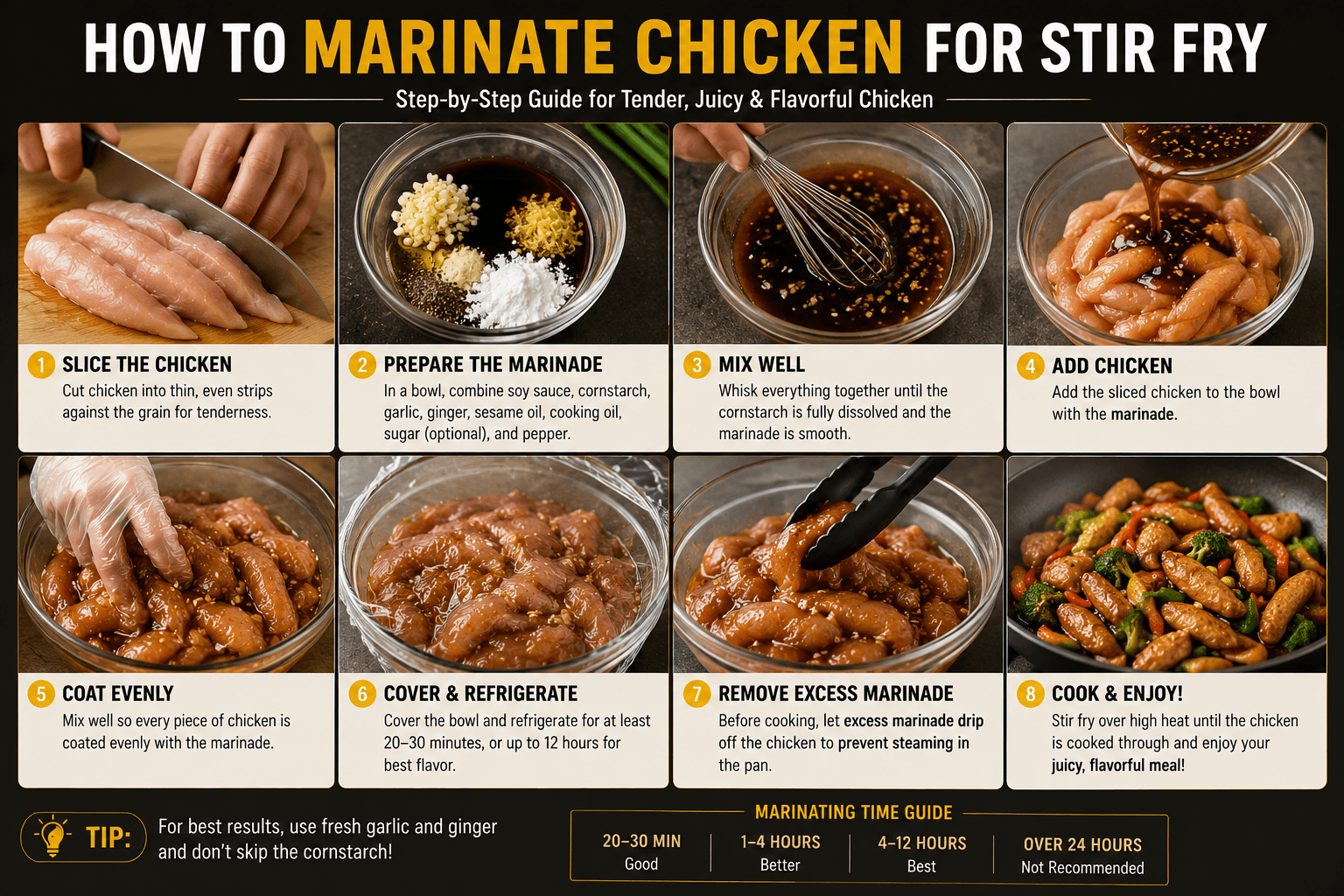
Now that you understand why marinating is so important, let’s walk through the exact process. Learning how to marinate chicken for stir fry isn’t difficult, but following each step carefully makes a noticeable difference in both flavor and texture.
The goal is to lightly season the chicken, help it retain moisture, and create a thin coating that protects it during high-heat cooking. Avoid overcomplicating the process—simple ingredients and proper technique consistently produce the best results.
Step 1: Choose the Right Cut of Chicken
You can use either chicken breast or chicken thighs for stir fry. Chicken breast is lean and cooks quickly, while chicken thighs contain more fat and naturally stay juicy.
Whichever cut you choose, trim away excess fat or connective tissue before slicing.
Tip: Slightly freezing the chicken for 15–20 minutes before slicing makes it much easier to cut into thin, even strips.
If you’re unsure about the best slicing technique, check out our guide on how to cut chicken for stir fry.
Step 2: Slice the Chicken Evenly
Uniform pieces cook evenly. Thick chunks often remain undercooked inside while thinner pieces become dry.
For most stir fry recipes, slice the chicken into strips about ¼ inch thick across the grain. Cutting across the muscle fibers shortens them, making every bite more tender.
Step 3: Prepare the Marinade
A balanced stir fry marinade uses just a few ingredients that complement rather than overpower the finished dish.
| Ingredient | Amount (1 lb Chicken) | Purpose |
|---|---|---|
| Soy sauce | 2 tablespoons | Seasoning and umami |
| Cornstarch | 1 tablespoon | Tender texture |
| Sesame oil | 1 teaspoon | Nutty aroma |
| Neutral oil | 1 teaspoon | Moisture protection |
| Minced garlic | 2 cloves | Savory flavor |
| Fresh grated ginger | 1 teaspoon | Fresh aromatic flavor |
| Brown sugar or honey | ½ teaspoon | Balances flavors |
| Black pepper | ¼ teaspoon | Mild spice |
This combination creates a flavorful yet versatile marinade that pairs well with nearly any vegetable or stir fry sauce.
Chef’s Secret: Mix the marinade ingredients together before adding the chicken. This distributes the cornstarch evenly and prevents lumps from forming.
Step 4: Coat Every Piece Thoroughly
Add the sliced chicken to the bowl and gently mix until every piece is coated.
Don’t simply pour the marinade over the chicken and leave it untouched. Use clean hands, tongs, or a spoon to ensure every strip is evenly covered.
A uniform coating means every bite cooks consistently and absorbs the same amount of seasoning.
Step 5: Refrigerate While Marinating
Cover the bowl with plastic wrap or transfer the chicken to a sealed container or zip-top bag before placing it in the refrigerator.
Never leave raw chicken marinating at room temperature. Keeping it refrigerated slows bacterial growth and maintains food safety.
Food Safety Reminder: Always marinate chicken in the refrigerator below 40°F (4°C). Discard any marinade that has been in contact with raw chicken unless it is boiled before reuse.
How Long Should You Marinate Chicken for Stir Fry?
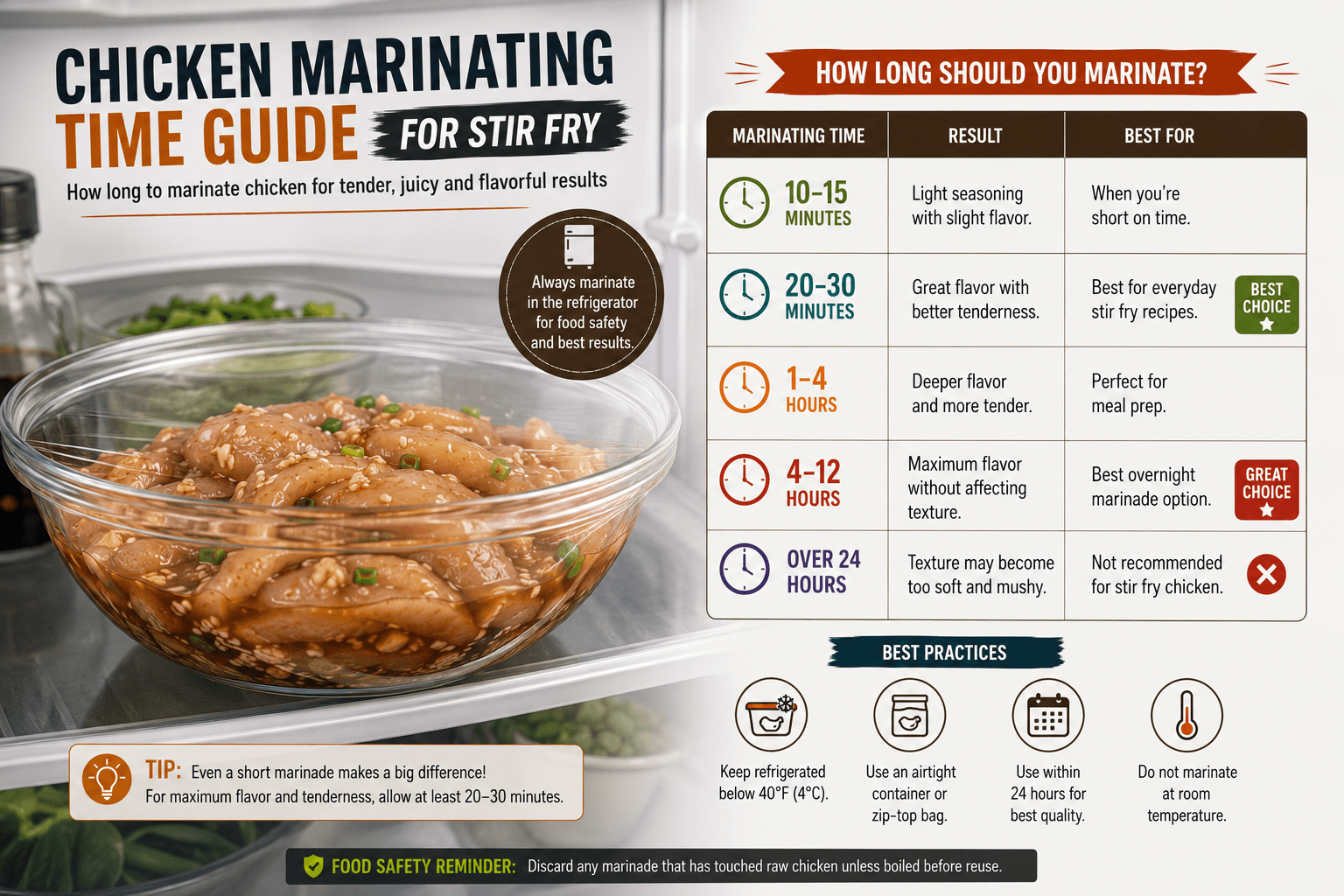
One of the most common questions is how long to marinate chicken for stir fry. The answer depends on the ingredients in your marinade and how much flavor you’re trying to achieve.
Unlike large cuts of meat that benefit from overnight marinating, stir fry chicken is sliced into small pieces. This allows flavors to develop much more quickly.
| Marinating Time | Result | Recommended? |
|---|---|---|
| 10–15 minutes | Light seasoning | Good when short on time |
| 20–30 minutes | Excellent flavor and tenderness | ✔ Best for most recipes |
| 1–4 hours | Deeper flavor | ✔ Great for meal prep |
| 8–12 hours | Maximum flavor without overdoing it | ✔ Best overnight option |
| More than 24 hours | Texture may soften too much | ✘ Not recommended |
For everyday cooking, 30 minutes offers an excellent balance between convenience and flavor.
If you’re preparing lunches or dinners ahead of time, marinating the chicken for several hours can save time while producing consistently delicious results.
Planning to prepare the chicken the night before? Read our complete guide on marinating chicken overnight for stir fry for safety tips and best practices.
Best Marinade Variations for Different Stir Fry Flavors
Once you’ve mastered the basic marinade, you can easily customize it to match different stir fry recipes. Small ingredient changes create completely different flavor profiles without changing the overall cooking technique.
Classic Soy Garlic Marinade
- Soy sauce
- Garlic
- Cornstarch
- Sesame oil
- Black pepper
This versatile option pairs well with almost any vegetable combination and works beautifully in a traditional chicken stir fry.
Honey Garlic Marinade
- Soy sauce
- Garlic
- Honey
- Cornstarch
- Sesame oil
The slight sweetness complements broccoli, carrots, and bell peppers. It’s perfect for recipes like Honey Garlic Chicken Stir Fry.
Ginger Garlic Marinade
- Fresh ginger
- Garlic
- Soy sauce
- Cornstarch
- Sesame oil
This variation delivers a bright, aromatic flavor that pairs especially well with bok choy, mushrooms, and snap peas. Try it in our Ginger Garlic Chicken Stir Fry.
Light Vegetable Stir Fry Marinade
If you’re making recipes with zucchini, spinach, cabbage, or mixed vegetables, reduce the soy sauce slightly to let the vegetables remain the star of the dish.
These lighter marinades work particularly well for:
Choosing the right marinade for the vegetables you’re using creates a more balanced stir fry, allowing both the chicken and produce to shine without one overpowering the other.
Common Mistakes When You Marinate Chicken for Stir Fry
Even with a good marinade, a few simple mistakes can leave your stir fry chicken dry, bland, or unevenly cooked. Fortunately, these problems are easy to avoid once you know what to watch for.
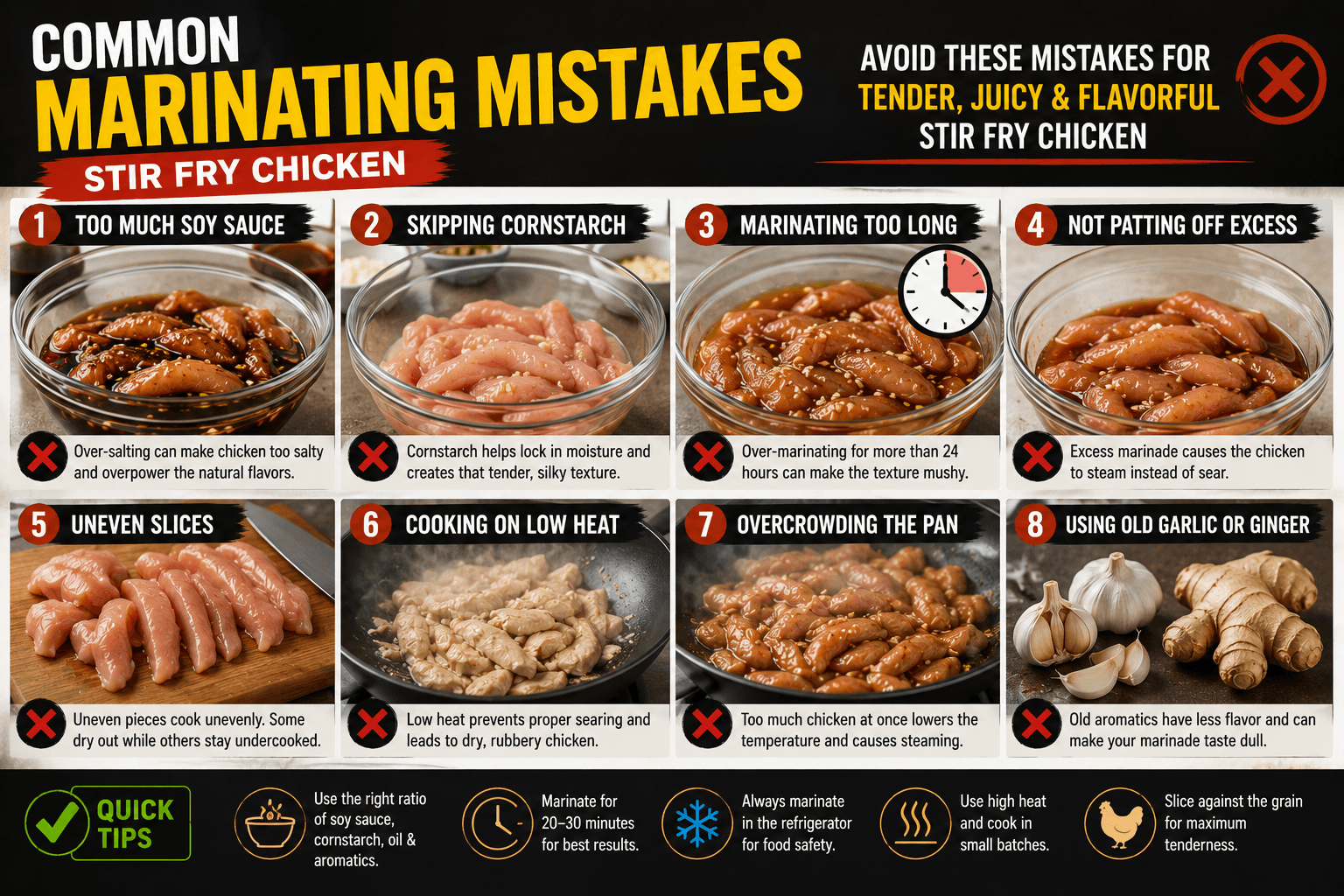
Using Too Much Soy Sauce
Soy sauce is essential for seasoning, but using too much can make the chicken overly salty and mask the fresh flavors of the vegetables.
Stick to about 2 tablespoons per pound of chicken unless you’re following a recipe specifically designed for a stronger flavor.
Skipping the Cornstarch
Many home cooks leave out cornstarch because they think it’s only for thickening sauces. In reality, it’s one of the most important ingredients in a stir fry marinade.
Cornstarch creates a light coating that helps lock in moisture, giving the chicken a tender, silky texture instead of a dry, chewy one.
Marinating for Too Long
Longer isn’t always better. While several hours of marinating can deepen the flavor, leaving sliced chicken in the marinade for more than 24 hours may affect its texture.
Ingredients containing salt and acids continue to work over time, eventually making the chicken overly soft or mushy.
Avoid Over-Marinating: For most stir fry recipes, marinating for 20 minutes to 12 hours provides the best balance of flavor and texture.
Not Patting Off Excess Marinade
If large amounts of liquid cling to the chicken, the meat will steam instead of sear when it hits the hot pan.
A light coating is ideal. If the marinade looks very wet, gently shake off or lightly blot excess liquid before cooking.
Cooking a Cold Pan
Perfectly marinated chicken still needs high heat to develop good color and flavor.
Always preheat your wok or skillet before adding oil and chicken. A hot cooking surface creates quick browning while keeping the inside juicy.
If your chicken often turns out dry even after marinating, read our guide on how to prevent dry chicken stir fry for additional troubleshooting tips.
Benefits of Marinating Chicken
- Improves flavor throughout the meat
- Helps chicken stay juicy during high-heat cooking
- Creates a tender, silky texture
- Enhances browning and appearance
- Works well for meal prep
- Requires only a few pantry ingredients
Potential Drawbacks
- Requires advance preparation
- Over-marinating can soften the texture
- Too much soy sauce can make the chicken salty
- Improper storage increases food safety risks
Storage, Meal Prep, and Food Safety
One of the advantages of learning how to marinate chicken for stir fry is that it fits perfectly into weekly meal prep. You can prepare the chicken in advance, store it safely, and have dinner ready much faster on busy evenings.
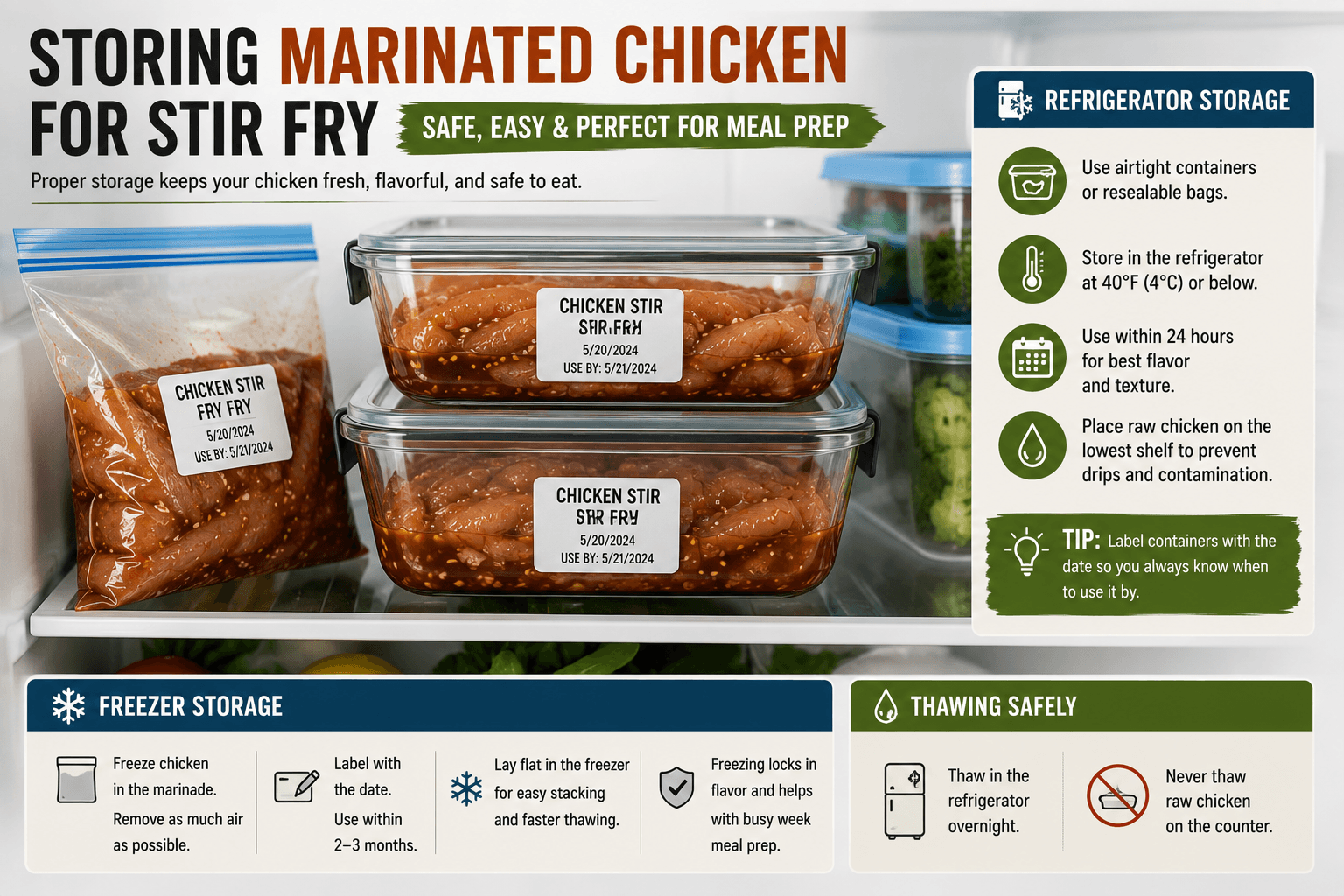
Refrigerator Storage
- Store marinated chicken in an airtight container or sealed zip-top bag.
- Keep refrigerated at or below 40°F (4°C).
- Use within 24 hours for the best flavor and texture.
- Always place raw chicken on the lowest refrigerator shelf to prevent drips.
Freezer Storage
- Freeze chicken directly in the marinade if desired.
- Remove as much air as possible from freezer bags.
- Label each bag with the preparation date.
- Use within 2–3 months for the best quality.
Thawing
Thaw frozen marinated chicken overnight in the refrigerator. Never thaw raw chicken on the kitchen counter.
Expert Tips for Restaurant-Quality Stir Fry Chicken
Professional chefs rely on consistent techniques rather than complicated recipes. These simple habits can dramatically improve your homemade stir fry.
- Slice chicken against the grain for maximum tenderness.
- Use fresh garlic and ginger whenever possible.
- Mix the marinade thoroughly before adding the chicken.
- Allow the chicken to rest for at least 20 minutes.
- Cook over high heat without overcrowding the pan.
- Cook in batches if necessary.
- Add vegetables only after the chicken develops light browning.
- Finish with sauce during the final minute of cooking.
Final Checklist Before Cooking
| Task | Complete? |
|---|---|
| Chicken sliced evenly | ✔ |
| Marinade mixed completely | ✔ |
| Cornstarch included | ✔ |
| Chicken refrigerated while marinating | ✔ |
| Pan fully preheated | ✔ |
| Ingredients prepared before cooking | ✔ |
Taking a minute to review this checklist before cooking helps ensure your stir fry comes together smoothly and delivers the best possible texture and flavor.
Frequently Asked Questions
Can I marinate chicken for stir fry overnight?
Yes. Marinating overnight is safe when the chicken is refrigerated. For the best texture, use it within 12–24 hours.
Do I have to use cornstarch?
Cornstarch is highly recommended because it helps the chicken stay juicy and creates the silky texture commonly found in restaurant stir fries.
Should I rinse the marinade off before cooking?
No. Leave a thin coating on the chicken, but remove any excess liquid that may prevent proper browning.
Can I freeze marinated chicken?
Yes. Freezing chicken in its marinade is a convenient meal prep method and allows the flavors to continue developing as it thaws.
Which chicken is better for stir fry—breast or thighs?
Both work well. Chicken breast is lean and cooks quickly, while chicken thighs provide extra richness and stay naturally juicy.
Can I use bottled marinades?
You can, but homemade marinades usually provide fresher flavor and allow you to control the amount of salt, sugar, and oil.
References
Final Thoughts
Learning how to marinate chicken for stir fry is one of the simplest ways to improve both flavor and texture. A balanced marinade made with soy sauce, cornstarch, fresh aromatics, and a little oil helps the chicken stay tender, juicy, and well-seasoned while cooking quickly over high heat.
Whether you’re preparing a classic chicken stir fry, experimenting with garlic and ginger flavors, or meal prepping for the week ahead, taking just a few extra minutes to marinate the chicken can make a dramatic difference. Once you master this technique, you’ll be able to create consistently delicious stir fry dishes that rival your favorite restaurant.
📧 Save This Recipe For Later
Enter your email and we will send this recipe directly to your inbox.