
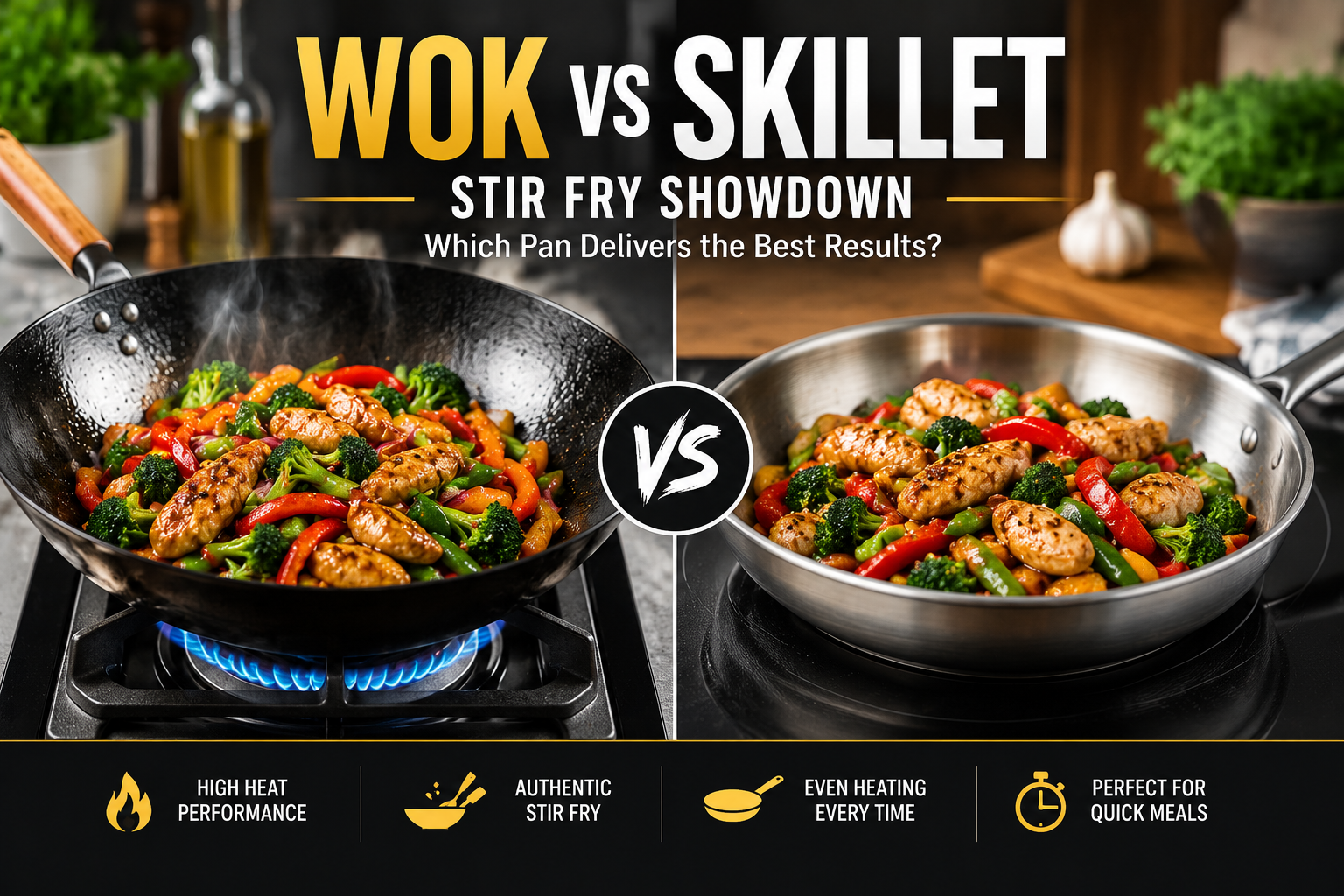
Wok vs. Skillet: Which Is Better for Quick Stir Fries?
Wok vs. Skillet: Which is Actually Better for Quick Stir Fries?
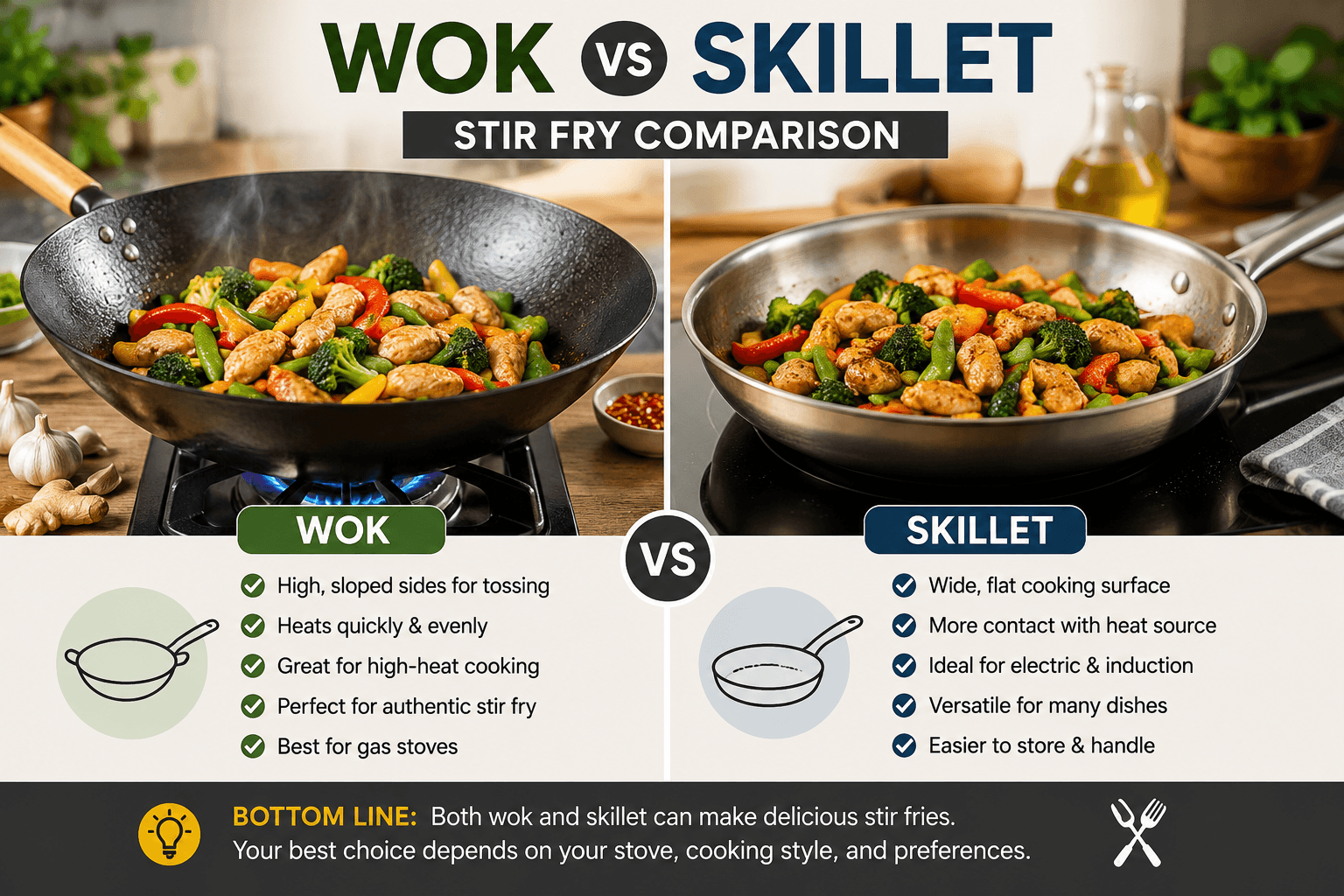
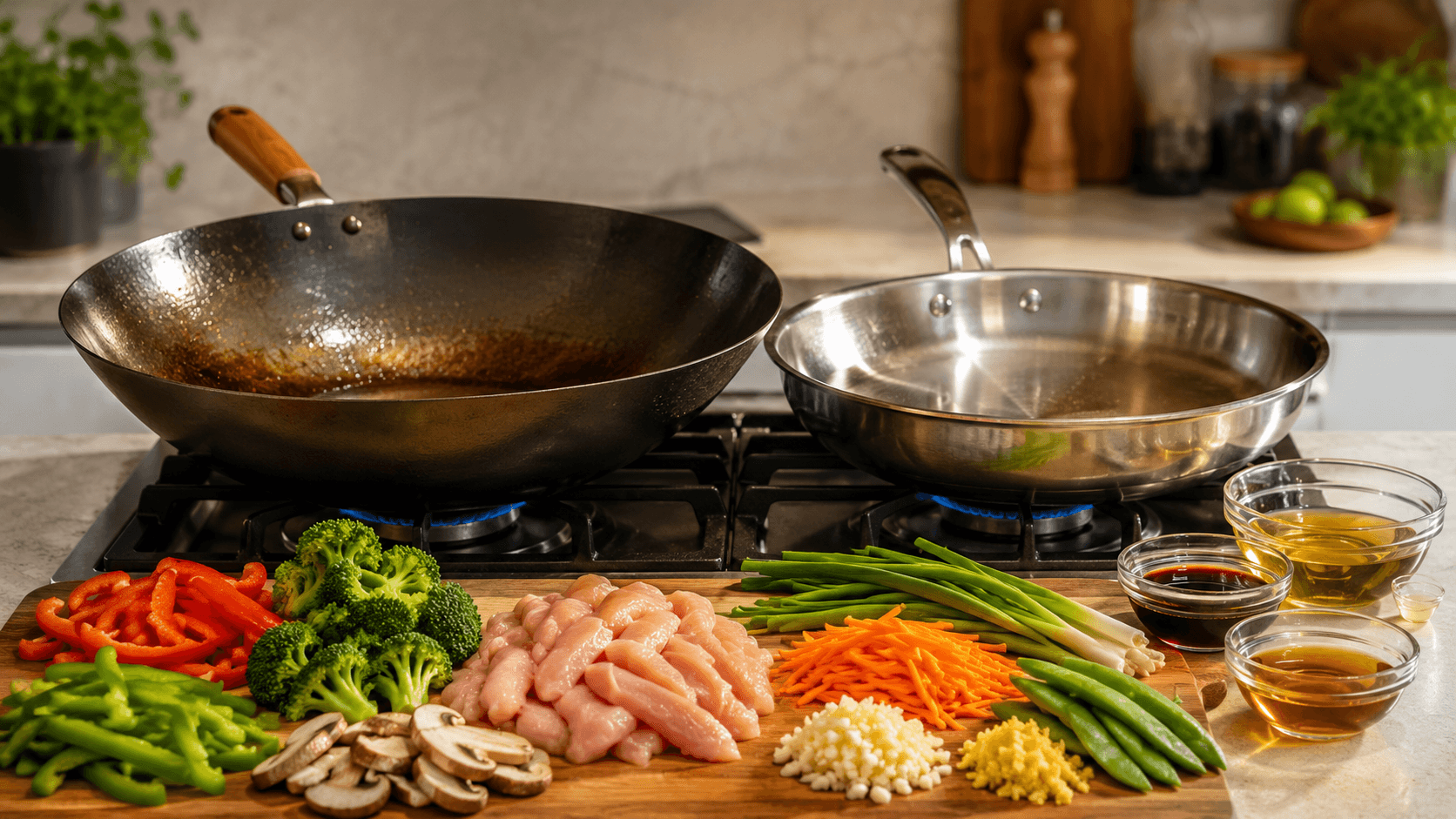
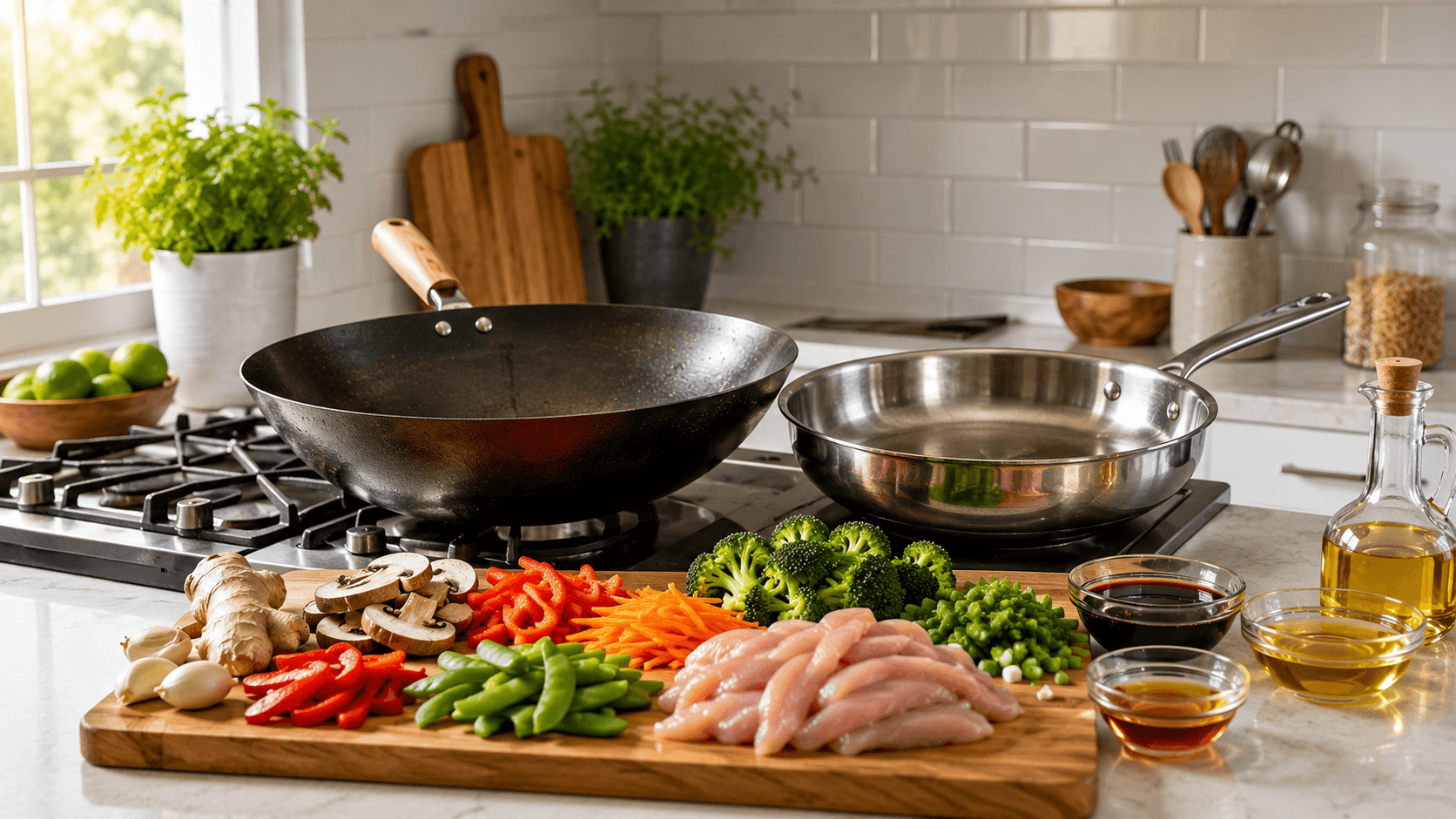
When it comes to making a fast, flavorful stir fry, one question comes up again and again: wok vs skillet stir fry—which pan actually delivers the best results? If you’ve searched online, you’ve probably seen passionate opinions from home cooks and professional chefs alike. Some insist that only a traditional wok can create authentic stir-fry flavor, while others argue that a heavy skillet is more practical for most American kitchens.
The truth is that both cookware options have strengths and weaknesses. The best choice depends on your cooking surface, the ingredients you’re using, and the style of stir fry you want to make. A gas stove with high heat can unlock the full potential of a carbon steel wok, while an electric or induction cooktop often works surprisingly well with a quality skillet.
Understanding how each pan distributes heat, handles moisture, and cooks ingredients can dramatically improve your meals. Whether you’re preparing a quick weeknight dinner or experimenting with restaurant-style techniques, choosing the right cookware makes a noticeable difference.
In this guide, we’ll compare every important aspect of the wok vs skillet stir fry debate, including heat performance, cooking speed, versatility, ease of use, maintenance, and which pan works best for different kitchens. By the end, you’ll know exactly which option fits your cooking style.
Quick Answer
For most home cooks, the answer to the wok vs skillet stir fry question depends on the stove. A carbon steel wok performs best on powerful gas burners because its curved shape creates intense heat zones that cook food quickly while preserving texture. A large stainless steel or cast iron skillet, however, usually performs better on electric and induction cooktops because its flat bottom maintains full contact with the heating element.
- Choose a wok if: You cook on gas and want authentic stir-fry techniques.
- Choose a skillet if: You use electric or induction and want even heating.
- Both pans can produce excellent stir fries when used correctly.
Table of Contents
- What Makes Stir Fry Different?
- Understanding the Difference Between a Wok and a Skillet
- Heat Distribution Comparison
- Cooking Speed and Moisture Control
- Which Pan Creates Better Flavor?
- Best Cookware for Different Stove Types
- Pros and Cons
- Common Mistakes
- Expert Buying Tips
- Frequently Asked Questions
- References
What Makes Stir Fry Different?
Stir frying is one of the fastest cooking methods in the world. Instead of slowly cooking ingredients over medium heat, stir frying relies on extremely high temperatures and constant movement. This allows vegetables to stay crisp while proteins develop a flavorful browned exterior without becoming dry.
The cooking process usually takes only a few minutes, which means every piece of equipment matters. Heat recovery, pan shape, cooking surface, and airflow all influence the final result.
One reason the wok vs skillet stir fry debate continues is that both pans manage heat in very different ways. A wok concentrates heat toward the bottom while providing cooler sides for moving food away from direct heat. A skillet spreads heat evenly across a flat cooking surface, making temperature control easier for beginners.
Tip: Regardless of which pan you use, avoid overcrowding. Too much food lowers the pan’s temperature and causes ingredients to steam instead of sear.
Understanding the Difference Between a Wok and a Skillet
Although both pans can cook delicious meals, they were designed for different purposes.
What Is a Wok?
A traditional wok features a deep bowl-shaped design with sloping sides. Carbon steel models heat extremely quickly and respond almost instantly to temperature changes. The curved shape creates multiple cooking zones, allowing ingredients to be moved around without overcooking.
Professional Chinese kitchens often use powerful gas burners capable of producing the intense heat needed for authentic wok cooking. This high heat helps create the slightly smoky flavor known as wok hei, often translated as “the breath of the wok.”
What Is a Skillet?
A skillet has a flat bottom with gently sloped sides. Because the entire cooking surface touches the burner, heat distribution tends to be more even, especially on electric and induction ranges.
Many American households already own a high-quality stainless steel, cast iron, or nonstick skillet, making it the easiest option for everyday stir fries without purchasing additional cookware.
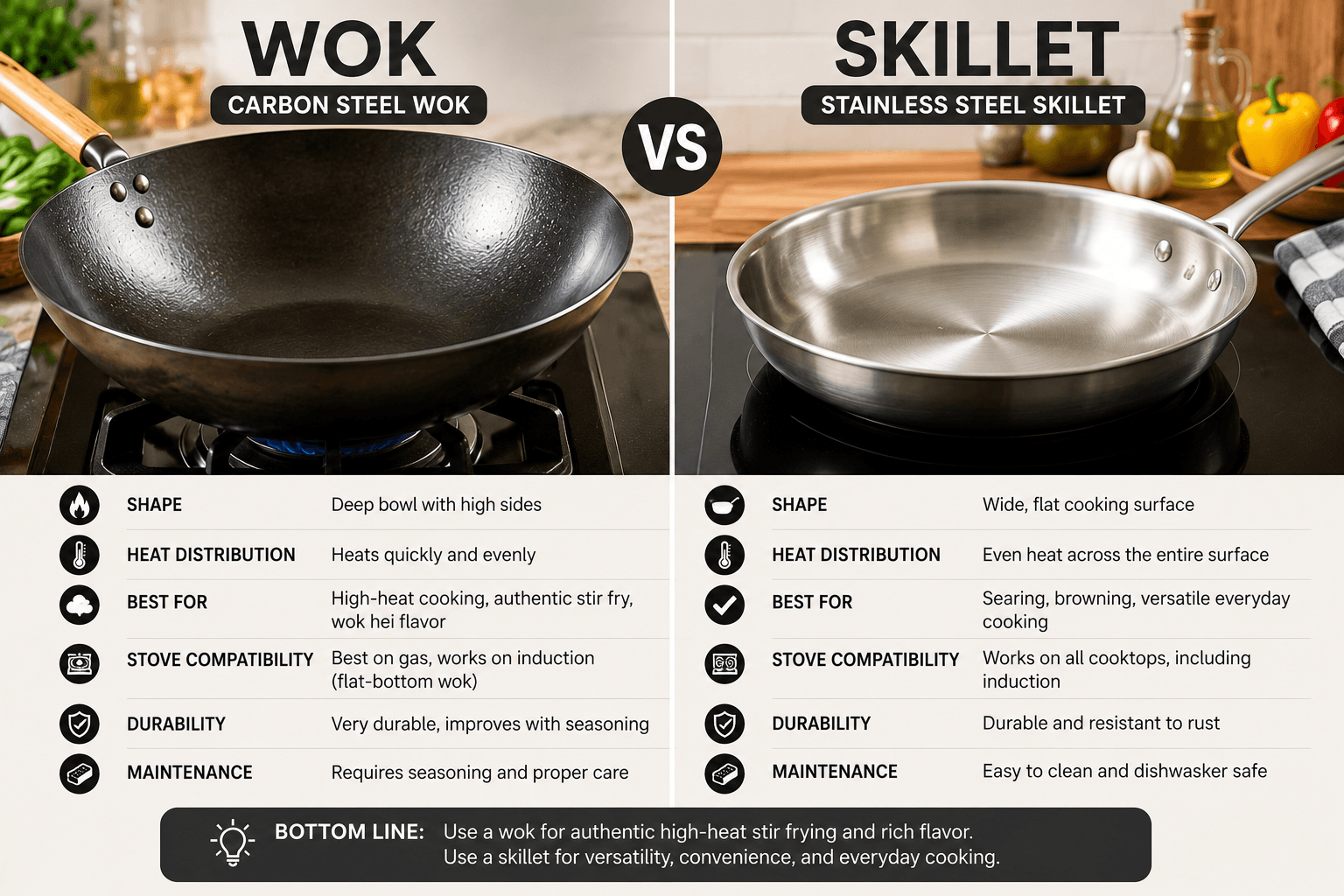
| Feature | Wok | Skillet |
|---|---|---|
| Shape | Deep, rounded sides | Flat cooking surface |
| Heat Zones | Multiple temperature zones | Even heat across surface |
| Food Movement | Excellent tossing ability | Simple stirring |
| Best Stove | Gas | Electric, induction, gas |
| Learning Curve | Moderate | Easy |
For many people, the wok vs skillet stir fry decision isn’t about which pan is universally better. It’s about choosing the pan that works best with their kitchen setup.
If you’re planning to cook dishes like 15-Minute Chicken Noodle Stir Fry, either pan can produce excellent results. Likewise, recipes such as 15-Minute Chicken Fried Rice Stir Fry benefit from proper heat management more than the cookware itself.
Kitchen Secret: Professional chefs rarely keep every ingredient cooking in the hottest part of the pan. They constantly move vegetables, chicken, and aromatics between hotter and cooler zones to control doneness.
Heat Distribution: The Biggest Difference
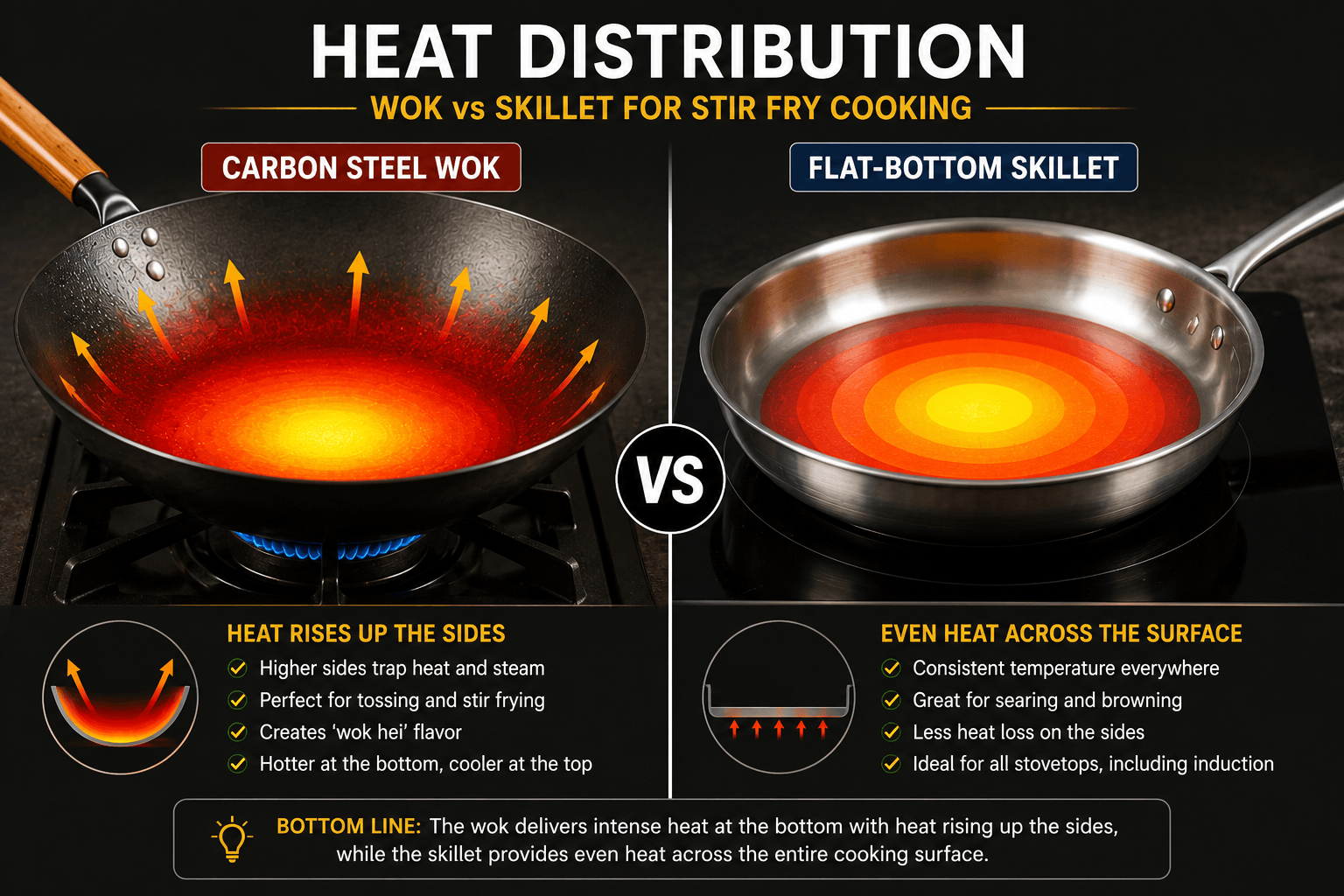
Heat distribution is the single most important factor in the wok vs skillet stir fry comparison because it directly affects browning, moisture evaporation, and cooking speed.
A carbon steel wok creates an extremely hot cooking zone at the bottom while the upper sides remain noticeably cooler. This allows food to be pushed upward after searing, preventing delicate ingredients from overcooking while other components finish.
A skillet behaves differently. Its flat base distributes heat across a larger surface, making it easier to cook ingredients evenly without constantly moving them. This consistent heating is particularly beneficial on electric and induction stoves, where round-bottomed cookware cannot make proper contact with the heating element.
Neither approach is inherently superior. The ideal choice depends on your stove, cooking style, and the types of meals you prepare most often.
Warning: Using a traditional round-bottom wok on a flat electric stove can lead to uneven heating, longer cooking times, and steamed food instead of properly seared stir fry.
Another important consideration is cooking oil. High temperatures require oils with high smoke points to prevent burning and off flavors. Before choosing cookware, it’s helpful to understand which cooking oils work best for stir fry so you can pair the right pan with the right oil.
Cooking Performance: Which Pan Makes Better Stir Fries?
The answer to the wok vs skillet stir fry question becomes clearer when you compare how each pan performs during actual cooking. Stir frying isn’t simply about heating food—it’s about controlling moisture, browning ingredients quickly, and keeping vegetables crisp while proteins remain juicy.
Searing Ability
A wok excels at creating an intense searing zone in the center. Thin slices of chicken, beef, shrimp, or tofu cook rapidly as they contact the hottest part of the pan. Because the food spends less time cooking, it often retains more moisture.
A skillet can also develop excellent browning, especially if it’s made from stainless steel or cast iron. Since the cooking surface is larger, it’s easier to spread ingredients into a single layer, which helps create consistent caramelization.
Moisture Evaporation
One of the biggest enemies of a good stir fry is trapped steam.
The tall sides of a wok allow steam to escape while ingredients are constantly tossed through different temperature zones. This helps vegetables stay crisp rather than becoming soft.
With a skillet, moisture tends to remain across the flat cooking surface. If too many ingredients are added at once, steaming happens quickly.
Tip: Cook protein first, remove it from the pan, stir fry the vegetables separately, then combine everything during the final minute. This technique works well with both a wok and a skillet.
Tossing Ingredients
The curved sides of a wok make tossing ingredients effortless. Instead of stirring with a spatula alone, the cook can flip ingredients up the sides of the pan and back into the hottest cooking zone.
Most skillets require more manual stirring because the lower sides make flipping ingredients less efficient.
Cooking Large Batches
If you’re preparing dinner for several people, a large skillet often provides more usable cooking space. Although a wok appears bigger, only the bottom receives maximum heat. Overfilling either pan can reduce browning, so cooking in batches is still the best approach.
| Cooking Task | Winner | Reason |
|---|---|---|
| High-heat searing | Wok | Concentrated heat creates fast browning. |
| Even cooking | Skillet | Flat surface distributes heat evenly. |
| Tossing food | Wok | Curved sides improve movement. |
| Large batches | Skillet | More usable flat cooking area. |
| Weeknight convenience | Skillet | Requires less technique. |
Which Pan Works Best on Different Stove Types?
Many articles discussing wok vs skillet stir fry ignore one critical detail: your stove often matters more than the cookware itself.
Gas Stoves
A gas burner produces an open flame that naturally wraps around the sides of a wok. This creates multiple heat zones and closely mimics professional restaurant cooking.
If you own a gas range, a flat-bottom carbon steel wok is usually the best investment.
Electric Coil Stoves
Electric coils heat only where they touch the cookware. Since most of the bottom of a traditional wok doesn’t contact the burner, heating becomes uneven.
A skillet generally performs much better because its entire base rests directly on the heating element.
Glass Ceramic Cooktops
Smooth electric cooktops benefit from cookware with complete surface contact. Heavy-bottom stainless steel skillets usually outperform traditional woks.
Induction Cooktops
Induction cooking requires magnetic cookware with a flat base. While induction-compatible flat-bottom woks are available, many home cooks still achieve more consistent results with a quality induction-ready skillet.
| Stove Type | Best Choice | Why |
|---|---|---|
| Gas | Carbon Steel Wok | Excellent flame contact. |
| Electric Coil | Skillet | Better heating efficiency. |
| Glass Top | Skillet | Flat contact improves performance. |
| Induction | Flat Skillet | Maximum magnetic contact. |
Kitchen Secret: If you own an electric stove but still want wok-style cooking, choose a flat-bottom carbon steel wok instead of a traditional round-bottom version. It offers many advantages of a wok while maintaining better contact with the burner.
Flavor and Texture: Does a Wok Really Taste Better?
One reason professional chefs prefer woks is the possibility of developing wok hei, the smoky, slightly charred flavor associated with restaurant stir fries.
This flavor develops when extremely high heat rapidly caramelizes proteins, vegetables, and sauces. Commercial wok burners often exceed 100,000 BTUs, far more powerful than most residential stoves.
Because home kitchens rarely produce that level of heat, many people won’t notice a dramatic flavor difference between a wok and a skillet.
Instead, proper technique has a greater impact than cookware alone. Dry ingredients thoroughly, avoid overcrowding, preheat the pan completely, and cook in batches when necessary.
These simple habits will improve almost every wok vs skillet stir fry result regardless of the pan you choose.
Why Choose a Wok?
- Authentic stir-fry cooking experience.
- Excellent ingredient movement.
- Fast heat response.
- Multiple cooking zones.
- Ideal for gas stoves.
- Perfect for restaurant-style techniques.
Why a Wok May Not Be Ideal
- Requires practice.
- Less effective on many electric stoves.
- Needs seasoning if made from carbon steel.
- Storage can require more cabinet space.
For example, recipes like 15-Minute Chicken Stir Fry, 15-Minute Garlic Chicken Stir Fry, and 15-Minute Chicken Broccoli Stir Fry can all turn out beautifully in either pan when cooked over sufficiently high heat and without overcrowding.
Common Mistakes When Using a Wok or Skillet
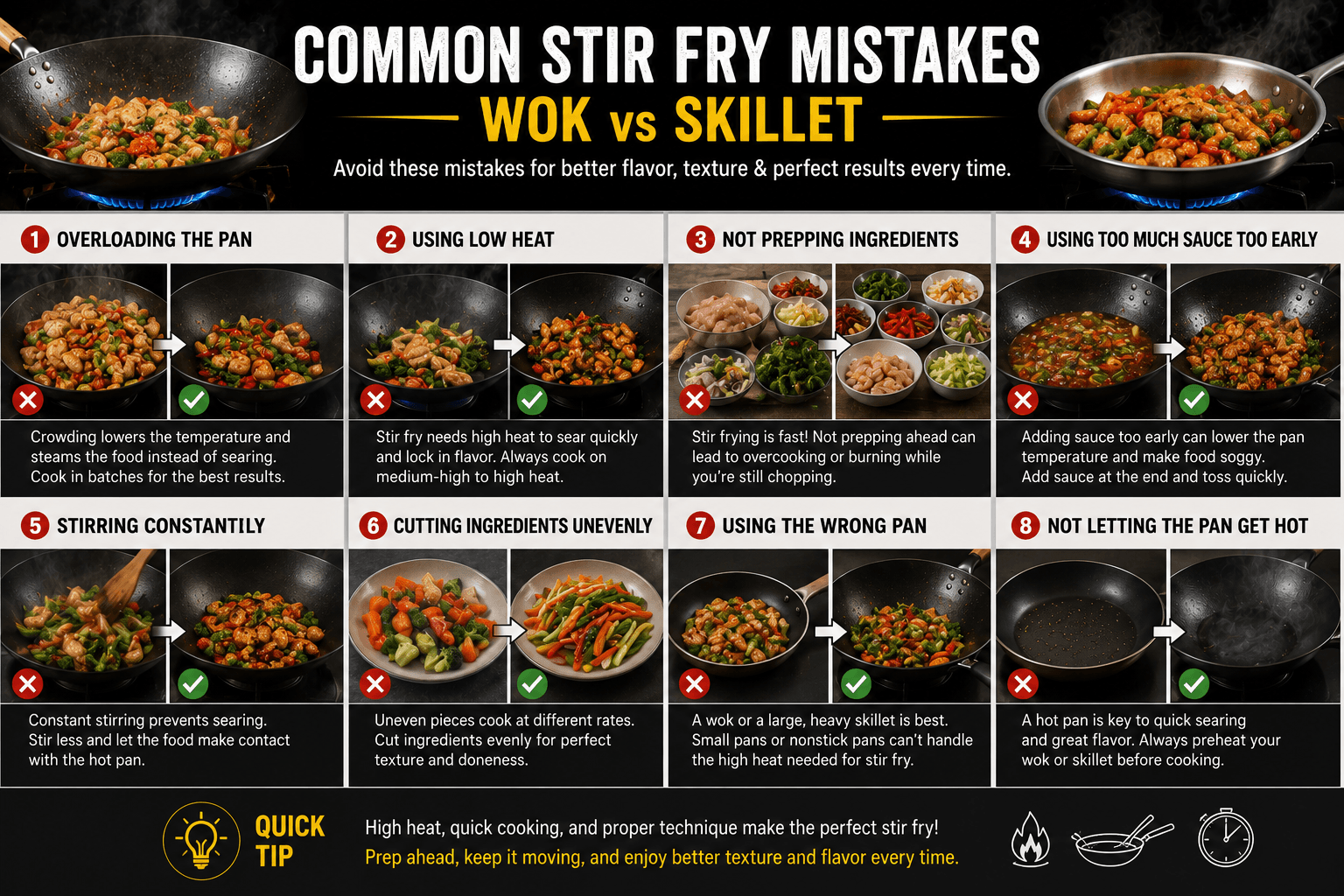
Even the best cookware can’t compensate for poor cooking technique. Many home cooks blame their pan when the real problem is how they’re using it. Understanding these common mistakes will help you get better results whether you choose a wok or a skillet.
1. Starting with a Cold Pan
A stir fry should begin with a fully preheated pan. If you add ingredients too early, they’ll release moisture before they have a chance to sear. The result is steamed food instead of the lightly browned texture that makes stir fries so satisfying.
Warning: Always preheat your wok or skillet before adding oil. Once the oil shimmers, it’s ready for the ingredients.
2. Overcrowding the Pan
Trying to cook too much food at once is one of the biggest reasons stir fries become soggy. Excess ingredients lower the temperature, causing moisture to build up instead of evaporating.
If you’re making dinner for several people, cook the protein in batches and combine everything at the end.
3. Using the Wrong Oil
Stir frying requires oils with high smoke points. Butter and extra virgin olive oil can burn quickly under high heat, creating unpleasant flavours.
For a detailed comparison of the best options, see our guide to the best oil for stir fry.
4. Adding Sauce Too Early
Sauces should usually be added near the end of cooking. Adding them too soon lowers the pan temperature and can prevent proper browning.
5. Cutting Ingredients Unevenly
Uniform pieces cook at the same rate. Thick chicken strips mixed with thin vegetables often leave one ingredient overcooked while another remains underdone.
Cleaning and Maintenance
Maintenance is another important factor in the wok vs skillet stir fry decision. Some cookware requires more care than others.
Carbon Steel Woks
- Require seasoning before first use.
- Develop a naturally non-stick surface over time.
- Should be dried immediately after washing.
- Benefit from a thin coat of oil after cleaning.
Cast Iron Skillets
- Also require seasoning.
- Retain heat exceptionally well.
- Can last for generations with proper care.
Stainless Steel Skillets
- No seasoning required.
- Dishwasher safe for many models.
- Very durable and resistant to rust.
- Easy to maintain for everyday cooking.
Tip: Never soak a seasoned carbon steel wok in water for extended periods. Dry it immediately and apply a light coating of cooking oil to help prevent rust.
Which Pan Is Best for Different Types of Stir Fry?
The ideal cookware often depends on the recipe you’re making. While both pans are versatile, certain dishes naturally suit one better than the other.
| Recipe | Best Pan | Reason |
|---|---|---|
| Chicken Stir Fry | Either | Both provide excellent results with proper technique. |
| Chicken Fried Rice | Wok | Extra room makes tossing rice easier. |
| Chicken Noodle Stir Fry | Wok | Deep sides help manage long noodles. |
| Vegetable Stir Fry | Either | Depends on stove type. |
| Large Family Meals | Large Skillet | More flat cooking surface. |
| Quick Weeknight Dinner | Skillet | Simple and convenient for most kitchens. |
If you enjoy experimenting with different flavours, these recipes are excellent places to start:
- 15-Minute Spicy Chicken Stir Fry
- 15-Minute Honey Garlic Chicken Stir Fry
- 15-Minute Sesame Chicken Stir Fry
- 15-Minute Ginger Garlic Chicken Stir Fry
- 15-Minute Teriyaki Chicken Stir Fry
Expert Tips for Better Stir Fries
Professional cooks rely on a few simple habits that consistently produce better stir fries, regardless of the cookware they use.
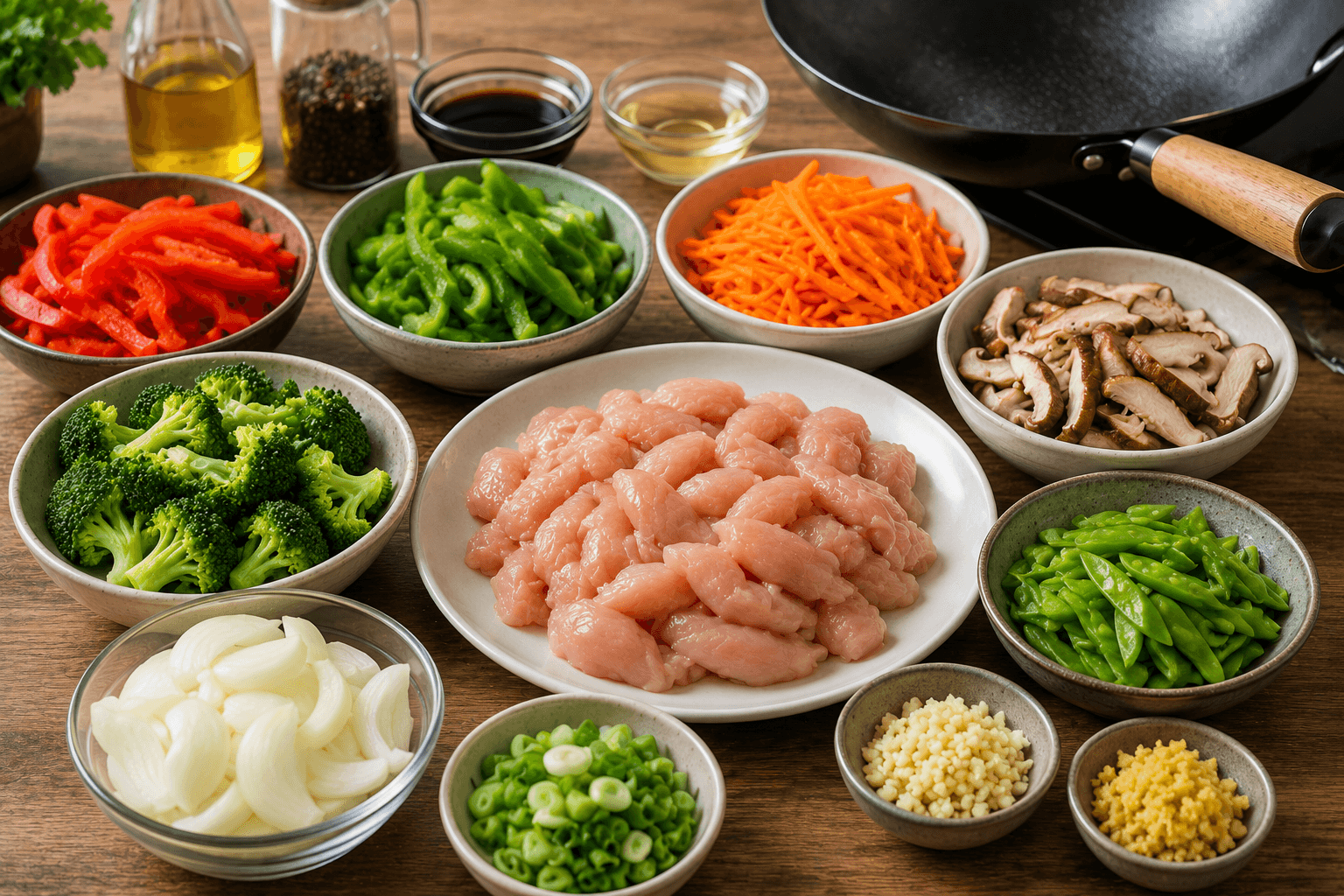
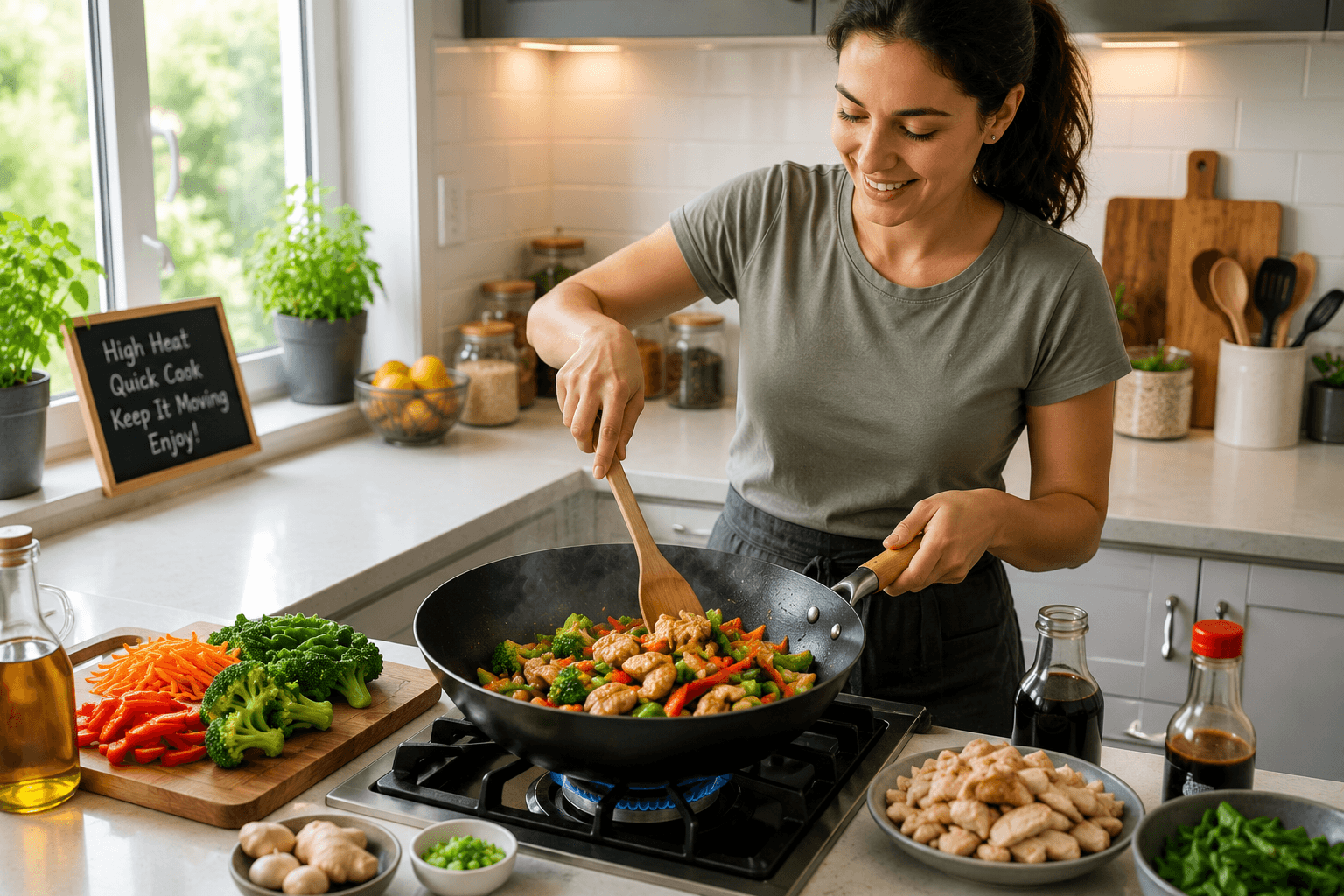
Chef’s Secret: Prepare every ingredient before turning on the stove. Stir frying moves so quickly that there’s rarely time to chop vegetables or mix sauce once cooking begins.
- Preheat the pan thoroughly before adding oil.
- Use high-smoke-point cooking oils.
- Cook protein and vegetables separately when necessary.
- Keep ingredients moving, but don’t stir constantly.
- Add delicate vegetables near the end.
- Finish with sauce during the last minute of cooking.
- Serve immediately for the best texture.
Whether you prefer a wok or skillet, mastering these techniques will have a greater impact on your meals than buying expensive cookware.
So, Which Should You Buy?
If you’re still deciding between a wok and a skillet, think about how you actually cook at home.
A carbon steel wok is the better choice for cooks who have a gas stove, enjoy authentic Asian cooking techniques, and don’t mind learning new skills.
A large stainless steel or cast iron skillet is usually the better investment for people using electric or induction cooktops, those who value versatility, or anyone looking for cookware that’s easy to maintain.
For many households, owning both is the ideal solution. A skillet handles everyday meals with ease, while a wok shines when you want the speed, movement, and excitement of traditional stir frying.
Frequently Asked Questions
Is a wok better than a skillet for stir fry?
It depends on your cooking setup. In the wok vs skillet stir fry comparison, a carbon steel wok usually performs better on a powerful gas stove because it creates multiple heat zones and allows ingredients to cook quickly. A large skillet often delivers more consistent results on electric and induction cooktops due to its flat cooking surface.
Can you make a good stir fry in a regular skillet?
Absolutely. A quality stainless steel or cast iron skillet can produce an excellent stir fry when it’s thoroughly preheated, the ingredients are cooked in batches, and a high-smoke-point oil is used. Many home cooks achieve outstanding results without owning a traditional wok.
Why do restaurants almost always use woks?
Most commercial kitchens use high-powered gas burners that generate far more heat than a typical home stove. A carbon steel wok is designed to take advantage of that intense heat, allowing chefs to cook food extremely quickly while creating the lightly smoky flavour known as wok hei.
What is the best material for a stir fry pan?
Carbon steel is widely considered the best material because it heats rapidly, responds quickly to temperature changes, and develops a naturally non-stick cooking surface with seasoning. Stainless steel and cast iron are also excellent choices, especially for home kitchens.
Do I need a nonstick pan for stir fry?
No. While nonstick pans are convenient, they usually aren’t designed for the very high temperatures used in stir frying. Carbon steel, stainless steel, and cast iron are generally better options for achieving proper browning and searing.
Which oil works best for stir frying?
Choose an oil with a high smoke point, such as avocado oil, peanut oil, canola oil, or refined sunflower oil. If you’re unsure which oil to use, read our guide on the best oil for stir fry.
Can I use a wok on an induction cooktop?
Yes, but you’ll need an induction-compatible flat-bottom wok. A traditional round-bottom wok won’t make enough contact with the induction surface to heat efficiently.
References
Final Thoughts
After comparing every aspect of the wok vs skillet stir fry debate, one conclusion stands out: there isn’t a single winner for every kitchen.
If you cook on a gas stove and enjoy mastering traditional techniques, a carbon steel wok offers unmatched speed, responsiveness, and versatility. Its unique shape allows ingredients to move through different heat zones, making it the preferred choice for authentic stir frying.
If your kitchen has an electric or induction cooktop, a high-quality skillet is often the smarter investment. Its flat cooking surface maximizes contact with the burner, delivering even heating and reliable performance for quick weeknight meals.
Ultimately, your cooking technique matters more than the cookware itself. Preheating the pan, avoiding overcrowding, preparing ingredients in advance, and using the right oil will improve your stir fries far more than switching pans.
Whether you’re making a simple vegetable stir fry or one of our popular chicken recipes, both a wok and a skillet can help you create fast, flavorful meals with restaurant-quality results.
🍽️ You Might Also Like
📧 Save This Recipe For Later
Enter your email and we will send this recipe directly to your inbox.