
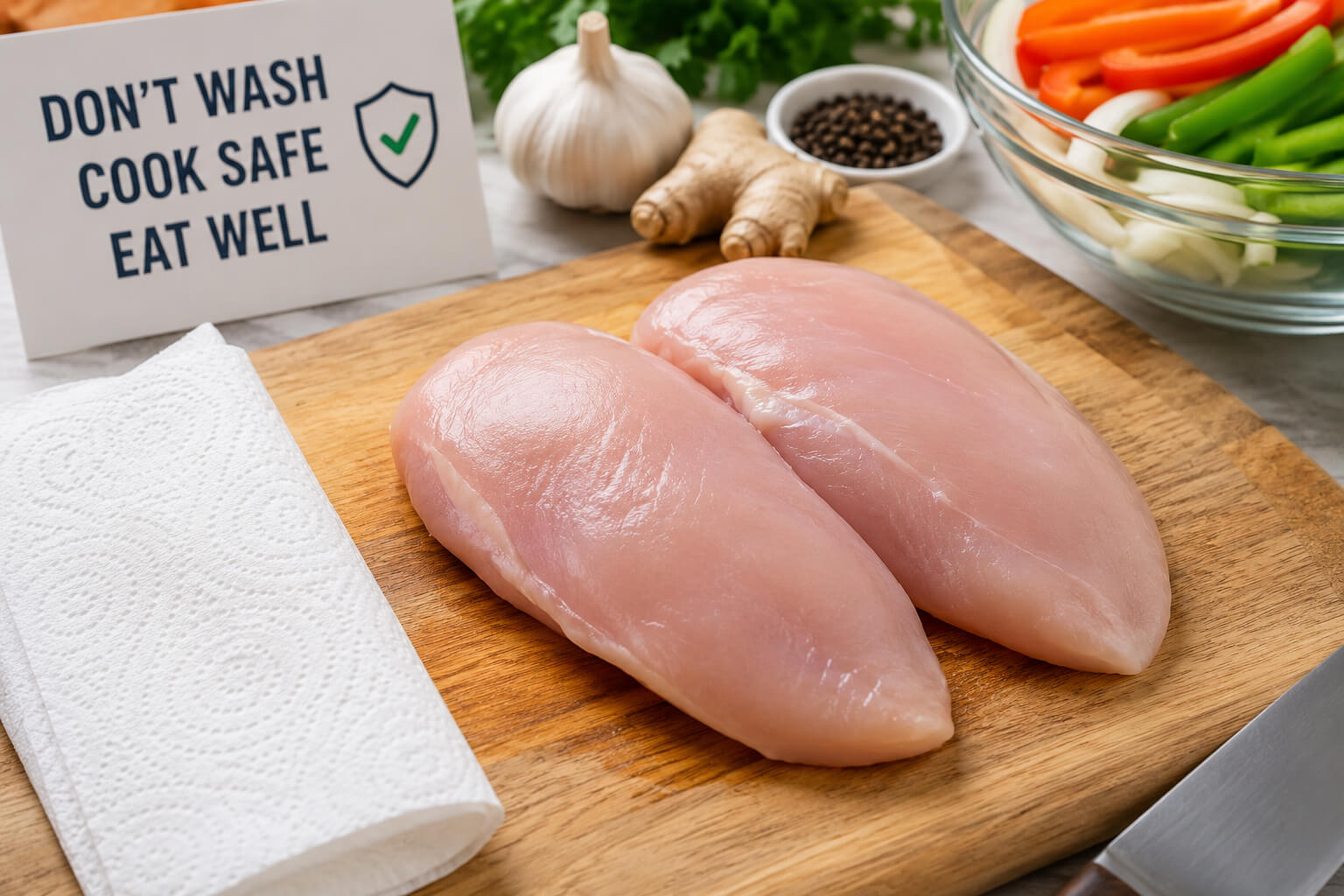
Should You Wash Chicken Before Stir Fry?
Should You Wash Chicken Before Stir Fry?
If you’ve ever prepared a homemade chicken stir fry, you’ve probably wondered whether you should wash chicken before stir fry. It’s a common question, especially since many people learned from family traditions that rinsing raw chicken removes bacteria and makes it cleaner. However, modern food safety recommendations tell a very different story.
Understanding whether to wash chicken before stir fry is important for both food safety and cooking quality. While rinsing chicken might seem harmless, it can actually spread harmful bacteria around your sink, countertops, utensils, and nearby foods. Instead of making chicken safer, washing it often increases the risk of cross-contamination.
The good news is that properly cooking chicken to a safe internal temperature destroys harmful bacteria without needing to rinse it first. By following a few simple preparation steps, you can make delicious, juicy stir fry while keeping your kitchen safe.
In this guide, you’ll learn what food safety experts recommend, why washing chicken isn’t necessary, when you should pat chicken dry instead, and the best preparation practices before cooking your next stir fry.
Quick Answer
No, you should not wash chicken before stir fry. Food safety experts, including the USDA, recommend skipping this step because washing raw chicken can spread harmful bacteria through water droplets around your kitchen. Instead, remove the chicken from its packaging, pat it dry with paper towels if needed, season or marinate it, and cook it until it reaches an internal temperature of 165°F (74°C). Proper cooking—not washing—is what makes chicken safe to eat.
Table of Contents
Why Do People Wash Chicken Before Stir Fry?
Many home cooks grew up watching parents or grandparents rinse raw chicken under running water before cooking. For decades, this practice was believed to remove dirt, blood, slime, or bacteria from the meat.
Today, researchers understand much more about foodborne bacteria and how they spread inside the kitchen. While washing chicken may make it look cleaner, it does not eliminate dangerous microorganisms such as Salmonella or Campylobacter. These bacteria are attached to the surface of the meat and can only be reliably destroyed by proper cooking temperatures.
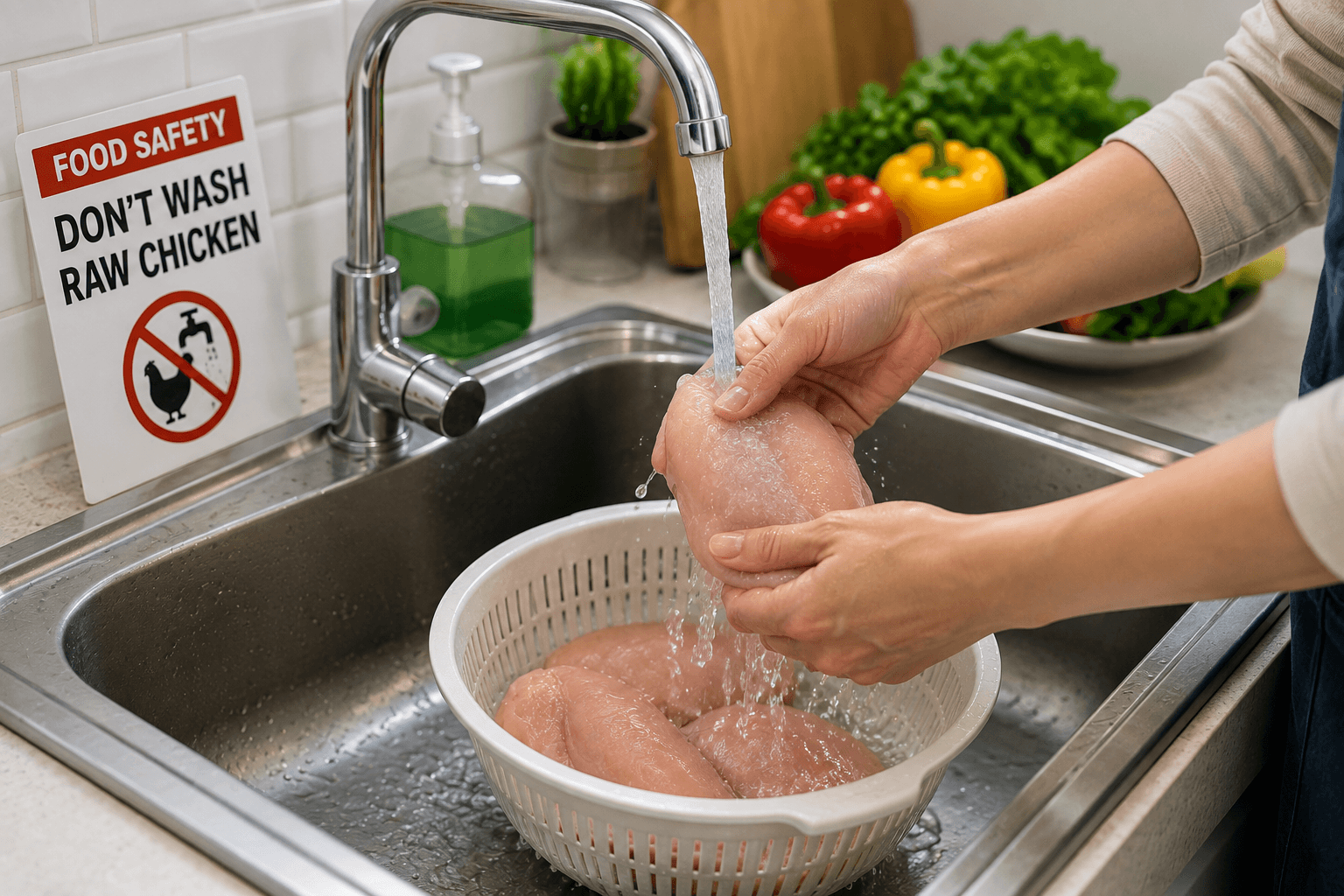
Another reason people choose to wash chicken before stir fry is to remove packaging liquid. The juices found inside chicken packages are mostly water and natural proteins, not harmful contaminants that require rinsing. If excess moisture is present, simply patting the chicken dry with disposable paper towels is a much safer option.
Kitchen Tip: If your chicken feels slippery after opening the package, gently blot it dry with paper towels instead of rinsing it. Dry chicken also browns more effectively during stir frying.
Should You Wash Chicken Before Stir Fry?
The simple answer is no. You should not wash chicken before stir fry because doing so provides no food safety benefit. In fact, both the USDA and CDC specifically recommend against washing raw poultry before cooking.
When water hits raw chicken, tiny droplets splash outward in every direction. Those droplets may carry invisible bacteria onto nearby dishes, vegetables, countertops, cutting boards, faucets, clothing, and even your hands.
Many of these contaminated surfaces may not appear dirty, making accidental cross-contamination much more likely. This is why professional kitchens avoid washing poultry before cooking.
| Practice | Safe? | Recommended? |
|---|---|---|
| Wash raw chicken under water | ❌ No | Never recommended |
| Pat chicken dry with paper towels | ✅ Yes | Recommended |
| Cook chicken to 165°F | ✅ Yes | Always required |
| Wash hands after handling chicken | ✅ Yes | Always recommended |
If you’re preparing sliced chicken for stir fry, keeping the chicken dry instead of rinsing it also improves cooking performance. Excess surface moisture creates steam inside the pan, making it harder to develop the flavorful golden-brown sear that gives stir fry its signature taste.
For more preparation tips, see our guide on how to marinate chicken for stir fry before cooking.
Why Washing Chicken Can Be Dangerous
The biggest concern isn’t the chicken itself—it’s where the bacteria travel.
Research has shown that running water can spread microscopic droplets several feet away from the sink. These droplets may land on clean dishes, fresh vegetables, fruit, kitchen towels, faucet handles, countertops, or spice containers.
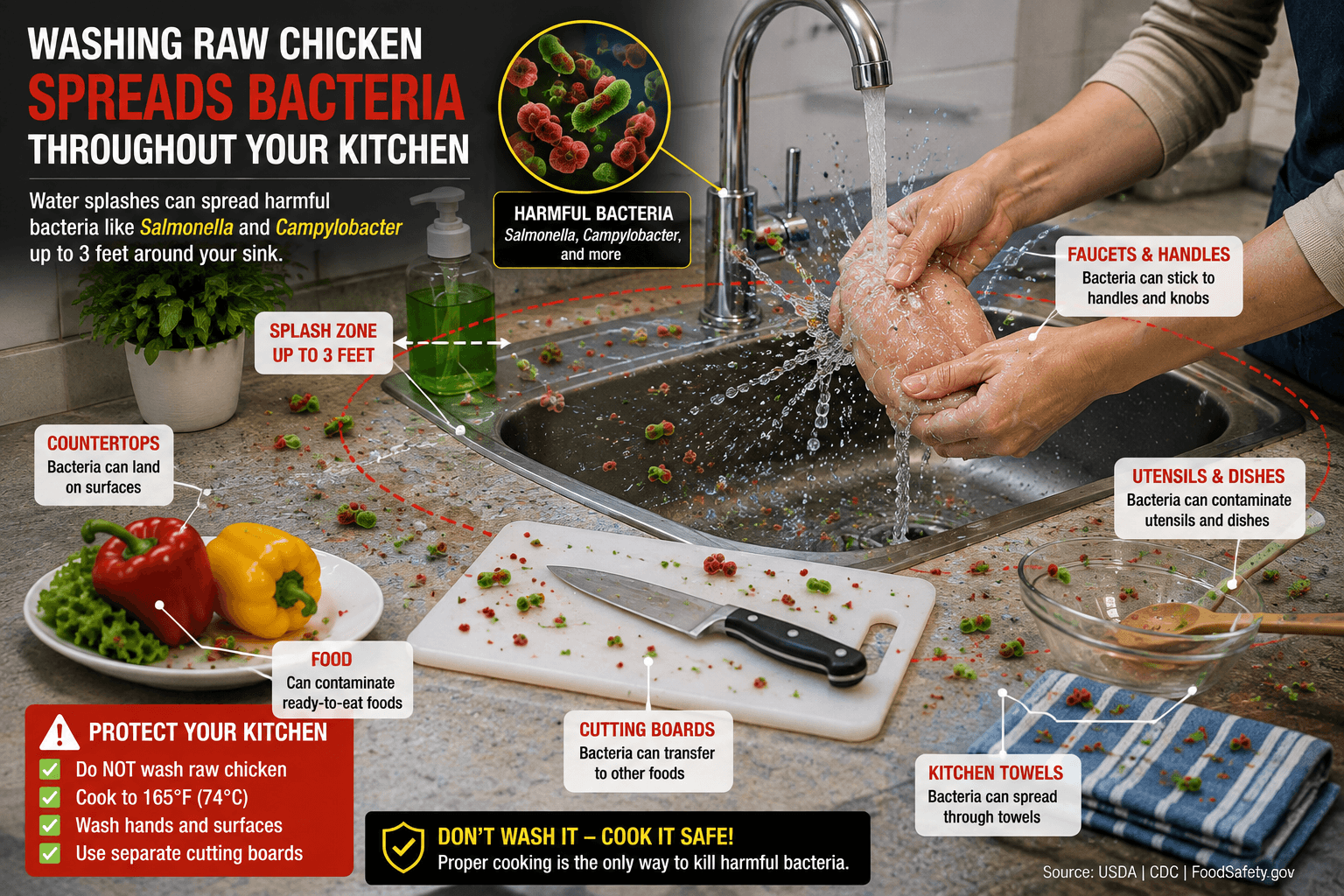
This invisible contamination is known as cross-contamination, and it’s one of the leading causes of foodborne illness in home kitchens. Even if the chicken is cooked safely afterward, bacteria left behind on nearby surfaces can contaminate foods that won’t be cooked, such as salads, fruits, or bread.
Food Safety Warning: Washing raw chicken increases the risk of spreading harmful bacteria throughout your kitchen. Cooking chicken thoroughly—not rinsing it—is the only reliable way to eliminate dangerous bacteria.
How to Prepare Chicken Safely Before Stir Fry
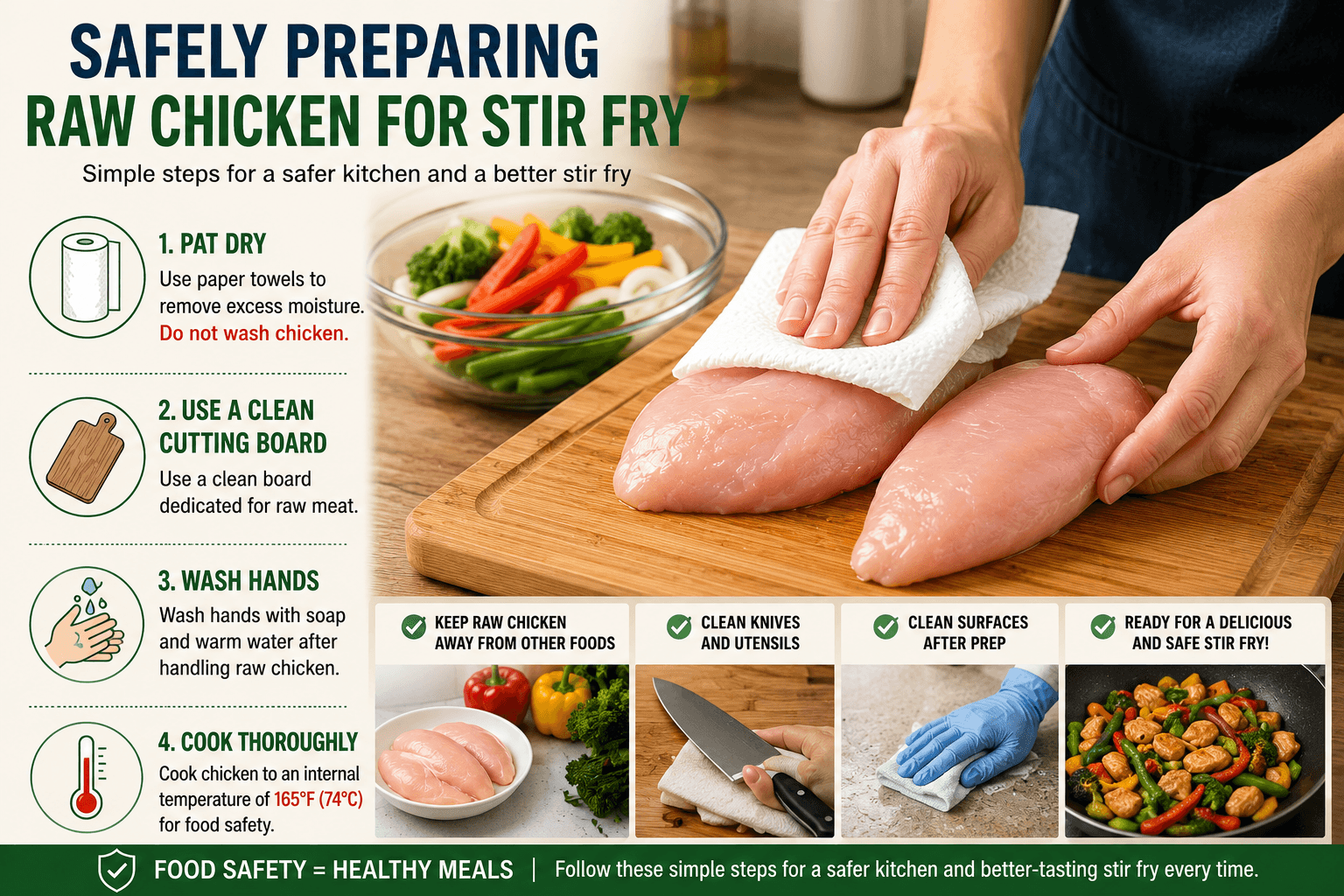
If you should not wash chicken before stir fry, what should you do instead? Fortunately, preparing chicken safely is simple and only takes a few minutes. These steps reduce the risk of cross-contamination while helping you achieve tender, flavorful chicken with a beautiful golden sear.
The key is to handle raw chicken carefully, keep your work area clean, and rely on proper cooking temperatures rather than rinsing. Professional chefs and food safety experts follow these same practices every day.
Step 1: Open the Package Carefully
Remove the chicken from its packaging without splashing any juices onto nearby surfaces. Dispose of the packaging immediately in a covered trash can to reduce the chance of spreading bacteria.
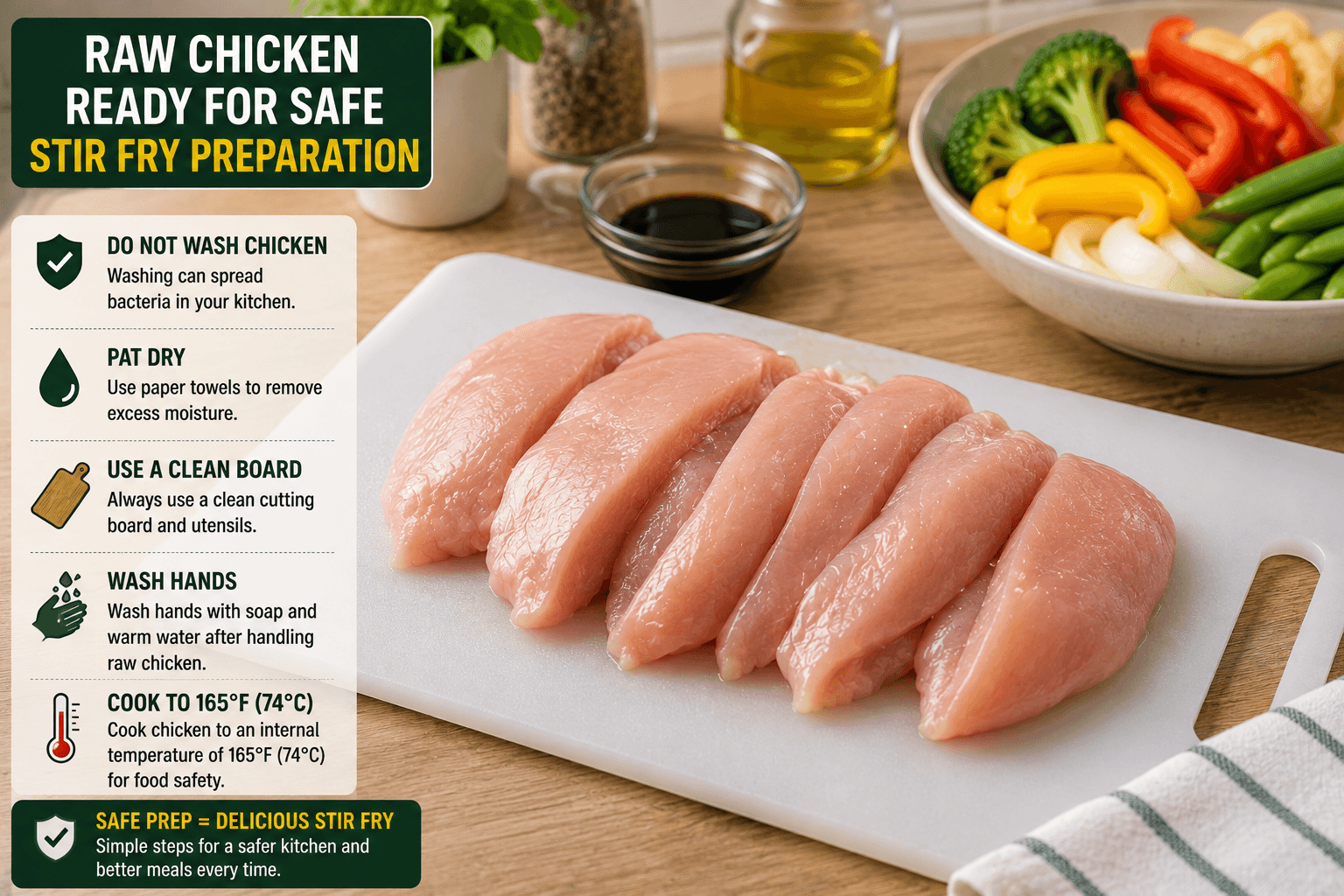
Step 2: Pat the Chicken Dry
Instead of trying to wash chicken before stir fry, use disposable paper towels to gently pat the chicken dry. Removing excess surface moisture improves browning, helps seasonings stick better, and prevents the chicken from steaming in the pan.
Pro Tip: Dry chicken develops better caramelization during stir frying. That golden-brown color creates richer flavor through the Maillard reaction.
Step 3: Slice Evenly
Cut the chicken into thin, uniform strips about ¼ inch thick. Even-sized pieces cook at the same rate, reducing the chance of dry or undercooked sections.
Need help cutting chicken correctly? Read our guide on how to make chicken stir fry for slicing techniques that produce restaurant-quality results.
Step 4: Marinate if Desired
Marinating adds flavor and helps keep lean chicken breast juicy during the quick, high-heat cooking process. Common marinade ingredients include soy sauce, cornstarch, sesame oil, garlic, ginger, and a small amount of oil.
For detailed instructions, visit How to Marinate Chicken for Stir Fry.
Step 5: Cook Thoroughly
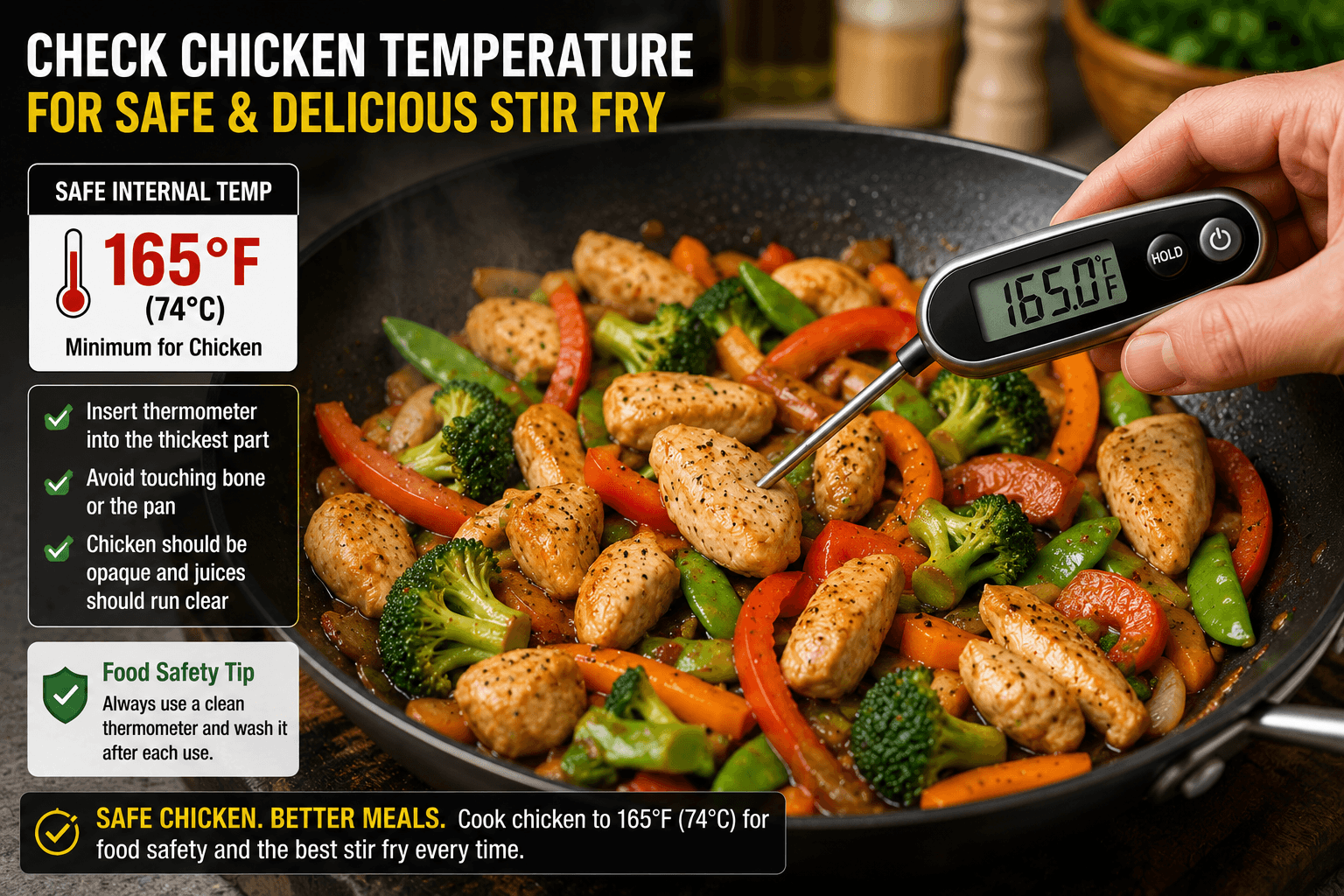
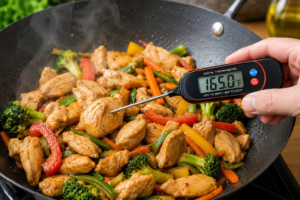
No matter which cut you use, chicken must reach an internal temperature of 165°F (74°C). A digital instant-read thermometer is the easiest way to confirm the chicken is fully cooked without overcooking it.
You can learn more in our guide about the correct chicken stir fry temperature.
Patting Chicken Dry vs. Washing Chicken
Many people confuse drying chicken with washing it. Although both involve handling raw chicken before cooking, they serve completely different purposes.
| Pat Dry | Wash Chicken |
|---|---|
| Removes excess moisture | Spreads bacteria through water droplets |
| Improves browning | Provides no food safety benefit |
| Helps seasonings stick | May contaminate nearby surfaces |
| Recommended by chefs | Not recommended by USDA |
If you’re wondering whether to wash chicken before stir fry, remember that drying the chicken with paper towels is all you need. It keeps your kitchen safer and also improves the final texture of your stir fry.
Kitchen Secret: Restaurants rarely rinse raw chicken. Instead, they dry it well before seasoning because dry surfaces brown faster and produce better flavor during high-heat cooking.
Common Myths About Washing Chicken
Despite years of food safety education, several myths continue to circulate about washing raw chicken. Understanding the facts helps you make safer decisions in your own kitchen.
Myth 1: Washing Removes Bacteria
This is perhaps the most common misconception. Water does not kill Salmonella or Campylobacter. Instead, it spreads them around your kitchen. Proper cooking is the only reliable method for destroying these harmful bacteria.
Myth 2: Chicken Is Dirty Straight From the Package
Commercial chicken is processed under strict food safety regulations. While raw chicken naturally contains bacteria that require proper cooking, it is not “dirty” in the way many people imagine. Washing adds risk without improving safety.
Myth 3: Vinegar or Lemon Juice Makes Washing Safe
Some people believe rinsing chicken with vinegar, lemon juice, or salt water kills bacteria. While acidic ingredients may slightly reduce bacteria on the surface, they do not eliminate harmful pathogens completely. They also cannot prevent cross-contamination caused by splashing water.
Myth 4: Everyone Should Wash Chicken Because Grandparents Did
Food safety recommendations change as scientific research improves. Many kitchen habits were passed down through generations before researchers understood how easily bacteria spread through water droplets. Modern recommendations are based on extensive food safety studies rather than tradition.
Remember: Tradition is not always the safest guide. Current USDA and CDC recommendations clearly advise against washing raw poultry before cooking.
When Is It Okay to Rinse Chicken?
For almost every home cooking situation, there is no reason to wash chicken before stir fry or before preparing any other chicken recipe. The only rare exceptions involve certain specialty processing methods or cultural preparations where additional cleaning steps are performed under carefully controlled conditions.
For the average home cook making stir fry, grilled chicken, baked chicken, or roasted chicken, rinsing is unnecessary and discouraged.
Instead, focus on:
- Keeping raw chicken separate from ready-to-eat foods.
- Using separate cutting boards for raw meat and vegetables.
- Washing hands thoroughly with soap after handling chicken.
- Cleaning knives, cutting boards, and countertops immediately.
- Cooking chicken to 165°F (74°C).
If you’re preparing frozen chicken, first read our guide on how to thaw chicken for stir fry to ensure safe handling before cooking.
How to Prevent Cross-Contamination When Preparing Chicken for Stir Fry
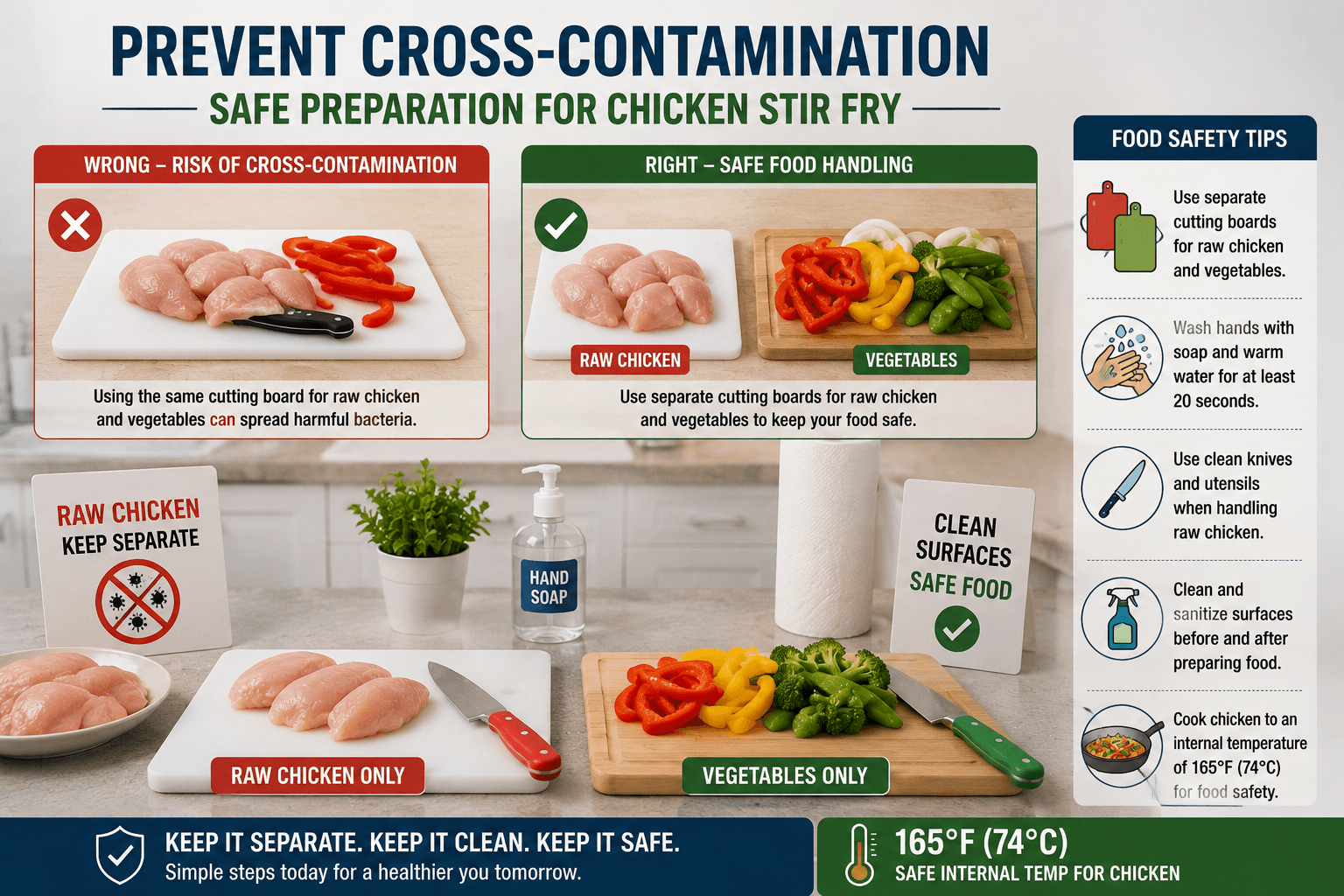
One of the biggest reasons experts advise against trying to wash chicken before stir fry is the increased risk of cross-contamination. Cross-contamination happens when harmful bacteria from raw chicken spread to foods, utensils, hands, or kitchen surfaces that will not be cooked again.
Even tiny water droplets created while rinsing chicken can carry bacteria several feet from the sink. These droplets are nearly impossible to see, which is why many people unknowingly contaminate their kitchens.
Fortunately, preventing cross-contamination is simple when you follow a few safe food-handling practices.
Use Separate Cutting Boards
Always use one cutting board for raw chicken and another for vegetables or cooked foods. Color-coded cutting boards make this habit easier to remember and greatly reduce the chance of transferring bacteria.
Wash Your Hands Often
After touching raw chicken, wash your hands with warm water and soap for at least 20 seconds before handling anything else. This simple habit prevents bacteria from spreading to cabinet handles, spice jars, phones, and other kitchen tools.
Clean Kitchen Surfaces Immediately
Once you’ve finished preparing the chicken, thoroughly wash cutting boards, knives, countertops, and any utensils that came into contact with raw meat using hot, soapy water.
Kitchen Tip: Keep disposable paper towels nearby while preparing raw chicken. They’re ideal for cleaning small spills and reducing the spread of bacteria.
Why Dry Chicken Makes Better Stir Fry
Another reason you should skip trying to wash chicken before stir fry is that moisture works against proper stir-frying.
A traditional stir fry relies on high heat and quick cooking. If the chicken is wet, the water must evaporate before browning can begin. Instead of searing, the chicken steams in its own moisture.
Steamed chicken often becomes pale, rubbery, and less flavorful. Dry chicken, on the other hand, quickly develops a lightly browned exterior while remaining juicy inside.
| Dry Chicken | Wet Chicken |
|---|---|
| Browns quickly | Steams before browning |
| Better texture | Softer surface |
| Seasonings stick better | Seasonings slide off |
| Rich stir-fry flavor | Less caramelization |
If you want restaurant-style stir fry, drying the chicken with paper towels is one of the easiest improvements you can make.
Chef’s Secret: Many professional cooks refrigerate sliced chicken uncovered for 15–20 minutes before cooking. This dries the surface slightly, helping it brown even faster in a hot wok.
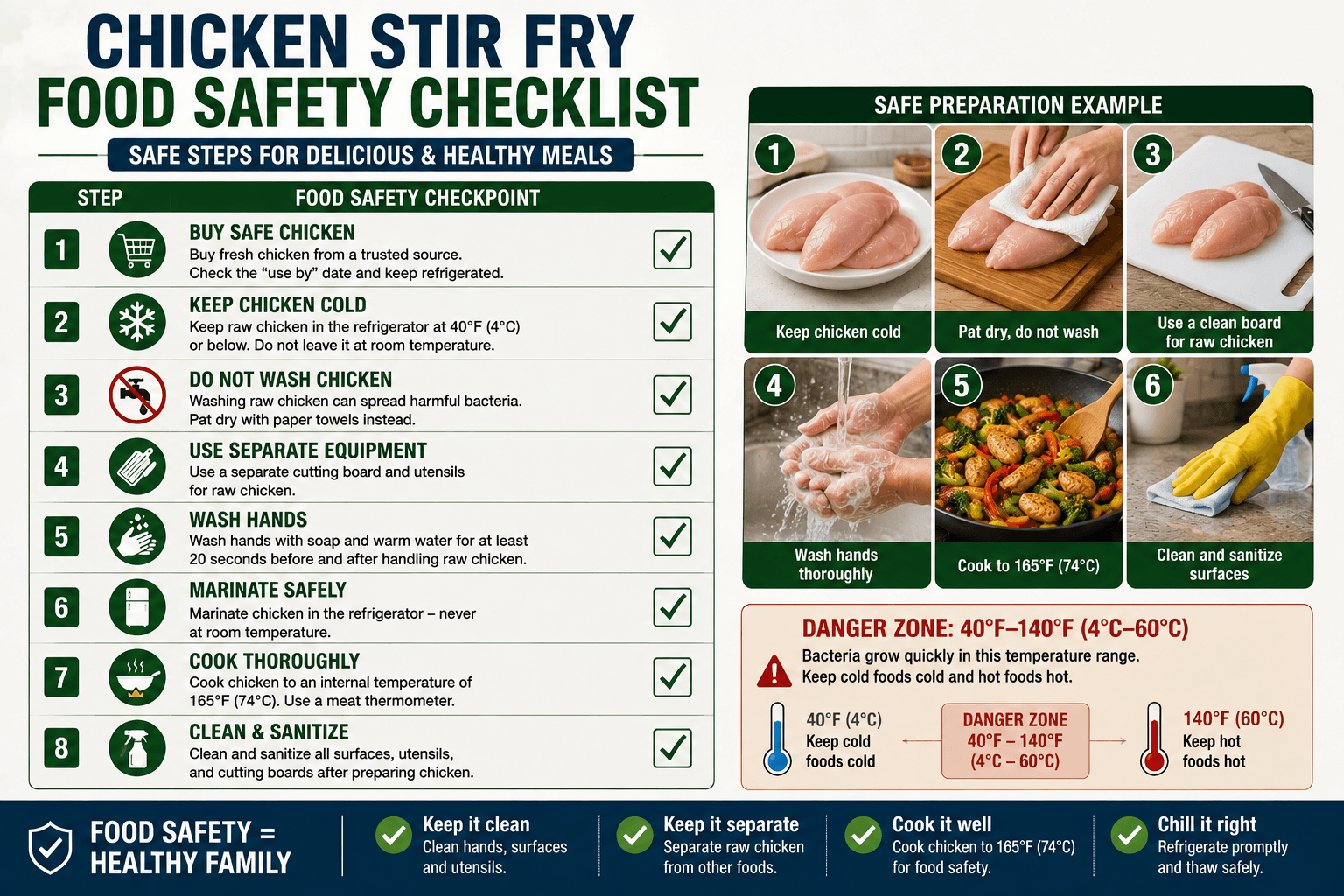
Food Safety Checklist Before Cooking Stir Fry
Instead of wondering whether you should wash chicken before stir fry, follow this simple food safety checklist every time you cook.
| Task | Completed? |
|---|---|
| Do not rinse raw chicken | ✅ |
| Pat chicken dry with paper towels | ✅ |
| Use a clean cutting board | ✅ |
| Wash hands after handling raw chicken | ✅ |
| Clean knives and countertops | ✅ |
| Cook chicken to 165°F (74°C) | ✅ |
Following this checklist will do far more to protect your family than rinsing raw chicken ever could.
Common Mistakes to Avoid
Even experienced home cooks sometimes make small mistakes that affect food safety or cooking quality. Avoid these common errors when preparing chicken stir fry.
- Washing raw chicken in the sink.
- Using the same cutting board for vegetables and raw chicken.
- Forgetting to wash hands after handling raw poultry.
- Cooking too much chicken at once, causing it to steam.
- Skipping the use of a meat thermometer.
- Leaving raw chicken at room temperature for too long.
- Reusing marinades that touched raw chicken without boiling them first.
If you’re unsure about marinades, read our guide on whether you can safely reuse chicken marinade.
Avoid This Mistake: Never place cooked chicken back onto the same plate that previously held raw chicken unless the plate has been thoroughly washed.
How to Store Raw Chicken Before Stir Fry
Safe storage is just as important as safe preparation. Whether you’re cooking tonight or meal-prepping for later in the week, proper refrigeration helps keep chicken fresh and reduces the risk of bacterial growth.
Storage Guidelines:
- Keep raw chicken refrigerated at or below 40°F (4°C).
- Store it on the lowest refrigerator shelf to prevent leaks.
- Use within 1–2 days of purchase or freeze for longer storage.
- Thaw frozen chicken in the refrigerator, never on the countertop.
- Keep raw chicken in a sealed container or leak-proof bag.
Planning meals ahead? Visit our complete guide on how to store raw chicken for meal prep to keep your ingredients fresh and safe.
Benefits of NOT Washing Chicken
- Reduces cross-contamination.
- Keeps your kitchen cleaner.
- Improves browning during stir fry.
- Follows USDA food safety recommendations.
- Saves preparation time.
Risks of Washing Chicken
- Spreads bacteria around the sink.
- Contaminates nearby foods and utensils.
- Creates unnecessary cleanup.
- Provides no food safety benefit.
- May reduce browning by leaving excess moisture.
By understanding why you should not wash chicken before stir fry, you can prepare safer, tastier meals while following modern food safety recommendations. Proper handling, careful storage, and thorough cooking are the real keys to delicious homemade chicken stir fry.
Frequently Asked Questions
Should you wash chicken before stir fry?
No. You should not wash chicken before stir fry. The USDA and CDC recommend against washing raw chicken because it can spread harmful bacteria around your kitchen. Instead, pat the chicken dry with paper towels and cook it to an internal temperature of 165°F (74°C).
Does washing chicken remove bacteria?
No. Washing chicken does not remove harmful bacteria such as Salmonella or Campylobacter. Only cooking chicken thoroughly to 165°F (74°C) destroys these bacteria and makes the meat safe to eat.
Why do some people still wash chicken?
Many people learned this habit from older family cooking traditions. Modern food safety research has shown that washing raw chicken increases the risk of cross-contamination instead of making it safer.
Can I wash chicken with vinegar or lemon juice?
No. Vinegar, lemon juice, salt water, or other rinses do not reliably eliminate harmful bacteria from raw chicken. They also do not prevent bacteria from spreading around your sink and countertops.
What should I do instead of washing chicken?
Remove the chicken from its package, pat it dry with paper towels if necessary, season or marinate it, and cook it immediately. Always wash your hands, utensils, and cutting boards after handling raw chicken.
Should I pat chicken dry before stir frying?
Yes. Patting chicken dry removes excess moisture, helps it brown more quickly, and improves the overall texture of your stir fry. Unlike washing, drying the surface does not increase the risk of spreading bacteria.
How can I tell when stir fry chicken is fully cooked?
The safest method is to use a digital meat thermometer. Chicken is fully cooked when the thickest piece reaches an internal temperature of 165°F (74°C). The meat should also be opaque with clear juices.
Is washing chicken ever recommended?
For everyday home cooking, no. Food safety authorities recommend skipping this step for all common chicken recipes, including stir fry, grilling, roasting, baking, and sautéing.
References
Final Thoughts
If you’ve been wondering whether you should wash chicken before stir fry, the answer is clear: skip the rinse. Washing raw chicken does not improve food safety and can actually spread harmful bacteria throughout your kitchen. Modern food safety guidance recommends keeping raw chicken away from ready-to-eat foods, cleaning surfaces thoroughly, and cooking chicken to an internal temperature of 165°F (74°C).
By following these simple practices, you’ll prepare safer meals while also improving the quality of your stir fry. Dry chicken browns better, develops richer flavor, and creates the restaurant-style texture that makes homemade stir fry so satisfying. Small changes in preparation can make a big difference in both food safety and cooking results.
🍽️ You Might Also Like

📧 Save This Recipe For Later
Enter your email and we will send this recipe directly to your inbox.