

Best Chicken Cuts for Healthy Stir Fry Recipes
Best Chicken Cuts for Healthy Stir Fry Recipes
Choosing the best chicken cuts stir fry recipes require is one of the easiest ways to improve flavor, texture, and nutrition. While vegetables and sauces often get the spotlight, the type of chicken you use has an even bigger impact on the final dish. The right cut stays juicy during high-heat cooking, absorbs marinades more effectively, and provides the lean protein that makes stir fry a healthy weeknight meal.
Not every chicken cut performs the same in a hot skillet or wok. Chicken breast is lean and cooks quickly, thighs remain exceptionally tender, and tenderloins offer convenience with minimal preparation. Understanding the strengths of each option helps you choose the perfect cut for your cooking style, dietary goals, and favorite recipes.
In this guide, you’ll learn the best chicken cuts stir fry cooks recommend, how they compare nutritionally, which cuts work best for different recipes, and practical tips for getting juicy, flavorful results every time.
Quick Answer
The best chicken cuts stir fry recipes use are chicken breast, chicken thighs, and chicken tenderloins. Chicken breast is the healthiest lean option with the highest protein content, chicken thighs deliver the juiciest texture and richer flavor, while chicken tenderloins cook quickly and remain naturally tender. The best choice depends on whether your priority is lower calories, maximum tenderness, or convenience.
- Chicken Breast: Lean, high in protein, ideal for healthy meals.
- Chicken Thighs: Juicy, flavorful, and forgiving during cooking.
- Chicken Tenderloins: Naturally tender and quick to prepare.
- Boneless Skinless Cuts: Best overall option for healthy stir fry recipes.
Table of Contents
Why Choosing the Right Chicken Cut Matters
Many people focus on sauces or vegetables when making stir fry, but selecting the best chicken cuts stir fry recipes call for is just as important. Different parts of the chicken contain varying amounts of fat, connective tissue, and moisture, which directly affect how they cook over high heat.
Because stir frying uses intense heat and short cooking times, lean cuts can dry out if they’re overcooked, while cuts with a little more fat remain tender even when cooked slightly longer. Understanding these differences helps you avoid tough, chewy chicken and consistently produce restaurant-quality results.
Texture Makes a Big Difference
Chicken breast has a fine grain and mild flavor, making it excellent for absorbing marinades and sauces. However, it benefits from proper slicing and careful cooking to stay juicy.
Chicken thighs naturally contain more intramuscular fat, giving them a softer bite and making them much more forgiving for beginner cooks.
Tenderloins offer one of the softest textures available, requiring very little trimming and cooking quickly without becoming tough.
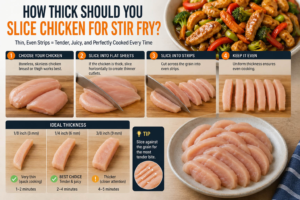
Tip: Slice chicken across the grain into thin, even strips about ¼ inch thick. Uniform pieces cook faster and more evenly, reducing the risk of dry or undercooked meat.
Nutrition Depends on the Cut
The best chicken cuts stir fry enthusiasts choose often depends on personal health goals. Chicken breast is naturally lower in calories and saturated fat while providing more protein per serving, making it a favorite for meal prep, weight management, and high-protein diets.
Chicken thighs contain slightly more calories and fat but provide exceptional flavor and tenderness that many home cooks prefer. When prepared without the skin, thighs still fit well into a balanced, healthy eating plan.
Tenderloins fall somewhere between convenience and nutrition, offering lean protein with minimal preparation.
Kitchen Secret: Even the leanest chicken breast can stay juicy when sliced thinly, marinated briefly, and cooked over high heat for only a few minutes. Most dry stir fry chicken is caused by overcooking rather than choosing the wrong cut.
Overview of the Best Chicken Cuts
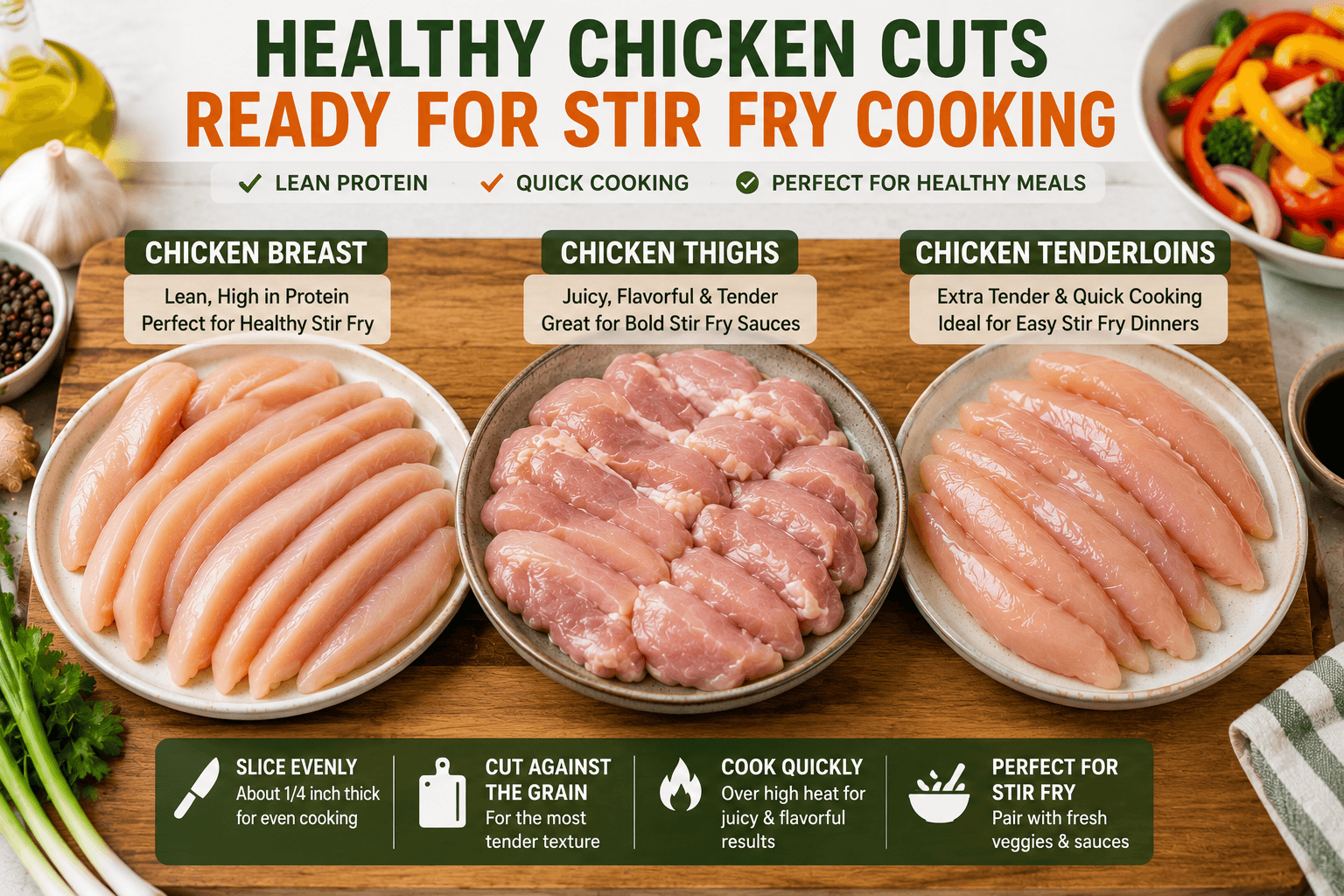
If you’re wondering which option consistently delivers the best results, these are the three cuts most professional chefs and experienced home cooks recommend.
| Chicken Cut | Best For | Texture | Health Rating | Ease of Cooking |
|---|---|---|---|---|
| Chicken Breast | Healthy meals, meal prep | Lean and firm | ★★★★★ | ★★★★☆ |
| Chicken Thighs | Maximum flavor | Very juicy | ★★★★☆ | ★★★★★ |
| Chicken Tenderloins | Quick dinners | Very tender | ★★★★★ | ★★★★★ |
Each option has advantages, but there isn’t one perfect answer for everyone. The best chicken cuts stir fry recipes use depend on whether you’re prioritizing lean protein, rich flavor, or quick preparation.
If your goal is the healthiest possible stir fry, skinless chicken breast remains the top recommendation. If you’re cooking for maximum tenderness and don’t mind slightly higher fat content, chicken thighs are difficult to beat. For busy weeknights, tenderloins provide an excellent balance of convenience and quality.

Once you’ve selected the right cut, the next step is learning how each one performs in real cooking situations. In the following section, we’ll compare chicken breast, thighs, and tenderloins in detail, including flavor, nutrition, cooking performance, and the types of stir fry recipes where each cut truly shines.
Comparing the Best Chicken Cuts for Stir Fry
Now that you know the three most popular options, let’s look at how each one performs in real cooking situations. Although all three cuts can produce delicious meals, the best chicken cuts stir fry recipes use depend on your priorities, including nutrition, texture, flavor, cooking time, and budget.
Chicken Breast: The Leanest Choice
Skinless, boneless chicken breast is the most common choice for healthy stir fry recipes. It contains the highest amount of lean protein while remaining low in calories and saturated fat.
Because chicken breast has very little fat, it cooks quickly over high heat. However, it can become dry if left in the pan too long. Slicing the meat thinly and cooking it in small batches helps retain moisture.
Another advantage is its mild flavor. Chicken breast easily absorbs marinades, spices, and stir fry sauces, making it suitable for almost every recipe.
- Highest protein content
- Lowest calories
- Excellent for meal prep
- Works well with nearly every sauce
- Best option for weight-conscious meals
Tip: Marinate chicken breast for 15–30 minutes before cooking. Even a simple mixture of soy sauce, garlic, and a small amount of oil helps keep the meat juicy.
Chicken Thighs: The Most Flavorful Option
Boneless skinless chicken thighs contain slightly more fat than chicken breast, but that extra fat creates exceptional tenderness during stir frying.
Unlike chicken breast, thighs are much harder to overcook. They remain juicy even when exposed to high heat for a little longer, making them an excellent choice for beginner cooks.
The richer flavor also pairs especially well with bold sauces like teriyaki, garlic, black pepper, sesame, and spicy chili sauces.
- Naturally juicy
- Rich chicken flavor
- Very forgiving during cooking
- Ideal for bold sauces
- Excellent restaurant-style texture
Chef’s Secret: Many restaurant stir fry dishes use boneless chicken thighs because they stay moist even after sitting briefly before serving.

Chicken Tenderloins: Fast and Convenient
Chicken tenderloins are located underneath the breast and are naturally one of the softest muscles on the chicken.
Because they contain very little connective tissue, tenderloins require minimal trimming and cook extremely quickly. This makes them ideal for busy weeknight dinners.
Although slightly more expensive than whole chicken breast, many cooks appreciate the convenience and consistently tender texture.
- Very tender
- Minimal preparation
- Quick cooking time
- Excellent for beginners
- Great for family meals
Nutrition Comparison
Healthy eating isn’t just about calories. Protein, fat content, and portion size all contribute to making the best chicken cuts stir fry recipes fit your nutritional goals.
| Per 100g (Cooked) | Chicken Breast | Chicken Thigh | Tenderloin |
|---|---|---|---|
| Calories | 165 | 209 | 170 |
| Protein | 31 g | 26 g | 30 g |
| Fat | 3.6 g | 10.9 g | 4 g |
| Best For | Weight Loss | Flavor | Convenience |
If your primary goal is reducing calories while maximizing protein, chicken breast remains the clear winner. However, if satisfaction and tenderness are equally important, chicken thighs may be worth the slightly higher calorie count.
Which Chicken Cut Is Best for Different Stir Fry Recipes?
The ideal cut often depends on the type of stir fry you’re preparing.
| Recipe Type | Recommended Cut |
|---|---|
| Healthy Stir Fry | Chicken Breast |
| Garlic Chicken Stir Fry | Chicken Thigh |
| Teriyaki Stir Fry | Chicken Thigh |
| Chicken Broccoli Stir Fry | Chicken Breast |
| Chicken Mushroom Stir Fry | Tenderloin |
| Meal Prep | Chicken Breast |
Choosing the right cut allows you to match the cooking method and sauce to the meat’s natural characteristics, resulting in better texture and flavor.
Pros
- Chicken breast is lean and high in protein.
- Chicken thighs stay juicy during high-heat cooking.
- Tenderloins require very little preparation.
- All three cuts work well with vegetables and stir fry sauces.
- Boneless skinless cuts cook quickly.
Cons
- Chicken breast dries out if overcooked.
- Chicken thighs contain more calories.
- Tenderloins usually cost more per pound.
- Uneven slicing leads to inconsistent cooking.
- Overcrowding the pan reduces browning.
While selecting the right cut is important, proper preparation makes an equally big difference. In the next section, you’ll learn how to choose chicken at the grocery store, prepare it correctly for stir frying, and avoid the common mistakes that prevent juicy, flavorful results.
How to Choose the Best Chicken Cut at the Grocery Store
Even when you’ve decided on the best chicken cuts stir fry recipes can use, choosing high-quality chicken at the grocery store is just as important. Fresh, properly handled chicken cooks more evenly, tastes better, and is safer to prepare.
When shopping, look for boneless, skinless chicken with a natural pink color and very little excess liquid in the package. Avoid packages that appear swollen, have torn seals, or contain excessive liquid, as these may indicate improper handling or freezing.
Look for Even Thickness
Whether you buy chicken breast, thighs, or tenderloins, try to choose pieces that are similar in size. Uniform pieces are easier to slice into equal strips, helping everything cook at the same speed.
Fresh vs. Frozen Chicken
Both fresh and frozen chicken can produce excellent stir fry. Frozen chicken is often frozen shortly after processing, preserving its quality. The key is thawing it safely in the refrigerator before cooking.
Tip: Slightly chilled or partially frozen chicken is easier to slice into thin, even strips for stir fry.
Organic, Conventional, or Air-Chilled?
Many shoppers wonder whether premium chicken is necessary. While organic and air-chilled chicken can offer certain advantages, conventional chicken is perfectly suitable when handled and cooked properly.
| Type | Advantages | Best For |
|---|---|---|
| Conventional | Affordable and widely available | Everyday cooking |
| Organic | Raised under certified standards | Organic lifestyles |
| Air-Chilled | Better browning and less retained water | Restaurant-quality stir fry |

Common Mistakes When Choosing Chicken for Stir Fry
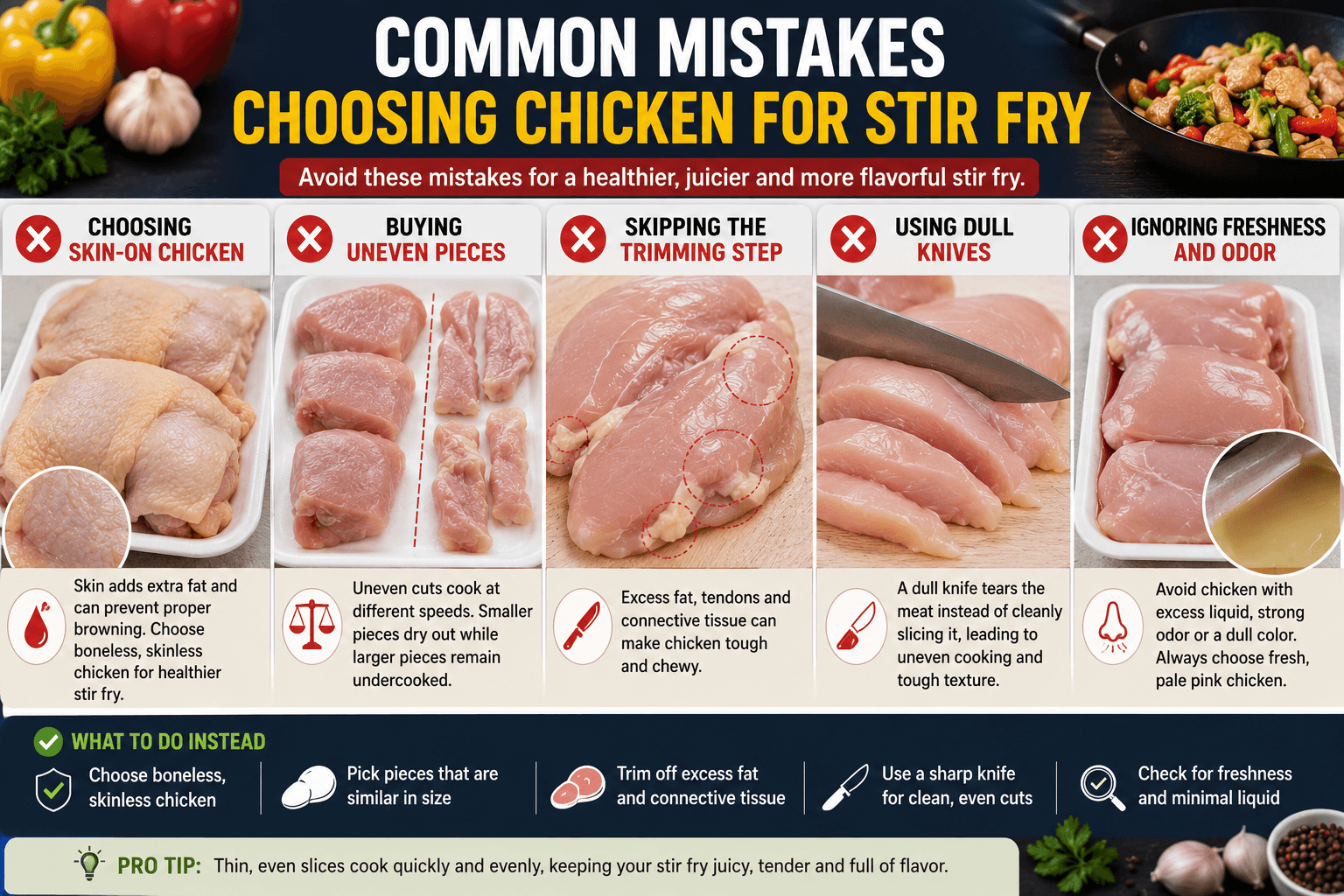
Many disappointing stir fry dinners are caused by simple mistakes before the cooking even begins. Avoiding these common errors will help you get the most from the best chicken cuts stir fry recipes recommend.
Choosing Skin-On Chicken
Skin-on chicken contains additional fat that can prevent proper browning and create an oily sauce. Boneless skinless chicken is usually the better choice for healthy stir fry.
Buying Uneven Pieces
Large and small pieces cook at different speeds. Smaller pieces dry out before thicker pieces reach a safe internal temperature.
Skipping the Trimming Step
Remove excess fat, connective tissue, and tough tendons before slicing. This improves texture and gives the finished dish a cleaner appearance.
Using Dull Knives
A sharp chef’s knife creates clean cuts without tearing the meat, making every strip cook more evenly.
Warning: Never rinse raw chicken before cooking. According to food safety experts, rinsing can spread harmful bacteria through water droplets around your sink and kitchen surfaces.
Storage and Food Safety
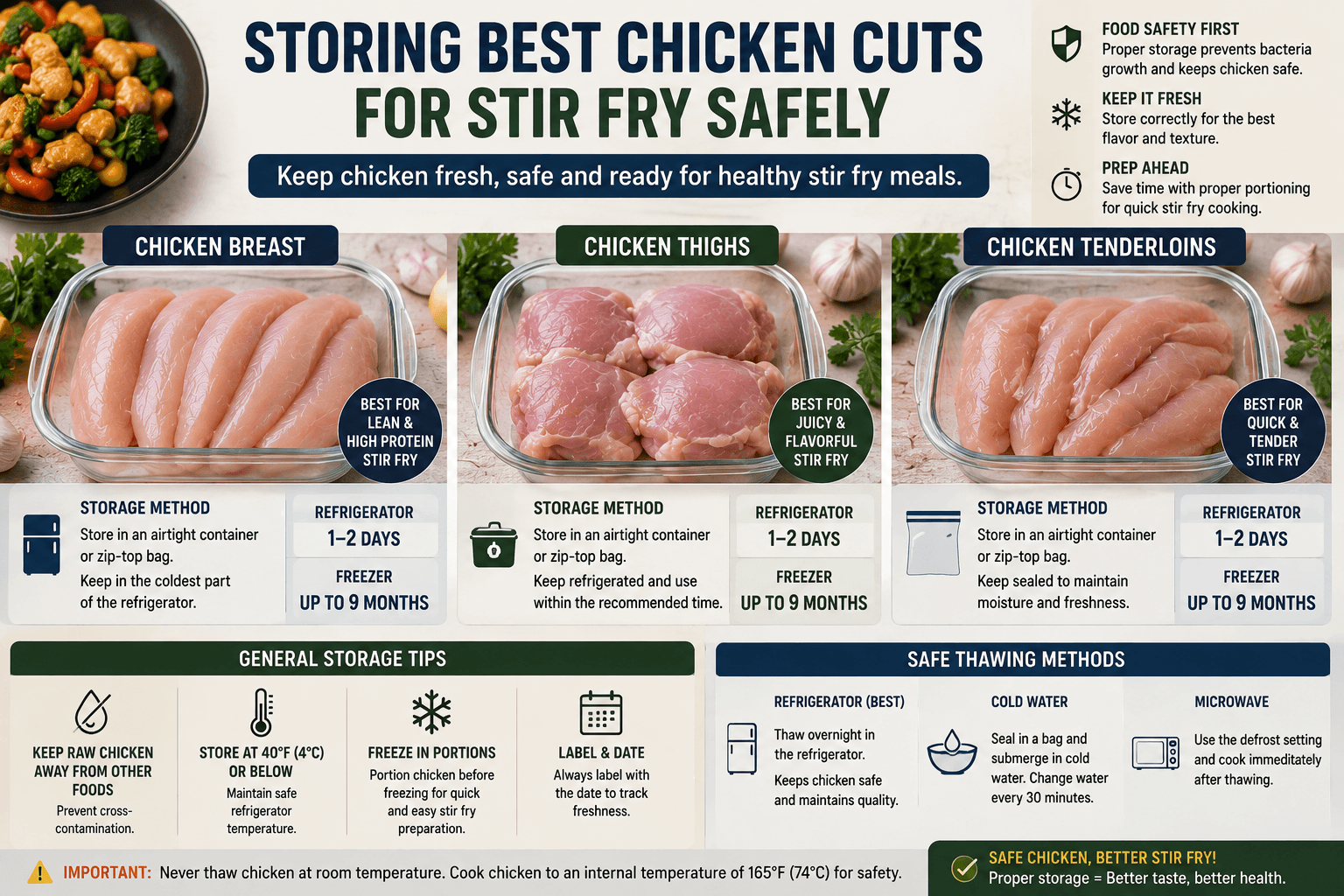
Proper storage is essential regardless of which chicken cut you choose. Safe handling protects food quality and reduces the risk of foodborne illness.
Refrigerator
- Store raw chicken at 40°F (4°C) or below.
- Use within 1–2 days of purchase.
- Keep it on the lowest refrigerator shelf to prevent dripping.
Freezer
- Freeze in airtight freezer bags or vacuum-sealed packaging.
- Best quality within 9 months.
- Label every package with the freezing date.
Leftover Stir Fry
- Refrigerate within 2 hours of cooking.
- Store in airtight containers.
- Enjoy within 3–4 days.
- Reheat to 165°F before serving.
Regardless of the cut you choose, always cook chicken until it reaches an internal temperature of 165°F (74°C) as measured with a food thermometer.
By selecting quality chicken, preparing it correctly, and following proper food safety practices, you’ll consistently achieve flavorful, juicy, and healthy stir fry meals. Next, we’ll answer the most frequently asked questions, provide trusted references, summarize the key takeaways, and finish with SEO details for publishing.
Frequently Asked Questions
What is the best chicken cut for healthy stir fry recipes?
The best chicken cuts stir fry recipes use for healthy meals are skinless, boneless chicken breast and chicken tenderloins. Both are naturally lean, high in protein, and low in saturated fat. Chicken breast is the best option if you’re looking to maximize protein while keeping calories lower.
Can I use chicken thighs instead of chicken breast in stir fry?
Yes. Boneless, skinless chicken thighs are an excellent substitute. They contain slightly more fat than chicken breast, but they stay juicier during high-heat cooking and provide richer flavor. Many restaurant-style stir fry recipes use chicken thighs because they remain tender even if cooked a little longer.
Should I cut chicken before or after marinating?
It’s best to slice the chicken before marinating. Thin, even strips absorb seasonings more quickly and cook evenly in a hot wok or skillet. This also helps the marinade coat every piece for better flavor.
How thin should chicken be sliced for stir fry?
For the best texture, slice chicken into strips about ¼ inch (6 mm) thick across the grain. Thin slices cook quickly, remain tender, and brown more evenly during stir frying.
Can I use frozen chicken for stir fry?
Yes. Frozen chicken works well as long as it is completely thawed in the refrigerator before slicing and cooking. Never thaw chicken at room temperature, as this can increase the risk of bacterial growth.
What internal temperature should chicken reach?
According to USDA guidelines, all chicken should reach an internal temperature of 165°F (74°C). Using an instant-read food thermometer is the most accurate way to ensure the chicken is safely cooked without overcooking it.
Is chicken breast always healthier than chicken thighs?
Chicken breast is generally lower in calories and fat while providing slightly more protein. However, skinless chicken thighs are still a nutritious option and fit well into a balanced diet. The healthiest choice depends on your nutritional goals and personal preferences.
References
- USDA Food Safety and Inspection Service (FSIS) – Safe minimum internal cooking temperatures, chicken handling, and storage recommendations.
- FoodSafety.gov – Food safety charts, refrigeration guidelines, and safe thawing methods.
- U.S. Food and Drug Administration (FDA) – Safe food preparation, preventing cross-contamination, and proper refrigeration practices.
- Centers for Disease Control and Prevention (CDC) – Foodborne illness prevention and safe kitchen practices.
Final Thoughts
Choosing the best chicken cuts stir fry recipes call for can dramatically improve the quality of your meals. While chicken breast remains the top choice for lean, high-protein cooking, boneless skinless chicken thighs provide unmatched juiciness, and chicken tenderloins offer outstanding convenience for busy weeknights.
The best choice ultimately depends on your cooking style, nutritional goals, and personal taste. Regardless of which cut you choose, slicing the chicken evenly, avoiding overcooking, and following proper food safety practices will help you create flavorful, healthy stir fry dishes every time.
With the right cut, proper preparation, and a few simple cooking techniques, you can enjoy restaurant-quality chicken stir fry at home that’s both delicious and nutritious.
🍽️ You Might Also Like
📧 Save This Recipe For Later
Enter your email and we will send this recipe directly to your inbox.