
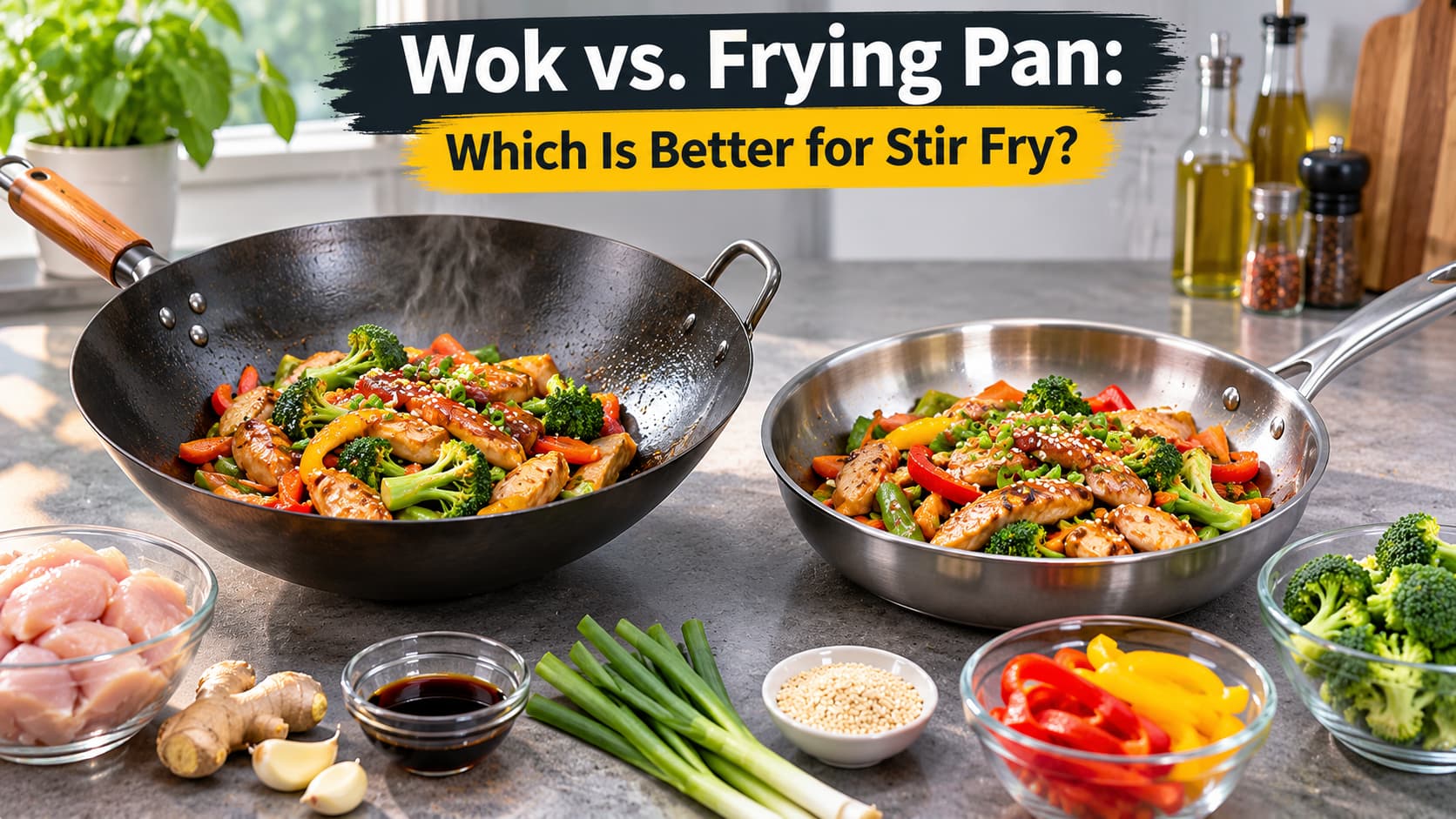
Wok vs. Frying Pan: Which Is Better for Stir Fry?
Wok vs. Frying Pan: Which Is Better for Stir Fry?
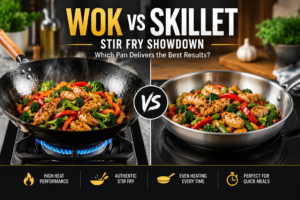
Choosing between a wok and a frying pan can affect how easily you prepare stir-fry at home. Both can cook chicken, vegetables, noodles, and rice, but their shapes and cooking surfaces offer different advantages. A wok provides deep, sloping sides for moving ingredients, while a frying pan offers a broad, flat surface for browning food.
The right choice depends on your stovetop, the portions you prepare, and how often you cook stir-fry. This guide compares their design, cooking performance, materials, and everyday practicality to help you decide which pan suits your kitchen.
Table of Contents
- What Is the Difference Between a Wok and a Frying Pan?
- Wok vs. Frying Pan: Key Differences Compared
- Cooking Performance: Which Pan Makes Better Stir-Fry?
- Wok vs. Frying Pan for Different Home Stovetops
- Does Pan Material Affect Stir-Fry Results?
- Ease of Use, Cleaning, and Maintenance
- Which Pan Is Better for Different Cooking Situations?
- Wok or Frying Pan: Which One Should You Choose?
- Frequently Asked Questions
What Is the Difference Between a Wok and a Frying Pan?
The main difference between a wok and a frying pan is their shape. A traditional wok has a deep, rounded cooking surface with high, sloping sides. A frying pan, also called a skillet, usually has a wide, flat bottom and relatively shallow sides.
These designs affect how ingredients move during cooking, how much food you can comfortably prepare, and how easily you can toss or turn the ingredients.
Wok Design and Cooking Surface
A traditional wok has a bowl-shaped design with a smaller central cooking area and tall sides. This shape gives you room to move ingredients between the center and the outer edges while cooking.
You can keep ingredients that need more heat near the center and move partially cooked food toward the sides. This makes a wok especially useful when preparing stir-fry with several ingredients that cook at different rates.
Woks are commonly made from carbon steel, although stainless steel, cast iron, and nonstick models are also available. Carbon steel is popular for stir-frying because it heats relatively quickly and responds well to temperature changes.
Frying Pan Design and Cooking Surface
A frying pan has a broad, flat base with shallow, gently sloping sides. Its design allows ingredients to spread across the cooking surface, making it useful for searing, frying, sautéing, and preparing smaller batches of stir-fry.
The flat base provides a large contact area between the food and the hot pan. This can help brown chicken pieces and vegetables before you combine them with other ingredients or add sauce.
Frying pans are available in materials such as stainless steel, cast iron, carbon steel, and nonstick-coated aluminum. Each material has different heating, maintenance, and cooking characteristics.
How Their Shapes Affect Stir-Frying
A wok’s deep sides make it easier to toss ingredients without spilling them. Its shape is also useful for moving food around during cooking. A frying pan, on the other hand, provides a wider flat area where ingredients can remain in contact with the hot surface.
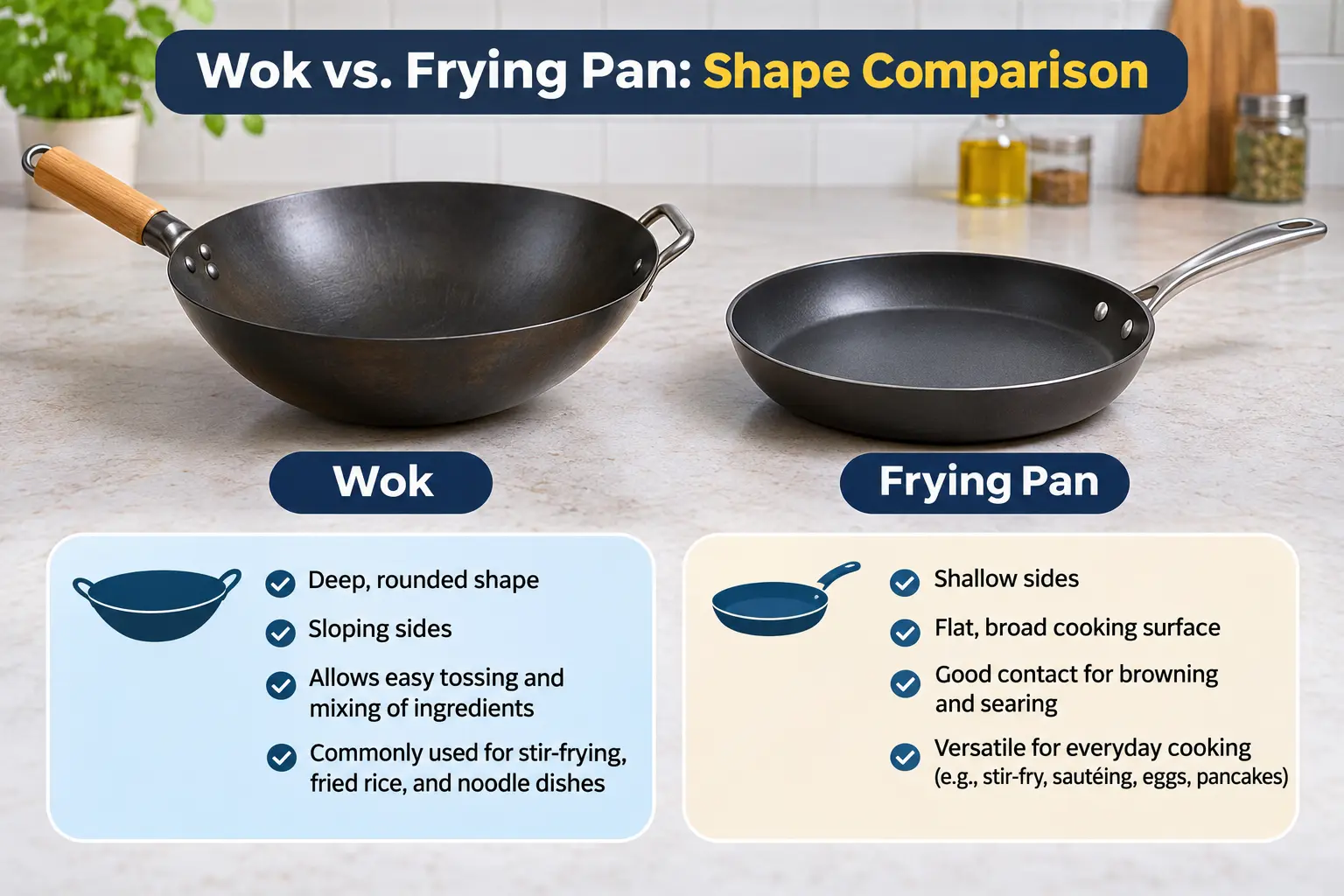
Neither shape guarantees better results on its own. Pan size, material, heat output, food quantity, and cooking technique all influence the finished dish.
Wok vs. Frying Pan: Key Differences Compared
Both cookware types can prepare homemade stir-fry, but they differ in shape, ingredient handling, and everyday use. The following table summarizes the main points.
| Feature | Wok | Frying Pan |
|---|---|---|
| Shape | Deep bowl with sloping sides | Wide, flat base with shallow sides |
| Cooking Area | Central base with curved sides | Broad, mostly flat surface |
| Ingredient Movement | Convenient for tossing and moving food | Better suited to stirring and turning |
| Cooking Capacity | Deep sides provide room for mixed ingredients | Depends on the base diameter and pan depth |
| Browning | Effective when ingredients are cooked in suitable batches | Broad base provides plenty of direct contact |
| Stir-Fry Use | Designed with stir-frying in mind | Works well for smaller or moderate portions |
| Everyday Use | Useful for stir-frying and some steaming or frying methods | Useful for frying, searing, sautéing, and more |
| Home Stovetops | Flat-bottom models are generally more practical | Most models are designed for flat cooktops |
Shape and Cooking Capacity
A wok’s deep sides provide extra room for moving ingredients without spilling them. This is useful when combining chicken, vegetables, noodles, or rice in one dish.
A frying pan has a wider flat base, allowing ingredients to spread across the cooking surface. However, a shallow pan can become crowded when preparing a large quantity of food.
For both options, choose a pan size that matches the amount of food you cook. Preparing large portions in separate batches often gives better results than filling the pan to its limit.
Heat Distribution and Cooking Zones
A wok’s curved shape creates different cooking areas. The center receives direct heat, while the sloping sides provide space to move ingredients away from the hottest area.
A frying pan has a broad, flat base that sits directly on the stovetop. This provides a large area for browning, although actual heat distribution depends on the pan’s material, thickness, construction, and the stovetop itself.
A wok does not automatically become hotter than a frying pan. The heat output of the burner and the cookware’s construction are important factors in both cases.
Stirring, Tossing, and Handling Ingredients
The wok’s high sides make tossing ingredients easier and help keep food inside the pan. This is useful when cooking several ingredients together or moving food between different cooking zones.
A frying pan is generally easier to handle with a spatula or turner. Its shallow sides provide less room for tossing, but stirring and turning smaller portions is straightforward.
Browning and Moisture Control
A broad frying-pan base can provide good contact for browning chicken and vegetables. A wok can also brown ingredients effectively, provided the pan is properly heated and not overcrowded.
Too much food in either pan can release moisture faster than it evaporates. This can cause ingredients to steam instead of brown. Cook in batches and add sauce near the end to help maintain better texture.
Cooking Performance: Which Pan Makes Better Stir-Fry?
The best pan for stir-fry depends partly on the ingredients you prepare. Chicken needs enough direct heat to develop a browned exterior, while vegetables need room to cook without becoming too soft. Noodles and rice also require enough space for stirring and combining.
Both a wok and a frying pan can produce delicious homemade stir-fry. Their main differences are how comfortably you can move ingredients and how much food you can cook without overcrowding.
Cooking and Browning Chicken
A frying pan provides a broad, flat surface where chicken pieces can make direct contact with the hot cookware. This is useful when you want to brown the chicken before adding vegetables or sauce.
A wok provides deeper sides and more room to move chicken pieces around. You can also move cooked pieces toward the sides while preparing other ingredients in the center.
For either pan, cut chicken into similar-sized pieces and avoid overcrowding. If the pieces are packed too closely together, moisture can build up and prevent proper browning.
Stir-Frying Vegetables
Vegetables such as broccoli, carrots, bell peppers, onions, and snap peas benefit from quick cooking that helps preserve their texture. A wok makes it easier to lift and toss vegetables while keeping them inside the cookware.
A frying pan can also cook vegetables effectively. Its flat base provides plenty of direct contact with the cooking surface, but a shallow pan may become crowded when several vegetables are added together.
Cut vegetables into reasonably similar sizes and add them according to their cooking times. Firmer vegetables generally need more time than softer ingredients such as bell peppers and leafy greens.
Cooking Noodles and Rice
A wok is convenient for combining noodles or rice with vegetables, protein, and sauce. Its deep sides provide room to stir the ingredients together without easily spilling them over the edge.
A large frying pan can also handle fried rice and noodle stir-fry, particularly when preparing smaller portions. However, mixing a large quantity of ingredients in a shallow pan may be less convenient.
For either pan, use properly prepared noodles or cooled cooked rice when the recipe calls for them. Add the sauce gradually so the ingredients are coated without becoming excessively wet.
Combining Ingredients and Stir-Fry Sauce
A wok makes it easier to move cooked ingredients around while combining them with sauce. The deep sides help contain the food as you stir, making it useful for mixed dishes.
A frying pan works well too, but you may need to stir more carefully to keep ingredients from falling over the sides. For both options, avoid adding too much sauce at once.
Overall, a wok is often more convenient for tossing ingredients and preparing mixed stir-fry dishes. A frying pan performs well when browning chicken, cooking smaller portions, and preparing everyday meals.
Wok vs. Frying Pan for Different Home Stovetops
Your stovetop is an important factor when choosing between a wok and a frying pan. Both can work well, but the cookware’s shape and contact with the heat source affect stability and cooking performance.
Gas Stoves
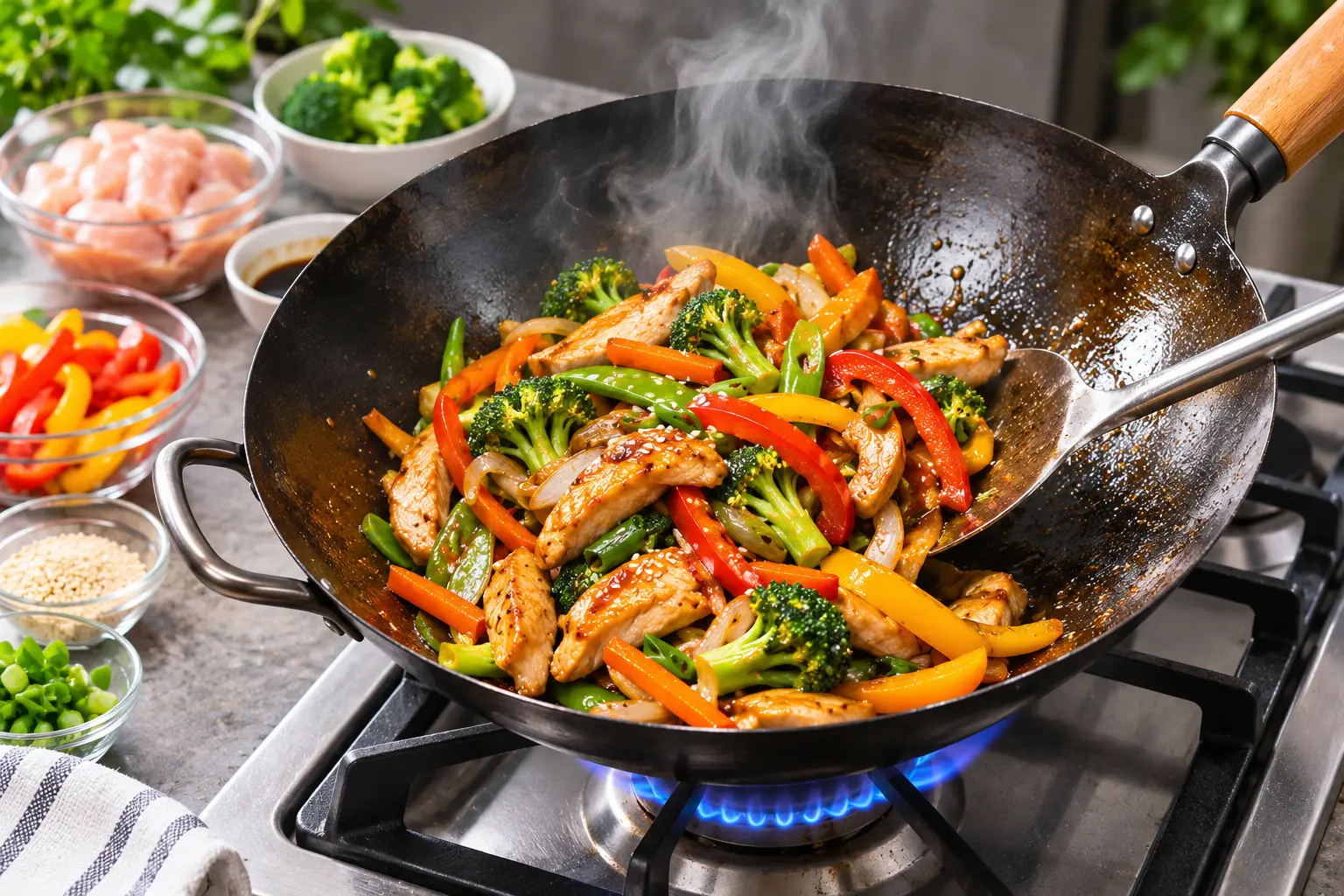
Gas stoves are generally suitable for stir-frying because the flame heats the cookware from below. A wok can be particularly useful when the burner provides enough heat and the cookware is supported securely.
A traditional round-bottom wok may require a dedicated wok burner or suitable support. For a standard home gas stove, a flat-bottom wok is often more practical because it can sit directly on the burner grates.
A frying pan is also a convenient option on gas stoves. Its flat base provides a broad cooking area for browning chicken and vegetables.
Electric Coil and Smooth-Top Stoves
Electric coil and smooth-top stoves are generally designed for flat-bottom cookware. A flat-bottom wok can work on these cooktops when its base makes suitable contact with the heating area.
A traditional round-bottom wok is usually less practical because it may not sit securely or make sufficient contact with the heat source.
Frying pans are often easier to use on electric stovetops because their flat bases are designed for direct contact with the cooking surface.
Induction Cooktops
Induction cooktops heat compatible cookware through a magnetic field. The pan must have a magnetic base to work properly, so not every wok or frying pan is suitable.
A flat-bottom wok made with induction-compatible material can work well on an induction cooktop. Many stainless steel and cast iron frying pans are also compatible, but compatibility depends on the specific cookware construction.
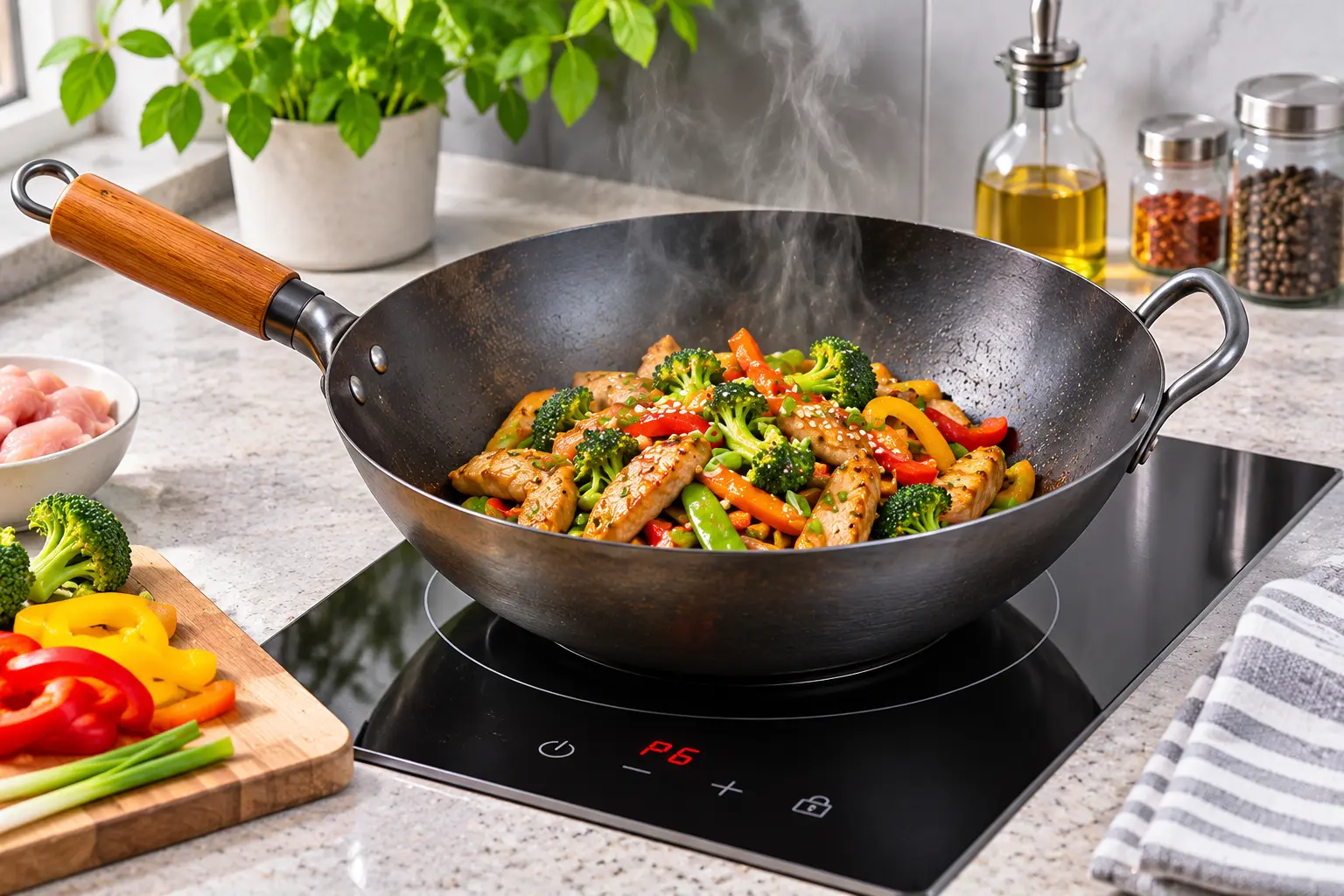
Before buying either type, check the manufacturer’s induction compatibility information. A magnetic base test can also help identify whether existing cookware is suitable.
Does Pan Material Affect Stir-Fry Results?
Yes. The material of your wok or frying pan affects how quickly it heats, how well it retains heat, and how much maintenance it requires. Choosing the right material can make stir-frying easier and help you get more consistent results.
| Material | Main Advantage | What to Consider |
|---|---|---|
| Carbon Steel | Heats relatively quickly and responds to temperature changes | Requires seasoning and careful drying |
| Stainless Steel | Durable and suitable for browning | Food may stick if the pan is not heated and used properly |
| Cast Iron | Retains heat well | Heavy and slower to respond to temperature changes |
| Nonstick | Easy food release and convenient cleaning | Follow the manufacturer’s heat limits and care instructions |
Carbon Steel
Carbon steel is a popular material for traditional woks because it heats relatively quickly and responds well when the heat level changes. It is suitable for high-heat stir-frying when used according to the manufacturer’s instructions.
Carbon steel cookware usually needs seasoning to develop a protective cooking surface. It should also be dried thoroughly after washing to help prevent rust.
Stainless Steel
Stainless steel frying pans are useful for browning chicken and vegetables. They are durable and do not require the same seasoning process as traditional carbon steel cookware.
However, food can stick if the pan is not heated or used properly. Allow the pan to preheat appropriately and use a suitable amount of cooking oil for the recipe.
Cast Iron
Cast iron retains heat well, which can help maintain a steady cooking temperature when browning ingredients. However, it is heavier than many other cookware materials and takes longer to respond to temperature changes.
A cast iron frying pan can be useful for stir-frying smaller portions, but its weight may make frequent tossing difficult. Consider its handling and maintenance requirements before choosing one for regular stir-fry cooking.
Nonstick Cookware
Nonstick pans make it easier to release delicate ingredients and clean the cookware after cooking. They can be convenient for everyday meals and simple stir-fry recipes.
However, nonstick cookware may have lower maximum temperature limits than carbon steel or some stainless steel pans. Follow the manufacturer’s temperature recommendations and avoid overheating an empty pan.
Ease of Use, Cleaning, and Maintenance
Choosing cookware is not only about cooking performance. You should also consider how comfortable the pan is to handle, how easy it is to clean, and how much maintenance it needs.
Which Pan Is Easier for Beginners?
A frying pan is often easier for beginners because its flat base sits securely on most home stovetops. Its familiar shape also makes stirring, turning, and browning ingredients straightforward.
A wok may take some practice, especially if you are learning to toss ingredients or manage food across its different cooking areas. However, its deep sides can make it easier to keep ingredients inside the pan while stirring.
If you are new to stir-frying, either option can work well. Start with manageable portions and avoid filling the cookware too much.
Cleaning and Storage
Cleaning requirements depend more on the cookware material than on whether you choose a wok or frying pan. Stainless steel and many nonstick pans are relatively straightforward to clean when used according to their care instructions.
Carbon steel cookware needs a little more attention. After washing, dry it thoroughly to reduce the risk of rust. Cast iron also requires proper drying and care to maintain its cooking surface.
Storage is another practical consideration. A large wok may need more cupboard space than a standard frying pan. Check the cookware’s dimensions and handle design before purchasing.
Seasoning and Long-Term Maintenance
Traditional carbon steel woks and some carbon steel frying pans need seasoning. This process helps develop a protective surface that improves food release and helps protect the metal.
Cast iron cookware also benefits from maintaining its seasoning. Stainless steel does not require seasoning, while nonstick cookware should be handled carefully to protect its coating.
Which Pan Is Better for Different Cooking Situations?
The best cookware choice can change depending on the amount of food you prepare and the type of meal you are making. Consider these common home-cooking situations before deciding.
Cooking Small Portions
For one or two servings, a frying pan is often a convenient choice. Its flat cooking surface makes it easy to brown a small quantity of chicken or vegetables without needing a large piece of cookware.
A smaller wok can also work well, but make sure its base is compatible with your stovetop. The pan should provide enough room to move ingredients without overcrowding.
Preparing Family-Sized Meals
A wok can be useful when preparing larger mixed dishes because its deep sides provide room for tossing and combining ingredients. However, the actual cooking capacity depends on the wok’s size and your stovetop’s heat output.
A large, deep frying pan can also prepare family meals. If the quantity is too large for the available cooking surface, divide the ingredients into batches to help them cook evenly.
Cooking Chicken and Vegetable Stir-Fry
Both cookware types can produce excellent chicken and vegetable stir-fry. A wok is convenient for moving several ingredients around, while a frying pan provides a broad surface for browning chicken pieces.
For either option, cut the chicken and vegetables into reasonably uniform pieces. Cook the chicken first and set it aside if necessary. Then cook the vegetables according to their individual cooking times before returning the chicken and adding the sauce.
Everyday Cooking and Kitchen Versatility
A frying pan is often more versatile if you prepare a variety of everyday meals. It can be used for frying eggs, searing chicken, sautéing vegetables, making pancakes, and cooking smaller portions of stir-fry.
A wok is particularly useful if stir-frying is a regular part of your cooking routine. Depending on its material and design, it may also be suitable for steaming and certain frying methods.
If you only make stir-fry occasionally, a good-quality frying pan may provide better overall value. If you prepare stir-fry frequently, a wok may be a useful addition to your kitchen.
Wok or Frying Pan: Which One Should You Choose?
There is no single best option for every kitchen. Your decision should depend on how often you cook stir-fry, your preferred portion sizes, and the type of stovetop you use.
Choose a Wok If…
A wok is a good choice if you regularly prepare chicken stir-fry, vegetable stir-fry, fried rice, or noodle dishes. Its deep sides provide room for moving ingredients and combining different foods during cooking.
Wok Advantages
- Deep sides make tossing ingredients easier.
- Provides room to move food around the cooking surface.
- Useful for preparing mixed stir-fry dishes.
- Carbon steel models are suitable for high-heat cooking when properly maintained.
Wok Limitations
- Some models require more storage space.
- Round-bottom models may not suit standard flat stovetops.
- Carbon steel versions require seasoning and regular care.
- Large models can be difficult to handle when fully loaded.
If you regularly prepare stir-fry on a standard home stovetop, consider a flat-bottom carbon steel wok. Check its size, base diameter, and stovetop compatibility before purchasing.
Choose a Frying Pan If…
A frying pan is a practical choice if you prepare stir-fry occasionally and want one piece of cookware for several types of meals. Its flat surface is useful for browning chicken, sautéing vegetables, and preparing smaller portions.
Frying Pan Advantages
- Broad, flat surface provides good contact for browning.
- Convenient for small and moderate portions.
- Suitable for many everyday cooking methods.
- Generally easy to use on standard home stovetops.
Frying Pan Limitations
- Shallow sides provide less room for tossing ingredients.
- Large portions can overcrowd the cooking surface.
- Combining noodles and several ingredients may require careful stirring.
- May be less convenient than a wok for traditional stir-frying.
If you already own a large, deep frying pan, you may not need to purchase a separate wok. With suitable heat and batch cooking, you can still prepare excellent homemade stir-fry.
When a Flat-Bottom Wok Is a Better Compromise
If you want the deep sides of a wok but use a standard flat home stovetop, a flat-bottom wok can offer a practical compromise. It provides room for tossing ingredients while sitting more securely on many conventional cooking surfaces.
A flat-bottom carbon steel wok is worth considering if you regularly prepare stir-fry. Before purchasing, check its base diameter, overall size, handle design, and compatibility with your cooktop.
Ultimately, choose a wok for frequent stir-frying and a frying pan for broader everyday use. The right option is the one that fits your cooking habits, available space, and stovetop.
Frequently Asked Questions
1. Is a wok better than a frying pan for stir-fry?
A wok is generally more convenient for traditional stir-frying because its deep, sloping sides provide room to toss and move ingredients. However, a large, deep frying pan can also produce excellent results, especially on standard home stovetops. The better choice depends on your cookware, portion sizes, and cooking habits.
2. Can you make good stir-fry in a regular frying pan?
Yes. A regular frying pan can make delicious chicken, vegetable, noodle, and rice stir-fry. Preheat the pan appropriately, avoid overcrowding, and cook ingredients in batches when necessary to improve browning and texture.
3. What size wok is best for home cooking?
A wok around 12 to 14 inches is a practical starting point for many home kitchens. However, the best size depends on your stovetop, storage space, and the number of servings you usually prepare.
4. Is a flat-bottom wok better for home stovetops?
A flat-bottom wok is generally more practical for standard home stovetops because it can sit more securely on a flat cooking surface or burner grates. Always check that the model is compatible with your specific cooktop.
5. Can you use a wok on an induction cooktop?
Yes, but the wok must have a magnetic base and be specifically suitable for induction cooking. Check the manufacturer’s compatibility information before purchasing.
6. Which is better for cooking chicken stir-fry?
Both can work well. A frying pan provides a broad surface for browning chicken, while a wok offers more room for moving and combining ingredients. Avoid overcrowding either pan and cook in batches when needed.
7. Can a nonstick frying pan be used for stir-frying?
Yes. A nonstick frying pan can be convenient for preparing smaller portions of stir-fry. However, follow the manufacturer’s maximum temperature recommendations and avoid overheating an empty pan.
8. Does a carbon steel wok need to be seasoned?
Most traditional carbon steel woks need seasoning before use or according to the manufacturer’s instructions. Seasoning helps develop a protective cooking surface. After washing, dry the wok thoroughly to help prevent rust.
References
- Wok vs. Stir Fry Pan – Which Is the Right Tool for You? – Omnivore’s Cookbook.
- Wok Buying Guide – Lowe’s.
- Induction Cooktop Cookware Suggestions – Sub-Zero, Wolf, and Cove.
- How to Season a Wok – Sub-Zero, Wolf, and Cove.
- Samsung Cooktop Cookware Breakdown – Samsung.
Final Thoughts
Choosing between a wok and a frying pan for stir-fry depends on your cooking habits, stovetop, and the types of meals you prepare. A wok offers deep, sloping sides that make tossing ingredients easier, while a frying pan provides a broad, flat surface for browning food and preparing everyday meals.
If you regularly make stir-fry, a flat-bottom carbon steel wok can be a practical addition to your kitchen. However, if you already own a large, deep frying pan, you can still prepare delicious homemade stir-fry without purchasing another piece of cookware.
Ultimately, choose the pan that fits your stovetop, cooking space, and everyday cooking needs.
Related Articles
🍽️ You Might Also Like


📧 Save This Recipe For Later
Enter your email and we will send this recipe directly to your inbox.