
Clean Carbon Steel Wok: 7 Easy, Proven Care Tips
How to Clean and Maintain a Carbon Steel Wok
Knowing how to clean and maintain a carbon steel wok is essential for keeping its cooking surface smooth, protecting its seasoning, and preventing rust. Unlike stainless steel cookware, carbon steel develops a protective layer through seasoning and regular cooking. Cleaning it correctly helps preserve this surface without leaving behind grease, burnt food, or moisture.
The good news is that everyday wok maintenance is relatively simple. You do not need expensive cleaning products or complicated procedures. With warm water, a suitable sponge or wok brush, proper drying, and a thin layer of cooking oil when needed, you can keep your wok in good condition for years. This guide explains how to clean it after cooking, remove stubborn food, prevent rust, and maintain its seasoning without unnecessary scrubbing or reseasoning.
Quick Answer
To clean a carbon steel wok, allow it to cool slightly, remove leftover food, and wash it by hand with warm water and a soft sponge or suitable wok brush. Gently loosen stuck-on residue without unnecessarily scrubbing away the seasoning. Rinse thoroughly, dry immediately with a clean towel, and use gentle stovetop heat if needed to remove remaining moisture. Once completely dry, apply an extremely thin layer of cooking oil if appropriate for your wok’s care instructions.
Avoid prolonged soaking and dishwasher cleaning. Mild dish soap may be acceptable for occasional cleaning, depending on the manufacturer’s instructions. Keeping the wok clean and completely dry is the most important part of preventing rust.
Table of Contents
- Understanding Carbon Steel Wok Seasoning
- What You Need to Clean a Carbon Steel Wok
- How to Clean a Carbon Steel Wok After Cooking
- How to Remove Stuck-On or Burnt Food
- Can You Use Soap on a Carbon Steel Wok?
- How to Prevent Rust on a Carbon Steel Wok
- How to Remove Rust From a Carbon Steel Wok
- How to Maintain Carbon Steel Wok Seasoning
- Common Cleaning and Maintenance Mistakes
- How to Store a Carbon Steel Wok Properly
- How Often Should You Clean and Reseason a Wok?
- Frequently Asked Questions
Understanding Carbon Steel Wok Seasoning
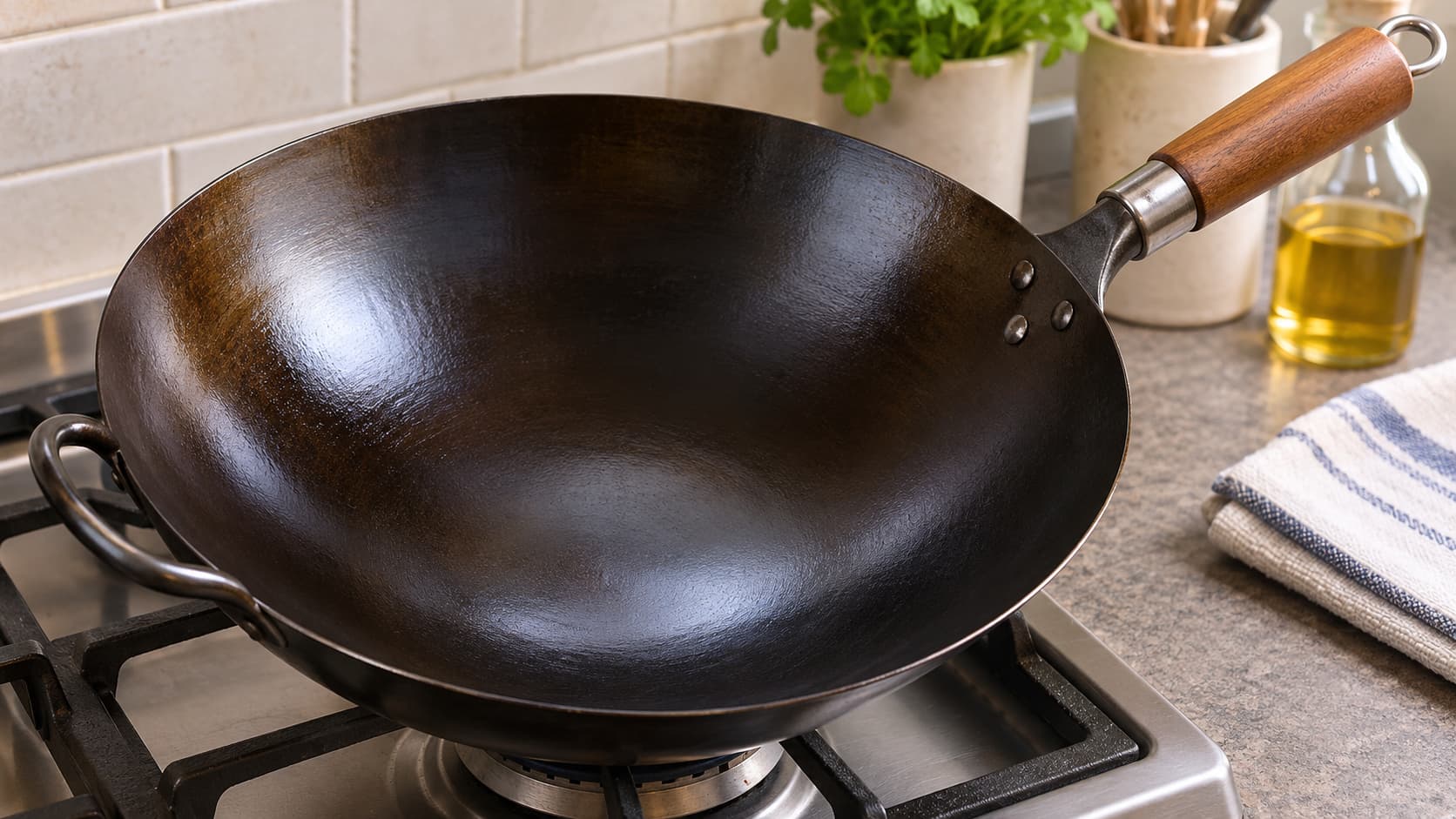
Before learning how to clean a carbon steel wok, it helps to understand what seasoning actually is. Seasoning is a protective layer that develops when a thin coating of cooking oil is heated on the metal surface. Over time, repeated cooking and proper maintenance help build a darker patina that protects the underlying steel and improves food release.
Unlike a factory-applied nonstick coating, this surface develops through use and can change as you cook different foods. It may become darker, develop slightly uneven colors, or show different shades across the cooking surface. These changes are not automatically signs of damage.
What Is Seasoning on a Carbon Steel Wok?
Seasoning forms when cooking oil undergoes heat-driven chemical changes and bonds to the metal surface, creating a thin protective layer. This layer helps reduce direct exposure of the steel to moisture and makes cooking easier as the wok develops its patina.
A properly seasoned wok does not necessarily have to look perfectly black or glossy. Its appearance depends on its age, cooking frequency, seasoning history, and the types of food prepared in it.
Why Proper Cleaning Protects the Seasoned Surface
Everyday cleaning should remove food particles, excess grease, and cooking residue without unnecessarily stripping away the protective patina. Harsh scrubbing, prolonged soaking, and inappropriate cleaning products can damage or weaken the seasoning.
For this reason, cleaning should focus on removing unwanted residue rather than making the entire cooking surface look like new bare metal. A wok with healthy seasoning can still have dark marks and natural variations in color.
Normal Darkening vs. Damaged Seasoning
It is important to distinguish normal seasoning changes from actual problems. A dark brown or black cooking surface is generally expected as carbon steel develops its patina. However, sticky patches, flaking areas, exposed bare metal, or reddish-brown rust may indicate that maintenance is needed.
- Normal patina: Dark brown or black areas that develop through regular cooking and seasoning.
- Uneven seasoning: Different shades across the cooking surface that may occur as the wok develops its protective layer.
- Sticky residue: Often caused by excess oil or accumulated cooking residue.
- Flaking areas: May indicate an unstable or damaged seasoning layer that needs attention.
- Rust: Reddish or orange-brown oxidation that should be removed and the affected area restored.
What You Need to Clean a Carbon Steel Wok
You do not need a large collection of cleaning products to maintain a carbon steel wok. A few basic household supplies are usually enough to remove everyday cooking residue while protecting the seasoning.
Essential Cleaning Supplies
- Warm water: Helps loosen food particles and ordinary cooking residue.
- Soft sponge: Useful for gently cleaning the cooking surface without unnecessary abrasion.
- Bamboo wok brush: Helps reach the curved sides and bottom of the wok where food residue may collect.
- Clean kitchen towel: Removes moisture immediately after washing.
- Paper towels: Useful for applying and wiping away excess cooking oil.
- Suitable cooking oil: Can provide a thin protective layer before storage when recommended by the manufacturer.
Optional Supplies for Stubborn Food Residue
For more difficult cleaning situations, you may need a non-abrasive scrubber or a suitable scraper designed for cookware. These can help loosen stubborn food without requiring excessive force.
A small amount of mild dish soap may also be useful when ordinary rinsing does not remove strong grease or food odors. However, cleaning product recommendations vary between wok manufacturers, so check the care instructions for your particular model.
Cleaning Products and Tools to Avoid
Some cleaning methods can remove the seasoning or expose the underlying steel. Avoid using aggressive cleaning products as part of your regular maintenance routine.
- Dishwasher detergent and automatic dishwasher cycles.
- Harsh chemical cleaners that are not approved for cookware.
- Heavy-duty abrasive pads for routine cleaning.
- Prolonged soaking in water.
- Cleaning methods that expose the wok to sudden temperature changes.
How to Clean a Carbon Steel Wok After Cooking
The best time to clean a carbon steel wok is shortly after cooking, once it has cooled enough to handle safely. Removing food residue before it hardens makes cleaning easier and reduces the amount of scrubbing required.
Follow this simple routine after preparing chicken stir-fry, vegetable stir-fry, fried rice, or other everyday meals.
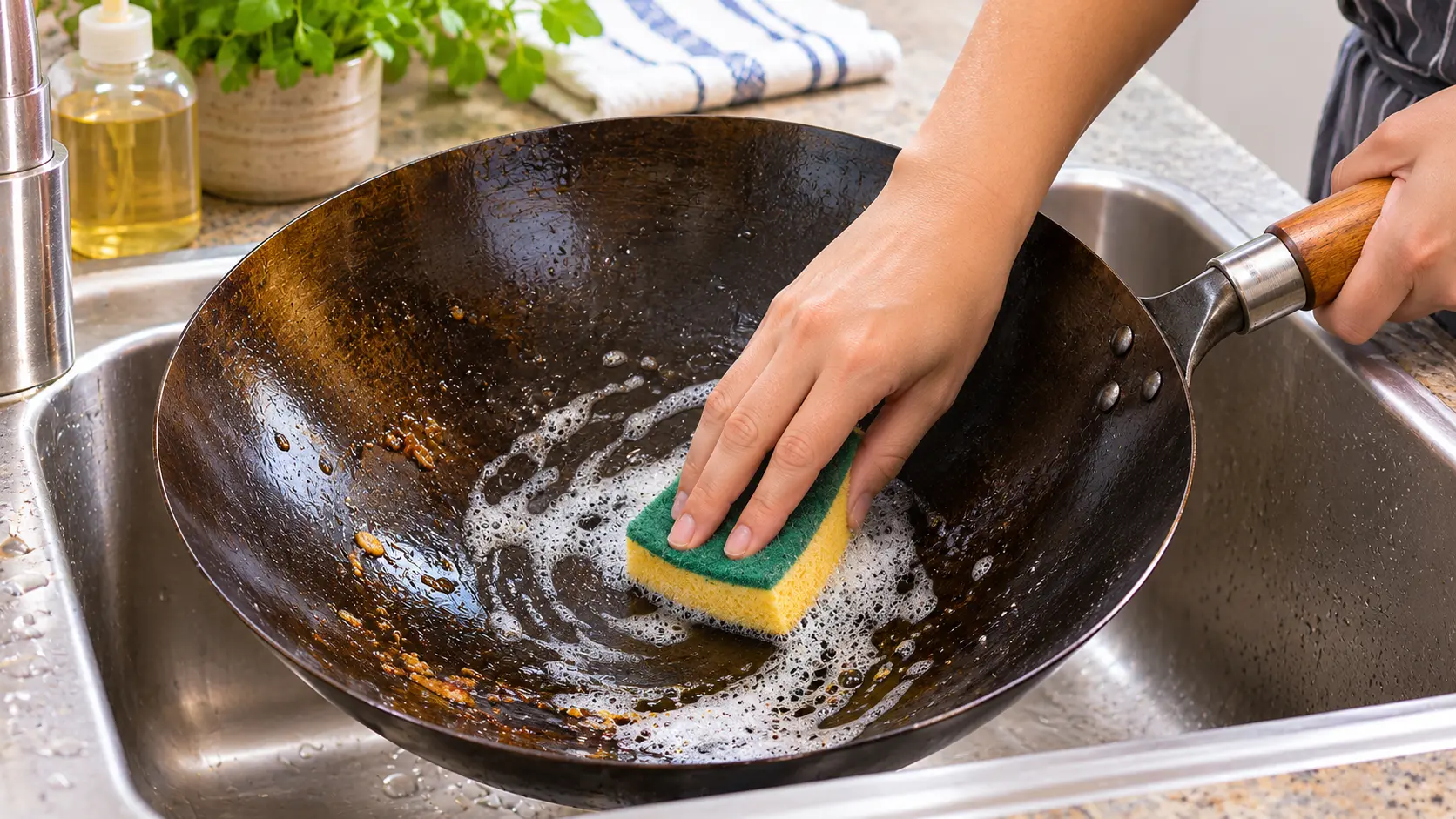
Step 1 – Let the Wok Cool Slightly
After cooking, remove the wok from the heat and allow it to cool until it is safe to handle. It should still be reasonably warm, but it should not be extremely hot when water is added.
Avoid pouring cold water into a very hot wok. Sudden temperature changes can cause thermal stress and may distort the metal, depending on the cookware construction.
Step 2 – Remove Leftover Food and Cooking Oil
Remove leftover ingredients, large food particles, and excess cooking oil using a suitable utensil or paper towel. Pay attention to sticky sauce residue that may remain around the bottom and curved sides.
Removing excess food before rinsing makes the next cleaning steps easier and prevents unwanted residue from spreading across the cooking surface.
Step 3 – Rinse With Warm Water
Rinse the wok with warm or hot water to loosen ordinary cooking residue. In many cases, this is enough to remove light grease and small food particles without using additional cleaning products.
Do not leave the wok sitting in a sink full of water. Carbon steel can rust when moisture remains on the surface for extended periods.
Step 4 – Remove Remaining Food Residue
If small pieces of food remain attached, gently clean the surface with a soft sponge or bamboo wok brush. Follow the curved shape of the wok and avoid applying unnecessary pressure.
For stubborn residue, use the appropriate cleaning method described in the next section rather than repeatedly scrubbing the same area.
Step 5 – Rinse and Dry Thoroughly
Rinse away any remaining food particles and cleaning residue. Immediately dry the wok using a clean kitchen towel or paper towels.
Pay attention to the bottom, curved sides, handle connections, and any areas where water may collect. If the manufacturer permits it, place the wok over low heat briefly to evaporate remaining moisture. Do not leave it unattended or overheat an empty wok.
Step 6 – Apply a Thin Layer of Oil
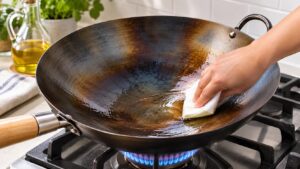
Once the wok is completely dry, apply a very small amount of suitable cooking oil if recommended by the manufacturer’s care instructions. Use a paper towel to distribute the oil evenly over the cooking surface.
Wipe away excess oil until the surface looks almost dry rather than wet or greasy. A heavy coating is unnecessary and can contribute to sticky residue during storage.
How to Remove Stuck-On or Burnt Food From a Carbon Steel Wok
Stuck-on food is one of the most common cleaning problems with carbon steel woks. Thick sauces, caramelized ingredients, and burnt food particles can attach to the bottom of the cooking surface, especially after high-heat stir-frying.
Instead of immediately reaching for a rough scrubber, try loosening the residue first. This reduces unnecessary friction and helps protect the seasoning.
Loosen Stuck Food With Water
For ordinary stuck-on food, add enough warm water to cover the affected area. Place the wok over gentle heat and allow the water to warm for a short time so the residue begins to soften.
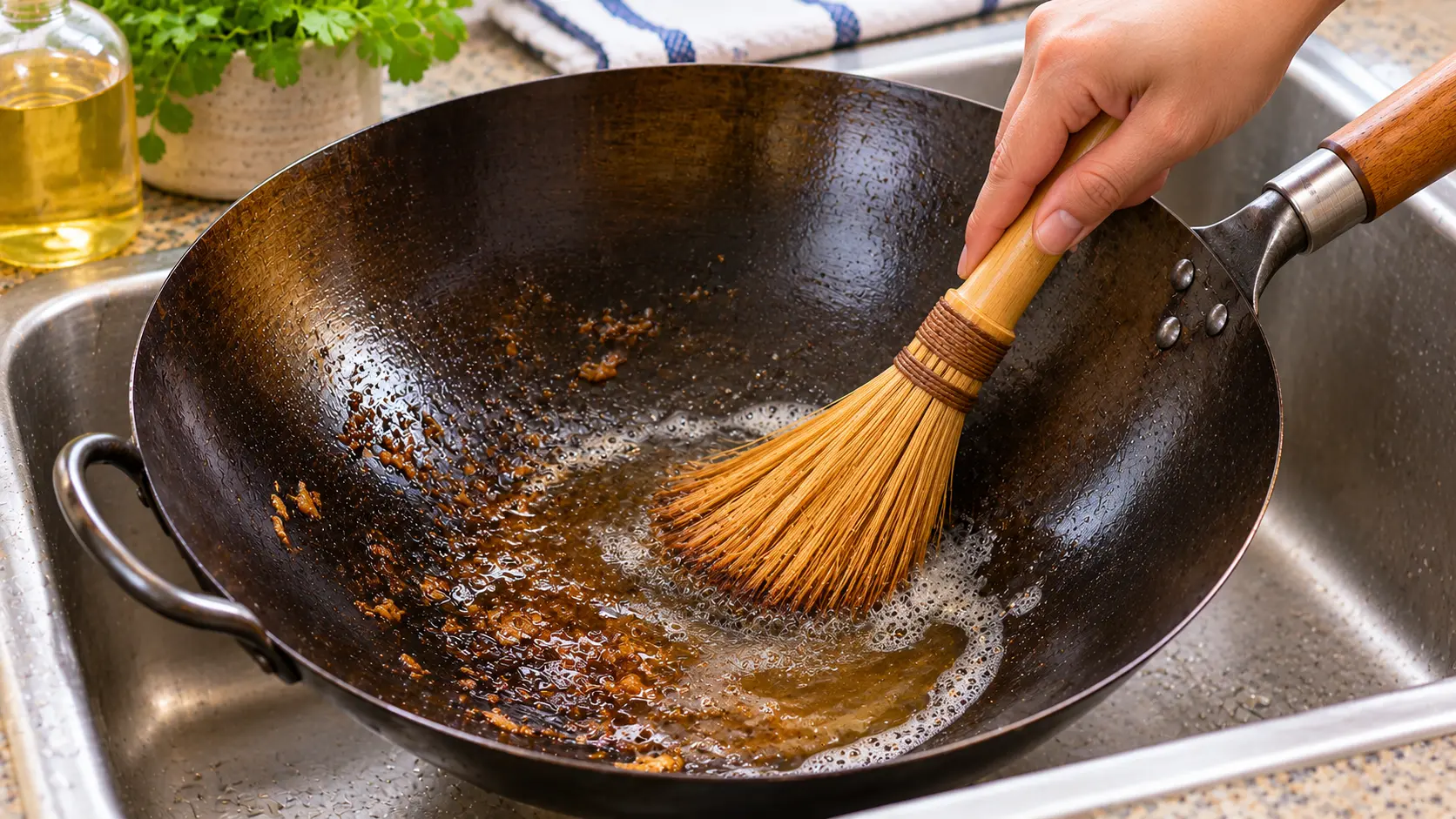
Turn off the heat and allow the wok to cool enough for safe handling. Once the residue has loosened, remove it with a suitable brush or non-abrasive sponge.
This approach is particularly useful after cooking chicken stir-fry with sauces that leave a thin layer of food residue on the bottom of the wok.
Use a Wok Brush or Suitable Scrubber
A bamboo wok brush or soft non-abrasive scrubber can help remove food particles from the curved interior. Apply gentle pressure and concentrate on the areas where residue remains attached.
Avoid treating every stubborn mark as something that needs to be completely scrubbed away. If a mark is simply part of the normal patina and the surface is clean, further scrubbing may do more harm than good.
How to Handle Sticky Sauces and Burnt Residue
Sticky sauces containing sugar, honey, or thick seasonings can become difficult to remove when they caramelize against the hot metal. Allowing these residues to cool and harden completely can make cleaning more difficult.
For example, after preparing teriyaki chicken stir-fry or honey garlic chicken stir-fry, inspect the bottom of the wok for remaining sauce. Warm water and gentle cleaning are usually a better starting point than aggressive scrubbing.
When More Intensive Cleaning Is Necessary
If burnt residue remains after gentle cleaning, a more intensive method may be necessary. Use a cleaning tool approved for your wok and follow the manufacturer’s instructions. Some methods that remove heavy burnt residue may also remove part of the seasoning.
If the cleaning process exposes bare steel or noticeably damages the patina, dry the wok completely and restore the affected seasoning before storing it.
Can You Use Soap on a Carbon Steel Wok?
Yes, mild dish soap may be suitable for cleaning some carbon steel woks, but the correct approach depends on the manufacturer’s care instructions and the condition of the seasoning. This is one of the most misunderstood parts of carbon steel cookware maintenance.
Older cleaning advice often suggests avoiding all soap because it can damage seasoning. However, modern cookware manufacturers do not all provide identical instructions. For example, Misen allows a few drops of mild soap when needed, while YOSUKATA recommends avoiding detergent during normal everyday cleaning.
When Mild Dish Soap May Be Acceptable
A small amount of mild dish soap can help remove stubborn grease, strong food odors, or residue that warm water alone does not remove. If your wok’s manufacturer permits it, use only a small amount and avoid unnecessary soaking.
After washing, rinse the wok thoroughly, dry it immediately, and follow the recommended maintenance procedure for that particular model.
Why Harsh Cleaning Products Should Be Avoided
Strong cleaning chemicals, dishwasher detergents, and aggressive abrasive products can damage the seasoned surface. They may remove protective layers, expose bare steel, or leave the wok vulnerable to rust.
Routine cleaning should therefore use the least aggressive method that effectively removes the food residue.
What to Do if You Accidentally Use Soap
If you accidentally wash your wok with a small amount of ordinary dish soap, there is usually no reason to panic. Rinse away the soap, dry the wok completely, and inspect its surface.
If the seasoning still looks and feels normal, extensive reseasoning may not be necessary. If the surface becomes noticeably damaged, sticky, or exposed, clean and restore the affected area according to the manufacturer’s seasoning instructions.
How to Prevent Rust on a Carbon Steel Wok
Rust prevention is one of the most important parts of carbon steel wok maintenance. Unlike stainless steel, carbon steel can develop rust when moisture remains on its surface. Even a properly seasoned wok can develop rust if it is washed and stored without being dried correctly.
Dry the Wok Completely After Washing
Always dry your wok immediately after cleaning. Use a clean kitchen towel to remove visible water from the cooking surface, curved sides, and bottom. If necessary, place it over low heat briefly to evaporate any remaining moisture.
Pay particular attention to areas around handles and joints, where water may collect. Never assume that a wok is completely dry simply because its visible cooking surface looks clean.
Apply a Thin Protective Oil Layer
After drying, a very thin layer of suitable cooking oil can help protect the exposed metal from moisture during storage. Use a paper towel to distribute the oil evenly and remove any visible excess.
The surface should feel nearly dry rather than wet or greasy. Excess oil can become sticky over time and may create an unpleasant buildup.
Avoid Leaving Water or Food Inside the Wok
Do not leave your wok soaking in water or allow food residue to remain inside overnight. Prolonged contact with moisture can encourage corrosion, while leftover acidic or salty ingredients may affect the seasoning.
Clean the wok after cooking and make sure it is completely dry before putting it away.
Protect the Wok During Storage
Store the wok in a dry kitchen cabinet or another location away from excessive moisture. If it is stacked with other cookware, use a protective separator when appropriate to reduce scratching and surface damage.
How to Remove Rust From a Carbon Steel Wok
Finding rust on a carbon steel wok does not automatically mean that the cookware is ruined. Surface rust can often be removed, and the affected cooking surface can be seasoned again. The important thing is to address the problem before corrosion becomes more extensive.
Identify Surface Rust
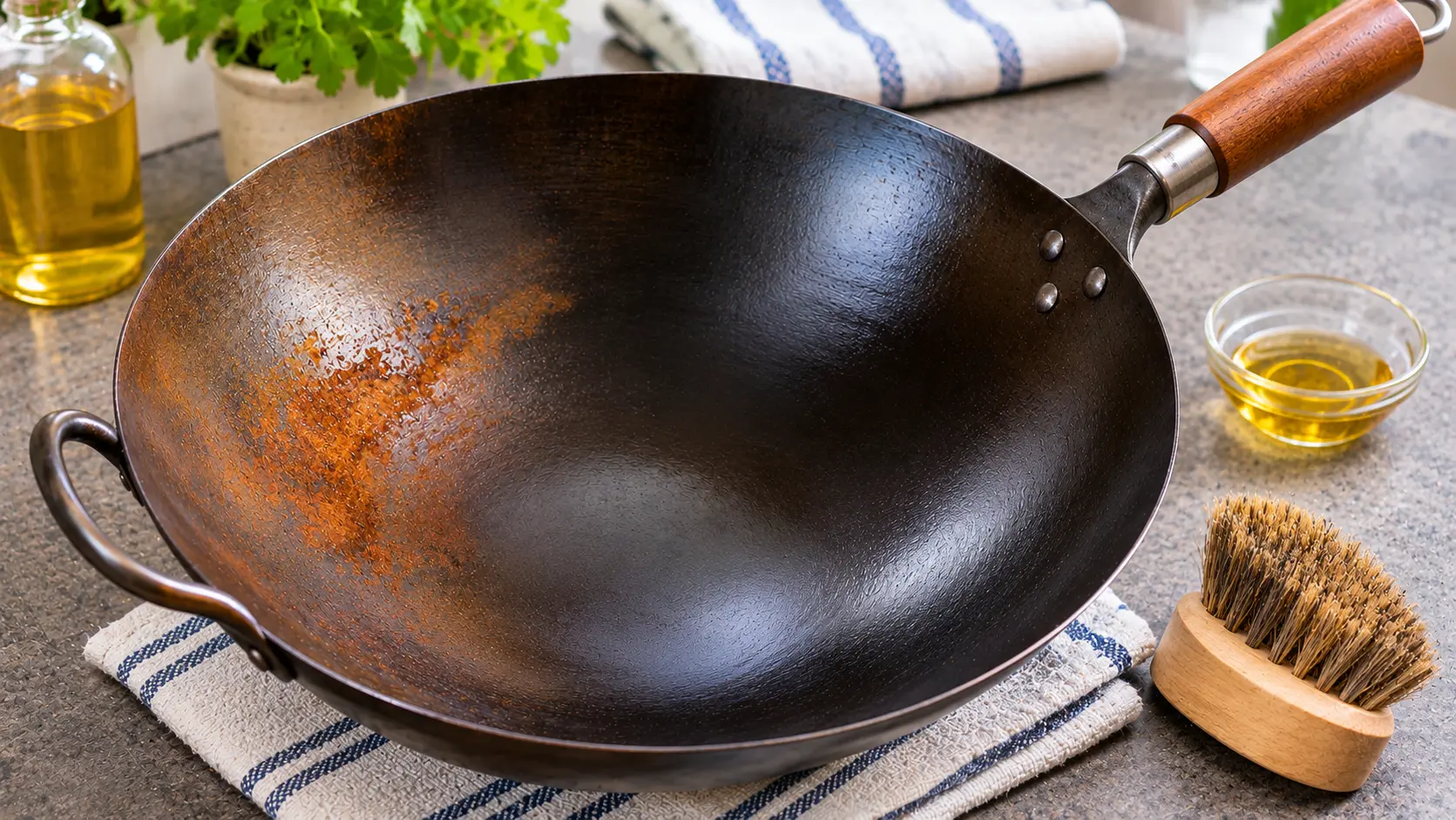
Surface rust usually appears as reddish-orange or brown patches on the metal. It may develop after the wok has been stored while damp, left soaking in water, or exposed to moisture for an extended period.
Do not confuse rust with the natural darkening of seasoning. A dark brown or black surface is not necessarily a problem, whereas reddish-orange corrosion indicates that the metal needs attention.
Remove Rust From the Affected Area
Start by cleaning the affected area and removing loose food residue. Use a suitable scrubber or brush to remove the rust, following the manufacturer’s restoration instructions.
For more stubborn rust, a more abrasive cleaning tool may be necessary. However, this can also remove the seasoning around the affected area. Avoid using aggressive methods over the entire wok unless the condition of the surface requires it.
Clean and Dry the Wok
After removing the rust, rinse away loose particles and cleaning residue. Dry the wok thoroughly with a clean towel and use gentle stovetop heat if recommended by the manufacturer to remove remaining moisture.
Inspect the surface carefully to make sure no visible rust or cleaning residue remains before rebuilding the seasoning.
Rebuild the Seasoning
Apply a very thin layer of suitable cooking oil to the cleaned area or the entire cooking surface, depending on the extent of the damage and the manufacturer’s instructions.
Heat the wok using an appropriate seasoning method for your cookware. Follow the manufacturer’s instructions regarding temperature, heating time, ventilation, and the number of seasoning applications.
Allow the wok to cool safely before storing it. If the rust was extensive, repeat the restoration process as necessary rather than assuming one treatment will always be sufficient.
When a Wok May Need More Extensive Restoration
Minor surface rust is generally manageable, but severe corrosion, deep pitting, structural damage, or rust around damaged joints may require a more careful assessment. If the metal itself has deteriorated significantly, consult the manufacturer or consider replacing the cookware.
How to Maintain Carbon Steel Wok Seasoning
Maintaining seasoning does not mean that you need to repeat the complete seasoning process after every meal. A properly cared-for wok gradually develops its patina through regular cooking, appropriate cleaning, and occasional maintenance.
Apply Oil Correctly After Cleaning
Once the wok is completely dry, apply a small amount of suitable oil if required by its care instructions. Spread it across the cooking surface with a paper towel and remove the excess.
The goal is to leave a very thin protective film rather than a thick coating of oil.
Avoid Excessive Oil Buildup
Applying too much oil can create sticky or uneven patches. If the surface feels greasy or tacky after storage, excess oil may be contributing to the problem.
Clean the affected area appropriately, dry it thoroughly, and apply a much thinner coating during the next maintenance session.
Cook Regularly to Develop the Patina
Regular cooking helps the seasoning develop over time. Preparing stir-fries and other suitable dishes allows the cooking surface to continue building its natural patina when the wok is cleaned and maintained properly.
For example, recipes such as homemade chicken stir-fry and chicken broccoli stir-fry are useful ways to put your wok to regular use.
When to Reseason the Entire Wok
Complete reseasoning is not necessary after every cleaning session. It may be appropriate when the seasoning has been extensively removed, the surface has developed significant rust, or the cooking surface has become noticeably damaged.
Minor uneven coloring does not automatically require a complete reseasoning process. Assess the actual condition of the cooking surface before deciding how much restoration is needed.
Common Carbon Steel Wok Cleaning and Maintenance Mistakes
Even a well-seasoned carbon steel wok can develop problems when it is cleaned or stored incorrectly. Avoiding a few common mistakes can make everyday maintenance easier and help preserve the cooking surface.
Leaving the Wok Wet After Washing
Water left on carbon steel can encourage rust. Always dry the wok immediately after washing instead of leaving it to drip-dry in the sink or on a drying rack.
Using Harsh Abrasive Cleaners for Routine Cleaning
Heavy-duty abrasive tools can remove seasoning and expose bare metal. Use gentle cleaning methods for everyday food residue and reserve more aggressive tools for situations such as rust removal or serious buildup.
Applying Too Much Oil
A thick layer of oil can become sticky and uneven. Use a small amount and wipe away the excess until the surface looks nearly dry.
Soaking the Wok for Too Long
Prolonged soaking exposes the steel to moisture and can contribute to corrosion. Loosen stuck food with a controlled amount of water instead of leaving the entire wok submerged.
Confusing Normal Darkening With Rust
Carbon steel naturally changes color as seasoning develops. Do not remove healthy dark patina simply because the cooking surface no longer looks like new metal.
Ignoring Manufacturer Care Instructions
Cleaning recommendations can differ between brands and wok models. Always follow the instructions for your particular cookware, especially when using soap, abrasive tools, or high-temperature seasoning methods.
How to Store a Carbon Steel Wok Properly
Correct storage is just as important as proper cleaning. Even if you wash your wok carefully, storing it while damp or in a humid location can lead to rust and damage its seasoning.
Preparing the Wok Before Storage
Before putting the wok away, make sure all food particles and excess grease have been removed. Dry the entire surface thoroughly and apply a very thin protective oil layer if appropriate for the manufacturer’s instructions.
Preventing Moisture During Storage
Choose a cool, dry storage location. Avoid leaving the wok in a damp cabinet, near a frequently leaking sink, or in an area where condensation regularly develops.
Storing the Wok With Other Cookware
If you need to stack the wok with other cookware, place a clean protective separator between surfaces where possible. This helps reduce scratching and unnecessary wear on the seasoned cooking surface.
Long-Term Storage Tips
If you will not use the wok for an extended period, inspect it before storage, remove any moisture, and apply an appropriate thin protective coating if recommended. Check it occasionally to make sure rust has not developed.
How Often Should You Clean and Reseason a Carbon Steel Wok?
A carbon steel wok should be cleaned after every cooking session, but complete reseasoning is only needed when the protective surface requires restoration. The frequency depends on how often you cook, the condition of the seasoning, and the manufacturer’s care instructions.
Cleaning After Every Cooking Session
Remove leftover food and grease after every use. Rinse the wok, clean away residue, dry it completely, and follow the recommended oiling procedure before storage.
Routine Seasoning Maintenance
Light oiling after cleaning may help protect the surface, particularly when the wok will be stored for a while. However, not every wok requires the same oiling routine. Follow the care instructions for your specific model.
Signs That Reseasoning Is Necessary
Consider restoring the seasoning when you notice:
- Areas of exposed bare steel.
- Seasoning that has visibly flaked away.
- Rust that has been removed from the cooking surface.
- Significant damage following aggressive cleaning.
- Persistent sticking associated with a damaged or weakened seasoning layer.
Minor color variations alone are not sufficient reasons to repeat the complete seasoning process.
Frequently Asked Questions
Can you use dish soap to clean a carbon steel wok?
Some carbon steel wok manufacturers allow a few drops of mild dish soap when necessary, while others recommend avoiding detergent during routine cleaning. Check your wok’s care instructions, use gentle cleaning methods, and dry the surface completely afterward.
Can you clean a carbon steel wok with vinegar?
Vinegar is acidic and can affect the seasoning of carbon steel cookware. It should not be used as a routine cleaning solution. If a manufacturer recommends a specific restoration method involving acidic cleaning, follow its instructions carefully and restore the protective surface afterward.
Why is my carbon steel wok turning black?
Blackening is often a normal result of seasoning developing through repeated cooking and oil application. A dark, reasonably smooth surface is generally expected. However, sticky buildup, flaking, or rust should be investigated separately.
Should I oil my carbon steel wok after every use?
A very thin oil layer after cleaning may help protect some carbon steel woks, particularly before storage. However, maintenance instructions vary by manufacturer. Always dry the wok completely first and remove excess oil.
Can I leave food in my carbon steel wok overnight?
No. Remove leftover food after cooking and clean the wok before storage. Prolonged contact with moisture, salt, or acidic ingredients can affect the seasoning and increase the risk of corrosion. Transfer leftovers to suitable food-storage containers.
How do I know if my wok’s seasoning is damaged?
Signs may include exposed bare steel, flaking areas, rust, sticky oil buildup, or persistent food sticking. Normal darkening and uneven patina do not automatically indicate damaged seasoning.
Can a rusty carbon steel wok be restored?
Minor surface rust can often be removed by cleaning the affected area with a suitable scrubber, drying the wok thoroughly, and rebuilding its seasoning. Extensive corrosion or deep pitting may require more careful assessment.
References
Final Thoughts
Learning how to clean and maintain a carbon steel wok does not require complicated routines. Remove food residue after cooking, clean the surface gently, dry it completely, and protect it appropriately before storage. These simple habits help prevent rust and preserve the seasoning that develops through regular use.
Remember that a dark or uneven patina is not necessarily a problem. Focus on keeping the wok clean, dry, and free from corrosion rather than trying to make it look brand new after every meal. With consistent care, your carbon steel wok can remain a useful part of your everyday kitchen for years.
🍽️ You Might Also Like



📧 Save This Recipe For Later
Enter your email and we will send this recipe directly to your inbox.