
Best Rice Vinegar Substitutes for Stir Fry
Best Rice Vinegar Substitutes for Stir Fry
Rice vinegar is one of the key ingredients that gives many stir fry dishes their signature balance of bright acidity and mild sweetness. It helps cut through rich sauces, enhances the flavor of vegetables, and ties together ingredients without overpowering them. But what happens if you’re halfway through cooking and realize you’re out of rice vinegar?
The good news is that you don’t have to abandon your meal. There are several excellent rice vinegar substitutes stir fry cooks can use with great results. Many common pantry ingredients provide a similar balance of acidity, making them practical alternatives when rice vinegar isn’t available.
Choosing the right substitute depends on the flavor profile of your stir fry. Some options closely mimic the mild taste of rice vinegar, while others are sharper or fruitier and may require small adjustments. Understanding these differences helps you maintain the perfect balance of sweet, salty, sour, and umami flavors.
In this guide, you’ll learn the best rice vinegar substitutes for stir fry, how each one affects flavor, when to use them, and simple tips for making successful substitutions without compromising your finished dish.
Quick Answer
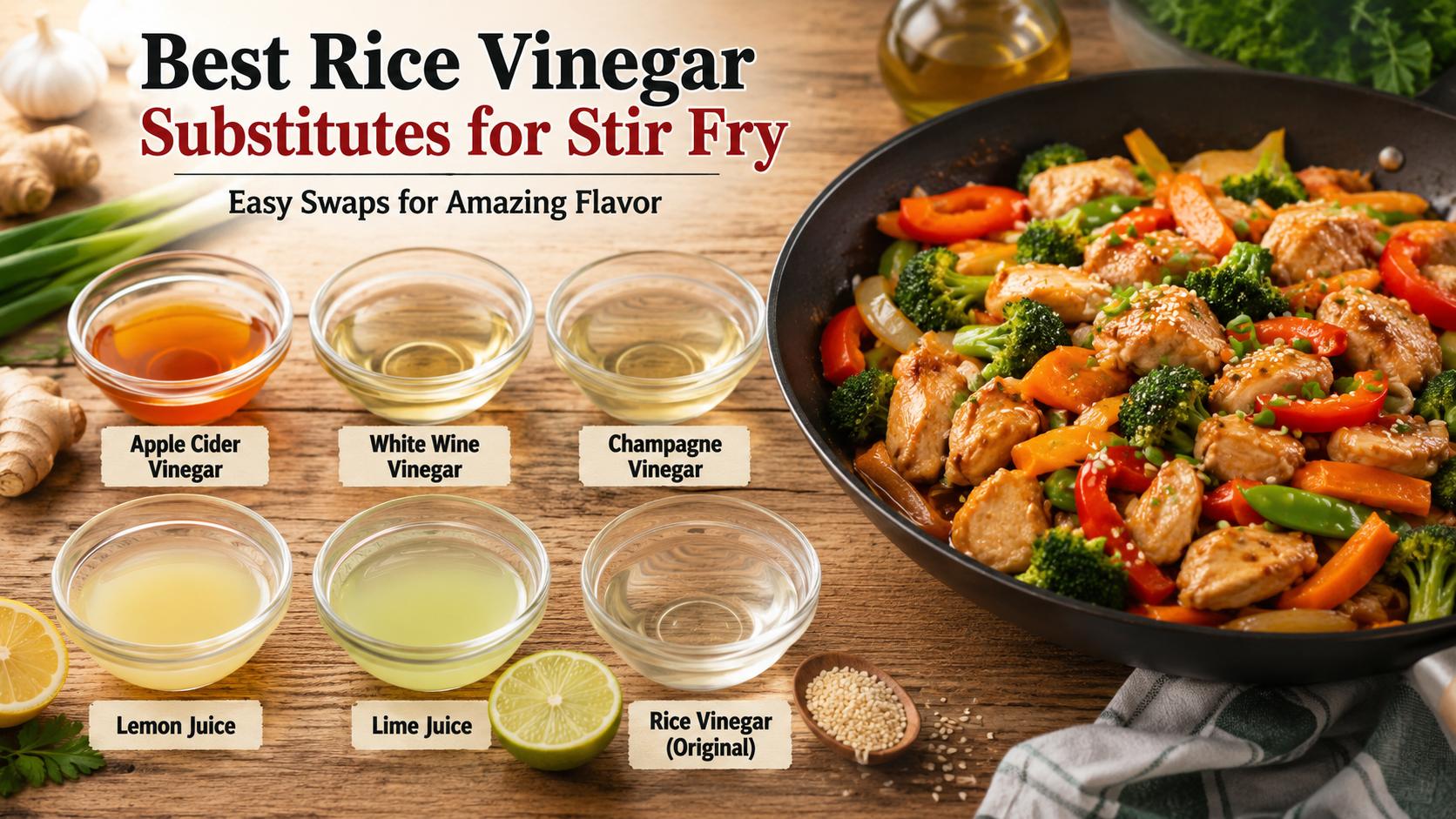
The best rice vinegar substitutes stir fry recipes can use are apple cider vinegar, white wine vinegar, champagne vinegar, diluted white vinegar, fresh lemon juice, and fresh lime juice. Apple cider vinegar is the closest everyday substitute because it offers mild acidity with a hint of sweetness. White wine vinegar provides a cleaner flavor, while lemon or lime juice works well in lighter stir fry dishes. If using distilled white vinegar, dilute it slightly with water and add a small pinch of sugar to better match the gentle flavor of rice vinegar.
Table of Contents
Why Rice Vinegar Matters in Stir Fry
Rice vinegar may seem like a small ingredient, but it has a significant impact on the overall flavor of a stir fry. Unlike stronger vinegars, rice vinegar has a delicate acidity that enhances other ingredients instead of dominating them. This makes it especially valuable in Asian-inspired sauces where balance is the goal.
In a typical stir fry sauce, salty soy sauce, sweet ingredients such as honey or brown sugar, aromatic garlic and ginger, and savory umami flavors all work together. Rice vinegar provides the bright, slightly tangy element that prevents the sauce from tasting heavy or overly sweet.
Many cooks searching for rice vinegar substitutes stir fry options simply need an ingredient that restores this balance. The ideal replacement should complement the sauce rather than overpower it with harsh acidity.
Rice vinegar also helps brighten vegetables like broccoli, carrots, bell peppers, snap peas, and cabbage. Its mild acidity keeps flavors fresh while making rich proteins such as chicken, beef, shrimp, or tofu taste lighter and more vibrant.
If you enjoy making homemade sauces, understanding the role of vinegar also helps when experimenting with recipes. For example, if you’re preparing an easy homemade stir fry sauce, selecting the right acidic ingredient is just as important as choosing the soy sauce or sweetener.
Tip: Always taste your stir fry sauce before adding it to the pan. A properly balanced sauce should have a pleasant combination of sweet, salty, savory, and slightly tangy flavors rather than tasting strongly acidic.
Understanding why rice vinegar works so well makes it much easier to choose the best substitute. In the next section, we’ll compare the top alternatives and explain exactly when each one works best.
Best Rice Vinegar Substitutes for Stir Fry
Not every vinegar produces the same results in a stir fry. Some have a clean, delicate acidity that closely resembles rice vinegar, while others are much sharper and require small adjustments. Understanding the strengths of each option helps you choose the best rice vinegar substitutes stir fry recipes without changing the overall flavor of your meal.

1. Apple Cider Vinegar
Apple cider vinegar is widely considered the best everyday substitute for rice vinegar because its acidity is relatively mild and it contains subtle fruity notes that blend well with stir fry sauces. Most people already have it in their pantry, making it the easiest replacement during weeknight cooking.
Use it in a 1:1 ratio. If your recipe tastes slightly sharper than expected, stir in about 1/4 teaspoon of sugar or honey to recreate the gentle sweetness found in rice vinegar.
This substitute works especially well with chicken, pork, shrimp, and vegetable stir fries. It also pairs nicely with garlic, ginger, sesame oil, and soy sauce.
2. White Wine Vinegar
White wine vinegar has a clean, crisp flavor that is only slightly stronger than rice vinegar. Because it lacks the fruity flavor of apple cider vinegar, it often creates an even closer match in savory stir fry sauces.
Replace rice vinegar using an equal amount. If your sauce includes very little sugar, adding a small pinch can help soften the acidity.
White wine vinegar is an excellent choice for recipes with delicate vegetables, seafood, or lighter sauces where you don’t want the vinegar to dominate.
3. Champagne Vinegar
Champagne vinegar is another excellent option when searching for reliable rice vinegar substitutes stir fry dishes. It has a mild acidity, smooth finish, and light flavor that closely resembles seasoned rice vinegar.
Because of its balanced taste, you can substitute it cup for cup without making major changes to the recipe. It works particularly well in homemade stir fry sauces that emphasize fresh vegetables and lean proteins.
| Substitute | Replacement Ratio | Flavor Similarity | Best For |
|---|---|---|---|
| Apple Cider Vinegar | 1:1 | ★★★★☆ | Most stir fry recipes |
| White Wine Vinegar | 1:1 | ★★★★★ | Chicken, seafood, vegetables |
| Champagne Vinegar | 1:1 | ★★★★★ | Light sauces and premium recipes |
| White Vinegar (Diluted) | Use slightly less | ★★★☆☆ | Emergency substitute |
| Lemon Juice | 1:1 | ★★★★☆ | Fresh vegetable stir fries |
| Lime Juice | 1:1 | ★★★★☆ | Asian-inspired recipes |
Kitchen Secret: Professional cooks rarely rely on acidity alone. If a substitute tastes slightly stronger than rice vinegar, balancing it with a small amount of sugar, honey, or mirin often produces a sauce that tastes remarkably similar to the original recipe.
If you’re also adjusting other ingredients, check out our guide to best soy sauce substitutes for stir fry. Combining the right vinegar and soy sauce replacements can help you recreate a balanced homemade sauce even when you’re missing multiple ingredients.
Although several rice vinegar substitutes stir fry recipes can use successfully, the best choice depends on the ingredients you’re cooking. Different proteins, vegetables, and sauces react differently to acidity, so selecting the right substitute helps preserve the intended flavor.

Fresh Lemon Juice
Lemon juice is an excellent substitute when you want a fresh, bright flavor. While it doesn’t taste exactly like rice vinegar, its natural acidity works well in many homemade stir fry sauces.
Use fresh lemon juice in a 1:1 ratio. Bottled lemon juice can be more acidic and may contain preservatives that slightly alter the flavor.
Lemon juice is especially good for:
- Chicken stir fry
- Shrimp stir fry
- Vegetable stir fry
- Healthy, lighter sauces
If you’re making a lighter meal such as Healthy Chicken Stir Fry, lemon juice provides a clean finish without making the sauce feel heavy.
Fresh Lime Juice
Lime juice offers a slightly bolder citrus flavor than lemon juice, making it a great choice for Asian-inspired dishes that already include garlic, ginger, chili peppers, or fresh herbs.
Replace rice vinegar using the same amount, then taste the sauce before serving. Lime’s distinctive flavor becomes more noticeable in simple sauces, so small adjustments may be helpful.
Lime juice pairs particularly well with:
- Spicy chicken stir fry
- Shrimp stir fry
- Vegetable stir fry
- Garlic-based sauces
Diluted White Vinegar
Distilled white vinegar should generally be your last choice because its acidity is much stronger than rice vinegar. However, it can still work when nothing else is available.
Instead of replacing rice vinegar directly, mix:
- 1 tablespoon white vinegar
- 1 tablespoon water
- 1/4 teaspoon sugar
This simple adjustment softens the harsh acidity and creates a flavor that’s much closer to rice vinegar.
Warning: Never substitute white vinegar at full strength in equal amounts. Its sharp acidity can easily overpower soy sauce, sesame oil, garlic, ginger, and the natural sweetness of vegetables.
Matching the Best Substitute to Your Stir Fry Recipe
The protein and sauce you’re using can also influence which substitute produces the best results. Choosing wisely helps maintain the balance of sweet, salty, sour, and umami flavors.
| Stir Fry Type | Best Substitute | Reason |
|---|---|---|
| Chicken Stir Fry | Apple cider vinegar | Mild sweetness complements chicken. |
| Teriyaki Stir Fry | White wine vinegar | Balances sweet teriyaki sauce. |
| Garlic Stir Fry | Champagne vinegar | Keeps garlic flavors clean and balanced. |
| Spicy Stir Fry | Lime juice | Brightens spicy ingredients. |
| Vegetable Stir Fry | Lemon juice | Adds freshness without overpowering vegetables. |
| Beef Stir Fry | Apple cider vinegar | Balances richer meat flavors. |
If you’re preparing recipes like Garlic Chicken Stir Fry or Teriyaki Chicken Stir Fry, selecting the right vinegar substitute helps preserve the original balance of flavors even when rice vinegar isn’t available.
Once you’ve chosen the best replacement, the next step is learning how to use it correctly. Small measuring mistakes can quickly throw off the flavor of an otherwise excellent stir fry sauce, which we’ll cover in the next section.
Common Mistakes to Avoid When Using Rice Vinegar Substitutes
Even the best rice vinegar substitutes stir fry recipes can fall short if the replacement is used incorrectly. Most problems come from adding too much acid, choosing the wrong substitute, or forgetting to rebalance the sauce. Fortunately, these mistakes are easy to avoid with a few simple techniques.
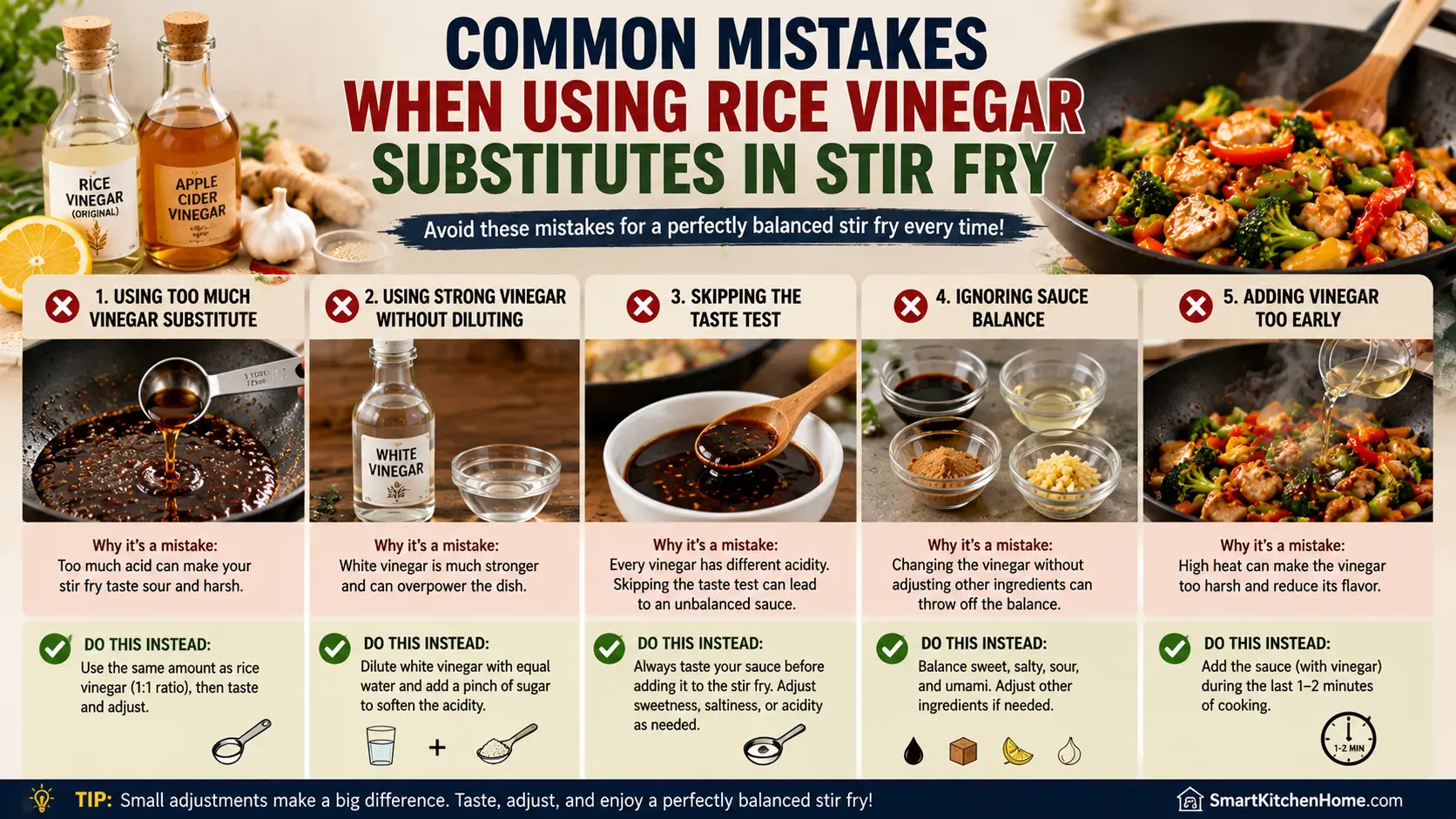
Using Strong Vinegar Without Adjusting It
Distilled white vinegar is much more acidic than rice vinegar. Pouring it into your stir fry in equal amounts can create a harsh, sour taste that overwhelms the other ingredients.
If white vinegar is your only option, dilute it with water and add a small pinch of sugar before mixing it into the sauce. This creates a much gentler flavor that’s closer to rice vinegar.
Skipping the Taste Test
Every vinegar has a slightly different level of acidity. That’s why it’s always a good idea to taste your sauce before adding it to the wok.
If the sauce tastes:
- Too sour, add a little honey, brown sugar, or mirin.
- Too sweet, add a few extra drops of vinegar.
- Too salty, increase the liquid with a splash of water or low-sodium broth.
- Too flat, add a small amount of sesame oil or freshly grated ginger.
These quick adjustments can transform an average sauce into one that’s well balanced and restaurant quality.
Ignoring the Overall Sauce Balance
Rice vinegar is only one part of a great stir fry sauce. The best sauces combine four key flavor elements:
- Sweet
- Salty
- Sour
- Umami
Changing the vinegar may require small adjustments to the other ingredients. If your substitute is more acidic, adding a little extra sweetness often restores the original balance.
For a deeper explanation of this technique, read our guide on balancing sweet, salty, sour, and umami in stir fry sauce.
Warning: Don’t judge the flavor of your sauce until it has cooked for a minute or two. Heat softens acidity and allows the ingredients to blend together, so the finished sauce often tastes smoother than it does straight from the bowl.
Expert Tips for Better Stir Fry Sauce
Professional cooks rely on more than just recipes. They understand how small adjustments affect the finished dish. These simple techniques can help you get the best results whenever you need rice vinegar substitutes stir fry recipes.
- Measure vinegar accurately instead of pouring directly from the bottle.
- Mix the sauce completely before adding it to the hot wok.
- Add acidic ingredients near the end of cooking to keep their bright flavor.
- Taste after the sauce thickens because flavors become more concentrated.
- Keep extra soy sauce, sugar, and vinegar nearby for final adjustments.
Kitchen Secret: Many restaurant stir fry sauces are adjusted at the very end of cooking with just a few drops of vinegar or citrus juice. This final touch brightens the entire dish without making it taste overly sour.
When You Should Avoid Certain Substitutes
Although most substitutes work well, there are situations where one option is better than another.
Best Choices
- Apple cider vinegar for everyday cooking.
- White wine vinegar for delicate sauces.
- Champagne vinegar for premium flavor.
- Lemon juice for light vegetable dishes.
- Lime juice for spicy stir fries.
Use With Caution
- Undiluted white vinegar.
- Balsamic vinegar because of its sweetness and dark color.
- Malt vinegar due to its strong malty flavor.
- Flavored vinegars containing herbs or spices.
- Highly concentrated cleaning vinegar, which is never food safe.
If you enjoy experimenting with homemade sauces, you may also find inspiration in our guides to Best Homemade Stir Fry Sauce Variations and The Ultimate Chicken Stir Fry Sauce Guide.
Next, we’ll look at whether homemade stir fry sauce containing vinegar can be stored safely, how long it lasts, and the best practices for refrigeration and freezing.
How to Store Stir Fry Sauce Made with Rice Vinegar Substitutes
Most rice vinegar substitutes stir fry sauces can be stored just as safely as sauces made with rice vinegar. Ingredients like apple cider vinegar, white wine vinegar, lemon juice, and lime juice all contain enough acidity to help preserve flavor for several days when refrigerated properly. However, freshness still depends on the other ingredients in the sauce, especially garlic, ginger, and fresh citrus juice.
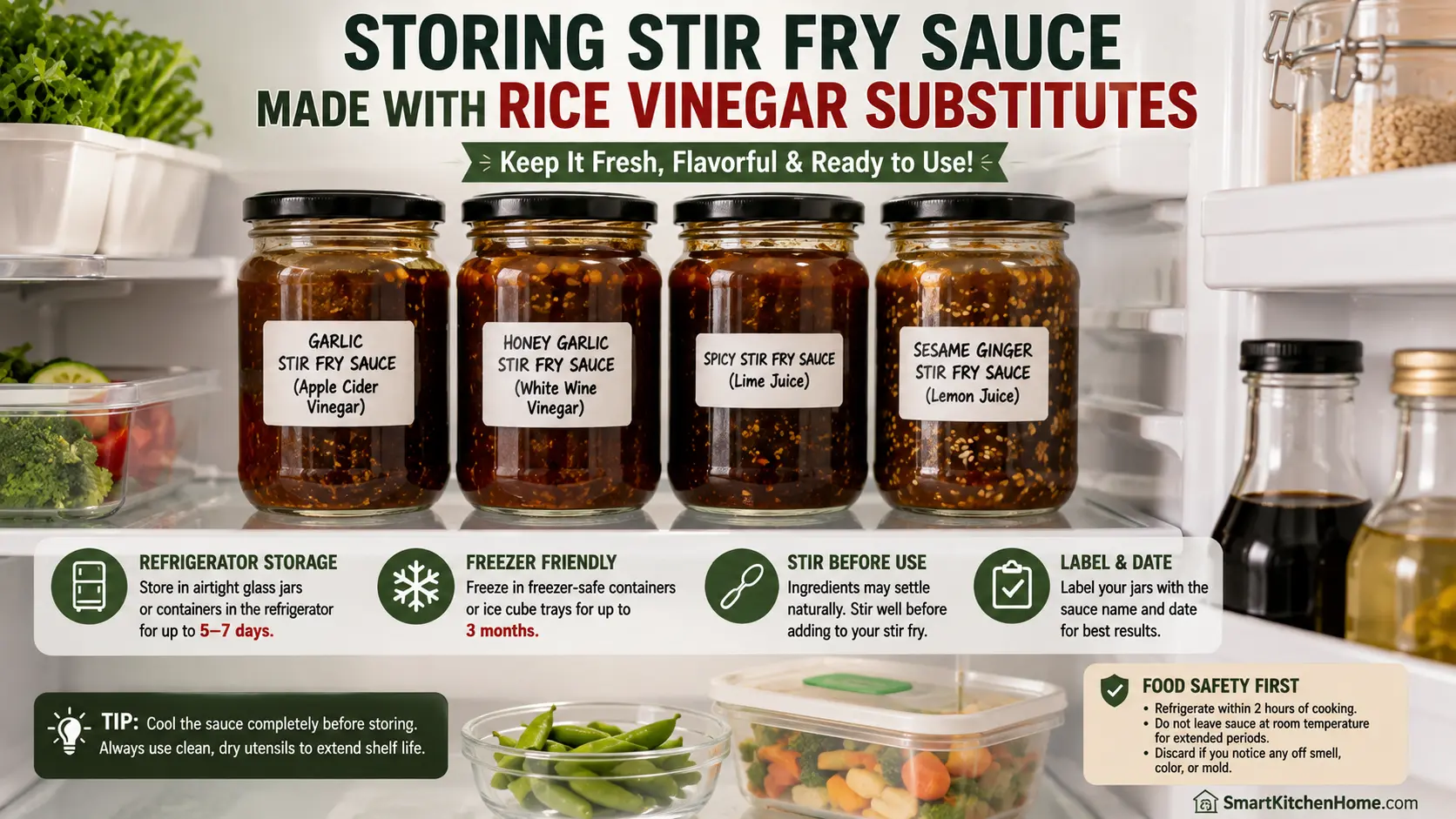
Allow freshly prepared sauce to cool before transferring it to a clean, airtight container. Glass jars with tight-fitting lids are ideal because they won’t absorb odors or become stained by soy sauce and spices.
Storage Tip: Refrigerate homemade stir fry sauce within two hours of preparation. Properly stored sauce usually stays fresh for 5 to 7 days. Always discard it if you notice mold, bubbling, an unusual odor, or significant changes in color or texture.
Can You Freeze Stir Fry Sauce?
Yes. Most homemade stir fry sauces freeze very well, including those made with rice vinegar substitutes. Freezing is an excellent option if you like preparing several batches for quick weeknight meals.
For the best quality:
- Use freezer-safe containers or silicone freezer trays.
- Leave a little space for expansion.
- Label each container with the preparation date.
- Freeze for up to 3 months for the best flavor.
Thaw frozen sauce overnight in the refrigerator and stir well before using. Some ingredients, such as cornstarch, may settle during storage, but a quick whisk usually restores a smooth consistency.
How to Adjust the Flavor After Storage
Even properly stored sauce can taste slightly different after refrigeration. Garlic becomes milder, ginger loses a little brightness, and citrus juices may become less vibrant over time.
Before cooking, taste the sauce and make small adjustments if needed:
- Add a few drops of fresh lemon or lime juice for brightness.
- Stir in a small splash of vinegar if the acidity has faded.
- Add a teaspoon of water if the sauce has thickened too much.
- Mix well before pouring it into a hot wok.
Tip: Preparing stir fry sauce one day ahead often improves the flavor because the garlic, ginger, soy sauce, and seasonings have more time to blend together.
If you regularly make homemade sauces, our guide on How to Store Homemade Stir Fry Sauce explains safe storage, freezing, and reheating techniques in greater detail.
References
Now that you know the best rice vinegar substitutes stir fry recipes can use, the final section answers the most common questions, summarizes the key takeaways, and provides additional SmartKitchenHome resources to help you create perfectly balanced stir fry sauces every time.
Frequently Asked Questions
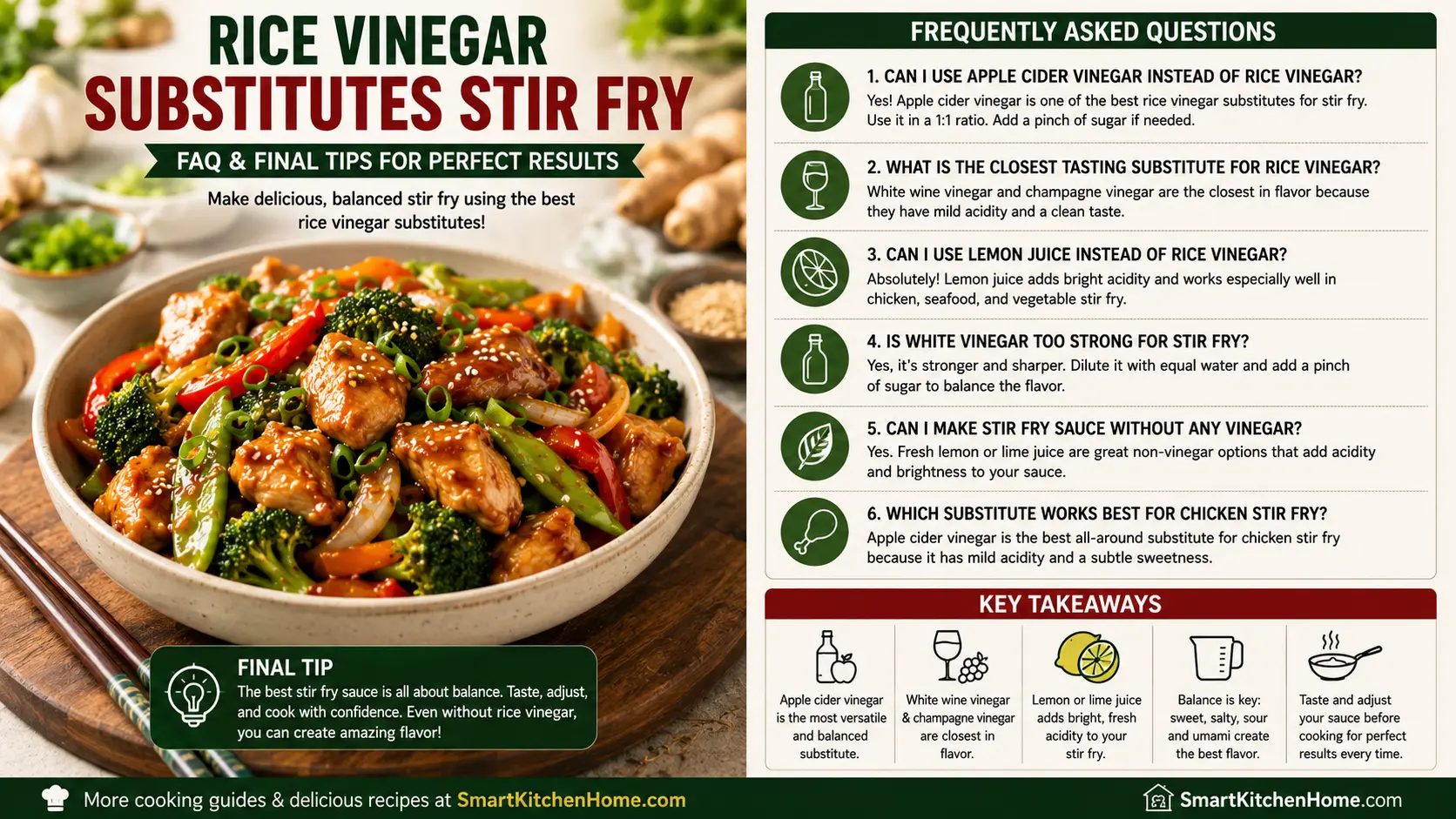
Can I use apple cider vinegar instead of rice vinegar in stir fry?
Yes. Apple cider vinegar is one of the best rice vinegar substitutes stir fry recipes can use. Replace it in a 1:1 ratio. If needed, add a small pinch of sugar or honey to mimic the mild sweetness of rice vinegar.
What is the closest tasting substitute for rice vinegar?
White wine vinegar and champagne vinegar are the closest in flavor because they have a mild, clean acidity that resembles rice vinegar without overpowering the other ingredients.
Can I use lemon juice instead of rice vinegar?
Absolutely. Fresh lemon juice provides bright acidity and works especially well in chicken, seafood, and vegetable stir fry recipes. While the flavor is slightly different, it still creates a balanced sauce.
Is white vinegar too strong for stir fry?
Yes, distilled white vinegar is much stronger than rice vinegar. If it’s your only option, dilute it with an equal amount of water and add a small pinch of sugar before using it in your stir fry sauce.
Can I make stir fry sauce without any vinegar?
Yes. Fresh lemon or lime juice can provide the acidity that vinegar normally contributes. The finished sauce will taste slightly different but can still be well balanced and flavorful.
Which substitute works best for chicken stir fry?
Apple cider vinegar is generally the best all-around substitute for chicken stir fry because its mild acidity and subtle sweetness complement chicken without overpowering the sauce.
Final Thoughts
Running out of rice vinegar doesn’t mean you have to postpone making your favorite stir fry. Several pantry staples can successfully replace it while preserving the balanced combination of sweet, salty, sour, and umami flavors that make stir fry so enjoyable.
Among all rice vinegar substitutes stir fry recipes can use, apple cider vinegar remains the most versatile option for everyday cooking. White wine vinegar and champagne vinegar offer the closest flavor match, while fresh lemon or lime juice provides a lighter, brighter alternative for vegetable and seafood dishes. Even distilled white vinegar can work when it’s diluted and balanced with a touch of sweetness.
The key is to taste your sauce before cooking, make small adjustments when needed, and remember that a well-balanced stir fry depends on the harmony of all its ingredients—not just the vinegar. With these simple techniques, you’ll be able to prepare delicious homemade stir fry sauces even when rice vinegar isn’t available.
🍽️ You Might Also Like




📧 Save This Recipe For Later
Enter your email and we will send this recipe directly to your inbox.