

Best Leafy Greens for Healthy Stir Fry Recipes
Best Leafy Greens for Healthy Stir Fry Recipes
Adding leafy greens is one of the easiest ways to make a stir fry healthier, more colorful, and more flavorful. Whether you’re preparing a quick weeknight dinner or meal prepping for the week, choosing the best leafy greens stir fry ingredients can significantly improve both nutrition and taste. Leafy greens cook quickly, pair well with chicken, beef, shrimp, tofu, and noodles, and provide essential vitamins, minerals, and antioxidants in every bite.
Not all greens perform the same in a hot wok, however. Some stay crisp and tender, while others wilt almost instantly. Understanding which greens work best and when to add them helps preserve their texture, color, and nutritional value. From spinach and bok choy to kale, Swiss chard, and Chinese broccoli, each leafy vegetable contributes unique flavors and cooking characteristics.
If you’re looking to build healthier stir fry meals without sacrificing flavor, this guide explains everything you need to know about selecting the best leafy greens stir fry options. You’ll also learn how to cook each type correctly, avoid common mistakes, and choose the right greens for different stir fry recipes.
Quick Answer
The best leafy greens stir fry recipes typically include spinach, bok choy, napa cabbage, Chinese broccoli (gai lan), kale, Swiss chard, mustard greens, and baby kale. These greens cook quickly over high heat, retain important nutrients, and add fresh flavor, vibrant color, and satisfying texture. Tender greens like spinach should be added during the last 1–2 minutes of cooking, while tougher greens such as kale benefit from a slightly longer cooking time.
Table of Contents
Why Leafy Greens Are Perfect for Stir Fry
Leafy greens are among the healthiest vegetables you can add to a stir fry because they provide exceptional nutrition while cooking in just a few minutes. Their natural moisture helps create a light, flavorful sauce, and they absorb seasonings like garlic, ginger, soy sauce, sesame oil, and oyster sauce beautifully.
Unlike many root vegetables that require longer cooking times, leafy greens fit perfectly into the fast-cooking nature of stir frying. This quick cooking process helps preserve vitamins that can be lost during boiling or extended cooking methods.
Another advantage of using the best leafy greens stir fry vegetables is their versatility. They complement almost every protein, including chicken, shrimp, beef, pork, tofu, and even plant-based meat alternatives.
Tip: Wash leafy greens thoroughly and dry them well before stir frying. Excess water lowers the wok temperature, causing vegetables to steam instead of developing the crisp-tender texture that makes stir fry so appealing.
Health Benefits of Leafy Greens
Many leafy vegetables are naturally low in calories while providing high amounts of vitamins A, C, K, folate, potassium, calcium, iron, and fiber. They also contain antioxidants that help protect your body’s cells from everyday damage.
Adding a generous serving of leafy greens transforms a basic stir fry into a nutrient-dense meal that’s both filling and balanced. Pair them with lean protein such as our Healthy Chicken Stir Fry for an easy, wholesome dinner.
| Benefit | Why It Matters in Stir Fry |
|---|---|
| High in vitamins | Supports immune function and overall health. |
| Rich in fiber | Helps keep meals satisfying and supports digestion. |
| Quick cooking | Perfect for fast weeknight dinners. |
| Low calorie | Adds volume without adding many calories. |
| Excellent texture | Creates a balance between tender greens and crisp vegetables. |
Choosing the best leafy greens stir fry ingredients also gives you flexibility throughout the year. Fresh greens are widely available, and many varieties can be mixed together for even better flavor and nutrition.
The Best Leafy Greens for Stir Fry
Choosing the best leafy greens stir fry vegetables depends on the flavor, texture, and cooking time you want. Some greens become silky and tender within seconds, while others remain pleasantly crisp even after several minutes in a hot wok. Mixing different leafy greens is also an excellent way to create more balanced texture and nutrition in every meal.
Below are some of the most popular leafy greens that consistently produce excellent stir fry results.
1. Spinach
Spinach is one of the easiest leafy greens to cook because it wilts quickly and absorbs sauces beautifully. Baby spinach has delicate leaves that only need about one minute of cooking, making it perfect for adding near the very end of the stir fry.
Spinach pairs exceptionally well with chicken, garlic, mushrooms, sesame oil, and soy sauce. If you’d like detailed cooking instructions, see our guide on How to Cook Spinach in Stir Fry. You can also try it in our delicious Chicken Spinach Stir Fry.
2. Bok Choy
Bok choy is a classic Asian stir fry vegetable known for its crunchy white stems and tender green leaves. The stems stay crisp while the leaves soften slightly, creating an excellent contrast in texture.
For the best results, separate the stems from the leaves before cooking. Add the stems first since they require a little longer, then stir in the leaves during the final minute.
Kitchen Secret: Cut bok choy into similar-sized pieces so the stems cook evenly. This keeps the greens tender while preventing the thicker portions from remaining undercooked.

3. Kale
Kale has a firmer texture than spinach and requires slightly more cooking time. Its hearty leaves hold up well in high heat, making kale an excellent option when preparing meal-prep stir fry recipes.
Removing the tough center stems before slicing the leaves into bite-sized strips makes kale much more enjoyable to eat. Cooking kale for two to four minutes softens its texture while preserving a pleasant bite.
4. Chinese Broccoli (Gai Lan)
Chinese broccoli is another outstanding choice for the best leafy greens stir fry. Unlike traditional broccoli, gai lan features thick edible stems and broad leafy tops. It has a mild bitterness that pairs wonderfully with garlic, oyster sauce, ginger, and chicken.
The stems should be sliced into thinner pieces before cooking so they become tender at the same rate as the leaves.
5. Swiss Chard
Swiss chard offers colorful stems and soft green leaves that bring visual appeal to healthy stir fry dishes. Like bok choy, the stems and leaves cook at different speeds.
Start by cooking the stems for one to two minutes before adding the leafy portion. This method keeps both parts perfectly cooked without becoming mushy.
| Leafy Green | Texture | Cooking Time | Best With |
|---|---|---|---|
| Spinach | Very tender | 1 minute | Chicken, mushrooms, garlic |
| Bok Choy | Crisp stems, soft leaves | 2–3 minutes | Chicken, beef, shrimp |
| Kale | Firm and hearty | 3–4 minutes | Chicken, sausage, tofu |
| Chinese Broccoli | Crisp and slightly chewy | 3 minutes | Garlic sauces and beef |
| Swiss Chard | Tender leaves with crisp stems | 2–3 minutes | Chicken and vegetables |
Each of these vegetables can help create a nutritious meal, but combining leafy greens with other colorful vegetables produces even better results. Our Chicken Veggie Stir Fry and Chicken Broccoli Stir Fry are excellent examples of balanced meals packed with vegetables.
How to Choose the Best Leafy Greens for Stir Fry
While spinach, bok choy, kale, Swiss chard, and Chinese broccoli are among the most popular choices, they’re not the only vegetables that work well in a healthy stir fry. The best leafy greens stir fry recipes often combine several greens to create a balance of flavors, textures, and nutrients.
When selecting leafy greens, consider how they’ll pair with your protein, sauce, and other vegetables. Mild greens complement delicate sauces, while stronger greens stand up well to bold flavors like garlic, ginger, chili paste, and oyster sauce.
Mustard Greens
Mustard greens have a peppery flavor that becomes milder after cooking. They’re an excellent option if you enjoy a little extra bite in your stir fry. Because they soften quickly, add them during the final two minutes of cooking.
Mustard greens pair especially well with chicken, pork, garlic, ginger, and spicy Asian sauces.
Napa Cabbage
Although technically a cabbage, napa cabbage is often used like a leafy green in stir fry recipes. Its tender leaves cook rapidly, while the thicker white ribs remain pleasantly crisp.
Napa cabbage is ideal for light stir fries because it releases a small amount of natural moisture that blends beautifully with sauces without making the dish watery.

Baby Kale
Baby kale offers the nutritional benefits of mature kale with a much softer texture. Since the leaves are more tender, they cook faster and require less preparation. Baby kale is an excellent choice for beginners who want to enjoy kale without its tougher texture.
Water Spinach (Ong Choy)
Popular throughout Southeast Asia, water spinach features hollow stems and long, tender leaves. It cooks extremely quickly and develops a silky texture while maintaining slight crispness in the stems.
Water spinach works wonderfully with garlic, oyster sauce, soy sauce, and chili peppers, making it a favorite in many traditional stir fry dishes.
| Leafy Green | Flavor | Texture After Cooking | Best For |
|---|---|---|---|
| Spinach | Mild | Soft | Quick weeknight meals |
| Bok Choy | Slightly sweet | Crisp-tender | Traditional Asian stir fry |
| Kale | Earthy | Firm | Meal prep recipes |
| Napa Cabbage | Mild and sweet | Tender with crisp ribs | Light sauces |
| Mustard Greens | Peppery | Tender | Spicy stir fry dishes |
| Swiss Chard | Mild earthy | Soft leaves, crisp stems | Mixed vegetable stir fry |
Tip: Combining two or three leafy greens often produces better flavor and texture than using just one. For example, spinach adds tenderness while bok choy contributes crunch, creating a more satisfying stir fry.
Choosing Greens Based on Your Recipe
If you’re preparing a classic chicken stir fry, spinach and bok choy are excellent choices because they cook quickly and absorb sauce well. For heartier meals with bold sauces, kale and Chinese broccoli provide a firmer texture that stands up to longer cooking.
If you’re looking for more vegetable ideas beyond leafy greens, our guides on Best Vegetables for Chicken Stir Fry and Best Vegetables for Low-Carb Chicken Stir Fry can help you build even healthier meals.
How to Cook Leafy Greens Properly in Stir Fry
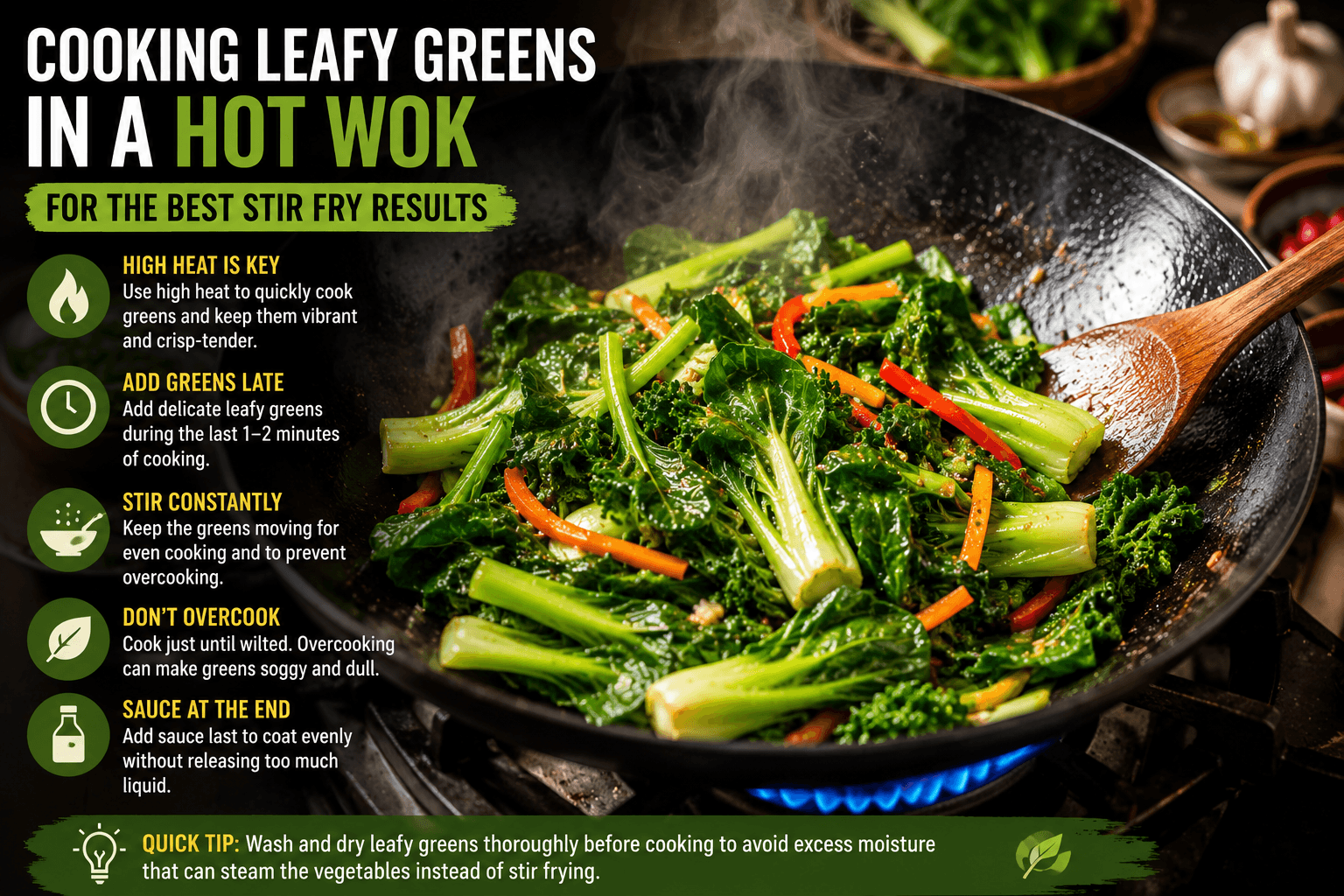
Even the best leafy greens stir fry ingredients can lose their texture and flavor if they’re cooked incorrectly. Stir frying is all about high heat and quick cooking, so knowing when to add each type of leafy green makes a noticeable difference.
The goal is to keep the vegetables vibrant, slightly crisp, and full of natural flavor instead of overcooking them until they’re limp and watery.
1. Wash and Dry Thoroughly
Leafy greens often trap dirt and sand between their leaves, so rinse them carefully under cold running water. After washing, dry them thoroughly using a salad spinner or clean kitchen towels.
Excess moisture lowers the temperature of the wok, causing the vegetables to steam instead of stir fry. A dry wok and dry vegetables help create the signature crisp-tender texture.
Warning: Never add soaking wet leafy greens directly to hot oil. The excess water can cause dangerous oil splatters and prevent proper browning.
2. Cut Larger Greens into Uniform Pieces
Large leaves such as kale, Swiss chard, and mustard greens should be cut into bite-sized pieces before cooking. Uniform sizes allow every piece to cook evenly and make the finished stir fry easier to eat.
If the greens have thick stems, separate them from the leaves. Cook the stems first because they need more time to become tender.
3. Add Greens at the Right Time
Timing is one of the biggest secrets to preparing the best leafy greens stir fry. Tender greens like spinach should only be added during the final minute or two of cooking. Heartier greens such as kale or Chinese broccoli can go into the wok earlier because they require more time to soften.
| Leafy Green | When to Add | Approximate Cook Time |
|---|---|---|
| Spinach | Last | 30–60 seconds |
| Baby Kale | Near the end | 1–2 minutes |
| Bok Choy Leaves | Last | 1 minute |
| Bok Choy Stems | Earlier | 2–3 minutes |
| Chinese Broccoli | Middle | 2–3 minutes |
| Kale | Earlier | 3–4 minutes |
4. Don’t Overcrowd the Wok
Adding too many vegetables at once traps steam inside the pan. Instead of developing a lightly charred exterior, the greens become soft and watery.
If you’re cooking a large batch, divide the ingredients into two smaller batches. This keeps the wok hot and allows each vegetable to cook properly.
Kitchen Secret: Professional chefs constantly toss the vegetables instead of stirring continuously. This keeps the ingredients moving while allowing brief contact with the hot surface of the wok, creating better texture and flavor.
5. Finish with Sauce, Not Before
Add your stir fry sauce only after the vegetables are nearly finished cooking. This allows the greens to retain their texture while giving the sauce just enough time to coat every ingredient evenly.
For inspiration, try this technique with our Garlic Chicken Stir Fry, Classic Chicken Stir Fry, or Teriyaki Chicken Stir Fry. These recipes show how properly cooked leafy greens can elevate both flavor and presentation.
Now that you know how to cook leafy greens correctly, it’s equally important to avoid the common mistakes that can turn a healthy stir fry into a soggy, bland meal. We’ll cover those mistakes—and how to prevent them—in the next section.
Common Mistakes to Avoid When Cooking Leafy Greens
Using the best leafy greens stir fry vegetables is only part of the equation. Even high-quality ingredients can produce disappointing results if they’re prepared incorrectly. Fortunately, most stir fry mistakes are easy to avoid once you understand how leafy greens react to high heat.
Below are the most common problems home cooks encounter and the simple techniques that produce consistently delicious results.
Adding All the Vegetables at the Same Time
Different vegetables cook at different speeds. Tossing carrots, broccoli, bok choy, and spinach into the wok together usually results in overcooked leafy greens and undercooked firm vegetables.
Instead, begin with vegetables that require the longest cooking time. Add leafy greens toward the end so they remain bright, tender, and full of flavor.
Warning: Spinach can lose its vibrant color and become overly soft in less than two minutes. Always add delicate greens at the end of the cooking process.

Using Low Heat
One of the defining characteristics of a good stir fry is high heat. Cooking over medium or low heat causes vegetables to release moisture slowly, resulting in steaming instead of stir frying.
A properly heated wok quickly evaporates surface moisture, allowing leafy greens to cook rapidly while maintaining a fresh appearance.
Overcrowding the Pan
Adding too many ingredients at once lowers the pan’s temperature. Instead of searing, the vegetables release water and become soggy.
If you’re preparing meals for a family or meal prepping, cook in multiple batches. Although this takes a few extra minutes, the improvement in texture is well worth it.
Using Too Much Sauce
Leafy greens naturally contain water. Adding excessive sauce can overwhelm their delicate flavor and create a watery stir fry.
Start with a small amount of sauce and add more only if needed. The vegetables should be lightly coated rather than swimming in liquid.
| Common Mistake | Result | Better Approach |
|---|---|---|
| Cooking over low heat | Steamed vegetables | Use high heat throughout cooking |
| Adding greens too early | Wilted, mushy leaves | Add delicate greens near the end |
| Overcrowding the wok | Soggy texture | Cook in smaller batches |
| Too much sauce | Watery stir fry | Use only enough to lightly coat ingredients |
| Uneven vegetable sizes | Uneven cooking | Cut vegetables into similar-sized pieces |
Tip: Keep all your vegetables prepared before turning on the stove. Since stir frying happens quickly, having everything ready prevents overcooking while you stop to chop ingredients.
How to Store Leftover Leafy Green Stir Fry
Proper storage helps maintain both food safety and quality. While leafy greens are best enjoyed immediately after cooking, leftovers can still make an excellent meal the next day if stored correctly.
Storage Tip: Allow the stir fry to cool slightly before transferring it to an airtight container. Refrigerate within two hours of cooking and enjoy within 3–4 days for the best flavor and texture.
Refrigerating
Store leftover stir fry in shallow airtight containers to help it cool quickly. Reheat only the portion you plan to eat rather than repeatedly warming the entire batch.
Freezing
Although possible, freezing isn’t ideal for recipes containing delicate leafy greens like spinach because they become much softer after thawing. Heartier greens such as kale generally freeze better but still lose some texture.
Reheating
For the best results, reheat stir fry in a skillet or wok over medium-high heat for just a few minutes. Microwaving works in a pinch, but reheating on the stove helps preserve texture and prevents the vegetables from becoming overly soft.
If you’re interested in learning more about selecting and preparing vegetables, our guides on Fresh vs. Frozen Vegetables for Stir Fry, Common Vegetable Stir Fry Mistakes, and The Ultimate Stir Fry Vegetable Preparation Guide provide even more practical tips for making consistently delicious meals.
Frequently Asked Questions
What are the best leafy greens for healthy stir fry recipes?
The best leafy greens stir fry options include spinach, bok choy, Chinese broccoli (gai lan), kale, Swiss chard, napa cabbage, mustard greens, and baby kale. Each offers a unique texture and flavor, making them excellent additions to healthy stir fry meals.
Can I mix different leafy greens in one stir fry?
Yes. Mixing leafy greens creates a better balance of texture and nutrition. For example, spinach adds tenderness while bok choy provides crunch, and kale contributes a hearty bite. Combining two or three greens often produces the best results.
When should I add leafy greens to a stir fry?
Delicate greens like spinach should be added during the final minute of cooking. Heartier greens such as kale or Chinese broccoli can be added earlier because they need more time to soften while still maintaining their texture.
Are leafy greens healthy in stir fry?
Absolutely. Stir frying cooks vegetables quickly over high heat, helping preserve many vitamins and minerals. Leafy greens are naturally rich in vitamins A, C, and K, fiber, antioxidants, and other nutrients while remaining low in calories.
Can I use frozen leafy greens?
Fresh leafy greens generally provide the best texture for stir fry. Frozen greens can be used in some recipes, but they release more moisture during cooking and may become softer than fresh vegetables.
Which leafy greens work best with chicken stir fry?
Spinach, bok choy, Chinese broccoli, napa cabbage, and kale pair especially well with chicken. These vegetables absorb stir fry sauces well while complementing lean chicken without overpowering its flavor.
References
Final Thoughts
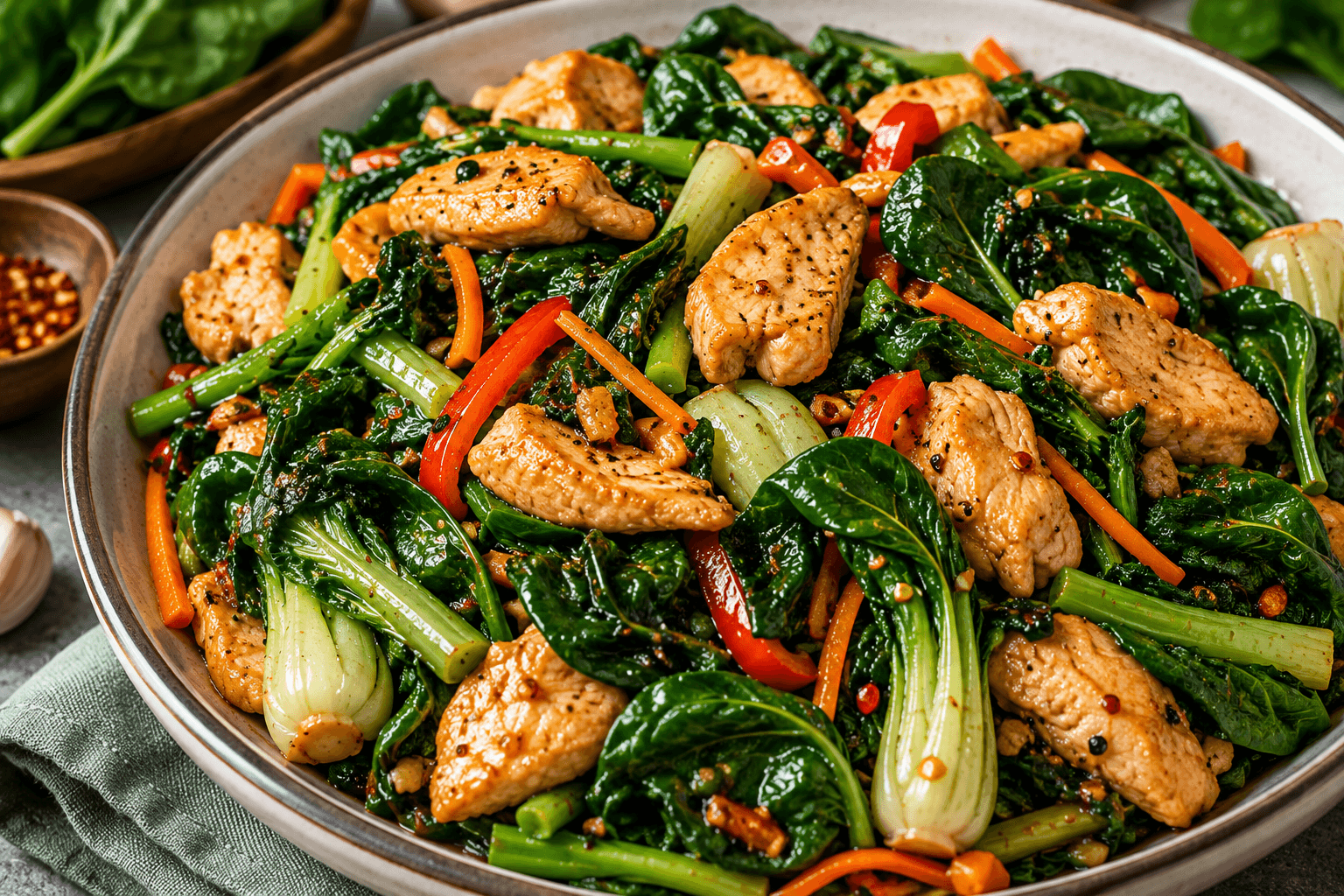
Choosing the best leafy greens stir fry ingredients is one of the simplest ways to create healthier, more flavorful meals. Whether you prefer the tenderness of spinach, the crisp texture of bok choy, the heartiness of kale, or the versatility of napa cabbage, each leafy green brings unique nutritional benefits and fresh flavor to your stir fry.
Remember to cook over high heat, add delicate greens near the end, avoid overcrowding the wok, and use just enough sauce to coat the vegetables. These small techniques make a significant difference in both texture and taste.
With the right leafy greens and proper cooking methods, you can prepare delicious stir fry recipes that are colorful, nutritious, and ready in minutes.
🍽️ You Might Also Like




📧 Save This Recipe For Later
Enter your email and we will send this recipe directly to your inbox.