
How to Cut Bell Peppers for Stir Fry (Best Shapes & Sizes)
How to Cut Bell Peppers for Stir Fry (Best Shapes & Sizes)
Learning how to cut bell peppers for stir fry is one of the easiest ways to improve the texture, appearance, and flavor of your meals. Although bell peppers seem simple to prepare, the way you slice them affects how evenly they cook, how well they absorb sauce, and how attractive they look in the finished dish.
Many home cooks focus on the sauce or protein but overlook vegetable preparation. Thick chunks often stay too crunchy, while paper-thin slices can become soft before the chicken finishes cooking. Proper knife work helps every ingredient finish cooking at nearly the same time, creating a stir fry with balanced textures and vibrant colors.
Bell peppers are also naturally sweet, colorful, and packed with vitamin C, making them one of the most popular vegetables for stir fry recipes. Whether you’re making a quick weeknight dinner or preparing vegetables for meal prep, knowing the best shapes and sizes gives you more consistent results every time.
In this guide, you’ll learn exactly how to cut bell peppers for stir fry, which knife works best, the ideal slice thickness, common mistakes to avoid, and which cutting styles pair best with different stir fry recipes.
Quick Answer
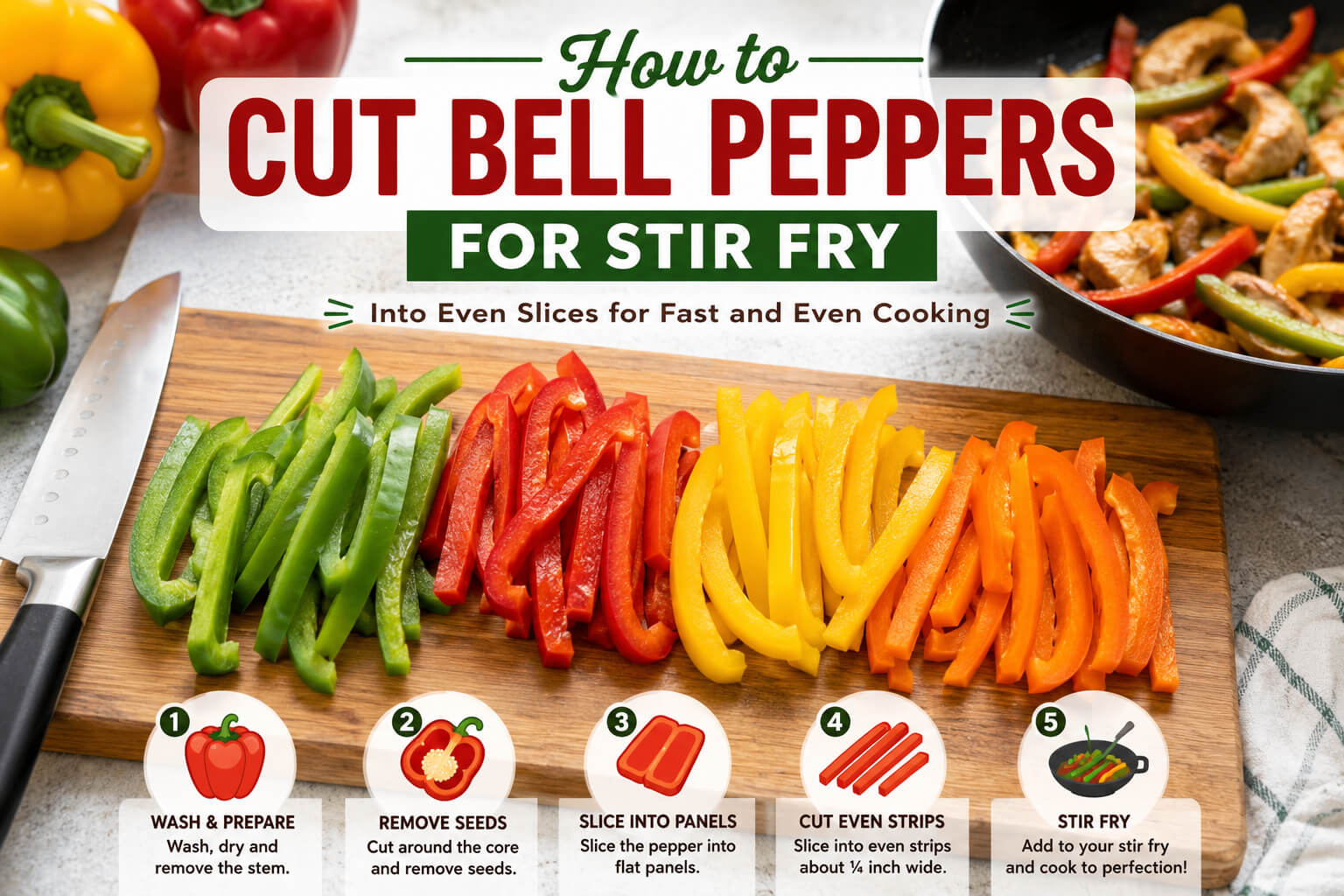
To cut bell peppers for stir fry, wash and dry the pepper, remove the stem and seeds, then slice each side into flat panels. Stack the panels and cut them into uniform strips about ¼ inch wide and 2–3 inches long. Keeping every slice similar in size helps the peppers cook evenly while staying crisp-tender and colorful.
Table of Contents
Why Properly Cutting Bell Peppers Matters
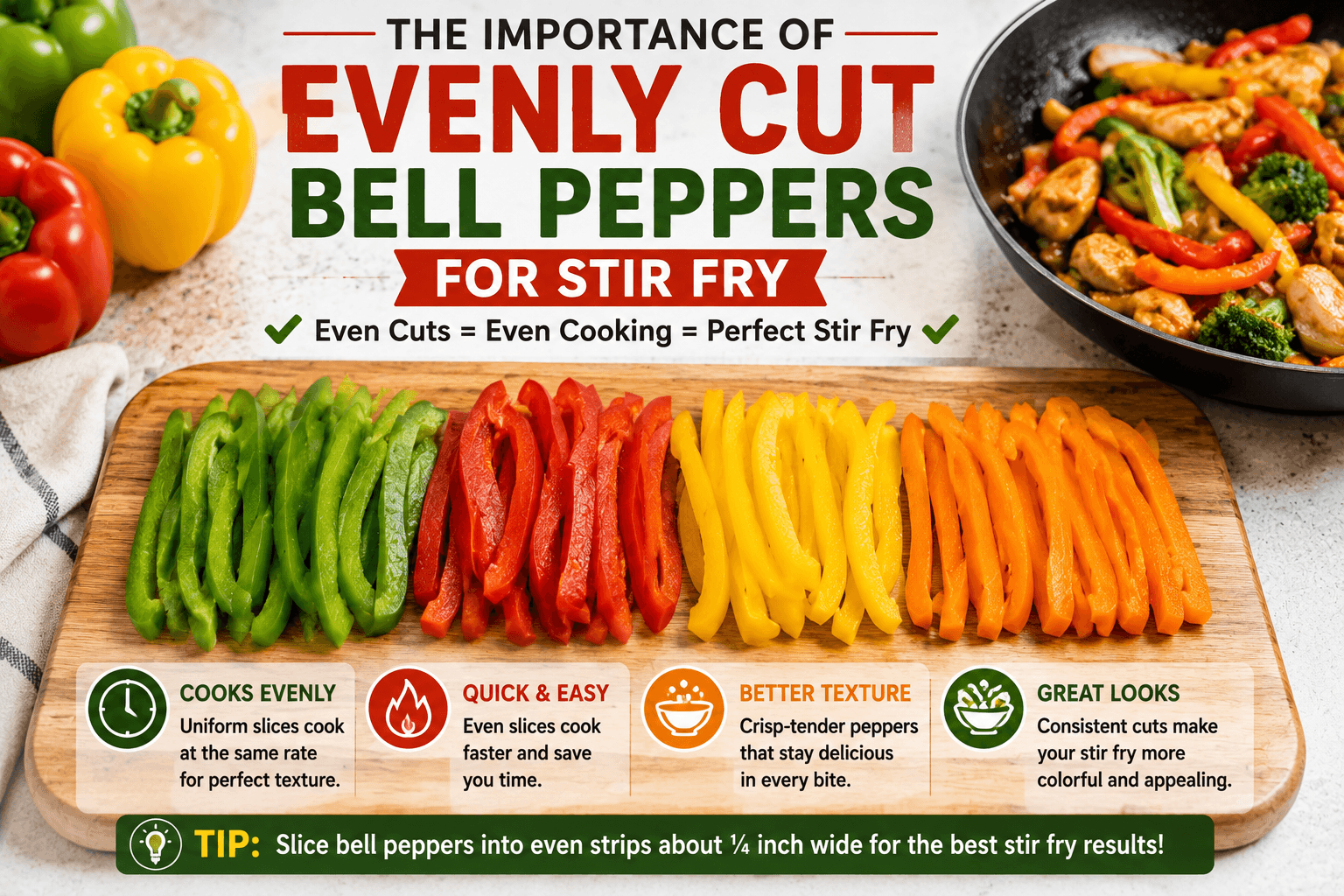
The shape and size of every vegetable determine how quickly it cooks. Bell peppers contain a high percentage of water, so uneven pieces often cook at different speeds. Thick slices may remain undercooked while smaller pieces soften too much before the meal is finished.
When you cut bell peppers for stir fry into uniform strips, every piece reaches the ideal crisp-tender texture at nearly the same time. This not only improves the eating experience but also helps sauces coat each slice evenly.
Uniform cuts also make stir fries look more professional. Restaurants spend time preparing vegetables consistently because even slices create a colorful, balanced presentation that’s visually appealing.
Tip: Try matching the size of your bell pepper strips to your sliced chicken or beef. Similar-sized ingredients cook more evenly and are easier to eat with chopsticks or a fork.
If you’re preparing vegetables for recipes like Chicken Bell Pepper Stir Fry or a classic Chicken Stir Fry, consistent cuts help all the ingredients finish cooking together without overcooking the peppers.
How to Prepare Bell Peppers Before Cutting
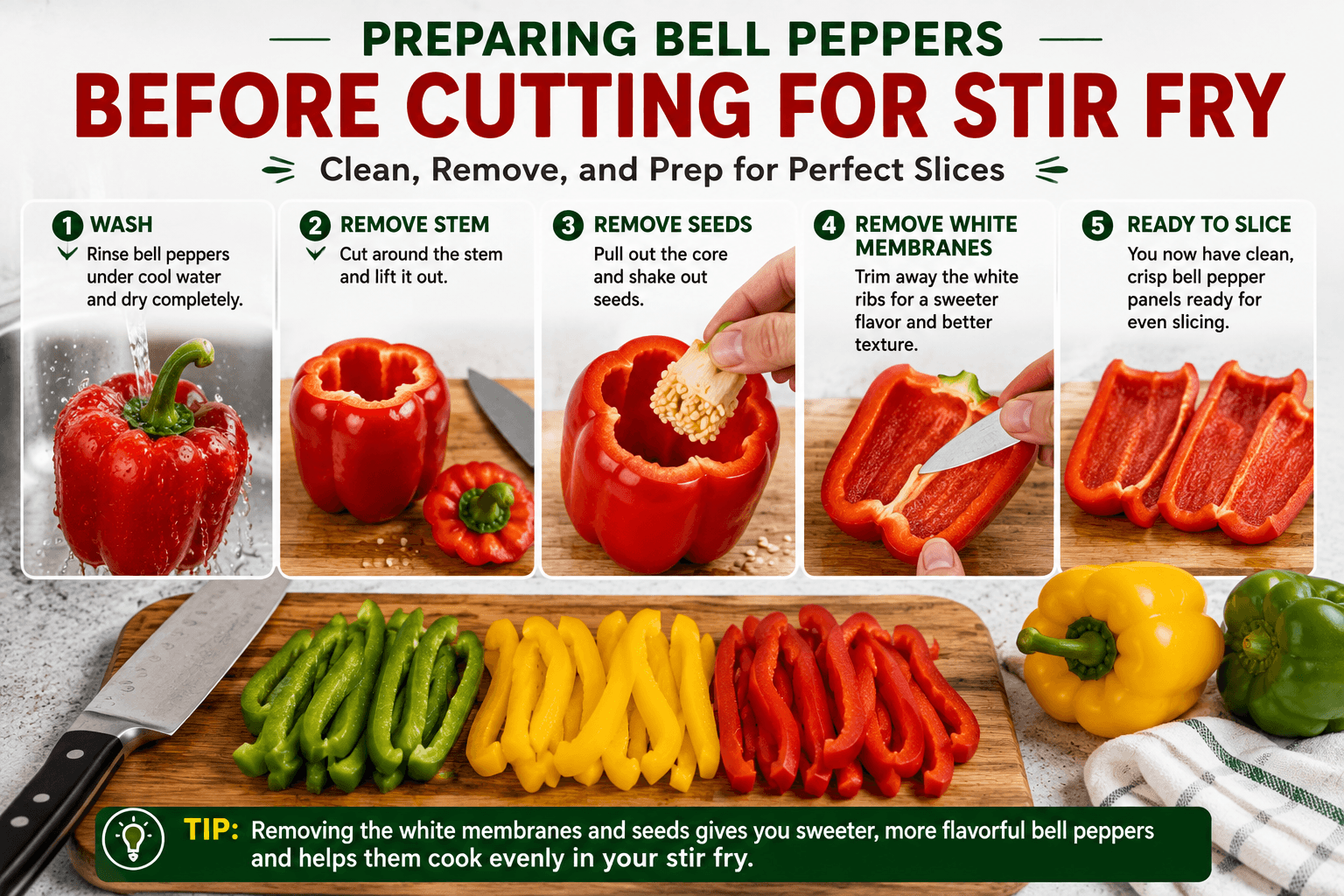
Before you cut bell peppers for stir fry, take a few minutes to prepare them properly. Good preparation not only makes slicing easier but also helps the peppers cook evenly and retain their fresh, crisp texture. Skipping these simple steps can leave seeds behind, create uneven slices, or introduce excess moisture that interferes with stir-frying.
1. Wash the Peppers Thoroughly
Even if the peppers look clean, rinse them under cool running water to remove dirt, dust, or any residue left from handling and transportation. Gently rub the surface with your hands, then dry the peppers completely with a clean kitchen towel or paper towels.
Dry peppers are important because excess water creates steam when the vegetables hit the hot pan. Too much steam prevents proper browning and can make the peppers softer than desired.
2. Remove the Stem and Core
Stand the pepper upright on a cutting board and carefully slice around the stem. Lift out the stem along with the attached seed cluster. Shake out any loose seeds and trim away the remaining white membranes inside the pepper.
The white ribs are edible but slightly bitter and firmer than the colorful flesh. Removing them gives every slice a more consistent texture and sweeter flavor.
Kitchen Secret: Many professional chefs slice off the four sides of the pepper first, leaving the core standing in the middle. This creates flat panels that are much easier to slice into uniform stir fry strips.
3. Flatten the Pepper Panels
Once the sides are separated from the core, lay each panel skin-side down on the cutting board. Flat pieces are more stable, making them safer and easier to slice into even strips. This simple technique also improves knife control and helps every slice stay the same width.
If you’re preparing several vegetables together, this is also a good time to review the Ultimate Stir Fry Vegetable Preparation Guide so all your ingredients are cut to compatible sizes.
Best Shapes and Sizes for Stir Fry
There isn’t just one correct way to cut bell peppers for stir fry, but some shapes work much better than others. The ideal cut depends on how quickly you want the peppers to cook, the type of stir fry you’re making, and the texture you prefer.
For most chicken, beef, shrimp, and vegetable stir fry recipes, thin strips provide the best balance of appearance, cooking speed, and crispness.
| Cut Style | Best For | Cooking Result |
|---|---|---|
| Thin strips (¼ inch) | Most stir fry recipes | Crisp-tender and evenly cooked |
| Julienne | Quick-cooking dishes | Very fast cooking |
| Wide strips | Hearty vegetable stir fries | Extra crunch |
| Small squares | Fried rice and noodle dishes | Easy to mix evenly |
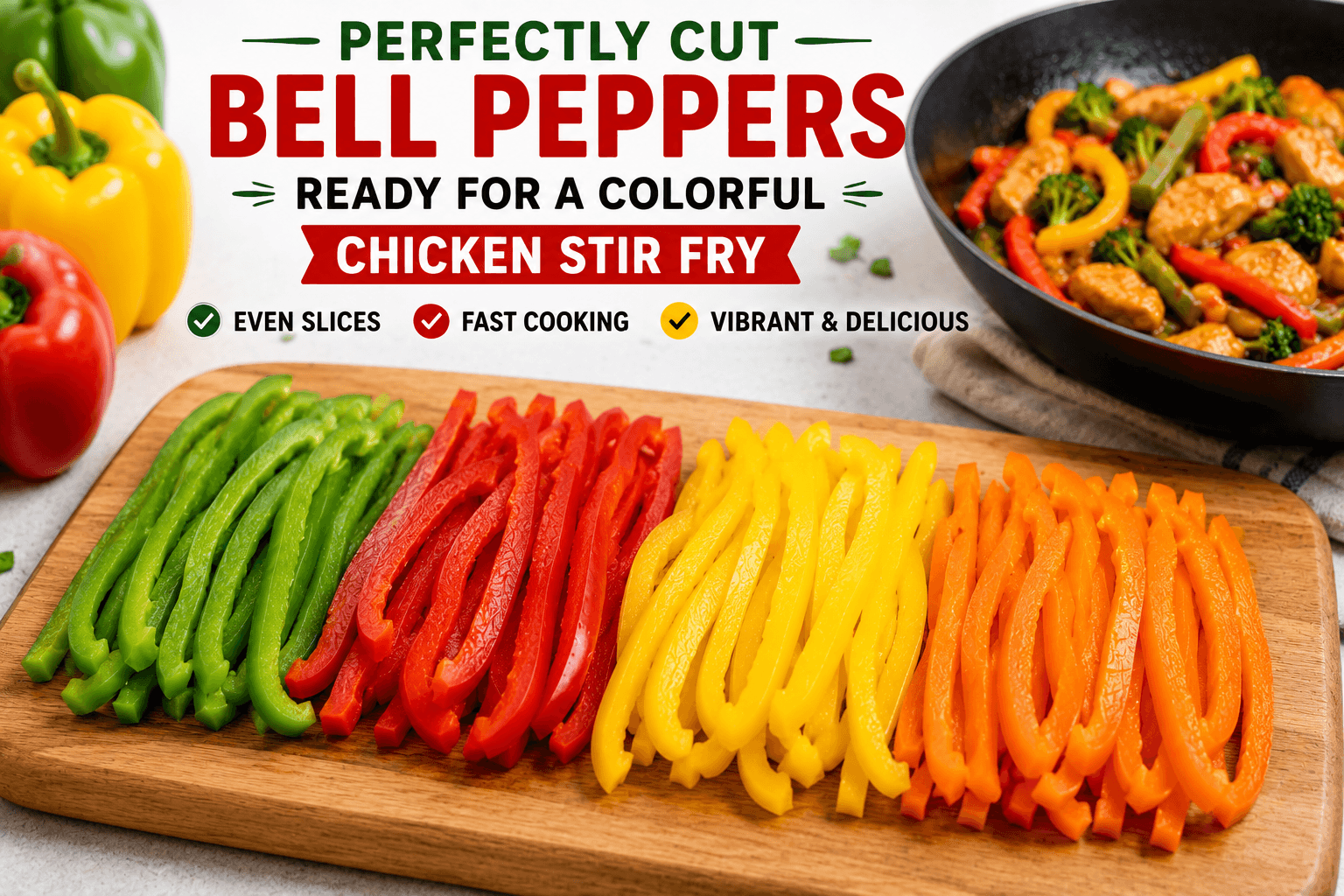
For recipes like Garlic Chicken Stir Fry or Healthy Chicken Stir Fry, thin strips around ¼ inch wide and 2 to 3 inches long offer the best combination of texture and presentation.
Step-by-Step: How to Cut Bell Peppers for Stir Fry
Once your bell peppers are washed, dried, and trimmed, it’s time to slice them into the ideal shape for stir fry. Following a consistent cutting method helps every piece cook evenly, making your finished dish look and taste better. If you’re learning to cut bell peppers for stir fry for the first time, these simple steps will give you reliable results every time.
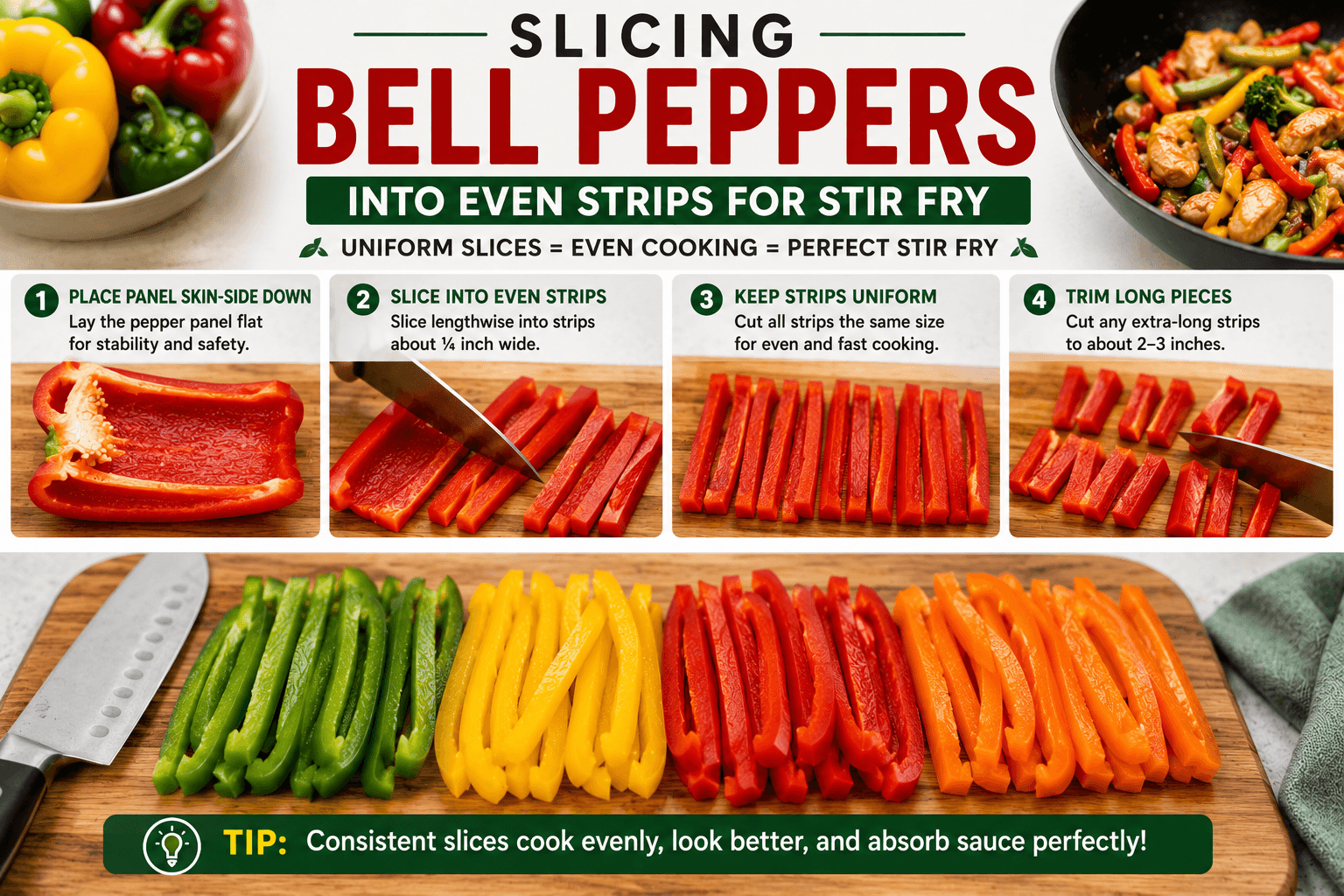
Step 1: Place the Pepper Skin-Side Down
After removing the core, lay each pepper panel flat with the skin facing down. The inside of the pepper provides a stable surface that prevents slipping while slicing. This position also gives you better control over your knife, making it easier to produce uniform strips.
Working with flat pieces instead of a whole rounded pepper improves both safety and precision.
Step 2: Slice Into Even Strips
Using a sharp chef’s knife, slice each panel lengthwise into strips approximately ¼ inch wide. Try to keep every strip the same thickness so they cook at the same speed. Consistent slices help the peppers stay crisp-tender without leaving some pieces undercooked or overcooked.
If you’re cooking alongside sliced chicken, matching the width of the pepper strips to the chicken pieces creates a balanced stir fry that’s easier to eat and visually appealing.
Step 3: Trim Extra-Long Pieces if Needed
Some bell peppers are naturally larger than others. If your strips are longer than about 3 inches, simply cut them in half. Shorter strips are easier to toss in the wok, distribute evenly throughout the dish, and pick up with chopsticks.
Tip: Avoid cutting peppers too thin. Very narrow slices cook extremely quickly and may lose their crisp texture before the rest of the stir fry is finished.
Should You Slice Bell Peppers Thin or Thick?
One of the most common questions when learning to cut bell peppers for stir fry is whether thin or thick slices are better. The answer depends on the cooking method and the texture you want in the finished dish.
For high-heat stir frying, thinner slices are generally the better choice because they cook quickly while still maintaining a slight crunch. Thick pieces require more time in the pan, increasing the chance that other ingredients—especially chicken or broccoli—may become overcooked.
| Slice Thickness | Texture After Cooking | Best Use |
|---|---|---|
| ⅛ inch | Very tender | Fast stir fries and noodle dishes |
| ¼ inch | Crisp-tender | Most chicken and beef stir fries |
| ½ inch | Extra crunchy | Hearty vegetable stir fries |
If you’re preparing vegetables for recipes like Spicy Chicken Stir Fry or Teriyaki Chicken Stir Fry, slices around ¼ inch thick strike the perfect balance between tenderness and crunch.
Keep in mind that bell peppers continue to soften slightly after leaving the heat. Removing them from the wok while they’re still crisp-tender helps preserve their texture until serving.
Expert Tip: If your stir fry contains vegetables that require longer cooking times, such as carrots or broccoli, cook those first and add the bell peppers later. This keeps the peppers vibrant, slightly crisp, and full of natural sweetness.
Understanding the proper vegetable sequence is just as important as learning how to cut them. Our guide on the correct order to add vegetables to stir fry explains how to time each ingredient for the best results.
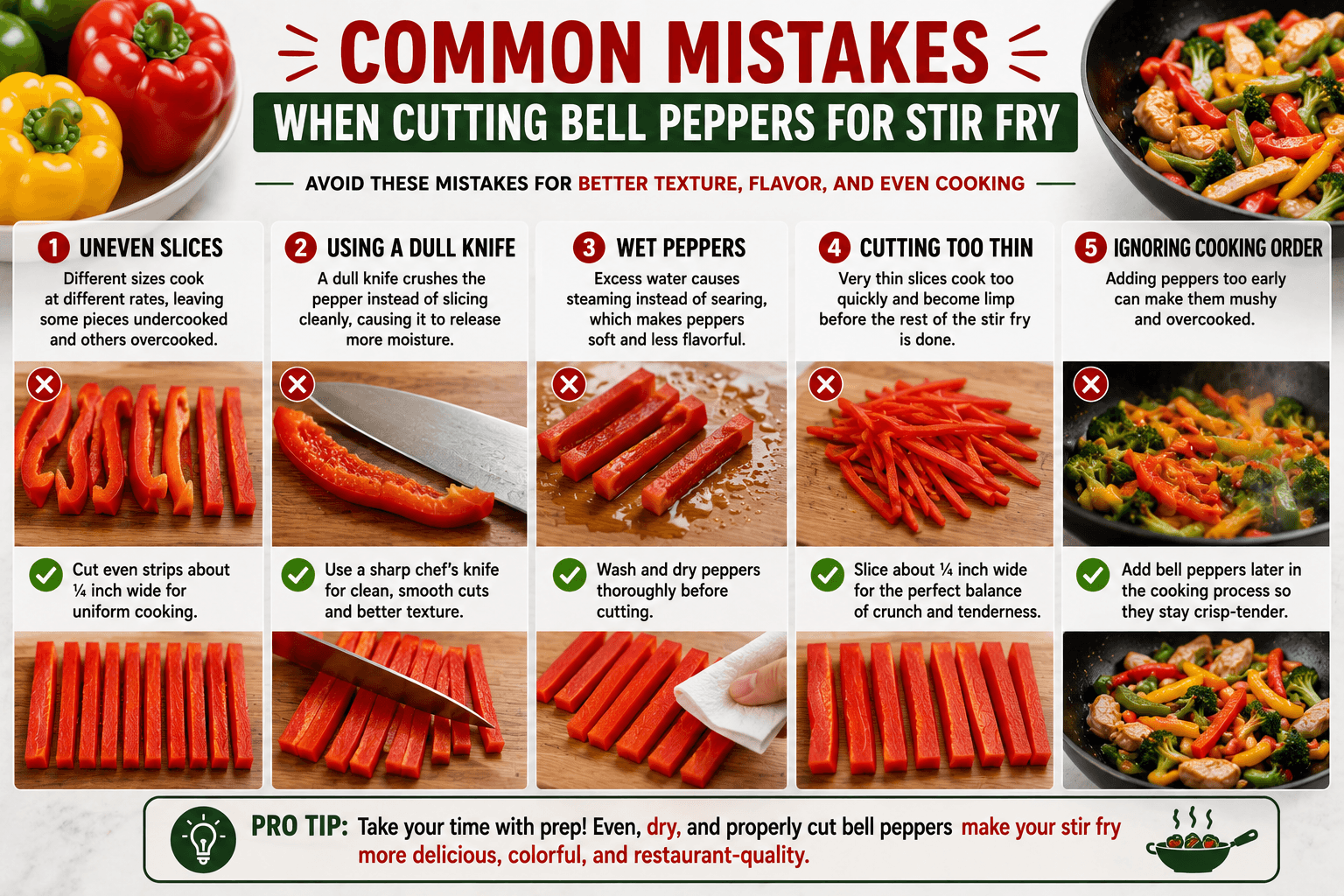
Common Mistakes When You Cut Bell Peppers for Stir Fry
Even experienced home cooks sometimes make small preparation mistakes that affect the final dish. Knowing what to avoid will help you cut bell peppers for stir fry more effectively and achieve peppers that stay colorful, crisp-tender, and full of flavor.
Cutting Uneven Pieces
The most common mistake is slicing peppers into different widths and lengths. Thin strips cook much faster than thick ones, so some pieces become soft while others remain undercooked. Taking an extra minute to make uniform cuts results in more even cooking and a better-looking stir fry.
Leaving Too Much Moisture on the Peppers
Freshly washed peppers often hold water in the stem cavity and around the inside ribs. If you slice them while they’re still wet, that moisture turns into steam when it hits the hot pan.
Instead of searing, the peppers begin to steam, making them softer and preventing the slight char that gives stir-fried vegetables their delicious flavor.
Using a Dull Knife
A dull knife crushes the pepper instead of slicing cleanly through it. This damages the vegetable’s cell structure, causing it to release more moisture during cooking.
A sharp chef’s knife makes cleaner cuts, improves safety, and produces professional-looking slices with much less effort.
Warning: Never rush while cutting vegetables. Use a stable cutting board and keep your fingertips tucked under in a “claw grip” to protect them while slicing.
Making the Strips Too Thin
Extremely thin slices may seem like they’ll cook faster, but they often become limp before the rest of the stir fry is finished. For most recipes, slices around ¼ inch wide provide the ideal combination of tenderness and crunch.
Ignoring the Cooking Order
Even perfectly cut peppers can become mushy if they’re added to the wok too early. Bell peppers require only a few minutes of high-heat cooking to reach their best texture.
If you often end up with soft vegetables, our guide on how to cook bell peppers without getting mushy explains exactly how to keep them crisp and vibrant.
How Different Bell Pepper Cuts Affect Cooking
The way you cut bell peppers for stir fry doesn’t just change their appearance—it also affects cooking time, texture, and how well they absorb sauce. Choosing the right cut helps you match the peppers to your recipe and preferred eating experience.
| Cut Style | Cooking Time | Texture | Best For |
|---|---|---|---|
| Thin Strips | 2–3 minutes | Crisp-tender | Classic stir fries |
| Julienne | 1–2 minutes | Tender | Quick noodle dishes |
| Wide Strips | 3–4 minutes | Crunchy | Vegetable-heavy stir fries |
| Small Dice | 2 minutes | Soft | Fried rice and wraps |
Thin strips remain the most versatile option because they cook quickly while still retaining their natural sweetness and slight crunch. They’re also excellent at catching stir fry sauce, ensuring every bite is packed with flavor.
Tip: Try combining red, yellow, and green bell peppers in the same stir fry. Using multiple colors adds visual appeal while providing subtle differences in sweetness and flavor.
For colorful meals packed with vegetables, pair your freshly sliced peppers with ideas from our Best Vegetables for Chicken Stir Fry guide.
How to Store Cut Bell Peppers for Stir Fry
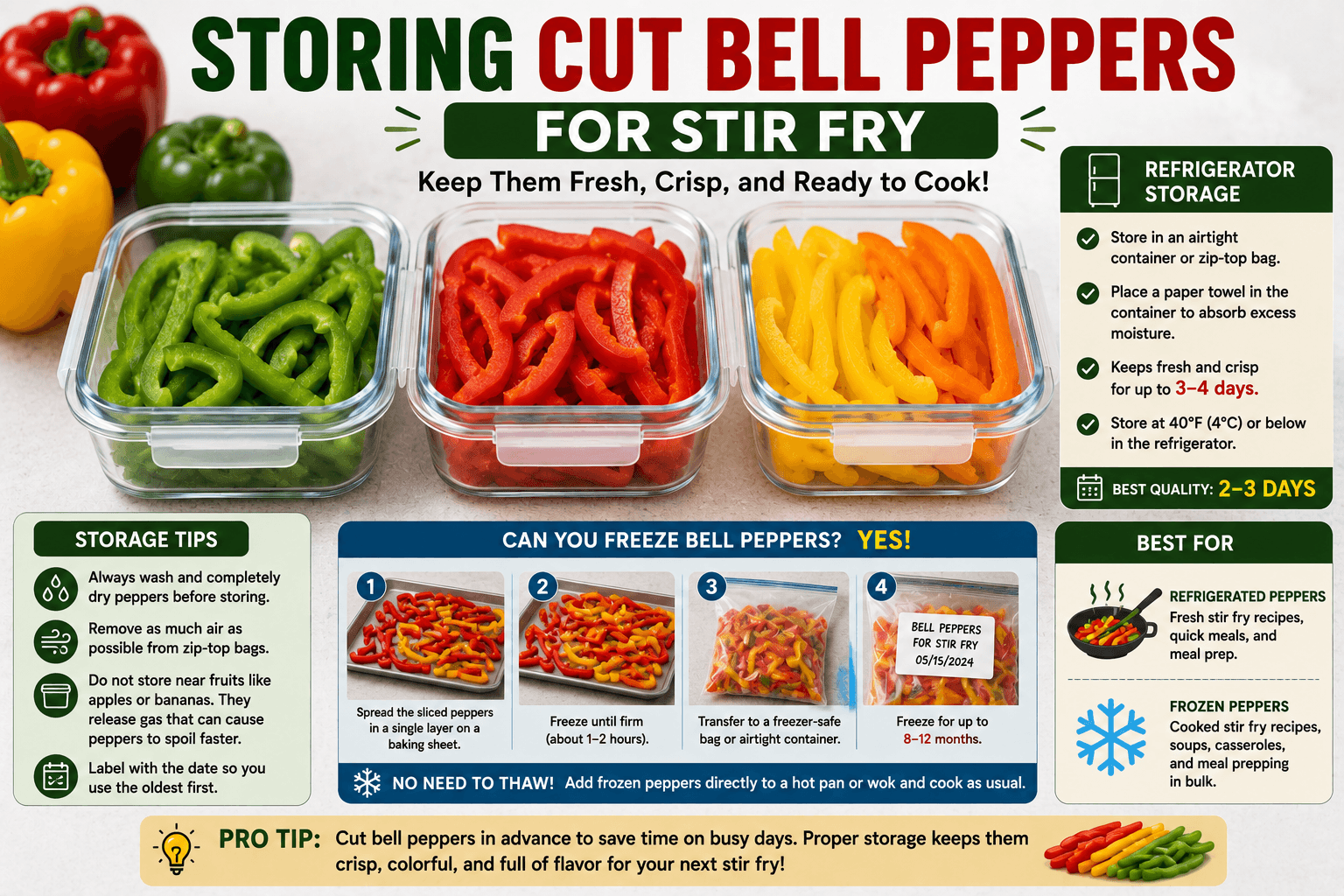
If you’re meal prepping or simply want to save time during busy weeknights, you can cut bell peppers for stir fry in advance. Proper storage helps the peppers stay fresh, crisp, and ready to cook while reducing food waste.
Bell peppers contain a high amount of water, so storing them correctly is important. Exposure to air causes the cut surfaces to dry out, while excess moisture inside the container can make the peppers soften more quickly.
Refrigerating Cut Bell Peppers
Place the sliced peppers in an airtight food storage container or a resealable zip-top bag. If possible, line the bottom of the container with a paper towel to absorb excess moisture. This simple step helps keep the peppers crisp for several days.
Store the container in the refrigerator at or below 40°F (4°C). Properly stored bell peppers typically stay fresh for up to 4 days, although they’re at their best within the first 2 to 3 days.
Storage Tip: Label the container with the preparation date. Using the oldest vegetables first helps maintain the best flavor and texture while reducing food waste.
Can You Freeze Bell Peppers?
Yes. Bell peppers freeze surprisingly well, especially if you’re planning to use them in cooked dishes. Spread the sliced peppers in a single layer on a baking sheet and freeze until firm. Then transfer them to a freezer-safe bag or airtight container.
Freezing the peppers individually first prevents them from sticking together, allowing you to remove only the amount you need for future stir fries.
| Storage Method | How Long It Lasts | Best Use |
|---|---|---|
| Refrigerator | 3–4 days | Fresh stir fries |
| Freezer | 8–12 months | Cooked stir fry recipes |
Frozen bell peppers don’t need to be thawed before cooking. Add them directly to a hot wok or skillet and stir fry as usual. They may be slightly softer than fresh peppers, but they’ll still provide great flavor and vibrant color.
Best Bell Pepper Pairings for Stir Fry
After you cut bell peppers for stir fry, pairing them with complementary vegetables creates a more balanced dish in both flavor and texture. Bell peppers are naturally sweet and cook quickly, making them an excellent match for vegetables with different cooking times and textures.
Some of the best vegetables to combine with bell peppers include:
- Broccoli florets for hearty texture and extra nutrition.
- Carrots sliced thin for sweetness and crunch.
- Snow peas for a fresh, crisp bite.
- Mushrooms for savory, umami flavor.
- Onions for sweetness and aroma.
- Zucchini for a tender contrast.
- Baby corn and water chestnuts for additional crunch.
Preparing each vegetable correctly is just as important as slicing the peppers. For example, broccoli benefits from uniform florets, while carrots cook more evenly when cut into thin matchsticks or diagonal slices.
Kitchen Secret: Group vegetables by cooking time before you start cooking. Add firm vegetables first, followed by medium-textured vegetables, and finish with bell peppers and leafy vegetables. This simple strategy keeps every ingredient perfectly cooked.
To build an even better vegetable mix, explore our guides on How to Prep Broccoli for Stir Fry, How to Cook Carrots So They Stay Crisp-Tender, and Common Vegetable Stir Fry Mistakes.
Frequently Asked Questions
Should I remove the skin before I cut bell peppers for stir fry?
No. The skin helps the pepper hold its shape during high-heat cooking and provides bright color and a slight crunch. There’s no need to peel bell peppers before stir frying.
What is the best thickness to cut bell peppers for stir fry?
For most recipes, slices about ¼ inch wide are ideal. This size cooks quickly while keeping the peppers crisp-tender instead of soft or undercooked.
Can I cut bell peppers for stir fry ahead of time?
Yes. You can slice bell peppers up to 3–4 days in advance and store them in an airtight container in the refrigerator. Keeping them dry helps preserve their freshness.
Which color bell pepper is best for stir fry?
Red, yellow, orange, and green bell peppers all work well. Red peppers are the sweetest, green peppers have a slightly earthy flavor, while yellow and orange peppers offer a mild sweetness and vibrant color.
Should bell peppers be cooked before adding meat?
Usually no. Most stir fry recipes cook the meat first, remove it from the pan, then cook the vegetables. The meat is added back at the end so everything finishes cooking together.
Can frozen bell peppers be used in stir fry?
Absolutely. Frozen sliced bell peppers can be added directly to a hot wok or skillet without thawing. They may be slightly softer than fresh peppers but still work well in stir fry dishes.
References
Final Thoughts
Learning how to cut bell peppers for stir fry is a simple skill that makes a noticeable difference in both the appearance and quality of your meals. Uniform slices cook more evenly, absorb sauce better, and maintain the crisp-tender texture that makes stir fry so enjoyable.
By washing and drying the peppers, removing the core and membranes, and cutting them into consistent strips about ¼ inch wide, you’ll create vegetables that cook quickly without becoming mushy. Pairing proper knife techniques with the correct cooking order ensures every ingredient reaches the perfect texture at the same time.
Whether you’re preparing a quick weeknight dinner or meal prepping vegetables for the week, taking a few extra minutes to cut bell peppers for stir fry correctly will help you achieve colorful, flavorful, restaurant-quality results every time.
🍽️ You Might Also Like



📧 Save This Recipe For Later
Enter your email and we will send this recipe directly to your inbox.