
How to Cook Snow Peas for Stir Fry
How to Cook Snow Peas for Stir Fry
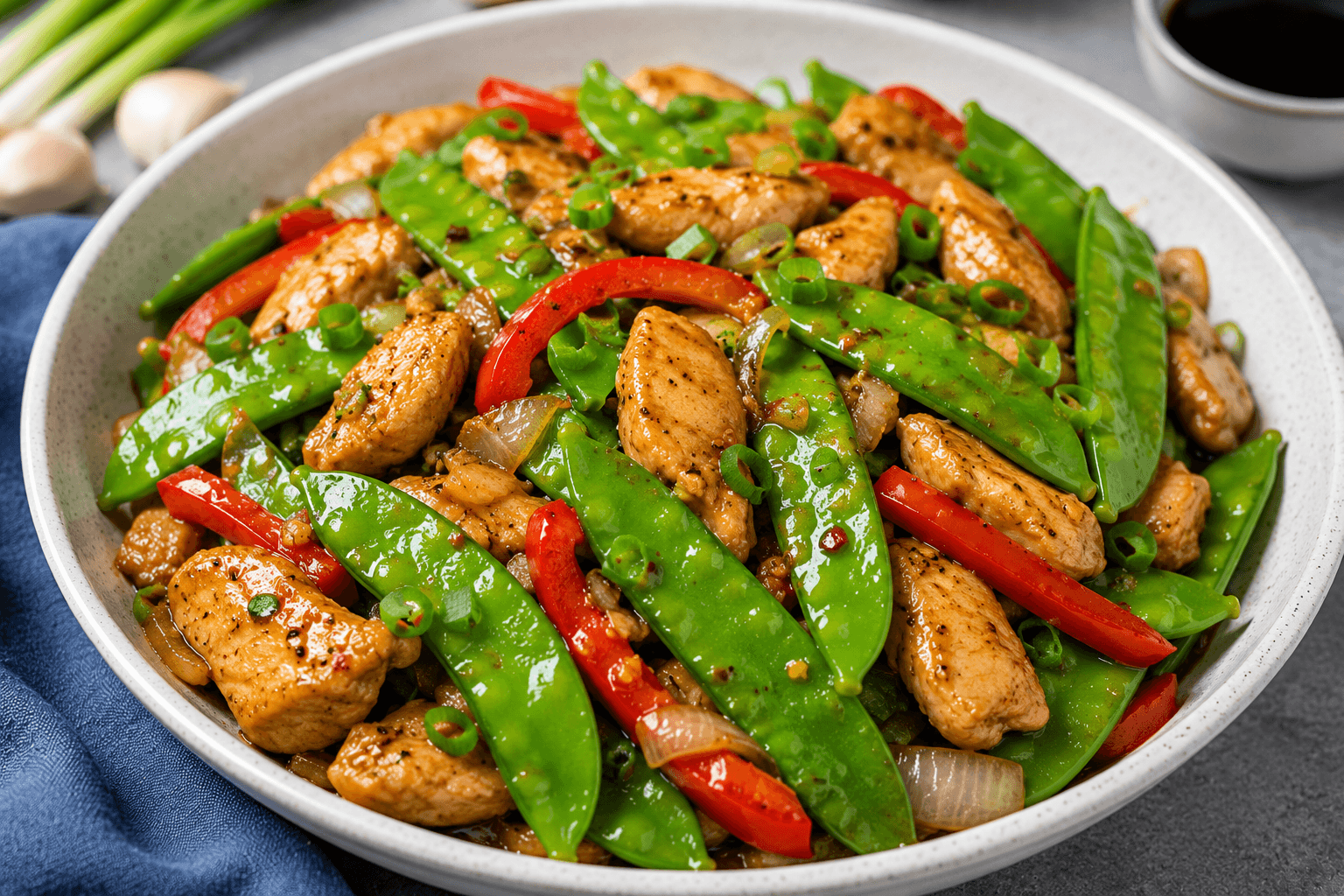
Learning how to cook snow peas stir fry style is one of the easiest ways to make homemade stir fries taste fresh, colorful, and restaurant-quality. Snow peas cook quickly, making them an excellent vegetable for busy weeknight meals, but they can also become soft and dull if they’re overcooked. The secret is understanding how to prepare them correctly, when to add them to the wok, and how long they should cook to stay crisp-tender.
Snow peas are loved for their flat edible pods, naturally sweet flavor, and delicate crunch. Unlike garden peas, you eat the entire pod, making preparation simple while adding texture and nutrition to your meal. Whether you’re making a classic chicken stir fry or a vegetable-packed dinner, mastering the proper cooking technique will help every bite stay fresh and vibrant.
In this guide, you’ll learn exactly how to prepare, cook, and serve snow peas for stir fry. You’ll also discover common mistakes to avoid, expert cooking tips, and the best ways to keep their bright green color and satisfying crunch.
Quick Answer
To cook snow peas stir fry style, rinse and trim the ends, removing any tough strings if necessary. Heat a wok or skillet over high heat with a small amount of oil, then add the snow peas during the final 2 to 3 minutes of cooking. Stir constantly until they become bright green and crisp-tender. Avoid overcooking, as snow peas quickly lose their crunch and vibrant color.
Table of Contents
Why Snow Peas Are Perfect for Stir Fry
Snow peas are one of the best vegetables for stir fry because they cook in just a few minutes while maintaining their naturally sweet flavor. Their thin edible pods absorb sauces without becoming heavy, making them an excellent match for chicken, beef, shrimp, tofu, and many other vegetables.
Because they require very little cooking time, snow peas also help preserve the fresh taste that makes stir fry dishes so appealing. When cooked correctly, they remain slightly crisp while blending perfectly with savory sauces.
| Benefit | Why It Matters |
|---|---|
| Quick cooking | Ready in about 2–3 minutes. |
| Edible pods | No shelling required. |
| Sweet flavor | Balances salty and savory stir fry sauces. |
| Crisp texture | Adds freshness and contrast to tender meat. |
| Nutritious | Rich in vitamin C, vitamin K, and fiber. |
Tip: For the freshest flavor, choose snow peas with smooth, bright green pods that snap easily when bent. Avoid pods that look yellow, wilted, or have large swollen peas inside.
How to Prepare Snow Peas Before Cooking
Preparation only takes a few minutes but makes a noticeable difference in the finished stir fry. Properly cleaned and trimmed snow peas cook more evenly and have a better texture.
- Wash the snow peas thoroughly under cold running water.
- Pat them dry with paper towels to reduce excess moisture.
- Trim both ends using a sharp knife.
- Pull away any tough strings along the edges if present.
- Keep the pods whole unless your recipe calls for smaller pieces.
Dry snow peas sear better in a hot wok than wet ones. Excess water lowers the pan temperature, causing vegetables to steam instead of stir fry.
If you’re preparing a complete vegetable stir fry, you may also find our guide on The Ultimate Stir Fry Vegetable Preparation Guide helpful before cooking.
Fresh vs. Frozen Snow Peas
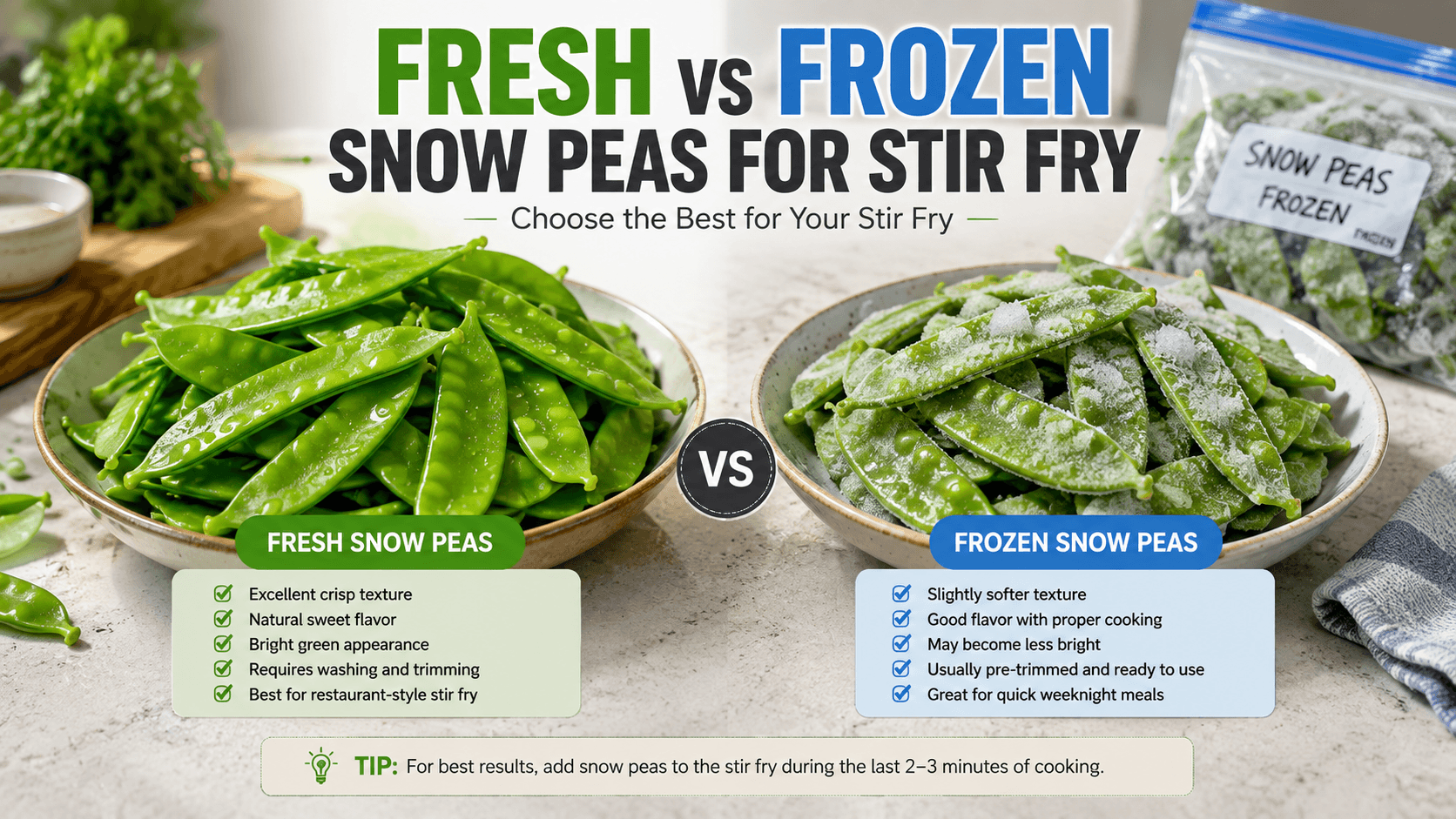
One of the most common questions people ask when learning how to cook snow peas stir fry style is whether fresh or frozen snow peas produce better results. Both can work well, but they behave differently during cooking. Understanding those differences helps you choose the right option for your recipe and avoid soggy vegetables.
Fresh snow peas are usually the best choice because they retain their natural sweetness, crisp texture, and vibrant green color. They cook quickly over high heat and stay pleasantly crunchy when added at the right time.
Frozen snow peas are convenient and available year-round. They are typically frozen shortly after harvesting, which helps preserve many nutrients. However, because freezing forms tiny ice crystals inside the pods, they release more moisture during cooking. That extra moisture can reduce the wok’s temperature if too many are added at once.
| Fresh Snow Peas | Frozen Snow Peas |
|---|---|
| Excellent crisp texture | Slightly softer after cooking |
| Natural sweet flavor | Good flavor with proper cooking |
| Bright green appearance | May become slightly duller |
| Requires washing and trimming | Usually pre-trimmed and ready to use |
| Best for restaurant-style stir fry | Great for quick weeknight meals |
Tip: If using frozen snow peas, don’t thaw them completely before cooking. Add them directly to the hot wok in small batches so they cook quickly without releasing too much water.
How to Cook Snow Peas for Stir Fry
Once your snow peas are cleaned and trimmed, it’s time to cook them correctly. The biggest secret to cook snow peas stir fry success is using very high heat and cooking them for only a short time. Snow peas are delicate, so they should be one of the last vegetables added to the wok.
Step 1: Heat the Wok
Preheat your wok or large skillet over high heat until it’s very hot. Add a small amount of high smoke-point oil, such as avocado oil, peanut oil, or canola oil. The oil should shimmer but not smoke heavily.
Step 2: Cook the Protein First
If you’re making chicken stir fry, beef stir fry, or shrimp stir fry, cook the protein first and remove it from the pan once it’s nearly done. This prevents overcooking while the vegetables cook.
Our Classic Chicken Stir Fry shows this cooking order in detail for consistently great results.
Step 3: Cook Hard Vegetables Before Snow Peas
Vegetables like carrots, broccoli, and cauliflower require more cooking time than snow peas. Add those vegetables first so they become tender before the snow peas go into the wok.
If you’re combining several vegetables, our guide on The Correct Order to Add Vegetables to Stir Fry explains the best sequence for even cooking.
Kitchen Secret: Professional chefs add snow peas near the very end of cooking because they need only about 2 to 3 minutes over high heat. This keeps them bright green, crisp, and naturally sweet.
In the next section, you’ll learn exactly how long to cook snow peas, how to tell when they’re perfectly done, and the simple techniques restaurants use to keep them crisp and glossy.
How Long Should You Cook Snow Peas for Stir Fry?
Timing is everything when you cook snow peas stir fry style. Unlike dense vegetables such as carrots or broccoli, snow peas cook very quickly. Leaving them in the wok for even a minute too long can change their texture from crisp and fresh to soft and limp.
The goal is to cook the pods just long enough to become bright green while keeping a slight crunch. This texture, often called crisp-tender, is what you’ll find in a well-made restaurant stir fry.
| Cooking Method | Recommended Time | Expected Texture |
|---|---|---|
| High-heat stir fry | 2–3 minutes | Crisp-tender |
| With frozen snow peas | 3–4 minutes | Tender with slight crunch |
| Blanched before stir fry | 1–2 minutes | Very crisp and vibrant |
| Over 5 minutes | Too long | Soft and watery |
If you’re preparing a stir fry with several vegetables, remember that snow peas should almost always be one of the last ingredients added. This prevents them from overcooking while harder vegetables finish softening.
Tip: Watch the color rather than the clock. As soon as the pods turn a vibrant green and begin to glisten, they’re usually ready to serve.
How to Tell When Snow Peas Are Perfectly Cooked
Many home cooks rely only on cooking time, but experienced cooks use several visual and textural clues. Knowing these signs makes it much easier to consistently cook snow peas stir fry dishes that taste fresh every time.
They Turn Bright Green
Fresh snow peas naturally become a deeper, brighter shade of green as they cook. This is one of the easiest indicators that they’re nearly finished.
They Stay Slightly Firm
Properly cooked snow peas bend slightly but still have resistance when bitten. They shouldn’t feel limp or mushy.
A thin coating of stir fry sauce or oil creates a glossy appearance without making the vegetables greasy. The pods should look fresh and vibrant rather than dull.
The Pods Still Snap
When you bite into a perfectly cooked snow pea, it should make a gentle snap. If there’s no crunch at all, they’ve probably cooked too long.
Kitchen Secret: Restaurants often keep the wok moving continuously. Constant tossing allows the snow peas to cook evenly without sitting on the hottest part of the pan for too long.
Should You Blanch Snow Peas Before Stir Fry?
Blanching isn’t always necessary, but it can be useful in certain situations. If you’re cooking for a crowd, preparing vegetables ahead of time, or using especially thick snow peas, blanching helps preserve their bright color while shortening the final stir fry cooking time.
To blanch snow peas, boil them for about 30 seconds, then immediately transfer them to a bowl of ice water. Drain them thoroughly and pat them dry before adding them to the wok.
This extra step helps lock in color and texture while preventing overcooking during the final stir fry.
If you’re interested in mastering more vegetable techniques, be sure to read our guide on How to Cook Snap Peas Without Losing Their Crunch, which shares similar methods for preserving texture.
Warning: Never add wet snow peas directly from the ice bath into a hot wok. Excess water causes steaming instead of stir frying and can prevent proper browning.
Common Mistakes When You Cook Snow Peas for Stir Fry
Even though snow peas are one of the easiest vegetables to prepare, a few common mistakes can quickly ruin their texture and flavor. If you want to consistently cook snow peas stir fry style like a restaurant, it’s important to know what to avoid.
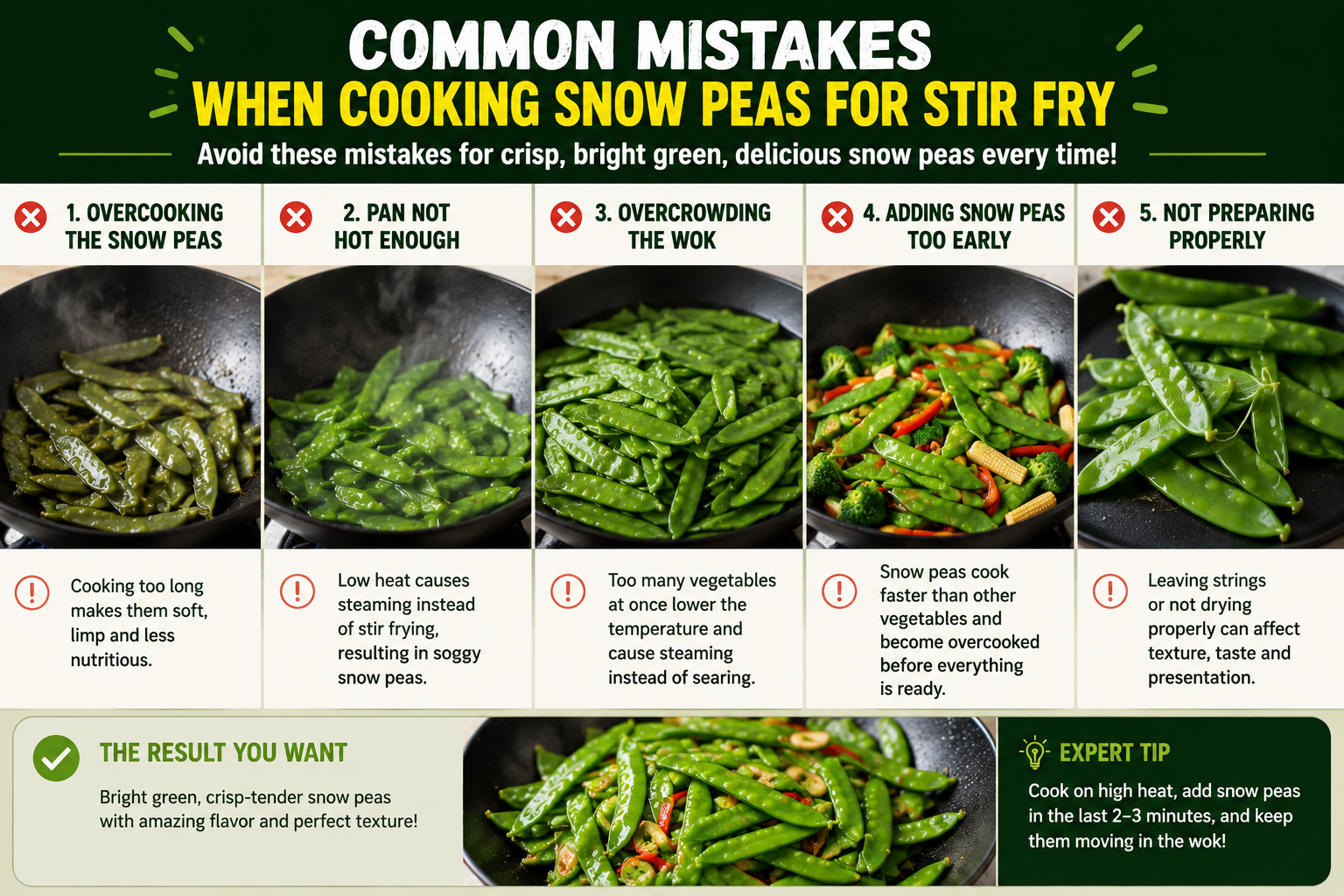
1. Overcooking the Snow Peas
This is by far the biggest mistake. Snow peas only need a couple of minutes over high heat. Cooking them longer causes them to lose their crisp texture, bright color, and fresh flavor.
2. Using a Pan That Isn’t Hot Enough
A properly heated wok quickly sears the vegetables while preserving their moisture. If the pan isn’t hot enough, the snow peas slowly steam instead of stir frying, resulting in soft, watery vegetables.
3. Overcrowding the Wok
Adding too many ingredients at once lowers the cooking temperature. Instead of frying, everything releases moisture and begins to steam. If you’re making a large batch, cook in two smaller batches for the best texture.
4. Adding Snow Peas Too Early
Snow peas cook much faster than vegetables like broccoli or carrots. Adding them too soon means they’ll be overcooked before the rest of the ingredients are ready.
5. Skipping Proper Preparation
Leaving the strings attached or failing to dry the snow peas after washing can affect both texture and presentation. Spending an extra minute preparing them properly makes a noticeable difference.
Warning: Never cover the wok with a lid while cooking snow peas. Trapped steam softens the pods quickly and removes the crisp texture that makes stir fry so enjoyable.
Best Vegetables to Cook with Snow Peas
Snow peas pair beautifully with many vegetables because of their sweet flavor and crisp texture. Combining vegetables with different cooking times creates a stir fry that’s colorful, balanced, and full of texture.
| Vegetable | When to Add | Pairs Well With |
|---|---|---|
| Broccoli | Early | Chicken, beef |
| Carrots | Early | Chicken, shrimp |
| Bell peppers | Middle | Chicken, pork |
| Mushrooms | Middle | Chicken, tofu |
| Snow peas | Last 2–3 minutes | Almost every stir fry |
| Green onions | Last minute | All stir fries |
If you’re looking for more vegetable ideas, our guide to Best Vegetables for Chicken Stir Fry explains which vegetables work best together and how to cook each one properly.
Pros of Using Snow Peas
- Cook in just a few minutes.
- Stay crisp when cooked correctly.
- Add natural sweetness.
- Rich in vitamins, minerals, and fiber.
- Pair well with nearly every stir fry sauce.
Cons of Using Snow Peas
- Can overcook very quickly.
- Fresh snow peas have a shorter shelf life.
- Require trimming before cooking.
- Frozen versions may release extra moisture.
What Sauces Go Best with Snow Peas?
The mild sweetness of snow peas complements a wide variety of stir fry sauces. Because the pods have a delicate flavor, it’s best to avoid sauces that are overly salty or extremely thick.
- Soy sauce and garlic
- Teriyaki sauce
- Oyster sauce
- Ginger soy sauce
- Sesame garlic sauce
- Light honey garlic sauce
These sauces lightly coat the snow peas without masking their natural flavor. The key is adding the sauce near the end of cooking so it thickens slightly while keeping the vegetables crisp.
If you’re looking for recipe inspiration, try these delicious meals:
- Chicken Veggie Stir Fry
- Chicken Broccoli Stir Fry
- Chicken Bell Pepper Stir Fry
- Chicken Mushroom Stir Fry
- Teriyaki Chicken Stir Fry
- Garlic Chicken Stir Fry
- Healthy Chicken Stir Fry
How to Store and Reheat Cooked Snow Peas
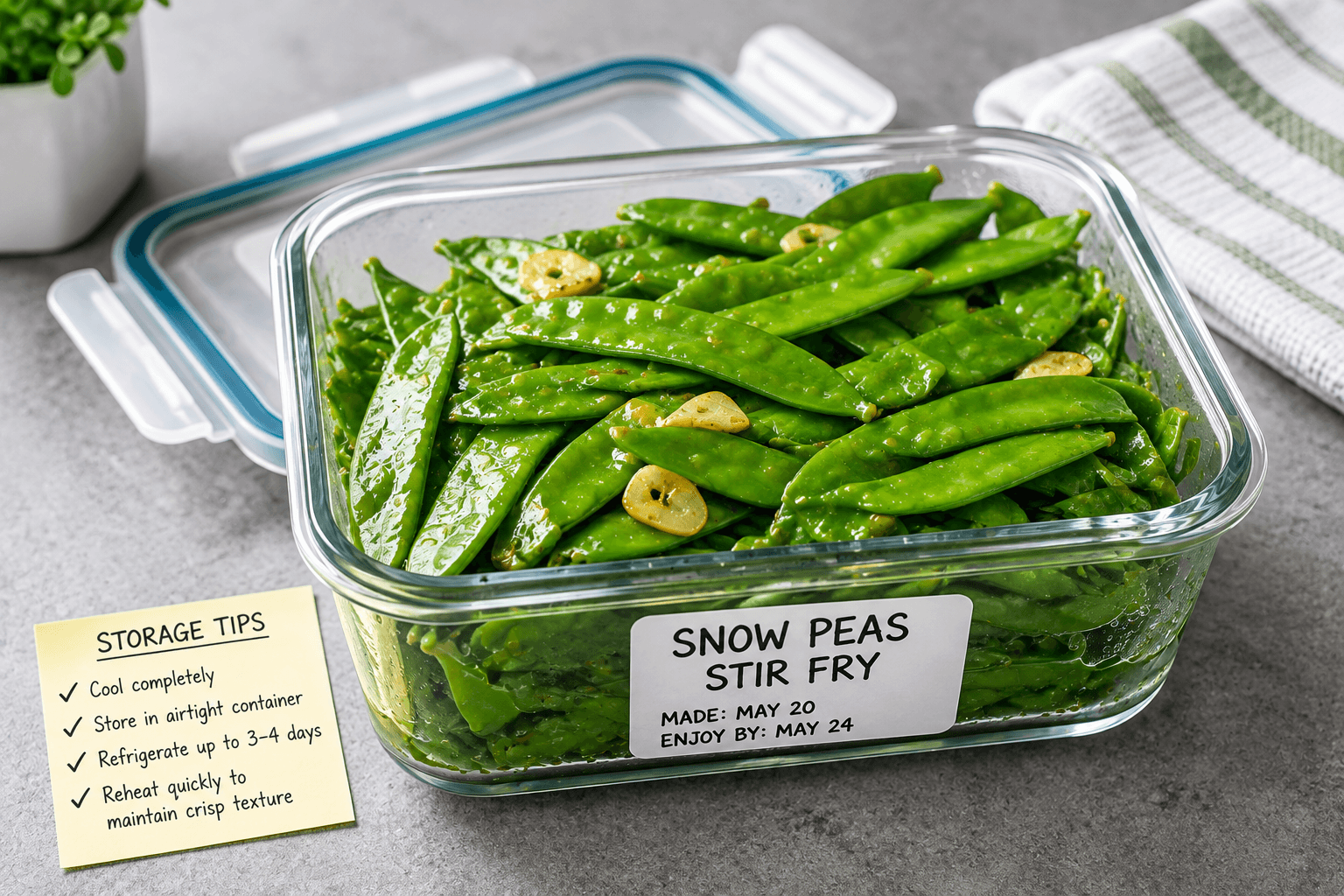
If you have leftovers, proper storage is the best way to maintain the flavor and texture of your stir-fried vegetables. While snow peas are at their absolute best immediately after cooking, they can still taste great the next day when stored correctly.
Storage Guidelines
- Allow the stir fry to cool for no longer than 2 hours before refrigerating.
- Store leftovers in a clean airtight container.
- Refrigerate for up to 3–4 days.
- Keep the container away from foods with strong odors.
- For the best texture, enjoy leftovers within the first 2 days.
Although freezing is possible, it’s generally not recommended for cooked snow peas. Their high water content means they often become soft after thawing, even when reheated carefully.
How to Reheat Without Making Snow Peas Mushy
Reheating over high heat for a short time is much better than using a microwave for several minutes. The goal is to warm the food quickly without continuing to cook the vegetables.
| Reheating Method | Recommended Time | Result |
|---|---|---|
| Hot wok or skillet | 1–2 minutes | Best texture |
| Microwave | 30–60 seconds | Good, but slightly softer |
| Air fryer | 2–3 minutes | Lightly crisp edges |
| Oven | 5–7 minutes | Suitable for larger portions |
Tip: If the stir fry looks dry after refrigeration, add a teaspoon of water or a small splash of stir fry sauce before reheating. This refreshes the sauce without making the vegetables soggy.
Expert Tips for Restaurant-Quality Snow Peas
Professional chefs use several simple techniques to consistently cook snow peas stir fry dishes with exceptional color, texture, and flavor. Fortunately, these methods are easy to use at home.
Use High Heat from Start to Finish
A hot wok cooks vegetables quickly while preserving their natural moisture. High heat also creates the slight smoky flavor known as wok hei, which is difficult to achieve with low temperatures.
Prepare Everything Before Cooking
Since stir frying happens very quickly, have all vegetables, protein, sauces, and seasonings ready before turning on the stove. This prevents overcooking while you’re searching for ingredients.
Cut Ingredients into Similar Sizes
Uniform pieces cook more evenly. If one vegetable is much larger than another, it may still be raw while the snow peas have already softened.
Use Just Enough Sauce
Too much sauce can overpower the delicate sweetness of snow peas and create excess moisture in the wok. A light coating is usually all that’s needed.
Keep the Ingredients Moving
Constant stirring and tossing help every ingredient cook evenly. Leaving vegetables in one spot for too long can cause scorching while other pieces remain undercooked.
Kitchen Secret: Add a few drops of toasted sesame oil after turning off the heat—not while cooking. This preserves its rich aroma and gives your stir fry a fresh, restaurant-style finish.
Quick Checklist Before Serving
- ✓ Snow peas are bright green.
- ✓ Pods remain crisp-tender.
- ✓ Vegetables are evenly coated with sauce.
- ✓ No excess liquid is pooling in the wok.
- ✓ Protein is fully cooked.
- ✓ Serve immediately while everything is hot and crisp.
If your vegetables become soft or watery, don’t worry. Our guide on How to Fix Soggy Stir Fry Vegetables explains practical ways to improve texture and prevent the problem in future meals.
You may also find these helpful resources useful:
Frequently Asked Questions
Can you eat snow peas raw?
Yes. Snow peas are completely safe to eat raw and have a naturally sweet, crisp texture. However, when you cook snow peas stir fry style for 2 to 3 minutes, they become slightly more tender while still retaining their crunch.
Do you need to remove the strings from snow peas?
Most fresh snow peas benefit from having the tough strings removed along the edges. Some modern varieties are stringless, but checking each pod before cooking improves texture and makes them easier to eat.
Should snow peas be cooked before adding stir fry sauce?
Yes. Let the snow peas cook briefly before adding the sauce. Once they become bright green and crisp-tender, add the sauce during the final minute so it lightly coats the vegetables without overcooking them.
Can I use frozen snow peas in stir fry?
Absolutely. Frozen snow peas are convenient and nutritious. Add them directly to a hot wok without fully thawing, and cook slightly longer than fresh snow peas to allow excess moisture to evaporate.
Why did my snow peas become soft?
Snow peas usually become soft because they were cooked too long, the wok wasn’t hot enough, or too many ingredients were added at once. High heat and a short cooking time help preserve their crisp texture.
What proteins pair best with snow peas?
Snow peas pair well with chicken, beef, shrimp, pork, tofu, and even tempeh. Their mild sweetness complements a wide variety of stir fry sauces and seasonings.
References
Final Thoughts
Learning how to cook snow peas stir fry style isn’t complicated, but using the right technique makes a significant difference. High heat, proper preparation, and short cooking times allow snow peas to stay bright green, naturally sweet, and crisp-tender instead of soft and watery.
Whether you’re making a quick vegetable stir fry or a protein-packed chicken dinner, adding snow peas during the final few minutes of cooking helps preserve their fresh flavor and satisfying crunch. With a little practice, you’ll consistently create colorful, restaurant-quality stir fries at home.
🍽️ You Might Also Like


📧 Save This Recipe For Later
Enter your email and we will send this recipe directly to your inbox.