
The Correct Order to Add Vegetables to Stir Fry
The Correct Order to Add Vegetables to Stir Fry
Knowing the order to add vegetables stir fry is one of the simplest ways to improve the texture, flavor, and appearance of your homemade meals. Many people assume all vegetables can be tossed into the wok at the same time, but that almost always leads to disappointing results. Some vegetables become mushy before others are fully cooked, while delicate greens wilt into a watery mess. Understanding the proper cooking sequence helps every ingredient finish at just the right level of doneness.
Professional chefs rarely cook vegetables randomly. Instead, they organize ingredients by density, moisture content, and cooking time. Dense vegetables need a head start because they take longer to soften, while tender vegetables require only a brief time over high heat. This simple approach creates a colorful stir fry with vegetables that stay crisp-tender instead of overcooked.
Whether you’re making a simple vegetable stir fry or pairing vegetables with chicken, beef, shrimp, or tofu, learning the correct cooking order will instantly elevate your meals. It also helps preserve natural color, nutrients, and fresh flavor while preventing soggy vegetables.
Quick Answer
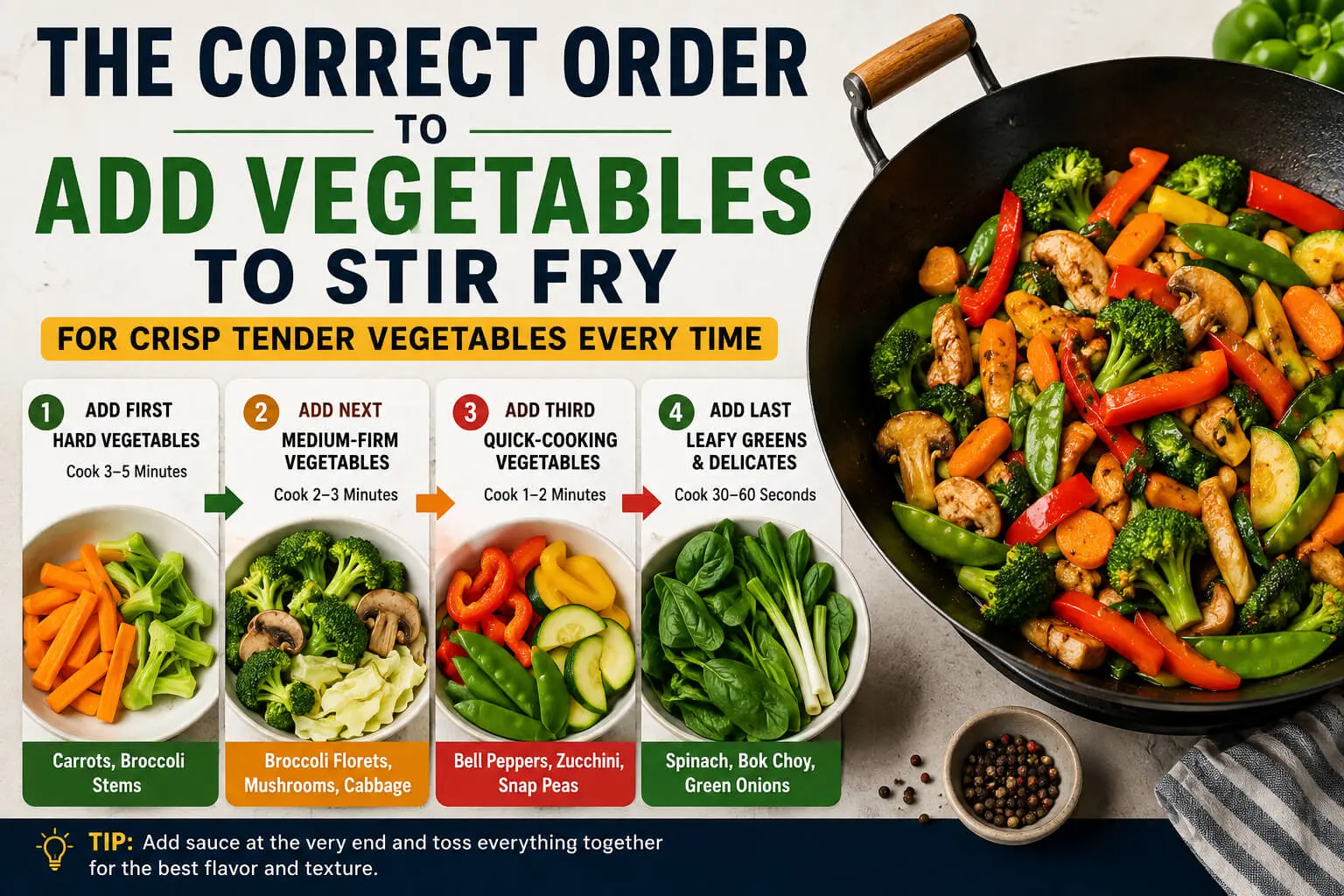
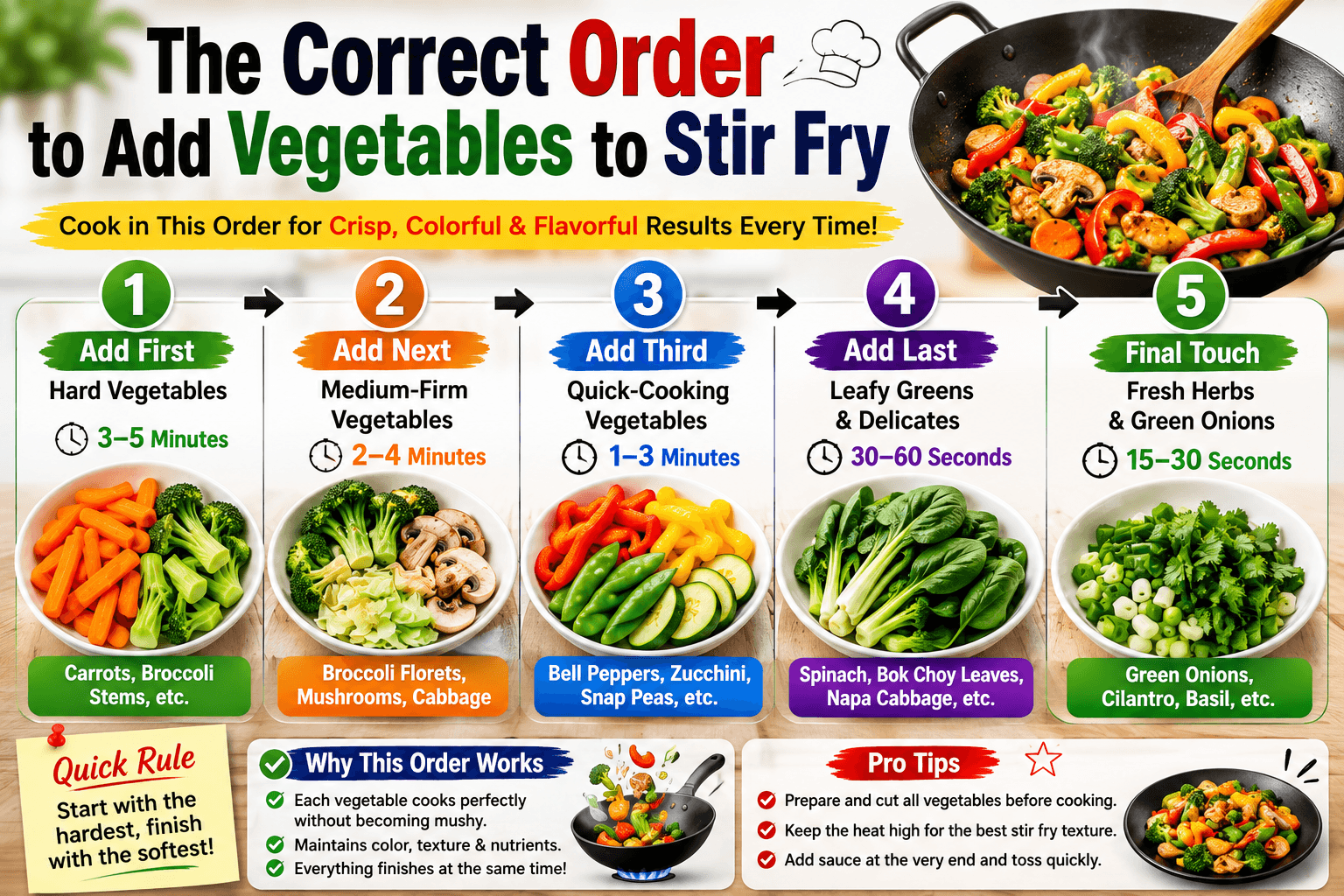
The correct order to add vegetables stir fry is to cook the vegetables that require the longest cooking time first, followed by medium-firm vegetables, then quick-cooking vegetables, and finally leafy greens or fresh herbs. This method ensures every vegetable reaches the perfect crisp-tender texture without becoming mushy.
- Hard vegetables (carrots, broccoli stems)
- Medium-firm vegetables (broccoli florets, mushrooms, cabbage)
- Quick-cooking vegetables (bell peppers, zucchini, snap peas)
- Leafy greens (spinach, bok choy leaves)
- Fresh herbs and green onions (last 30 seconds)
Table of Contents
Why the Order Matters
The biggest goal of a great stir fry is achieving a balance of textures. Every bite should include vegetables that are cooked through while still retaining a slight crunch. Following the correct order to add vegetables stir fry prevents overcooking and helps each ingredient keep its natural sweetness and vibrant color.
Hard vegetables such as carrots need several minutes to soften, while vegetables like zucchini or bell peppers require only a short time in the hot wok. Leafy greens such as spinach cook in less than a minute. Adding everything together forces some vegetables to overcook while others remain undercooked.
Cooking vegetables in stages also helps maintain the high temperature that makes stir frying unique. When too many vegetables are added at once, the pan temperature drops quickly. Instead of stir frying, the vegetables begin steaming, which often produces watery, limp results.
Tip: Prepare and arrange every vegetable before heating the wok. Since stir frying happens quickly, having everything washed, sliced, and ready allows you to add each vegetable at exactly the right moment.
Why Vegetables Cook at Different Speeds
Not all vegetables contain the same amount of water or have the same structure. Root vegetables are dense and require more heat to become tender. Softer vegetables contain more moisture and cook much faster. Thin leafy vegetables wilt almost instantly once they touch a hot wok.
Professional cooks often group vegetables into cooking categories before they even turn on the stove. This simple preparation step makes it much easier to follow the proper order to add vegetables stir fry and consistently produce restaurant-quality results.
If you’re still deciding which vegetables work best together, explore our Best Vegetables for Chicken Stir Fry guide. For a complete meal idea, you can also try our Chicken Veggie Stir Fry, which uses vegetables with complementary cooking times.
The Basic Order to Add Vegetables to Stir Fry
Following the correct order to add vegetables stir fry is the easiest way to achieve vegetables that are crisp, colorful, and evenly cooked. Instead of guessing when to add each ingredient, think of your vegetables in groups based on how long they need to cook. This simple system works whether you’re making a vegetable-only stir fry or adding chicken, beef, shrimp, or tofu.
As a general rule, start with the vegetables that take the longest to soften. Once they begin to cook, gradually add vegetables with shorter cooking times. Finish with leafy greens and fresh herbs, which need only a few seconds of heat before serving.
| Vegetable Group | Examples | When to Add | Approximate Cook Time |
|---|---|---|---|
| Hard Vegetables | Carrots, broccoli stems | First | 3–5 minutes |
| Medium-Firm Vegetables | Broccoli florets, mushrooms, cabbage | Second | 2–4 minutes |
| Quick-Cooking Vegetables | Bell peppers, zucchini, snap peas | Third | 1–3 minutes |
| Leafy Greens | Spinach, bok choy leaves | Last | 30–60 seconds |
| Fresh Herbs | Green onions, cilantro, basil | Final Seconds | 15–30 seconds |
This cooking sequence ensures every ingredient reaches the perfect texture at nearly the same time. It’s one of the biggest differences between a homemade stir fry and one served at a good Asian restaurant.
Step 1: Start with Hard Vegetables
Dense vegetables require the longest cooking time because heat takes longer to penetrate their firm structure. Carrots, broccoli stems, and similar vegetables should always be added first. Stir them continuously over high heat so they begin softening without burning.
If your carrot slices are particularly thick, you may add a tablespoon of water and cover the wok for about 30 seconds. The steam helps soften the vegetables while still preserving their crisp texture.
For more detailed techniques, read our guide on How to Cook Carrots So They Stay Crisp-Tender.
Step 2: Add Medium-Firm Vegetables
Once the hardest vegetables have started to soften, it’s time to add vegetables with moderate cooking times. Broccoli florets, mushrooms, cauliflower, and cabbage all fall into this category.
These vegetables benefit from the remaining high heat while still having enough time to become tender. Mushrooms release moisture as they cook, while cabbage begins to soften without losing its slight crunch.
Kitchen Secret: Professional chefs rarely wait until one vegetable is fully cooked before adding the next. Instead, they overlap cooking times slightly so every vegetable finishes at nearly the same moment. This keeps the wok hot and produces better texture.
If cabbage is one of your favorite stir fry vegetables, our Chicken Cabbage Stir Fry demonstrates this cooking sequence in a complete meal.
Finish with Quick-Cooking Vegetables for the Best Texture
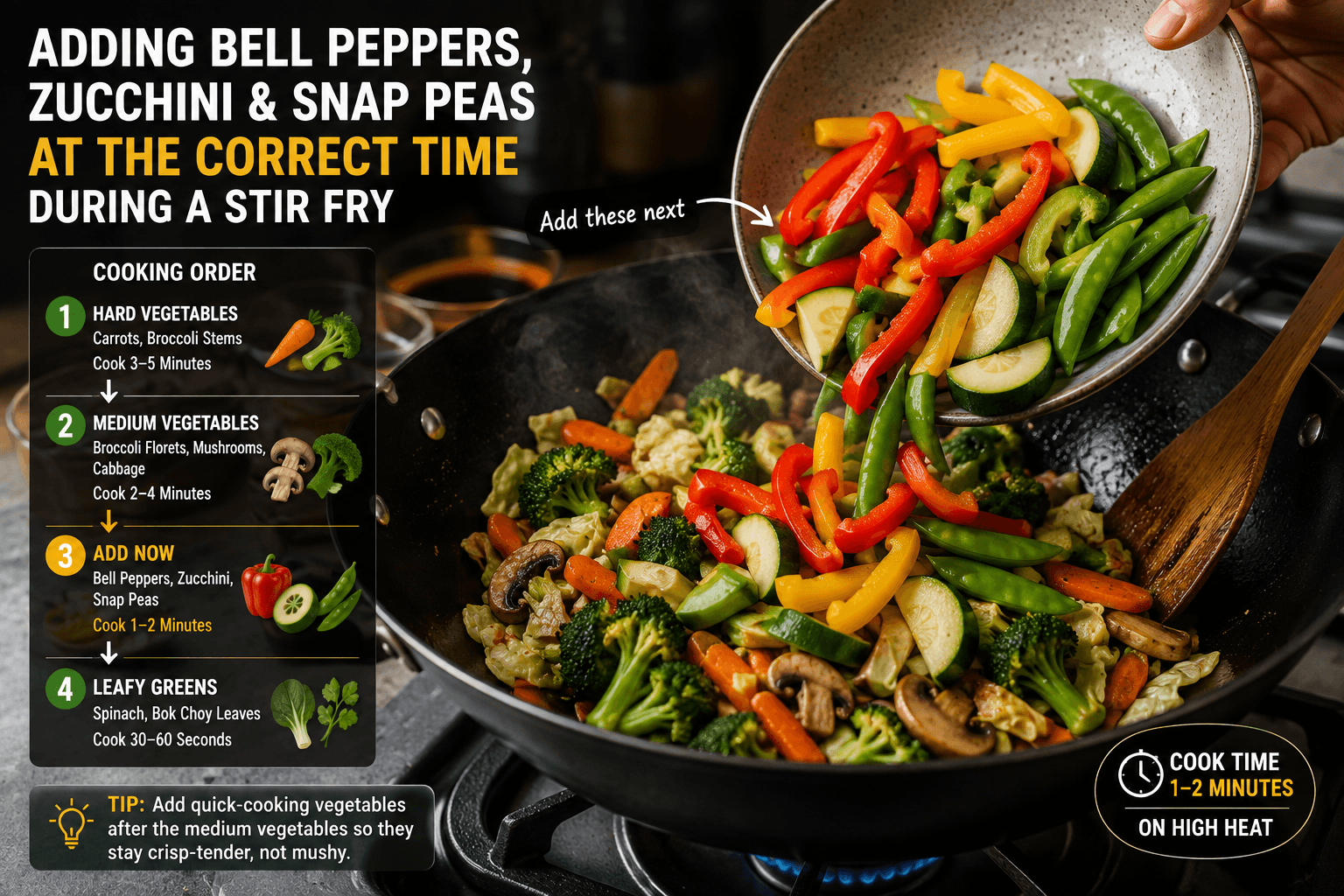
Once your harder vegetables have started to soften and the medium-firm vegetables are nearly cooked, it’s time to add the vegetables that cook quickly. This stage is where the correct order to add vegetables stir fry makes the biggest difference. These vegetables need only a short time over high heat to become tender while keeping their bright color and slight crunch.
Bell peppers, zucchini, snap peas, snow peas, asparagus, and thinly sliced onions all belong in this category. They contain more moisture than root vegetables, so they soften much faster. If they’re added too early, they’ll lose their crisp texture and may become watery.
| Quick-Cooking Vegetable | Recommended Cook Time | Desired Texture |
|---|---|---|
| Bell Peppers | 2–3 minutes | Crisp-tender |
| Zucchini | 1–2 minutes | Lightly browned but firm |
| Snap Peas | 1–2 minutes | Bright green and crunchy |
| Snow Peas | 1 minute | Tender with a slight snap |
| Asparagus | 2–3 minutes | Tender with a little bite |
Bell Peppers Should Stay Bright and Slightly Crisp
Bell peppers are one of the most popular stir fry vegetables because they add sweetness, color, and a satisfying crunch. They only need a couple of minutes in a hot wok. Overcooking causes them to become soft and dull instead of vibrant and fresh.
If you often struggle with soft peppers, read our complete guide on How to Cook Bell Peppers Without Getting Mushy. It explains the ideal cooking time, slicing techniques, and heat level for perfect results.
Zucchini Needs Very Little Time
Zucchini contains a high percentage of water, making it one of the fastest-cooking vegetables in any stir fry. It should be added near the end of cooking so it develops light browning while remaining firm.
Adding zucchini too early causes it to release excess moisture, lowering the wok temperature and creating steam instead of the intense searing heat that defines a great stir fry.
Tip: Slice zucchini into evenly sized pieces about ¼ inch thick. Uniform slices cook evenly and reduce the risk of some pieces becoming mushy while others remain undercooked.
For more detailed techniques, visit our guide on How to Keep Zucchini from Getting Soggy in Stir Fry.
Add Leafy Greens Last
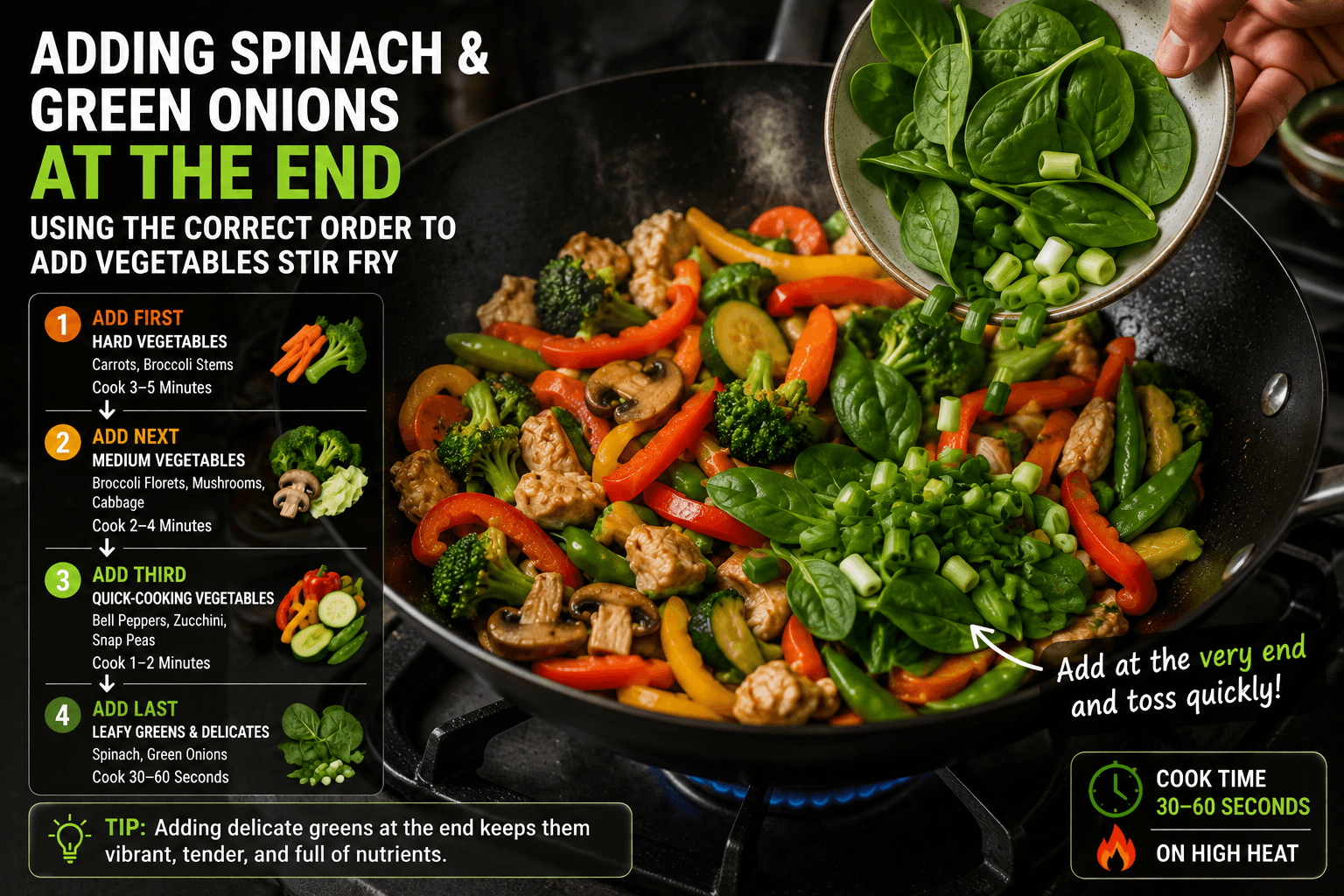
The final stage in the order to add vegetables stir fry is reserved for delicate leafy vegetables. Spinach, bok choy leaves, napa cabbage leaves, kale, and similar greens require very little cooking time. In fact, many leafy vegetables wilt completely in less than one minute.
Add leafy greens after the sauce has been mixed into the stir fry or just before serving. Toss them continuously until they are just wilted. They’ll continue cooking slightly from the residual heat even after the wok is removed from the burner.
Ending the cooking process with leafy greens keeps them vibrant, prevents excess moisture from collecting in the pan, and helps maintain the overall texture of the dish.
If you frequently cook with spinach, our How to Cook Spinach in Stir Fry guide explains exactly how to keep it tender without becoming watery.
How to Organize Vegetables Before You Start Cooking
One of the biggest secrets behind restaurant-quality stir fry is preparation. Professional cooks don’t stop to slice vegetables while the wok is heating. Instead, every ingredient is washed, cut, measured, and arranged before cooking begins. This practice, known as mise en place, makes it much easier to follow the correct order to add vegetables stir fry.
Since stir frying happens over high heat, there is very little time to prepare ingredients once cooking starts. If you have to stop and cut another vegetable, the ingredients already in the wok may overcook. Organizing vegetables into cooking groups helps you work quickly and confidently.
Group Vegetables by Cooking Time
Rather than arranging vegetables by color or type, organize them according to how long they take to cook. Place hard vegetables in one bowl, medium-firm vegetables in another, and quick-cooking vegetables together. Keep leafy greens and fresh herbs in a separate bowl so they’re easy to grab during the final minute of cooking.
| Preparation Group | Examples | Add to Wok |
|---|---|---|
| Bowl 1 | Carrots, broccoli stems | First |
| Bowl 2 | Broccoli florets, mushrooms, cabbage | Second |
| Bowl 3 | Bell peppers, zucchini, snap peas | Third |
| Bowl 4 | Spinach, bok choy, green onions | Last |
This simple organization system removes the guesswork and allows you to maintain high heat throughout the cooking process.
Kitchen Secret: Place each bowl beside your stove in the exact order you’ll use it. When it’s time to cook, simply add one bowl after another without pausing. This technique is used in many professional kitchens because it keeps ingredients moving and prevents overcooking.
Common Mistakes That Ruin Vegetable Stir Fry
Even if you know the correct order to add vegetables stir fry, a few common mistakes can still lead to disappointing results. Fortunately, they’re easy to avoid once you know what to watch for.
Adding Everything at Once
This is the most common mistake beginners make. Vegetables have different cooking times, so adding everything together almost guarantees uneven results. Dense vegetables stay undercooked while delicate vegetables become soft and watery.
Overcrowding the Wok
Too many vegetables lower the temperature of the pan. Instead of quickly searing, the vegetables release moisture and begin steaming. If you’re cooking a large batch, prepare it in two smaller batches rather than overfilling the wok.
Cutting Vegetables into Different Sizes
Large chunks naturally take longer to cook than small slices. Cutting vegetables into similar sizes helps everything cook more evenly and makes the timing much easier to manage.
Cooking on Low Heat
Stir frying depends on intense heat. A hot wok quickly evaporates surface moisture, creating lightly browned vegetables with crisp edges. Low heat allows moisture to build up, producing soggy vegetables instead.
Warning: Never leave vegetables sitting in the wok without stirring for long periods. High heat can quickly scorch delicate vegetables while leaving thicker pieces undercooked. Keep the ingredients moving almost constantly for the best texture.
If you’ve experienced soft vegetables before, our guide on Common Vegetable Stir Fry Mistakes explains the most common problems and how to avoid them.
Using the Correct Order with Chicken Stir Fry
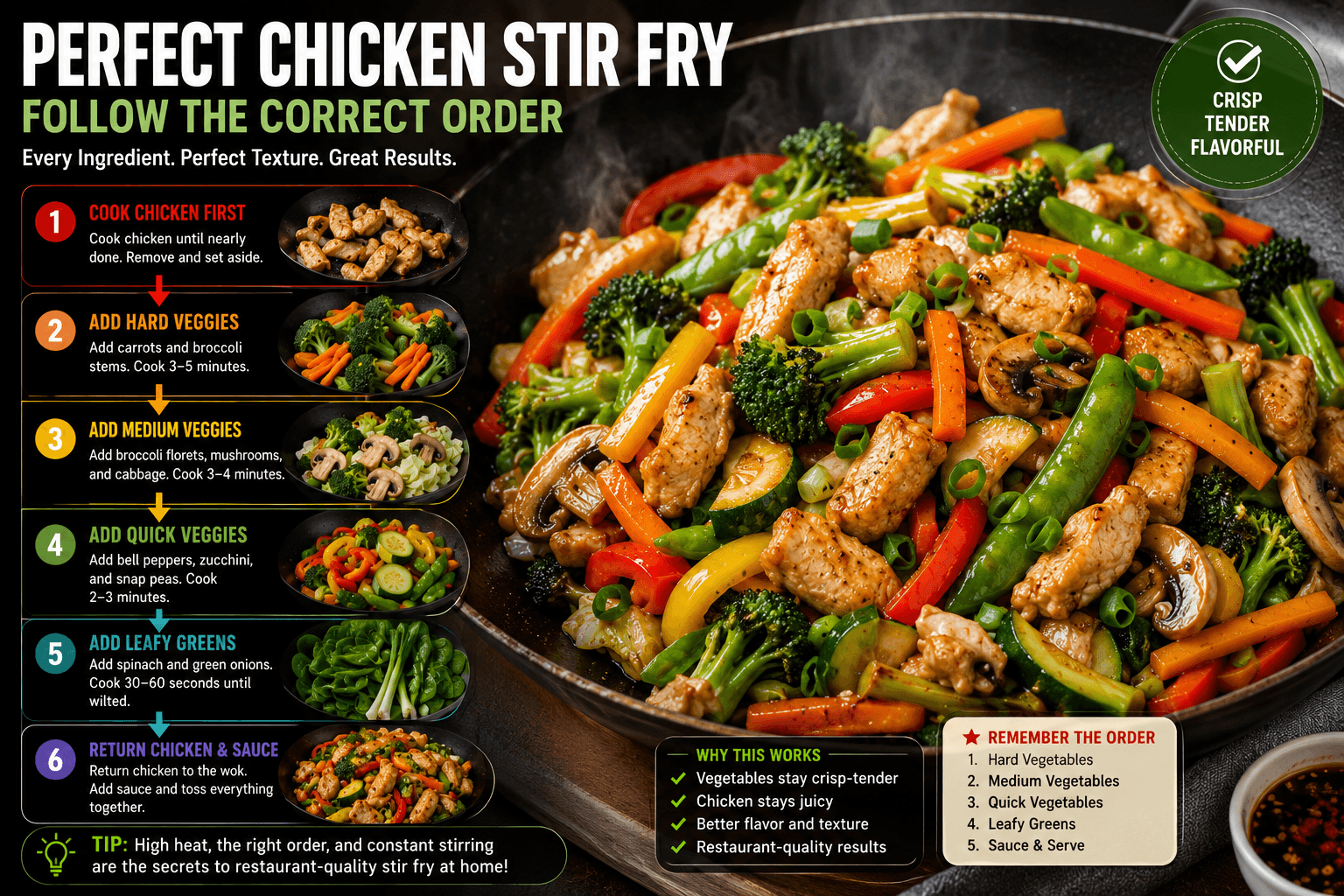
The same order to add vegetables stir fry applies when cooking chicken. Start by cooking the chicken until it’s nearly done, then remove it from the wok. Next, cook the vegetables in their proper order, beginning with the hardest vegetables and finishing with leafy greens. Finally, return the chicken to the wok along with the sauce so everything finishes cooking together.
This method prevents the chicken from overcooking while giving every vegetable enough time to reach the perfect crisp-tender texture.
For complete examples, see our Classic Chicken Stir Fry, Chicken Broccoli Stir Fry, and Healthy Chicken Stir Fry, all of which follow this proven cooking sequence.
Expert Tips for Perfect Vegetable Stir Fry Every Time
Once you understand the correct order to add vegetables stir fry, a few additional techniques can make an even bigger difference. Professional cooks rely on these habits to create stir fry dishes with vibrant vegetables, balanced flavors, and the signature crisp-tender texture that people expect from a great stir fry.
Preheat the Wok Before Adding Oil
A properly heated wok is essential. Heat the empty wok until it’s hot enough that a drop of water evaporates almost immediately. Then add a high smoke point oil such as avocado oil, peanut oil, or canola oil before adding your ingredients.
Starting with a hot cooking surface helps vegetables sear instead of steam, preserving both texture and color.
Slice Vegetables into Similar Sizes
Even though vegetables have different cooking times, cutting each type into uniform pieces helps them cook consistently. Thin carrot slices soften more evenly, broccoli florets cook at the same rate, and zucchini pieces brown without becoming mushy.
Uniform cutting also gives your finished stir fry a more professional appearance.
Tip: Slice dense vegetables slightly thinner than soft vegetables. Thin carrot slices and broccoli stems cook faster, helping all the vegetables finish at nearly the same time.
Keep the Vegetables Moving
Stir frying isn’t called “stir” frying by accident. Constant movement prevents burning while exposing every piece to the intense heat of the wok. Toss the vegetables frequently, but don’t stir so aggressively that they begin breaking apart.
The goal is to lightly sear the vegetables while allowing excess moisture to evaporate quickly.
Add Sauce Near the End
One of the most overlooked parts of the order to add vegetables stir fry is knowing when to add the sauce. Pour the sauce into the wok only after nearly all the vegetables have reached the desired texture.
Adding sauce too early slows the cooking process because the liquid cools the wok. Waiting until the final minute allows the sauce to coat every ingredient without overcooking the vegetables.
Benefits of Following the Correct Order
- Vegetables stay crisp-tender.
- Natural colors remain vibrant.
- Less risk of soggy vegetables.
- Better flavor and texture.
- More even cooking.
- Restaurant-quality presentation.
What Happens If You Ignore the Order
- Some vegetables become mushy.
- Others remain undercooked.
- The wok loses heat.
- Vegetables release excess moisture.
- Flavors become less balanced.
- The stir fry looks less appealing.
Quick Checklist Before You Start Cooking
Use this checklist every time you prepare a stir fry. Following these simple steps makes it much easier to apply the correct order to add vegetables stir fry and consistently achieve excellent results.
- ✓ Wash and dry all vegetables thoroughly.
- ✓ Slice vegetables into similar-sized pieces.
- ✓ Group vegetables by cooking time.
- ✓ Prepare the sauce before heating the wok.
- ✓ Heat the wok completely before adding oil.
- ✓ Cook in batches if making a large quantity.
- ✓ Add vegetables from hardest to softest.
- ✓ Stir continuously over high heat.
- ✓ Add leafy greens and herbs at the very end.
- ✓ Mix in the sauce during the final minute.
Kitchen Secret: If you’re combining several vegetables for the first time, cook each type separately for one practice batch. This helps you learn its ideal cooking time so future stir fries come together effortlessly.
When Should Frozen Vegetables Be Added?
Frozen vegetables can also fit into the correct order to add vegetables stir fry, but they require a slightly different approach. Because they contain extra moisture from freezing, it’s best to add them after the hardest fresh vegetables but before delicate vegetables.
Avoid thawing frozen vegetables completely before cooking. Adding them directly to a very hot wok allows excess moisture to evaporate quickly, helping preserve texture.
If you’re combining frozen broccoli with fresh bell peppers and spinach, for example, cook the broccoli after carrots but before the peppers. The spinach should still be added during the final minute of cooking.
Frequently Asked Questions
Should I always cook hard vegetables first?
Yes. Dense vegetables such as carrots and broccoli stems require the longest cooking time. Starting with these vegetables is the foundation of the correct order to add vegetables stir fry because it allows every ingredient to finish cooking at approximately the same time.
When should I add bell peppers to a stir fry?
Bell peppers should be added after the hard vegetables and medium-firm vegetables have partially cooked. They usually need only 2 to 3 minutes over high heat to stay colorful and crisp-tender.
Why do my vegetables become soggy?
Soggy vegetables are usually caused by overcrowding the wok, cooking over low heat, or adding quick-cooking vegetables too early. Following the correct order to add vegetables stir fry helps prevent excess moisture from building up.
Can I cook all vegetables together to save time?
It’s not recommended. Different vegetables cook at different rates, so adding everything together often results in uneven textures. Cooking vegetables in stages produces much better results.
When should leafy greens be added?
Leafy greens such as spinach, bok choy leaves, and napa cabbage leaves should be added during the final 30 to 60 seconds of cooking. They wilt very quickly and continue cooking from the residual heat after the wok is removed from the burner.
Can I use the same cooking order for chicken stir fry?
Absolutely. Cook the chicken first and remove it from the wok. Then cook the vegetables in the proper sequence before returning the chicken and sauce during the final minute. This keeps both the chicken and vegetables perfectly cooked.
Final Thoughts
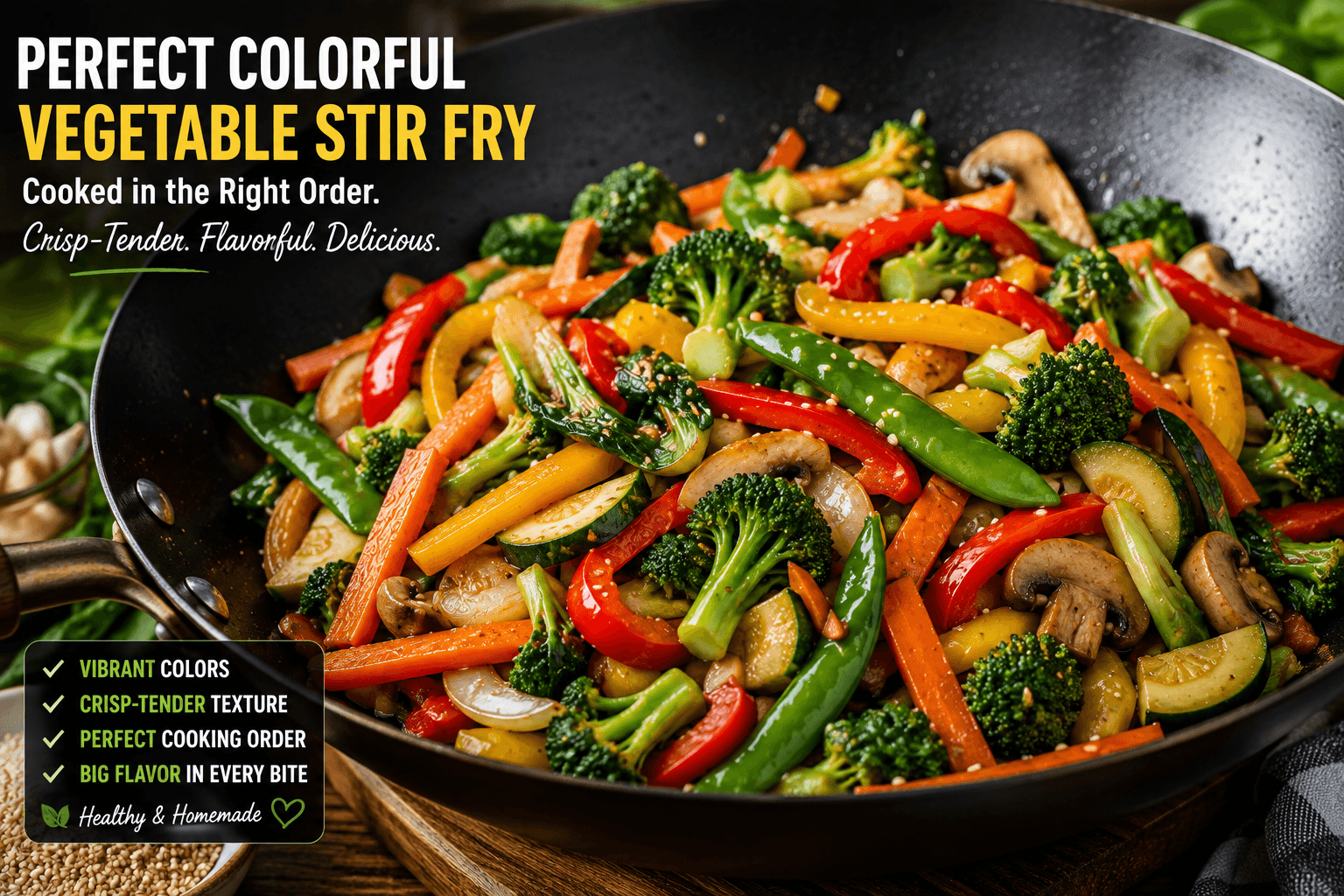
Learning the correct order to add vegetables stir fry is one of the most valuable skills for making consistently delicious stir fries at home. Instead of relying on guesswork, simply organize your vegetables by cooking time and add them from the firmest to the most delicate. This straightforward method helps preserve natural color, flavor, and texture while preventing vegetables from becoming soggy or overcooked.
Whether you’re preparing a simple vegetable stir fry or a hearty chicken dinner, following the proper cooking sequence allows every ingredient to reach the perfect crisp-tender finish. With a little preparation and practice, you’ll be able to create restaurant-quality stir fry dishes that look as good as they taste.
🍽️ You Might Also Like



📧 Save This Recipe For Later
Enter your email and we will send this recipe directly to your inbox.