
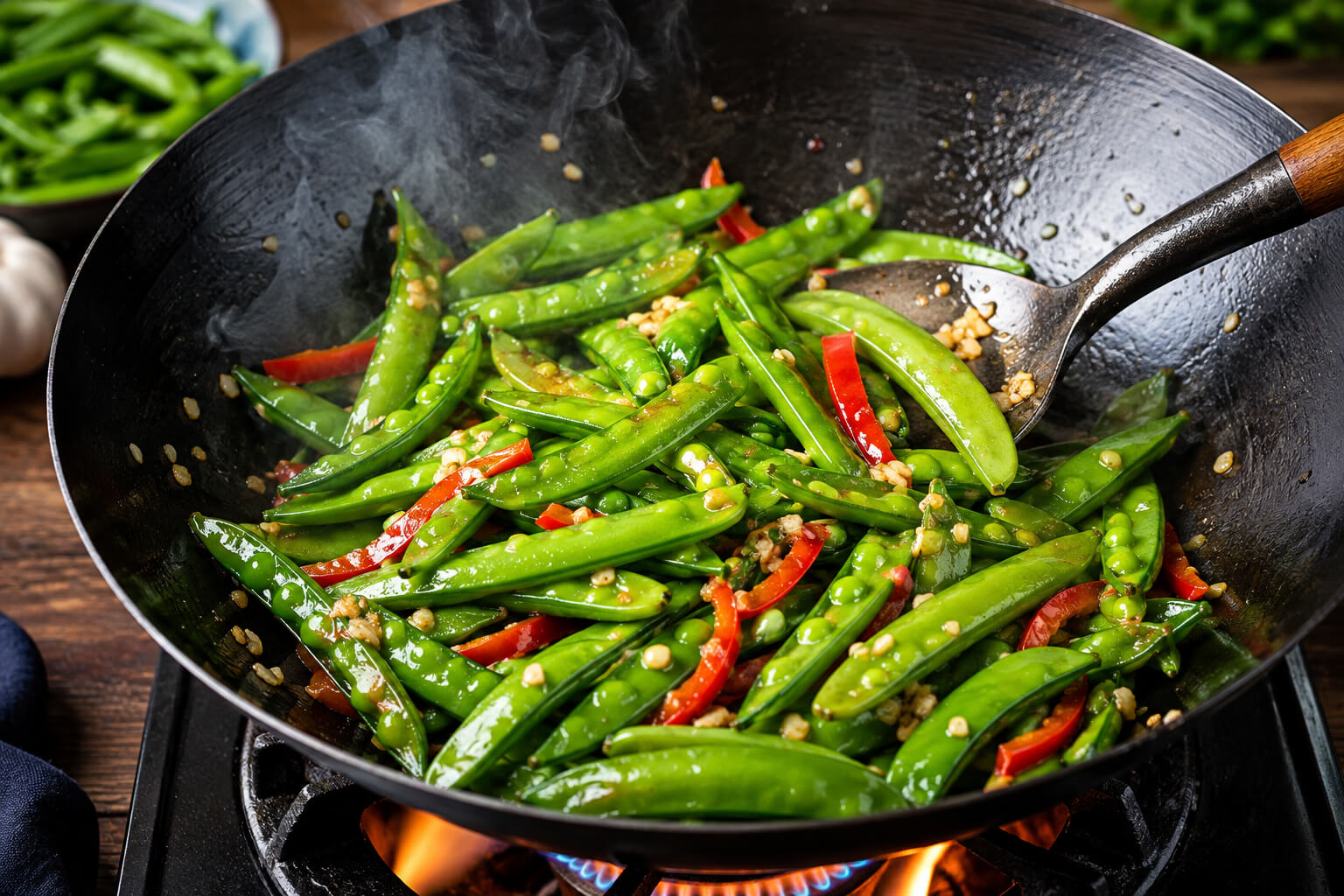
How to Cook Snap Peas Without Losing Their Crunch
How to Cook Snap Peas Without Losing Their Crunch
Learning how to cook snap peas stir fry style without turning them soft is one of the easiest ways to improve homemade meals. Snap peas are naturally sweet, juicy, and crisp, making them one of the best vegetables for quick stir-fries. However, because they cook so quickly, leaving them in the pan for even a minute too long can cause them to lose their signature crunch.
The good news is that keeping snap peas crisp isn’t difficult. With the right preparation, high heat, and proper cooking time, you can enjoy bright green snap peas that stay tender-crisp while adding fresh flavor and texture to your favorite chicken stir-fry recipes.
In this guide, you’ll learn exactly how to cook snap peas stir fry recipes the right way, common mistakes to avoid, how to prepare them before cooking, and expert techniques that help preserve their color, sweetness, and crunch.
Quick Answer
To cook snap peas stir fry without losing their crunch, heat a wok or skillet over high heat, add a small amount of oil, and cook the snap peas for just 2–3 minutes while stirring constantly. They should become bright green and slightly tender while still remaining crisp. Avoid overcrowding the pan, overcooking, or adding them too early with slower-cooking vegetables.
Table of Contents
Why Snap Peas Lose Their Crunch
Snap peas naturally contain a high amount of water inside their pods. When exposed to heat for too long, the cell walls begin to break down, allowing moisture to escape. Instead of staying crisp and juicy, the peas become soft and limp.
The goal when you cook snap peas stir fry dishes is to heat them just enough to enhance their sweetness while preserving their firm texture. This balance is what gives restaurant-quality stir-fries their satisfying bite.
Several factors influence whether snap peas stay crisp, including:
- Cooking temperature
- Cooking time
- Pan size
- Amount of vegetables in the wok
- Freshness of the snap peas
Tip: Fresh snap peas should feel firm, bright green, and make a snapping sound when bent. Older peas soften more quickly during cooking and won’t stay as crisp.
Using high heat is one of the biggest secrets professional cooks rely on. High temperatures cook the outside quickly while preventing excess moisture from building up inside the pan. This keeps vegetables vibrant instead of steaming.
If you’re making a mixed vegetable stir-fry, remember that not every vegetable cooks at the same speed. Snap peas are considered quick-cooking vegetables, so they should be added near the end of cooking instead of at the beginning.
For example, vegetables like carrots, broccoli, and cauliflower need more cooking time than snap peas. Understanding the proper vegetable order helps every ingredient finish cooking at the same time without becoming overdone.
For more guidance, see our guide on the correct order to add vegetables to stir-fry, which explains exactly when fast-cooking vegetables should be added.
If you’re looking for more vegetable combinations, our guide to the best vegetables for chicken stir-fry can help you build balanced, colorful meals that cook evenly.
How to Prepare Snap Peas Before Cooking
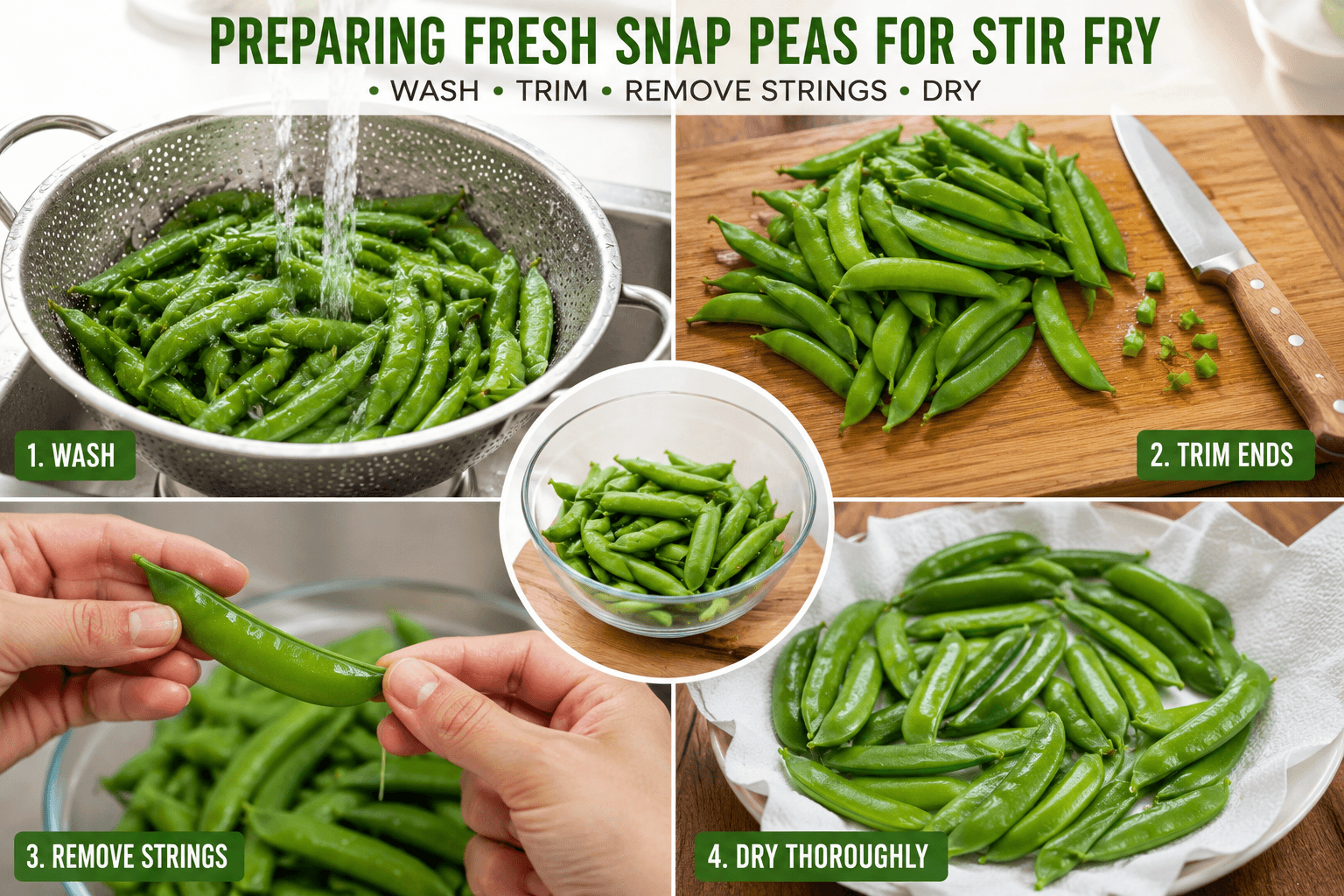
Proper preparation is just as important as cooking time when you cook snap peas stir fry recipes. Taking a few extra minutes to wash, trim, and dry the snap peas helps them cook evenly while maintaining their crisp texture. Moisture left on the surface can create steam in the pan, making the peas softer than intended.
1. Choose Fresh Snap Peas
Freshness has a major impact on the final texture. Look for snap peas that are:
- Bright green with a glossy appearance
- Firm and crisp to the touch
- Free from wrinkles or yellow spots
- Straight or slightly curved with smooth pods
- Small to medium in size for the sweetest flavor
Avoid snap peas that feel limp or have large bulging peas inside the pods. These are often older and become less crisp during cooking.
Kitchen Secret: Younger snap peas contain more natural sugars and less fiber, allowing them to stay crisp while developing a sweeter flavor during stir-frying.
2. Wash and Dry Thoroughly
Rinse the snap peas under cold running water to remove dirt or debris. After washing, pat them completely dry using paper towels or a clean kitchen towel.
Dry vegetables brown better in a hot wok because excess water won’t lower the pan temperature. This simple step makes a noticeable difference when you cook snap peas stir fry meals.
3. Remove the Strings
Many snap peas have a tough string running along one or both sides of the pod. Removing these strings creates a more enjoyable eating experience.
- Snap off the stem end.
- Pull gently downward to remove the string.
- Repeat on the opposite side if necessary.
Some newer varieties are nearly stringless, but checking each pod only takes a few seconds.
4. Keep the Snap Peas Whole
Unlike carrots or broccoli, snap peas usually cook best when left whole. Whole pods retain moisture better and maintain their signature crunch during stir-frying.
If the pods are unusually large, you can slice them diagonally in half for easier eating, but avoid cutting them into small pieces.
| Preparation Step | Why It Matters |
|---|---|
| Wash | Removes dirt and residue |
| Dry Completely | Prevents steaming |
| Remove Strings | Improves texture when eating |
| Keep Whole | Helps preserve crunch |
| Use Fresh Peas | Provides the sweetest flavor and firm texture |
If you’re preparing several vegetables together, it’s helpful to organize everything before turning on the stove. Stir-frying moves quickly, and having ingredients ready prevents accidental overcooking.
Our complete guide to stir-fry vegetable preparation explains how to prep different vegetables so they finish cooking at the perfect time.
Tip: Prepare all vegetables before heating the wok. Once cooking starts, there is little time to stop and trim or slice ingredients.
With properly prepared snap peas, you’re ready to move on to the cooking process where timing and heat make all the difference. The next section explains exactly how to cook snap peas stir fry style so they stay bright green, sweet, and perfectly crisp.
How to Cook Snap Peas Stir Fry the Right Way
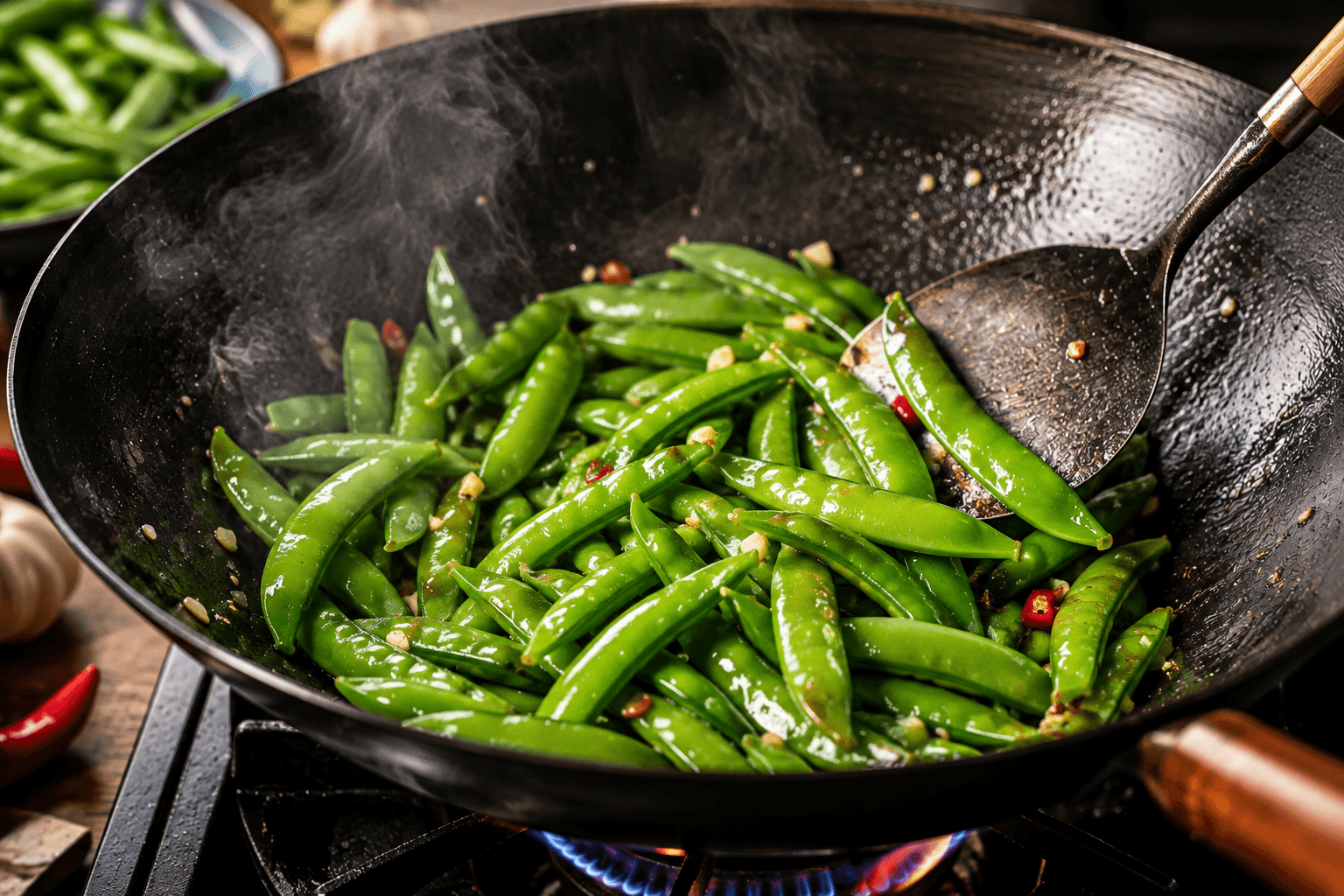
Now that your snap peas are washed, dried, and trimmed, it’s time to cook them correctly. The key to cook snap peas stir fry success is using high heat and keeping the cooking time short. Snap peas don’t need long to become tender. In fact, overcooking by even one or two minutes can turn them from crisp and vibrant to soft and dull.
Step 1: Heat the Wok Before Adding Oil
Start by heating a wok or large skillet over high heat. Allow the pan to become fully heated before adding cooking oil. A properly heated wok helps vegetables sear quickly instead of steaming.
Choose an oil with a high smoke point, such as:
- Avocado oil
- Peanut oil
- Canola oil
- Vegetable oil
Swirl a small amount of oil around the pan to coat the surface evenly.
Kitchen Secret: Professional stir-fry cooks always heat the pan first and add oil second. This creates better browning and helps vegetables stay crisp instead of absorbing excess oil.
Step 2: Add Snap Peas at the Right Time
If you’re preparing a mixed vegetable stir-fry, don’t add snap peas at the beginning. Vegetables like carrots, broccoli, and cauliflower require more cooking time. Snap peas should be added during the final few minutes so every vegetable finishes cooking together.
This timing is one of the biggest reasons restaurant stir-fries have vegetables with different textures instead of everything becoming equally soft.
Step 3: Stir Constantly Over High Heat
Once the snap peas go into the wok, keep them moving. Stir continuously so every pod cooks evenly without burning. High heat allows the outside to cook quickly while keeping the inside juicy and crisp.
For most recipes, cook snap peas stir fry for only 2 to 3 minutes. During this time you’ll notice several changes:
- The pods turn a brighter shade of green.
- The surface becomes slightly glossy.
- The peas remain firm when pressed with a spoon.
- The pods are still crisp when bitten.
| Cooking Time | Texture | Recommended? |
|---|---|---|
| 1 minute | Mostly raw | Only for very high heat stir-fries |
| 2–3 minutes | Crisp-tender | ✔ Best texture |
| 4 minutes | Softer with slight crunch | Acceptable |
| 5+ minutes | Soft and limp | ✘ Avoid |
Step 4: Add Sauce at the End
If your recipe includes soy sauce, oyster sauce, garlic sauce, or another stir-fry sauce, add it during the last minute of cooking. Pour the sauce around the sides of the hot wok instead of directly onto the vegetables. This allows the sauce to heat quickly while coating the snap peas evenly.
Adding sauce too early increases the amount of moisture in the pan, causing the vegetables to steam instead of stir-fry.
Tip: Keep the sauce quantity moderate. Too much liquid can soften the snap peas and reduce their natural crunch.
Snap peas pair well with many proteins and vegetables. They’re especially delicious in recipes like Chicken Stir Fry, Chicken Veggie Stir Fry, and Healthy Chicken Stir Fry, where their crisp texture provides a refreshing contrast to tender chicken and flavorful sauce.
By following these simple techniques every time you cook snap peas stir fry, you’ll consistently achieve bright green vegetables with the perfect balance of tenderness and crunch.
Common Mistakes That Make Snap Peas Lose Their Crunch
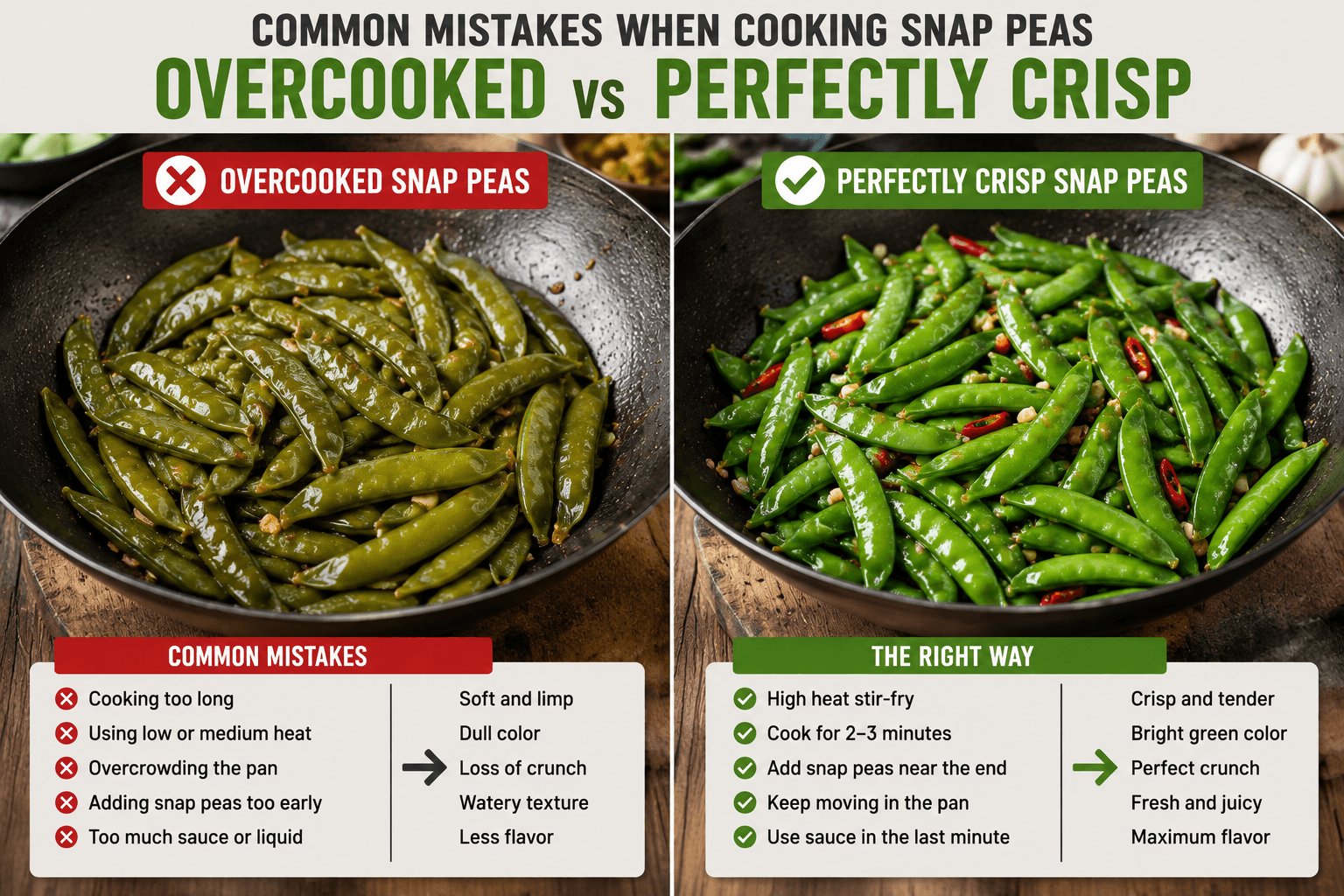
Even fresh snap peas can become soft if they’re not cooked properly. Fortunately, most problems are easy to avoid once you understand what causes them. If your goal is to cook snap peas stir fry style while keeping them crisp, watch out for these common mistakes.
1. Cooking Them Too Long
The biggest mistake is simply leaving snap peas in the pan for too long. Because they’re naturally tender, they need only a few minutes over high heat.
Once the pods become dark green and begin to wrinkle, they’ve usually been overcooked. Instead of a satisfying crunch, they’ll have a soft, slightly watery texture.
Warning: Snap peas continue cooking from residual heat after they’re removed from the pan. Serve them immediately to preserve their crisp texture.
2. Using Low Heat
Low or medium heat allows moisture to collect in the pan. Rather than stir-frying, the vegetables begin steaming. This causes snap peas to soften before they have a chance to develop their fresh flavor.
Always preheat the wok thoroughly before adding oil and vegetables. High heat is essential whenever you cook snap peas stir fry dishes.
3. Overcrowding the Pan
Adding too many vegetables at once lowers the pan temperature dramatically. Instead of sizzling, the vegetables release moisture and steam together.
If you’re making a large batch, cook in two smaller batches rather than filling the wok completely.
Tip: Every snap pea should make contact with the hot surface of the wok. Giving the vegetables enough space helps them cook quickly and evenly.
4. Adding Snap Peas Too Early
Different vegetables require different cooking times. Hard vegetables should always go into the wok first, while delicate vegetables like snap peas should be added near the end.
For example:
- Carrots
- Broccoli
- Cauliflower
- Bell peppers
- Snap peas
This order allows every vegetable to finish cooking at approximately the same time.
If you’re unsure about vegetable timing, read our guide on the correct order to add vegetables to stir-fry.
5. Using Too Much Sauce
While sauces add flavor, they also add moisture. Pouring in too much sauce too early can cause snap peas to simmer instead of stir-fry.
Instead, cook the vegetables first, then toss them with sauce during the final minute of cooking.
| Mistake | Result | Better Approach |
|---|---|---|
| Overcooking | Soft texture | Cook only 2–3 minutes |
| Low heat | Steamed vegetables | Use high heat |
| Crowded wok | Soggy vegetables | Cook in batches |
| Adding peas too early | Overcooked snap peas | Add near the end |
| Too much sauce | Loss of crunch | Add sauce during the final minute |
Best Dishes to Use Crisp Snap Peas
Once you know how to cook snap peas stir fry properly, you can use them in a wide variety of quick meals. Their naturally sweet flavor pairs well with chicken, beef, shrimp, tofu, and many colorful vegetables.
Some excellent recipes include:
- Chicken Broccoli Stir Fry
- Chicken Bell Pepper Stir Fry
- Chicken Zucchini Stir Fry
- Chicken Mushroom Stir Fry
- Spicy Chicken Stir Fry
Snap peas also work well alongside snow peas, mushrooms, baby corn, bell peppers, carrots, broccoli, and water chestnuts. Combining vegetables with different textures creates a stir-fry that’s both visually appealing and enjoyable to eat.
How to Store and Reheat Cooked Snap Peas
If you’ve made extra vegetables, proper storage helps preserve their flavor and texture. While freshly cooked snap peas are always at their best, careful refrigeration and reheating can keep them enjoyable for another meal. Following these tips will help you cook snap peas stir fry once and enjoy the leftovers without turning them mushy.
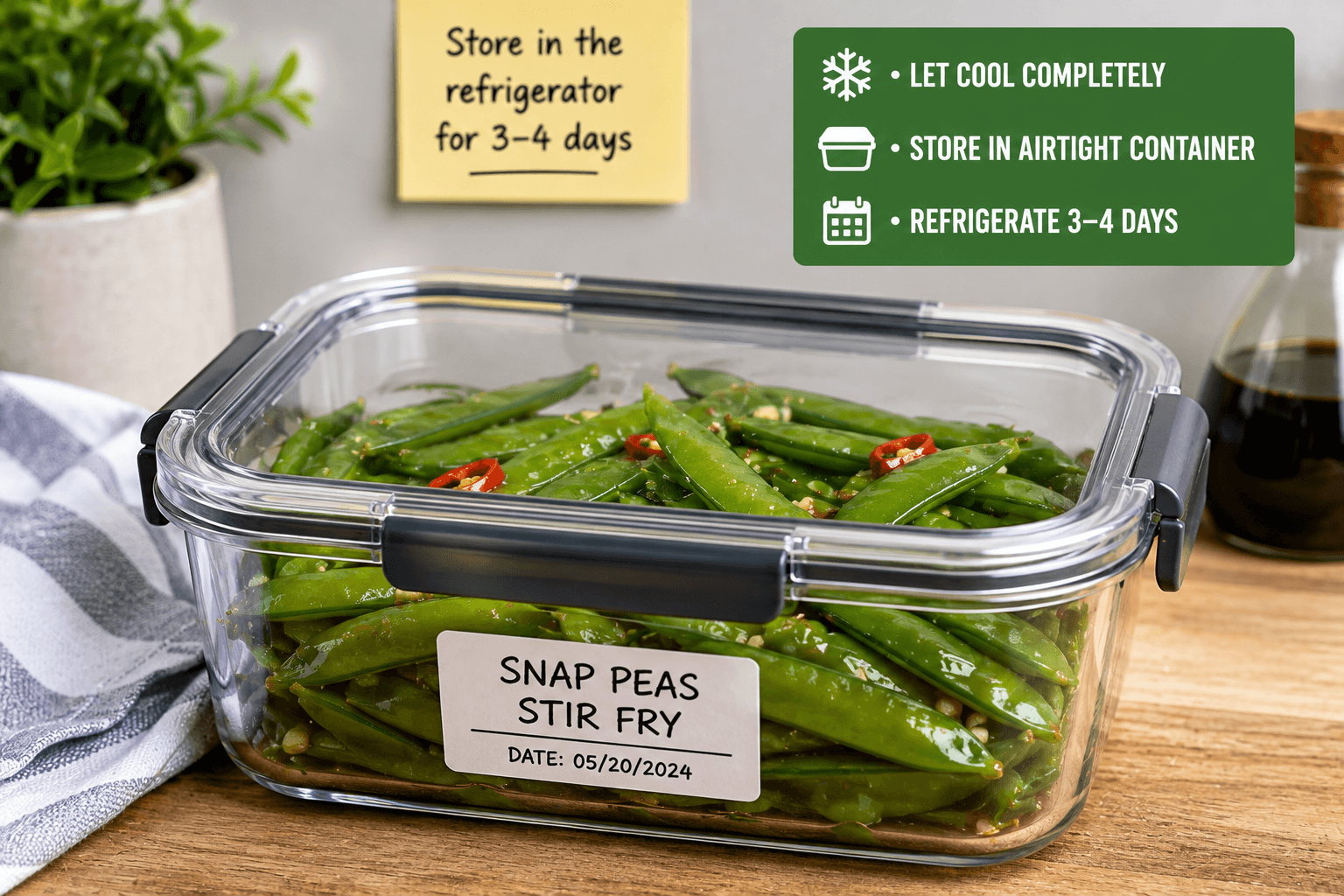
Storage Tip: Let cooked snap peas cool for no more than 2 hours before transferring them to an airtight container. Refrigerate promptly to maintain freshness and food safety.
How Long Do Cooked Snap Peas Last?
When stored properly in the refrigerator, cooked snap peas typically stay fresh for 3 to 4 days. Keeping them in a sealed container prevents them from drying out and reduces exposure to moisture that can affect their texture.
| Storage Method | Recommended Time | Quality |
|---|---|---|
| Room Temperature | Up to 2 hours | Safe only for short periods |
| Refrigerator | 3–4 days | Best option for leftovers |
| Freezer | 2–3 months | Texture becomes softer after thawing |
Can You Freeze Snap Peas?
Yes. Cooked snap peas can be frozen, although freezing changes their texture slightly. After thawing, they’ll be softer than freshly cooked snap peas, making them better suited for soups, fried rice, or noodle dishes than crisp stir-fries.
If you plan to freeze them, cool them completely before placing them in freezer-safe containers or freezer bags. Remove as much air as possible to reduce freezer burn.
Warning: Avoid freezing snap peas that have already been reheated. Repeated temperature changes reduce both quality and food safety.
How to Reheat Without Losing Too Much Crunch
The best way to reheat snap peas is quickly over medium-high heat in a skillet or wok. This warms them through without allowing them to overcook.
- Heat a small amount of oil in a skillet.
- Add the refrigerated snap peas.
- Stir-fry for 1–2 minutes.
- Serve immediately.
Microwaving is convenient but often produces softer vegetables because steam becomes trapped inside the container.
Tip: If reheating a full stir-fry, add a splash of water or broth only if necessary. Too much liquid can make the vegetables lose their crisp texture.
Expert Tips for Perfect Crisp Snap Peas Every Time
Professional cooks consistently achieve vibrant, crisp vegetables because they follow a few simple habits. These techniques will help you cook snap peas stir fry like a restaurant chef at home.
- Use the freshest snap peas available.
- Wash and dry them thoroughly before cooking.
- Preheat the wok completely.
- Cook over high heat.
- Add snap peas near the end of cooking.
- Keep vegetables moving constantly.
- Limit cooking time to about 2–3 minutes.
- Add stir-fry sauce during the final minute.
- Serve immediately for maximum crunch.
Kitchen Secret: Restaurant chefs often prepare every ingredient before turning on the stove. This “mise en place” approach keeps cooking fast and prevents delicate vegetables like snap peas from spending extra time in the pan.
Mastering these small details makes a big difference. Once you consistently cook snap peas stir fry using high heat, proper timing, and fresh ingredients, you’ll notice brighter color, sweeter flavor, and the satisfying crisp bite that makes homemade stir-fries taste restaurant-quality.

Frequently Asked Questions
How long should I cook snap peas in a stir-fry?
For the best results, cook snap peas stir fry for about 2 to 3 minutes over high heat. This keeps the pods bright green, crisp-tender, and naturally sweet without becoming soft.
Should snap peas be blanched before stir-frying?
No. Fresh snap peas do not need to be blanched before stir-frying. They cook very quickly in a hot wok. Blanching is generally unnecessary unless you’re preparing a large batch ahead of time.
Can I eat snap peas raw?
Yes. Snap peas are completely edible raw and are often enjoyed in salads, vegetable trays, and lunch boxes. Cooking simply enhances their sweetness while keeping their crisp texture.
Why did my snap peas become soft?
Snap peas usually become soft because they were cooked too long, cooked over low heat, or crowded in the pan. Using high heat and limiting the cooking time helps preserve their signature crunch.
Can frozen snap peas be used in stir-fry?
Yes. Frozen snap peas can be used, but they are usually softer than fresh ones after cooking. Add them directly to the hot wok without thawing and reduce the cooking time slightly.
What vegetables pair well with snap peas?
Snap peas pair well with broccoli, carrots, mushrooms, bell peppers, zucchini, baby corn, onions, water chestnuts, and cabbage. They also work beautifully with chicken, beef, shrimp, tofu, and many Asian-inspired sauces.
References
Final Thoughts
Learning how to cook snap peas stir fry style is a simple skill that delivers big results. By starting with fresh snap peas, drying them thoroughly, using a hot wok, and limiting the cooking time to just a few minutes, you can consistently achieve vegetables that are bright green, naturally sweet, and perfectly crisp.
Remember that timing is everything. Add snap peas near the end of the cooking process, avoid overcrowding the pan, and use only enough sauce to lightly coat the vegetables. These small adjustments help preserve their texture and make your homemade stir-fries taste fresher and more vibrant.
Whether you’re preparing a quick weeknight dinner or adding more vegetables to your meals, mastering how to cook snap peas stir fry will help you create healthier, more flavorful dishes that everyone will enjoy.
🍽️ You Might Also Like

📧 Save This Recipe For Later
Enter your email and we will send this recipe directly to your inbox.