
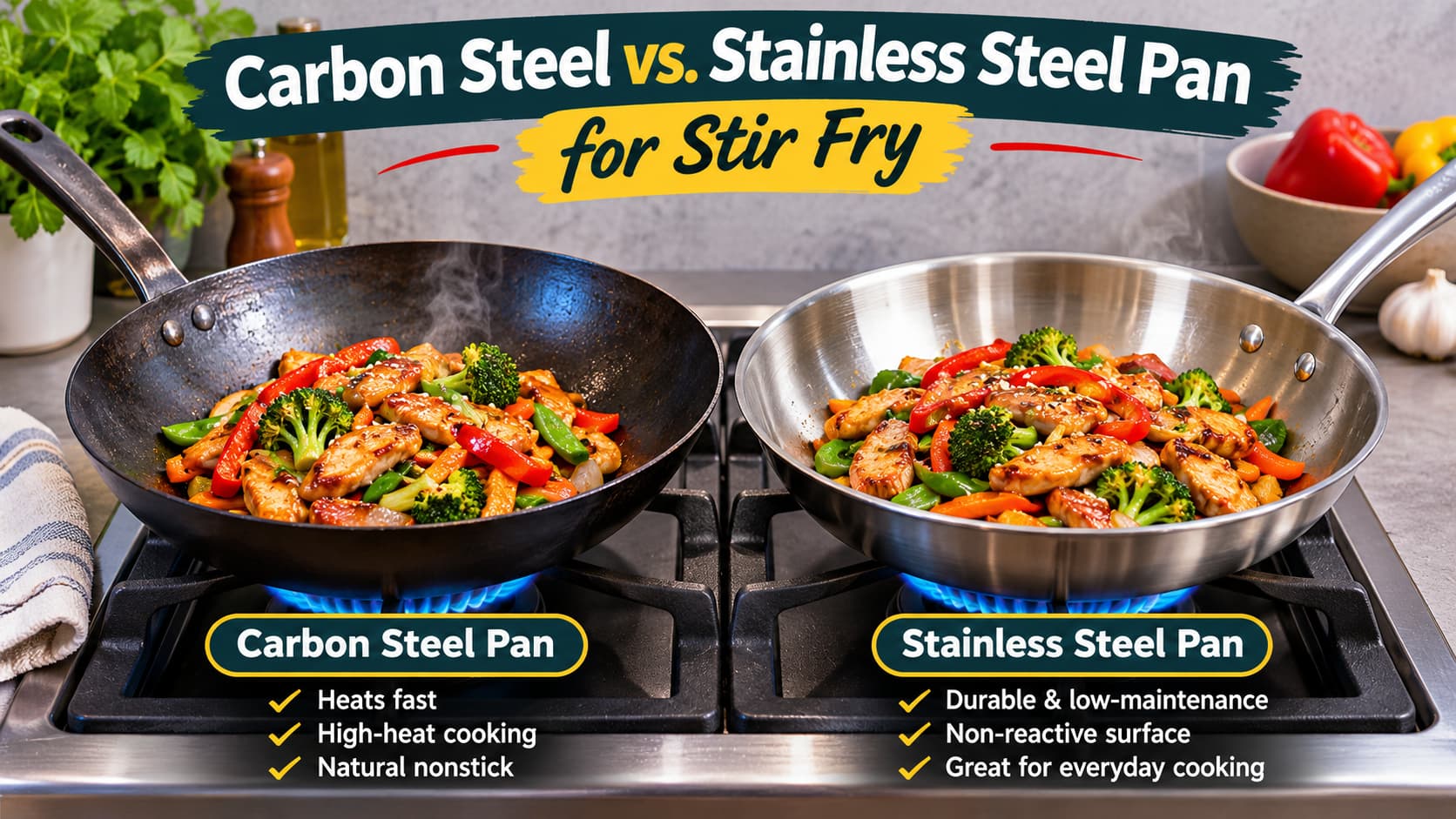
5 Powerful Differences: Carbon Steel vs Stainless Steel Pan
Carbon Steel vs. Stainless Steel Pan for Stir Fry
Choosing between a carbon steel and stainless steel pan can make a noticeable difference when preparing stir-fry at home. Both materials can handle everyday cooking, but they behave differently when exposed to high heat, cold ingredients, cooking oils, and sauces. Understanding these differences can help you choose cookware that suits your cooking style and kitchen setup.
Carbon steel is often associated with high-heat cooking and traditional stir-frying, while stainless steel is popular for its versatility and straightforward maintenance. However, the best option is not determined by material alone. Pan thickness, construction, stovetop compatibility, and cooking technique also influence the final results.
In this guide, we compare carbon steel vs. stainless steel pan options for stir fry, including heating performance, browning, food sticking, seasoning, sauce compatibility, cleaning, and everyday use. You will also learn which material makes more sense for cooking chicken, vegetables, and popular homemade stir-fry dishes.
Quick Answer
Carbon steel is generally the better choice for high-heat stir-frying because it responds quickly to temperature changes and develops a seasoned cooking surface. Stainless steel is a better option for cooks who prefer easier maintenance, versatile everyday use, and greater convenience when preparing acidic sauces. Your best choice depends on pan construction, cooking habits, stovetop compatibility, and willingness to maintain seasoning.
Table of Contents
- Carbon Steel vs. Stainless Steel: Key Differences
- Heat Performance for Stir-Frying
- Browning and Stir-Fry Cooking Results
- Food Sticking and Seasoning
- Cooking Sauces and Acidic Ingredients
- Cleaning and Maintenance
- Stovetop Compatibility
- Pan Capacity and Construction
- Which Pan Should You Choose?
- Frequently Asked Questions
- References
- Final Thoughts
Carbon Steel vs. Stainless Steel: Key Differences
Carbon steel and stainless steel are both metal cookware materials, but their cooking surfaces and maintenance requirements are different. Carbon steel is primarily an iron-based material with a relatively small amount of carbon. Stainless steel contains chromium, which helps it resist corrosion and gives it different cooking and maintenance characteristics.
For stir-frying, the biggest practical differences involve heat response, seasoning, food release, and how each pan handles acidic ingredients. Understanding these characteristics makes it easier to decide which material suits your kitchen.
Carbon Steel Pan Characteristics
A carbon steel pan is commonly used for high-heat cooking because it can respond relatively quickly to changes in burner temperature. It is also generally lighter than a comparable cast iron pan, making it easier to move and toss ingredients during cooking.
Unlike stainless steel, traditional carbon steel cookware requires seasoning. This process creates a protective layer of polymerized cooking oil on the cooking surface. With proper care and repeated use, the seasoning develops into a darker patina that can help reduce food sticking.
Carbon steel is particularly useful when cooking foods that benefit from quick searing and high heat. Chicken pieces, sliced beef, and firm vegetables can develop attractive browning when the pan is properly heated and the ingredients are added in manageable batches.
However, carbon steel requires more attention after cooking. It should be dried thoroughly to prevent rust, and its seasoning needs to be maintained. Prolonged cooking with acidic ingredients may also weaken the seasoning.
Stainless Steel Pan Characteristics
Stainless steel cookware is popular because it does not require seasoning and is generally easier to maintain. Its corrosion-resistant surface makes it suitable for a wide range of cooking tasks, including searing, sautéing, simmering, and preparing sauces.
However, not all stainless steel pans have the same construction. Some have a stainless steel cooking surface with an aluminum or copper core, while others use an encapsulated base that concentrates additional conductive material near the bottom of the pan.
This construction matters because stainless steel itself is not an especially effective heat conductor compared with materials such as aluminum or copper. A well-designed clad pan uses additional conductive layers to improve heat distribution.
Stainless steel also does not have a traditional nonstick seasoning layer. Food can stick when the pan is not properly preheated, when insufficient oil is used, or when ingredients are moved before they have developed enough contact with the cooking surface.
Carbon Steel vs. Stainless Steel: Quick Comparison
| Feature | Carbon Steel | Stainless Steel |
|---|---|---|
| Heating response | Generally responsive | Depends on construction |
| Heat distribution | Depends on thickness and design | Improved by clad or layered construction |
| Seasoning | Requires seasoning or maintenance of existing seasoning | Does not require seasoning |
| Food sticking | Reduced with good seasoning and technique | Requires proper preheating and oil application |
| Acidic ingredients | Can affect seasoning | Generally more suitable |
| Cleaning | Requires careful drying and seasoning care | Generally easier to maintain |
| Rust resistance | Can rust if left wet | Generally corrosion resistant |
| Induction compatibility | Generally compatible if the pan design is suitable | Depends on magnetic construction |
| Best use | High-heat stir-frying and searing | Versatile everyday cooking and sauce preparation |
These are general characteristics rather than guarantees for every pan. A thick carbon steel pan may behave differently from a thin one, just as a fully clad stainless steel pan can perform differently from a basic stainless steel pan with a thinner base.
Heat Performance for Stir-Frying
Heat performance is one of the most important considerations when choosing a stir-fry pan. Stir-frying involves cooking ingredients quickly over relatively high heat while moving them frequently. The pan needs to transfer heat effectively and respond to changes in cooking conditions.
Carbon steel and stainless steel can both produce good results, but their performance depends on material properties and cookware construction.
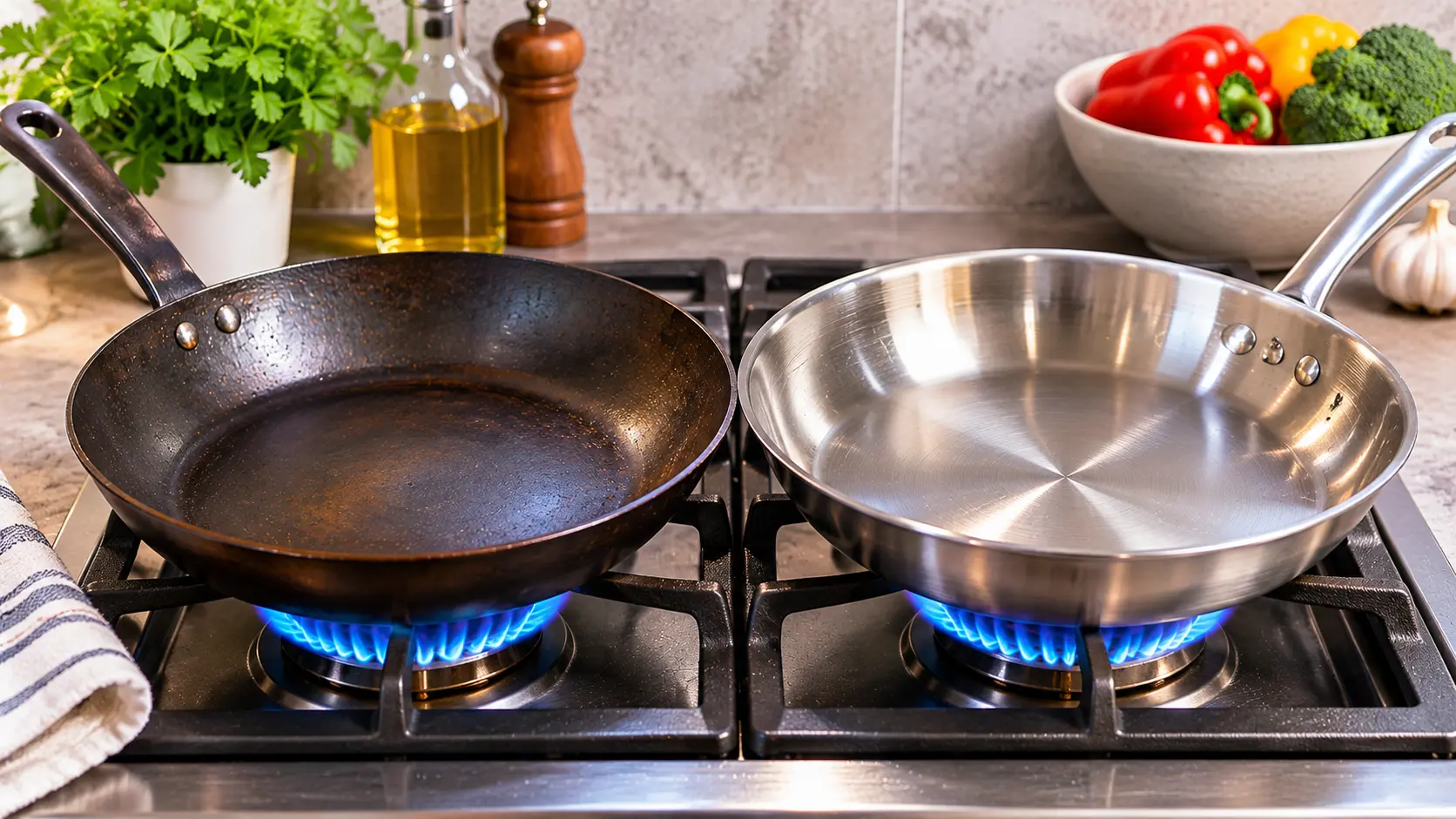
How Quickly Does Carbon Steel Heat Up?
Carbon steel is a relatively responsive cookware material. Compared with many stainless steel designs, a carbon steel pan can react more quickly when the burner temperature changes. This can be useful when preparing stir-fry because cooks often need to adjust heat while adding ingredients or finishing a sauce.
For example, when preparing chicken stir-fry, you may start with a hot pan to brown the chicken pieces. Once the chicken is removed, you can adjust the heat while cooking garlic and vegetables before combining everything with the sauce.
Carbon steel’s relatively responsive behavior makes this type of cooking easier to control, although the exact performance depends on the pan’s thickness, size, and heat source.
Thin carbon steel pans can heat rapidly but may develop hotter areas directly above a burner. A thicker pan may provide more thermal stability, although it can take longer to heat up.
How Does Stainless Steel Handle Heat?
Stainless steel cookware behaves differently depending on its construction. A basic single-layer stainless steel pan does not distribute heat in the same way as a fully clad pan containing aluminum or copper layers.
In fully clad cookware, the additional conductive layers help spread heat beyond the area directly above the burner. This can reduce temperature differences across the cooking surface, depending on the pan’s design and thickness.
Stainless steel pans with encapsulated bases also use conductive materials to improve heating performance, but their heat distribution may differ from cookware with layers extending through the sides.
For stir-frying, a well-constructed stainless steel pan can provide useful heat control. However, it may not respond to temperature changes in exactly the same way as a relatively thin carbon steel pan.
What Happens When You Add Cold Chicken and Vegetables?
One important factor in stir-frying is what happens after cold ingredients enter the pan. Adding a large quantity of refrigerated chicken or vegetables can lower the cooking surface temperature, even when the pan was properly preheated.
This is why pan size and ingredient quantity matter so much. If too much food is added at once, moisture released from the ingredients can accumulate faster than it evaporates. Instead of browning effectively, the food may begin to steam.
For example, adding a large amount of chicken breast to a medium-sized pan can create a crowded cooking surface. The chicken releases moisture, the temperature drops, and the pieces may cook without developing the desired golden exterior.
Using smaller batches allows more space between ingredients and gives the pan a better opportunity to maintain useful cooking temperatures.
Neither material can completely prevent temperature drops caused by overcrowding. Pan construction, burner output, ingredient temperature, and cooking quantity all influence heat recovery.
Browning and Stir-Fry Cooking Results
Browning gives stir-fry ingredients their appealing color, texture, and cooked flavor. When chicken and vegetables have enough contact with a hot cooking surface, they can develop a browned exterior while remaining tender inside.
Both carbon steel and stainless steel can produce good browning, but the cooking techniques required for each material are slightly different.
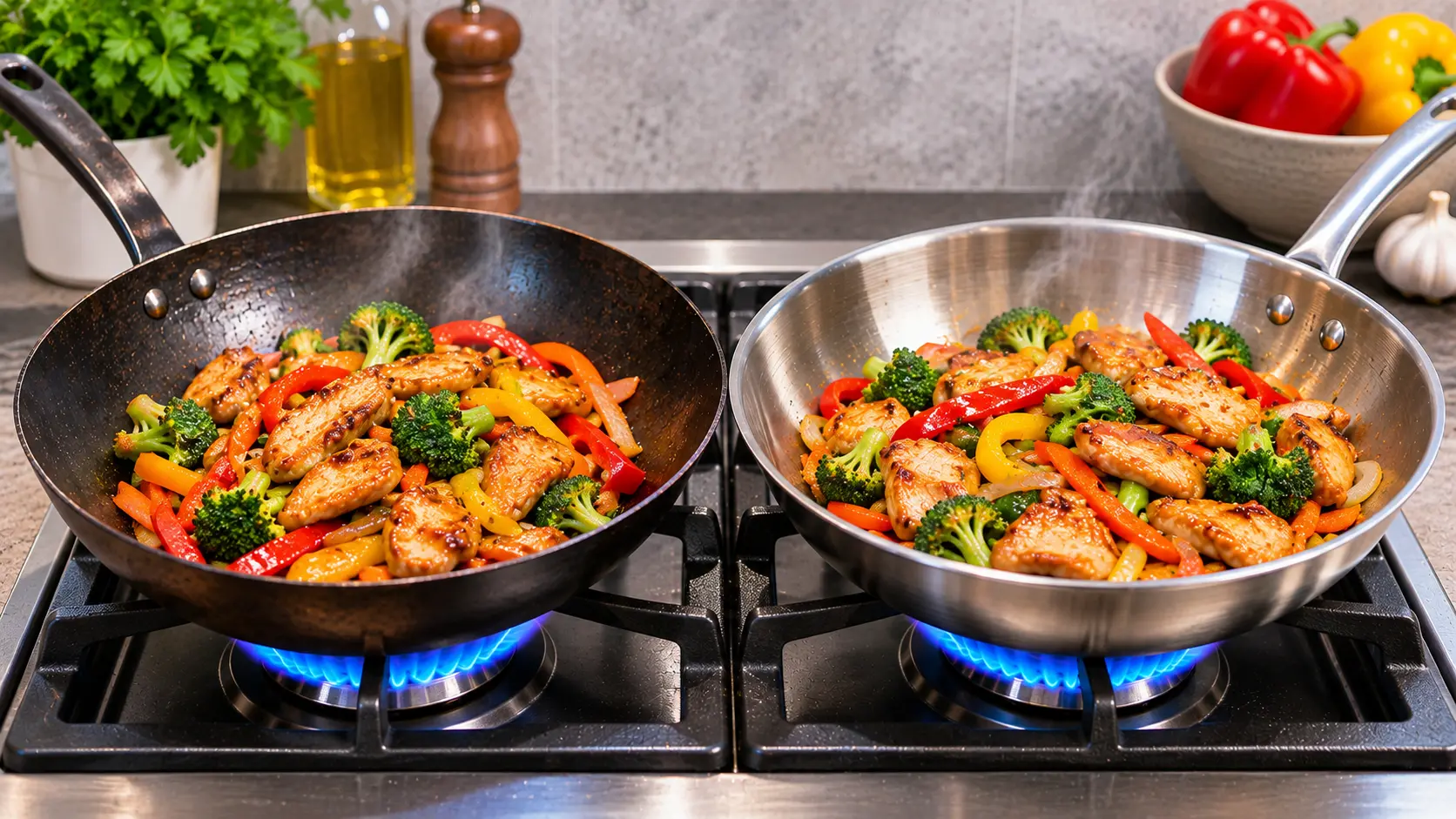
Browning Chicken in a Carbon Steel Pan
Carbon steel is a strong option for cooking chicken pieces over relatively high heat. Its responsive cooking surface allows the cook to adjust the temperature as the chicken browns and the remaining ingredients are prepared.
A properly seasoned carbon steel pan can also provide improved food release compared with a new or poorly maintained pan. This is useful when cooking bite-sized chicken pieces that need to be turned or moved during stir-frying.
For better results, cut the chicken into reasonably uniform pieces, pat away excess surface moisture, and avoid overcrowding the pan. Add the chicken in batches if necessary so that the pieces have enough room to brown.
Remember that a very hot pan does not automatically produce better results. Excessive heat can burn garlic, darken sauces too quickly, and overcook smaller chicken pieces.
Browning Chicken in a Stainless Steel Pan
Stainless steel can also produce excellent browning when used correctly. In fact, the surface can develop flavorful browned residue as proteins cook and release from the pan.
One important difference is that stainless steel does not have a seasoned cooking surface. Correct preheating, suitable oil, and appropriate cooking temperatures are important for reducing sticking.
When chicken is first placed in a stainless steel pan, it may temporarily stick to the cooking surface. As the exterior browns and forms a crust, it often becomes easier to release naturally.
Avoid forcing the chicken away from the surface too early. Allowing it enough time to brown can help prevent tearing and excessive sticking.
Cooking Vegetables in Both Materials
Vegetables such as broccoli, bell peppers, carrots, onions, and mushrooms are common ingredients in homemade stir-fry. Their water content and cooking times can affect the results regardless of the pan material.
Carbon steel works well when vegetables need quick cooking over relatively high heat. Its responsive surface allows the cook to adjust the heat as different ingredients are added.
Stainless steel can also cook vegetables effectively, particularly when the pan has a suitable conductive core and enough cooking surface area.
For vegetables that require longer cooking, such as carrots and broccoli stems, slice them into smaller pieces or add them before more delicate ingredients. This helps the vegetables cook more evenly without overcooking the entire mixture.
Food Sticking and Seasoning
Food sticking is another important difference between carbon steel and stainless steel cookware. Both materials can produce good cooking results, but they require different preparation techniques.
Carbon steel relies on seasoning for improved food release, while stainless steel depends more heavily on correct preheating, oil application, and cooking technique.
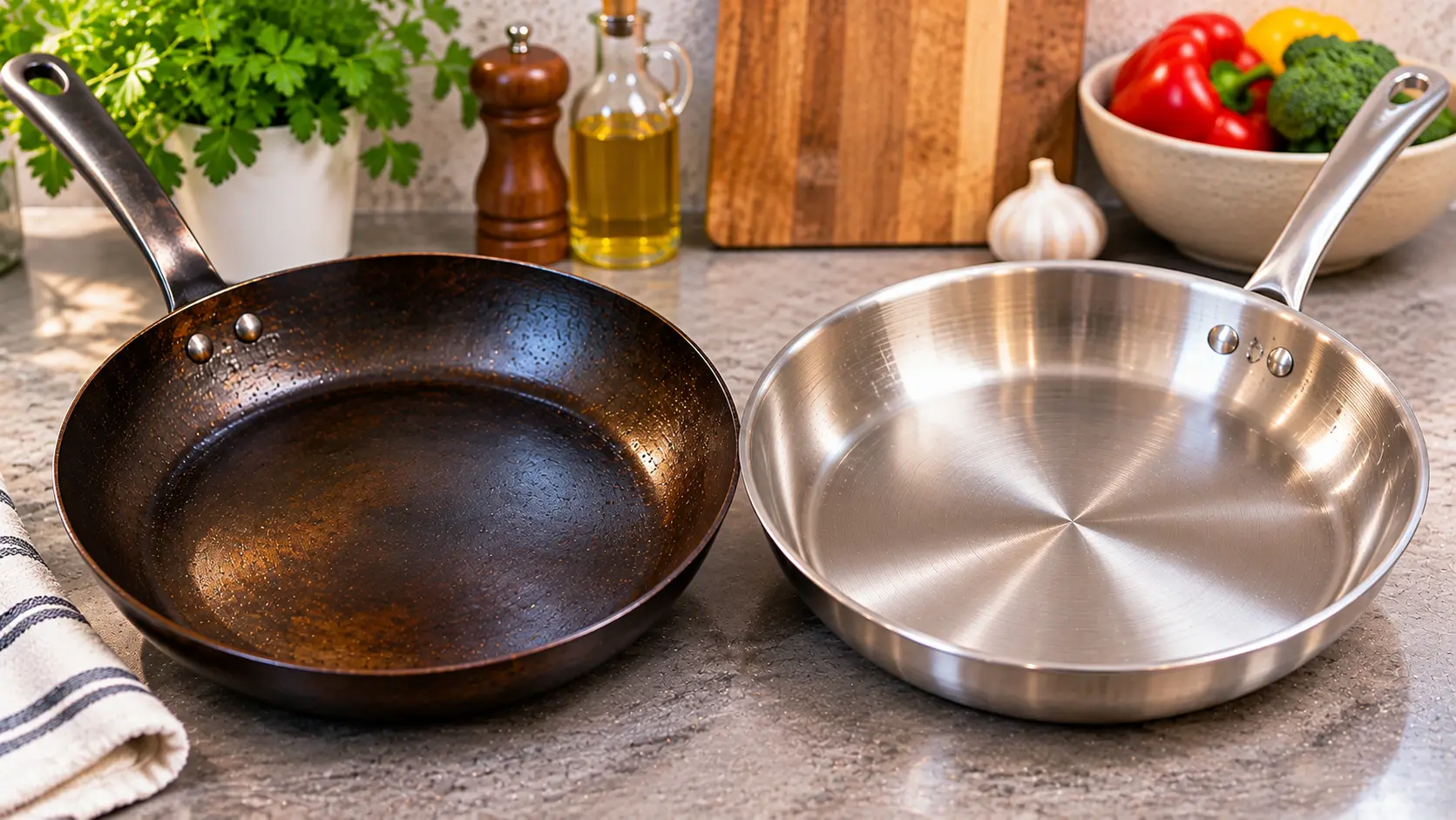
Why Carbon Steel Needs Seasoning
Seasoning is a protective layer created when a thin coating of cooking oil undergoes chemical changes under heat and bonds to the pan’s surface. It produces the dark patina commonly associated with well-used carbon steel cookware.
This layer helps protect the metal from moisture and corrosion while improving food release. However, seasoning is not the same as a permanent factory-applied nonstick coating. It can change with use and may need to be restored over time.
New carbon steel pans may require initial seasoning unless the manufacturer has already prepared the cooking surface. Always follow the manufacturer’s instructions because seasoning methods can vary by product.
After cooking, clean the pan according to its care instructions, dry it thoroughly, and apply a very thin protective layer of oil when appropriate.
How to Prevent Food From Sticking to Stainless Steel
Stainless steel does not require seasoning, but it is important to prepare the cooking surface properly before adding food.
Start by preheating the pan over an appropriate level of heat. Add cooking oil and allow it to spread across the surface before adding the chicken or vegetables.
When cooking chicken, avoid immediately moving the pieces after placing them in the pan. Give the exterior time to brown and develop enough contact with the cooking surface. The chicken may release more easily once a browned crust has formed.
Using an appropriate amount of oil and cooking in smaller batches can also help reduce sticking.
Which Pan Is Better for Beginners?
Stainless steel is often more convenient for beginners who want cookware that does not require seasoning or special drying routines. It can also be used for many cooking tasks beyond stir-frying.
Carbon steel may take more time to learn because seasoning, heat control, and routine maintenance all influence the cooking experience. However, beginners who enjoy learning high-heat cooking techniques can still use it successfully.
The better choice depends on the type of cooking experience you want. If low-maintenance cookware is your priority, stainless steel is generally easier to live with. If you are comfortable maintaining seasoning and want a pan suited to frequent high-heat stir-frying, carbon steel is worth considering.
Cooking Sauces and Acidic Ingredients in Both Pans
Stir-fry sauces often contain ingredients such as soy sauce, garlic, vinegar, citrus juice, honey, brown sugar, and other seasonings. These ingredients can affect how food cooks and how easily residue builds up on the pan.
Both carbon steel and stainless steel can be used to prepare many popular stir-fry sauces, but stainless steel generally offers more convenience when cooking acidic mixtures for extended periods.
Using Soy Sauce, Garlic, and Sweet Stir-Fry Sauces
Soy sauce, garlic, and sweet ingredients are common in homemade chicken stir-fry. Sauces containing honey, brown sugar, or other sweeteners can thicken quickly when exposed to high heat. If they remain in a very hot pan for too long, they may burn and create stubborn residue.
Carbon steel can handle many quick stir-fry preparations involving these ingredients. The important consideration is timing. Cook the chicken and vegetables first, then add the sauce near the end of cooking. Toss the ingredients until the sauce coats them evenly without allowing it to burn.
Stainless steel also works well for these preparations. Its cooking surface is particularly convenient when sauce residue needs to be loosened and cleaned after cooking.
For dishes such as honey garlic chicken stir-fry and teriyaki chicken stir-fry, avoid reducing a sugary sauce for too long over excessive heat. Lowering the heat slightly when adding the sauce can help prevent scorching.
Cooking With Vinegar, Citrus, and Other Acidic Ingredients
Acidic ingredients require more attention when using carbon steel. Vinegar, lemon juice, lime juice, and tomato-based ingredients can interact with the cooking surface and weaken the seasoning layer, particularly during prolonged cooking.
This does not mean that a carbon steel pan becomes permanently unusable after contact with acidic food. However, the seasoning may need to be restored if it becomes damaged or stripped away.
Stainless steel is generally a more convenient choice for recipes that involve acidic sauces or longer simmering times. Its cooking surface does not rely on the same seasoning layer as carbon steel.
Which Pan Is Better for Sticky Chicken Stir-Fry?
Both materials can prepare sticky chicken stir-fry successfully. The main difference is how they behave after the sauce has been added.
Carbon steel is useful for quickly browning chicken before adding a small amount of sauce. However, sweet sauces can leave residue that requires careful cleaning to protect the seasoning.
Stainless steel is convenient when preparing sticky sauces because browned residue and caramelized ingredients can often be loosened with a little water after cooking.
If you frequently prepare honey garlic, teriyaki, or vinegar-based chicken stir-fry, stainless steel may be the more convenient everyday option. Carbon steel remains a good choice when you prioritize high-heat cooking and add sauces near the end.
Cleaning and Maintaining Carbon Steel vs. Stainless Steel
Cleaning and maintenance are important factors when selecting cookware for regular home cooking. A pan that produces excellent stir-fry results may not be the best everyday choice if its maintenance requirements do not fit your routine.
How to Clean and Maintain Carbon Steel
Carbon steel requires more attention after cooking because its exposed metal surface can rust when left wet. Its seasoning also needs to be protected to maintain good cooking performance.
After preparing stir-fry, allow the pan to cool enough for safe handling. Remove food residue using warm water and a suitable soft sponge or pan scraper, following the manufacturer’s instructions.
A small amount of dish soap can be appropriate for many seasoned carbon steel pans, but cleaning recommendations vary by manufacturer. Avoid leaving the pan wet or storing it with moisture on its surface.
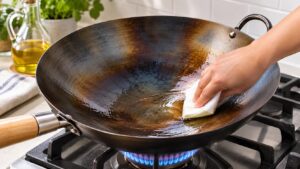
After washing, dry the pan thoroughly with a clean towel. Some manufacturers recommend briefly heating the pan to remove remaining moisture. A very thin layer of cooking oil can then be applied when appropriate to protect the surface.
Over time, seasoning may become uneven or damaged. In that situation, the affected area may need cleaning and re-seasoning according to the cookware manufacturer’s instructions.
How to Clean Stainless Steel
Stainless steel generally requires less specialized maintenance than carbon steel. It does not need seasoning or a protective coating of cooking oil after every wash.
For routine cleaning, allow the pan to cool and wash it with warm water, dish soap, and a nonabrasive sponge. If food has become stuck to the surface, soaking the pan or briefly simmering water in it can help loosen the residue.
Stubborn discoloration and cooking stains may require a stainless steel cleaner that is suitable for the cookware. Always follow the manufacturer’s cleaning instructions and avoid methods that could damage a polished or specially finished surface.
Unlike traditional carbon steel, stainless steel does not require the same rust-prevention routine after washing. This makes it convenient for cooks who prefer straightforward cookware maintenance.
Which Pan Requires Less Maintenance?
Stainless steel is generally the easier option to maintain. It does not require seasoning, and its cleaning routine is more straightforward.
Carbon steel requires more attention, especially when it comes to drying, protecting the seasoning, and preventing rust. However, these routines are manageable once they become part of your regular cooking habits.
If convenience is your priority, stainless steel has the advantage. If you are comfortable maintaining seasoning for the benefits of carbon steel cooking, the additional care may be worthwhile.
Which Pan Works Better on Different Stovetops?
Your stovetop is another important factor when choosing between carbon steel and stainless steel. A pan that performs well on one cooking surface may behave differently on another because heat transfer depends on burner design, contact area, and cookware construction.
Carbon Steel vs. Stainless Steel on Gas Stoves
Both materials can work well on gas stovetops when the cookware is designed for the heat source.
Carbon steel is particularly suitable for gas cooking because it responds relatively quickly to burner adjustments. This can help when switching between browning chicken, cooking vegetables, and finishing a sauce.
Stainless steel also performs well on gas burners. Fully clad cookware can help distribute heat beyond the immediate burner area, while the actual performance depends on the pan’s construction.
When using either material, avoid allowing flames to extend excessively up the sides of the pan. Excessive direct heat can damage handles, create hot spots, and make temperature control more difficult.
Using Both Pans on Electric and Glass-Top Stoves
Electric and smooth glass-top cooktops require particular attention to the bottom of the cookware. A flat, stable base generally provides better contact with the heating surface.
Carbon steel pans can work on electric cooktops, but a thin or uneven base may produce less consistent contact. Choose a pan with a suitable bottom design and follow the cooktop manufacturer’s instructions.
Stainless steel pans with a flat, well-constructed base can also work effectively. Fully clad and encapsulated-base models may provide different heating characteristics, so consider the specific design rather than assuming all stainless steel pans behave identically.
On glass-top cooktops, lift the pan rather than dragging it across the surface. This helps reduce the risk of scratches and damage.
Which Pan Is Better for Induction Cooktops?
Induction cooktops heat compatible cookware through a magnetic field. This means that the pan must have a suitable magnetic base to operate correctly.
Carbon steel is generally magnetic and is commonly suitable for induction cooking. However, the actual pan should still have a base design compatible with the induction cooktop.
Stainless steel is more complicated because not every stainless steel alloy is magnetic. Some stainless steel pans are induction compatible, while others are not.
Before purchasing, check the manufacturer’s induction compatibility information. You can also use a magnet as a basic preliminary check: if it attaches firmly to the cookware’s bottom, the pan is more likely to work on an induction cooktop. However, the manufacturer’s specifications are the more reliable guide.
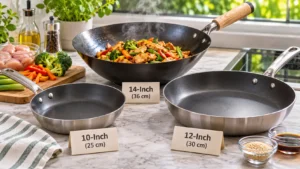
Pan Capacity and Construction: What Matters for Stir-Frying?
The material of a pan is only one part of its cooking performance. Its diameter, usable cooking surface, thickness, and construction can have an equally important influence on stir-frying.
Why Pan Diameter and Cooking Surface Matter
Stir-frying requires enough room to move ingredients around the cooking surface. A pan that is too small can become crowded when cooking chicken, broccoli, peppers, and other vegetables together.
For example, a small pan may work well for one or two servings of chicken stir-fry but may not provide enough space for a larger family meal.
A wider pan with sufficient flat cooking area makes it easier to spread ingredients into a single layer. This can help moisture evaporate and improve browning.
However, a larger pan is not automatically better. The pan should also match the burner size and available cooking power. An oversized pan on a small burner may heat unevenly, especially when its base extends far beyond the effective heating area.
How Pan Thickness Affects Cooking Performance
Pan thickness influences how cookware heats up, retains heat, and responds to temperature changes.
A relatively thin carbon steel pan can respond quickly to changes in burner temperature. However, it may also develop noticeable temperature differences across its surface depending on burner design and heat output.
A thicker carbon steel pan generally has more thermal mass and may provide greater temperature stability, but it can take longer to heat up and respond to adjustments.
Stainless steel cookware also varies in thickness and construction. A fully clad pan containing conductive metal layers may distribute heat differently from a thinner stainless steel pan with a basic base.
For home stir-frying, a balanced design is generally more useful than simply choosing the thickest or thinnest available pan.
Why Pan Construction Can Matter More Than Material Alone
Consider two stainless steel pans. One has a relatively thin single-layer body, while the other has a fully clad construction containing an aluminum core. Even though both have stainless steel cooking surfaces, their heating behavior may be noticeably different.
The same principle applies to carbon steel. A thin pan, a thicker pan, and a flat-bottom model may all behave differently when used for the same stir-fry recipe.
When comparing cookware, consider the following:
- Material: Determines important properties such as conductivity, corrosion resistance, and seasoning requirements.
- Thickness: Influences heat response and thermal stability.
- Base design: Affects contact with the burner and heat distribution.
- Pan diameter: Determines how much cooking space is available.
- Side shape: Influences how easily ingredients can be moved and tossed.
- Handle design: Affects comfort, control, and safe handling.
Carbon Steel vs. Stainless Steel: Which Pan Should You Choose?
After comparing heat performance, browning, food sticking, sauce compatibility, cleaning, and stovetop suitability, the best choice becomes easier to identify.
Neither material is the perfect solution for every home cook. Your decision should depend on how frequently you prepare stir-fry, what types of sauces you use, and how much maintenance you are willing to perform.
Choose Carbon Steel If…
Carbon steel is a strong choice if you regularly prepare stir-fry and prefer a pan that responds well to high-heat cooking.
Advantages
- Suitable for high-heat stir-frying.
- Responds relatively quickly to burner adjustments.
- Can develop a seasoned cooking surface.
- Generally lighter than comparable cast iron cookware.
- Works well for browning chicken and vegetables.
Limitations
- Requires seasoning or maintenance of existing seasoning.
- Can rust if left wet.
- Acidic ingredients can affect seasoning.
- Requires more careful cleaning and storage.
- Needs appropriate heat control.
Choose Stainless Steel If…
Stainless steel is a practical choice if you want one pan for stir-frying and a variety of other everyday cooking tasks.
Advantages
- Does not require seasoning.
- Generally easier to clean and maintain.
- Suitable for acidic sauces and ingredients.
- Available in fully clad and layered constructions.
- Versatile for sautéing, searing, and sauce preparation.
Limitations
- Food can stick without proper technique.
- Cooking performance depends heavily on construction.
- Some designs may respond more slowly to temperature changes.
- Not every stainless steel pan works on induction.
- May require practice to achieve consistent food release.
Which Is Better for Everyday Chicken Stir-Fry?
If your main priority is preparing high-heat chicken stir-fry with browned chicken and quickly cooked vegetables, carbon steel is generally a strong choice, provided you are comfortable maintaining its seasoning.
If you frequently prepare chicken stir-fry with honey garlic, teriyaki, vinegar-based sauces, or other acidic ingredients, stainless steel offers greater convenience and easier maintenance.
For a beginner who wants one versatile pan without a seasoning routine, a good-quality stainless steel pan with suitable construction is a practical starting point.
For someone who regularly cooks stir-fry and enjoys high-heat techniques, a properly constructed carbon steel pan can be a worthwhile addition to the kitchen.
Frequently Asked Questions
1. Is carbon steel better than stainless steel for stir-frying?
Carbon steel is generally better suited to traditional high-heat stir-frying because of its responsive heating characteristics and seasoned cooking surface. However, stainless steel is a practical alternative for cooks who prefer easier maintenance and more versatile everyday cookware.
2. Does carbon steel heat up faster than stainless steel?
Carbon steel often responds more quickly to temperature changes than many stainless steel pan designs. However, heating speed also depends on pan thickness, construction, burner output, and size. A fully clad stainless steel pan may perform differently from a basic single-layer model.
3. Can you cook chicken stir-fry in a stainless steel pan?
Yes. Stainless steel works well for chicken stir-fry when properly preheated and used with suitable cooking oil. Avoid overcrowding the pan, and allow chicken pieces to brown before moving them too frequently.
4. Does stainless steel need seasoning?
No. Stainless steel does not require the traditional oil seasoning used on carbon steel. Proper preheating, oil application, and cooking technique help reduce sticking.
5. Why does food stick to stainless steel pans?
Food may stick when the pan is not properly preheated, when insufficient oil is used, or when ingredients are moved too early. Allowing proteins to brown before turning them can improve food release.
6. Can you use soy sauce and vinegar in a carbon steel pan?
Soy sauce can generally be used in quick stir-fry preparations. However, prolonged cooking with acidic ingredients such as vinegar or citrus juice can weaken carbon steel seasoning. Stainless steel is generally more convenient for prolonged acidic cooking.
7. Are carbon steel and stainless steel pans suitable for induction cooktops?
Carbon steel is generally magnetic and commonly works with induction. Stainless steel cookware may or may not be compatible depending on its alloy and base construction. Always check the manufacturer’s induction compatibility specifications.
8. Which pan is better for beginners?
Stainless steel is often more convenient for beginners because it does not require seasoning and is generally easier to maintain. Carbon steel is also suitable for beginners who are willing to learn proper seasoning, heat control, and cleaning techniques.
References
- Consumer Reports – Best Frying Pans for Every Food
- Cookware Manufacturers Association – Cooking Methods and Heat Transfer Guide
- Samsung – Cooktop Cookware Compatibility Guide
- Made In Cookware – Carbon Steel Care and Acidic Food Guidance
- USDA FSIS – Safe Internal Cooking Temperatures for Meat and Poultry
Final Thoughts
Choosing between carbon steel and stainless steel for stir-frying comes down to your cooking priorities. Carbon steel is a strong option for cooks who enjoy high-heat techniques, want a responsive pan, and are comfortable maintaining seasoning. Stainless steel is better suited to those who want versatile cookware with straightforward cleaning and greater convenience when preparing acidic sauces.
For frequent high-heat chicken and vegetable stir-frying, carbon steel is an excellent option. For everyday cooking that includes a variety of sauces and other meals, a well-constructed stainless steel pan may be the more practical investment.
Ultimately, pan construction, cooking space, heat control, and proper technique matter just as much as the material itself. Choose cookware that fits your stovetop, cooking habits, and maintenance preferences to get better results from homemade stir-fry.
🍽️ You Might Also Like

📧 Save This Recipe For Later
Enter your email and we will send this recipe directly to your inbox.