
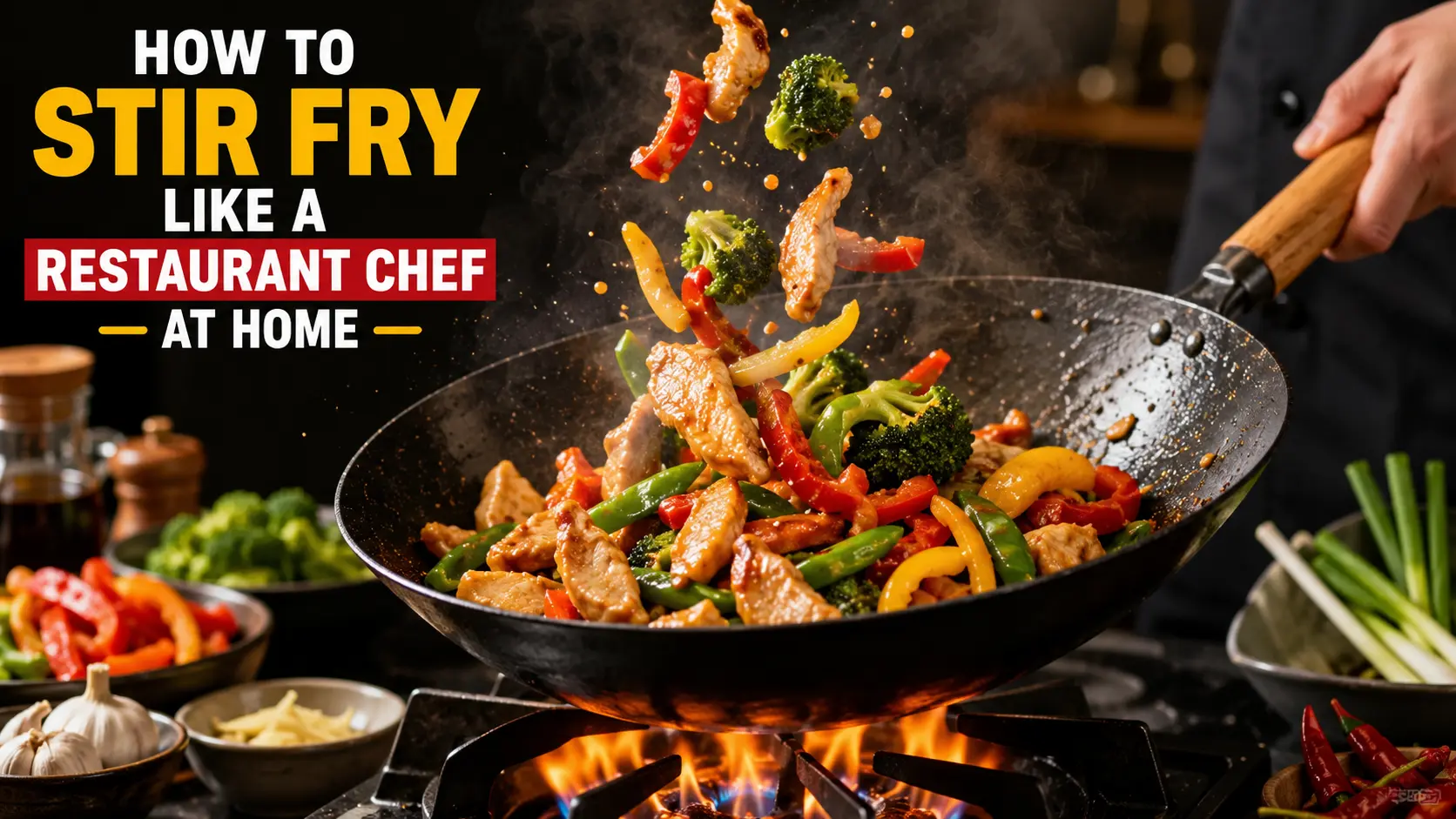
How to Stir Fry Like a Restaurant Chef at Home
How to Stir Fry Like a Restaurant Chef at Home
If you’ve ever wondered why restaurant stir fries taste better than the ones you make at home, you’re not alone. Restaurant chefs create dishes with bold flavors, crisp-tender vegetables, juicy meat, and the signature smoky aroma known as wok hei. The good news is that you don’t need a commercial kitchen or an expensive restaurant stove to achieve similar results. By learning a few professional techniques, you can stir fry like a restaurant chef using ordinary cookware in your own kitchen.
The secret isn’t one magical ingredient. Instead, it’s a combination of proper preparation, high heat, correct cooking order, and confident technique. Every step—from slicing ingredients evenly to adding the sauce at the perfect moment—plays an important role in creating a delicious stir fry.
In this guide, you’ll learn the same core methods professional chefs use every day. Whether you’re cooking chicken, beef, shrimp, tofu, or vegetables, these tips will help you produce restaurant-quality results with better flavor, texture, and consistency.
Quick Answer
To stir fry like a restaurant chef, prepare all ingredients before cooking, preheat your wok or skillet until very hot, cook in small batches, avoid overcrowding the pan, keep the ingredients moving, add aromatics at the right time, and finish with a well-balanced stir fry sauce. High heat, quick cooking, and proper timing are the biggest differences between restaurant-quality stir fry and an average homemade version.
Table of Contents
Why Restaurant Stir Fry Tastes Better
Many home cooks assume restaurants simply use better ingredients, but that’s only a small part of the story. Professional kitchens rely on proven cooking techniques that maximize flavor while preserving the texture of every ingredient. Even simple vegetables become brighter, meat stays juicier, and sauces develop a richer taste because every step is carefully controlled.
Restaurant chefs also spend very little time searching for ingredients once cooking begins. Everything is washed, sliced, measured, and organized before the pan is heated. This preparation allows the entire cooking process to happen quickly without interruption.
Another major difference is heat. Commercial wok burners generate intense heat that cooks food rapidly while locking in moisture. Although most home stoves aren’t as powerful, you can still achieve impressive results by preheating your pan properly and avoiding overcrowding.
Tip: Restaurant-quality stir fry starts long before food touches the pan. Organizing your ingredients first is one of the easiest ways to improve your cooking immediately.
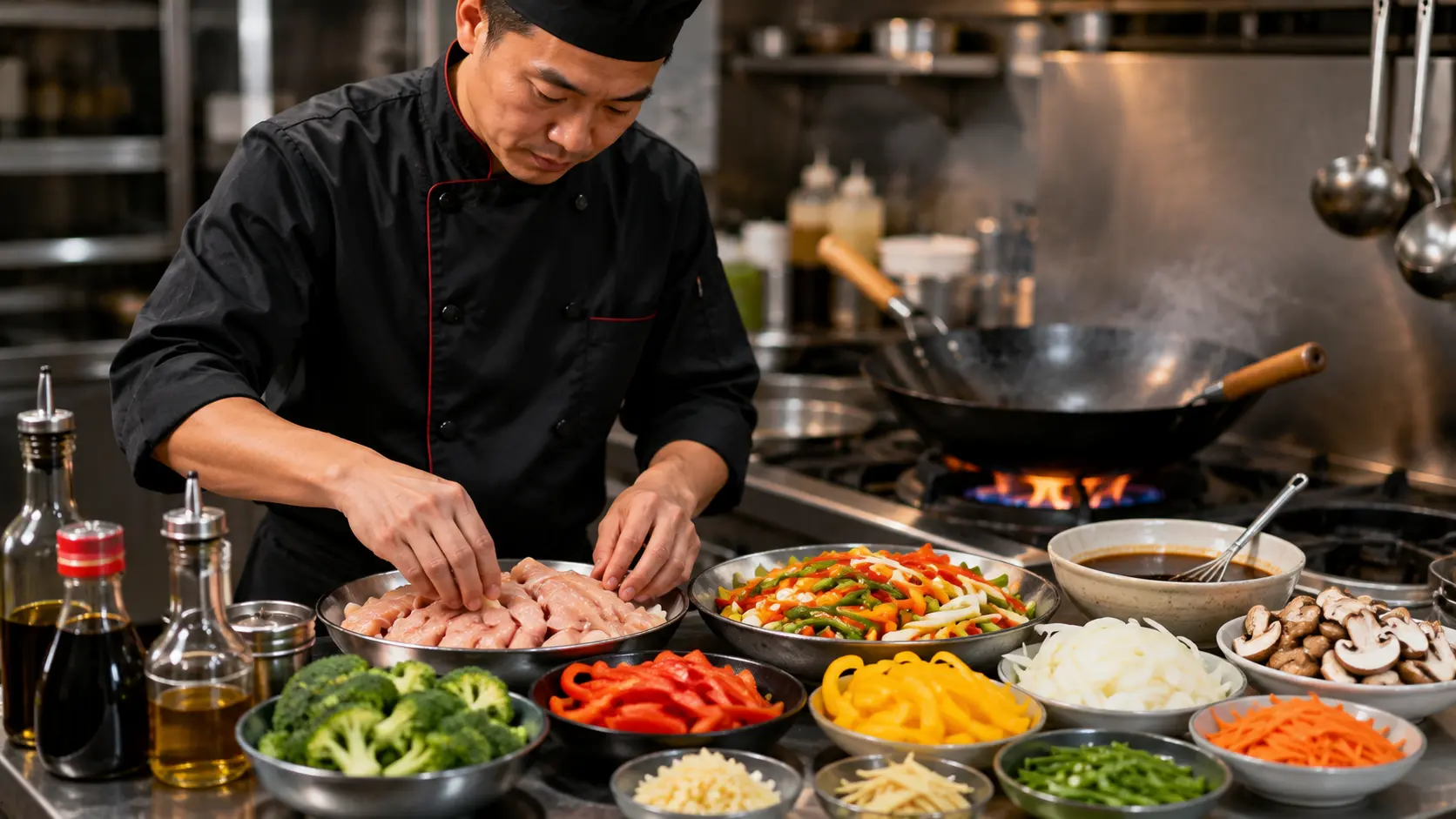
The Professional Principles Behind Great Stir Fry
If you want to consistently stir fry like a restaurant chef, focus on mastering a few essential principles rather than memorizing complicated recipes.
- Use high heat throughout most of the cooking process.
- Prepare every ingredient before cooking begins.
- Cook quickly to preserve freshness and texture.
- Avoid overcrowding the pan.
- Add ingredients according to their cooking times.
- Use enough oil to coat the food without making it greasy.
- Finish with sauce only after the ingredients are nearly cooked.
These principles work for almost every stir fry recipe, whether you’re making chicken, beef, shrimp, tofu, or mixed vegetables.
Chef’s Secret: Professional chefs don’t constantly stir every ingredient. Instead, they let food briefly sear against the hot surface before tossing it. This creates better browning, deeper flavor, and a more authentic restaurant-style finish.
Prepare Everything Before You Turn On the Heat
Preparation is often called mise en place, a French culinary term meaning “everything in its place.” It’s one of the biggest reasons restaurant kitchens work so efficiently.
Before heating your wok or skillet, make sure you’ve completed these steps:
- Slice proteins into evenly sized pieces.
- Cut vegetables into similar sizes for even cooking.
- Mix your stir fry sauce ahead of time.
- Measure seasonings and aromatics.
- Keep oil and utensils within easy reach.
When everything is ready, you can focus entirely on cooking instead of scrambling to chop vegetables while food burns in the pan.
If you’re looking for a complete beginner-friendly recipe that uses these same techniques, try our Chicken Stir Fry. You can also explore our guide on the correct cooking order for a perfect stir fry to better understand when each ingredient should be added.
Master High Heat Like a Chef
One of the biggest reasons restaurant stir fries taste so different is heat. Professional wok burners produce extremely high temperatures that cook food in seconds while creating rich caramelization and the signature smoky flavor known as wok hei. Although most home stoves cannot match that power, you can still stir fry like a restaurant chef by making the most of the heat you have.
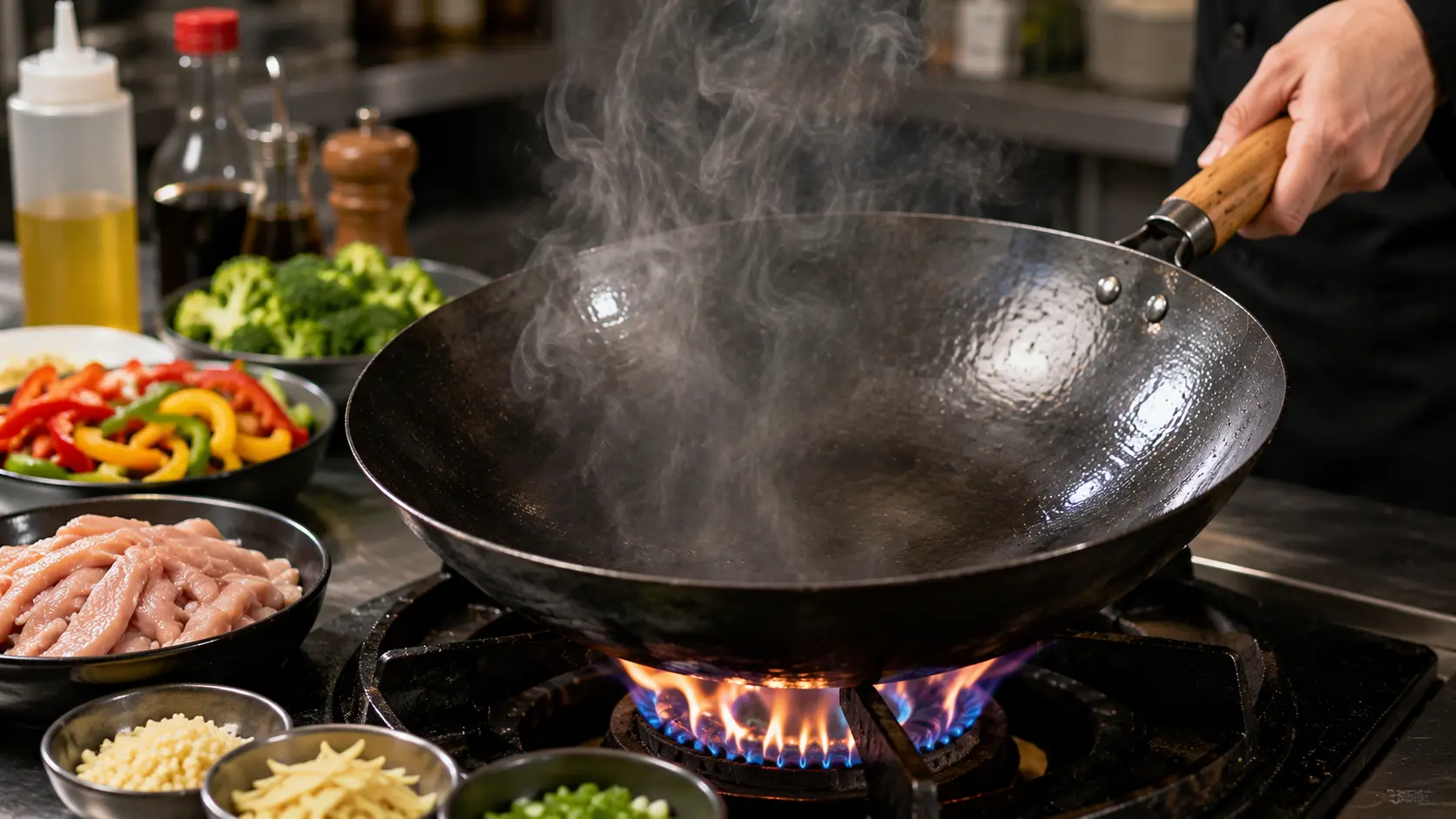
Always preheat your wok or skillet before adding oil. A properly heated pan helps food sear instead of sticking, locks in moisture, and creates better browning. If you add ingredients too early, they release water before they can develop color, leaving your stir fry steamed instead of crisp and flavorful.
A simple way to test your pan is to sprinkle in a few drops of water. If they instantly sizzle and evaporate, the pan is ready. At that point, add your cooking oil and allow it to heat for just a few seconds before adding the first ingredient.
Tip: Choose oils with a high smoke point, such as avocado oil, peanut oil, canola oil, or refined sunflower oil. These oils can withstand the high temperatures needed for stir frying without burning.
| Cooking Stage | Recommended Heat | Why It Matters |
|---|---|---|
| Preheating the pan | High | Creates a hot cooking surface for searing. |
| Cooking protein | High | Locks in juices and develops browning. |
| Cooking vegetables | Medium-high to high | Keeps vegetables crisp while cooking quickly. |
| Adding sauce | Medium-high | Allows the sauce to coat ingredients without burning. |
If you’d like to dive deeper into temperature control, our guide on how hot a pan should be before stir-frying explains exactly how to recognize the perfect cooking temperature.
Choose the Right Pan for Restaurant-Style Results
You don’t necessarily need a traditional carbon steel wok to stir fry like a restaurant chef, although it is the preferred option. The most important factor is using cookware that heats quickly and retains enough heat while ingredients are cooking.
A carbon steel wok heats rapidly and allows food to move easily around the curved sides. This makes it ideal for tossing ingredients while keeping everything exposed to high heat.
If you cook on an electric or induction stove, a flat-bottom carbon steel wok is usually the best choice because it maintains full contact with the heating surface. If you don’t own a wok, a heavy stainless steel or cast iron skillet can still produce excellent results.
| Cookware | Advantages | Best For |
|---|---|---|
| Carbon Steel Wok | Fast heating, easy tossing, authentic results | Gas and high-heat cooking |
| Flat-Bottom Wok | Stable on most home stoves | Electric and induction ranges |
| Stainless Steel Skillet | Excellent browning and durability | General home cooking |
| Cast Iron Skillet | Outstanding heat retention | Small-batch stir fries |
Cook in Small Batches Instead of Filling the Pan
Many home cooks overload the pan because it seems faster. Unfortunately, this is one of the quickest ways to ruin a stir fry.
Every ingredient releases moisture as it cooks. When too much food is crowded into the pan, that moisture cannot evaporate quickly enough. Instead of searing, the ingredients begin steaming, resulting in pale vegetables, rubbery meat, and watery sauce.
Professional chefs often cook proteins separately before adding vegetables. This allows every ingredient to receive direct contact with the hot surface. Once each component is nearly finished, everything is combined during the final minute of cooking.
Common Mistake: Overcrowding the pan lowers the temperature dramatically. If you hear less sizzling and see liquid pooling at the bottom, you’ve added too much food at once.
Working in smaller batches may add a few extra minutes to your cooking time, but the improvement in texture and flavor is well worth it. It’s one of the simplest ways to consistently stir fry like a restaurant chef at home.
For more techniques used by professional kitchens, don’t miss our detailed guide on restaurant stir fry secrets you can use at home. It complements the methods explained in this article and helps you build even more confidence behind the stove.
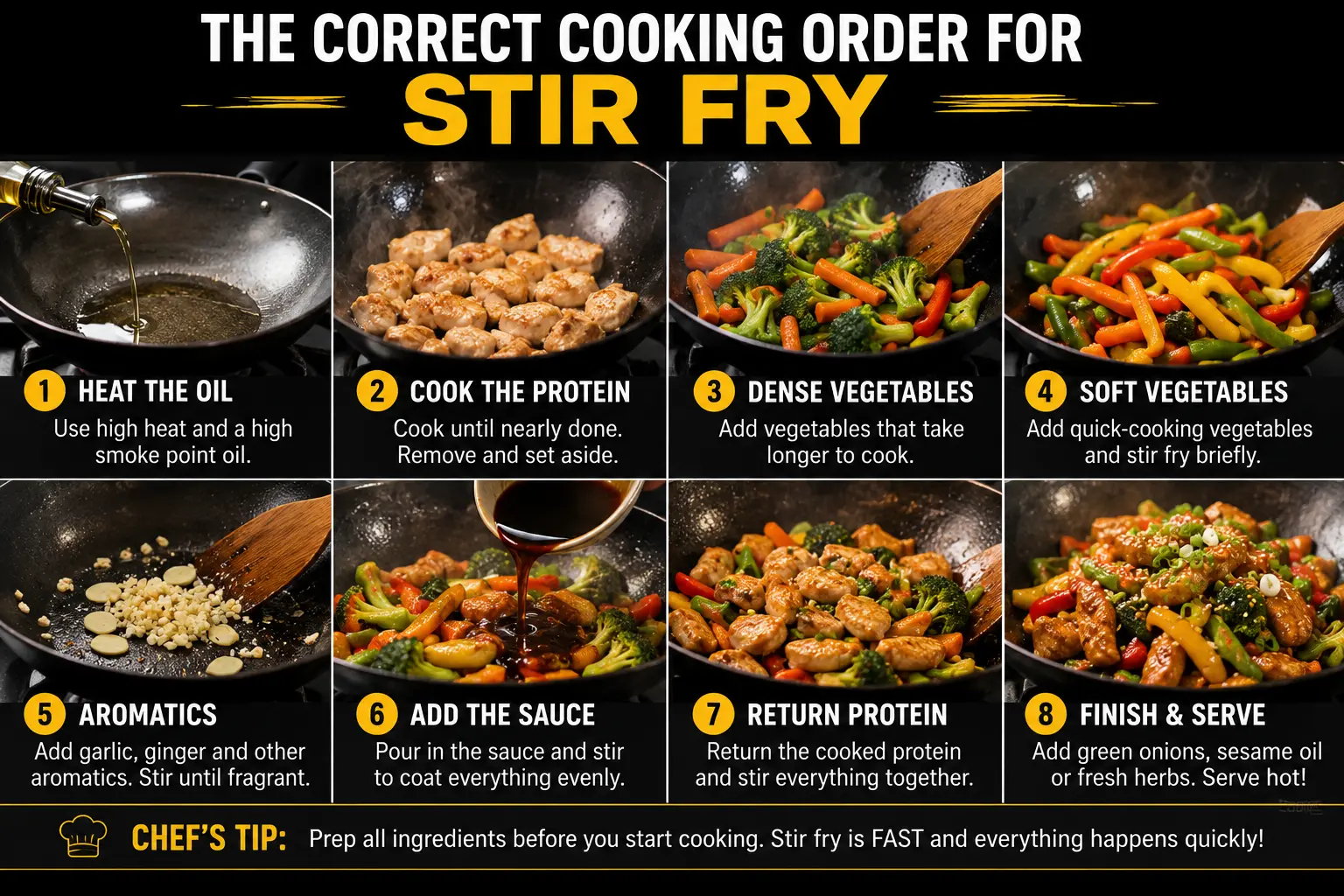
Cook Ingredients in the Correct Order
Professional chefs rarely throw every ingredient into the wok at the same time. Instead, they follow a specific cooking sequence that ensures each ingredient reaches its ideal texture. If you want to stir fry like a restaurant chef, learning the proper cooking order is just as important as using high heat.
Every ingredient cooks at a different speed. Thin slices of chicken need more time than leafy greens, while dense vegetables like carrots require a head start before softer vegetables such as bell peppers or mushrooms. Following the correct order prevents overcooking and keeps every bite flavorful.
| Cooking Order | Ingredients | Purpose |
|---|---|---|
| 1 | Oil | Creates a non-stick cooking surface. |
| 2 | Protein | Develops browning while sealing in juices. |
| 3 | Dense vegetables | Allows enough time for proper cooking. |
| 4 | Soft vegetables | Maintains a crisp-tender texture. |
| 5 | Garlic, ginger, and aromatics | Adds fresh flavor without burning. |
| 6 | Sauce | Coats all ingredients evenly. |
| 7 | Fresh herbs or sesame oil | Finishes the dish with aroma and freshness. |
Following this sequence creates balanced flavors and prevents ingredients from becoming mushy or overcooked. It also helps the sauce cling to the food instead of pooling at the bottom of the pan.
Chef’s Secret: Many restaurant chefs remove cooked protein from the wok after browning it, then return it during the final minute. This keeps meat juicy while allowing vegetables to cook at their ideal pace.
Keep the Ingredients Moving—But Not Constantly
People often assume stir frying means continuously stirring every second. In reality, restaurant chefs know when to leave food alone for a few moments and when to toss it.
Allowing ingredients to sit briefly against the hot surface creates caramelization, which develops deeper flavor and a more attractive golden color. Once a light crust forms, toss or stir the ingredients to expose a new surface to the heat.
This rhythm of searing and tossing is one of the easiest ways to stir fry like a restaurant chef. Constant stirring prevents browning, while leaving food untouched for too long increases the risk of burning.
- Let proteins sear for 20–30 seconds before moving them.
- Toss vegetables frequently enough to cook evenly.
- Use quick wrist movements instead of vigorous stirring.
- Keep ingredients in contact with the hottest part of the pan.
With a little practice, you’ll notice better color, richer flavor, and a texture that’s much closer to your favorite takeout restaurant.
Use the Right Amount of Sauce
A common misconception is that more sauce equals more flavor. Professional chefs know that the sauce should enhance the ingredients—not drown them.
Adding too much sauce cools the pan and causes ingredients to simmer instead of stir fry. This can leave vegetables soggy and dilute the rich flavors you’ve worked to build during cooking.
Instead, prepare a concentrated sauce that lightly coats every ingredient. Most restaurant-style stir fry sauces combine salty, sweet, savory, and slightly acidic flavors into one balanced mixture.
Tip: Mix your sauce before cooking begins so it can be poured into the wok quickly. This prevents ingredients from overcooking while you’re measuring liquids.
For ideas on building the perfect sauce, explore our Ultimate Chicken Stir Fry Sauce Guide, where you’ll learn how to balance soy sauce, aromatics, sweeteners, acids, and thickeners like a professional chef.
Don’t Forget the Final Toss
The last 30 to 60 seconds of cooking are where everything comes together. Once the sauce has lightly thickened, return any cooked protein to the pan if it was removed earlier. Toss everything together until every piece is evenly coated and heated through.
This final toss distributes the sauce evenly while preserving the crisp texture of the vegetables. It also ensures every bite contains a balanced combination of protein, vegetables, and seasoning.
Mastering this final step will bring you one step closer to being able to stir fry like a restaurant chef every time you cook at home.
If you’re ready to put these techniques into practice, try them with our Chicken Broccoli Stir Fry or our flavorful Garlic Chicken Stir Fry. Both recipes are excellent for practicing restaurant-style stir-fry techniques.
Common Mistakes That Prevent Restaurant-Quality Stir Fry
Even experienced home cooks sometimes struggle to stir fry like a restaurant chef because of a few avoidable mistakes. The good news is that most problems have simple solutions. Once you recognize these common errors, you’ll notice a dramatic improvement in flavor, texture, and appearance.
1. Starting with a Cold Pan
A cold pan causes ingredients to release moisture before they begin to brown. Instead of developing a flavorful crust, the food slowly cooks in its own juices. Always allow your wok or skillet to fully preheat before adding oil.
2. Overcrowding the Pan
Adding too much food at once is one of the biggest reasons homemade stir fry turns out soggy. Every ingredient releases steam during cooking, and when the pan is overcrowded, that steam cannot escape. Cook in batches if necessary to maintain high heat and proper browning.
3. Cutting Ingredients Unevenly
Large pieces take longer to cook than smaller ones. Uneven cuts often result in overcooked vegetables alongside undercooked meat. Try to slice proteins and vegetables into similar sizes so they finish cooking at nearly the same time.
4. Using Too Much Sauce
Restaurant stir fries are lightly coated, not swimming in sauce. Excess sauce cools the pan, weakens the flavor, and makes vegetables soft instead of crisp-tender.
5. Cooking Everything Together
Different ingredients require different cooking times. Dense vegetables, leafy greens, proteins, and aromatics all benefit from being added at different stages of the cooking process.
Warning: If your stir fry looks watery, pale, or lacks caramelization, the pan probably wasn’t hot enough or contained too much food. These are the two most common reasons home stir fries don’t resemble restaurant-quality dishes.
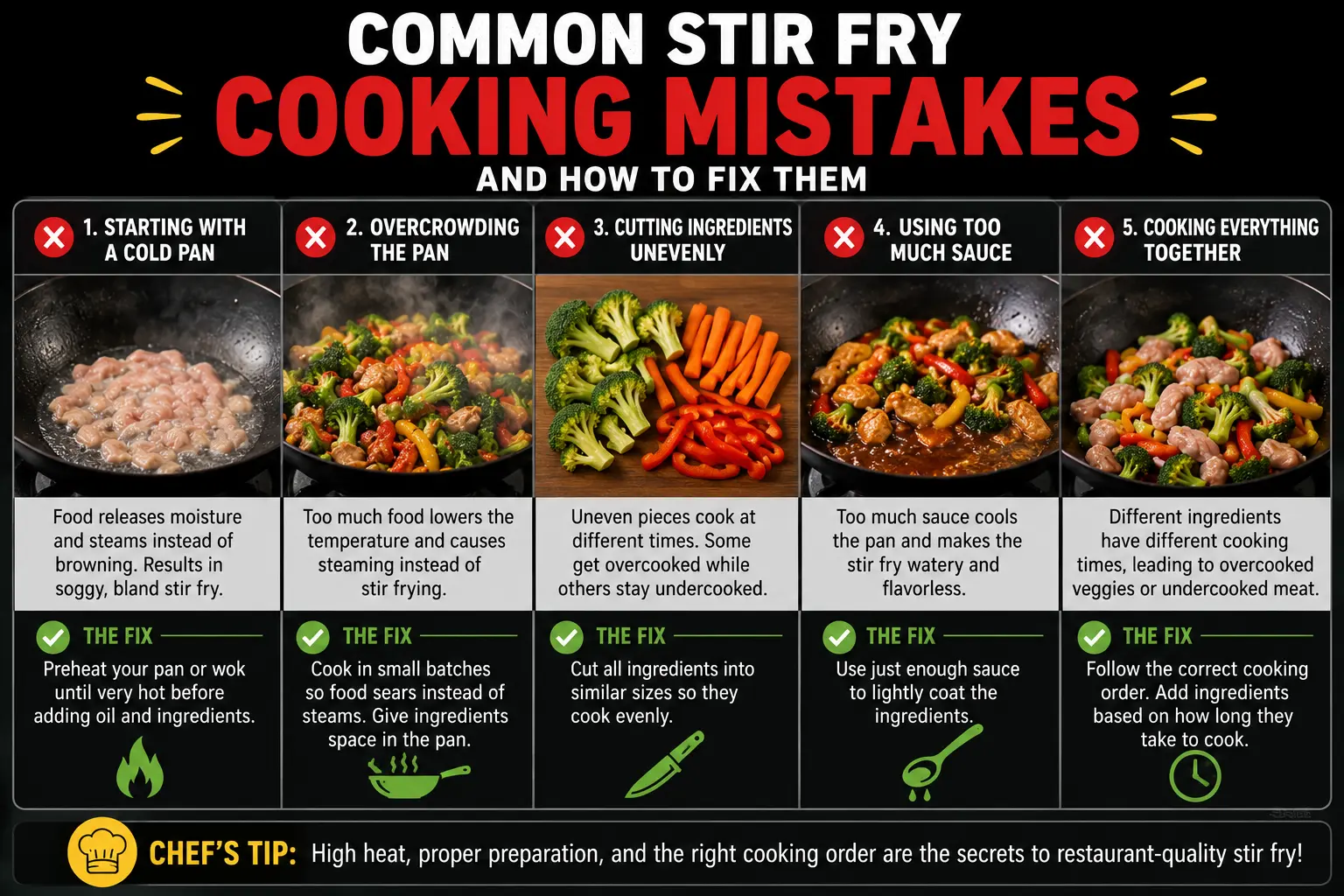
For a more detailed breakdown, read our guide on Common Stir Fry Cooking Mistakes, where each mistake is explained with practical solutions.
Restaurant Chef Tips You Can Start Using Today
Professional chefs rely on habits that become second nature after years of cooking. Fortunately, many of these techniques are easy to apply in a home kitchen.
Restaurant Secret: Great stir fry isn’t about cooking longer—it’s about cooking smarter. Preparation, timing, and heat control consistently produce better results than simply increasing cooking time.
- Dry proteins with paper towels before cooking to improve browning.
- Bring refrigerated meat closer to room temperature for more even cooking.
- Keep ingredients moving with quick tosses rather than aggressive stirring.
- Use fresh garlic and ginger for brighter flavor.
- Taste your sauce before adding it to the wok.
- Finish with sliced green onions, toasted sesame seeds, or a drizzle of sesame oil for extra aroma.
- Clean the pan between batches if food begins sticking or burning.
These small habits may seem simple, but together they create the polished results people associate with restaurant cooking.
Practice with Different Stir Fry Recipes
The best way to build confidence is through repetition. Once you’ve mastered the basic techniques, practice them with different ingredients. Every recipe teaches something new about timing, texture, and heat management.
For example, chicken breast requires careful cooking to remain juicy, while shrimp cooks in only a few minutes. Vegetables also vary greatly—broccoli needs more cooking time than snow peas or bell peppers.
| Recipe | What You’ll Practice |
|---|---|
| Chicken Stir Fry | Classic restaurant-style technique |
| Spicy Chicken Stir Fry | Balancing heat and sauce |
| Chicken Veggie Stir Fry | Cooking multiple vegetables correctly |
| Honey Garlic Chicken Stir Fry | Managing sweeter sauces without burning |
| Healthy Chicken Stir Fry | Using lighter sauces while maintaining flavor |
Build Your Confidence One Stir Fry at a Time
Don’t expect perfection after your first attempt. Restaurant chefs prepare hundreds of stir fries before their movements become effortless. Every time you cook, you’ll improve your knife skills, heat management, timing, and confidence.
Focus on one technique at a time. Master preheating the pan, then practice cooking in smaller batches. Once those become habits, work on sauce timing and ingredient order. Before long, you’ll be able to stir fry like a restaurant chef without constantly referring to recipes.
If you’d like to continue improving your skills, our articles on Why High Heat Is Important for Stir Fry and The Ultimate Stir Fry Cooking Techniques Guide provide even more expert advice to help you cook with confidence.
Advanced Techniques to Stir Fry Like a Restaurant Chef
Once you’ve mastered the fundamentals, it’s time to take your skills to the next level. Professional chefs use a variety of advanced techniques that improve flavor, texture, and presentation without making the cooking process much more complicated. These methods can help you consistently stir fry like a restaurant chef in your own kitchen.
Velvet Your Protein for Extra Tenderness
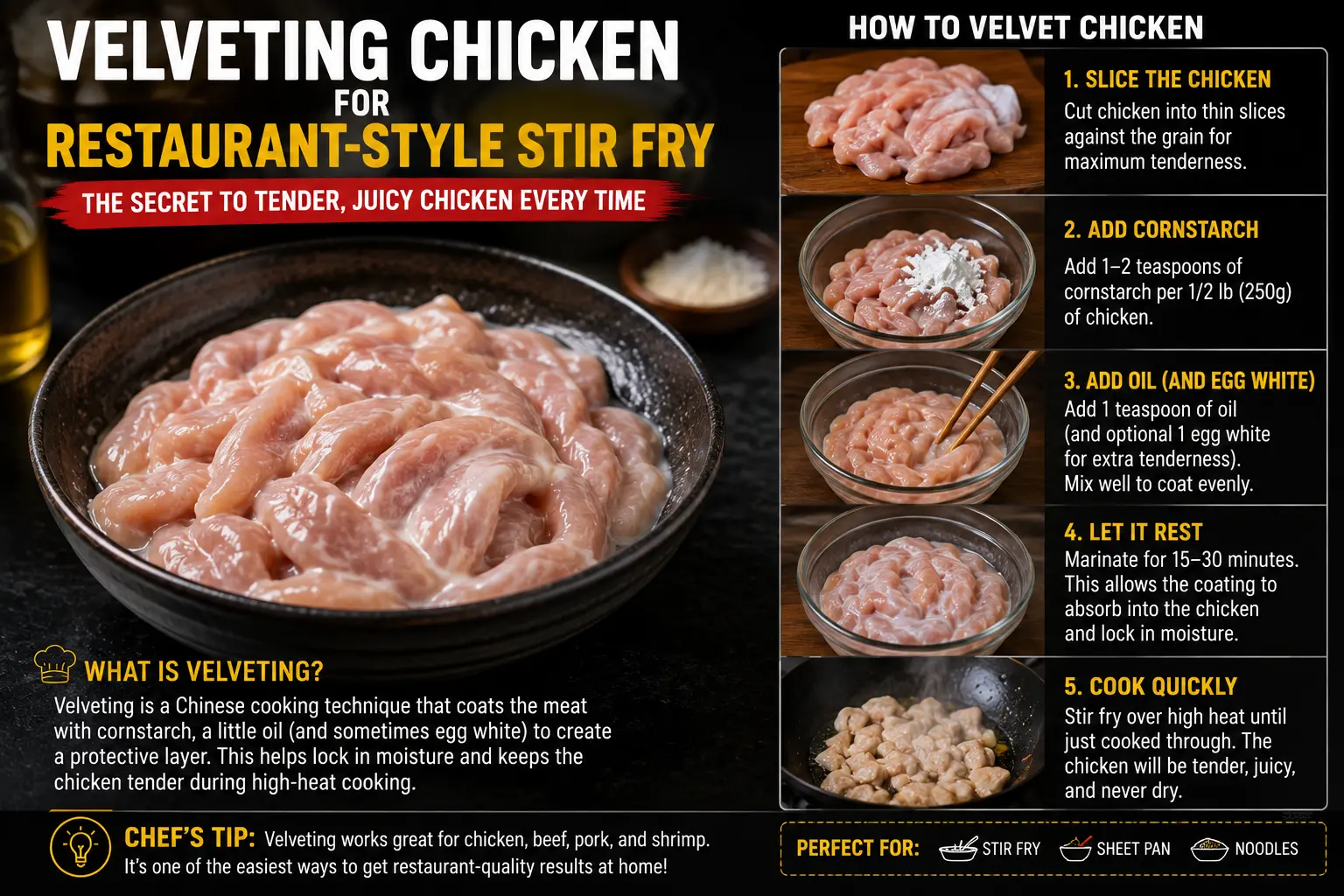
One of the best-kept secrets in Chinese restaurant kitchens is a technique called velveting. It involves coating sliced meat with a simple mixture of cornstarch, a small amount of oil, and sometimes egg white before cooking.
This protective coating helps the meat retain moisture during high-heat cooking, resulting in juicy, tender bites instead of dry or chewy pieces.
- Slice meat thinly against the grain.
- Coat with cornstarch and a little oil.
- Let it rest for 15–30 minutes.
- Cook quickly over high heat.
Even a short velveting step can noticeably improve chicken, beef, and pork stir fries.
Chef’s Secret: Many restaurant chefs lightly velvet chicken before every stir fry. It’s one of the easiest ways to achieve the tender texture people expect from their favorite takeout dishes.
Balance Every Flavor in Your Stir Fry Sauce
Restaurant stir fry sauces rarely rely on a single ingredient. Instead, they combine several flavor elements that work together to create depth and complexity. A balanced sauce complements the ingredients rather than overpowering them.
| Flavor Element | Common Ingredients | Purpose |
|---|---|---|
| Salty | Soy sauce, tamari | Builds savory flavor. |
| Sweet | Honey, brown sugar | Balances saltiness. |
| Acidic | Rice vinegar, lime juice | Brightens the dish. |
| Umami | Oyster sauce, mushroom sauce | Adds richness and depth. |
| Thickener | Cornstarch slurry | Helps the sauce cling to food. |
Taste your sauce before adding it to the wok. A quick adjustment at this stage is much easier than trying to fix the flavor after everything has been cooked.
Tip: Keep homemade stir fry sauce in the refrigerator for quick weeknight meals. Having a prepared sauce makes restaurant-quality cooking much faster.
Finish with Fresh Ingredients
Professional chefs know that the final touches can make a stir fry look and taste significantly better. Adding fresh ingredients after cooking preserves their aroma and creates a vibrant presentation.
Popular finishing ingredients include:
- Sliced green onions
- Fresh cilantro
- Toasted sesame seeds
- A drizzle of toasted sesame oil
- Freshly cracked black pepper
- Thinly sliced fresh chili peppers
These ingredients require no additional cooking, allowing their fresh flavors to remain intact while adding color and texture to the finished dish.
Restaurant-Style Stir Fry Checklist
Before serving, run through this simple checklist to see whether you’ve followed the same process used in many professional kitchens.
| Checklist | Completed? |
|---|---|
| Ingredients prepared before cooking | ✔ |
| Pan fully preheated | ✔ |
| Used a high smoke-point oil | ✔ |
| Cooked in small batches | ✔ |
| Added ingredients in the correct order | ✔ |
| Used a balanced stir fry sauce | ✔ |
| Finished with fresh garnishes | ✔ |
If you can check off most of these steps, you’re already using many of the same techniques that restaurant chefs rely on every day.
To continue improving, practice these methods with recipes like our Teriyaki Chicken Stir Fry or Chicken Veggie Stir Fry. Each recipe offers another opportunity to refine your timing, heat control, and sauce management while helping you stir fry like a restaurant chef more confidently.
Frequently Asked Questions
Can I stir fry like a restaurant chef without a wok?
Yes. While a carbon steel wok is ideal, you can stir fry like a restaurant chef using a heavy stainless steel or cast iron skillet. The key is preheating the pan thoroughly, cooking over high heat, and avoiding overcrowding.
Why doesn’t my stir fry have the same smoky flavor as restaurants?
Restaurants often use extremely powerful wok burners that create the smoky flavor known as wok hei. Home stoves produce less heat, but preheating your pan, cooking in small batches, and allowing ingredients to sear before tossing can help develop deeper flavor.
Should I cook meat and vegetables together?
For the best results, cook protein first, remove it from the pan, then cook the vegetables. Return the meat during the final minute of cooking. This keeps the protein juicy while preventing vegetables from becoming overcooked.
What oil is best for restaurant-style stir fry?
Choose oils with a high smoke point, such as avocado oil, peanut oil, canola oil, or refined sunflower oil. These oils perform well under the high temperatures required for stir frying.
How do I keep vegetables crisp in a stir fry?
Cook over high heat, avoid overcrowding the pan, and don’t overcook the vegetables. Dense vegetables should be added before softer ones so everything finishes cooking at the same time.
Can I prepare stir fry ingredients ahead of time?
Absolutely. In fact, preparing ingredients before heating the pan is one of the biggest reasons professional kitchens cook so efficiently. Slice vegetables, portion proteins, and mix the sauce in advance for faster, smoother cooking.
Final Thoughts
Learning to stir fry like a restaurant chef isn’t about owning expensive equipment or using complicated recipes. It’s about mastering a handful of proven techniques that professional chefs use every day. Preparing ingredients ahead of time, cooking over high heat, using the correct cooking order, avoiding overcrowding, and finishing with a balanced sauce will dramatically improve your results.
As you practice these methods, you’ll notice your stir fries becoming more flavorful, your vegetables staying crisp, and your proteins remaining tender and juicy. Every meal is another opportunity to refine your technique and build confidence in the kitchen.
Whether you’re preparing a quick weeknight dinner or cooking for family and friends, these restaurant-inspired techniques will help you create delicious stir fries that look and taste like they came from your favorite Asian restaurant.
📧 Save This Recipe For Later
Enter your email and we will send this recipe directly to your inbox.