
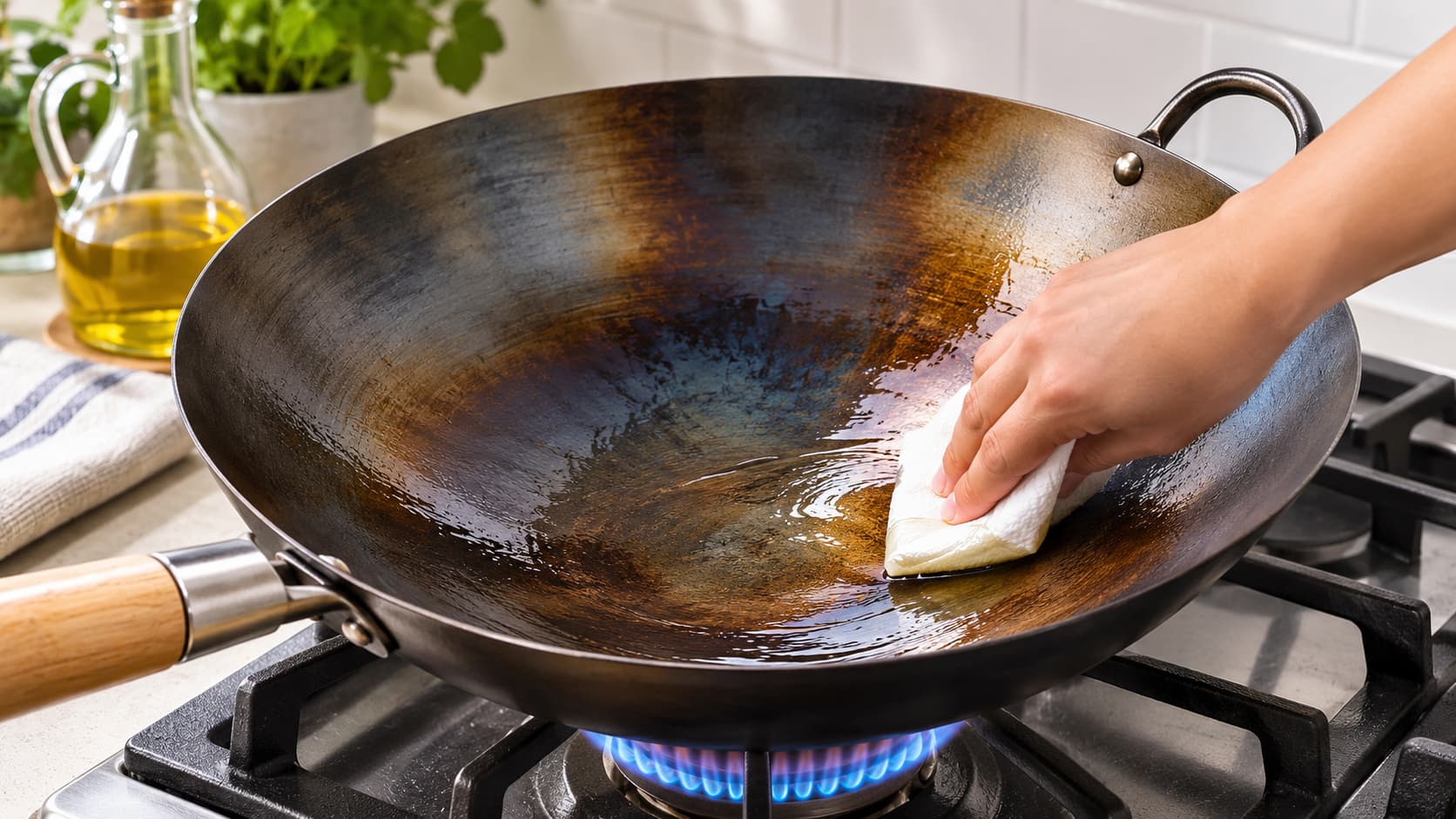
Season Carbon Steel Wok: 7 Easy Tips for a Perfect Finish
How to Season a Carbon Steel Wok
Seasoning a carbon steel wok before its first use helps create a protective cooking surface that becomes easier to cook on over time. It also helps protect the exposed steel from moisture and rust. Whether you have purchased a traditional round-bottom wok or a flat-bottom model for your home stove, the correct preparation and seasoning method depend on its factory finish and the manufacturer’s instructions.
For an untreated carbon steel wok, the process generally involves removing the factory protective coating, drying the metal, applying an extremely thin layer of cooking oil, and heating the surface so the oil bonds to the steel. Repeating the process helps build an initial seasoning layer, while regular cooking gradually develops a darker, more durable patina.
Quick Answer: How Do You Season a Carbon Steel Wok?
To season a carbon steel wok, first check the manufacturer’s instructions and remove any protective factory coating if required. Wash and dry the wok thoroughly, apply a very thin layer of suitable cooking oil, and heat it carefully until the oil begins to bond to the steel. Repeat the oiling and heating process according to the wok’s care instructions. Allow it to cool before cooking.
Table of Contents
- Why You Need to Season a Carbon Steel Wok
- What You Need to Season a Carbon Steel Wok
- How to Prepare a New Carbon Steel Wok Before Seasoning
- How to Season a Carbon Steel Wok Step by Step
- How to Season a Carbon Steel Wok on Different Stovetops
- How to Tell If Your Carbon Steel Wok Is Properly Seasoned
- Common Carbon Steel Wok Seasoning Problems and How to Fix Them
- How to Maintain Your Carbon Steel Wok After Seasoning
- What to Cook First in a Newly Seasoned Carbon Steel Wok
- Frequently Asked Questions
Why You Need to Season a Carbon Steel Wok
Carbon steel is a popular wok material because it heats up relatively quickly, responds to temperature changes, and works well for high-heat cooking. However, untreated carbon steel can rust when exposed to moisture. Its bare surface can also cause food to stick, especially when the wok has not developed a suitable cooking patina.
Seasoning addresses these problems by creating a thin, hardened layer from cooking oil that has been heated on the metal. This layer helps protect the steel and improves its cooking characteristics as it develops through repeated use.
What Does Seasoning a Wok Actually Mean?
Seasoning is the process of heating a thin layer of cooking oil on the surface of carbon steel until it forms a bonded protective film. During heating, the oil undergoes chemical changes, including polymerization, which helps create a more durable layer than ordinary liquid oil.
This protective layer is commonly called a patina. As you continue cooking with the wok and maintaining it correctly, additional layers gradually develop. The surface often becomes darker and more resistant to sticking over time.
Seasoning is different from applying ordinary cooking oil before preparing a meal. A layer of liquid oil can be wiped away, while properly formed seasoning bonds to the metal and remains on the cooking surface.
Benefits of Seasoning a Carbon Steel Wok
- Helps prevent rust: The seasoning layer reduces direct exposure of the steel to moisture and air.
- Reduces food sticking: A well-developed patina can make cooking and releasing food easier when combined with proper preheating and cooking oil.
- Improves the cooking surface: Repeated seasoning helps develop a more consistent surface for everyday stir-frying.
- Supports long-term use: A properly maintained carbon steel wok can develop a durable cooking surface through regular use.
- Makes maintenance easier: Once the seasoning is established, ordinary cleaning and drying can help preserve it without repeatedly starting from scratch.
Does a New Carbon Steel Wok Always Need Seasoning?
Not every new carbon steel wok requires the same initial seasoning process. Some models arrive with a factory-applied protective oil or coating that must be removed before cooking. Others are supplied pre-seasoned or have received a special surface treatment during manufacturing.
For example, a pre-seasoned carbon steel wok may be ready to use after a simple wash and dry, while an untreated wok may require a complete initial seasoning process.
Check the product packaging, manufacturer’s care guide, or supplied instructions before applying heat or abrasive cleaning. Do not assume that a dark-colored surface is automatically a removable factory coating, as it may be an intentional treatment or existing seasoning.
What You Need to Season a Carbon Steel Wok
Preparing your equipment before starting makes the seasoning process easier and helps prevent unnecessary handling of hot cookware. You do not need an elaborate collection of kitchen tools, but you should have suitable cleaning supplies, cooking oil, and heat-resistant equipment.
Essential Cleaning Supplies
- Warm water: For washing away dust and removable manufacturing residue.
- Dish soap: For removing factory protective oil when the manufacturer’s instructions call for it.
- Scrubbing pad: A suitable sponge or scrubber for removing the specified protective finish.
- Clean towel: For drying the wok before heating.
Some raw carbon steel woks arrive with a stronger protective finish than others. The appropriate cleaning method depends on the coating. Use a more abrasive scrubber only when the manufacturer specifically recommends it for that finish.
Choosing the Best Oil for Seasoning
Choose a neutral, refined cooking oil that is suitable for high-temperature cooking. Oils commonly recommended for carbon steel seasoning include canola, grapeseed, refined peanut, and vegetable oil.
The most important consideration is not simply the name of the oil. Its refinement, smoke point, suitability for heating, and the manufacturer’s recommendations all matter.
- Canola oil: A widely available neutral option for seasoning and everyday cooking.
- Grapeseed oil: A neutral oil commonly recommended for seasoning carbon steel cookware.
- Refined peanut oil: A useful high-heat cooking option, provided there are no peanut allergy concerns.
- Vegetable oil: A convenient choice when a neutral, refined product is available.
Avoid choosing an oil solely because it has a particular reputation for seasoning. Use a suitable refined oil and follow the wok manufacturer’s instructions. You also need much less oil than you would use for stir-frying. The aim is to create a very thin film rather than leave a visible pool of liquid.
Tools for Safe Seasoning
- Paper towels for spreading and removing excess oil.
- Long kitchen tongs for handling oil-coated paper towels safely.
- Heat-resistant gloves or oven mitts for handling hot wok handles.
- A functioning range hood or suitable kitchen ventilation system.
- A stable, compatible stove or burner.
How to Prepare a New Carbon Steel Wok Before Seasoning
Preparing the wok correctly is one of the most important parts of the process. A protective factory finish left on an untreated wok can interfere with the formation of a proper seasoning layer. However, not every carbon steel wok has the same finish, so identify the surface treatment before cleaning it.
Check for Factory Coating or Protective Oil
Manufacturers may apply a protective layer to bare carbon steel to reduce rust during shipping and storage. Depending on the product, this may be a thin oil film, wax-like protective finish, or another specified surface treatment.
Before washing, inspect the wok and read its care instructions. Look for information about whether the product is pre-seasoned, factory-treated, or supplied with a removable protective coating.
Do not try to burn off an unidentified coating by placing the wok over an open flame. Some surface treatments require washing, while others are intended to remain on the cookware. Using the wrong method may damage the finish or produce unnecessary fumes.
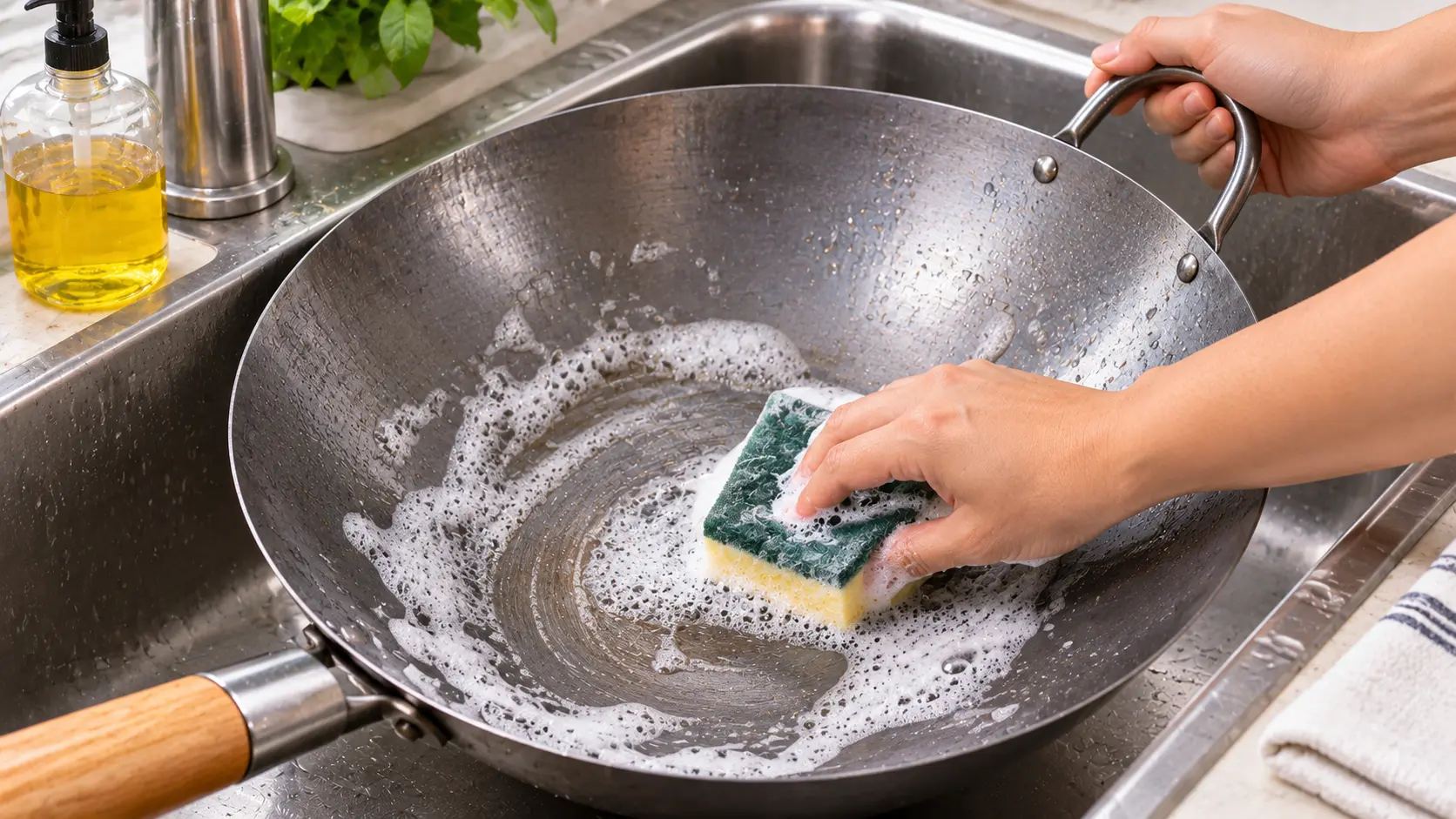
Remove the Factory Protective Coating
If the manufacturer confirms that the wok has a removable protective coating, follow the recommended cleaning procedure before seasoning.
- Place the wok in a clean sink and rinse it with warm water.
- Add a small amount of dish soap if recommended for removing the factory coating.
- Scrub the inside and outside using an appropriate sponge or scrubber.
- Pay attention to the bottom, sloped sides, and areas around the handle connections.
- Rinse thoroughly to remove soap and loosened residue.
- Check the surface for any remaining protective material and repeat cleaning if necessary.
The goal is to prepare the metal surface according to the manufacturer’s instructions, not to remove an intentional factory treatment or existing seasoning layer.
Dry the Wok Completely
After cleaning, dry the wok immediately using a clean towel. Pay attention to the bottom, interior sides, handle connections, and any areas where water can collect.
Place the wok over low to moderate heat for a short time if necessary to evaporate remaining moisture. Allow it to become completely dry before proceeding to the seasoning process.
This step matters because exposed carbon steel can develop rust when water remains on its surface. Do not pour cold water into a hot wok to speed up cooling or cleaning, as sudden temperature changes can damage or warp the cookware.
How to Season a Carbon Steel Wok Step by Step
Once your wok is clean and ready, you can begin the seasoning process. The exact heating method depends on whether the wok is untreated or already has a factory surface treatment, as well as the type of stove you are using.
The following method is intended for an untreated carbon steel wok that requires initial oil seasoning. If your manufacturer provides a different process, follow those instructions instead.
Step 1: Heat the Clean, Dry Wok
Place the clean, completely dry wok on a compatible burner. Begin heating it gradually according to the manufacturer’s recommended method.
For some untreated carbon steel woks, the traditional initial process involves heating the bare metal until the surface develops a blue-gray color. This process is commonly called bluing. It helps prepare the metal surface, but it is not the same as building the oil-based seasoning layer.
On a gas burner, the heat can reach different areas of the wok as you carefully reposition it. Avoid exposing the handle to excessive heat, especially if it contains wood, plastic, or other heat-sensitive materials.
Do not automatically use maximum heat. Excessive or uneven heating can damage cookware, cause warping, or create dangerous conditions. Follow the manufacturer’s heating recommendations and maintain suitable ventilation.
Step 2: Apply a Very Thin Layer of Oil
After the preparation and initial heating steps recommended for your wok, apply a small amount of suitable cooking oil to the interior surface.
- Allow the wok to reach a safe temperature for oil application according to the chosen method.
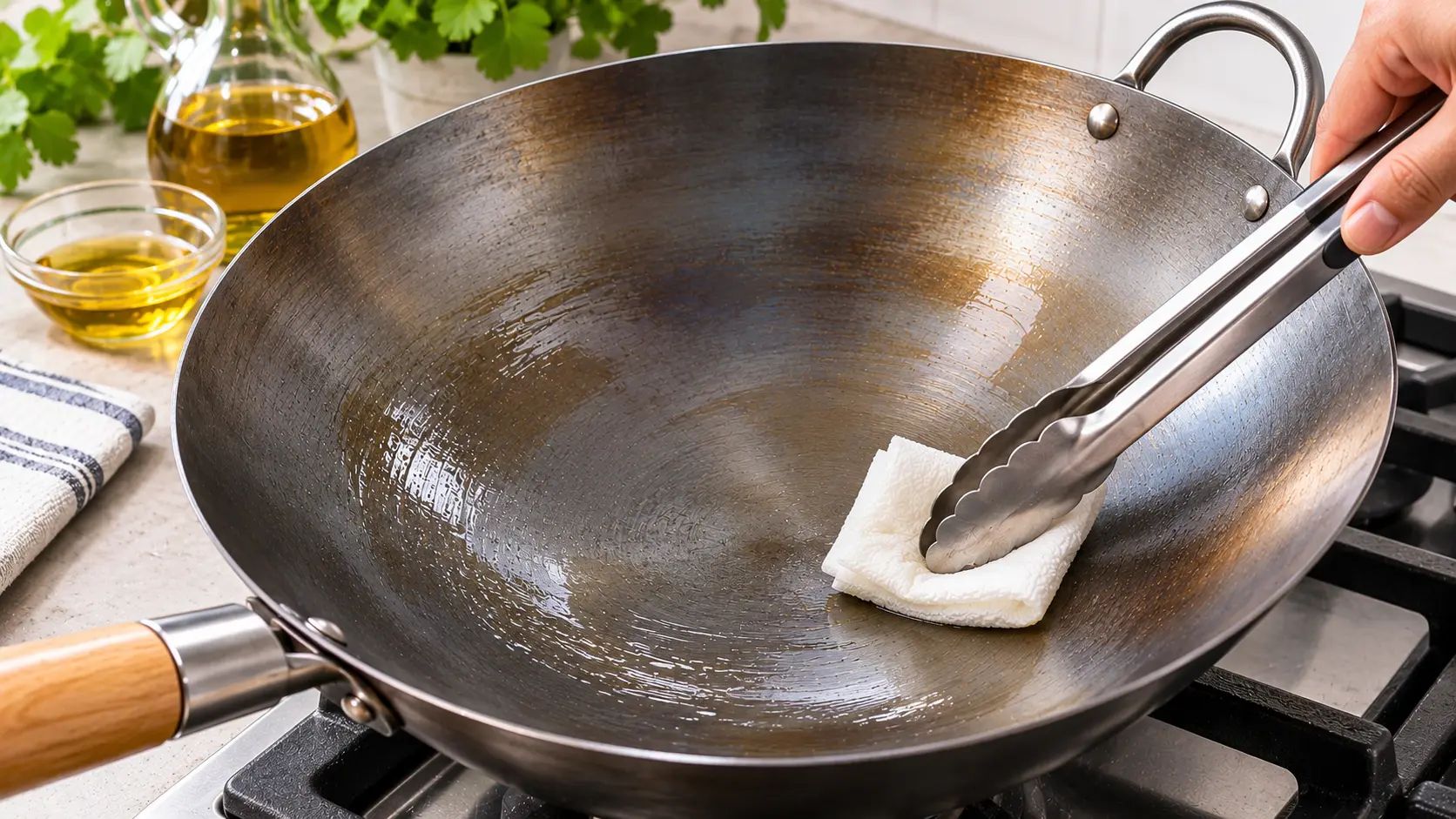
- Place a few drops of oil onto a folded paper towel.
- Use long tongs to spread the oil carefully across the bottom.
- Continue wiping the sloped sides to distribute the oil evenly.
- Use a clean section of paper towel to remove visible excess oil.
The finished surface should have an extremely thin film rather than a wet or greasy appearance. Too much oil can create a sticky, uneven layer instead of a smooth seasoning surface.
Step 3: Heat the Oil Until It Forms a Seasoning Layer
Return the wok to the burner and heat it according to the manufacturer’s recommended seasoning method. The oil may begin to produce light smoke as the surface temperature rises and the oil undergoes chemical changes.
Keep the kitchen ventilation running and observe the surface carefully. The goal is to form a thin, bonded layer rather than allow oil to collect, burn excessively, or ignite.
Once the oil has been heated sufficiently, remove the wok from the burner and allow it to cool safely. Do not touch the metal surface to check whether the seasoning has formed.
Step 4: Season the Sloped Sides
The sides of a wok are important because food moves between the hotter bottom and the surrounding cooking surface during stir-frying. A properly maintained seasoning layer should gradually develop across the interior rather than remain limited to the center.
When using a suitable gas burner and following a method that allows side heating, carefully tilt and rotate the wok so different sections receive heat. Use heat-resistant gloves and keep the wok stable.
On electric and induction cooktops, the heating pattern may be concentrated around the flat base. Do not assume that moving the wok around will heat the sides in the same way as an open flame. The correct approach depends on the wok design and cooktop compatibility.
Step 5: Repeat the Seasoning Process
After the wok has cooled sufficiently, inspect the surface. If the manufacturer recommends multiple seasoning applications, apply another extremely thin layer of oil and repeat the heating process.
Each application should be thin and evenly distributed. Avoid pouring additional oil over a surface that already looks wet or sticky.
Some manufacturer methods recommend several applications before the first cooking session, while pre-seasoned cookware may require little or no additional initial seasoning. Follow the instructions for your specific wok rather than assuming that every model needs the same number of layers.
Step 6: Let the Wok Cool and Inspect the Surface
Turn off the burner and allow the wok to cool naturally on a stable, heat-resistant surface. Avoid placing it under cold running water or exposing it to sudden temperature changes.
Once cool, inspect the cooking surface. A properly formed initial seasoning layer should feel dry rather than greasy or tacky. Some variation in color is normal, particularly when seasoning a new wok for the first time.
If the surface feels sticky, it may indicate that too much oil was applied or that the oil did not form a suitable layer. Correcting the problem is easier before you begin regular cooking.
How to Season a Carbon Steel Wok on Different Stovetops
You do not need a traditional gas stove to season a carbon steel wok. However, the heating method can vary depending on your cooktop and the shape of your wok. Gas burners, electric stoves, and induction cooktops distribute heat differently, which affects how easily you can season the bottom and sloped sides.
Before choosing a method, check whether your wok is compatible with your cooktop. A flat-bottom carbon steel wok is generally more suitable for electric and induction cooking than a traditional round-bottom model.
Seasoning a Wok on a Gas Stove
A gas stove is a convenient option for seasoning many traditional carbon steel woks because the open flame can heat areas beyond the flat bottom. This makes it easier to develop seasoning across the curved sides.
- Place the clean, dry wok securely over a compatible gas burner.
- Begin heating gradually according to the manufacturer’s instructions.
- Apply a very thin layer of suitable cooking oil.
- Carefully reposition the wok, if its design and handles allow, so different sections of the interior receive heat.
- Maintain suitable ventilation while heating the oil layer.
- Allow the wok to cool before inspecting the surface.
Do not hold the wok at an unstable angle or allow the handle to approach the flame. If your wok has a heat-sensitive handle, follow its specific handling instructions.
Seasoning a Wok on an Electric Stove
Electric coil and glass-ceramic cooktops can also be used to season compatible carbon steel woks. A flat-bottom design is important because it provides stable contact with the heating element.
Unlike a gas burner, an electric heating element does not normally wrap around the curved sides of the wok. As a result, the bottom may develop seasoning more quickly than the upper walls.
For an electric stove:
- Use a flat-bottom wok designed for your cooktop.
- Clean and dry it according to the manufacturer’s instructions.
- Apply an extremely thin layer of cooking oil.
- Heat the wok at the recommended setting rather than automatically using maximum power.
- Allow the base to heat evenly and follow the manufacturer’s method for treating the sides.
On a glass or ceramic cooktop, lift the wok rather than dragging it across the surface. This helps prevent scratches and damage to the cooking surface.
Seasoning a Wok on an Induction Cooktop
Induction cooking works by generating heat in compatible magnetic cookware. Carbon steel is generally suitable for induction, but the wok must have a base that makes stable contact with the cooktop.
A flat-bottom induction-compatible wok is usually the practical choice. The base receives direct heating, while the upper sides may remain cooler because they do not contact the induction surface.
To season on induction:
- Confirm that your wok is specifically compatible with induction cooking.
- Make sure the flat base sits securely on the cooking zone.
- Follow the manufacturer’s recommended initial seasoning method.
- Use controlled heat rather than leaving an empty, thin wok on maximum induction power.
- Allow sufficient time for the base to heat without overheating or warping the metal.
- Follow an approved method for developing seasoning on the sides if necessary.
Do not assume that every induction-compatible wok can be seasoned in exactly the same way. The thickness, base design, and manufacturer’s instructions all matter.
Can You Season a Carbon Steel Wok in the Oven?
Oven seasoning may be an alternative for some carbon steel woks because the enclosed heating environment can expose more of the cookware to heat. However, this method is only appropriate when the manufacturer confirms that the complete wok, including its handles and attachments, is oven-safe at the required temperature.
Before using an oven, check the manufacturer’s maximum temperature rating and whether the handle material can tolerate prolonged heating. Wooden, plastic, and other heat-sensitive components may make oven seasoning unsuitable.
If the wok is approved for oven use, follow the manufacturer’s specific preparation, oil application, temperature, and cooling instructions. Do not assume that a generic oven seasoning temperature is safe for every wok.
How to Tell If Your Carbon Steel Wok Is Properly Seasoned
After completing the initial seasoning process, inspect the wok before using it for cooking. A successful seasoning layer does not necessarily look perfectly black or uniform. Carbon steel naturally changes color as it is heated and as oil-based seasoning develops.
What a Newly Seasoned Wok Should Look Like
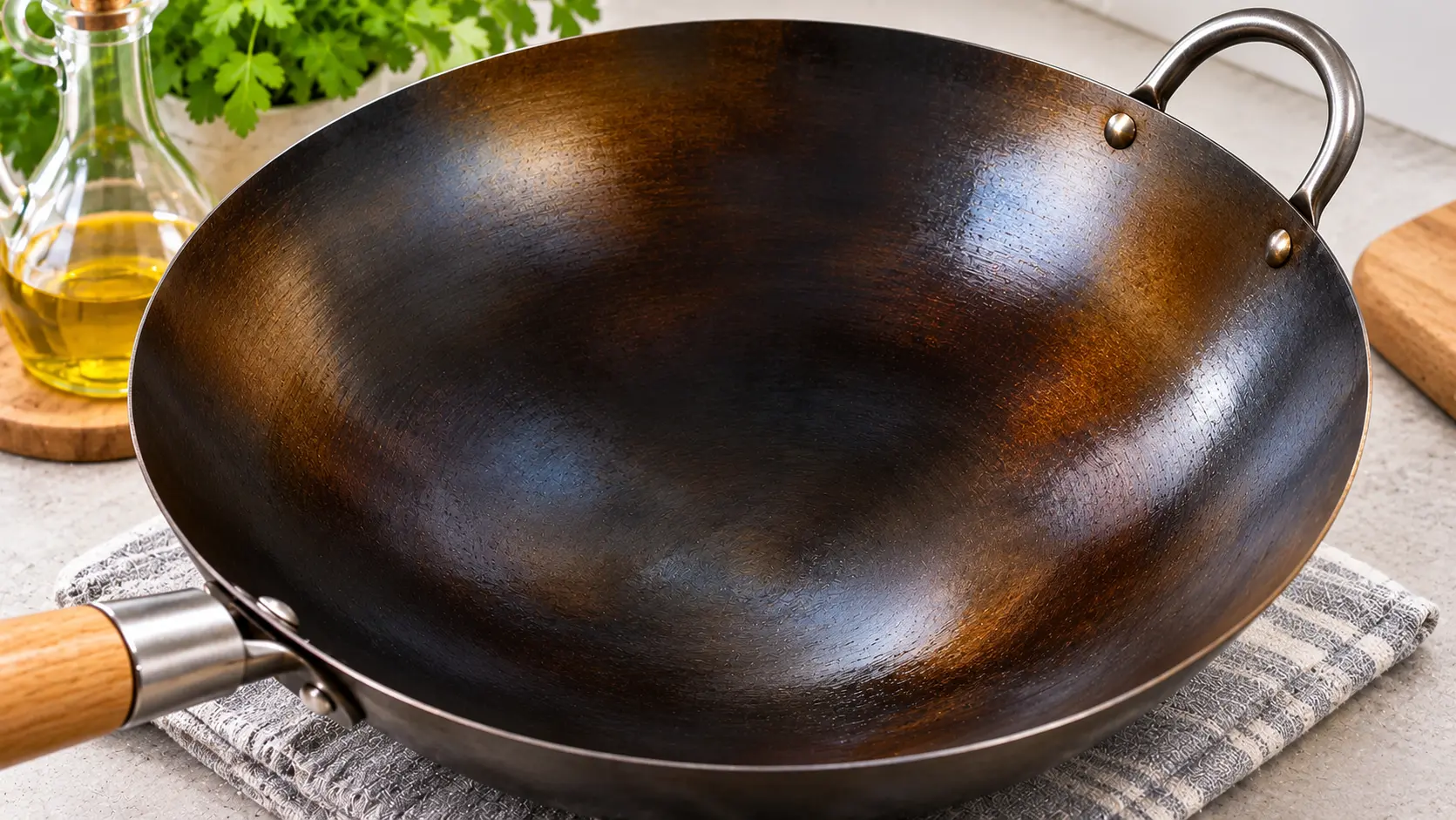
A newly seasoned carbon steel wok may have a combination of bronze, brown, blue-gray, and darker areas. The exact appearance depends on the original metal surface, heating method, oil, and number of seasoning applications.
Look for these general characteristics:
- The surface should not have visible pools of oil.
- The wok should not feel greasy or wet after cooling.
- The seasoning should not have thick, gummy deposits.
- The metal may show different shades rather than one consistent color.
- The cooking surface should feel reasonably smooth without loose flakes.
Remember that initial seasoning is only the beginning. A deeper patina normally develops as the wok is used and maintained over time.
Why Your Wok May Not Turn Completely Black
A new carbon steel wok does not need to become completely black after its first seasoning session. The metal may initially appear silver, blue, bronze, or brown in different areas.
These color changes can result from heating and the development of oil-based seasoning. Areas receiving more heat or more consistent oil coverage may darken faster than others.
Do not keep applying thick layers of oil simply to achieve a uniform black appearance. A patchy but dry and stable initial patina can be perfectly acceptable.
Does Seasoning Make a Wok Completely Nonstick?
No. Seasoning does not turn carbon steel into the same type of cookware as a commercially manufactured nonstick pan. Instead, it creates a protective cooking surface that can become increasingly resistant to sticking as the patina develops.
Cooking technique still matters. Even a well-seasoned wok may cause food to stick if it is not preheated appropriately, if ingredients are added too early, or if the cooking surface becomes overcrowded.
For better results, allow the wok to preheat according to the cooking method, add an appropriate amount of cooking oil, and avoid placing large quantities of cold, wet ingredients into the pan at once.
Common Carbon Steel Wok Seasoning Problems and How to Fix Them
Not every first seasoning attempt produces a perfectly smooth surface. Sticky patches, uneven coloring, and small rust spots are common problems that can often be corrected without replacing the wok.
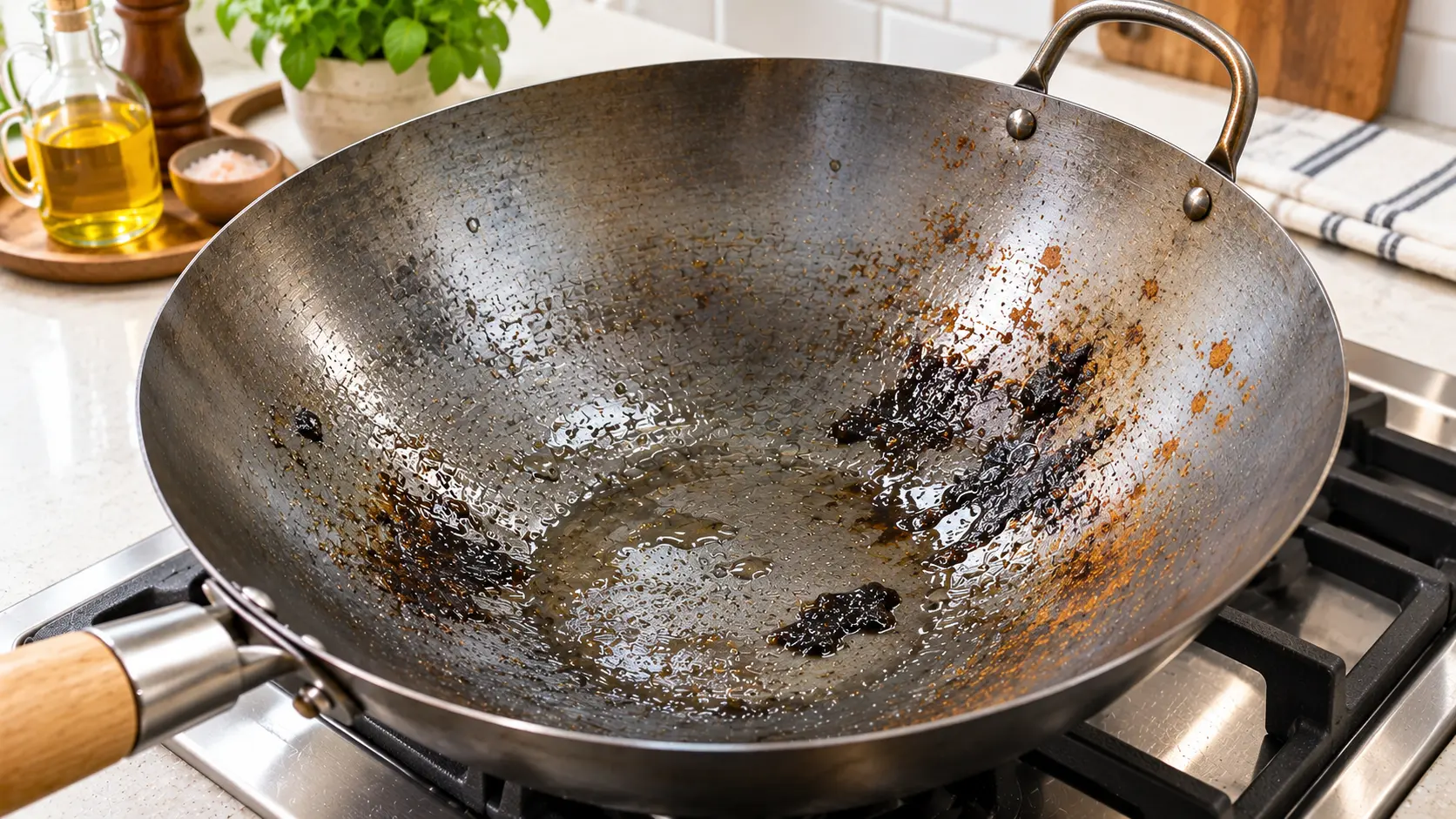
Why Is My Carbon Steel Wok Sticky After Seasoning?
A sticky or gummy surface usually indicates that too much oil was applied or that the oil did not heat sufficiently to form a stable seasoning layer.
When a thick layer of oil is heated, it may become uneven and leave a tacky residue instead of a smooth protective film.
To correct the problem:
- Allow the wok to cool completely.
- Clean the sticky areas using an appropriate sponge or scrubber.
- Remove the loose or gummy oil buildup without unnecessarily stripping sound seasoning.
- Rinse and dry the wok thoroughly.
- Apply a much thinner layer of suitable oil.
- Repeat the heating process according to the manufacturer’s instructions.
Why Is My Wok Seasoning Uneven?
Uneven coloring can occur when different areas of the wok receive different amounts of heat or oil. This is especially common when seasoning a wok on electric or induction cooktops, where the base heats more directly than the sides.
Uneven color does not automatically mean the seasoning has failed. If the surface is dry, stable, and free from loose residue, regular cooking may gradually improve its appearance.
If some areas remain bare, clean and dry the affected sections, apply a thin layer of oil, and heat them using a suitable method.
What Should You Do If Your Wok Develops Rust?
Rust usually appears when moisture remains on exposed carbon steel or when the protective seasoning layer has been damaged.
Small surface rust spots can often be corrected through cleaning and reseasoning.
- Wash the affected area and remove surface rust with a suitable non-damaging abrasive scrubber.
- Continue cleaning until loose rust has been removed.
- Rinse away any residue.
- Dry the wok completely, including the affected area.
- Apply a very thin layer of cooking oil.
- Heat the area using the manufacturer’s recommended seasoning method.
If rust is extensive, the metal is deeply pitted, or the cookware has structural damage, inspect it carefully and consult the manufacturer before continuing to use it.
How to Fix Peeling or Flaking Seasoning
Peeling or flaking usually indicates that the seasoning layer has become unstable. Thick oil applications, uneven heating, or buildup over an already damaged surface can contribute to this problem.
To restore the wok, remove loose seasoning and any unstable residue using a suitable scrubber. Clean the surface, rinse it, and dry it thoroughly. Then rebuild the protective layer using thin oil applications and controlled heating.
There is no need to strip the entire wok if only a small area is damaged and the remaining seasoning is firmly attached.
How to Maintain Your Carbon Steel Wok After Seasoning
Initial seasoning is not a one-time solution that eliminates all future maintenance. Carbon steel needs to be cleaned, dried, and protected after cooking to help prevent rust and preserve the developing patina.
How to Clean a Seasoned Carbon Steel Wok
Clean the wok after cooking while paying attention to the condition of its seasoning. For ordinary food residue, warm water and a suitable sponge or soft brush are often sufficient.
- Allow the wok to cool enough to handle safely.
- Remove leftover food and loose cooking residue.
- Wash with warm water and a suitable sponge or brush.
- Use a small amount of dish soap when needed, following the manufacturer’s care instructions.
- Rinse away all remaining residue.
- Dry the wok immediately with a clean towel.
Routine cleaning should not involve unnecessarily aggressive scrubbing. However, occasional soap use does not automatically destroy properly formed seasoning. Follow your wok manufacturer’s cleaning recommendations.
How to Dry and Oil Your Wok After Every Use
Drying is one of the most important parts of carbon steel wok maintenance. Unlike stainless steel, bare carbon steel can develop rust when moisture remains on its surface.
After washing, wipe the inside and outside of the wok with a clean towel. If necessary, place it over low heat briefly to evaporate remaining moisture.
Once dry, wipe a few drops of suitable cooking oil over the cooking surface. Remove visible excess oil before storing the wok.
This simple routine helps protect the metal between cooking sessions without requiring a complete seasoning process after every use.
How Often Should You Reseason a Carbon Steel Wok?
There is no fixed reseasoning schedule for every carbon steel wok. The frequency depends on how often you cook, the foods you prepare, how you clean the cookware, and the condition of its seasoning.
A wok that is regularly used and properly maintained may only need occasional touch-ups. If food starts sticking more than usual, the surface becomes patchy, or rust appears, inspect the affected area and restore the seasoning where necessary.
You do not need to repeat the complete initial seasoning process after every meal. Regular cleaning, thorough drying, and appropriate oil maintenance are usually more important.
Foods That Help Build a Better Wok Patina
Regular cooking with suitable amounts of cooking oil can gradually help develop the seasoning layer. Stir-fried vegetables, chicken, and other foods prepared with cooking fat can contribute to the natural maintenance of the cooking surface.
During the early stages of seasoning, avoid prolonged cooking of highly acidic foods, such as tomato-heavy sauces, because acidity can weaken a developing patina. Once the seasoning becomes more established, occasional acidic ingredients may be less problematic, but prolonged exposure should still be avoided when possible.
What to Cook First in a Newly Seasoned Carbon Steel Wok
After the initial seasoning process, choose a relatively forgiving dish that allows you to become familiar with how your wok heats and releases food. A simple stir-fry with a suitable amount of cooking oil is a practical starting point.
Easy Stir-Fry Dishes for a Newly Seasoned Wok
Simple chicken and vegetable stir-fries are useful first dishes because they allow you to practice preheating, managing moisture, and cooking ingredients in batches.
- Easy Chicken Stir-Fry – A straightforward introduction to cooking chicken and vegetables in a wok.
- Chicken and Broccoli Stir-Fry – A useful option for practicing cooking vegetables and protein together.
- Chicken and Vegetable Stir-Fry – A flexible dish for learning how to manage different ingredient cooking times.
These are recipe suggestions rather than special seasoning treatments. Follow each recipe’s cooking instructions and use an appropriate amount of oil.
Tips for Preventing Food From Sticking During Your First Cook
- Preheat appropriately: Give the wok enough time to heat before adding cooking oil.
- Use sufficient cooking oil: A newly seasoned wok may need more cooking fat than a mature, well-developed one.
- Avoid overcrowding: Cook in smaller batches when necessary so ingredients can cook rather than release excess moisture into the pan.
- Dry ingredients when appropriate: Excess surface moisture can interfere with browning and increase sticking.
- Allow food to release naturally: Avoid constantly moving ingredients before they have had enough contact with the hot cooking surface.
If you want to improve your stir-frying technique, see our guide to essential stir-fry cooking techniques.
Frequently Asked Questions About Seasoning a Carbon Steel Wok
Do you need to season a carbon steel wok before first use?
It depends on the wok. Untreated carbon steel woks generally need initial seasoning, while some products arrive pre-seasoned or have special factory-applied treatments. Check the manufacturer’s instructions before cleaning or applying heat.
What is the best oil to season a carbon steel wok?
Neutral refined oils such as canola, grapeseed, refined peanut, and vegetable oil are commonly used. Choose an oil suitable for high-temperature cooking and follow the cookware manufacturer’s recommendations.
How many layers of seasoning does a carbon steel wok need?
The number of applications depends on the wok and its seasoning instructions. Some manufacturers recommend several thin applications, while pre-seasoned models may need little additional preparation. Thin, even layers are more important than applying excessive oil.
Why is my carbon steel wok sticky after seasoning?
A sticky surface usually indicates that too much oil was applied or that the oil did not heat sufficiently. Remove the gummy buildup, clean and dry the wok, and repeat the process using a much thinner oil film.
Can you season a carbon steel wok on an induction stove?
Yes, if the wok is compatible with induction and has a suitable flat base. The bottom generally receives more direct heat than the sides, so follow the manufacturer’s instructions for seasoning the entire cooking surface.
How do you know when a carbon steel wok is properly seasoned?
A properly seasoned wok should have a dry, stable cooking surface without greasy residue, sticky patches, or loose flakes. Its color may range from brown and bronze to dark gray or black. A perfectly uniform black appearance is not required.
References
Final Thoughts
Learning how to season a carbon steel wok properly is an important step toward getting the best performance from your cookware. The process begins with identifying the factory finish, preparing the metal correctly, applying a thin layer of suitable oil, and heating it according to the manufacturer’s instructions.
Do not worry if your new wok does not immediately develop a perfectly black or completely nonstick surface. Its patina will continue to improve with appropriate cooking, cleaning, drying, and occasional seasoning touch-ups.
With consistent care and the right cooking techniques, your carbon steel wok can become a reliable tool for preparing chicken stir-fries, vegetable dishes, and many other meals at home.
🍽️ You Might Also Like


📧 Save This Recipe For Later
Enter your email and we will send this recipe directly to your inbox.