
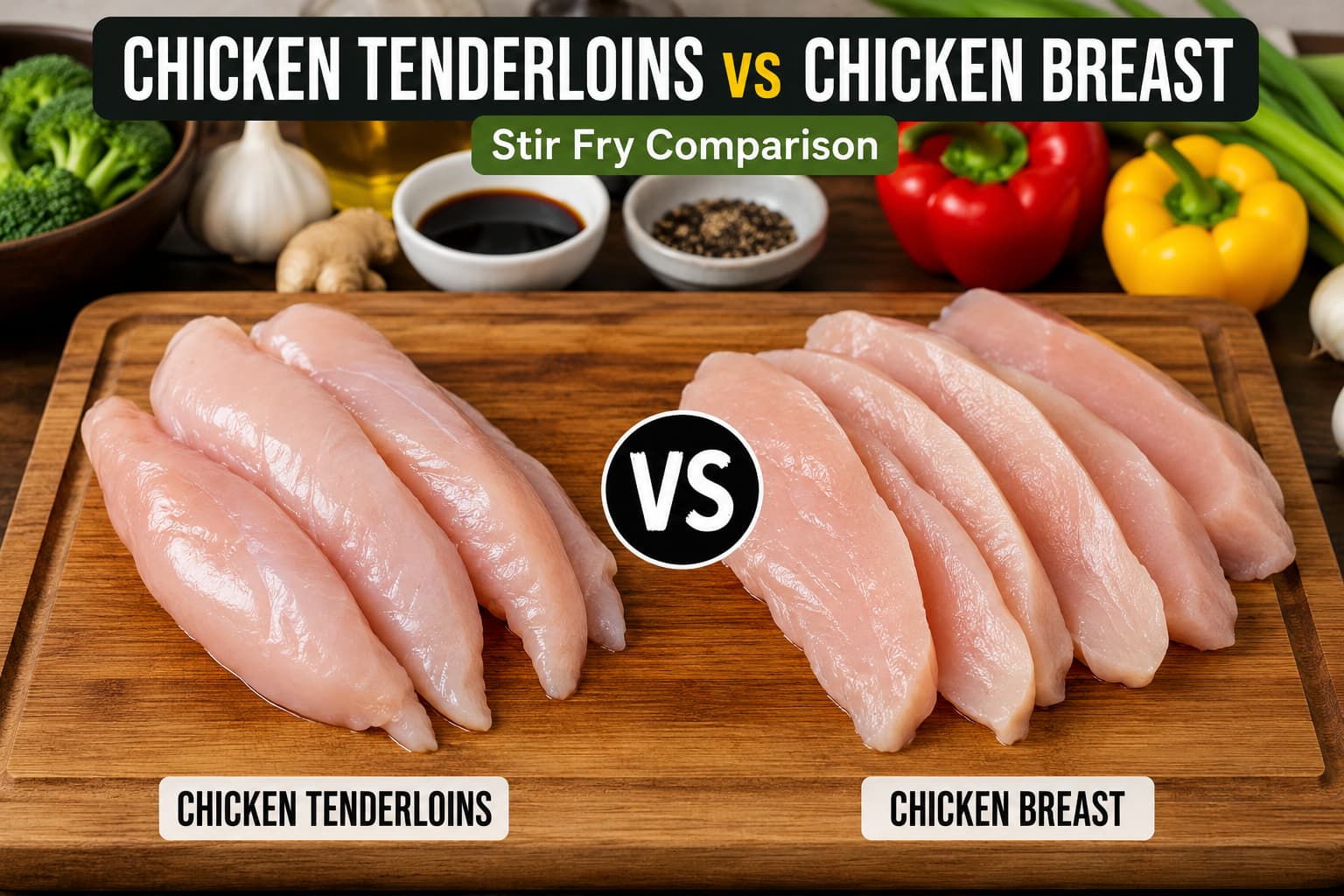
Chicken Tenderloins vs. Chicken Breast for Stir Fry
Chicken Tenderloins vs. Chicken Breast for Stir Fry: Which One Should You Choose?
When planning a homemade chicken stir fry, one of the first decisions you’ll make is choosing the right cut of chicken. Many recipes simply call for “chicken,” but experienced home cooks know that not every cut performs the same in a hot wok. If you’ve ever wondered about chicken tenderloins vs chicken breast, you’re asking an important question that can affect the texture, flavor, cooking time, and overall success of your meal.
Both cuts are lean white meat, high in protein, and commonly available at grocery stores throughout the United States. At first glance, they look similar enough that many shoppers assume they’re interchangeable. While they can often be substituted for one another, there are meaningful differences that become noticeable once they hit the pan.
Chicken tenderloins are naturally softer and slightly more forgiving when cooked over high heat. Chicken breasts, on the other hand, are larger, more versatile, and usually cost less per pound. Understanding these differences helps you choose the cut that best fits your cooking style, budget, and favorite stir fry recipes.
In this complete comparison, you’ll learn how chicken tenderloins vs chicken breast differ in tenderness, flavor, nutrition, cooking performance, cost, food safety, meal prep, and more. By the end of this guide, you’ll know exactly which cut is the better choice for your next stir fry—and how to cook either one perfectly.
Quick Answer
Chicken tenderloins vs chicken breast: Chicken tenderloins are naturally more tender, cook a little faster, and are less likely to dry out, making them ideal for beginners and quick weeknight meals. Chicken breast is lean, economical, easy to portion, and provides excellent value for most stir fry recipes. When sliced thinly across the grain and cooked over high heat, both cuts can produce juicy, flavorful stir fry. For most home cooks, chicken breast offers the best balance of price and versatility, while tenderloins are the better choice when tenderness is the highest priority.
Table of Contents
What Is the Difference Between Chicken Tenderloins and Chicken Breast?
The biggest misconception about chicken tenderloins vs chicken breast is that they’re completely different parts of the chicken. In reality, they’re closely connected.
A chicken breast is the large pectoral muscle located on either side of the bird’s chest. It’s the most popular boneless cut sold in grocery stores because it’s lean, versatile, and easy to prepare. Chicken breast can be grilled, baked, roasted, fried, or sliced into strips for stir fry.
A chicken tenderloin, sometimes called the chicken tender, is a smaller strip of muscle attached underneath each chicken breast. Because this muscle performs very little work during the bird’s lifetime, it has finer muscle fibers and a softer texture. Every chicken has only two tenderloins, which partly explains why they’re often more expensive than breast meat.
Although both cuts come from the same area of the chicken, their size, texture, and cooking characteristics are noticeably different. Those differences become especially important in fast-cooking recipes like stir fry, where every minute matters.
| Feature | Chicken Tenderloins | Chicken Breast |
|---|---|---|
| Location | Small muscle beneath the breast | Main breast muscle |
| Texture | Very tender | Firm and lean |
| Size | Small strips | Large pieces |
| Preparation | Minimal slicing | Requires slicing |
| Cooking Speed | Slightly faster | Fast when sliced thin |
| Typical Cost | Higher | Lower |
Neither cut is objectively better. Instead, choosing between chicken tenderloins vs chicken breast depends on what you value most. If convenience and tenderness are your priorities, tenderloins have the advantage. If you want maximum versatility and lower cost, chicken breast is usually the smarter option.
Tip: Whether you choose chicken tenderloins or chicken breast, always slice the meat into evenly sized pieces before stir frying. Uniform pieces cook at the same rate, helping prevent dry or undercooked chicken.
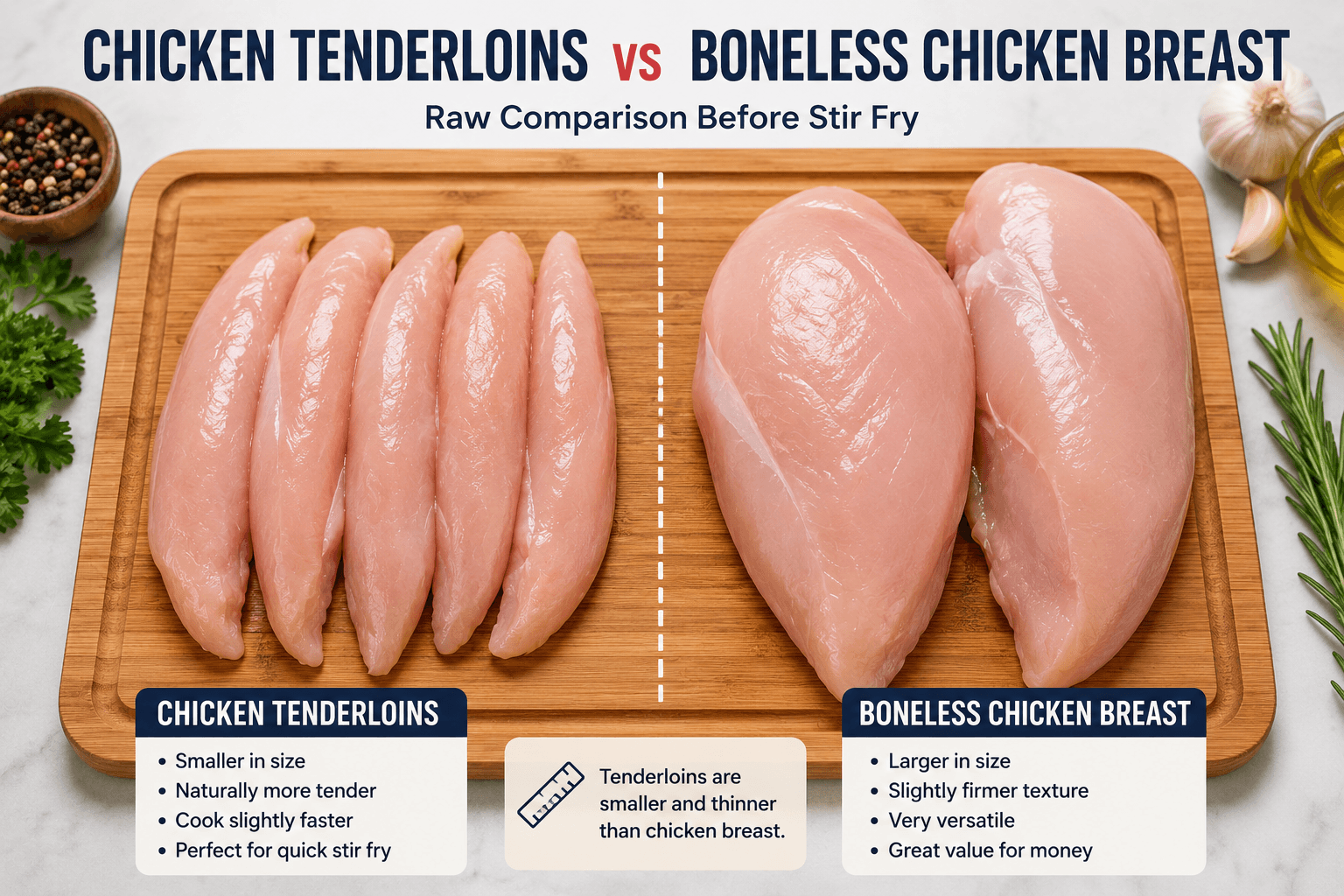
Chicken Tenderloins vs Chicken Breast: Side-by-Side Comparison
Looking at both cuts side by side makes it much easier to understand where each one excels. While they share many nutritional similarities, their cooking performance and overall value differ enough that experienced cooks often choose one over the other depending on the recipe.
For example, someone preparing a quick weeknight dinner may appreciate the convenience of chicken tenderloins because they require very little trimming or slicing. A family preparing several meals for the week, however, will usually save money by purchasing larger chicken breasts and slicing them into uniform strips.
The following comparison highlights the most important differences you’ll notice in everyday cooking.
| Category | Chicken Tenderloins | Chicken Breast |
|---|---|---|
| Tenderness | Excellent | Very Good |
| Flavor | Mild | Mild |
| Cooking Time | 5–7 minutes | 6–8 minutes (thinly sliced) |
| Ease of Preparation | Very Easy | Requires slicing |
| Meal Prep | Good | Excellent |
| Cost | Higher | More Budget-Friendly |
| Availability | Sometimes Limited | Widely Available |
| Best For | Quick Meals | Everyday Cooking |
As this comparison shows, neither option is universally better. The choice between chicken tenderloins vs chicken breast depends on what matters most to you. If you value convenience and naturally tender meat, tenderloins are an excellent option. If you’re cooking for a family, meal prepping, or trying to save money, chicken breast is usually the better investment.
Another advantage of chicken breast is its flexibility. A single breast can be sliced into thin strips for stir fry, cubed for soups, grilled whole, or shredded for salads and sandwiches. Tenderloins are more specialized. They’re fantastic for fast cooking but don’t offer the same variety of portion sizes.
If you’re still deciding which cut works best for your favorite stir fry recipe, think about how you’ll be cooking. A blazing hot wok, a large skillet, or a flat-top griddle all benefit from evenly cut pieces that cook quickly without drying out.
Kitchen Secret: Many restaurant chefs choose chicken breast for stir fry, not because it’s naturally more tender, but because it creates consistent slices. After velveting, properly sliced chicken breast becomes incredibly juicy while remaining more economical than tenderloins.
Texture and Tenderness
Texture is one of the biggest reasons people compare chicken tenderloins vs chicken breast. Since stir fry cooks over very high heat in just a few minutes, the texture of the finished chicken can vary dramatically depending on the cut and cooking technique.
Chicken tenderloins are naturally soft because they come from a muscle that performs very little work during the chicken’s lifetime. Less muscle activity means finer muscle fibers, which translate into a tender bite even with minimal preparation.
Chicken breast contains slightly larger muscle fibers, giving it a firmer texture. However, this shouldn’t discourage you from using it. When sliced thinly across the grain and cooked correctly, chicken breast becomes surprisingly tender while maintaining a pleasant bite that works exceptionally well in stir fry.
The most important factor isn’t necessarily choosing tenderloins over breast—it’s how you prepare whichever cut you buy. Proper slicing, marinating, and cooking over high heat have a much greater impact on tenderness than the cut itself.
Professional chefs often emphasize knife skills because cutting across the muscle fibers shortens them. Shorter muscle fibers require less chewing, making each bite feel significantly more tender.
Many home cooks accidentally slice chicken with the grain instead of across it. This simple mistake can make even expensive chicken tenderloins seem tougher than expected.
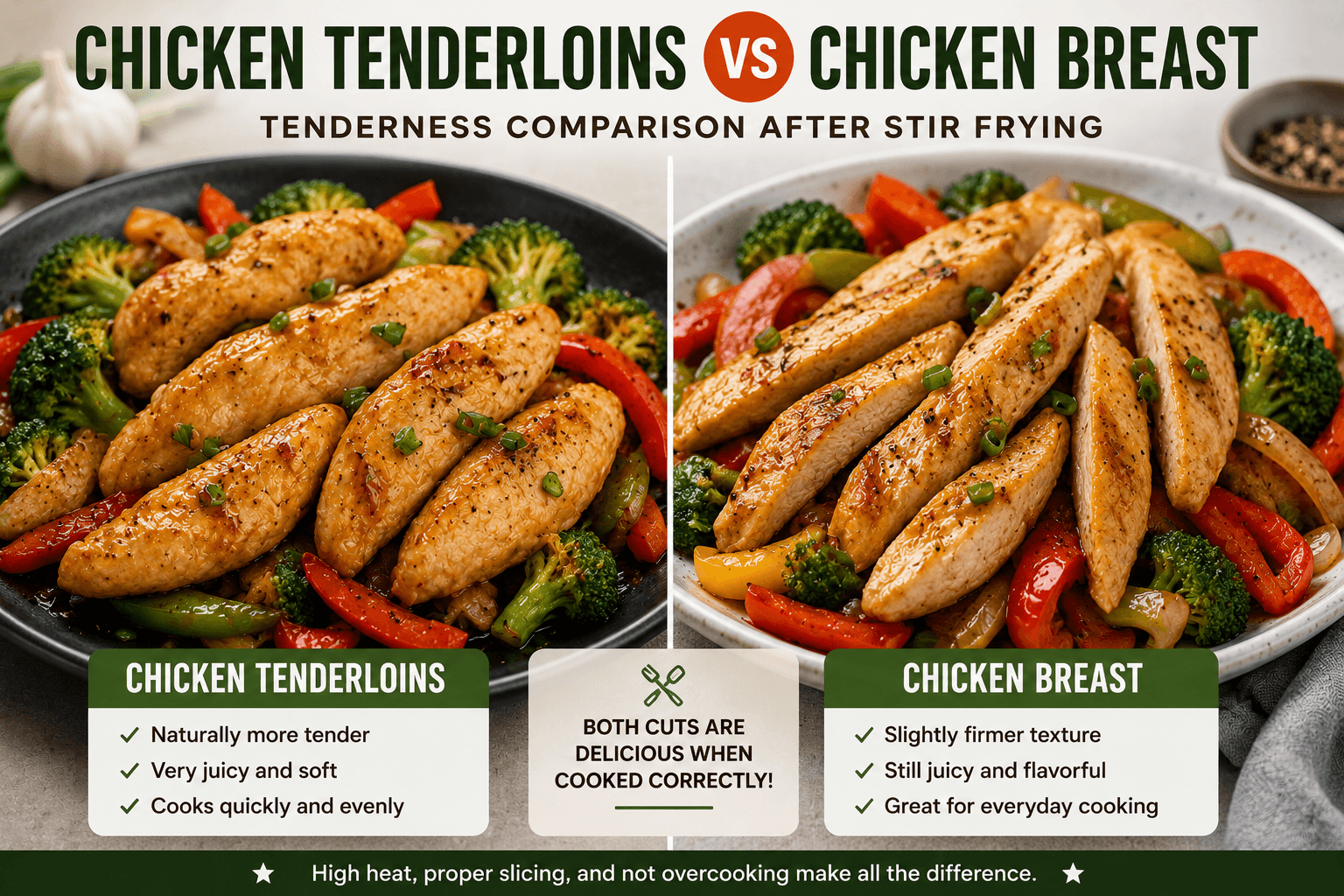
How Velveting Changes the Results
If you’ve ever wondered why restaurant stir fry chicken is so tender, the answer is often a technique called velveting.
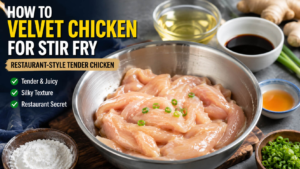
Velveting coats the chicken with a light mixture of cornstarch, liquid, and sometimes egg white before cooking. This coating creates a protective layer that helps the meat retain moisture during high-heat cooking.
Whether you’re comparing chicken tenderloins vs chicken breast, velveting dramatically improves both cuts. Tenderloins become exceptionally soft, while chicken breast develops a silky texture that closely resembles restaurant-quality stir fry.
If you regularly cook Asian-inspired dishes, learning this technique is one of the best ways to improve your results. You can find a complete step-by-step tutorial in our guide on How to Velvet Chicken for Stir Fry.
Another helpful technique is allowing the chicken to rest for a few minutes after marinating. This gives the seasoning time to penetrate the surface while helping the coating adhere more evenly during cooking.
Expert Tip: Slice chicken while it’s still slightly firm from the refrigerator. Chilled chicken is easier to cut into thin, even strips, which promotes faster and more even cooking in a stir fry.
Flavor Differences
One of the most common questions in the chicken tenderloins vs chicken breast debate is whether one cut tastes better than the other. The truth is that both cuts have a very mild flavor on their own. Because they’re lean white meat, neither has the rich taste associated with chicken thighs or drumsticks.
Instead, the final flavor of your stir fry depends much more on the marinade, seasoning, cooking method, and sauce than on whether you choose tenderloins or breast. Soy sauce, garlic, ginger, sesame oil, oyster sauce, hoisin sauce, and fresh vegetables contribute far more flavor than the chicken itself.
That said, there are a few subtle differences worth noting. Chicken tenderloins often feel slightly juicier because their finer muscle fibers retain moisture well during quick cooking. Chicken breast has a firmer bite, which many people enjoy because it stands up well to bold sauces and crisp vegetables.
For stir fry recipes loaded with vegetables, aromatics, and savory sauces, most people would have difficulty identifying which cut was used if both were cooked correctly.
Kitchen Secret: Marinating either cut for just 20 to 30 minutes before cooking makes a much bigger difference in flavor than choosing between chicken tenderloins and chicken breast.
Cooking Performance in Stir Fry
Cooking performance is where the comparison between chicken tenderloins vs chicken breast becomes especially important. Stir fry relies on extremely high heat and very short cooking times. Choosing a cut that cooks evenly without drying out can significantly improve your results.
Chicken tenderloins naturally cook a little faster because they’re smaller and thinner. In many cases, they can be added directly to the wok after a quick seasoning or marinade with minimal preparation.
Chicken breast requires one additional step: slicing. Fortunately, this extra minute of preparation pays off by producing evenly sized strips that brown beautifully and cook consistently.
Regardless of which cut you choose, avoid overcrowding the pan. Too much chicken lowers the temperature of the wok, causing the meat to steam instead of sear. That reduces browning and prevents the delicious caramelized flavors that make stir fry so satisfying.
| Cooking Factor | Chicken Tenderloins | Chicken Breast |
|---|---|---|
| Preparation Time | Very Short | Requires Slicing |
| Average Cook Time | 5–7 Minutes | 6–8 Minutes |
| Browning | Very Good | Excellent |
| Moisture Retention | Excellent | Very Good |
| Risk of Overcooking | Lower | Moderate |
| Best Pan | Wok or Skillet | Wok or Skillet |
A properly preheated wok should be hot enough that the chicken begins sizzling almost immediately after it touches the surface. This rapid cooking helps seal in moisture while creating light browning on the outside.
One mistake many beginners make is stirring continuously. Allowing the chicken to remain undisturbed for 30 to 60 seconds before flipping helps develop better color and flavor.
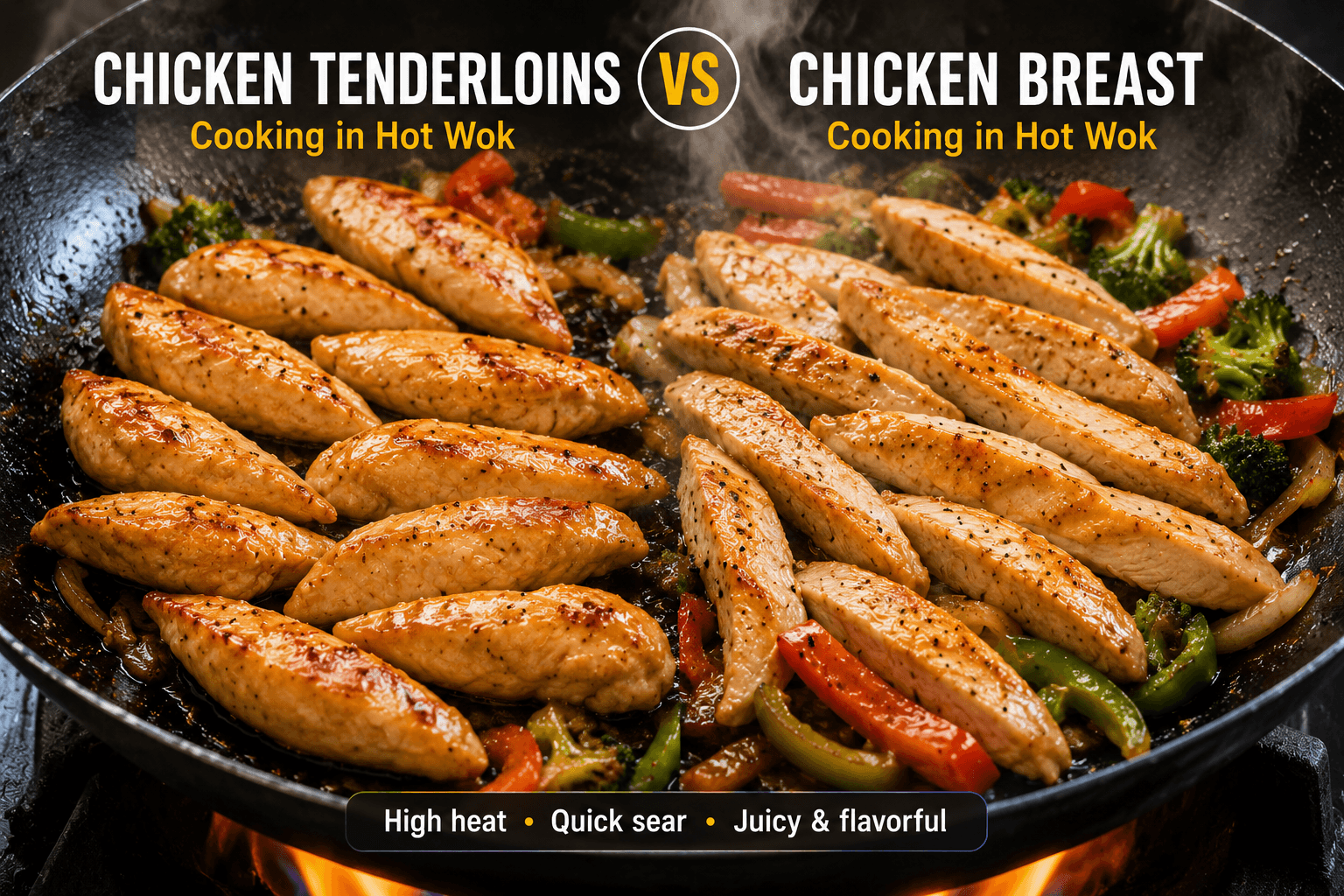
How to Prevent Dry Chicken
Whether you’re using chicken tenderloins or chicken breast, dryness is almost always caused by overcooking rather than the cut itself.
Chicken breast has a reputation for drying out because many home cooks leave it in the pan too long. Once the internal temperature reaches 165°F (74°C), continued cooking simply forces more moisture out of the meat.
Chicken tenderloins are a little more forgiving, but they can also become dry if left over high heat for too long.
To keep either cut juicy:
- Slice the chicken into even pieces.
- Pat it dry before marinating.
- Use high heat.
- Cook in small batches.
- Remove the chicken from the pan as soon as it’s fully cooked.
- Add it back only when combining with the sauce.
Warning: Never judge doneness by color alone. Always cook chicken to an internal temperature of 165°F (74°C) using a digital meat thermometer.
If you’re interested in mastering juicy stir fry every time, be sure to read our guides on How to Prevent Dry Chicken Stir Fry and Chicken Stir Fry Temperature.
Nutrition Comparison
From a nutritional standpoint, there is very little difference between chicken tenderloins vs chicken breast. Since tenderloins are simply a smaller muscle attached to the breast, both cuts provide nearly identical amounts of protein, calories, and fat.
Both are excellent choices for high-protein meals, weight management, and healthy stir fry recipes. They also pair well with vegetables like broccoli, mushrooms, bell peppers, carrots, snap peas, and spinach, creating balanced meals rich in vitamins, minerals, and fiber.
| Nutrition (Per 100 g Cooked) | Chicken Tenderloins | Chicken Breast |
|---|---|---|
| Calories | Approximately 165 | Approximately 165 |
| Protein | 31 g | 31 g |
| Total Fat | 3–4 g | 3–4 g |
| Carbohydrates | 0 g | 0 g |
| Lean Protein | Excellent | Excellent |
For most people, the nutritional differences are too small to influence the decision. Instead, your choice between chicken tenderloins vs chicken breast should be based on cooking style, texture preferences, convenience, and budget rather than calories or protein.
Healthy Cooking Tip: Use plenty of colorful vegetables and a lighter sauce to make your stir fry more nutritious. The ingredients you add often have a greater impact on the meal’s nutrition than the chicken cut itself.
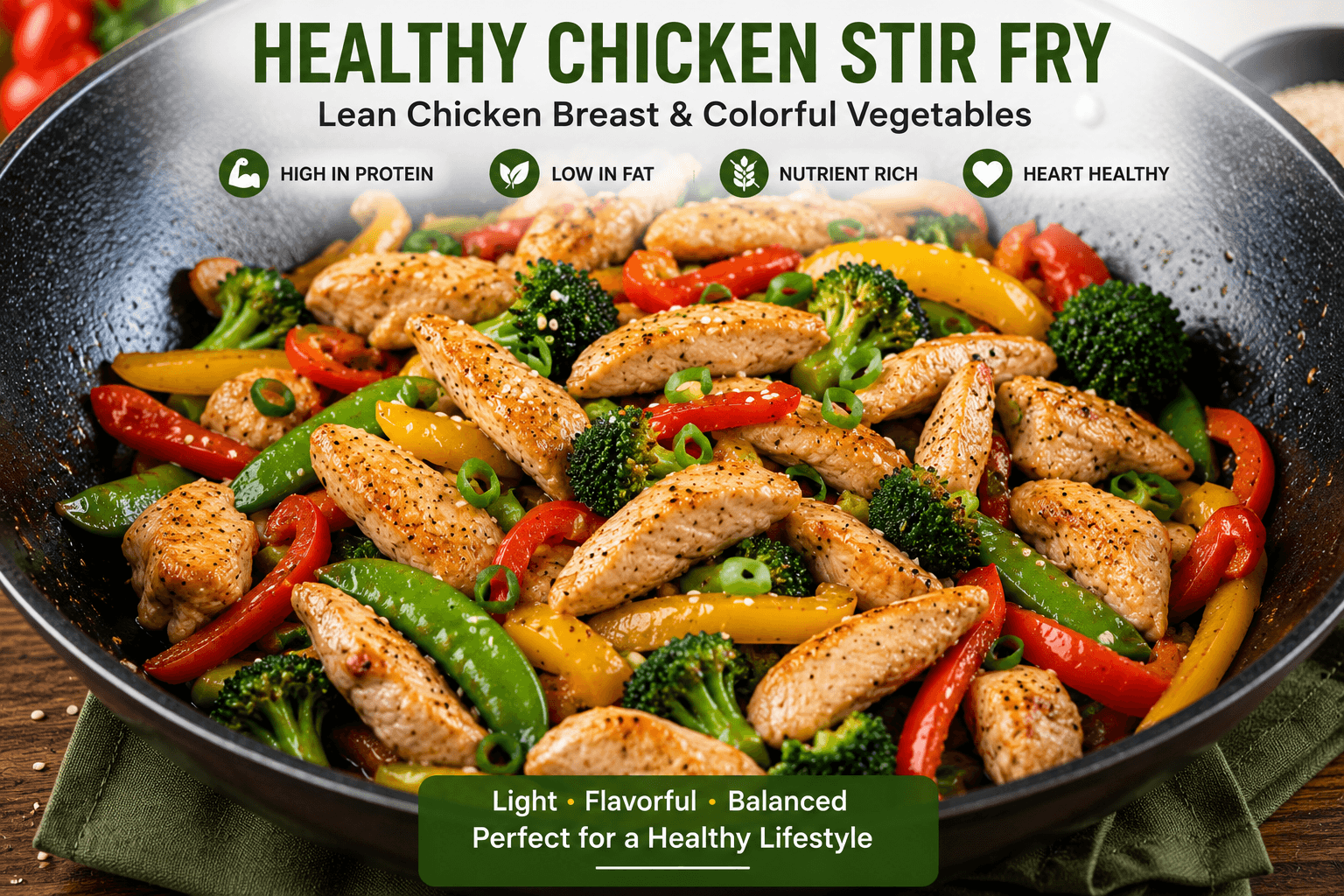
For example, pairing either cut with broccoli, bell peppers, mushrooms, and a light garlic-ginger sauce creates a meal that’s high in protein, rich in vitamins, and relatively low in calories. That’s one reason chicken stir fry remains a favorite among people looking for nutritious weeknight dinners.
Price and Overall Value
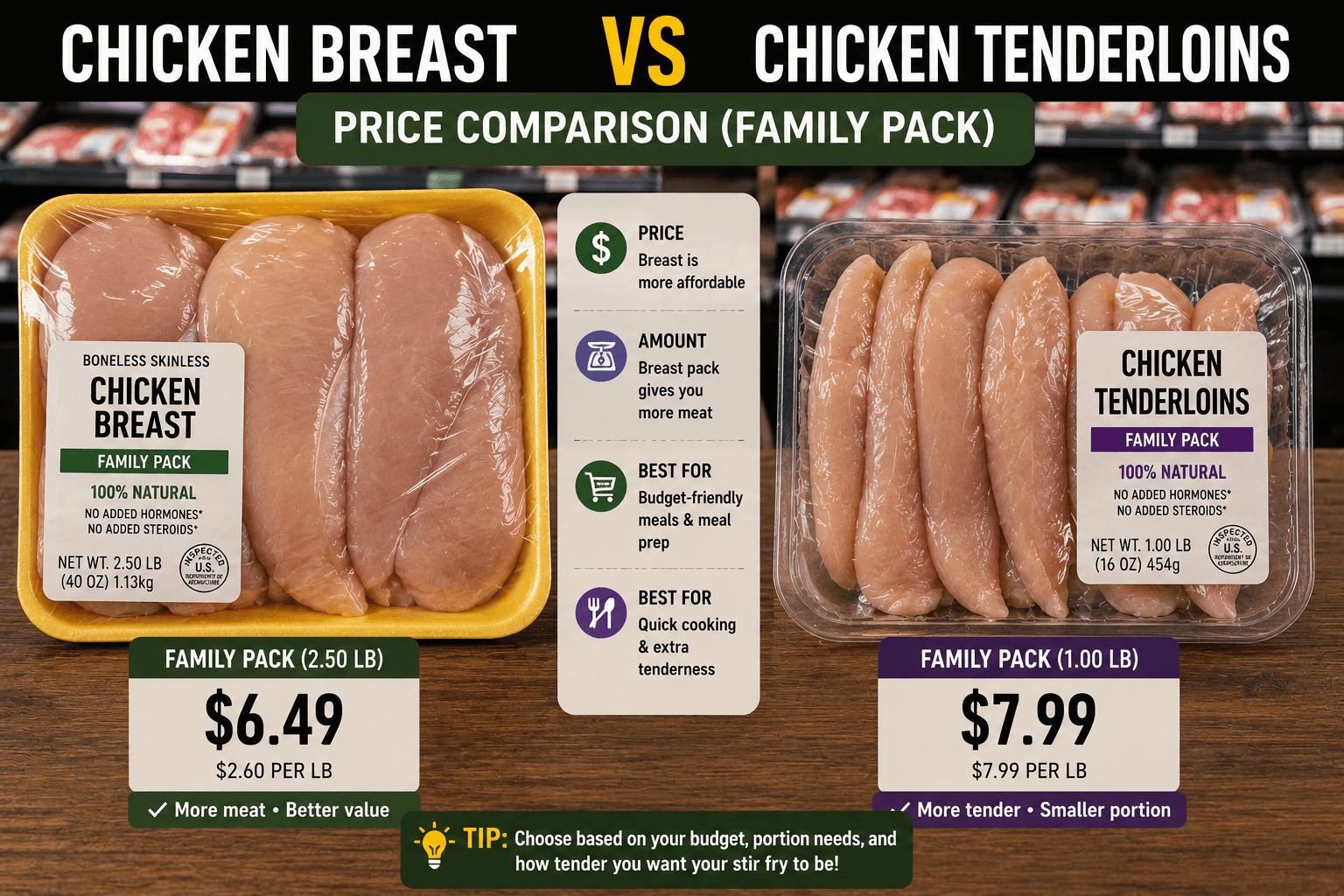
For many shoppers, cost plays a major role when deciding between chicken tenderloins vs chicken breast. Although both cuts come from the same chicken, they are rarely priced the same. Understanding why one costs more than the other can help you make the best choice for your budget without sacrificing quality.
Chicken breast is one of the most widely sold cuts in supermarkets across the United States. Because it’s produced in larger quantities and requires less processing, it is usually the more affordable option. Family-size packages and warehouse club pricing can make chicken breast an excellent value for households that cook frequently.
Chicken tenderloins require additional trimming because each one must be separated from the breast by hand or during processing. Since every chicken only has two tenderloins, the available supply is naturally lower. That extra labor and limited quantity often result in a higher price per pound.
| Value Factor | Chicken Tenderloins | Chicken Breast |
|---|---|---|
| Average Grocery Price | Higher | Lower |
| Preparation Needed | Very Little | Moderate |
| Best for Large Families | Good | Excellent |
| Meal Prep Value | Very Good | Excellent |
| Overall Budget Score | 7/10 | 10/10 |
If you prepare stir fry every week, purchasing chicken breast usually provides the best long-term value. You can trim, slice, and portion several meals at once, reducing both grocery costs and preparation time later in the week.
Money-Saving Tip: Watch for sales on family packs of boneless skinless chicken breast. Divide the meat into stir fry portions before freezing so you’ll always have ready-to-cook chicken available.
Fresh vs. Frozen: Which Works Better?
Another common question when comparing chicken tenderloins vs chicken breast is whether fresh or frozen chicken produces better stir fry. The good news is that both fresh and properly frozen chicken can deliver excellent results.
Fresh chicken is often preferred because it requires no thawing and may have a slightly firmer texture. Frozen chicken, however, is usually frozen shortly after processing, helping preserve its quality and nutritional value.
The key is thawing the chicken safely. Always thaw frozen chicken in the refrigerator overnight or by using the cold-water method. Never leave raw chicken on the kitchen counter to thaw, as this can allow harmful bacteria to multiply.
After thawing, pat the chicken dry with paper towels before marinating or seasoning. Removing excess moisture encourages better browning instead of steaming.
Food Safety Warning: Never refreeze raw chicken that has been completely thawed unless it has been cooked first. Always follow USDA food safety recommendations for thawing and storage.
Which Cut Is Better for Meal Prep?
If you prepare meals in advance, the chicken tenderloins vs chicken breast comparison becomes even more practical. Meal prep requires a cut that stores well, reheats evenly, and remains tender after refrigeration.
Chicken breast generally wins in this category because it costs less, is sold in larger quantities, and can easily be portioned into multiple servings. Thin slices also reheat well when combined with vegetables and sauce.
Chicken tenderloins work well for meal prep too, especially if you prefer softer pieces of chicken. However, because they cost more, they’re usually reserved for smaller batches or occasions when tenderness is the top priority.
To maximize freshness, cool cooked stir fry quickly, refrigerate it within two hours of cooking, and store it in airtight containers. Most cooked chicken stir fry stays at its best for three to four days in the refrigerator.
Storage Tips:
- Store raw chicken in the refrigerator for up to 2 days.
- Freeze raw chicken for up to 9 months for best quality.
- Refrigerate cooked stir fry within 2 hours.
- Use leftovers within 3–4 days.
- Reheat to an internal temperature of 165°F (74°C).
Expert Buying Tips
No matter which cut you choose, buying high-quality chicken makes a noticeable difference. Look for packages that are well chilled, have no excessive liquid, and show firm, pink meat without gray discoloration.
If possible, compare the thickness of the pieces. Uniform sizes cook more evenly, reducing the chance of overcooked edges and undercooked centers.
For chicken breast, choose pieces that aren’t unusually large if you plan to slice them for stir fry. Medium-sized breasts are often easier to cut into consistent strips.
For tenderloins, look for pieces with minimal white tendon showing. Although the tendon is safe to eat, removing it before cooking improves the eating experience.
Chef’s Recommendation: If you’re making stir fry for guests or a special dinner, chicken tenderloins provide an exceptionally tender texture. For everyday family meals, chicken breast offers outstanding quality while keeping grocery costs lower.
At this point, it’s clear that the decision between chicken tenderloins vs chicken breast isn’t about choosing a winner—it’s about selecting the cut that best matches your cooking goals, budget, and preferred texture.
Which Cut Is Better for Stir Fry?
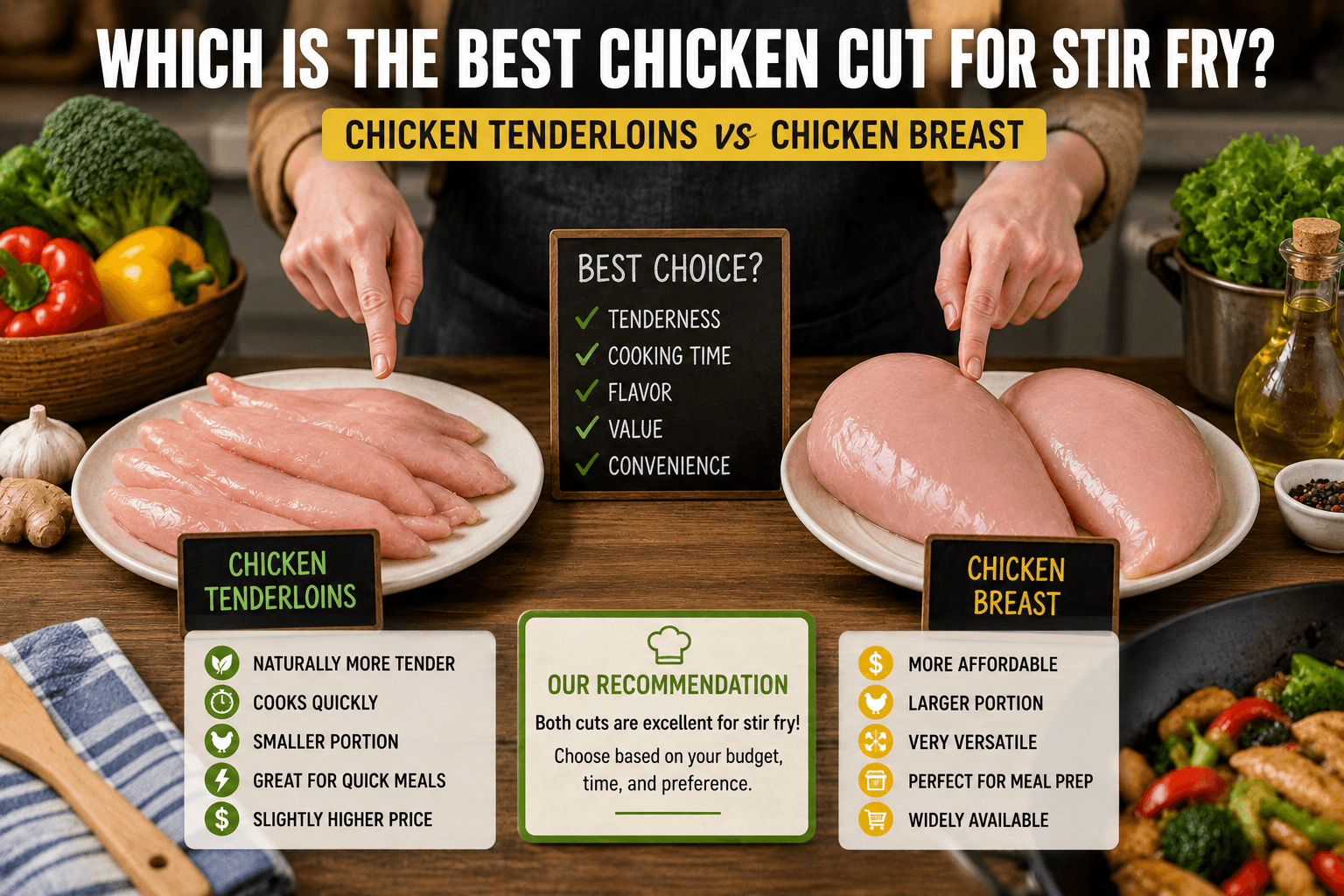
After comparing chicken tenderloins vs chicken breast in terms of tenderness, cooking speed, nutrition, price, and convenience, you may still be wondering which one deserves a place in your wok. The answer depends on your priorities because both cuts can produce outstanding stir fry when prepared correctly.
If your goal is maximum tenderness with minimal preparation, chicken tenderloins are difficult to beat. They require very little trimming, cook quickly, and stay juicy even if they’re left in the pan slightly longer than intended. This makes them an excellent choice for beginner cooks or anyone preparing a fast weeknight dinner.
Chicken breast, however, remains the preferred option for many experienced home cooks and professional kitchens. It’s widely available, budget-friendly, easy to portion, and extremely versatile. Once sliced thinly across the grain and cooked over high heat, chicken breast develops a tender texture that rivals tenderloins while costing significantly less.
| If You Want… | Best Choice | Reason |
|---|---|---|
| The most tender texture | Chicken Tenderloins | Finer muscle fibers stay naturally soft. |
| Best value for money | Chicken Breast | Lower price and larger portions. |
| Quick weeknight meals | Chicken Tenderloins | Minimal preparation and fast cooking. |
| Meal prep | Chicken Breast | Easy to portion into multiple meals. |
| Restaurant-style stir fry | Either Cut | Proper slicing and velveting matter more. |
Quick Recommendation: If you’re buying chicken specifically for stir fry every week, chicken breast is usually the best long-term choice because it combines excellent flavor, versatility, and affordability.
Common Mistakes to Avoid
Even the highest-quality chicken can become dry or chewy if it’s prepared incorrectly. Many cooking problems blamed on the cut are actually caused by technique. Whether you choose chicken tenderloins vs chicken breast, avoiding these mistakes will dramatically improve your stir fry.
- Cutting uneven pieces that cook at different speeds.
- Cooking over medium or low heat instead of high heat.
- Adding too much chicken to the wok at once.
- Skipping the marinade or velveting step.
- Leaving the chicken in the pan after it’s fully cooked.
- Using frozen chicken without thawing it completely.
- Failing to preheat the wok before adding oil.
- Adding sauce too early, which prevents proper browning.
Important: Stir fry should be cooked quickly over high heat. If the chicken releases excessive liquid, the pan isn’t hot enough or it’s overcrowded.
Expert Tips for Restaurant-Quality Stir Fry
Professional chefs rely on several simple techniques to create juicy, flavorful stir fry every time. These tips work equally well whether you prefer chicken tenderloins or chicken breast.
- Slice chicken into strips about ¼ inch thick.
- Marinate for at least 20–30 minutes.
- Use a neutral high-smoke-point oil.
- Cook vegetables separately if necessary.
- Return the chicken to the pan only at the end.
- Add the sauce during the final minute of cooking.
- Serve immediately while everything is hot and crisp.
Following these practices ensures consistent results regardless of which cut you choose. In fact, many experienced cooks find that preparation techniques have a greater influence on the finished dish than the difference between chicken tenderloins vs chicken breast.
For even better results, pair your chicken with crisp vegetables such as broccoli, bell peppers, mushrooms, carrots, snap peas, or spinach. These vegetables cook quickly and complement the mild flavor of both cuts while adding color, texture, and nutrition to the meal.
If you’re experimenting with different flavors, try garlic, ginger, sesame oil, black pepper, oyster sauce, or a light soy-based sauce. These ingredients enhance the chicken without overpowering its natural flavor.
Ultimately, choosing between chicken tenderloins vs chicken breast comes down to balancing convenience, cost, and personal preference. Fortunately, either cut can produce an outstanding stir fry when handled with proper technique.
Frequently Asked Questions
Is chicken tenderloin better than chicken breast for stir fry?
Neither cut is universally better. In the chicken tenderloins vs chicken breast comparison, tenderloins offer exceptional tenderness and quick cooking, while chicken breast provides better value, larger portions, and excellent versatility. Your choice should depend on your budget, cooking experience, and preferred texture.
Can I substitute chicken breast for chicken tenderloins?
Yes. Chicken breast is an excellent substitute for tenderloins in almost every stir fry recipe. Slice it thinly across the grain into even strips, cook it over high heat, and avoid overcooking. When prepared correctly, the finished texture is very similar.
Why do chicken tenderloins seem more tender?
Chicken tenderloins come from a small muscle beneath the breast that performs very little work during the bird’s lifetime. Because the muscle fibers are finer, they naturally produce a softer texture after cooking.
Should I marinate chicken tenderloins and chicken breast before stir frying?
Yes. A short marinade of 20 to 30 minutes improves flavor and moisture retention for both cuts. Restaurant-style velveting with cornstarch is another excellent technique that creates exceptionally juicy chicken.
Which cut is healthier?
There is very little nutritional difference between chicken tenderloins vs chicken breast. Both are lean, high in protein, naturally low in carbohydrates, and suitable for healthy stir fry recipes.
Which cut is best for meal prep?
Chicken breast is usually the better option for meal prep because it costs less, is available in larger packages, and stores well after cooking. It’s an economical choice for preparing multiple lunches or dinners in advance.
Can frozen chicken be used for stir fry?
Absolutely. Frozen chicken breast and frozen tenderloins work well as long as they’re thawed safely in the refrigerator or with the cold-water method before cooking. Pat the chicken dry before seasoning to encourage proper browning.
References
Final Thoughts
When comparing chicken tenderloins vs chicken breast, the best choice ultimately depends on how you cook and what you value most. Chicken tenderloins are naturally tender, require minimal preparation, and cook quickly, making them an excellent option for busy weeknights and beginner cooks. Chicken breast, however, delivers outstanding versatility, larger portions, and better overall value, making it the preferred choice for many families and meal-prep enthusiasts.
It’s also important to remember that the quality of your stir fry depends far more on your cooking technique than on the specific cut of chicken. Thin, even slices, a short marinade, a properly heated wok, and avoiding overcooking will have a much greater impact on tenderness than choosing one cut over the other.
If you’re looking for the most economical option without sacrificing quality, chicken breast is difficult to beat. If tenderness is your highest priority and you don’t mind paying a little extra, chicken tenderloins are an excellent investment.
Whichever option you choose, combining fresh vegetables, balanced seasonings, and proper stir-fry techniques will help you create a flavorful, juicy, and satisfying meal every time.
🍽️ You Might Also Like

📧 Save This Recipe For Later
Enter your email and we will send this recipe directly to your inbox.