
How to Keep Chicken from Sticking to the Pan When Stir Frying
How to Keep Chicken from Sticking to the Pan When Stir Frying
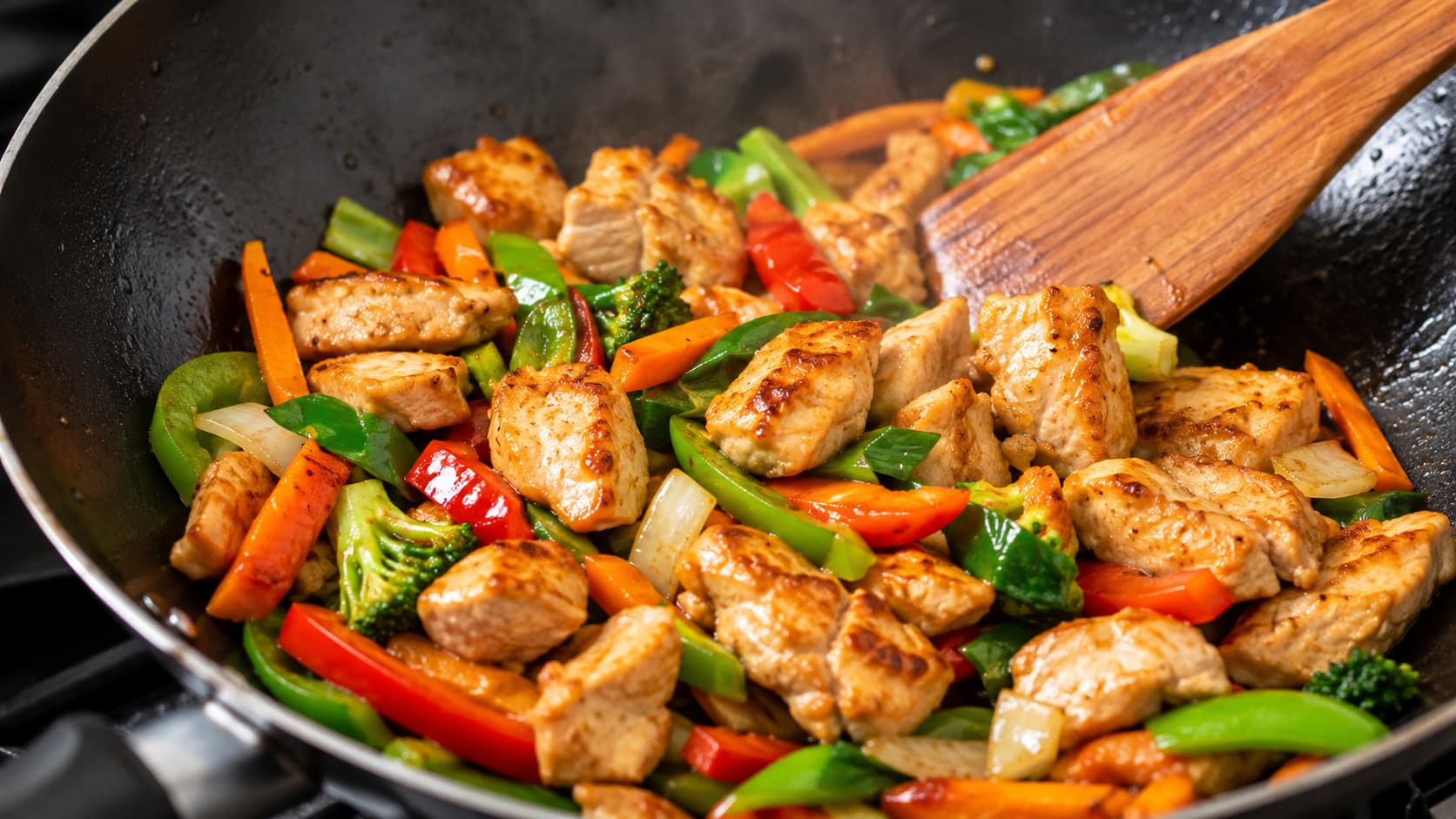
If you’ve ever tried making a quick chicken stir fry only to find half the meat glued to the pan, you’re not alone. Chicken sticking to pan stir fry is one of the most common cooking frustrations for beginners and experienced home cooks alike. Instead of getting beautifully browned chicken with a light crust, you end up scraping burnt bits from the pan while the meat tears apart.
The good news is that sticking isn’t usually caused by bad luck. It happens because of a few simple factors, such as incorrect pan temperature, using the wrong oil, overcrowding the pan, or moving the chicken too early. Once you understand why these issues happen, preventing them becomes surprisingly easy.
In this guide, you’ll learn exactly how to stop chicken sticking to pan stir fry, why it happens, the best cooking techniques to use, and the common mistakes that cause chicken to stick. Whether you’re using a wok, stainless steel skillet, or nonstick pan, these tips will help you cook tender, juicy chicken with a perfect golden sear every time.
Quick Answer
Chicken sticking to pan stir fry usually happens when the pan isn’t hot enough, the wrong oil is used, the chicken is too wet, or it’s moved before it naturally releases. Preheat the pan properly, pat the chicken dry, use a high smoke-point oil, avoid overcrowding, and let the chicken cook undisturbed for 2–3 minutes before turning it. These simple steps create a natural crust that releases easily from the pan.
Table of Contents
Why Does Chicken Stick to the Pan During Stir Fry?
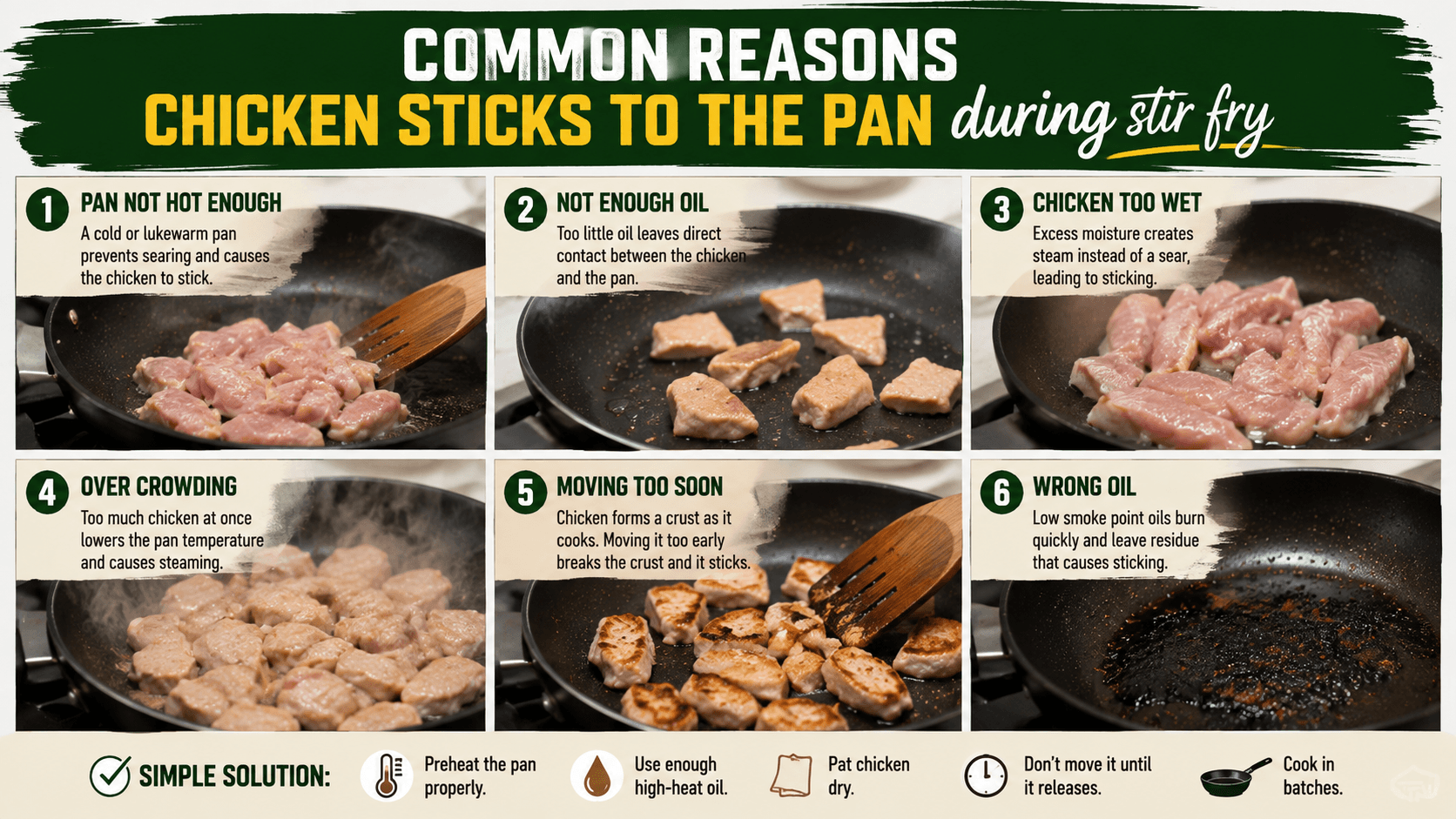
Understanding why chicken sticking to pan stir fry happens is the first step toward preventing it. Contrary to what many people think, chicken doesn’t simply stick because the pan is “bad.” Instead, sticking is usually caused by a combination of moisture, heat, and cooking technique.
When raw chicken first touches a hot cooking surface, proteins begin to bond with the metal. As cooking continues, these proteins tighten and eventually release naturally after a flavorful golden crust forms. If you try to move the chicken before this process is complete, it tears apart and remains stuck to the pan.
Several other factors can make this problem even worse, including:
- Cooking with a pan that hasn’t fully preheated.
- Using too little cooking oil.
- Using oils that smoke too quickly.
- Adding cold chicken directly from the refrigerator.
- Crowding too much chicken into one pan.
- Constantly stirring before browning begins.
Fortunately, every one of these problems has a simple solution that you’ll learn throughout this guide.
Tip: A properly heated pan creates better browning, better flavor, and naturally helps chicken release from the cooking surface.
The Science Behind Chicken Sticking to the Pan
Cooking is chemistry, and understanding what happens inside the pan makes it much easier to prevent chicken sticking to pan stir fry.
When chicken first contacts a hot pan, proteins on the surface immediately begin unfolding. At first, these proteins bond tightly with microscopic imperfections in the cooking surface.
As moisture evaporates and browning begins through the Maillard reaction, those protein bonds weaken. Once a golden crust develops, the chicken naturally releases with very little effort.
This explains why professional chefs often say, “Don’t force the food.” If it isn’t releasing yet, it simply isn’t ready to flip.
Many people mistake this natural process for burning and start scraping or moving the chicken too soon. Ironically, this creates even more sticking and causes the meat to break apart.
Kitchen Secret: Instead of checking every few seconds, wait patiently. Once a proper crust forms, the chicken will almost lift itself off the pan.
How to Prevent Chicken from Sticking Every Time
The easiest way to eliminate chicken sticking to pan stir fry is by following a consistent cooking routine before the chicken ever reaches the pan.
1. Pat the Chicken Dry
Excess moisture is one of the biggest reasons chicken sticks. Water creates steam instead of allowing direct contact between the chicken and the hot cooking surface.
Before seasoning, use paper towels to remove as much surface moisture as possible. Dry chicken browns faster and forms a crust sooner.
If you’re preparing marinated chicken, gently shake off excess marinade before adding it to the pan.
For even better texture, learn how to marinate chicken for stir fry without leaving too much liquid on the surface.
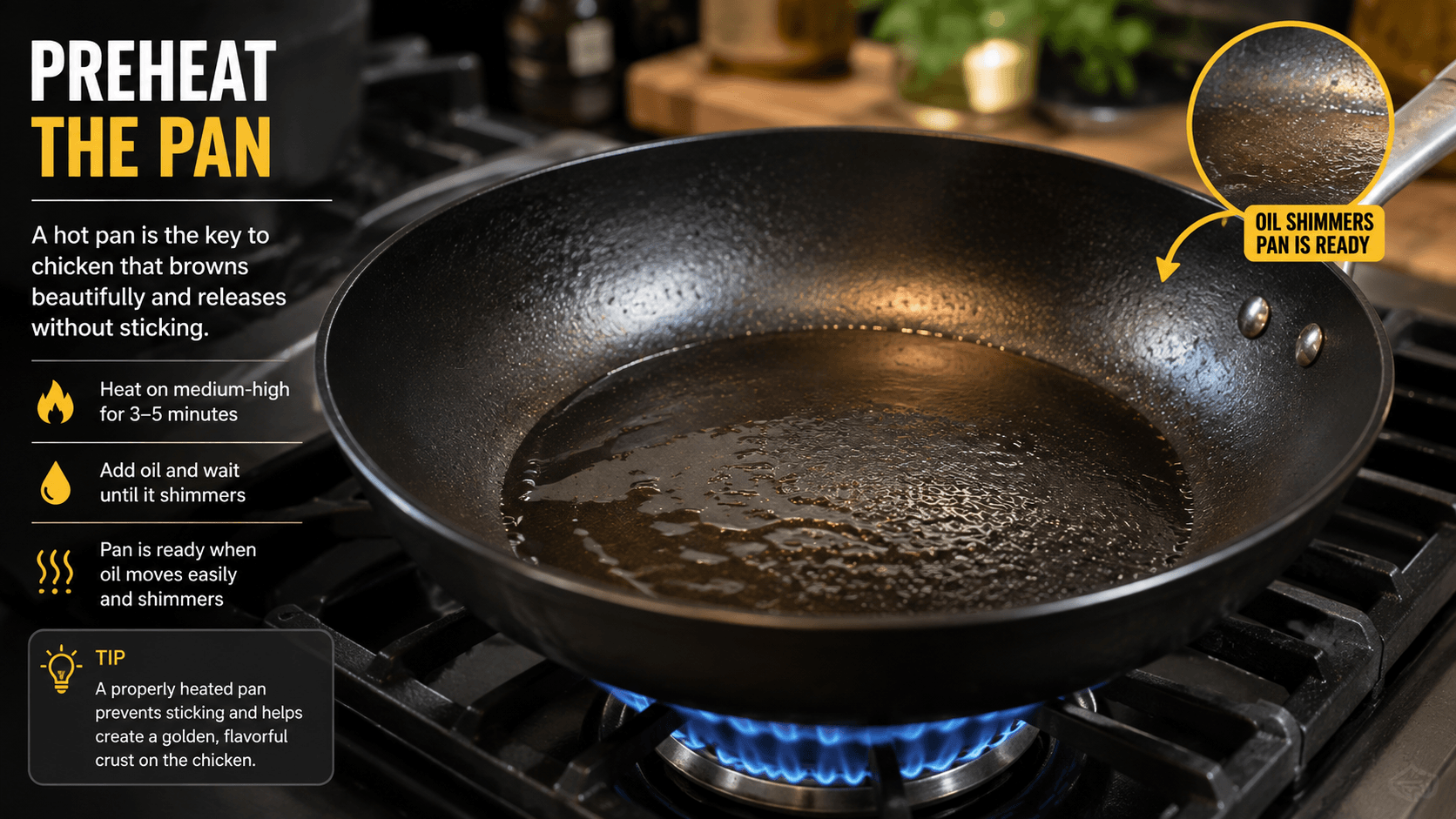
2. Preheat the Pan Properly
A cold pan almost guarantees sticking.
Allow your pan to heat for several minutes before adding oil. Once the oil shimmers slightly, it’s ready for the chicken.
Professional stir fry cooking depends on intense heat because it quickly creates surface browning while keeping the inside juicy.
| Pan Temperature | Result |
|---|---|
| Too Cold | Chicken sticks and steams |
| Medium Hot | Light browning with less sticking |
| Properly Hot | Golden crust and easy release |
| Overheated | Oil burns before chicken cooks |
3. Use Enough Oil
Oil acts as both a heat conductor and a barrier between the chicken and the pan.
Too little oil leaves dry spots where proteins attach directly to the metal surface.
Choose oils with a high smoke point such as avocado oil, peanut oil, or refined canola oil. These remain stable at stir fry temperatures.
If you’re unsure which cooking oil works best, read our complete guide to the best oil for stir fry.
Warning: Butter alone is not ideal for stir frying because its milk solids burn quickly, increasing the chance of sticking.
Why Pan Temperature Is the Most Important Factor
If there’s one lesson professional chefs consistently teach, it’s that temperature controls everything. In fact, improper heat is the leading cause of chicken sticking to pan stir fry.
A pan that’s too cool allows moisture to collect underneath the chicken, causing steaming instead of searing. Without a properly browned crust, the meat clings stubbornly to the surface.
On the other hand, overheating the pan isn’t the answer either. Extremely high temperatures can burn the oil before the chicken has a chance to cook evenly, leaving behind charred residue that also encourages sticking.
The goal is to reach a stable, high cooking temperature before adding oil and chicken. When done correctly, the chicken develops rich color, better flavor, and naturally releases with minimal effort.
The type of cookware you use also affects heat retention. Carbon steel woks and heavy stainless steel skillets hold heat well, while thin aluminum pans tend to lose heat quickly when cold chicken is added.
If you’re deciding between different cookware, our comparison of wok vs. skillet for stir fry explains the strengths of each option for home cooking.
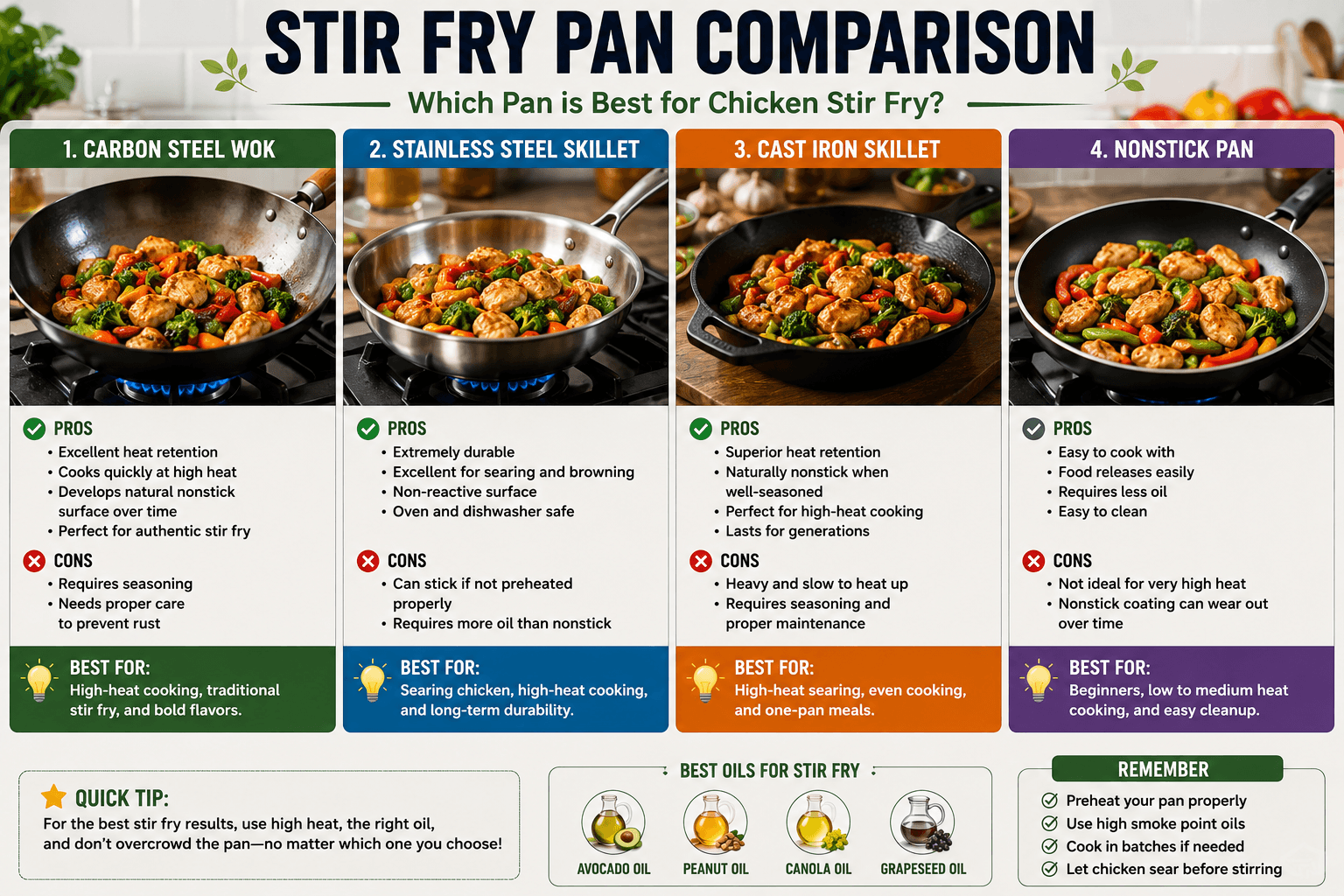
Choosing the Right Pan for Stir Fry Success
One overlooked reason for chicken sticking to pan stir fry is using the wrong type of cookware. While technique matters most, the pan itself can make cooking much easier—or much more frustrating.
Each type of pan behaves differently when exposed to the high heat required for stir frying. Understanding these differences helps you adjust your cooking method instead of blaming the chicken or recipe.
| Pan Type | Advantages | Things to Watch |
|---|---|---|
| Carbon Steel Wok | Excellent heat retention, develops natural nonstick seasoning over time | Requires seasoning and proper maintenance |
| Stainless Steel Skillet | Produces outstanding browning and durable enough for high heat | Needs proper preheating to prevent sticking |
| Cast Iron Skillet | Retains heat extremely well and naturally becomes more nonstick with seasoning | Heavy and slower to heat evenly |
| Nonstick Pan | Easy for beginners and requires less oil | Not designed for extremely high stir fry temperatures |
If you’re just learning how to cook stir fry, a quality nonstick skillet can reduce frustration. As your skills improve, switching to carbon steel or stainless steel gives better browning and restaurant-style flavor.
Choose the Best Oil for High-Heat Stir Frying
The oil you choose plays a major role in preventing chicken sticking to pan stir fry. Oils with low smoke points begin breaking down before the chicken finishes cooking. Burned oil creates residue that encourages sticking and gives food a bitter flavor.
For stir frying, choose oils that tolerate temperatures between 400°F and 500°F (204°C–260°C).
| Oil | Smoke Point | Recommended? |
|---|---|---|
| Avocado Oil | Very High | Excellent |
| Peanut Oil | High | Excellent |
| Canola Oil | High | Very Good |
| Grapeseed Oil | High | Very Good |
| Sesame Oil | Medium | Use only for flavor at the end |
| Butter | Low | Not recommended alone |
Adding sesame oil at the very end of cooking provides wonderful aroma without burning. Save the high-heat cooking for neutral oils designed to handle intense temperatures.
Tip: If your oil begins smoking heavily before the chicken is added, remove the pan from the heat briefly and lower the temperature slightly before continuing.
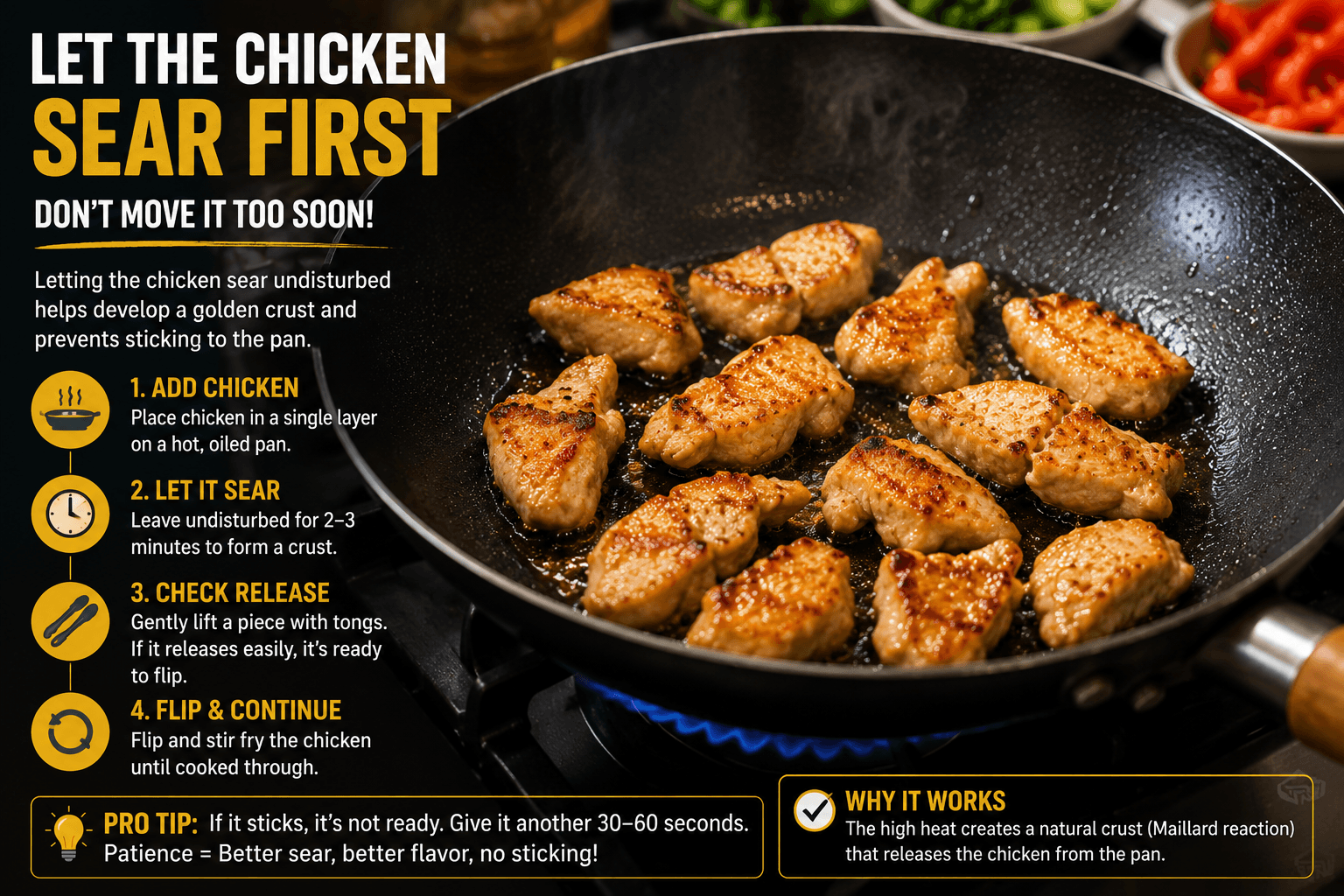
Don’t Move the Chicken Too Soon
Perhaps the biggest mistake people make when dealing with chicken sticking to pan stir fry is trying to stir constantly.
Many beginners believe stir frying means moving food nonstop from the second it enters the pan. In reality, chicken needs time to develop a crust before it’s ready to move.
After placing the chicken in the pan:
- Spread the pieces into a single layer.
- Leave them untouched for about 2 to 3 minutes.
- Check one piece gently with tongs.
- If it releases easily, flip or stir.
- If it resists, wait another 30–60 seconds.
This simple habit dramatically reduces sticking while improving color and flavor.
Kitchen Secret: Professional chefs rarely stir immediately. They let the heat do the work before turning the chicken.
Why Overcrowding Causes Chicken to Stick
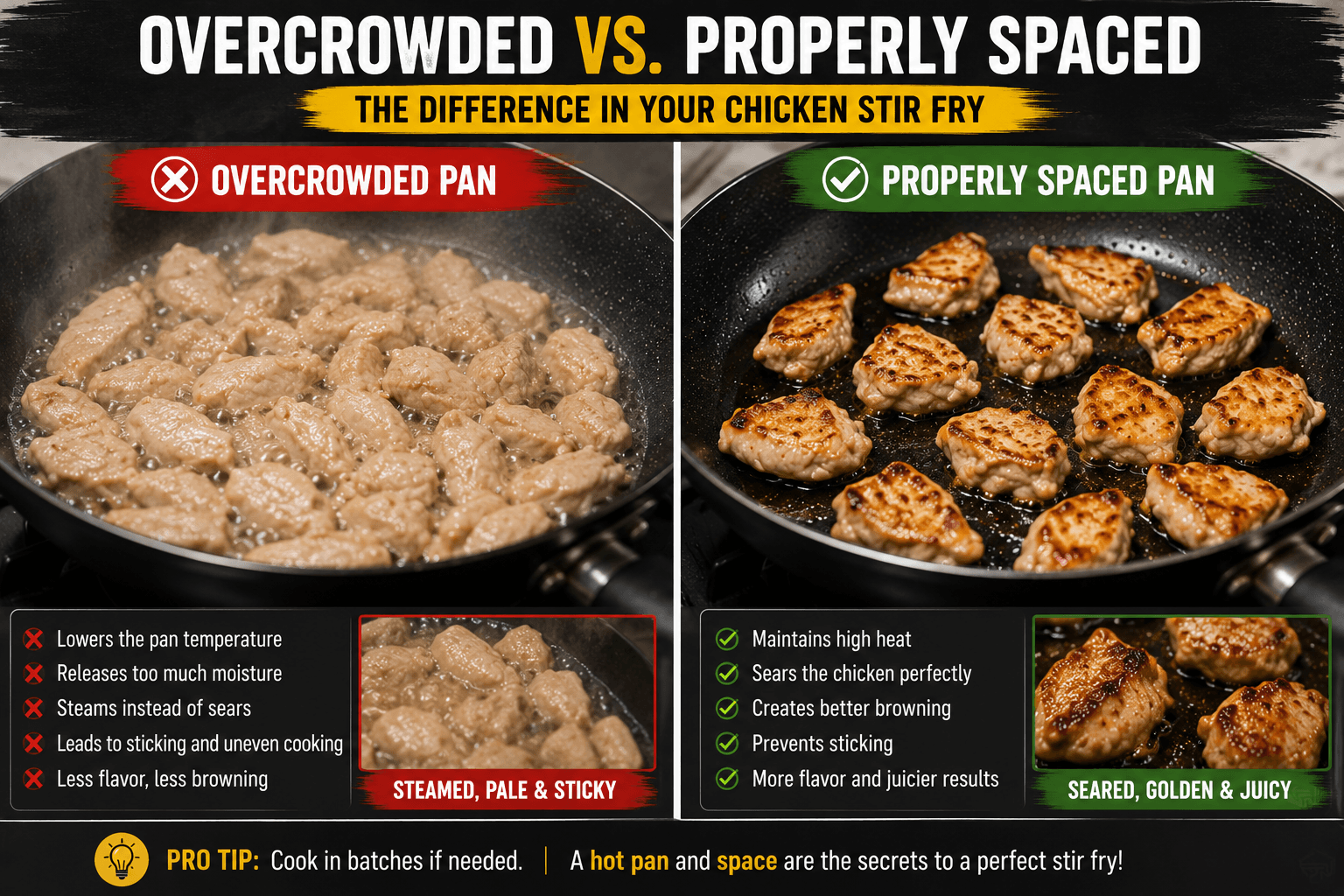
Even if your pan is perfectly preheated, overcrowding can quickly undo all your hard work.
When too much chicken is added at once, the temperature of the pan drops dramatically. Instead of searing, the chicken releases moisture and begins steaming.
Steam prevents browning, keeps proteins soft, and greatly increases the likelihood of chicken sticking to pan stir fry.
For the best results:
- Cook in batches when preparing large amounts.
- Leave small spaces between each piece.
- Use a larger skillet or wok if possible.
- Return all cooked chicken to the pan at the end.
Although cooking in batches takes a few extra minutes, the improved texture and flavor are well worth the effort.
Should You Marinate Chicken Before Stir Frying?
Marinating can improve tenderness and flavor, but the wrong marinade can also contribute to sticking.
Heavy sugar-based marinades caramelize rapidly and may burn onto the pan before the chicken cooks through.
Instead, use balanced marinades that contain:
- Soy sauce
- Cornstarch
- A small amount of neutral oil
- Garlic
- Ginger
Cornstarch creates a thin protective coating that helps reduce sticking while locking in moisture.
If you’d like to master this technique, our guide on how to velvet chicken for stir fry explains why restaurant-quality chicken stays so tender and releases beautifully from the pan.
Benefits of Proper Cooking Technique
- Less sticking
- Better browning
- Juicier chicken
- Restaurant-style texture
- Easier cleanup
Common Poor Habits
- Cold pan
- Too much chicken
- Moving food constantly
- Low smoke-point oils
- Skipping pan preheating
Common Mistakes That Cause Chicken to Stick
Most cases of chicken sticking to pan stir fry can be traced back to a handful of avoidable mistakes. Identifying these habits makes it much easier to cook confidently every time.
Starting with Cold Chicken
Ice-cold chicken lowers the temperature of the pan immediately after it’s added. This causes moisture to build underneath the meat, delaying browning and increasing sticking.
Let chicken rest at room temperature for about 15–20 minutes before cooking whenever food safety guidelines allow.
Using Too Much Marinade
A thick coating of marinade creates excess moisture. Always allow extra liquid to drip off before adding the chicken to the pan.
Cooking Over Low Heat
Many people worry that high heat will burn their food, so they reduce the burner too much. Unfortunately, low heat causes steaming rather than searing.
Stir frying is designed to be a fast, high-heat cooking method.
Turning Chicken Constantly
Repeated stirring interrupts crust formation and prevents natural release from the cooking surface.
Skipping Oil Distribution
Even if you use enough oil, failing to coat the entire cooking surface leaves dry areas where chicken can stick.
Warning: Never scrape chicken aggressively with a metal spatula if it hasn’t released naturally. This tears the meat and leaves burned residue that makes sticking even worse during the rest of the cooking process.
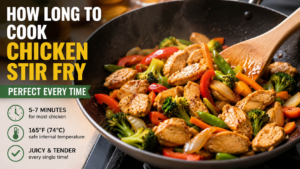
Another important factor is cooking time. Overcooked chicken becomes dry and less forgiving, while undercooked chicken can be unsafe to eat. If you’re unsure about timing, our guide on how long to cook chicken stir fry provides recommended cooking times for different cuts of chicken.
Step-by-Step Method to Keep Chicken from Sticking Every Time
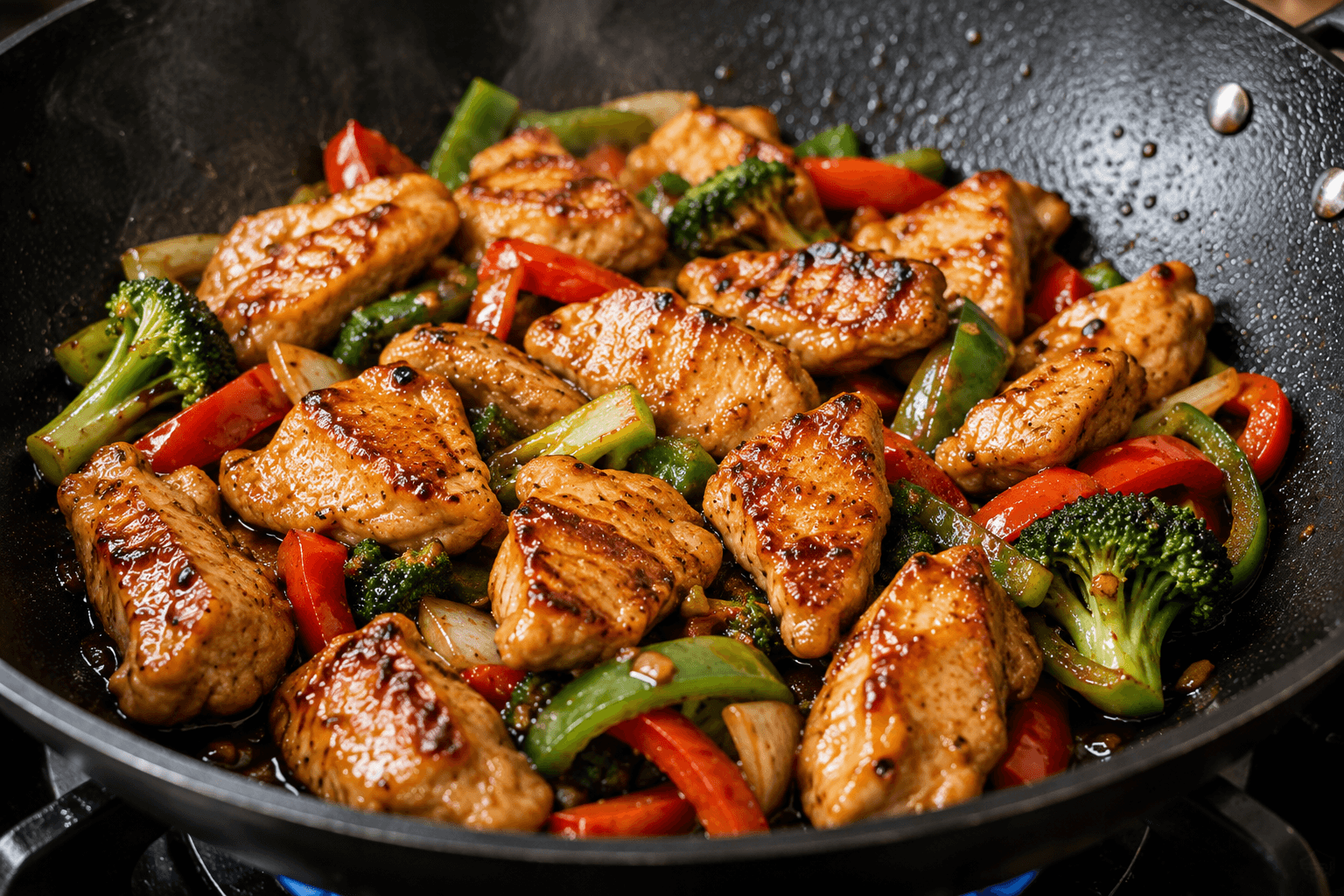
If you want consistently great results, follow this simple routine every time you cook. These steps combine all of the best practices discussed earlier into one easy process that dramatically reduces the chances of chicken sticking to pan stir fry.
- Prepare the chicken. Pat it completely dry with paper towels. If it’s marinated, let any excess marinade drip off before cooking.
- Slice evenly. Uniform pieces cook at the same rate, preventing some pieces from overcooking while others remain undercooked.
- Preheat the pan. Heat your wok or skillet over medium-high to high heat for several minutes.
- Add oil after preheating. Swirl the oil to coat the entire surface.
- Arrange the chicken in a single layer. Avoid piling pieces on top of one another.
- Leave it alone. Resist the urge to stir immediately. Let the chicken sear for 2–3 minutes.
- Flip only after it releases naturally. If it sticks, give it another 30–60 seconds.
- Finish cooking. Continue stir frying until the internal temperature reaches 165°F (74°C).
- Add vegetables afterward if needed. This helps maintain high pan temperature and prevents overcrowding.
This simple workflow becomes second nature after a few meals and is one of the easiest ways to eliminate chicken sticking to pan stir fry.
Does the Type of Chicken Make a Difference?
Yes. Different cuts of chicken behave differently during stir frying because of their fat content, thickness, and moisture levels.
| Chicken Cut | Likelihood of Sticking | Best Practice |
|---|---|---|
| Chicken Breast | Moderate | Slice thinly and avoid overcooking. |
| Chicken Thighs | Low | Natural fat helps reduce sticking. |
| Frozen Chicken (Improperly Thawed) | High | Thaw completely and pat dry. |
| Velveted Chicken | Very Low | Cornstarch coating helps create a protective barrier. |
Chicken thighs are naturally more forgiving because they contain slightly more fat. Chicken breast cooks beautifully too, but it benefits from careful temperature control and proper slicing.
Tip: Slice chicken against the grain into thin, even strips. This not only improves tenderness but also helps each piece cook evenly and release from the pan at the same time.
How to Clean a Pan After Chicken Sticks
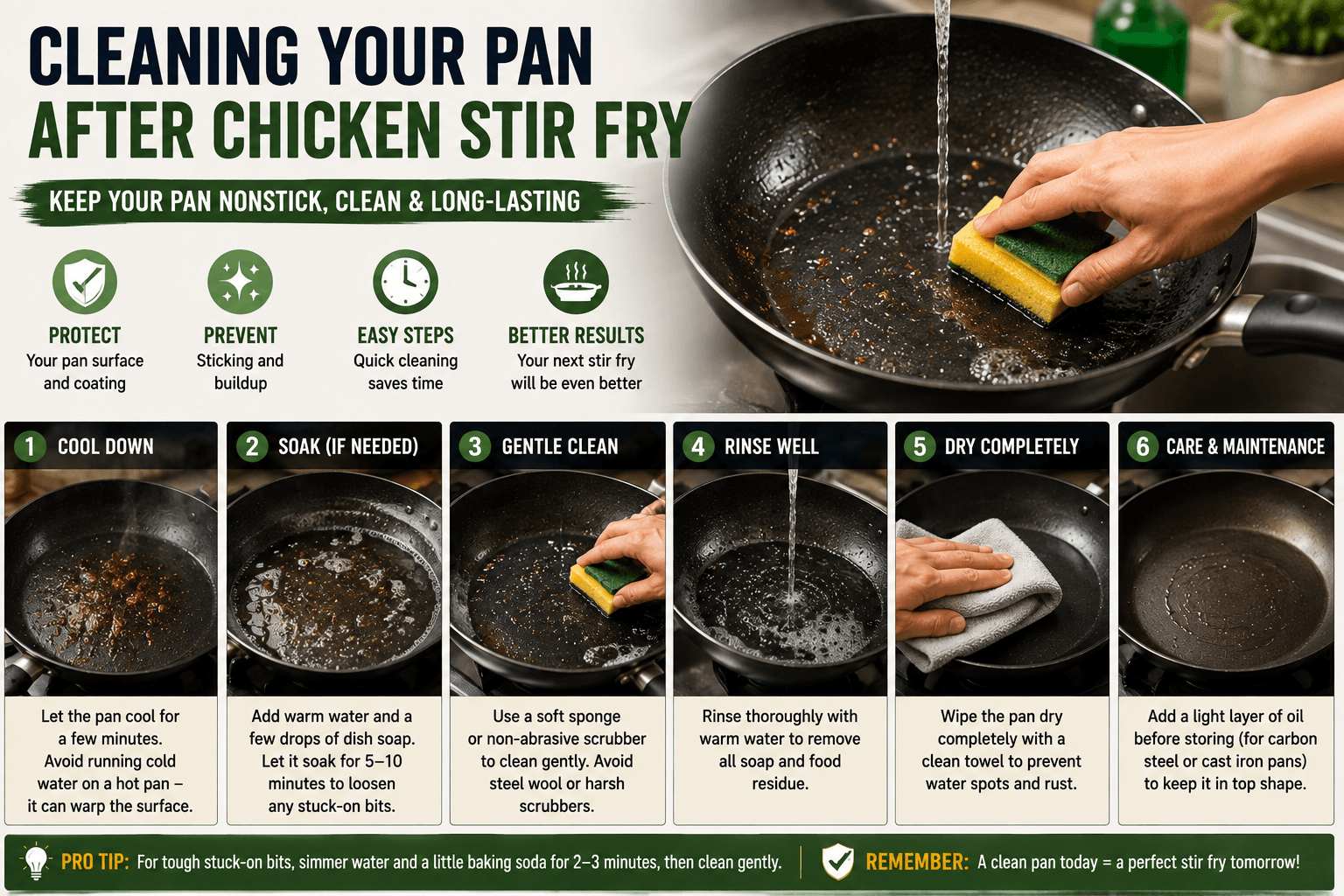
Even experienced cooks occasionally end up with stuck-on bits. Fortunately, you don’t need to scrub aggressively.
Instead:
- Allow the pan to cool slightly.
- Fill it with warm water.
- Add a small amount of dish soap.
- Let it soak for 15–30 minutes.
- Use a soft sponge or nylon scrubber to remove residue.
For stainless steel cookware, adding a splash of white vinegar to the soaking water can help loosen stubborn browned proteins without damaging the pan.
Avoid using steel wool on nonstick cookware, as it can permanently damage the coating.
Cookware Care: Clean pans soon after cooking to prevent stuck-on food from hardening. Proper cleaning also helps maintain the cooking surface and reduces sticking during future meals.
Key Takeaways
Preventing chicken sticking to pan stir fry isn’t about buying expensive cookware or using complicated techniques. It’s about controlling a few important variables every time you cook.
- Always preheat the pan before adding oil.
- Use a high smoke-point cooking oil.
- Pat the chicken dry before cooking.
- Cook in batches instead of overcrowding.
- Allow the chicken to form a crust before flipping.
- Use high heat appropriate for stir frying.
- Choose the right cookware for your cooking style.
- Clean and maintain your pans properly.
Once these habits become routine, you’ll enjoy beautifully browned chicken that releases easily from the pan while staying juicy and flavorful.
Frequently Asked Questions
Why is my chicken sticking even though I used oil?
Oil alone isn’t enough. The pan also needs to be properly preheated, and the chicken should be left undisturbed until it naturally releases from the cooking surface.
Should I use butter instead of oil?
Butter burns quickly at stir fry temperatures. Neutral oils with high smoke points, such as avocado or peanut oil, are much better choices for preventing sticking.
Can I use a nonstick pan for stir fry?
Yes. Nonstick pans work well for home cooks, although they shouldn’t be heated as aggressively as carbon steel or stainless steel cookware.
Does cornstarch help prevent chicken from sticking?
Yes. A light coating of cornstarch, especially as part of a velveting technique, creates a protective layer that reduces sticking while helping the chicken stay tender.
Should I cook vegetables before the chicken?
For most stir fries, cook the chicken first, remove it from the pan, cook the vegetables, then combine everything at the end. This prevents overcrowding and helps maintain high heat.
Why does stainless steel seem stickier than nonstick cookware?
Stainless steel relies on proper temperature rather than a coating. When correctly preheated, food naturally releases after a crust develops, making sticking much less of a problem.
References
Expert Tips for Perfect Stir Fry Chicken Every Time
Once you’ve learned how to prevent chicken sticking to pan stir fry, a few professional techniques can make your results even more consistent. Restaurant chefs don’t rely on expensive equipment alone—they follow repeatable habits that maximize flavor, texture, and efficiency.
These expert tips may seem small, but together they can make the difference between average homemade stir fry and a meal that tastes like it came from your favorite Asian restaurant.
Cut Every Piece the Same Size
Uniform chicken pieces cook at nearly the same speed. If some pieces are much thicker than others, the thinner pieces finish cooking first while the thicker pieces remain undercooked. This often leads to overcooking, sticking, and uneven browning.
Aim for strips about 1/4 inch thick or bite-sized cubes of similar size. Consistency allows every piece to brown evenly and release from the pan at the same time.
Cook Ingredients in Stages
Professional stir fry cooks rarely place every ingredient into the pan at once. Instead, they cook ingredients in stages.
- Sear the chicken first.
- Transfer it to a clean plate.
- Cook the vegetables separately.
- Return the chicken during the final minute.
- Add the sauce last.
This method keeps the pan hot throughout cooking and prevents excess moisture from building up, reducing the chances of chicken sticking to pan stir fry.
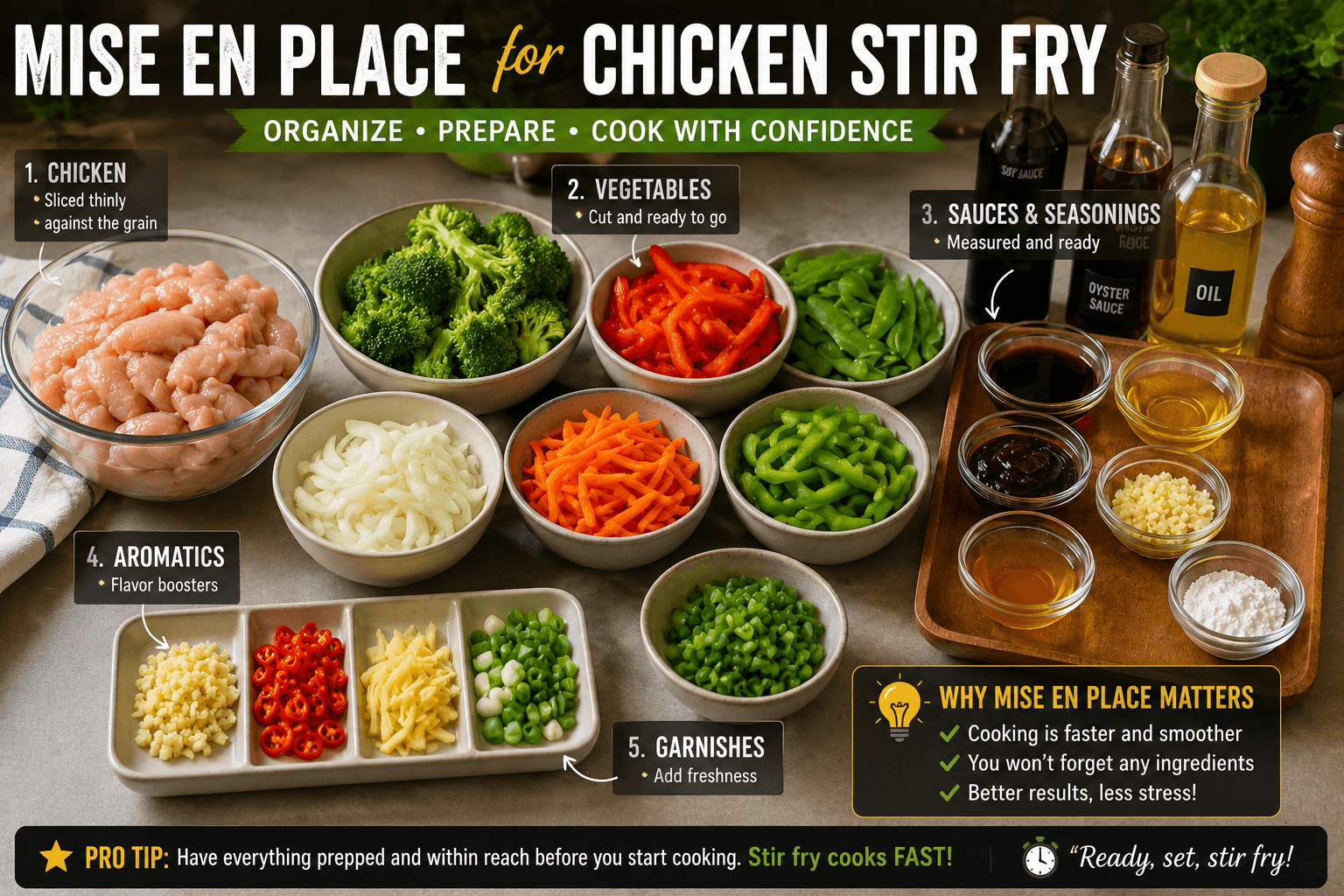
Kitchen Secret: Restaurant kitchens often prepare ingredients before turning on the stove. This “mise en place” approach ensures everything is ready to cook quickly over high heat without lowering the pan temperature.
Troubleshooting: Why Is My Chicken Still Sticking?
If you’ve followed the basic advice but still experience chicken sticking to pan stir fry, one or more small issues may still be affecting your results.
| Problem | Possible Cause | Solution |
|---|---|---|
| Chicken tears when flipped | Flipped too early | Wait until the crust forms naturally. |
| Chicken releases lots of liquid | Surface moisture or overcrowding | Pat dry and cook in smaller batches. |
| Oil smokes heavily | Pan overheated | Lower the heat slightly before adding chicken. |
| Chicken burns before browning | Oil with a low smoke point | Switch to avocado, peanut, or canola oil. |
| Chicken sticks only in certain spots | Uneven oil coverage | Swirl the oil to coat the entire cooking surface. |
Final Checklist Before You Start Cooking
Review this quick checklist before making your next stir fry. Following each step greatly improves your chances of cooking perfectly browned chicken that doesn’t stick.
- ✓ Slice the chicken into evenly sized pieces.
- ✓ Pat the chicken completely dry.
- ✓ Preheat the pan for several minutes.
- ✓ Use a high smoke-point oil.
- ✓ Coat the entire cooking surface with oil.
- ✓ Arrange the chicken in a single layer.
- ✓ Avoid overcrowding the pan.
- ✓ Let the chicken sear without moving it.
- ✓ Flip only after it releases naturally.
- ✓ Cook to an internal temperature of 165°F (74°C).
Quick Reminder: Great stir fry isn’t about constantly stirring. It’s about controlling heat, minimizing moisture, and giving the chicken enough time to develop a flavorful crust before turning.
Final Thoughts
Mastering chicken sticking to pan stir fry comes down to understanding heat, timing, and preparation. A hot pan, the right oil, dry chicken, and a little patience are far more effective than constantly stirring or adding extra oil.
Once you build these habits into your cooking routine, you’ll spend less time scraping the pan and more time enjoying tender, juicy chicken with the rich, golden browning that makes stir fry so satisfying. Whether you’re cooking a simple weeknight dinner or experimenting with new flavors, these techniques will help you achieve consistent, restaurant-quality results at home.
🍽️ You Might Also Like
📧 Save This Recipe For Later
Enter your email and we will send this recipe directly to your inbox.