
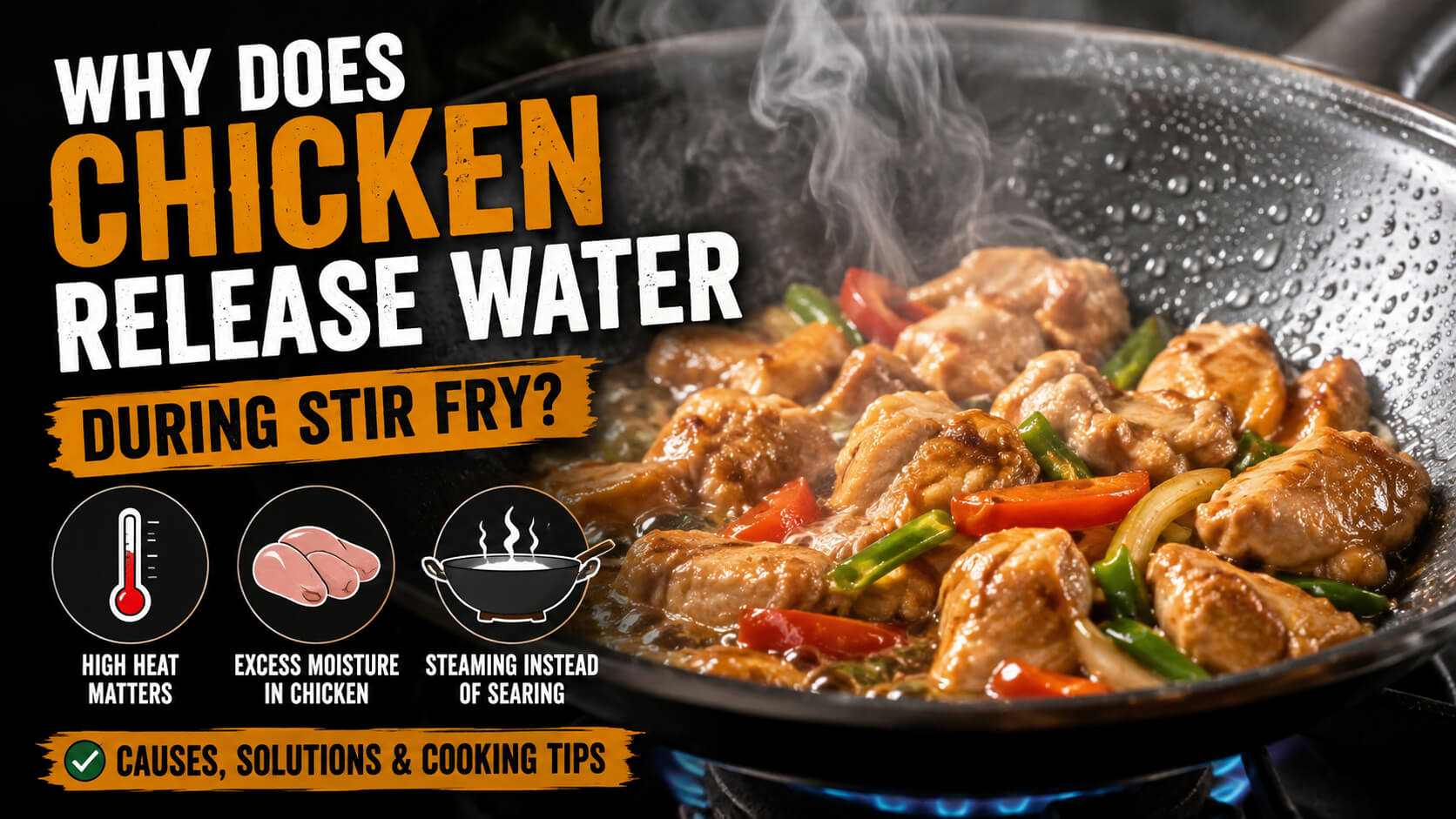
Why Does Chicken Release Water During Stir Fry?
Why Does Chicken Release Water During Stir Fry?
You expect stir-fried chicken to develop a beautifully browned exterior with juicy meat inside. Instead, your skillet suddenly fills with liquid, the chicken starts simmering instead of searing, and dinner loses the rich flavor and texture you were hoping for. If you’ve experienced this, you’re not alone.
The reason chicken releases water stir fry situations happen is usually a combination of food science and cooking technique. Chicken naturally contains a large amount of water, but improper preparation, overcrowding the pan, low cooking temperatures, and frequent stirring can all cause that moisture to escape before the surface has a chance to brown.
The good news is that this problem is easy to fix once you understand what’s happening. In this guide, you’ll learn why chicken releases moisture, how to prevent it, and which cooking techniques professional chefs use to achieve tender, flavorful stir-fried chicken every time.
Quick Answer
Chicken releases water stir fry because muscle fibers contract as they heat, pushing out moisture. This becomes much worse when the pan isn’t hot enough, too much chicken is added at once, frozen chicken isn’t fully thawed, or the meat is stirred before it develops a crust. Cooking in small batches, thoroughly drying the chicken, using high heat, and avoiding overcrowding are the most effective ways to keep chicken juicy while achieving proper browning.
- Pat chicken completely dry before cooking.
- Use a very hot wok or skillet.
- Cook in small batches.
- Don’t stir immediately after adding the chicken.
- Avoid partially frozen chicken.
- Use marinades correctly without adding excess liquid.
Table of Contents
Why Does Chicken Release Water During Stir Fry?
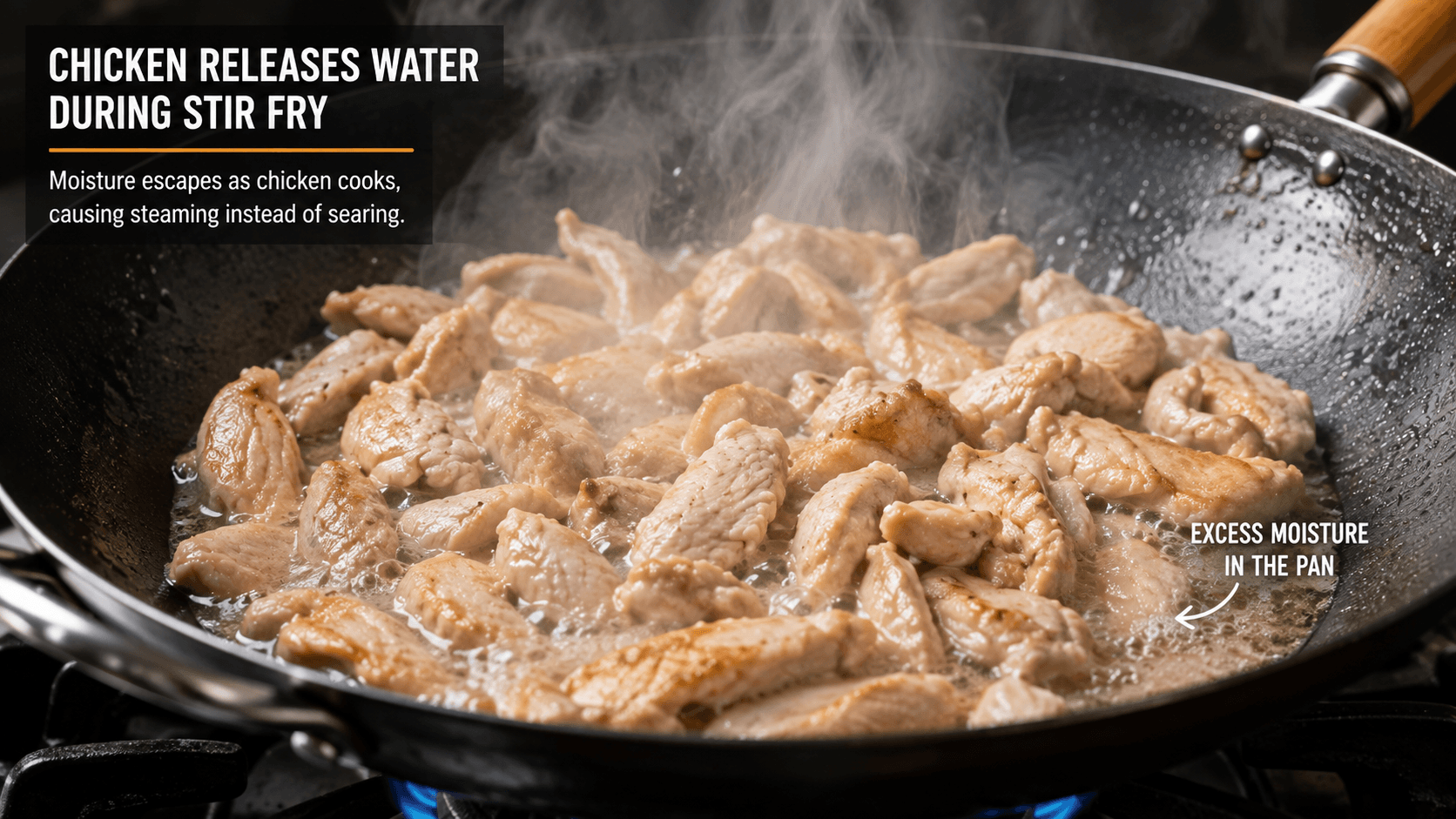
The simple answer is that chicken naturally contains approximately 65–75% water. As heat reaches the meat, muscle fibers tighten and squeeze out moisture. If the cooking environment isn’t hot enough to quickly evaporate that liquid, it collects in the pan.
Once this happens, the chicken begins steaming instead of frying. Instead of creating flavorful browning through the Maillard reaction, the meat cooks in its own juices.
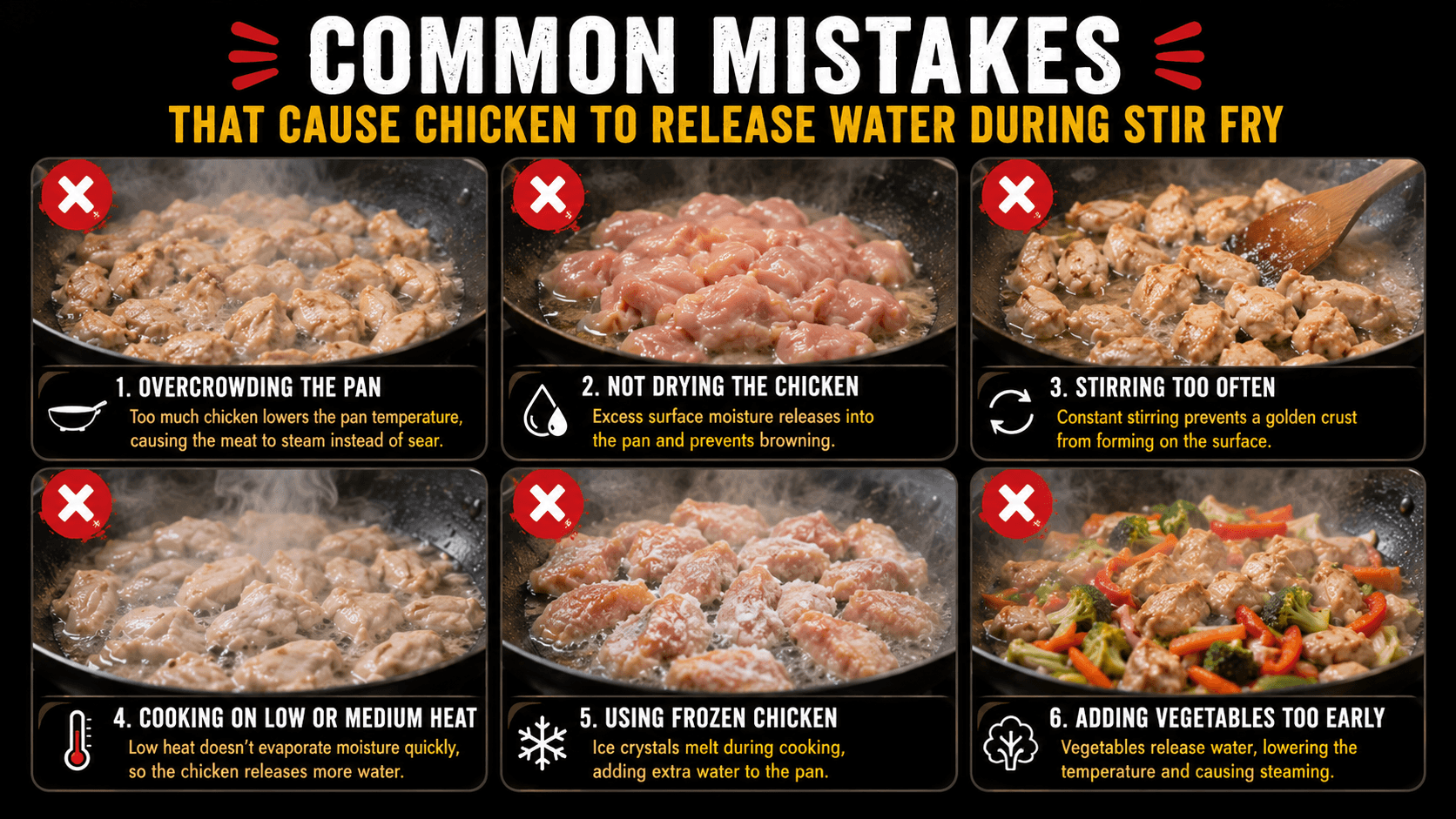
Several cooking mistakes can make chicken releases water stir fry problems much worse:
- Cooking too much chicken at once
- Using a cold or only moderately heated pan
- Starting with wet chicken
- Using frozen chicken that still contains ice crystals
- Adding vegetables too early
- Constantly stirring the chicken
Each of these issues lowers the pan temperature and prevents moisture from evaporating quickly.
The Science Behind Moisture Loss
Understanding what happens inside chicken helps explain why excess liquid appears so quickly.
Muscle Fibers Contract
Chicken muscle is made of protein fibers surrounded by water. As temperature increases, these proteins tighten and squeeze moisture outward. This process is completely normal.
Surface Moisture Prevents Browning
If moisture stays on the outside of the meat, the surface temperature remains near the boiling point of water instead of climbing high enough for caramelization.
That’s why dry chicken browns beautifully while wet chicken tends to boil.
The Maillard Reaction Needs Dry Heat
The rich golden color and roasted flavor found in excellent stir fry come from the Maillard reaction.
This reaction develops best when:
- Surface moisture evaporates quickly.
- The cooking surface stays extremely hot.
- The chicken has direct contact with the pan.
Kitchen Secret: Professional restaurant kitchens rely on extremely high wok temperatures that instantly evaporate moisture. Home cooks can achieve similar results by heating the pan thoroughly and cooking smaller batches.
Common Mistakes That Cause Chicken to Release More Water
| Mistake | Why It Causes Water | Better Approach |
|---|---|---|
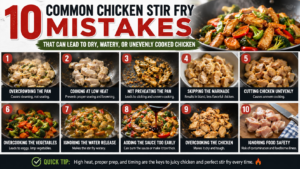
| Overcrowding | Pan temperature drops immediately. | Cook in batches. |
| Wet chicken | Extra surface moisture boils. | Pat completely dry. |
| Low heat | Water evaporates slowly. | Preheat pan well. |
| Frozen chicken | Ice melts during cooking. | Fully thaw first. |
| Constant stirring | Prevents crust formation. | Leave chicken undisturbed initially. |
| Large marinade volume | Liquid pools in pan. | Use light coating only. |
Many home cooks assume the chicken itself is poor quality when they notice excessive liquid, but in reality, cooking technique is usually the biggest factor.
If you’re also struggling with chicken sticking, see our guide on why chicken sticks to the pan during stir fry.
Avoid rinsing chicken before cooking. Besides increasing surface moisture, washing raw poultry can spread bacteria around your kitchen. Instead, remove excess moisture using paper towels.
How to Prevent Chicken from Releasing Water During Stir Fry
The best solution is preventing excess moisture before cooking even begins.
1. Dry the Chicken Thoroughly
Use several paper towels to remove surface moisture before seasoning or marinating.
2. Heat the Pan Properly
Your wok or skillet should already be very hot before the chicken touches it.
3. Cook in Small Batches
One crowded batch almost always produces more liquid than two smaller batches.
4. Leave the Chicken Alone
Allow the first side to brown before stirring.
5. Add Vegetables Later
Many vegetables also release moisture. Cooking them separately helps maintain higher pan temperatures.
Need perfectly juicy chicken every time? Our guide on how to prevent dry chicken stir fry explains additional techniques that work well with these moisture-control methods.
Fresh vs. Frozen Chicken: Which Releases More Water?
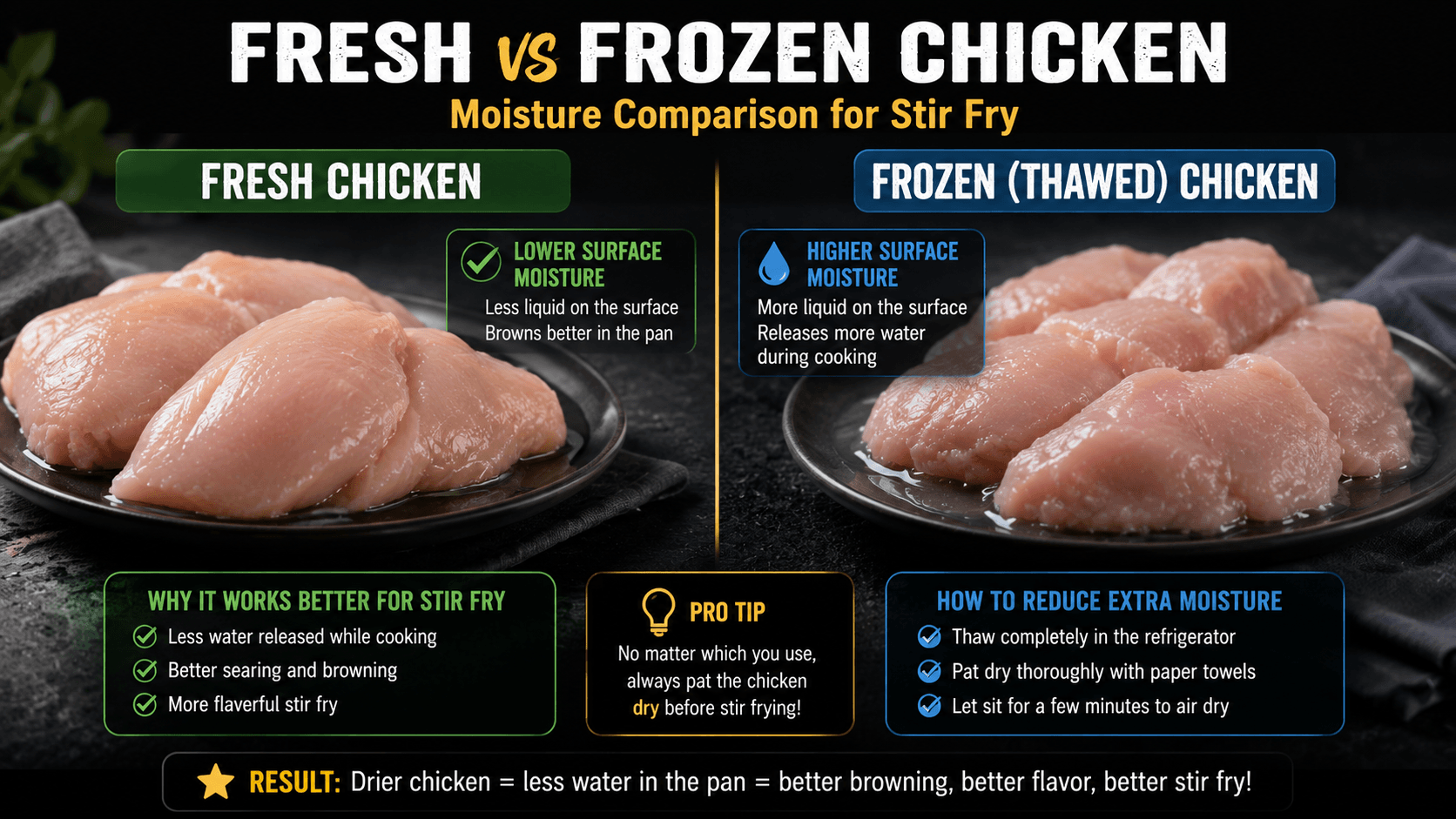
One of the biggest reasons chicken releases water stir fry is the type of chicken you use. While both fresh and frozen chicken can produce excellent stir fry, frozen chicken generally releases more liquid if it isn’t thawed correctly.
When chicken is frozen, tiny ice crystals form inside the muscle fibers. As those crystals melt during cooking, the water escapes into the pan. The more damaged the muscle structure becomes during freezing and thawing, the more moisture the chicken can lose.
That doesn’t mean frozen chicken is a bad choice. It simply requires better preparation before it reaches the wok.
| Fresh Chicken | Frozen Chicken |
|---|---|
| Usually contains less surface moisture. | Often contains extra moisture after thawing. |
| Browns faster. | Takes longer to develop color. |
| Produces less steaming. | May release melted ice into the pan. |
| Best for quick stir frying. | Works well if fully thawed and dried. |
If you’re using frozen chicken, thaw it overnight in the refrigerator whenever possible. After thawing, pat every piece completely dry with paper towels before seasoning.
Pro Tip: Even “fresh” chicken from the grocery store may contain excess packaging liquid. Always remove the chicken from its package and dry it thoroughly before cooking.
Does Your Pan Make a Difference?
Absolutely. Your cookware plays a major role in whether chicken releases water stir fry becomes a problem.
A heavy pan stores more heat, so when cold chicken is added, the cooking surface stays hot enough to evaporate moisture quickly.
Thin pans lose heat almost instantly, causing the chicken to steam instead of sear.
Best Cookware for Stir Fry
- Carbon steel wok
- Cast iron skillet
- Heavy stainless steel skillet
Cookware That Can Cause Problems
- Very thin aluminum pans
- Cheap nonstick pans with poor heat retention
- Small pans filled beyond capacity
High-Heat Pan Advantages
- Better browning
- Less steaming
- Faster moisture evaporation
- Improved flavor development
- Restaurant-style texture
Low-Heat Pan Disadvantages
- Chicken releases more liquid
- Pale appearance
- Less caramelization
- Longer cooking time
- Rubbery texture
If you’re also selecting oils for high-temperature cooking, read our guide to the best oil for stir fry.
Should You Marinate Chicken Before Stir Fry?
Many people assume marinades are responsible when chicken releases water stir fry occurs. In reality, a properly balanced marinade usually improves texture rather than causing excess moisture.
The key is avoiding overly watery marinades.
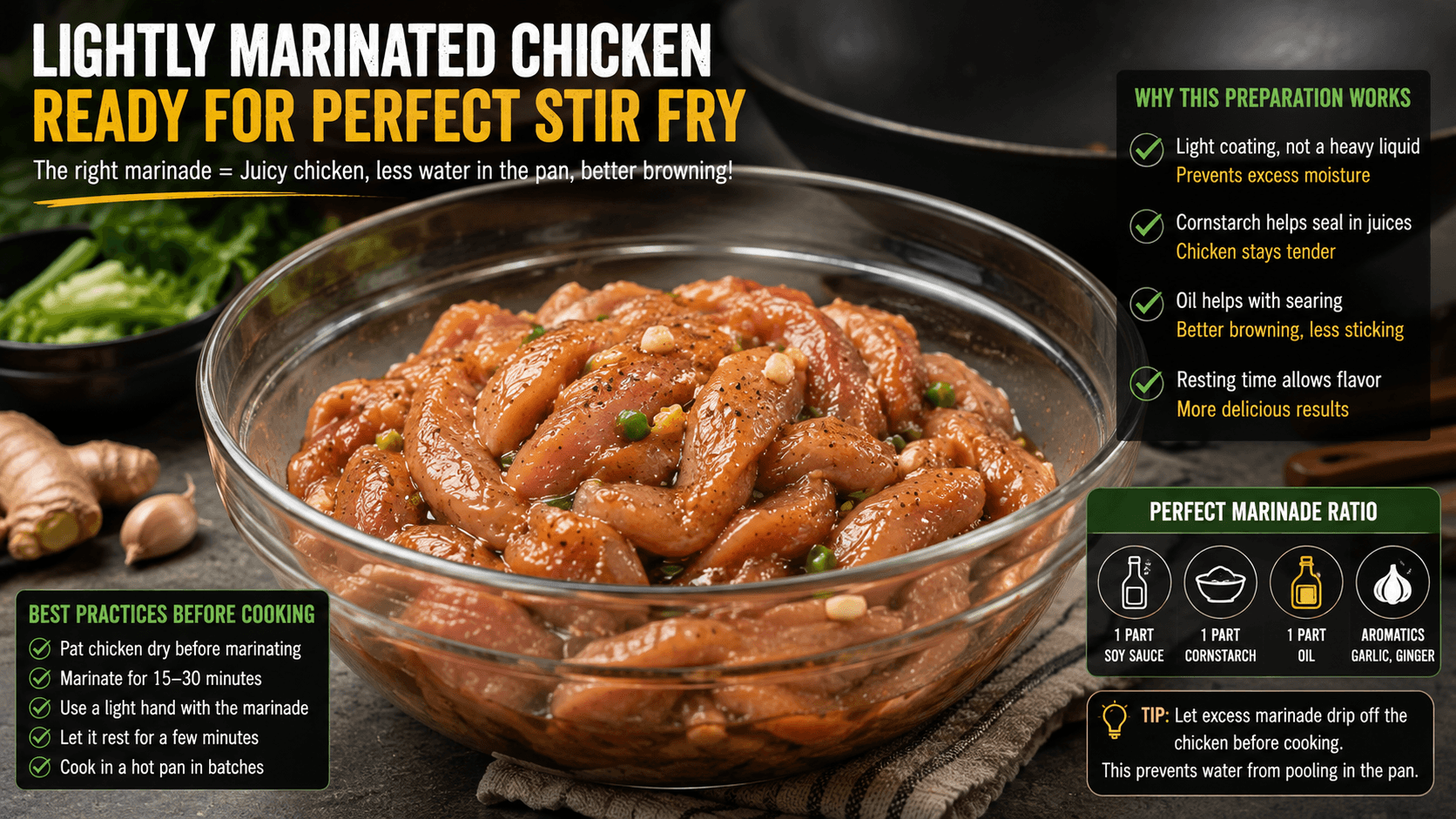
A good stir-fry marinade lightly coats the chicken instead of soaking it in excess liquid.
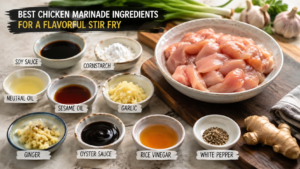
Typical ingredients include:
- Soy sauce
- Cornstarch
- Oil
- Garlic
- Ginger
- Rice vinegar (small amount)
Allow the excess marinade to drip off before adding the chicken to the pan.
Chef’s Secret: Many Chinese restaurants use a technique called velveting. A thin coating of cornstarch helps seal moisture inside the chicken while encouraging faster browning.
Learn the complete process in our guide on how to velvet chicken for stir fry.
Step-by-Step Checklist for Dry, Well-Browned Chicken
If you want consistently successful stir fry, follow this simple checklist every time.
- Choose fresh or fully thawed chicken.
- Pat every piece completely dry.
- Slice the chicken into evenly sized pieces.
- Use a light marinade instead of a watery one.
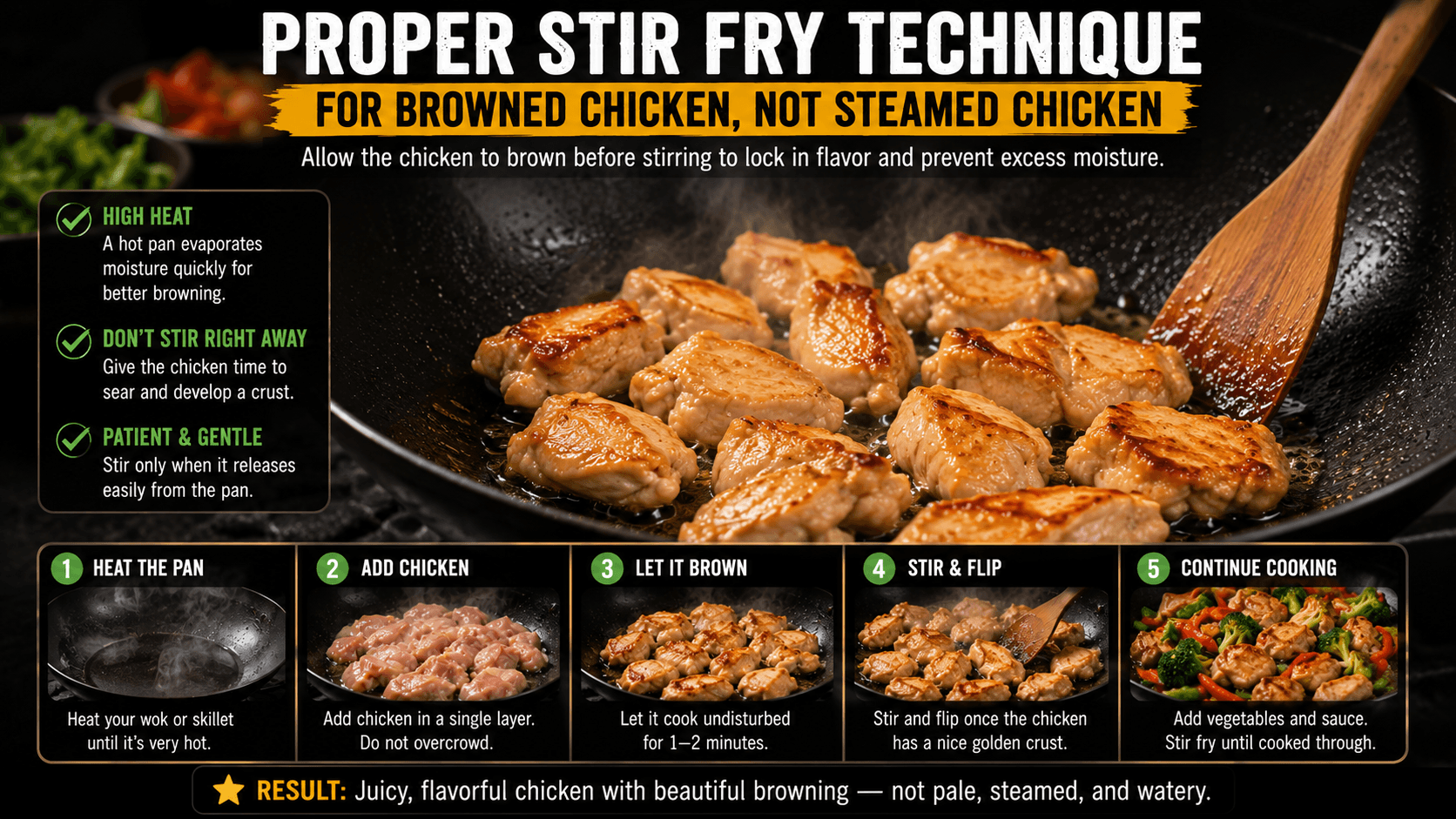
- Preheat the wok until very hot.
- Add only enough chicken to form a single layer.
- Don’t stir immediately.
- Brown one side first.
- Cook vegetables separately if needed.
- Combine everything at the end.
Following these steps dramatically reduces the chance that chicken releases water stir fry becomes an issue.
Common Myths About Chicken Releasing Water
Myth 1: Good Chicken Never Releases Water
False. Every piece of chicken naturally contains water. The goal isn’t eliminating moisture but controlling how it’s released.
Myth 2: Higher Heat Always Dries Out Chicken
Actually, high heat for a short period often produces juicier stir-fried chicken because the exterior browns quickly while the interior stays moist.
Myth 3: More Oil Stops Moisture
Oil helps conduct heat, but adding extra oil won’t stop chicken from releasing moisture if the pan is overcrowded or too cool.
Myth 4: Constant Stirring Prevents Burning
Frequent stirring prevents the chicken from developing a browned crust and often increases steaming.
If excessive liquid has already filled the pan, avoid turning up the heat dramatically while continuing to stir. Instead, remove some chicken, allow the liquid to evaporate, then continue cooking in smaller batches.
Food Safety While Cooking Chicken Stir Fry
Food safety is just as important as cooking technique.
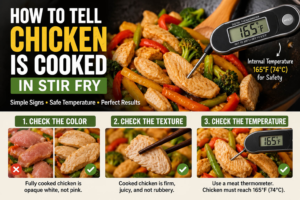
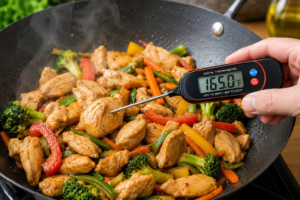
- Cook chicken to an internal temperature of 165°F (74°C).
- Use separate cutting boards for raw meat and vegetables.
- Wash hands after handling raw chicken.
- Refrigerate chicken promptly before cooking.
- Never leave raw chicken at room temperature for more than two hours.
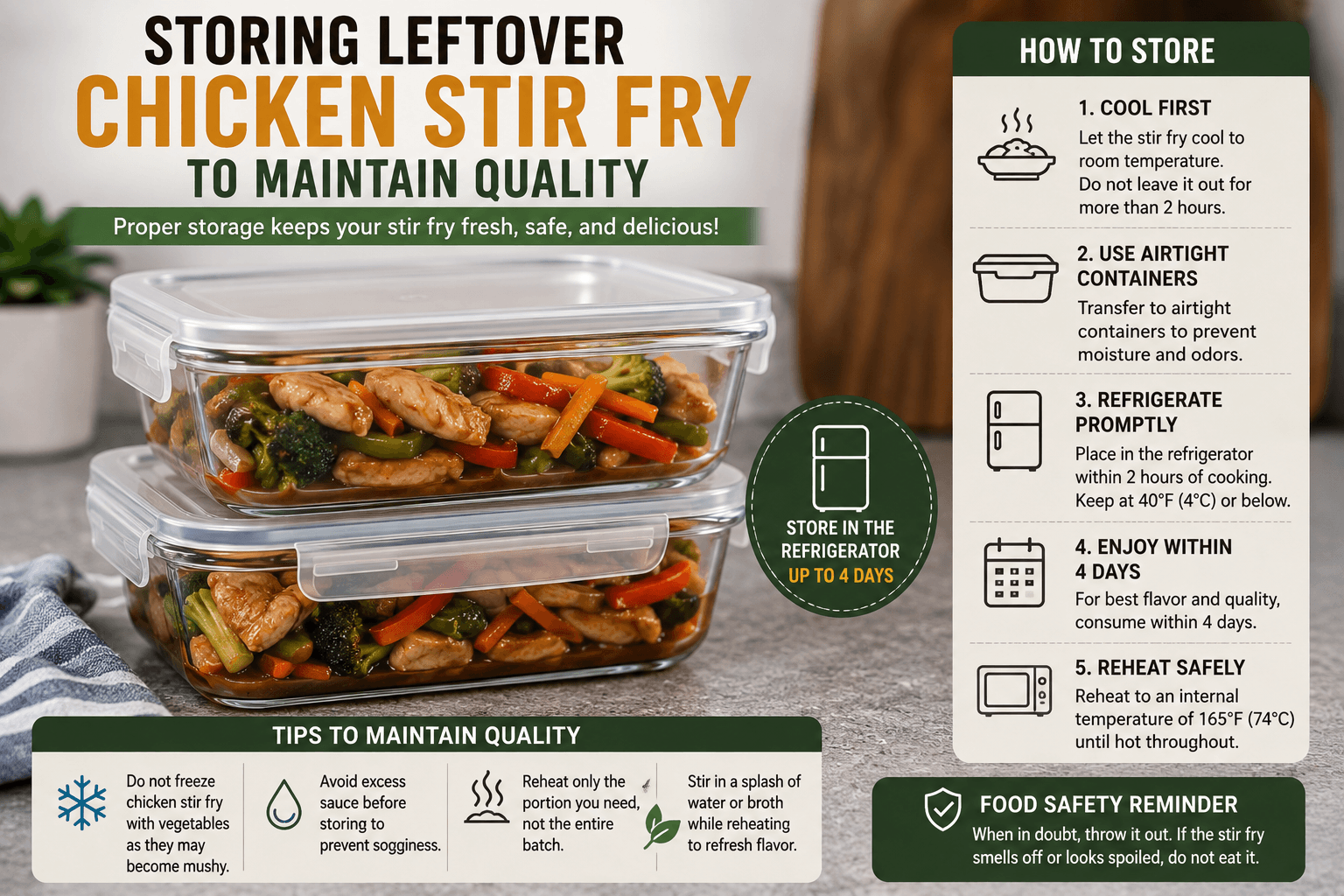
Storage Tip: Leftover chicken stir fry should be cooled quickly, stored in an airtight container, and refrigerated within two hours. It can usually be enjoyed for up to four days when properly refrigerated. Reheat until the chicken reaches 165°F before serving.
For additional preparation advice, see our guide on how to marinate chicken for stir fry.
Frequently Asked Questions
Why does chicken release so much water during stir fry?
Chicken releases water stir fry because muscle fibers naturally expel moisture as they cook. Excess water is usually caused by overcrowding the pan, starting with wet chicken, cooking at too low a temperature, or using partially frozen chicken. Using high heat and cooking in batches allows the moisture to evaporate quickly instead of pooling in the pan.
Should I pat chicken dry before making stir fry?
Yes. Drying the chicken with paper towels is one of the easiest ways to improve browning. Removing surface moisture helps the meat sear instead of steam, resulting in better color, texture, and flavor.
Does frozen chicken release more water than fresh chicken?
In many cases, yes. Frozen chicken can release additional moisture as ice crystals melt during cooking. Fully thawing the chicken in the refrigerator and drying it thoroughly before cooking greatly reduces this problem.
Can marinating chicken cause extra water in stir fry?
A properly balanced marinade usually doesn’t cause excessive moisture. Problems occur when the marinade contains too much liquid or when excess marinade is poured directly into the pan. Let the chicken drain briefly before cooking.
Why doesn’t restaurant stir-fry chicken release as much water?
Restaurants typically use powerful burners, extremely hot carbon steel woks, smaller cooking batches, and techniques like velveting. These methods evaporate moisture almost immediately, allowing the chicken to brown quickly.
Can I save chicken if it has already released water?
Yes. If a large amount of liquid has collected in the pan, remove some of the chicken if necessary, allow the liquid to evaporate over higher heat, then continue cooking. While the chicken may not brown as well as it would have initially, you can still achieve good flavor.
Final Thoughts
If chicken releases water stir fry has been frustrating you, remember that the solution is usually your cooking technique rather than the chicken itself. A hot pan, dry chicken, proper batch size, and patience during the first few minutes of cooking make a dramatic difference.
Small adjustments can completely transform your stir fry. Instead of pale, steamed chicken sitting in a pool of liquid, you’ll create beautifully browned pieces with juicy interiors and rich flavor. Once these techniques become part of your routine, you’ll consistently produce stir fry that looks and tastes much closer to what you’d expect from your favorite restaurant.
🍽️ You Might Also Like
📧 Save This Recipe For Later
Enter your email and we will send this recipe directly to your inbox.