
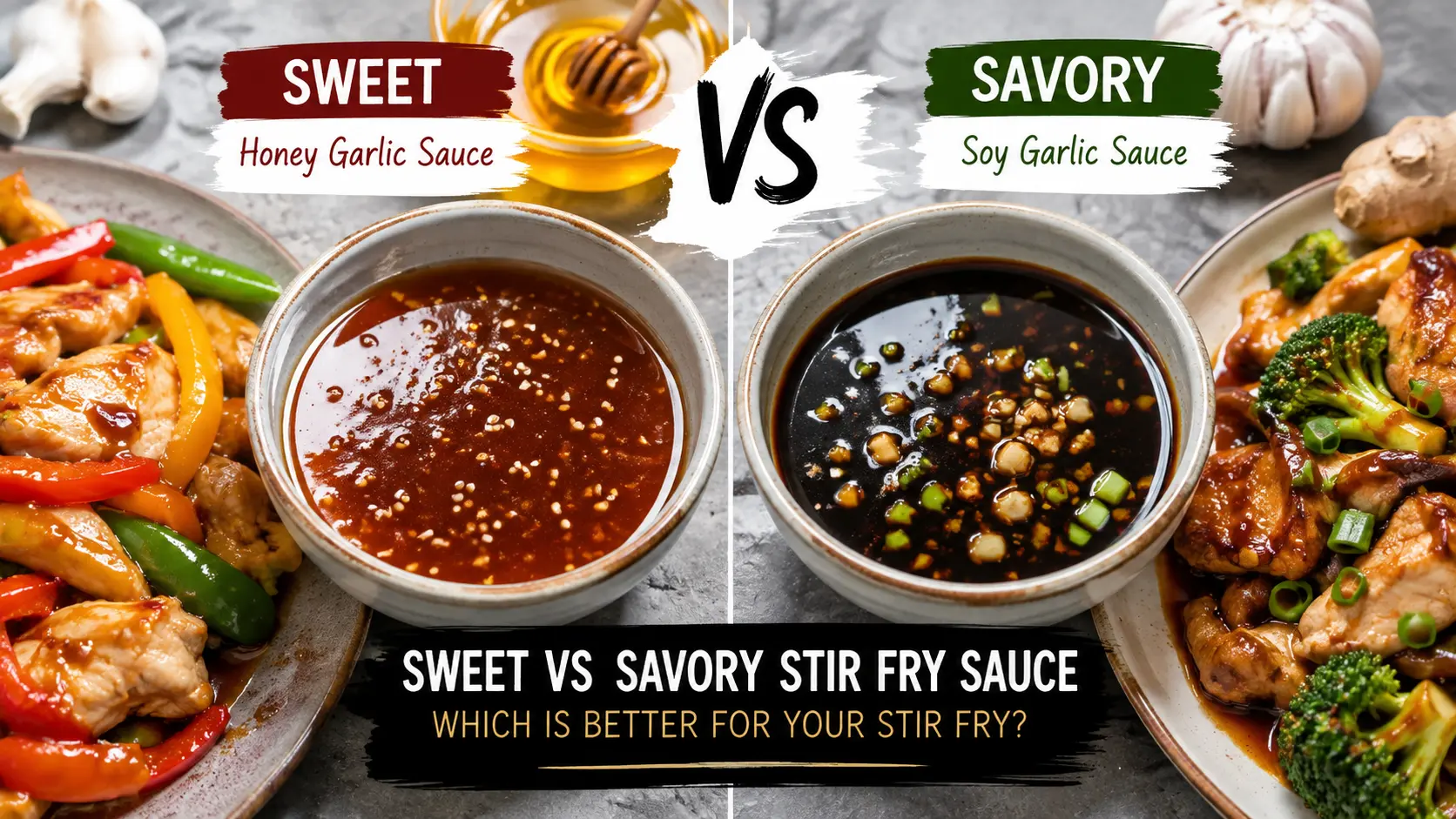
Sweet vs. Savory Stir Fry Sauce (Which Is Better?)
Sweet vs. Savory Stir Fry Sauce (Which Is Better?)
Choosing between a sweet and savory stir fry sauce can completely change the flavor of your meal. While both styles create delicious results, they serve different purposes depending on the ingredients, cooking method, and your personal taste. If you’ve ever wondered which option works best for chicken, vegetables, noodles, or rice, understanding the differences will help you make better decisions in the kitchen.
In this guide, we’ll compare sweet vs savory stir fry sauce in detail, including their flavor profiles, best uses, nutritional differences, and how to choose the right sauce for different stir fry recipes. Whether you’re making a quick weeknight dinner or experimenting with homemade sauces, this comparison will help you create a perfectly balanced dish every time.
Quick Answer
Sweet vs savory stir fry sauce isn’t about which one is universally better—it’s about choosing the right flavor for your dish. Sweet sauces, often made with honey, brown sugar, or maple syrup, pair well with chicken, carrots, bell peppers, and pineapple. Savory sauces rely on soy sauce, garlic, ginger, sesame oil, and umami-rich ingredients, making them ideal for beef, mushrooms, broccoli, and classic Asian-style stir fries. For the most balanced flavor, many homemade stir fry sauces combine both sweet and savory elements.
Table of Contents
Sweet vs. Savory Stir Fry Sauce: What’s the Difference?
The biggest difference between sweet vs savory stir fry sauce is how each sauce creates balance in a stir fry. Sweet sauces emphasize caramelized, slightly sugary flavors that coat ingredients with a glossy finish, while savory sauces focus on rich umami notes that enhance the natural taste of meat and vegetables.
Neither option is inherently better. Instead, each sauce complements different ingredients and cooking styles. Sweet sauces often appeal to those who enjoy bold, slightly sticky flavors, whereas savory sauces provide a deeper, more traditional taste commonly found in many Asian-inspired stir fries.
| Feature | Sweet Stir Fry Sauce | Savory Stir Fry Sauce |
|---|---|---|
| Primary Flavor | Sweet and slightly sticky | Rich, salty, and umami |
| Main Sweetener | Honey, brown sugar, maple syrup | Little or no added sweetener |
| Typical Base | Soy sauce plus sweet ingredients | Soy sauce, garlic, ginger, sesame oil |
| Best With | Chicken, shrimp, colorful vegetables | Beef, mushrooms, broccoli, snap peas |
Tip: The best homemade stir fry sauces rarely rely on only one flavor. Even savory sauces usually contain a small amount of sweetness, while sweet sauces still need soy sauce and aromatics to create balance.
Understanding the Flavor Profiles
When comparing sweet vs savory stir fry sauce, it’s important to understand that flavor isn’t determined by sugar alone. Great stir fry sauces are built around several complementary tastes that work together instead of competing.
A sweet stir fry sauce typically delivers an immediate burst of sweetness followed by subtle salty and aromatic notes. Honey, brown sugar, or fruit juices soften the sharpness of soy sauce while helping the sauce caramelize as it cooks.
A savory stir fry sauce, on the other hand, highlights umami. Ingredients like garlic, ginger, soy sauce, oyster sauce, mushroom-based seasonings, and toasted sesame oil create layers of deep, satisfying flavor without making the dish taste sugary.
Understanding these differences makes it easier to customize homemade sauces and achieve the exact flavor you’re looking for in every stir fry.
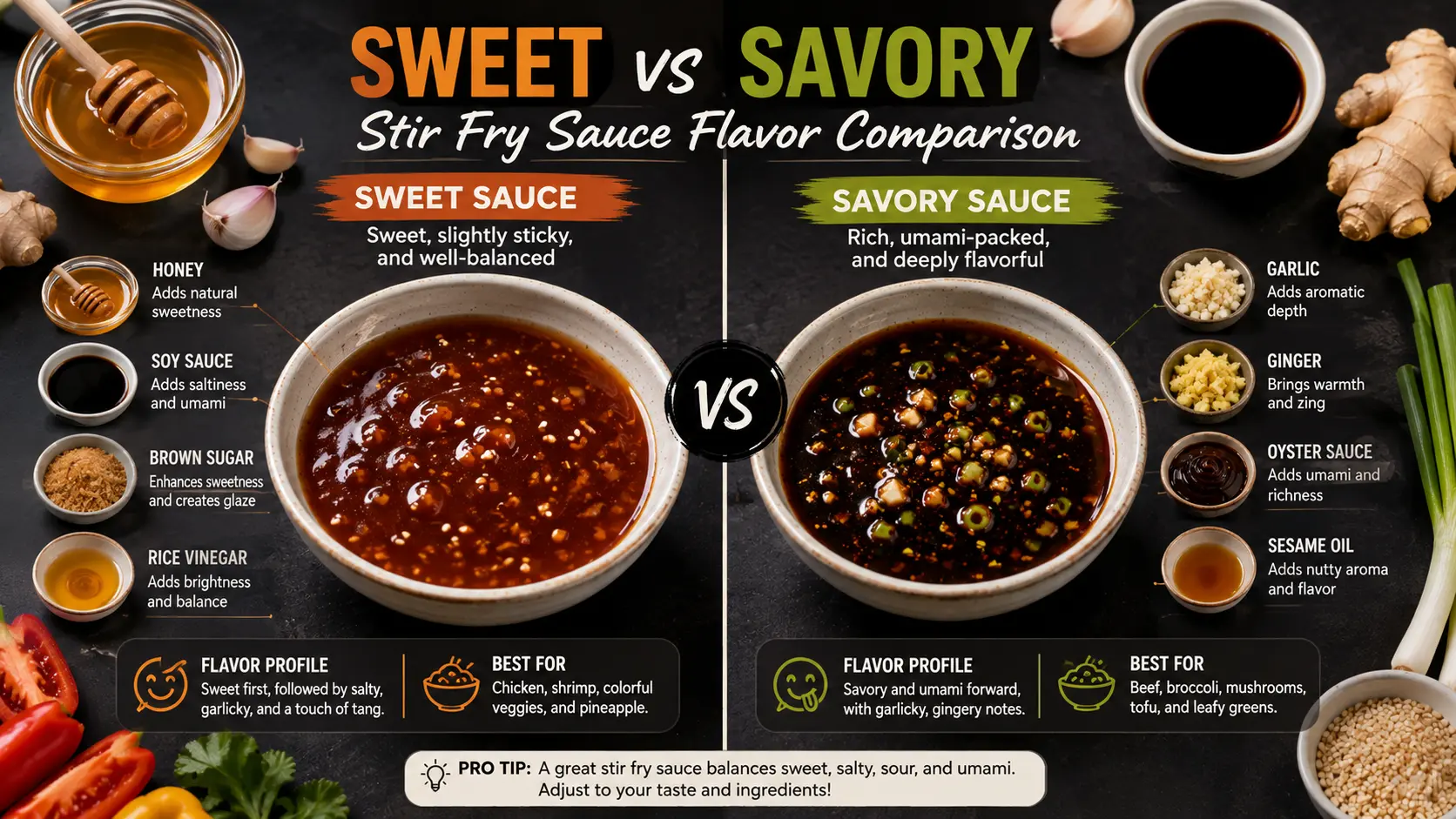
If you’re interested in experimenting with different flavor combinations, our guide to best homemade stir fry sauce variations explores several easy ways to customize your sauce. You can also learn how flavor balance works in how to balance sweet, salty, sour, and umami in stir fry sauce.
Common Ingredients in Sweet and Savory Stir Fry Sauces
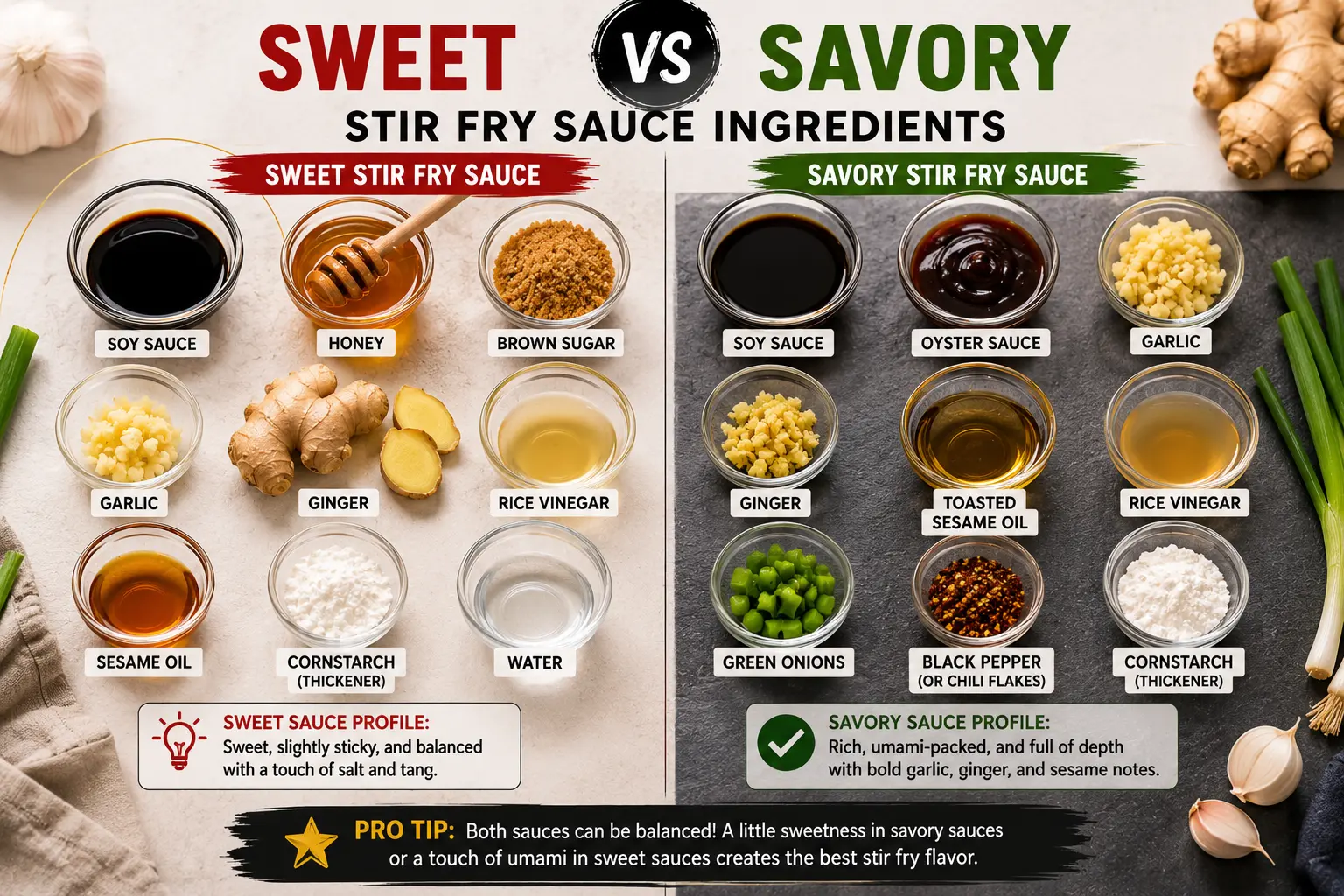
One of the easiest ways to understand sweet vs savory stir fry sauce is by looking at the ingredients that build each flavor profile. While both sauces often start with a similar base, the supporting ingredients create completely different results.
Many homemade stir fry sauces include soy sauce, garlic, ginger, and a thickener like cornstarch. From there, the recipe changes depending on whether you want a sweeter glaze or a rich, savory finish.
| Ingredient | Sweet Stir Fry Sauce | Savory Stir Fry Sauce |
|---|---|---|
| Soy Sauce | ✓ | ✓ |
| Garlic | ✓ | ✓ |
| Fresh Ginger | ✓ | ✓ |
| Honey | Common | Rare |
| Brown Sugar | Common | Occasionally |
| Maple Syrup | Optional | Rare |
| Oyster Sauce | Optional | Very Common |
| Sesame Oil | Small Amount | Common |
| Rice Vinegar | Optional | Optional |
| Black Pepper | Light | Moderate |
Sweet sauces rely on natural or added sweeteners to create a glossy coating that lightly caramelizes around the chicken and vegetables. Savory sauces focus more on layers of umami, allowing ingredients like garlic, ginger, mushrooms, and soy sauce to become the stars of the dish.
Kitchen Secret: The most flavorful stir fry sauces usually contain a touch of sweetness—even savory ones. A teaspoon of honey or brown sugar doesn’t necessarily make the sauce sweet; instead, it balances the saltiness of soy sauce and enhances overall flavor.
Sweet vs. Savory Stir Fry Sauce Comparison
If you’re still deciding between sweet vs savory stir fry sauce, comparing them side by side makes the differences much clearer. Each sauce has strengths depending on the ingredients you’re cooking and the flavor you’re trying to achieve.
| Category | Sweet Sauce | Savory Sauce |
|---|---|---|
| Flavor | Sweet, mild, slightly sticky | Bold, rich, umami-forward |
| Texture | Glossy and caramelized | Smooth and silky |
| Family Friendly | Excellent | Very Good |
| Pairs with Vegetables | Colorful vegetables | Green vegetables and mushrooms |
| Best Protein | Chicken, shrimp | Chicken, beef, pork, tofu |
| Heat Compatibility | Balances spicy flavors | Enhances spicy flavors |
| Traditional Asian Flavor | Moderate | Strong |
Neither style wins every category because they serve different purposes. Sweet sauces are often the better choice when cooking for children or anyone who enjoys milder flavors. Savory sauces are ideal for people who appreciate deeper, restaurant-style stir fry flavors.
If you enjoy sweeter flavors, you may also like our Honey Garlic Stir Fry Sauce Guide. For readers who prefer extra heat, check out How to Make Spicy Stir Fry Sauce at Home, where you’ll learn how spicy ingredients work with both sweet and savory sauce bases.
Which Foods Pair Best with Each Sauce?
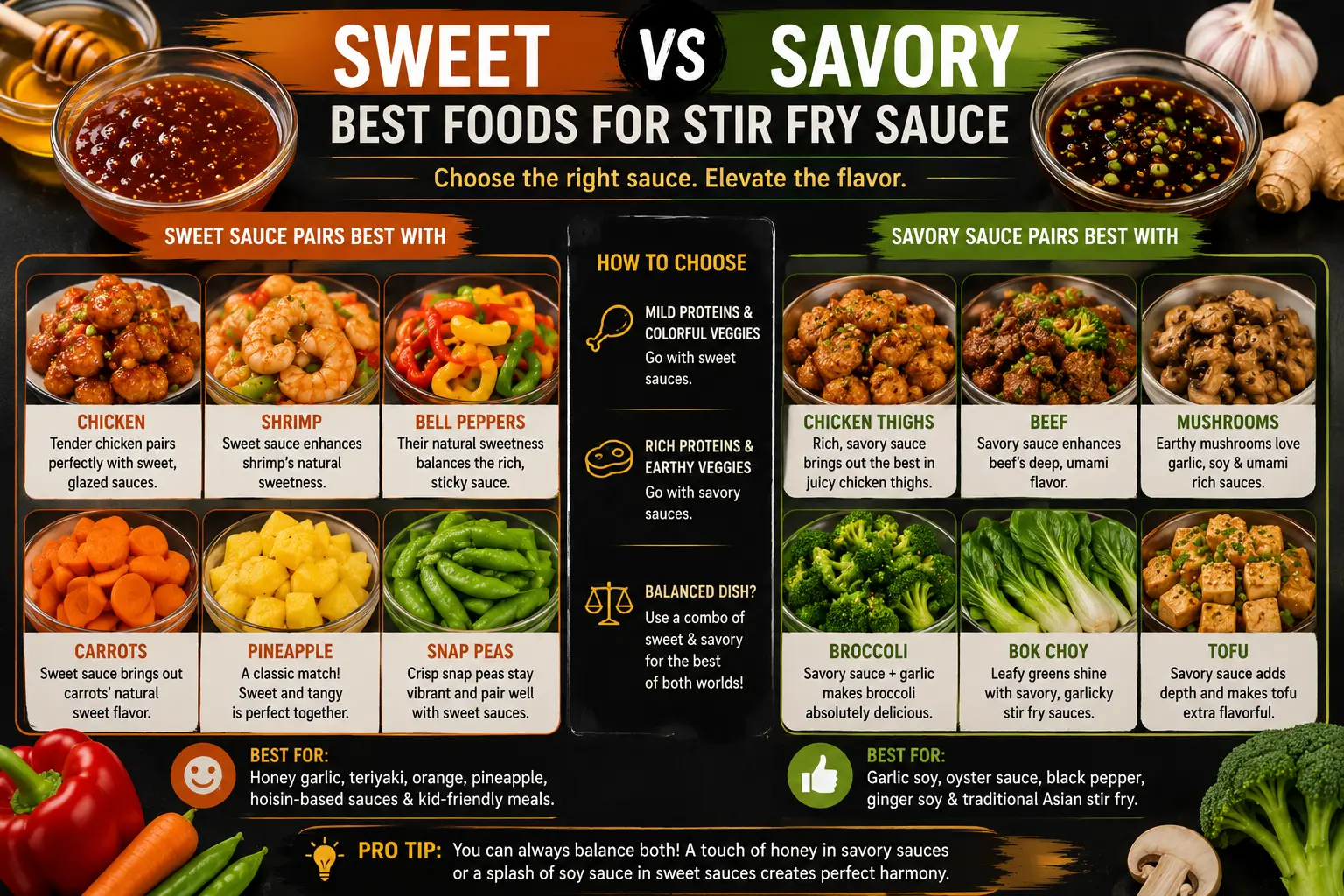
When deciding between sweet vs savory stir fry sauce, the ingredients in your stir fry matter just as much as your personal taste. Some proteins and vegetables naturally complement sweeter flavors, while others benefit from the rich, savory taste of soy sauce, garlic, and umami-rich ingredients.
Matching the right sauce to your ingredients creates a more balanced meal without requiring extra seasonings. Instead of overpowering the food, the sauce should enhance its natural flavor.
| Ingredient | Sweet Sauce | Savory Sauce | Best Choice |
|---|---|---|---|
| Chicken Breast | ★★★★★ | ★★★★★ | Both |
| Chicken Thighs | ★★★★☆ | ★★★★★ | Savory |
| Beef | ★★★☆☆ | ★★★★★ | Savory |
| Shrimp | ★★★★★ | ★★★★☆ | Sweet |
| Tofu | ★★★★☆ | ★★★★★ | Savory |
| Broccoli | ★★★★☆ | ★★★★★ | Savory |
| Bell Peppers | ★★★★★ | ★★★★☆ | Sweet |
| Carrots | ★★★★★ | ★★★★☆ | Sweet |
| Mushrooms | ★★★☆☆ | ★★★★★ | Savory |
| Pineapple | ★★★★★ | ★★☆☆☆ | Sweet |
If you’re cooking a colorful chicken stir fry with carrots, bell peppers, and snap peas, a lightly sweet sauce often brings out the vegetables’ natural sweetness. On the other hand, broccoli, mushrooms, bok choy, and snow peas usually taste better with a savory sauce that highlights their earthy flavors.
Tip: Don’t choose your sauce based only on the protein. Consider the vegetables too. A balanced stir fry is created when every ingredient complements the sauce rather than competing with it.
When Should You Choose a Sweet Stir Fry Sauce?
A sweet stir fry sauce is an excellent option when you want a glossy, slightly sticky finish that appeals to a wide range of tastes. Because the sweetness softens the saltiness of soy sauce, these sauces are often considered more approachable, especially for families with children.
Honey, brown sugar, maple syrup, or even pineapple juice can add just enough sweetness to create balance without making the dish taste like dessert. The goal is to complement the savory ingredients—not overpower them.
Sweet Stir Fry Sauce Is Best For:
- Chicken breast stir fry recipes
- Shrimp stir fries
- Vegetable stir fries with carrots and bell peppers
- Honey garlic sauces
- Teriyaki-inspired dishes
- Meals served with steamed rice
- Family-friendly dinners
Many restaurant-style stir fries include a touch of sweetness because sugar and honey help create the shiny glaze people associate with takeout dishes. They also promote gentle caramelization during cooking, adding another layer of flavor.
Kitchen Secret: Add sweet ingredients near the end of cooking. Honey and brown sugar can burn quickly over very high heat, so mixing them into the sauce instead of adding them directly to the hot pan produces better results.
If you enjoy sweeter stir fries, our Honey Garlic Chicken Stir Fry and Teriyaki Chicken Stir Fry are excellent examples of how sweetness can complement chicken without overwhelming the dish.
When Should You Choose a Savory Stir Fry Sauce?
If you enjoy bold, restaurant-style flavors, a savory sauce is often the better choice in the sweet vs savory stir fry sauce comparison. Instead of relying on sugar or honey, savory sauces build flavor through umami-rich ingredients like soy sauce, garlic, fresh ginger, oyster sauce, toasted sesame oil, and occasionally mushroom-based seasonings.
The result is a sauce with more depth and complexity. Rather than coating the ingredients with sweetness, it enhances the natural flavor of the meat and vegetables, making every bite taste richer without feeling heavy.
Savory stir fry sauces are especially popular in traditional Asian-inspired cooking because they allow fresh ingredients to remain the focus while adding balanced saltiness and aromatic flavor.
Savory Stir Fry Sauce Is Best For:
- Beef stir fry
- Chicken thighs
- Broccoli stir fry
- Mushroom stir fry
- Bok choy and leafy greens
- Tofu stir fry
- Garlic-forward recipes
- High-protein, lower-sugar meals
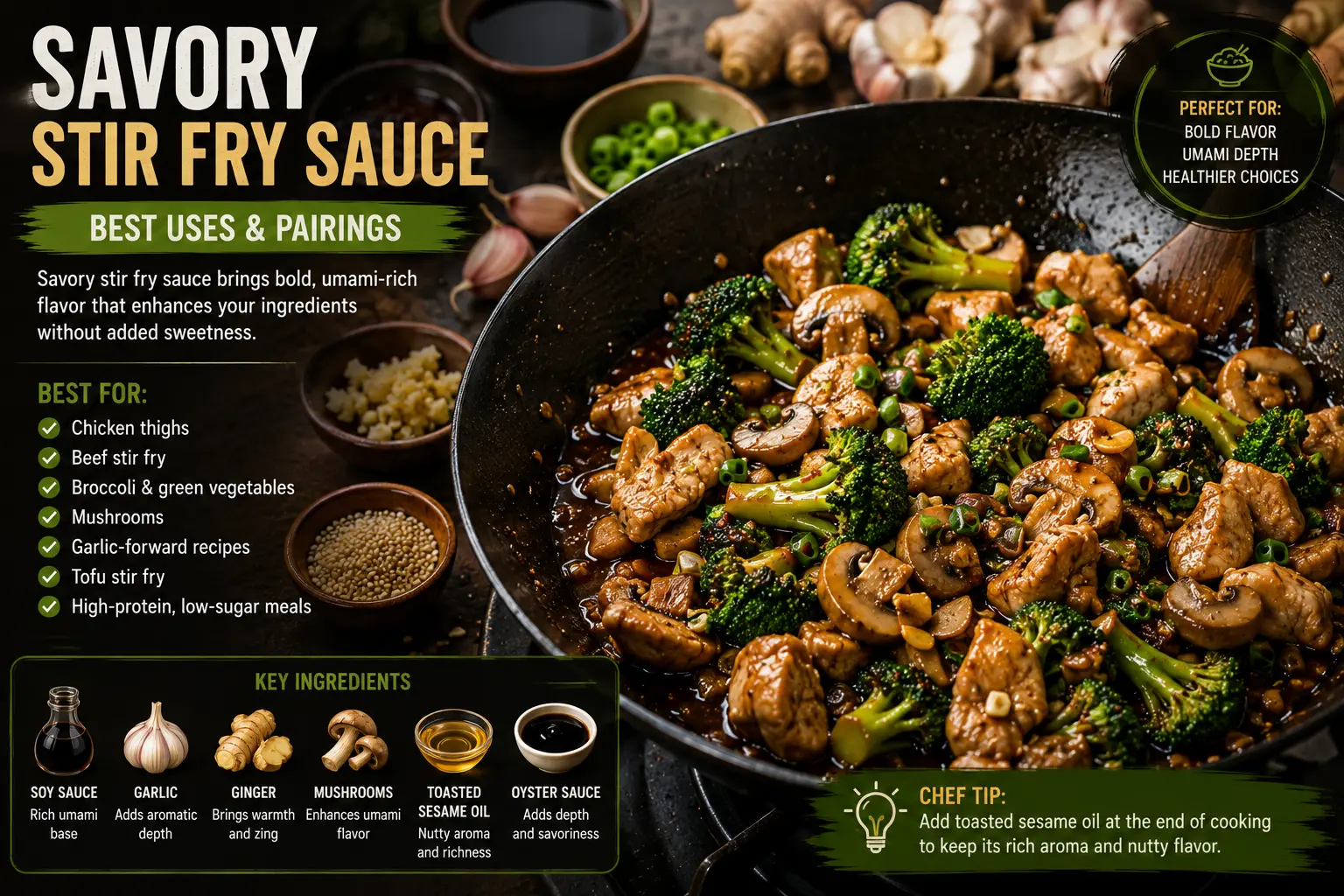
A savory sauce also works well when your stir fry contains naturally sweet vegetables like onions or carrots. Their sweetness balances the salty umami flavors, creating a dish that tastes complete without adding extra sugar.
Tip: Toasted sesame oil is a finishing ingredient rather than a cooking oil. Add a small amount after cooking to preserve its rich nutty aroma and prevent it from becoming bitter.
Can You Combine Sweet and Savory Flavors?
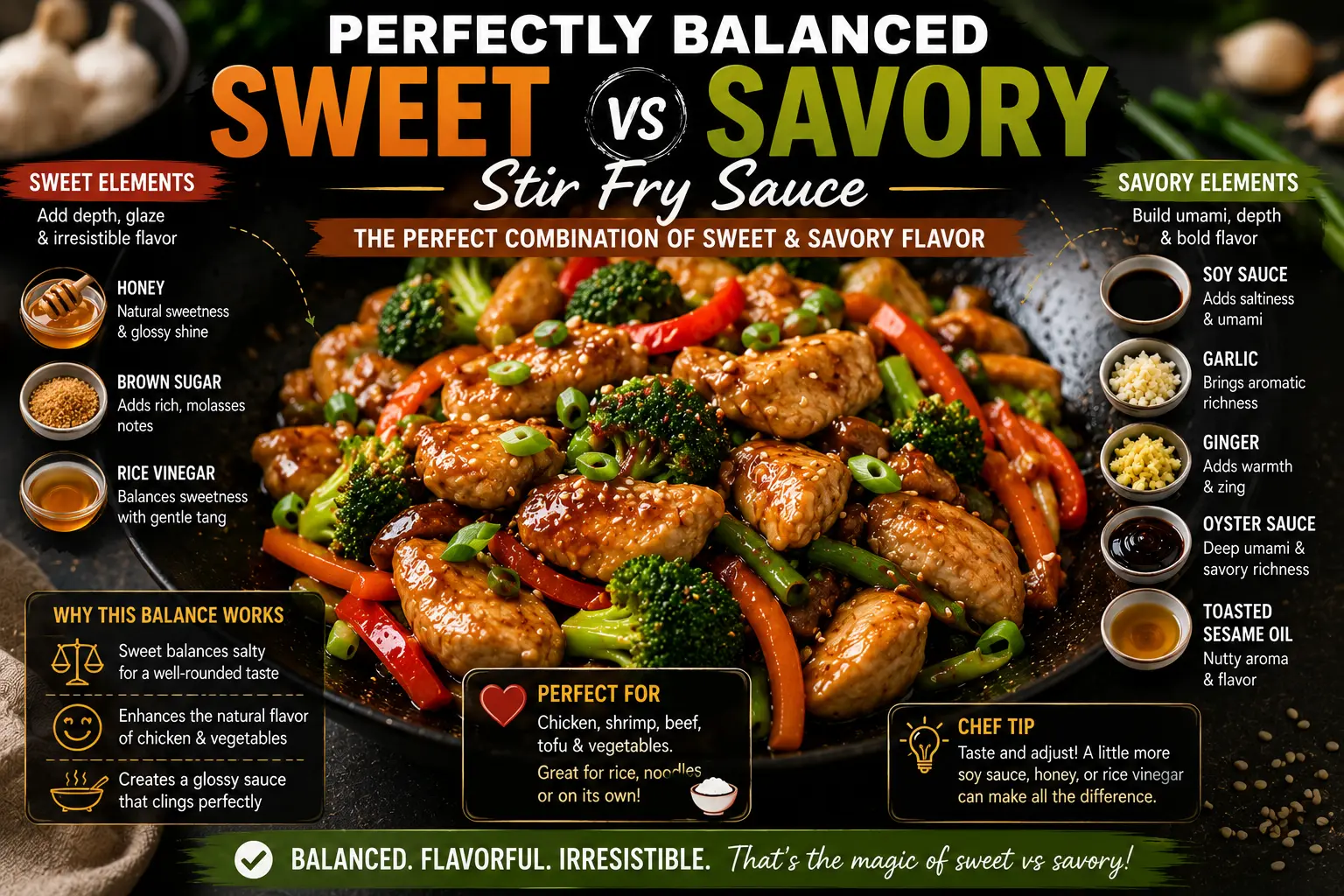
Absolutely. In fact, many of the most popular homemade and restaurant stir fry sauces are neither purely sweet nor purely savory. Instead, they combine both flavor profiles to create balance.
This is one of the biggest takeaways when comparing sweet vs savory stir fry sauce. Rather than choosing one extreme, you can adjust the ratio of sweet and savory ingredients based on the meal you’re preparing.
| Flavor Goal | Recommended Balance |
|---|---|
| Classic Chicken Stir Fry | 70% Savory / 30% Sweet |
| Honey Garlic Stir Fry | 60% Sweet / 40% Savory |
| Teriyaki Style | 50% Sweet / 50% Savory |
| Spicy Stir Fry | 75% Savory / 25% Sweet |
| Vegetable Stir Fry | 65% Savory / 35% Sweet |
For example, a homemade sauce might combine soy sauce, garlic, ginger, sesame oil, and oyster sauce for its savory foundation, then include a spoonful of honey or brown sugar to soften the saltiness and improve caramelization.
This balanced approach produces a sauce that’s flavorful, glossy, and versatile enough for chicken, vegetables, shrimp, or noodles.
Advantages of Sweet Stir Fry Sauce
- Appeals to kids and picky eaters
- Creates a shiny glazed finish
- Pairs well with chicken and shrimp
- Balances spicy ingredients
- Works beautifully with colorful vegetables
Advantages of Savory Stir Fry Sauce
- Rich umami flavor
- Lower in added sugar
- Excellent for beef and mushrooms
- Tastes closer to restaurant stir fry
- Easy to customize with aromatics
If you’re looking for more inspiration, our Ultimate Chicken Stir Fry Sauce Guide explains how different sauces affect flavor, while Teriyaki Sauce vs. Stir Fry Sauce compares another popular sauce choice.
Common Mistakes When Choosing Stir Fry Sauce
Even after understanding the differences between sweet vs savory stir fry sauce, it’s easy to make small mistakes that affect the final flavor of your meal. The good news is that most of these issues are easy to avoid with a little planning.
The best stir fry sauces are balanced. They should enhance the ingredients instead of masking them with too much sweetness or overwhelming saltiness.
Warning: Adding extra sugar or soy sauce at the end of cooking rarely fixes an unbalanced sauce. It’s much better to taste and adjust the sauce before it goes into the hot pan.
1. Choosing a Sauce That Doesn’t Match the Ingredients
A sweet sauce may overpower earthy vegetables like mushrooms or bok choy, while a strongly savory sauce can hide the delicate flavor of shrimp or pineapple. Think about the entire dish before choosing your sauce.
2. Using Too Much Sweetener
Honey, brown sugar, and maple syrup should enhance the sauce—not dominate it. Too much sweetness can make the stir fry taste more like a glaze than a balanced sauce.
3. Forgetting Acid
A small splash of rice vinegar or fresh lime juice helps brighten both sweet and savory sauces. Without a little acidity, the sauce may taste flat or overly rich.
4. Ignoring Umami
Many home cooks focus only on sweetness or saltiness. Ingredients like garlic, ginger, soy sauce, oyster sauce, and toasted sesame oil provide the umami depth that makes homemade stir fry taste closer to restaurant quality.
5. Over-Thickening the Sauce
Too much cornstarch creates a gummy texture that coats the ingredients instead of lightly glazing them. A silky sauce should cling to the food without becoming heavy.
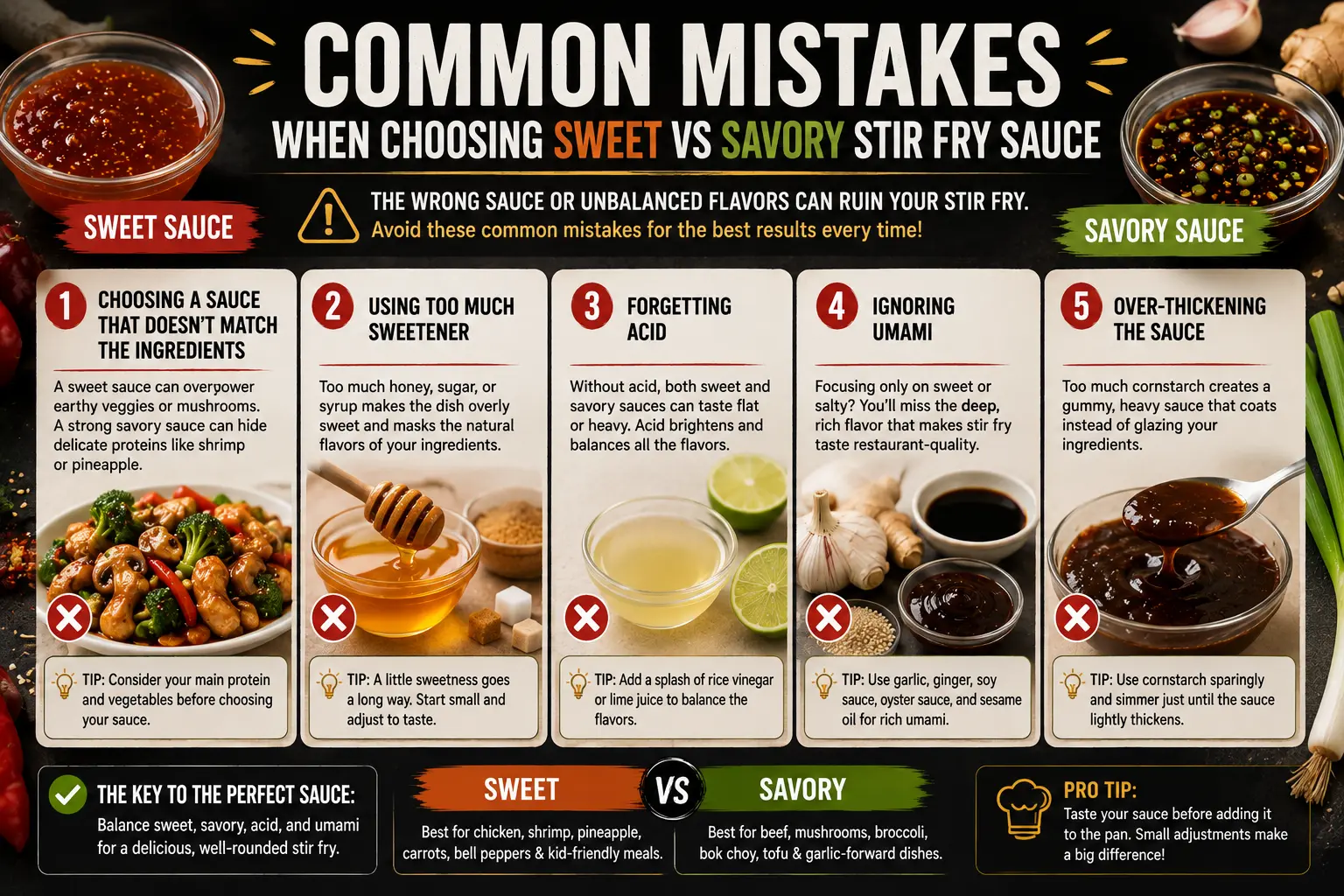
If you’ve experienced problems with homemade sauces, our guide to Common Stir Fry Sauce Mistakes explains how to identify and fix the most common issues before they ruin your meal.
How to Choose the Right Stir Fry Sauce Every Time
If you’re still unsure which option to use, this simple checklist makes choosing between sweet vs savory stir fry sauce much easier.
| If Your Meal Includes… | Recommended Sauce |
|---|---|
| Chicken and colorful vegetables | Sweet or balanced |
| Beef and mushrooms | Savory |
| Shrimp and pineapple | Sweet |
| Broccoli and garlic | Savory |
| Spicy peppers | Balanced with slight sweetness |
| Healthy low-sugar meals | Savory |
| Family-friendly dinners | Lightly sweet |
Remember that there isn’t a single “best” sauce for every stir fry. Instead, think about the ingredients, the level of sweetness you enjoy, and the overall flavor you’re trying to create.
Kitchen Secret: Professional chefs often taste the sauce before adding it to the wok. A quick adjustment with a teaspoon of honey, soy sauce, or rice vinegar can dramatically improve the finished dish.
For practical inspiration, try our Classic Chicken Stir Fry, Chicken Broccoli Stir Fry, or Healthy Chicken Stir Fry to see how different sauce styles complement different ingredients.
Frequently Asked Questions
Is sweet or savory stir fry sauce healthier?
Generally, savory stir fry sauce contains less added sugar, making it a better option for people trying to reduce sugar intake. However, both sauces can be healthy when made at home with quality ingredients and used in moderation.
Can I mix sweet and savory stir fry sauce together?
Yes. Combining both flavors is one of the best ways to create a balanced homemade stir fry sauce. A savory base with a small amount of honey or brown sugar produces rich flavor without becoming overly sweet.
Which sauce is best for chicken stir fry?
Chicken works well with both styles. A lightly sweet sauce is perfect for honey garlic or teriyaki-inspired recipes, while a savory sauce is ideal for garlic chicken, broccoli chicken, and vegetable stir fries.
Does sweet stir fry sauce burn more easily?
Yes. Because it contains sugars like honey or brown sugar, a sweet stir fry sauce can caramelize quickly over high heat. Keep the ingredients moving and avoid cooking the sauce for too long after it thickens.
Can I make savory stir fry sauce without oyster sauce?
Absolutely. Soy sauce, garlic, ginger, toasted sesame oil, mushroom seasoning, and a splash of rice vinegar can create a flavorful savory stir fry sauce without using oyster sauce.
How do I balance a stir fry sauce that’s too sweet?
Add a little more soy sauce, fresh ginger, garlic, or a splash of rice vinegar. These ingredients help reduce the perception of sweetness while restoring balance.
Final Thoughts
When comparing sweet vs savory stir fry sauce, there isn’t a single winner because each style shines in different situations. Sweet sauces are excellent for creating glossy, family-friendly meals with chicken, shrimp, and colorful vegetables, while savory sauces deliver the rich umami flavor that many people associate with restaurant-quality stir fry.
For the best results, don’t think of sweet and savory as opposites. Instead, use them as complementary flavors. A balanced sauce that combines soy sauce, garlic, ginger, and just enough sweetness often produces the most satisfying stir fry. Once you understand how each ingredient affects the overall taste, you can confidently customize your sauce for any protein, vegetable, or noodle dish.
🍽️ You Might Also Like



📧 Save This Recipe For Later
Enter your email and we will send this recipe directly to your inbox.