
Teriyaki Sauce vs. Stir Fry Sauce
Teriyaki Sauce vs. Stir Fry Sauce: What’s the Difference and Which One Should You Use?
If you’ve ever stood in the grocery store wondering whether to buy teriyaki sauce or stir fry sauce, you’re not alone. While these sauces may look similar on the shelf, they aren’t interchangeable in every recipe. Understanding the differences can help you choose the right sauce for better flavor, texture, and cooking results.
The comparison of teriyaki sauce vs stir fry sauce goes beyond sweetness. Each sauce has its own balance of ingredients, consistency, cooking purpose, and best uses. Teriyaki sauce is known for its glossy, sweet-savory flavor that’s perfect for glazing meats, while stir fry sauce is designed to quickly coat vegetables, proteins, and noodles during high-heat cooking.
Whether you’re making a homemade weeknight dinner or following one of our chicken stir fry recipes, knowing when to use each sauce will improve the final dish. In this guide, you’ll learn how these sauces differ, when one works better than the other, whether they can be substituted, and how to choose the best option for your next meal.
Quick Answer
Teriyaki sauce vs stir fry sauce comes down to flavor and purpose. Teriyaki sauce is typically sweeter, thicker, and used as a glaze or marinade for meats. Stir fry sauce has a more balanced savory flavor, is usually lighter, and is designed to coat vegetables, proteins, and noodles during quick high-heat cooking. While you can substitute one for the other in some recipes, the final taste and texture will be noticeably different.
Table of Contents
What Is the Difference Between Teriyaki Sauce and Stir Fry Sauce?
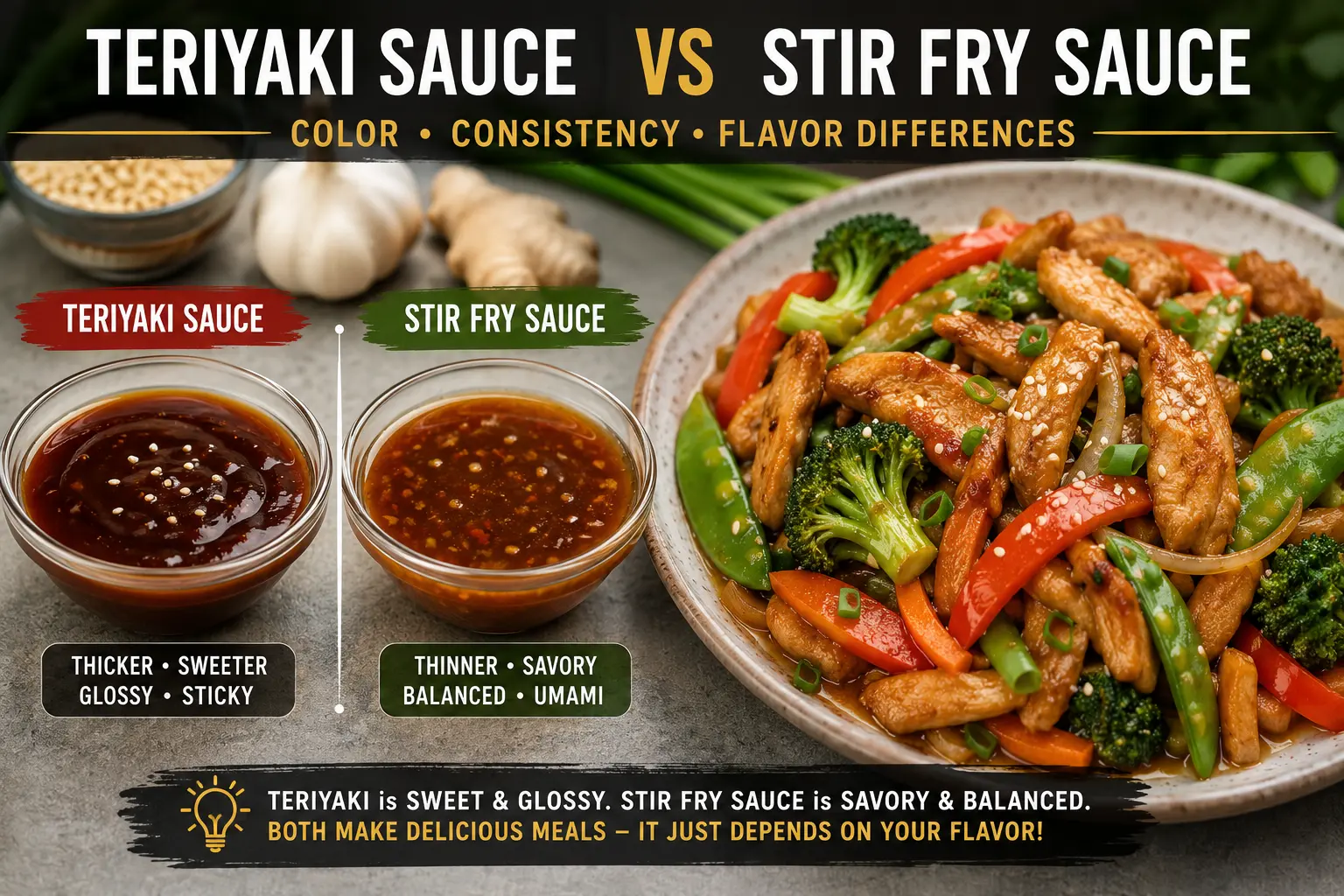
The biggest difference in teriyaki sauce vs stir fry sauce is their intended purpose. Although both are popular Asian-inspired sauces and share ingredients like soy sauce, garlic, and ginger, they create very different eating experiences.
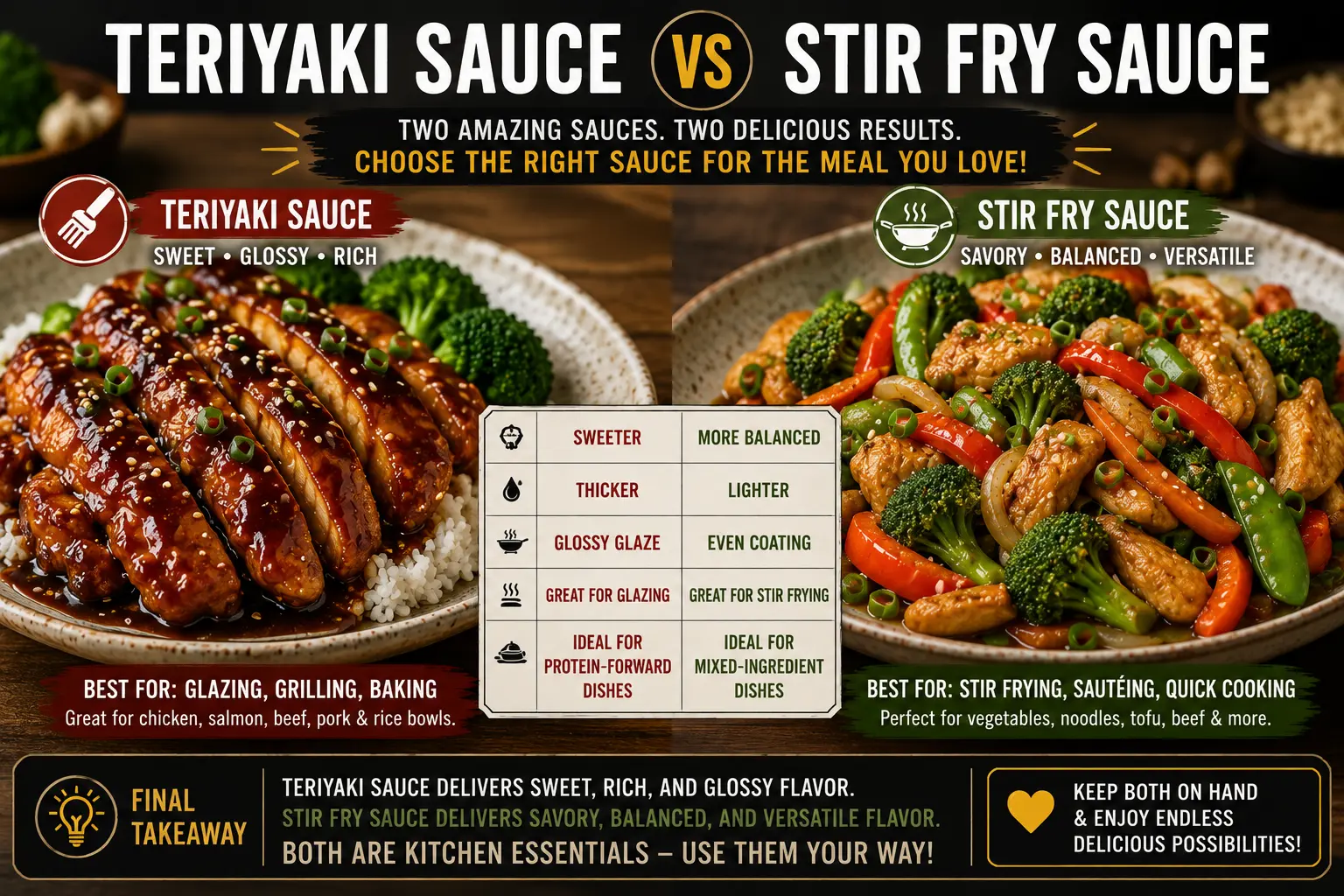
Teriyaki sauce originated in Japanese cuisine and focuses on a glossy, caramelized finish. It contains more sugar or honey, giving it a sweeter taste that helps meats develop a shiny glaze during cooking. Chicken, salmon, steak, and shrimp are all popular proteins prepared with teriyaki sauce.
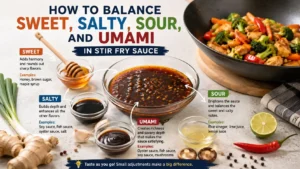
Stir fry sauce, on the other hand, is designed for versatility. Rather than highlighting sweetness, it balances salty, savory, umami, and aromatic flavors so it complements vegetables, noodles, rice, tofu, and different proteins equally well. It spreads evenly through the entire dish instead of forming a thick glaze on one ingredient.
Another important distinction is consistency. Many teriyaki sauces are naturally thicker because they include additional sweeteners or cornstarch. Stir fry sauce often starts thinner and thickens slightly only after it cooks with the ingredients in the hot pan.
Tip: If your meal contains lots of vegetables and noodles, stir fry sauce usually provides better overall balance because it coats every ingredient without overpowering them with sweetness.
For example, if you’re preparing a classic Chicken Stir Fry, a traditional stir fry sauce creates a more balanced flavor. However, if you’re making Teriyaki Chicken Stir Fry, the sweeter glaze is exactly what gives the dish its signature taste.
| Feature | Teriyaki Sauce | Stir Fry Sauce |
|---|---|---|
| Primary Flavor | Sweet and savory | Savory and balanced |
| Texture | Usually thick | Light to medium |
| Main Purpose | Glaze and marinade | Cooking sauce |
| Best For | Chicken, salmon, steak | Vegetables, noodles, rice, mixed stir fries |
| Sweetness | High | Low to moderate |
Understanding these differences makes choosing between teriyaki sauce vs stir fry sauce much easier. Instead of thinking one is better than the other, it’s more accurate to view them as sauces designed for different cooking styles and flavor goals.
Ingredients Comparison: What Makes These Sauces Different?
To truly understand teriyaki sauce vs stir fry sauce, it helps to look at what goes into each one. While both sauces share a few common pantry staples, the proportions and additional ingredients create completely different flavors and textures.
Soy sauce serves as the foundation for both. It provides the salty, umami-rich base that complements chicken, beef, seafood, vegetables, and noodles. From there, the recipes begin to take different directions.
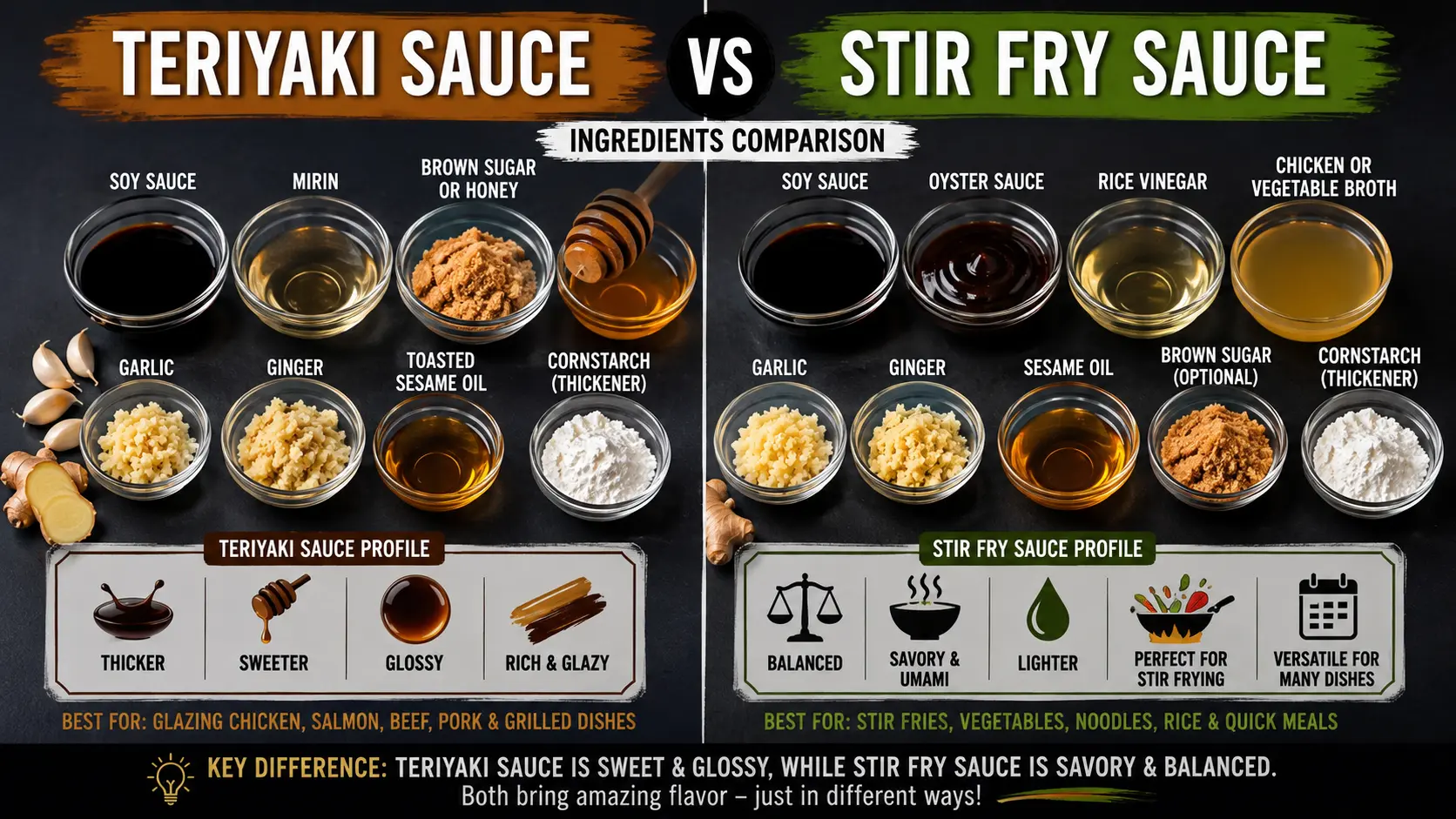
Teriyaki sauce contains a much larger amount of sweeteners such as brown sugar, honey, or mirin. These ingredients caramelize during cooking, creating the glossy finish that teriyaki dishes are famous for. Many recipes also include garlic, fresh ginger, sesame oil, and a cornstarch slurry to achieve a thick, smooth consistency.
Stir fry sauce, by comparison, focuses on balance instead of sweetness. Along with soy sauce, it often contains garlic, ginger, sesame oil, rice vinegar, oyster sauce, chicken broth, or vegetable broth. Some versions include a small amount of brown sugar or honey, but only enough to round out the savory flavors rather than dominate them.
| Ingredient | Teriyaki Sauce | Stir Fry Sauce |
|---|---|---|
| Soy sauce | ✔ | ✔ |
| Garlic | Often included | Common |
| Fresh ginger | Often included | Common |
| Brown sugar or honey | Large amount | Small amount |
| Mirin | Frequently used | Occasionally used |
| Oyster sauce | Rare | Very common |
| Rice vinegar | Sometimes | Often |
| Cornstarch | Usually added | Added only if thickening is needed |
The ingredient list explains why these sauces taste so different. Teriyaki sauce delivers a sweeter finish that works beautifully on grilled or pan-seared proteins, while stir fry sauce provides a more balanced coating that blends naturally with multiple ingredients in the same pan.
Kitchen Secret: Many homemade stir fry sauces can easily be adjusted to your taste. Add a little honey for sweetness, extra soy sauce for a deeper umami flavor, or rice vinegar for more brightness without making the sauce overly sweet like traditional teriyaki.
If you enjoy experimenting with homemade sauces, our guide to Best Homemade Stir Fry Sauce Variations shows several easy ways to customize flavors for different meals.
How the Flavor Profiles Compare
One of the easiest ways to compare teriyaki sauce vs stir fry sauce is by tasting them side by side. Even though they share similar ingredients, their flavor profiles are surprisingly different.
Teriyaki sauce immediately stands out because of its sweetness. The combination of soy sauce and sugar creates a rich glaze with hints of caramel. Garlic and ginger add depth, but the sweet-savory balance remains the dominant characteristic. This makes teriyaki especially popular with grilled chicken, salmon, and beef because the sugars caramelize beautifully over high heat.
Stir fry sauce offers a broader range of savory flavors. Instead of one ingredient taking center stage, it combines salty, umami, aromatic, and slightly tangy notes into a well-rounded sauce that complements every ingredient in the pan. The vegetables, protein, and noodles all retain their own flavors while still benefiting from the sauce.
This balanced profile is why stir fry sauce works so well for quick weeknight dinners that include several different ingredients. It enhances the dish without masking the natural taste of fresh vegetables or lean proteins.
Tip: If you prefer bold savory flavors over sweet sauces, stir fry sauce is usually the better everyday choice. If you enjoy a glossy, restaurant-style glaze, teriyaki sauce is hard to beat.
If you’re unsure which sauce fits your personal taste, try both in similar recipes. For example, compare a classic Garlic Chicken Stir Fry with a sweeter Honey Garlic Chicken Stir Fry. You’ll quickly notice how the sauce changes the overall flavor and texture of the meal.
Best Uses for Each Sauce
When comparing teriyaki sauce vs stir fry sauce, there isn’t a single winner. The better choice depends on what you’re cooking and the flavor you’re trying to achieve. Each sauce excels in different situations, and using the right one can make a noticeable difference in your finished meal.
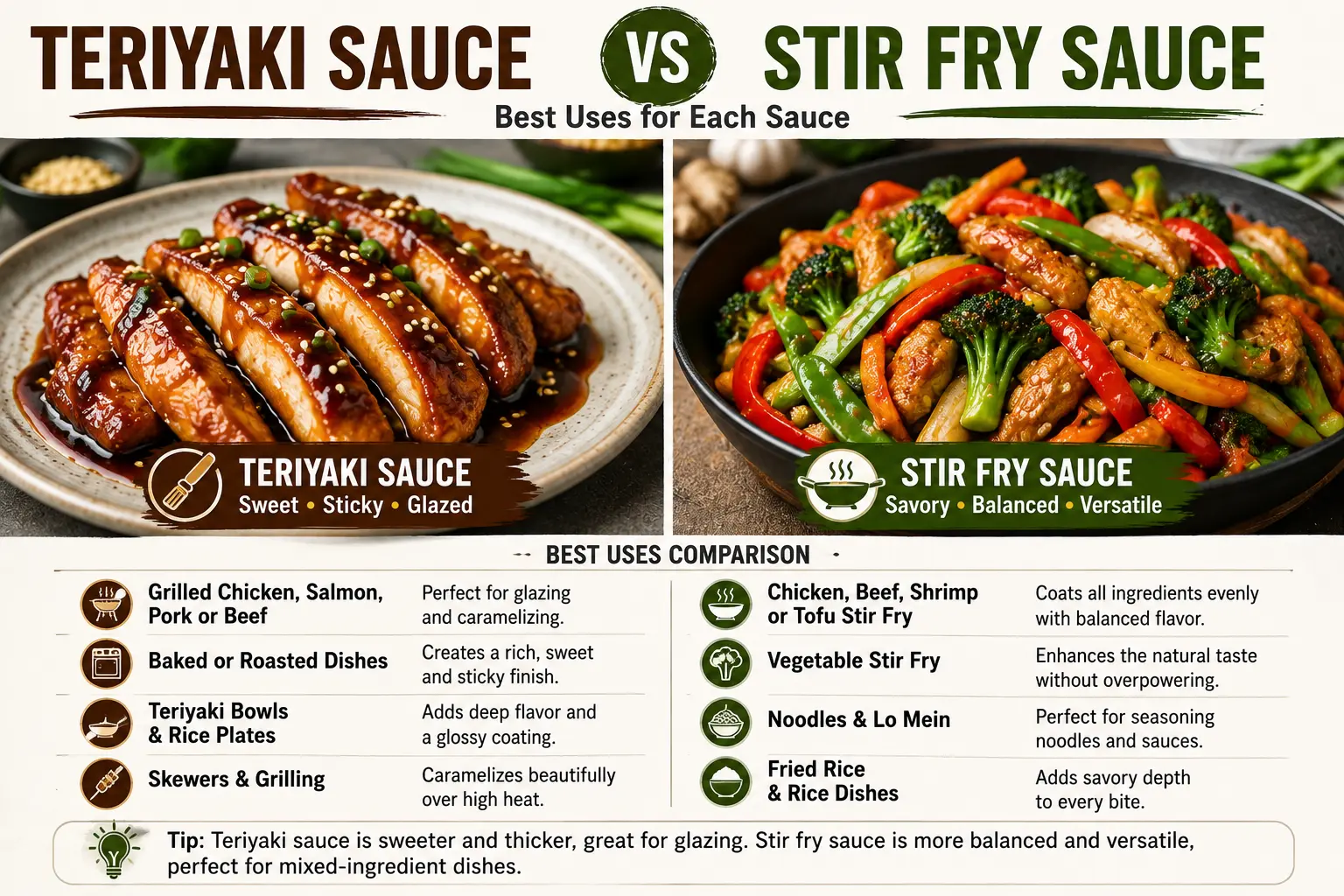
Teriyaki sauce shines when you want a sweet, glossy coating on a single protein. As the sauce cooks, its sugars caramelize, creating a rich glaze that clings to chicken, salmon, shrimp, pork, or steak. This makes it ideal for grilled dishes, baked proteins, and skillet meals where the meat is the main attraction.
Stir fry sauce is built for meals that combine several ingredients. Because it’s less sweet and more savory, it evenly coats vegetables, noodles, rice, and protein without overpowering any single ingredient. It’s the classic choice for quick weeknight stir fries cooked over high heat.
| Dish | Best Choice | Reason |
|---|---|---|
| Grilled Chicken | Teriyaki Sauce | Creates a sweet caramelized glaze. |
| Chicken Stir Fry | Stir Fry Sauce | Coats vegetables and chicken evenly. |
| Vegetable Stir Fry | Stir Fry Sauce | Keeps the vegetables flavorful without excessive sweetness. |
| Salmon | Teriyaki Sauce | Pairs well with rich seafood. |
| Noodles | Stir Fry Sauce | Evenly seasons every strand. |
| Rice Bowls | Either | Depends on whether you want sweet or savory flavors. |
If you’re making a colorful Chicken Veggie Stir Fry or a healthy weeknight meal like Healthy Chicken Stir Fry, a balanced stir fry sauce usually produces the best overall flavor. On the other hand, recipes centered around glazed chicken benefit from teriyaki sauce’s signature sweetness.
Tip: If your recipe contains lots of vegetables, avoid adding too much teriyaki sauce. The sweetness can overwhelm delicate vegetables like broccoli, bell peppers, carrots, and snap peas.
Can You Substitute One for the Other?
A common question people ask when comparing teriyaki sauce vs stir fry sauce is whether they can replace one with the other. The short answer is yes—but only with a few adjustments.
If you run out of stir fry sauce, teriyaki sauce can work in a pinch. However, because it’s sweeter and thicker, your finished dish may taste more like glazed chicken than a traditional stir fry. This isn’t necessarily bad, but it changes the overall flavor profile.
Likewise, stir fry sauce can replace teriyaki sauce if you’re looking for a lighter, less sweet meal. The protein won’t develop the same sticky glaze, but you’ll still end up with a flavorful dinner that’s rich in savory umami notes.
Using Teriyaki Instead of Stir Fry Sauce
- Adds a glossy finish.
- Great for chicken and salmon.
- Easy to find in most grocery stores.
- Provides a richer sweet-savory flavor.
Things to Watch Out For
- Can make stir fries overly sweet.
- May become sticky if overcooked.
- Can overpower fresh vegetables.
- Often contains more sugar than stir fry sauce.
Warning: Store-bought teriyaki sauces vary widely in sugar and sodium content. Taste the sauce before adding extra soy sauce or sweeteners, especially if you’re modifying a recipe.
If you enjoy creating your own sauces, our guides on Common Stir Fry Sauce Mistakes and The Ultimate Chicken Stir Fry Sauce Guide explain how to balance sweetness, saltiness, and thickness for consistently great results.
Homemade vs. Store-Bought Options
Another important part of the teriyaki sauce vs stir fry sauce comparison is deciding whether to make your own sauce or buy one from the store. Both options have advantages, but the best choice depends on your schedule, dietary preferences, and desired flavor.
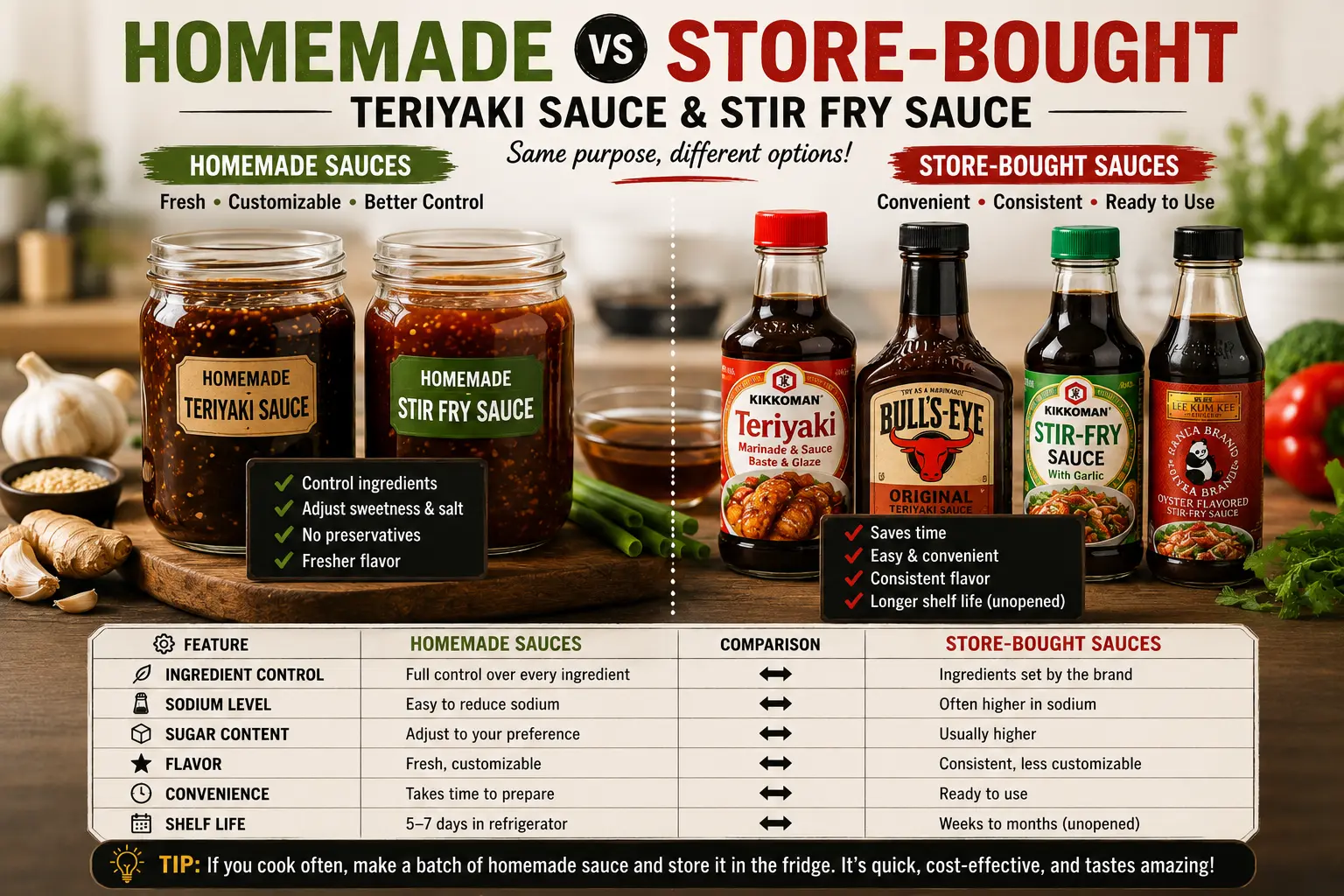
Store-bought sauces are convenient and consistent. Most are ready to use straight from the bottle, making them ideal for busy weeknights. However, many commercial sauces contain added sugar, extra sodium, preservatives, and flavor enhancers that may not match your personal preferences.
Homemade sauces give you complete control over every ingredient. You can reduce the sodium, adjust the sweetness, increase the garlic or ginger, or make the sauce thicker or thinner depending on the recipe. Fresh ingredients also provide a brighter, more natural flavor than many bottled versions.
| Feature | Homemade Sauce | Store-Bought Sauce |
|---|---|---|
| Convenience | Requires preparation | Ready to use |
| Flavor Control | Completely customizable | Fixed recipe |
| Sodium Level | Easy to reduce | Often higher |
| Sugar Content | Can be adjusted | Usually predetermined |
| Freshness | Excellent | Varies by brand |
| Shelf Life | Shorter | Longer unopened |
If you cook stir fry regularly, preparing a homemade batch once a week can save time while giving you better flavor. You can refrigerate it and use it throughout the week for chicken, vegetables, noodles, and rice bowls.
Kitchen Secret: Prepare a double batch of homemade stir fry sauce and store it in an airtight jar. Having a ready-to-use sauce makes weeknight meals almost as convenient as using a bottled version while delivering fresher flavor.
If you enjoy sweeter sauces, you may also like our guide to Best Honey Garlic Stir Fry Sauce Recipe, which combines the rich sweetness of honey with the balanced savory flavors of a traditional stir fry sauce.
How to Choose the Right Sauce for Your Recipe
Choosing between teriyaki sauce vs stir fry sauce becomes much easier once you think about the final dish instead of the sauce itself.
Ask yourself a few simple questions before you start cooking:
- Do you want a sweet, sticky glaze on the protein?
- Are vegetables the main part of the meal?
- Will the sauce coat noodles or rice?
- Do you prefer sweet or savory flavors?
- Are you cooking over very high heat in a wok or skillet?
If your answer is “sweet glaze,” teriyaki sauce is usually the better option. If you’re preparing a traditional stir fry with multiple ingredients, stir fry sauce is generally the better choice because it delivers balanced flavor throughout the dish.
Tip: For many home cooks, keeping both sauces in the pantry provides the most flexibility. Teriyaki sauce is perfect for glazed proteins, while stir fry sauce works for everyday vegetable and noodle dishes.
Common Mistakes When Using Either Sauce
Even the best sauce can’t fix poor cooking technique. Whether you’re comparing teriyaki sauce vs stir fry sauce or simply trying a new recipe, avoiding these common mistakes will produce better results.
- Adding the sauce too early, causing it to burn before the food finishes cooking.
- Using too much sauce, which makes vegetables soggy instead of crisp.
- Skipping high heat, preventing proper caramelization and flavor development.
- Pouring cold sauce directly into the pan without stirring.
- Not tasting before adding extra salt or soy sauce.
- Overcrowding the skillet, which causes steaming instead of stir frying.
Warning: Sweet sauces like teriyaki burn more quickly because of their sugar content. Add them near the end of cooking and stir constantly for the best glossy finish.
If you’re still perfecting your technique, our article on How to Make Spicy Stir Fry Sauce at Home also includes useful tips for balancing flavors while cooking over high heat.
Storage and Shelf Life
Whether you choose teriyaki sauce or stir fry sauce, proper storage helps maintain the best flavor and food safety. Although many commercial sauces have a long shelf life before opening, they should usually be refrigerated after opening to preserve their quality.
Homemade sauces are more delicate because they don’t contain preservatives. Refrigerating them in a clean, airtight container helps keep the flavors fresh while reducing the risk of spoilage.
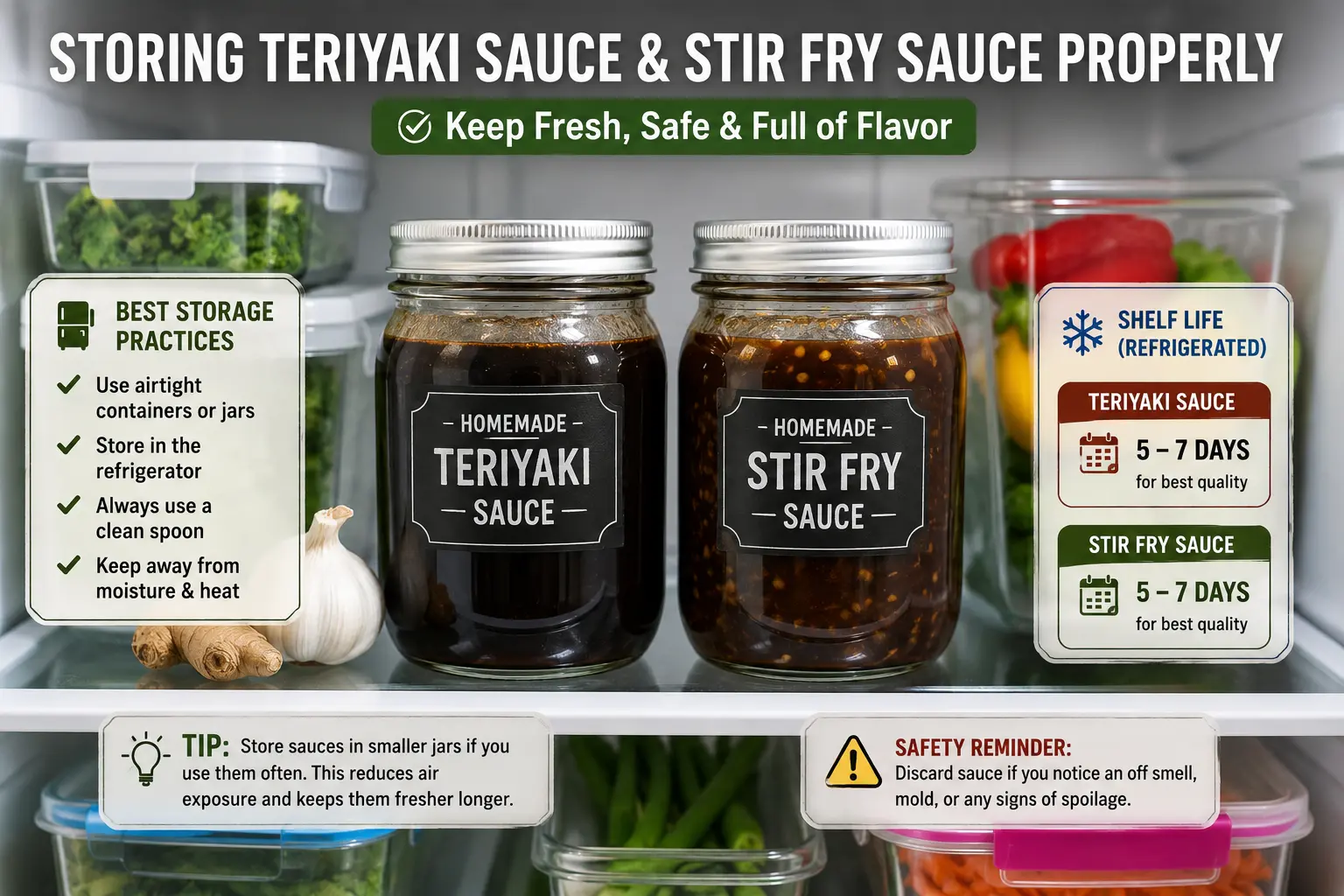
Storage Tip: Homemade teriyaki sauce and stir fry sauce generally stay fresh for about 5 to 7 days when refrigerated in a sealed container. Always discard the sauce if you notice mold, an unpleasant odor, or signs of fermentation.
| Sauce | Pantry (Unopened) | Refrigerator (Opened) | Homemade Refrigerator Life |
|---|---|---|---|
| Teriyaki Sauce | See manufacturer’s label | Usually several weeks | 5–7 days |
| Stir Fry Sauce | See manufacturer’s label | Usually several weeks | 5–7 days |
If you frequently prepare stir fry meals, consider storing homemade sauce in smaller jars. This reduces repeated exposure to air every time you open the container and helps preserve freshness for longer.
Which Sauce Is Healthier?
When comparing teriyaki sauce vs stir fry sauce, many people also want to know which option is healthier. The answer depends largely on the specific recipe or brand.
Traditional teriyaki sauce generally contains more sugar because sweetness is one of its defining characteristics. This extra sugar helps create the signature caramelized glaze but also increases the calorie content.
Stir fry sauce is often lower in sugar, especially homemade versions, making it a popular choice for people who prefer a more savory meal. However, both sauces can contain significant amounts of sodium due to their soy sauce base.
If you’re trying to make healthier meals, consider these simple strategies:
- Choose low-sodium soy sauce whenever possible.
- Reduce added sugar in homemade sauces.
- Use fresh garlic and ginger instead of powdered versions.
- Measure the sauce instead of pouring directly from the bottle.
- Increase the amount of vegetables in the meal.
Healthy Cooking Tip: Homemade sauces let you control sugar and sodium while keeping the fresh flavors that make stir fry dishes so satisfying.
If reducing sodium is one of your goals, our guide on Best Soy Sauce for Chicken Stir Fry explains how choosing the right soy sauce can improve both flavor and nutrition.
Teriyaki Sauce vs. Stir Fry Sauce: Which One Should You Choose?
After comparing every aspect of teriyaki sauce vs stir fry sauce, it’s clear that neither sauce is universally better. They simply serve different purposes in the kitchen.
Choose teriyaki sauce if you want:
- A sweet and glossy glaze.
- Caramelized chicken, salmon, pork, or beef.
- A rich sweet-savory flavor.
- A sauce that’s perfect for grilling or baking.
Choose stir fry sauce if you want:
- A balanced savory flavor.
- A quick weeknight stir fry.
- A sauce that coats vegetables and noodles evenly.
- More flexibility for different proteins and vegetables.
Many home cooks keep both sauces available because each fills a different role. Having both in your pantry means you’ll always have the right flavor profile for whatever you’re cooking.
Frequently Asked Questions
Can I use teriyaki sauce instead of stir fry sauce?
Yes. You can substitute teriyaki sauce for stir fry sauce, but expect a sweeter and thicker result. If possible, reduce the amount slightly or balance it with a splash of soy sauce or rice vinegar.
Is stir fry sauce the same as teriyaki sauce?
No. The main difference in teriyaki sauce vs stir fry sauce is that teriyaki sauce is sweeter and designed to create a glaze, while stir fry sauce has a more balanced savory flavor for coating vegetables, proteins, and noodles.
Which sauce is better for chicken stir fry?
Traditional chicken stir fry is usually better with stir fry sauce because it evenly coats all of the ingredients. Teriyaki sauce is ideal if you want a sweeter, glazed version of the dish.
Can I make both sauces at home?
Absolutely. Homemade versions allow you to control the sweetness, sodium, garlic, ginger, and thickness while avoiding unnecessary preservatives.
Which sauce is healthier?
Homemade stir fry sauce is often the healthier option because it generally contains less sugar than traditional teriyaki sauce. However, either sauce can be made healthier by reducing sodium and using fresh ingredients.
Does teriyaki sauce always contain sugar?
Most traditional teriyaki sauces include sugar, honey, mirin, or another sweetener because these ingredients help create the signature glossy glaze. Sugar-free versions are available but may have a slightly different flavor.
References
Final Thoughts
Choosing between teriyaki sauce vs stir fry sauce ultimately comes down to the type of meal you want to create. Teriyaki sauce is the perfect choice when you’re looking for a sweet, glossy glaze that caramelizes beautifully on chicken, salmon, beef, or pork. Stir fry sauce, on the other hand, delivers a balanced savory flavor that complements vegetables, noodles, rice, and a variety of proteins without overwhelming them.
Rather than viewing one sauce as better than the other, think of them as two versatile pantry staples with different strengths. Understanding when to use each one allows you to build better flavor, improve texture, and create meals that taste closer to your favorite restaurant dishes.
Whether you’re preparing a quick weeknight dinner or experimenting with homemade sauces, mastering the differences between teriyaki sauce vs stir fry sauce will help you choose the right sauce with confidence every time.
🍽️ You Might Also Like
📧 Save This Recipe For Later
Enter your email and we will send this recipe directly to your inbox.