
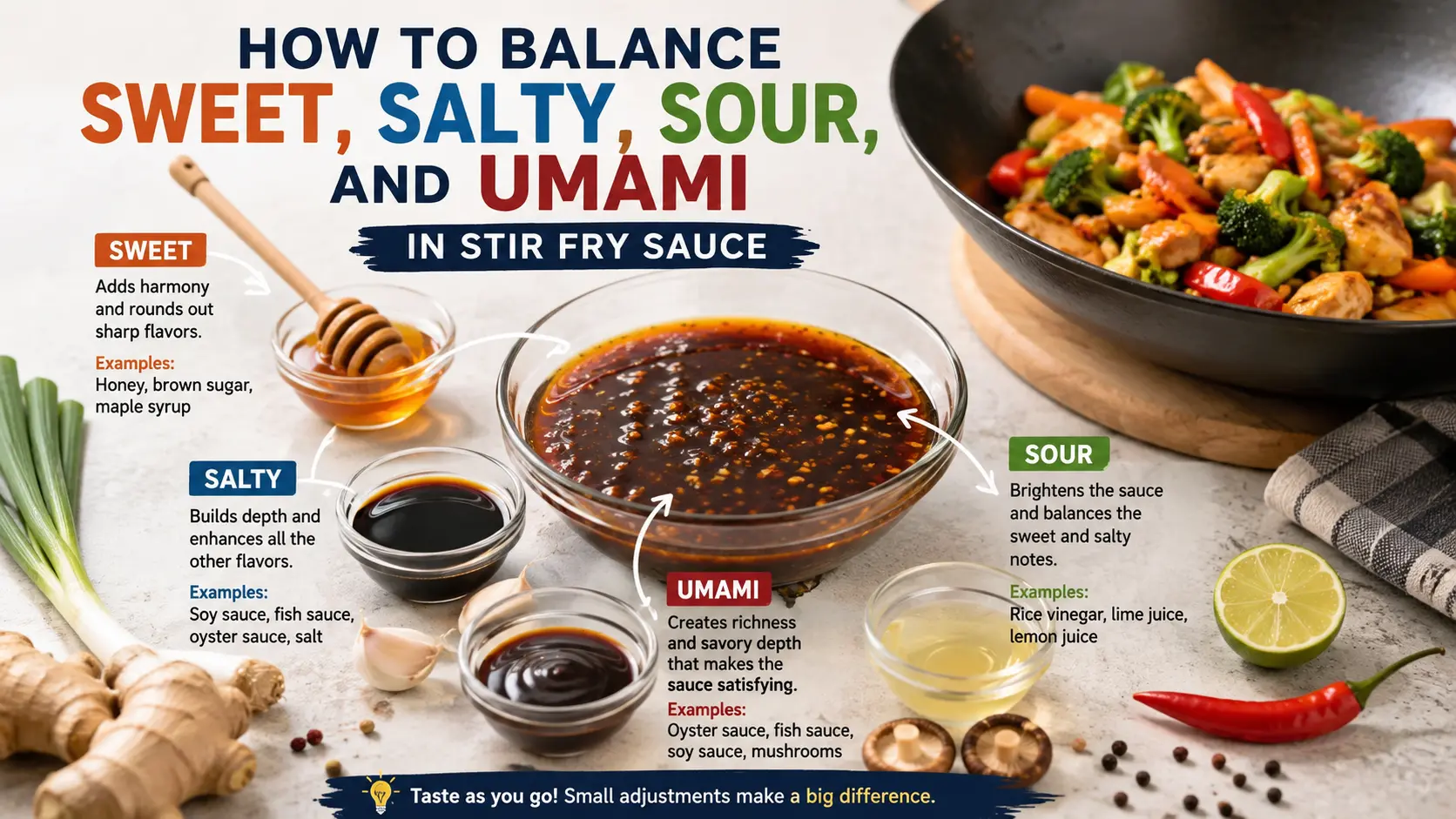
How to Balance Sweet, Salty, Sour, and Umami in Stir Fry Sauce
How to Balance Sweet, Salty, Sour, and Umami in Stir Fry Sauce
A great stir fry sauce is more than just soy sauce mixed with a sweetener. The secret behind restaurant-quality stir fry is creating harmony between four essential taste elements: sweetness, saltiness, sourness, and umami. When these flavors are balanced correctly, every bite tastes rich, vibrant, and satisfying without any single ingredient overpowering the others.
If you’ve ever wondered why your homemade sauce tastes too salty, overly sweet, flat, or overly acidic, you’re not alone. Learning how to balance stir fry sauce flavors is one of the most valuable kitchen skills you can develop. Fortunately, it isn’t complicated once you understand how each flavor contributes to the final dish.
In this guide, you’ll learn what each flavor does, how to recognize when something is out of balance, and the simple adjustments professional cooks make to create a perfectly rounded stir fry sauce every time.
Quick Answer
The easiest way to balance stir fry sauce flavors is to combine four core taste elements: sweetness from honey or brown sugar, saltiness from soy sauce, sourness from rice vinegar or citrus juice, and umami from ingredients like oyster sauce, mushrooms, or fish sauce. Taste the sauce before adding it to the pan, then make small adjustments one ingredient at a time until no single flavor dominates.
Table of Contents
Why Flavor Balance Matters in Stir Fry Sauce
The goal of any stir fry sauce isn’t to make one ingredient stand out. Instead, every ingredient should work together to create a rich, layered flavor that complements the meat and vegetables. This is exactly why experienced cooks focus on learning how to balance stir fry sauce flavors rather than simply following measurements.
Sweet ingredients soften the sharpness of salty sauces, while acidity brightens the overall flavor and prevents the dish from tasting heavy. Umami adds depth, making the sauce taste fuller and more satisfying without requiring extra salt. When these components work together, even a simple chicken and vegetable stir fry tastes far more complex.
Many home cooks assume they need expensive ingredients to improve their sauce. In reality, success comes from understanding flavor relationships. A small splash of rice vinegar or an extra teaspoon of honey often makes a much bigger difference than adding another seasoning.
Tip: Taste your sauce before cooking whenever possible. Adjusting a cold sauce is much easier than trying to fix flavors after the ingredients have finished cooking.
Balancing flavors also creates consistency. Once you understand how each ingredient affects the overall taste, you can confidently adapt recipes based on the vegetables, protein, or pantry ingredients you have available.
Understanding the Four Core Flavors in Stir Fry Sauce
To consistently balance stir fry sauce flavors, you first need to understand what each flavor contributes to the finished dish. Professional chefs don’t simply mix ingredients together—they build layers of flavor so every bite tastes complete and satisfying. Once you learn the purpose of each component, adjusting your sauce becomes much easier.
Think of stir fry sauce like a team. Every ingredient has a specific job, and removing or overusing one member affects the entire result. The goal isn’t to make every flavor equally strong. Instead, each should support the others without dominating the dish.
Sweetness Brings Balance
Sweet ingredients do much more than make a sauce taste sugary. In stir fry, sweetness softens salty flavors, balances acidity, and helps create the glossy coating that clings beautifully to chicken, beef, shrimp, tofu, and vegetables.
Common sources of sweetness include:
- Honey
- Brown sugar
- White sugar
- Maple syrup
- Mirin
- Sweet chili sauce
Adding too much sweetener, however, can overwhelm the fresh flavors of vegetables and make the sauce taste more like a glaze than a balanced stir fry sauce. Always add sweet ingredients gradually and taste as you go.
Kitchen Secret: Brown sugar often creates a deeper, more complex flavor than white sugar because of its molasses content. It also pairs especially well with soy sauce and garlic.
Saltiness Creates the Foundation
Salt is the backbone of nearly every stir fry sauce. It enhances the natural flavor of the protein and vegetables while helping the other ingredients stand out. Soy sauce is the most common salty ingredient, but alternatives such as tamari, coconut aminos, and light soy sauce can also be used depending on dietary preferences and flavor goals.
When learning how to balance stir fry sauce flavors, remember that saltiness should support the dish rather than overpower it. If the first thing you notice is a salty taste, the sauce likely needs additional sweetness, acidity, or umami instead of more seasoning.
Many people mistakenly solve bland sauces by adding more soy sauce. In reality, doing so often makes the dish excessively salty without improving its overall flavor.
| Flavor | Common Ingredients | Main Purpose |
|---|---|---|
| Sweet | Honey, brown sugar, maple syrup | Balances salt and acidity |
| Salty | Soy sauce, tamari, coconut aminos | Enhances overall flavor |
| Sour | Rice vinegar, lime juice, lemon juice | Brightens the sauce |
| Umami | Oyster sauce, fish sauce, mushrooms | Adds savory depth |
As you continue practicing, you’ll notice that perfectly balanced sauces rarely taste extremely salty or extremely sweet. Instead, they deliver a smooth, rounded flavor where every ingredient works together naturally.
If you’re making sauces from scratch regularly, you may also enjoy our guide to best homemade stir fry sauce variations, which explores different flavor profiles for a wide variety of stir fry dishes.
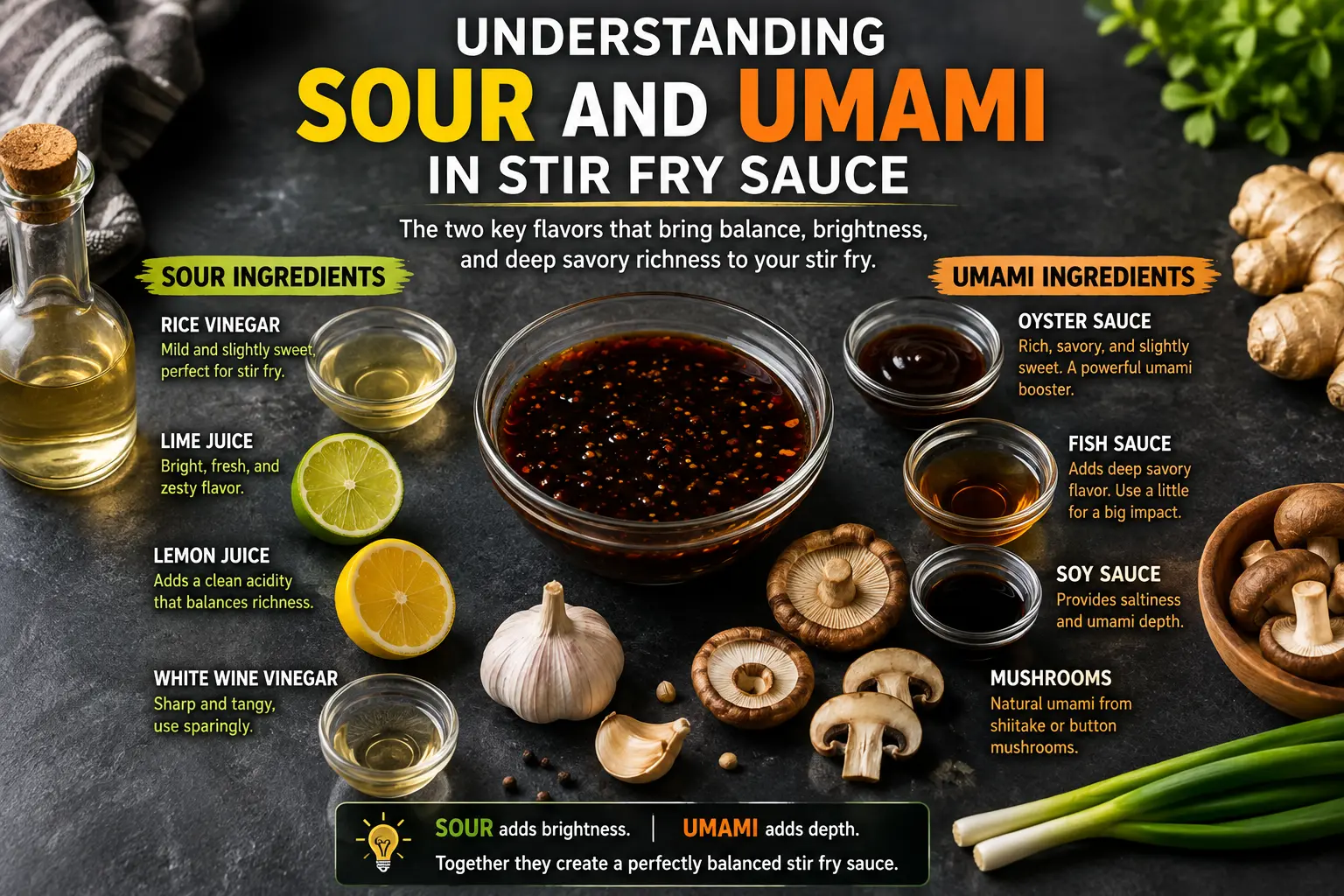
The Role of Sourness in Stir Fry Sauce
Sourness is often the missing element when a homemade sauce tastes heavy or one-dimensional. A small amount of acid brightens the entire dish, making every ingredient taste fresher without making the sauce noticeably sour. This is one of the easiest ways to balance stir fry sauce flavors when they seem dull.
Rice vinegar is the classic choice because it has a mild acidity that blends smoothly with soy sauce and sweeteners. Fresh lime juice and lemon juice can also work well, although they create a brighter citrus flavor that may change the overall profile of the dish.
Good sources of acidity include:
- Rice vinegar
- White wine vinegar
- Fresh lime juice
- Fresh lemon juice
- Apple cider vinegar (used sparingly)
The key is moderation. Too much acid can overpower the sauce and hide the savory flavors you worked to build. Start with a small amount, taste, and adjust gradually.
Tip: If you don’t have rice vinegar, read our guide on the best rice vinegar substitutes for stir fry to find the closest alternative for your recipe.
Umami Adds Depth and Richness
Umami is the savory flavor that gives stir fry sauce its satisfying, restaurant-quality taste. Unlike salt, umami doesn’t simply season the food—it creates richness and complexity that make every bite more enjoyable.
Many professional cooks rely on multiple umami ingredients rather than just one. For example, soy sauce already provides some umami, but combining it with oyster sauce or mushrooms creates a fuller flavor that tastes more complete.
Popular umami-rich ingredients include:
- Oyster sauce
- Fish sauce
- Soy sauce
- Dried mushroom powder
- Fresh mushrooms
- Miso paste
If your stir fry tastes bland even though you’ve added enough salt, it’s often lacking umami rather than additional seasoning. Adding a small spoonful of oyster sauce or a few drops of fish sauce can dramatically improve the final result.
Kitchen Secret: Fish sauce is used in very small amounts. When blended correctly with soy sauce, garlic, ginger, and a touch of sweetness, it boosts umami without making the stir fry taste fishy.
If you’re curious about when and how to use it, check out our detailed guide on using fish sauce in stir fry.
How to Tell When Your Stir Fry Sauce Is Out of Balance
One of the best cooking skills you can develop is recognizing which flavor is overpowering the others. Once you know what you’re tasting, fixing the sauce becomes much easier.
| If the Sauce Tastes… | Likely Problem | Simple Fix |
|---|---|---|
| Too salty | Too much soy sauce | Add a little honey and rice vinegar |
| Too sweet | Too much sugar or honey | Add soy sauce and a splash of vinegar |
| Too sour | Too much vinegar or citrus | Balance with honey and a little umami |
| Bland | Missing umami | Add oyster sauce or fish sauce |
| Flat | Needs brightness | Add a small splash of rice vinegar |
Learning to identify these flavor imbalances will help you balance stir fry sauce flavors confidently without relying on exact measurements every time you cook.
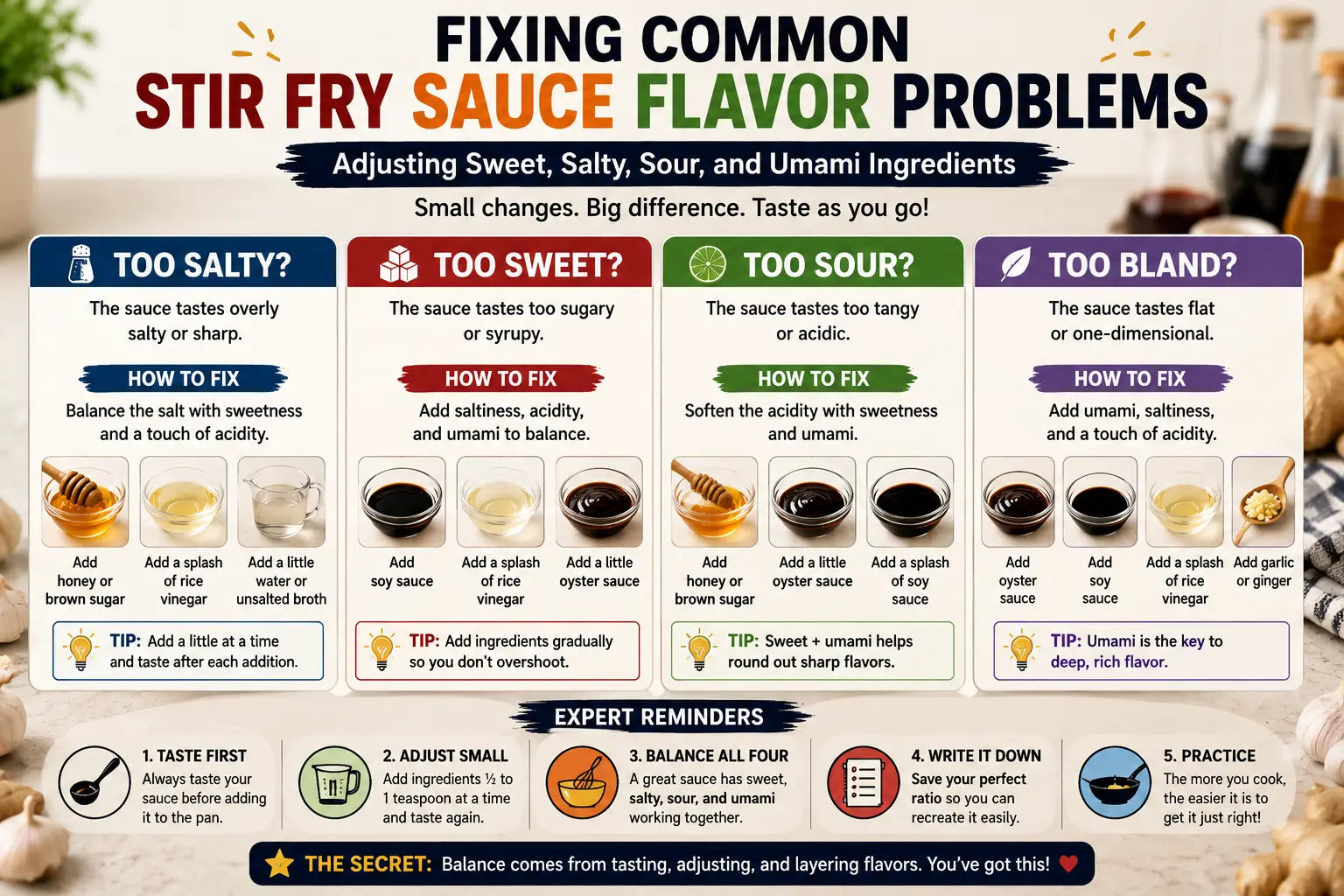
How to Fix an Unbalanced Stir Fry Sauce
Even experienced home cooks occasionally make a stir fry sauce that’s too salty, too sweet, or lacking depth. The good news is that most sauces can be corrected with a few simple adjustments. The secret is to make small changes, taste after each addition, and avoid adding multiple ingredients at once. This method makes it much easier to balance stir fry sauce flavors without accidentally creating a new problem.
How to Fix a Sauce That’s Too Salty
Too much soy sauce is one of the most common mistakes when making homemade stir fry. While adding water may reduce the saltiness, it also weakens the overall flavor. Instead, balance the salt with ingredients that provide sweetness and acidity.
Try one or more of these adjustments:
- Add 1 teaspoon of honey or brown sugar.
- Stir in a small splash of rice vinegar.
- Increase the amount of vegetables or protein if possible.
- Add a little unsalted broth to dilute the sauce without making it watery.
Warning: Avoid adding more cornstarch to fix a salty sauce. Cornstarch thickens the mixture but does not reduce the saltiness, so the flavor problem will remain.
How to Fix a Sauce That’s Too Sweet
If your stir fry sauce tastes more like a glaze than a savory sauce, you’ve probably added too much sugar, honey, or another sweetener. To balance stir fry sauce flavors, introduce ingredients that add savory depth and brightness instead of adding more sweetness.
Good options include:
- A small splash of soy sauce.
- Rice vinegar for freshness.
- Oyster sauce to increase umami.
- A squeeze of fresh lime juice for a brighter finish.
Remember that sweetness becomes more noticeable after the sauce reduces in the pan. If it already tastes slightly sweet before cooking, it may become much sweeter by the time the stir fry is finished.
How to Fix a Sauce That’s Too Sour
Too much vinegar or citrus juice can make a stir fry taste sharp and unpleasant. Fortunately, sourness is usually easy to soften.
To reduce acidity, try adding:
- A teaspoon of honey.
- Brown sugar for a richer sweetness.
- A little oyster sauce to add savory balance.
- An extra splash of low-sodium soy sauce if needed.
These ingredients help round out the acidity without making the sauce taste overly sweet.
Tip: Add acidic ingredients near the end of mixing the sauce. It’s much easier to increase sourness than it is to remove it once too much has been added.
How to Fix a Bland Stir Fry Sauce
A bland sauce doesn’t always need more salt. In many cases, it’s missing umami or enough contrast between the four core flavors. Taste the sauce carefully and think about what it lacks rather than automatically reaching for the soy sauce bottle.
Consider adding one of these ingredients:
- Oyster sauce.
- Fish sauce.
- Fresh garlic.
- Fresh ginger.
- A dash of sesame oil after cooking.
- A small splash of rice vinegar.
These additions create a more layered flavor profile while helping balance stir fry sauce flavors naturally.
If you’re looking for more troubleshooting advice, our guide on common stir fry sauce mistakes explains why sauces sometimes turn out too salty, watery, thick, or bland and how to avoid those problems in the future.
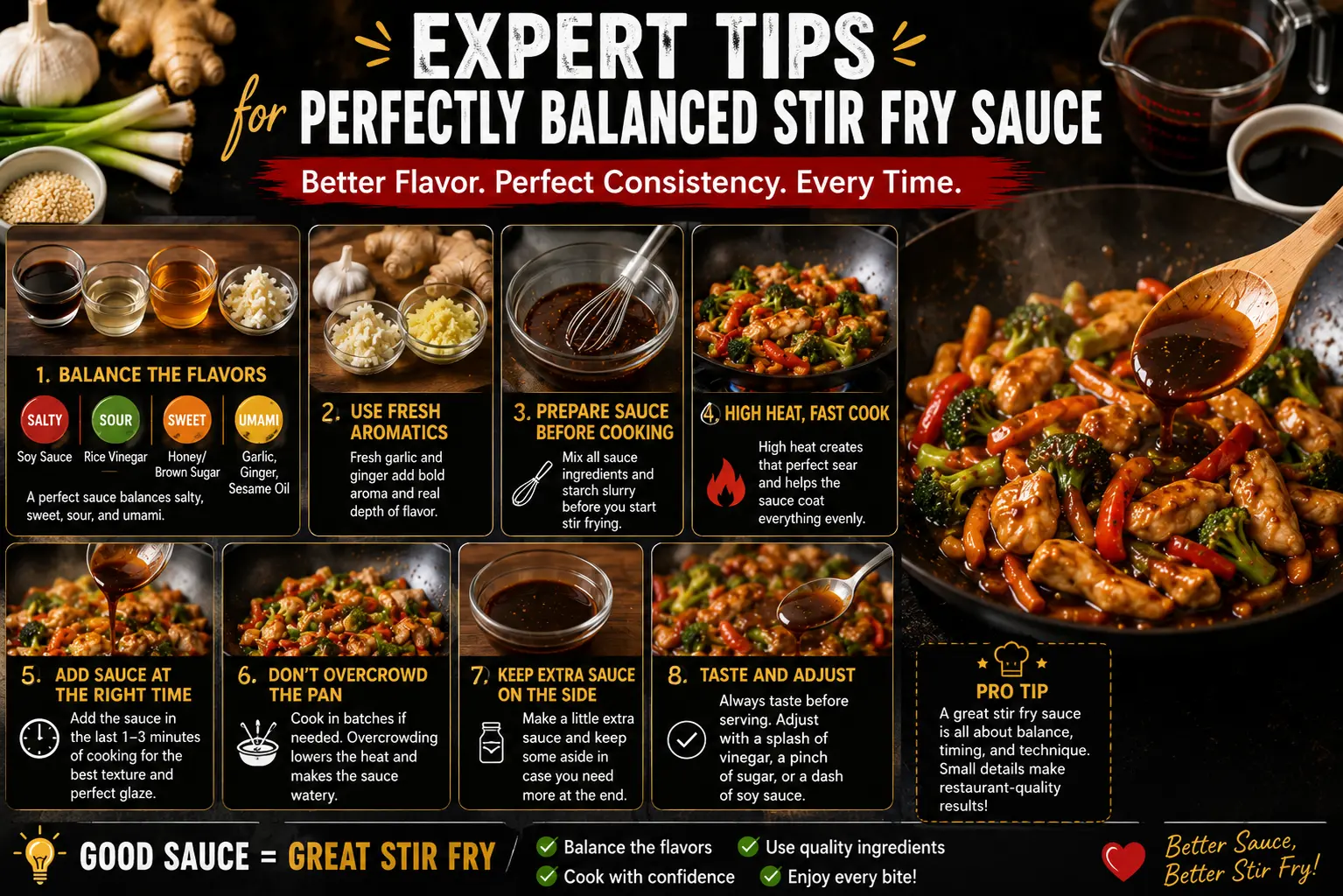
Expert Tips for Perfectly Balanced Stir Fry Sauce Every Time
Once you understand the four core flavors, a few professional techniques can make your homemade sauce even more consistent. These habits are simple, but they can dramatically improve your ability to balance stir fry sauce flavors no matter what protein or vegetables you’re cooking.
Measure Ingredients Before Cooking
Stir frying happens quickly, leaving little time to adjust ingredients once everything is in the hot pan. Mixing your sauce completely before you start cooking allows you to taste it, identify any imbalances, and make corrections without risking overcooked food.
Preparing the sauce in advance also ensures that ingredients like honey, cornstarch, and soy sauce are evenly combined, producing a smoother and more consistent finish.
Kitchen Secret: Many restaurant kitchens prepare stir fry sauces hours in advance. Allowing the ingredients to sit together for 15 to 30 minutes helps garlic, ginger, soy sauce, and sweeteners blend into a more balanced flavor.
Use Low-Sodium Soy Sauce When Possible
Low-sodium soy sauce gives you greater control over seasoning. You can always add more saltiness later, but removing excess salt from a finished sauce is much more difficult.
This is especially helpful when using naturally salty ingredients such as oyster sauce or fish sauce.
Taste Before the Sauce Goes Into the Pan
One of the easiest ways to balance stir fry sauce flavors is to taste the mixed sauce before cooking. A quick taste often reveals whether it needs more sweetness, acidity, or umami.
If you’re concerned about tasting a raw sauce that contains fresh garlic or ginger, simply dip a cooked vegetable, spoon, or small piece of bread into the mixture instead of tasting it by itself.
Adjust Slowly Instead of Making Big Changes
Small adjustments almost always produce better results than large ones. Adding an extra tablespoon of soy sauce or vinegar at once can quickly throw the entire sauce out of balance.
Instead, add ingredients in small increments:
- ½ to 1 teaspoon of honey
- ½ teaspoon of rice vinegar
- ½ teaspoon of oyster sauce
- A few drops of fish sauce
Taste after each adjustment before deciding whether another change is necessary.
Benefits of Balancing Flavors
- More restaurant-quality taste
- Better flavor without excess salt
- Works with many proteins and vegetables
- Easy to customize for personal preferences
- Creates a smoother, more complex sauce
Common Challenges
- Adding too many ingredients at once
- Skipping the tasting step
- Using too much soy sauce too early
- Overcorrecting with sugar or vinegar
- Ignoring the importance of umami
Practice Makes Flavor Balancing Easier
Learning to balance stir fry sauce flavors is a skill that improves with experience. After preparing a few homemade sauces, you’ll begin recognizing what each ingredient contributes and how small adjustments affect the final dish.
Don’t worry about making every batch perfect. Instead, pay attention to how sweetness softens salt, how acidity brightens rich flavors, and how umami creates satisfying depth. Over time, these adjustments become second nature, allowing you to create delicious stir fry sauces without relying on strict recipes.
If you’d like to explore different flavor profiles, our guides on sweet vs. savory stir fry sauce, how to make spicy stir fry sauce at home, and the ultimate chicken stir fry sauce guide offer additional techniques for creating sauces that suit a wide range of meals.

References
Frequently Asked Questions
What is the easiest way to balance stir fry sauce flavors?
The easiest way to balance stir fry sauce flavors is to combine sweetness, saltiness, sourness, and umami in moderation. Taste the sauce before cooking and make small adjustments one ingredient at a time until no single flavor stands out.
How can I make my stir fry sauce less salty?
If your sauce is too salty, add a small amount of honey or brown sugar along with a splash of rice vinegar. You can also dilute the sauce slightly with unsalted broth while maintaining its overall flavor.
What ingredients add umami to stir fry sauce?
Oyster sauce, soy sauce, fish sauce, mushrooms, mushroom powder, and miso paste are excellent sources of umami. These ingredients create a deeper, richer flavor without relying entirely on salt.
Can I balance stir fry sauce flavors without oyster sauce?
Yes. Soy sauce, mushrooms, miso paste, or a small amount of fish sauce can provide plenty of savory depth if you don’t use oyster sauce. Combining multiple umami ingredients often produces the best results.
Why does my homemade stir fry sauce taste flat?
A flat sauce usually needs more contrast between its core flavors. A splash of rice vinegar can brighten the sauce, while oyster sauce or fish sauce can increase umami and create a fuller taste.
Should I taste my stir fry sauce before cooking?
Absolutely. Tasting the sauce before it goes into the wok is the easiest way to identify whether it needs additional sweetness, acidity, saltiness, or umami, making it much easier to achieve balanced flavors.
Final Thoughts
Mastering how to balance stir fry sauce flavors isn’t about memorizing complicated recipes. It’s about understanding how sweetness, saltiness, sourness, and umami work together to create a sauce that’s flavorful, well-rounded, and enjoyable from the first bite to the last.
By making small adjustments, tasting as you go, and using high-quality ingredients, you’ll quickly develop the confidence to customize sauces for any protein or vegetable. Whether you’re preparing a quick weeknight dinner or experimenting with new flavor combinations, these techniques will help you produce consistently delicious results.
Ready to put your new skills into practice? Try using your balanced homemade sauce in one of our popular recipes like Chicken Stir Fry, Garlic Chicken Stir Fry, or Honey Garlic Chicken Stir Fry for a flavorful homemade meal.
🍽️ You Might Also Like




📧 Save This Recipe For Later
Enter your email and we will send this recipe directly to your inbox.