
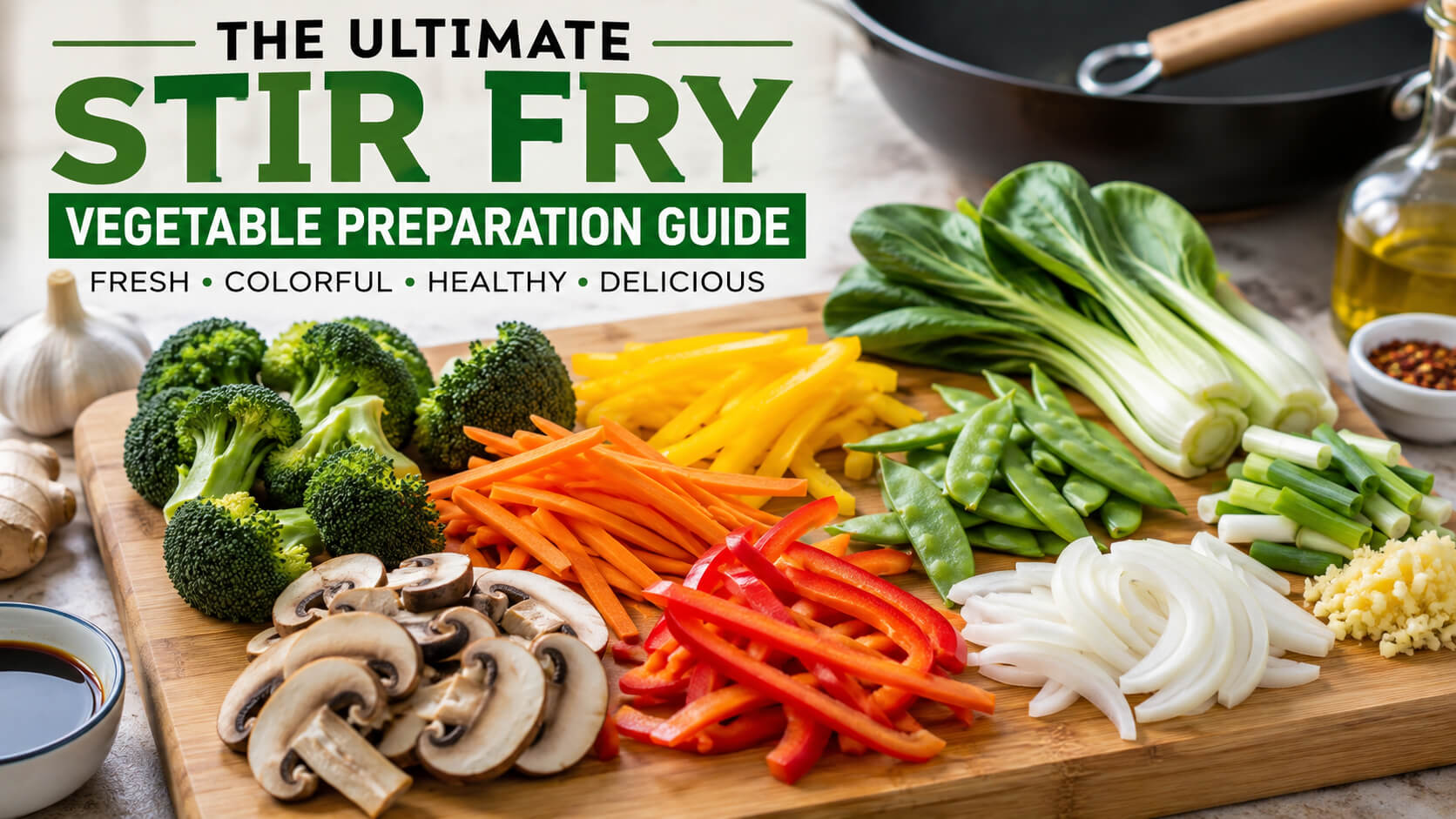
The Ultimate Stir Fry Vegetable Preparation Guide
The Ultimate Stir Fry Vegetable Preparation Guide
A great stir fry starts long before the vegetables hit a hot wok. Proper preparation is what separates a colorful, crisp-tender stir fry from one that turns watery, unevenly cooked, or lacking in flavor. Whether you’re making a quick weeknight dinner or meal prepping for the week, following a reliable stir fry vegetable preparation guide helps you achieve consistent results every time.
Different vegetables cook at different speeds, contain varying amounts of moisture, and require unique cutting techniques. Understanding how to wash, trim, slice, dry, and organize vegetables before cooking allows every ingredient to reach its ideal texture without becoming overcooked or mushy.
This complete stir fry vegetable preparation guide explains everything you need to know before turning on the stove. You’ll learn how to select the freshest vegetables, prepare them efficiently, organize ingredients for fast cooking, and avoid the common mistakes that often ruin homemade stir fries. These techniques work for nearly every vegetable and pair perfectly with recipes like Chicken Stir Fry or Chicken Veggie Stir Fry.
Quick Answer
The best stir fry vegetable preparation guide starts with choosing fresh vegetables, washing them thoroughly, drying them completely, trimming away damaged portions, and cutting every vegetable into evenly sized pieces based on its cooking time. Firm vegetables should be sliced smaller than tender vegetables so everything cooks evenly in a hot wok while staying crisp and flavorful.
Table of Contents
Why Proper Vegetable Preparation Matters
Many people think successful stir frying depends only on high heat, but preparation is equally important. Since stir fries cook quickly, there’s no time to stop and chop vegetables once cooking begins. Everything should be ready before the wok is heated.
Following a dependable stir fry vegetable preparation guide helps vegetables cook evenly while preserving their natural color, texture, and nutrients. Proper preparation also reduces excess moisture, preventing vegetables from steaming instead of stir frying.
Tip: Professional chefs prepare every ingredient before turning on the stove. This cooking method, known as “mise en place,” keeps stir frying fast, organized, and stress-free.
Preparing vegetables correctly also improves presentation. Uniform slices cook at the same rate and create a balanced dish that looks just as good as it tastes. Whether you’re making Chicken Broccoli Stir Fry or Healthy Chicken Stir Fry, taking a few extra minutes to prepare ingredients properly makes a noticeable difference in the final meal.
How to Choose the Freshest Vegetables for Stir Fry
The quality of your vegetables has a direct impact on the flavor, texture, and appearance of your finished dish. Even the best cooking techniques cannot fully improve vegetables that are old, wilted, or beginning to spoil. A reliable stir fry vegetable preparation guide always starts with selecting the freshest produce available.
Fresh vegetables stay crisp during cooking, retain more nutrients, and develop better flavor when exposed to the high heat of a wok. They also release less excess water, allowing vegetables to sear instead of steam.
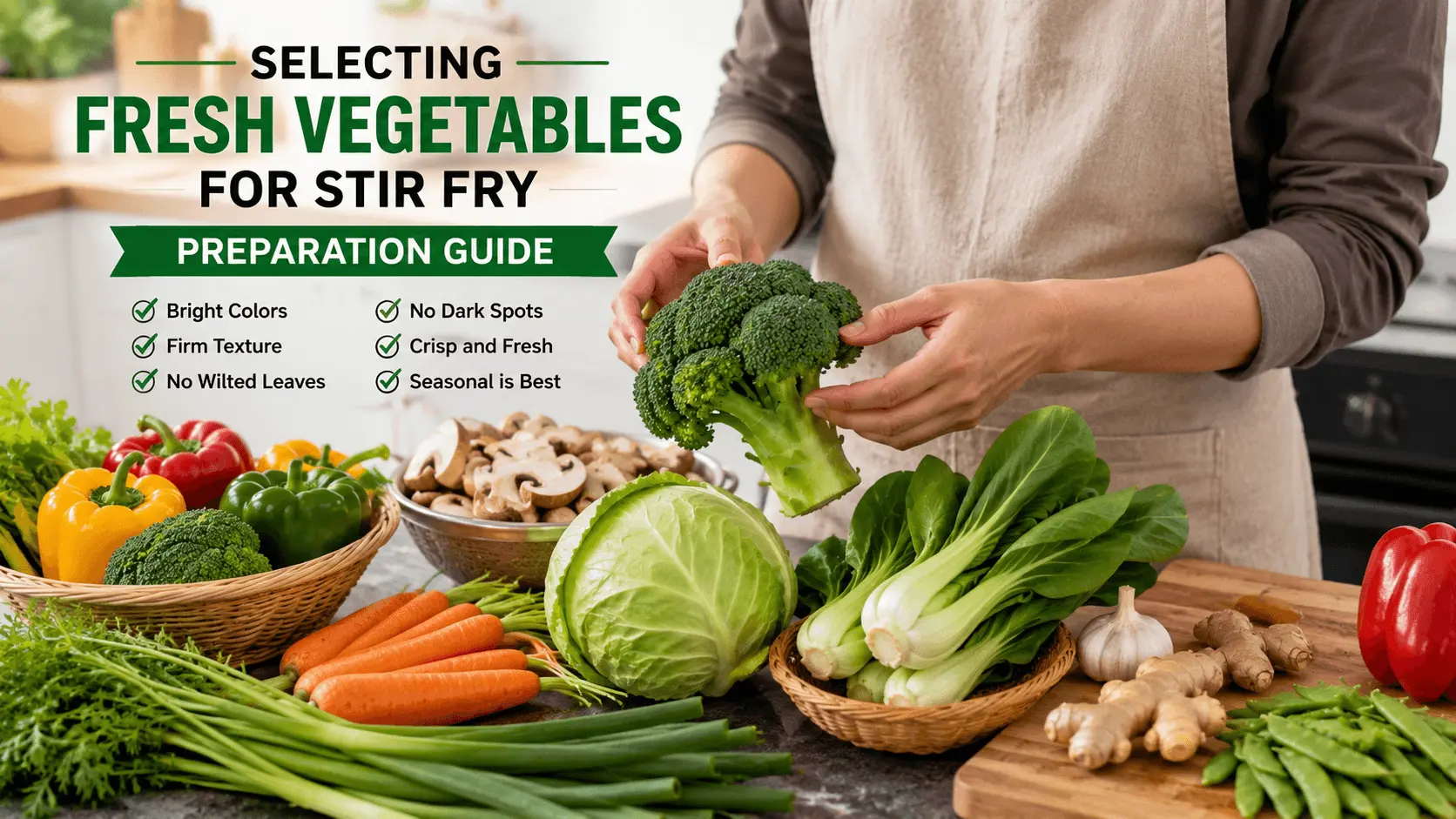
Signs of Fresh Vegetables
- Bright, vibrant colors without fading.
- Firm texture with no soft or mushy spots.
- Crisp leaves that are not wilted.
- Smooth skin without wrinkles.
- No unpleasant odor or slimy surface.
- Minimal bruising or discoloration.
Whenever possible, buy vegetables that are in season. Seasonal produce is often fresher, more flavorful, and more affordable than vegetables that have traveled long distances.
| Vegetable | What to Look For | Avoid |
|---|---|---|
| Broccoli | Dark green, tight florets | Yellow flowers or soft stems |
| Bell Peppers | Firm with shiny skin | Wrinkled or soft spots |
| Carrots | Smooth and firm | Rubbery or cracked carrots |
| Snow Peas | Bright green and crisp | Yellow or limp pods |
| Mushrooms | Dry and firm | Slimy or dark patches |
| Bok Choy | White stems with fresh green leaves | Wilted or yellowing leaves |
Kitchen Secret: Vegetables with similar freshness levels cook more evenly together. Mixing very fresh vegetables with older produce often leads to inconsistent texture because the older vegetables soften much faster.
The Right Way to Wash and Dry Vegetables
Cleaning vegetables properly is one of the most overlooked steps in any stir fry vegetable preparation guide. Dirt, sand, pesticides, and bacteria can remain on fresh produce if it isn’t washed carefully. At the same time, vegetables that stay wet after washing can quickly ruin a stir fry by creating steam inside the pan.
Start by rinsing vegetables under cool running water. Firm vegetables such as carrots and potatoes can be gently scrubbed with a vegetable brush, while delicate vegetables like spinach or bok choy should be swished through a large bowl of cold water to remove trapped dirt.
After washing, drying is just as important as cleaning. Excess moisture prevents proper browning and reduces the intense heat needed for authentic stir frying.
Tip: Use a salad spinner for leafy vegetables and pat firmer vegetables dry with clean kitchen towels or paper towels before slicing them.
If you’re preparing vegetables ahead of time for recipes like Chicken Bell Pepper Stir Fry or Chicken Mushroom Stir Fry, allow them to dry completely before storing them in airtight containers. This simple habit helps maintain freshness and improves cooking performance later.
How to Cut Vegetables for Even Cooking
One of the most important lessons in any stir fry vegetable preparation guide is learning how to cut vegetables correctly. Even if you buy the freshest produce, uneven cuts can cause some vegetables to become overcooked while others remain undercooked. Uniform pieces ensure every bite has the perfect crisp-tender texture that makes stir fry so enjoyable.
As a general rule, firm vegetables should be cut into smaller or thinner pieces because they require more cooking time. Softer vegetables can be left slightly larger since they cook much faster. Keeping pieces similar in thickness allows the heat to reach every ingredient evenly.
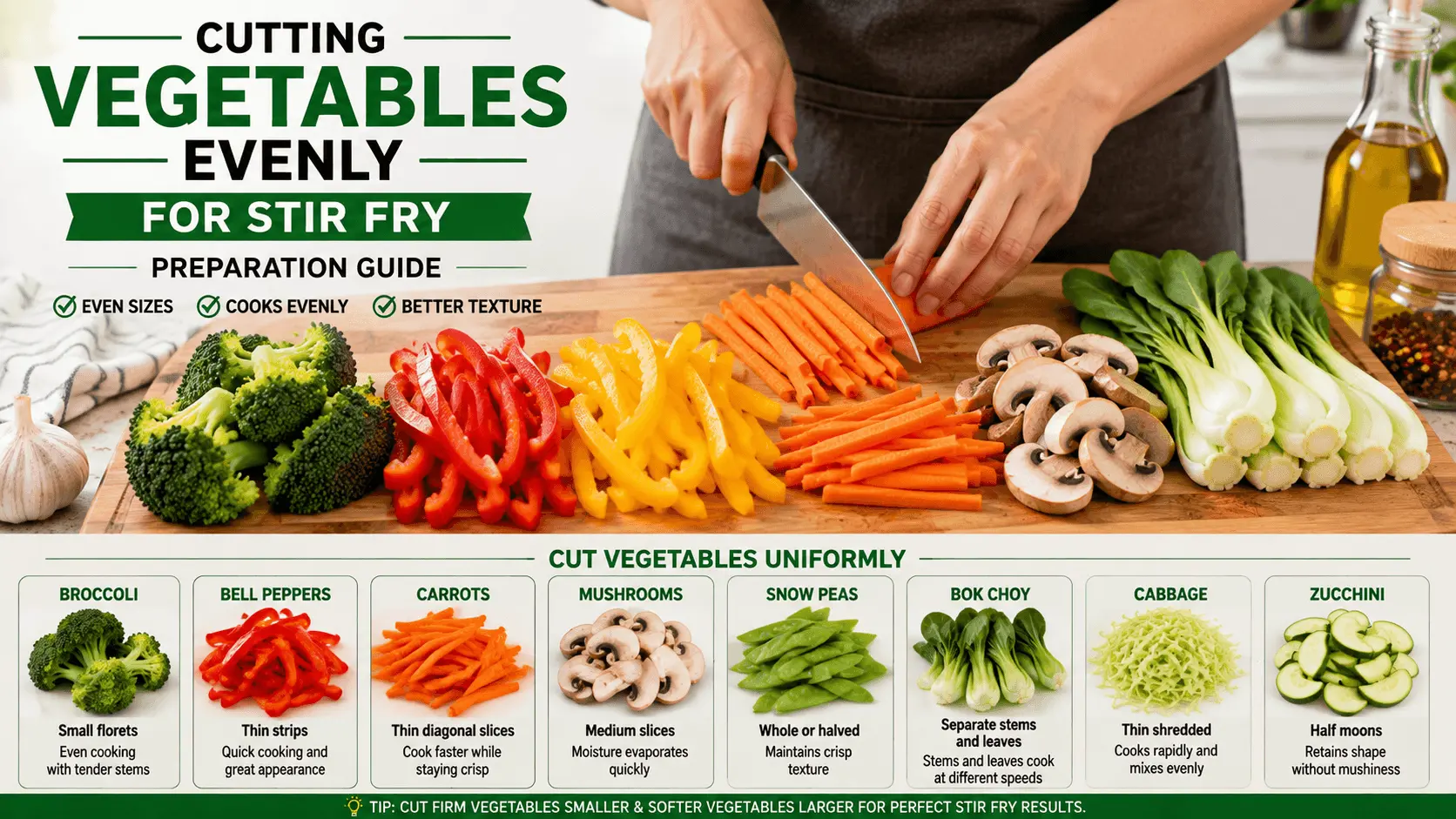
Best Cutting Styles for Common Stir Fry Vegetables
| Vegetable | Recommended Cut | Why It Works |
|---|---|---|
| Carrots | Thin diagonal slices | Cook faster while staying slightly crisp |
| Broccoli | Small florets | Even cooking with tender stems |
| Bell Peppers | Thin strips | Quick cooking and attractive presentation |
| Zucchini | Half moons | Retains shape without becoming mushy |
| Mushrooms | Medium slices | Allows moisture to evaporate quickly |
| Cabbage | Thin shredded strips | Cooks rapidly and mixes evenly |
| Snap Peas | Whole or halved | Maintains crisp texture |
| Bok Choy | Separate stems and leaves | Stems and leaves cook at different speeds |
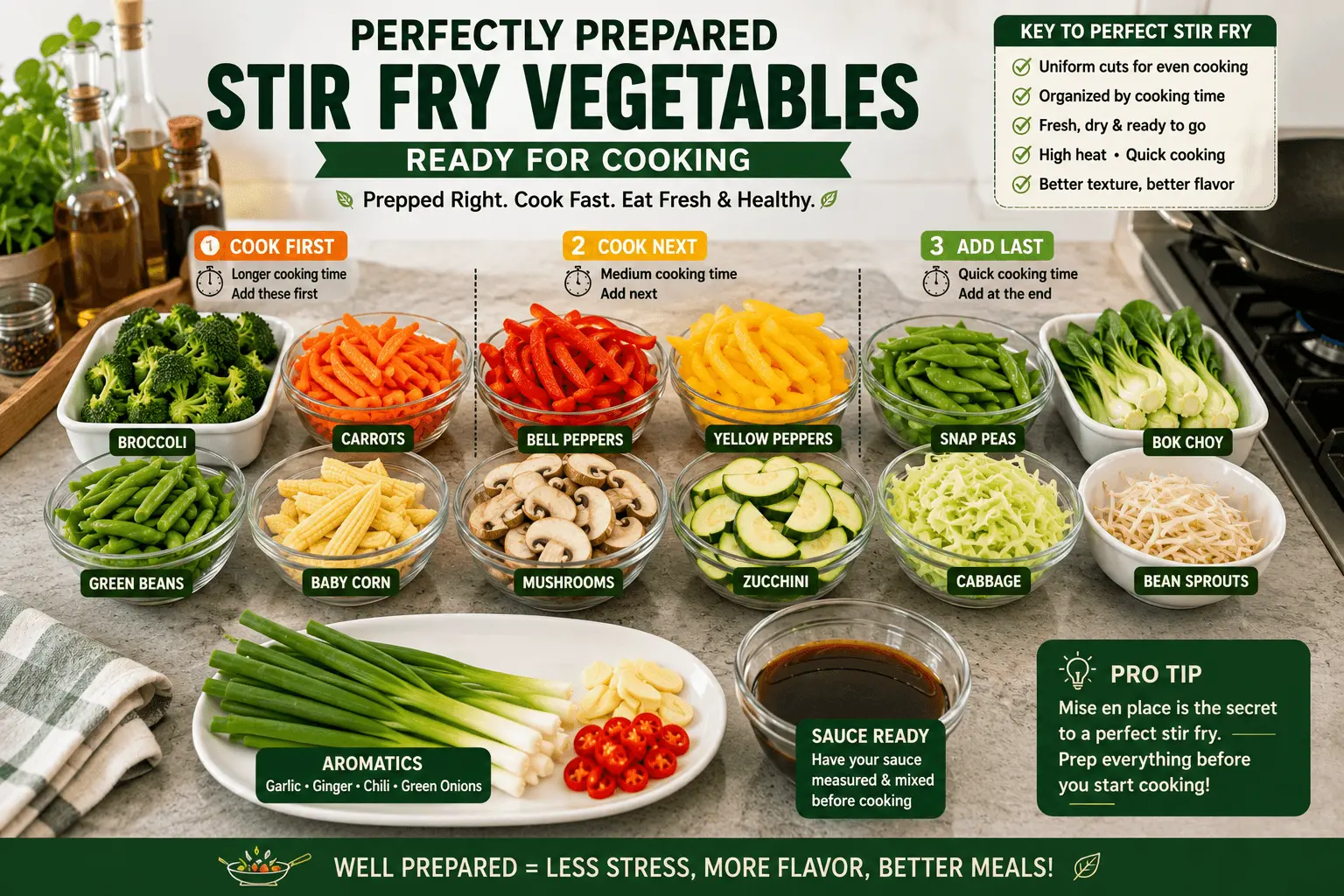
Another valuable tip from every professional stir fry vegetable preparation guide is to group vegetables according to their cooking times before you begin cooking. Hard vegetables like carrots and broccoli should be cooked first, while leafy greens, bean sprouts, and spinach should be added near the end.
Kitchen Secret: Slice vegetables on a slight diagonal whenever possible. Diagonal cuts create more surface area, allowing vegetables to cook faster while absorbing sauces more effectively.
Prepare Everything Before Heating the Wok
Stir frying happens incredibly fast. Once the wok is hot, ingredients may only need a few minutes to cook. That’s why every experienced cook follows a complete stir fry vegetable preparation guide by organizing all ingredients before turning on the stove.
This preparation method, often called mise en place, keeps cooking smooth and prevents vegetables from burning while you’re searching for the next ingredient.
Create a Simple Preparation Station
- Arrange vegetables by cooking time.
- Measure sauces in advance.
- Prepare garlic, ginger, and aromatics.
- Slice chicken or other proteins before vegetables if using the same cutting board safely.
- Keep cooking oil, utensils, and serving dishes within easy reach.
Preparing everything ahead of time also helps you build layers of flavor. For example, aromatics such as garlic and ginger cook first, followed by firm vegetables, then softer vegetables, and finally the sauce.
Tip: Small bowls or meal-prep containers make it easy to organize vegetables by cooking order, especially when preparing recipes like Chicken Cabbage Stir Fry, Chicken Zucchini Stir Fry, or Garlic Chicken Stir Fry.
Spending just 10 to 15 minutes organizing ingredients before cooking will make your stir fry faster, less stressful, and far more consistent every time.
Common Stir Fry Vegetable Preparation Mistakes to Avoid
Even experienced home cooks can run into problems if they skip important preparation steps. A well-planned stir fry vegetable preparation guide isn’t just about knowing what to do—it’s also about understanding what to avoid. Eliminating these common mistakes will help you create stir fries with vibrant vegetables, balanced flavors, and the perfect crisp-tender texture every time.
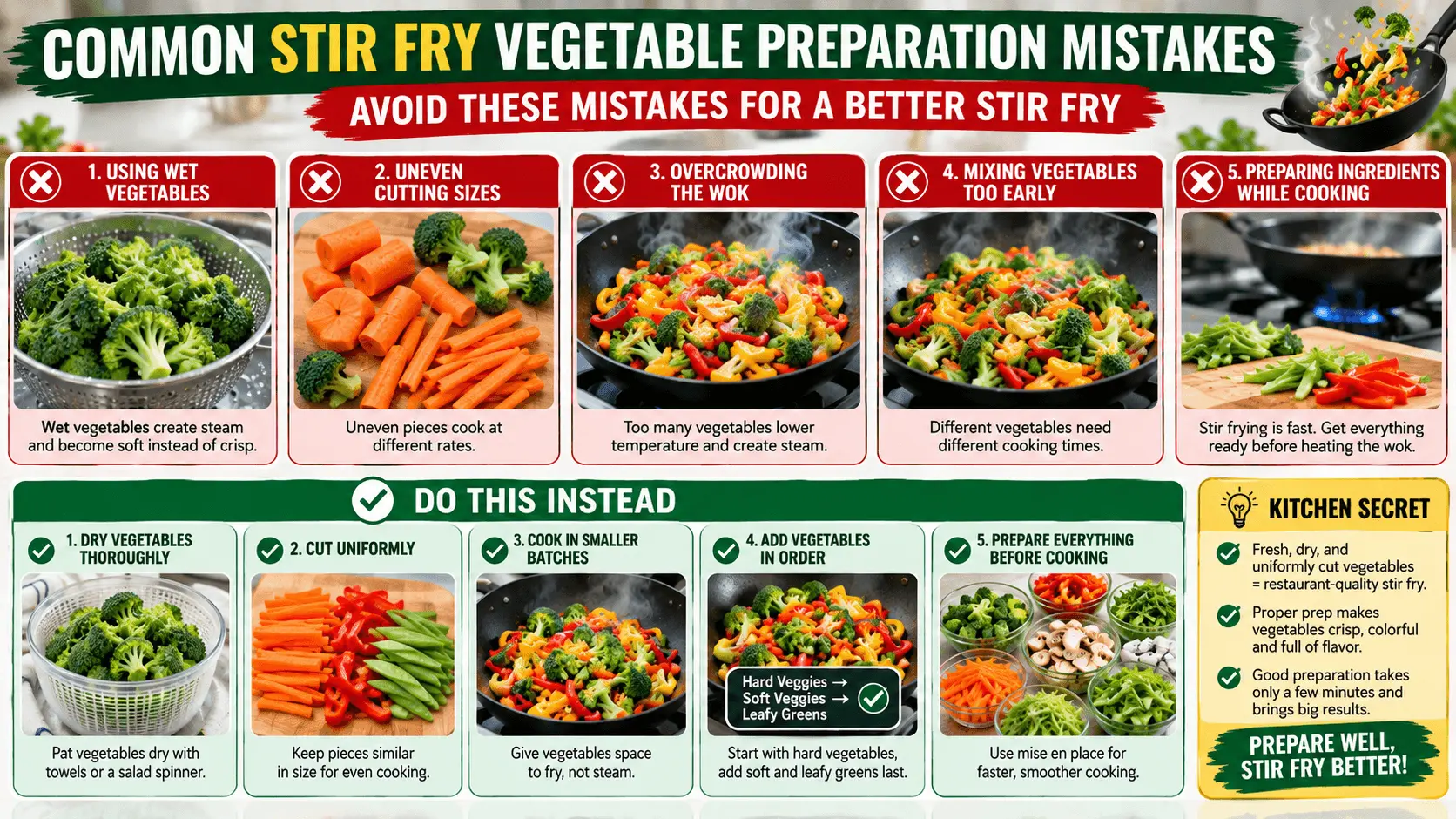
1. Leaving Vegetables Wet After Washing
One of the biggest mistakes is adding vegetables to the wok while they’re still wet. Excess moisture lowers the temperature of the pan and creates steam instead of the intense heat needed for stir frying. Instead of developing slight browning and concentrated flavor, vegetables become soft and watery.
Always dry vegetables thoroughly using clean kitchen towels, paper towels, or a salad spinner before cutting and cooking.
2. Cutting Vegetables Into Different Sizes
Uneven pieces cook at different rates. Large carrot chunks may still be hard while thin slices of zucchini become mushy. Keeping vegetables a consistent size allows everything to finish cooking at nearly the same time.
Warning: Uniform cutting isn’t just about appearance. It improves cooking consistency, prevents burning, and helps vegetables absorb sauces more evenly.
3. Mixing All Vegetables Together Too Early
Different vegetables require different cooking times. Hard vegetables like carrots, broccoli, and cauliflower should enter the wok first, while leafy greens, bean sprouts, spinach, and bok choy leaves should be added near the end.
Separating vegetables by cooking time is one of the simplest ways to improve your results when following a stir fry vegetable preparation guide.
4. Preparing Ingredients While Cooking
Stir frying moves quickly. If you’re still slicing vegetables while the wok is heating, ingredients already in the pan may overcook before everything else is ready.
Professional cooks prepare every ingredient before turning on the burner, allowing them to focus entirely on cooking.
5. Overcrowding the Wok
Too many vegetables in the pan at once trap steam and reduce the wok’s temperature. Instead of frying, the vegetables slowly release moisture and soften.
When preparing large meals, cook vegetables in two smaller batches for the best texture and color.
Good Preparation Habits
- Wash vegetables thoroughly.
- Dry every ingredient completely.
- Cut vegetables into uniform pieces.
- Group vegetables by cooking time.
- Prepare sauces before cooking.
- Cook in manageable batches.
Preparation Mistakes
- Using wet vegetables.
- Uneven slicing.
- Overcrowding the wok.
- Preparing ingredients while cooking.
- Mixing fast- and slow-cooking vegetables together.
- Using vegetables that are past their peak freshness.
Kitchen Secret: Restaurant-quality stir fries aren’t made with complicated ingredients—they’re made with excellent preparation. Spending a few extra minutes organizing ingredients before cooking produces noticeably better texture and flavor.
Build the Perfect Vegetable Combination
A balanced stir fry includes vegetables with different textures, colors, and cooking characteristics. Combining crisp vegetables, tender vegetables, and leafy greens creates a meal that is visually appealing while providing a variety of flavors in every bite.
For example, pairing broccoli, carrots, mushrooms, bell peppers, and snap peas creates excellent contrast in both texture and color. If you prefer a lighter meal, recipes like Teriyaki Chicken Stir Fry or Chicken Veggie Stir Fry showcase how a well-balanced vegetable mix complements lean chicken and flavorful sauces.
Storage Tips Before and After Preparing Vegetables
Proper storage is an essential part of every stir fry vegetable preparation guide. Fresh vegetables can quickly lose their crisp texture if they are stored incorrectly. Moisture buildup, poor airflow, and improper containers all shorten freshness and affect how vegetables cook in a stir fry.
If you’re preparing vegetables ahead of time for busy weeknights, storing them correctly helps preserve their flavor, texture, and nutritional value. Most vegetables can be washed, dried, cut, and refrigerated a day or two before cooking, provided they are kept in airtight containers with as little excess moisture as possible.
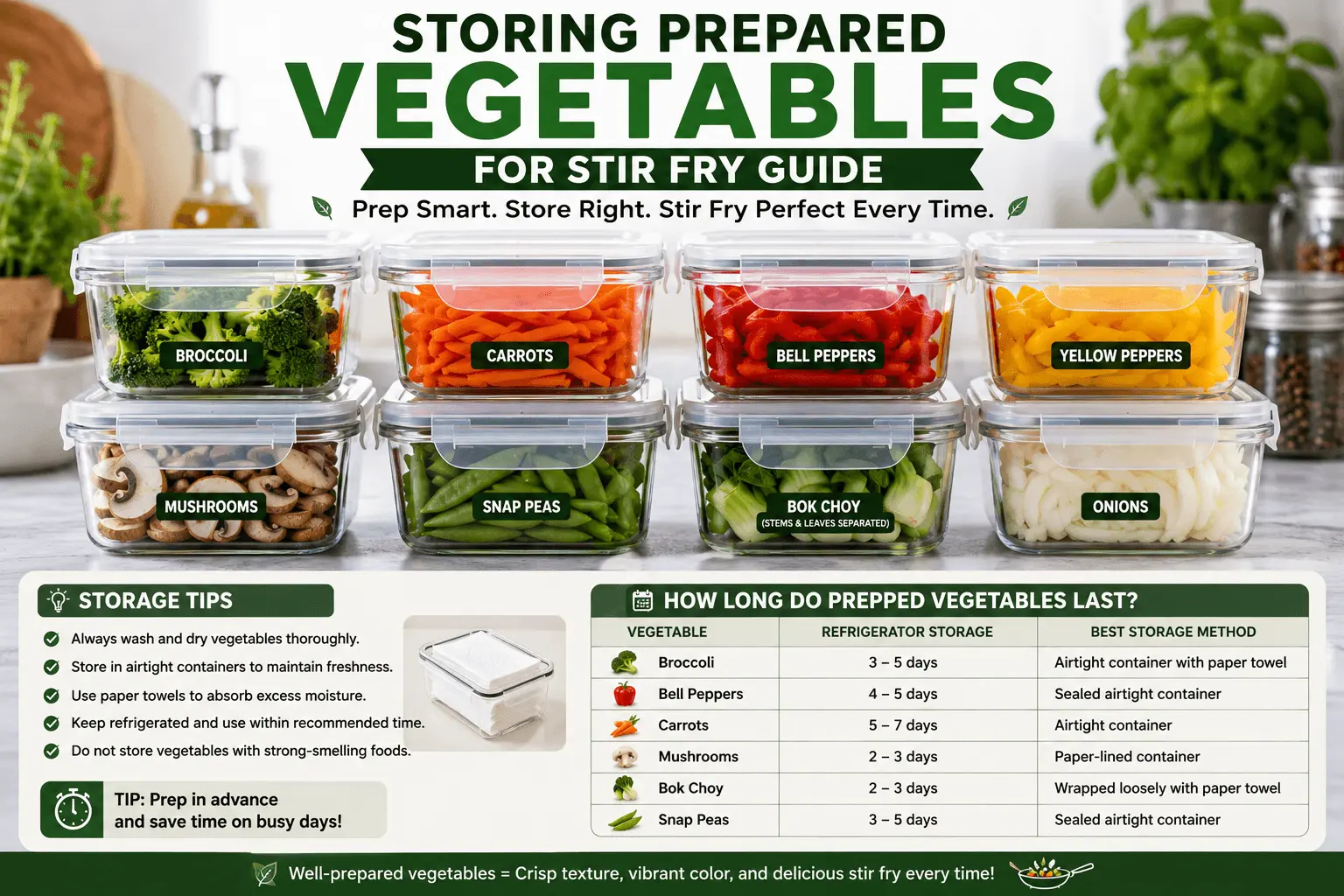
How Long Do Prepared Vegetables Last?
| Vegetable | Refrigerator Storage | Best Storage Method |
|---|---|---|
| Broccoli | 3–5 days | Airtight container with paper towel |
| Bell Peppers | 4–5 days | Sealed container |
| Carrots | 5–7 days | Airtight container |
| Mushrooms | 2–3 days | Paper-lined container |
| Bok Choy | 2–3 days | Wrapped loosely with paper towel |
| Snap Peas | 3–5 days | Sealed container |
Storage Tip: Always allow washed vegetables to dry completely before placing them in the refrigerator. Excess moisture encourages spoilage and can make vegetables soft before you even begin cooking.
Can You Freeze Prepared Stir Fry Vegetables?
Yes. Many vegetables freeze well, although some maintain their texture better than others. Broccoli, carrots, bell peppers, peas, and green beans freeze successfully after being blanched briefly. Vegetables with high water content, such as zucchini and mushrooms, may become softer after thawing but still work well in cooked stir fry dishes.
When freezing vegetables, spread them on a baking sheet until frozen, then transfer them to freezer-safe bags. This prevents large clumps from forming and makes it easier to cook only the amount you need.
Tip: Label freezer bags with the preparation date. For the best quality, use frozen vegetables within 8 to 12 months.
Create Your Own Stir Fry Vegetable Prep Routine
The best stir fry vegetable preparation guide isn’t just about individual techniques—it’s about developing a routine that makes cooking easier every week. A little planning saves time, reduces food waste, and helps you prepare healthy meals even on busy days.
Simple Weekly Prep Checklist
- Buy fresh vegetables once or twice each week.
- Wash produce as soon as you return from the grocery store.
- Dry vegetables thoroughly before storing.
- Trim and slice vegetables into uniform pieces.
- Group vegetables by cooking time.
- Store prepared vegetables in labeled airtight containers.
- Prepare sauces separately until cooking time.
- Use older vegetables first to minimize waste.
Once this routine becomes a habit, preparing meals like Chicken Broccoli Stir Fry, Chicken Mushroom Stir Fry, or Healthy Chicken Stir Fry becomes much faster and more enjoyable.
With good preparation, your vegetables stay colorful, your cooking becomes more efficient, and every homemade stir fry tastes fresher and more satisfying.
Final Thoughts
Mastering a stir fry vegetable preparation guide is one of the easiest ways to improve your home cooking. While high heat and a good wok are important, the real secret to restaurant-quality stir fry begins with careful preparation.
Selecting fresh vegetables, washing and drying them properly, cutting them into uniform pieces, organizing ingredients before cooking, and storing them correctly all contribute to better flavor, texture, and presentation. These simple habits also make weeknight cooking faster and less stressful.
Whether you’re making a quick family dinner or preparing meals in advance, following this stir fry vegetable preparation guide will help you achieve crisp, colorful vegetables every time. As your preparation skills improve, you’ll find it easier to experiment with different vegetable combinations, sauces, and proteins while consistently producing delicious results.

Frequently Asked Questions
What is the best stir fry vegetable preparation guide for beginners?
Start by choosing fresh vegetables, washing and drying them completely, cutting them into even-sized pieces, and organizing them according to cooking time before heating the wok.
Should vegetables be dried before stir frying?
Yes. Dry vegetables brown better, cook faster, and are less likely to steam, helping you achieve crisp-tender results.
Can I prepare stir fry vegetables the night before?
Absolutely. Most vegetables can be washed, dried, sliced, and stored in airtight containers in the refrigerator for one to three days, depending on the vegetable.
Which vegetables should be cooked first in a stir fry?
Firm vegetables such as carrots, broccoli, cauliflower, and green beans should be cooked first because they require more time than softer vegetables.
Do all vegetables need to be cut the same size?
They should be cut into pieces that cook at a similar rate. Hard vegetables are often sliced thinner than softer vegetables to ensure even cooking.
Can frozen vegetables be used in stir fry?
Yes. Frozen vegetables work well, but thawing and draining excess moisture beforehand helps prevent steaming.
References
🍽️ You Might Also Like


📧 Save This Recipe For Later
Enter your email and we will send this recipe directly to your inbox.