
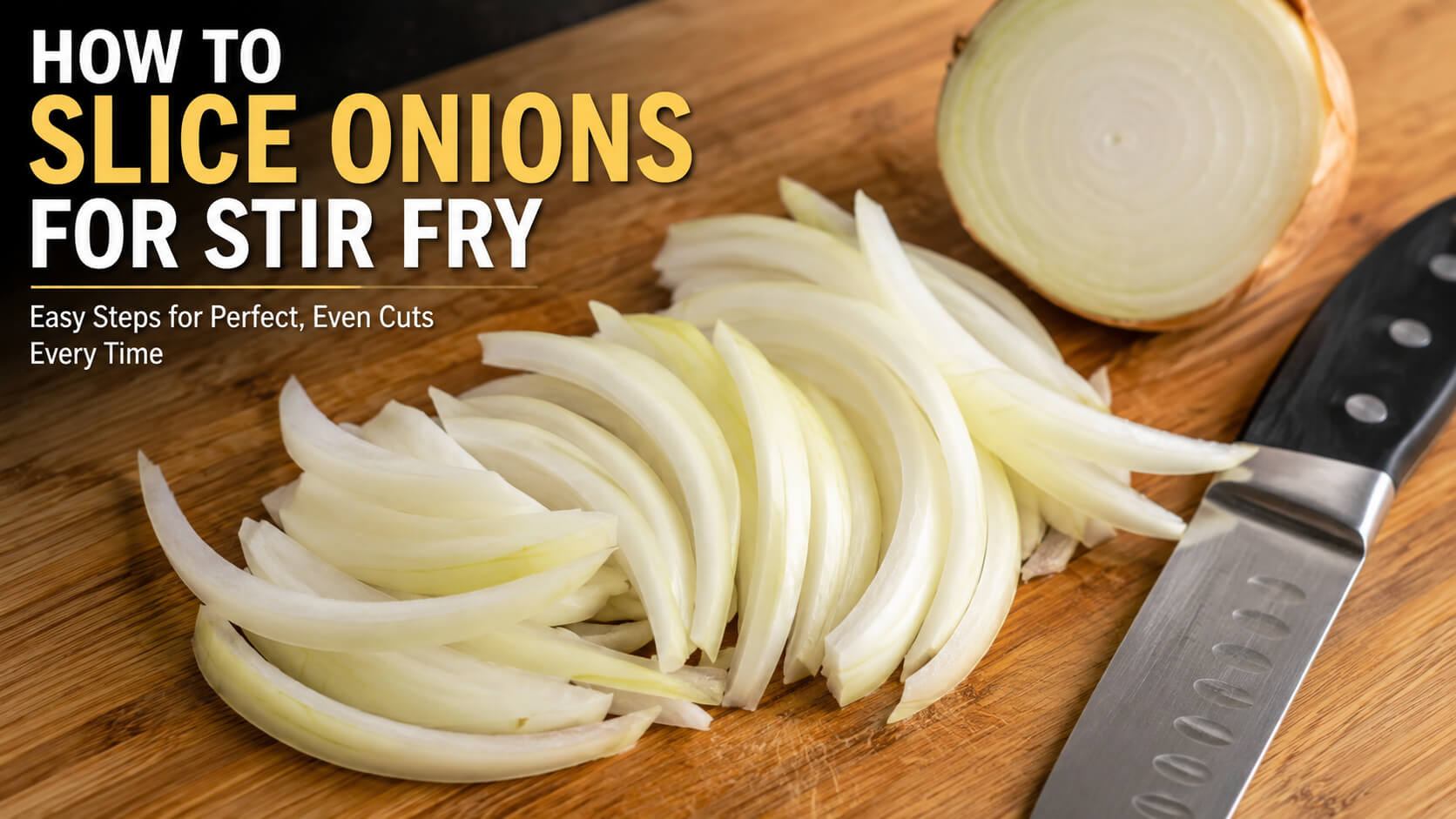
Slice Onions for Stir Fry: 7 Easy Steps for Perfect Results
How to Slice Onions for Stir Fry
If you want restaurant-quality stir fry at home, learning how to slice onions for stir fry is one of the most important skills you can master. The way you cut an onion affects how evenly it cooks, how much flavor it releases, and whether it stays crisp-tender or becomes mushy in the wok.
Many home cooks focus on sauces or cooking techniques, but proper knife work is just as important. Thin, even onion slices cook at the same rate, blend perfectly with other vegetables, and absorb stir fry sauce without losing their natural sweetness.
Whether you’re making a simple vegetable stir fry or one of our favorite dishes like Chicken Stir Fry, knowing how to slice onions for stir fry helps every bite cook evenly and look more professional.
Quick Answer
To slice onions for stir fry, peel the onion, cut it in half from root to stem, then place the flat side on the cutting board. Slice into thin, even strips about 1/8 to 1/4 inch thick, cutting from stem to root. This method helps the onion hold its shape during high-heat cooking while creating tender, flavorful slices that cook evenly.
Table of Contents
Why Proper Onion Slicing Matters
The goal of a great stir fry is to cook every ingredient quickly over high heat while maintaining the perfect texture. Since onions cook rapidly, uneven cuts often create inconsistent results. Thick pieces remain undercooked while thin pieces burn before the rest of the vegetables are ready.
Learning to slice onions for stir fry correctly helps every piece cook at the same speed. Uniform slices also caramelize more evenly, producing the sweet, savory flavor that makes stir fry dishes taste balanced instead of harsh or overly sharp.
Proper slicing also improves presentation. Even strips mix naturally with broccoli, carrots, bell peppers, mushrooms, and chicken, giving your finished stir fry the colorful appearance found in restaurant dishes.
Tip: Aim for slices that are approximately the same thickness. Consistent knife cuts are far more important than making extremely thin slices.
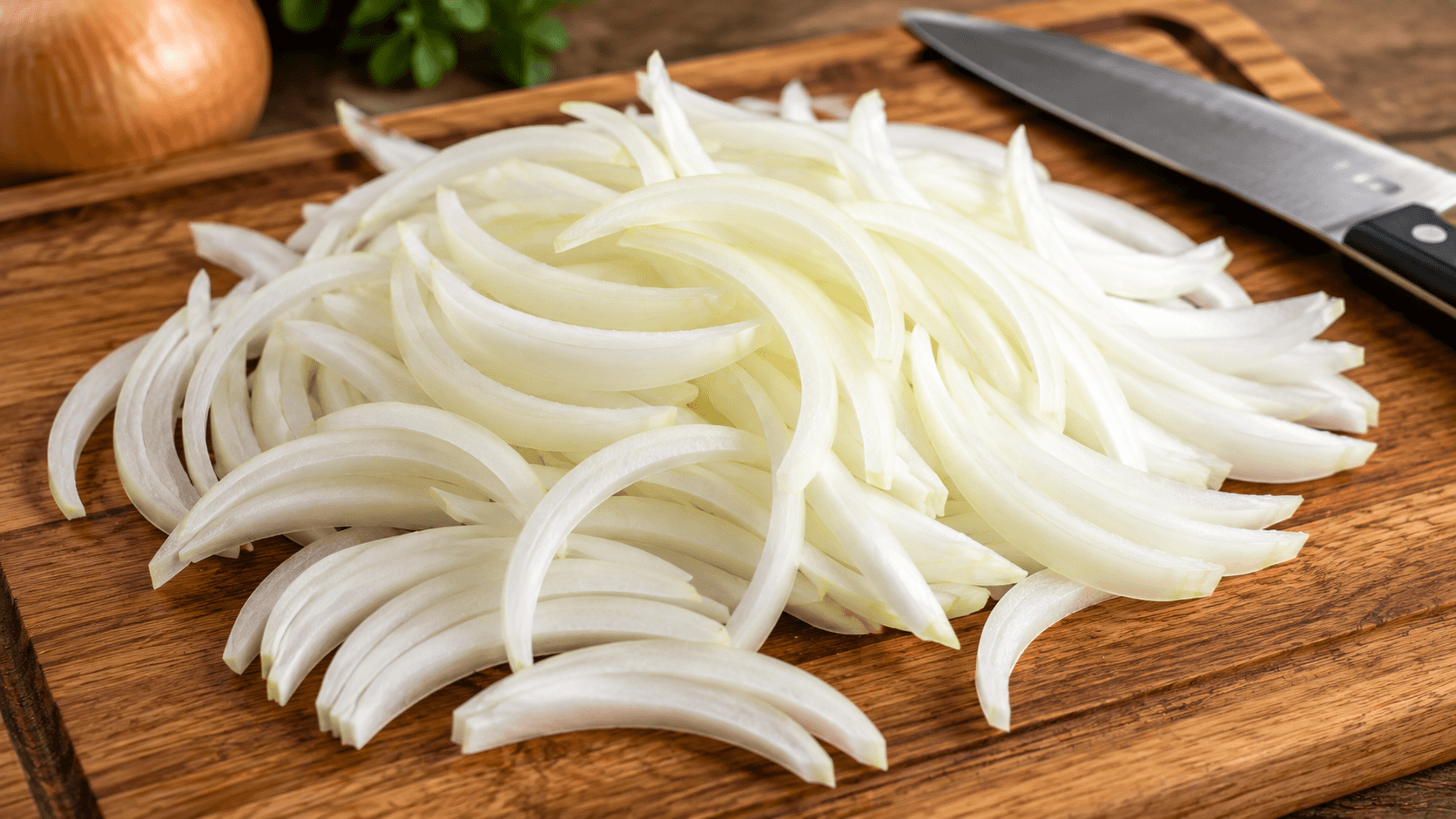
Choose the Right Onion First
Before you slice onions for stir fry, it’s worth choosing the right variety. Yellow onions are the most versatile option because they develop a mild sweetness while still providing enough savory flavor to complement chicken, beef, pork, shrimp, or vegetables.
White onions offer a slightly sharper taste and cook a little faster, making them a good choice for lighter stir fry dishes. Red onions can also be used when you want extra color, although they retain a stronger flavor after cooking.
If you’re unsure which onion works best, read our complete guide on the best onion for stir fry before selecting ingredients.
Choosing a fresh onion is equally important. Look for onions that feel heavy for their size, have dry outer skins, and show no signs of soft spots, mold, or sprouting.
How to Prepare an Onion Before Slicing
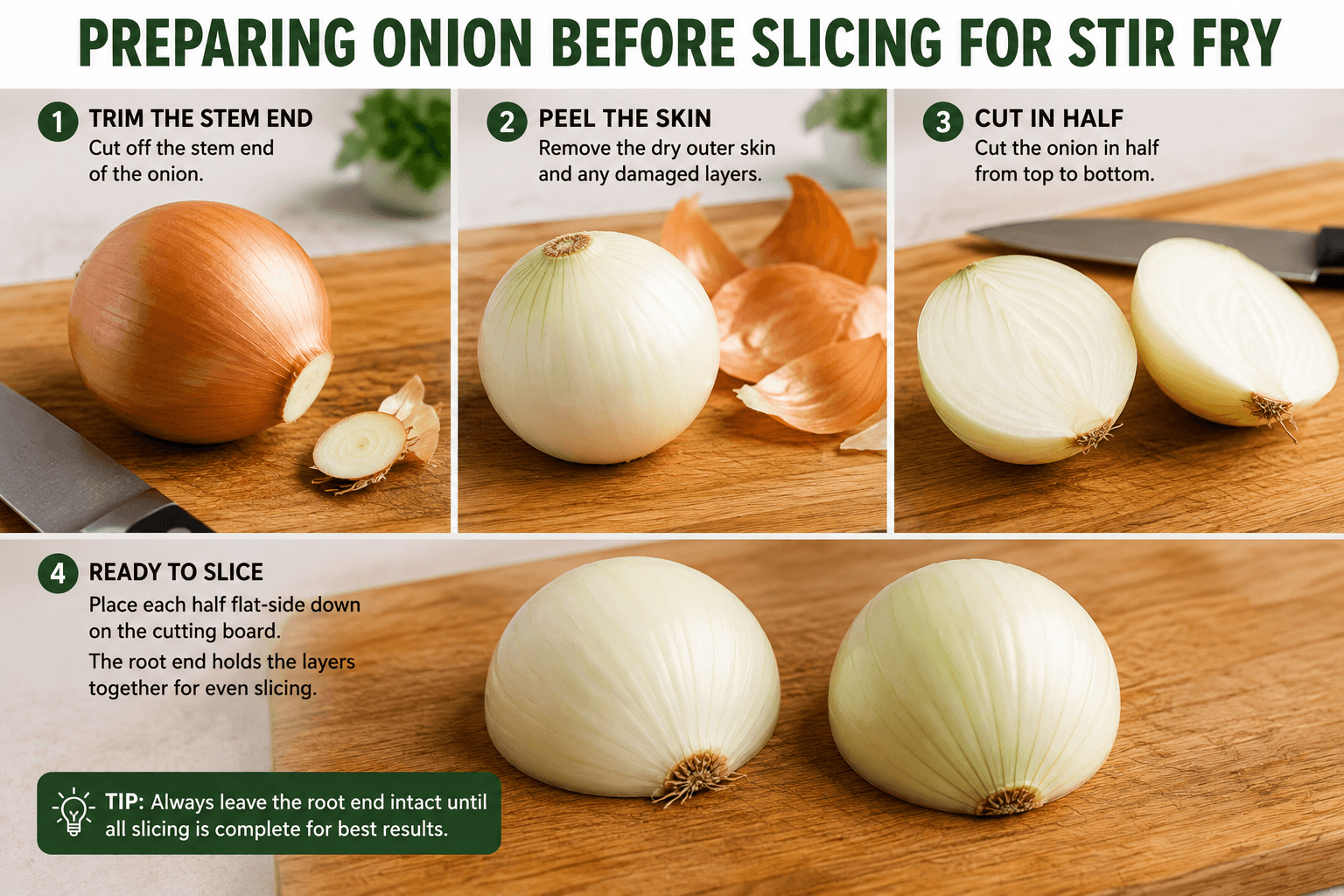
Before you slice onions for stir fry, take a few minutes to prepare the onion properly. A clean, stable setup makes slicing easier, safer, and more accurate. Good preparation also helps you create evenly sized slices that cook consistently in a hot wok.
Start by placing the onion on a sturdy cutting board. Using a sharp chef’s knife is highly recommended because it cuts cleanly through the onion instead of crushing the layers. A dull knife requires more force, increasing the chance of uneven slices and accidental slips.
Step 1: Trim the Stem End
Cut off the stem end of the onion while leaving the root end intact. The root holds all the onion layers together, making it much easier to create uniform slices without the onion falling apart.
Step 2: Peel Away the Outer Skin
Remove the dry papery skin along with any tough outer layer that feels damaged or bruised. Fresh inner layers will cook more evenly and provide a sweeter flavor in your stir fry.
Step 3: Cut the Onion in Half
Slice the onion directly through the root from top to bottom. Place each half flat-side down on the cutting board. This creates a stable surface and reduces movement while cutting.
Kitchen Secret: Professional chefs almost always leave the root attached until all slicing is complete. It keeps the onion together, resulting in cleaner cuts and more consistent slices.
Step-by-Step Guide to Slice Onions for Stir Fry
Now that the onion is prepared, it’s time to slice onions for stir fry the right way. Thin, even slices cook quickly over high heat while still keeping a slight bite, which is exactly what you want in a great stir fry.
1. Position the Onion Correctly
Place one onion half flat-side down on the cutting board with the root facing away from your knife hand. This position gives you better control and helps maintain even slices.
2. Slice from Stem to Root
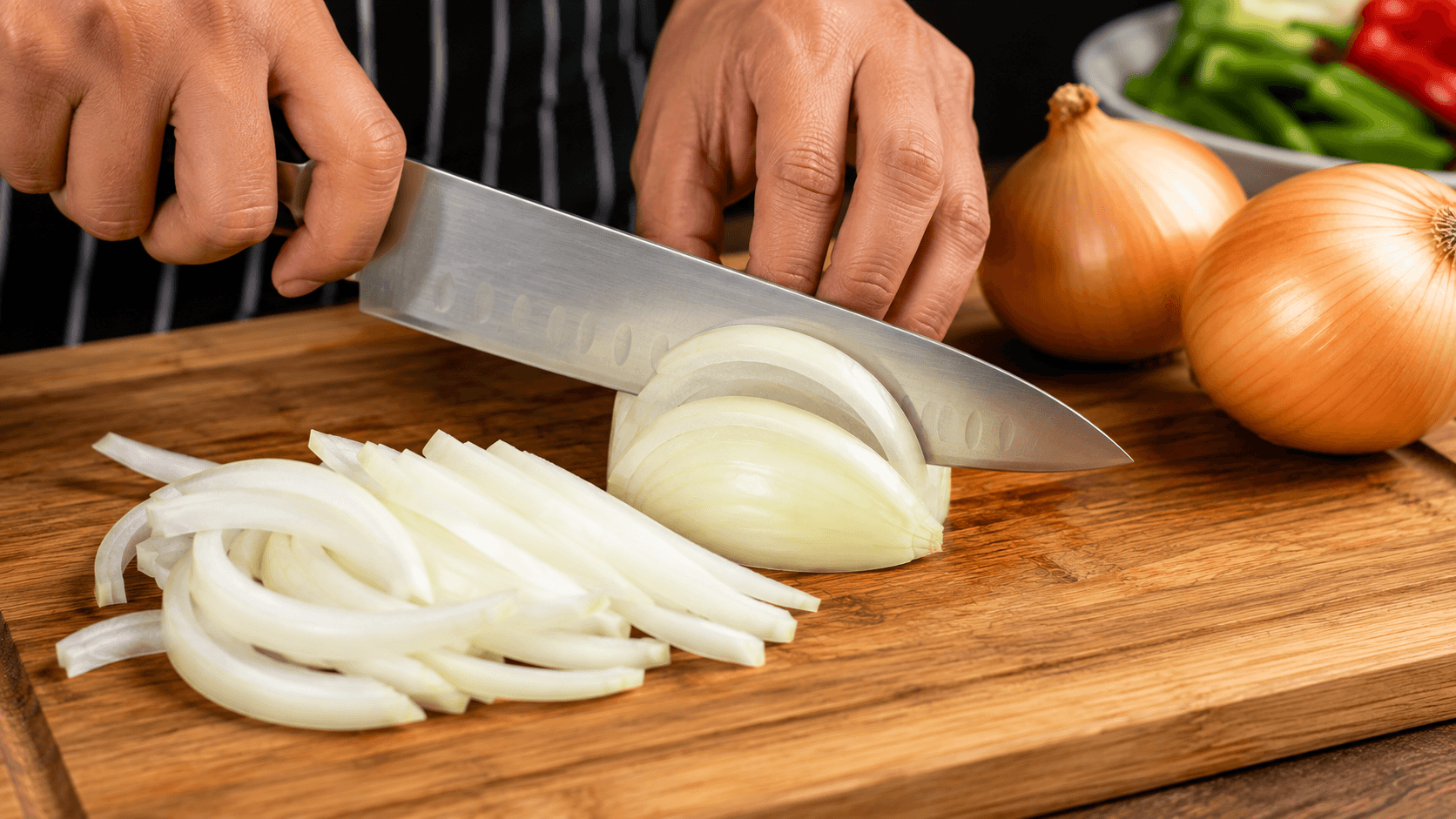
Using smooth, steady strokes, cut from the stem end toward the root. Follow the natural grain of the onion rather than cutting across it. This creates longer onion strips that stay intact during stir frying.
3. Keep the Thickness Consistent
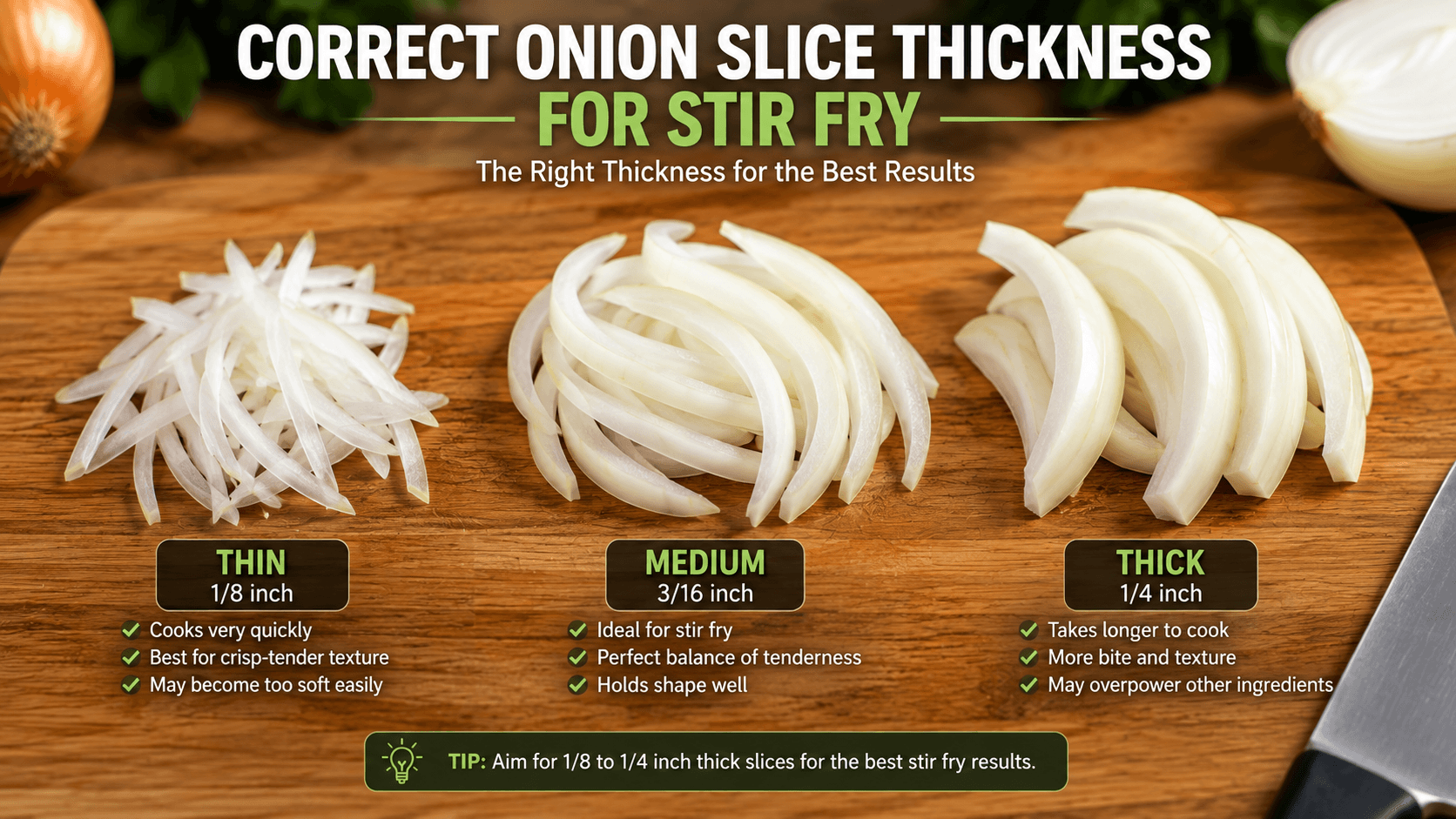
Aim for slices between 1/8 inch and 1/4 inch thick. This size allows the onions to soften without disappearing into the dish. Uniform thickness also ensures every slice finishes cooking at nearly the same time.
4. Separate the Layers
After slicing, gently separate the onion layers with your fingers. Individual strips spread more evenly across the hot wok, allowing each piece to caramelize instead of steaming together.
Once your onions are sliced, they’ll be ready to cook alongside garlic, ginger, bell peppers, broccoli, mushrooms, cabbage, or your favorite protein.
For even better stir fry results, learn when to add garlic and ginger to stir fry so every ingredient reaches its ideal flavor.
Tip: If you’re preparing multiple vegetables, finish all slicing before turning on the stove. Stir frying moves quickly, leaving little time to stop and cut ingredients once cooking begins.
| Onion Slice Thickness | Cooking Time | Best Result |
|---|---|---|
| 1/8 inch | 1–2 minutes | Tender with slight crispness |
| 3/16 inch | 2–3 minutes | Ideal balance of texture and sweetness |
| 1/4 inch | 3–4 minutes | More bite and slightly firmer texture |
Most home cooks find that slices around 3/16 inch thick produce the best results. They soften quickly in the wok while maintaining enough structure to mix well with chicken and vegetables.
Remember that onions continue cooking after additional ingredients are added. If you slice them too thin, they may become overly soft before the stir fry is finished.
Should You Slice With or Against the Grain?
One question that often comes up when learning to slice onions for stir fry is whether you should cut with the grain or against it.
The answer depends on the texture you want, but for most stir fry recipes, slicing from stem to root (with the grain) is the better choice.
When you cut with the grain, the onion fibers stay longer and stronger. This allows the slices to hold together during high-heat cooking, creating tender strips instead of broken pieces.
Cutting against the grain shortens the fibers, producing softer onions that break apart more quickly. While this works well for soups or caramelized onions, it’s usually not ideal for stir fry where texture matters.
Chef’s Secret: Many Chinese restaurants slice onions with the grain because the strips stay attractive and slightly crisp even after being tossed in a hot wok.
Best Knife for Slicing Onions
The knife you use makes a noticeable difference when you slice onions for stir fry. A sharp blade creates smooth cuts, while a dull knife crushes the onion cells and releases more irritating compounds.
The following knives work especially well:
- 8-inch chef’s knife for most home cooks
- Santoku knife for precise vegetable slicing
- Nakiri vegetable knife for perfectly straight cuts
Regardless of the knife style, sharpness is far more important than the brand. Keeping your knife properly honed helps create cleaner slices and improves kitchen safety.
Benefits of Thin, Even Onion Slices
- Cook evenly over high heat
- Blend well with other vegetables
- Absorb stir fry sauce consistently
- Maintain an attractive appearance
- Develop balanced sweetness
Problems with Uneven Slices
- Some pieces burn quickly
- Others remain undercooked
- Uneven texture throughout the dish
- Less professional presentation
- Inconsistent flavor development
Once your onions are ready, proper vegetable timing becomes the next key step. Our guide on the correct order to add vegetables to stir fry explains exactly when onions should enter the wok for the best texture.
Common Mistakes When You Slice Onions for Stir Fry
Even experienced home cooks can make small mistakes when they slice onions for stir fry. While these errors may seem minor, they can affect the texture, flavor, and appearance of the finished dish. Fortunately, they’re easy to avoid once you know what to watch for.
Making the Slices Too Thick
One of the most common mistakes is cutting onions into thick wedges. Thick pieces take longer to cook than most stir fry vegetables, leaving them crunchy while ingredients like bell peppers or mushrooms are already perfectly cooked.
If you prefer a slight bite, keep slices closer to 1/4 inch thick. For faster cooking and better blending with other vegetables, aim for about 1/8 to 3/16 inch.
Cutting Uneven Pieces
Uneven slices create uneven cooking. Thin pieces soften quickly, while thicker sections remain firm. Consistent knife work ensures every onion strip reaches the ideal texture at the same time.
Removing the Root Too Early
Cutting away the root before slicing causes the onion layers to separate, making it difficult to create neat, uniform strips. Leave the root attached until all slicing is complete, then trim it off at the end.
Using a Dull Knife
A dull knife crushes the onion instead of slicing cleanly. This releases more juices, creates ragged edges, and often causes more eye irritation. A sharp knife produces smoother cuts with less effort.
Warning: Never try to rush onion slicing by forcing a dull knife through the onion. Sharp knives are actually safer because they require less pressure and give you better control.
When Should You Add Onions to a Stir Fry?
After you slice onions for stir fry, knowing when to cook them is just as important as knowing how to cut them.
Most stir fry recipes begin by heating the wok until it’s very hot before adding oil. Onions are usually one of the first vegetables added because they need a minute or two to soften and develop their natural sweetness.
Cook the onions just until they begin turning translucent. They should still have a slight crispness because they’ll continue cooking after the remaining vegetables and sauce are added.
If garlic or ginger is part of your recipe, avoid adding them at the same time as the onions. Garlic cooks much faster and may burn if added too early. Instead, follow our guide on when to add garlic and ginger to stir fry for the best flavor.
| Ingredient | When to Add | Reason |
|---|---|---|
| Onions | First vegetable | Need time to soften and sweeten |
| Carrots | Early | Require longer cooking |
| Broccoli | After onions | Cooks quickly but stays crisp |
| Bell peppers | Middle | Maintain vibrant color and texture |
| Garlic & Ginger | Last 30–60 seconds | Prevent burning while maximizing aroma |
If you’re preparing a complete meal, you’ll also benefit from our Ultimate Stir Fry Vegetable Preparation Guide, which explains how to cut every popular stir fry vegetable for even cooking.
How to Keep Onion Slices Crisp and Flavorful
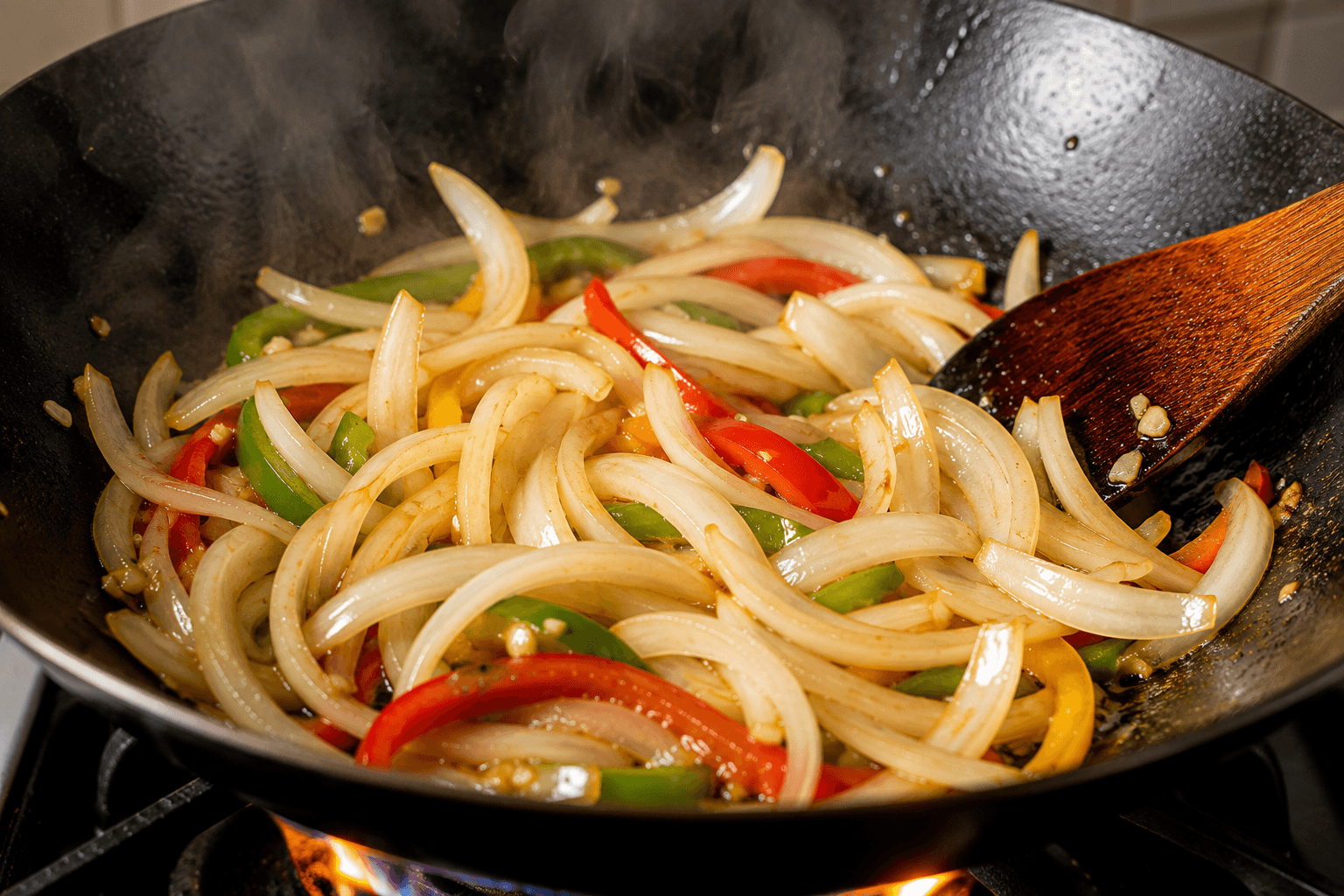
After you slice onions for stir fry, the way you cook them determines whether they stay crisp-tender or become soft and watery. Stir fry is all about quick cooking over high heat, so onions should spend only a few minutes in the wok.
Preheat your wok or skillet before adding oil. Once the oil begins to shimmer, add the onion slices in a single layer whenever possible. Overcrowding the pan traps steam, causing the onions to soften instead of lightly caramelize.
Keep the onions moving with a spatula or wok spoon. Frequent tossing exposes every slice to the hot cooking surface without allowing any pieces to burn.
If your recipe contains vegetables with different cooking times, add them in stages. Hard vegetables such as carrots should go in earlier, while quick-cooking vegetables like snow peas can be added near the end. This method keeps every ingredient at its ideal texture.
Tip: Cook onions until they become slightly translucent with lightly browned edges. They should still have a gentle crunch when the stir fry is finished.
Can You Slice Onions Ahead of Time?
Yes. You can slice onions for stir fry several hours or even a few days before cooking if they’re stored correctly. Preparing vegetables in advance is an excellent way to make weeknight meals faster and less stressful.
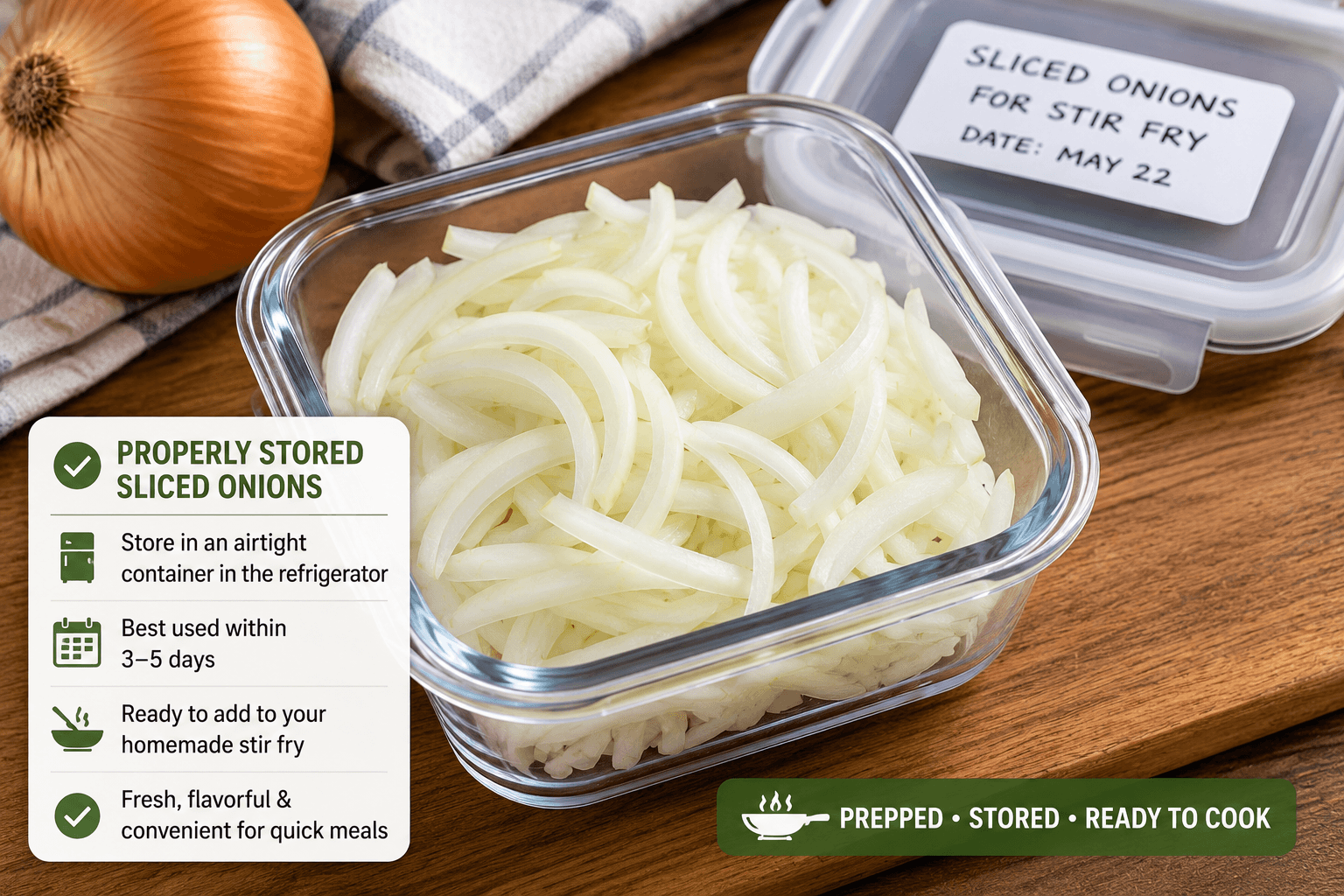
After slicing, place the onions in an airtight container or a resealable food-storage bag. Store them in the refrigerator and keep them away from foods that easily absorb odors, such as dairy products or fresh fruit.
For the best flavor and texture, use sliced onions within three to five days. Although they remain safe for longer when properly refrigerated, they gradually lose moisture and become less crisp over time.
Storage Tip: Refrigerate sliced onions in an airtight container at 40°F (4°C) or below. Label the container with the preparation date and use the onions within 3–5 days for the freshest results.
| Storage Method | Recommended Time | Quality |
|---|---|---|
| Room temperature (whole onion) | Several weeks | Excellent |
| Refrigerated sliced onion | 3–5 days | Best quality |
| Frozen sliced onion | 3–6 months | Good for cooked dishes |
Can You Freeze Sliced Onions for Stir Fry?
If you meal prep regularly, freezing is another convenient option after you slice onions for stir fry. Frozen onions work especially well in cooked dishes because they’ll soften during cooking regardless of their original texture.
Spread freshly sliced onions on a baking sheet lined with parchment paper and freeze them until solid. Then transfer the frozen slices to freezer-safe bags or airtight containers. Freezing them individually first helps prevent large clumps from forming.
There’s no need to thaw frozen onions before cooking. Simply add them directly to a hot wok. Keep in mind that frozen onions release more moisture, so allow a little extra time for excess liquid to evaporate before adding sauce.
If you’re preparing other vegetables ahead of time, our guide to the best vegetables for chicken stir fry can help you choose combinations that freeze and cook well together.
Kitchen Secret: Portion frozen onion slices into recipe-sized freezer bags. This makes it easy to grab exactly what you need without thawing more than necessary.
Final Thoughts
Learning how to slice onions for stir fry is a simple kitchen skill that makes a noticeable difference in both flavor and texture. Evenly sliced onions cook consistently, caramelize beautifully, and blend perfectly with chicken, vegetables, and your favorite stir fry sauces.
For the best results, choose a fresh onion, use a sharp knife, slice from stem to root, and keep each slice between 1/8 and 1/4 inch thick. Combine proper slicing with high-heat cooking, and you’ll achieve crisp-tender onions that look and taste like they came from your favorite restaurant.
Whether you’re making a quick weeknight dinner or preparing ingredients ahead of time for meal prep, taking a few extra minutes to slice onions for stir fry correctly will improve every stir fry recipe you make.
Frequently Asked Questions
Should I slice onions thin or thick for stir fry?
The ideal thickness is between 1/8 and 1/4 inch. Thin, even slices cook quickly while still maintaining a slight bite, making them perfect for stir fry.
Do you slice onions with or against the grain?
For most stir fry recipes, slice with the grain by cutting from stem to root. This helps the onion strips hold together during high-heat cooking.
Can I prepare sliced onions the night before?
Yes. Store sliced onions in an airtight container in the refrigerator. They stay fresh for about 3 to 5 days and are perfect for meal prep.
Which onion is best for stir fry?
Yellow onions are the most versatile choice because they develop a naturally sweet flavor while keeping enough texture for high-heat cooking. White onions are another excellent option.
Can frozen sliced onions be used in stir fry?
Absolutely. Add frozen onion slices directly to the hot wok without thawing. They may release slightly more moisture, so allow extra time for the liquid to evaporate.
Why are my onions turning mushy in stir fry?
Onions usually become mushy when they’re sliced too thin, overcrowded in the pan, or cooked for too long. High heat and quick cooking help maintain the best texture.
References
🍽️ You Might Also Like

📧 Save This Recipe For Later
Enter your email and we will send this recipe directly to your inbox.