

How to Cook Spinach in Stir Fry Without Overcooking
How to Cook Spinach in Stir Fry Without Overcooking
Learning how to cook spinach stir fry the right way can make the difference between a fresh, vibrant meal and one filled with limp, watery greens. Spinach is one of the quickest-cooking vegetables you can add to a stir fry, but it also has one of the shortest windows between perfectly wilted and badly overcooked.
Many home cooks add spinach too early, use too much at once, or cook it over low heat. These common mistakes cause the leaves to release excess moisture, resulting in a soggy stir fry instead of crisp vegetables coated in flavorful sauce.
The good news is that spinach is incredibly forgiving when you understand the correct timing. With just a few simple techniques, you can keep the leaves bright green, lightly wilted, and full of fresh flavor while allowing the rest of your vegetables and protein to shine.
Whether you’re preparing a healthy vegetable stir fry or making a delicious Chicken Spinach Stir Fry, mastering how to cook spinach stir fry properly will instantly improve both texture and appearance.
Quick Answer
The best way to cook spinach stir fry is to add fresh spinach during the final 30 to 60 seconds of cooking over high heat. Toss the leaves just until they wilt, then immediately remove the pan from the heat. This keeps spinach bright green, tender, and flavorful without becoming watery or mushy.
- Add spinach last.
- Use high heat.
- Cook only until wilted.
- Avoid overcrowding the pan.
- Serve immediately for the best texture.
Table of Contents
Why Spinach Overcooks So Quickly
Spinach is made up of more than 90% water, making it one of the fastest-cooking leafy vegetables available. Unlike broccoli, carrots, or bell peppers, spinach doesn’t need several minutes of cooking to become tender. In fact, it usually needs less than one minute.
As the leaves heat up, the water inside the cells quickly turns to steam, causing the spinach to collapse. While this natural wilting process is desirable, continuing to cook after this point causes the leaves to lose structure and release even more liquid into the pan.
This extra moisture can dilute your stir fry sauce, soften other vegetables, and prevent proper browning. Understanding this simple science is the first step toward learning how to cook spinach stir fry successfully every time.
Tip: Think of spinach as a finishing ingredient rather than a main cooking vegetable. The rest of your stir fry should be nearly complete before the spinach goes into the wok.
If you’re still learning vegetable timing, our guide on the correct order to add vegetables to stir fry explains how every vegetable should be added for the best texture.
Choosing the Best Spinach for Stir Fry
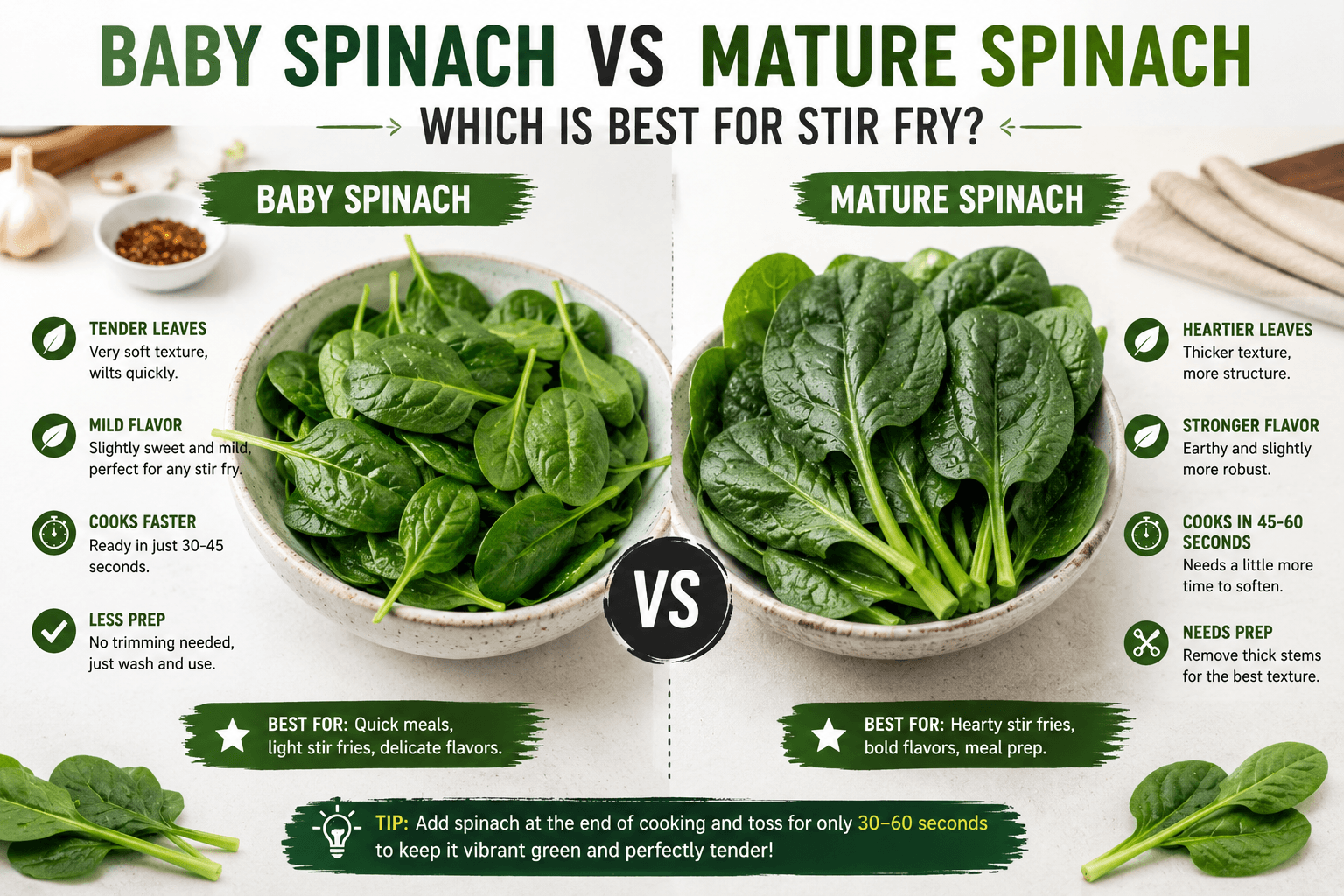
The type of spinach you choose has a noticeable impact on the final texture of your stir fry. While almost any spinach can work, some varieties hold their shape better and stay fresher after cooking. Choosing quality spinach is an important part of learning how to cook spinach stir fry successfully.
Fresh spinach is almost always the best choice because it wilts quickly without releasing excessive water. Frozen spinach is already partially cooked and contains much more moisture, making it difficult to achieve the crisp texture that makes stir fry so appealing.
| Spinach Type | Best For | Result in Stir Fry |
|---|---|---|
| Baby Spinach | Quick weeknight meals | Tender, mild flavor, wilts evenly |
| Mature Spinach | Hearty stir fries | More texture and stronger flavor |
| Frozen Spinach | Soups and casseroles | Too watery for most stir fries |
Baby spinach is especially popular because the leaves are naturally tender and require very little trimming. Mature spinach has larger leaves and thicker stems that should be removed before cooking for the best texture.
How to Prepare Spinach Before Cooking
Proper preparation helps prevent excess moisture and ensures your spinach cooks evenly. Even if you’re using prewashed spinach, it’s worth checking the leaves for damaged pieces or thick stems before adding them to the wok.
1. Wash Thoroughly
Fresh spinach often contains small amounts of dirt hidden near the stems. Rinse the leaves under cold running water or soak them briefly in a bowl of clean water before draining.
2. Dry Completely
One of the biggest mistakes people make when trying to cook spinach stir fry is adding wet spinach directly to a hot pan. Water instantly creates steam, lowering the pan’s temperature and preventing proper stir frying.
Use a salad spinner or gently pat the leaves dry with clean kitchen towels. The drier the spinach, the better your stir fry will turn out.
Kitchen Secret: Dry spinach cooks faster, keeps your wok hotter, and helps sauces cling to the leaves instead of becoming diluted.
3. Trim Large Stems
Baby spinach usually needs little preparation, but mature spinach often has thick stems that cook more slowly than the leaves. Removing these stems creates a more consistent texture throughout the dish.
If you’re preparing several vegetables together, our Ultimate Stir Fry Vegetable Preparation Guide explains the best way to wash, cut, and prepare every vegetable before cooking.
Taking just a few extra minutes to prepare spinach correctly makes it much easier to cook spinach stir fry without ending up with soggy greens or a watery sauce.
How to Cook Spinach in Stir Fry Step by Step
Once your vegetables, protein, and sauce are nearly finished, it’s time to add the spinach. This final step is where many people accidentally overcook the leaves. By following a simple sequence, you can cook spinach stir fry perfectly every time while keeping the spinach bright green, tender, and full of flavor.
Step 1: Finish Cooking the Other Ingredients First
Spinach cooks much faster than almost every other vegetable used in stir fry. Chicken, broccoli, carrots, mushrooms, zucchini, and bell peppers should all be fully cooked before the spinach goes into the wok.
If you’re making a mixed vegetable stir fry, following the correct cooking order is essential. Our guide on the correct order to add vegetables to stir fry explains the ideal sequence for the best texture.
Step 2: Turn the Heat to High
A properly heated wok quickly wilts spinach without allowing it to release too much moisture. High heat creates fast cooking, helping the leaves soften while preserving their fresh flavor and vibrant color.
If your pan has cooled after adding sauce, allow it to heat up again before adding the spinach.

Step 3: Add Spinach Last
Add the spinach during the final 30 to 60 seconds of cooking. Place the leaves on top of the finished stir fry and gently toss them through the hot ingredients.
The residual heat from the vegetables, protein, and wok will quickly wilt the spinach without making it soggy.
Step 4: Toss Constantly
Keep the spinach moving using a spatula or wok spoon. Constant tossing distributes heat evenly and prevents the leaves from sticking to the pan.
You’ll notice the volume decreases rapidly as the spinach wilts. This is completely normal because the leaves contain a high percentage of water.
Step 5: Remove From Heat Immediately
As soon as the spinach has wilted, remove the wok from the burner and serve immediately. Continuing to cook after the leaves have softened is the quickest way to overcook spinach.
Tip: Spinach continues to wilt from residual heat even after you remove the pan from the stove. Slightly undercooked spinach often reaches the perfect texture by the time it’s served.
How Long Should Spinach Cook in a Stir Fry?
The exact cooking time depends on the type of spinach, the amount being used, and the heat of your pan. However, most fresh spinach requires surprisingly little time.
| Spinach Type | Cooking Time | Ideal Texture |
|---|---|---|
| Baby Spinach | 30–45 seconds | Lightly wilted and tender |
| Mature Spinach | 45–60 seconds | Soft leaves with slight bite |
| Frozen Spinach | 1–2 minutes (after thawing) | Fully heated but softer texture |
If you’re looking for healthy meal ideas that use spinach correctly, try our Healthy Chicken Stir Fry or flavorful Chicken Spinach Stir Fry, both of which use this quick-cooking technique for the best results.
Common Mistakes That Overcook Spinach in Stir Fry
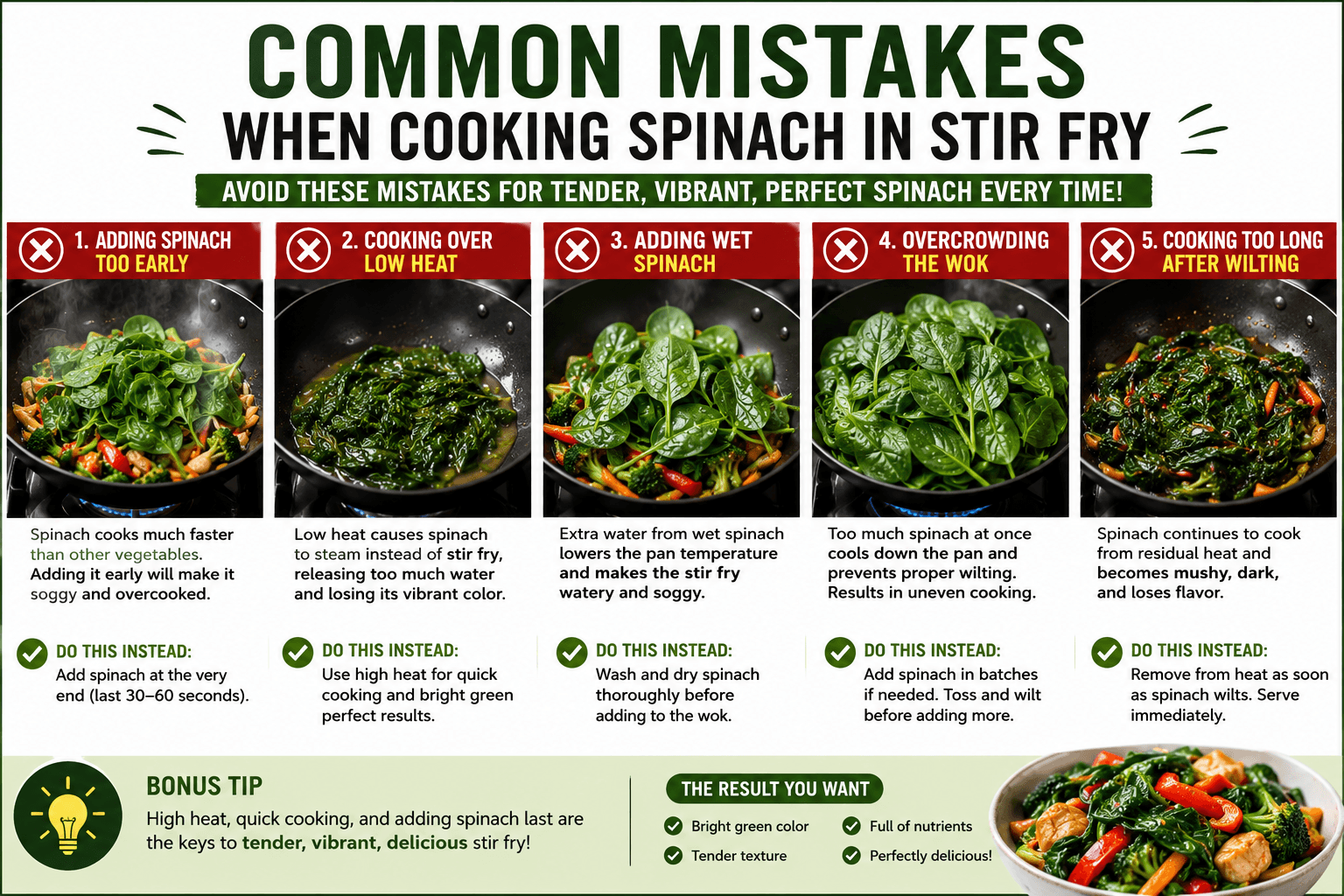
Even experienced home cooks can accidentally overcook spinach if they overlook a few simple details. Since spinach cooks much faster than most vegetables, small timing mistakes can quickly turn fresh, tender leaves into a watery mess. Avoiding these common errors will help you cook spinach stir fry with better flavor, color, and texture every time.
Adding Spinach Too Early
The most common mistake is adding spinach before the other vegetables have finished cooking. Broccoli, carrots, mushrooms, onions, and zucchini all require more time than spinach. If the spinach sits in the wok while these vegetables finish cooking, it will become limp and release excess moisture.
Always wait until the rest of the stir fry is nearly complete before adding the spinach.
Cooking Over Low Heat
Low heat causes spinach to slowly steam instead of quickly wilt. As the leaves cook slowly, they release more liquid, making the stir fry watery and reducing the fresh flavor.
A hot wok allows the spinach to cook in seconds while maintaining its bright green appearance.
Adding Wet Spinach
Spinach should always be as dry as possible before it reaches the pan. Water clinging to the leaves instantly turns into steam, cooling the wok and preventing proper stir frying.
After washing, use a salad spinner or gently pat the leaves dry with clean kitchen towels.
Warning: Never add dripping wet spinach to a hot wok. Excess water lowers the cooking temperature, weakens the sauce, and increases the risk of soggy vegetables.
Overcrowding the Wok
Adding a large pile of spinach all at once can reduce the temperature of the pan. If you’re cooking a large batch, add the spinach in two smaller portions, tossing each batch until lightly wilted before adding more.
This helps the wok stay hot and ensures the leaves cook evenly.
Continuing to Cook After the Spinach Wilts
Once spinach has wilted, its job is done. Continuing to stir fry for another minute or two only causes the leaves to lose texture and color.
Remove the pan from the heat as soon as the spinach has softened.
Can You Use Frozen Spinach in Stir Fry?
Fresh spinach is the preferred choice for stir fry, but frozen spinach can work in certain situations if it’s prepared correctly. Because frozen spinach has already been blanched before freezing, it behaves differently than fresh leaves.
Pros
- Available year-round.
- Convenient for quick meals.
- No washing or trimming required.
- Works well in saucy stir fries.
Cons
- Contains significantly more moisture.
- Softer texture than fresh spinach.
- Less vibrant appearance.
- Can water down the stir fry if not drained well.
If using frozen spinach, thaw it completely and squeeze out as much liquid as possible before adding it during the final minute of cooking. This helps prevent excess moisture from affecting the rest of the dish.
For more vegetable preparation tips, read our guides on Fresh vs. Frozen Vegetables for Stir Fry and Common Vegetable Stir Fry Mistakes, where you’ll find practical advice for getting consistently great results.
How to Store and Reheat Spinach Stir Fry
Although spinach stir fry is best enjoyed immediately after cooking, leftovers can still taste great when stored and reheated correctly. Because spinach continues to soften after cooking, proper storage helps preserve both texture and flavor while keeping the dish safe to eat.
If you’ve taken the time to cook spinach stir fry without overcooking it, careful storage will help maintain those results for your next meal.
Refrigerating Leftover Stir Fry
Allow the stir fry to cool slightly before transferring it to a shallow airtight container. Refrigerate within two hours of cooking to reduce the risk of bacterial growth.
For the best quality, eat refrigerated spinach stir fry within 3 to 4 days. While the spinach may soften slightly during storage, the overall dish should still have good flavor if reheated properly.
Storage Tip: Store leftovers in airtight containers and refrigerate promptly. Keeping air and moisture out helps preserve freshness and prevents the vegetables from becoming soggy.

Can You Freeze Spinach Stir Fry?
Yes, you can freeze spinach stir fry, but the texture of the spinach will change after thawing. Since spinach naturally contains a large amount of water, freezing and defrosting cause the leaves to become softer than when freshly cooked.
If freezing, place the cooled stir fry in freezer-safe containers or heavy-duty freezer bags. Remove as much air as possible before sealing to help prevent freezer burn.
For the best flavor and quality, use frozen stir fry within 2 to 3 months.
Best Way to Reheat Spinach Stir Fry
The goal when reheating is to warm the food quickly without cooking the spinach again. High heat for a short time works much better than low heat for several minutes.
- Heat a wok or skillet over medium-high heat.
- Add a small splash of oil or water if needed.
- Stir continuously for 2 to 3 minutes until heated through.
- Serve immediately once hot.
A microwave also works for convenience, but use short heating intervals and stir between each one to avoid overheating the spinach.
Tip: Avoid reheating spinach stir fry multiple times. Reheat only the portion you plan to eat to maintain the best texture and overall quality.
Expert Tips for Perfect Spinach Stir Fry Every Time
Professional cooks rely on a few simple habits that consistently produce better stir fries. These techniques are easy to apply at home and will help you cook spinach stir fry with confidence.
- Prepare every ingredient before turning on the heat.
- Use a large wok or skillet to avoid overcrowding.
- Cook vegetables in the correct order based on firmness.
- Add spinach only during the final minute of cooking.
- Keep the pan moving with constant tossing.
- Serve immediately while the vegetables are still crisp-tender.
- Taste the sauce before adding spinach so final seasoning is quick.
- Use fresh spinach whenever possible for the brightest flavor and color.
If you’re looking for more healthy stir fry inspiration, explore our Chicken Veggie Stir Fry, Chicken Broccoli Stir Fry, and Chicken Zucchini Stir Fry for additional vegetable combinations that pair perfectly with spinach.

Frequently Asked Questions
Should spinach be cooked before adding it to a stir fry?
No. Fresh spinach should be added directly to the hot wok during the final 30 to 60 seconds of cooking. This is the easiest way to cook spinach stir fry while keeping the leaves tender and vibrant.
How do I keep spinach from getting watery in a stir fry?
Wash and dry the spinach thoroughly before cooking, use high heat, and add it only at the end of cooking. Avoid overcrowding the pan so excess moisture can evaporate quickly.
Can I use baby spinach instead of regular spinach?
Yes. Baby spinach is one of the best choices for stir fry because the leaves are naturally tender and cook very quickly. It also has a mild flavor that pairs well with chicken, beef, shrimp, tofu, and most vegetables.
How much spinach should I use in a stir fry?
Remember that spinach shrinks dramatically during cooking. A large handful per serving is a good starting point, although you can use more if you enjoy leafy greens.
What vegetables pair well with spinach in a stir fry?
Spinach works well with broccoli, mushrooms, zucchini, bell peppers, snap peas, carrots, onions, bok choy, and cabbage. Combining vegetables with different textures creates a balanced and flavorful stir fry.
Can I add spinach to any stir fry recipe?
Absolutely. Spinach is a versatile vegetable that complements chicken, beef, pork, shrimp, tofu, and vegetable stir fries. Simply add it during the last minute of cooking to avoid overcooking.
Final Thoughts
Learning how to cook spinach stir fry isn’t difficult, but timing makes all the difference. By adding spinach during the final moments of cooking, using high heat, and avoiding excess moisture, you can enjoy bright green leaves with a tender texture instead of a soggy, watery stir fry.
Fresh spinach cooks incredibly fast, making it one of the easiest vegetables to include in healthy weeknight meals. With proper preparation and the techniques covered in this guide, you’ll consistently produce restaurant-quality stir fries packed with color, flavor, and nutrition.
Whether you’re making a simple vegetable stir fry or a protein-packed chicken dinner, mastering how to cook spinach stir fry will help every meal look better, taste fresher, and maintain the perfect balance of crisp vegetables and tender greens.
References
🍽️ You Might Also Like




📧 Save This Recipe For Later
Enter your email and we will send this recipe directly to your inbox.