
Best Onion for Stir Fry (Yellow vs. White vs. Red)
Best Onion for Stir Fry (Yellow vs. White vs. Red)
Choosing the best onion for stir fry can make a noticeable difference in flavor, texture, and overall balance. While onions may seem like a simple ingredient, each variety cooks differently and contributes its own level of sweetness, sharpness, and crunch. Understanding these differences helps you build better stir fries whether you’re preparing a quick weeknight dinner or recreating your favorite takeout dish at home.
Yellow, white, and red onions are all commonly available in American grocery stores, but they aren’t interchangeable in every recipe. Some become sweet and caramelized when exposed to high heat, while others stay crisp and deliver a sharper bite. Matching the right onion to your ingredients and cooking style is one of the easiest ways to improve your stir fry.
In this guide, you’ll learn exactly which onion works best for different stir fry recipes, when to use each variety, and the simple cooking techniques that help onions stay flavorful without becoming soggy or burnt.
Quick Answer
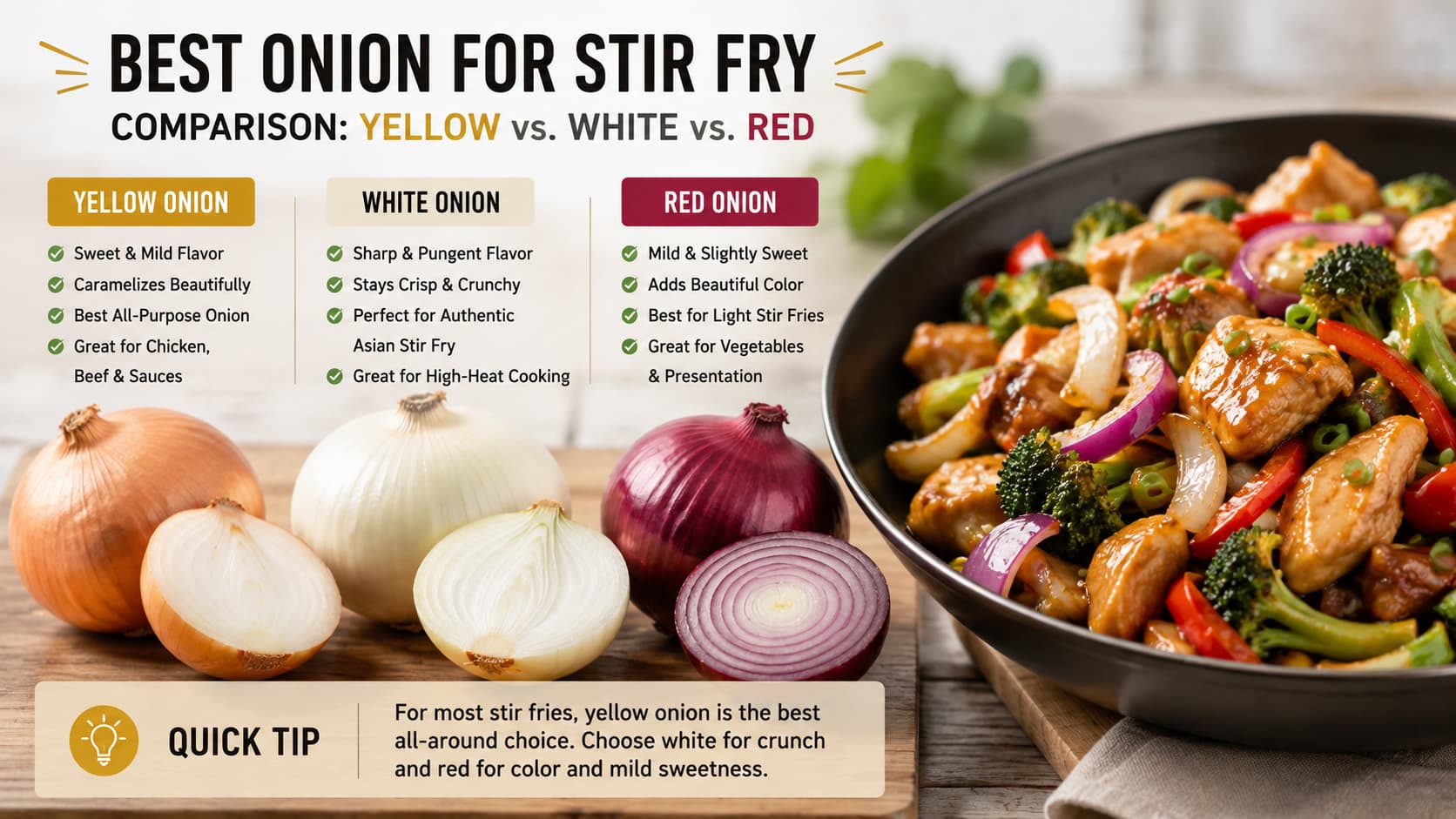
The best onion for stir fry is usually a yellow onion because it develops a naturally sweet flavor while maintaining enough texture during high-heat cooking. White onions are an excellent choice for traditional Asian-style stir fries because they have a sharper, cleaner taste and stay slightly firmer. Red onions are best when you want extra color and a mild sweetness, although they soften faster than yellow or white onions.
- Yellow onion: Best all-purpose choice with balanced sweetness.
- White onion: Crisp texture and clean, slightly spicy flavor.
- Red onion: Mild sweetness and vibrant color for specific recipes.
The ideal onion depends on your ingredients, cooking time, and the flavor profile you want to achieve.
Table of Contents
Why Onion Choice Matters in Stir Fry
Stir frying is a fast cooking method that relies on very high heat. Because ingredients spend only a few minutes in the wok or skillet, every vegetable behaves differently. Onions are one of the first vegetables to develop flavor during cooking, making them an important foundation for the finished dish.
The best onion for stir fry should complement the protein, vegetables, and sauce without overpowering them. During cooking, onions release natural sugars that add depth and balance to salty ingredients like soy sauce, oyster sauce, and sesame oil. At the same time, they provide aroma and a slight crunch that makes every bite more satisfying.
Different onion varieties contain different amounts of natural sugars and water. These differences affect how quickly they soften, how sweet they become, and whether they remain crisp after cooking.
Kitchen Tip: Slice onions into evenly sized pieces so they cook at the same speed. Uniform slices prevent some pieces from burning while others remain undercooked.
If you’re making chicken stir fry, beef stir fry, shrimp stir fry, or a vegetable stir fry, choosing the right onion is almost as important as selecting fresh vegetables. A well-chosen onion enhances every ingredient instead of competing with it.
If you’re still learning vegetable preparation, our guide on how to slice onions for stir fry explains the best cutting techniques for even cooking and better texture.
You can also improve the overall flavor of your meal by learning when to add garlic and ginger to stir fry, since timing plays a major role in preventing burnt aromatics while maximizing flavor.
Yellow vs. White vs. Red Onions: Which Is the Best Onion for Stir Fry?
When comparing onion varieties, there isn’t a single perfect choice for every recipe. Instead, the best onion for stir fry depends on the flavor profile you want, the vegetables you’re using, and how long the onions will cook. Understanding the strengths of each type helps you make the right decision every time.
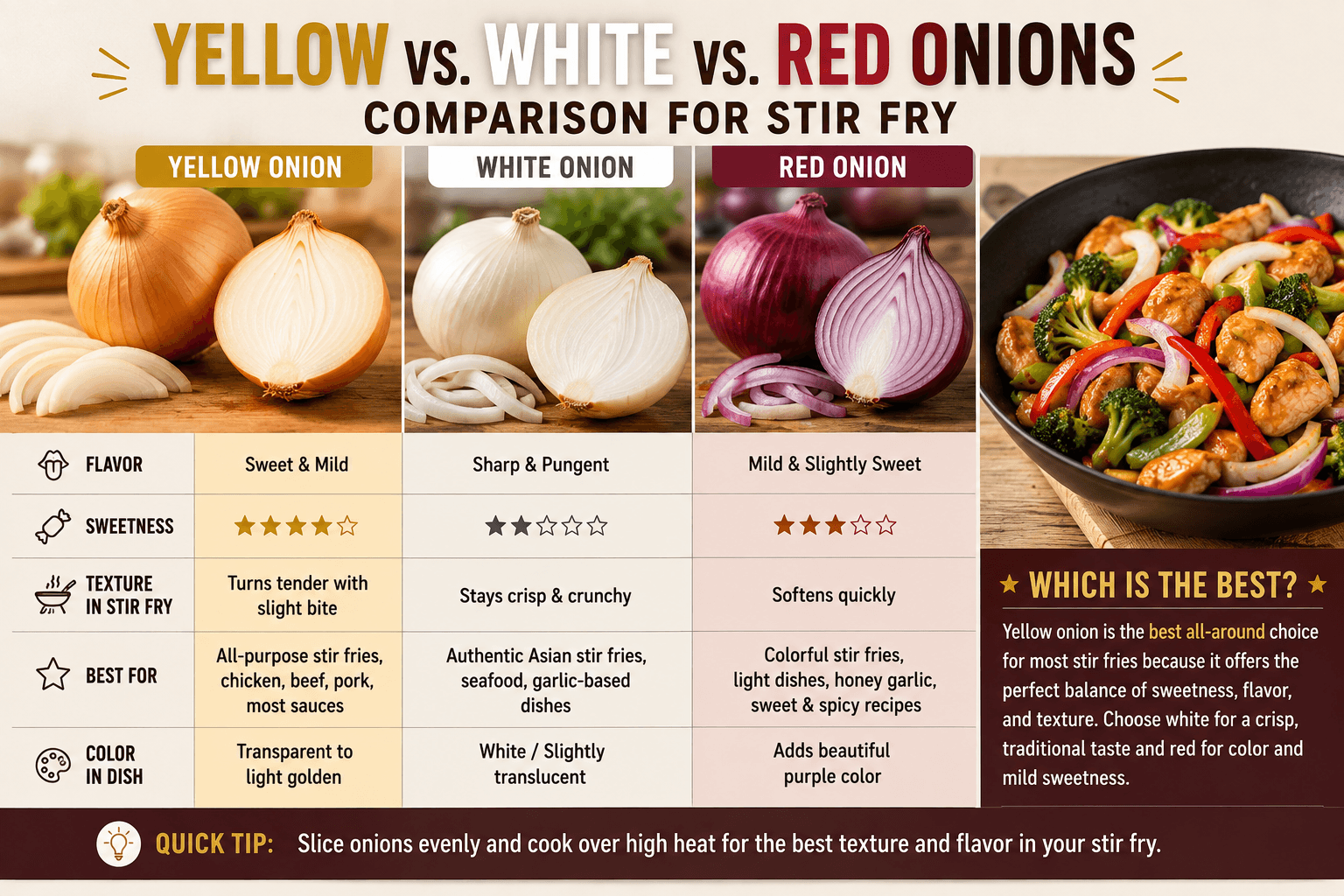
Yellow onions are considered the most versatile option because they develop a rich, slightly sweet flavor while still holding their shape in a hot wok. White onions provide a brighter, cleaner onion flavor that pairs especially well with traditional Asian sauces. Red onions bring vibrant color and mild sweetness but are generally better suited for lighter stir fries where appearance matters as much as flavor.
| Onion Type | Flavor | Texture After Stir Fry | Best For |
|---|---|---|---|
| Yellow Onion | Sweet and balanced | Tender with slight bite | Most chicken, beef, pork, and vegetable stir fries |
| White Onion | Sharp and clean | Firm and crisp | Chinese-style stir fries and garlic-based sauces |
| Red Onion | Mild and slightly sweet | Softens quickly | Colorful vegetable stir fries and quick-cooking dishes |
For most home cooks, yellow onions provide the easiest path to consistent results. Their natural sugars caramelize quickly over high heat, creating a pleasant sweetness that balances savory sauces without becoming overpowering.
Yellow Onions: The Best All-Around Choice
If someone asks for the best onion for stir fry, yellow onions are usually the first recommendation. They’re affordable, easy to find, and work well with nearly every protein and vegetable combination.
As yellow onions cook, their sharp raw flavor mellows into a rich sweetness. This natural transformation makes them ideal for recipes using soy sauce, oyster sauce, hoisin sauce, or teriyaki sauce because they help balance salty and umami flavors.
- Excellent caramelization during high-heat cooking.
- Balanced sweetness without becoming overly soft.
- Works with almost every stir fry sauce.
- Ideal for beginners and experienced cooks alike.
Chef’s Secret: Add yellow onions after the protein has partially cooked but before delicate vegetables. This timing gives the onions enough time to soften slightly while still keeping a pleasant bite.
Yellow onions are especially delicious in recipes like Chicken Stir Fry, Chicken Broccoli Stir Fry, and Garlic Chicken Stir Fry, where their sweetness complements savory sauces perfectly.
White Onions: Crisp and Traditional
White onions are another excellent option when you’re looking for the best onion for stir fry, particularly if you’re aiming for authentic Chinese restaurant-style flavor. They have less sweetness than yellow onions and a slightly sharper taste that remains noticeable even after cooking.
Because white onions contain a little more moisture and maintain their firmness well, they stay pleasantly crisp during quick stir frying. This texture works especially well in recipes featuring crunchy vegetables like broccoli, snap peas, carrots, and bell peppers.
If you enjoy bold garlic and ginger flavors, white onions blend beautifully without overpowering the rest of the ingredients.
Cooking Tip: White onions are an excellent choice when using high heat for only a few minutes because they retain more texture than many other onion varieties.
Continue reading to discover whether red onions deserve a place in your stir fry and which onion variety pairs best with different proteins and vegetables.
When to Use Each Onion for Stir Fry
Although yellow onions are often considered the best onion for stir fry, every onion variety has situations where it performs exceptionally well. Choosing the right onion based on your ingredients helps create better flavor, texture, and appearance without changing the rest of your recipe.
Think of onions as more than just an aromatic. They’re one of the main vegetables in many stir fries, so selecting the right variety can noticeably improve the finished dish.
When Yellow Onions Are the Best Choice
Yellow onions are the safest and most versatile option for everyday cooking. Their balanced flavor works with almost every stir fry sauce and protein, making them ideal if you only keep one type of onion in your kitchen.
During high-heat cooking, yellow onions become naturally sweeter while still holding enough texture to provide a satisfying bite. They blend well with garlic, ginger, soy sauce, sesame oil, oyster sauce, and hoisin sauce.
- Classic chicken stir fry
- Beef and broccoli stir fry
- Pork stir fry
- Mixed vegetable stir fry
- Meal prep stir fries
If you’re preparing a family dinner, yellow onions are usually the best onion for stir fry because their mild sweetness appeals to both adults and children.
When White Onions Work Better
White onions are perfect when you want a cleaner, slightly sharper onion flavor. Many restaurant-style Chinese stir fries use white onions because they stay crisp and don’t become overly sweet during the short cooking time.
Their texture also pairs nicely with vegetables that should remain crisp-tender rather than soft.
White onions are an excellent choice for:
- Garlic chicken stir fry
- Shrimp stir fry
- Chicken and bell pepper stir fry
- Light soy-based sauces
- Quick-cooking vegetable stir fries
Because white onions don’t caramelize as much as yellow onions, they keep a brighter flavor that complements fresh vegetables.
When Red Onions Make Sense
Red onions aren’t usually considered the best onion for stir fry, but they still have their place. Their beautiful purple color makes dishes look more vibrant, while their mild sweetness pairs well with colorful vegetables.
Red onions soften faster than yellow or white onions, so they should be cooked for only a short time. Overcooking can dull their color and make them lose much of their texture.
Try red onions in:
- Colorful vegetable stir fries
- Sweet and spicy chicken dishes
- Honey garlic sauces
- Asian-inspired salads with lightly cooked vegetables
- Fusion-style stir fry recipes
Kitchen Secret: Add red onions during the last 1–2 minutes of cooking if you want them to keep more of their purple color and slight crunch.
Matching the Right Onion with Different Proteins
The protein you’re cooking also influences the best onion for stir fry. Some onions naturally complement certain meats better than others.
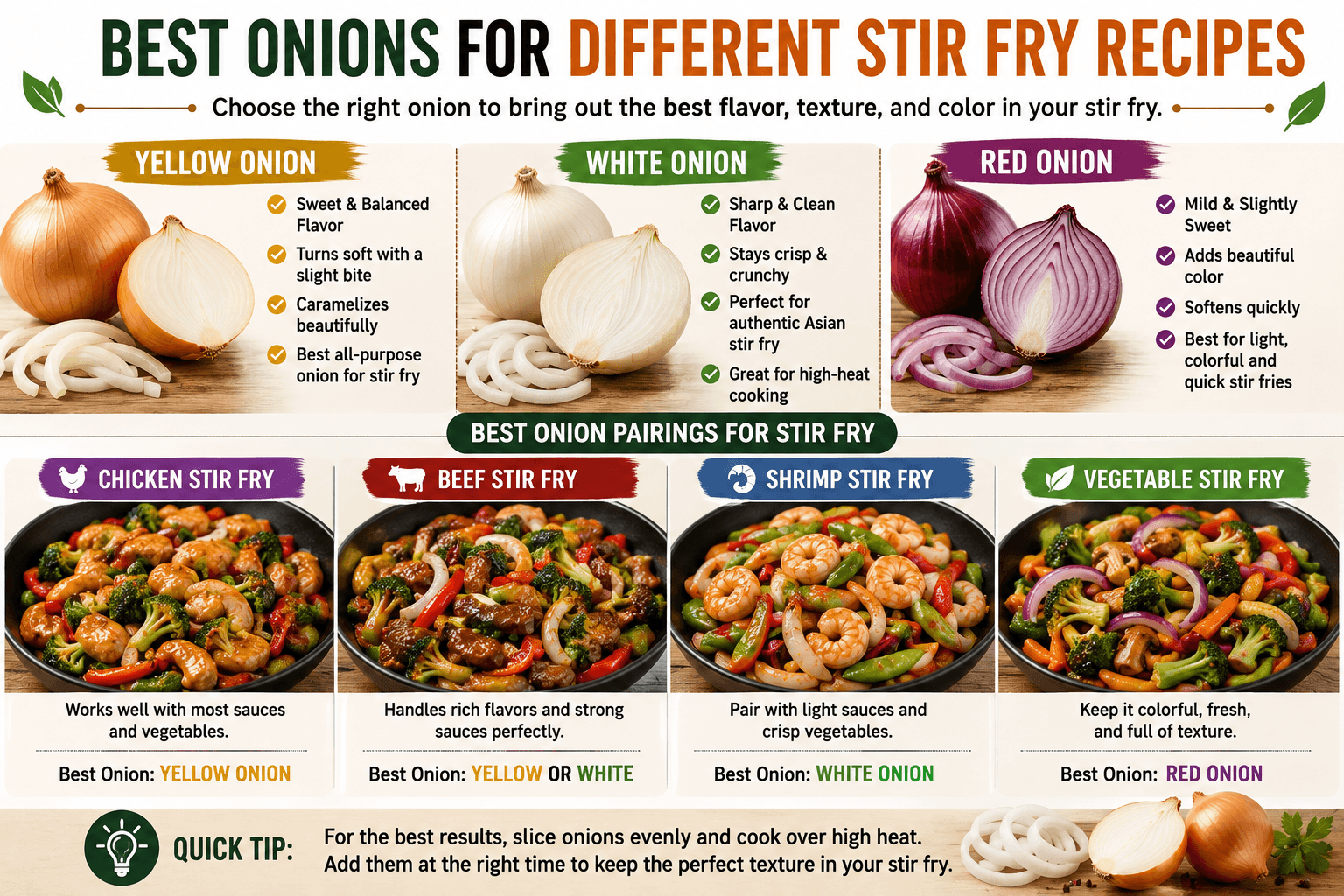
| Protein | Recommended Onion | Reason |
|---|---|---|
| Chicken | Yellow Onion | Balanced sweetness complements mild chicken flavor. |
| Beef | Yellow or White Onion | Stands up to rich beef and savory sauces. |
| Shrimp | White Onion | Light flavor doesn’t overpower delicate seafood. |
| Pork | Yellow Onion | Natural sweetness balances savory pork dishes. |
| Tofu | White or Red Onion | Adds brightness without overwhelming mild tofu. |
If you’re looking for inspiration, these recipes are excellent examples of pairing onions with different ingredients:
- Chicken Veggie Stir Fry
- Chicken Bell Pepper Stir Fry
- Chicken Mushroom Stir Fry
- Honey Garlic Chicken Stir Fry
- Spicy Chicken Stir Fry
In the next section, you’ll learn the most common onion mistakes that can ruin a stir fry and the simple techniques professionals use to avoid them.
Common Onion Mistakes That Can Ruin a Stir Fry
Even if you choose the best onion for stir fry, improper preparation or cooking can leave your dish watery, burnt, or lacking flavor. Stir frying happens quickly, so small mistakes have a much bigger impact than they do in slower cooking methods.
The good news is that these mistakes are easy to avoid once you understand how onions behave over high heat.
1. Slicing the Onion Too Thick
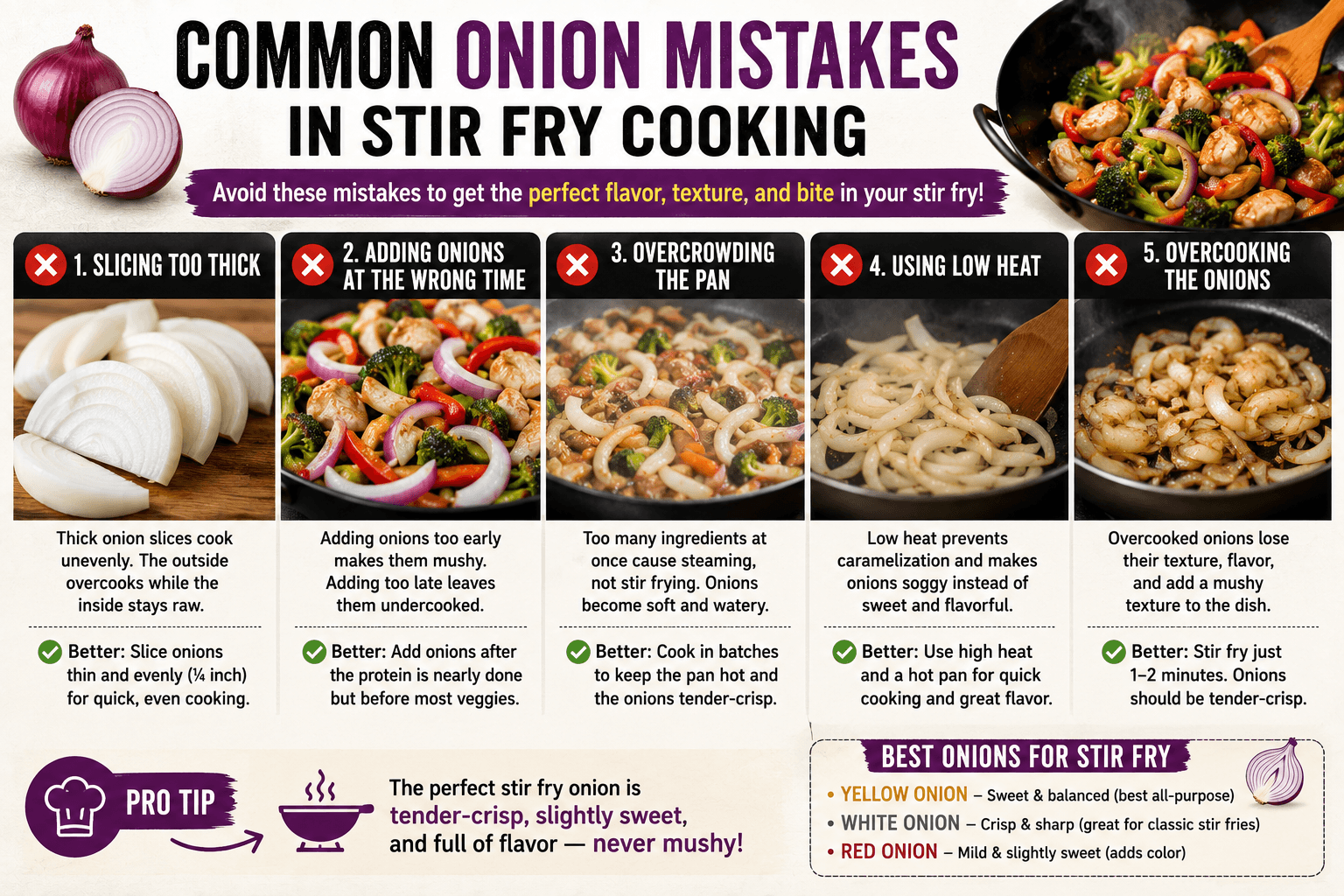
Large onion wedges may look attractive before cooking, but they often stay undercooked while the outside begins to brown. Thick slices also cook unevenly, resulting in some pieces being crunchy while others become overly soft.
For most stir fries, slice onions into strips about ¼ inch (6 mm) thick. This size allows them to soften slightly while maintaining a pleasant bite.
Tip: Cut every onion slice as evenly as possible so all pieces cook at the same speed.
2. Adding Onions at the Wrong Time
Timing is one of the biggest factors in choosing the best onion for stir fry. Even the perfect onion variety can become mushy if it cooks too long.
A simple cooking order works well for most recipes:
- Cook the protein until nearly done.
- Add onions and stir fry for 1–2 minutes.
- Add firm vegetables like broccoli or carrots.
- Add quick-cooking vegetables.
- Pour in the sauce near the end.
This sequence keeps onions tender without allowing them to lose their structure.
For a complete vegetable timing guide, read The Correct Order to Add Vegetables to Stir Fry.
3. Overcrowding the Pan
Many home cooks place too many ingredients into the pan at once. Instead of stir frying, the onions begin steaming because moisture cannot escape quickly enough.
Steamed onions become soft and watery rather than lightly caramelized.
Warning: If your onions release lots of liquid, your pan is probably overcrowded or not hot enough. Cook in batches if necessary to maintain high heat.
4. Using Low Heat
The best onion for stir fry develops its flavor only when exposed to high heat. Medium or low temperatures cause onions to slowly release moisture, resulting in soggy vegetables instead of the lightly browned edges that make stir fries taste so good.
Always preheat your wok or skillet before adding oil. Once the oil begins shimmering, the onions can cook quickly while keeping their texture.
5. Cooking Every Onion Variety the Same Way
Different onions require slightly different cooking times.
| Onion Type | Recommended Cooking Time | Result |
|---|---|---|
| Yellow Onion | 2–3 minutes | Sweet, lightly caramelized, tender-crisp |
| White Onion | 1–2 minutes | Crisp with clean onion flavor |
| Red Onion | 1 minute | Bright color and slight crunch |
Adjusting cooking time for each variety is one of the easiest ways to improve your stir fry without changing any ingredients.
Expert Tips for Cooking Onions in Stir Fry
Professional cooks rely on a few simple techniques that consistently produce flavorful onions with the perfect texture. Whether you’re using yellow, white, or red onions, these tips will help you get the most from the best onion for stir fry.
- Preheat the wok before adding oil.
- Use high smoke-point oils like avocado, peanut, or canola oil.
- Keep onions moving to prevent burning.
- Cook in small batches for better browning.
- Avoid overcooking after adding the sauce.
- Slice onions uniformly for even cooking.
Chef’s Secret: A properly cooked onion should still have a slight bite. If it completely falls apart, it has cooked too long and will contribute less texture to the finished stir fry.
Preparing vegetables correctly is just as important as choosing the right onion. For more tips, see The Ultimate Stir Fry Vegetable Preparation Guide and Common Vegetable Stir Fry Mistakes.
How to Store Onions for the Best Stir Fry Results
Even if you choose the best onion for stir fry, improper storage can reduce its flavor, texture, and freshness. Fresh onions should feel firm, have dry papery skins, and show no signs of mold, soft spots, or sprouting. Proper storage helps preserve their natural sweetness and crisp texture, ensuring they perform well during high-heat cooking.
Whole onions generally last much longer than cut onions. Once an onion is sliced, it begins losing moisture and absorbing odors from other foods in the refrigerator. Storing onions correctly means you’ll always have flavorful ingredients ready for your next stir fry.
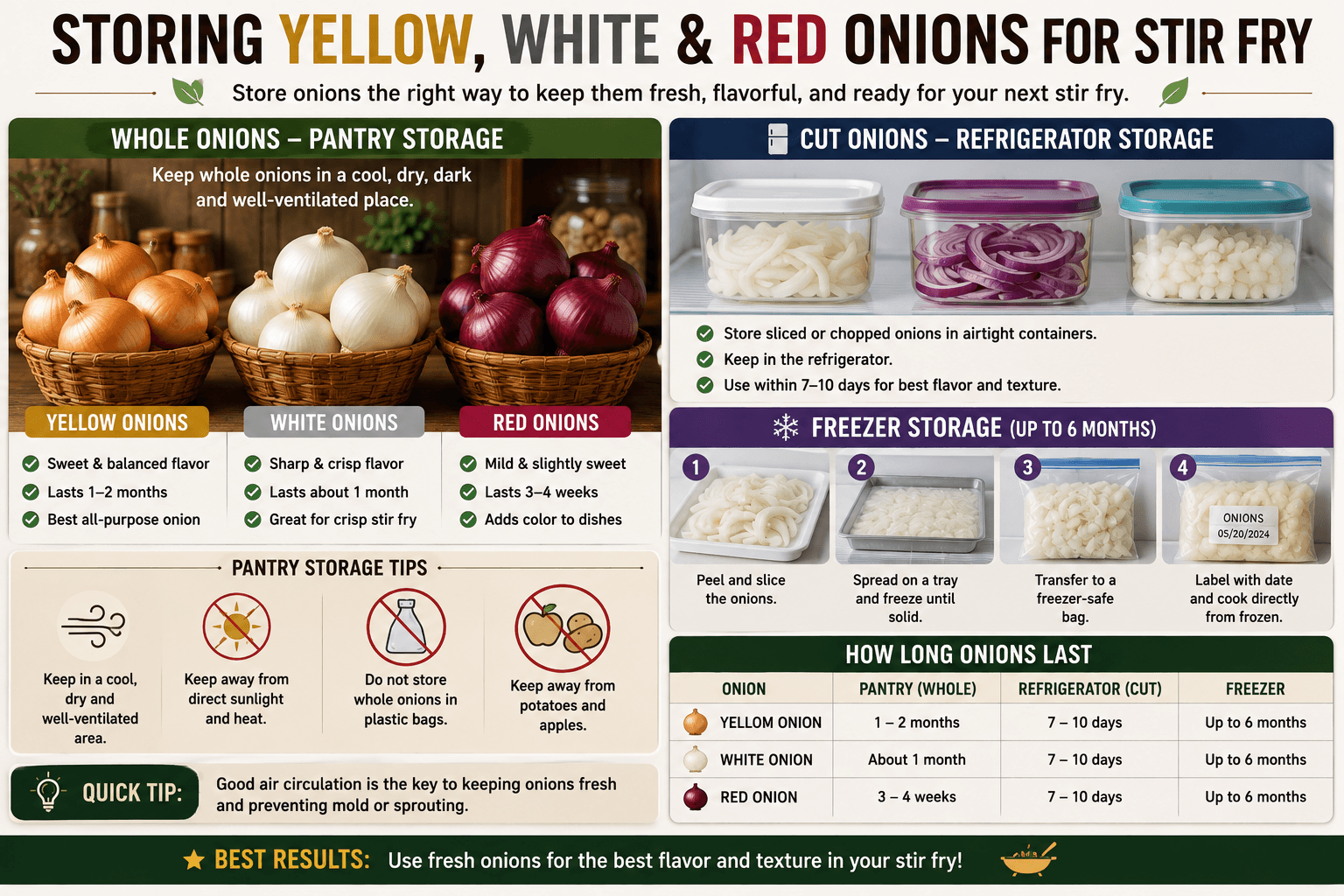
Storage Tip: Keep whole onions in a cool, dry, and well-ventilated place away from direct sunlight. Never store whole onions in sealed plastic bags because trapped moisture can cause them to spoil faster.
How Long Different Onions Last
| Onion | Pantry | Refrigerator (Cut) | Freezer |
|---|---|---|---|
| Yellow Onion | 1–2 months | 7–10 days | Up to 6 months |
| White Onion | 1 month | 7–10 days | Up to 6 months |
| Red Onion | 3–4 weeks | 7–10 days | Up to 6 months |
If you regularly meal prep, slice onions in advance and store them in airtight containers. This makes weeknight stir fries much faster without sacrificing quality.
Can You Freeze Onions?
Yes. Frozen onions work surprisingly well in stir fry because they’re cooked over high heat. Although freezing softens their texture slightly, they still develop good flavor once added to a hot wok.
For best results:
- Peel and slice onions before freezing.
- Spread slices on a baking tray until frozen.
- Transfer to freezer-safe bags.
- Label with the freezing date.
- Cook directly from frozen—no thawing required.
Kitchen Tip: Frozen onions are best used in cooked dishes like stir fries, soups, stews, and casseroles rather than fresh salads.
How to Choose the Best Onion at the Grocery Store
Buying high-quality onions is the first step toward making a great stir fry. Whether you’re shopping for yellow, white, or red onions, look for signs of freshness instead of simply choosing the largest onion available.
The best onion for stir fry should feel heavy for its size and have firm flesh beneath dry, intact outer skin.
Look For
- Firm texture with no soft spots.
- Dry, papery outer skin.
- No green sprouts.
- No signs of mold.
- Even shape and good weight.
- Fresh, mild aroma.
Avoid
- Soft or mushy onions.
- Wet outer layers.
- Dark mold around the stem.
- Large bruises or cuts.
- Strong sour odors.
- Excessive sprouting.
Why Yellow Onions Are Usually the Best Choice
- Balanced sweet and savory flavor.
- Easy to find year-round.
- Excellent for nearly every stir fry recipe.
- Caramelize beautifully over high heat.
- Affordable and versatile.
When Another Onion May Be Better
- White onions offer a crisper bite for authentic Chinese-style stir fries.
- Red onions provide better color for vegetable-focused dishes.
- Some recipes benefit from a sharper onion flavor than yellow onions provide.
- Red onions soften more quickly during cooking.
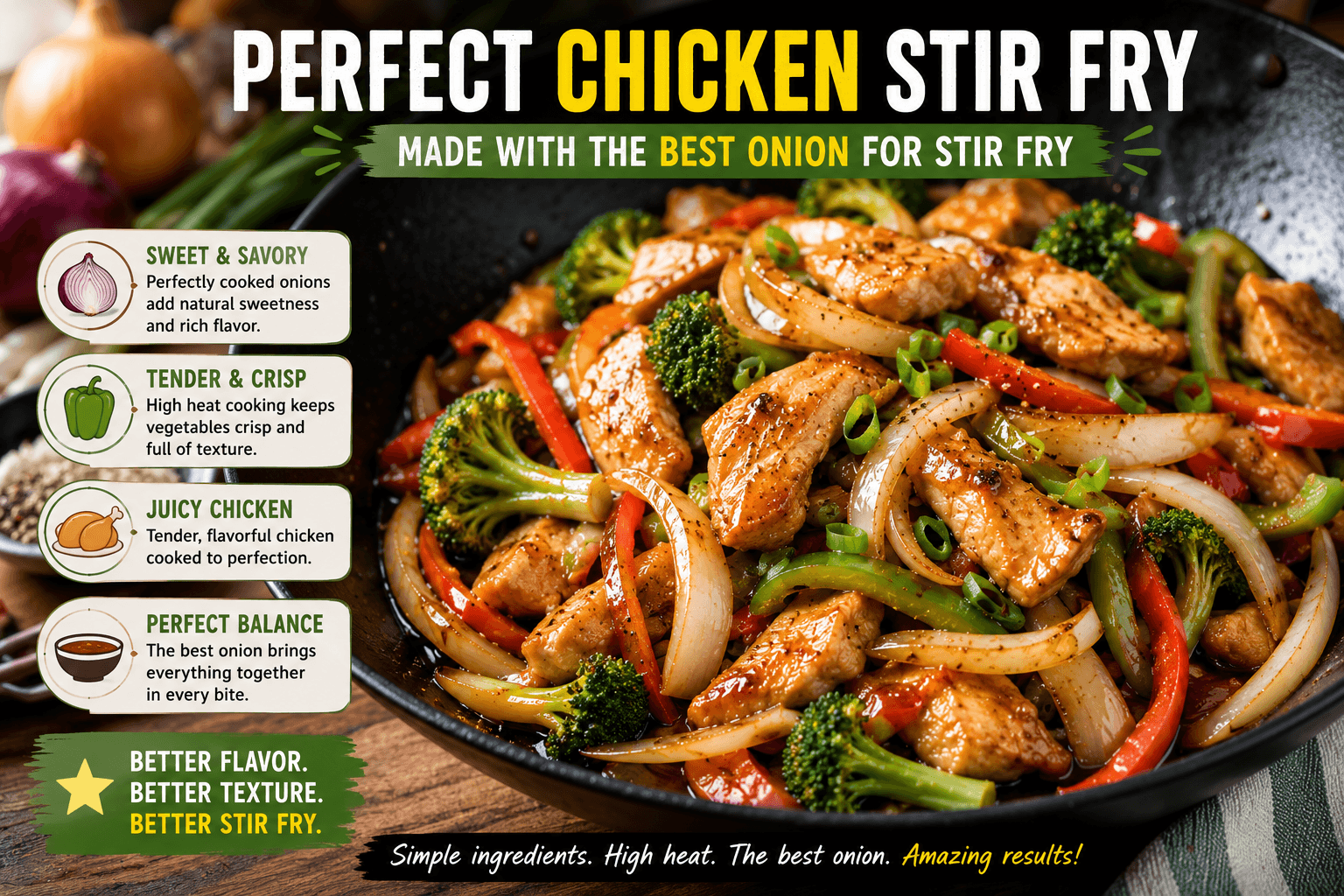
For most home kitchens, yellow onions remain the best onion for stir fry because they consistently deliver the ideal balance of sweetness, texture, and versatility across a wide variety of recipes.
Frequently Asked Questions
Is yellow onion really the best onion for stir fry?
For most recipes, yes. Yellow onions provide the ideal balance of sweetness, savory flavor, and texture after high-heat cooking. They pair well with chicken, beef, pork, shrimp, tofu, and almost every popular stir fry sauce, making them the best all-purpose onion for stir fry.
Can I use white onions instead of yellow onions?
Absolutely. White onions are an excellent substitute when you prefer a sharper, cleaner onion flavor. They stay slightly firmer during stir frying and are commonly used in Chinese-style stir fry dishes.
Are red onions good for stir fry?
Yes, but they’re best used in recipes where color is important. Red onions become softer more quickly than yellow or white onions, so they should be added later in the cooking process to preserve their texture and vibrant color.
When should onions be added to a stir fry?
Onions are usually added after the protein has partially cooked but before most vegetables. This timing allows them to soften slightly while maintaining a pleasant bite instead of becoming mushy.
Should onions stay crunchy in stir fry?
Yes. Properly cooked onions should be tender-crisp rather than completely soft. High heat and short cooking times help them retain some texture while developing their natural sweetness.
Can frozen onions be used in stir fry?
Yes. Frozen sliced onions work well because stir fries cook quickly over high heat. They may be slightly softer than fresh onions but still provide excellent flavor in cooked dishes.
References
Final Thoughts
Choosing the best onion for stir fry is one of the simplest ways to improve both the flavor and texture of your homemade meals. While yellow onions are the most versatile option thanks to their balanced sweetness and excellent caramelization, white onions are perfect for crisp, restaurant-style stir fries, and red onions bring beautiful color and mild sweetness to lighter dishes.
The best choice ultimately depends on your recipe, cooking style, and personal taste. Pair the right onion with fresh vegetables, quality protein, and proper stir-frying techniques, and you’ll consistently create flavorful meals that rival your favorite takeout.
Remember that evenly slicing the onion, cooking over high heat, and adding it at the correct time are just as important as selecting the variety itself. Master these basics, and every stir fry will have better texture, richer flavor, and more balanced results.
🍽️ You Might Also Like


📧 Save This Recipe For Later
Enter your email and we will send this recipe directly to your inbox.