
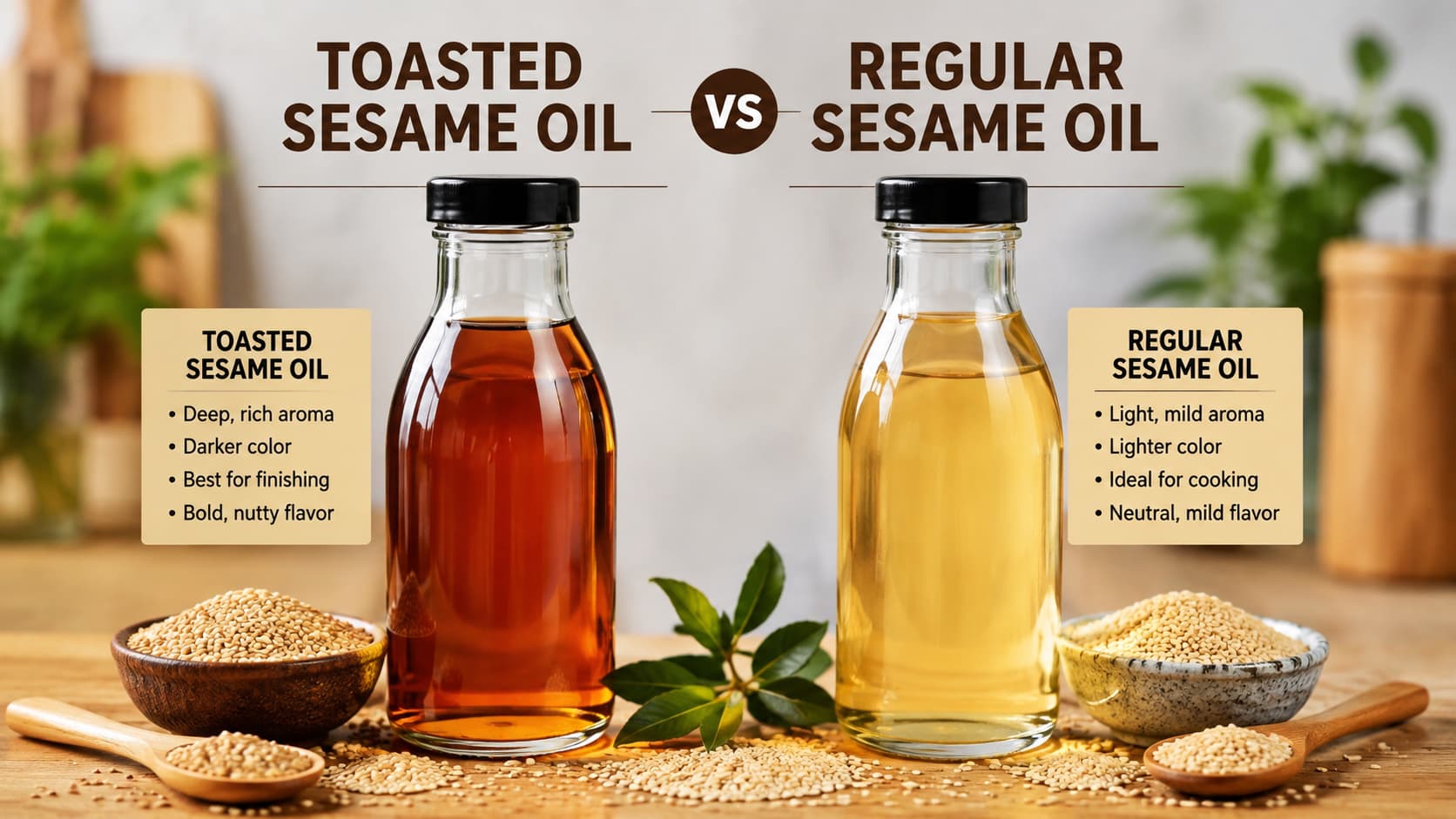
Toasted Sesame Oil vs. Regular Sesame Oil
Toasted Sesame Oil vs. Regular Sesame Oil: What’s the Difference and Which One Should You Use?
If you’ve ever stood in the cooking oil aisle wondering whether to buy toasted sesame oil or regular sesame oil, you’re not alone. Although both oils come from sesame seeds, they have very different flavors, cooking uses, and smoke points. Choosing the wrong one can affect the taste of your stir fry, marinade, or dipping sauce.
Understanding toasted sesame oil vs regular is especially important if you enjoy making homemade Asian-inspired dishes. While the bottles may look similar, the oils are processed differently, giving each one unique characteristics that make it better suited for specific cooking methods.
In this guide, you’ll learn the differences between toasted and regular sesame oil, when to use each one, how they affect flavor, and which option works best for stir fry recipes. By the end, you’ll know exactly which bottle belongs in your kitchen.
Quick Answer
Toasted sesame oil vs regular comes down to how the sesame seeds are processed. Regular sesame oil is made from raw sesame seeds and has a mild, neutral flavor that works well for cooking at higher temperatures. Toasted sesame oil is made from roasted sesame seeds, giving it a rich, nutty aroma and bold flavor that’s best used as a finishing oil or seasoning rather than for high-heat cooking.
- Regular sesame oil: Mild flavor, higher smoke point, ideal for sautéing and stir frying.
- Toasted sesame oil: Deep nutty flavor, lower smoke point, best added at the end of cooking.
- Best choice: Many stir fry recipes use both oils together for the perfect balance of cooking performance and authentic flavor.
Table of Contents
- What Is the Difference Between Toasted Sesame Oil and Regular Sesame Oil?
- How Each Sesame Oil Is Made
- Flavor, Aroma, and Appearance Comparison
- Best Cooking Uses for Each Oil
- Which Sesame Oil Is Better for Stir Fry?
- Common Mistakes to Avoid
- Storage and Shelf Life
- Frequently Asked Questions
- Final Thoughts
What Is the Difference Between Toasted Sesame Oil and Regular Sesame Oil?
The biggest difference in toasted sesame oil vs regular is the roasting process. Both oils begin with sesame seeds, but the seeds used for toasted sesame oil are roasted before pressing, while regular sesame oil comes from raw or lightly processed sesame seeds.
This single difference changes almost everything about the finished product. Toasting develops hundreds of flavorful compounds that create the signature nutty aroma many people associate with Asian cuisine. Regular sesame oil remains much lighter in both taste and color, making it more versatile for everyday cooking.
| Feature | Regular Sesame Oil | Toasted Sesame Oil |
|---|---|---|
| Sesame Seeds | Raw or lightly processed | Roasted before pressing |
| Color | Light golden | Dark amber brown |
| Flavor | Mild and delicate | Rich, nutty, roasted |
| Best Use | Cooking and stir frying | Finishing dishes and sauces |
| Typical Amount Used | Several tablespoons | A few teaspoons |
Knowing the differences between toasted sesame oil vs regular helps you choose the right oil for each recipe instead of treating them as interchangeable ingredients.
Kitchen Tip: Keep both oils in your pantry if you frequently cook stir fry. Regular sesame oil handles the heat, while toasted sesame oil adds the signature restaurant-style aroma just before serving.
If you’re new to cooking with sesame oil, it’s also helpful to learn how to use sesame oil correctly in stir fry to avoid common mistakes and get the best flavor from every meal.
How Each Sesame Oil Is Made
The production process is the main reason toasted sesame oil vs regular produces such different flavors and cooking results. Even though both oils come from sesame seeds, roasting changes the oil’s aroma, color, and ideal cooking applications.
Understanding how each type is made makes it much easier to know when to use one instead of the other. Professional chefs often keep both in the kitchen because each serves a completely different purpose.
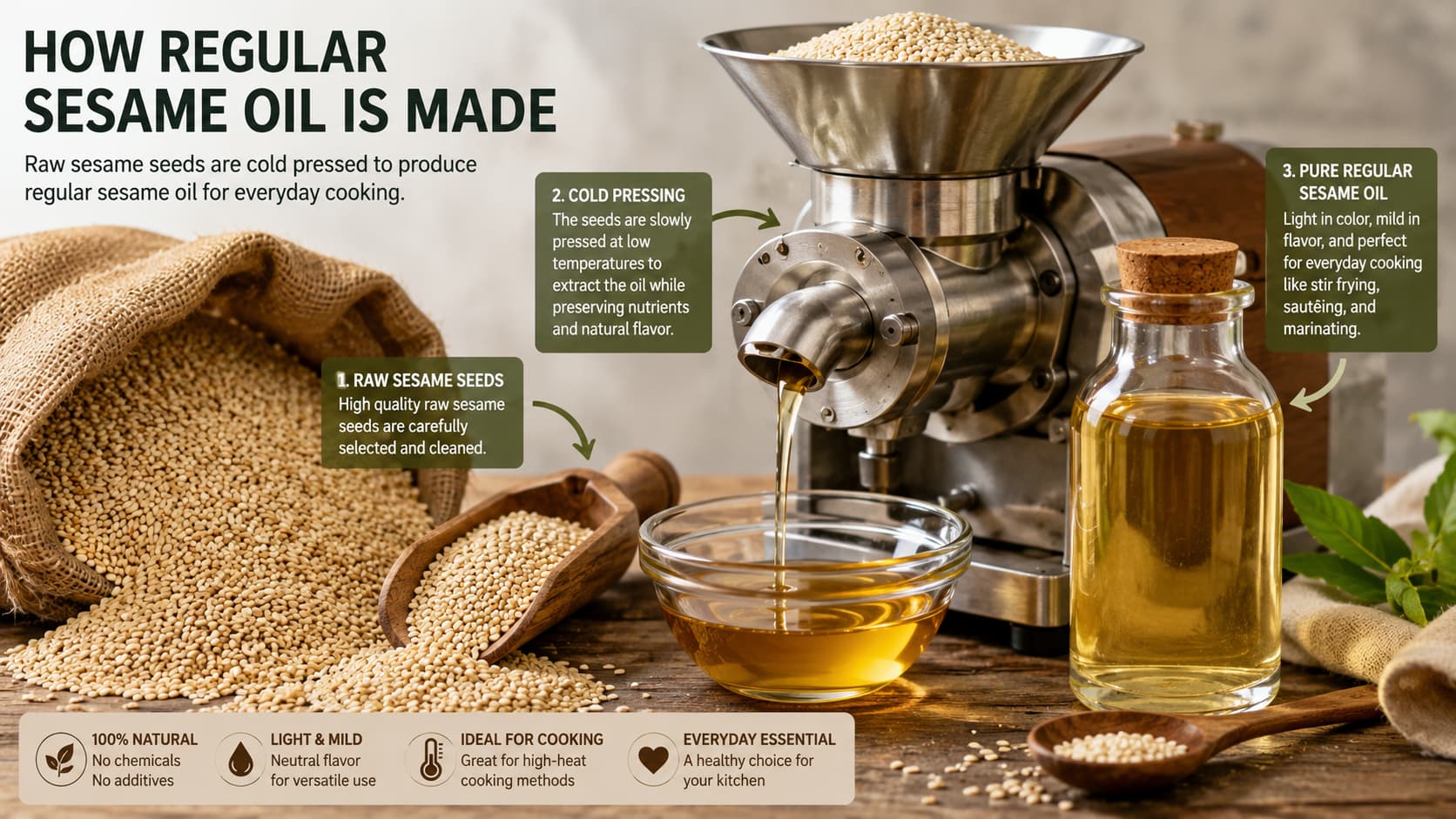
How Regular Sesame Oil Is Produced
Regular sesame oil is pressed from raw or lightly heated sesame seeds. Since the seeds are not roasted, the finished oil keeps its naturally mild flavor and light golden color.
This gentle production process also allows regular sesame oil to tolerate moderately high cooking temperatures better than toasted sesame oil. That makes it suitable for sautéing vegetables, pan-frying proteins, and stir-frying over medium-high heat.
- Made from raw sesame seeds.
- Light golden appearance.
- Mild, clean flavor.
- Better suited for cooking than finishing.
- Doesn’t overpower other ingredients.
How Toasted Sesame Oil Is Produced
Toasted sesame oil follows an extra step before pressing. The sesame seeds are carefully roasted until they develop a deep golden-brown color and release their signature nutty aroma. Only then are the seeds pressed into oil.
Roasting transforms the flavor dramatically. Instead of a neutral cooking oil, toasted sesame oil becomes a highly aromatic finishing ingredient. Just a small drizzle can completely change the taste of a finished dish.
Because roasting creates delicate flavor compounds, prolonged high heat can reduce the rich aroma that makes toasted sesame oil so desirable. That’s why many recipes recommend adding it during the last minute of cooking or after removing the pan from the heat.
Chef’s Secret: Many restaurant stir fries use regular sesame oil or another neutral oil for cooking, then finish with one or two teaspoons of toasted sesame oil just before serving. This preserves the roasted aroma while preventing the oil from losing its distinctive flavor.
Flavor, Aroma, and Appearance Comparison
When comparing toasted sesame oil vs regular, the flavor difference is immediately noticeable. Even before tasting, the aroma tells you which bottle you’re holding.
| Characteristic | Regular Sesame Oil | Toasted Sesame Oil |
|---|---|---|
| Aroma | Light and subtle | Strong roasted nutty aroma |
| Flavor Intensity | Mild | Bold and rich |
| Color | Pale yellow | Dark amber |
| Best For | Cooking | Finishing dishes |
| Typical Usage | Tablespoons | Teaspoons |
If you’ve ever enjoyed authentic chicken stir fry from a good Asian restaurant, the rich roasted aroma you noticed most likely came from toasted sesame oil added at the very end of cooking rather than during the frying process.
For even deeper flavor, toasted sesame oil is commonly paired with soy sauce, garlic, fresh ginger, rice vinegar, and a small amount of brown sugar or honey. You can learn more about balancing these flavors in our guide to best homemade stir fry sauce variations or explore additional combinations in our ultimate chicken stir fry sauce guide.
Best Cooking Uses for Each Oil
Knowing the best cooking applications is one of the most important parts of understanding toasted sesame oil vs regular. While both oils come from sesame seeds, they perform very differently in the kitchen. Using the right oil at the right stage of cooking helps you get the best flavor, texture, and overall results.
Many home cooks assume the two oils can be substituted for one another, but that’s rarely the best choice. Instead, think of regular sesame oil as a cooking oil and toasted sesame oil as a finishing ingredient.
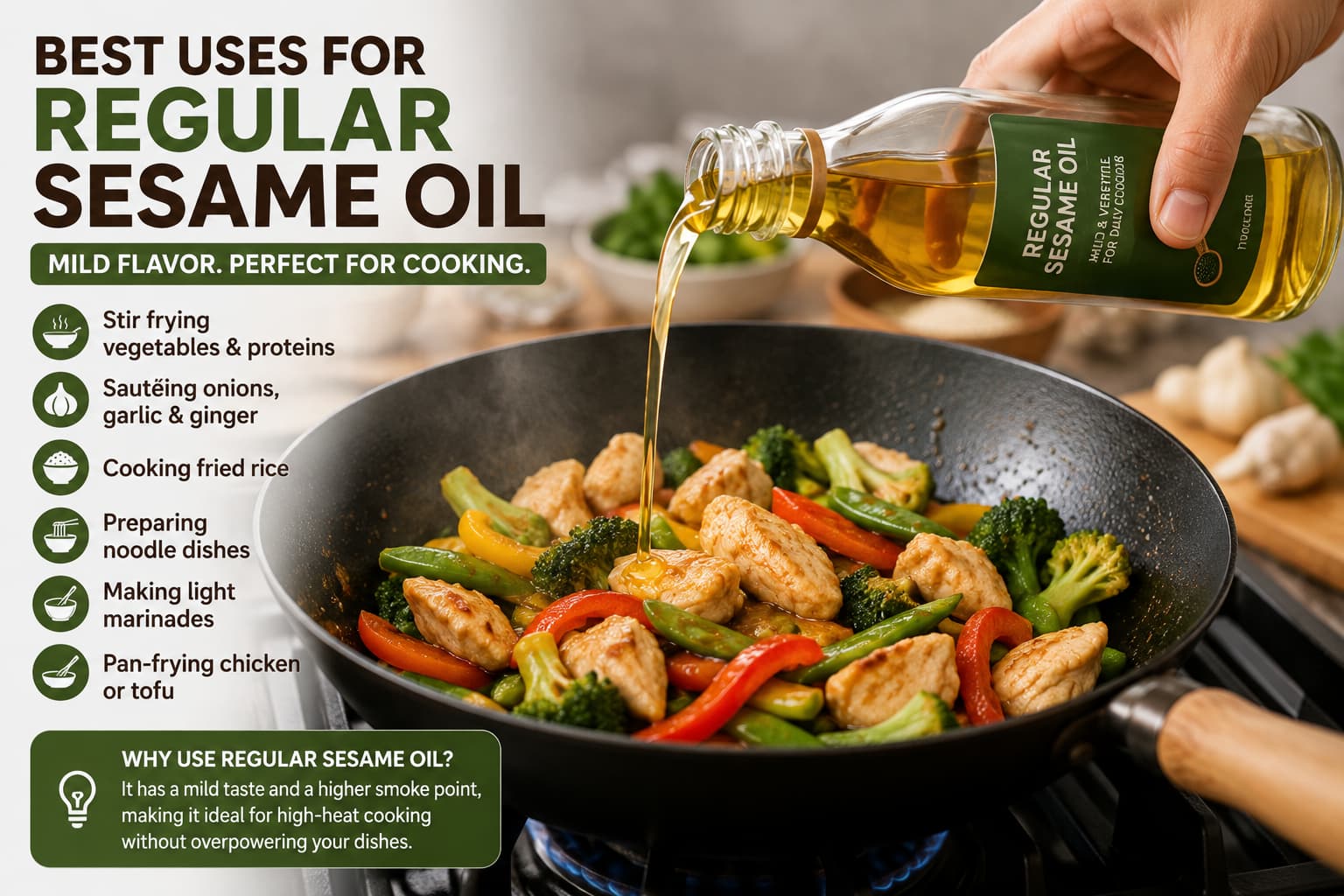
When to Use Regular Sesame Oil
Regular sesame oil has a light flavor that blends well with vegetables, chicken, beef, shrimp, and tofu without overpowering them. Because of its relatively higher smoke point, it works well for cooking over medium to medium-high heat.
- Stir frying vegetables and proteins.
- Sautéing onions, garlic, and ginger.
- Cooking fried rice.
- Preparing noodle dishes.
- Making light marinades.
- Pan-frying chicken or tofu.
Its mild taste also allows other ingredients, such as soy sauce, garlic, and fresh vegetables, to remain the stars of the dish.
When to Use Toasted Sesame Oil
Toasted sesame oil shines when added after cooking or during the final minute of preparation. Since its rich roasted flavor is its biggest advantage, exposing it to prolonged high heat can reduce the aroma that makes it so distinctive.
Instead of cooking large amounts with it, use small quantities to enhance finished dishes.
- Drizzle over finished stir fry.
- Add to dipping sauces.
- Mix into homemade stir fry sauces.
- Season ramen and noodle bowls.
- Flavor salad dressings.
- Finish steamed vegetables.
- Enhance rice and grain bowls.
Cooking Tip: One teaspoon of toasted sesame oil is often enough to flavor an entire family-sized stir fry. Start with a small amount and taste before adding more.
Which Sesame Oil Is Better for Stir Fry?
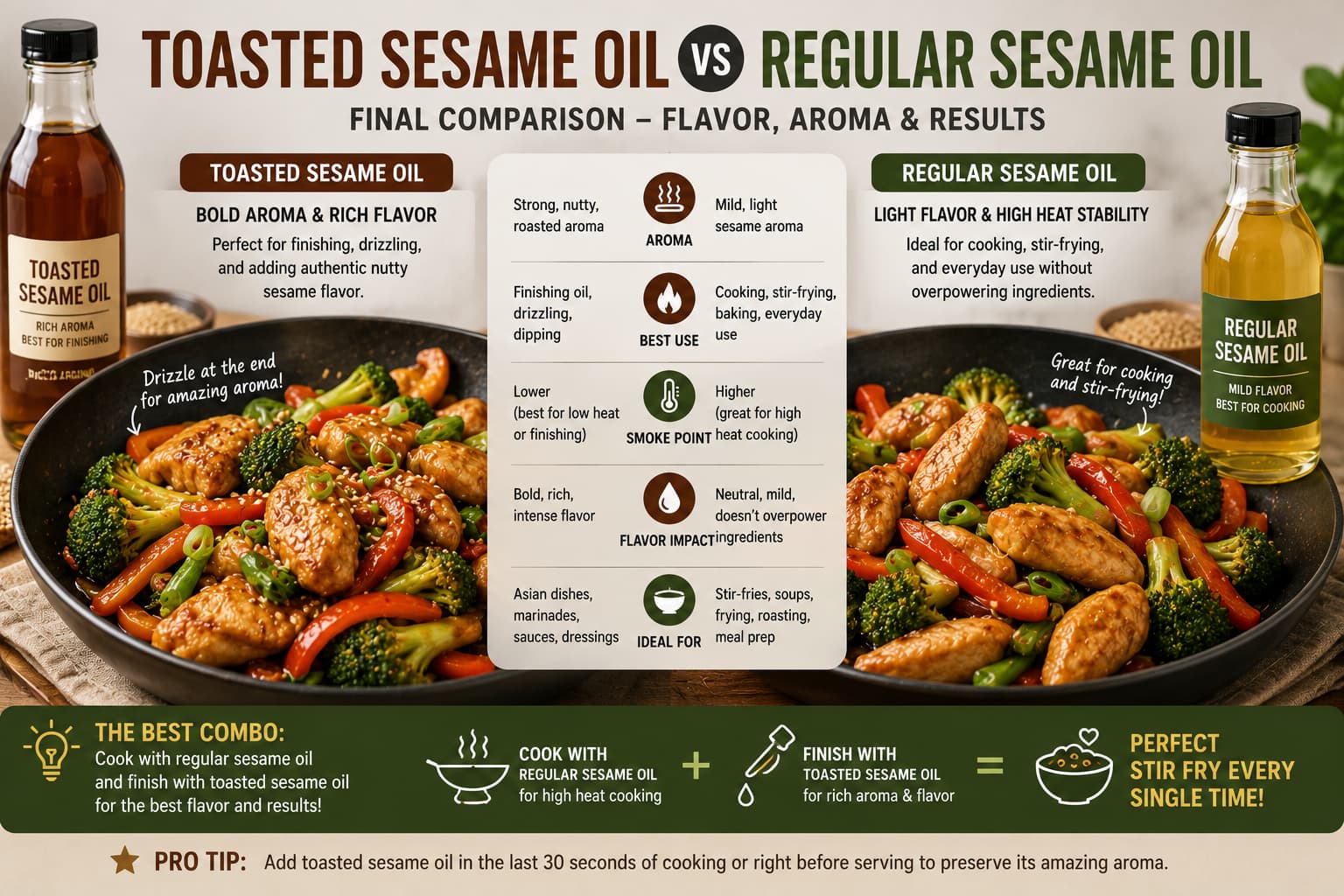
When comparing toasted sesame oil vs regular specifically for stir fry, the answer isn’t simply one or the other. The best stir fries often use both oils because each serves a different purpose.
Regular sesame oil performs better during cooking thanks to its lighter flavor and greater heat tolerance. Toasted sesame oil, meanwhile, delivers the rich restaurant-style aroma that people associate with authentic Asian cooking.
| Cooking Stage | Recommended Oil | Reason |
|---|---|---|
| Preheating the pan | Regular sesame oil | Handles cooking heat better |
| Cooking vegetables | Regular sesame oil | Mild flavor won’t overpower ingredients |
| Cooking chicken | Regular sesame oil | Suitable for sautéing and stir frying |
| Final seasoning | Toasted sesame oil | Adds rich roasted aroma |
| Serving | Toasted sesame oil | Provides maximum flavor impact |
This combination is one of the easiest ways to create restaurant-quality stir fry at home. You get the cooking performance of regular sesame oil while preserving the deep nutty flavor of toasted sesame oil.
Kitchen Secret: Many chefs don’t rely solely on sesame oil for stir frying. Instead, they cook with a neutral or regular sesame oil and finish with toasted sesame oil to create a fresher, more vibrant sesame aroma.
For delicious ways to apply this technique, try it in our Chicken Stir Fry, Garlic Chicken Stir Fry, or Chicken Broccoli Stir Fry. Each recipe benefits from adding toasted sesame oil just before serving.
Common Mistakes When Using Toasted and Regular Sesame Oil
Even after learning the differences between toasted sesame oil vs regular, it’s easy to make mistakes that reduce flavor or affect the quality of your meal. Fortunately, these problems are simple to avoid once you understand how each oil is intended to be used.
Whether you’re making a quick weeknight stir fry or experimenting with homemade Asian-inspired recipes, avoiding the following mistakes will help you get the best results every time.
1. Cooking With Toasted Sesame Oil Over High Heat
The most common mistake is using toasted sesame oil as your primary cooking oil. While it isn’t harmful, prolonged exposure to high heat weakens its signature roasted aroma and can leave the finished dish tasting flat.
Instead, cook with regular sesame oil or another high-heat cooking oil, then drizzle toasted sesame oil over the dish just before serving.
2. Using Too Much Toasted Sesame Oil
Because toasted sesame oil has such a concentrated flavor, a little goes a long way. Adding several tablespoons can overpower the vegetables, chicken, and sauce, making the entire dish taste bitter or excessively smoky.
For most family-sized stir fries, one to two teaspoons is usually enough.
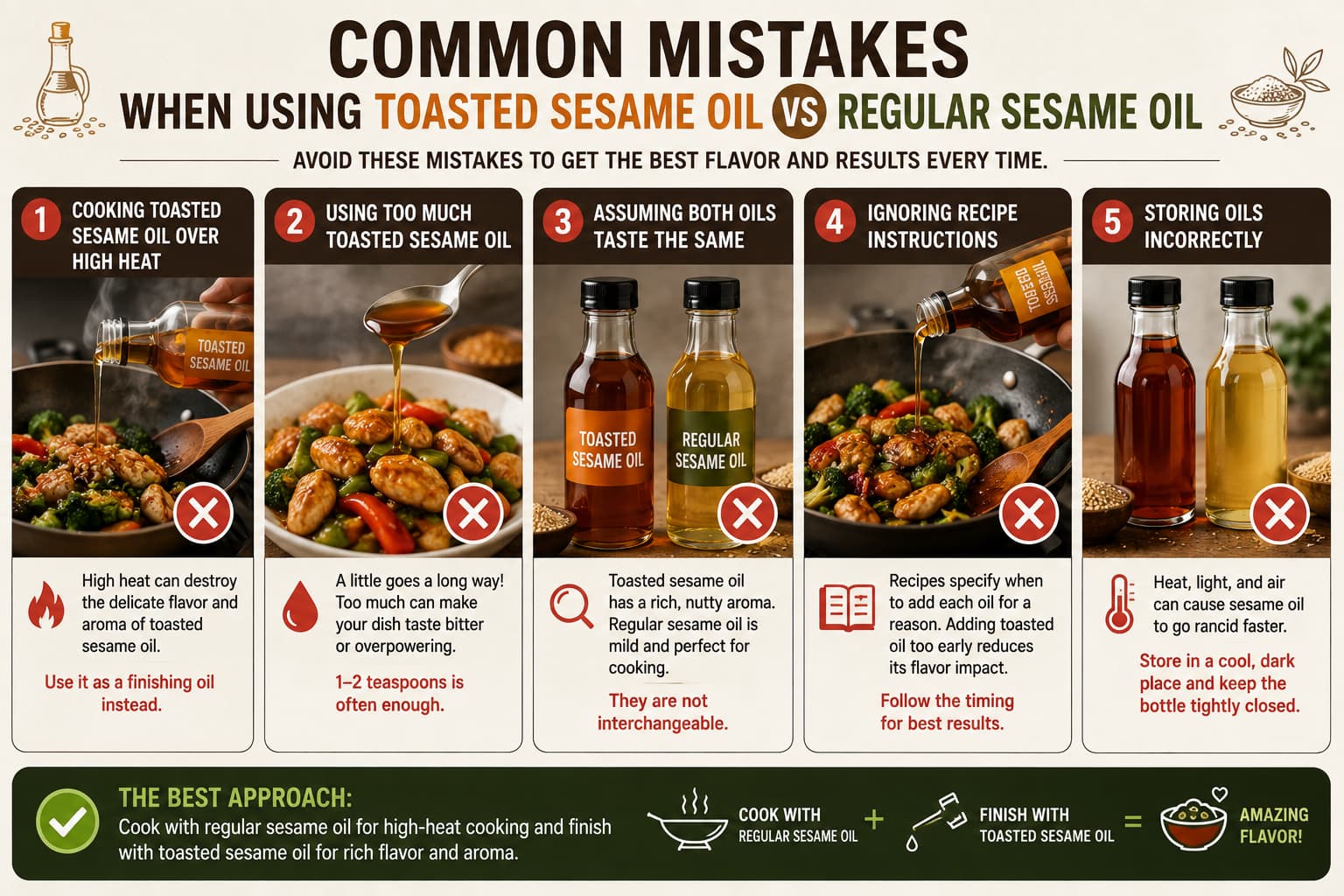
3. Assuming Both Oils Taste the Same
Although both products come from sesame seeds, they deliver completely different flavors. Swapping one for the other without adjusting the recipe can significantly change the final taste.
If a recipe specifically calls for toasted sesame oil, it’s usually relying on that distinctive roasted aroma to finish the dish. Replacing it with regular sesame oil will result in a much milder flavor.
4. Ignoring the Recipe Instructions
Many stir fry recipes intentionally specify when to add sesame oil. If the instructions say to add toasted sesame oil after cooking, it’s because doing so preserves its rich aroma.
Following the order of ingredients often makes a noticeable difference in the finished meal.
Common Mistake: Never judge toasted sesame oil vs regular based only on color. Darker oil isn’t “better”—it’s simply designed for a different purpose. Each oil has its own role in creating balanced flavor.
Can You Substitute One for the Other?
One of the most frequently asked questions about toasted sesame oil vs regular is whether they can be substituted in recipes.
The short answer is yes—but only if you understand how the substitution will affect the final dish.
| If the Recipe Calls For | Can You Substitute? | Expected Result |
|---|---|---|
| Regular sesame oil | Yes, with toasted sesame oil | Stronger roasted flavor and aroma |
| Toasted sesame oil | Yes, with regular sesame oil | Milder flavor with less nuttiness |
| Both oils | Not recommended | Recipe loses intended flavor balance |
If you’re out of one type, it’s perfectly acceptable to substitute in a pinch. However, for recipes where sesame flavor is a key component—such as stir fry sauces, noodle dishes, or dipping sauces—you’ll achieve much better results by using the oil specifically recommended.
Regular Sesame Oil Pros
- Excellent for everyday cooking.
- Handles medium-high heat better.
- Mild flavor complements many ingredients.
- Works well in marinades and stir fries.
- Versatile for a variety of cuisines.
Toasted Sesame Oil Pros
- Rich roasted aroma.
- Authentic Asian flavor.
- Perfect finishing oil.
- Excellent in sauces and dressings.
- Only a small amount is needed.
If you’re building your own stir fry sauces, you may also enjoy reading Easy Homemade Stir Fry Sauce, Common Stir Fry Sauce Mistakes, and Best Soy Sauce for Chicken Stir Fry to create even better homemade meals.
How to Store Toasted and Regular Sesame Oil
Proper storage is essential if you want both types of sesame oil to keep their flavor and freshness. Whether you’re comparing toasted sesame oil vs regular for everyday cooking or occasional use, storing each oil correctly helps prevent it from becoming stale or rancid.
Because sesame oil contains natural fats, exposure to heat, air, and sunlight gradually breaks those fats down. This process affects both regular sesame oil and toasted sesame oil, although the rich roasted aroma of toasted sesame oil often fades more quickly after opening.
Best Storage Practices
- Keep the bottle tightly sealed after every use.
- Store in a cool, dry pantry away from direct sunlight.
- Avoid placing the bottle next to the stove or oven.
- Use clean, dry measuring spoons to prevent contamination.
- Check the expiration date before purchasing and using.
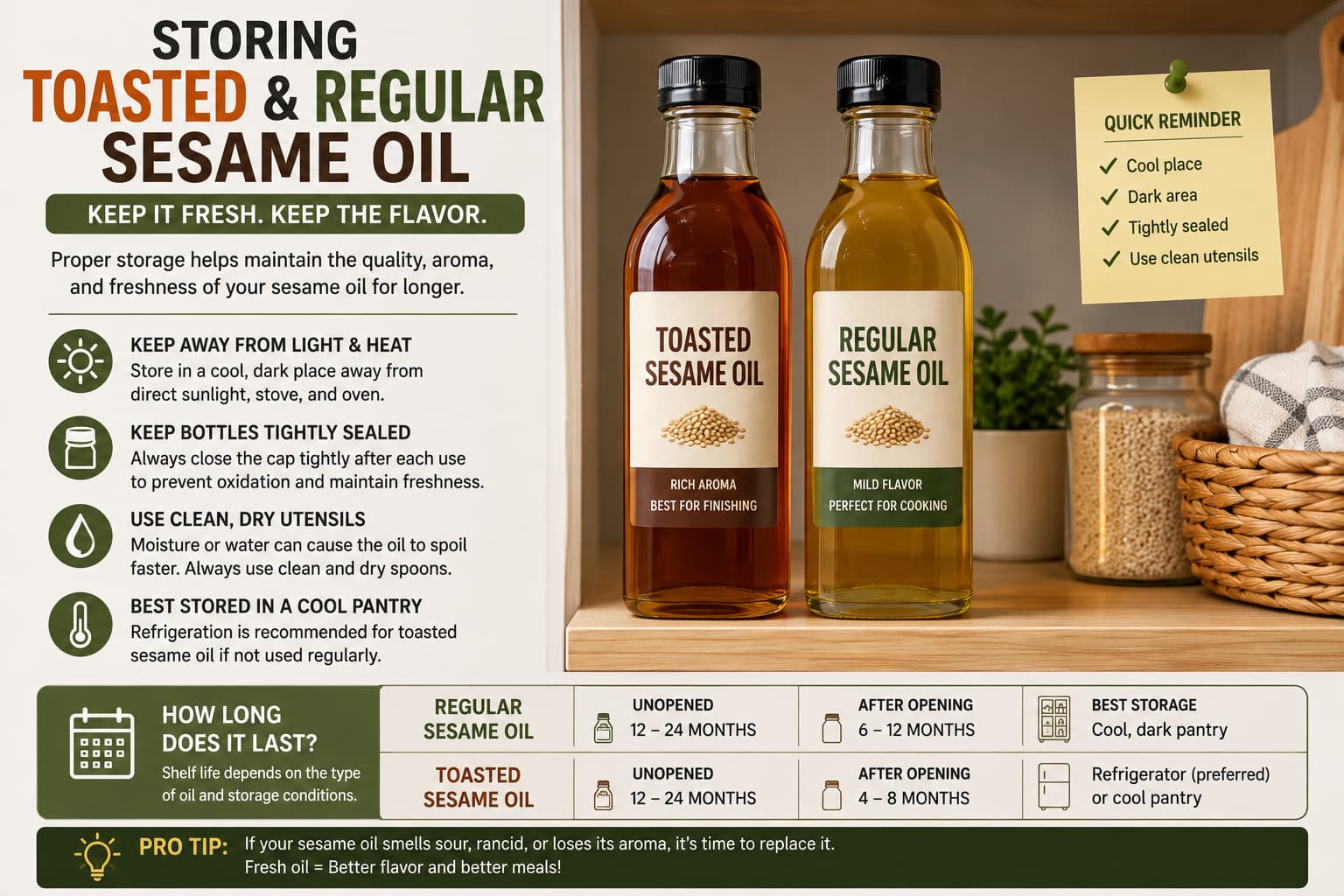
Storage Tip: After opening, toasted sesame oil maintains its best flavor when stored in the refrigerator if you don’t use it regularly. Regular sesame oil can usually remain in a cool pantry, but refrigeration may help extend its freshness in warmer climates.
How Long Does Sesame Oil Last?
The shelf life depends on the type of oil, storage conditions, and whether the bottle has been opened.
| Oil Type | Unopened | After Opening | Best Storage |
|---|---|---|---|
| Regular Sesame Oil | 12–24 months | 6–12 months | Cool pantry |
| Toasted Sesame Oil | 12–24 months | 4–8 months | Refrigerator or cool pantry |
How to Tell If Sesame Oil Has Gone Bad
If you’re unsure whether your sesame oil is still good, trust your senses. Fresh sesame oil should smell pleasant and clean. If it develops a sour, paint-like, or stale odor, it’s time to replace it.
Other warning signs include:
- A noticeably bitter taste.
- An unpleasant or rancid smell.
- Cloudiness that doesn’t disappear at room temperature.
- A significant loss of the characteristic roasted aroma in toasted sesame oil.
Food Safety Reminder: Using expired sesame oil usually won’t make food unsafe immediately, but it can negatively affect both flavor and quality. Fresh oil always produces better-tasting stir fry and sauces.
Which Sesame Oil Should You Buy?
If you’re deciding between toasted sesame oil vs regular, the best choice depends entirely on how you cook.
If you frequently prepare stir fries, fried rice, or sautéed vegetables, regular sesame oil is the better everyday cooking oil because of its mild flavor and versatility.
If your goal is to create authentic restaurant-style flavor, toasted sesame oil is the better finishing ingredient. Just a small drizzle before serving adds a rich, nutty aroma that transforms the entire dish.
For most home kitchens, the ideal solution is to keep both bottles available. They complement one another rather than compete, allowing you to cook with one and finish with the other for the best overall results.
Expert Recommendation: Instead of choosing between toasted sesame oil vs regular, stock both. Use regular sesame oil during cooking and finish your favorite stir fry with a teaspoon of toasted sesame oil for maximum flavor and aroma.
Ready to put these tips into practice? Try using both oils in recipes like Chicken Veggie Stir Fry, Spicy Chicken Stir Fry, Teriyaki Chicken Stir Fry, or Healthy Chicken Stir Fry to experience the difference for yourself.
Frequently Asked Questions
Can I use toasted sesame oil instead of regular sesame oil?
Yes, but the flavor will be much stronger. Toasted sesame oil is best used in small amounts as a finishing oil rather than as the primary cooking oil. If a recipe calls for regular sesame oil, substituting toasted sesame oil may overpower the other ingredients.
Which is healthier: toasted sesame oil or regular sesame oil?
Both oils have very similar nutritional profiles because they come from sesame seeds. The biggest difference in toasted sesame oil vs regular is flavor and intended use, not nutrition.
Can you cook with toasted sesame oil?
You can, but it’s generally not recommended for prolonged high-heat cooking. Toasted sesame oil is valued for its roasted aroma, which is best preserved by adding it during the final minute of cooking or after the dish is finished.
Why do recipes use both regular and toasted sesame oil?
Many recipes use regular sesame oil for cooking and toasted sesame oil for finishing. This combination provides better cooking performance while preserving the rich, nutty flavor that toasted sesame oil is known for.
Does toasted sesame oil have a lower smoke point?
Generally, yes. While exact smoke points vary by brand, toasted sesame oil is typically better suited for low-heat applications or finishing dishes, whereas regular sesame oil is more appropriate for everyday cooking.
Which sesame oil is best for chicken stir fry?
For the best results, use regular sesame oil while stir-frying the chicken and vegetables, then drizzle a small amount of toasted sesame oil over the finished dish for authentic flavor.
References
Final Thoughts
Understanding toasted sesame oil vs regular makes it much easier to choose the right oil for every recipe. Although they come from the same sesame seeds, their production methods create two completely different ingredients with unique strengths.
Regular sesame oil is the better choice for everyday cooking because of its mild flavor and ability to handle medium-high heat. Toasted sesame oil, on the other hand, is prized for its deep roasted aroma and is best used as a finishing oil that brings authentic Asian-inspired dishes to life.
For home cooks who enjoy making stir fry, fried rice, noodle dishes, and homemade sauces, keeping both oils in the pantry offers the greatest flexibility. Cook with regular sesame oil, finish with toasted sesame oil, and you’ll enjoy the best balance of flavor, aroma, and cooking performance.
🍽️ You Might Also Like



📧 Save This Recipe For Later
Enter your email and we will send this recipe directly to your inbox.