
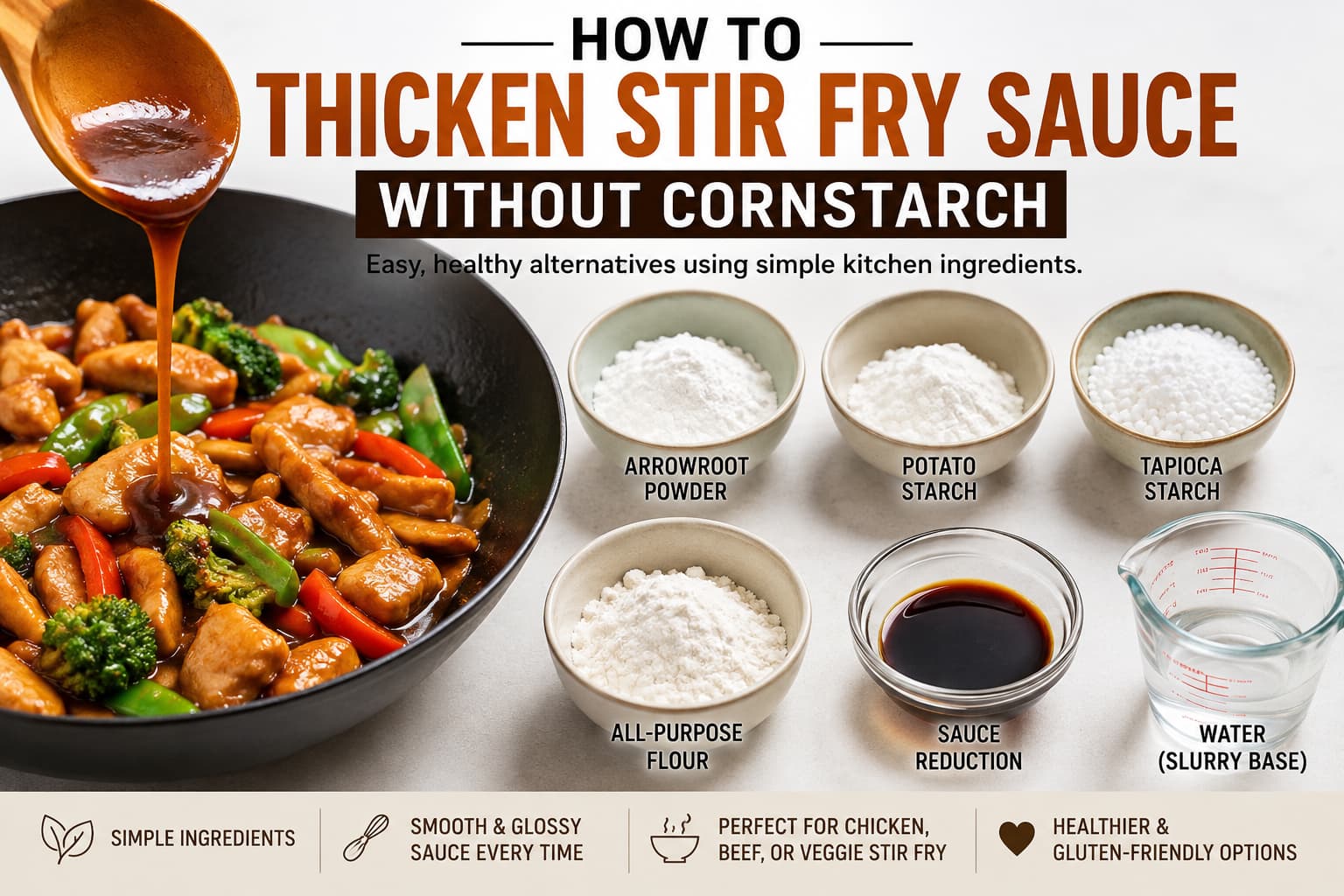
How to Thicken Stir Fry Sauce Without Cornstarch
How to Thicken Stir Fry Sauce Without Cornstarch
If you’ve ever finished cooking a delicious stir fry only to discover the sauce is watery, you’re not alone. Many home cooks rely on cornstarch to create the glossy, restaurant-style texture found in many Asian-inspired dishes. But what if you’ve run out of cornstarch, have a corn allergy, or simply want another option? Fortunately, there are several effective ways to thicken stir fry sauce without cornstarch while still creating a flavorful, silky coating for your chicken and vegetables.
The best thickening method depends on the ingredients already in your kitchen and the type of stir fry you’re making. Some alternatives create a glossy finish similar to cornstarch, while others produce a richer or heartier sauce. Understanding how each thickener behaves will help you choose the right one every time.
In this guide, you’ll learn the best substitutes for cornstarch, when to use them, common mistakes to avoid, and how to achieve perfectly thickened stir fry sauce every time.
Quick Answer
The easiest way to thicken stir fry sauce without cornstarch is to use arrowroot powder, tapioca starch, potato starch, flour, or simply reduce the sauce by simmering it for a few extra minutes. Each option works differently, but they all help create a thicker sauce that clings to your ingredients instead of pooling at the bottom of the pan. Choose the method that best matches your recipe and desired texture.
Table of Contents
Why You May Need to Thicken Stir Fry Sauce Without Cornstarch
Cornstarch is one of the most popular ingredients for thickening stir fry sauces because it works quickly and creates a glossy finish. However, it’s far from your only option. Many professional cooks regularly use other starches or reduction techniques depending on the recipe.
You might want to thicken stir fry sauce without cornstarch for several reasons. Perhaps you’ve opened your pantry only to realize you’re out of cornstarch halfway through dinner. Maybe someone in your family avoids corn products, or you’re experimenting with different textures and flavors.
Some alternative thickeners actually perform better than cornstarch under certain conditions. Arrowroot creates a clearer, shinier sauce, while potato starch produces an exceptionally smooth finish. Flour creates a richer, slightly heartier consistency that’s ideal for comfort-style stir fries.
Tip: Before adding any thickener, allow your sauce to simmer for a minute or two. Natural evaporation may reduce enough liquid to improve the consistency without adding anything extra.
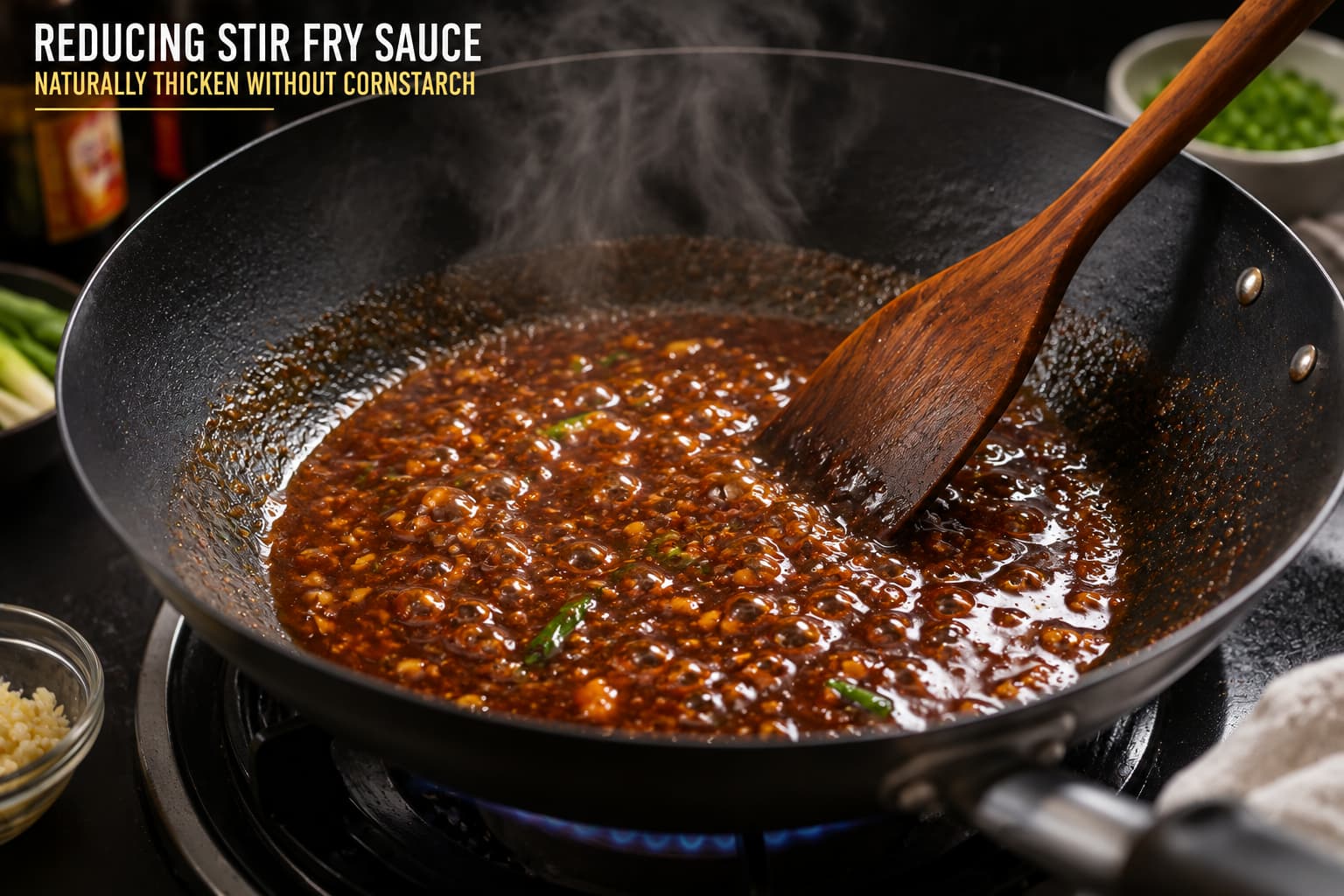
If you’re making recipes like Chicken Stir Fry or Chicken Broccoli Stir Fry, understanding these alternatives ensures you can still achieve a restaurant-quality sauce even when cornstarch isn’t available.
Learning how to thicken stir fry sauce without cornstarch also makes you a more flexible cook. Instead of depending on a single ingredient, you’ll know multiple techniques that work in different situations, allowing you to adapt recipes with confidence.
Kitchen Secret: Many restaurant chefs don’t rely on just one thickener. They often combine proper sauce reduction with a small amount of starch to create a glossy texture that’s flavorful rather than overly thick.
Best Alternatives to Thicken Stir Fry Sauce Without Cornstarch
If you need to thicken stir fry sauce without cornstarch, you’ll be happy to know there are several reliable alternatives. Some closely mimic the texture of cornstarch, while others create their own unique consistency. Choosing the right one depends on the ingredients you’re using, the cooking temperature, and the type of sauce you want.
Before adding any thickener, remember that every sauce behaves differently. Soy sauce, oyster sauce, teriyaki sauce, chicken broth, and honey all contribute different amounts of liquid and sugar, which affect how quickly the sauce thickens.
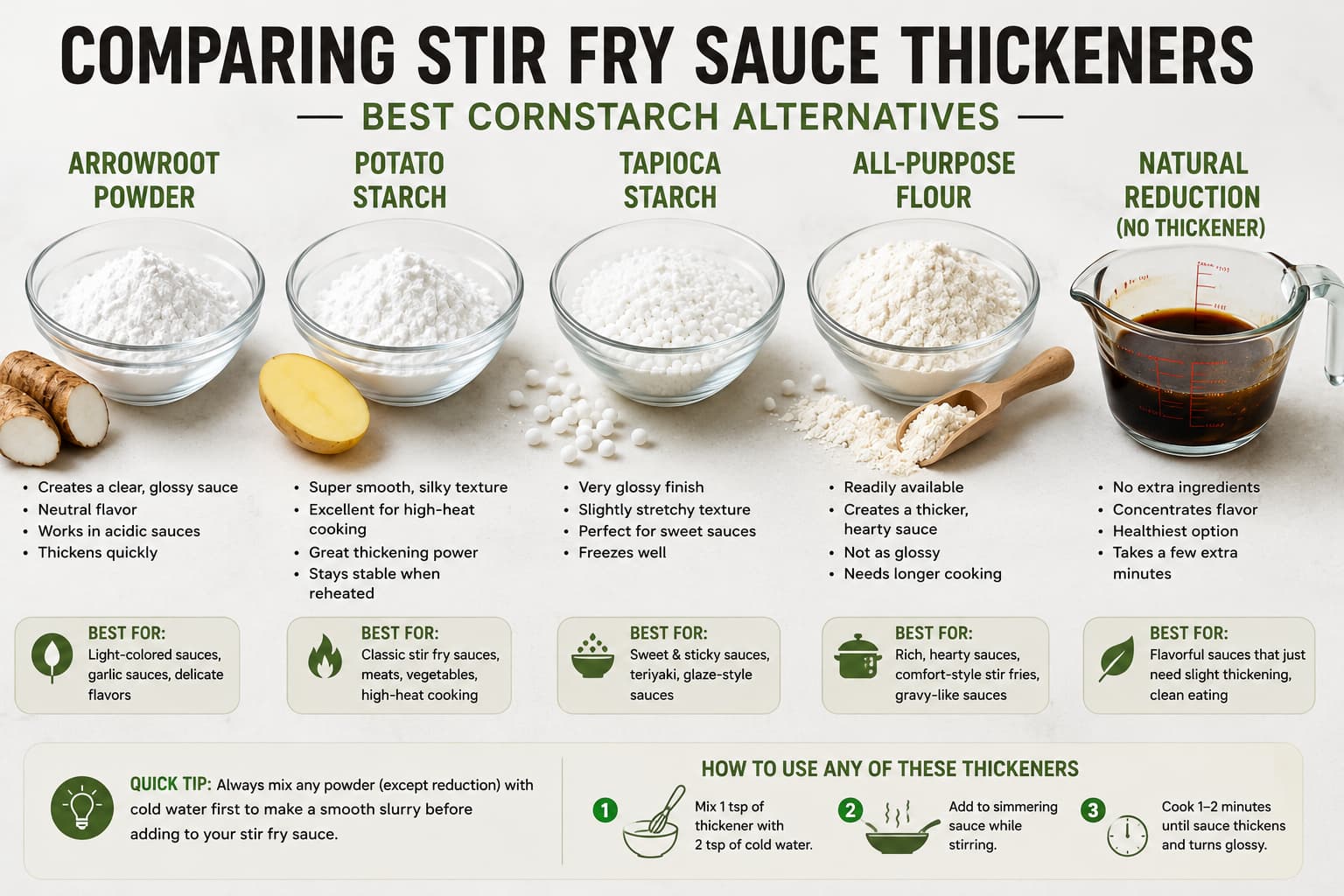
| Alternative Thickener | Best For | Texture | How to Use |
|---|---|---|---|
| Arrowroot Powder | Light sauces | Clear and glossy | Mix with cold water before adding |
| Potato Starch | Asian-style stir fries | Very smooth | Use slightly less than cornstarch |
| Tapioca Starch | Sweet sauces | Silky and slightly chewy | Mix into a slurry first |
| All-Purpose Flour | Hearty sauces | Opaque and rich | Cook a little longer to remove raw taste |
| Reduction | Any sauce | Naturally concentrated | Simmer until excess liquid evaporates |
1. Arrowroot Powder
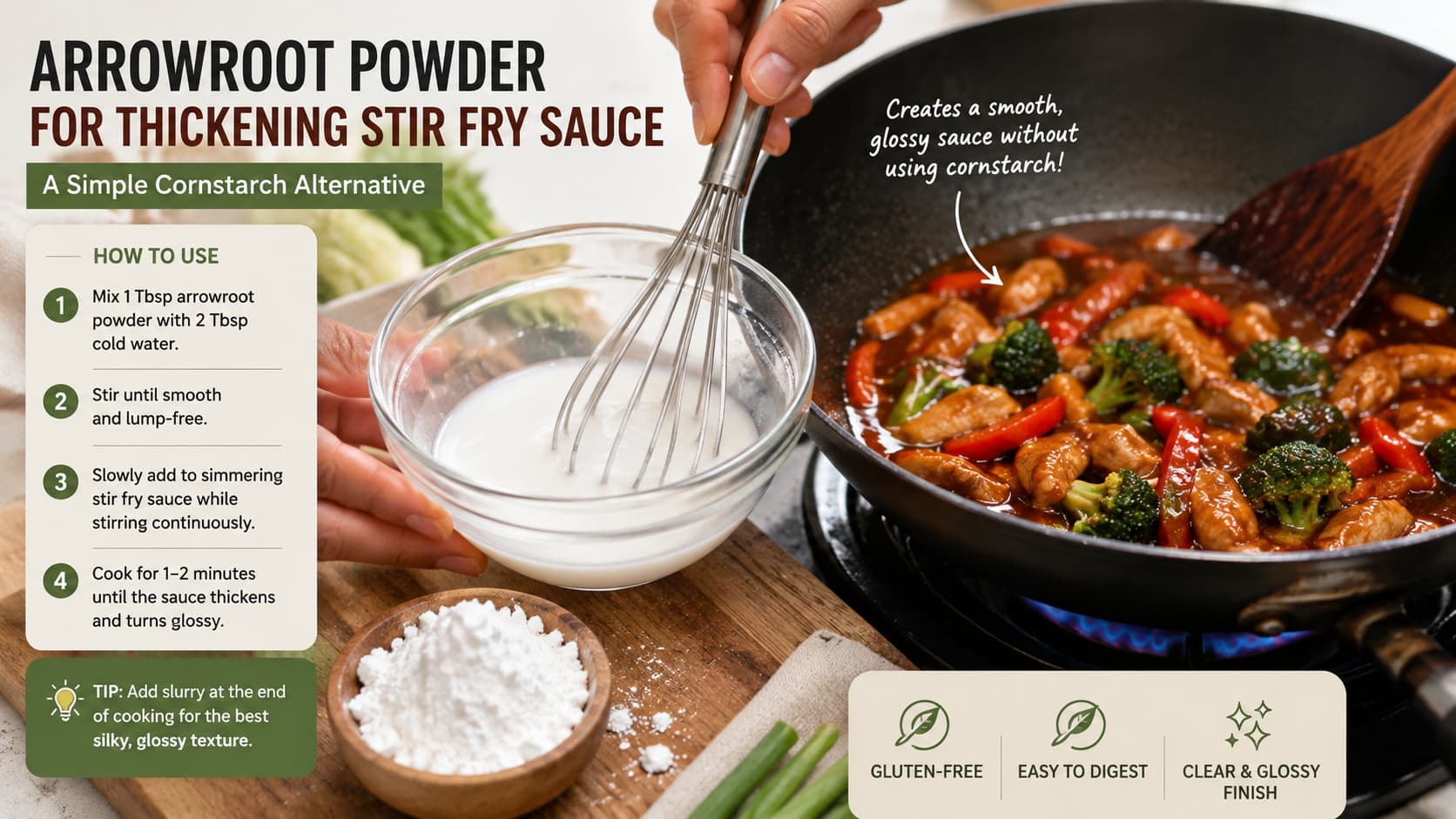
Arrowroot powder is one of the closest substitutes for cornstarch. It thickens quickly, creates a glossy finish, and doesn’t become cloudy. It’s especially useful when making lighter stir fry sauces where appearance matters.
To use it, mix equal parts arrowroot powder and cold water until smooth. Slowly stir the mixture into your simmering sauce during the final minute of cooking.
Tip: Avoid boiling arrowroot for long periods. Extended high heat can reduce its thickening ability.
2. Potato Starch
Potato starch is widely used in many Asian kitchens because it creates an exceptionally smooth sauce that coats chicken and vegetables beautifully. In fact, many people who regularly thicken stir fry sauce without cornstarch prefer potato starch because it performs well at high cooking temperatures.
Like cornstarch, potato starch should always be mixed with cold water before adding it to the wok. Stir continuously as the sauce thickens to prevent lumps.
This option works particularly well in recipes like Garlic Chicken Stir Fry and Teriyaki Chicken Stir Fry, where a silky sauce helps coat every piece of chicken.
3. Tapioca Starch
Tapioca starch is another excellent substitute. It creates a glossy finish similar to cornstarch but gives the sauce a slightly silkier mouthfeel. It’s especially good in stir fry sauces that contain honey or brown sugar because it complements sweeter flavors.
Kitchen Secret: Start with a small amount of tapioca starch. It thickens quickly, and adding too much can make the sauce slightly sticky instead of silky.
Whether you’re preparing a simple vegetable stir fry or a flavorful Honey Garlic Chicken Stir Fry, these alternatives allow you to confidently thicken stir fry sauce without cornstarch while maintaining excellent flavor and texture.
How to Choose the Right Thickener for Your Stir Fry Sauce
Not every thickener produces the same results. If your goal is to thicken stir fry sauce without cornstarch, selecting the right alternative depends on the type of sauce you’re making, how long it will cook, and the texture you want to achieve.
Some starches create a crystal-clear glaze that beautifully coats chicken and vegetables, while others produce a richer, more comforting consistency. Understanding these differences helps you avoid disappointing results and gives you greater confidence in the kitchen.
When Arrowroot Is the Best Choice
Arrowroot powder is ideal for light-colored sauces because it stays clear after cooking. It works especially well with garlic, ginger, soy sauce, sesame oil, and light broths. Since it thickens rapidly, you only need a small amount.
If you’re preparing a healthier dinner like Healthy Chicken Stir Fry, arrowroot keeps the sauce light while still giving it a glossy finish.
When Potato Starch Works Better
Potato starch performs extremely well in high-heat cooking, making it a favorite for traditional stir fry recipes. It creates a silky texture that clings nicely to chicken, broccoli, peppers, carrots, and other vegetables.
Many cooks who regularly thicken stir fry sauce without cornstarch choose potato starch because it produces results that closely resemble restaurant-quality stir fry sauces.
When Flour Makes Sense
Although flour isn’t the first choice for classic Asian stir fries, it can be a practical solution when nothing else is available. Flour creates a thicker, creamier sauce rather than the glossy finish produced by starches.
Because flour contains protein as well as starch, it needs several minutes of cooking after being added. This removes the raw flour taste and allows the sauce to develop a smoother consistency.
Warning: Never sprinkle dry flour directly into hot stir fry sauce. It almost always forms stubborn lumps. Instead, whisk flour with cold water until completely smooth before adding it to the pan.
Natural Reduction: No Thickener Needed
Sometimes the easiest way to thicken stir fry sauce without cornstarch is to skip starch altogether. Simply simmer the sauce over medium heat for a few extra minutes. As water evaporates, the flavors become more concentrated and the sauce naturally thickens.
This technique works especially well for sauces containing soy sauce, oyster sauce, hoisin sauce, honey, or brown sugar because these ingredients naturally become slightly thicker as they reduce.
| If Your Sauce Is… | Best Thickening Method |
|---|---|
| Light and clear | Arrowroot powder |
| Classic Asian stir fry | Potato starch |
| Sweet teriyaki style | Tapioca starch |
| Rich and hearty | All-purpose flour |
| Already flavorful but too thin | Natural reduction |
Tip: If your sauce only needs a slight adjustment, try reducing it first before reaching for a thickener. You may achieve the perfect consistency without adding any extra ingredients.
Understanding how each option behaves makes it much easier to thicken stir fry sauce without cornstarch while matching the texture to your specific recipe. The next step is learning the most common mistakes that prevent sauces from thickening properly in the first place.
Common Mistakes When You Thicken Stir Fry Sauce Without Cornstarch
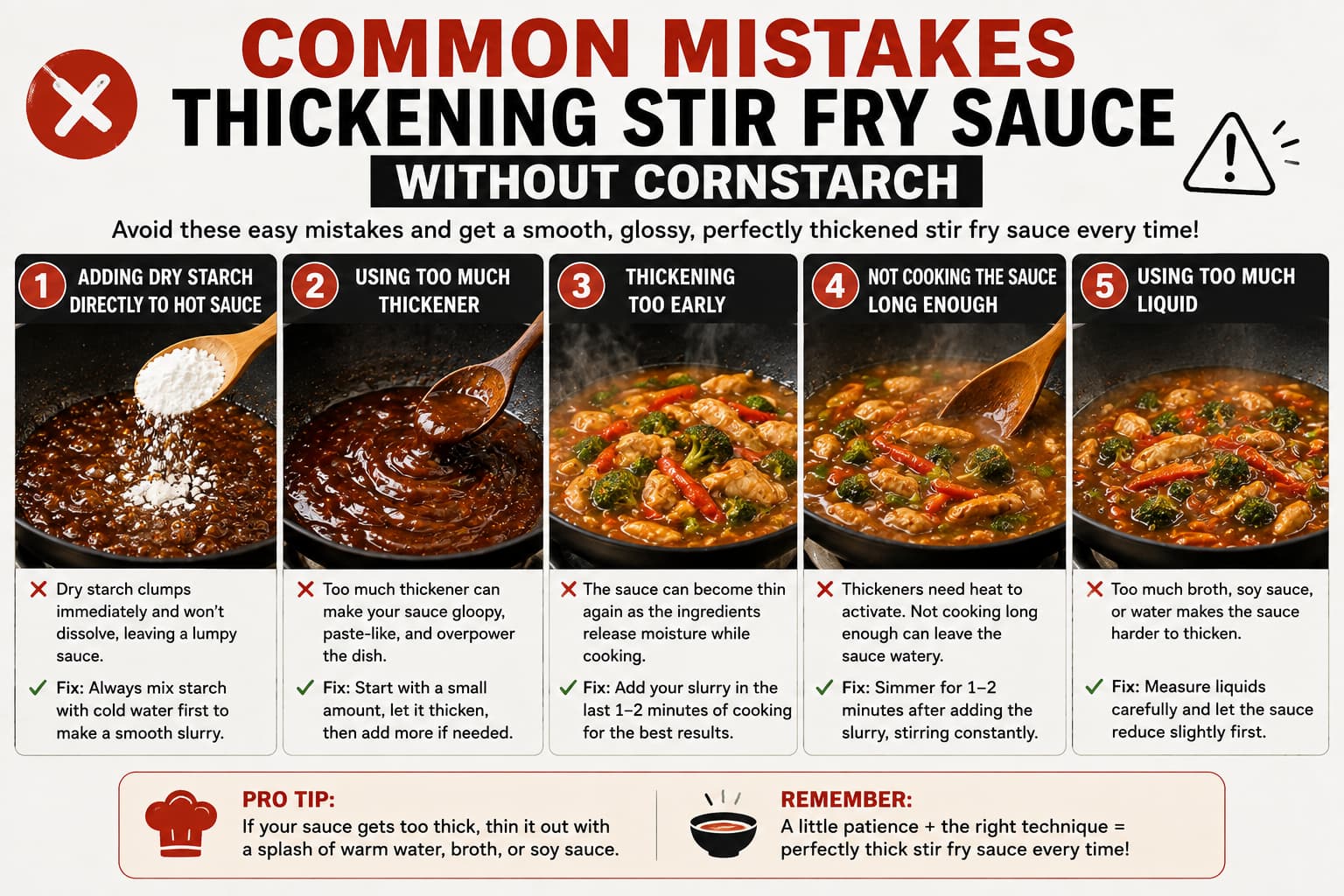
Even the best thickening ingredient won’t produce great results if it’s used incorrectly. Many watery stir fry sauces are caused by technique rather than the thickener itself. By avoiding a few common mistakes, you can consistently thicken stir fry sauce without cornstarch and achieve a smooth, flavorful sauce every time.
1. Adding Too Much Thickener at Once
One of the biggest mistakes is adding a large amount of starch or flour all at once. Most thickeners continue working for a minute or two after they’re stirred into the hot sauce. If you keep adding more before the first batch has fully activated, your sauce can quickly become overly thick.
Instead, start with a small slurry and allow the sauce to simmer for about one minute before deciding if it needs additional thickener.
Warning: It’s much easier to thicken a sauce that’s still too thin than it is to fix one that’s become overly thick.
2. Mixing Starch Directly into Hot Sauce
Whether you’re using arrowroot, potato starch, tapioca starch, or flour, never add the dry powder directly into a bubbling wok. Dry starch immediately forms clumps that are difficult to remove.
Always mix your thickener with cold water until completely smooth before pouring it into the sauce while stirring continuously.
3. Using Too Much Liquid
Sometimes the problem isn’t the thickener—it’s simply too much liquid. Adding excessive chicken broth, water, or soy sauce makes it much harder to thicken stir fry sauce without cornstarch.
Measure your sauce ingredients carefully and remember that vegetables naturally release moisture while cooking. If you’re using frozen vegetables, they may contribute even more water to the pan.
If you frequently struggle with sauce consistency, our guide on Why Is My Stir Fry Sauce Too Thin? explains additional causes and simple fixes.
4. Thickening Too Early
Adding a slurry at the beginning of cooking can reduce its effectiveness. Stir fry dishes cook quickly, and ingredients continue releasing moisture as they heat. Thickening the sauce too early often means it becomes thin again by the time the vegetables finish cooking.
The best approach is to cook the meat and vegetables first, add the sauce, let it simmer briefly, and then add your thickener during the final minute or two.
Kitchen Secret: Professional chefs almost always add the slurry near the end of cooking. This gives them better control over the final consistency and prevents over-thickening.
5. Ignoring Sauce Reduction
Many home cooks immediately reach for a thickener without giving the sauce time to naturally reduce. Allowing the sauce to simmer for a couple of minutes concentrates both the flavor and texture.
In many recipes, this simple technique is all you need to thicken stir fry sauce without cornstarch. If the sauce is still too thin after reducing, then add a small amount of your preferred thickener.
If you accidentally go too far and your sauce becomes overly thick, don’t worry. You can easily balance it by adding a splash of chicken broth, water, or low-sodium soy sauce. Our article on Why Is My Stir Fry Sauce Too Thick? covers additional troubleshooting tips.
Mastering these simple techniques will help you avoid the most common problems and produce a silky, well-balanced stir fry sauce with confidence—whether you’re using arrowroot, potato starch, tapioca starch, flour, or no starch at all.
Expert Tips for Perfectly Thickening Stir Fry Sauce Every Time
Once you’ve learned the basic techniques, a few professional habits can help you consistently thicken stir fry sauce without cornstarch. These simple adjustments improve both the texture and flavor of your sauce while making the cooking process easier.
Start with Less Thickener Than You Think
Most alternative starches are surprisingly powerful. It’s always better to begin with a small amount and gradually add more if needed. A sauce that’s slightly thin can easily be corrected, while an overly thick sauce often requires additional liquid that may dilute the flavor.
Tip: A good starting point is 1 teaspoon of starch mixed with 2 teaspoons of cold water for every cup of stir fry sauce.
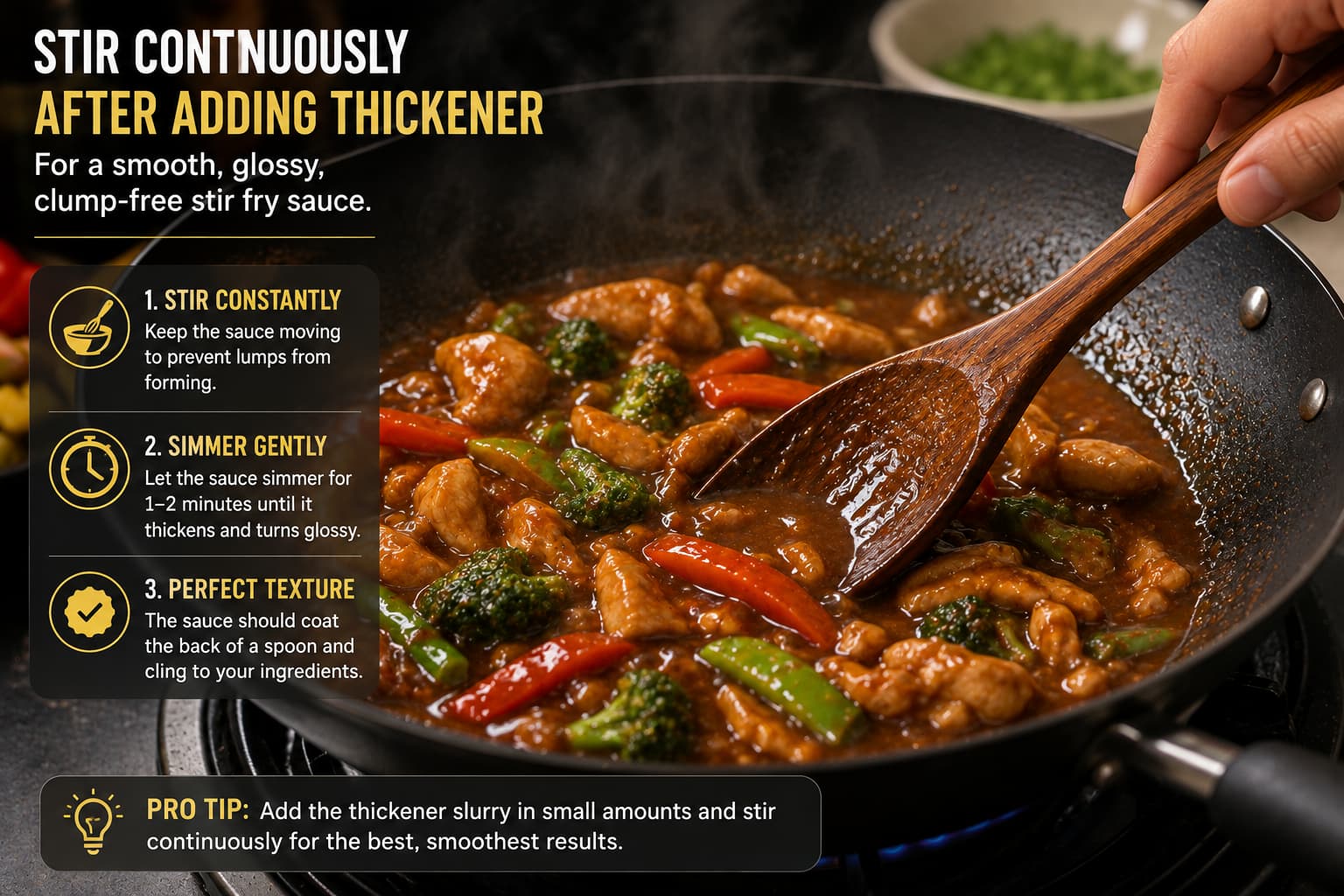
Keep the Sauce Moving
As soon as you pour the slurry into the wok, stir continuously. Constant movement distributes the thickener evenly throughout the sauce and prevents clumps from forming.
This technique is especially important when using potato starch or tapioca starch because they begin thickening almost immediately after they contact the hot liquid.
Balance Thickness with Flavor
The goal isn’t simply to thicken stir fry sauce without cornstarch. A great stir fry sauce should also have balanced flavors. Before serving, taste the sauce and adjust if necessary.
- Add a splash of soy sauce for more savory flavor.
- Add a little honey or brown sugar if it’s too salty.
- Add rice vinegar or fresh lime juice to brighten rich sauces.
- Add a few tablespoons of chicken broth if the sauce becomes too concentrated.
Small adjustments can make a dramatic difference in the final dish.
Match the Thickener to the Recipe
Different stir fry recipes benefit from different thickening methods. Choosing the right option helps preserve the intended texture and appearance.
| Recipe Type | Recommended Thickener |
|---|---|
| Classic Chicken Stir Fry | Potato starch |
| Garlic-Based Stir Fry | Arrowroot powder |
| Teriyaki Stir Fry | Tapioca starch |
| Sweet Honey Garlic Sauce | Natural reduction or tapioca starch |
| Comfort-Style Stir Fry | All-purpose flour |
If you’re looking for inspiration, these recipes demonstrate how a properly thickened sauce transforms the finished meal:
Kitchen Secret: The best restaurant stir fry sauces aren’t overly thick. They should lightly coat the chicken and vegetables while still flowing smoothly when stirred.
When You Should Still Use Cornstarch
Although it’s entirely possible to thicken stir fry sauce without cornstarch, there are situations where cornstarch remains an excellent choice. It creates a classic glossy finish, thickens quickly, and works especially well in traditional Chinese-American stir fry recipes.
If you simply ran out of cornstarch today, the alternatives in this guide will work beautifully. However, if you’re interested in mastering the traditional technique, our guide on How to Make the Perfect Cornstarch Slurry explains how to use it correctly for consistently smooth results.
You can also improve your sauces by learning about Common Stir Fry Sauce Mistakes and exploring new flavor combinations in our Best Homemade Stir Fry Sauce Variations guide.
With these expert techniques, you’ll be able to confidently thicken stir fry sauce without cornstarch using ingredients you already have, while achieving a smooth, flavorful sauce that’s every bit as satisfying as the classic version.
Frequently Asked Questions
Can I thicken stir fry sauce without cornstarch using only flour?
Yes. All-purpose flour is a practical substitute when you need to thicken stir fry sauce without cornstarch. Mix the flour with cold water first to create a smooth slurry, then whisk it into the simmering sauce. Keep in mind that flour creates a slightly thicker, more opaque sauce than cornstarch.
What is the best substitute for cornstarch in stir fry sauce?
Arrowroot powder and potato starch are generally considered the best substitutes because they create a smooth, glossy sauce that closely resembles the texture produced by cornstarch. Tapioca starch is another excellent choice, especially for sweeter sauces.
Can I thicken stir fry sauce without cornstarch by simmering it?
Absolutely. Allowing the sauce to simmer for a few extra minutes reduces excess liquid through evaporation. This naturally concentrates both the flavor and texture, often eliminating the need for any starch at all.
Why didn’t my stir fry sauce thicken?
Your sauce may contain too much liquid, the slurry may have been too weak, or the thickener may have been added too early. Measuring ingredients carefully and allowing the sauce to simmer before adding a slurry usually solves the problem.
Can I use potato starch the same way as cornstarch?
Yes. Potato starch is used almost exactly like cornstarch. Mix it with cold water before adding it to the hot sauce, then stir continuously until the sauce reaches the desired consistency.
Is arrowroot healthier than cornstarch?
Both are used in small amounts, so the nutritional differences are minimal. Many people choose arrowroot because it’s naturally grain-free, easy to digest, and produces a clear, glossy sauce.
Final Thoughts
Learning how to thicken stir fry sauce without cornstarch gives you far more flexibility in the kitchen. Whether you’ve run out of cornstarch, are avoiding corn-based products, or simply want to experiment with different textures, there are several reliable alternatives that deliver excellent results.
Arrowroot powder, potato starch, tapioca starch, flour, and natural sauce reduction all have their own advantages. Choosing the right method depends on your recipe, the ingredients you’re using, and the consistency you want to achieve. With a little practice, you’ll quickly discover which technique works best for your favorite stir fry dishes.
The next time your sauce looks too thin, don’t panic. By applying the tips and techniques in this guide, you can confidently thicken stir fry sauce without cornstarch and create a smooth, flavorful sauce that perfectly coats every piece of chicken and every vegetable.
References
🍽️ You Might Also Like



📧 Save This Recipe For Later
Enter your email and we will send this recipe directly to your inbox.