

Can You Marinate Chicken Overnight for Stir Fry?
Why Is My Stir Fry Chicken Tough? (Easy Fixes)
You expected juicy, tender chicken, but instead your stir fry turned out chewy, rubbery, or surprisingly tough. If you’ve ever wondered why your tough chicken stir fry refuses to become tender, you’re not alone. This is one of the most common problems home cooks face when making chicken stir fry.
The good news is that tough chicken is almost always caused by a few simple mistakes that are easy to fix. From choosing the wrong cut of chicken to slicing it incorrectly or cooking it for too long, every step affects the final texture.
In this guide, you’ll learn exactly why a tough chicken stir fry happens, how professional chefs keep chicken tender, and the easiest ways to fix the problem every time you cook.
Quick Answer
Tough chicken stir fry is usually caused by overcooking, slicing the chicken incorrectly, using very high heat for too long, skipping a marinade, or cooking cold chicken straight from the refrigerator. To keep chicken tender, slice it across the grain, marinate it briefly with cornstarch, avoid overcrowding the pan, and cook only until the internal temperature reaches 165°F.
Table of Contents
Why Does Stir Fry Chicken Become Tough?
A tough chicken stir fry usually isn’t caused by one mistake—it happens when several small cooking errors combine. Chicken breast is naturally lean, meaning it contains very little fat to protect it during cooking. Even an extra minute or two in a hot wok can make the meat noticeably firmer.
Heat causes the proteins inside chicken to tighten. When they tighten too much, moisture is squeezed out, leaving dry, chewy meat instead of juicy bites.
This explains why restaurant stir fry chicken often feels much softer than homemade versions. Professional kitchens use techniques that help retain moisture while cooking very quickly.

7 Common Reasons Your Tough Chicken Stir Fry Happens
1. You Overcooked the Chicken
Overcooking is the number one reason a tough chicken stir fry develops. Chicken breast cooks much faster than many people expect. Thin slices often finish cooking in only a few minutes.
Cooking beyond 165°F causes moisture loss, making every bite firmer and drier.
Warning: Continuing to cook chicken after it’s fully done will not make it safer—it simply makes it drier and tougher.
2. You Sliced the Chicken with the Grain
The direction you slice matters. Cutting with the muscle fibers leaves long strands that are harder to chew.
Always slice across the grain to shorten the muscle fibers and create naturally tender bites.
3. The Chicken Pieces Were Too Thick
Large chunks cook unevenly. The outside becomes overcooked before the center finishes.
Uniform slices about ¼ inch thick cook quickly and evenly.
4. You Skipped the Marinade
A simple stir fry marinade helps lock in moisture while protecting the chicken from direct heat.
Even a quick 15–30 minute marinade with soy sauce, cornstarch, and a little oil can dramatically improve tenderness.
Learn more in our guide to how to marinate chicken for stir fry.
Kitchen Secret: Many Chinese restaurants use the velveting technique with cornstarch to create exceptionally tender chicken.
5. You Started with Cold Chicken
Chicken straight from the refrigerator cools the pan immediately. This prevents proper searing and often causes longer cooking times.
Let chicken rest for about 15 minutes before cooking.

6. The Pan Was Overcrowded
Too much chicken lowers the pan temperature, causing steaming instead of searing.
Cook in batches if necessary.
7. The Pan Wasn’t Hot Enough
A properly heated wok quickly seals the surface while minimizing moisture loss.
If the pan isn’t hot enough, the chicken cooks slowly, giving proteins more time to tighten.
| Mistake | Effect | Easy Fix |
|---|---|---|
| Overcooking | Dry, rubbery chicken | Cook to 165°F only |
| Wrong slicing | Chewy texture | Slice across the grain |
| No marinade | Less moisture | Use soy sauce + cornstarch |
| Cold chicken | Longer cooking time | Rest 15 minutes first |
| Overcrowding | Steaming instead of searing | Cook in batches |
Easy Fixes for Tough Chicken Stir Fry
Fortunately, every major cause of tough chicken stir fry has a simple solution.
Choose the Right Chicken
Chicken thighs stay naturally juicier because they contain more fat.
Chicken breasts can also be extremely tender when cooked correctly.
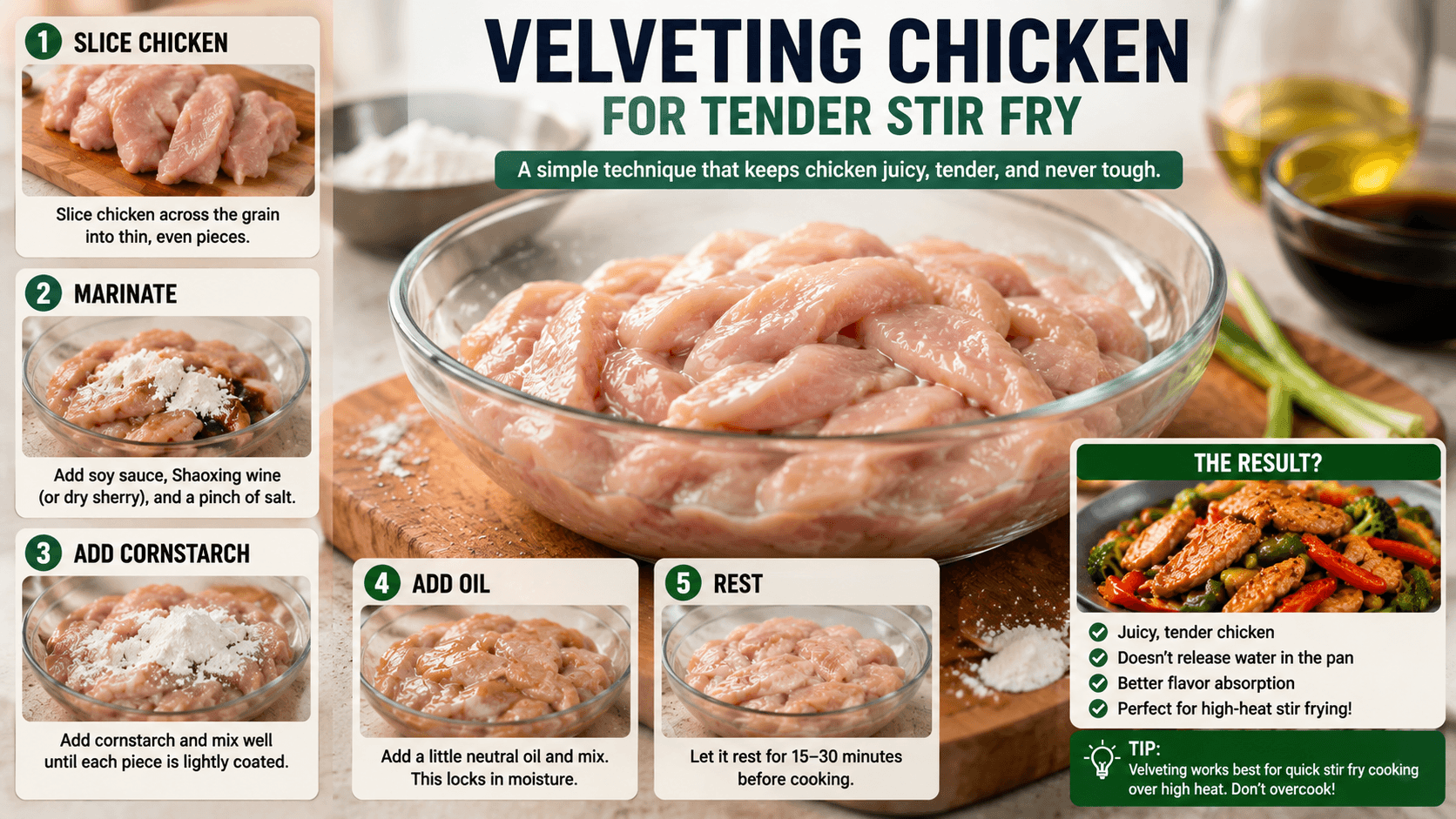
Use Cornstarch
Cornstarch forms a thin protective coating that reduces moisture loss during cooking.
Our complete guide explains how to velvet chicken for stir fry.
Cook Quickly Over High Heat
Stir fry cooking should be fast. Once the chicken is lightly browned and reaches a safe temperature, remove it promptly.
Tip: A digital meat thermometer is the easiest way to avoid both undercooking and overcooking.
Add Sauce at the End
Sauces should coat already cooked chicken rather than simmer it for several minutes.
This helps preserve tenderness while preventing the chicken from drying out.
Tender vs. Tough Chicken Stir Fry
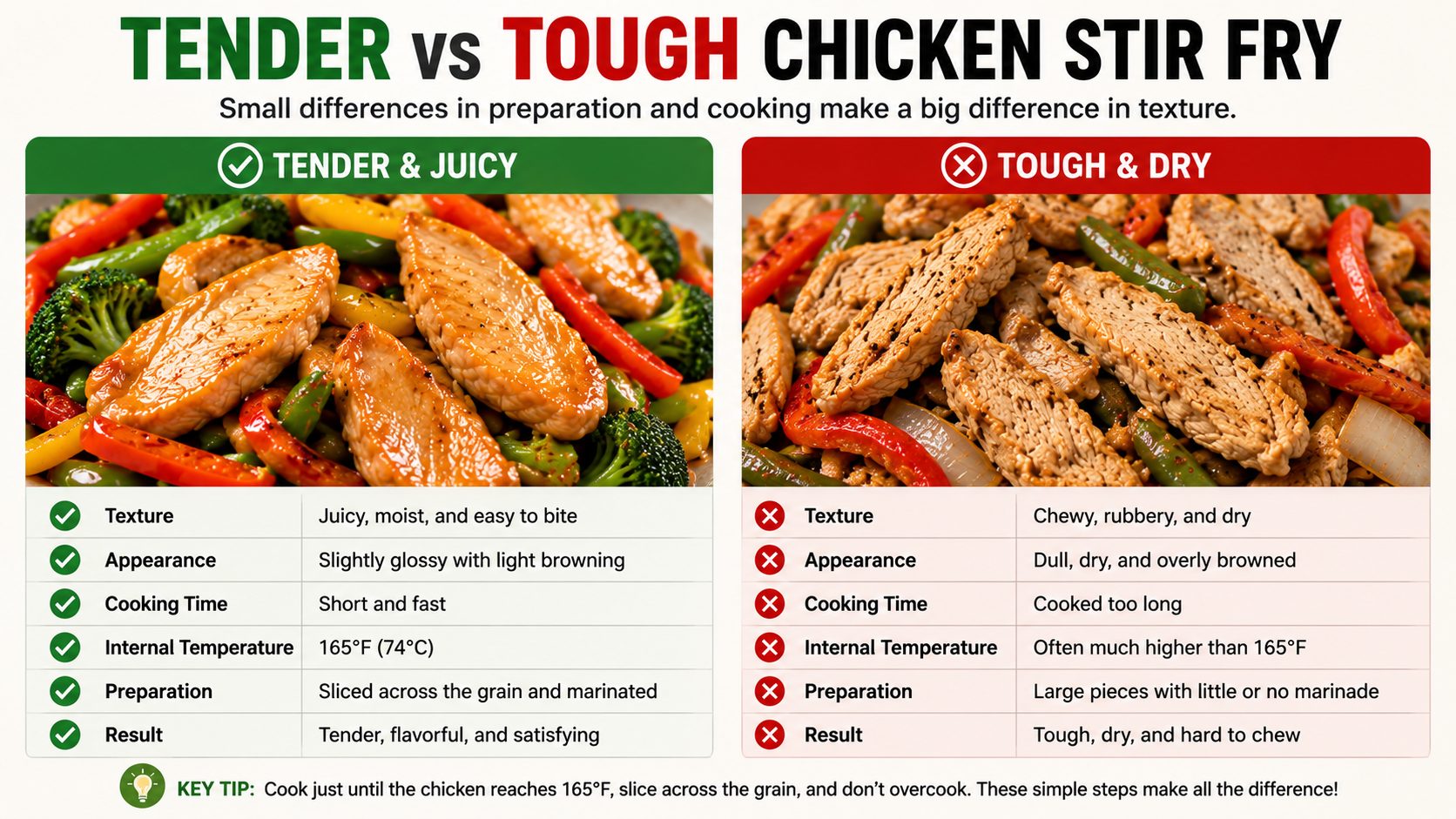
Knowing what properly cooked chicken looks and feels like makes it much easier to avoid a tough chicken stir fry. Small differences in preparation and cooking time can completely change the final texture.
| Characteristic | Tender Chicken Stir Fry | Tough Chicken Stir Fry |
|---|---|---|
| Texture | Juicy, moist, easy to bite | Chewy, rubbery, dry |
| Appearance | Slightly glossy with light browning | Dull, dry, and overly browned |
| Cooking Time | Short and fast | Cooked too long |
| Internal Temperature | 165°F (74°C) | Often much higher than 165°F |
| Preparation | Sliced across the grain and marinated | Large pieces with little or no marinade |
If your chicken resembles the right-hand column, don’t worry. Most cases of tough chicken stir fry can be prevented by adjusting just a few cooking habits.
How Restaurants Keep Stir Fry Chicken So Tender
Many people wonder why restaurant chicken always seems softer and juicier than homemade versions. The answer isn’t a secret ingredient—it’s a combination of preparation techniques.
Velveting
Velveting coats the chicken in a light mixture of cornstarch, soy sauce, and sometimes egg white or oil before cooking. This protective coating helps the meat retain moisture during high-heat cooking.
Uniform Slicing
Professional chefs slice every piece to nearly the same thickness. Uniform pieces cook evenly, reducing the chance of some pieces becoming overcooked while others are still raw.
Extremely Hot Cooking Surface
Commercial woks reach temperatures much higher than most home skillets. The chicken cooks very quickly, minimizing moisture loss.
Cooking in Small Batches
Restaurants rarely overcrowd the pan. Cooking fewer pieces at a time keeps the temperature high and creates better browning.
Chef’s Secret: Tender restaurant chicken isn’t usually cooked longer—it’s actually cooked faster. High heat and short cooking times help preserve moisture.
If you’d like to master this method at home, read our complete guide on juicy chicken stir fry secrets.
Can You Fix Tough Chicken After It’s Cooked?
Once chicken has become overcooked, it can’t return to its original texture. However, you can improve the eating experience with a few simple techniques.
Add More Sauce
A flavorful sauce won’t restore moisture inside the meat, but it can make each bite taste less dry.
Slice the Chicken Smaller
Cutting large chewy pieces into thinner strips makes them easier to chew and distributes the sauce more evenly.
Serve with Moist Ingredients
Vegetables with high water content, such as mushrooms, zucchini, or bell peppers, help balance the overall texture of the meal.
Avoid Reheating Repeatedly
Every reheating cycle removes more moisture. Reheat only the portion you plan to eat.
Tip: If the chicken is only slightly dry, adding a splash of chicken broth or water while reheating can help loosen the sauce and improve texture.

Common Mistakes That Cause Tough Chicken Stir Fry
Even experienced home cooks occasionally make small mistakes that lead to a tough chicken stir fry. Recognizing these habits is one of the easiest ways to improve your results.
- Cooking the chicken straight from the refrigerator.
- Skipping the marinade completely.
- Using thick, uneven pieces.
- Slicing with the grain instead of across it.
- Cooking until the chicken is very dark brown.
- Adding vegetables too late, forcing the chicken to stay in the pan longer.
- Constantly stirring instead of allowing brief contact with the hot pan.
- Overcrowding the skillet or wok.
Avoid This: Dark brown chicken is not necessarily better cooked. Excessive browning usually means the meat has lost much of its natural moisture.
You can also learn about other preparation errors in our guide to common chicken stir fry mistakes.
Step-by-Step Checklist for Tender Chicken Every Time
- Choose fresh chicken breast or thighs.
- Slice evenly across the grain.
- Marinate for 15–30 minutes.
- Preheat the wok or skillet thoroughly.
- Cook in a single layer without overcrowding.
- Stir frequently but don’t overcook.
- Check that the internal temperature reaches 165°F.
- Add sauce near the end of cooking.
- Serve immediately while hot.
Following this simple checklist dramatically reduces the chance of ending up with a tough chicken stir fry.
How to Store and Reheat Chicken Stir Fry Without Making It Tougher
Refrigerator: Store leftover chicken stir fry in an airtight container for up to 4 days.
Freezer: Freeze for up to 3 months for the best quality.
Reheating: Warm gently in a skillet over medium-low heat with a splash of water or chicken broth. Avoid high heat, which can dry the chicken further.
If you’re unsure whether leftovers have been reheated safely, our guide on how to tell chicken is cooked for stir fry explains safe temperatures and signs to watch for.
Best Practices
- Slice across the grain.
- Marinate before cooking.
- Use high heat.
- Cook in small batches.
- Remove chicken promptly at 165°F.
Avoid These Habits
- Overcooking.
- Crowding the pan.
- Cooking cold chicken.
- Using uneven pieces.
- Reheating multiple times.
Recipes to Practice Your New Skills
Once you’ve mastered the techniques in this guide, try them in these Smart Kitchen Home recipes:
- Classic Chicken Stir Fry
- Chicken Broccoli Stir Fry
- Chicken Mushroom Stir Fry
- Chicken Bell Pepper Stir Fry
- Garlic Chicken Stir Fry
- Teriyaki Chicken Stir Fry
- Spicy Chicken Stir Fry
- Healthy Chicken Stir Fry
Frequently Asked Questions
Why is my tough chicken stir fry chewy instead of juicy?
The most common reason for a tough chicken stir fry is overcooking. Chicken breast loses moisture quickly once it cooks past 165°F. Other causes include slicing with the grain, skipping the marinade, or overcrowding the pan.
Can I make chicken stir fry tender without cornstarch?
Yes. While cornstarch helps create a protective coating, you can still make tender chicken by slicing it across the grain, marinating it briefly, cooking over high heat, and removing it from the pan as soon as it reaches a safe internal temperature.
Is chicken breast or chicken thigh better for stir fry?
Chicken thighs are naturally more forgiving because they contain more fat, making them less likely to dry out. Chicken breast works equally well when prepared correctly using proper slicing and cooking techniques.
How long should I cook chicken for stir fry?
Thin slices usually cook in 3–5 minutes over high heat, depending on their thickness and the temperature of the pan. Always verify doneness with an internal temperature of 165°F rather than relying only on cooking time.
Can I save an already tough chicken stir fry?
You can’t completely reverse overcooking, but you can improve the dish by adding more sauce, slicing the chicken into smaller pieces, and reheating gently with a little broth or water.
Does marinating really prevent tough chicken stir fry?
Yes. A balanced marinade containing soy sauce, oil, and cornstarch helps reduce moisture loss during cooking, producing noticeably more tender chicken.
References
Final Thoughts
A tough chicken stir fry is frustrating, but it’s also one of the easiest cooking problems to solve. Most cases come down to a handful of preventable mistakes: slicing the chicken incorrectly, overcooking it, skipping the marinade, or overcrowding the pan.
By using high heat, cooking in batches, slicing across the grain, and removing the chicken as soon as it reaches 165°F, you’ll consistently produce juicy, tender stir fry that’s every bit as satisfying as your favorite takeout.
Master these simple techniques once, and you’ll never have to wonder why your tough chicken stir fry keeps happening again.
🍽️ You Might Also Like

📧 Save This Recipe For Later
Enter your email and we will send this recipe directly to your inbox.