
Can You Reuse Chicken Marinade Safely?
Can You Reuse Chicken Marinade Safely?
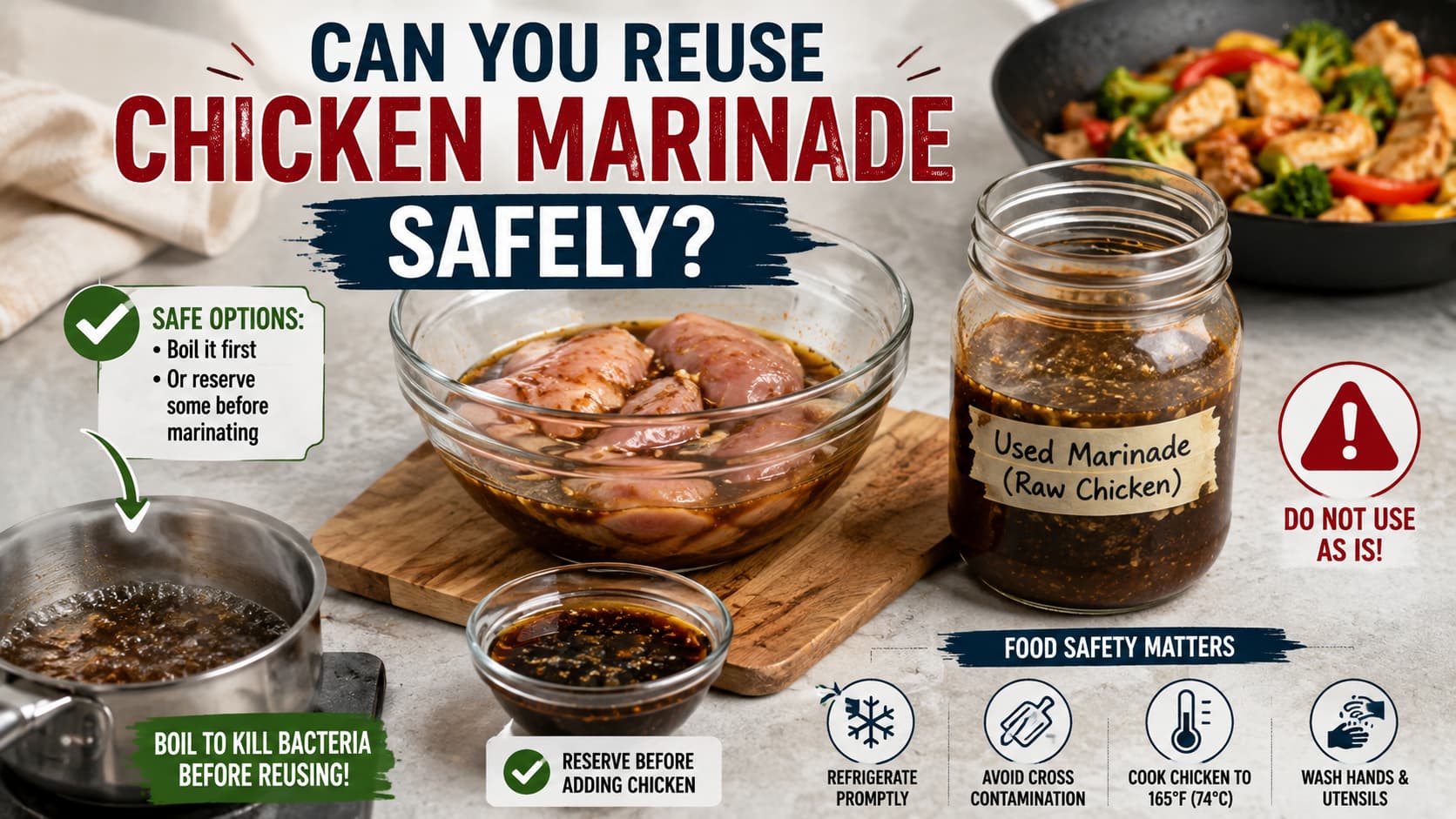
If you’ve ever prepared chicken for a stir fry, grilled dinner, or meal prep, you’ve probably wondered whether you can reuse chicken marinade. It seems wasteful to throw away a flavorful marinade packed with herbs, spices, soy sauce, garlic, or citrus after using it only once. However, when raw chicken is involved, food safety becomes far more important than reducing waste.
The short answer is that you should not reuse chicken marinade that has been in contact with raw chicken unless it is thoroughly cooked first. Raw poultry can carry harmful bacteria such as Salmonella and Campylobacter. These bacteria can transfer into the marinade during the marinating process, making the liquid unsafe to use as a sauce, basting liquid, or marinade for another batch of chicken without proper treatment.
Understanding when you can safely reuse chicken marinade—and when you should throw it away—helps protect your family from foodborne illness while still allowing you to make the most of your ingredients. In this guide, you’ll learn what happens inside a marinade, why bacteria spread so easily, and the safest ways to use leftover marinade without compromising flavor or food safety.
Quick Answer
Can you reuse chicken marinade safely? Yes—but only if the marinade is brought to a full rolling boil for several minutes after it has been used with raw chicken. Never reuse uncooked chicken marinade as a sauce, dipping liquid, or marinade for another batch of raw chicken because harmful bacteria may be present. The safest option is to prepare extra fresh marinade before adding raw chicken and reserve a separate portion for serving.
Table of Contents
Can You Reuse Chicken Marinade Safely?
The answer depends entirely on whether the marinade has touched raw chicken. Before the chicken goes into the bowl or zip-top bag, the marinade is perfectly safe. Once raw chicken is added, however, bacteria naturally found on poultry begin transferring into the liquid. This contamination happens almost immediately, even if the chicken has only been marinating for a short time.
Because the marinade surrounds every piece of chicken, it provides an ideal environment for bacteria to spread. Refrigeration slows bacterial growth but does not eliminate harmful microorganisms. That means placing contaminated marinade back into the refrigerator does not make it safe to reuse later.
If you want extra sauce for your chicken stir fry or grilled meal, prepare additional marinade before adding the raw chicken. Set aside the amount you’ll need for basting, glazing, or serving. This simple habit is one of the easiest ways to enjoy bold flavor while following safe food handling practices.
Kitchen Tip: Mix a double batch of marinade at the beginning. Reserve half in a clean container before adding raw chicken. You’ll have a perfectly safe sauce ready to use after cooking without worrying about contamination.
Many home cooks also ask whether they can use leftover marinade to baste chicken while it cooks. The answer is yes—but only if the marinade is thoroughly boiled first or if it is applied early enough that it reaches a safe cooking temperature along with the chicken. Using raw contaminated marinade on fully cooked chicken right before serving is never recommended.
Following these simple food safety practices allows you to enjoy flavorful chicken dishes while greatly reducing the risk of foodborne illness. In the next section, we’ll look more closely at why reusing contaminated marinade can be dangerous and how bacteria survive inside uncooked marinades.
Why Reusing Chicken Marinade Can Be Dangerous
To understand why it is risky to reuse chicken marinade, it helps to know what happens the moment raw chicken is placed into the mixture. While marinades are designed to add flavor and tenderize meat, they also become contaminated when they come into contact with raw poultry. Harmful bacteria that naturally exist on raw chicken can quickly spread throughout the liquid.
Even if the chicken looks fresh and smells normal, it may still carry bacteria that cause foodborne illness. According to food safety experts, you cannot see, smell, or taste these microorganisms. That is why following proper handling guidelines is so important.

Raw Chicken Can Spread Harmful Bacteria
Raw chicken is one of the most common sources of foodborne bacteria. Two of the biggest concerns are:
- Salmonella, which can cause diarrhea, fever, stomach cramps, and vomiting.
- Campylobacter, another leading cause of food poisoning that may result in severe digestive illness.
Once these bacteria enter the marinade, they can survive until the liquid is heated to a safe temperature. Simply refrigerating or freezing the marinade does not destroy them.
This is why food safety organizations consistently recommend discarding any marinade that has touched raw poultry unless it will be boiled before reuse.
Food Safety Warning: Never taste chicken marinade after it has been used with raw chicken. Even a small amount may contain harmful bacteria capable of causing foodborne illness.
Why Marinades Become Contaminated So Quickly
Many people assume that ingredients like vinegar, lemon juice, soy sauce, garlic, or salt kill bacteria during marinating. While these ingredients may slightly slow bacterial growth or change flavor and texture, they are not strong enough to sanitize contaminated marinade.
The liquid surrounds every piece of raw chicken, allowing bacteria to spread evenly throughout the entire mixture. Stirring or turning the chicken during marinating spreads the contamination even further.
This means that every spoonful of used marinade should be treated the same way you would treat raw chicken juices.
Cross-Contamination Is the Biggest Risk
One of the most common kitchen mistakes is accidentally spreading contaminated marinade onto foods that will not be cooked again.
For example, problems occur when someone:
- Pours leftover marinade over cooked chicken.
- Uses the marinade as a dipping sauce.
- Brushes cooked meat with uncooked marinade just before serving.
- Uses the same spoon for both raw marinade and finished food.
Each of these actions can transfer harmful bacteria directly onto ready-to-eat food.
Best Practice: Keep separate utensils, bowls, and brushes for raw and cooked foods. Label reserved marinade before adding raw chicken so there is no confusion later.
If you’re planning a chicken stir fry, preparing a second clean batch of marinade is usually faster and much safer than trying to salvage the original one.
You can also learn more about creating flavorful marinades by reading our guide on best chicken marinade ingredients, or improve your technique with how to marinate chicken for stir fry.
How Bacteria Spread Through Marinade
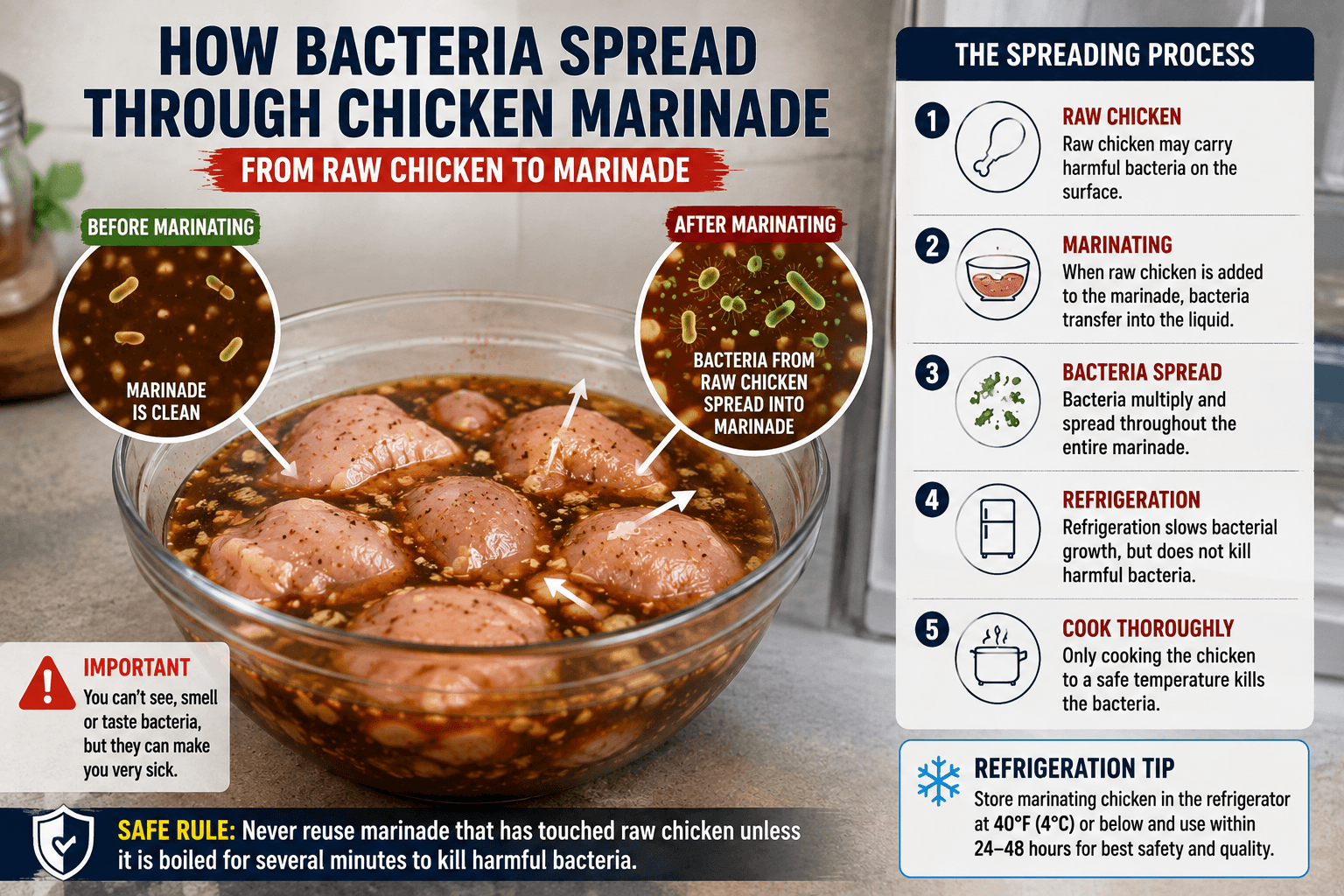
Many people think bacteria only remain on the surface of raw chicken, but that isn’t how contamination works. Once raw chicken is placed into a marinade, the liquid becomes contaminated almost immediately. Every ingredient in the bowl or bag—including soy sauce, garlic, ginger, oil, herbs, and spices—can carry bacteria after touching the chicken.
This is why food safety experts recommend treating used marinade exactly like raw chicken juices. Even if the marinade looks clean, smells delicious, and has been refrigerated the entire time, it can still contain harmful microorganisms.
What Happens During Marinating?
As chicken sits in the marinade, two things happen at the same time:
- The marinade adds flavor by penetrating the outer layers of the meat.
- Raw chicken juices leak into the marinade, carrying bacteria with them.
Turning the chicken, stirring the marinade, or squeezing a zip-top bag helps coat the meat evenly, but it also spreads contamination throughout the entire mixture. By the end of the marinating process, every drop of the used marinade should be considered contaminated.
| Situation | Safe to Reuse? | Reason |
|---|---|---|
| Unused marinade kept separate | ✅ Yes | Never touched raw chicken. |
| Marinade after touching raw chicken | ❌ No | May contain harmful bacteria. |
| Used marinade boiled thoroughly | ✅ Yes | Boiling destroys harmful bacteria. |
| Refrigerated used marinade | ❌ No | Cold temperatures slow growth but do not kill bacteria. |
| Frozen used marinade | ❌ No | Freezing preserves bacteria rather than eliminating them. |
Does Refrigeration Make Chicken Marinade Safe?
No. One of the biggest misconceptions is that refrigeration kills bacteria. In reality, refrigeration simply slows bacterial growth. Harmful microorganisms such as Salmonella and Campylobacter can survive at refrigerator temperatures for days.
That means storing contaminated marinade overnight or even freezing it for later does not make it safe to use without cooking it first.
Expert Kitchen Secret: If you know you’ll want extra sauce later, prepare one batch for marinating and another identical batch for serving. This simple habit eliminates food safety concerns while preserving the freshest flavor.
Can Acidic Marinades Kill Bacteria?
Ingredients like vinegar, lemon juice, lime juice, yogurt, and wine are often included because they tenderize chicken and add flavor. Although these ingredients create an acidic environment, they do not reliably destroy dangerous bacteria found on raw poultry.
Acid changes the texture of meat by breaking down proteins, but it should never be relied upon as a food safety measure. The only dependable way to make contaminated marinade safe for reuse is to bring it to a full rolling boil.
Important: Never assume that a highly acidic marinade is safe simply because it contains lemon juice or vinegar. These ingredients improve flavor—not food safety.
If you’re preparing chicken ahead of time, following proper marinating practices is just as important as choosing the right ingredients. You may also find these guides helpful:
- Can You Marinate Chicken Overnight for Stir Fry?
- How to Store Raw Chicken for Meal Prep
- Safe Chicken Stir Fry Temperature Guide
Knowing how contamination occurs is the first step toward preventing foodborne illness. Next, we’ll look at the safest ways to reuse chicken marinade if you don’t want all those flavorful ingredients to go to waste.
Safe Ways to Reuse Chicken Marinade
Although you should never reuse chicken marinade straight from the container after it has touched raw chicken, there are several safe methods that allow you to enjoy its flavor without putting your health at risk. The key is preventing contamination before it happens or eliminating bacteria through proper cooking.
These food safety practices are recommended by organizations such as the USDA and are easy to follow in any home kitchen.
1. Reserve Fresh Marinade Before Adding Raw Chicken
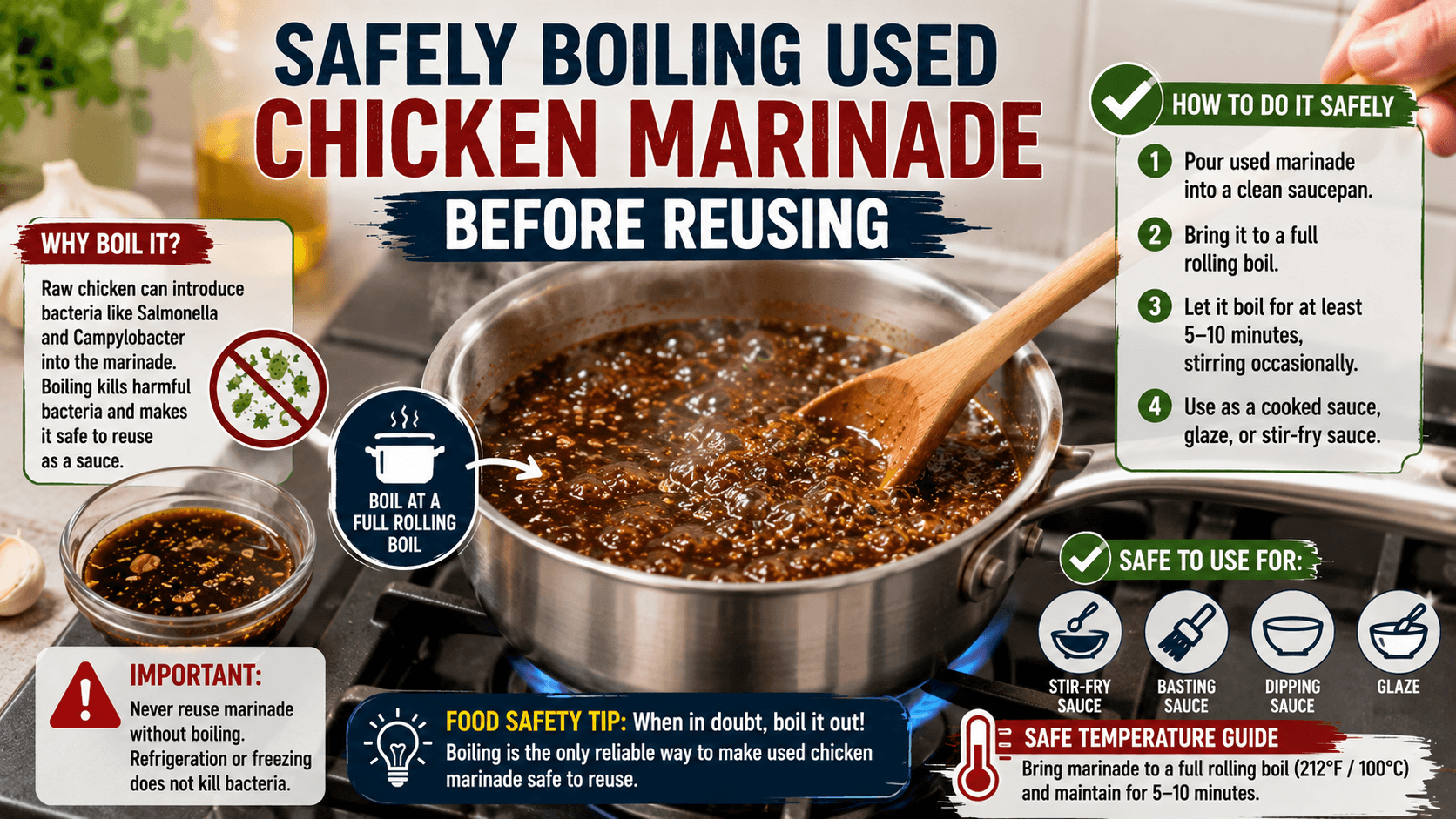
The safest and easiest solution is to prepare a larger batch of marinade from the beginning. Before adding the raw chicken, pour some of the fresh marinade into a separate clean container.
This reserved portion never comes into contact with raw poultry, making it perfectly safe to use later as:
- A finishing sauce
- A dipping sauce
- A glaze for cooked chicken
- A stir-fry sauce
- A salad dressing base (if appropriate)
This method preserves the brightest flavor because the ingredients remain fresh and uncooked.
Chef’s Secret: Professional kitchens almost always prepare extra marinade at the beginning rather than trying to reuse contaminated marinade later. It improves both food safety and flavor.
2. Boil Used Marinade Thoroughly
If you want to reuse chicken marinade that has already touched raw chicken, it must be heated to destroy harmful bacteria.
Pour the marinade into a saucepan and bring it to a full rolling boil. Continue boiling for several minutes while stirring occasionally. This process kills bacteria such as Salmonella and Campylobacter, making the marinade safe to use as a cooked sauce.
If the marinade contains sugar, honey, or other sweeteners, stir frequently to prevent scorching. If it becomes too thick during boiling, simply add a small amount of water or chicken broth to adjust the consistency.
Important: Simply warming the marinade is not enough. It must reach a full boil to effectively destroy harmful bacteria that may have been introduced by the raw chicken.
3. Make a Fresh Batch Instead
Sometimes the easiest option is simply preparing another batch. Most chicken marinades take only a few minutes to mix, especially if they use common pantry ingredients such as:
- Soy sauce
- Garlic
- Fresh ginger
- Sesame oil
- Honey
- Brown sugar
- Rice vinegar
- Cornstarch
Making a fresh batch guarantees the cleanest flavor and removes any concerns about contamination.
| Method | Food Safety | Best For |
|---|---|---|
| Reserve fresh marinade before adding chicken | ★★★★★ | Dipping sauces, glazing, stir-fry sauce |
| Boil contaminated marinade | ★★★★★ | Cooked sauces and basting during cooking |
| Prepare a new batch | ★★★★★ | Maximum freshness and flavor |
| Reuse without boiling | ★☆☆☆☆ | Never recommended |
Smart Kitchen Tip: If you’re making one of our popular recipes like Honey Garlic Chicken Stir Fry or Teriyaki Chicken Stir Fry, prepare double the sauce recipe and reserve half before adding the raw chicken. You’ll have a rich finishing sauce ready to use after cooking.
When Should You Throw the Marinade Away?
Even though boiling can make contaminated marinade safe again, there are times when it is better to discard it.
Throw the marinade away if:
- It has been left at room temperature for more than two hours.
- You are unsure how long it has been sitting out.
- It has an unusual odor or appearance.
- It was cross-contaminated by dirty utensils or surfaces.
- You simply don’t need it.
Food safety should always come before saving a few ingredients. Preparing a fresh marinade is inexpensive compared to the risk of foodborne illness.
Next, we’ll cover some of the most common mistakes people make when they reuse chicken marinade—and how to avoid them completely.
Common Mistakes to Avoid When You Reuse Chicken Marinade
Even experienced home cooks sometimes make food safety mistakes without realizing it. Most cases of unsafe reuse chicken marinade practices happen because people believe refrigeration, acidic ingredients, or cooking the chicken automatically makes the leftover marinade safe. Understanding these common errors helps you prepare flavorful meals while protecting everyone at the table.
Mistake 1: Pouring Used Marinade Over Cooked Chicken
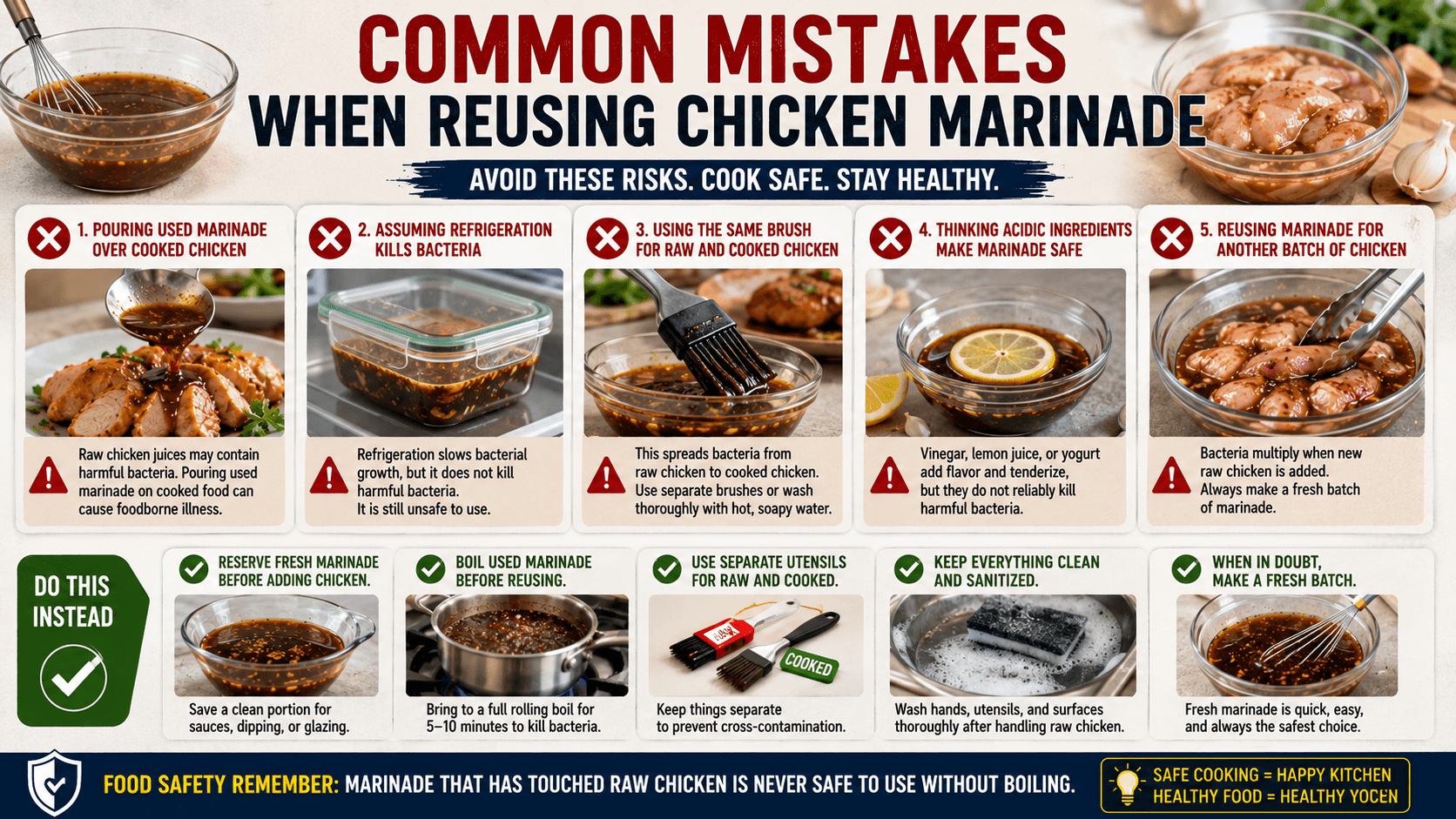
One of the most dangerous mistakes is using leftover marinade as a finishing sauce after the chicken is fully cooked. While the chicken itself has reached a safe internal temperature, the marinade may still contain harmful bacteria from the raw poultry.
This immediately reintroduces bacteria onto food that is ready to eat, undoing the safety achieved during cooking.
Never pour uncooked marinade over finished chicken. If you want extra sauce, either reserve a clean portion before marinating or boil the used marinade thoroughly before serving.
Mistake 2: Assuming Refrigeration Kills Bacteria
Many people believe that storing used marinade in the refrigerator overnight makes it safe. Unfortunately, refrigeration only slows bacterial growth—it does not destroy dangerous microorganisms.
Whether the marinade has been refrigerated for one hour or one day, it should still be considered contaminated until it has been boiled properly.
Mistake 3: Using the Same Brush for Raw and Cooked Chicken
Basting brushes can easily spread bacteria if they touch raw marinade and are then used on cooked chicken.
To prevent cross-contamination:
- Use one brush for raw chicken.
- Use a clean brush for cooked chicken.
- Wash reusable brushes thoroughly with hot, soapy water after use.
- Replace worn silicone or natural-bristle brushes when necessary.
Kitchen Tip: Color-coded utensils make it easy to keep raw and cooked food preparation separate, especially during busy weeknight cooking.
Mistake 4: Thinking Acidic Ingredients Make Marinade Safe
Garlic, vinegar, lemon juice, yogurt, wine, and soy sauce all contribute wonderful flavor, but none of these ingredients can reliably eliminate dangerous bacteria from contaminated marinade.
Although acidic ingredients may slow bacterial growth slightly, they are not substitutes for proper cooking.
Mistake 5: Reusing Marinade for Another Batch of Raw Chicken
Some cooks wonder if they can simply place another batch of raw chicken into yesterday’s marinade. This is never recommended.
Because the marinade already contains raw chicken juices, adding fresh chicken only increases the amount of bacteria present. Instead, prepare a fresh batch using clean ingredients.
| Common Mistake | Safe? | Better Alternative |
|---|---|---|
| Pouring used marinade over cooked chicken | ❌ No | Use reserved or boiled marinade |
| Refrigerating contaminated marinade | ❌ No | Boil before reuse |
| Using one basting brush for everything | ❌ No | Keep separate brushes |
| Marinating new chicken in old marinade | ❌ No | Prepare a fresh batch |
| Saving clean marinade before adding chicken | ✅ Yes | Best food safety practice |
Safe Practices
- Reserve fresh marinade before adding raw chicken.
- Boil contaminated marinade before using it as a sauce.
- Use separate utensils for raw and cooked foods.
- Store fresh marinade in clean, covered containers.
- Prepare a new batch whenever you’re unsure.
Unsafe Practices
- Serving raw marinade as a dipping sauce.
- Using leftover marinade without boiling.
- Cross-contaminating cooked chicken with raw utensils.
- Depending on refrigeration to kill bacteria.
- Reusing old marinade for another batch of chicken.
Following these simple guidelines will help you enjoy flavorful chicken dishes while minimizing the risk of foodborne illness. In the final section, we’ll cover proper storage, answer frequently asked questions, and summarize the safest way to reuse chicken marinade.
Storage Tips for Chicken Marinade
Proper storage is just as important as proper cooking when it comes to food safety. Whether you’re preparing dinner for tonight or meal prepping for the week, knowing how to handle leftover marinade helps prevent bacterial growth and reduces the risk of cross-contamination.

Storage Guidelines:
- Store unused marinade in a clean, airtight container in the refrigerator.
- Label containers with the preparation date.
- Use fresh reserved marinade within 2 days for the best quality.
- Discard any marinade that has been left at room temperature for more than 2 hours (or 1 hour if temperatures exceed 90°F/32°C).
- Never return cooked chicken to a container that previously held raw marinade.
Final Thoughts
So, can you reuse chicken marinade safely? Yes—but only under the right conditions.
If the marinade has touched raw chicken, it should never be used directly as a sauce or for another batch of chicken. Harmful bacteria can survive in the liquid, even after refrigeration. The safest options are to reserve a clean portion of marinade before adding the chicken or to boil the used marinade thoroughly before serving it.
Developing these simple kitchen habits takes only a few extra minutes and significantly reduces the risk of foodborne illness. They also ensure your chicken stir fry recipes remain both delicious and safe for your family.
For even better results, explore our complete collection of chicken stir fry recipes and food safety guides linked throughout this article.
Frequently Asked Questions
Can you reuse chicken marinade without cooking it?
No. If the marinade has touched raw chicken, it should never be reused without first bringing it to a full rolling boil. Raw poultry can introduce harmful bacteria into the marinade.
Does boiling make chicken marinade safe?
Yes. Boiling contaminated marinade thoroughly destroys harmful bacteria, allowing it to be safely used as a cooked sauce or glaze.
Can I use leftover chicken marinade as a stir-fry sauce?
Only after it has been boiled properly. If you want a fresh-tasting sauce, reserve part of the marinade before adding the raw chicken.
Can I freeze used chicken marinade for later?
You can freeze it, but freezing does not kill bacteria. The marinade must still be boiled thoroughly before it can be safely reused.
What is the safest way to reuse chicken marinade?
The safest method is to prepare extra marinade and reserve a clean portion before marinating the raw chicken. This reserved marinade can be used later without additional food safety concerns.
References
🍽️ You Might Also Like




📧 Save This Recipe For Later
Enter your email and we will send this recipe directly to your inbox.