
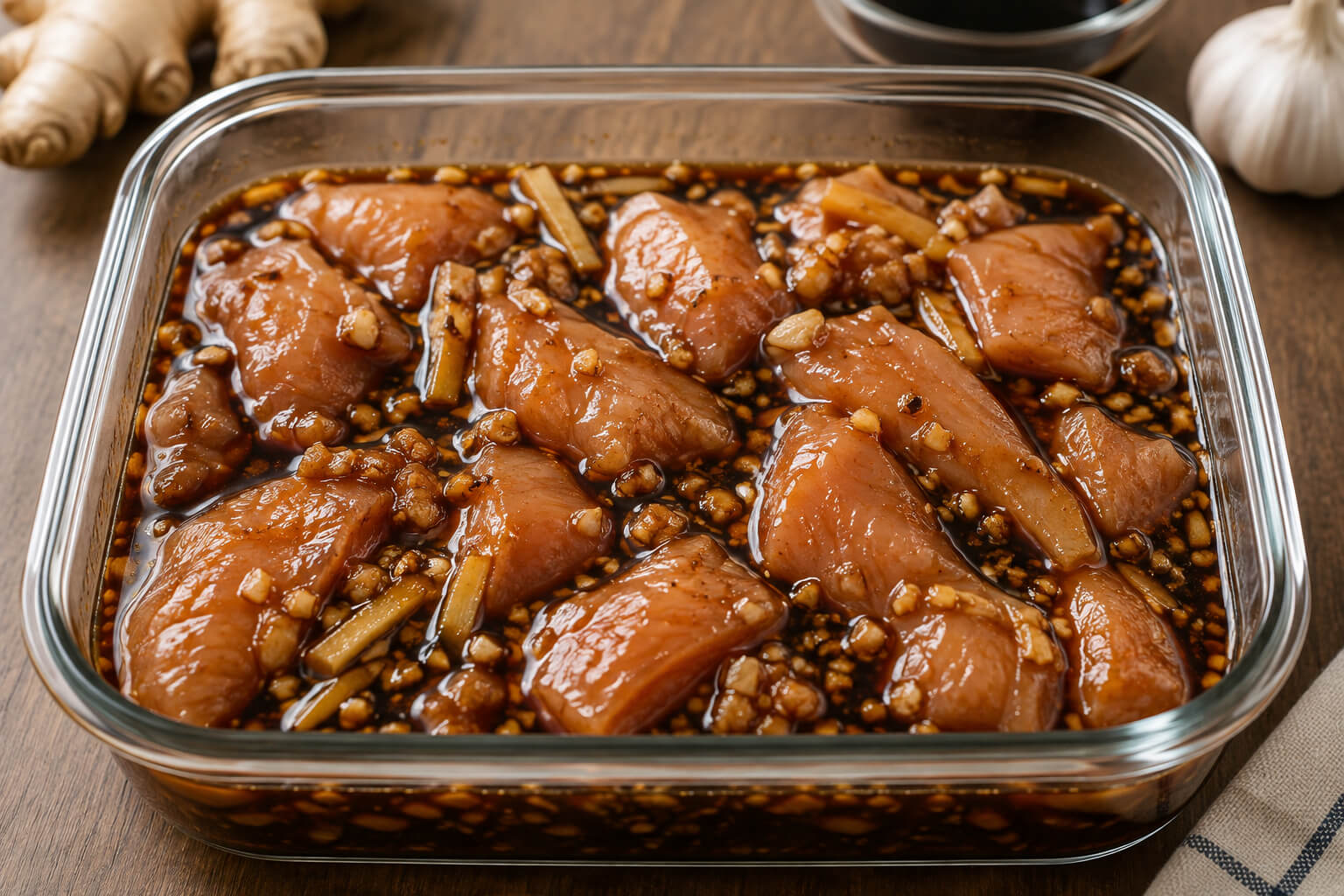
Can You Marinate Chicken Overnight for Stir Fry?
Can You Marinate Chicken Overnight for Stir Fry?
If you’re preparing dinner ahead of time, you’ve probably wondered, can you marinate chicken overnight for stir fry? It’s one of the most common questions home cooks ask because marinating promises better flavor, juicier meat, and faster meal preparation. However, many people also worry that leaving chicken in a marinade overnight could make it mushy, overly salty, or even unsafe to eat.
The good news is that overnight marinating is not only safe when done correctly, but it’s also one of the easiest ways to create restaurant-quality stir fry chicken at home. The key is choosing the right ingredients, keeping the chicken properly refrigerated, and understanding how different marinades affect the meat over time.
Unlike grilled chicken, stir fry chicken is usually sliced into thin strips before cooking. Those smaller pieces absorb seasoning much faster, making the marinating process even more effective. A balanced marinade containing soy sauce, garlic, ginger, sesame oil, and a little cornstarch can dramatically improve both flavor and texture without overpowering the chicken.
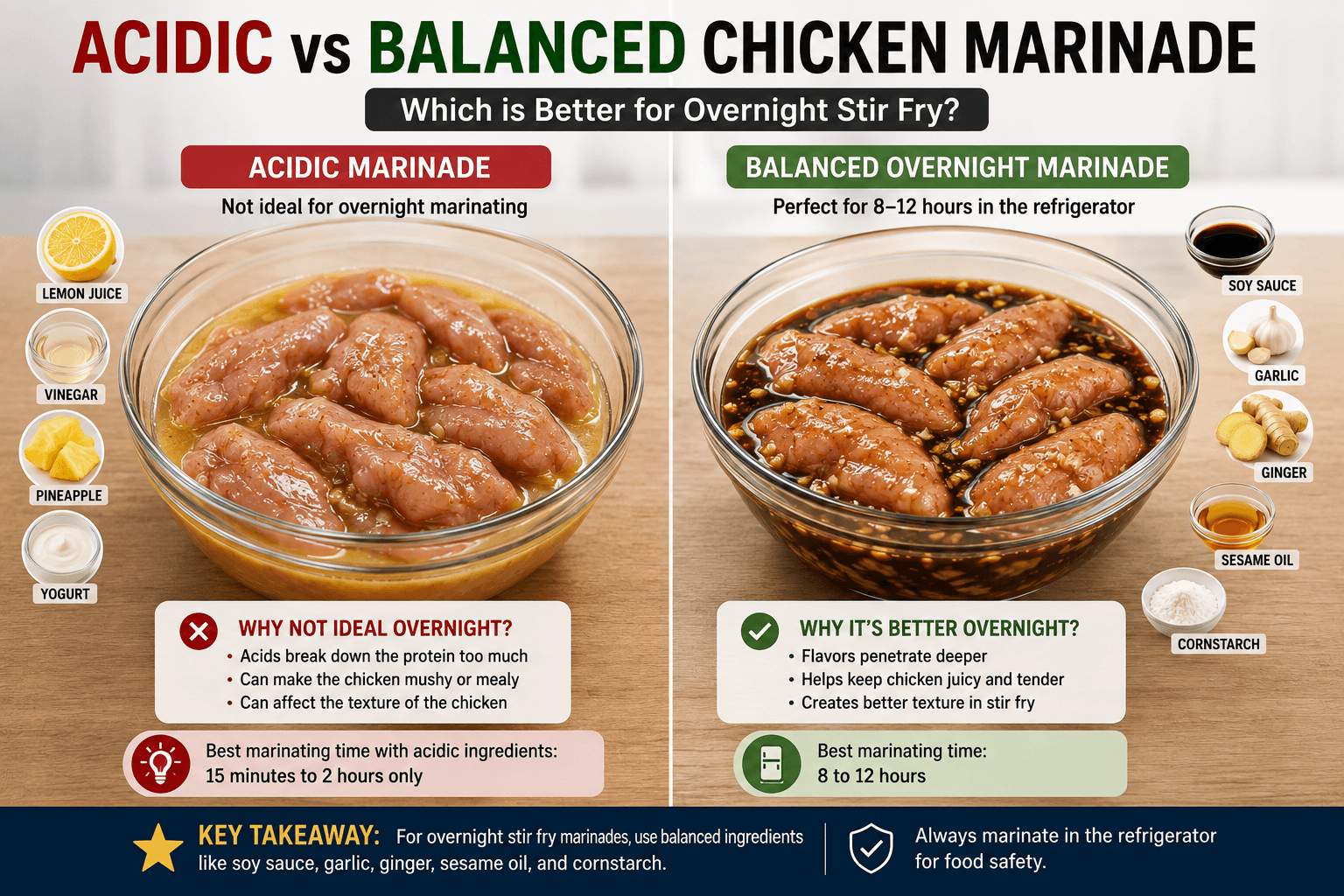
On the other hand, highly acidic marinades made with large amounts of lemon juice, vinegar, or fresh pineapple can begin breaking down the proteins if the chicken sits too long. Knowing the difference allows you to prepare flavorful chicken without sacrificing texture.
In this complete guide, you’ll learn whether you should marinate chicken overnight stir fry, how long is ideal, which ingredients work best, common mistakes to avoid, food safety recommendations, and expert techniques that help you make juicy stir fry every single time.
Quick Answer
Yes, you can marinate chicken overnight for stir fry as long as the chicken remains refrigerated below 40°F (4°C) and the marinade is properly balanced. For most stir fry recipes, marinating for 8 to 12 hours produces the best flavor and helps keep the chicken tender and juicy. Soy sauce, garlic, ginger, sesame oil, and cornstarch are excellent overnight marinade ingredients, while large amounts of citrus juice or vinegar should be avoided because they can make the chicken overly soft after long marinating periods.
- Best marinating time: 8–12 hours
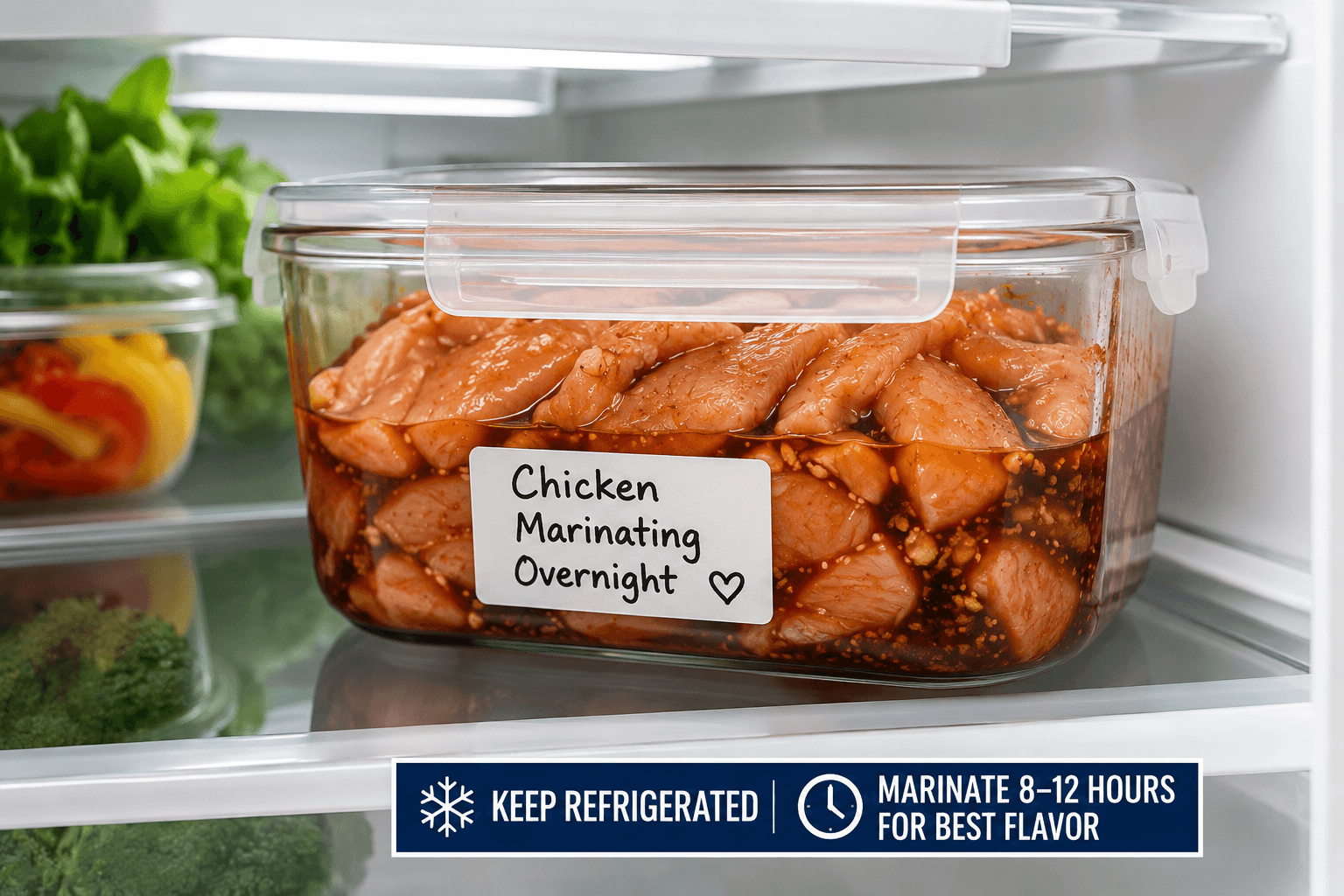
- Always refrigerate while marinating
- Use soy sauce-based marinades for overnight results
- Avoid excessive acidic ingredients
- Cook chicken to an internal temperature of 165°F (74°C)
Table of Contents
Can You Marinate Chicken Overnight for Stir Fry?
The simple answer is yes. In fact, many professional kitchens prepare chicken several hours before service because it allows the seasoning to develop while making cooking much faster during busy meal times.
When you marinate chicken overnight stir fry, the seasoning has more time to coat the surface of every piece. Salt from the soy sauce helps the chicken retain moisture, while garlic, ginger, and sesame oil slowly build layers of flavor. Since stir fry chicken is cut into thin slices, these flavors are distributed more evenly than they would be in larger pieces of meat.
Many people believe marinades soak deep into the center of chicken overnight. In reality, most flavor stays near the outer layers. Fortunately, because stir fry uses thin slices, nearly every bite benefits from that flavorful outer coating.
Another advantage of overnight marinating is convenience. Preparing the chicken the night before means dinner comes together much faster the next day. Simply heat your wok or skillet, cook the marinated chicken, add vegetables and sauce, and your meal is ready in minutes.
However, the success of an overnight marinade depends on the ingredients you choose. Balanced marinades improve flavor without changing the meat’s texture too much. Marinades that contain excessive amounts of acid or enzyme-rich fruits may begin breaking down the proteins and produce chicken that feels soft or mushy after cooking.
Tip: Store marinating chicken in a sealed zip-top bag or airtight container. This keeps the marinade evenly distributed and reduces the risk of raw chicken juices contaminating other foods in your refrigerator.
For a traditional soy sauce-based marinade, overnight refrigeration is considered one of the best preparation methods for homemade chicken stir fry.
Why People Marinate Chicken Overnight
There are several reasons why experienced cooks choose to marinate chicken overnight stir fry instead of seasoning the chicken immediately before cooking.
1. Better Flavor
Flavor takes time to develop. Although a quick 20-minute marinade adds seasoning to the surface, an overnight marinade allows soy sauce, garlic, ginger, and spices to coat every piece much more evenly.
This creates chicken that tastes flavorful throughout every bite rather than only on the outside.
2. Juicier Chicken
One of the biggest challenges with chicken breast is preventing it from drying out during high-heat stir frying.
Salt in the marinade helps the muscle fibers retain moisture while cooking. Cornstarch forms a light protective coating that further reduces moisture loss, producing chicken that’s noticeably juicier.
3. Faster Weeknight Meals
Meal prep is one of the biggest advantages of overnight marinating.
Instead of measuring ingredients and mixing a marinade after work, you simply remove the chicken from the refrigerator and begin cooking. This saves valuable time on busy evenings without sacrificing quality.
4. More Consistent Results
Preparing your chicken in advance also makes the cooking process more consistent. Every piece receives similar seasoning, cooks evenly, and develops a balanced flavor that can be difficult to achieve with last-minute marinating.
| Marinating Time | Flavor Development | Texture | Recommended for Stir Fry? |
|---|---|---|---|
| 15–30 minutes | Light | Minimal change | Good if you’re short on time |
| 1–4 hours | Very Good | Tender | Excellent |
| 8–12 hours | Outstanding | Juicy and flavorful | Best Choice |
| 12–24 hours | Excellent | Usually good with balanced marinades | Acceptable |
| More than 24 hours | Very little improvement | May become too soft depending on ingredients | Not Recommended |
For most home cooks, the sweet spot is between 8 and 12 hours. This provides enough time for the chicken to absorb plenty of flavor while maintaining the firm texture that’s ideal for stir fry cooking.
In the next section, we’ll take a closer look at the science behind overnight marinating and explain exactly how ingredients like soy sauce, salt, garlic, ginger, sesame oil, and cornstarch work together to create tender, juicy stir fry chicken.
How Overnight Marinating Works
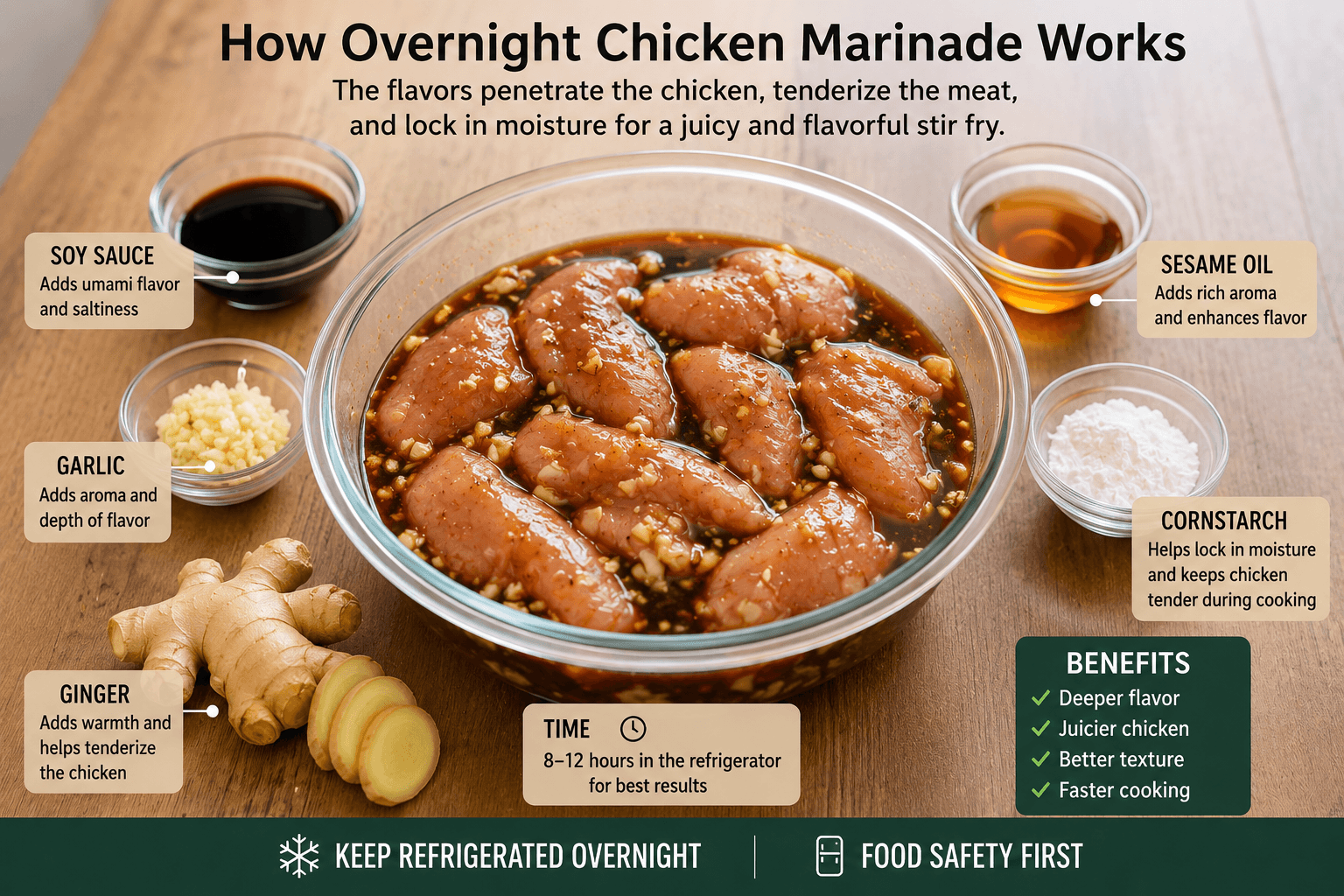
To understand why it’s safe and effective to marinate chicken overnight stir fry, it helps to know what actually happens inside the marinade. Contrary to popular belief, marinades do not soak all the way into the center of the meat. Instead, they work primarily on the outer layers, which is exactly what makes them ideal for stir fry because the chicken is sliced into thin pieces before cooking.
Each ingredient in a well-balanced marinade has a specific purpose. Some ingredients improve flavor, others help the chicken retain moisture, and a few protect the meat during high-heat cooking. When these ingredients work together overnight, they produce juicy, flavorful chicken without changing its natural texture.
Restaurant-style stir fry chicken often tastes better not because of expensive ingredients, but because the chicken is prepared correctly several hours before it ever reaches the wok.
How Salt Improves Juiciness
Salt is one of the most important components of any marinade. In stir fry marinades, soy sauce is usually the primary source of salt.
During overnight marinating, salt begins interacting with the proteins near the surface of the chicken. This helps the meat retain more moisture while cooking, reducing the chance of dry, chewy chicken.
For lean cuts like chicken breast, this moisture retention can make a significant difference after only one night in the refrigerator.
Why Soy Sauce Is Perfect for Overnight Marinating
Soy sauce does much more than add salt. It also contributes rich umami flavor, subtle sweetness, and a deep savory taste that pairs perfectly with vegetables, garlic, ginger, and stir fry sauces.
Because soy sauce is relatively gentle compared to acidic ingredients, it’s one of the safest choices when you marinate chicken overnight stir fry.
Kitchen Secret: Many Chinese restaurant marinades use light soy sauce instead of dark soy sauce. Light soy sauce seasons the chicken without overpowering its natural flavor, while dark soy sauce is often added later for color.
The Role of Garlic and Ginger
Fresh garlic and ginger are classic stir fry ingredients because they provide bold aroma without overpowering the chicken.
As the chicken rests overnight, these aromatics slowly infuse the surface of the meat, creating a deeper flavor than they would during a quick 20-minute marinade.
Fresh ginger also complements soy sauce exceptionally well, giving stir fry chicken the signature flavor found in many Asian-inspired dishes.
Why Cornstarch Makes Such a Big Difference
Many home cooks skip cornstarch because they assume it’s only used to thicken sauces. In reality, cornstarch plays an important role in creating tender stir fry chicken.
When combined with oil and soy sauce, cornstarch forms a thin coating around each piece of chicken. During cooking, this coating helps protect the meat from direct high heat while sealing in moisture.
This technique is closely related to the Chinese cooking method known as velveting, which produces exceptionally tender chicken.
Best Ingredients for an Overnight Chicken Marinade
The best overnight marinades focus on building flavor while protecting the chicken’s texture. Rather than relying on strong acids, they use balanced ingredients that work gradually during refrigeration.
| Ingredient | Purpose | Recommended Overnight? |
|---|---|---|
| Light Soy Sauce | Adds salt and umami flavor | ★★★★★ Excellent |
| Sesame Oil | Rich aroma and flavor | ★★★★★ Excellent |
| Garlic | Savory depth | ★★★★★ Excellent |
| Fresh Ginger | Fresh aromatic flavor | ★★★★★ Excellent |
| Cornstarch | Locks in moisture | ★★★★★ Excellent |
| Brown Sugar | Balances salty flavors | ★★★★☆ Very Good |
| White Pepper | Mild heat | ★★★★☆ Very Good |
| Oyster Sauce | Extra umami flavor | ★★★★☆ Very Good |
These ingredients work together to create a marinade that’s ideal for overnight refrigeration. They season the chicken thoroughly without causing it to become mushy or overly salty.
If you’re trying to achieve restaurant-quality results, these ingredients provide an excellent starting point for almost every stir fry variation, including garlic chicken, honey garlic chicken, teriyaki chicken, vegetable stir fry, and broccoli chicken stir fry.
A Balanced Marinade Is More Important Than a Long Marinating Time
Many cooks assume leaving chicken in the refrigerator for an entire day automatically improves flavor. That’s not always true.
A properly balanced marinade left overnight almost always produces better results than an unbalanced marinade left for 24 hours or longer.
Quality ingredients and proper timing matter far more than simply increasing the marinating time.
Tip: Mix your marinade thoroughly before adding the chicken. This ensures every ingredient is evenly distributed, giving each piece the same flavor and helping the chicken cook consistently.
Choosing the right ingredients is the first step toward delicious stir fry chicken. In the next section, we’ll look at the ingredients that should not be used for long overnight marinating because they can negatively affect texture and overall quality.
Ingredients You Should Avoid for Overnight Marinating
Although it’s generally safe to marinate chicken overnight stir fry, not every marinade ingredient is suitable for long refrigeration. Some ingredients continue breaking down the proteins in chicken while it sits, eventually producing meat that feels overly soft instead of juicy.
Understanding which ingredients require shorter marinating times helps you avoid disappointing results and ensures your stir fry has the firm, tender texture most people expect.
Large Amounts of Lemon or Lime Juice
Citrus juice is excellent for adding fresh flavor, but it’s also highly acidic.
When chicken sits in too much lemon or lime juice overnight, the acid gradually denatures the proteins near the surface. While a small amount is usually fine, excessive citrus can leave the chicken with a mushy outer layer after cooking.
If your recipe includes fresh citrus, it’s usually better to marinate for only two to four hours rather than overnight.
Too Much Vinegar
Rice vinegar, apple cider vinegar, and white vinegar all provide brightness, but they should be used sparingly.
A teaspoon or two in a balanced marinade is generally acceptable, but large quantities become increasingly aggressive during long marinating periods.
For overnight marinating, soy sauce should remain the primary liquid ingredient rather than vinegar.
Fresh Pineapple and Papaya
Fresh pineapple and papaya naturally contain enzymes that break down proteins much faster than acid alone.
These fruits are powerful natural tenderizers and are commonly used for tougher cuts of meat. However, they’re not ideal when you marinate chicken overnight stir fry.
Even a few hours can noticeably soften the surface of the chicken. Left overnight, these enzymes may create a texture that’s almost paste-like around the edges.
Warning: If your marinade contains fresh pineapple, papaya, kiwi, or large amounts of citrus juice, avoid overnight marinating. Limit the marinating time to about 30 minutes to 4 hours, depending on the recipe.
| Ingredient | Safe Overnight? | Reason |
|---|---|---|
| Light Soy Sauce | ✅ Yes | Builds flavor without damaging texture. |
| Sesame Oil | ✅ Yes | Adds aroma and helps coat the chicken. |
| Garlic | ✅ Yes | Develops deeper savory flavor. |
| Fresh Ginger | ✅ Yes | Provides gentle aromatic flavor. |
| Cornstarch | ✅ Yes | Helps retain moisture during cooking. |
| Lemon Juice | ⚠ Limited | High acidity can soften the chicken. |
| Vinegar | ⚠ Limited | Too much acid affects texture. |
| Fresh Pineapple | ❌ No | Protein-digesting enzymes work too quickly. |
| Fresh Papaya | ❌ No | Natural enzymes rapidly break down proteins. |
Food Safety Tips for Overnight Marinating
Food safety should always come first whenever you’re working with raw poultry. Fortunately, overnight marinating is completely safe when you follow a few basic guidelines.
Always Refrigerate Immediately
Never leave raw chicken marinating on the kitchen counter.
Bacteria grow rapidly between 40°F and 140°F (4°C and 60°C), commonly known as the “danger zone.” Keeping the chicken refrigerated prevents harmful bacteria from multiplying.
Use a Food-Safe Container
Choose one of the following:
- Glass container with a tight-fitting lid
- Food-grade plastic container
- Heavy-duty zip-top freezer bag
- Stainless steel mixing bowl covered tightly
A zip-top bag is often the best choice because it allows the marinade to coat every piece of chicken evenly while using very little refrigerator space.
Store Chicken on the Bottom Shelf
Always place marinating chicken on the lowest shelf of your refrigerator.
This reduces the risk of raw juices dripping onto ready-to-eat foods such as fruit, vegetables, or leftovers.
Storage Tip: Label your container with the preparation date and time. For the best quality, cook overnight-marinated chicken within 24 hours.
Cook to the Proper Temperature
Regardless of how long you’ve marinated the chicken, it should always reach an internal temperature of 165°F (74°C) before serving.
A digital meat thermometer is the most accurate way to verify doneness without overcooking the chicken.
Following these simple food safety practices allows you to enjoy flavorful overnight-marinated chicken with confidence.
In the next section, we’ll cover the most common mistakes people make when marinating chicken overnight for stir fry, along with expert tips to help you achieve consistently tender, juicy results every time.
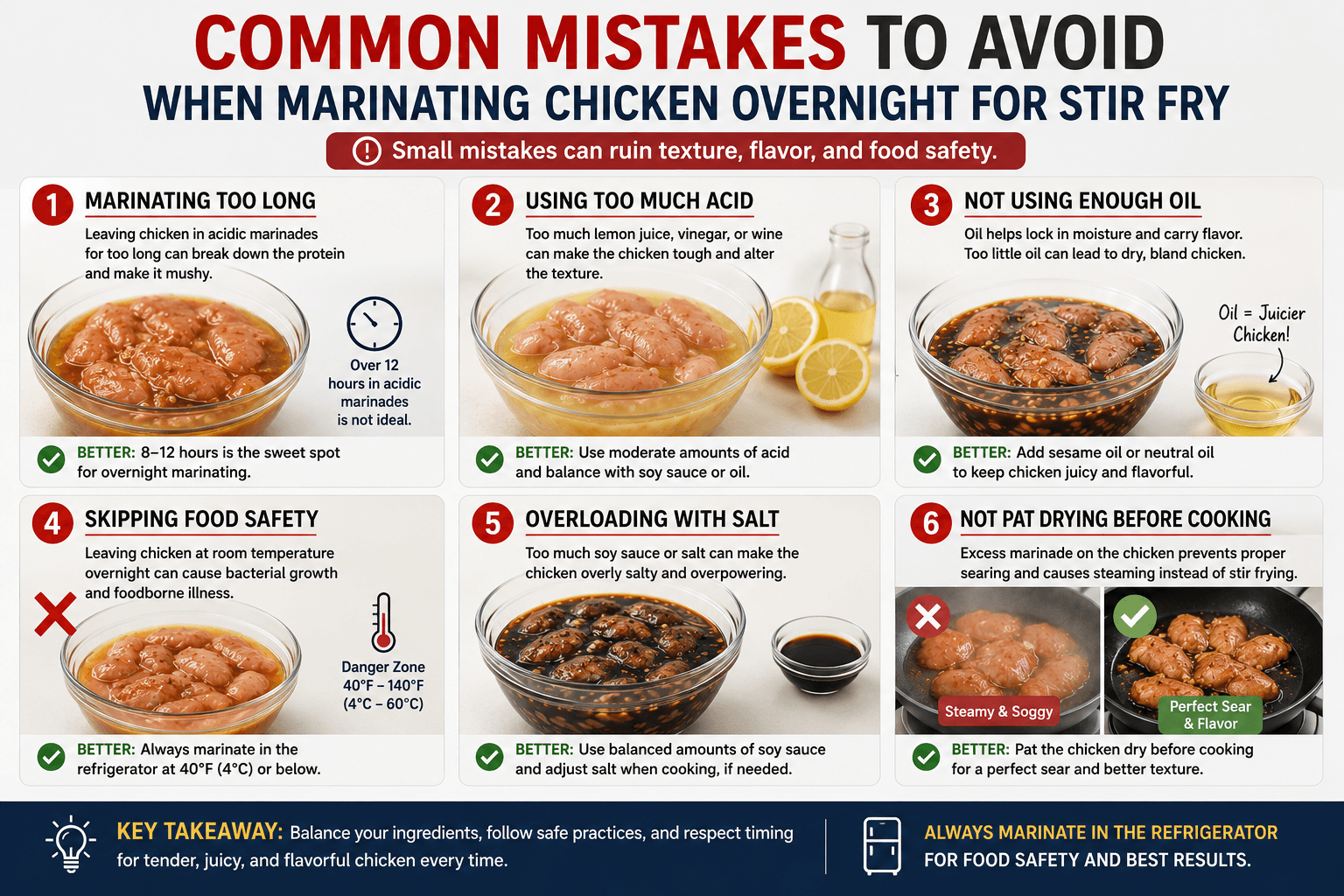
Common Mistakes When You Marinate Chicken Overnight for Stir Fry
Even when using a good recipe, a few simple mistakes can prevent you from getting the tender, juicy chicken you’re expecting. If you marinate chicken overnight stir fry the right way, you’ll enjoy better flavor, improved texture, and more consistent cooking results. Avoiding the following mistakes can make a noticeable difference.
1. Marinating Too Long
One of the biggest misconceptions is that longer always means better. While overnight marinating is ideal, leaving chicken in the marinade for more than 24 hours rarely improves the flavor.
Instead, the texture may begin to change, especially if the marinade contains acidic ingredients. For most stir fry recipes, 8 to 12 hours is the ideal marinating window.
2. Using Too Much Soy Sauce
Soy sauce is the foundation of many stir fry marinades, but using too much can overpower the natural flavor of the chicken and make the finished dish taste excessively salty.
Balance soy sauce with aromatics such as garlic, ginger, sesame oil, and a small amount of sugar for the best results.
3. Forgetting to Pat the Chicken Dry
After removing the chicken from the marinade, many cooks place it directly into the pan with excess liquid still clinging to the meat.
Too much marinade in the pan lowers the cooking temperature and creates steam instead of a proper sear. Lightly shaking off or patting away excess marinade helps the chicken brown more quickly.
Tip: Leave a thin coating of marinade on the chicken, but remove any large pools of liquid before stir frying. This encourages browning while still preserving flavor.
4. Overcrowding the Pan
Even perfectly marinated chicken won’t develop a beautiful golden exterior if the pan is overcrowded.
When too many pieces are added at once, the temperature drops rapidly, causing the chicken to release moisture and steam rather than sear.
If necessary, cook the chicken in two batches to maintain high heat throughout the cooking process.
5. Reusing Raw Marinade Without Cooking It
Raw marinade contains juices from uncooked chicken and should never be poured directly over cooked food.
If you’d like to use the marinade as a sauce, bring it to a full rolling boil for several minutes before serving, or prepare a fresh batch specifically for the sauce.
Warning: Never taste or reuse raw chicken marinade unless it has been thoroughly boiled. This helps eliminate harmful bacteria and reduces the risk of foodborne illness.
Pros of Marinating Chicken Overnight
- Builds deeper, richer flavor.
- Helps the chicken stay juicy during stir frying.
- Makes weeknight cooking faster.
- Creates more even seasoning.
- Works well for meal prep.
- Improves overall texture when using a balanced marinade.
Cons of Marinating Chicken Overnight
- Acidic marinades can soften the chicken too much.
- Requires refrigerator space.
- Needs proper food safety practices.
- Marinating longer than 24 hours offers little benefit.
Expert Tips for the Best Overnight Stir Fry Chicken
Professional cooks rely on a few simple techniques to consistently produce juicy, flavorful stir fry chicken. These tips are easy to follow and can significantly improve your results at home.
- Slice the chicken against the grain for maximum tenderness.
- Use a balanced soy sauce-based marinade instead of a highly acidic one.
- Marinate for approximately 8 to 12 hours.
- Keep the chicken refrigerated at all times.
- Add cornstarch to help lock in moisture.
- Cook over high heat in a preheated wok or skillet.
- Avoid stirring constantly during the first minute to allow light browning.
- Cook vegetables separately if necessary to avoid overcrowding.
- Check that the chicken reaches 165°F (74°C) before serving.
Chef’s Secret: Many restaurant kitchens combine overnight marinating with a quick velveting technique using cornstarch and oil. This combination creates exceptionally tender chicken with a silky texture that’s difficult to achieve through seasoning alone.
Meal Prep Tips for Overnight Marinated Chicken
One of the biggest advantages of choosing to marinate chicken overnight stir fry is the convenience it offers during busy weekdays.
Preparing the chicken the night before allows you to focus on cooking rather than measuring ingredients after work.
For even better meal prep, consider these strategies:
- Slice the chicken before adding the marinade.
- Measure vegetables ahead of time.
- Store vegetables separately to maintain freshness.
- Freeze extra marinated chicken in portion-sized freezer bags.
- Label every container with the preparation date.
With proper planning, a complete homemade stir fry can be ready in less than 20 minutes.
Frequently Asked Questions
Can you marinate chicken overnight for stir fry?
Yes. You can marinate chicken overnight stir fry as long as the chicken stays refrigerated at or below 40°F (4°C). An overnight marinade made with soy sauce, garlic, ginger, sesame oil, and cornstarch helps create juicy, flavorful chicken while reducing preparation time the next day.
How long should you marinate chicken for stir fry?
For most recipes, 8 to 12 hours is ideal. This gives the chicken enough time to absorb flavor without affecting its texture. While shorter marinating times still work, leaving chicken in the marinade for more than 24 hours usually offers little additional benefit.
Can you marinate chicken overnight for stir fry with soy sauce?
Absolutely. Soy sauce is one of the best ingredients for an overnight marinade because it provides salt, umami, and balanced flavor without breaking down the chicken the way highly acidic ingredients can.
Will overnight marinating make chicken mushy?
Not if you’re using a balanced marinade. Chicken generally becomes mushy only when it’s left too long in marinades containing large amounts of lemon juice, vinegar, fresh pineapple, papaya, or other strong acidic or enzyme-rich ingredients.
Should I rinse chicken after marinating?
No. Rinsing raw chicken is not recommended because it can spread harmful bacteria around your kitchen. Instead, remove the chicken from the marinade, allow the excess to drip off, and cook it immediately.
Can I freeze chicken in the marinade?
Yes. Freezing chicken in its marinade is an excellent meal-prep technique. As the chicken slowly thaws in the refrigerator, it continues absorbing flavor from the marinade before cooking.
Can I reuse leftover chicken marinade?
Only if it has been boiled thoroughly before serving. Since raw marinade comes into contact with uncooked chicken, it may contain harmful bacteria and should never be used directly as a sauce.
Final Thoughts
So, can you marinate chicken overnight for stir fry? The answer is yes—and for most recipes, it’s actually one of the best ways to prepare flavorful, juicy chicken ahead of time. A balanced marinade made with soy sauce, garlic, ginger, sesame oil, and cornstarch gives the chicken time to develop deeper flavor while helping it stay tender during high-heat cooking.
The most important factors are choosing the right ingredients, avoiding overly acidic marinades, refrigerating the chicken properly, and limiting the marinating time to about 8 to 12 hours. Following these simple guidelines allows you to enjoy restaurant-quality stir fry with very little effort.
Whether you’re preparing a quick weeknight dinner or meal prepping for the week ahead, overnight marinating is a reliable technique that consistently delivers better texture, richer flavor, and faster cooking.
References
🍽️ You Might Also Like




📧 Save This Recipe For Later
Enter your email and we will send this recipe directly to your inbox.