

Best Vegetables for Low-Carb Chicken Stir Fry
Best Vegetables for Low-Carb Chicken Stir Fry
If you’re looking for a healthy, satisfying dinner that fits a low-carb lifestyle, choosing the right low carb stir fry vegetables can make all the difference. While chicken provides lean protein, vegetables add texture, flavor, vitamins, minerals, and fiber without significantly increasing carbohydrate intake. The right combination creates a colorful meal that’s both nutritious and filling.
Not every vegetable is equally suitable for a low-carb stir fry. Some contain much higher amounts of natural sugars and starches, while others remain naturally low in net carbohydrates and maintain a crisp texture during high-heat cooking. Knowing which vegetables work best helps you build healthier stir fry meals without sacrificing flavor.
In this guide, you’ll learn which vegetables are ideal for low-carb chicken stir fry, why they work so well, how to combine them for maximum flavor, and practical tips for cooking them perfectly every time.
Quick Answer
Low carb stir fry vegetables include broccoli, zucchini, cabbage, spinach, mushrooms, bok choy, bell peppers, cauliflower, asparagus, and green beans. These vegetables are naturally lower in carbohydrates than starchy options like potatoes, corn, or peas while providing excellent texture, fiber, vitamins, and minerals. Pair them with lean chicken and a light stir fry sauce for a balanced, healthy meal.
Table of Contents
Why Choose Low-Carb Vegetables for Chicken Stir Fry?
Many vegetables naturally contain very few digestible carbohydrates while providing essential nutrients your body needs every day. Choosing the right vegetables allows you to enjoy generous portions without consuming excessive carbs, making chicken stir fry an excellent option for people following low-carb, keto-friendly, diabetic-friendly, or weight-management eating plans.
Low-carb vegetables are also rich in dietary fiber, which helps increase fullness after meals and supports healthy digestion. They provide vitamins such as vitamin C, vitamin K, folate, and antioxidants that help maintain overall health.
Another advantage is their excellent cooking performance. Most low carb stir fry vegetables stay crisp-tender in a hot wok, creating a satisfying contrast with juicy chicken pieces while preserving their bright colors and fresh flavor.
Tip: Aim to fill at least half of your stir fry with colorful low-carb vegetables. This increases volume, nutrients, and fiber while keeping the overall carbohydrate content relatively low.
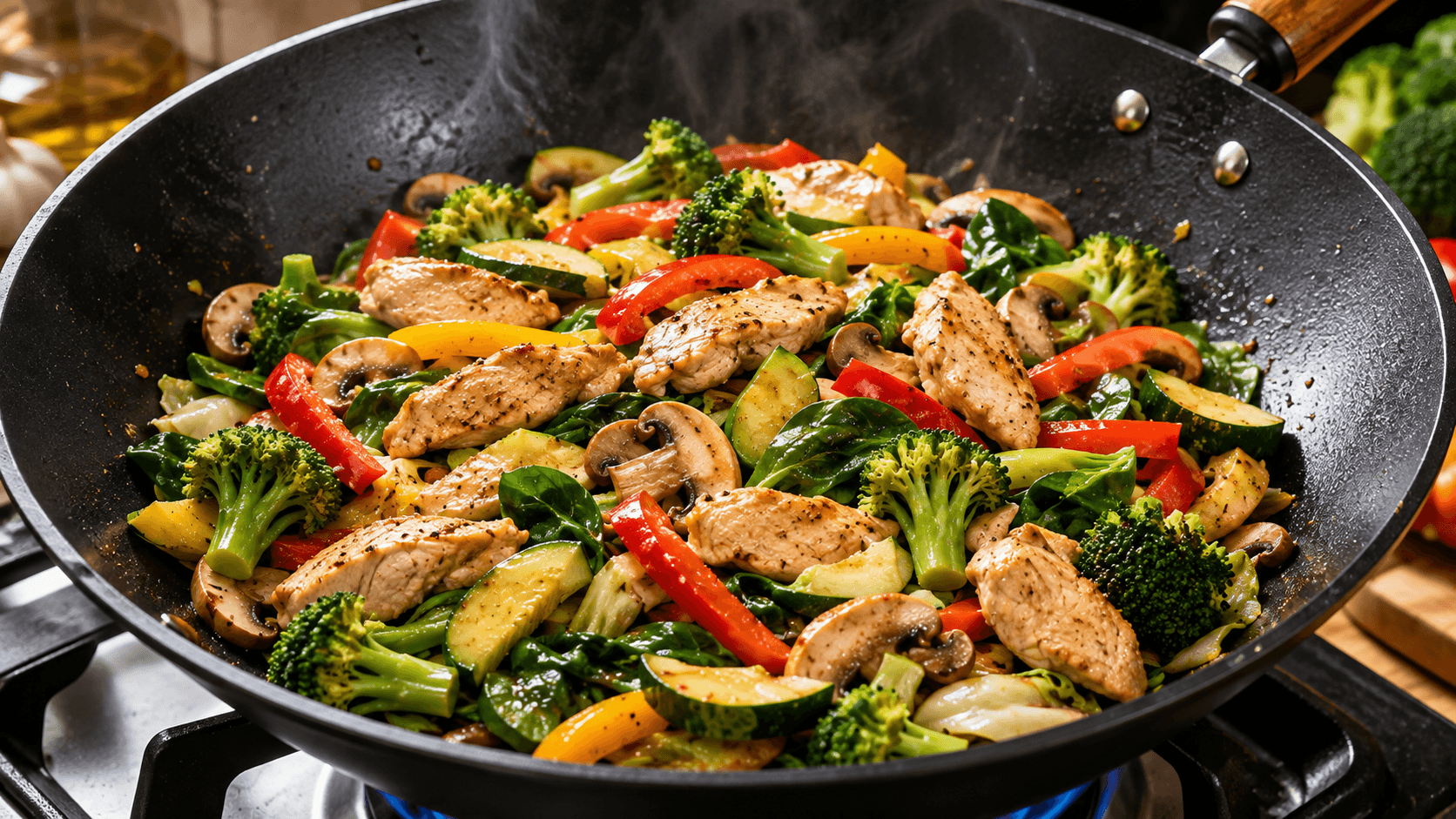
What Makes a Vegetable Low in Carbohydrates?
Low-carb vegetables generally grow above ground and contain more water and fiber than starch. Examples include leafy greens, cruciferous vegetables, mushrooms, zucchini, and peppers. These vegetables typically have fewer digestible carbohydrates per serving while still offering plenty of nutrients.
Vegetables such as potatoes, sweet potatoes, corn, and large amounts of peas contain significantly more carbohydrates and are usually avoided in strict low-carb meal plans.
When selecting low carb stir fry vegetables, focus on fresh, colorful produce with firm texture and vibrant appearance. Combining several different vegetables also increases nutritional diversity while making each bite more interesting.
If you’re looking for even more healthy stir fry inspiration, explore our Healthy Chicken Stir Fry guide or discover additional ideas in our complete Best Vegetables for Chicken Stir Fry resource.
The Best Low Carb Stir Fry Vegetables
The secret to an amazing chicken stir fry is choosing vegetables that stay crisp, cook quickly, and add plenty of flavor without adding unnecessary carbohydrates. Fortunately, there are many excellent options that fit perfectly into a healthy low-carb meal plan. Mixing several vegetables together creates a colorful dish with a variety of textures and nutrients.
Below are some of the best low carb stir fry vegetables you can use in your kitchen.
1. Broccoli
Broccoli is one of the most popular vegetables for chicken stir fry. It contains fiber, vitamin C, vitamin K, and antioxidants while remaining relatively low in carbohydrates. Its firm florets absorb stir fry sauces well and stay crisp-tender when cooked over high heat.
Cut broccoli into evenly sized florets so they cook at the same rate. If the stems are thick, peel the tough outer layer and slice the tender inside into thin pieces for less waste.
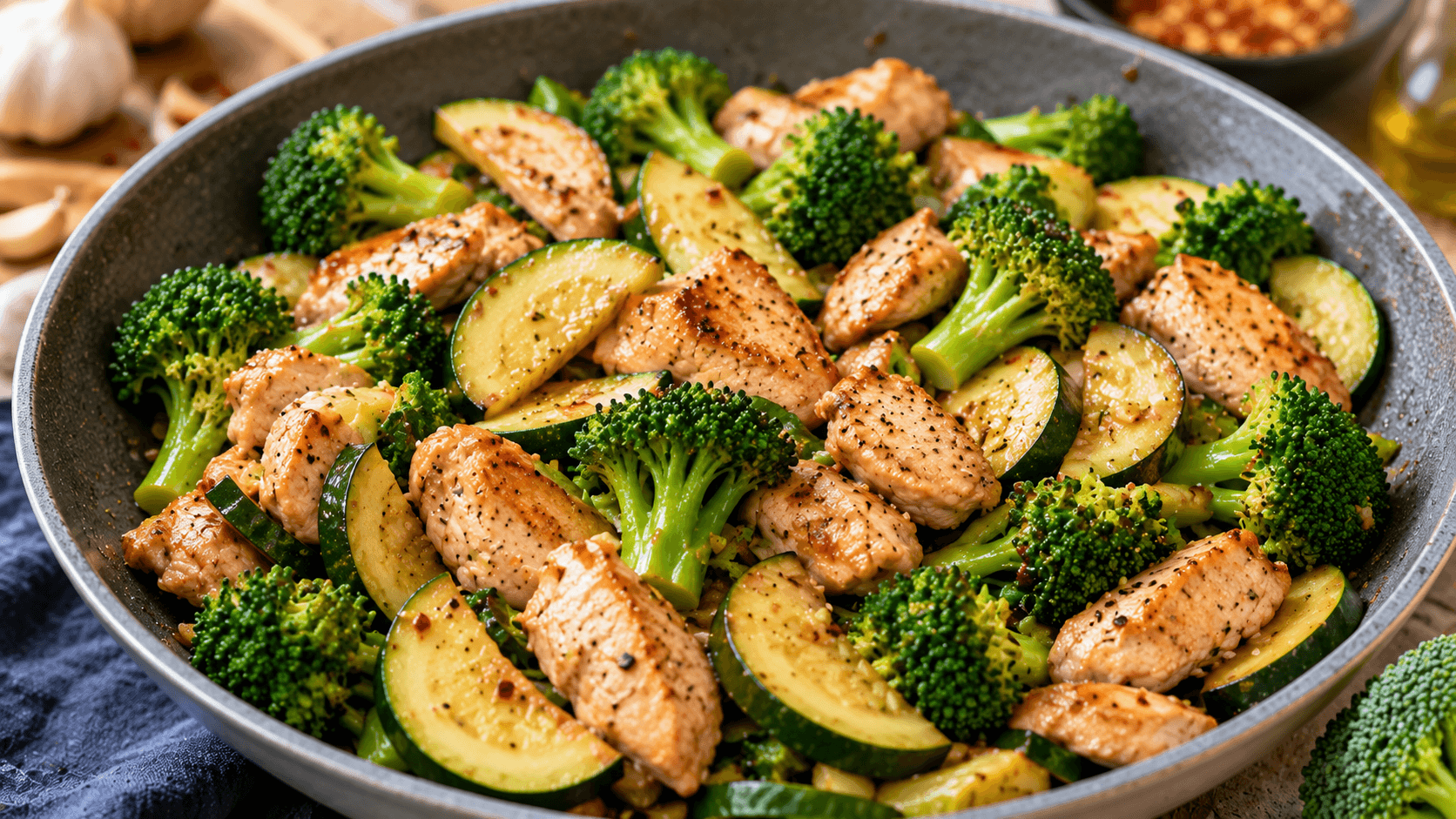
2. Zucchini
Zucchini is naturally low in carbs and cooks very quickly. Its mild flavor pairs well with garlic, ginger, soy sauce, sesame oil, and lean chicken breast. Because zucchini contains a lot of water, cook it near the end of the stir fry to prevent it from becoming too soft.
Learn more cooking ideas in our Chicken Zucchini Stir Fry recipe.
3. Cabbage
Cabbage is affordable, nutritious, and perfect for stir frying. Whether you use green or Napa cabbage, it develops a slightly sweet flavor while maintaining a pleasant crunch. It also stretches meals without adding many calories or carbohydrates.
Thinly sliced cabbage cooks evenly and blends beautifully with mushrooms, carrots in small amounts, or leafy greens.
If you enjoy cabbage-based meals, try our Chicken Cabbage Stir Fry.
Kitchen Secret: Add cabbage during the last few minutes of cooking. This keeps it slightly crisp and prevents it from becoming watery.
4. Mushrooms
Mushrooms are naturally low in carbohydrates and bring a rich, savory flavor known as umami. They absorb seasonings well while adding very few calories, making them an excellent choice for healthy chicken stir fry recipes.
Avoid overcrowding the pan when cooking mushrooms. Giving them enough space allows moisture to evaporate so they brown instead of steaming.
For more inspiration, visit our Chicken Mushroom Stir Fry recipe.
5. Spinach
Spinach is one of the lowest-carb leafy vegetables available. It cooks in less than a minute and provides iron, folate, vitamin A, and vitamin K. Since spinach wilts quickly, always add it at the very end of cooking.
Fresh baby spinach works especially well because its tender leaves require almost no preparation.
You can also explore our Chicken Spinach Stir Fry for another healthy dinner idea.
Tip: Combining broccoli, mushrooms, cabbage, and spinach creates an excellent balance of texture, flavor, fiber, and nutrition while keeping your low carb stir fry vegetables varied and satisfying.
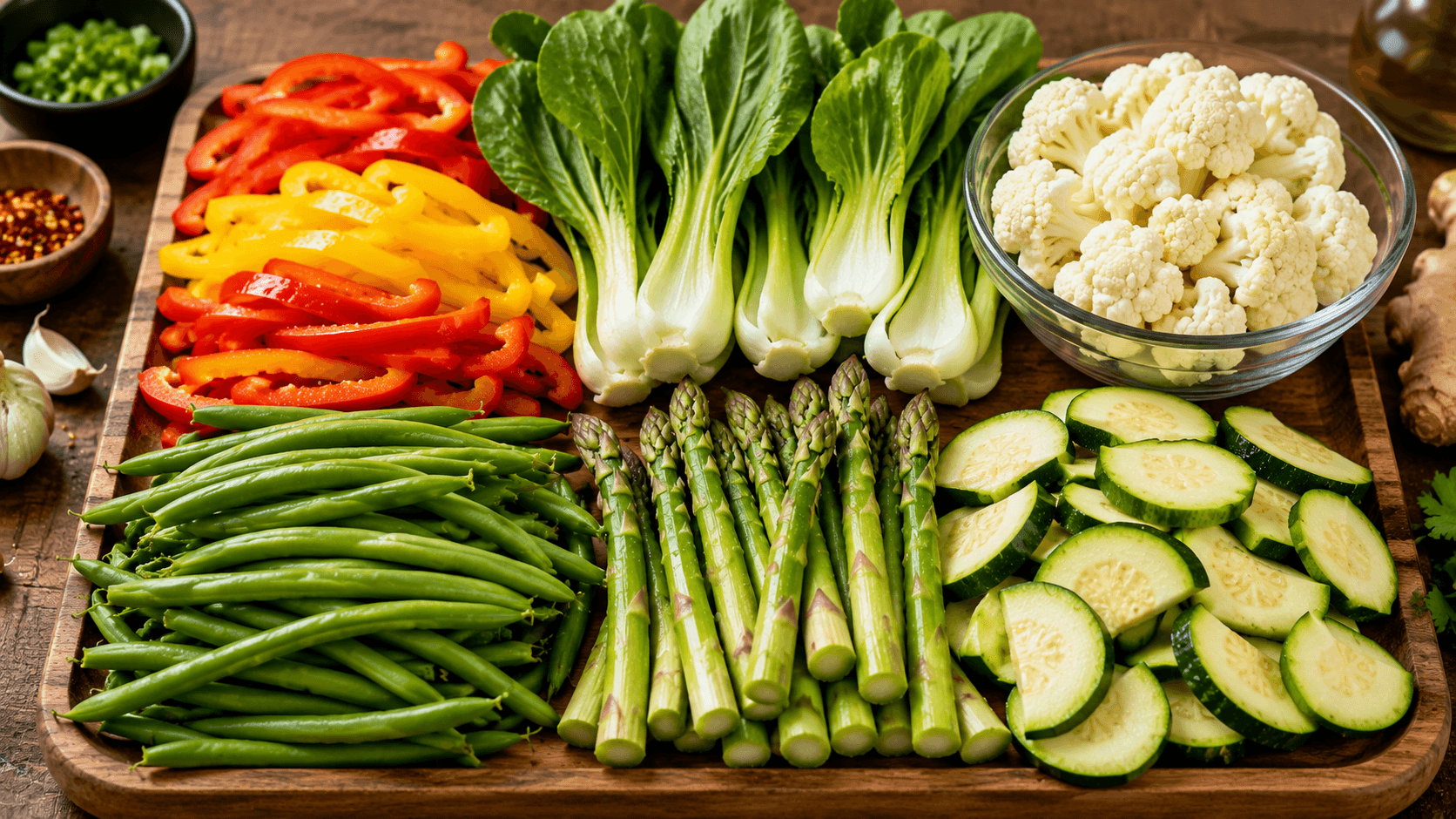
6. Bok Choy
Bok choy is a favorite in many Asian-inspired stir fries because it cooks quickly and offers two textures in one vegetable. The white stems stay crisp while the green leaves become tender in seconds. It’s naturally low in carbohydrates and packed with vitamins A, C, and K.
Separate the stems from the leaves before cooking. Add the stems first since they need a little more time, then stir in the leafy tops during the final minute.
Want to learn more? Read our guide on How to Cook Bok Choy for Chicken Stir Fry.
7. Bell Peppers
Bell peppers add natural sweetness, bright color, and a satisfying crunch without significantly increasing the carbohydrate content of your meal. Red, yellow, orange, and green peppers all work well, although green peppers contain slightly fewer natural sugars.
Slice peppers into thin, even strips so they cook quickly while maintaining their crisp texture.
8. Cauliflower
Cauliflower is one of the most versatile low carb stir fry vegetables. Small florets cook evenly and absorb sauces beautifully. Because cauliflower has a mild flavor, it pairs well with garlic, ginger, soy sauce, sesame oil, and spicy seasonings.
For faster cooking, cut the florets into bite-sized pieces. Avoid overcooking, which can make cauliflower soft instead of crisp-tender.
9. Asparagus
Asparagus adds a fresh, slightly earthy flavor and plenty of nutrients to chicken stir fry. Thin spears cook in just a few minutes, making them ideal for quick weeknight dinners.
Trim away the woody ends before slicing the stalks into two-inch pieces for even cooking.
10. Green Beans
Green beans are another excellent option for low-carb meals. They stay firm during stir frying and provide fiber, vitamin C, and a pleasant snap with every bite.
Fresh green beans work best, but frozen green beans can also be used if they’re thawed and dried well before cooking.
| Vegetable | Texture | Best Time to Add | Why It Works |
|---|---|---|---|
| Broccoli | Crisp-tender | Early | Excellent texture and fiber |
| Zucchini | Tender | Late | Cooks quickly and stays light |
| Cabbage | Crisp | Middle | Adds volume with few carbs |
| Mushrooms | Juicy | Early | Rich umami flavor |
| Spinach | Soft | Last | Wilts in under a minute |
| Bok Choy | Crisp & Tender | Stems first, leaves last | Great texture contrast |
| Bell Peppers | Crisp | Middle | Bright color and sweetness |
| Cauliflower | Firm | Early | Excellent low-carb substitute |
| Asparagus | Tender-crisp | Middle | Fast cooking and nutritious |
| Green Beans | Crunchy | Early | Maintain texture well |
Tip: Combining vegetables with different cooking times helps create the perfect stir fry. Start with firm vegetables like broccoli and cauliflower, then add medium-firm vegetables such as bell peppers and cabbage, and finish with delicate greens like spinach or bok choy leaves.
If you’re looking for even more healthy combinations, explore our guides on Best Vegetable Combinations for Chicken Stir Fry and Chicken Veggie Stir Fry.
How to Choose the Freshest Low-Carb Stir Fry Vegetables
Even the best low carb stir fry vegetables won’t deliver great results if they aren’t fresh. High-quality vegetables not only taste better but also retain more nutrients and maintain their crisp texture during stir frying. Spending a few extra minutes selecting fresh produce can noticeably improve the final dish.
When shopping, look for vegetables with vibrant color, firm texture, and no signs of wilting or excessive moisture. Fresh vegetables cook more evenly and hold up better to the high heat used in stir frying.
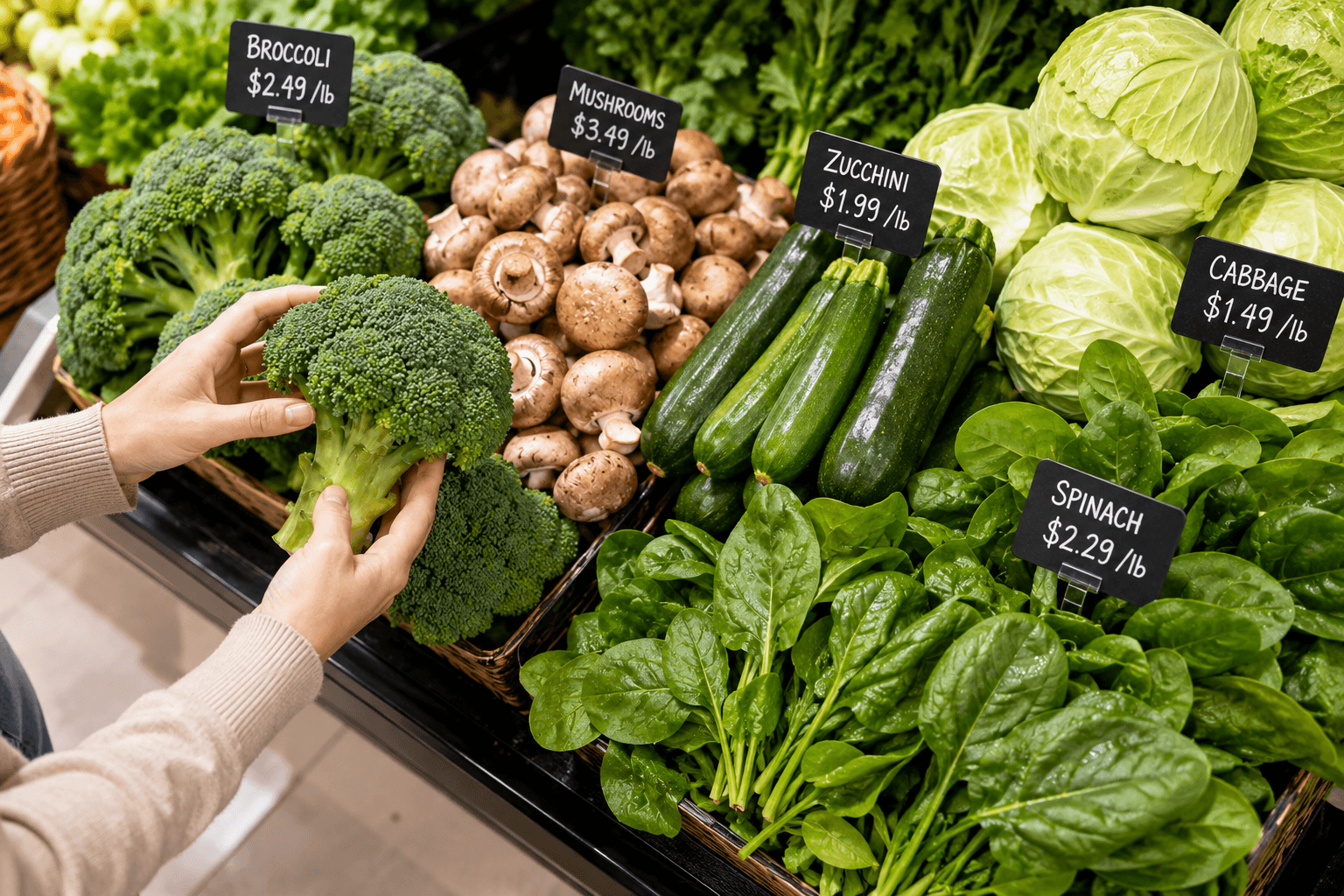
What to Look for When Buying Vegetables
- Broccoli: Choose dark green florets with tightly closed buds and firm stems.
- Zucchini: Select small to medium zucchini with smooth, shiny skin.
- Mushrooms: Look for dry, firm mushrooms without dark spots or a slimy surface.
- Bell Peppers: Pick peppers that feel heavy for their size with glossy, wrinkle-free skin.
- Cabbage: Choose heads that feel dense and have crisp outer leaves.
- Spinach: Buy bright green leaves that are fresh and free from yellowing.
- Bok Choy: Select bunches with crisp white stalks and vibrant green leaves.
- Asparagus: Choose firm stalks with tightly closed tips.
Kitchen Secret: Smaller vegetables are often more tender and flavorful. Large zucchini, oversized broccoli stems, or thick asparagus stalks may require longer cooking and can become less tender.
Fresh vs. Frozen Low-Carb Vegetables
Both fresh and frozen vegetables can produce a delicious chicken stir fry. Fresh vegetables usually provide the best texture, while frozen vegetables offer convenience and reduce food waste. The best choice depends on your schedule, budget, and what’s available.
| Fresh Vegetables | Frozen Vegetables |
|---|---|
| Excellent crisp texture | Convenient and ready to use |
| Maximum freshness | Available year-round |
| Best appearance | Often more affordable |
| Requires washing and cutting | Minimal preparation needed |
| Shorter shelf life | Long freezer storage |
If using frozen vegetables, avoid adding them directly from the freezer into an overcrowded pan. Excess moisture can lower the pan temperature, causing vegetables to steam instead of stir fry.
Learn more in our complete guide to Fresh vs. Frozen Vegetables for Stir Fry.
Warning: Never overcrowd the wok with too many vegetables at once. Overcrowding traps steam, resulting in soft, watery vegetables instead of the crisp-tender texture that makes stir fry so appealing.
Balancing Flavor and Nutrition
A great low-carb chicken stir fry isn’t just about reducing carbohydrates—it’s also about creating balance. Combining vegetables with different colors, textures, and flavors makes each bite more satisfying while increasing the variety of vitamins, minerals, and antioxidants in your meal.
For example, broccoli provides crunch, mushrooms contribute savory depth, cabbage adds sweetness, spinach offers tender leafy texture, and bell peppers bring vibrant color. Together, these low carb stir fry vegetables create a complete, nutritious dish without relying on high-carb ingredients.
For even more healthy vegetable ideas, visit our Best Leafy Greens for Healthy Stir Fry Recipes guide.
Expert Tips for Cooking Low-Carb Stir Fry Vegetables
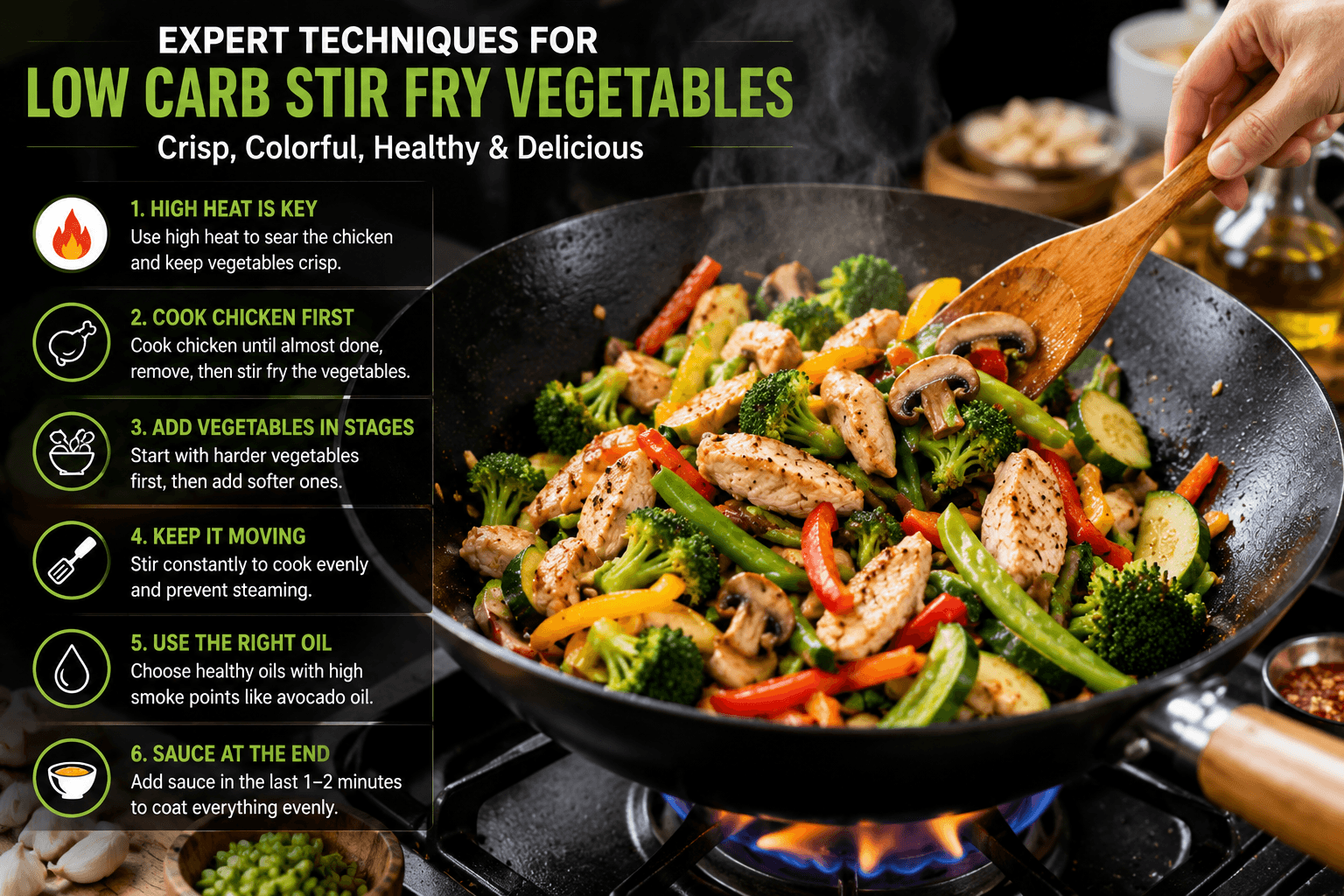
Cooking low carb stir fry vegetables isn’t difficult, but a few simple techniques can make a big difference. Stir frying uses very high heat for a short amount of time, allowing vegetables to stay colorful, crisp, and full of flavor while preserving much of their nutritional value.
Professional cooks focus on preparation before turning on the stove. Since stir frying happens quickly, having every ingredient washed, chopped, and ready to cook ensures nothing becomes overcooked.
Heat the Pan Before Adding Oil
A properly heated wok or large skillet helps vegetables sear quickly instead of steaming. Once the pan is hot, add a small amount of cooking oil with a high smoke point, such as avocado oil or peanut oil, before adding the chicken.
Cook the Chicken First
Chicken usually requires more cooking time than vegetables. Cook it until it’s almost done, remove it from the pan, then stir fry the vegetables. Add the chicken back near the end so everything finishes cooking together without drying out.
Add Vegetables in Stages
Different vegetables cook at different speeds. Start with firm vegetables, then gradually add softer ones.
| Cooking Order | Vegetables |
|---|---|
| First | Broccoli, cauliflower, green beans |
| Second | Bell peppers, cabbage, asparagus, mushrooms |
| Last | Zucchini, bok choy leaves, spinach |
Kitchen Secret: Keep the vegetables moving with continuous stirring instead of letting them sit in one place. This helps them cook evenly while maintaining their bright color and crisp texture.
Common Mistakes to Avoid
Even experienced home cooks occasionally make mistakes that reduce the quality of a stir fry. Avoiding these common problems will help your low carb stir fry vegetables stay crisp, flavorful, and visually appealing.
- Using a pan that isn’t hot enough.
- Adding too many vegetables at one time.
- Cooking every vegetable for the same amount of time.
- Using too much sauce, which can make vegetables soggy.
- Cutting vegetables into uneven sizes.
- Overcooking leafy greens like spinach.
- Skipping preparation before cooking begins.
Warning: Avoid overcooking vegetables until they’re soft. Proper stir fry vegetables should remain slightly crisp. This improves both texture and nutrient retention.
Healthy Sauce Ideas for Low-Carb Stir Fry
The vegetables are only part of a healthy stir fry. Choosing the right sauce keeps carbohydrate levels under control while adding bold flavor.
Simple low-carb sauce ingredients include:
- Low-sodium soy sauce or coconut aminos
- Fresh garlic
- Fresh ginger
- Sesame oil
- Rice vinegar
- Chicken broth
- Red pepper flakes
- Black pepper
Avoid bottled sauces that contain large amounts of added sugar. Reading nutrition labels can help you choose products with fewer carbohydrates.
If you’re just getting started, our Chicken Stir Fry guide provides additional cooking techniques and healthy meal ideas.
Storing and Reheating Low-Carb Chicken Stir Fry
One of the biggest advantages of using low carb stir fry vegetables is that leftovers store well when handled properly. Whether you’re preparing meals ahead of time or saving dinner for the next day, proper storage helps maintain food quality and safety.
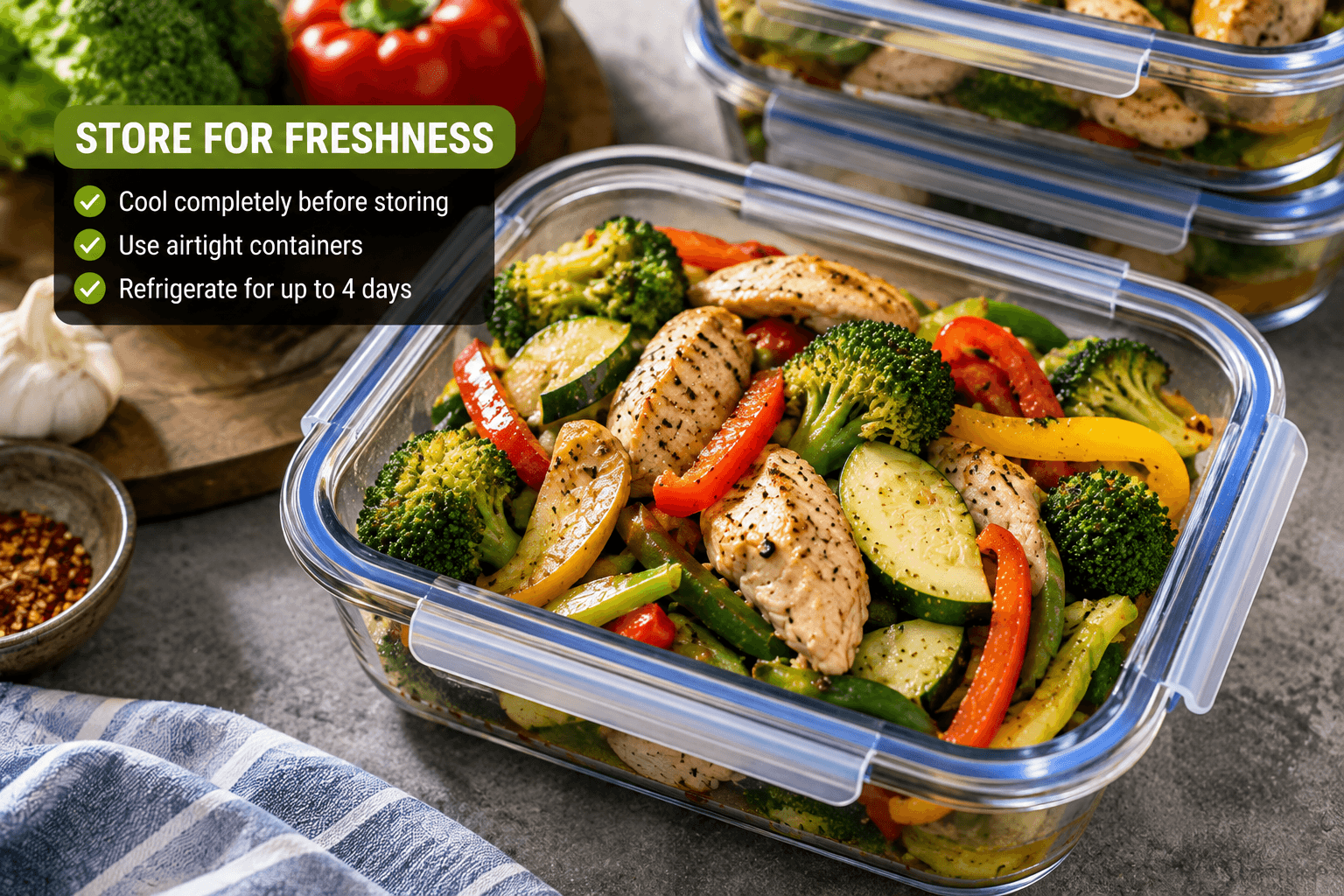
Storage Tip: Allow the stir fry to cool slightly before transferring it to airtight containers. Refrigerate within two hours of cooking and enjoy within 3 to 4 days for the best quality. For longer storage, freeze for up to 3 months. Thaw overnight in the refrigerator before reheating.
When reheating, use a skillet over medium-high heat for a few minutes until the chicken reaches a safe internal temperature of 165°F (74°C). This method helps the vegetables retain more of their texture than microwaving.
Frequently Asked Questions
What are the best low carb stir fry vegetables?
Broccoli, zucchini, cabbage, mushrooms, spinach, bok choy, cauliflower, asparagus, bell peppers, and green beans are among the best low carb stir fry vegetables. They provide plenty of nutrients while keeping carbohydrate intake relatively low.
Can I use frozen vegetables in a low-carb stir fry?
Yes. Frozen vegetables are a convenient option. Thaw and pat them dry whenever possible to reduce excess moisture and help them brown instead of steam.
Which vegetables should I avoid on a low-carb diet?
Potatoes, sweet potatoes, corn, and large amounts of peas are higher in carbohydrates than most non-starchy vegetables and may not fit stricter low-carb meal plans.
How do I keep stir fry vegetables crisp?
Cook over high heat, avoid overcrowding the pan, cut vegetables into similar sizes, and add delicate vegetables near the end of cooking.
Are low-carb stir fry vegetables good for meal prep?
Absolutely. Many low carb stir fry vegetables hold their texture well for several days, making them excellent for healthy lunches and quick weeknight dinners.
Final Thoughts
Choosing the right low carb stir fry vegetables allows you to create flavorful, colorful, and nutrient-rich meals without relying on high-carbohydrate ingredients. Vegetables like broccoli, zucchini, mushrooms, cabbage, spinach, bok choy, cauliflower, asparagus, bell peppers, and green beans provide an excellent balance of texture, flavor, vitamins, and fiber.
By selecting fresh produce, cooking vegetables in the proper order, and using simple low-carb sauces, you can prepare restaurant-quality chicken stir fry that’s both healthy and satisfying. With a little practice, these techniques will help you build delicious meals that fit a wide range of healthy eating plans.
🍽️ You Might Also Like



📧 Save This Recipe For Later
Enter your email and we will send this recipe directly to your inbox.